


Abstract
The mitigation of anthropogenic climate change caused by fossil fuel combustion is a critical global challenge that necessitates a transition to renewable energy systems. Bioethanol represents a major renewable fuel, but first-generation production relies on edible feedstocks, which raises concerns regarding food security. Consequently, research is shifting toward second-generation bioethanol produced from abundant non-edible lignocellulosic biomass sources. This review comprehensively examines the potential of Candida krusei (synonyms: Pichia kudriavzevii, Issatchenkia orientalis) to serve as an alternative biocatalyst for second-generation bioethanol production. Compared with the first-generation bioethanol-producing yeast Saccharomyces cerevisiae, C. krusei exhibits superior physiological traits, such as thermo, acid, and inhibitor tolerances, enabling the utilization of several lignocellulosic feedstocks. This review summarizes the taxonomic and physiological characteristics of C. krusei, describes case studies on bioethanol production, and discusses strategies for reducing production costs. Furthermore, the technical and biosafety challenges associated with the industrial deployment of C. krusei are critically examined, including xylose metabolism limitations, scale-up constraints, and the management of its opportunistic pathogenic nature. A life cycle assessment perspective suggests that the unique physiological properties of C. krusei contribute to reducing greenhouse gas emissions and energy consumption throughout the entire production process, from pretreatment to downstream ethanol recovery.
1. Introduction
Anthropogenic climate change caused by greenhouse gas (GHG) emissions from fossil fuel combustion is one of the most pressing challenges facing humanity in the 21st century. In 2018, the Intergovernmental Panel on Climate Change (IPCC) indicated that drastic changes in energy systems will be necessary to keep the average temperature increase within 1.5 °C above pre-industrial levels [1]. The transportation sector accounts for approximately 24% of GHG emissions worldwide, the majority of which derive from road vehicles [2]. Thus, increasing the use of biofuels, which are produced from renewable resources as raw materials, is considered one of the most effective measures in the global strategy to combat climate change.
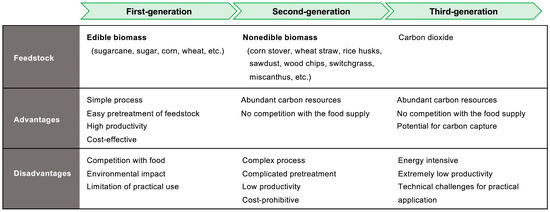
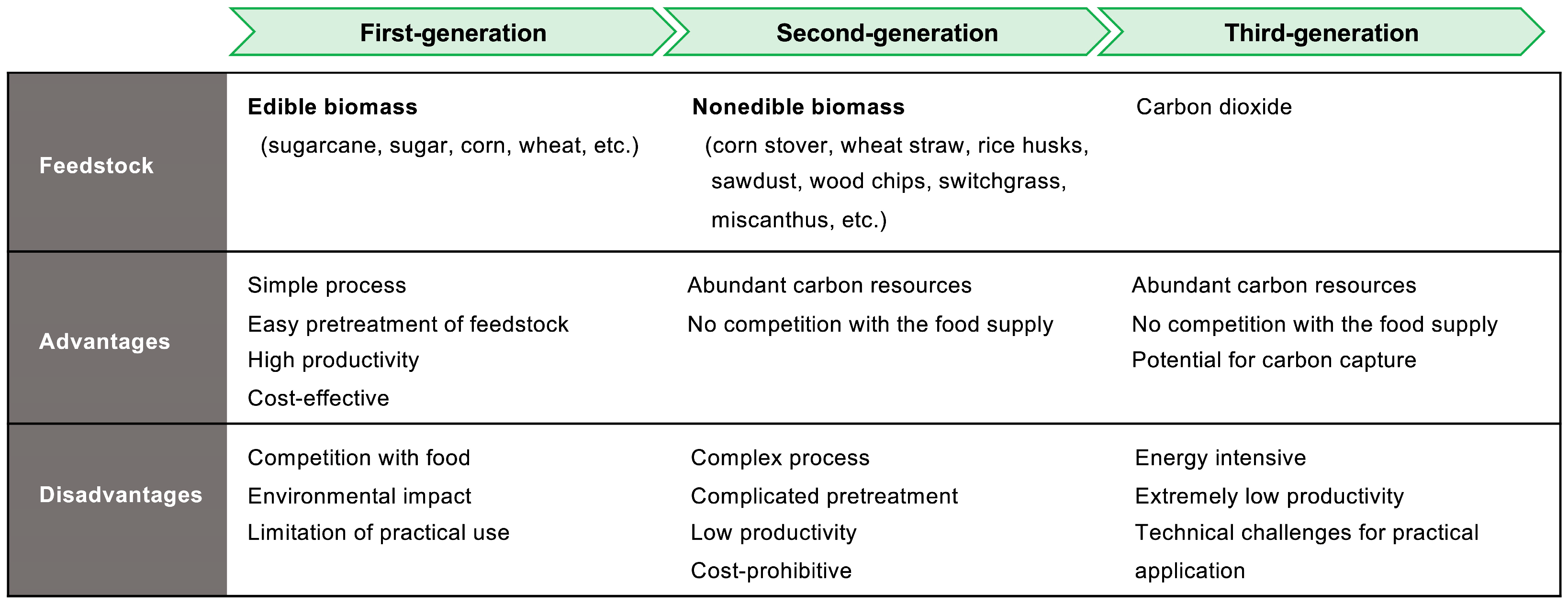
Biofuel is considered carbon-neutral because the CO2 gas released during its combustion is balanced by the CO2 gas absorbed by the biomass feedstock during growth. Based on this significant environmental advantage, the strategic introduction of biofuels could help suppress global warming by reducing the consumption of fossil fuels. Bioethanol is the most widely used biofuel worldwide, with production exceeding 110.4 billion liters in 2018 [3]. Based on differences in source materials and production methods, bioethanol can be classified as first-, second- or third-generation (Figure 1). First-generation bioethanol is produced by fermentation of sugar-rich (e.g., sugarcane and sugar beet) or starch-rich (e.g., corn and wheat) feedstocks. This type of biofuel is produced on a commercial scale in the United States and Brazil and used for blending into gasoline [4]. However, the use of these edible feedstocks as raw materials has been criticized for competing with the supply of food and animal feed, especially in the context of global food problems such as hunger [5].
Figure 1.
Characteristics of different biofuel generations.
To overcome these challenges, research has shifted significantly toward the production of second-generation bioethanol. Second-generation bioethanol is produced from inedible feedstocks such as agricultural residues (e.g., corn stover, wheat straw, rice husks), forestry residues (e.g., sawdust, wood chips), dedicated energy crops (e.g., switchgrass, miscanthus), and industrial/municipal organic wastes. Lignocellulosic biomass, in particular, represents the most abundant renewable organic resource on Earth, with estimated annual production exceeding 170 billion tons globally [6], making it a desirable raw material for biofuel production. However, despite the abundant availability of lignocellulosic biomass, technical and economic challenges must be overcome to facilitate the commercial production of second-generation bioethanol [7,8,9].
Microbial production of second-generation bioethanol involves three key steps: pretreatment, enzymatic hydrolysis, and fermentation [10]. Lignocellulose has a complex structure composed of cross-linked cellulose (40–50%), hemicellulose (25–35%), and lignin (15–30%) and thus requires energy-intensive pretreatment before enzymatic hydrolysis for sugar extraction [11]. Current pretreatment methods such as dilute acid hydrolysis, steam explosion, ammonia fiber expansion, and organosolv processes are generally carried out under high temperatures (120–220 °C) and/or extreme pH conditions, resulting in the co-production of various inhibitors, including phenolic compounds [(furfural, 5-hydroxymethylfurfural (HMF)], aldehydes (vanillin, syringaldehyde), weak acids (acetic acid, formic acid), and salts formed during pH neutralization [11]. These compounds inhibit the ethanol-producing capacity of Saccharomyces cerevisiae, the yeast used in the production of first-generation bioethanol, which necessitates the implementation of detoxification procedures [12]. Moreover, many of the saccharifying enzymes used in enzymatic saccharification (the step following pretreatment) are only active at temperatures above 45 °C. As the growth of S. cerevisiae is inhibited at temperatures above 40 °C, the enzymatic saccharification and fermentation steps must be carried out separately [13].
In screening studies to identify microbial hosts better suited to the harsh conditions associated with second-generation bioethanol production using lignocellulosic biomass as feedstock, heat-tolerant and stress-resistant non-Saccharomyces yeasts are attracting increasing attention. Candida krusei (also known as Pichia kudriavzevii or Issatchenkia orientalis) is one of the most promising alternative yeasts for this application. C. krusei can be isolated from a diverse range of sources, such as fermented cocoa beans, kefir, cheese, and other traditional fermented foods, and it exhibits several physiological characteristics particularly advantageous for second-generation bioethanol production. Furthermore, the ethanol production potential of this yeast is comparable to that of S. cerevisiae. This review provides a comprehensive analysis of second-generation bioethanol production using C. krusei, summarizing recent advances regarding its physiological characteristics, strain diversity, and application to various lignocellulosic feedstocks. Moreover, this review discusses the advantages and challenges associated with the use of C. krusei compared to conventional bioethanol-producing yeasts, outlines the key technical challenges for realizing commercial production of second-generation bioethanol, and proposes research directions for further development of promising production technologies. Section 2 describes the taxonomic classification and physiological properties of C. krusei, including a comparative analysis of its multi-stress tolerance relative to other non-Saccharomyces yeasts. Section 3 presents case studies of second-generation bioethanol production from various lignocellulosic feedstocks, covering both separate hydrolysis and fermentation (SHF) and simultaneous saccharification and fermentation (SSF) approaches. Section 4 examines the major technical and biosafety challenges that must be overcome to realize commercial deployment of C. krusei, including limitations in xylose metabolism, scale-up constraints in industrial bioreactors, and considerations arising from its opportunistic pathogenic nature. Section 5 summarizes strategies for reducing the cost of second-generation bioethanol production using C. krusei, encompassing process optimization, by-product minimization, co-fermentation approaches, and energy integration. Section 6 explains the environmental impacts of second-generation bioethanol production using the C. krusei strain from a life cycle assessment (LCA) perspective, focusing particularly on the potential for reducing GHG emissions throughout the entire production process. Finally, conclusions and future perspectives are discussed in Section 7.
2. Taxonomic Classification and Physiological Properties of C. krusei
The taxonomic position of C. krusei is complex, and the classification of this microorganism has changed significantly over the past few decades, resulting in multiple synonymous names in the scientific literature. The species was originally described as C. krusei (anamorph), but subsequent phylogenetic studies revealed that it represents the anamorph of I. orientalis (older name often used in the biotechnology literature), which produces ascospores under specific conditions [14]. More recently, based on molecular phylogenetic analyses of ribosomal DNA and protein-coding genes, the teleomorph has been reclassified as P. kudriavzevii (the currently preferred teleomorph name) [14]. As a result, the same yeast is described under three different scientific names in the literature, and certain isolates are designated Candida glycerinogenes due to their ability to produce glycerol [15]. For consistency with the literature and referenced studies concerning second-generation bioethanol production, this review primarily uses C. krusei while acknowledging the synonymous nomenclature. C. krusei belongs to the phylum Ascomycota, class Saccharomycetes, order Saccharomycetales, family Pichiaceae. Phylogenetically, this species is more closely related to Pichia than pathogenic Candida species such as C. albicans, which belongs to a distinct evolutionary lineage [16]. This phylogenetic distance is reflected in fundamental physiological differences, as C. krusei cannot form hyphae and exhibits natural resistance to various antifungal agents [17].
Compared with S. cerevisiae, C. krusei exhibits several physiological characteristics that are advantageous for second-generation bioethanol production (Table 1). One of the most useful characteristics of C. krusei is its thermotolerance, which encourages the use of the microorganism in second-generation bioethanol production. S. cerevisiae exhibits optimal growth at 28–35 °C, and its growth is inhibited above 40 °C, whereas C. krusei can grow at temperatures up to 45 °C and exhibits thermotolerance at temperatures up to 50 °C [18]. This thermotolerance provides several advantages for second-generation bioethanol production. Although most commercial cellulases exhibit maximum activity at 45–60 °C, second-generation bioethanol production using S. cerevisiae is conducted at temperatures lower than the optimum temperature of cellulases [13]. This results in reduced saccharification efficiency, increased enzyme usage, and extended hydrolysis times. By contrast, when using C. krusei, ethanol production is possible at a temperature near the optimal temperature for cellulase activity, allowing for SSF, which shortens the overall process time. The thermotolerance of C. krusei not only enables SSF but also directly and dramatically reduces cooling costs at the plant scale [19]. In industrial-scale bioreactors, the temperature of the medium increases due to the heat generated by microbial fermentation. For the use of yeasts such as S. cerevisiae, the medium temperature must be maintained at approximately 30 °C, which requires enormous amounts of cooling water and energy. By contrast, utilizing C. krusei reduces the load on heat exchangers and enables stable production even in harsh environments such as tropical regions. This provides a powerful advantage for global adoption of C. krusei.
Table 1.
Comparison of the tolerance characteristics of S. cerevisiae and C. krusei.
The thermotolerance of yeasts is controlled by a complex regulatory network consisting of genetic, molecular, and physiological processes, which collectively enable cells to withstand both sudden and sustained heat stress. Cellular protection mechanisms against short-term heat stress primarily involve the transient expression of heat shock proteins (HSPs) that prevent the misfolding and aggregation of cellular proteins [20,21], whereas long-term heat stress induces more extensive transcriptional reprogramming that promotes cell recovery and metabolic readjustment [20,22,23]. Unlike S. cerevisiae, the mechanisms underlying adaptive evolution under heat stress in C. krusei are largely unknown, although several relevant studies have been reported. The thermotolerance of C. krusei was partially characterized through comparative genomic and transcriptomic analyses. Various HSPs, particularly members of the HSP70 and HSP90 families, are constitutively expressed at higher basal levels in C. krusei than S. cerevisiae [24]. Moreover, the trehalose biosynthesis pathway, which produces a disaccharide that stabilizes membrane proteins, is activated at elevated temperatures [25], suggesting that C. krusei enhances trehalose production as part of its thermal protective mechanism against high-temperature stress, similar to S. cerevisiae. The composition of membrane lipids differs between C. krusei and S. cerevisiae, with C. krusei membranes containing a higher proportion of saturated fatty acids that enhance membrane rigidity and thermal stability [26]. On the other hand, as a mechanism related to metabolic pathways, an increase in ATP synthesis has been reported. When C. krusei is subjected to heat stress, significant upregulation of oxidative phosphorylation and the TCA cycle occurs, and the expression of key enzymes such as NADH dehydrogenase and cytochrome C oxidase is enhanced, promoting ATP synthesis [18]. Ultimately, this strengthens the mitochondrial energy production system to ensure a sufficient supply of cellular ATP and thus counteracts heat stress [18]. Under heat stress, genes involved in the pentose phosphate pathway were significantly suppressed in the C. krusei cells. In addition to the above, modulation of the pentose phosphate pathway and upregulation of glutathione and superoxide dismutase activities have also been reported to contribute to thermotolerance of C. krusei [25].
The tolerance of a yeast species to acids and inhibitors is another useful characteristic in second-generation bioethanol production. Several C. krusei strains are capable of growing at pH 1.4–2.2, a condition that significantly inhibits or completely prevents the growth of S. cerevisiae, thus demonstrating the superior acid tolerance of C. krusei among eukaryotic microorganisms [27]. This acid tolerance is critically advantageous in the pretreatment of lignocellulose. For example, in the acid pretreatment and hydrolysis of lignocellulosic biomass, acetic acid released from the acetyl groups of hemicellulose and the acids (H2SO4 or HCl) used in pretreatment remain, resulting in a hydrolysate with a pH in the range 1.5–3.0 [27]. In conventional fermentation using S. cerevisiae, the pH must be adjusted to 5.0–6.0 by neutralization with alkaline reagents [e.g., NaOH, Ca(OH)2, or NH3], resulting in the generation of salt byproducts [Na2SO4, CaSO4, or (NH4)2SO4] that inhibit yeast growth and fermentation [28,29,30]. Thus, in addition to neutralization, a desalination step is also necessary. However, neutralization and desalination are not required when using C. krusei, resulting in greater economic returns. In the pretreatment step, lignocellulose is broken down into cellulose, hemicellulose, and lignin. However, aldehydes and phenolic compounds are also generated, and these compounds act as inhibitors that interfere with subsequent fermentation processes. Furfural and HMF are particularly strong inhibitors that disrupt the cell wall and cell membrane, reduce enzyme activity, damage DNA, and inhibit protein and RNA synthesis. Compared with S. cerevisiae, C. krusei exhibits superior tolerance to inhibitors and can grow advantageously even in the presence of these inhibitors. A key molecule that determines the acid tolerance of C. krusei is CkGas1 (also known as PkGas1 in P. kudriavzevii or IoGas1 in I. orientalis [31,32,33]), a glycosylphosphatidylinositol (GPI)-anchored cell wall protein. The gene CkGAS1, first isolated from the C. krusei NBRC1279 genomic library, encodes the catalytic subunit of β-1,3-glucan synthase, which mediates cell wall formation. Overexpression of CkGAS1 improves the tolerance of S. cerevisiae to not only sulfuric acid but also hydrochloric acid and lactic acid, particularly at pH values < 2.4 [33]. In addition, improved ethanol fermentation performance under acidic conditions has been reported in S. cerevisiae strains expressing CkGAS1, suggesting these strains have industrial potential in bioethanol and organic acid production [31,32,33].
A recent transcriptomic study of the acid-tolerant C. krusei strains NBRC1279 and NBRC1664 partially elucidated the molecular mechanism underlying acid tolerance [34]. Under acidic stress conditions, the expression of most genes associated with the high osmolarity glycerol (HOG) pathway is upregulated in C. krusei relative to S. cerevisiae. Moreover, C. krusei NBRC1664 exhibits superior acid tolerance than C. krusei NBRC1279, which is attributable to increased expression of the NAD+-dependent glycerol-3-phosphate dehydrogenase gene, which catalyzes the production of glycerol-3-phosphate, a precursor of the osmotic agent glycerol. Mechanisms distinct from the enhancement of the HOG pathway have also been reported. A comprehensive transcriptomic analysis of 12 C. krusei strains, comprising both resistant and susceptible strains, revealed that acute exposure to extremely low pH (pH 1.5) triggers a global reorganization of the transcriptional regulatory network [35]. This analysis identified several key transcription factors, such as Stb5, Mac1, and Rtg1/Rtg3, that are specifically involved in the low-pH response in tolerant strains. Stb5 and Mac1 are thought to regulate crucial metabolic shifts toward increased glycolytic flux and the TCA cycle to meet the high energy demands of maintaining pH homeostasis. Additionally, Rtg1/Rtg3 play a critical role in the mitochondrial retrograde signaling pathway. In relation to these, glycolysis and trehalose biosynthesis are enhanced. These findings suggest that the low-pH tolerance of C. krusei is achieved through coordinated functions such as energy metabolism and cell wall structural reinforcement. Analyses of draft genome sequences revealed that several different aldehyde dehydrogenases and aldehyde dehydrogenase family proteins are conserved in these strains. The expression of aldehyde dehydrogenase family proteins, in particular, is significantly upregulated under HMF-associated stress, and these enzymes are thought to play a key role in mediating inhibitor tolerance [12].
One of the most remarkable and industrially valuable characteristics of C. krusei is its unique metabolic profile. C. krusei exhibits a somewhat restricted sugar assimilation profile but remarkable metabolic flexibility in utilizing non-sugar carbon sources, including glycerol and various organic acids [36]. With regard to sugars, pentose metabolism is critical for the economic viability of second-generation bioethanol production. Xylose is a major component of hemicellulose, but S. cerevisiae naturally lacks the enzymes necessary to metabolize xylose, resulting in substantial sugar waste and a consequent decrease in yield. By contrast, several strains of C. krusei can produce ethanol by metabolizing xylose, but productivity is substantially lower than that obtained with glucose. For example, a xylanase-producing strain, C. krusei 2-KLP1, was isolated from industrial waste [37]. Xylanase efficiently degrades xylan, which is the main hemicellulose component of plant cell walls, and C. krusei 2-KLP1 produces xylanase both intra- and extracellularly. Exploiting this enzyme production capacity is an effective means of increasing second-generation bioethanol production efficiency.
In addition to the characteristics discussed above, the production of second-generation bioethanol using C. krusei requires control of dissolved oxygen levels. Because C. krusei exhibits respiratory selectivity, it must be cultivated under microaerobic conditions in order to maximize ethanol production. Liu et al. demonstrated that C. krusei shifts to fermentative metabolism under oxygen-limited conditions, resulting in increased ethanol production [38]. Thus, oxygen availability must be controlled in order to use C. krusei for ethanol production.
Compared to thermotolerant yeasts, C. krusei exhibits the unique characteristic of acid tolerance. While Kluyveromyces marxianus [39,40,41] and Ogataea polymorpha [42,43,44] also exhibit high-temperature growth (up to 52 °C and >50 °C, respectively), C. krusei maintains higher viability and metabolic activity under low pH conditions (pH < 2.0), which are typically encountered in non-neutralized lignocellulosic hydrolysates. Furthermore, unlike the xylose-assimilating yeast Scheffersomyces stipitis, which possesses superior natural xylose metabolism capacity but is highly sensitive to ethanol and requires strict microaerobic control [45,46], C. krusei offers greater overall robustness against the multiple stressors present in industrial-scale bioreactors. This multi-stress tolerance capacity simplifies the overall process by reducing the need for extensive detoxification and pH adjustment, thereby enhancing the feasibility of SSF.
3. Case Studies of Second-Generation Bioethanol Production from Various Feedstocks
Two highly efficient methods for producing second-generation bioethanol have been reported: SHF and SSF (Figure 2). SHF involves enzymatic hydrolysis and fermentation in distinct steps, which allows for the use of optimal conditions in each step [10]. This separation of process steps resolves the effects of differences in optimal parameters for hydrolysis and fermentation, thereby enhancing ethanol productivity. In particular, pretreatment is a critical initial step in second-generation bioethanol production, designed to overcome the inherent resistance of lignocellulosic biomass by breaking down the complex matrix of cellulose, hemicellulose and lignin to facilitate subsequent enzymatic degradation. This process is generally categorizes into four types of techniques: physical methods (e.g., mechanical milling) that reduce particle size and cellulose crystallinity; chemical methods (e.g., dilute acid or alkali treatments) that selectively solubilize hemicellulose or remove lignin; physico-chemical methods (e.g., steam explosion and ammonia fiber expansion) that combine thermal and mechanical forces for rapid fiber disruption; and biological methods utilizing specific fungi to eco-friendly degrade lignin, albeit at a slower reaction rate. Ultimately, for commercial-scale production, the ideal pretreatment method must maintain a high carbohydrate retention rate while reducing energy consumption, chemical costs, and the generation of fermentation inhibitors in downstream processes. The main drawback of SHF is the extension of processing time due to the sequential operations. In SSF, by contrast, the processing time is shortened because hydrolysis and fermentation are carried out simultaneously [47]. Thus, compared with SHF, SSF has several advantages, including more streamlined operation, easier implementation, and lower energy requirements. Due to these advantages, SSF is an economical method for second-generation bioethanol production. A critical consideration with either method, however, is that the purification step significantly affects the overall production cost. Interestingly, the question as to which method is more industrially viable remains unresolved [11].
Figure 2.
SHF and SSF for second-generation bioethanol production.
Due to the high tolerance of C. krusei to a variety of stresses, screening for useful strains was carried out, and the resulting isolates were utilized for second-generation bioethanol production (Table 1). Numerous isolates have been used in SHF-based ethanol production due to their advantageous characteristics. For example, C. krusei IPE100, which was isolated from cornstalk [48], is resistant to inhibitors such as furfural and exhibits no growth inhibition even at high substrate concentrations. Moreover, this strain exhibits the highest ethanol production concentration, production rate, and yield (Table 2), although a simple comparison of strains is not possible due to differences in the conditions employed.
Table 2.
Comparison of second-generation bioethanol concentration and productivity using C. krusei strains.
Genetic engineering techniques are widely used in the development of ethanol-producing strains, and they have been used to modify C. krusei. The C. krusei strains SD108X, IO21X, IO45X and IO46X were developed using Cas9-based genome engineering to introduce xylose-assimilating pathway enzymes (Figure 3), including xylose reductase, xylitol dehydrogenase, and xylulokinase from S. stipitis [45,46]. Notably, when using sorghum hydrolysate, C. krusei IO21X co-consumed glucose and xylose, achieving the highest ethanol concentration despite the lack of pH adjustment and nitrogen supplementation. Modifying C. krusei using adaptive laboratory evolution techniques has also been employed to enhance ethanol production capacity. For example, Dolpatcha et al. developed several C. krusei strains through repeated long-term cultivation in medium supplemented with a gradually increasing concentration of acetic acid [53]. The resulting strains, C. krusei PkAC-7, PkAC-8, and PkAC-9, exhibited significantly greater tolerance to multiple stressors, including heat, ethanol, osmotic stress, acetic acid, formic acid, furfural, HMF, and vanillin. Moreover, when C. krusei PkAC-9 was cultivated in sugarcane bagasse hydrolysate, the highest ethanol concentration was reached at 11.0 g/L, which was 1.7-fold higher than the production concentration using the parent strain, highlighting the effectiveness of enhancing inhibitor tolerance.
Figure 3.
Xylose metabolism pathway in S. stipitis.
Several C. krusei strains have also been used in SSF-based ethanol production. To isolate ethanol-producing strains suitable for SSF, Ndubuisi et al. carried out a comprehensive screening of palm wine and rotten fruit, obtaining a total of 500 thermotolerant fermentation yeast isolates [56]. Among these 500 isolates, the strain exhibiting the best ethanol productivity under high-temperature conditions was selected and identified as C. krusei LC375240 based on similarity of the rDNA internal transcribed spacer region. Under SSF using cassava pulp as a feedstock, C. krusei LC375240 produced more than 42 g/L of bioethanol with an 82.4% theoretical yield, which is the highest reported value in the literature to date. Similarly, C. krusei HOP-1 [55] and C. krusei SI [57], which were isolated through screening, also exhibit excellent second-generation bioethanol production. In addition to the abovementioned strains, second-generation bioethanol production has also been reported using available strains. SSF using lignocellulose biomass has been reported using the ethanol-producing strains C. krusei NBRC1279 and NBRC1664 [13]. When using Japanese cedar particles as the source material, both strains produced more than 21.9 g/L of bioethanol. Similarly, more than 21.3 g/L of bioethanol was produced by these strains when using Japanese eucalyptus particles. Comparing both strains, C. krusei NBRC1664 is more suitable for use in SSF than C. krusei NBRC1279 due to its superior acid tolerance [34] and inhibitor tolerance [12].
4. Challenges and Constraints of C. krusei Utilization
The utility of C. krusei for metabolic engineering is limited because available genetic tools require auxotrophic mutants, which restricts the selection of host strains [49]. Recently, however, the development of Cas9-based genome-editing methods, which do not require auxotrophic mutants, has greatly improved gene manipulation in any wild-type C. krusei strains [49,58]. This strategy utilizes plasmids containing a PAN-ARS derived from K. lactis and a dominant drug resistance marker (cloNAT), enabling precise genome editing and gene disruption across various wild-type strains without the need for auxotrophic host construction. Standardized biological parts, including native promoters such as TDH3, GPM1, and TEF1, as well as terminators such as MDH1 and PDC1, have been successfully identified for the precise modulation of gene activity. Although this tool enables the site-specific integration of heterologous gene modules in C. krusei, challenges remain in optimizing vectors and delivery methods to improve transformation efficiency.
A primary bottleneck hindering the commercial viability of C. krusei-based second-generation bioethanol production is that this species cannot metabolize xylose as a carbon source [58]. Thus, a heterologous xylose metabolic pathway needs to be introduced into C. krusei for producing second-generation bioethanol, and xylose reductase, xylitol dehydrogenase and xylulokinase are utilized for construction of the metabolic pathway [45,46]. Xylose reductase consumes NAD(P)H to reduce xylose to xylitol. Subsequently, xylitol dehydrogenase oxidizes the resulting xylitol to xylulose. Finally, xylulokinase phosphorylates xylulose to xylulose-5-phosphate. Xylulose-5-phosphate is used as a carbon source in the pentose phosphate pathway [59]. Although this artificial metabolic pathway is effective for xylose metabolism, the accumulation of by-products such as xylitol leads to a reduction in ethanol yield; therefore, the enzyme activity ratio must be optimised. The construction of artificial metabolic pathways using the Cas9-based genome-editing methods described above has been reported [45,46]. Adaptive laboratory evolution under pentose-rich conditions may lead to the development of production strains that enhance the efficiency of glucose and xylose co-metabolism [60,61].
In laboratory-scale studies, parameters such as dissolved oxygen, culture medium pH, culture temperature, and substrate concentration are optimized to increase production efficiency. However, these optimized conditions behave differently in industrial-scale bioreactors, directly impacting yeast growth, product yield and the economic feasibility of the overall process [62,63]. Thus, a systematic engineering approach is essential to resolving these scale-up challenges. In industrial-scale bioreactors, mixing may be insufficient, causing changes in bubble behaviour and potentially reducing oxygen transfer efficiency. Furthermore, industrial-scale bioreactors experience a decrease in surface area-to-volume ratio, leading to localized overheating. The resulting decrease in ethanol production yield can be avoided by the growth capacity and thermotolerance of C. krusei, although a cooling system may be necessary depending on the production conditions.
While C. krusei is recognized as having potential for second-generation bioethanol production, it cannot be ignored that this species is also recognized as an opportunistic human pathogen. The advantage of C. krusei, its multi-stress tolerance capacity, also contributes to its survival and persistence as a pathogen in the human body and in medical settings. Furthermore, C. krusei is resistant to various antifungal agents such as amphotericin B, ketoconazole, fluconazole and flucytosine [64,65,66]. In fact, it has been detected as a pathogen causing a variety of clinical symptoms, including arthritis, endocarditis, endophthalmitis and fungaemia, most of which occur in immunocompromised patients in hospital settings [67]. Recent population genomics studies have revealed no fundamental phylogenetic distinction between clinical isolates and environmental strains [17]. Thus, considering the characteristics of C. krusei as an opportunistic human pathogen, the transition to industrial-scale production requires stringent biosafety protocols and containment strategies to mitigate potential health risks to personnel and the environment. Future research focusing on genetically weakening pathogenic traits without compromising ethanol production capacity will be essential for widespread adoption as safe industrial production strains. Thus, future research must prioritize genetic strategies aimed at specifically weakening pathogenic traits, ensuring biosafety without compromising the yeast’s robust ethanol productivity.
In summary, C. krusei has unique advantages that comprehensively determine its industrial utilization for second-generation bioethanol production (Table 3). The advantages of C. krusei are: its thermotolerance, which enables SSF under conditions close to the optimum temperature for cellulase; its superior acid tolerance, which allows for the direct fermentation of non-neutralized lignocellulosic hydrolysates; its broad tolerance to inhibitory substances, which reduces the need for detoxification; and its minimal succinate production, which maintains the efficiency of percolation membranes, and those comprehensively address some of the most critical technical and economic bottlenecks in lignocellulosic bioethanol production. Based on its characteristics, C. krusei is a particularly attractive biocatalyst for production processes using dilute acid pretreatment, and by combining low-pH fermentation with reduced downstream processing, clear cost and environmental benefits can be achieved. By contrast, the main challenges of C. krusei, such as the inability of the wild-type strain to efficiently metabolize xylose, the complexities associated with scaling up from laboratory to industrial-scale bioreactors, and the biosafety concerns arising from its opportunistic nature, present significant barriers that must be systematically addressed before commercial deployment can be achieved. Importantly, recent advances in Cas9-based genome editing and adaptive laboratory evolution are narrowing the gap between the current capabilities of C. krusei and the requirements for industrial-scale production, suggesting that many of these challenges may be solvable in the near future. Ultimately, the convergence of advances in synthetic biology, metabolic engineering, process intensification, and bioprocess engineering is expected to narrow these operational gaps, paving the way for commercial-scale deployment within the next decade.
Table 3.
Summary of the principal advantages and limitations of C. krusei as a biocatalyst for second-generation bioethanol production.
5. Strategies for Reducing the Cost of Second-Generation Bioethanol Production Using C. krusei
Feedstock accounts for most of the production cost associated with first-generation bioethanol production, with feedstock representing 40–75% of total cost depending on the type used [68]. The production cost of sugarcane-derived bioethanol sold in Brazil is 0.20–0.30 USD/L, and the production cost of corn-derived bioethanol sold in the United States is comparable [68,69,70]. Several techno-economic analyses have been conducted on second-generation bioethanol production using raw materials such as corn stalks, rice and wheat straw, sugarcane bagasse and lignocellulosic biomass, and which reported minimum fuel sales prices ranging from 0.27 to 1.78 USD/L, depending on the type of feedstock [71,72,73,74,75] (Table 4). In other words, the production cost of second-generation bioethanol is higher than that of first-generation bioethanol; therefore, reducing production costs is essential for the commercialization of second-generation bioethanol.
Table 4.
Production costs of second-generation bioethanol.
Based on the techno-economic analyses, the production cost of second-generation bioethanol may be reduced by implementing unique, dimensional approaches and rigorous process optimization, in addition to simplifying the production process through established methods such as SSF. First, minimize the generation of by-products. In addition to the xylose metabolic pathway introduced into C. krusei mentioned above, the capacity of minimal organic acid byproducts has a significant impact on downstream bioethanol recovery and the overall economics of the process. In the ethanol recovery step, the use of membrane filtration (particularly pervaporation using silicalite membranes) is highly efficient due to its lower operational energy requirement. However, a major challenge to this approach is that the adsorption of organic acid byproducts, especially succinic acid, onto the separation membranes significantly decreases both the flux and selectivity of ethanol [87,88]. Thus, suppressing the production of succinic acid as a by-product provides a significant advantage for ethanol recovery, particularly in pervaporation processes. Adsorption of succinic acid occurs because S. cerevisiae produces large amounts of this acid (1.5–1.8 g/L/day) during fermentation under semi-aerobic conditions, whereas C. krusei strain IA-1 produces only small amounts of organic acids (0.6 g/L/day) [89]. This is due to fundamental differences between these two organisms in central carbon metabolism and the tricarboxylic acid cycle. The molecular mechanism underlying the minimal accumulation of succinic acid in C. krusei was elucidated using transcriptomic and enzymatic analyses. Transcription of the SDH1 gene in C. krusei IA-1 is maintained at a high level without glucose repression, whereas transcription of this gene is repressed in S. cerevisiae NBRC 0216 [89]. Moreover, the succinate dehydrogenase from C. krusei IA-1 exhibits 7.8-fold higher specific activity than the enzyme from S. cerevisiae NBRC 0216 [89]. Based on these differences, C. krusei not only produces minimal amounts of succinic acid but also actively assimilates exogenous succinic acid in the culture medium. Consequently, utilization of a low succinic acid-producing strain such as C. krusei IA-1 prevents membrane fouling and maintains a high separation efficiency, which ultimately contributes to reducing bioethanol production costs. Second, optimize the production method. Addition of NaCl to the medium represents a highly efficient strategy for enhancing the thermotolerance and ethanol productivity of C. krusei [90]. Although the growth of C. krusei A16 is severely inhibited at temperatures above 42 °C, the addition of 300 mM NaCl effectively alleviates this growth inhibition when cells are cultivated at 45 °C. This NaCl-induced protection resulted in a 2.6-fold increase in cell mass and 3.9-fold increase in bioethanol production compared with control cultures lacking NaCl supplementation. Electron microscopy analyses further revealed that salt stress preserves cell membrane integrity, preventing the extensive cell lysis and leakage of intracellular materials usually observed at high temperatures [90]. These data suggest that improving thermotolerance and ethanol productivity under high-temperature conditions by adding NaCl has a number of effects, including increased production of cytoprotective substances such as glycerol, increased expression of alcohol dehydrogenase, and decreased expression of aldehyde dehydrogenase. The accumulation of cytoprotective solutes such as glycerol, trehalose, and ergosterol is particularly effective for maintaining cellular function. Supporting this proposed protection mechanism, it has been demonstrated that activating the HOG pathway mitigates C. krusei growth inhibition under acid stress [34]. For example, the acid-tolerant strain C. krusei NBRC1664 exhibits significantly upregulated expression of the GPD1 gene compared with acid-sensitive strains, leading to increased glycerol production. To apply this stress tolerance to practical applications, it has been further established that seawater can be effectively utilized as an alternative solvent and mineral source for bioethanol production. The fermentation performance of C. krusei NBRC1664 can be maintained even in a medium containing 40% seawater, resulting in the production of 8.34 g/L of ethanol, comparable to that produced in a freshwater-based medium [91]. These results suggest that the stress tolerance of C. krusei NBRC1664 allows for the effective use of seawater, thereby reducing both freshwater usage and production costs. Third, generate useful substances through co-fermentation. Co-fermentation represents a promising strategy to enhance fermentation efficiency and potentially reduce the cost of bioethanol production using C. krusei. For example, Luo et al. demonstrated that co-fermentation using C. krusei and the thermotolerant yeast Millerozyma farinosa significantly modulates the fungal community, resulting in enhanced flavor production in Yangjiang douche (traditional Chinese fermented black bean condiment) [92]. In this synergistic system, C. krusei primarily metabolizes carbohydrates to produce ethanol and intermediate precursors via the glycolytic pathway. Subsequently, M. farinosa utilizes these substrates to synthesize a diverse array of aroma compounds, particularly esters, through esterification and alcoholysis. This metabolic complementarity resulted in a 6.7-fold increase in production of total volatile compounds compared with the pre-fermentation stage [92]. Notably, the co-fermentation system achieved a 1.38-fold higher ester content and 2.4-fold higher phenethyl alcohol content compared with single-strain control systems [92]. These findings suggest that co-fermentation activates synergistic enzymatic systems, thereby maximizing the bioconversion of substrates into valuable end-products. In other words, coordinating the production of bioethanol with that of other useful substances based on co-fermentation could facilitate the development of more cost-effective production methods. Thus, future research should also examine the concept of a “biorefinery”, which integrates bioethanol production with the synthesis of high-value-added by-products. Fourth, effective uses heat sources. According to Macrelli et al.’s calculations, implementing this alongside the production of first-generation bioethanol can significantly reduce the manufacturing costs of second-generation bioethanol [75]. By reusing secondary vapors generated from the raw material drying and evaporation/distillation processes, it is possible to reduce the heat demand required for production by approximately 27%. In addition to this improvement in energy efficiency, combining it with increased fuel calorific value from the drying process and optimization of enzymes and raw materials can reduce the production cost of second-generation bioethanol by up to 37%. Finally, the effective use of the distillation residues generated during the production of second-generation bioethanol. By using distillation residue to cultivate the edible fungus Neurospora intermedia under the optimized conditions, it is possible to produce 6300 tons of high-quality animal feed annually [93]. Furthermore, estimates suggest that existing industrial infrastructure can be utilized, requiring minimal capital investment. In other words, by producing high-value-added useful substances in addition to second-generation bioethanol, the production costs of second-generation bioethanol can be reduced. By utilizing C. krusei with genetically modified xylose metabolic pathways, it may be possible to overcome technical barriers by improving the production method through a combination of co-production of high-value-added products and the efficient utilization of energy.
6. Environmental Impact of Second-Generation Bioethanol Production Using C. krusei
A comprehensive LCA perspective is essential for evaluating the environmental advantages of second-generation bioethanol production and identifying the conditions under which the processes using C. krusei strains can significantly reduce GHG emissions compared to fossil fuels. When evaluating the environmental advantages from a well-to-wheel LCA perspective [94,95,96], it is necessary to consider the cultivation and harvesting of feedstocks, pretreatment and enzymatic saccharification, fermentation, downstream ethanol recovery and purification, wastewater treatment, and GHG emissions generated from the cogeneration of heat and electricity from unconverted lignin and biomass residues. Rodrigues Gurgel da Silva et al. demonstrated that all five pretreatments, which include dilute acid, liquid hot water, steam explosion, ammonia fiber explosion and organosolv, configurations evaluated in a full biorefinery simulation, and yielded positive environmental effects, confirming that second-generation bioethanol production consistently offsets more CO2-equivalent emissions than it generates across the entire process chain [77]. Critically, the selection of pretreatment method exerts a profound influence on both the amount of GHG emission and the economic viability of the process, and the dilute acid pretreatment achieved the highest environmental effect, primarily because it delivered the highest biomass-to-ethanol conversion efficiency, thereby minimizing the volume of unconverted material routed to the cogeneration unit and the associated combustion emissions. These findings carry direct relevance for second-generation bioethanol production using C. krusei strains; their acid tolerance capacity enables ethanol production, making it particularly suitable for use in combination with dilute acid pretreatment, and potentially reducing GHG emissions by eliminating related neutralization and desalination processes.
In addition to the selection of pretreatment, the downstream ethanol recovery step is often underestimated, despite its importance in terms of production costs and environmental impact. Regarding the environmental footprint of the recovery process, C. krusei shows a clear advantage over S. cerevisiae. By minimizing the accumulation of succinic acid (refer to Section 5 for the molecular mechanism), the process maintains higher permeation flux and selectivity. This efficiency reduces the frequency of energy-intensive membrane regeneration cycles, thereby enhancing the overall environmental sustainability of the biorefinery.
A new aspect of the LCA for second-generation bioethanol concerns the integration of supplemental hydrogen derived from renewable energy with biomass conversion, which is called the power-to-biomass liquefaction approach [97,98]. Melin et al. demonstrated that a hybrid process combining biomass gasification, water electrolysis, and the sequential synthesis of methanol, acetic acid and ethanol achieves a carbon efficiency of over 90%. This significantly exceeds the carbon efficiency of 26–35% typically reported for fermentation-based cellulose-derived ethanol production [72]. Critically, it was found that GHG emissions during ethanol production are highly sensitive to the power mix used [72]. When using the Finnish grid mix (72 g CO2/kWh), it was possible to reduce GHG emissions by up to 75% compared with fossil petrol; however, when using the German grid mix (380 g CO2/kWh), emissions were significantly higher than those of petrol. These research findings enhance the value of second-generation bioethanol production in climate change mitigation. Combining ethanol production using C. krusei with optimized power mix with the production of useful substances using distillation residues and other raw materials could potentially reduce production costs and GHG emissions, which is consistent with the comprehensive LCA methodologies currently advocated in the fields of technology, economics and the environment. Based on these considerations, it is considered increasingly important to conduct an integrated LCA that incorporates not only second-generation bioethanol production but also upstream pretreatment methods, downstream separation energy, cogeneration of useful substances, and by-product offsets. However, it is critical to note that the full environmental and life-cycle benefits of C. krusei-based processes remain strictly contingent upon the appropriate selection of upstream pretreatment and efficient process energy integration.
7. Conclusions
C. krusei represents a highly promising biocatalyst for second-generation bioethanol production due to its exceptional thermotolerance, acid tolerance, and minimal succinic acid generation. These physiological characteristics enable SSF to operate near optimal cellulase temperatures, allow direct fermentation of non-neutralized lignocellulosic hydrolysates, and prevent downstream membrane fouling during ethanol recovery. From an LCA perspective, these combined process efficiencies significantly reduce energy consumption and greenhouse gas emissions compared to conventional S. cerevisiae-based processes.
However, commercial deployment requires addressing key constraints, including inefficient wild-type xylose metabolism, industrial scale-up challenges regarding oxygen and temperature gradients, and biosafety concerns related to its opportunistic pathogenicity. Recent advances in Cas9-based genome editing and adaptive laboratory evolution are actively narrowing these operational gaps. Integrating C. krusei-based processes with the co-production of high-value bioproducts under a biorefinery framework will be essential to establish economic viability and realize sustainable, commercial-scale bioethanol production within the next decade.
Author Contributions
Conceptualization, H.A. and A.M.; validation, H.A. and A.M.; formal analysis, H.A. and A.M.; investigation, H.A.; resources, A.M.; data curation, H.A.; writing—original draft preparation, H.A.; writing—review and editing, H.A. and A.M.; visualization, H.A.; supervision, H.A. and A.M. All authors have read and agreed to the published version of the manuscript.
Funding
This research received no external funding.
Institutional Review Board Statement
Not applicable.
Informed Consent Statement
Not applicable.
Data Availability Statement
No new data were created or analyzed in this study. Data sharing is not applicable to this article.
Acknowledgments
We are grateful to all members of the Department of Liberal Arts and Basic Science at our Institute (College of Industrial Technology, Nihon University) for technical assistance and valuable discussions. We also thank all members of the Matsushika laboratory (Kindai University) for technical support and helpful discussions. Generative AI tools were used only for limited English-language polishing. All experimental data, analyses, tables, and other figures were generated and prepared by the authors. The authors reviewed all AI-assisted content and take full responsibility for the manuscript.
Conflicts of Interest
The authors declare no conflicts of interest.
References
- IPCC. Summary for policymakers. In Global Warming of 1.5 °C. An IPCC Special Report on the Impacts of Global Warming of 1.5 °C above Pre-Industrial Levels and Related Global Greenhouse Gas Emission Pathways, in the Context of Strengthening the Global Response to the Threat of Climate Change, Sustainable Development, and Efforts to Eradicate Poverty; Masson-Delmotte, V., Zhai, P., Eds.; Cambridge University Press: Cambridge, UK, 2018; pp. 3–24. [Google Scholar]
- Jaramillo, P.; Kahn Ribeiro, S.; Newman, P.; Dhar, S.; Diemuodeke, O.E.; Kajino, T.; Lee, D.S.; Nugroho, S.B.; Ou, X. Transport. In Climate Change 2022: Mitigation of Climate Change. Contribution of Working Group III to the Sixth Assessment Report of the Intergovernmental Panel on Climate Change; Shukla, P.R., Skea, J., Slade, R., Al Khourdajie, A., van Diemen, R., McCollum, D., Pathak, M., Some, S., Vyas, P., Fradera, R., et al., Eds.; Cambridge University Press: Cambridge, UK, 2022; pp. 1049–1160. [Google Scholar]
- IEA. Renewables 2019; International Energy Agency: Paris, France, 2019; Available online: https://www.iea.org/reports/renewables-2019 (accessed on 19 February 2026).
- Whistance, J.; Debnath, D.; Thompson, W. A biofuels outlook for the U.S. and Brazil and what it might mean for sustainable development goal 7. Front. Chem. Eng. 2024, 5, 1290763. [Google Scholar] [CrossRef] [Scilit]
- Ahmed, S.; Warne, T.; Smith, E.; Goemann, H.; Linse, G.; Greenwood, M.; Kedziora, J.; Sapp, M.; Kraner, D.; Roemer, K.; et al. Systematic review on effects of bioenergy from edible versus inedible feedstocks on food security. npj Sci. Food 2021, 5, 9. [Google Scholar] [CrossRef] [Scilit]
- Pauly, M.; Keegstra, K. Cell-wall carbohydrates and their modification as a resource for biofuels. Plant J. 2008, 54, 559–568. [Google Scholar] [CrossRef] [Scilit]
- Sims, R.E.; Mabee, W.; Saddler, J.N.; Taylor, M. An overview of second generation biofuel technologies. Bioresour. Technol. 2010, 101, 1570–1580. [Google Scholar] [CrossRef] [Scilit]
- Naik, S.N.; Goud, V.V.; Rout, P.K.; Dalai, A.K. Production of first and second generation biofuels: A comprehensive review. Renew. Sustain. Energy Rev. 2010, 14, 578–597. [Google Scholar] [CrossRef] [Scilit]
- Rosales-Calderon, O.; Arantes, V. A review on commercial-scale high-value products that can be produced alongside cellulosic ethanol. Biotechnol. Biofuels 2019, 12, 240. [Google Scholar] [CrossRef] [Scilit] [PubMed]
- Robak, K.; Balcerek, M. Review of second generation bioethanol production from residual biomass. Food Technol. Biotechnol. 2018, 56, 174–187. [Google Scholar] [CrossRef] [Scilit]
- Akita, H.; Matsushika, A. A short review of second-generation isobutanol production by SHF and SSF. Appl. Biosci. 2024, 3, 296–309. [Google Scholar] [CrossRef] [Scilit]
- Akita, H.; Matsushika, A. Inhibitor tolerance capacity of Pichia kudriavzevii NBRC1279 and NBRC1664. Fermentation 2024, 10, 331. [Google Scholar] [CrossRef] [Scilit]
- Akita, H.; Goshima, T.; Suzuki, T.; Itoiri, Y.; Kimura, Z.-I.; Matsushika, A. Application of Pichia kudriavzevii NBRC1279 and NBRC1664 to simultaneous saccharification and fermentation for bioethanol production. Fermentation 2021, 7, 83. [Google Scholar] [CrossRef] [Scilit]
- Kidd, S.E.; Chen, S.C.A.; Meyer, W.; Halliday, C.L. Fungal nomenclature: Managing change is the name of the game. Open Forum Infect. Dis. 2023, 10, ofac559. [Google Scholar] [CrossRef] [Scilit]
- Zhuge, J.; Fang, H.Y.; Wang, H.X.; Chen, D.Z.; Jin, E.R.; Gu, H.L. Glycerol production by a novel osmotolerant yeast Candida glycerinogenes. Appl. Microbiol. Biotechnol. 2001, 55, 686–692. [Google Scholar] [CrossRef] [Scilit] [PubMed]
- Shen, X.X.; Opulente, D.A.; Kominek, J.; Zhou, X.; Steenwyk, J.L.; Buh, K.V.; Haase, M.A.; Wisecaver, J.H.; Wang, M.; Doering, D.T.; et al. Tempo and mode of genome evolution in the budding yeast subphylum. Cell 2018, 175, 1533–1545. [Google Scholar] [CrossRef] [Scilit] [PubMed]
- Douglass, A.P.; Offei, B.; Braun-Galleani, S.; Coughlan, A.Y.; Martos, A.A.; Ortiz-Merino, R.A.; Byrne, K.P.; Wolfe, K.H. Population genomics shows no distinction between pathogenic Candida krusei and environmental Pichia kudriavzevii: One species, four names. PLoS Pathog. 2018, 14, e1007138. [Google Scholar] [CrossRef] [Scilit]
- Wang, Y.; Li, Z.; Liu, Y.; Chen, X. Combined transcriptomics and metabolomics analyses reveal the molecular mechanism of heat tolerance in Pichia kudriavzevii. Front. Microbiol. 2024, 15, 1378123. [Google Scholar] [CrossRef] [Scilit]
- Kumar, S.; Dheeran, P.; Singh, S.P.; Mishra, I.M.; Adhikari, D.K. Cooling system economy in ethanol production using thermotolerant yeast Kluyveromyces sp. IIPE453. Am. J. Microbiol. Res. 2013, 1, 39–44. [Google Scholar] [CrossRef] [Scilit]
- Jarolim, S.; Ayer, A.; Pillay, B.; Gee, A.C.; Phrakaysone, A.; Perrone, G.G.; Breitenbach, M.; Dawes, I.W. Saccharomyces cerevisiae genes involved in survival of heat shock. G3 Genes Genomes Genet. 2013, 3, 2321–2333. [Google Scholar] [CrossRef] [Scilit]
- Desroches Altamirano, C.; Alberti, S. Surviving the heat: The role of macromolecular assemblies in promoting cellular shutdown. Trends Biochem. Sci. 2025, 50, 18–32. [Google Scholar] [CrossRef] [Scilit]
- Riles, L.; Fay, J.C. Genetic basis of variation in heat and ethanol tolerance in Saccharomyces cerevisiae. G3 Genes Genomes Genet. 2019, 9, 179–188. [Google Scholar] [CrossRef] [Scilit]
- Gan, Y.; Qi, X.; Lin, Y.; Guo, Y.; Zhang, Y.; Wang, Q. A hierarchical transcriptional regulatory network required for long-term thermal stress tolerance in an industrial Saccharomyces cerevisiae strain. Front. Bioeng. Biotechnol. 2022, 9, 826238. [Google Scholar] [CrossRef] [Scilit]
- Frousnoon, T.B.; Pham, N.N.; Wu, Z.Y.; Hsieh, P.H.; Yoshikuni, Y. Comparison of stress tolerance mechanisms between Saccharomyces cerevisiae and the multistress-tolerant Pichia kudriavzevii. FEMS Yeast Res. 2025, 25, foaf024. [Google Scholar] [CrossRef] [Scilit]
- Qin, Q.; Wang, Y.; Li, Z.; Liu, Y.; Chen, X. Unveiling the thermotolerance mechanism of Pichia kudriavzevii LC375240 through transcriptomic and genetic analyses. BMC Biol. 2024, 23, 55. [Google Scholar]
- Caspeta, L.; Chen, Y.; Ghiaci, P.; Feizi, A.; Buskov, S.; Hallström, B.M.; Petranovic, D.; Nielsen, J. Altered sterol composition renders yeast thermotolerant. Science 2014, 346, 75–78. [Google Scholar] [CrossRef] [Scilit]
- Akita, H.; Moriguchi, D.; Matsushika, A. Characterization of low pH and inhibitor tolerance capacity of Candida krusei strains. Fermentation 2025, 11, 146. [Google Scholar] [CrossRef] [Scilit]
- Chotineeranat, S.; Wansuksri, R.; Piyachomkwan, K.; Chatakanonda, P.; Weerathaworn, P.; Sriroth, K. Effect of calcium ions on ethanol production from molasses by Saccharomyces cerevisiae. Sugar Tech. 2010, 12, 120–124. [Google Scholar] [CrossRef] [Scilit]
- Wei, C.J.; Tanner, R.D.; Malaney, G.W. Effect of sodium chloride on bakers’ yeast growing in gelatin. Appl. Environ. Microbiol. 1982, 43, 757–763. [Google Scholar] [CrossRef] [Scilit] [PubMed]
- Hess, D.C.; Lu, W.; Rabinowitz, J.D.; Botstein, D. Ammonium toxicity and potassium limitation in yeast. PLoS Biol. 2006, 4, e351. [Google Scholar] [CrossRef] [Scilit]
- Matsushika, A.; Negi, K.; Suzuki, T.; Goshima, T.; Hoshino, T. Identification and characterization of a novel Issatchenkia orientalis GPI-anchored protein, IoGas1, required for resistance to low pH and salt stress. PLoS ONE 2016, 11, e0161888. [Google Scholar] [CrossRef] [Scilit] [PubMed]
- Matsushika, A.; Suzuki, T.; Goshima, T.; Hoshino, T. Evaluation of Saccharomyces cerevisiae GAS1 with respect to its involvement in tolerance to low pH and salt stress. J. Biosci. Bioeng. 2017, 124, 164–170. [Google Scholar] [CrossRef] [Scilit]
- Wada, K.; Fujii, T.; Akita, H.; Matsushika, A. IoGAS1, a GPI-anchored protein derived from Issatchenkia orientalis, confers tolerance of Saccharomyces cerevisiae to multiple acids. Appl. Biochem. Biotechnol. 2020, 190, 1349–1359. [Google Scholar] [CrossRef] [Scilit]
- Akita, H.; Matsushika, A. Transcription Analysis of the Acid tolerance mechanism of Pichia kudriavzevii NBRC1279 and NBRC1664. Fermentation 2023, 9, 559. [Google Scholar] [CrossRef] [Scilit]
- Dubinkina, V.; Bhogale, S.; Hsieh, P.-H.; Dibaeinia, P.; Nambiar, A.; Maslov, S.; Yoshikuni, Y.; Sinha, S. A transcriptomic atlas of acute stress response to low pH in multiple Issatchenkia orientalis strains. Microbiol. Spectr. 2024, 12, e0253623. [Google Scholar] [CrossRef] [Scilit] [PubMed]
- Chu, Y.; Li, M.; Jin, J.; Dong, X.; Xu, K.; Jin, L.; Qiao, Y.; Ji, H. Advances in the application of the non-conventional yeast Pichia kudriavzevii in food and biotechnology industries. J. Fungi 2023, 9, 170. [Google Scholar] [CrossRef] [Scilit]
- Elahi, A.; Rehman, A. Bioconversion of hemicellulosic materials into ethanol by yeast, Pichia kudriavzevii 2-KLP1, isolated from industrial waste. Rev. Argent. Microbiol. 2018, 50, 417–425. [Google Scholar] [PubMed]
- Liu, H.J.; Liu, D.H.; Zhong, J.J. Oxygen limitation improves glycerol production by Candida krusei in a bioreactor. Process Biochem. 2004, 39, 1899–1902. [Google Scholar] [CrossRef] [Scilit]
- Fonseca, G.; Heinzle, E.; Wittmann, C.; Gombert, A. The yeast Kluyveromyces marxianus and its biotechnology potential. Appl. Microbiol. Biotechnol. 2008, 79, 339–354. [Google Scholar] [CrossRef] [Scilit]
- Lane, M.; Morrissey, J. Kluyveromyces marxianus: A yeast emerging from its sister’s shadow. Fungal. Biol. Rev. 2010, 24, 17–26. [Google Scholar] [CrossRef] [Scilit]
- Ha-Tran, D.M.; Nguyen, T.T.M.; Huang, C.C. Kluyveromyces marxianus: Current state of omics studies, strain improvement strategy and potential industrial implementation. Fermentation 2020, 6, 124. [Google Scholar] [CrossRef] [Scilit]
- Ruchala, J.; Kurylenko, O.O.; Dmytruk, K.V.; Sibirny, A.A. Construction of advanced producers of first- and second-generation ethanol in Saccharomyces cerevisiae and selected species of non-conventional yeasts (Scheffersomyces stipitis, Ogataea polymorpha). J. Ind. Microbiol. Biotechnol. 2020, 47, 109–132. [Google Scholar]
- Rebello, S.; Abraham, A.; Madhavan, A.; Sindhu, R.; Binod, P.; Babu, A.K.; Aneesh, E.M.; Pandey, A. Non-conventional yeast cell factories for sustainable bioprocesses. FEMS Microbiol. Lett. 2018, 365, fny222. [Google Scholar] [CrossRef] [Scilit] [PubMed]
- Ishchuk, O.P.; Voronovsky, A.Y.; Abbas, C.A.; Sibirny, A.A. Construction of Hansenula polymorpha strains with improved thermotolerance. Biotechnol. Bioeng. 2009, 104, 911–919. [Google Scholar] [CrossRef] [Scilit]
- Liang, M.; Damiani, A.; He, Q.P.; Wang, J. Elucidating xylose metabolism of Scheffersomyces stipitis for lignocellulosic ethanol production. ACS Sustain. Chem. Eng. 2014, 2, 38–48. [Google Scholar]
- Shin, M.; Kim, J.-W.; Ye, S.; Kim, S.; Jeong, D.; Lee, D.Y.; Kim, J.N.; Jin, Y.-S.; Kim, K.H.; Kim, S.R. Comparative global metabolite profiling of xylose-fermenting Saccharomyces cerevisiae SR8 and Scheffersomyces stipitis. Appl. Microbiol. Biotechnol. 2019, 103, 5435–5446. [Google Scholar] [CrossRef] [Scilit]
- Olofsson, K.; Bertilsson, M.; Liden, G. A short review on SSF-an interesting process option for ethanol production from lignocellulosic feedstocks. Biotechnol. Biofuels 2008, 1, 7. [Google Scholar]
- Kwon, Y.J.; Ma, A.Z.; Li, Q.; Wang, F.; Zhuang, G.Q.; Liu, C.Z. Effect of lignocellulosic inhibitory compounds on growth and ethanol fermentation of newly-isolated thermotolerant Issatchenkia orientalis. Bioresour. Technol. 2011, 102, 8099–8104. [Google Scholar] [CrossRef] [Scilit] [PubMed]
- Lee, Y.G.; Kim, C.; Kuanyshev, N.; Kang, N.K.; Fatma, Z.; Wu, Z.Y.; Cheng, M.H.; Singh, V.; Yoshikuni, Y.; Zhao, H.; et al. Cas9-based metabolic engineering of Issatchenkia orientalis for enhanced utilization of cellulosic hydrolysates. J. Agric. Food Chem. 2022, 70, 12085–12094. [Google Scholar] [CrossRef] [Scilit]
- Zwirzitz, A.; Alteio, L.; Sulzenbacher, D.; Atanasoff, M.; Selg, M. Ethanol production from wheat straw hydrolysate by Issatchenkia orientalis isolated from waste cooking oil. J. Fungi 2021, 7, 121. [Google Scholar] [CrossRef] [Scilit] [PubMed]
- Patsalou, M.; Samanides, C.G.; Protopapa, E.; Stavrinou, S.; Vyrides, I.; Koutinas, M. A Citrus peel waste biorefinery for ethanol and methane production. Molecules 2019, 24, 2451. [Google Scholar] [CrossRef] [Scilit] [PubMed]
- Peixoto, V.C.; Alcântara, I.M.; Silva de Assis, H.A.; Astolfo da Costa, M.V.; Bragança, C.R.S.; Pereira, M.G.; Vargas, S.R. Production of second-generation ethanol from coffee farming residue by fermentative bioprocesses with different wild yeast strains. Biomass Bioenergy 2026, 204, 108408. [Google Scholar] [CrossRef] [Scilit]
- Dolpatcha, S.; Phong, H.X.; Thanonkeo, S.; Klanrit, P.; Yamada, M.; Thanonkeo, P. Adaptive laboratory evolution under acetic acid stress enhances the multistress tolerance and ethanol production efficiency of Pichia kudriavzevii from lignocellulosic biomass. Sci. Rep. 2023, 13, 21000. [Google Scholar] [CrossRef] [Scilit]
- Chamnipa, N.; Thanonkeo, S.; Klanrit, P.; Thanonkeo, P. The potential of the newly isolated thermotolerant yeast Pichia kudriavzevii RZ8-1 for high-temperature ethanol production. Braz. J. Microbiol. 2018, 49, 378–391. [Google Scholar] [CrossRef] [Scilit]
- Oberoi, H.S.; Babbar, N.; Sandhu, S.K.; Dhaliwal, S.S.; Kaur, U.; Chadha, B.S.; Bhargav, V.K. Ethanol production from alkali-treated rice straw via simultaneous saccharification and fermentation using newly isolated thermotolerant Pichia kudriavzevii HOP-1. J. Ind. Microbiol. Biotechnol. 2012, 39, 557–566. [Google Scholar] [CrossRef] [Scilit]
- Ndubuisi, I.A.; Nweze, J.E.; Onoyima, N.J.; Murata, Y.; Ogbonna, J.C. Ethanol production from cassava pulp by a newly isolated thermotolerant Pichia kudriavzevii LC375240. Energy Power Eng. 2018, 10, 457–474. [Google Scholar] [CrossRef]
- Yuan, S.F.; Guo, G.L.; Hwang, W.S. Ethanol production from dilute-acid steam exploded lignocellulosic feedstocks using an isolated multistress-tolerant Pichia kudriavzevii strain. Microb. Biotechnol. 2017, 10, 1581–1590. [Google Scholar]
- Suthers, P.F.; Dinh, H.V.; Fatma, Z.; Shen, Y.; Chan, S.H.J.; Rabinowitz, J.D.; Zhao, H.; Maranas, C.D. Genome-scale metabolic reconstruction of the non-model yeast Issatchenkia orientalis SD108 and its application to organic acids production. Metab. Eng. Commun. 2020, 11, e00148. [Google Scholar] [CrossRef] [Scilit]
- Chomvong, K.; Bauer, S.; Benjamin, D.I.; Li, X.; Nomura, D.K.; Cate, J.H. Bypassing the pentose phosphate pathway: Towards modular utilization of xylose. PLoS ONE 2016, 11, e0158111. [Google Scholar] [CrossRef] [Scilit]
- Gao, M.; Ploessl, D.; Shao, Z. Enhancing the co-utilization of biomass-derived mixed sugars by yeasts. Front. Microbiol. 2019, 9, 3264. [Google Scholar] [CrossRef] [Scilit]
- Kim, S.B.; Kwon, D.H.; Park, J.B.; Ha, S.J. Alleviation of catabolite repression in Kluyveromyces marxianus: The thermotolerant SBK1 mutant simultaneously coferments glucose and xylose. Biotechnol. Biofuels 2019, 12, 90. [Google Scholar] [CrossRef] [Scilit]
- Bilal, M.; Ji, L.; Xu, Y.; Xu, S.; Lin, Y.; Iqbal, H.M.N.; Cheng, H. Bioprospecting Kluyveromyces marxianus as a robust host for industrial biotechnology. Front. Bioeng. Biotechnol. 2022, 10, 851768. [Google Scholar] [CrossRef] [Scilit]
- Dekker, W.J.C.; Ortiz-Merino, R.A.; Kaljouw, A.; Battjes, J.; Wiering, F.W.; Mooiman, C.; de la Torre, P.; Pronk, J.T. Engineering the thermotolerant industrial yeast Kluyveromyces marxianus for anaerobic growth. Metab. Eng. 2021, 67, 347–364. [Google Scholar] [CrossRef] [Scilit]
- Forastiero, A.; Garcia-Gil, V.; Rivero-Menendez, O.; Garcia-Rubio, R.; Monteiro, M.C.; Alastruey-Izquierdo, A.; Jordan, R.; Agorio, I.; Mellado, E. Rapid development of Candida krusei echinocandin resistance during caspofungin therapy. Antimicrob. Agents Chemother. 2015, 59, 6975–6982. [Google Scholar] [CrossRef] [Scilit]
- Ricardo, E.; Miranda, I.M.; Faria-Ramos, I.; Silva, R.M.; Rodrigues, A.G.; Pina-Vaz, C. In vivo and in vitro acquisition of resistance to voriconazole by Candida krusei. Antimicrob. Agents Chemother. 2014, 58, 4604–4611. [Google Scholar]
- Orozco, A.S.; Higginbotham, L.M.; Hitchcock, C.A.; Parkinson, T.; Falconer, D.; Ibrahim, A.S.; Ghannoum, M.A.; Filler, S.G. Mechanism of fluconazole resistance in Candida krusei. Antimicrob. Agents Chemother. 1998, 42, 2645–2649. [Google Scholar] [CrossRef] [Scilit]
- Samaranayake, Y.H.; Samaranayake, L.P. Candida krusei: Biology, epidemiology, pathogenicity and clinical manifestations of an emerging pathogen. J. Med. Microbiol. 1994, 41, 295–310. [Google Scholar] [CrossRef] [Scilit]
- Bušić, A.; Marđetko, N.; Kundas, S.; Morzak, G.; Belskaya, H.; Ivančić, Š.M.; Komes, D.; Novak, S.; Šantek, B. Bioethanol production from renewable raw materials and its separation and purification: A review. Food Technol. Biotechnol. 2018, 56, 289–311. [Google Scholar] [CrossRef] [Scilit]
- Obiora, C. Optimal cost of production of bioethanol: A review. SSRN 2022, 1–13. [Google Scholar]
- Crago, C.L.; Khanna, M.; Barton, J.; Giuliani, E.; Amaral, W. Competitiveness of Brazilian sugarcane ethanol compared to US corn ethanol. Energy Policy 2010, 38, 7404–7415. [Google Scholar] [CrossRef] [Scilit]
- Priadi, H.; Awad, S.; Villot, A.; Andres, Y.; Purwanto, W.W. Techno-enviro-economic analysis of second-generation bioethanol at plant-scale by different pre-treatments of biomass from palm oil waste. Energy Convers. Manag. X 2024, 21, 100522. [Google Scholar]
- Melin, K.; Nieminen, H.; Klüh, D.; Laari, A.; Koiranen, T.; Gaderer, M. Techno-economic evaluation of novel hybrid biomass and electricity-based ethanol fuel production. Front. Energy Res. 2022, 10, 796104. [Google Scholar]
- Ranganathan, P. Preliminary techno-economic evaluation of 2G ethanol production with co-products from rice straw. Biomass Conv. Biorefinery 2022, 12, 3673–3686. [Google Scholar] [CrossRef] [Scilit]
- Rajendran, K.; Rajoli, S.; Taherzadeh, M.J. Techno-Economic Analysis of integrating first and second-generation ethanol production using filamentous fungi: An Industrial case study. Energies 2016, 9, 359. [Google Scholar]
- Macrelli, S.; Mogensen, J.; Zacchi, G. Techno-economic evaluation of 2nd generation bioethanol production from sugar cane bagasse and leaves integrated with the sugar-based ethanol process. Biotechnol. Biofuels 2012, 5, 22. [Google Scholar] [PubMed]
- Gurgel da Silva, A.R.; Ortega, C.E.T.; Rong, B.G. Techno-economic analysis of different pretreatment processes for lignocellulosic-based bioethanol production. Bioresour. Technol. 2016, 218, 561–570. [Google Scholar]
- Rodrigues Gurgel da Silva, A.R.; Giuliano, A.; Errico, M.; Rong, B.; Barletta, D. Economic value and environmental impact analysis of lignocellulosic ethanol production: Assessment of different pretreatment processes. Clean Technol. Environ. Policy 2019, 21, 637–654. [Google Scholar]
- Klein-Marcuschamer, D.; Simmons, B.A.; Blanch, H.W. Techno-economic analysis of a lignocellulosic ethanol biorefinery with ionic liquid pre-treatment. Biofuels Bioprod. Biorefining 2011, 5, 562–569. [Google Scholar] [CrossRef] [Scilit]
- Hasanly, A.; Talkhoncheh, M.K.; Alavijeh, M.K. Techno-economic assessment of bioethanol production from wheat straw: A case study of Iran. Clean Technol. Environ. Policy 2018, 20, 357–377. [Google Scholar] [CrossRef] [Scilit]
- Zhao, L.; Zhang, X.; Xu, J.; Ou, X.; Chang, S.; Wu, M. Techno-economic analysis of bioethanol production from lignocellulosic biomass in China: Dilute-acid pretreatment and enzymatic hydrolysis of corn stover. Energies 2015, 8, 4096–4117. [Google Scholar]
- Zang, G.; Shah, A.; Wan, C. Techno-economic analysis of an integrated biorefinery strategy based on one-pot biomass fractionation and furfural production. J. Clean. Prod. 2020, 260, 120837. [Google Scholar]
- Boakye-Boaten, N.A.; Kurkalova, L.; Xiu, S.; Shahbazi, A. Techno-economic analysis for the biochemical conversion of Miscanthus x giganteus into bioethanol. Biomass Bioenergy 2017, 98, 85–94. [Google Scholar]
- van Rijn, R.; Nieves, I.U.; Shanmugam, K.T.; Ingram, L.O.; Vermerris, W. Techno-economic evaluation of cellulosic ethanol production based on pilot biorefinery data: A case study of sweet sorghum bagasse processed via L+SScF. Bioenerg. Res. 2018, 11, 414–425. [Google Scholar] [CrossRef] [Scilit]
- Hossain, M.S.; Theodoropoulos, C.; Yousuf, A. Techno-economic evaluation of heat integrated second generation bioethanol and furfural coproduction. Biochem. Eng. J. 2019, 144, 89–103. [Google Scholar] [CrossRef] [Scilit]
- Quintero, J.A.; Moncada, J.; Cardona, C.A. Techno-economic analysis of bioethanol production from lignocellulosic residues in Colombia: A process simulation approach. Bioresour. Technol. 2013, 139, 300–307. [Google Scholar] [CrossRef] [Scilit] [PubMed]
- Bbosa, D.; Mba-Wright, M.; Brown, R.C. More than ethanol: A techno-economic analysis of a corn stover-ethanol biorefinery integrated with a hydrothermal liquefaction process to convert lignin into biochemicals. Biofuels Bioprod. Biorefinery 2018, 12, 497–509. [Google Scholar]
- Ikegami, T.; Kitamoto, D.; Negishi, H.; Iwakabe, K.; Imura, T.; Sano, T.; Haraya, K.; Yanagishita, H. Reliable production of highly concentrated bioethanol by a conjunction of pervaporation using a silicone rubber sheet-covered silicalite membrane with adsorption process. J. Chem. Technol. Biotechnol. 2004, 79, 896–901. [Google Scholar] [CrossRef] [Scilit]
- Ikegami, T.; Negishi, H.; Kitamoto, D.; Sakaki, K.; Imura, T.; Okamoto, M.; Idemoto, Y.; Koura, N.; Sano, T.; Haraya, K.; et al. Stabilization of bioethanol recovery with silicone rubber-coated ethanol-permselective silicalite membranes by controlling the pH of acidic feed solution. J. Chem. Technol. Biotechnol. 2005, 80, 381–387. [Google Scholar] [CrossRef] [Scilit]
- Nakayama, S.; Morita, T.; Negishi, H.; Ikegami, T.; Sakaki, K.; Kitamoto, D. Candida krusei produces ethanol without production of succinic acid; a potential advantage for ethanol recovery by pervaporation membrane separation. FEMS Yeast Res. 2008, 8, 706–714. [Google Scholar]
- Li, C.; Liu, Q.; Wang, Y.; Yang, X.; Chen, S.; Zhao, Y.; Wu, Y.; Li, L. Salt stress improves thermotolerance and high-temperature bioethanol production of multi-stress-tolerant Pichia kudriavzevii by stimulating intracellular metabolism and inhibiting oxidative damage. Biotechnol. Biofuels 2021, 14, 222. [Google Scholar] [CrossRef] [Scilit]
- Akita, H.; Matsushika, A. Potential of seawater as an alternative water source for ethanol production using thermotolerant yeast Candida krusei. Salt Seawat. Sci. Technol. 2025, 6, 21–24. [Google Scholar]
- Luo, D.; Jiang, X.; Zhang, M.; Zhao, Z.; Chen, J.; Liang, J.; Guan, J.; Zhao, H. Co-fermentation of Pichia kudriavzevii and Millerozyma farinosa modulates fungal community and enhances flavor in Yangjiang douchi. Food Chem. X 2026, 34, 103603. [Google Scholar] [CrossRef] [Scilit] [PubMed]
- Ferreira, J.A.; Lennartsson, P.R.; Taherzadeh, M.J. Production of ethanol and biomass from thin stillage by Neurospora intermedia: A pilot study for process diversification. Eng. Life Sci. 2015, 15, 751–759. [Google Scholar] [CrossRef] [Scilit]
- Artaş, B.A.; Yağlı, H.; Kahraman, A. A country-based well-to-wheel efficiency comparison of electric and fossil-fuelled vehicles: A comprehensive study considering fuel sources and policy implications. Transp. Policy 2026, 180, 104041. [Google Scholar]
- Summa, D.; Raimondi, S.; Mangeruga, V.; Giacopini, M.; Tamburini, E.; Amaretti, A. A well-to-wheel comparative life cycle assessment (LCA) of first- and second-generation bioethanol as alternatives to gasoline in motorsport races. Energies 2026, 19, 2155. [Google Scholar]
- Møller, F.; Slentø, E.; Frederiksen, P. Integrated well-to-wheel assessment of biofuels combining energy and emission LCA and welfare economic cost benefit analysis. Biomass Bioenergy 2014, 60, 41–49. [Google Scholar] [CrossRef] [Scilit]
- Millinger, M.; Tafarte, P.; Tafarte, P.; Jordan, M.; Hahn, A.; Meisel, K.; Thrän, D. Electrofuels from excess renewable electricity at high variable renewable shares: Cost, greenhouse gas abatement, carbon use and competition. Sustain. Energy Fuels 2021, 5, 828–843. [Google Scholar] [CrossRef] [Scilit]
- Chen, W.; Biswas, P.P.; Sharma, A.K.; Lamba, B.Y.; Chang, J. A review of life cycle assessment and techno-economic analysis of methanol and ethanol reforming for hydrogen production to achieve carbon credit and combat global warming. Int. J. Hydrogen Energy 2025, 138, 705–722. [Google Scholar] [CrossRef] [Scilit]





Disclaimer/Publisher’s Note: The statements, opinions and data contained in all publications are solely those of the individual author(s) and contributor(s) and not of MDPI and/or the editor(s). MDPI and/or the editor(s) disclaim responsibility for any injury to people or property resulting from any ideas, methods, instructions or products referred to in the content. |
© 2026 by the authors. Licensee MDPI, Basel, Switzerland. This article is an open access article distributed under the terms and conditions of the Creative Commons Attribution (CC BY) license.