1. Introduction
Lignocellulosic biomass has emerged as a key renewable resource for the development of sustainable materials, fuels, and chemicals within the framework of the biorefinery concept. A biorefinery integrates processes for the conversion of biomass into a spectrum of value-added products, aiming to maximize resource efficiency while minimizing waste. In this context, the valorization of agricultural and forestry residues is particularly relevant, as these materials are abundant, low-cost, and often underutilized [
1,
2].
Laurus nobilis L. belongs to the Lauraceae family, a group that includes 32 genera and approximately 2000–2500 species. Commonly referred to as sweet bay, bay laurel, Grecian laurel, true bay, or bay tree, it is one of the most well-known members of this family [
3,
4]. Bay laurel is an evergreen aromatic tree or shrub native to the Mediterranean Basin and widely present in southern Europe, including the Iberian Peninsula and Portugal. It grows naturally in Mediterranean climates, characterized by mild, wet winters and dry summers, and also under Atlantic-influenced conditions in northern and central Portugal where frost is infrequent and precipitation is moderate. The species typically attains heights of 5–10 m with glossy dark green leaves and small yellowish flowers, and is widely cultivated for both culinary and medicinal purposes [
5]. In Portugal,
Laurus nobilis is present in natural and ornamental settings but is also commercially exploited for its leaves by small-scale producers and specialty food companies, particularly in regions such as the Algarve and Azores. These activities indicate the existence of localized supply chains based on harvesting and pruning operations. However, such systems are typically fragmented and generate residual lignocellulosic biomass (e.g., branches and non-commercial fractions) that remains underutilized representing a potential feedstock for integrated biorefinery approaches.
Most studies concerning the chemical composition of bay laurel have primarily focused on the characterization of leaf extracts, particularly due to their high content of essential oils and bioactive compounds with recognized aromatic, medicinal, and industrial applications. According to Ramos et al. [
6], the essential oil from leaves of trees collected near Lisbon in Portugal revealed a high proportion of monoterpenes (60.0%), expressed as relative percentage of total GC–MS peak area, predominantly oxygenated compounds (46.1%), along with lower amounts of sesquiterpenes (12.9%) and esters (11.0%). The principal constituents identified are presented in
Table 1. Nevertheless, the phytochemical profile of the essential oil is influenced by a combination of ecological factors, such as habitat and harvest season, alongside post-harvest processing, extraction techniques, and specific analytical parameters [
7,
8]. For example, the essential oil leaves grown in North West Algeria are dominated by three key components: eucalyptol, α-terpinyl acetate and methyl eugenol [
9] (
Table 1). These extracts have demonstrated notable antibacterial and antioxidant activities. For example, studies on Portuguese bay laurel have reported that its essential oils and extracts exhibit strong antibacterial and antioxidant properties, highlighting a biological potential that supports its long-standing use in food preservation and traditional medicine [
6].
In contrast, the woody fractions (branches and bark), which constitute the majority of pruning residues, have received comparatively less attention, although they are rich in structural polymers such as cellulose, hemicelluloses, and lignin. Reported compositions indicate typical lignocellulosic profiles, suggesting their suitability for thermochemical conversion processes.
The chemical composition of Bay laurel wood and bark was studied by Yazici [
10] with bay from Turkey. The chemical composition showed 23.2% lignin, 44% cellulose and 27.7% hemicelluloses (determined by difference) for wood and 29.7% lignin and 31.5% cellulose for bark expressed as weight percentages (wt.%) on a dry biomass basis. On the other hand Yasar et al. [
11] obtained 21.19% lignin, 53.59% cellulose (43.28% α-cellulose) and 19.67% hemicelluloses.
Despite these contributions, existing studies largely treat leaves and woody fractions independently, and there is a lack of integrated analysis comparing their chemical composition and reactivity within the same valorization pathway. This represents a critical knowledge gap, particularly in the context of polyol-based liquefaction, where differences in lignin, cellulose, extractives, and ash content can strongly influence conversion efficiency, product distribution, and process tailoring.
Polyol-based liquefaction has been widely investigated as a thermochemical route for converting lignocellulosic biomass into value-added products, particularly bio-polyols for polymeric materials such as polyurethane foams, adhesives, and resins [
12,
13,
14]. Previous studies have predominantly focused on woody biomass, including forestry residues and industrial wood wastes, due to their relatively homogeneous composition and high cellulose and lignin content. In these systems, parameters such as the type of polyol (e.g., glycerol, ethylene glycol), acid catalyst concentration, reaction temperature, and time have been shown to strongly influence liquefaction yield and residue formation [
15,
16,
17].
In contrast, the liquefaction of pruning residues and foliar biomass has received comparatively less attention. When studied, these materials are often treated as bulk feedstocks, without distinguishing between their constituent fractions. However, leaves typically contain higher amounts of extractives, ash, and low-molecular-weight compounds, while woody fractions are richer in structural polymers such as cellulose and lignin [
18]. These compositional differences are expected to affect solvolysis mechanisms, reaction kinetics, and the quality of the resulting liquefied products, yet systematic comparative studies remain scarce.
Furthermore, most existing works emphasize process conditions or product yield, with limited effort devoted to correlating biomass composition with liquefaction behavior across different plant fractions. This limits the ability to design fraction-specific valorization strategies and constrains the efficient use of heterogeneous biomass streams such as pruning residues.
Within this context, the present study addresses these limitations by comparatively analyzing the foliar and woody fractions (leaves and branches) of Bay Laurel derived from pruning residues. The methodological novelty lies in applying identical polyol/acid liquefaction conditions to chemically distinct biomass fractions, enabling a direct assessment of how intrinsic composition influences reactivity, conversion efficiency, and product characteristics. This approach provides a more nuanced understanding of biomass behavior than studies based on single or mixed feedstocks.
The central hypothesis of this study is that the intrinsic chemical differences between bay laurel leaves and branches result in significantly different liquefaction behaviors under the same processing conditions. Therefore, the main objective of this work is to comparatively evaluate the chemical composition and liquefaction performance of these two fractions. Specifically, this study aims to: (i) characterize and compare their main chemical constituents; (ii) assess their reactivity and conversion efficiency in a polyol-based liquefaction system; and (iii) determine whether fraction-specific differences can support more efficient and targeted biomass valorization strategies, including the potential application of the resulting liquefied products.
3. Results and Discussion
3.1. Biomass Composition
The chemical composition of Bay laurel pruning residues, Bay branches (BB) and Bay leaves (BL) is presented in
Table 2. According to these results the ash content was higher in leaves (3.4%) than in branches (2.5%), reflecting the greater accumulation of mineral elements typically found in leaf tissues due to their metabolic activity and nutrient translocation within the plant. This behavior has been reported for several pruning wastes such as pruning from olive tree [
18] and for several energy crops, including four perennials (
Miscanthus × giganteus,
Arundo donax,
Cynara cardunculus,
Panicum virgatum) and two annuals (sweet and fiber sorghum,
Sorghum bicolor Moench) [
27].
Regarding extractives, notable differences were observed between the two biomasses. The dichloromethane extractives were considerably higher in leaves (3.1%) than in branches (0.5%), indicating a higher content of lipophilic compounds in the leaves, such as waxes, lipids, pigments, and constituents associated with essential oils. This observation is consistent with previous studies on the chemical composition of bay laurel essential oils from leaves, which reported high proportions of oxygenated monoterpenes and other hydrophobic volatile compounds, particularly eucalyptol (1,8-cineole), α-terpinyl acetate, linalool, methyl eugenol, sabinene, and carvacrol [
6,
9]. Since dichloromethane efficiently solubilizes non-polar and moderately polar substances, the elevated extraction yield in leaves is likely related to the abundance of these terpenoid-rich essential oil constituents, together with other lipophilic metabolites such as sesquiterpenes and chlorophyll-associated compounds. Ethanol extractives were also higher in leaves (10.8%) compared to branches (4.9%), suggesting a greater abundance of moderately polar compounds such as phenolic compounds, flavonoids, and other secondary metabolites commonly involved in plant defense mechanisms. The ethanol extractives of bay laurel leaves and wood are rich in diverse bioactive secondary metabolites, particularly alkaloids, sesquiterpenoids, phenolic compounds, flavonoids, and proanthocyanidins [
28]. Ethanol extracts from the leaves contain numerous alkaloids such as (+)-reticuline, (+)-actinodaphnine, and (+)-boldine, phenolic acids such as caffeic, ferulic, gallic, chlorogenic, and rosmarinic acids, which contribute to the antioxidant potential of the plant [
28]. Flavonoids including catechin, epicatechin, kaempferol, quercetin, luteolin, and their glycosides are also widely reported in ethanolic leaf extracts [
28]. In contrast, the wood ethanol extractives are characterized mainly by flavan-3-ols and condensed tannins, particularly catechin, epicatechin, gallocatechin, and several proanthocyanidins such as procyanidins and cinnamtannins [
29].
The hot water extractives showed similar values for both materials, with 9.0% in branches and 9.9% in leaves. These fractions are typically associated with water-soluble compounds including sugars, salts, tannins, and other soluble phenolic substances. Laurel leaves are particularly rich in essential oil components, mainly oxygenated monoterpenes such as eucalyptol, which has been reported as the dominant compound in the essential oil of
L. nobilis leaves from different provenances [
6,
7,
8,
9,
30].
Concerning the main structural components of the cell wall, branches presented higher contents of α-cellulose (32.0%) and hemicelluloses (30.7%) compared with leaves (23.8% and 23.6%, respectively). This result is consistent with the structural role of woody tissues, which generally contain higher amounts of structural polysaccharides. In contrast, Klason lignin content was higher in leaves (25.5%) than in branches (20.5%). Although lignin is commonly associated with woody tissues, relatively high values in leaves may be related to the presence of phenolic structures and recalcitrant compounds that remain in the lignin fraction during analysis, such as cutin [
31].
The α-cellulose content determined for laurel branches (32.0%) is lower than the cellulose contents reported for laurel wood by Yazici [
10] (44%) and Yasar et al. [
11] (43.3%), whereas the hemicellulose content is slightly higher than the values reported before. The Klason lignin content determined for laurel branches (20.5%) is within the range reported in the literature, such as 23.2% reported by Yazici [
10] and 21.19% reported by Yasar et al. [
11].
Overall, the results indicate that laurel branches are richer in structural carbohydrates, whereas leaves contain higher amounts of extractives and lipophilic compounds, reflecting the functional and physiological differences between these plant tissues. These compositional differences may influence potential valorization strategies for pruning residues, such as the extraction of bioactive compounds from leaves and the use of branches as lignocellulosic feedstock.
3.2. Effect of Temperature and Residence Time on Liquefaction
The liquefaction behavior of
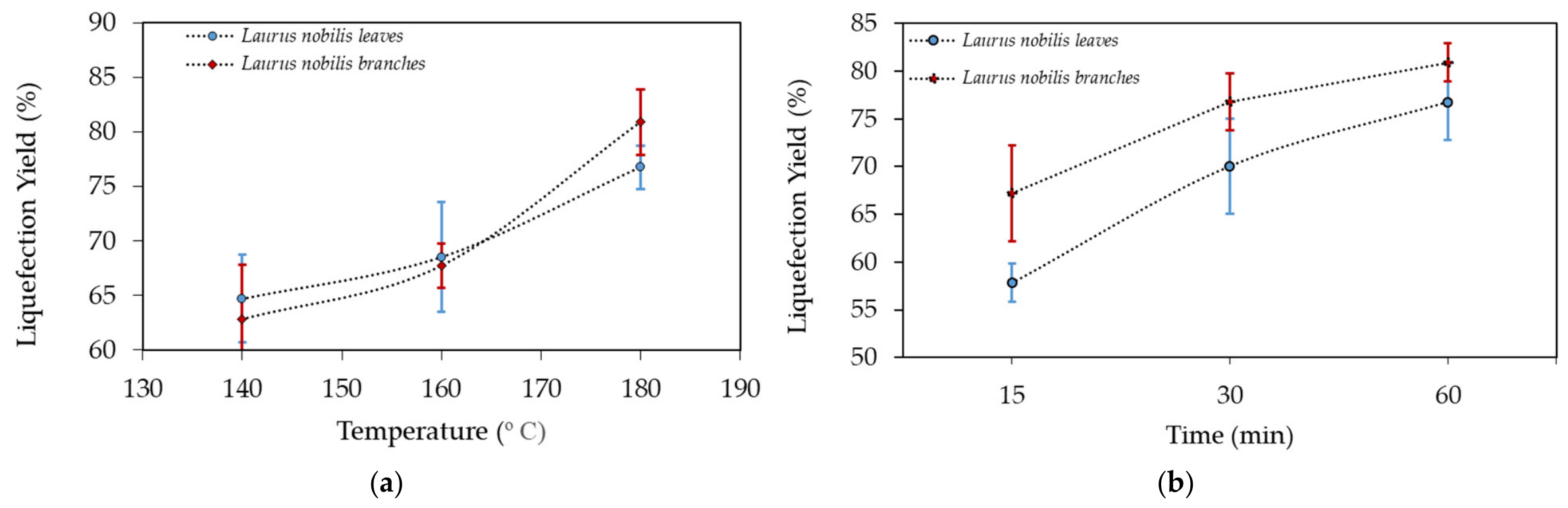
Bay Laurel biomass was evaluated as a function of temperature and residence time using an ethylene glycol–glycerol solvent system, revealing clear dependencies on both parameters as well as on the feedstock (
Figure 2). Increasing temperature from 140 to 180 °C led to a consistent improvement in liquefaction yield for both leaves and branches. For leaves, the liquefaction percentage increased from 64.7% at 140 °C to 76.8% at 180 °C, while branches exhibited a rise from 62.8% to 80.9% over the same temperature range. This trend reflects the well-established effect of temperature in promoting the solvolytic depolymerization of lignocellulosic components, as higher thermal energy enhances solvent penetration, reduces viscosity, and accelerates the cleavage of ether and ester linkages, particularly within lignin and hemicellulose fractions [
12,
32].
At lower temperatures (140–160 °C), leaves displayed slightly higher liquefaction yields than branches. Although leaves are characterized by a relatively higher lignin content (25% and 20%), which typically confers greater recalcitrance, this lignin content might be overestimated due to the presence of other compounds such as cutin. Therefore, this higher liquefaction can be explained by the higher proportion of extractives in leaves (24% and 14%). These low-molecular-weight compounds are more readily solubilized under mild conditions, contributing to the liquefied fraction at lower temperatures and thereby increasing the apparent liquefaction yield. In contrast, branches contain fewer extractives and a more structurally organized lignocellulosic matrix, which limits solvent accessibility and reaction efficiency under these milder conditions.
This difference becomes more pronounced at higher temperatures and longer reaction times, and may be attributed, in part, to the greater difficulty in achieving complete liquefaction of leaves during acid-catalyzed polyol solvolysis, due to their more complex chemical composition and higher mineral content. Unlike the relatively uniform structure of wood, leaves possess a waxy cuticle (cutin) that can limit solvent penetration and reduce accessibility of the underlying biomass components. Additionally, this cuticular material is relatively resistant to acid hydrolysis and may persist under more severe conditions, contributing to the lower liquefaction efficiency observed for leaves. In standard biomass fractionation, this recalcitrant fraction may be overestimated in the Klason lignin method, as it remains in the solid residue and is quantified as part of the acid-insoluble lignin fraction [
31]. Furthermore, leaves contain a much higher ash content (3.4%) compared to woody biomass (2.5%) and these alkaline minerals serve as a chemical buffer that neutralizes the acid catalyst, effectively “deactivating” the reaction before the structural components can be fully broken down. This behavior has been observed before for other pruning materials like in the liquefaction of olive tree branches and leaves [
18].
The one-way ANOVA results indicate that temperature has a statistically significant effect on liquefaction yield, for both leaves (F = 7.6, p = 0.023) and branches (F = 20.7, p = 0.002).
The influence of residence time was further examined at 180 °C, providing additional insight into the kinetics of the liquefaction process. For leaves, the liquefaction yield increased markedly from 57.8% at 15 min to 70.0% at 30 min and reached 76.8% at 60 min. A similar trend was observed for branches, with yields rising from 67.2% at 15 min to 76.8% at 30 min and 80.9% at 60 min. These results demonstrate that liquefaction proceeds rapidly during the initial stages of the reaction, followed by a more gradual increase as the reaction approaches completion. The sharp increase between 15 and 30 min suggests that easily accessible and more reactive components, such as hemicellulose and amorphous cellulose, are preferentially solubilized during the early stages [
33], while the slower progression thereafter is likely associated with the breakdown of more recalcitrant lignin or cutin structures as stated before.
Similar to temperature, ANOVA results indicate that residence time has a statistically significant effect on liquefaction yield, for both leaves (F = 18.5, p = 0.003) and branches (F = 11.7, p = 0.009).
The combined effect of temperature and time thus highlights the importance of optimizing reaction severity to balance efficient depolymerization with the avoidance of undesirable secondary reactions, such as recondensation, which may occur at excessively long residence times or high temperatures [
12].
The role of the ethylene glycol–glycerol solvent system is also critical in interpreting these results. Ethylene glycol is known to promote effective solvolysis and fragmentation of lignocellulosic polymers, while glycerol can stabilize reactive intermediates and suppress recondensation reactions [
34]. At elevated temperatures and longer residence times, this solvent combination likely enhances the dissolution of lignin-derived fragments and facilitates their incorporation into the liquid phase, contributing to the high liquefaction yields observed, particularly for branches at 180 °C and 60 min.
A two-way ANOVA was performed to evaluate the effects of biomass type (A), residence time (C), and their interaction on liquefaction yield. The analysis showed that both biomass type and residence time had statistically significant effects on liquefaction yield. Biomass fraction significantly affected the response (F(1,12) = 14.849, p = 0.002), while residence time also showed a significant effect (F(2,12) = 29.978, p < 0.001). In contrast, the interaction between biomass fraction and residence time was not statistically significant (F(2,12) = 0.759, p = 0.489), indicating that the effect of residence time on liquefaction yield was similar for both biomass fractions.
Overall, the results demonstrate that both temperature and residence time significantly influence the liquefaction efficiency of Bay Laurel biomass, with distinct behaviors observed between leaves and branches. While leaves are more reactive under milder conditions, branches benefit more substantially from increased reaction severity, ultimately achieving higher liquefaction yields under enhanced conditions. These findings underscore the importance of tailoring process parameters to the specific characteristics of the biomass fraction in order to maximize conversion efficiency in polyol-based liquefaction systems.
3.3. Effect of Particle Size on Liquefaction
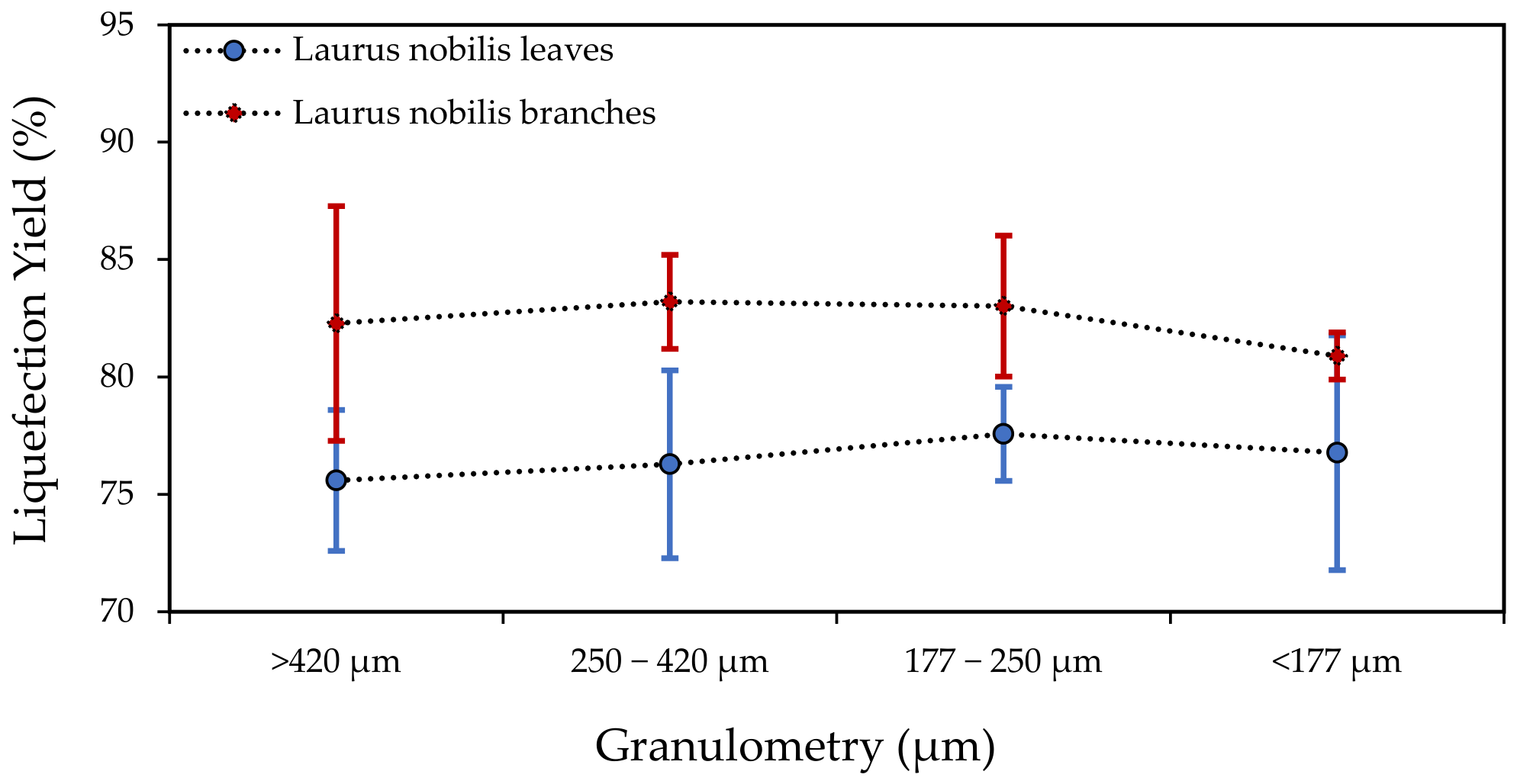
Figure 3 presents the liquefaction percentage for several particle sizes. The effect of particle size on the liquefaction of Laurel leaves and branches was investigated, revealing distinct trends related to biomass granulometry. For leaves, liquefaction yields varied from 75.6% for particles larger than 420 µm to a maximum of 77.6% for the 177–250 µm fraction. Branches exhibited higher overall yields, ranging from 80.9% for particles smaller than 177 µm to 86.2% for the 250–420 µm fraction. One-way ANOVA showed no statistically significant differences among the evaluated conditions (F(3,8) = 0.155,
p = 0.924), indicating that particle size did not significantly affect the liquefaction yield of leaves. Due to the small sample size (n = 3 per group), the ANOVA results should be interpreted with caution, given the low statistical power and the limitations in verifying the model assumptions.
Although not statistically different, the apparent slight increase in liquefaction for leaves with decreasing particle size up to 177–250 µm can be due to the higher surface area available for solvent penetration and reaction, which facilitates the depolymerization of lignocellulosic polymers. For very fine particles (<177 µm) there was no increase in liquefaction, which in similar systems has been suggested that excessively small sizes may lead to particle agglomeration or mass-transfer limitations that partially counteract the benefits of higher surface area. This behavior is consistent with findings reported in studies on titanium dioxide nanoparticle dispersion, where increasing particle surface area was shown to enhance collision frequency between particles, leading to a higher degree of agglomeration [
35]. Additionally, this interpretation is supported by studies on lignocellulosic biomass hydrolysis, where particle agglomeration has been reported to hinder mass transfer and, in more severe cases, lead to processing issues such as flow obstruction [
36]. In branches, the highest liquefaction yield was observed for the intermediate particle size range of 250–420 µm. Although with a smaller
p value (F = 1.55;
p = 0.274) than for leaves, a one-way ANOVA showed no statistically significant differences among groups, suggesting that particle size did not significantly influence liquefaction yield of branches.
Overall, these results do not provide statistical evidence that particle size influences liquefaction yield within the studied range. Both leaves and branches show no significant dependence on granulometry under the tested conditions, suggesting that any observed differences are likely due to experimental variability. Consequently, particle size cannot be considered a determining factor for liquefaction performance based on the present ANOVA results, although further studies with higher replication could be used to reassess this conclusion under improved statistical power.
3.4. Effect of Solvent:Biomass Ratio
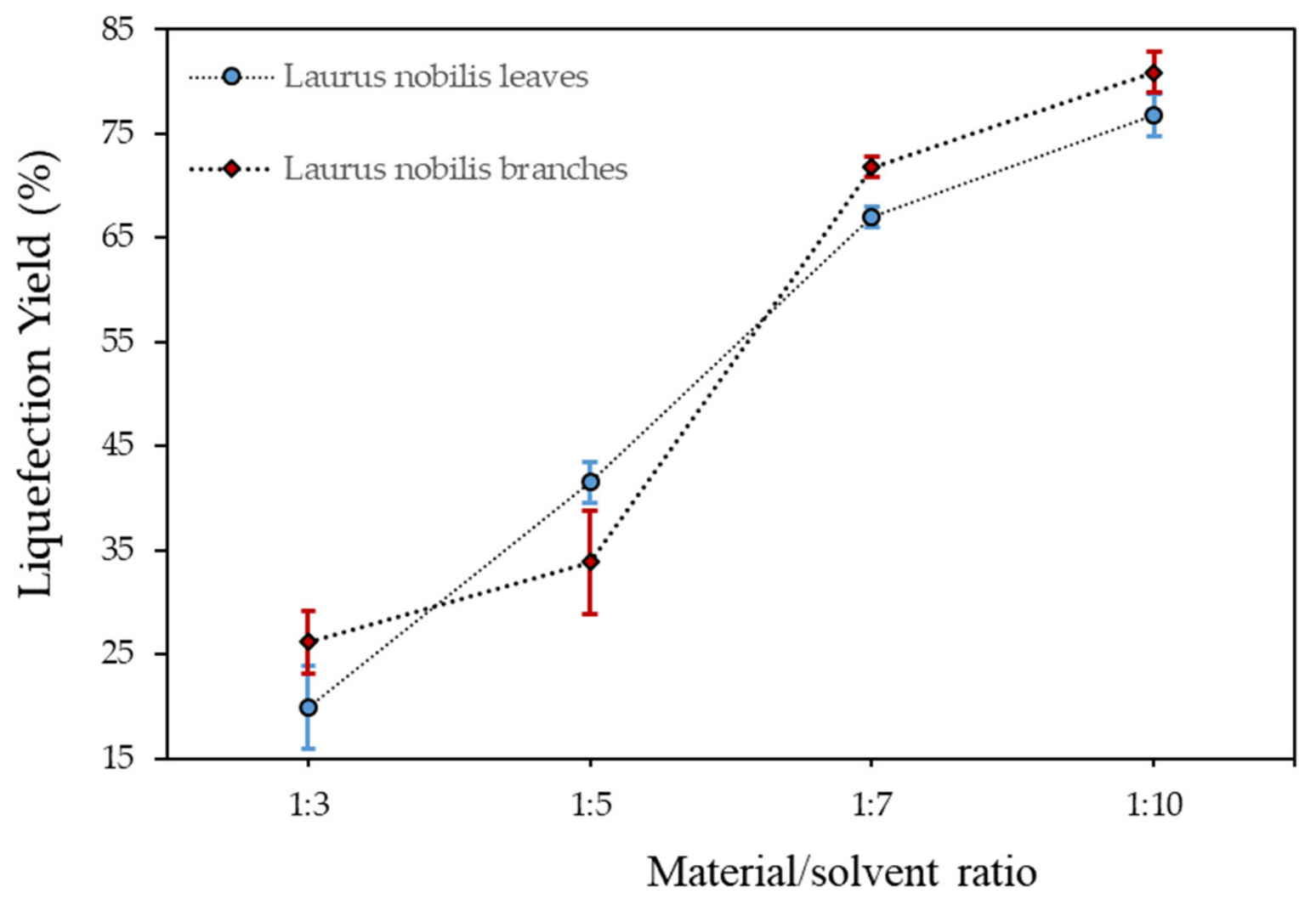
The liquefaction percentage of Laurel biomass increased with increasing solvent proportion for both leaves and branches, indicating that the material/solvent ratio had a clear influence on liquefaction efficiency (
Figure 4). Overall, the lowest liquefaction percentages were obtained at the 1:3 ratio, while the highest values were reached at 1:10, showing that greater solvent availability favored biomass conversion.
For Bay Laurel leaves, the liquefaction percentage increased from 20.0% at the 1:3 ratio to 41.5% at 1:5, followed by a marked rise to 67.0% at 1:7, and reaching 76.8% at 1:10. A similar trend was observed for the branches, which showed liquefaction percentages of 26.2%, 33.9%, 71.8%, and 80.9% at 1:3, 1:5, 1:7, and 1:10, respectively. These results demonstrate that both biomass fractions responded positively to increasing solvent content, although some differences between leaves and branches were observed depending on the ratio applied.
At the lowest ratio (1:3), liquefaction remained limited for both fractions, particularly for the leaves. This suggests that the amount of solvent was insufficient to ensure efficient penetration into the lignocellulosic structure, thereby restricting the extent of depolymerization and solubilization reactions. The slightly higher liquefaction of the branches at this ratio may indicate some compositional or structural differences that allowed a marginally better initial conversion under solvent-limited conditions.
When the ratio increased to 1:5, the liquefaction of leaves rose substantially to 41.5%, whereas branches reached only 33.9%. This behavior suggests that leaf biomass may be more sensitive to moderate increases in solvent availability, likely due to its less rigid and less lignified structure compared to woody branch material. Enhanced solvent access probably facilitated the degradation of more accessible biomass components in the leaves.
A pronounced increase in liquefaction was observed for both fractions at the 1:7 ratio, with leaves reaching 67.0% and branches 71.8%. This sharp rise indicates that this solvent level may represent a threshold at which the reaction medium becomes sufficiently effective to promote more extensive biomass breakdown. At this point, the branches slightly outperformed the leaves, suggesting that once adequate solvent penetration is achieved, even the more recalcitrant woody structure can be effectively liquefied.
The highest liquefaction percentages were obtained at the 1:10 ratio, with 76.8% for leaves and 80.9% for branches. These values confirm that increasing the solvent proportion improved the overall liquefaction efficiency and that this condition was the most favorable among those tested. The superior performance of branches at the highest ratios may indicate that, although they are initially more resistant to liquefaction, they benefit more strongly from enhanced solvent accessibility.
One-way ANOVA showed there are statistically significant differences among the evaluated conditions for both leaves (F = 316, p = 0.001) and branches (F = 227, p = 0.001), indicating that the ratio material/solvent significantly affects the liquefaction yield.
From a practical perspective, these findings show that higher solvent loading improves the liquefaction of both Bay laurel leaves and branches, but the gain in conversion should be considered alongside solvent consumption and process cost. While the 1:10 ratio provided the highest liquefaction percentages, the 1:7 ratio already resulted in relatively high conversion for both fractions and may therefore represent a more balanced operating condition. While higher solvent ratios improve liquefaction yield, this does not necessarily imply improved process performance, as increased solvent consumption and product dilution may negatively affect process efficiency. Therefore, the 1:7 ratio can be considered a practical compromise between conversion and solvent usage under the studied conditions.
In the present polyol liquefaction system, the polyol functions both as reaction medium and as part of the final product, so conventional solvent recovery is not applicable since the polyol remains incorporated in the liquefied stream. Thus, sustainability relies on efficient use and integration of the polyol within the overall material system rather than on solvent recovery.
3.5. Functional Groups in the Biomasses
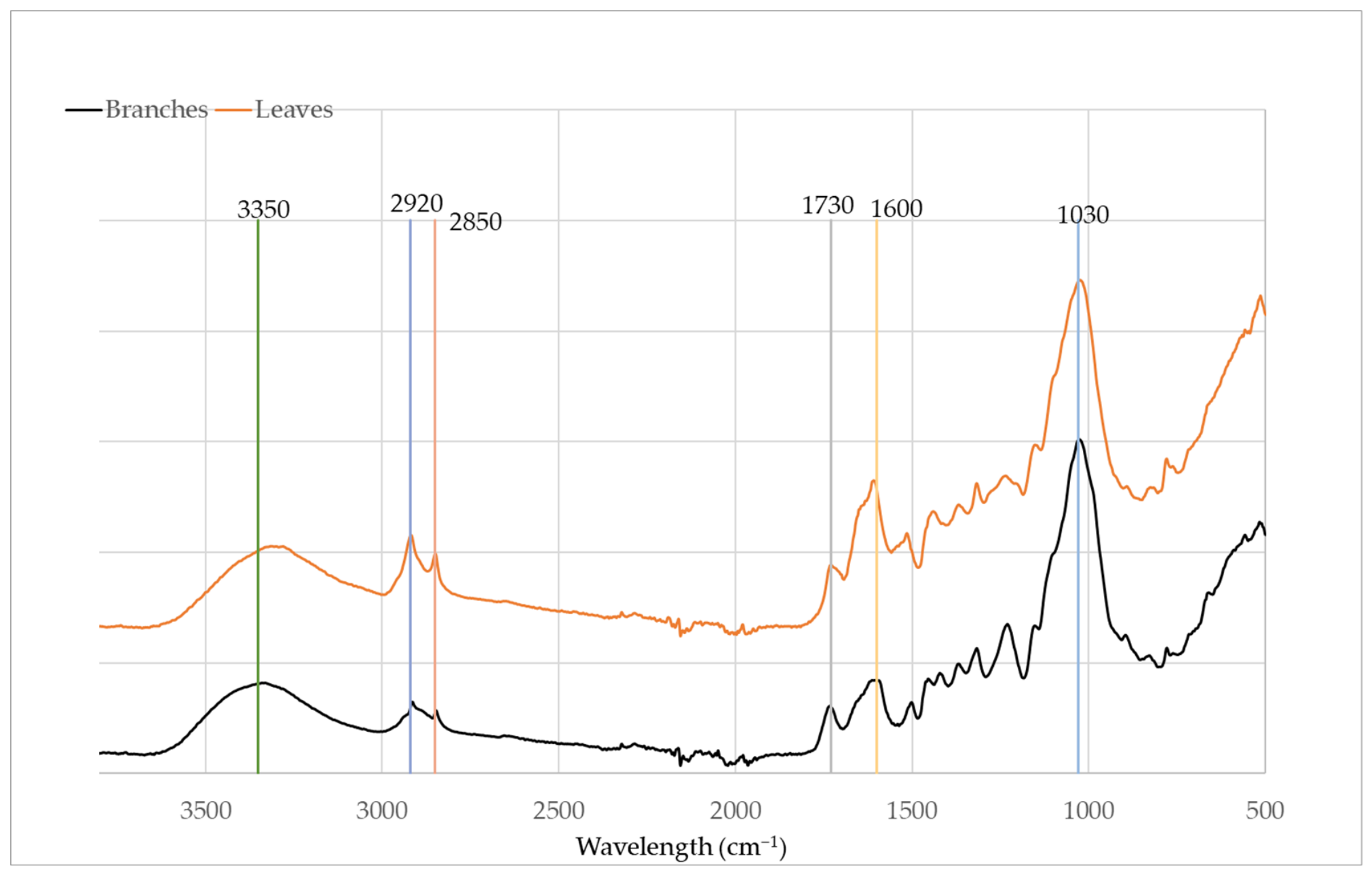
The FTIR-ATR spectra of bay laurel leaves and branches presented in
Figure 5 showed the characteristic features of lignocellulosic plant tissues, with the main differences reflected in the relative intensity of several absorption bands. These spectral variations are consistent with the compositional differences previously determined for the two tissues. Both spectra showed a broad band around 3350 cm
−1, assigned to O–H stretching vibrations of hydroxyl groups present in polysaccharides and phenolic compounds.
The absorptions at 2920 and 2850 cm−1, corresponding to the asymmetric and symmetric stretching of aliphatic C–H bonds, were more pronounced in the leaf spectrum. This is in agreement with the higher content of dichloromethane- and ethanol-soluble extractives in BL, which indicates a greater abundance of lipophilic and low-polarity compounds but can also be due to the esters and long-chain hydroxy fatty acids of cutin. Likewise, the more evident band near 1730 cm−1 in BL, assigned to C=O stretching vibrations of ester groups, is consistent with the higher extractives content of the leaves and may reflect the presence of esterified compounds associated with cuticular and non-structural constituents. The stronger absorption around 1600 cm−1 in BL can also be related to the greater contribution of aromatic and conjugated compounds, likely associated with extractives and lignin.
In contrast, the spectral profile of BB is more consistent with its higher α-cellulose and hemicellulose contents. The fingerprint region, particularly the bands associated with C–O, C–C, and C–O–C vibrations of structural carbohydrates, reflects the greater contribution of polysaccharide-rich cell wall material in branches. Although the absorption near 1030 cm−1 was observed in both tissues, its interpretation should consider overlap among cellulose, hemicelluloses, and other matrix components, and therefore it is best understood as part of the broader carbohydrate-dominated region rather than as an isolated marker.
Overall, the FTIR-ATR data support the compositional distinction between the two tissues, with BL showing stronger contributions from extractive- and ester-related constituents, while BB exhibits a profile more representative of a structurally organized carbohydrate-rich lignocellulosic matrix.
3.6. Functional Groups in Liquefied Products
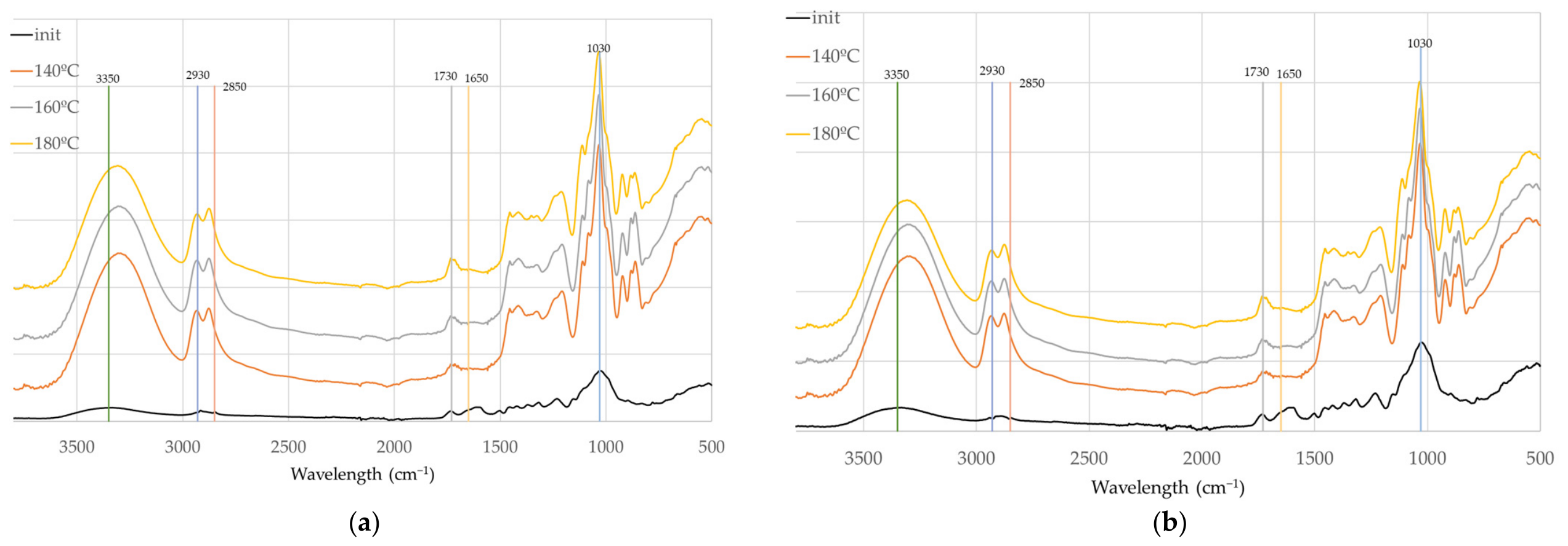
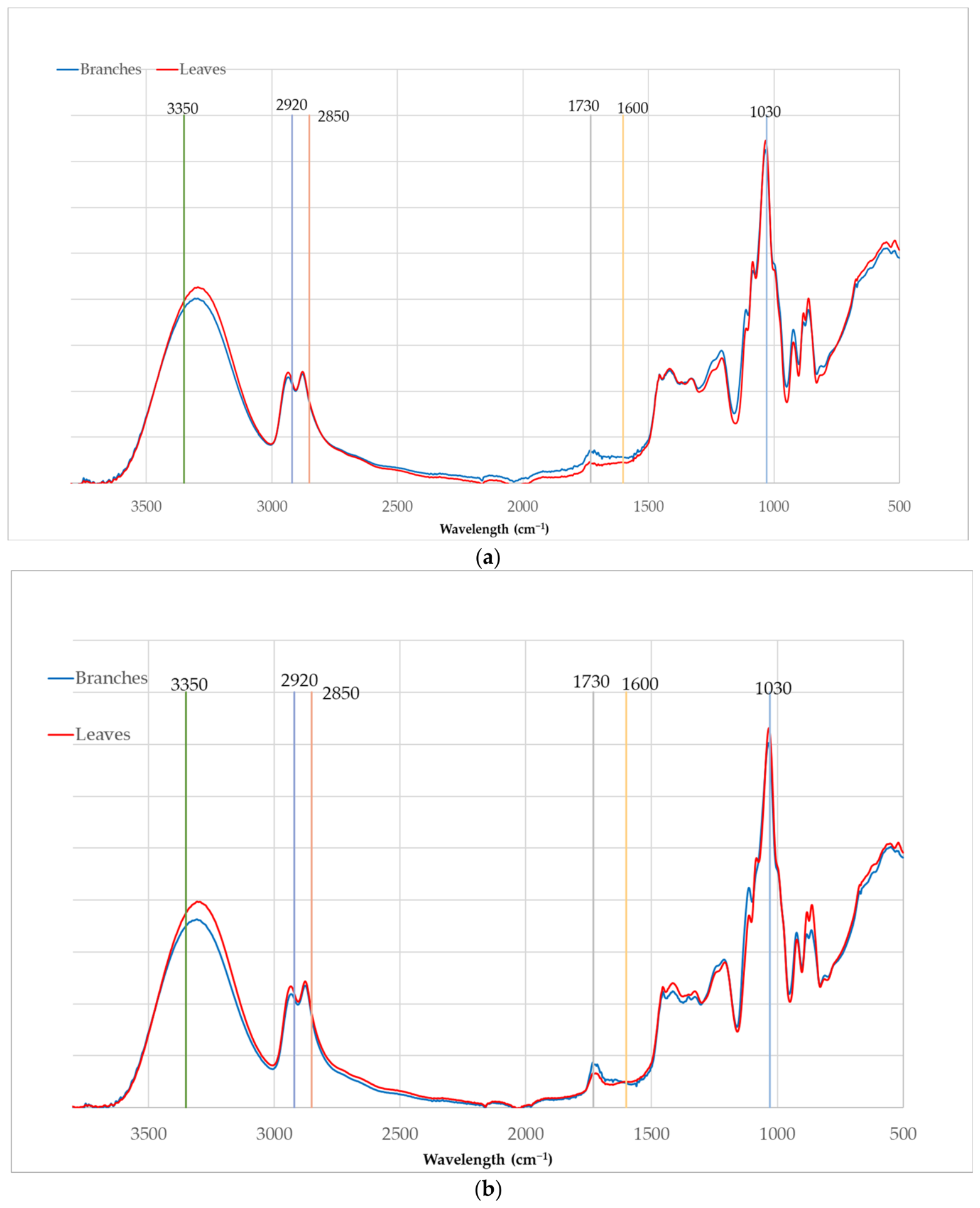
Figure 6 presents the FTIR-ATR spectra of liquefied Bay Laurel Branches and Leaves at 140 °C (a) and 180 °C (b). At both temperatures, the liquefied leaf-derived products exhibited stronger absorption around 3330 cm
−1, which is assigned to O–H stretching vibrations of hydroxyl groups. This higher intensity suggests a greater abundance of hydroxylated compounds in the liquefied leaf fraction, likely reflecting the formation or preservation of alcohols, phenolic hydroxyls, and carbohydrate-derived polyols during liquefaction. The stronger hydroxyl band in leaves is consistent with a liquefied phase richer in oxygenated compounds, which may result from the easier solubilization and depolymerization of less condensed leaf constituents at lower severity. This interpretation is further supported by the slightly higher liquefaction yield observed for leaves at 140 °C compared with branches, suggesting that leaf biomass is initially more susceptible to solvolytic degradation, as previously discussed.
The leaf liquefied material also showed higher intensity at 1080 cm
−1 and 1030 cm
−1, bands commonly associated with C–O stretching and C–O–C vibrations of alcohols, ethers [
37], and carbohydrate-derived structures. These absorptions suggest that the liquefied products from leaves contain a higher contribution of oxygenated fragments derived from polysaccharides and/or polyol-type reaction products. Their stronger presence in the leaf spectra indicates that liquefaction at both temperatures may preserve or generate more soluble oxygenated intermediates in leaves than in branches. This behavior is consistent with a matrix that is less dominated by rigid structural organization and more prone to generating soluble, hydroxyl-rich compounds during the early stages of liquefaction.
Additional differences were observed in the lower wavenumber region, where leaves presented stronger bands at 878 cm−1 and 856 cm−1. These bands are typically associated with out-of-plane C–H deformations, ring vibrations, or substituted aromatic and carbohydrate-related structures. Their greater intensity in the liquefied leaf products suggests a higher abundance of specific low-molecular-weight oxygenated and aromatic fragments, possibly reflecting a different fragmentation pattern of leaf constituents during liquefaction. These features indicate that although both feedstocks undergo substantial chemical transformation, the products derived from leaves retain a stronger signature of hydroxylated and oxygenated compounds.
In contrast, the liquefied branch-derived products showed relatively higher absorption at 1730 cm−1, 1200 cm−1, 1115 cm−1, and 918 cm−1. The band near 1730 cm−1, assigned to C=O stretching vibrations, indicates a greater contribution of carbonyl-containing compounds in the liquefied branch fraction. This may reflect the formation of aldehydes, ketones, esters, or other oxidation- and cleavage-derived products during liquefaction. The stronger carbonyl signal in branches suggests that branch liquefaction may proceed through a pathway involving more extensive cleavage of structural polymers into carbonyl-rich intermediates, particularly at higher severity.
The shoulder observed around 1115 cm
−1 may be assigned, at least in part, to syringyl-type aromatic structures derived from lignin, although overlap with C–O–C vibrations of oxygenated compounds cannot be excluded. For example the band at 1115 cm
−1 has been assigned before to syringol, a common derived product from lignin pyrolysis [
37]. The band at 918 cm
−1, which may be related to skeletal vibrations of carbohydrate- or aromatic-derived structures, also indicates a distinct chemical profile for the liquefied branch products.
These differences become particularly relevant when interpreted together with the liquefaction percentages. At 140 °C, the leaves exhibited slightly higher liquefaction than the branches, suggesting that leaf tissues are initially more reactive and more easily solubilized under milder conditions. This is in good agreement with the stronger O–H and C–O related bands in the leaf liquefied products, which indicate the formation of soluble hydroxylated and oxygenated compounds.
At 180 °C, however, the trend reverses and the branches reach a higher liquefaction percentage. The FTIR-ATR spectra support this interpretation, since the branch-derived liquefied products exhibit stronger absorptions associated with carbonyl and ether-type structures, indicating more extensive breakdown and conversion of structural lignocellulosic components at higher temperature. In other words, the more resistant structural matrix of branches appears to require greater thermal input to achieve efficient depolymerization, but once this threshold is reached, liquefaction becomes more extensive than in leaves.
When comparing the initial leaves and branches spectra with liquefied material clear differences are observed (
Figure 7). The O–H stretching band is higher in the liquefied material, reflecting enhanced hydroxyl content due to cleavage of ether and ester bonds and formation of alcohols and polyols from glycerol and partially degraded lignocellulosic fragments as expected. Similar results were presented before for the liquefaction of several other lignocellulosic materials. For instance, liquefied palm kernel shell lignin [
38], or Olive tree pruning [
18] or Strawberry tree (
Arbutus unedo) [
25].
The aliphatic C–H stretching bands at 2930 and 2870 cm
−1 (2850 cm
−1 in the initial biomass) also increase in intensity, indicating the accumulation of alkyl fragments from lignin and other aliphatic components. At 180 °C, these changes suggest extensive depolymerization. The carbonyl band at 1730 cm
−1 sharpens with temperature, consistent with the formation of esters, aldehydes, and carboxylic acids, as commonly reported in the literature for lignocellulosic liquefaction and oxidation reactions likely originating from cellulose and hemicellulose oxidation. Similar results were presented before for the liquefaction of several other materials such as for example Alder wood [
39] or just cellulose [
40].
The region around 1200 cm
−1 is much higher in the liquefied material, which according to Gosz et al. [
39] has been associated with interactions involving phenolic hydroxyl groups from lignin and the solvent system, rather than constituting direct proof of reaction.
The increased intensity at 1030 cm
−1 corresponds to the accumulation of C–O–containing functionalities such as alcohols, ethers, and esters from the material degradation but also from the solvents, glycerol and ethylene glycol. The new bands between 860 cm
−1 and 920 cm
−1 reported in the literature are associated with C–O/C–C stretching in aliphatic ethers and sugar ring vibrations (e.g., levoglucosan) as well as C–H in-plane bending in aromatic systems [
41,
42]. The 860 cm
−1 band has been previously assigned to features linked with cellulose degradation products, including hydroxyacetaldehyde, under thermal decomposition conditions [
43].
FTIR-ATR analysis revealed distinct chemical changes in Bay laurel leaves and branches during liquefaction. Liquefied leaves showed stronger O–H and C–O/C–O–C bands, reflecting the formation of hydroxyl- and oxygen-rich compounds from polysaccharides, polyols, and phenolics, consistent with their less organized, extractive-rich structure. Liquefied branches, in contrast, exhibited enhanced carbonyl, ether, and skeletal vibration bands, indicating more extensive depolymerization of the lignocellulosic matrix and the formation of aldehydes, ketones, esters, and lignin-derived aromatics, especially at higher temperatures. These results underscore the differential reactivity of leaves and branches, with leaves favoring early-stage hydroxylated products and branches requiring higher thermal input for comprehensive breakdown.
4. Conclusions
The results demonstrate clear differences between bay laurel leaves and branches, which influence their most suitable valorisation pathways. Leaves are richer in ash, extractives, and Klason lignin, including recalcitrant compounds such as cutin, while branches contain higher amounts of structural carbohydrates, namely α-cellulose and hemicellulose. These differences support a complementary utilization strategy, with leaves being more suitable for the extraction of bioactive compounds and branches for lignocellulosic conversion processes. Liquefaction behaviour also reflects these compositional differences. Leaves show higher reactivity under milder conditions, whereas branches require higher temperatures and longer reaction times due to the greater resistance of their lignocellulosic structure. Additionally, process parameters such as solvent ratio affect conversion efficiency. Increasing the solvent proportion enhances liquefaction performance in both fractions, with ratios between 1:7 and 1:10 offering an effective compromise between reaction efficiency and solvent consumption. Spectroscopic analysis by FTIR-ATR provides further insight into the structural evolution during liquefaction. The formation of hydroxyl- and carbonyl-rich compounds is evident in all cases, although their distribution depends on biomass type and reaction severity. Leaf-derived products tend to retain more oxygenated and hydroxylated intermediates under milder conditions, whereas branch-derived products show stronger carbonyl and ether-related signals at higher severity, indicating a more extensive breakdown of structural polymers.
Overall, these findings highlight the importance of tailoring liquefaction conditions to the specific characteristics of each biomass fraction. The results indicate clear compositional differences between leaves and branches, which may influence their potential valorization pathways. Leaves are more effectively processed under mild solvolysis conditions, and their higher extractive content suggests a potential for the recovery of bioactive compounds, whereas branches benefit from more severe treatment to maximize depolymerization and conversion of structural polymers. This differentiated approach provides a useful basis for the integrated and efficient valorization of bay laurel pruning residues and should be further validated in terms of product quality and downstream applications in future work. From a process scalability perspective, the distinct reactivity of leaves and branches, together with the influence of key operational parameters, indicates that fraction-specific optimization could be advantageous for the development of more efficient and selective large-scale liquefaction-based biorefinery processes.




 ,
,