
Article

Experimental Design and Life Cycle Assessment of Biomass Briquettes from Melinjo Shell, Tobacco Stem, and Cacao Shell
by
Sri Hartini
1,*,
Diana Puspita Sari
1,
Didik Nurhardiyanto
2,
Muhammad Hisjam
3,
Benedictus Devin Ardityawan
1 and
Dhanius Ari Sandi
1
1
Department of Industrial Engineering, Faculty of Engineering, Universitas Diponegoro, Prof. Sudarto S.H., Tembalang, Semarang 50275, Indonesia
2
Department of Mechanical Engineering Education, Universitas Negeri Yogyakarta, Yogyakarta 55281, Indonesia
3
Department of Industrial Engineering, Faculty of Engineering, Sebelas Maret University, Surakarta 57126, Indonesia
*
Author to whom correspondence should be addressed.
Biomass 2026, 6(2), 31; https://doi.org/10.3390/biomass6020031

Submission received: 31 December 2025 / Revised: 12 March 2026 / Accepted: 19 March 2026 / Published: 16 April 2026
(This article belongs to the Topic Biomass for Energy, Chemicals and Materials)

Highlights

What are the main findings?
  • Briquettes from melinjo shells with tapioca binder showed the best fuel performance.
  • The highest calorific value reached 5453.43 cal g−1.
What are the implications of the main findings?
  • Melinjo shells are a promising feedstock for sustainable briquette production.
  • Agricultural residues can support renewable energy and circular economy strategies.

Abstract

Indonesia, particularly Central Java, generates substantial amounts of agricultural biomass residues, including melinjo shells, tobacco stalks, and cacao shells, which remain underutilized for energy applications. This study addresses the limited scientific evidence on the fuel properties and environmental performance of these residues by systematically evaluating their suitability as briquette feedstocks. A factorial experimental design was applied using three biomass types and two binders (tapioca starch and clay). The produced briquettes were characterized for moisture content, ash content, volatile matter, and higher heating value according to the Indonesian National Standard (SNI 01-6235-2000), and their environmental performance was assessed using a Life Cycle Assessment (LCA) approach to estimate associated environmental costs. The results indicate that briquettes made from melinjo shells with tapioca starch binder exhibited the most favorable performance, achieving a moisture content of 7.01%, ash content of 13.58%, volatile matter of 47.15%, and a calorific value of 5453.43 cal g−1. However, the ash and volatile matter contents exceeded the recommended limits for solid biofuels. These findings demonstrate that melinjo shells are a promising feedstock for briquette production due to their relatively high energy content, while further improvements in carbonization conditions and reductions in binder proportion are required to enhance fuel quality and environmental performance.

1. Introduction

Growing energy needs have intensified research on biomass waste-to-energy technologies [1]. Although net-zero scenarios emphasize the large-scale deployment of biomass to achieve global bioenergy targets, practical implementation is severely limited by feedstock logistics, regional availability, and fuel quality consistency [2,3,4]. Furthermore, the proximity of biomass feedstock sources and processing units impacts economic and environmental feasibility. Transportation costs must be considered when distributing biomass to an area [1]. In the results of the study [2], it is shown that a scenario with a distribution center approach can result in a reduction in transportation costs by 11% and greenhouse gas (GHG) emissions by 17% compared to the previous conditions in the logistics distribution of petroleum products. Therefore, utilizing the biomass waste potential in their respective districts is also expected to reduce transportation costs and carbon gas emissions.
Indonesia produces more than 51 million tons of agricultural residues annually [3], a substantial portion of which is either openly burned or left unmanaged, contributing to local air pollution and greenhouse gas emissions. Central Java is among the provinces with particularly high residue intensity. Despite their considerable availability, many of these residues—such as melinjo shells [4], cacao shells [5], and tobacco stems—have not been systematically and comparatively evaluated in terms of fuel quality for briquette production.
Several studies have been conducted on the potential of biomass briquettes for various types. For example, ref. [6] made briquettes from sunflower seed hulls and leaves mixed with coal dust and coke; ref. [7] made briquettes from a mixture of cassava rhizomes, bagasse, and sugarcane straw without a binder; ref. [8] made briquettes from rice husk charcoal and rubberwood; ref. [9] made briquettes from hazelnut shells; ref. [10] and made briquettes from rice husks, Ramie [11], and coconut shell charcoal and cinnamon sawdust [12]. Some limitations of previous research lie in the single-feedstock orientation and limited biomass-binder interaction. Many studies evaluate a single biomass source without comparing other locally available residues. Furthermore, the briquetting performance of melinjo shells, cacao shells, and tobacco stems remains largely unexplored in the literature, even though these residues are generated in considerable quantities and represent promising candidates for localized solid biofuel production.
Therefore, this study focuses on three locally abundant residues—cacao shells, melinjo shells, and tobacco stems—to evaluate their potential as briquette feedstocks and to determine the optimal biomass–binder combination based on calorific value and fuel quality. Therefore, this study aims to address these gaps by conducting a comparative experimental and environmental assessment of briquettes produced from three regionally available biomass residues—melinjo shells, cacao shells, and tobacco stems—using two binder types. Specifically, the objectives of this study are:
  • To evaluate the fuel properties of briquettes produced from different biomass–binder combinations in terms of moisture content, ash content, volatile matter, and calorific value;
  • To assess and compare the environmental impacts of each formulation using a Life Cycle Assessment approach;
  • To identify the most promising biomass–binder combination that balances fuel quality and environmental performance.
By integrating experimental briquette characterization with environmental impact assessment, this study provides a region-specific and sustainability-oriented framework for selecting biomass feedstocks for solid biofuel production.

2. Materials and Methods

2.1. Study Area

This study aimed to explore the potential of converting biomass waste into briquettes, with particular attention to cacao shells, melinjo shells, and tobacco stems, all of which are abundantly available in Central Java. Despite their significant volume, these biomass waste types have received limited scholarly attention, indicating a gap in the current research that this study seeks to address. Energy technologies must also be evaluated in terms of their environmental impacts across their entire life cycle. Even when briquettes exhibit excellent combustion performance, their production processes may involve significant energy inputs, transportation emissions, or by-products that contribute to environmental burdens. For example, carbonization stages can generate volatile organic compounds (VOCs) and particulates if they are not properly managed. Similarly, the logistics of collecting and transporting bulky agricultural residues can increase greenhouse gas (GHG) emissions if supply chains are inefficient [13].
Therefore, Life Cycle Assessment (LCA) is essential. LCA enables a holistic evaluation of the environmental trade-offs associated with briquette production and their use. It quantifies impacts such as global warming potential, acidification, eutrophication, and human toxicity, thereby providing insights into whether the overall system contributes to sustainable development [14]. This approach ensures that briquettes are technically viable and environmentally beneficial.

2.2. Material

2.2.1. Briquette Biomass

As an agricultural country, Indonesia has great potential to develop biomass as a renewable energy source, and research and development continue to be carried out. Some of the results of the research have produced alternative fuels from biomass, such as bio briquettes (charcoal briquettes from biomass), biofuels, and biogas [15]. Among the three, bio briquettes are the easiest and cheapest alternative technology to produce as they only require simple technology in the manufacturing process.
The material comes from Central Java province in 2025, obtained in the form of raw materials which are then dried, continued with the carbonization process, crushed and filtered before being made into briquettes. Briquettes are made using tapioca flour and clay as binders.

2.2.2. Melinjo Shell

Gnetum gnemon shells were studied as a mixture in briquettes made from coconut charcoal [16]. The study stated that the results met SNI standards. However, the melinjo shell composition was still small, with a maximum of 40%.

2.2.3. Tobacco Stems

Tobacco stems have a high cellulose content, making them a potential raw material for biofuels, specifically bioethanol. The cellulose content in dried tobacco stems can reach 35–40% [17]. In addition, tobacco stems contain cellulose (56.10%), lignin (15.11%), and nicotine (0.26%) [18]. The composition of lignin, cellulose, and hemicellulose in tobacco stems is 25.2%, 44.6%, and 30.2%, respectively [19]. The lignocellulose in tobacco stems has a density of about 260–350 kg/m3 and has a chemical structure and composition similar to wood of the species broadleaf wood [17].

2.2.4. Cacao Shell

Cacao ranks fourth in plantation exports, after palm oil, rubber, and coffee. Unfortunately, cacao shell waste is often wasted, so its economic value is low. Cacao shells are rich in lignocellulose, especially cellulose, hemicellulose, and lignin. The high cellulose content of cacao shells makes them suitable for further processing. The recovery of cacao husks has high economic value, as it is a cheap raw material for extracting various components and can be used as biofuel [20].

2.3. Briquette Making Process

The material to be briquetted is first shredded to a size of 2–5 mm to improve heat transfer efficiency and uniform volatile decomposition during thermal treatment [21,22]. The biomass is then dried in the sun until its moisture content drops to approximately 12% (wet basis), as excessive initial moisture content can reduce carbonization efficiency and energy yield [23].
Carbonization is carried out using traditional methods in a sealed metal container with controlled ventilation holes in the bottom and sides. Approximately 2–3 kg of biomass is introduced per batch. The system is heated externally using an open flame. The temperature is maintained at approximately 300 °C. The temperature is gradually increased over 45–60 min and maintained for approximately 3 h. This temperature range falls within the primary thermal decomposition zone of hemicellulose and cellulose components, where significant thermal decomposition occurs while retaining most of the carbon [21,24]. Limited air intake regulates the oxygen supply, promoting partial pyrolysis rather than complete combustion [22]. The carbonization process is considered complete when the material turns uniformly black and the emission of dense white smoke ceases, indicating extensive volatilization of organic compounds [23]. The resulting char is allowed to cool under oxygen-limited conditions to prevent post-carbonization oxidation.
Next, the char is ground and sieved to a 140-mesh (≈106 µm) fineness to ensure homogeneity and increase the density of the briquettes [25]. The briquette mixture was prepared by combining 90% charcoal with 10% binder (tapioca starch or clay) and water at a binder-to-water ratio of 1:10 (w/v). The mixture was pressed using a custom-made manual hydraulic press fabricated in a local workshop (Semarang, Indonesia). The pressed briquettes were dried in an oven at 120 °C for 2 h. Briquettes made from cacao shells and Gnetum gnemon underwent two drying cycles to ensure moisture content stabilization, while briquettes made from tobacco stalks were dried once due to their lower water retention characteristics.
The primary objective of this study was not solely to optimize the energetic performance of briquettes, but to explore the feasibility of utilizing locally abundant and low-cost waste materials available around the study area as alternative energy resources. In this context, clay was selected as one of the binder materials because it is readily available near the research site and can be obtained at negligible cost, making it potentially relevant for small-scale or rural applications. Although clay does not contribute to the calorific value and is expected to increase ash content due to its inorganic nature, its inclusion allows an assessment of the trade-off between binder accessibility and fuel quality under practical, resource-limited conditions.

2.4. Briquette Quality Test

According to the Indonesian National Standard [26], quality briquettes have a maximum moisture content of 8%, a maximum ash content of 8%, and a calorific value of at least 5000 cal/g for optimal combustion.
The tests were conducted in an accredited laboratory in accordance with SNI ISO/IEC 17025:2017 [27], with all instruments periodically calibrated. The higher heating value was determined using a PARR bomb calorimeter (Model 6400, Automatic Isoperibol, Parr Instrument Company, Moline, IL, USA). Moisture content was measured by oven-drying the samples at 105 °C for 30 min using a pre-weighed watch glass, following the standard method. Ash content was determined using a muffle furnace (Lindberg/Blue M, Thermo Scientific, Waltham, MA, USA) at 600 °C in accordance with the applicable standard. All measurements were performed in quadruplicate (n = 4), and the results are reported as mean ± standard deviation.

2.4.1. Moisture Content

The water content in raw materials is very important for making briquettes because it has a direct effect on their quality. The lower the water content, the higher the calorific value and flammability of the briquettes. Charcoal easily absorbs water from the air, and this ability is affected by its surface area, pore structure, and carbon content. High water content decreases combustion efficiency, whereas low water content results in better combustion and higher calorific value [14].

2.4.2. Ash Content

The ash content is the residue left behind after complete combustion, that is, when there is no more carbon that can be burned. The ash content in the briquettes was affected by the ash content of the raw materials and adhesives. Silica, the main component of ash, lowers the calorific value of briquettes. The higher the ash content, the lower the quality of the briquettes, because the ash reduces their calorific value [14].

2.4.3. Calorific Value

The calorific value is the amount of heat energy contained in a material. Generally, heat measurement is performed by measuring the temperature of a material. The higher the measured temperature, the greater the heat, and vice versa. The calorific value refers to the energy produced from the complete combustion of a material or fuel and is expressed in units of energy per amount of material (kJ/kg).

2.5. Volatile Matter

Volatile matter is a compound that evaporates when charcoal briquettes are heated, along with water. The high content of flying substances causes a lot of smoke during combustion due to the reaction of carbon monoxide (CO) and alcohol. An imperfect carbonization process (related to the heating time and temperature) results in high levels of flying matter [28]. Carbonization at higher temperatures and for longer durations reduces flying substances. According to the Indonesian National Standard (SNI 01-6235-2000), quality briquettes have a maximum moisture content of 8%, a maximum ash content of 8%, and a calorific value of at least 5000 cal/g for optimal combustion.

2.6. Experimental Design

The experimental design method, previously applied in various manufacturing processes such as soap production [29] and rubber pads [30], was utilized in this study to identify the optimal material combinations for producing high-quality briquettes. The cited research employs a Design of Experiments (DOE) methodology utilizing a Completely Randomized Design (CRD). This approach is defined by systematic variations in factors, meticulously controlled experimental conditions, the random assignment of treatments, and the statistical assessment of the impacts of factors on response variables. Within the framework of DOE, the experimental design is meticulously structured in advance to guarantee that the influences of experimental factors can be effectively quantified with a constrained number of experimental trials. This methodology is particularly advantageous for investigations pertaining to briquettes, as the quality of briquettes is contingent upon a multitude of controllable production variables, including the type of biomass utilized, the selection of binders, and the specific processing conditions employed. The Design of Experiments (DOE) framework facilitates a systematic assessment of these variables to ascertain their impact on critical briquette attributes, which encompass calorific value, moisture content, ash content, and combustion characteristics.
This study was carried out with six combinations of materials with four replications according to Federer’s formula in 1963, namely (t − 1) (n − 1) ≥ 15 (Table 1), where t denotes the quantity of treatments and r signifies the quantity of replications. This methodology offers a pragmatic framework for ascertaining the minimum requisite number of replications necessary to derive trustworthy estimates of experimental error and to facilitate valid statistical comparisons among treatments.
The implementation of Federer’s methodology enhances the experimental framework by guaranteeing sufficient replication, augmenting the precision of treatment comparisons, and elevating the statistical robustness of the findings.

2.7. Life Cycle Assessment

Energy technologies must also be evaluated in terms of their environmental impacts across their entire life cycle. Even when briquettes exhibit excellent combustion performance, their production processes may involve significant energy inputs, transportation emissions, or by-products that contribute to environmental burdens. For example, carbonization stages can generate volatile organic compounds (VOCs) and particulates if they are not properly managed. Similarly, the logistics of collecting and transporting bulky agricultural residues can increase greenhouse gas (GHG) emissions if supply chains are inefficient [13].
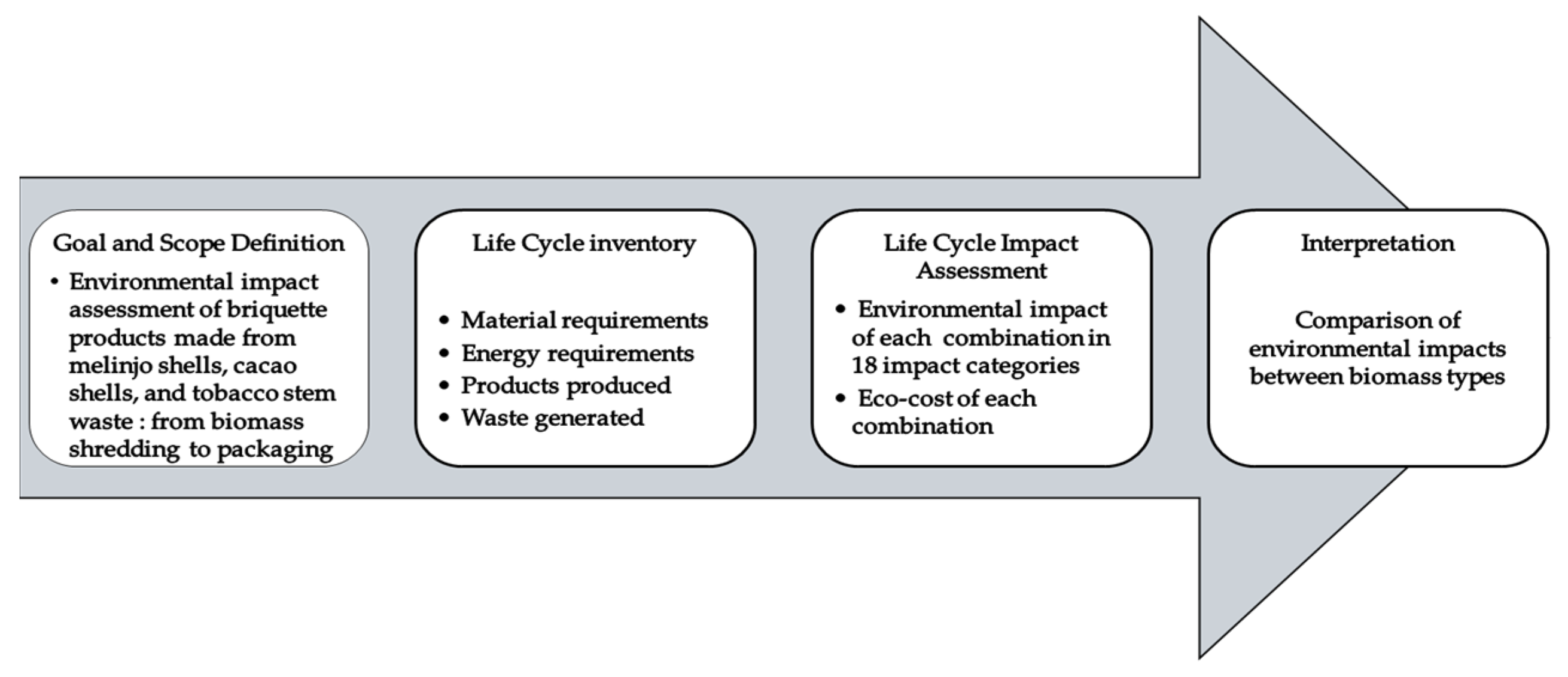
Life Cycle Assessment (LCA) is a standardized methodology for evaluating the environmental impacts of a product or process throughout its entire life cycle, which is structured into four interrelated phases [31]. The first phase is the goal and scope definition, which establishes the purpose of the study, functional unit, and system boundaries. The second phase, the life cycle inventory (LCI), involves the systematic collection of quantitative data on inputs, such as raw materials, energy, and water, as well as outputs, including emissions, waste, and by-products. The third phase, life cycle impact assessment (LCIA), translates these inventory flows into environmental impact categories, such as global warming potential, acidification, eutrophication, human toxicity, and resource depletion, through classification and characterization using scientifically established impact factors. The final phase, interpretation, involves analyzing the results to identify environmental hotspots, ensure data consistency, and provide strategic recommendations for decision-making [32]. By integrating these stages, LCA provides a comprehensive perspective that extends beyond technical performance, ensuring the sustainability of bioenergy products, such as biomass briquettes derived from agricultural residues [14]. In this study, environmental impact evaluation was carried out using the openLCA software version 2.0.2, ReCiPe method 2016 utilizing the ILCD database as the primary data source.
In this study, the processes were modelled as independent unit processes, and the assessment focused solely on the main product of each scenario. No co-products were considered within the defined system boundary; therefore, allocation procedures were not applied. For this reason, environmental loads were calculated directly for each process without allocation among multiple outputs. The process stages can be seen in Figure 1.

3. Results and Discussion

3.1. Briquette Physics

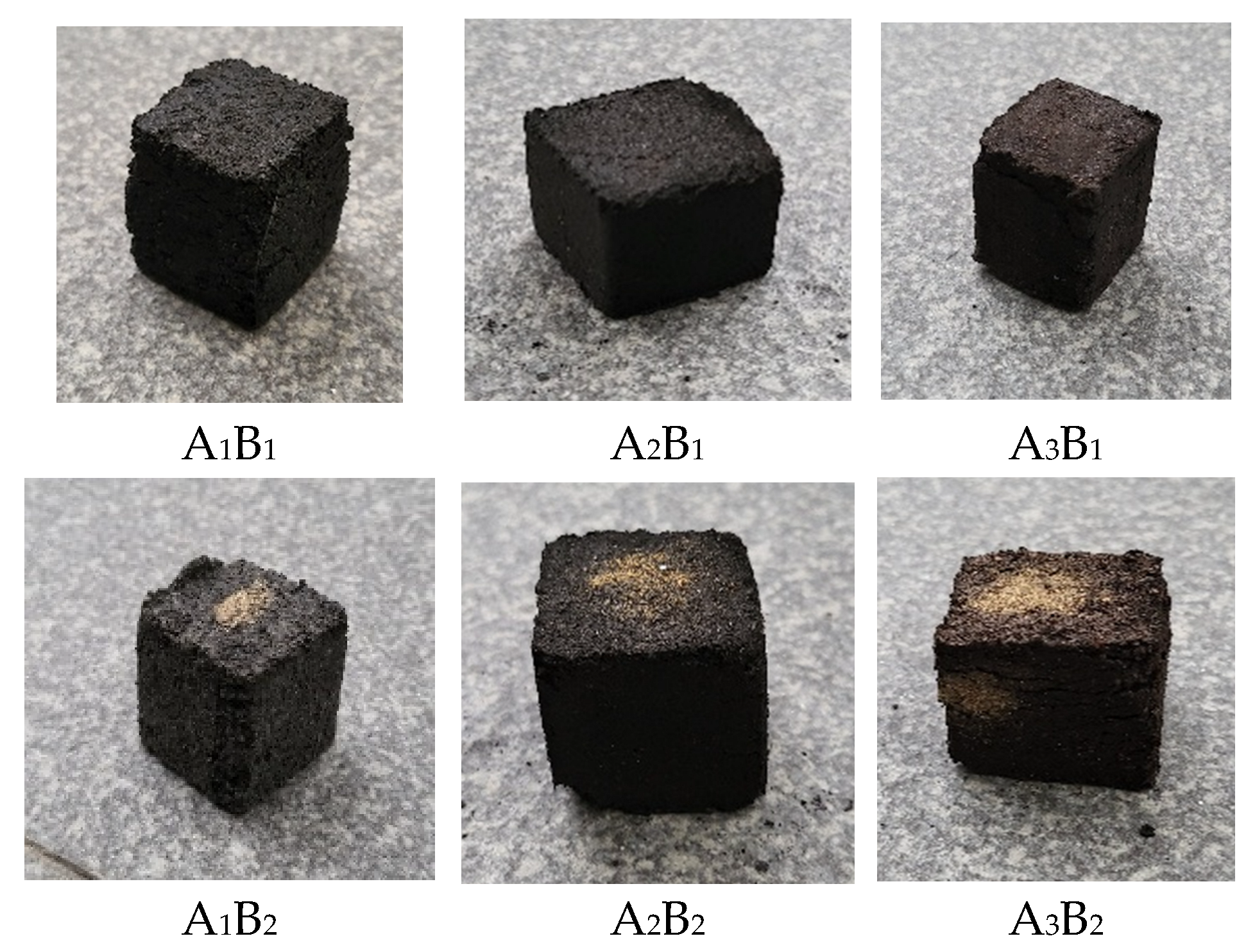
The results for briquettes that underwent the experimental design process of six combinations are shown in Figure 2.

3.2. Characteristics of Briquettes

The briquettes were manufactured using six combinations, namely three types of biomasses at 90% each and two types of adhesive materials at 10% each. Each combination was replicated four times, so that a total of 24 briquette samples were prepared. The steps to making briquettes were carried out based on previous research references. The differences in characteristics during the process of making experimental designs have different analyses. Tobacco stems and cacao shells contain more fiber, allowing them to absorb more water. Melinjo shells contain less fiber, making them more difficult to absorb water. In the refining and filtering process, the three types of biomass have different textures, such as melinjo shell with a texture that tends to be rougher and only in the form of small flakes and light mass weight. Tobacco stems have a very fine texture, resemble fine powder, are easier to shape, and have a very light mass weight. Cacao shells have a smoother texture than melinjo shells, form only small flakes, and have a heavier mass weight. In the process of burning or carbonization, melinjo shells are easy to ignite, do not quickly snatch between melinjo shells, and burn longer. Tobacco stems are very easy to light and spread quickly between other tobacco stems. However, the burning time was shorter than that of melinjo and cacao shells. Cacao shells are more difficult to ignite, quickly extinguish the flames, and easily spread between other cacao shells, and the weight of the mass is heavier. The mixing factor between biomass and adhesive materials is one of the most important factors in the briquette manufacturing process. This is because the adhesive material is very sticky, especially tapioca flour, which has thickened, making it very difficult to mix. An even mixture will make the briquettes stronger when printed and will not be easily destroyed. This mixing process takes a long time to achieve an even mixture. In addition, the characteristics of the type of biomass material and the composition of the water are also very important in making briquette mixtures. If the briquette mixture contains a lot of water, it affects the printing process, which releases a lot of water when pressed. This results in heavy briquettes containing a lot of water. The drying process was performed in an oven at 120 °C for 2 h. Each combination of briquettes was carried out at the same temperature and time to ensure that the results obtained were appropriate. The results of the experiment were tested using four parameters of SNI No. 1/6235/2000: the moisture content, ash content, °C volatile matter, and calorific value. The heat test was performed at the Integrated UPT Laboratory of Diponegoro University using a calorimeter bomb. In addition to the heat test, tests were conducted independently, and laboratory tests were conducted at the Environmental Engineering Lab using the gravimetric method. In this experimental design research, it is important to take detailed measurements of each variable because different measurements will produce different results. Therefore, the combination and composition of the materials used in the manufacture of these briquettes were made the same.

3.3. Briquette Quality Test Results

Six combinations of briquettes with their respective parameter test results, namely moisture content, ash content, and volatile matter, were observed. The test results were obtained from the average value of four replicate samples for each combination. Statistical testing began with normality tests, homogeneity tests, and independent t Tests. The test aimed to determine whether there was a difference between briquettes, tapioca flour adhesives, and clay. The combination of biomass types with binding agents, namely tapioca flour and clay, resulted in six distinct formulations (Table 1). Data from four replications are presented in Table 2. Normality and homogeneity tests can be seen in Table 3. The test results of six combinations can be seen in Table 4.
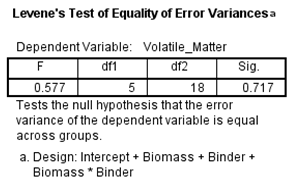
Model assumptions were quantitatively evaluated before conducting the factorial ANOVA. The Shapiro–Wilk test showed W = 0.871 (df = 24, p = 0.005) and the Kolmogorov–Smirnov test showed D = 0.178 (df = 24, p = 0.047). Levene’s test confirmed homogeneity of variance (F(5,18) = 0.577, p = 0.717), supporting the goodness-of-fit of the parametric model. ANOVA results showed no significant effect of biomass type (F = 0.018, p = 0.982), binder type (F = 1.219, p = 0.284), or their interaction (F = 0.024, p = 0.977) on volatile matter content. The model explained a small portion of the variance (R2 = 0.067), indicating a minimal treatment effect. While the total sample size (n = 24) allowed for the detection of a moderate effect, smaller effect sizes may not be fully detected, and this should be considered when interpreting non-significant results.
To enhance the global pertinence of this research, the findings were juxtaposed with the European standard established by the International Organization for Standardization (ISO) 17225-3, which delineates quality categorizations for densified biomass fuels, including briquettes. This standard is extensively employed in international biomass energy research and industrial applications. To facilitate international harmonization, the Indonesian standard was synchronized with the European benchmarks for solid biofuels established by the European Committee for Standardization and the International Organization for Standardization.
The EN and ISO standards exhibit methodological equivalence to the Indonesian standard, as they assess identical fundamental fuel characteristics utilizing comparable laboratory methodologies. EN 14918 [34] delineates the process for determining calorific value, EN 15148 [35] articulates the procedure for ascertaining volatile matter, EN ISO 18122 [36] specifies the determination of ash content, and EN ISO 18134 [37] addresses the measurement of moisture content. These parameters are directly aligned with the stipulations outlined in SNI 01-6235-2000 [26]. Consequently, these standards may be regarded as technically comparable and appropriate for the cross-referencing of briquette quality assessments.
In the moisture content test, the average result of each combination was obtained which had a value between 7010 and 8757. The lowest moisture content was observed in the A3B1 combination (cacao shell and tapioca flour), with a value of 6.732%. Meanwhile, the highest moisture content was obtained for the A2B2 combination (tobacco stem and clay), with a value of 10.462. Based on the SNI parameters, the standard moisture content value in briquettes is a maximum of 8%. Among the six combinations, only three met the SNI standards: A1B1 (melinjo shell and tapioca flour) with a value of 7.010%, A2B1 (tobacco stem and tapioca flour) with a value of 7.915%, and A3B1 (cacao shell and tapioca flour) with a value of 6.732%. A comparison between tapioca flour and clay with respect to the moisture content shows that the independent t Test has a significance value of 0.052. This value proves that there is no significant difference in the average moisture content of the adhesive material.
In the ash content test, the average result of each combination was obtained, which had a value between 13.583 and 24.035%. The lowest ash content was observed in the A1B1 combination (melinjo shell and tapioca flour), at 13.583%. The highest ash content was obtained in the combination of A2B2 (tobacco stem and clay) with a value of 24.035%. Based on SNI parameters, the standard value of ash content in briquettes is a maximum of 8%. None of the six combinations met the SNI standard for ash content values. The comparison between tapioca flour and clay to ash content shows that the independent t Test has a significant value of 0.089. This value proves that there was no significant difference in the average ash content of the adhesive material.
In the volatile matter test, the average result of each combination was obtained, which had a value between 29.891 and 47.148%. The lowest volatile matter test value was obtained for the combination of A3B2 (cacao shell and clay), with a value of 29.891%. The highest volatile matter value was obtained for the combination A1B1 (melinjo shell and tapioca flour) with a value of 47.148%. Based on the SNI parameters, the standard value of volatile matter in briquettes is a maximum of 15%. In the six combinations, none met the SNI standard for volatile matter values. The comparison between tapioca flour and clay to volatile matter can be seen, it can be concluded that the Independent t Test has a significant value of 0.002. This value proves that there is a significant difference in the average volatile content of the adhesive material.
The result of calorific value mean of each combination was between 3618.56 and 5453.43 cal/g. The lowest calorific value was obtained in the combination of A2B1 (tobacco stem and tapioca flour), with a value of 3618.56. The highest calorific value was obtained in the combination of A1B1 (tobacco stem and clay) with a value of 5453.43. Based on the SNI parameters, the standard calorific value of briquettes is at least 5000 cal/g. Among the six combinations, only one met the SNI standard, namely the combination of A1B1 (melinjo shell and tapioca flour) with a value of 5453.43. The comparison between tapioca flour and clay to the calorific value shows that the independent t Test has a significant value of 0.568. This value proves that there was no significant difference in the average calorific value of the adhesive material.
According to the Indonesian National Standard (SNI 01-6235-2000), briquettes are required to have a maximum moisture content of 8%, a maximum ash content of 8%, a volatile matter content not exceeding 15%, and a minimum calorific value of 5000 cal g−1; however, the experimental results obtained in this study show that most briquette formulations exceeded the allowable limits for ash content and volatile matter, which is mainly attributed to the intrinsic mineral composition of the selected biomass residues and the limited control of temperature and residence time during the traditional carbonization process, leading to incomplete devolatilization. Consequently, additional investigations that integrate suitable pretreatment methodologies are necessary to enhance briquette quality and ensure adherence to regulatory standards.

3.4. Comparison of Adhesive Materials

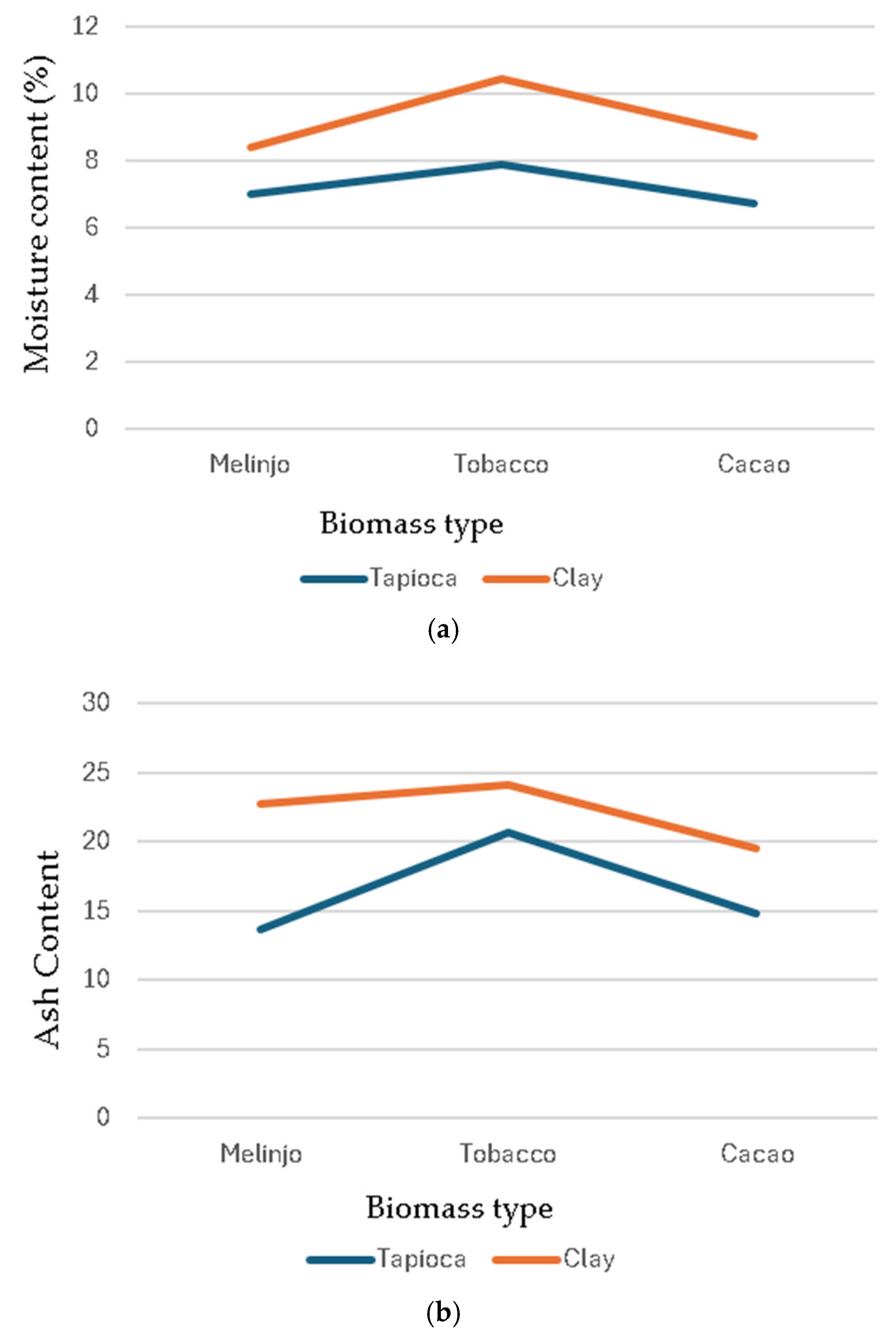
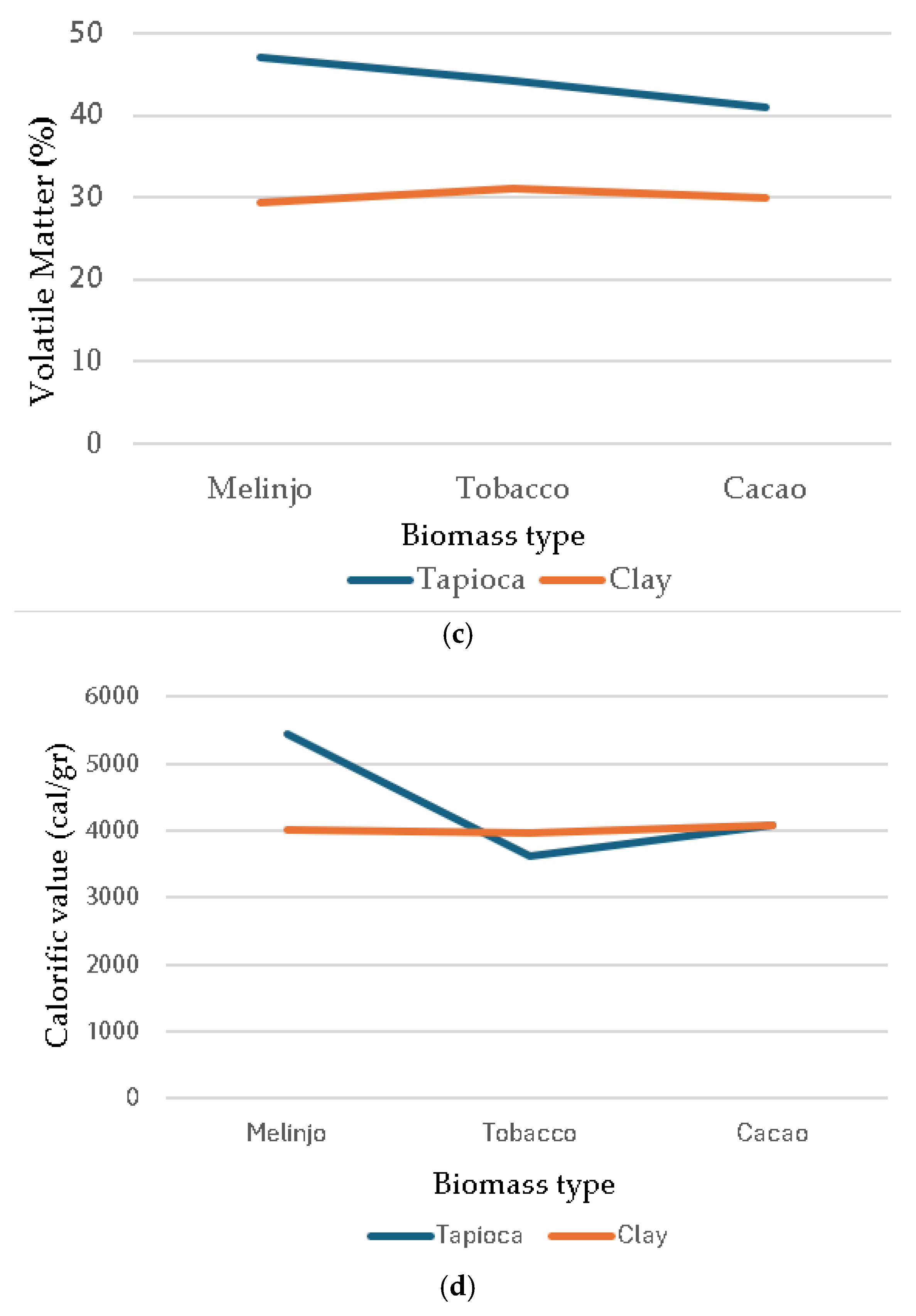
Figure 3 illustrates the effect of tapioca and clay binders on the moisture content, ash content, volatile matter, and calorific value of briquettes produced from melinjo shell, tobacco stalk, and cacao shell biomass.

3.4.1. Analysis of Moisture Content

The moisture content of the briquettes varied between approximately 6.73% and 10.46%. Briquettes manufactured utilizing a clay binder consistently demonstrated greater moisture content in comparison to those employing tapioca across all biomass categories. This observation suggests that clay possesses a superior water-retention capability, which is inherently linked to its hygroscopic and porous mineral characteristics. Among the various biomass types assessed, briquettes derived from tobacco exhibited the highest moisture levels, whereas those produced from cacao shells manifested the lowest moisture values. The reduced moisture content identified in tapioca-bonded briquettes implies enhanced drying efficiency and superior storage stability.

3.4.2. Analysis of Ash Content

A distinct escalation in ash content was noted when clay was utilized as a binder. Briquettes bonded with clay presented ash contents ranging from approximately 19.51% to 24.03%, while those bonded with tapioca exhibited ash levels between about 13.58% and 20.66%. This increase aligns with expectations, as clay constitutes an inorganic substance that contributes directly to the mineral residue post-combustion. Among the biomass types evaluated, briquettes made from tobacco stalks exhibited the highest ash content, signifying a greater inherent mineral fraction in this feedstock. Conversely, melinjo shell briquettes revealed comparatively lower ash values when tapioca was utilized as the binder. The findings underscore that the selection of binder significantly influences ash accumulation during the combustion process.

3.4.3. Analysis of Volatile Matter

The content of volatile matter displayed a trend that was contrary to that of ash content. Briquettes formulated with tapioca binder manifested significantly elevated levels of volatile matter (approximately 41% to 47%) compared to those prepared with clay (approximately 29% to 31%). This phenomenon is indicative of the organic composition of tapioca starch, which undergoes decomposition and yields volatiles upon heating. Briquettes produced from melinjo shells exhibited the highest volatile matter content, whereas those from cacao shells demonstrated slightly lower values. Increased volatile matter typically facilitates enhanced ignition and expedited combustion, suggesting that tapioca-bonded briquettes may possess superior ignition characteristics.

3.4.4. Analysis of Calorific Value

The type of binder exerted a significant influence on the calorific value of the briquettes. Tapioca-bonded briquettes exhibited elevated calorific values for melinjo shells and competitive calorific values for cacao shells, achieving approximately 5400 cal g−1 for melinjo biomass. In contrast, briquettes bonded with clay displayed relatively consistent calorific values ranging from 3900 to 4100 cal g−1 across all biomass types. The decline in heating value associated with the use of clay binder is attributed to its non-combustible mineral composition, which effectively dilutes the energy density of the briquettes. Tobacco briquettes utilizing tapioca binder exhibited the lowest calorific value among the tapioca treatments, likely resulting from the synergistic effects of elevated ash and moisture contents.

3.4.5. Overall Interpretation

In summary, the results elucidate that the application of tapioca binder enhances fuel-related properties, encompassing reduced moisture content, diminished ash content, increased volatile matter, and augmented calorific value. Conversely, the use of clay binder elevates ash and moisture content while diminishing volatile matter and heating value. These findings substantiate the assertion that the type of binder plays a pivotal role in determining the combustion performance of biomass briquettes, irrespective of the biomass feedstock utilized. Although clay is an abundant resource, it has not yet produced briquettes of better quality than tapioca.

3.5. Life Cycle Assessment

Goal and Scope

This environmental impact assessment aims to evaluate the potential effects associated with producing 1 kg of biomass briquettes composed of melinjo shells, cacao shells, and tobacco stems, with tapioca flour and clay serving as binding agents. The study adopts a gate-to-gate system boundary, encompassing the stages of crushing, carbonization, mixing, drying, and packaging.

3.6. Life Cycle Inventory

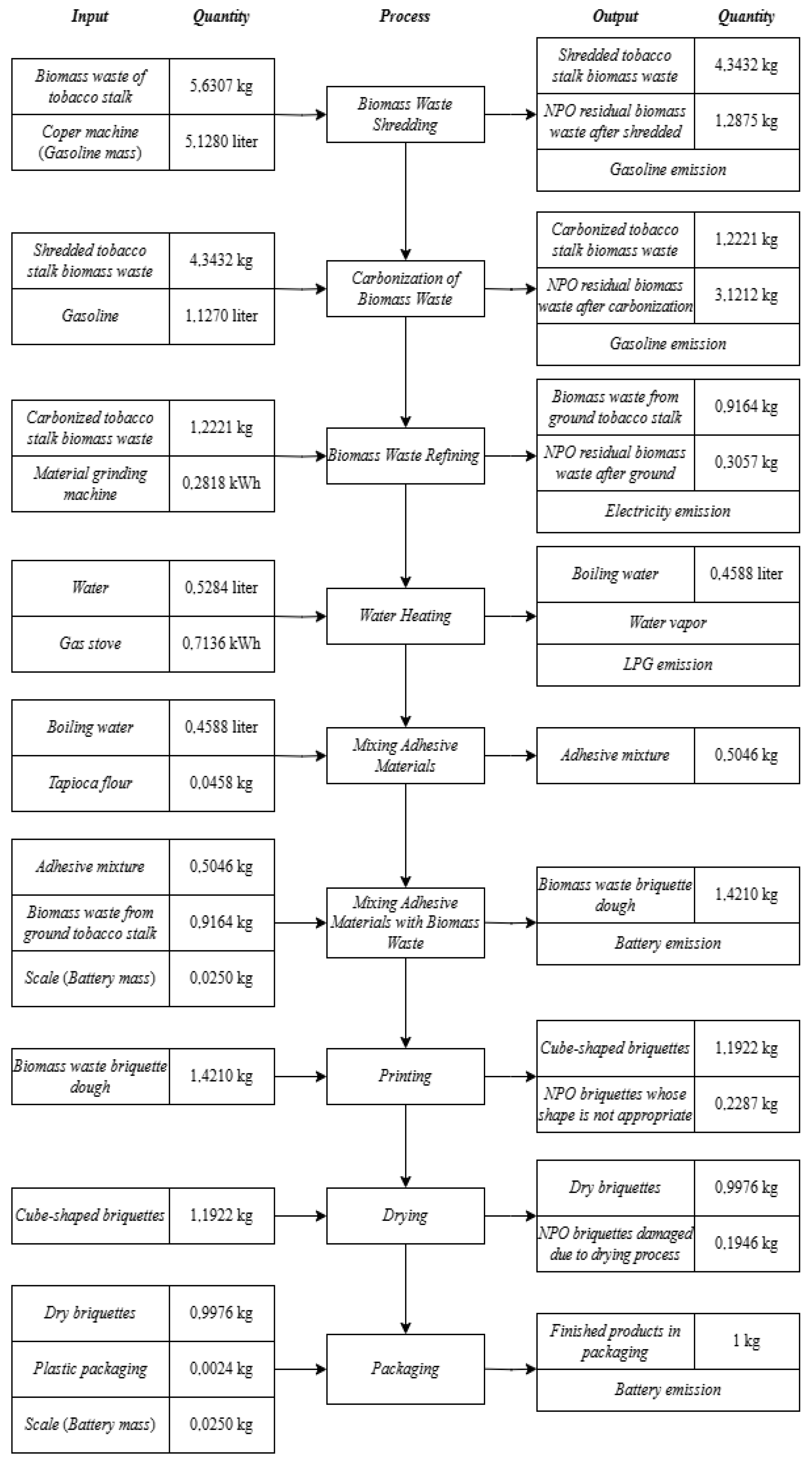
Life cycle inventory (LCI) data were collected through measurements of input and output across all stages involved in producing 1 kg of briquettes. The LCI for the A1B1 formulation is illustrated in Figure 4, whereas the inventories for other formulations are included in the Supplementary Section.
Figure 4 was diagrammatic representation of material and energy trajectories within the biomass briquette production methodology, encompassing the stages of shredding, carbonization, grinding, adhesive formulation, mixing, printing, drying, and packaging. Figure 4 is an input—output diagram for producing 1 kg of briquettes from tobacco stems.

3.7. Life Cycle Impact Assessment and Interpretation

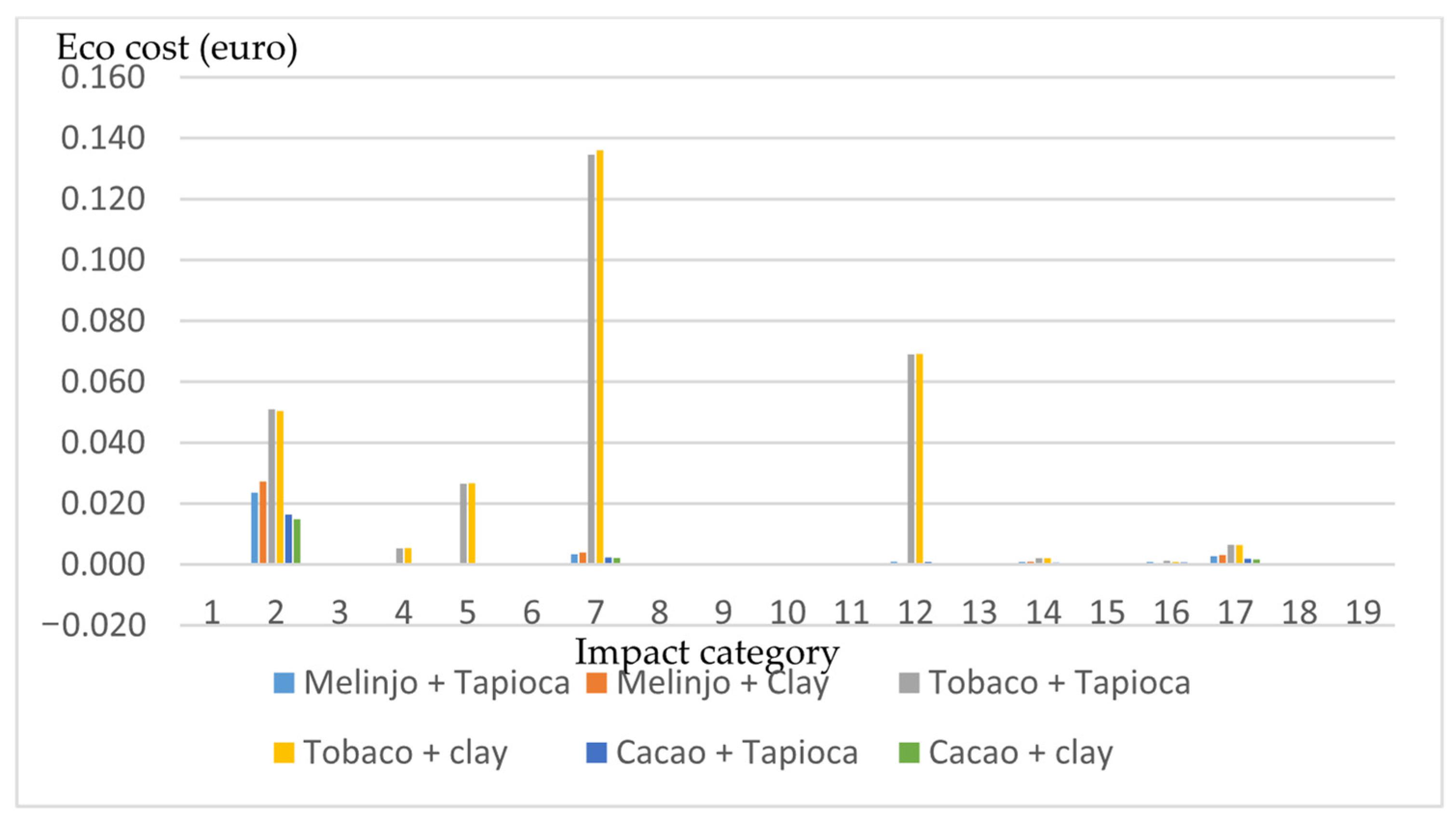
An environmental impact assessment of the developed biomass briquettes was conducted using 18 impact categories to ensure a comprehensive sustainability evaluation. These categories were: (1) fine particulate matter formation, (2) fossil resource scarcity, (3) freshwater ecotoxicity, (4) freshwater eutrophication, (5) global warming potential, (6) human carcinogenic toxicity, (7) human non-carcinogenic toxicity, (8) ionizing radiation, (9) land use, (10) marine ecotoxicity, (11) marine eutrophication, (12) mineral resource scarcity, (13) ozone formation—human health, (14) ozone formation—terrestrial ecosystems, (15) stratospheric ozone depletion, (16) terrestrial acidification, (17) terrestrial ecotoxicity, and (18) water consumption. By systematically incorporating these impact indicators, the analysis provides a holistic understanding of the environmental trade-offs and potential advantages of biomass briquette utilization as a renewable energy source. The methodological framework was guided by internationally recognized life cycle impact assessment models, such as ReCiPe 2016 and the ILCD guidelines, ensuring robust, transparent, and comparable results that align with sustainability and circular economy objectives [33]. Table 5 presents the characterization results of the six briquette formulations that were developed.
In the first phase of the life cycle impact assessment (LCIA), the characterization step is conducted, followed by normalization and weighting, which together yield a single aggregated score quantified in Euro. The resulting single scores are listed in Table 6. Single-score analysis revealed distinct variations in the impact categories across the six scenarios. Fine particulate matter formation consistently emerged as the most significant contributor in Scenarios 1, 2, 5, and 6, whereas human carcinogenic toxicity dominated Scenarios 3 and 4, with substantially higher values. In contrast, the lowest contributions were primarily attributed to mineral resource scarcity (Scenarios 1, 3, and 5) and water consumption (negative values in Scenarios 2, 4, and 6), indicating minimal or even offsetting impacts in these categories. Briquette production utilizing cacao shells demonstrated the lowest environmental burden compared to other scenarios.
Figure 5 illustrates the graphical distribution of the single-score values obtained from the six briquette formulations.

3.8. Research Implications

3.8.1. Theoretical Implications

This study enriches the theoretical discourse on renewable energy by reaffirming the role of agricultural biomass as a critical alternative to fossil fuels. It demonstrates that agricultural residues, such as melinjo shells, tobacco stems, and cacao shells, can be transformed into solid biofuels, thereby strengthening theories of energy diversification and circular bioeconomy [38]. Moreover, the integration of Life Cycle Assessment (LCA) into this study expands the theoretical framework of sustainability assessment within bioenergy systems. By adopting a gate-to-gate perspective, this research integrates both technical performance and environmental dimensions, complementing recent calls for multidimensional sustainability evaluations in renewable energy research [39].
Finally, this research contributes to the theoretical understanding of energy transition by highlighting how decentralized utilization of local agricultural residues can support national strategies towards achieving net-zero emissions. This reinforces the conceptual link between renewable energy innovation, waste valorization, and sustainable development in emerging economies [40].

3.8.2. Managerial Implication

The findings of this study contribute to policy development by providing local governments with evidence-based strategies to foster the production of biomass briquettes that align with consumer quality requirements while simultaneously minimizing environmental burdens. Furthermore, enhancing community empowerment in agricultural waste collection is indispensable, as collective behavioral dynamics are a determining factor in the overall success and sustainability of waste management systems [41]. Evidence from prior research indicates that the transformation of waste into value-added products contributes to a substantial improvement in the eco-efficiency index, thereby reinforcing the integration of sustainability principles within production systems [14,42].

3.8.3. Limitation

Although calorific value provides an initial indication of fuel potential, the technical feasibility of briquettes as solid fuels also depends on physical and combustion-related properties such as bulk density, mechanical strength, burning time, and ignition behavior, which were not evaluated in this study and should be addressed in future work.
While an exhaustive mineralogical characterization (for instance, through X-ray fluorescence or Inductively Coupled Plasma Optical Emission Spectroscopy) fell outside the parameters of the current investigation, the observed trends in ash content can be judiciously inferred from the results of proximate analysis and the proportions of binder formulation. The heightened ash proportion is presumably affected by both the inherent mineral content of the biomass and the incorporation of clay binder, with the process of carbonization further exacerbating the concentration of inorganic constituents due to the loss of volatile substances. Nonetheless, the lack of elemental differentiation between minerals derived from biomass and those derived from the binder constrains the accurate quantification of their individual contributions to energy dilution. Subsequent research that integrates mineralogical profiling would facilitate a more mechanistic comprehension of the distribution of inorganic materials and their ramifications on combustion efficacy. Nevertheless, within the context of the established production methodology, the present analysis offers a practically pertinent evaluation of the performance limitations associated with ash content.

4. Conclusions

The conclusion of this study showed that there was a significant difference between briquettes using tapioca flour adhesive materials and clay against the SNI 01-6235-2000 indicator, where the moisture content and ash content did not show a significant difference (significance values of 0.052 and 0.089, respectively), while volatile matter showed a significant difference (significance value 0.002). The best combination of the six types of combinations tested was A1B1 (melinjo shell and tapioca flour) with a moisture content of 7.010%, ash content of 13.583%, volatile matter of 47.148%, and calorific value of 5453.43 cal/g. However, the ash and volatile matter content did not meet the SNI standards. In addition, the analysis of biomass potential in Central Java shows that melinjo shells have a caloric value of 5453.43 cal/g, followed by tobacco stems, cacao shells, and various other biomasses, each of which has a varying caloric value. These data provide a clear picture of the briquette potential of different types of biomass in the region, as well as the importance of selecting the right adhesive materials to achieve the quality of briquettes that meet the standards.
Single-score analysis revealed distinct variations in the impact categories across the six scenarios. Fine particulate matter formation consistently emerged as the most significant contributor in Scenarios 1, 2, 5, and 6, whereas human carcinogenic toxicity dominated Scenarios 3 and 4, with substantially higher values. In contrast, the lowest contributions were primarily attributed to mineral resource scarcity (Scenarios 1, 3, and 5) and water consumption (negative values in Scenarios 2, 4, and 6), indicating minimal or even offsetting impacts in these categories. Briquette production utilizing cacao shells demonstrated the lowest environmental burden compared to other scenarios.
Carbonization processes carried out using traditional methods without precise control of temperature or residence time lead to incomplete devolatilization, thereby increasing the volatile matter content. This limitation indicates that further studies employing controlled carbonization conditions are required to enhance briquette quality and achieve compliance with regulatory standards. This opens a research gap for exploring alternative binders, hybrid formulations, and biomass pretreatment methods to enhance briquette performance. Biomass potential mapping in Central Java also indicates an abundant renewable energy source; however, research remains limited to selected feedstocks, suggesting that future studies should extend to underutilized biomass types. From an environmental perspective, the Life Cycle Assessment (LCA) results revealed significant variations in impact categories, with fine particulate matter formation and human carcinogenic toxicity as the dominant contributors. This highlights the need for emission control technologies and more comprehensive LCA approaches, including endpoint, dynamic, and regionalized methods. Furthermore, while cacao shell briquettes exhibited the lowest environmental burden, future studies should refine this finding by addressing trade-offs among calorific value, production cost, and environmental performance. Hence, integrating multi-criteria approaches, such as life cycle sustainability assessment (LCSA) and techno-economic analysis, is recommended as a strategic research direction.

Supplementary Materials

The following supporting information can be downloaded at: https://www.mdpi.com/article/10.3390/biomass6020031/s1.

Author Contributions

S.H. conducted conceptual design, analysis and interpretation of results. B.D.A. conducted literature review, data collection, data processing, and processing of experimental design. D.A.S. conducted life cycle assessment. D.P.S. formatted the document and paraphrased the content to ensure clarity and consistency. D.N. and M.H. conducted the final review of the research findings and the article to ensure accuracy and completeness. All authors have read and agreed to the published version of the manuscript.

Funding

This research and APC was funded by SAPBN Universitas Diponegoro under the Riset Kolaborasi Indonesia (RKI) scheme for Fiscal Year 2025, grant number 325-06/UN7.D2/PP/V/2025.

Data Availability Statement

The original contributions presented in this study are included in the article/Supplementary Material. Further inquiries can be directed to the corresponding author.

Conflicts of Interest

The authors declare no conflicts of interest regarding the publication of this manuscript. In addition, rules pertaining to ethical issues, including plagiarism, informed consent, misconduct, data fabrication and/or falsification, double publication and/or submission, and redundancy have been completely observed by the authors.

Abbreviations

%Percent
(NOx)eqNitrogen oxide equivalent
°CDegree of Celsius
cal/gCalor per gram
CO2Carbon dioxide
Fig.Figure
gGram
GHGGreenhouse gas
GWPGlobal warming potential
haHectare
INSIndonesian National Standard
kgKilogram
kcal/kgkilocalories per kilogram
kg CO2Gram carbon dioxide equivalent
LCALife cycle assessment
LCILife cycle inventories
LCIALife cycle impact assessment
NOxNitrogen oxide
PMParticulate matter

References

  1. Searcy, E.; Flynn, P.; Ghafoori, E.; Kumar, A. The Relative Cost of Biomass Energy Transport. Appl. Biochem. Biotechnol. 2007, 136–140, 639–652. [Google Scholar] [CrossRef]
  2. Surury, F.; Syauqi, A.; Purwanto, W.W. Multi-objective optimization of petroleum product logistics in Eastern Indonesia region. Asian J. Shipp. Logist. 2021, 37, 220–230. [Google Scholar] [CrossRef]
  3. Orisaleye, J.I.; Jekayinfa, S.O.; Ogundare, A.A.; Shittu, M.R.; Akinola, O.O.; Odesanya, K.O. Effects of Process Variables on Physico-Mechanical Properties of Abura (Mitrogyna ciliata) Sawdust Briquettes. Biomass 2024, 4, 671–686. [Google Scholar] [CrossRef]
  4. Muchsinin. Statistik Pertanian Kabupaten Wonogiri. Dinas Komunikasi dan Informatika Kabupaten Wonogiri, Indonesia 2022. Available online: https://online.fliphtml5.com/brrlj/skhw/ (accessed on 26 March 2025).
  5. Murwanti, S.; Praswati, A.N.; Sari, N.P. Potensi Coklat BUMDes Rondo Kuning Wonogiri. Abdi Psikonomi 2021, 2, 1–14. [Google Scholar] [CrossRef]
  6. Nikiforov, A.; Kinzhibekova, A.; Prikhodko, E.; Karmanov, A.; Nurkina, S. Analysis of the Characteristics of Bio-Coal Briquettes from Agricultural and Coal Industry Waste. Energies 2023, 16, 3527. [Google Scholar] [CrossRef]
  7. De Conti, A.C.; Granado, M.P.P.; Padilla, E.R.D.; Nakashima, G.T.; De Conti, C.; Yamaji, F.M. Binderless briquetting of mixed cassava rhizome, sugarcane bagasse, and sugarcane straw for producing solid biofuel with high durability. BioEnergy Res. 2022, 15, 507–516. [Google Scholar] [CrossRef]
  8. Nikhom, R.; Suppalakpanya, K.; Nikhom, S.; Siriphan, T. Combustion properties improvement and economic evaluation of charcoal briquettes from mixed agricultural waste biomass. Biomass Convers. Biorefin. 2024, 15, 4477–4487. [Google Scholar] [CrossRef]
  9. Demirel, B. Determination of solid biofuel properties of hazelnut husk briquettes obtained at different compaction pressures. Biomass Convers. Biorefin. 2023, 13, 13267–13278. [Google Scholar] [CrossRef]
  10. Yunusa, S.U.; Mensah, E.; Preko, K.; Narra, S.; Saleh, A.; Dalha, I.B.; Abdulsalam, M. Optimizing selected quality metrics of rice husk briquettes: A response surface methodology approach. Biomass Convers. Biorefin. 2024, 15, 10809–10827. [Google Scholar] [CrossRef]
  11. Wulandari, A.P.; Rossiana, N.; Zahdi, F.R.M.; Nuraulia, R.; Nur’anifah, R.; Kartika, C.I.; Rahmah, L.A.; Kusmoro, J.; Madihah; Yusnaidar. Formulation and Characterization of Bio-Briquettes and Bio-Pellets from Ramie (Boehmeria nivea) Biomass as Renewable Fuel. Sustainability 2024, 16, 10930. [Google Scholar] [CrossRef]
  12. Madhusanka, L.; Nilmalgoda, H.; Wijethunga, I.; Ampitiyawatta, A.; Koswattage, K. Agri-Eco Energy: Evaluating Non-Edible Binders in Coconut Shell Biochar and Cinnamon Sawdust Briquettes for Sustainable Fuel Production. Agriengineering 2025, 7, 132. [Google Scholar] [CrossRef]
  13. Garcia-Vallejo, M.C.; Patiño, T.A.; Poveda-Giraldo, J.A.; Piedrahita-Rodríguez, S.; Alzate, C.A.C. Alternatives for the valorization of avocado waste generated in the different links of the value chain based on a life-cycle analysis approach. Agronomy 2023, 13, 2229. [Google Scholar] [CrossRef]
  14. Rashif, M.N.; Hartini, S.; Sari, D.P.; Ramadan, B.S.; Matsumoto, T.; Balasbaneh, A.T. Life cycle assessment of biomass waste briquettes as renewable energy. Glob. J. Environ. Sci. Manag. 2025, 11, 207–224. [Google Scholar] [CrossRef]
  15. Vachlepi, A.; Suwardin, D. Penggunaan Biobriket Sebagai Bahan Bakar Alternatif Dalam Pengeringan Karet Alam. War. Perkaretan 2013, 32, 65–73. [Google Scholar] [CrossRef]
  16. Harahap, A.M.; Priawan, I. Identifikasi Senyawa Bioaktif Ekstrak Etanol Kulit Melinjo (Gnetum gnemon) Dengan Metode Gc-Ms. Forte J. 2024, 4, 421–426. [Google Scholar] [CrossRef]
  17. Pesevski, M.; Iliev, B.; Zivkovic, D.; Jakimovska-Popovska, V.; Srbinoska, M.; Filiposki, B. Possibilities for utilization of tobacco stems for production of energetic briquettes. J. Agric. Sci. Belgrade 2010, 55, 45–54. [Google Scholar] [CrossRef]
  18. Liu, Y.; Dong, J.; Liu, G.; Yang, H.; Liu, W.; Wang, L.; Kong, C.; Zheng, D.; Yang, J.; Deng, L.; et al. Co-digestion of tobacco waste with different agricultural biomass feedstocks and the inhibition of tobacco viruses by anaerobic digestion. Bioresour. Technol. 2015, 189, 210–216. [Google Scholar] [CrossRef]
  19. García, A.; Gandini, A.; Labidi, J.; Belgacem, N.; Bras, J. Industrial and crop wastes: A new source for nanocellulose biorefinery. Ind. Crops Prod. 2016, 93, 26–38. [Google Scholar] [CrossRef]
  20. Soares, T.F.; Oliveira, M.B.P.P. Cocoa By-Products: Characterization of Bioactive Compounds and Beneficial Health Effects. Molecules 2022, 27, 1625. [Google Scholar] [CrossRef] [PubMed]
  21. Wang, S.; Dai, G.; Yang, H.; Luo, Z. Lignocellulosic biomass pyrolysis mechanism: A state-of-the-art review. Prog. Energy Combust. Sci. 2017, 62, 33–86. [Google Scholar] [CrossRef]
  22. Chen, W.; Peng, J.; Bi, X. Pyrolysis characteristics of lignocellulosic biomass: Effect of temperature on product distribution and char properties. Renew. Sustain. Energy Rev. 2022, 158, 112146. [Google Scholar]
  23. Chouchene, A.; Jeguirim, M.; Khiari, B.; Zagrouba, F.; Trouvé, G. Thermal Degradation of Olive Solid Waste: Influence of Particle Size and Oxygen Concentration. Resour. Conserv. Recycl. 2010, 54, 271–277. [Google Scholar] [CrossRef]
  24. Quan, C.; Gao, N.; Song, Q. Pyrolysis of biomass components in a TGA and a fixed-bed reactor: Thermochemical behaviors, kinetics, and product characterization. J. Anal. Appl. Pyrolysis 2016, 121, 84–92. [Google Scholar] [CrossRef]
  25. Sarker, T.R.; Nanda, S.; Dalai, A.K.; Meda, V. Influence of particle size and process conditions on biochar properties: A review. J. Anal. Appl. Pyrolysis 2021, 155, 105070. [Google Scholar]
  26. SNI 01-6235-2000; Briket Arang Kayu. Badan Standardisasi Nasional: Jakarta, Indonesia, 2000.
  27. ISO/IEC 17025:2017; General Requirements for the Competence of Testing and Calibration Laboratories. International Organization for Standardization: Geneva, Switzerland, 2017.
  28. Onukak, I.E.; Mohammed-Dabo, I.A.; Ameh, A.O.; Okoduwa, S.I.R.; Fasanya, O.O. Production and Characterization of Biomass Briquettes from Tannery Solid Waste. Recycling 2017, 2, 17. [Google Scholar] [CrossRef]
  29. Hartini, S.; Widharto, Y.; Indarto, S.R.; Murdikaningrum, G. Ecoefficiency analysis of waste cooking oil recycling into liquid dish soap using life cycle assessment. IOP Conf. Ser. Earth Environ. Sci. 2021, 896, 012066. [Google Scholar] [CrossRef]
  30. Kolahdooz, R.; Asghari, S.; Rashid-Nadimi, S.; Amirfazli, A. Integration of finite element analysis and design of experiment for the investigation of critical factors in rubber pad forming of metallicbipolar plates for PEM fuel cells. Int. J. Hydrog. Energy 2017, 42, 575–589. [Google Scholar] [CrossRef]
  31. Brás, I.; Fabbricino, M.; Ferreira, J.; Silva, E.; Mignano, V. Sustainable Heat Production for Fossil Fuel Replacement—Life Cycle Assessment for Plant Biomass Renewable Energy Sources. Sustainability 2025, 17, 3109. [Google Scholar] [CrossRef]
  32. Agrela, F.; Rosales, M.; Alonso, M.L.; Ordóñez, J.; Cuenca-Moyano, G.M. Life-Cycle Assessment and Environmental Costs of Cement-Based Materials Manufactured with Mixed Recycled Aggregate and Biomass Ash. Materials 2024, 17, 4357. [Google Scholar] [CrossRef]
  33. ISO 17225-3:2014; Solid Biofuels—Fuel Specifications and Classes—Part 3: Graded Wood Briquettes. International Organization for Standardization: Geneva, Switzerland, 2014.
  34. EN 14918:2009; Solid Biofuels—Determination of Calorific Value. European Committee for Standardization (CEN): Brussels, Belgium, 2009.
  35. EN 15148:2009; Solid Biofuels—Determination of the Content of Volatile Matter. European Committee for Standardization (CEN): Brussels, Belgium, 2009.
  36. N ISO 18122:2015; Solid Biofuels—Determination of Ash Content. International Organization for Standardization: Geneva, Switzerland, 2015.
  37. EN ISO 18134-1:2015; Solid Biofuels—Determination of Moisture Content—Part 1: Total Moisture—Reference Method. International Organization for Standardization: Geneva, Switzerland, 2015.
  38. Huijbregts, M.A.J.; Steinmann, Z.J.N.; Elshout, P.M.F.; Stam, G.; Verones, F.; Vieira, M.; Zijp, M.; Hollander, A.; Zelm, R.V. ReCiPe2016: A harmonised life cycle impact assessment method at midpoint and endpoint level. Int. J. Life Cycle Assess. 2017, 22, 138–147. [Google Scholar] [CrossRef]
  39. Sofán-Germán, S.J.; Doria-Oviedo, M.E.; Rhenals-Julio, J.D.; Mendoza-Fandiño, J.M. Life Cycle Assessment of Biomass Waste and Coal Co-Firing: Advancing Circular Economy in Energy Production. Recycling 2025, 10, 151. [Google Scholar] [CrossRef]
  40. e Silva, S.A.; Venturini, O.J.; Leme, M.M.V.; de Moura, D.C.; de Oliveira Heck, T. Enhancing sustainability in charcoal production: Integrated Life Cycle Assessment and by-product utilization to promote circular systems and minimize energy loss. Biomass Bioenergy 2024, 182, 107115. [Google Scholar] [CrossRef]
  41. Hartini, S.; Sari, D.P.; A Utami, A. The use of consumer behavior to identify the flow mapping of waste cooking oil: A finding from Semarang, Indonesia. IOP Conf. Ser. Mater. Sci. Eng. 2019, 703, 1012025. [Google Scholar] [CrossRef]
  42. Hartini, S.; Wicaksono, P.A.; Purbasari, A.; Fatliana, A.N.; Handayani, N.U.; Rashif, M.N. Eco-efficiency index of the recycling process of fuel husks into briquettes in Tofu SMEs using life cycle assessment. IOP Conf. Ser. Earth Environ. Sci. 2023, 1268, 012073. [Google Scholar] [CrossRef]
Figure 1. The Life Cycle Assessment phase (own work).
Biomass 06 00031 g001
Figure 2. The experimental design process of 6 types of combinations (own work).
Biomass 06 00031 g002
Figure 3. A comparative analysis of tapioca flour and clay as binding agents in biomass briquette production was conducted by evaluating key fuel characteristics: (a) Moisture content; (b) Ash content; (c) Volatile matter; (d) Calorific value (own work).
Biomass 06 00031 g003aBiomass 06 00031 g003b
Figure 4. The LCI for the A1B1 formulation (own work).
Biomass 06 00031 g004
Figure 5. The graphical distribution of single score values (own work).
Biomass 06 00031 g005
Table 1. The experimental design.
Description
CombinationTapioca FlourCombinationClay
A1B190% melinjo shell
+ 10% tapioca flour
A1B290% melinjo shell + 10% clay
A2B190% tobacco stem
+ 10% tapioca flour
A2B290% tobacco stem + 10% clay
A3B190% cacao shell
+ 10% tapioca flour
A3B290% cacao shell + 10% clay
Table 2. Test results of the combination of biomass types.
SampleCodeMoistureAsh ContentVolatile MatterCalorific Value
A1B1MT15.244%19.711%58.864%5455.060
MT29.382%13.704%16.509%5453.430
MT35.493%14.956%19.218%5435.840
MT47.920%5.960%94.040%5469.400
Mean7.010%13.583%47.158%5453.433
A2B3ML19.918%29.297%22.830%4006.360
ML24.836%--4010.080
ML313.192%29.066%27.321%3968.750
ML45.710%32.450%67.550%4040.240
Mean8.414%22.703%29.425%4006.357
A2B1TT16.978%17.448%46.006%3691.660
TT27.554%14.549%34.648%3776.610
TT36.447%16.109%30.573%3618.560
TT410.680%34.570%65.430%3387.420
Mean7.915%20.669%44.164%3618.563
A2B2TL114.344%26.484%33.885%3914.130
TL29.366%--3961.680
TL36.017%45.837%14.121%3971.910
TL412.120%23.820%76.180%3999.000
Mean10.462%24.035%31.047%3949.240
A3B1KT14.606%13.940%34.134%4043.780
KT22.234%18.199%17.275%4125.910
KT38.308%15.958%23.920%4087.700
KT411.780%11.220%88.780%4093.410
Mean6.732%14.829%41.027%4087.700
A3B2KL17.188%--4071.350
KL28.244%28.962%20.239%4165.070
KL38.455%29.997%18.414%3928.300
KL411.140%19.090%80.910%4120.670
Mean0.08756940.1951211070.2989079234071.347
Table 3. Normality and homogeneity tests.
TestThe Result TestInterpretation
NormalityBiomass 06 00031 i001Normal
HomogeneityBiomass 06 00031 i002Homogeneous
Control behaviourBiomass 06 00031 i003The combination of biomass type, binder type, and their interaction did not significantly explain the variation in volatile matter content
Table 4. The test results of six combinations.
CombinationSample NameMoisture Content (%)Ash Content (%)Volatile Matter (%)Calorific Value (Cal/g) and (MJ/kg)
A1B190% melinjo shell + 10% tapioca flour7.0113.5847.145453.43 (22.82 MJ/kg)
A2B190% tobacco stem + 10% tapioca flour7.9120.6644.163618.56 (15.14 MJ/kg)
A3B190% cacao shell + 10% tapioca flour6.7314.8241.024087.70 (17.10 MJ/kg)
A1B290% melinjo shell + 10% clay8.4122.7029.424006.36 (16.76 MJ/kg)
A2B290% tobacco stem + 10% clay10.4624.0331.043961.68 (16.58 MJ/kg)
A3B290% cacao shell + 10% clay8.7519.5129.894071.35 (17.03 MJ/kg)
SNI No. 1/6235/2000Max. 8%Max. 8%Max. 15%Min. 5000 (~20.9 MJ/kg)
ISO 17225-3:2014 [33]Max 12%1.5–5%not specified16.5 MJ/kg Calo
Table 5. The characterization results of the six briquette formulations.
NoUnitMelinjo + TapiocaMelinjo + ClayTobacco + TapiocaTobacco + ClayCacao + TapiocaCacao + Clay
1kg PM2.5 eq0.0060.0070.0130.0130.0040.004
2kg oil eq3.7544.3936.4836.4152.9692.403
3kg 1.4-DCB0.0010.0010.3120.3150.0000.000
4kg P eq0.0000.0000.0050.0050.0000.000
5kg CO2 eq4.7115.4878.8718.7723.2683.001
6kg 1.4-DCB0.0020.0030.0930.0940.0020.002
7kg 1.4-DCB0.3460.4060.7430.7380.2400.222
8kBq Co-60 eq0.1210.1410.2080.2060.0830.077
9m2a crop eq0.0010.0010.0010.0010.0000.000
10kg 1.4-DCB0.0110.0130.1090.1100.0070.007
11kg N eq0.0000.0000.0220.0220.0000.000
12kg Cu eq0.0010.0010.0010.0010.0000.000
13kg NOx eq0.0080.0090.0200.0200.0050.005
14kg NOx eq0.0080.0090.0200.0200.0050.005
15kg CFC11 eq0.0000.0000.0000.0000.0000.000
16kg SO2 eq0.0210.0240.0500.0490.0150.013
17kg 1.4-DCB3.9144.5819.0949.0512.7082.505
18m30.045−0.0030.003−0.0040.006−0.001
Table 6. The resulting single score (euro).
NoMelinjo + TapiocaMelinjo + ClayTobacco + TapiocaTobacco +
Clay
Cacao + TapiocaCacao + Clay
10.0240.0270.0510.0500.0160.015
20.0000.0000.0000.0000.0000.000
30.0000.0000.0050.0050.0000.000
40.0000.0000.0270.0270.0000.000
50.0000.0000.0000.0000.0000.000
60.0030.0040.1350.1360.0020.002
70.0000.0000.0000.0000.0000.000
80.0000.0000.0000.0000.0000.000
90.0000.0000.0000.0000.0000.000
100.0000.0000.0000.0000.0000.000
110.0010.0000.0690.0690.0010.000
120.0000.0000.0000.0000.0000.000
130.0010.0010.0020.0020.0010.001
140.0000.0000.0000.0000.0000.000
150.0010.0000.0010.0010.0010.000
160.0030.0030.0060.0060.0020.002
170.0000.0000.0000.0000.0000.000
180.0000.0000.0000.0000.0000.000
Total0.0330.0370.2980.2980.0230.020
Disclaimer/Publisher’s Note: The statements, opinions and data contained in all publications are solely those of the individual author(s) and contributor(s) and not of MDPI and/or the editor(s). MDPI and/or the editor(s) disclaim responsibility for any injury to people or property resulting from any ideas, methods, instructions or products referred to in the content.