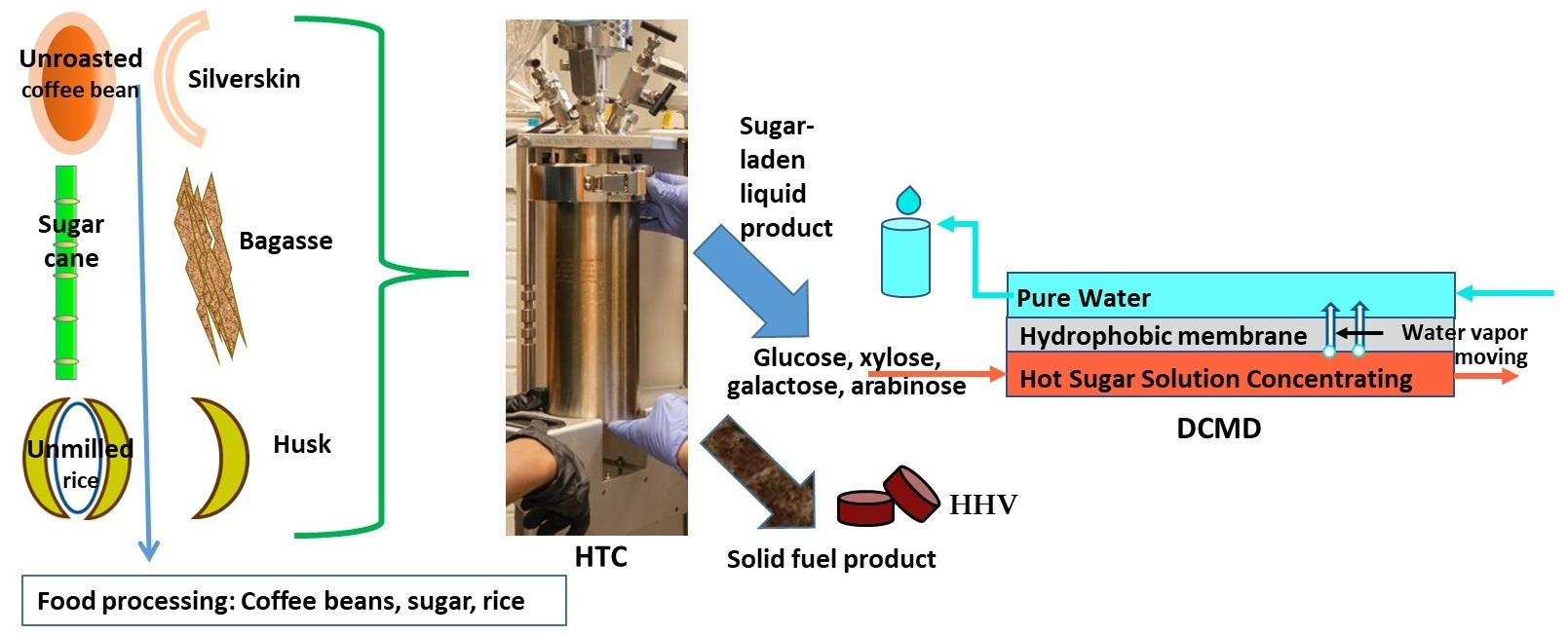

Sugar Extraction from Secondary Agricultural Waste Biomass Using Hydrothermal Carbonization and Direct Contact Membrane Distillation



Abstract
Share and Cite
Sagar, V.; Lynam, J.G.; Parrenin, A.G. Sugar Extraction from Secondary Agricultural Waste Biomass Using Hydrothermal Carbonization and Direct Contact Membrane Distillation. Biomass 2023, 3, 323-335. https://doi.org/10.3390/biomass3040020
Sagar V, Lynam JG, Parrenin AG. Sugar Extraction from Secondary Agricultural Waste Biomass Using Hydrothermal Carbonization and Direct Contact Membrane Distillation. Biomass. 2023; 3(4):323-335. https://doi.org/10.3390/biomass3040020
Chicago/Turabian StyleSagar, Viral, Joan G. Lynam, and Amelia G. Parrenin. 2023. "Sugar Extraction from Secondary Agricultural Waste Biomass Using Hydrothermal Carbonization and Direct Contact Membrane Distillation" Biomass 3, no. 4: 323-335. https://doi.org/10.3390/biomass3040020
APA StyleSagar, V., Lynam, J. G., & Parrenin, A. G. (2023). Sugar Extraction from Secondary Agricultural Waste Biomass Using Hydrothermal Carbonization and Direct Contact Membrane Distillation. Biomass, 3(4), 323-335. https://doi.org/10.3390/biomass3040020