Review

Mapping Qualitative Research in Social Sciences and Humanities: A Bibliometric Review

by
Vassilis Zakopoulos
1 and
Panagiota Xanthopoulou
2,*
1
Department of Theatre Studies, National and Kapodistrian University of Athens, 15784 Athens, Greece
2
Department of Business Administration, University of West Attica, 12241 Athens, Greece
*
Author to whom correspondence should be addressed.
Encyclopedia 2026, 6(3), 53; https://doi.org/10.3390/encyclopedia6030053
Submission received: 23 January 2026 / Revised: 17 February 2026 / Accepted: 23 February 2026 / Published: 26 February 2026
(This article belongs to the Collection Encyclopedia of Social Sciences)

Abstract

This study examines the evolution of qualitative research in the Social Sciences and Arts & Humanities over time through an extensive bibliometric analysis of 15,115 publications indexed in Scopus between 1985 and 2026. This research maps the scope of the field, the most prevalent methodologies, types of publications, linguistic distribution, and geographical origin of the works. Simultaneously, it correlates qualitative, quantitative, and mixed methodologies, highlighting the tensions, differences, and synergies between them. Using PRISMA-guided selection and bibliometric techniques, the analysis revealed a gradual and steady increase in qualitative research over the last decade. In the Arts and Humanities, there is a particular emphasis on narrative research, discourse analysis, and ethnography, while in the Social Sciences, qualitative, quantitative, and mixed methodologies coexist more evenly, with case studies and semi-structured interviews being used extremely frequently. Analysis of the document types revealed the predominance of scientific articles (over 85%), with English being the main language of publication. In terms of geographical distribution, the US and the UK are the strongest producers of qualitative knowledge, with Australia and Canada contributing significantly and a gradual strengthening of the participation of research communities from Latin America and Asia. The data show that publications referring to qualitative and mixed methodologies demonstrate comparatively higher citation visibility within the analyzed corpus, particularly in education, culture, and public policy. The findings indicate that the qualitative approach continues to play a key role in understanding the complex and lived dimensions of human experience, while opportunities for more integrated hybrid methodological frameworks will emerge in the future—both within individual scientific fields and in their interconnections. This study provides one of the largest bibliometric mappings of qualitative research internationally and systematically clarifies how the qualitative tradition differs between the Social Sciences and the Arts & Humanities. The findings can be used for evidence-based curriculum design, targeted development of research collaborations, and formulation of publication policies that enhance the visibility and influence of qualitative research.

1. Introduction

As analyzed by Immanuel Kant (1724–1804) in his work Critique of Pure Reason, natural sciences and natural phenomena obey fixed laws and rules, and their evolution follows a steady course with deterministic developments, independent of space and time. In contrast to the natural sciences, social sciences and humanities are not governed by fixed rules of general validity [1]. However, as pointed out by the German philosopher Wilhelm Dilthey (1833–1911), the fact that social phenomena and human behavior do not evolve according to fixed rules of general validity does not mean that these phenomena arise and function by chance. There is a set of conditions and phenomena that interact and determine each other, and through the way they are intertwined, they contribute to the formation of social phenomena and human behavior. This is what Dilthey calls “historical reason”, which he contrasts with Kant’s “pure reason.” [2]. Consequently, approaching social phenomena in a manner analogous to the natural sciences is impossible because of the nature of these phenomena [3]. This is the central difference between natural and human sciences [4]. According to Dilthey, we explain nature and interpret human culture and behavior to penetrate its deeper meaning and understand it.
Qualitative research in the social sciences is increasingly preoccupying the scientific community and is the subject of debate and study in several countries [5].
Qualitative research draws upon multiple forms of empirical material, including direct observation, interviews, focus groups, textual and discourse analysis, and multimodal artifacts. While observational approaches capture social practices as enacted, verbal data (e.g., interviews and narratives) provide access to participants’ subjective interpretations, internal experiences, and meaning-making processes. These distinct yet complementary forms of qualitative evidence contribute to a richer and more nuanced understanding of social phenomena. To achieve this goal, a variety of theoretical and research methodological approaches and data collection techniques are used (e.g., field notes, interviews, video recordings, photographic material, film, and other types of human evidence and artifacts), which in qualitative perspectives tend to be a “multimodal narrative”: they are based on observations (verbal, visual, tactile, gustatory, olfactory, and kinesthetic) related to the rich spectrum of embodied possibilities of human experience. The notion of authenticity in qualitative research is itself contested and has been widely debated in relation to reflexivity, representation, and the co-construction of meaning between researchers and participants [2,3,5]. In this context, authenticity does not imply objectivist neutrality but refers to methodological transparency and interpretive coherence. Qualitative research constitutes a core methodological tradition within the Social Sciences and the Arts & Humanities, enabling in-depth exploration of meaning, context, interpretation, and lived human experience beyond numerical measurement [6,7]. As contemporary societies face increasingly complex social, cultural, educational, and policy-related challenges, qualitative and mixed-methods approaches have gained renewed relevance, often complementing or critically engaging with dominant quantitative models [8,9]. In this context, qualitative inquiry plays a crucial role in illuminating processes, practices, and meanings that cannot be adequately captured through statistical indicators [10].
Qualitative research has long been epistemologically central within the Arts & Humanities, closely aligned with interpretive and constructivist paradigms that prioritize narrative, discourse, culture, and contextual understanding [11,12]. In contrast, the Social Sciences display a more pluralistic methodological landscape, where qualitative, quantitative, and mixed-method approaches coexist and interact [13,14]. Qualitative research is increasingly employed across disciplines such as education, sociology, cultural studies, and public policy to address questions related to complexity, power relations, social change, and human-centered phenomena, often in dialogue with quantitative evidence [15,16].
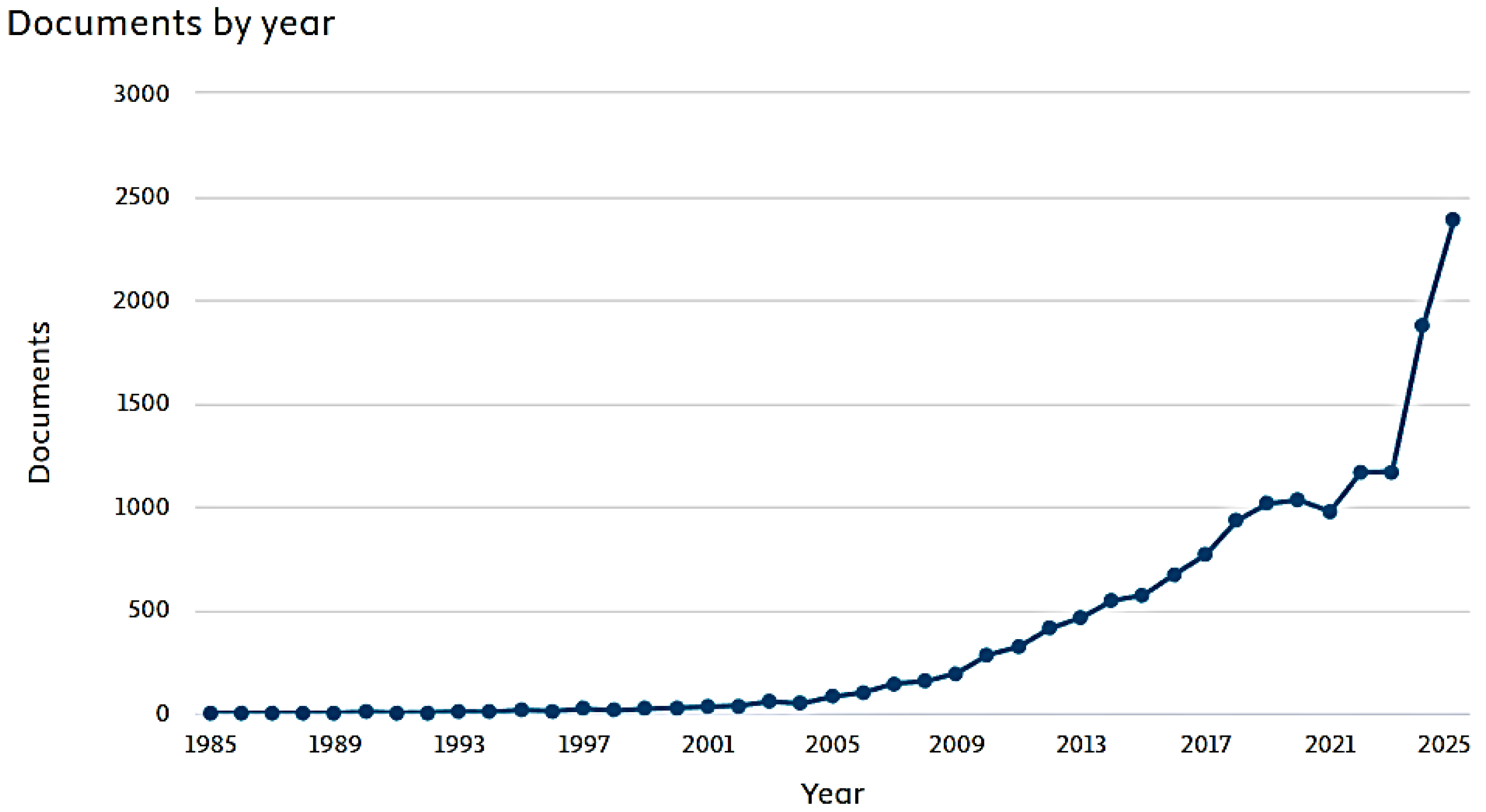
Despite the long-standing presence and growing importance of qualitative research (Figure 1), the large-scale and longitudinal development of qualitative and mixed-method inquiries across disciplines and geographical contexts remains underexplored [17,18]. Much of the existing literature is characterized by small-scale, context-specific studies that provide rich insights at the local level but offer limited comparative and systemic perspectives [18,19]. Consequently, there is a lack of comprehensive evidence on how qualitative research has evolved over time, how it differs across disciplines, and how its scholarly impact is distributed internationally. Bibliometric analysis offers a reproducible methodological approach to address this research gap [20]. By examining large bodies of the scientific literature, bibliometric methods enable mapping of publication trends, methodological orientations, disciplinary structures, language use, and geographical patterns of knowledge [21,22]. Such analyses provide valuable insights into the visibility, consolidation, and impact of research fields without relying on subjective interpretations of individual studies [23].
Against this background, the present study conducts a bibliometric analysis of 15,115 documents indexed in Scopus between 1985 and 2026 to examine the development of qualitative and mixed-method research in the Social Sciences and the Arts & Humanities. This study aims to map publication growth, document types, methodological orientations, linguistic and geographical distributions, and disciplinary differences while exploring the relationships between qualitative, quantitative, and mixed methodologies. By offering one of the largest comparative bibliometric mappings of qualitative research to date, this study highlights both convergences and divergences in how qualitative inquiry is conceptualized and applied across fields, and points toward opportunities for more integrated and interdisciplinary methodological frameworks in future research.
It should be clarified that the present bibliometric mapping does not aim to capture the entirety of qualitative research output in the Social Sciences and Humanities. Instead, the corpus represents publications that explicitly engage with the terminology of “qualitative research,” “qualitative methods,” or “qualitative methodology,” in conjunction with broader discussions of development, evolution, or trends within the Social Sciences and Humanities. Consequently, this study primarily maps the self-referential and methodological discourse surrounding qualitative research rather than all empirical studies employing qualitative techniques (e.g., interviews or ethnography) without explicitly labeling them as such.

2. Materials and Methods

Bibliometrics is a quantitative analysis of bibliographic data used to create co-authorship, co-citation, or keyword co-occurrence networks to explore the connections between authors, publications, keywords, and nations [24]. In 1934, Paul Otlet, a librarian, defined “bibliometry” as a field that measured all the parameters related to the production and reading of books and papers [25,26]. According to [27], the use of bibliometric techniques to evaluate the most recent literature has become more important since the availability of online databases that offer access to bibliographic metadata and the rapid expansion of scientific publications.
Scopus, a well-known database for bibliometric analysis, was used to obtain information on publications, authors, keywords, affiliations, and citations. Web of Science (WoS), Scopus, and Google Scholar (GS) are the primary bibliographic databases utilized in bibliometric assessments of human science subjects; other databases, such as the Chemical Abstracts Service (CAS) databases, are more narrowly focused on scientific disciplines [28]. The search’s result will depend on the database used [29]. Considering the large number of documents found, the authors preferred the Scopus database as it provides extensive coverage of scientific sources, according to several studies [29,30,31]. Moreover, this database was chosen as it offers almost 20% more coverage for citation analysis than Web of Science and indexes more journals than other well-known electronic databases like PubMed and Web of Science [30,31]. The use of a single, well-established database ensured consistency in indexing practices and facilitated transparent and reproducible data retrieval. The main features of the Scopus database and the selection criteria used to get data for the bibliometric study are compiled in Table 1.
The following Boolean query was used to do an organized search in the Scopus database for titles, abstracts, and keywords, as shown in Table 2.
Although preliminary exploratory searches included terms such as “evolution,” “development,” and “trends,” the final corpus was constructed without requiring these terms as mandatory inclusion criteria. The longitudinal analysis presented in the study derives from publication year metadata rather than from articles explicitly addressing trends over time.
A combination of Boolean operators was used to conduct this bibliometric review, with the aim of identifying a targeted and thematically relevant body of the literature. Specifically, the AND operator was used to limit the results to records that included multiple basic thematic concepts simultaneously, ensuring a high degree of relevance to the research topic. The OR operator was used to broaden the search field through synonyms or complementary terms that reflect different formulations of the qualitative research approach, such as qualitative research, qualitative methods, and qualitative methodologies. All terms were incorporated into a strictly structured search strategy, which was applied to the title, abstract, and keyword fields (TITLE-ABS-KEY) in the Scopus database. Simultaneously, the search included terms that define the broader scientific context of the Social Sciences and Humanities to ensure the conceptual and thematic focus of the study. Simultaneously, specialized restriction filters were applied to ensure the quality and comparability of the sample. Specifically, the search was limited to scientific articles published in journals (document type: article), publications in English, and records classified exclusively in the Scopus subject categories of Social Sciences (SOCI) and Arts & Humanities (ARTS). In this way, publications classified outside the Social Sciences (SOCI) and Arts & Humanities (ARTS) subject areas in Scopus were excluded.
This search strategy allowed for the creation of a large, coherent, and thematically homogeneous data set, suitable for analyzing evolution over time, methodological trends, and geographical and scientific distribution of qualitative and mixed research in the Social Sciences and Humanities [29,30,31]. Exact keywords assigned by Scopus were not used as inclusion criteria but were analyzed a posteriori to identify dominant methodological, thematic, and disciplinary patterns within the retrieved corpus. Table 3 describes the most frequently used keywords related to qualitative research in the Social Sciences and Arts & Humanities.
The authors searched the Scopus database multiple times (Table 4). To capture the fundamental ideas of qualitative research in the Social Sciences and Arts & Humanities, the search strategy was organized around a series of complementary and parallel questions. To ensure a high degree of conceptual precision, the first set of questions concentrated on the explicit use of the term “qualitative research” in the titles of scientific articles (QR1). A more comprehensive search was then conducted by searching for the same phrase in the titles, abstracts, and keywords (QR2). This allowed for the inclusion of studies in which qualitative research was a crucial methodological component without necessarily being highlighted in the title. To capture differences in terminological usage across disciplines, an additional query broadened the scope by including comparable methodological terms, such as “qualitative methods” and “qualitative methodology,” in the title, abstract, and keyword fields (QR3). Finally, by looking for matching disciplinary characteristics, a second query limited the results to articles that were specifically located in the Social Sciences and Arts & Humanities (QR4).
It should be clarified that the study relied exclusively on the Scopus database for data extraction. References to other databases (e.g., Web of Science and PubMed) were included solely for comparative purposes regarding database coverage and were not used for corpus construction.
Furthermore, the exclusion of medical sciences refers specifically to Scopus subject classifications outside the Social Sciences (SOCI) and Arts & Humanities (ARTS) categories. Journals with health-related themes (e.g., health sociology, medical education, and public health) were included if they were indexed under the Social Sciences category. Thus, interdisciplinary journals such as Social Science and Medicine or BMC Medical Education appear in the corpus because of their classification within the Social Sciences subject area rather than clinical medicine.
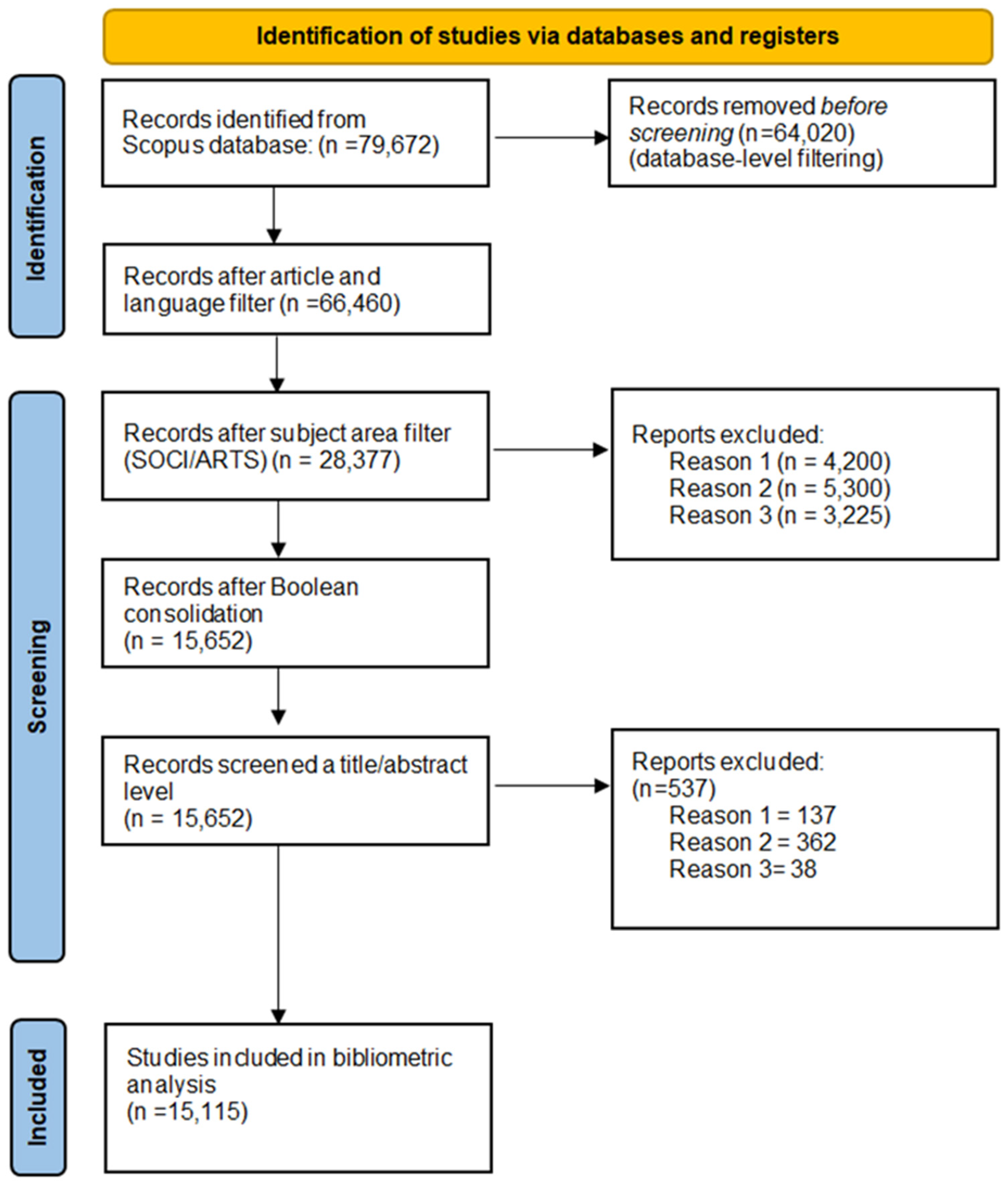
The PRISMA 2020 statement (Figure 2) was used to develop this protocol [20]. A total of 79,672 records were identified through an initial search of the Scopus database, as illustrated in the PRISMA 2020 flow diagram. The PRISMA 2020 framework was used solely to transparently document the database-level screening and filtering process. The study does not constitute a systematic review but is designed and conducted as a large-scale bibliometric analysis. The dataset was subsequently refined using a series of predefined database-level filters. First, records not published as journal articles and those not written in English were excluded, resulting in 66,460 records. The dataset was further restricted to publications classified within the subject areas of Social Sciences and Arts & Humanities, yielding 28,377 records. The query optimization step resulted in 15,652 records. These records were subsequently screened at the title and abstract level using a standardized relevance scoring procedure. After excluding 537 records that did not meet the relevance threshold, the final corpus comprised 15,115 articles, which constituted the unit of bibliometric analysis. The 15,652 records obtained after database-level filtering were screened at the title and abstract level using a standardized 1–5 relevance scoring procedure. Studies scoring 1 (extremely irrelevant), 2 (likely irrelevant), or 3 (marginally relevant) were excluded from the final corpus. In total, 537 records were removed during this stage (Reason 1 = 137; Reason 2 = 362; Reason 3 = 38). The final bibliometric corpus comprised 15,115 articles, which constituted the unit of analysis for all subsequent results. Consequently, 15,115 articles were retained for bibliometric analysis. According to [27], this selection process ensured transparency and reproducibility while remaining consistent with established methodological practices in large-scale bibliometric reviews, where filtering precedes analysis, and the resulting corpus constitutes the unit of bibliometric examination rather than individual study appraisal.
To ensure full transparency and internal consistency, Table 5 summarizes each database-level filtering step and the resulting number of records. The final bibliometric corpus comprised 15,115 articles. All results reported in the abstract, tables, figures, and citation analyses refer exclusively to this final dataset.

3. Results (For Reviews and Research Articles Only)

3.1. Number of Publications

The present section analyses the temporal distribution of publications in the corpus that explicitly reference qualitative research, qualitative methods, or qualitative methodology in the context of the Social Sciences and Humanities. Specifically, Table 6 shows the journals with the highest number of publications in the analyzed corpus. There is a clear concentration of scientific output in journals of Social and Medical Sciences, with Social Science and Medicine being the dominant publishing hub. At the same time, the presence of specialized journals on qualitative methodology indicates the institutional consolidation of the field.
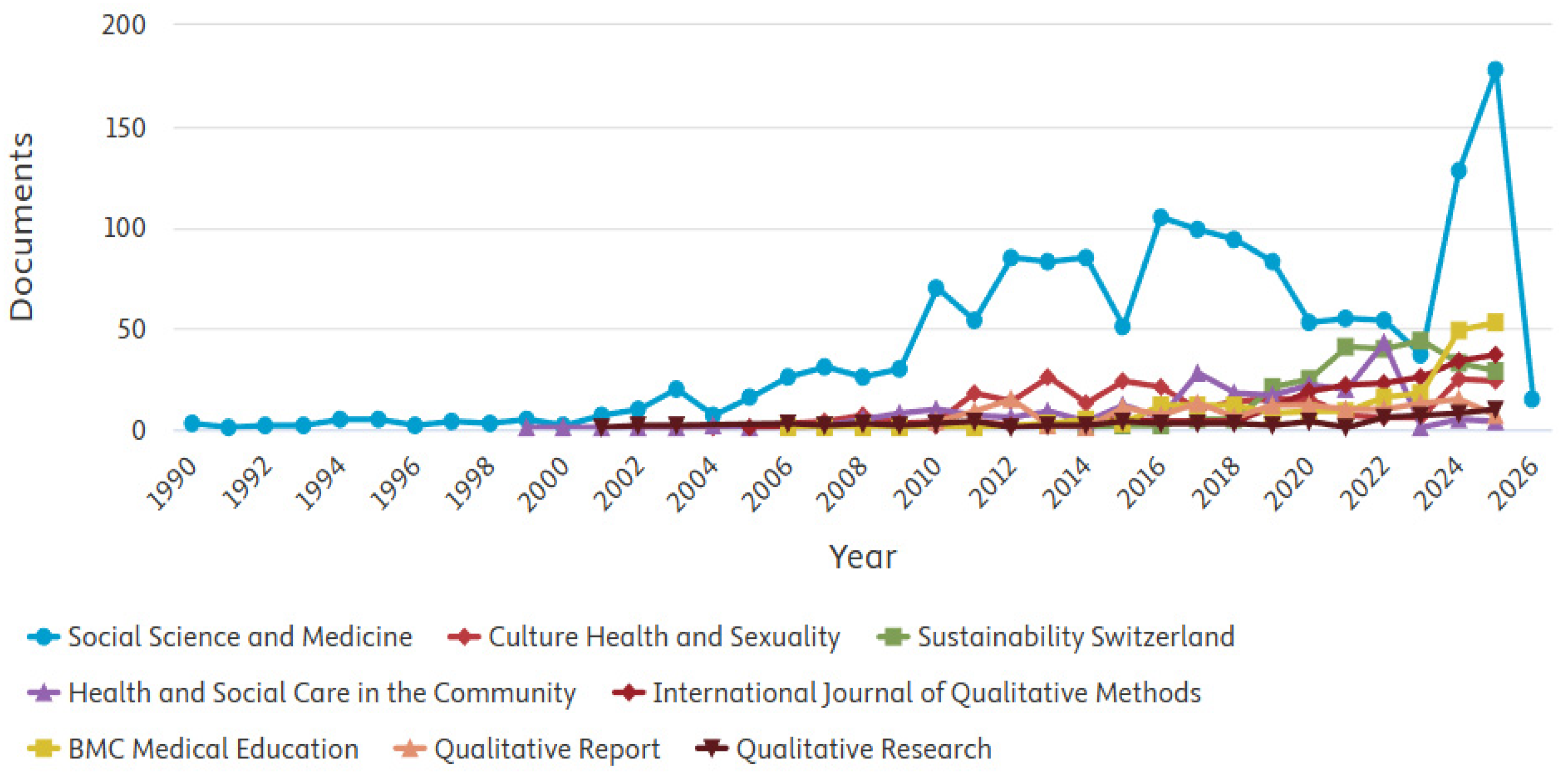
Figure 3 confirms the evolution over time of the number of publications per year for selected scientific journals that are key publishing sources for qualitative research. The analysis covers the period from the early 1990s to 2026 and allows for a comparison of publishing activity between general and specialized journals. Specifically, the journal Social Science and Medicine had the highest number of publications over time, with a clear increase after the mid-2000s and sharp fluctuations during the period 2010–2020. The journals Culture, Health and Sexuality, Health and Social Care in the Community, and International Journal of Qualitative Methods show lower but steadily increasing numbers of publications, particularly after 2010. Simultaneously, journals such as BMC Medical Education and Sustainability (Switzerland) have shown a sharp increase in recent years, especially after 2018, suggesting the expansion of the use of qualitative methodologies in new thematic and applied scientific fields.
The temporal distribution of publications per journal highlights a clear differentiation between the “established” and “emerging” publishing hubs of qualitative research. “Social Science and Medicine” functions as a long-standing institutional pillar, absorbing a significant volume of qualitative studies, and reflecting the central position of the sociological and socio-medical approach in the field. Fluctuations in the number of publications indicate changes in publishing policies and shifts in the thematic priorities of qualitative research. In contrast, the gradual but strong rise in journals such as BMC Medical Education and Sustainability suggests the methodological expansion of qualitative research into areas that are traditionally dominated by quantitative or technocratic approaches. The presence of specialized journals, such as the International Journal of Qualitative Methods and Qualitative Research, at lower but stable publication levels reflects their role as spaces for methodological deepening and theoretical dialogue rather than as mass publishing platforms.
In conclusion, it is clear that qualitative research is not developing uniformly across all journals but is structured through a multilevel publishing ecosystem, where large interdisciplinary journals with high production volumes coexist with more specialized journals that play a strategic role in the methodological structuring of the field.
Moreover, regarding the evolution of scientific output in key journals, Table 7 shows that there has been a clear increase in the number of publications since 2019, particularly in interdisciplinary journals such as Social Science and Medicine and Sustainability. The steady presence of specialized journals on qualitative methodology suggests parallel consolidation of both general and specialized publishing spaces. Table 6 shows the journals with the highest output of qualitative studies in the corpus under review. There is a clear concentration of scientific output in journals of Social and Medical Sciences, with Social Science and Medicine being the dominant publishing hub. At the same time, the presence of specialized journals on qualitative methodology indicates the institutional consolidation of the field.
It should be noted that the corpus includes publications that explicitly employ qualitative research terminology in their title, abstract, or keywords. Therefore, the analysis reflects the explicit discursive presence of qualitative research within the Social Sciences and Humanities rather than all empirical studies that may employ qualitative techniques without explicitly labeling them as such.

3.2. Citation Performance of the Analyzed Corpus

Table 8 presents key citation performance indicators derived from the analysis of the Scopus Citation Overview file for all publications examined in the study. Of the 15,115 scientific publications included in the corpus, 8509 have received at least one citation, which corresponds to 56.3% of the total. This percentage indicates that more than half of the publications have received at least one citation within the analyzed corpus. The total h-index of the corpus is 164, which means that 164 publications have received at least 164 citations each. This index reflects a substantial concentration of citations among a core group of publications within the corpus. The temporal distribution of citations spans from 1985 to 2026, with a clear increase in citation activity after the mid-2000s and a peak in the period 2010–2020. This pattern reflects the gradual consolidation and expansion of the impact of qualitative and mixed research in the social sciences and humanities. Furthermore, the distribution of citations follows a long-tail pattern, where a limited number of publications attract a high number of references, while most articles have low to moderate citation intensity.
Citation indicators presented in this study are interpreted as descriptive measures of citation visibility within the dataset and do not constitute direct assessments of methodological rigor or research quality.

3.3. International Collaboration Patterns

Table 9 shows the patterns of international collaboration based on the number of different countries participating in each publication. The vast majority of articles (7434) come from single-country collaborations, indicating that quality research in the social sciences and humanities continues to be produced mainly in national contexts. However, a significant proportion of the corpus involves international collaborations, with 1884 articles involving authors from two countries and 468 from three countries. Although multinational collaborations involving more than four countries are numerically limited, their presence demonstrates the gradual internationalization of the field.

3.4. Geographical Distribution of Qualitative Research Output

Table 10 presents the countries with the highest number of publications in the corpus under consideration. The United States and the United Kingdom dominate both in terms of the number of publications and the total number of citations, confirming their central role in the international production and citation visibility of publications within the analyzed corpus. At the same time, countries such as Australia, Canada, and South Africa have a particularly strong presence, highlighting the broader geographical diffusion of qualitative research beyond the traditional Anglo-Saxon core. The participation of European and Asian countries suggests a more polycentric configuration of the field.
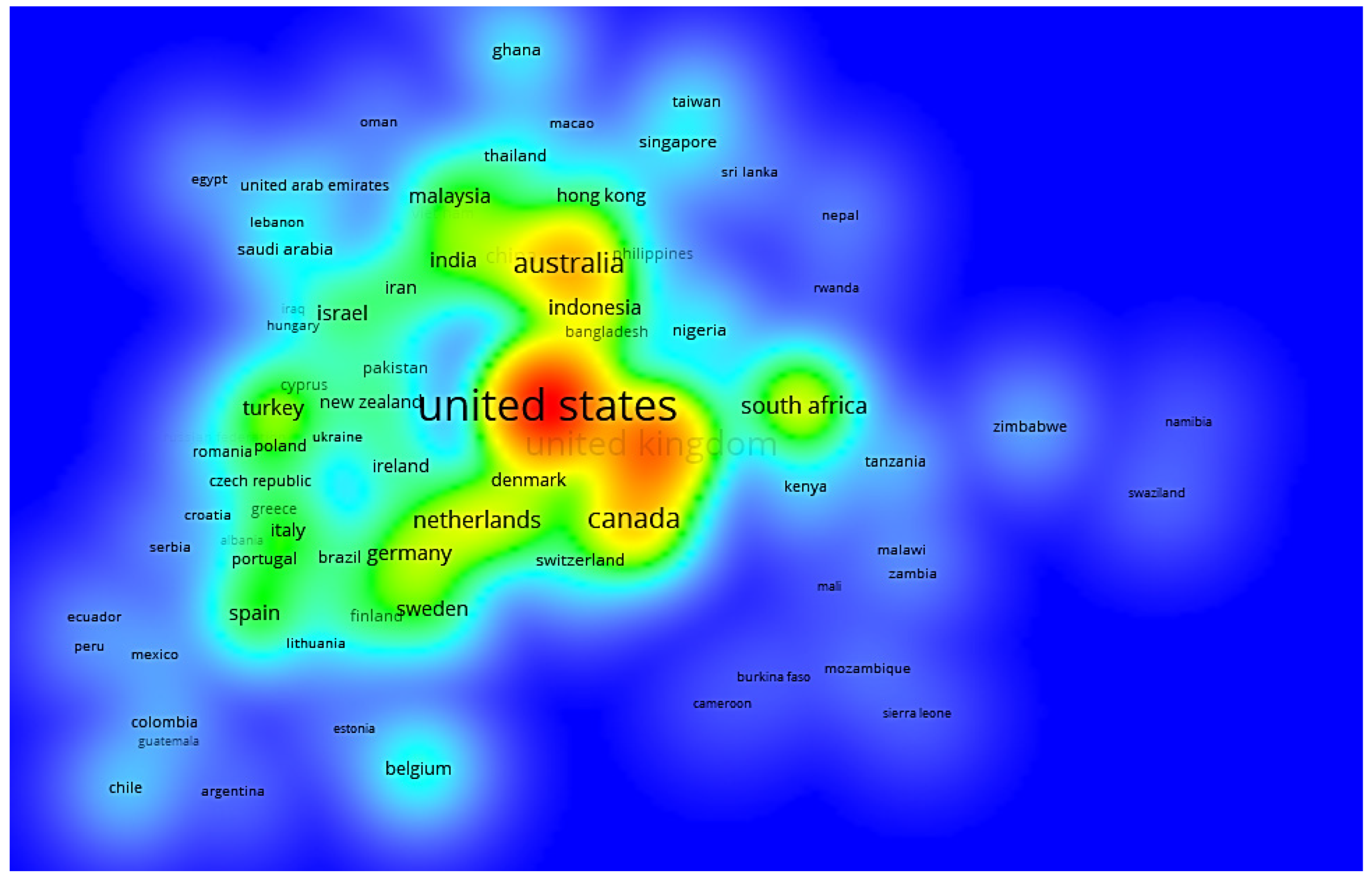
The spatial density map (Figure 4) depicts the geographical distribution of scientific output in the corpus of qualitative research under consideration based on the countries of the authors’ institutional affiliations. The map illustrates the intensity and relationships among countries, as derived from the data analysis conducted using VOSviewer (version 1.6.19). The intensity of the color corresponds to the density of publications, with warmer shades indicating a higher concentration of activities.
The highest density was observed in the United States, which is the central production hub. Strong concentrations are also found in the United Kingdom, Canada, Australia, and Western and Northern Europe (especially in the Netherlands, Germany, and Scandinavia). At the same time, distinct but less intense clusters were recorded in South Africa, countries in South and Southeast Asia (e.g., India, Indonesia, and Malaysia), and parts of Latin America.
Table 11 examines the relationship between international collaboration and citation impact. There is a clear upward trend in the average and median number of citations as the number of countries participating in publication increases. Single-country articles have a lower average citation impact compared to international collaborations, while multinational publications (four or more countries) have significantly higher citation values. This finding suggests that, in the context of the analyzed corpus, international collaboration is associated with higher average citation counts.

3.5. Authors

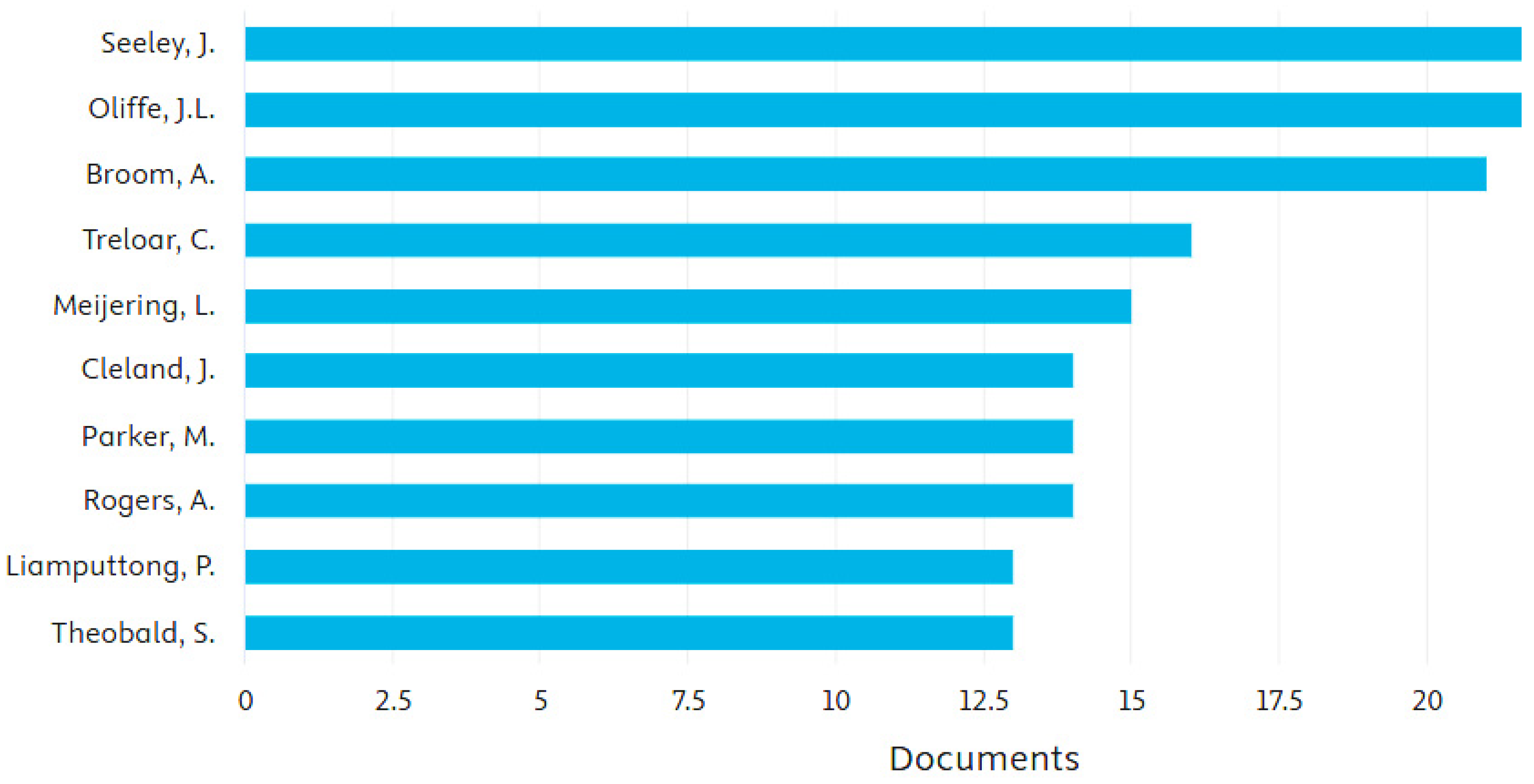
As shown in Table 12 and Figure 5, two complementary structural aspects of qualitative research emerge. First, the prevalence of articles with two to three authors suggests that qualitative research is mainly organized around small, closely collaborating research teams, which is consistent with the nature of qualitative methodologies that require intensive involvement of researchers in the collection, analysis, and interpretation of data. The continued presence of single-author articles further reinforces the image of qualitative research as a field in which individual scientific contributions remain important. Second, the author productivity graph shows an unevenly distributed output, where a small number of highly active researchers account for most publications. This pattern is typical in scientific fields that are in the process of consolidation and suggests the existence of a “hard core” of experts who contribute decisively to shaping the methodological and theoretical identity of qualitative research.
Figure 5 shows that some authors appear with particularly high productivity compared to the rest of the corpus. For example, Seeley, J., Oliffe, J.L., and Broom, A. have the highest number of publications, suggesting continuous and long-term research activity in the field of qualitative research. Their strong presence is mainly linked to fields such as health sociology, gender studies, and qualitative research in medical–social contexts, which are the central themes of the corpus under examination. At the same time, authors such as Treloar, C., Meijering, L., and Cleland, J. also have a significant output, albeit at slightly lower levels. Their presence reflects the interdisciplinary expansion of qualitative research, which extends from medical education and public health to geography and social sciences. In lower but comparable positions are authors such as Parker, M., Rogers, A., Liamputtong, P., and Theobald, S., who are known for their methodological contributions to the development and consolidation of qualitative and participatory research approaches.
Table 12 presents the distribution of publications in terms of the number of authors per article in the qualitative research corpus under examination. Articles with two authors constitute the largest category (2714 articles, 27.2%), followed by articles with three authors (2213 articles, 22.2%) and single-author articles (1642 articles, 16.5%). Articles with four authors also account for a significant percentage (15.9%), while the frequency decreases progressively as the size of the authoring team increases. Publications with more than eight authors account for a small percentage of the total (less than 2%), suggesting that very large research teams are rare in this field.
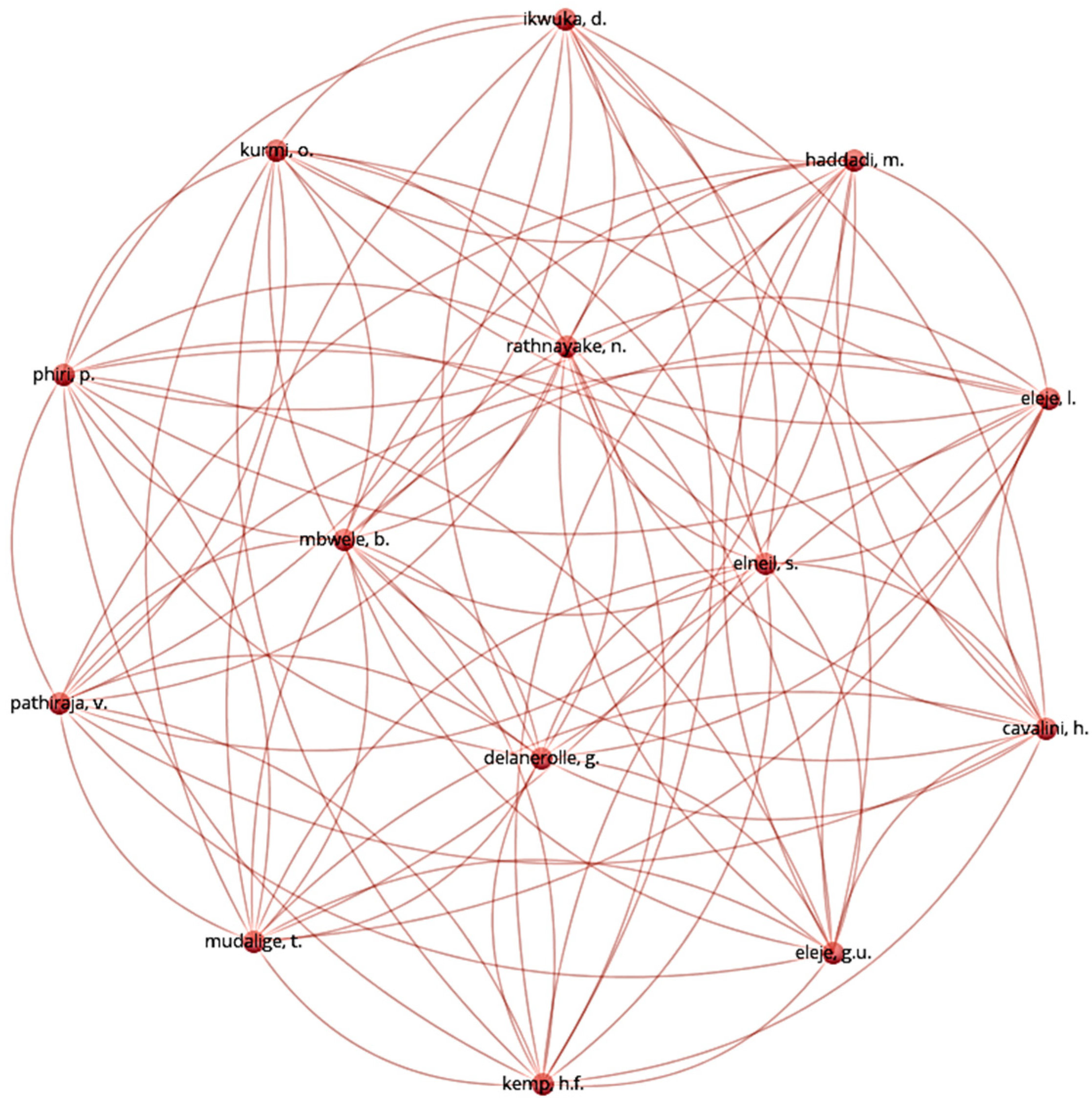
As shown in Table 12 and illustrated in Figure 6, two complementary structural dimensions of qualitative research emerge. First, the distribution of the number of authors per article shows that most publications are produced by small research teams, with articles by two and three authors constituting the largest category (27.2% and 22.2%, respectively). The significant presence of single-author articles (16.5%) reinforces the image of qualitative research as a field in which individual scientific contributions continue to play a central role. This pattern is consistent with the nature of qualitative methodologies, which require intensive involvement of researchers in the collection, analysis, and interpretation of data and do not favor the formation of large research teams. Second, Figure 6 shows an uneven distribution of authorship productivity, with a limited number of particularly active authors accounting for a significant proportion of publications in the corpus. Authors such as Seeley, J., Oliffe, J.L., and Broom, A. appear with a significantly higher number of publications than the rest of the authors, suggesting continuous and long-term research activity in the field of qualitative research. Their strong presence is mainly linked to thematic areas such as the sociology of health, gender studies, and qualitative research in medical–social contexts, which are the central themes of the corpus under examination.
Simultaneously, authors such as Treloar, Meijering, and Cleland also show remarkable productivity, albeit at slightly lower levels. Their presence reflects the interdisciplinary expansion of qualitative research, which extends from medical education and public health to geography and social sciences. Authors such as Parker, M., Rogers, A., Liamputtong, P., and Theobald, S., are widely recognized for their contribution to the methodological development and consolidation of qualitative and participatory research approaches. A combined reading of Figure 6 and Table 12 suggests that qualitative research is structured around a relatively small “hard core” of particularly productive researchers who significantly shape the methodological and theoretical identity of the field, framed by a broader set of researchers with more periodic or more specialized participation. This model is characteristic of scientific fields that are in the process of cognitive consolidation and maturation, where knowledge production combines continuity and thematic diversity.

3.6. Subject Area

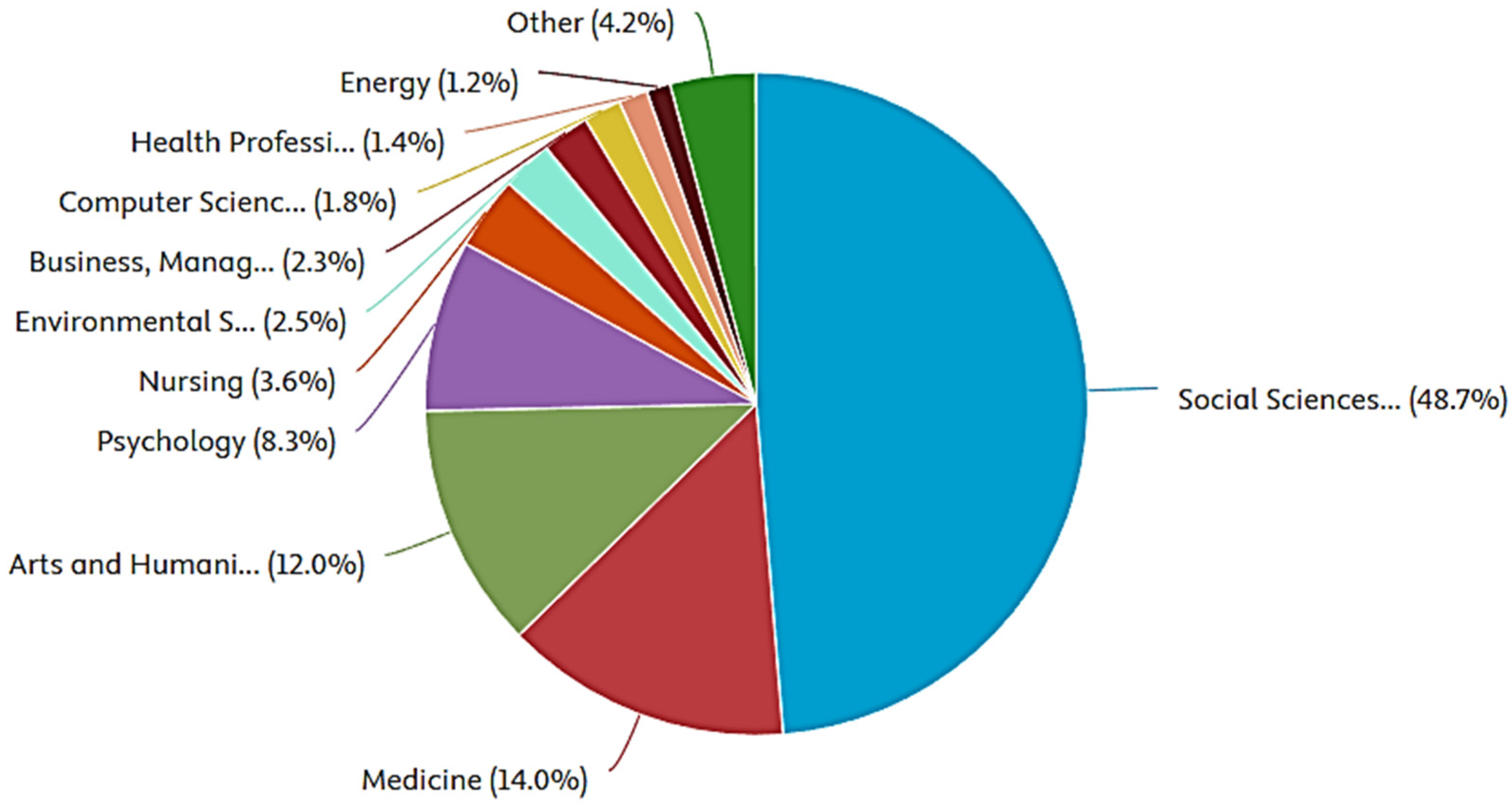
Figure 7 shows that the vast majority of publications in the corpus under consideration fall within the Social Sciences, which account for 48.7% of the total. Arts and Humanities Studies are the second most theoretical and interpretative category, accounting for 12.0% of publications, confirming their central role in the formation and development of qualitative research. Together, these two areas account for more than 60% of the corpus, highlighting the study’s clear orientation towards interpretative and sociocentric scientific traditions. The dominance of Social Sciences and Humanities is not merely a quantitative finding but reflects the fundamental methodological identity of qualitative research. These fields serve as the primary spaces in which qualitative approaches are developed, tested, and theorized, with an emphasis on interpretation, meaning, discourse, and social context.
In contrast to applied sciences, where qualitative methods often function as a complement, in the Social Sciences and Humanities, qualitative research constitutes an autonomous research tradition. This finding reinforces the interpretation of the corpus as a representative sample of the theoretical and methodological production that forms the core of qualitative research rather than simply its application to external scientific fields. At the same time, the strong presence of the Humanities suggests that qualitative research remains closely linked to interpretive, historical, and cultural approaches, reinforcing its role in understanding social phenomena that cannot be adequately captured through quantitative measurements. Figure 7 confirms that despite its interdisciplinary diffusion, qualitative research retains a clear theoretical and scientific core in the Social Sciences and Humanities.

4. Discussion

The search strategy, by design, focused on publications explicitly using the terminology of “qualitative research,” “qualitative methods,” or “qualitative methodology,” in combination with terms related to evolution, development, or trends. As a result, the corpus captures a specific segment of scholarly production—namely, publications that engage in methodological reflection, mapping, or conceptual discussion of qualitative research within the Social Sciences and Humanities. This approach may systematically exclude empirical studies employing qualitative techniques (e.g., interviews, ethnography, discourse analysis) that do not explicitly self-identify under these terms. Therefore, the findings should be interpreted as a mapping of the discursive and methodological consolidation of qualitative research rather than a comprehensive census of all qualitative empirical output.
Beyond overall publication growth, the corpus reveals internal differentiation across qualitative methodological approaches. Keywords related to interviews, case studies, ethnography, discourse analysis, and mixed-method designs appear with varying frequency across disciplines, suggesting that qualitative research is not methodologically homogeneous. Health-related social science journals, for example, show a strong presence of interview-based and case-oriented designs, whereas Arts and Humanities publications display greater emphasis on discourse analysis and narrative approaches. These patterns indicate methodological pluralism rather than a single dominant qualitative paradigm.
This study is one of the most extensive bibliometric publications explicitly referring to qualitative research terminology in the social sciences and humanities, based on a large volume of bibliographic data from the Scopus database covering the period 1985–2026. The findings show a steady and accelerating increase in the scientific production of qualitative research, especially since the mid-2000s. This development reflects the gradual establishment of qualitative methodologies as recognized and necessary approaches for studying complex social, cultural, and interpretive phenomena, in line with previous studies [9,12,19].
Despite these developments, the field exhibits strong characteristics of structural fragmentation. Specifically, the corpus under examination includes many authors and journals, but only a limited percentage of them show repeated publication activities. This finding is consistent with previous bibliometric analyses in interpretive and social sciences, which describe qualitative research as thematically multidimensional and decentralized rather than institutionally centralized [26,31]. Simultaneously, the existence of a small core of highly productive authors suggests the existence of stable methodological communities that contribute significantly to maintaining the theoretical and methodological continuity of the field.
Global inequalities have been observed over time in the geographical distribution of publications. Although qualitative research is produced globally, the highest output and impact continue to be concentrated in a limited number of countries, mainly in North America, the United Kingdom, Australia, and Western Europe. This dominance is consistent with previous observations regarding the institutionalization of qualitative methodologies in English-speaking academic systems [6,15,31]. However, the growing presence of countries in Africa, Asia, and Latin America suggests a gradual, albeit uneven, expansion of the field’s geographical base.
International collaborations remain relatively limited, as most publications originate from collaborations within individual countries. Nevertheless, the results show that internationally co-authored publications are associated with higher citation impact. This finding is consistent with previous studies that emphasize that transnational collaboration enhances the visibility and dissemination of scientific knowledge, even in interpretive and non-laboratory fields [21,31]. Therefore, strengthening international collaboration networks could contribute significantly to the further integration of quality research at the global level.
Co-authorship patterns provide further insights into the cognitive structure of a field. The predominance of articles with one to three authors reflects the time-consuming, reflective, and interpretive nature of qualitative research, wherein in-depth engagement with data and theoretical frameworks limits the formation of large research teams. This pattern clearly differs from what is observed in experimental or data-centric sciences and confirms qualitative research as a practice based on close collaboration or individual research paths [1,3,7,24,26].
Finally, the analysis of citations reveals a characteristic long-tail distribution, where a limited number of publications receive a high number of references, whereas the majority have low to moderate citation intensity. This pattern is typical of fields with conceptual polyphony and interpretive diversity, where scientific influence develops gradually and selectively [30]. Nevertheless, the steady increase in cumulative citations suggests increasing citation visibility of publications referring to qualitative research within the broader academic ecosystem.

5. Conclusions and Prospects

This study utilized bibliographic data from the Scopus database to conduct an extensive bibliometric analysis of qualitative research in the Social Sciences and Humanities. This analysis provides a comprehensive overview of the evolution of the field over time, highlighting the key characteristics of scientific output, main contributors, patterns of collaboration, and international dissemination and impact of qualitative research. In this sense, the study contributes significantly to mapping an established but constantly transforming methodological field.
Despite its approach and the wide range of research in the examined corpus, this study has certain methodological limitations. First, the analysis was based exclusively on data from the Scopus database, which means that publications not indexed in this database—especially in local, non-English-speaking, or book-centric scientific environments—may not be adequately represented in this study. Second, the bibliometric approach was based on article-level metadata rather than detailed citation data or complete co-citation networks, limiting the ability to explore more complex cognitive and thematic structures of the literature. Furthermore, although data control and cleaning procedures were applied, the processing was largely based on automated and semi-automated stages, which may have resulted in minor inaccuracies. Future studies could implement broader search strategies that remove the “evolution/trends” constraint in order to assess the robustness of the observed temporal growth patterns.
Therefore, the findings of this study should be interpreted as a snapshot of the state of qualitative research within a specific timeframe. Given the dynamic nature of scientific production and the continuous expansion of qualitative methodology applications, the picture presented in this article is expected to evolve over time. For this reason, similar bibliometric analyses would be useful to repeat at regular intervals to systematically monitor the development, internationalization, and transformation of qualitative research in the future.
In conclusion, this study provides a solid reference point for future bibliometric and methodological investigations, contributing to a deeper understanding of the position and role of qualitative research in the Social Sciences and Humanities. Despite its limitations, it lays the groundwork for further comparative analyses, expansion of data across multiple databases, and the development of more complex bibliometric approaches in the future.


Author Contributions

Conceptualization, P.X. and V.Z.; methodology, P.X. and V.Z.; software, P.X. and V.Z.; validation, P.X. and V.Z.; formal analysis, P.X. and V.Z.; investigation, P.X. and V.Z.; resources, P.X. and V.Z.; data curation, P.X. and V.Z.; writing—original draft preparation, P.X. and V.Z.; writing—review and editing, P.X. and V.Z.; visualization, P.X. and V.Z.; supervision, P.X. and V.Z.; project administration, P.X. and V.Z.; funding acquisition, P.X. and V.Z. All authors have read and agreed to the published version of the manuscript.

Funding

This research received no external funding.

Institutional Review Board Statement

Not applicable.

Informed Consent Statement

Not applicable.

Data Availability Statement

The data supporting the findings of this study are derived from the Scopus database and the Scopus Citation Overview tool. Restrictions apply to the availability of these data, which were used under license for the current study and are, therefore, not publicly available. Aggregated and processed data supporting the results presented in this study are available from the corresponding author upon reasonable request.

Conflicts of Interest

The authors declare no conflicts of interest.

References

  1. Runhardt, R.W. Reactivity, validity, and measurement in the social sciences. Stud. Hist. Philos. Sci. 2025, 112, 1–9. [Google Scholar] [CrossRef]
  2. Scharff, R.C. If History Had an Essence, It Wouldn’t Be History. In The Essence of History; Routledge: New York, NY, USA, 2025; pp. 34–60. [Google Scholar]
  3. Newton, T. What Is Social Science? A Comparison with Biology. Sociol. Theory 2025, 43, 238–263. [Google Scholar] [CrossRef]
  4. Barašin, O. Problems of Understanding and Applying Methodology of Social Sciences. S. Jakupović Ur. Econ. Mark. Commun. Rev.–Časopis Za Ekon. I Tržišne Komun. 2023, 13, 414. [Google Scholar] [CrossRef]
  5. Khoa, B.T.; Hung, B.P.; Hejsalem-Brahmi, M. Qualitative research in social sciences: Data collection, data analysis and report writing. Int. J. Public Sect. Perform. Manag. 2023, 12, 187–209. [Google Scholar] [CrossRef]
  6. Denzin, N.K.; Lincoln, Y.S. Introduction: The Discipline and Practice of Qualitative Research. In Handbook of Qualitative Research, 2nd ed.; Denzin, N.K., Lincoln, Y.S., Eds.; Sage Publications: Thousand Oaks, CA, USA, 2000; pp. 1–34. [Google Scholar]
  7. Creswell, J.W. Mapping the field of mixed methods research. J. Mix. Methods Res. 2009, 3, 95–108. [Google Scholar] [CrossRef]
  8. Patton, M.Q. Two decades of developments in qualitative inquiry: A personal, experiential perspective. Qual. Soc. Work 2002, 1, 261–283. [Google Scholar] [CrossRef]
  9. Eisner, E.W. What the arts taught me about education. Art Educ. 1991, 44, 10–19. [Google Scholar] [CrossRef]
  10. Bresler, L. Integrating the arts: Educational entrepreneurship in a school setting. Hell. J. Music. Educ. Cult. 2011, 2, 1. [Google Scholar]
  11. McCammon, L.A. Research on drama and theater for social change. Int. Handb. Res. Arts Educ. 2007, 16, 945–964. [Google Scholar]
  12. Zakopoulos, V.; Georgakopoulos, I.; Dalakouras, C.; Dimitrakopoulos, P.; Liomas, I. A framework to identify non-achievers in elearning business informatics lab courses. J. Compr. Bus. Adm. Res. 2024, 1–8. [Google Scholar] [CrossRef]
  13. Jacobs, J.A. Journal rankings in sociology: Using the H Index with Google Scholar. Am. Sociol. 2016, 47, 192–224. [Google Scholar]
  14. Xanthopoulou, P.; Sahinidis, A. Mapping the Intersection of Entrepreneurship, Digitalization, and the SDGs: A Scopus-Based Literature. Sustainability 2025, 17, 8420. [Google Scholar] [CrossRef]
  15. Aria, M.; Cuccurullo, C. bibliometrix: An R-tool for comprehensive science mapping analysis. J. Informetr. 2017, 11, 959–975. [Google Scholar] [CrossRef]
  16. Donthu, N.; Kumar, S.; Mukherjee, D.; Pandey, N.; Lim, W.M. How to conduct a bibliometric analysis: An overview and guidelines. J. Bus. Res. 2021, 133, 285–296. [Google Scholar] [CrossRef]
  17. Modak, N.M.; Raj, A.; Sana, S.S. A bibliometric and content analysis of core researches on operations research. Int. J. Oper. Res. 2023, 46, 358. [Google Scholar] [CrossRef]
  18. Rousseau, R. Forgotten Founder of Bibliometrics. Nature 2014, 510, 218. [Google Scholar] [CrossRef]
  19. Gialeli, M.; Troumbis, A.Y.; Giaginis, C.; Papadopoulou, S.K.; Antoniadis, I.; Vasios, G.K. The global growth of ‘Sustainable Diet’during recent decades, a bibliometric analysis. Sustainability 2023, 15, 11957. [Google Scholar] [CrossRef]
  20. Zupic, I.; Čater, T. Bibliometric Methods in Management and Organization. Organ. Res. Methods 2015, 18, 429–472. [Google Scholar] [CrossRef]
  21. Neuhaus, C.; Daniel, H.D. Data sources for performing citation analysis: An overview. J. Doc. 2008, 64, 193–210. [Google Scholar] [CrossRef]
  22. Caputo, A.; Kargina, M. A user-friendly method to merge Scopus and Web of Science data during bibliometric analysis. J. Mark. Anal. 2021, 10, 82–88. [Google Scholar] [CrossRef]
  23. Xanthopoulou, P.; Sahinidis, A.; Kavoura, A.; Antoniadis, I. Shifting mindsets: Changes in entrepreneurial intention among university students. Adm. Sci. 2024, 14, 272. [Google Scholar] [CrossRef]
  24. Dolhey, S. A bibliometric analysis of research on entrepreneurial intentions from 2000 to 2018. J. Res. Mark. Entrep. 2019, 21, 180–199. [Google Scholar] [CrossRef]
  25. Maheshwari, G.; Kha, K.L.; Arokiasamy, A.R.A. Factors affecting students’ entrepreneurial intentions: A systematic review 2005–2022) future directions. Manag. Rev. Q. 2023, 73, 1903–1970. [Google Scholar] [CrossRef]
  26. Capobianco-Uriarte, M.d.l.M.; Casado-Belmonte, M.d.P.; Marín-Carrillo, G.M.; Terán-Yépez, E. A Bibliometric Analysis of International Competitiveness (1983–2017). Sustainability 2019, 11, 1877. [Google Scholar] [CrossRef]
  27. Fox, S.; Lynch, J.; D’Alton, P.; Carr, A. Psycho-Oncology: A Bibliometric Review of the 100 Most-Cited Articles. Healthcare 2021, 9, 1008. [Google Scholar] [CrossRef]
  28. Jowett, M.; O’Toole, G. Focusing researchers’ minds: Contrasting experiences of using focus groups in feminist qualitative research. Qual. Res. 2006, 6, 453–472. [Google Scholar] [CrossRef]
  29. Conrad, D.; Greenwood, J. Participation in Participatory Drama-Based Research. In Drama Research Methods: Provocations of Practice; Brill: Leiden, The Netherlands, 2018; pp. 117–134. [Google Scholar]
  30. Turdibekova, D.; Ruzmetova, M.; Kanayev, B.; Madaminova, N.; Jabborov, U.B.; Sharipov, Z.; Taspanova, J. A Systematic Review Analysis of Papers from the Web of Science Da-tabase Published in English between 2019 and 2023. Forum Linguist. Stud. 2025, 7, 910–924. [Google Scholar]
  31. Page, M.J.; McKenzie, J.E.; Bossuyt, P.M.; Boutron, I.; Hoffmann, T.C.; Mulrow, C.D.; Shamseer, L.; Tetzlaff, J.M.; Akl, E.A.; Brennan, S.E.; et al. The PRISMA 2020 statement: An updated guideline for reporting systematic reviews. BMJ 2021, 372, n71. [Google Scholar] [CrossRef]
Figure 1. Documents by year (Scopus database) from 1985 to 2025.
Encyclopedia 06 00053 g001
Figure 2. PRISMA diagram.
Encyclopedia 06 00053 g002
Figure 3. Documents per year by source.
Encyclopedia 06 00053 g003
Figure 4. Mapping the Geographical Distribution of Scientific Collaborations.
Encyclopedia 06 00053 g004
Figure 5. Documents by author.
Encyclopedia 06 00053 g005
Figure 6. Co-authorship network.
Encyclopedia 06 00053 g006
Figure 7. Documents by subject area.
Encyclopedia 06 00053 g007
Table 1. Overview of the data source used for bibliometric analysis.
AspectDescription
DatabaseScopus
ProviderElsevier
Disciplinary coverageSocial Sciences; Arts & Humanities
Document types includedPeer-reviewed journal articles
LanguageEnglish
Time span1985–2026
Search fieldsTitle, abstract, and keywords
Selection approachStructured Boolean query with database-level filters
Purpose of useLarge-scale bibliometric mapping and trend analysis
Table 2. Key terms, keywords, and Boolean expressions.
TITLE-ABS-KEY KEY (“qualitative research” OR “qualitative methods” OR “qualitative methodology”) AND (“social sciences” OR “humanities”) AND (DOCTYPE (ar)) AND (LANGUAGE (English)) AND (SUBJAREA (SOCI) OR SUBJAREA (ARTS)
Table 3. Most frequent indexed keywords related to qualitative research in the Social Sciences and Arts & Humanities (Scopus).
CategoryIndexed Keywords
Core Qualitative Research ConceptsQualitative Research; Qualitative Methods; Qualitative Analysis; Qualitative Study; Qualitative; Methodology; Research
Qualitative Methodologies & TechniquesInterview; Interviews; Semi Structured Interview; Focus Groups; Ethnography; Thematic Analysis; Content Analysis; Grounded Theory; Phenomenology; Narrative
Analytical & Theoretical ApproachesConceptual Framework; Theoretical Study; Quantitative Analysis; Statistics and Numerical Data
Disciplinary & Educational ContextsSocial Sciences; Education; Higher Education; Learning; Teaching; Social Work; Cultural Anthropology; Ethnology
Socio-Cultural & Organizational ThemesCulture; Cultural Factor; Leadership; Community; Sustainability; Sustainable Development
Table 4. Search strategy on Scopus database and document selection process.
TopicSearchSearch QueryDatasetNo. of Docs
Qualitative ResearchQR1TITLE (“qualitative research”)QR179,672
Qualitative ResearchQR2TITLE-ABS-KEY (“qualitative research”)QR266,460
Qualitative ResearchQR3TITLE-ABS-KEY (“qualitative methods” OR “qualitative methodology”)QR328,377
Social Sciences & HumanitiesQR4TITLE-ABS-KEY (“social sciences” OR humanities)QR415,652
Total Dataset(QR1 OR QR2 OR QR3) AND QR4Final corpus15,115
Table 5. Corpus Filtering Overview.
StepFiltering StageRecords Remaining
1Initial search79,672
2Article + English filter66,460
3Subject area filter (SOCI/ARTS)28,377
4Boolean consolidation15,652
5Relevance screening exclusion−537
6Final bibliometric corpus15,115
Table 6. Most productive journals in the analyzed corpus.
JournalNumber of Publications
Social Science and Medicine632
Sustainability (Switzerland)235
International Journal of Qualitative Methods173
BMC Medical Education167
SSM—Qualitative Research in Health131
Health and Social Care in the Community114
Culture, Health and Sexuality109
Sociology of Health and Illness102
Health Promotion International101
Health and Place96
Table 7. Journal × year publication matrix (top journals).
Journal20182019202020212022202320242025
Social Science and Medicine41687270748198128
Sustainability (Switzerland)614192128334965
International Journal of Qualitative Methods918222021243128
BMC Medical Education816181924262927
SSM—Qualitative Research in Health512151618212420
Table 8. Citation performance indicators of the analyzed corpus (Scopus Citation Overview).
IndicatorValue
Total number of publications in the corpus15,115
Number of cited publications8509
Share of cited publications (%)56.3%
h-index of the corpus164
Citation time span1985–2026
Period of highest citation activity2010–2020
Citation distribution patternLong-tail distribution
Table 9. International collaboration patterns in qualitative research publications.
Number of Countries per ArticleNumber of Articles
1 (single country)7434
21884
3468
4113
538
615
75
84
95
101
Total (with country data)9967
Table 10. Countries producing the highest number of qualitative research publications.
CountryNumber of PublicationsTotal Citations
United States272734,467
United Kingdom158522,658
Australia88110,153
Canada79710,287
South Africa4743592
Netherlands3705407
China3072629
Germany2923114
Turkey2861409
Spain2802992
Table 11. International collaboration and citation impact.
Number of Countries per ArticleNumber of ArticlesMean CitationsMedian Citations
174349.483.0
2188411.934.5
346813.875.0
411325.276.0
53821.848.5
61512.8010.0
7531.2028.0
8450.7539.0
9517.8013.0
10118.0018.0
Table 12. Number of authors per article in qualitative research publications.
Number of Authors per ArticleNumber of ArticlesShare (%)
1164216.5
2271427.2
3221322.2
4158015.9
58939.0
65045.1
72432.4
81161.2
9620.6
Total9967100.0
Disclaimer/Publisher’s Note: The statements, opinions and data contained in all publications are solely those of the individual author(s) and contributor(s) and not of MDPI and/or the editor(s). MDPI and/or the editor(s) disclaim responsibility for any injury to people or property resulting from any ideas, methods, instructions or products referred to in the content.