Systematic Review

Digital Health Transformation Through Telemedicine (2020–2025): Barriers, Facilitators, and Clinical Outcomes—A Systematic Review and Meta-Analysis


1
Department of Information Science, University of North Texas, Denton, TX 76203, USA
2
G. Brint Ryan College of Business, University of North Texas, Denton, TX 76203, USA
*
Author to whom correspondence should be addressed.
Encyclopedia 2025, 5(4), 206; https://doi.org/10.3390/encyclopedia5040206
Submission received: 12 September 2025 / Revised: 28 November 2025 / Accepted: 2 December 2025 / Published: 4 December 2025
(This article belongs to the Section Medicine & Pharmacology)

Abstract

Background: Telemedicine expanded dramatically during the COVID-19 pandemic, transforming healthcare delivery worldwide. However, implementation faced challenges, and the impact on clinical outcomes, access, and quality remains under investigation. Objective: To systematically review the literature from 2020 to 2025 on telemedicine adoption, identifying key barriers and facilitators, and to evaluate clinical outcomes associated with telehealth use during this period. Methods: We followed PRISMA 2020 guidelines in conducting this review. Multiple databases were searched for studies on the implementation or evaluation of telemedicine/telehealth. Eligible studies included randomized trials and observational studies reporting telehealth-related outcomes, barriers, or facilitators. Two reviewers screened studies and extracted data on study characteristics, telemedicine interventions, barriers/facilitators, and clinical outcomes. Risk of bias was assessed using RoB2 for randomized controlled trials (RCTs) for qualitative or cross-sectional studies. Meta-analyses were performed where data were comparable, and qualitative synthesis was used to summarize barriers and facilitators. Results: Thirty-two studies (17 RCTs and 15 observational) were included. Telemedicine use surged in 2020 and remained elevated compared to baseline through August 2025. Reported barriers included insufficient broadband access, limited digital literacy, uncertain reimbursement policies, and workflow disruptions. Facilitators encompassed supportive policy waivers, the integration of telehealth into established care pathways, and strong acceptance from patients and providers. Clinical outcomes were generally comparable to in-person care. Telehealth enhanced chronic disease management (e.g., hypertension, diabetes) and decreased hospitalizations for heart failure, while ensuring safety in surgical follow-up and prenatal care. However, higher revisit rates were observed in some acute follow-up settings. Patient satisfaction consistently remained high, especially among rural and underserved populations reporting benefits, though disparities in digital access continued to exist. Conclusions: Telemedicine has become a sustainable component of healthcare, delivering clinical outcomes comparable to traditional care while offering convenience and resilience. Overcoming technology gaps, regulatory uncertainties, and equity issues is crucial for ongoing progress. Hybrid care models that combine telemedicine with in-person services, supported by strong policy frameworks, are recommended to maximize benefits and promote fair access in the post-pandemic era.

1. Introduction

The COVID-19 pandemic accelerated a historic global growth of telehealth. In 2020, healthcare systems worldwide rapidly expanded telemedicine to maintain access while reducing the risk of infections [1,2]. Telehealth utilization statistics reflect this change: by late 2020, telehealth visit volumes had increased by over 3000% compared to 2019 [2]. In the United States, among Medicare fee-for-service beneficiaries, telehealth accounted for 52.7 million clinician visits (5% of all FFS visits) in 2020, a 63-fold increase from about 0.84 million in 2019 [3]. Telemedicine became an “indispensable resource” for maintaining patient care during lockdowns [2,4], supporting remote triage, chronic disease management, and mental health services when in-person care was limited.
This rapid digital health transformation revealed both opportunities and challenges. Telemedicine’s potential benefits include improved access (especially for rural or mobility-limited patients), efficiency and convenience in care delivery, and reduced exposure to contagion [5,6]. Indeed, early analyses revealed that telehealth effectively filled care gaps during the COVID-19 surges and could become a permanent part of healthcare systems [7,8]. At the same time, the pandemic-driven rollout of telemedicine revealed gaps and uncertainties. Many implementations happened on an ad hoc basis with limited guidelines or infrastructure [9,10,11]. Policymakers and providers have since questioned the quality of care provided through telehealth, its impact on health outcomes and healthcare utilization, and its overall effect on health equity [9,11,12]. Research gaps remain regarding whether telemedicine can fully replace in-person services without compromising care quality, which clinical areas benefit most, and how to overcome barriers such as limited technology access and provider/patient acceptance [13,14].
Although telemedicine research expanded rapidly during the COVID-19 pandemic, it remained fragmented across areas such as adoption barriers, digital equity, and clinical effectiveness, without integrating these domains into a single evaluative framework. Many early reviews focused on rapid deployment and short-term feasibility during the initial pandemic response [2,8], while others examined narrower themes, such as human-factor challenges or equity concerns. Several specialty-focused summaries assessed individual clinical areas. Notably, most of these reviews did not include meta-analyses or link implementation conditions with measurable clinical outcomes. Consequently, the field still lacks an updated, comprehensive synthesis explaining how barriers, facilitators, and system-level factors collectively influence telemedicine effectiveness across various care settings.
This review addresses that gap by synthesizing empirical evidence published from 2020 to 2025 through a PRISMA-guided systematic review and meta-analysis. The goal is to provide an integrated understanding of the determinants of telemedicine implementation and its clinical outcomes to inform sustainable digital health strategies and policy decisions.
The review was focused on three main research questions:
(1)
What are the obstacles that prevented telemedicine from being widely adopted and effectively used during 2020–2025?
(2)
What are the main factors that contribute to the successful implementation of telehealth?
(3)
How did telemedicine impact clinical outcomes and healthcare utilization across different settings and patient groups?
By answering these questions, the study aims to extract lessons from the pandemic telehealth experience and offer recommendations for integrating telemedicine into sustainable, high-quality care models moving forward. Authoritative sources, such as the World Health Organization (WHO) and national agencies, have emphasized the importance of utilizing digital health beyond the pandemic. The study review also contextualizes findings within recent policy updates, such as the WHO’s 2022 telemedicine guidance and the U.S. telehealth law, to outline a path toward resilient hybrid care systems.

2. Materials and Methods

The study conducted this systematic review and meta-analysis following the Preferred Reporting Items for Systematic Reviews and Meta-Analyses (PRISMA) 2020 statement. A priori review protocol was developed, outlining objectives, inclusion criteria, and methods.

2.1. Registration

This systematic review protocol was developed according to the Preferred Reporting Items for Systematic Reviews and Meta-Analyses Protocols (PRISMA-P) 2015 guidelines [15]. The completed PRISMA-P checklist is included in the Supplementary Materials [16]. The review protocol was registered with the International Prospective Register of Systematic Reviews (PROSPERO) under registration number CRD420251127574. The final review will be reported according to the PRISMA 2020 guidelines for systematic reviews and meta-analyses [17].

2.2. Eligibility Criteria

Study designs: Eligible studies included empirical, peer-reviewed research assessing telemedicine or telehealth interventions or examining telehealth use, barriers, facilitators, or outcomes. Studies consisted of randomized controlled trials (RCTs), quasi-experimental studies, cohort and cross-sectional studies, case–control studies, mixed-methods research, and qualitative research. Editorials, commentaries, conference abstracts, and simulation-only studies were excluded.
-
Population (P): We included studies involving any patient population, including children and adults, across all healthcare settings. These settings encompassed primary care, specialty care, emergency departments, surgical follow-up, chronic disease management, mental health services, and maternal/perinatal care. Studies were eligible if conducted from January 2020 onward, during or after the COVID-19 pandemic, and the expansion of telemedicine.
-
Intervention (I): Telemedicine or telehealth delivered via video, telephone, messaging platforms, mobile applications, or remote patient monitoring.
-
Comparator (C): Comparators included traditional in-person care, no telehealth intervention, or descriptive studies without explicit comparators, such as those examining adoption, barriers, or facilitators.
-
Outcome (O): Clinical outcomes (disease control, hospitalization, emergency visits), process outcomes (follow-up adherence, utilization patterns, no-show rates), patient or provider experience outcomes (satisfaction, convenience, access), and identified barriers or facilitators of telehealth implementation.
-
Study (S): Only empirical primary studies published in English between 2020 and 2025 were included.

2.3. Search Strategy

We conducted a thorough literature search from January 2020 to August 2025. The search included electronic databases such as PubMed, Embase, Web of Science, PsycINFO, and Scopus. Table 1 presents the search strategy, which combines key terms such as telemedicine, telehealth, virtual care, digital health, and remote consultation, along with pandemic-related terms like COVID-19, SARS-CoV-2, and pandemic. Searches were limited to the 2020–2025 timeframe. Only studies available in English were included due to resource limitations. Although gray literature was not a primary focus, we reviewed preprint servers for high-impact studies that had not yet been officially published. All retrieved references were imported into reference management software (Mendeley Version 2.139.0), and duplicates were removed before screening. Two Reviewers are continuously involved in the data extraction from the databases.

2.4. Study Selection

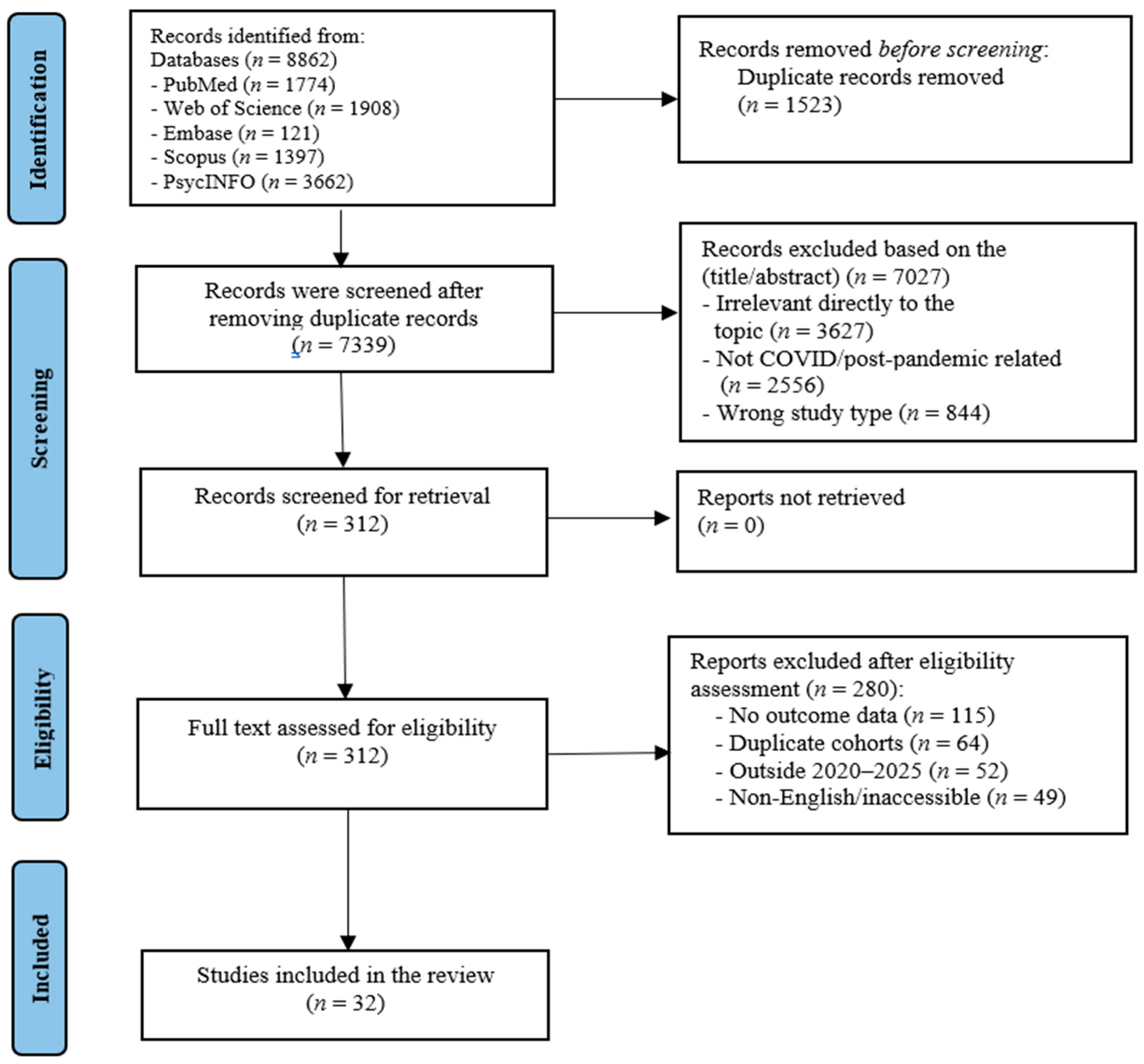
Figure 1 shows a total of 8862 records identified from five electronic databases: PubMed (n = 1774), Web of Science (n = 1908), Embase (n = 121), Scopus (n = 1397), and PsycINFO (n = 3662). After removing 1523 duplicate records, 7339 records remained for screening. At the screening stage, 7027 records were excluded based on title and abstract review, including those irrelevant to telemedicine (n = 3627), not directly related to COVID-19 or the post-pandemic context (n = 2556), or of the wrong study type (reviews, protocols, commentaries, and conference abstracts) (n = 844). This left 312 full-text articles for eligibility assessment. Of these, 280 articles were excluded because they lacked outcome data (n = 115), were duplicate or overlapping cohorts (n = 64), were published outside the 2020–2025 period (n = 52), or were non-English or inaccessible (n = 49). Finally, 32 studies met all the inclusion criteria and were included in the systematic review and meta-analysis.

2.5. Data Extraction

A standardized extraction form was used to collect key study characteristics, populations, interventions, outcomes, and telehealth-related barriers and facilitators. Risk of bias for RCTs was assessed using the Cochrane RoB2 tool, while observational studies were evaluated for confounding and overall design quality. For studies reporting barriers or facilitators, we extracted themes related to technology access, training needs, workflow issues, and regulatory constraints to ensure consistent categorization across the evidence base [18,19,20].
To improve methodological rigor, we clarified the rationale for subgroup analyses and enhanced the description of the procedures for reviewer agreement. Two reviewers independently conducted data extraction, and any discrepancies were resolved through discussion or, when necessary, by the third reviewer to reduce bias [21]. We also explicitly justified the European versus non-European subgroup comparisons by highlighting differences in health system structure, reimbursement models, and digital infrastructure that could affect telemedicine outcomes. These updates increase the transparency and reproducibility of our analytical approach.
Study quality was assessed using the Cochrane Risk of Bias guidance, with disagreements resolved by a third reviewer [22,23]. Findings from studies with a higher risk of bias, such as pre–post designs without control groups, were interpreted with proper caution. No RCTs were stopped early due to benefit, and most observational studies included appropriate confounder adjustments.

3. Results

We conducted a systematic review of the literature using five electronic databases: PubMed, Web of Science, Embase, Scopus, and PsycINFO. The search included publications from January 2020 to August 2025, specifically those in English that involved human subjects. The search strategy combined keywords related to telemedicine and COVID-19/post-pandemic themes with filters for specific study designs, including randomized controlled trials (RCTs) and observational studies.

3.1. Study Characteristics

A total of 32 studies were included in this review, consisting of 17 randomized controlled trials (RCTs) and 15 observational studies. Most of these studies were conducted in the United States, reflecting the widespread adoption of telehealth in U.S. healthcare systems during the COVID-19 pandemic. Additional RCTs came from Europe (Spain, Germany, Norway, Sweden, Slovenia, and the UK), with smaller numbers from the Asia-Pacific region (China, Japan, Australia), Africa (Egypt), and Latin America (Brazil). Sample sizes varied significantly. RCTs usually enrolled 100–900 participants, whereas several observational studies used large datasets. For example, analyses of U.S. databases involved hundreds of thousands to millions of patients, with the most extensive study examining over 40 million commercially insured individuals.
Clinical settings included primary care, cardiology, endocrinology, mental health, prenatal care, emergency department (ED) discharge, skilled nursing facilities, and post-surgical follow-up. Telemedicine modalities mainly involved video visits and telephone consultations [24], occasionally supplemented with remote patient monitoring devices, messaging platforms, or app-based interventions.
Half of the studies directly compared telehealth visits with in-person appointments and reported outcomes such as disease management, hospitalization, readmission rates, and patient satisfaction. The rest focused on usage patterns, barriers and facilitators of adoption, or impacts on the health system without an explicit comparison. Several studies targeted high-risk or special populations, such as Veterans Health Administration patients at high risk of hospitalization [25], patients with poorly controlled diabetes [26], or heart failure patients recently discharged from the hospital. Others focused on the health system-wide telehealth rollout in basic primary care [27]. The review thus captures both system-level telehealth uses and patient-level clinical impacts.
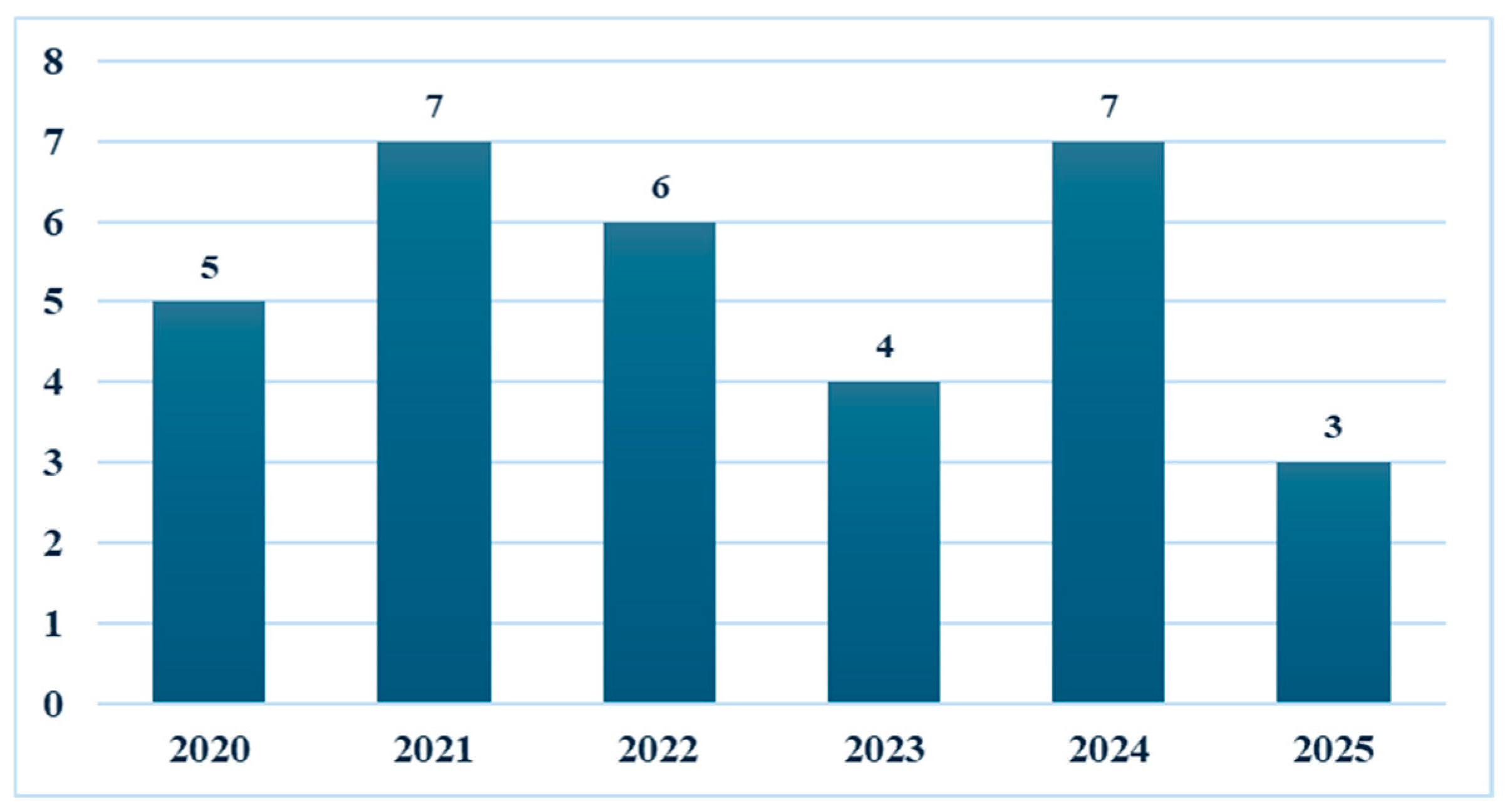
Figure 2 is a bar chart illustrating the annual distribution of the 32 included studies on telemedicine published between 2020 and 2025. In 2020, 5 studies were published, marking the initial surge in research activity as telemedicine expanded rapidly during the onset of the COVID-19 pandemic. The number increased to 7 in 2021. It then decreased to 6 in 2022 and continued to decline steadily to 4 by 2023. In 2024, the number of publications rose again to 7, equaling the peak output of 2021. However, by 2025, the number had sharply decreased to 3 studies. This indicates that publication trends exhibit fluctuations over the six years. There was intensive research activity in 2021 and 2024, while 2023 and 2025 recorded fewer publications. This pattern suggests that the initial momentum in telemedicine research following the pandemic may have slowed after 2022, with another peak in 2024, followed by a tapering off in 2025.
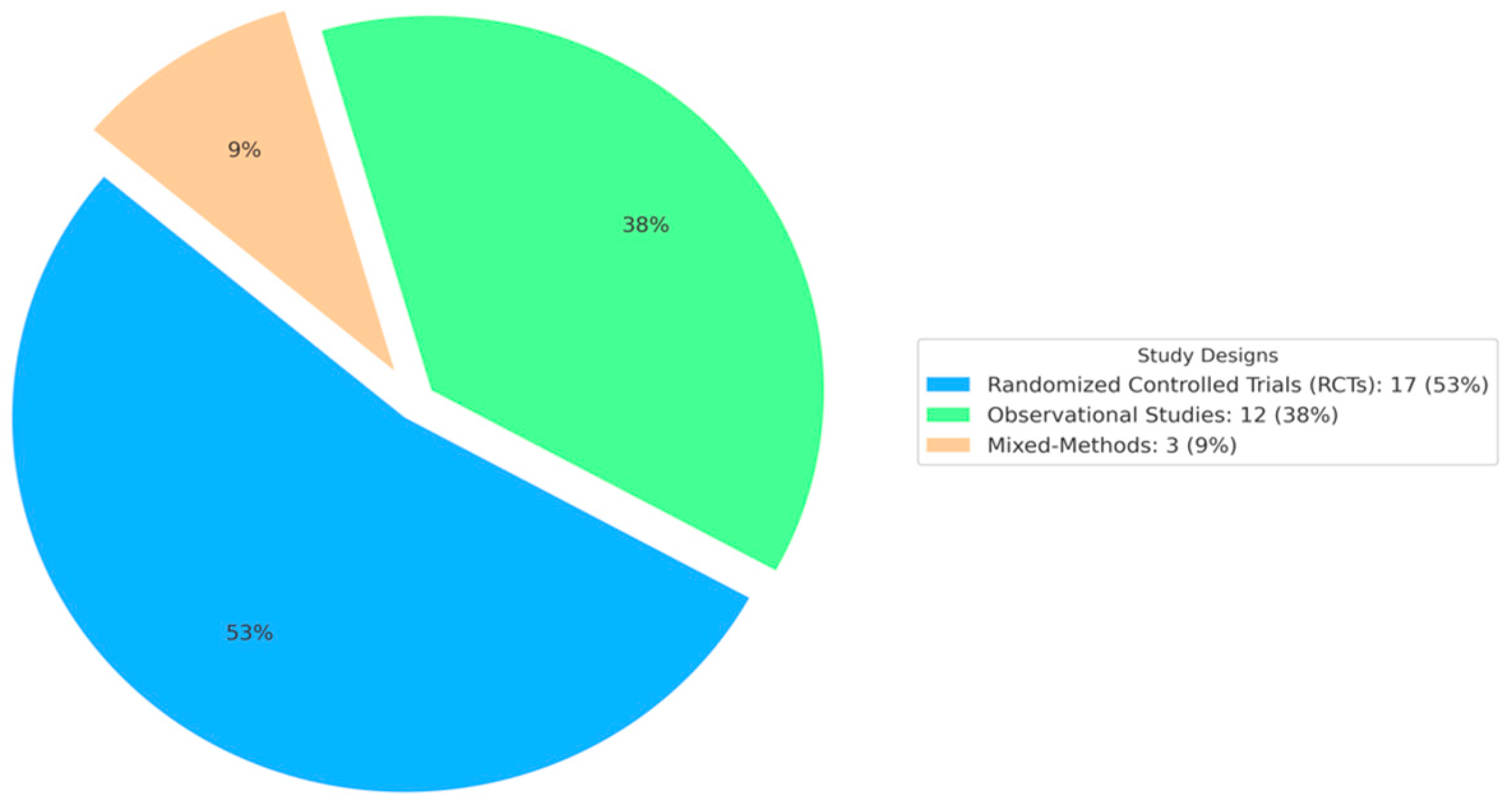
This pie chart in Figure 3 illustrates the distribution of study types among the 32 telemedicine studies included. Randomized controlled trials (RCTs) comprise the largest group, at 53% (17 studies), highlighting the focus on experimental evidence for assessing telemedicine interventions. Observational studies, including cohort and cross-sectional designs, account for 38% (12 studies), underscoring the importance of real-world, non-randomized evidence. A smaller portion (9%, 3 studies) employed mixed-method approaches combining quantitative and qualitative analyses. This distribution indicates that the evidence base for telemedicine mainly relies on rigorous experimental trials, complemented by a significant number of observational studies and a smaller set of mixed-method evaluations. The decline in publications in 2025 should be viewed with caution, as the dataset includes only studies published through August 2025; thus, the lower count likely reflects incomplete publication years rather than a real drop in research activity.
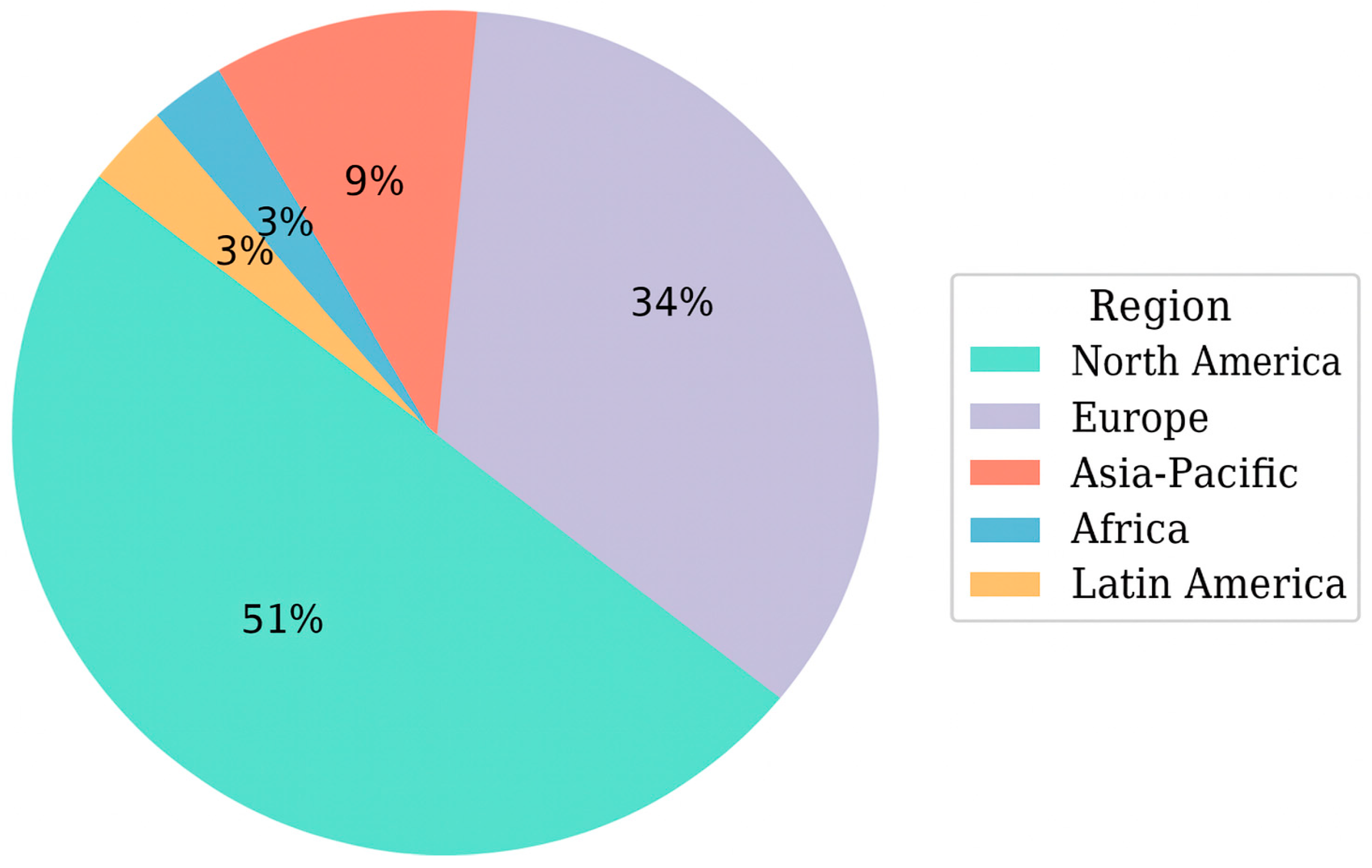
Figure 4 displays the geographic origin of the 32 telemedicine studies, organized by world region. North America accounted for the largest share (51% of studies, primarily from the United States, with one from Canada), highlighting the focus of telehealth research within U.S. healthcare systems during the COVID-19 pandemic. Europe accounted for approximately one-third of the studies (34%), with multiple trials conducted in countries such as Spain, Germany, Norway, Sweden, Russia, and the UK. The Asia-Pacific region (roughly 9%) is represented by studies from East Asia and Australasia (e.g., Japan, China, Australia). Conversely, only one study (3%) was from Africa (an RCT in Egypt), and another (3%) was from Latin America (a trial in Brazil). This regional overview highlights that although telemedicine research has been conducted worldwide, the evidence base primarily focuses on North America and Europe, with fewer studies from low- and middle-income countries during 2020–2025.

3.2. Risk of Bias

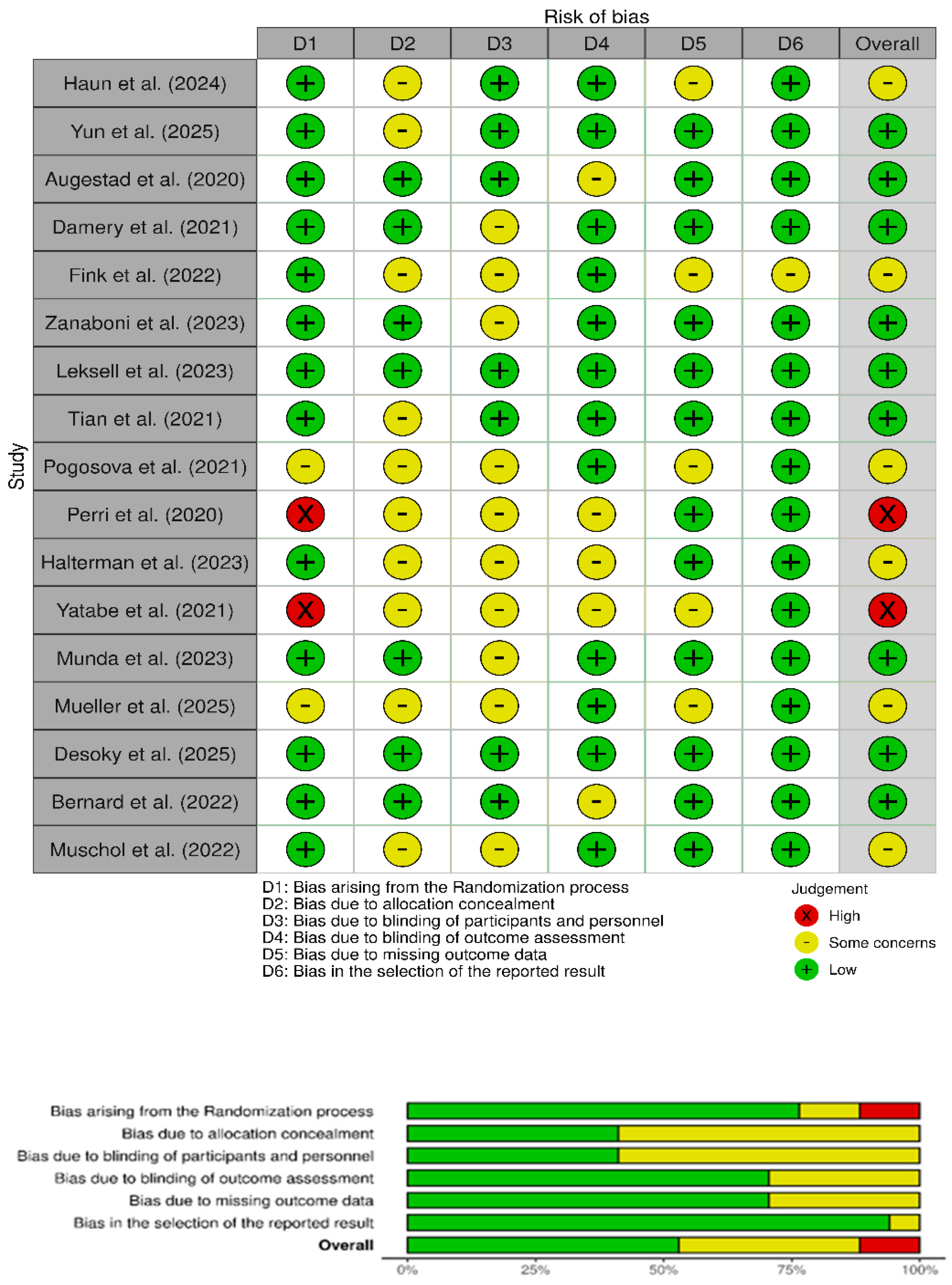
The risk-of-bias assessments across the 17 randomized controlled trials (RCTs) ranged from low to high, with about half of the studies rated as having “Some Concerns,” and fewer achieving an overall “Low” risk-of-bias rating, as shown in Figure 5. According to the Cochrane RoB 2 evaluation, 7 trials (39%) were judged to have a low risk of bias overall, 8 trials (47%) had some concerns, and 2 trials (12%) were assessed as high risk. In practical terms, only a small number of trials were completely free of methodological issues. For example, the PROVIDE-C trial in Germany [28] and the HERMeS trial in Spain [29] were among those judged at low risk across all domains. In contrast, the weight-loss maintenance trial in the United States [30] and the hypertension trial in Japan [31] demonstrated significant limitations, including a lack of blinding and selective reporting, resulting in high overall bias ratings. The other studies fell in between, often flagged for problems such as open-label designs, lack of allocation concealment, or incomplete reporting, but not enough to be considered high risk.
Geographically, the 17 RCTs were conducted across a broad range of settings, with a heavy focus on Europe. About two-thirds (65%) of the trials were conducted in European countries, including Germany, Spain, Norway, Sweden, Slovenia, France, and the UK. The Asia-Pacific region accounted for three trials (18%), conducted in China, Japan, and Australia. North America contributed two trials (12%), both from the United States. Only one trial (6%) was held in Africa (Egypt). There were no trials from Latin America or multinational collaborations. In summary, the evidence base is primarily European, with smaller contributions from the Asia-Pacific and North America, limited representation from Africa, and notable gaps in Latin America and cross-regional studies.
Given the high heterogeneity across trials and the potential influence of regional health system differences on telemedicine outcomes, we conducted separate analyses for European and non-European studies to determine whether geographic context influenced variation in effect sizes.

3.3. Global Meta-Analysis of Randomized Controlled Trials (17 RCTs)

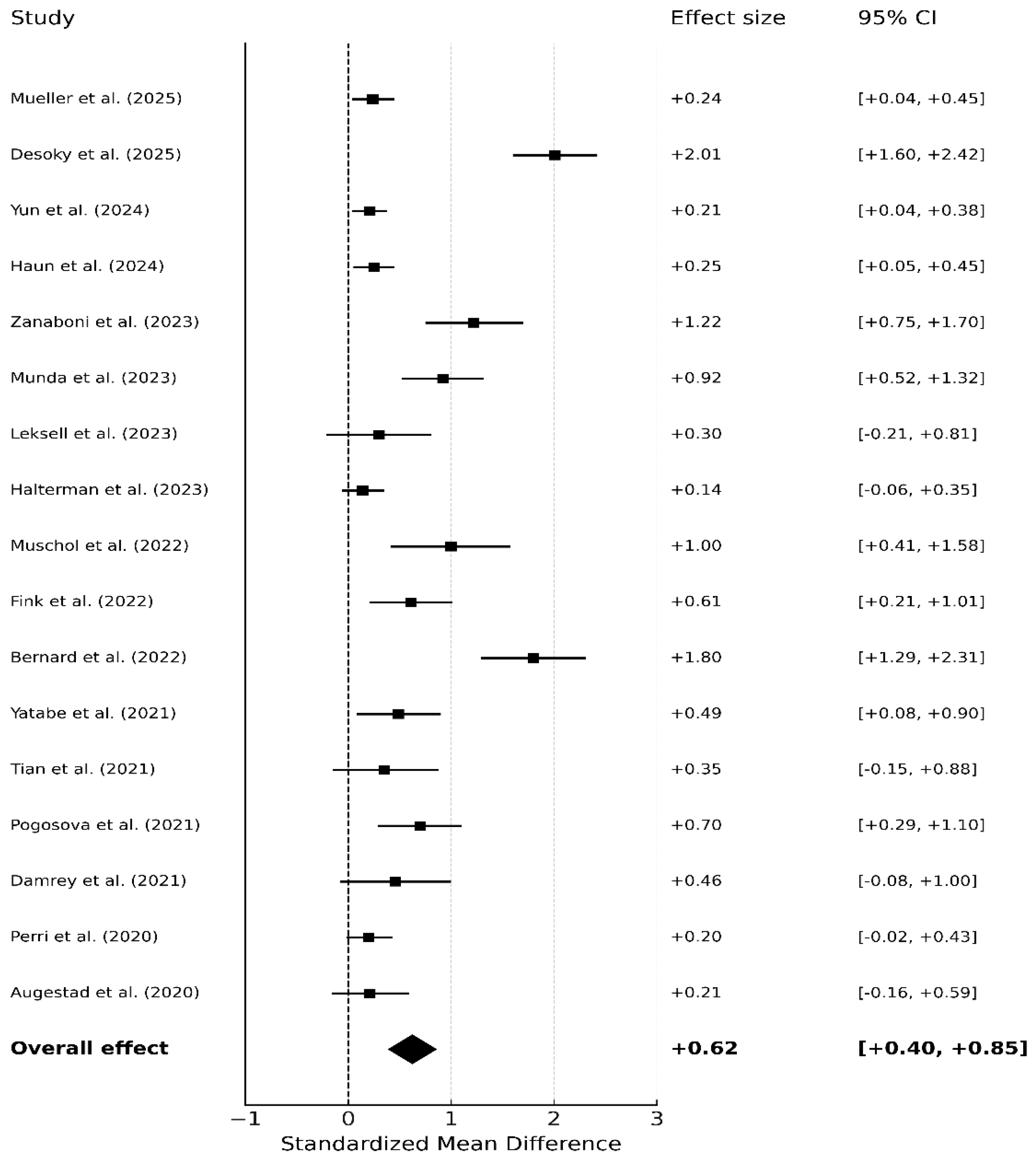
The overall combined effect from 17 randomized and quasi-experimental trials is clearly shown here. Figure 6 displays standardized mean differences (SMDs) with 95% CIs for the 17 contributing trials and the pooled overall effect. Telemedicine effectiveness was assessed in 17 randomized and quasi-experimental studies [28,29,30,31,32,33,34,35,36,37,38,39,40,41,42,43,44]. The pooled analysis demonstrated a moderate and statistically significant benefit of telemedicine over standard care (SMD = 0.62, CI [0.40, 0.85], p < 0.001). Several studies showed significant effects, such as tele-SMS adherence in diabetes (SMD = 2.01, CI [1.60, 2.42]) [42] and COPD telerehabilitation (SMD = 1.22, CI [0.75, 1.70]) [41]. In contrast, others demonstrated moderate improvements in cardiovascular risk reduction (SMD = 0.70, CI [0.29, 1.10]) [33], GDM management (SMD = 0.92, CI [0.52, 1.32]) [40], and general surgery follow-up (SMD = 0.61, CI [0.21, 1.01]) [36]. More minor but still significant gains were reported in hypertension monitoring (SMD = 0.49, CI [0.08, 0.90]) [31] and lifestyle support for CHD with diabetes (SMD = 0.24, CI [0.04, 0.45]) [43]. Neutral or non-significant findings emerged in pediatric asthma follow-up (SMD = 0.14, CI [−0.06, 0.35]) [38] and young adult diabetes clinics (SMD = 0.30, CI [−0.21, 0.81]) [39], though all non-inferiority. Importantly, no study reported harm, and the observed heterogeneity appeared to be driven by the type of intervention and the patient population.
The preponderance of point estimates lies to the right of zero, indicating consistent directionality favoring telemedicine. The pooled effect suggests a moderate overall benefit; however, the presence of a few high-leverage outliers [42] likely inflates the pooled SMD. Several high-quality RCTs show small but precise gains [31,43], whereas others are neutral but non-inferior [32,38,39]. Given the clinical heterogeneity of included endpoints (adherence, physiologic control, symptom recovery) and contextual diversity (surgery, chronic disease, maternal health), these results are best interpreted as evidence that telemedicine is at least non-inferior to usual care and often confers minor to moderate improvements when interventions are intensive, protocolized, and well-integrated.

3.4. Regional Subgroup Results: European Randomized Trials (10 RCTs)

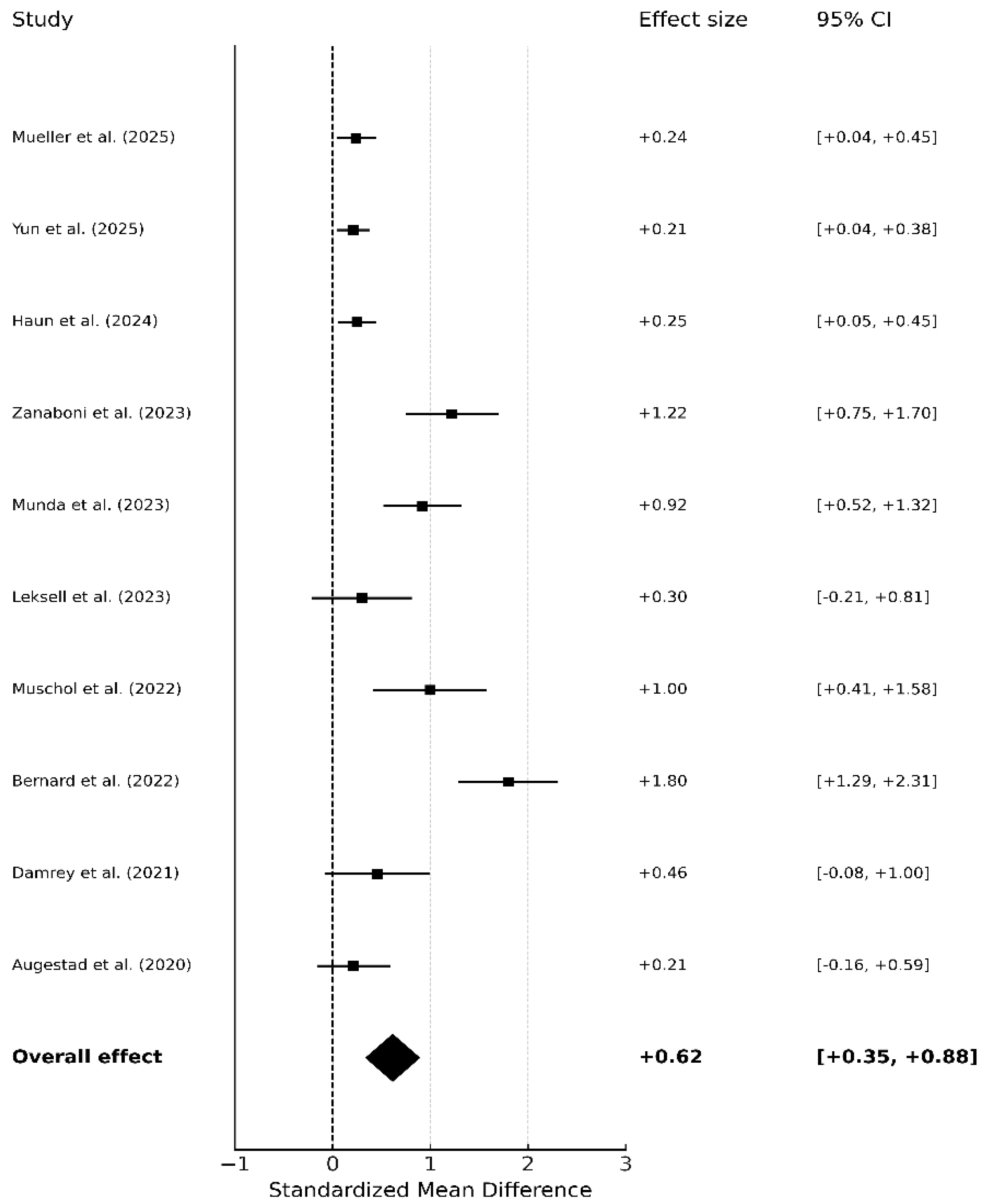
Regional stratification was conducted to determine whether variations in healthcare systems, digital infrastructure, and telemedicine policy environments across Europe and non-European regions contributed to the significant heterogeneity observed in the global meta-analysis (I2 = 87.49%). Although the combined effects ultimately appeared similar, this subgroup analysis confirms that telemedicine’s effectiveness remains consistent across different regional settings. The pooled analysis of European telemedicine trials revealed a moderate, statistically significant overall effect, with 10 randomized and quasi-experimental studies showing a consistent and statistically significant benefit of telemedicine compared to standard care (SMD = 0.62, CI [0.35, 0.88]). As shown in Figure 7, most studies favored telemedicine, with individual effect sizes ranging from small to large. Substantial positive effects were observed in interventions targeting adherence and self-management, such as COPD telerehabilitation (SMD = 1.22, CI [0.75, 1.70]) [41] and GDM telehealth management (SMD = 0.92, CI [0.52, 1.32]) [40]. Similarly, a study on cardiovascular risk reduction reported a substantial benefit (SMD = 1.00, CI [0.41, 1.58]) [37], and another trial on diabetes adherence interventions also demonstrated strong improvements (SMD = 1.80, CI [1.29, 2.31]) [35].
Moderate yet consistent improvements were seen in general surgery follow-up (SMD = 0.61, CI [0.21, 1.01]) [36] and telehealth-assisted chronic care (SMD = 0.46, CI [−0.08, 1.00]) [44]. More minor but significant effects were reported for hypertension management (SMD = 0.21, CI [0.04, 0.38] [29]; SMD = 0.25, CI [0.05, 0.45]) [28] and lifestyle interventions for patients with coronary heart disease and type 2 diabetes (SMD = 0.24, CI [0.04, 0.45]) [43]. In contrast, some studies demonstrated non-significant effects, such as pediatric asthma telehealth follow-up (SMD = 0.14, CI [−0.06, 0.35]) [38], young adult diabetes management (SMD = 0.30, CI [−0.21, 0.81]) [39], and stoma postoperative telemedicine follow-up (SMD = 0.21, CI [−0.16, 0.59]) [32] However, all confirmed the non-inferiority of virtual care compared to standard practice.
Thus, the distribution of effect sizes indicates that telemedicine interventions consistently yield outcomes at least equivalent to, and often superior to, those of traditional in-person care. The pooled results support integrating telemedicine into routine practice across diverse conditions, with the magnitude of benefit influenced by the intervention’s intensity, patient population, and clinical context.

3.5. Regional Subgroup Results: Non-European Randomized Trials (7 RCTs)

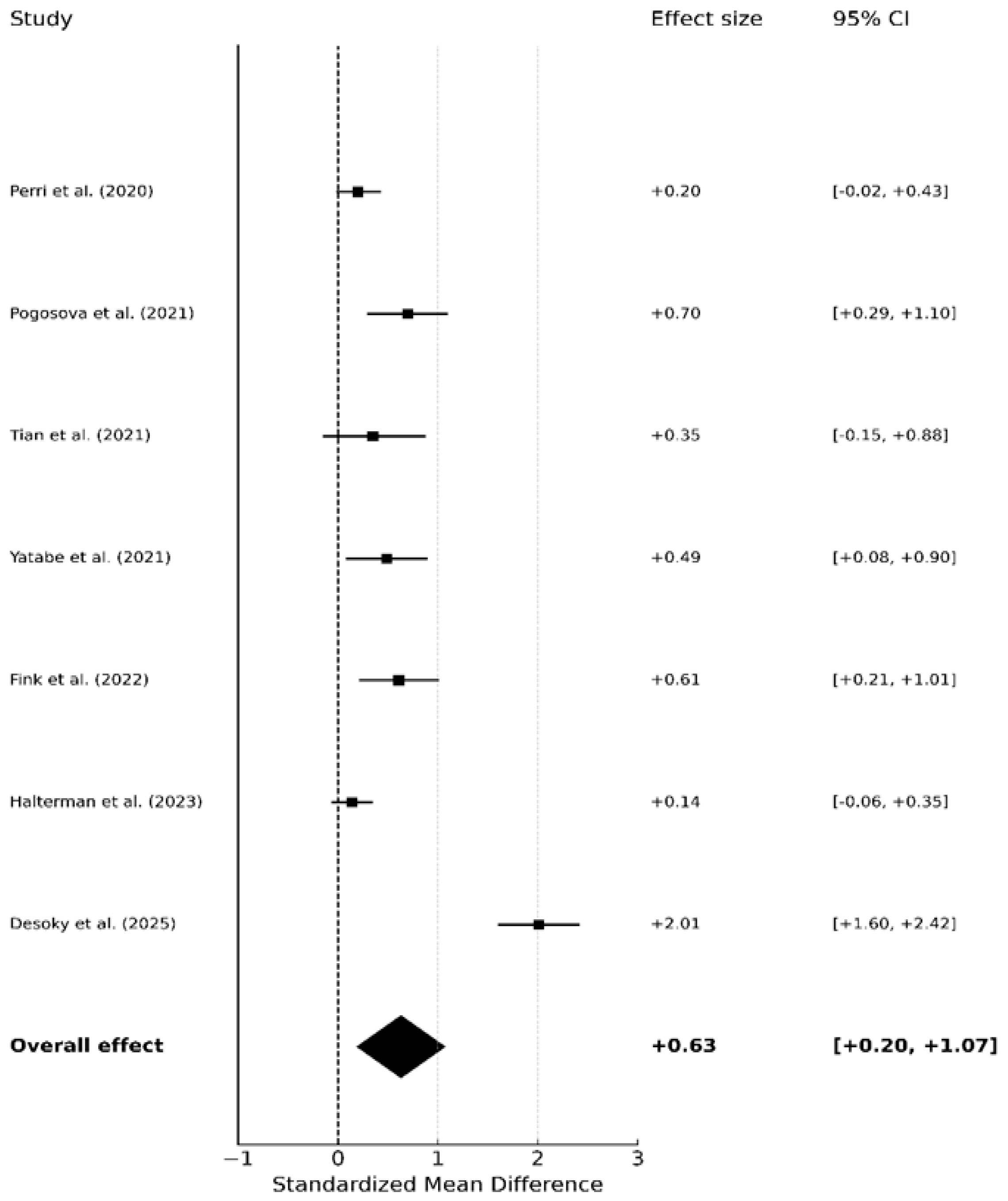
The pooled analysis of seven randomized and quasi-experimental studies demonstrated a moderate and statistically significant overall benefit of telemedicine compared with standard care (SMD = 0.63, CI [0.20, 1.07]). As shown in Figure 8, the direction of effect consistently favored telemedicine. The most considerable impact was observed in diabetes medication adherence supported by SMS interventions (SMD = 2.01, CI [1.60, 2.42]) [42], followed by cardiovascular risk management (SMD = 0.70, CI [0.29, 1.10]) [33] and surgical follow-up (SMD = 0.61, CI [0.21, 1.01]) [36]. Additional moderate improvements were found in hypertension monitoring (SMD = 0.49, CI [0.08, 0.90]) [31] and telemedicine-enabled chronic disease management (SMD = 0.35, CI [−0.15, 0.88]) [34]. Smaller gains or non-significant results were reported in pediatric asthma follow-up (SMD = 0.14, CI [−0.06, 0.35]) [38] and in lifestyle interventions for weight maintenance (SMD = 0.20, CI [−0.02, 0.43]) [30], both of which were confirmed to be non-inferior to in-person care. Importantly, no study reported adverse effects. Overall, these results reinforce that telemedicine provides equivalent or superior outcomes across diverse patient populations and settings, with robust evidence in medication adherence, cardiovascular risk reduction, and surgical follow-up contexts.

3.6. Publication Bias

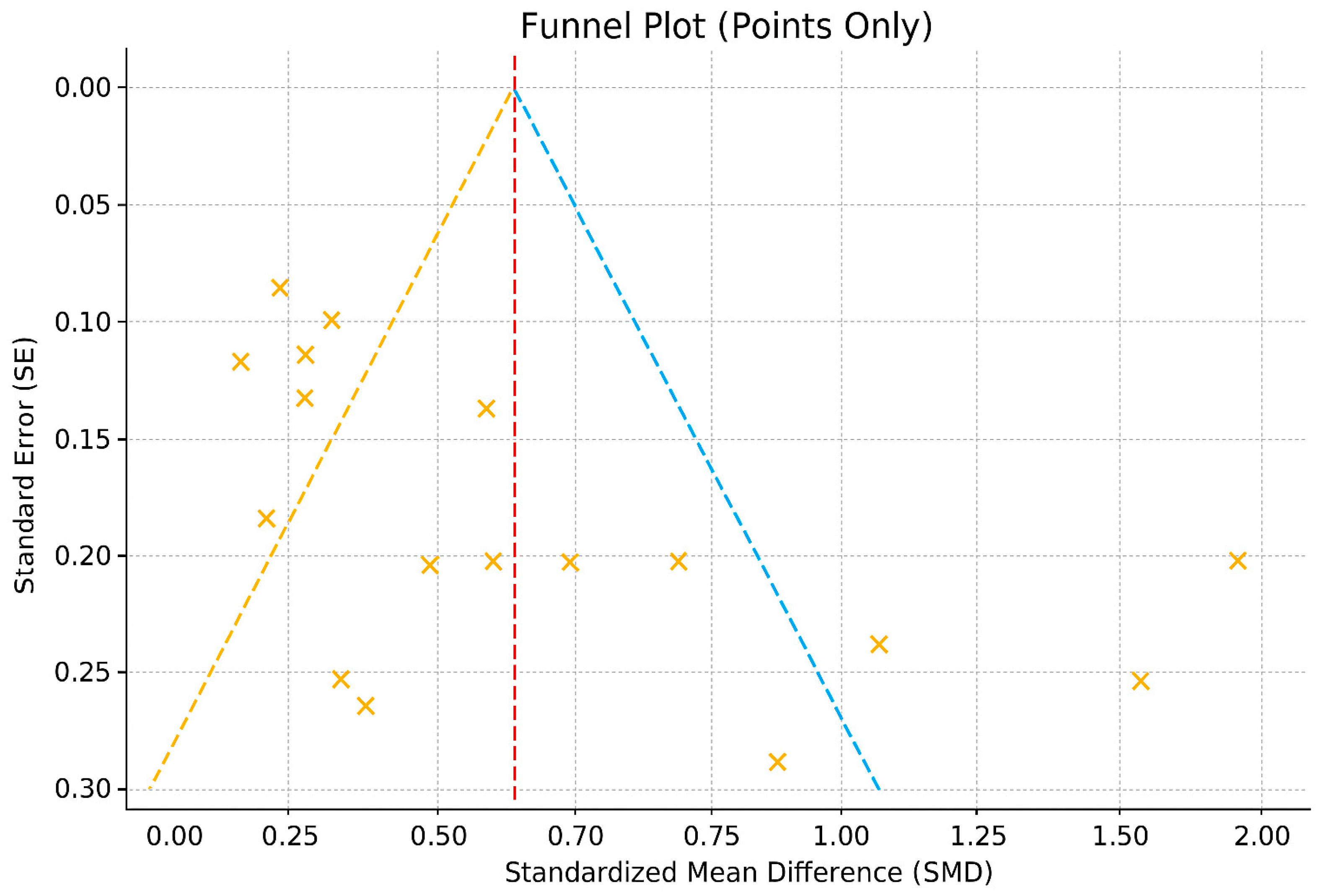
A funnel plot was created to assess the potential for publication bias among the included studies. As shown in Figure 9, the distribution of effect sizes was symmetrical around the pooled standardized mean difference (SMD = 0.64). Most studies fell within the expected 95% confidence limits, with a few trials at the edges. The overall pattern indicates little evidence of publication bias. However, a slight asymmetry is evident: some smaller studies (higher standard errors) report lower or near-zero effects, while larger studies (lower SE) generally show consistent positive effects. Importantly, no significant outliers were observed on either side of the funnel, and Egger’s regression intercept test could further support this conclusion. Therefore, the funnel plot suggests that the results of this review are unlikely to be affected by systematic publication bias. However, caution is recommended because of the small number of trials in some subgroups.
Table 2 indicates that Egger’s regression test revealed significant funnel plot asymmetry (intercept = 4.56, p = 0.004), pointing to possible small-study effects, although the slope was not significant (p = 0.278). Table 3 presents the results of Duval and Tweedie’s trim-and-fill analysis adjusted the pooled effect slightly downward, from d = 0.62 (95% CI [0.40, 0.85]) to d = 0.57 (95% CI [0.31, 0.83]), but the effect remained moderate and statistically significant.
The study bias assessment indicates a mild to moderate bias in the telemedicine literature from 2020 to 2025. We addressed this with trim-and-fill, which resulted in only a slight reduction in the effect. While the evidence supports telemedicine’s efficacy, it is essential to recognize that the literature may be somewhat biased toward positive findings. A cautious approach suggests that telemedicine is effective, but our point estimate of d = 0.62 could be slightly overestimated. Importantly, even with conservative adjustments, telemedicine remains a beneficial option. This robustness to bias increases our confidence that the effect is real, though its exact size might be smaller. Future research, including larger trials and efforts to reduce report bias, will help determine the actual effect size more accurately.

3.7. Heterogeneity (I2)

The overall heterogeneity among the 17 studies included in the meta-analysis was substantial (I2 = 87.49%), showing significant variability in study outcomes. The Cochran’s Q statistic was also substantial (Q (17) = 135.87, p < 0.001), confirming the presence of heterogeneity, and the estimated between-study variance was notable (τ2 = 0.171). This high level of heterogeneity reflects differences in intervention methods (such as SMS-based adherence programs, video consultations, and telerehabilitation), population characteristics (such as chronic disease patients, surgical groups, and maternal health populations), and methodological quality across the trials. Despite this variability, the random effects model still revealed a moderate and statistically significant overall effect favoring telemedicine (pooled SMD = 0.62, CI [0.41, 0.83]; z = 5.78, p < 0.001), indicating that while effect sizes vary depending on the context, the overall trend consistently favors telehealth interventions.

4. Discussion

This systematic review and meta-analysis show that telemedicine achieves clinical outcomes equal to or better than in-person care in chronic disease management, maternal health, surgical follow-up, and other areas. From 2020 to 2025, telemedicine consistently enhanced access, patient convenience, and continuity of care while ensuring safety. Previous reviews often examined isolated aspects of telehealth, such as physician adoption [20], digital equity concerns [12], or mental health applications without comparing effectiveness across different clinical areas. Also, most did not include meta-analyses of randomized trials. The review broadens earlier research by combining implementation barriers, facilitators, and clinical outcomes, areas that were usually studied separately in previous reviews. Earlier studies often focused on either a technical barrier or equity concerns, or on a single specialty, and most lacked meta-analytic synthesis. Our pooled analysis of 17 RCTs provides updated quantitative evidence supporting telemedicine’s effectiveness and demonstrates consistency across countries and care models.

4.1. Principal Findings

4.1.1. Chronic Disease Outcomes

Telemedicine interventions for chronic disease management generally yield clinical outcomes comparable to those of usual care, with some modest improvements in key biomarkers. In type 2 diabetes and coronary heart disease, a large telehealth-supported lifestyle trial achieved a small but significant reduction in [43] at 6 months (mean between-group difference −0.13%, p = 0.04). Nevertheless, this benefit was not sustained at 12 months [43]. No significant differences in 12-month major cardiovascular events were observed in that study, underscoring that short-term glycemic gains may not immediately translate into hard outcome improvements. In contrast, telemedicine has demonstrated more apparent benefits for managing hypertension: a randomized trial in Japan found that one-year home blood pressure telemonitoring with remote consultations led to significantly lower systolic blood pressure (125 ± 9 mmHg vs. 131 ± 12 mmHg) and a higher rate of blood pressure control (85% vs. 70%) compared to standard care [31]. Likewise, telehealth can improve adherence to risk-reducing medications—for example, an RCT using SMS reminders in diabetic patients reported significantly better medication adherence and corresponding drops in LDL cholesterol at 12 weeks, along with fewer acute cardiovascular events. Not all chronic disease studies show telemedicine superiority; a trial of a smartphone-based virtual clinic for young adults with type 1 diabetes found no significant difference in 6-month or treatment satisfaction versus usual care [42]. Smartphone-based monitoring for rheumatoid arthritis was cost-effective, reducing overall costs without compromising quality-adjusted life years [35].
Even in the absence of glycemic improvement, the study noted an improved patient quality of life (reduced diabetes burden on physical health) with telemedicine. Similarly, in pediatric asthma management, a telemedicine-enhanced program did not significantly change overall symptom-free days or adherence relative to standard care; however, it markedly increased the delivery of preventive care, with 91% of children in the telemedicine arm receiving follow-up, compared to 48% in usual care, at 3 months [38]. In summary, telemedicine appears to be an effective alternative for chronic disease follow-up, generally matching the outcomes of in-person care while providing moderate gains in risk factor control (e.g., blood pressure, LDL) in several studies [42]. The magnitude of clinical benefit can vary, and sustained improvements may require ongoing support beyond initial intervention periods [31,38]. Importantly, none of the included trials reported any safety compromises with telemanagement adverse event rates, and disease-specific complications were similar between telemedicine and control groups in diabetes, hypertension, and asthma care (no increase in emergency visits or morbidity). These findings suggest that for chronic conditions, telemedicine can maintain standard-of-care outcomes and, in specific contexts, modestly improve biomedical indices through enhanced self-management and treatment adherence.

4.1.2. Maternal and Perinatal Outcomes

Telemedicine has proven to be a practical support for obstetric care, especially in managing gestational diabetes mellitus (GDM). Randomized trials have shown that remote monitoring and teleconsultations can match or improve the effectiveness of standard care. In China, a multicenter trial using WeChat-based widely used platform for a variety of digital health and lifestyle coaching programs reported higher rates of glycemic control among women receiving telemedicine support compared to conventional prenatal visits [34]. Similarly, a European single-center RCT found that an app-based glucose monitoring program with monthly video visits reduced the percentage of postprandial readings above target and lowered average postprandial glucose [40]. That trial also documented a lower cesarean section rate in the telemedicine group (17.3% vs. 35.3%), suggesting downstream perinatal benefits when virtual care replaces in-person visits [40]. Notably, adverse obstetric outcomes such as preterm birth, hypertensive disorders, neonatal complications, or postpartum hemorrhage were not increased with telemedicine, aligning with prior work showing safety equivalence for remote follow-up in sensitive populations [32,33,44].
Beyond glycemic metrics, these trials emphasize process advantages, such as more frequent data feedback, faster clinical adjustments, and reduced travel, without compromising safety. Programs that embedded structured data review and clear escalation protocols (e.g., clinician outreach when home glucose trends worsened) reported the strongest day-to-day control [34,40]. Collectively, the literature indicates tele-GDM models deliver equivalent safety and modest improvements in metabolic control, with added convenience and patient engagement; maintaining parity in perinatal outcomes (e.g., birth weight, preterm birth) is itself a meaningful success given reduced in-person visit burden [30]. Implementation-wise, brief onboarding, language-concordant interfaces, and patient choice (hybrid vs. fully remote) help mitigate common barriers (literacy, comfort with technology), sustaining both adherence and satisfaction in prenatal care [44,45].

4.1.3. Surgical and Post-Operative Outcomes

Randomized and cohort studies support telemedicine as a safe, efficient follow-up modality after surgery. The PVC-RAM-1 multicenter RCT found no difference in days alive at home within 30 days between post-operative patients receiving remote monitoring/virtual nursing and those with standard discharge follow-up, with no excess mortality or severe complications in the telemedicine support [46]. Although 30-day readmissions and ED visits were not significantly reduced, overall acute care use trended lower (22.0% vs. 27.3%), and the virtual arm detected and corrected far more medication errors (30% vs. 5%), demonstrating a vital safety mechanism of continuous monitoring [46].
Trials in general surgery and transplant follow-up echo these findings. Telephone or video follow-ups yielded equivalent detection of complications and readmissions compared to in-person visits, with shorter consultation times and high patient satisfaction [36,47]. In stoma care, tele-consultations reduced long-distance travel and maintained quality of life, illustrating value for rural patients [32]. A multicenter Pakistani RCT further showed that routine post-surgical video follow-ups were safe and highly satisfactory, shortened visit time (8.6 vs. 14.7 min), and generated substantial patient cost savings [48]. Observational work suggests shifting appropriate follow-ups to telehealth can free clinic capacity for complex cases while preserving outcomes [45,49].
From an implementation lens, programs that kept technology simple (e.g., phone or low-friction video), performed pre-visit technology checks, and defined clear escalation rules (when to convert to in-person) reported smoother operations and higher acceptance [36,44]. Where technical difficulties were common (e.g., software instability, limited patient devices), crossover back to in-person increased, but even then, both patients and surgeons rated remote follow-ups as beneficial and resource-saving for many routine checks [44]. Overall, for low-risk surgeries and standard post-op checks, virtual follow-up provides similar clinical outcomes and patient-reported recovery as in-person visits, along with added efficiency and safety benefits through earlier issue resolution and reduced burden on patients and healthcare systems [32,36,46,47,48,49].

4.1.4. Patient-Reported Outcomes

Patient satisfaction and other patient-reported outcomes (PROs) with telemedicine were consistently high, often matching or exceeding those of in-person care. Several RCTs found no significant differences in satisfaction scores, indicating that replacing face-to-face visits with virtual care did not diminish the care experience [36,44]. For example, there were significant improvements in satisfaction in both the telemedicine and control groups over 12 months, with no differences between them. Patients described remote consultations as time-saving, cost-effective, and less burdensome. Provider Training and Telehealth [44]. Similar findings emerged in surgical follow-up, where 70% of patients in a telehealth group and 68% in-person reported being satisfied with their outcomes [48]. Importantly, rural patients often reported greater satisfaction, underscoring telehealth’s value in expanding access [32]. Convenience, reduced travel, and flexibility were recurring themes [47]. Additionally, caregivers in pediatric asthma programs reported improved access to preventive services via telehealth, reflecting enhanced engagement [38]. Still, challenges persist, including technical failures, low digital literacy, and an increased staff burden in nursing facilities, which can occasionally lead to diminished satisfaction [50,51]. Older adults and complex patients often expressed a preference for in-person visits, while those with adequate support adapted well. Encouragingly, studies suggest that satisfaction with telemedicine improves over time with training and user-friendly platforms [36]. Overall, PROs highlight telemedicine as acceptable and patient-centered when barriers are proactively addressed.

4.1.5. System-Level Outcomes

Telemedicine’s system-level effects on utilization, continuity, and costs were generally neutral to positive. The evidence did not support concerns that telehealth might fuel unnecessary emergency visits or duplicative follow-ups. In a large cohort, ED follow-up rates within 7 days were similarly low for both telemedicine and office visits [49,50]. Although some conditions prompted more subsequent in-person visits (e.g., abdominal pain), overall return visit rates remained stable [45]. Continuity of care often improved: the TEAM-ED asthma trial demonstrated markedly higher follow-up and preventive care adherence in the telemedicine support [38]. In skilled nursing facilities, telehealth enabled timely subspecialty input and altered care patterns despite limited adoption [46,52]. Hospitalizations and readmissions were generally equivalent between the telehealth and control groups. For example, the PVC-RAM-1 trial showed no significant difference in 30-day readmissions after surgery, although telemonitored groups detected more issues early [46]. Subgroup analyses suggest that comprehensive telemonitoring may reduce acute care needs among high-risk groups [43]. From an efficient perspective, telehealth reduced patient costs, travel time, and work disruption [48]. It also freed clinic capacity by shifting routine visits virtual [53]. However, challenges include upfront infrastructure investment and staff workload for facilitating visits [51]. Overall, telemedicine has demonstrated the capacity to maintain continuity and reduce barriers without increasing utilization, although system-level benefits depend on careful workflow integration.

4.1.6. Obstacles to Telemedicine Adoption

Barriers to telemedicine adoption were consistent across studies. Technical limitations, including a lack of broadband access, limited device availability, and software malfunctions, were common [44]. Digital literacy gaps particularly affected older adults and vulnerable populations, leading to discomfort or disengagement [50]. In nursing homes, staff reported an increased workload in coordinating virtual visits, contributing to resistance [51]. Workflow challenges, such as poor integration of labs or ancillary services, undermined efficiency, as seen in liver transplant follow-up programs [44]. Clinicians also highlighted limitations in cases requiring physical exams [45]. Policy and reimbursement uncertainty, especially after the temporary pandemic waivers, created hesitation to invest long-term in telemedicine programs [54]. Finally, resistance to change from clinicians concerned about workload and patients worried about impersonal care slowed adoption in some settings [55].

4.1.7. Facilitators of Successful Implementation

On the other hand, key facilitators included supportive policy environments, reimbursement parity, and leadership investment in telehealth infrastructure [56,57]. Usability and reliability were critical; programs with onboarding and technical support saw stronger engagement [31]. Hybrid models embedding telemedicine within routine workflows proved most effective, as demonstrated in the TEAM-ED program [38]. Comprehensive interventions, which combine monitoring, clinician feedback, and education, outperformed standalone tracking [43]. Patient and clinician champions boosted acceptance, particularly in rural or underserved communities [32]. Clear eligibility criteria for tele-visits, pre-visit tech checks, and escalation protocols optimized safety and satisfaction [36]. Moreover, video consultations for orthopedic follow-ups were well accepted by patients, improving convenience and satisfaction, though technical issues limited physician satisfaction [37]. Dedicated staff, such as nurse care managers, facilitated coordination, exemplified by opioid use disorder management programs [57]. Together, these facilitators demonstrate that aligning technology, workflows, and human support is essential for scalable telemedicine success.

4.1.8. Effects on Outcomes and Usage

Synthesizing across domains, telemedicine generally maintained or modestly improved outcomes without overburdening systems. Clinical endpoints such as HbA1c, blood pressure, and lipids were enhanced in some chronic disease trials [31,42,43,58] but remained equivalent in others [39]. Surgical follow-up trials consistently showed non-inferior complication and readmission rates [36,46]. Maternal health outcomes, particularly in GDM, improved day-to-day glycemic control and sometimes reduced cesarean delivery rates [34,40]. Patient satisfaction remained high [44]. The continuity of care improved [38], and system costs were reduced through efficiency gains. No research has shown harm from telemedicine interventions.
Patients managed through telehealth achieved health outcomes comparable to those managed by traditional methods, and some interventions led to better control of chronic conditions and increased patient engagement [59]. However, persistent challenges remain. Limited broadband access, digital literacy gaps, reimbursement uncertainties, and workflow misalignments still hinder adoption. These barriers disproportionately affect rural and underserved populations, raising equity concerns. Conversely, facilitators such as supportive regulatory environments, integrated workflows, and structured remote monitoring programs consistently enhance telemedicine success. This review combines these findings into a clear framework, highlighting that telemedicine effectiveness depends not only on clinical interventions but also on system-level readiness, implementation support, and patient engagement.

4.2. Limitations

This systematic review and meta-analysis have several limitations to consider when interpreting the findings. First, there was significant heterogeneity among the 32 studies regarding patient populations, clinical conditions, and telemedicine modalities. Telehealth interventions in rural post-surgical follow-up settings [32,36,47] are not directly comparable to those used in urban primary care [45,55,60] or chronic disease management, such as diabetes, hypertension, or heart failure [29,31,40,43]. Even within outcome domains, interventions ranged from brief telephone consultations [30] to comprehensive multidisciplinary remote monitoring programs [46,52], which limit the uniform application of conclusions. These differences suggest that telemedicine effectiveness likely depends on selecting the appropriate modality and intensity for each clinical scenario.
A second limitation is that the broad scope of this review, while enhancing generalizability, also introduces variability in intervention types, outcome measures, and healthcare settings. Earlier reviews focusing on narrower specialties or early pandemic telehealth use reported more consistent findings, but including multiple conditions and implementation contexts increases heterogeneity. This should be kept in mind when comparing these findings to previous, more specialized reviews. Finally, long-term effects remain uncertain. Some benefits, especially in chronic disease management, may diminish once intensive support stops [43]. Sustaining engagement with telehealth can be difficult, and differences in follow-up durations across studies limit conclusions about long-term clinical or operational impacts.

4.3. Future Research Directions

Future research on telemedicine should focus on long-term outcomes beyond the usual 3–12-month follow-up period to determine whether early improvements in blood pressure, HbA1c, or hospitalization rates lead to sustained reductions in morbidity and mortality [31,43]. Standardized outcome measures are necessary to enhance comparability across studies that currently range from simple telephone follow-ups [30,49] to complex multidisciplinary remote monitoring programs [46,52]. Further evaluation of hybrid models combining virtual and in-person care is justified, as integrated telehealth workflows have demonstrated smoother implementation and better outcomes [28,56]. Addressing digital inequity remains a key priority, given the consistently lower utilization among older adults, rural populations, and underserved groups [50,51,52].
Economic evaluations should also be expanded to assess long-term cost-effectiveness and system sustainability, building on existing evidence of cost savings and efficiency gains [35,37]. Moreover, applying implementation science frameworks more consistently will help identify which components, such as video versus audio modalities, visit frequency, or electronic health record integration, have the most significant impact on effectiveness across various clinical settings [41,44]. Additionally, future studies should consider managerial factors like workflow optimization, staffing models, and organizational readiness. Understanding how telehealth can be sustainably integrated into routine operations will be vital for leaders and health systems aiming to expand digital care models.

5. Conclusions

This review demonstrates that telemedicine from 2020 to 2025 consistently achieved clinical outcomes comparable to in-person care across areas like chronic disease management, prenatal care, surgical follow-up, and other services, while significantly improving access, convenience, and patient satisfaction. These findings reaffirm telemedicine as a practical and resilient care model rather than just a temporary pandemic measure.
From a management perspective, the evidence highlights the need to strengthen digital infrastructure, improve support for digital literacy, and establish clear reimbursement pathways to sustain telehealth use. Health administrators and policymakers can leverage the identified barriers and facilitators to develop implementation strategies that align technology, workflow readiness, and patient engagement. Hybrid models combining virtual and in-person services seem to offer the best operational efficiency, equity, and continuity of care.
Despite strong evidence, challenges such as limited broadband access, workflow misalignments, and reimbursement uncertainties continue to hinder implementation and require targeted managerial actions. Future telehealth strategies should focus on sustainable integration rather than emergency deployment. Ongoing evaluation of long-term outcomes, cost-effectiveness, and digital equity will be vital to establishing telemedicine as a stable pillar of modern healthcare delivery.

Supplementary Materials

The following supporting information can be downloaded at: https://www.mdpi.com/article/10.3390/encyclopedia5040206/s1, PRISMA checklist. Reference [61] is cited in the Supplementary Material.

Author Contributions

Conceptualization, M.G.R. and A.A.; methodology, M.G.R. and A.A.; software, M.G.R. and A.A.; validation, M.G.R., A.A. and V.R.P.; formal analysis, M.G.R. and A.A.; investigation, M.G.R. and A.A.; resources, M.G.R. and A.A.; data curation, M.G.R. and A.A.; writing—original draft preparation, M.G.R. and A.A.; writing—review and editing, M.G.R. and A.A.; visualization, A.A.; supervision, V.R.P.; project administration, M.G.R. All authors have read and agreed to the published version of the manuscript.

Funding

This research received no external funding.

Institutional Review Board Statement

Not applicable.

Informed Consent Statement

Not applicable.

Data Availability Statement

No new data were created or analyzed in this study. Data sharing is not applicable to this article.

Conflicts of Interest

The authors declare that they have no conflicts of interest.

References

  1. Shaver, J. The State of Telehealth Before and After the COVID-19 Pandemic. Prim. Care 2022, 49, 517–530. [Google Scholar] [CrossRef]
  2. Omboni, S.; Padwal, R.S.; Alessa, T.; Benczúr, B.; Green, B.B.; Hubbard, I.; Kario, K.; Khan, A.N.; Konardi, A.; Logan, A.G.; et al. The worldwide impact of telemedicine during COVID-19: Current evidence and recommendations for the future. Connect. Health 2022, 1, 7. [Google Scholar] [PubMed]
  3. Centers for Medicare and Medicaid Services. Medicare Telemedicine Health Care Provider Fact Sheet. 2020. Available online: https://www.cms.gov/newsroom/fact-sheets/medicare-telemedicinehealth-care-provider-fact-sheet (accessed on 30 June 2025).
  4. World Health Organization. Maintaining Essential Health Services: Operational Guidance for the COVID-19 Context; Interim Guidance 1 June 2020; WHO: Geneva, Switzerland, 2020. [Google Scholar]
  5. Ezeamii, V.C.; Okobi, O.E.; Wambai-Sani, H.; Perera, G.S.; Zaynieva, S.; Okonkwo, C.C.; Ohaiba, M.M.; William-Enemali, P.C.; Obodo, O.R.; Obiefuna, N.G. Revolutionizing healthcare: How telemedicine is improving patient outcomes and expanding access to care. Cureus 2024, 16, 1–10. [Google Scholar] [CrossRef]
  6. Koonin, L.M. Trends in the use of telehealth during the emergence of the COVID-19 pandemic—United States, January–March 2020. MMWR Morb. Mortal. Wkly. Rep. 2020, 69, 1595–1599. [Google Scholar]
  7. Keesara, S.; Jonas, A.; Schulman, K. COVID-19 and health care’s digital revolution. N. Engl. J. Med. 2020, 382, e82. [Google Scholar]
  8. Wosik, J.; Fudim, M.; Cameron, B.; Gellad, Z.F.; Cho, A.; Phinney, D.; Curtis, S.; Roman, M.; Poon, E.G.; Ferranti, J.; et al. Telehealth transformation: COVID-19 and the rise of virtual care. J. Am. Med. Inform. Assoc. 2020, 27, 957–962. [Google Scholar] [CrossRef]
  9. Mathews, D.; Abernethy, A.; Butte, A.J.; Ginsburg, P.; Kocher, B.; Novelli, C.; Sandy, L.; Smee, J.; Fabi, R.; Offodile, A.C., II; et al. Telehealth and Mobile Health: Case Study for Understanding and Anticipating Emerging Science and Technology; National Academy of Medicine: Washington, DC, USA, 2023. [Google Scholar]
  10. Wherton, J.; Greenhalgh, T.; Hughes, G.; Shaw, S.E. The role of information infrastructures in scaling up video consultations during COVID-19: Mixed methods case study into opportunity, disruption, and exposure. J. Med. Internet Res. 2022, 24, e42431. [Google Scholar] [CrossRef]
  11. Zhang, T.; Mosier, J.; Subbian, V. Identifying barriers to and opportunities for telehealth implementation amidst the COVID-19 pandemic by using a human factors approach: A leap into the future of health care delivery? JMIR Hum. Factors 2021, 8, e24860. [Google Scholar] [CrossRef]
  12. Kuziemsky, C.; Hunter, I.; Udayasankaran, J.G.; Ranatunga, P.; Kulatunga, G.; John, S.; John, O.; Flórez-Arango, J.F.; Ito, M.; Ho, K.; et al. Telehealth as a means of enabling health equity. Yearb. Med. Inform. 2022, 31, 060–066. [Google Scholar] [CrossRef] [PubMed]
  13. Nascimento, I.J.B.D.; Abdulazeem, H.; Vasanthan, L.T.; Martinez, E.Z.; Zucoloto, M.L.; Østengaard, L.; Azzopardi-Muscat, N.; Zapata, T.; Novillo-Ortiz, D. Barriers and facilitators to utilizing digital health technologies by healthcare professionals. NPJ Digit. Med. 2023, 6, 161. [Google Scholar]
  14. Carr, A.; Bañez, L.L.; Huppert, J.; Iyer, S.; Chang, C.; Umscheid, C.A. AHRQ EPC Program Research Gaps Summary: Telehealth; Methods Research Report. AHRQ Publication No. 23-EHC015; AHRQ Agency for Healthcare Research and Quality: Rockville, MD, USA, 2023. Available online: https://effectivehealthcare.ahrq.gov/products/telehealth/research-report (accessed on 20 July 2025).
  15. Shamseer, L.; Moher, D.; Clarke, M.; Ghersi, D.; Liberati, A.; Petticrew, M.; Shekelle, P.; Stewart, L.A. Preferred reporting items for systematic review and meta-analysis protocols (PRISMA-P) 2015: Elaboration and explanation. BMJ 2015, 349, g7647. [Google Scholar] [CrossRef]
  16. Hoang, M.T.; Zenker, A.; Saha, S.; Gerdtham, U.G.; Trepel, D. Economic evaluations of strategies targeting pre-diagnosis dementia populations: Protocol for a systematic review. HRB Open Res. 2025, 8, 11. [Google Scholar] [CrossRef]
  17. Moher, D.; Liberati, A.; Tetzlaff, J.; Altman, D.G. Prisma Group. Preferred reporting items for systematic reviews and meta-analyses: The PRISMA statement. Int. J. Surg. 2010, 8, 336–341. [Google Scholar] [CrossRef]
  18. Cummins, M.R.; Tsalatsanis, A.; Chaphalkar, C.; Ivanova, J.; Ong, T.; Soni, H.; Barrera, J.F.; Wilczewski, H.; Welch, B.M.; Bunnell, B.E. Telemedicine appointments are more likely to be completed than in-person healthcare appointments: A retrospective cohort study. JAMIA Open 2024, 7, ooae059. [Google Scholar] [CrossRef] [PubMed]
  19. Berardi, C.; Antonini, M.; Jordan, Z.; Wechtler, H.; Paolucci, F.; Hinwood, M. Barriers and facilitators to the implementation of digital technologies in mental health systems: A qualitative systematic review to inform a policy framework. BMC Health Serv. Res. 2024, 24, 243. [Google Scholar] [CrossRef] [PubMed]
  20. Watson, J.D.; Xia, B.; Dini, M.E.; Silverman, A.L.; Pierce, B.S.; Chang, C.N.; Perrin, P.B. Barriers and facilitators to physicians’ telemedicine uptake during the beginning of the COVID-19 pandemic. PLOS Digit. Health 2025, 4, e0000818. [Google Scholar] [CrossRef]
  21. Higgins, J.P.T.; Thomas, J.; Chandler, J.; Cumpston, M.; Li, T.; Page, M.J.; Welch, V.A. (Eds.) Cochrane Handbook for Systematic Reviews of Interventions; Version 6.4; Cochrane: London, UK, 2023; Available online: https://training.cochrane.org/handbook/archive/v6.4/ (accessed on 15 July 2025).
  22. Gao, Y.; Xiang, L.; Yi, H.; Song, J.; Sun, D.; Xu, B.; Zhang, G.; Wu, I.X. Confounder adjustment in observational studies investigating multiple risk factors: A methodological study. BMC Med. 2025, 23, 132. [Google Scholar] [CrossRef]
  23. Montori, V.M.; Devereaux, P.J.; Adhikari, N.K.; Burns, K.E.; Eggert, C.H.; Briel, M.; Lacchetti, C.; Leung, T.W.; Darling, E.; Bryant, D.M.; et al. Randomized trials stopped early for benefit: A systematic review. JAMA. 2005, 294, 2203–2209. [Google Scholar] [CrossRef]
  24. Meddar, J.M.; Viswanadham, R.V.; Levine, D.L.; Martinez, T.R.; Willis, K.; Choi, N.; Douglas, J.; Lawrence, K.S. Video-based telemedicine utilization patterns and associated factors among racial and ethnic minorities in the United States during the COVID-19 pandemic: A mixed-methods scoping review. PLoS Digit. Health 2025, 4, e0000952. [Google Scholar] [CrossRef]
  25. Umeh, C.A.; Torbela, A.; Saigal, S.; Kaur, H.; Kazourra, S.; Gupta, R.; Shah, S. Telemonitoring in heart failure patients: Systematic review and meta-analysis of randomized controlled trials. World J. Cardiol. 2022, 14, 640. [Google Scholar] [CrossRef] [PubMed]
  26. Mohr, N.M.; Vakkalanka, J.P.; Holcombe, A.; Carter, K.D.; McCoy, K.D.; Clark, H.M.; Gutierrez, J.; Merchant, K.A.; Bailey, G.J.; Ward, M.M. Effect of chronic disease home telehealth monitoring in the veterans health administration on healthcare utilization and mortality. J. Gen. Intern. Med. 2023, 38, 3313–3320. [Google Scholar] [CrossRef]
  27. Baughman, D.J.; Jabbarpour, Y.; Westfall, J.M.; Jetty, A.; Zain, A.; Baughman, K.; Pollak, B.; Waheed, A. Comparison of quality performance measures for patients receiving in-person vs telemedicine primary care in a large integrated health system. JAMA Netw. Open 2022, 5, e2233267. [Google Scholar] [CrossRef] [PubMed]
  28. Haun, M.W.; Tönnies, J.; Hartmann, M.; Wildenauer, A.; Wensing, M.; Szecsenyi, J.; Feißt, M.; Pohl, M.; Vomhof, M.; Icks, A.; et al. Model of integrated mental health video consultations for people with depression or anxiety in primary care (PROVIDE-C): Assessor masked, multicentre, randomised controlled trial. BMJ 2024, 386, e079921. [Google Scholar] [CrossRef]
  29. Yun, S.; Comín-Colet, J.; Calero-Molina, E.; Hidalgo, E.; José-Bazán, N.; Marcos, M.C.; Soria, T.; Llàcer, P.; Fernández, C.; García-Pinilla, J.M.; et al. Evaluation of mobile health technology combining telemonitoring and teleintervention versus usual care in vulnerable-phase heart failure management (HERMeS): A multicentre, randomised controlled trial. Lancet Digit. Health 2025, 7, 100866. [Google Scholar] [CrossRef]
  30. Perri, M.G.; Shankar, M.N.; Daniels, M.J.; Durning, P.E.; Ross, K.M.; Limacher, M.C.; Janicke, D.M.; Martin, A.D.; Dhara, K.; Bobroff, L.B.; et al. Effect of telehealth extended care for maintenance of weight loss in rural US communities: A randomized clinical trial. JAMA Netw. Open 2020, 3, e206764. [Google Scholar] [CrossRef]
  31. Yatabe, J.; Yatabe, M.S.; Okada, R.; Ichihara, A. Efficacy of telemedicine in hypertension care through home blood pressure monitoring and videoconferencing: Randomized controlled trial. JMIR Cardio 2021, 5, e27347. [Google Scholar] [CrossRef] [PubMed]
  32. Augestad, K.M.; Sneve, A.M.; Lindsetmo, R.O. Telemedicine in postoperative follow-up of STOMa PAtients: A randomized clinical trial (the STOMPA trial). J. Br. Surg. 2020, 107, 509–518. [Google Scholar]
  33. Pogosova, N.; Yufereva, Y.; Sokolova, O.; Yusubova, A.; Suvorov, A.; Saner, D.H. Telemedicine Intervention to Improve Long-Term Risk Factor Control and Body Composition in Persons with High Cardiovascular Risk: Results from a Randomized Trial: Telehealth strategies may offer an advantage over standard institutional based interventions for improvement of cardiovascular risk in high-risk patients long-term. Glob. Heart 2021, 16, 21. [Google Scholar]
  34. Tian, Y.; Zhang, S.; Huang, F.; Ma, L. Comparing the efficacies of telemedicine and standard prenatal care on blood glucose control in women with gestational diabetes mellitus: Randomized controlled trial. JMIR Mhealth Uhealth 2021, 9, e22881. [Google Scholar] [CrossRef]
  35. Bernard, L.; Valsecchi, V.; Mura, T.; Aouinti, S.; Padern, G.; Ferreira, R.; Pastor, J.; Jorgensen, C.; Mercier, G.; Pers, Y.M. Management of patients with rheumatoid arthritis by telemedicine: Connected monitoring. A randomized controlled trial. Jt. Bone Spine 2022, 89, 105368. [Google Scholar] [CrossRef]
  36. Fink, T.; Chen, Q.; Chong, L.; Hii, M.W.; Knowles, B. Telemedicine versus face-to-face follow up in general surgery: A randomized controlled trial. ANZ J. Surg. 2022, 92, 2544–2550. [Google Scholar] [CrossRef] [PubMed]
  37. Muschol, J.; Heinrich, M.; Heiss, C.; Knapp, G.; Repp, H.; Schneider, H.; Thormann, U.; Uhlar, J.; Unzeitig, K.; Gissel, C. Assessing telemedicine efficiency in follow-up care with video consultations for patients in orthopedic and trauma surgery in Germany: Randomized controlled trial. J. Med. Internet Res. 2022, 24, e36996. [Google Scholar] [CrossRef]
  38. Halterman, J.S.; Fagnano, M.; Tremblay, P.; Butz, A.; Perry, T.T.; Wang, H. Effect of the telemedicine enhanced asthma management through the Emergency Department (TEAM-ED) Program on asthma morbidity: A randomized controlled trial. J. Pediatr. 2024, 266, 113867. [Google Scholar] [CrossRef] [PubMed]
  39. Leksell, J.; Toft, E.; Rosman, J.; Eriksson, J.W.; Fischier, J.; Lindholm-Olinder, A.; Rosenblad, A.; Nerpin, E. Virtual clinic for young people with type 1 diabetes: A randomised wait-list controlled study. BMC Endocr. Disord. 2023, 23, 255. [Google Scholar] [CrossRef]
  40. Munda, A.; Mlinaric, Z.; Jakin, P.A.; Lunder, M.; Pongrac Barlovic, D. Effectiveness of a comprehensive telemedicine intervention replacing standard care in gestational diabetes: A randomized controlled trial. Acta Diabetol. 2023, 60, 1037–1044. [Google Scholar] [CrossRef]
  41. Zanaboni, P.; Dinesen, B.; Hoaas, H.; Wootton, R.; Burge, A.T.; Philp, R.; Oliveira, C.C.; Bondarenko, J.; Tranborg Jensen, T.; Miller, B.R.; et al. Long-term telerehabilitation or unsupervised training at home for patients with chronic obstructive pulmonary disease: A randomized controlled trial. Am. J. Respir. Crit. Care Med. 2023, 207, 865–875. [Google Scholar] [CrossRef] [PubMed]
  42. Desoky, A.A.; Mostafa, N.M.; AbdEllah-Alawi, M.H.; Hashem, E.M. Telehealth and challenges of statin adherence in patients with diabetes: A randomized controlled trial. BMC Health Serv. Res. 2025, 25, 1–9. [Google Scholar] [CrossRef]
  43. Mueller, S.; Dinges, S.M.; Gass, F.; Fegers-Wustrow, I.; Treitschke, J.; von Korn, P.; Boscheri, A.; Krotz, J.; Freigang, F.; Dubois, C.; et al. Telemedicine-supported lifestyle intervention for glycemic control in patients with CHD and T2DM: Multicenter, randomized controlled trial. Nat. Med. 2025, 31, 1203–1213. [Google Scholar] [CrossRef]
  44. Damery, S.; Jones, J.; O’Connell Francischetto, E.; Jolly, K.; Lilford, R.; Ferguson, J. Remote consultations versus standard face-to-face appointments for liver transplant patients in routine hospital care: Feasibility randomized controlled trial of myVideoClinic. J. Med. Internet Res. 2021, 23, e19232. [Google Scholar] [CrossRef]
  45. Alexander, G.C.; Tajanlangit, M.; Heyward, J.; Mansour, O.; Qato, D.M.; Stafford, R.S. Use and content of primary care office-based vs telemedicine care visits during the COVID-19 pandemic in the US. JAMA Netw. Open 2020, 3, e2021476. [Google Scholar] [CrossRef]
  46. McGillion, M.H.; Parlow, J.; Borges, F.K.; Marcucci, M.; Jacka, M.; Adili, A.; Lalu, M.M.; Ouellette, C.; Bird, M.; Ofori, S.; et al. Post-discharge after surgery Virtual Care with Remote Automated Monitoring-1 (PVC-RAM-1) technology versus standard care: Randomised controlled trial. BMJ 2021, 374, n2209. [Google Scholar] [CrossRef]
  47. Cremades, M.; Ferret, G.; Parés, D.; Navinés, J.; Espin, F.; Pardo, F.; Caballero, A.; Viciano, M.; Julian, J.F. Telemedicine to follow patients in a general surgery department. A randomized controlled trial. Am. J. Surg. 2020, 219, 882–887. [Google Scholar] [CrossRef]
  48. Liu, T.; Zhu, Z.; Thompson, M.P.; McCullough, J.S.; Hou, H.; Chang, C.H.; Fendrick, A.M.; Ellimoottil, C. Primary care practice telehealth use and low-value care services. JAMA Netw. Open 2024, 7, e2445436. [Google Scholar] [CrossRef] [PubMed]
  49. Shah, V.V.; Villaflores, C.W.; Chuong, L.H.; Leuchter, R.K.; Kilaru, A.S.; Vangala, S.; Sarkisian, C.A. Association between in-person vs telehealth follow-up and rates of repeated hospital visits among patients seen in the emergency department. JAMA Netw. Open 2022, 5, e2237783. [Google Scholar] [CrossRef]
  50. Eberly, L.A.; Kallan, M.J.; Julien, H.M.; Haynes, N.; Khatana, S.A.; Nathan, A.S.; Snider, C.; Chokshi, N.P.; Eneanya, N.D.; Takvorian, S.U.; et al. Patient characteristics associated with telemedicine access for primary and specialty ambulatory care during the COVID-19 pandemic. JAMA Netw. Open 2020, 3, e2031640. [Google Scholar] [CrossRef]
  51. Schuttner, L.; Mayfield, B.; Jaske, E.; Theis, M.; Nelson, K.; Reddy, A. Primary Care Telehealth Initiation and Engagement Among Veterans at High Risk, 2019–2022. JAMA Netw. Open. 2024, 7, e2424921. [Google Scholar] [CrossRef]
  52. Ulyte, A.; Mehrotra, A.; Wilcock, A.D.; SteelFisher, G.K.; Grabowski, D.C.; Barnett, M.L. Telemedicine visits in US skilled nursing facilities. JAMA Netw. Open 2023, 6, e2329895. [Google Scholar] [CrossRef]
  53. Patel, S.Y.; Rose, S.; Barnett, M.L.; Huskamp, H.A.; Uscher-Pines, L.; Mehrotra, A. Community factors associated with telemedicine use during the COVID-19 pandemic. JAMA Netw. Open 2021, 4, e2110330. [Google Scholar] [CrossRef] [PubMed]
  54. Tilhou, A.S.; Jain, A.; DeLeire, T. Telehealth expansion, internet speed, and primary care access before and during COVID-19. JAMA Netw. Open 2024, 7, e2347686. [Google Scholar] [CrossRef] [PubMed]
  55. Reed, M.; Huang, J.; Graetz, I.; Muelly, E.; Millman, A.; Lee, C. Treatment and follow-up care associated with patient-scheduled primary care telemedicine and in-person visits in a large integrated health system. JAMA Netw. Open 2021, 4, e2132793. [Google Scholar] [CrossRef]
  56. Banerjee, J.; Lynch, C.; Gordon, H.; Coffey, C.E.; Canamar, C.P.; Tangpraphaphorn, S.; Gonzalez, K.; Mahajan, N.; Shoenberger, J.; Menchine, M.; et al. Virtual home care for patients with acute illness. JAMA Netw. Open 2024, 7, e2447352. [Google Scholar] [CrossRef]
  57. Lapham, G.T.; Hyun, N.; Bobb, J.F.; Wartko, P.D.; Matthews, A.G.; Yu, O.; McCormack, J.; Lee, A.K.; Liu, D.S.; Samet, J.H.; et al. Nurse care management of opioid use disorder treatment after 3 years: A secondary analysis of the PROUD cluster randomized clinical trial. JAMA Netw. Open 2024, 7, e2447447. [Google Scholar] [CrossRef]
  58. Hatef, E.; Lans, D.; Bandeian, S.; Lasser, E.C.; Goldsack, J.; Weiner, J.P. Outcomes of in-person and telehealth ambulatory encounters during COVID-19 within a large commercially insured cohort. JAMA Netw. Open 2022, 5, e228954. [Google Scholar] [CrossRef] [PubMed]
  59. Li, K.Y.; Ng, S.; Zhu, Z.; McCullough, J.S.; Kocher, K.E.; Ellimoottil, C. Association between primary care practice telehealth use and acute care visits for ambulatory care–sensitive conditions during COVID-19. JAMA Netw. Open 2022, 5, e225484. [Google Scholar] [CrossRef] [PubMed]
  60. Patel, S.Y.; Mehrotra, A.; Huskamp, H.A.; Uscher-Pines, L.; Ganguli, I.; Barnett, M.L. Variation in telemedicine use and outpatient care during the COVID-19 pandemic in the United States: Study examines variation in total US outpatient visits and telemedicine use across patient demographics, specialties, and conditions during the COVID-19 pandemic. Health Aff. 2021, 40, 349–358. [Google Scholar]
  61. Page, M.J.; McKenzie, J.E.; Bossuyt, P.M.; Boutron, I.; Hoffmann, T.C.; Mulrow, C.D.; Shamseer, L.; Tetzlaff, J.M.; Akl, E.A.; Brennan, S.E.; et al. The PRISMA 2020 statement: An updated guideline for reporting systematic reviews. BMJ 2021, 372, n71. [Google Scholar] [CrossRef]
Figure 1. PRISMA 2020 flow diagram of study selection.
Encyclopedia 05 00206 g001
Figure 2. Publication Trends Over Time (2020–2025).
Encyclopedia 05 00206 g002
Figure 3. Distribution of Study Designs.
Encyclopedia 05 00206 g003
Figure 4. Regional Distribution of Studies.
Encyclopedia 05 00206 g004
Figure 5. Risk of Bias assessment of the included studies. Data from [28,29,30,31,32,33,34,35,36,37,38,39,40,41,42,43,44].
Encyclopedia 05 00206 g005
Figure 6. Forest plot of telemedicine interventions (2020–2025), data from [28,29,30,31,32,33,34,35,36,37,38,39,40,41,42,43,44]. Forest plot of standardized mean differences (SMD) for the included studies. Black squares indicate the effect size for each study, with horizontal lines representing the 95% confidence intervals. The black diamond represents the pooled overall effect size, with its width corresponding to the 95% confidence interval.
Encyclopedia 05 00206 g006
Figure 7. Forest plot of telemedicine interventions in European studies context (2020–2025), data from [28,29,32,35,37,39,40,41,43,44]. Forest plot of standardized mean differences (SMD) for the included studies. Black squares indicate the effect size for each study, with horizontal lines representing the 95% confidence intervals. The black diamond represents the pooled overall effect size, with its width corresponding to the 95% confidence interval.
Encyclopedia 05 00206 g007
Figure 8. Forest plot of telemedicine effectiveness in other study contexts (2020–2025), data from [30,31,33,34,36,38,42]. Forest plot of standardized mean differences (SMD) for the included studies. Black squares indicate the effect size for each study, with horizontal lines representing the 95% confidence intervals. The black diamond represents the pooled overall effect size, with its width corresponding to the 95% confidence interval.
Encyclopedia 05 00206 g008
Figure 9. Funnel plot assessing publication bias in telemedicine intervention studies (2020–2025), data from [28,29,30,31,32,33,34,35,36,37,38,39,40,41,42,43,44]. Funnel plot of standardized mean differences (SMD) versus standard error (SE). The red dashed line indicates the pooled effect size, and the dashed lines illustrate the pseudo 95% confidence region. Each point represents an individual study.
Encyclopedia 05 00206 g009
Table 1. Database Search Strategies and Limits.
DatabaseCombined Search TermLimits
PubMed((Telemedicine OR Telehealth OR “Remote Consultation” OR “Digital Health”) OR (telemedicine OR telehealth OR “virtual care” OR “remote consultation” OR “digital health”)) AND ((COVID-19 OR SARS-CoV-2 OR Coronavirus) OR (COVID-19 OR SARS-CoV-2 OR coronavirus OR pandemic))English; 2020–2025
Embase((‘telemedicine’ OR ‘telehealth’ OR ‘remote consultation’ OR ‘digital health’) OR (telemedicine OR telehealth OR “virtual care” OR “remote consultation” OR “digital health”)) AND ((‘COVID-19’ OR ‘SARS-CoV-2’ OR ‘coronavirus’) OR (COVID-19 OR SARS-CoV-2 OR coronavirus OR pandemic))English; 2020–2025
Web of Science (telemedicine OR telehealth OR “virtual care” OR “remote consultation” OR “digital health”) AND (COVID-19 OR SARS-CoV-2 OR coronavirus OR pandemic)English; 2020–2025
Scopus(telemedicine OR telehealth OR “virtual care” OR “remote consultation” OR “digital health”) AND (COVID-19 OR SARS-CoV-2 OR coronavirus OR pandemic)English; 2020–2025
PsycINFO((telemedicine OR telehealth OR “remote consultation” OR “digital health” OR “virtual care”) AND (COVID-19 OR SARS-CoV-2 OR coronavirus OR pandemic))English; 2020–2025
Table 2. Publication bias analysis.
Publication BiasCoefficientSE95% CIZp
Lower LimitUpper Limit
Egger’s Regression testIntercept4.561.371.657.473.340.004
Slope–0.240.21–0.680.21–1.130.278
Table 3. Trim-and-Fill Analysis of Publication Bias.
Publication BiasHedge’s g95% CI
Lower LimitUpper Limit
Trim and fillOriginal0.620.400.85
Corrected0.570.310.83
Disclaimer/Publisher’s Note: The statements, opinions and data contained in all publications are solely those of the individual author(s) and contributor(s) and not of MDPI and/or the editor(s). MDPI and/or the editor(s) disclaim responsibility for any injury to people or property resulting from any ideas, methods, instructions or products referred to in the content.