


Abstract
Respiratory viral infections such as influenza and SARS-CoV-2 induce complex immune responses characterized by dysregulated cytokine production, which may influence disease severity and lead to post-infection immunometabolic alterations. However, comparative data on local epithelial and systemic immune responses during acute infection and recovery remain limited. Objective: To evaluate the expression of IFN-γ, TNF-α, and interleukins IL-2, IL-4, IL-6, and IL-10 in nasopharyngeal epithelial cells from patients with influenza and SARS-CoV-2 infection, as well as in peripheral blood mononuclear cells (PBMCs) from individuals who recovered from COVID-19. Methods: A total of 120 participants were distributed into four groups (control, influenza, asymptomatic SARS-CoV-2 infection, and symptomatic COVID-19; n = 30 per group), in addition to 90 individuals who had recovered from COVID-19. COVID-19 and influenza diagnoses were established by the treating physician based on clinical presentation and confirmed by RT–qPCR. Cytokine gene expression was quantified by real-time PCR, and hematological and biochemical parameters were measured using automated analyzers. Results: The asymptomatic SARS-CoV-2 group showed significantly increased expression of IFN-γ (p = 0.0001), TNF-α (p = 0.0007), and IL-4 (p = 0.01). Individuals who recovered from COVID-19 exhibited elevated erythrocyte and leukocyte counts, along with increased glucose, glycated hemoglobin, triglycerides, and very-low-density lipoprotein levels, while no significant alterations in liver function markers were observed. Conclusions:Influenza and SARS-CoV-2 infections are associated with distinct epithelial cytokine expression profiles during acute infection, and COVID-19 recovery is characterized by persistent immunometabolic alterations, suggesting prolonged systemic effects beyond viral clearance.
1. Introduction
Acute respiratory infections (ARIs) are predominantly viral diseases that affect the upper or lower respiratory tract and represent a major cause of morbidity worldwide [1]. Although most ARIs are mild and self-limiting, a significant proportion can progress to severe lower respiratory tract involvement, leading to hospitalization and intensive medical care [2]. Among viral ARIs, influenza viruses and coronaviruses remain among the most relevant etiological agents due to their high transmissibility, capacity to cause outbreaks, and potential to induce severe immune-mediated complications [3,4].
Influenza viruses, particularly types A and B, are responsible for recurrent seasonal epidemics and are characterized by marked genetic variability, which facilitates immune evasion and sustained circulation in human populations [5]. Coronaviruses have similarly emerged as major respiratory pathogens, with severe acute respiratory syndrome coronavirus 2 (SARS-CoV-2) responsible for an unprecedented global health crisis [6]. Importantly, a positive SARS-CoV-2 infection refers to the molecular detection of viral RNA in the respiratory tract, whereas coronavirus disease 2019 (COVID-19) represents the clinical syndrome resulting from SARS-CoV-2 infection, encompassing a wide spectrum of manifestations ranging from asymptomatic or mild disease to severe pneumonia, acute respiratory distress syndrome, and systemic complications [7,8]. Despite differences in viral structure and replication strategies, both influenza viruses and SARS-CoV-2 share a common tropism for the respiratory epithelium, which constitutes the primary site of viral entry, replication, and early host–pathogen interaction [9].
The respiratory epithelium plays a pivotal role in the initiation of host immune responses by activating innate immune signaling pathways and coordinating the production of cytokines and chemokines that regulate local and systemic inflammation [10]. Upon viral infection, epithelial cells and resident immune cells produce proinflammatory mediators such as interferon gamma (IFN-γ), tumor necrosis factor alpha (TNF-α), and multiple interleukins, which are essential for antiviral defense but may contribute to epithelial injury and tissue damage when dysregulated [11,12]. In severe respiratory viral infections, excessive or sustained cytokine production can promote systemic inflammation, hematological abnormalities, endothelial dysfunction, and multiorgan failure [13].
In the specific context of COVID-19, dysregulated interleukin responses have emerged as key drivers of disease severity, immune imbalance, and adverse clinical outcomes [14]. Interleukin-6 (IL-6) has been consistently identified as a central mediator of hyperinflammation, correlating with respiratory failure and mortality, and has therefore been established as both a prognostic biomarker and a therapeutic target in severe COVID-19 [15]. In parallel, alterations in interleukin-2 (IL-2), a cytokine critical for T-cell proliferation and survival, reflect impaired adaptive immune activation and lymphocyte dysfunction during acute SARS-CoV-2 infection [16]. Additionally, interleukin-4 (IL-4) has been implicated in immune polarization and modulation of antiviral responses, potentially influencing the balance between protective immunity and immunopathology [17]. Conversely, interleukin-10 (IL-10), despite its well-established anti-inflammatory function, is frequently elevated in patients with severe COVID-19 and has been associated with worse clinical outcomes, likely representing a compensatory but insufficient response to uncontrolled immune activation [18].
While systemic immune responses to influenza and COVID-19 have been extensively characterized, largely through the measurement of circulating cytokines, substantially less is known about cytokine expression at the level of the nasopharyngeal epithelium, which constitutes the initial anatomical site of viral entry and early replication. Local immune responses at the epithelial interface may not be accurately reflected in peripheral blood, thereby limiting the interpretative value of systemic biomarkers alone [19]. Moreover, direct comparative analyses of epithelial immune responses between influenza virus infection and SARS-CoV-2 infection remain limited, representing an important gap in the current understanding of respiratory viral immunopathogenesis. Beyond the acute phase of infection, accumulating evidence indicates that COVID-19 may be associated with persistent hematological, metabolic, and immunological alterations during convalescence, even among individuals who did not experience severe acute disease [20]. However, the extent to which epithelial immune activation during acute SARS-CoV-2 infection contributes to these systemic alterations after recovery remains poorly defined.
Therefore, the present study aimed to evaluate the expression of IFN-γ, TNF-α, and the interleukins IL-4, IL-6, and IL-10 in nasopharyngeal epithelial cells from patients with laboratory-confirmed influenza or SARS-CoV-2 infection, as well as the expression of IL-2 and vascular endothelial growth factor (VEGF) in PBMCs from individuals who had clinically recovered from COVID-19. By integrating local epithelial cytokine profiles with systemic hematological and biochemical parameters, this study seeks to provide a more comprehensive characterization of immune responses during acute respiratory viral infection and to explore their potential implications for post-infectious systemic alterations.
2. Materials and Methods
2.1. Bioethical Considerations
The study protocol was reviewed and approved by the Ethics Committee of the Faculty of Chemical Sciences, Juárez University of the State of Durango (Approval No. R-2021-123301538X0201-04). All procedures were conducted in accordance with the ethical principles of the Declaration of Helsinki. Prior to enrollment, all participants received detailed information regarding the study objectives and procedures and provided informed written consent.
2.2. Study Design and Participants
This observational, cross-sectional study included adults with ARIs and a separate cohort of individuals who had recovered from COVID-19. The study was conducted in collaboration with hospitals of the Health Services of the State of Durango, where patients underwent clinical evaluation, biological sample collection, and clinical follow-up by trained healthcare personnel. Samples were subsequently transported to the Faculty of Chemical Sciences (UJED) for molecular diagnostic testing and laboratory analyses. Participants meeting the eligibility criteria based on clinical assessment and RT–qPCR results were formally invited to participate and were enrolled after providing written informed consent. Participants who met the eligibility criteria based on clinical assessment and RT–qPCR results were formally invited to participate and were enrolled after providing written informed consent. Recruitment was carried out using a convenience sampling strategy between August 2021 and December 2022.
Participants were classified according to clinical presentation and RT–qPCR results. A total of 120 individuals were included and evenly distributed into four groups (n = 30 per group): (i) Control group: asymptomatic individuals with negative RT–qPCR results for influenza virus and SARS-CoV-2; (ii) Influenza group: symptomatic individuals with positive RT–qPCR results for influenza virus and negative results for SARS-CoV-2; (iii) Asymptomatic SARS-CoV-2 group: individuals without clinical symptoms and positive RT–qPCR results for SARS-CoV-2; and (iv) Symptomatic COVID-19 group: individuals with clinical symptoms and positive RT–qPCR results for SARS-CoV-2. In addition, a recovery cohort comprising 90 individuals with a previous diagnosis of symptomatic COVID-19 was included to evaluate post-acute systemic alterations and persistent symptoms.
2.3. Epidemiological Questionnaire and Anthropometric Assessment
A structured epidemiological questionnaire was administered to collect demographic data, lifestyle characteristics, clinical history, and symptom-related information. Anthropometric measurements were performed in accordance with the guidelines of the International Society for the Advancement of Kinanthropometry (ISAK). Body weight was measured using a digital scale (Bfit®, Mexico City, Mexico), and height was assessed with a wall-mounted stadiometer equipped with a non-stretchable metal measuring tape (Lufkin®, Apex Tool Group, Apex, NC, USA). Waist, hip, and arm circumferences were recorded, and skinfold thickness was measured using a Slim Guide® caliper (Creative Health Products, Plymouth, MI, USA).
2.4. Clinically Suspected and RT–qPCR–Confirmed Acute Respiratory Viral Infections
Clinical suspicion of ARI was established according to Centers for Disease Control and Prevention (CDC) criteria, based on the acute onset of fever and cough (influenza-like illness), with or without additional symptoms such as fatigue, headache, myalgia, sore throat, dyspnea, nausea, diarrhea, or anorexia. All suspected cases were laboratory confirmed by RT–qPCR. Nasopharyngeal specimens were collected using flexible Dacron swabs, placed in viral transport medium, and stored at 4 °C until molecular analysis. Viral RNA extraction was performed in a biosafety level II cabinet by trained personnel using appropriate personal protective equipment, in compliance with Mexican biosafety regulations (NOM-017, NOM-113, NOM-023, and NOM-026). RNA was extracted using the QIAamp Viral RNA Mini Kit (QIAGEN, Hilden, Germany), following the manufacturer’s instructions, and stored at −20 °C until analysis.
SARS-CoV-2 detection was performed using the CDC 2019-Novel Coronavirus (2019-nCoV) Real-Time RT-PCR Diagnostic Panel (CDC, Atlanta, GA, USA). Influenza virus detection was carried out using CDC-recommended primer and probe sets (Inte-grated DNA Technologies, Coralville, IA, USA). Each reaction was prepared in a final volume of 20 μL containing 10 μL of master mix (Promega®, Madison, WI, USA), 0.4 μL of GoScript™ Reverse Transcriptase, 1 μL of specific TaqMan® probes, 3.6 μL of nuclease-free water, and 5 μL of extracted RNA. No-template controls, endogenous internal controls (RNase P), and synthetic positive controls were included in each run. Amplification was performed using a StepOne™ Real-Time PCR System (Applied Biosystems™, Foster City, CA, USA). Only samples with a cycle threshold (Ct) value < 25 were included to ensure high viral load and adequate RNA quality for downstream analyses.
2.5. COVID-19 Recovery Cohort: Biological Sample Collection and Handling
Ninety individuals who had recovered from symptomatic COVID-19 were included in the recovery cohort. Participants were required to be free of active infection for at least two weeks prior to enrollment; however, mild to moderate persistent symptoms were permitted. Biological samples were collected up to 16 months after the initial diagnosis. After an overnight fast of at least 8 h, three peripheral venous blood samples (~4 mL each) were obtained by standard venipuncture using a BD® Vacutainer system (Becton, Dickinson and Company, Franklin Lakes, NJ, USA). Whole blood samples for complete blood count analysis and PBMCs isolation were collected in K2-EDTA–coated tubes (BD® Vacutainer, USA) and maintained at room temperature. Serum samples for biochemical analyses were collected in serum separator tubes with clot activator (BD® Vacutainer SST™, USA). Serum was obtained by centrifugation at 3500 rpm for 10 min using an ABTEK® centrifuge (ABTEK Biologicals, Mexico City, Mexico). All samples were processed within 2 h of collection. Aliquots were prepared immediately to avoid repeated freeze–thaw cycles, and all samples underwent a single freeze–thaw cycle prior to analysis.
2.6. Hematological and Biochemical Analyses
Complete blood counts were performed using a Hemat18 Licon® analyzer (Licon, Mexico) with commercial quality control materials. Serum biochemical parameters were measured using a Vitros 250 Chemistry Analyzer (Ortho-Clinical Diagnostics, Raritan, NJ, USA). Glycated hemoglobin (HbA1c) levels were determined by immunoturbidimetry using a Mindray BS-360 analyzer (Mindray Bio-Medical Electronics Co., Shenzhen, China). Calibration procedures and internal quality controls were applied in accordance with the manufacturer’s recommendations.
2.7. Cytokine Gene Expression Analysis
PBMCs were isolated by density gradient centrifugation using Lymphoprep™ (STEMCELL Technologies, Vancouver, BC, Canada). Total RNA was extracted using TRI Reagent® (Invitrogen™, Thermo Fisher Scientific, Waltham, MA, USA). RNA integrity was verified by agarose gel electrophoresis, and RNA concentration and purity were assessed using a NanoDrop™ spectrophotometer (Thermo Fisher Scientific, USA). Complementary DNA (cDNA) synthesis was performed using 2 μg of total RNA derived from nasopharyngeal epithelial cells or PBMCs, employing oligo(dT) primers and M-MLV reverse transcriptase (Supplementary Materials, Supplementary Figure S1). Quantitative PCR was conducted using PrimeTime® probes for β-actin, IFN-γ, TNF-α, IL-2, IL-4, IL-6, IL-10 and VEGF on a CFX96 Touch™ Real-Time PCR System (Bio-Rad Laboratories, Hercules, CA, USA) (Supplementary Materials, Table S1; Supplementary Figure S2). Amplification efficiencies (90–110%) and correlation coefficients (R2 ≥ 0.99) were verified for all assays. Relative gene expression levels were calculated using the ΔCt method and normalized to β-actin expression.
2.8. Statistical Analysis
Categorical variables are presented as frequencies and percentages, whereas continuous variables are expressed as medians and interquartile ranges (Q1–Q3). Comparisons of symptom frequencies between the influenza and SARS-CoV-2 groups during the acute phase were performed using the chi-square test or Fisher’s exact test, as appropriate. Persistent symptoms after COVID-19 were analyzed descriptively. For gene expression analyses in nasal epithelial cells, relative mRNA levels normalized to β-actin were compared among groups using one-way analysis of variance (ANOVA), followed by post hoc multiple comparisons when applicable. When assumptions of normality or homogeneity of variance were not met, non-parametric alternatives were applied. For gene expression analyses in peripheral blood mononuclear cells (PBMCs), relative mRNA levels normalized to β-actin were compared among groups according to time since infection using the Kruskal–Wallis test, with post hoc comparisons performed using Dunn’s test when appropriate. A p value < 0.05 was considered statistically significant. Statistical analyses were performed using R software (version 4.1.0).
3. Results
3.1. General Characteristics of the Study Population
The population with ARIs included adults with a median age ranging from 31 to 44 years across the study groups. Median age was 34 years (Q1–Q3: 27–44) in the control group, 31 years (27–39) in the influenza group, 44 years (28–66) in the asymptomatic SARS-CoV-2 group and 39 years (32–53) in the symptomatic COVID-19 group. Sex distribution varied among groups. A higher proportion of men was observed in the control and asymptomatic SARS-CoV-2 groups (66.7% each), whereas an equal distribution of men and women (50%) was observed in the influenza and symptomatic COVID-19 groups.
The recovery cohort comprised 90 individuals previously diagnosed with symptomatic COVID-19. This group had a median age of 42.5 years (Q1–Q3: 26–57) and a median body mass index (BMI) of 27.05 kg/m2 (23.4–32.2). Women represented most of this cohort (71.0%), while men accounted for 29.0%. The median time since acute infection was 104.5 days (88–143). Regarding comorbidities, obesity was the most frequently reported condition (65.5%), followed by hypertension (14.4%), diabetes (11.1%), and renal disease (4.4%). Among exposure-related factors, alcohol consumption was reported by 41.1% of participants, while 11.1% reported active smoking (Table 1).
Table 1.
General Characteristics of the Study Population.
3.2. Symptoms of the Population with ARIs and Post-COVID-19 Recovery
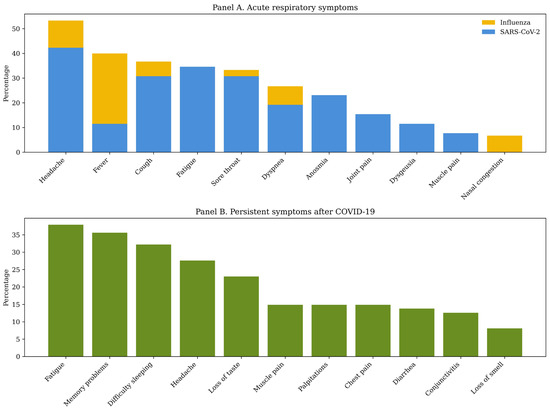
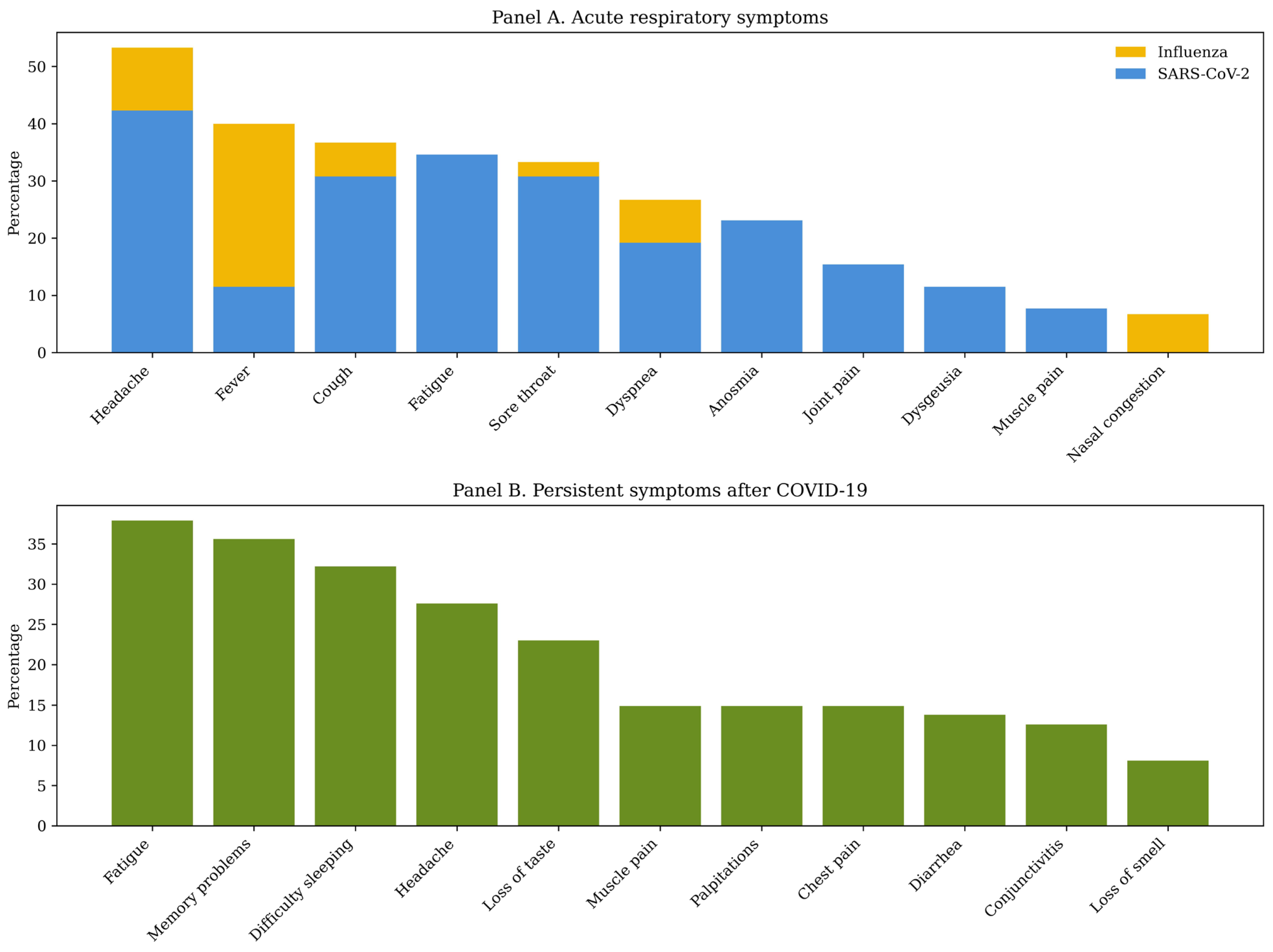
Distinct symptom profiles were observed between patients with influenza and those infected with SARS-CoV-2. Sore throat was more frequently reported in patients with influenza (40.0%) than in SARS-CoV-2 positive individuals (11.5%, p = 0.01). In contrast, anosmia (p = 0.001) and joint pain (p = 0.04) were reported at higher frequencies in the SARS-CoV-2 group (23.1% and 15.4%, respectively). Symptoms such as headache (53.3%), cough (36.7%), fever (40.0%), and nasal congestion (6.7%) were more prevalent among patients with influenza. In other symptomatic patients diagnosed with moderate COVID-19, additional manifestations including fatigue (34.6%), dysgeusia (11.5%), dyspnea (19.2%), and muscle pain (7.7%) were also commonly reported (Figure 1A).
Figure 1.
Clinical symptoms during the acute phase of infection and after recovery from COVID-19. (A) Frequency of acute respiratory symptoms reported by patients with laboratory-confirmed influenza virus infection and SARS-CoV-2 infection. Symptoms are displayed in descending order according to the maximum prevalence observed across both groups. (B) Frequency of persistent symptoms reported by individuals who had recovered from COVID-19. Symptoms are presented in descending order of prevalence. Data are expressed as percentages of affected individuals.
Among individuals who had recovered from COVID-19, persistent symptoms were frequently observed. Fatigue (37.9%), memory problems (35.6%), difficulty sleeping (32.2%), and headache (27.6%) were the most reported post-acute manifestations. Other persistent symptoms included loss of taste (23.0%), muscle pain (14.9%), palpitations (14.9%), chest pain (14.9%), and diarrhea (13.8%) (Figure 1B).
3.3. ARIs and Cytokine Expression in the Nasal Epithelium
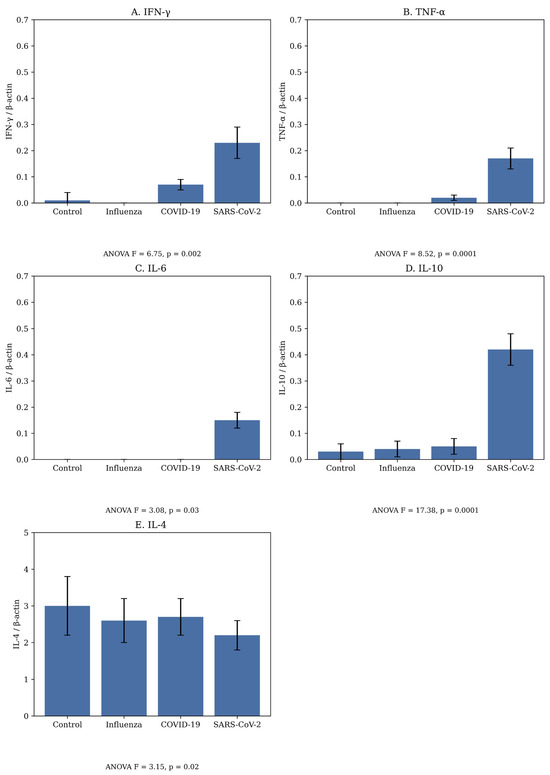
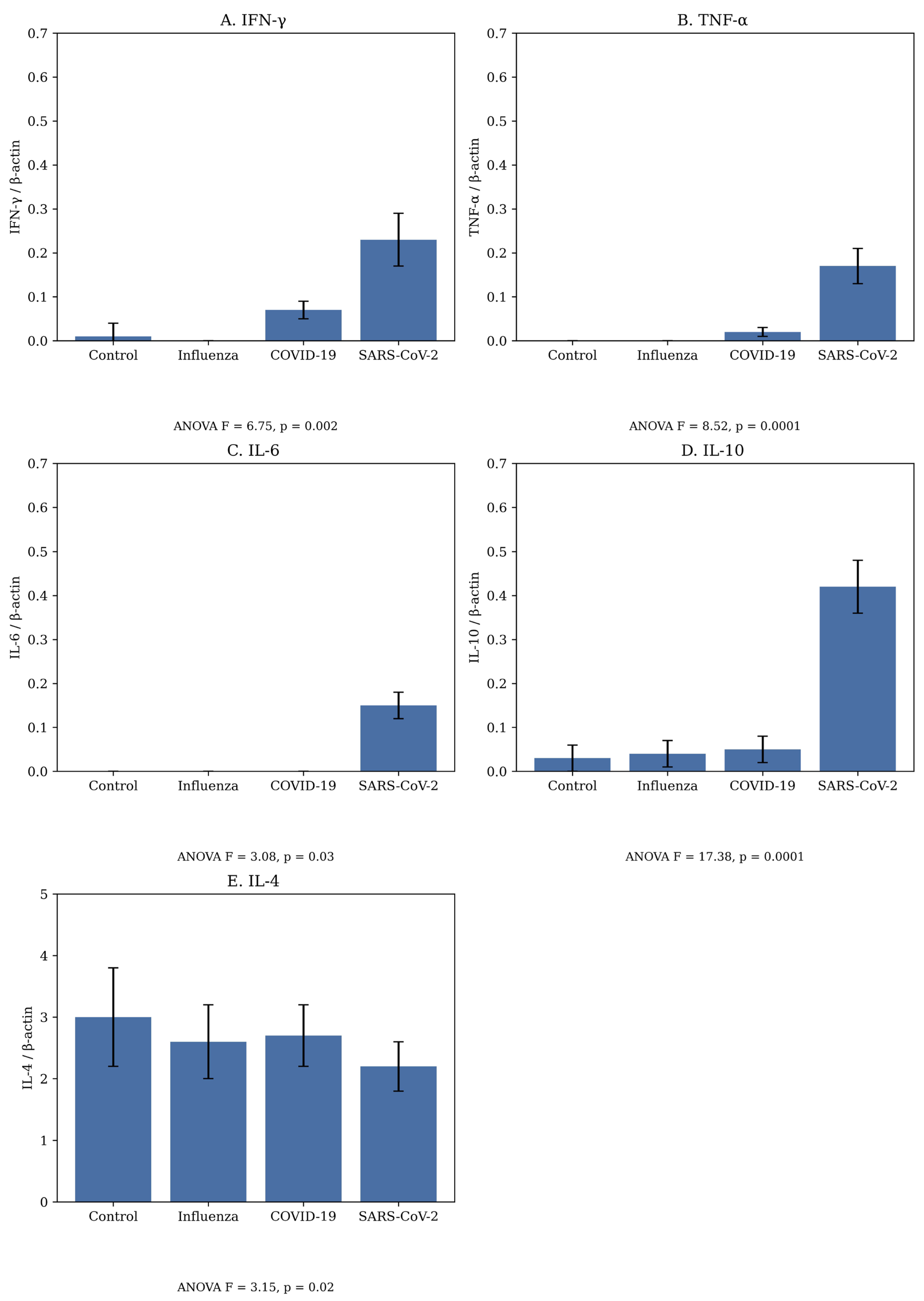
The nasal epithelium represents the primary site of viral entry, the expression of IFN-γ, TNF-α, and selected interleukins were evaluated in nasal epithelial cells and compared among study groups. Significant differences in IFN-γ expression were observed among groups (ANOVA F = 6.75, p = 0.002), with higher expression levels detected in individuals positive for SARS-CoV-2, particularly in the asymptomatic SARS-CoV-2 group.
Similarly, TNF-α expression differed significantly between groups (ANOVA F = 8.52, p = 0.0001), with the highest levels observed in the asymptomatic SARS-CoV-2 group. IL-6 expression also differed significantly among groups (ANOVA F = 3.08, p = 0.03), with increased expression observed in the asymptomatic SARS-CoV-2 group. IL-10 expression was detected across all groups; however, marked differences were identified (ANOVA F = 17.38, p = 0.0001), with the highest expression levels observed in the asymptomatic SARS-CoV-2 group. In contrast, IL-4 expression showed a distinct pattern (ANOVA F = 3.15, p = 0.02), with higher levels in the control group and lower expression in participants with influenza, symptomatic COVID-19, and asymptomatic SARS-CoV-2 infection (Figure 2).
Figure 2.
Cytokine expression in nasal epithelial cells during acute respiratory infection. Relative mRNA levels of IFN-γ, TNF-α, IL-6, IL-10, and IL-4 were quantified in controls, influenza patients, symptomatic COVID-19 patients, and asymptomatic SARS-CoV-2–positive individuals. Expression was normalized to β-actin and is shown as mean ± standard error. Differences among groups were assessed by one-way ANOVA; F and p values are indicated.
3.4. Hematological, Metabolic, and Liver Biomarkers in Patients Recovered from COVID-19
Hematological, metabolic, and liver-related biomarkers were evaluated in patients recovered from COVID-19 (n = 90) using established reference values to identify altered parameters. Overall, median hematological values were within normal reference ranges; however, a subset of individuals exhibited abnormalities. Among white blood cell (WBC) parameters, altered lymphocyte percentages were observed in 17.77% of patients, while monocyte and neutrophil percentages outside the reference range were detected in 6.55% and 4.44% of individuals, respectively. Total WBC counts were altered in 4.88% of the cohort. Regarding erythrocyte-related parameters, abnormal red blood cell (RBC) counts were identified in 12.22% of patients. Hemoglobin and hematocrit values outside the reference range were observed in 2.22% of individuals each. Alterations in erythrocyte indices were less frequent, with abnormal mean corpuscular volume (MCV) and mean corpuscular hemoglobin (MCH) values detected in 5.55% of patients, while mean corpuscular hemoglobin concentration (MCHC) was altered in 1.11%. Platelet counts outside the normal range were observed in 13.33% of participants (Table 2).
Table 2.
Hematological, metabolic, and liver-related biomarkers in patients recovered from COVID-19 (n = 90).
Assessment of glycemic and lipid metabolism revealed a high prevalence of metabolic alterations. Glycated hemoglobin (HbA1c) levels above the reference threshold were detected in 42.22% of patients, whereas elevated glucose concentrations were observed in 12.20% of individuals. With respect to the lipid profile, altered triglyceride levels were identified in 43.30% of the cohort, accompanied by abnormal very-low-density lipoprotein (VLDL) concentrations in 23.30% of patients. Reduced high-density lipoprotein (HDL) levels were detected in 18.80% of individuals, while elevated total cholesterol and low-density lipoprotein (LDL) levels were observed in 6.00% and 3.30% of patients, respectively. Phospholipid concentrations outside the reference range were identified in 20.00% of participants, whereas total lipid levels remained within normal limits in all cases (Table 2).
Regarding liver-related biomarkers, median aspartate aminotransferase (AST) and alanine aminotransferase (ALT) levels were within reference ranges, with abnormal values detected in 2.20% and 0.00% of patients, respectively. In contrast, elevated gamma-glutamyl transferase (GGT) levels were observed in 11.11% of individuals recovered from COVID-19 (Table 2).
3.5. Cytokine Expression in PBMCs of Patients Recovered from COVID-19
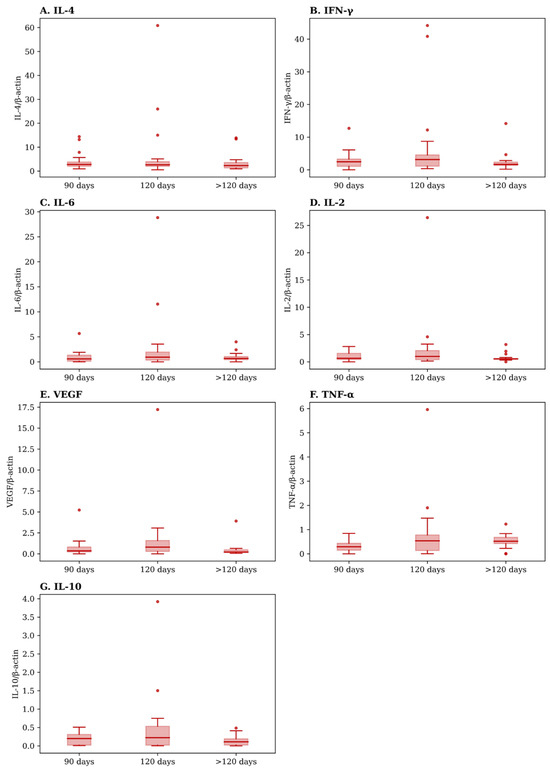
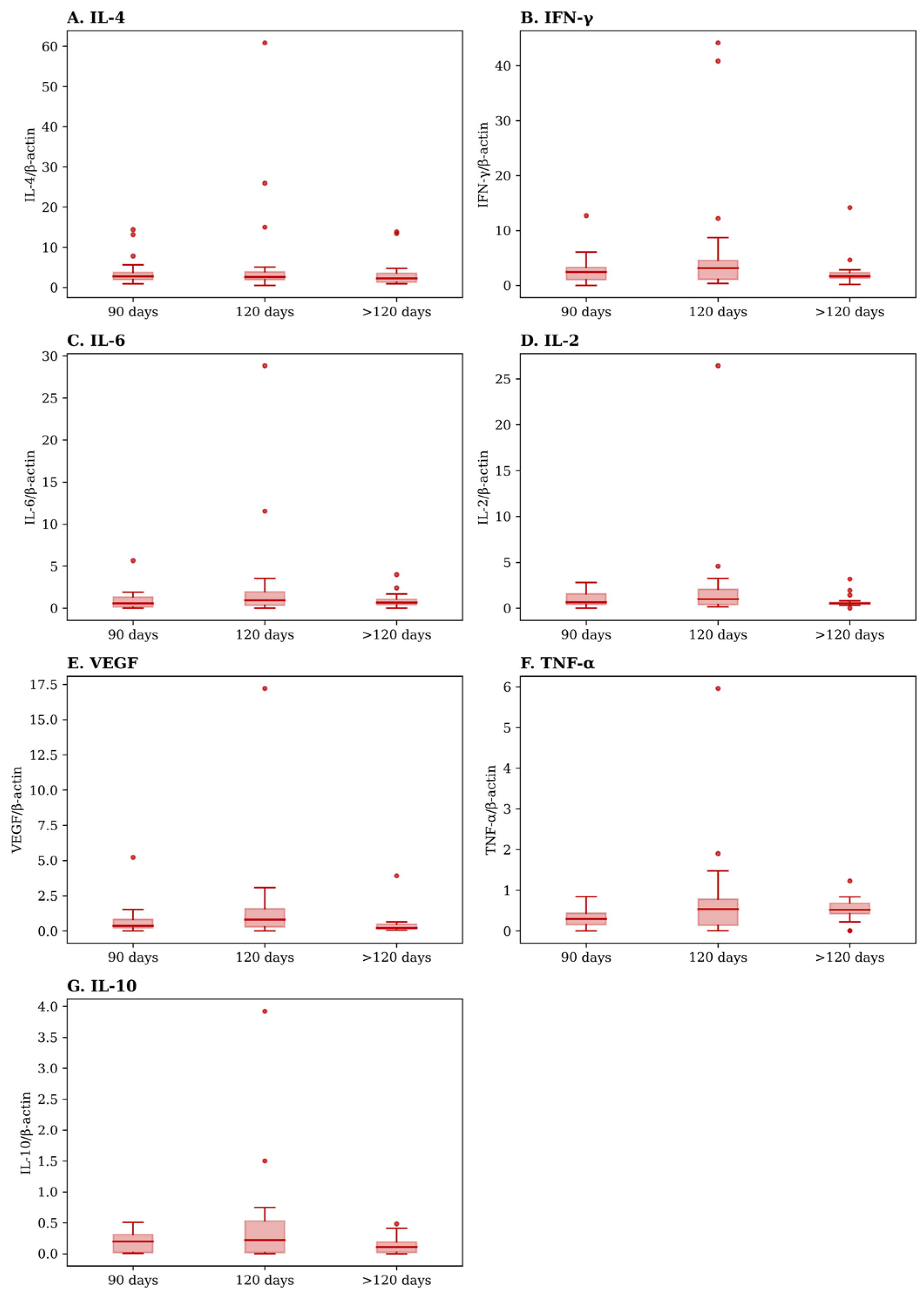
To evaluate the systemic immune response following SARS-CoV-2 infection, cytokine gene expression was assessed in PBMCs from patients recovered from COVID-19. Participants were stratified according to the time since infection into three groups: 90 days, 120 days, and >120 days post-infection.
Comparative analysis revealed a statistically significant difference in VEGF expression among groups (p = 0.03). VEGF expression was higher at 120 days after infection and decreased in individuals evaluated more than 120 days post-infection (Figure 3E). In contrast, no statistically significant differences were observed across time points for IL-4 (p = 0.51), IFN-γ (p = 0.10), IL-6 (p = 0.23), IL-2 (p = 0.24), TNF-α (p = 0.11), or IL-10 (p = 0.23) (Figure 3A–D,F,G).
Figure 3.
Cytokine gene expression in PBMCs from individuals recovered from COVID-19 according to time since infection. Relative mRNA expression levels of IL-4/β-actin, IFN-γ/β-actin, IL-6/β-actin, IL-2/β-actin, VEGF/β-actin, TNF-α/β-actin, and IL-10/β-actin were quantified in PBMCs from the recovery cohort, stratified into three groups based on time since infection: 90 days post-infection (n = 25), 120 days post-infection (n = 37), and >120 days post-infection (n = 28). Gene expression levels were normalized to β-actin and are presented as boxplots showing the median, interquartile range, and individual data points. Group comparisons were performed using the Kruskal–Wallis test, followed by Dunn’s post hoc test when appropriate; p values are indicated in the corresponding panels.
4. Discussion
4.1. Acute Symptoms and Persistence During Post-Infection Recovery
Distinct symptom profiles were observed between influenza and SARS-CoV-2 infections during the acute phase. Patients with influenza more frequently reported classical respiratory symptoms such as headache, sore throat, cough, fever, and nasal congestion, whereas SARS-CoV-2 infection was characterized by a higher prevalence of anosmia, joint pain, fatigue, dysgeusia, and dyspnea. These findings are consistent with previous reports describing differential symptom patterns between these viral infections and support the notion that SARS-CoV-2 induces a broader spectrum of neurological and systemic manifestations [21].
Importantly, a substantial proportion of individuals continued to experience persistent symptoms well beyond the acute phase [22]. Fatigue, memory impairment, sleep disturbances, and headache were the most frequently reported manifestations in the recovery cohort, with a median follow-up of approximately 105 days post-infection [23]. These findings align with the current definition of post-COVID-19 condition, which recognizes symptom persistence beyond 4–12 weeks regardless of initial disease severity. The persistence of symptoms up to and beyond 120 days post-infection underscores the prolonged impact of SARS-CoV-2 on host physiology, even among non-hospitalized individuals [24].
4.2. Role of Comorbidities in Recovery Trajectories
Comorbidities were highly prevalent in the recovery cohort, with obesity being the most frequent condition, followed by hypertension and diabetes. These comorbidities are well-established risk factors for COVID-19 severity and have also been implicated in delayed recovery and prolonged symptom persistence [25]. Excess adiposity and metabolic dysfunction are associated with chronic low-grade inflammation, immune dysregulation, and endothelial dysfunction, which may exacerbate post-infectious sequelae [26]. The high prevalence of metabolic alterations observed in this cohort suggests that pre-existing or infection-induced comorbidities may contribute to sustained systemic stress during recovery.
4.3. Local Immune Responses in the Nasal Epithelium During Acute Infection
At the primary site of viral entry, SARS-CoV-2 infection was associated with a distinct cytokine expression profile in nasal epithelial cells. Elevated expression of IFN-γ, TNF-α, IL-6, and IL-10 was particularly pronounced in asymptomatic SARS-CoV-2–positive individuals, suggesting that an early and robust local immune response may contribute to effective viral control without progression to symptomatic disease. These findings reinforce the concept that mucosal immunity plays a critical role in determining infection outcome [27]. In contrast, IL-4 expression was higher in control individuals and reduced across infected groups, indicating a shift away from anti-inflammatory or Th2-associated signaling during acute viral infection [28]. The concurrent upregulation of IL-10 alongside proinflammatory cytokines suggests the activation of regulatory mechanisms aimed at limiting excessive local inflammation and preserving epithelial integrity [29]. Together, these results highlight the importance of balanced cytokine responses at the epithelial interface in modulating disease presentation.
4.4. Persistent Metabolic and Hematological Alterations After COVID-19
Beyond immune responses, recovered COVID-19 patients exhibited a high prevalence of metabolic abnormalities, particularly elevated glycated hemoglobin, triglycerides, and VLDL levels. These alterations suggest that SARS-CoV-2 infection may induce sustained metabolic dysregulation, potentially through chronic inflammation, insulin resistance, or direct effects on pancreatic β-cell function. The persistence of these changes months after infection raises concerns regarding the long-term cardiometabolic consequences of COVID-19 [30].
Hematological parameters were largely within reference ranges; however, subsets of patients showed altered erythrocyte counts, leukocyte distributions, and platelet levels. These findings may reflect residual inflammatory or reparative processes rather than active pathology, as coagulopathy and marked hematological disturbances are more characteristic of the acute phase. Nevertheless, subtle abnormalities may contribute to ongoing symptoms such as fatigue and reduced exercise tolerance [31].
4.5. Systemic Immune Responses in PBMCs During Post-Infection Recovery
In contrast to the pronounced cytokine responses observed in the nasal epithelium during acute infection, systemic cytokine gene expression in PBMCs showed limited alterations during recovery. Most cytokines, including IFN-γ, TNF-α, IL-2, IL-4, IL-6, and IL-10, did not differ significantly across time points. However, detectable expression of these markers persisted at 90 days post-infection, indicating ongoing immune activity during early convalescence [32].
Notably, VEGF expression exhibited a transient increase at approximately 120 days post-infection, followed by a decline thereafter. This pattern suggests a time-dependent process related to endothelial activation, vascular remodeling, or tissue repair rather than sustained systemic inflammation. The attenuation of cytokine differences beyond 120 days supports the notion that, while immune activation persists during early recovery, systemic immune profiles tend to normalize over time in most individuals [33,34].
4.6. Integration of Mucosal and Systemic Immune Findings
Collectively, these findings emphasize the importance of anatomical context when interpreting immune responses to respiratory viral infections. While nasal epithelial cells displayed robust cytokine activation during acute SARS-CoV-2 infection, systemic immune responses in PBMCs were comparatively modest during recovery and diminished beyond 120 days post-infection. This dissociation suggests that local mucosal immunity may be a primary determinant of early viral control and symptom severity, whereas systemic immune alterations reflect downstream and time-limited consequences of infection.
This study provides an integrated evaluation of clinical features, immune responses, and metabolic alterations associated with influenza and SARS-CoV-2 infection across acute and post-acute phases. A major strength is the parallel assessment of cytokine gene expression in nasal epithelial cells and PBMCs, allowing comparison between local mucosal immunity and systemic immune responses. In addition, the inclusion of asymptomatic SARS-CoV-2–positive individuals and long-term follow-up of recovered COVID-19 patients enhances the understanding of immune regulation beyond acute disease.
Several limitations should be considered. The cross-sectional design precludes causal inference and longitudinal assessment at the individual level. Convenience sampling and limited subgroup sizes may restrict generalizability. Cytokine expression was measured at the transcriptional level, which may not directly reflect protein abundance or biological activity. Moreover, incomplete information on vaccination status, viral variants, and reinfections may have influenced immune and metabolic outcomes.
Future research should focus on longitudinal cohort studies incorporating repeated immune and metabolic measurements, protein-level cytokine analyses, and functional immune assays. Evaluating the impact of vaccination, reinfection, and emerging viral variants will be critical to better define the long-term immunological and metabolic consequences of SARS-CoV-2 infection.
5. Conclusions
This study shows that influenza and SARS-CoV-2 induce distinct immune responses at the nasal epithelium and are associated with differential cytokine expression patterns according to clinical presentation. In recovered COVID-19 patients, persistent symptoms and metabolic alterations were accompanied by time-dependent changes in systemic immune markers, particularly VEGF expression. Together, these findings highlight the coordinated role of mucosal and systemic immunity in respiratory viral infections and underscore the importance of long-term monitoring to understand recovery trajectories and potential chronic sequelae following COVID-19.
Supplementary Materials
The following supporting information can be downloaded at: https://www.mdpi.com/article/10.3390/covid6030038/s1, Supplementary Figure S1: cDNA synthesis workflow; Table S1: RT-qPCR probes used for cytokine gene expression analysis; Supplementary Figure S2: Cytokine gene expression analysis by RT-qPCR.
Author Contributions
Conceptualization: A.G.-Z., J.J.A.-R. and R.P.-M. Methodology: A.G.-Z., M.F.G.-D., R.P.-M. and E.H.O.-C. Validation: M.F.G.-D., R.P.-M., A.G.-Z., J.J.A.-R. and E.H.O.-C. Formal analysis: M.F.G.-D., R.P.-M. and A.G.-Z. Investigation: M.F.G.-D. and J.J.A.-R. Resources: J.J.A.-R. Data curation: A.G.-Z., M.F.G.-D. and R.P.-M. Writing—original draft preparation: M.F.G.-D. and R.P.-M. Writing—review and editing: M.F.G.-D., R.P.-M. and A.G.-Z. Supervision: R.P.-M. All authors have read and agreed to the published version of the manuscript.
Funding
This research received no external funding.
Institutional Review Board Statement
The study protocol was reviewed and approved by the Ethics Committee of the Faculty of Chemical Sciences, Juárez University of the State of Durango (Approval No. R-2021-123301538X0201-04, 26 February 2020). All procedures were conducted in accordance with the ethical principles of the Declaration of Helsinki.
Informed Consent Statement
Prior to enrollment, all participants received detailed information regarding the study objectives and procedures and pro-vided informed written consent.
Data Availability Statement
The data presented in this study are available from the corresponding author upon reasonable request. Due to ethical and privacy considerations involving human participants, the datasets are not publicly available. Access to the data may be granted for academic and research purposes following approval by the corresponding author and the relevant institutional ethics committee.
Acknowledgments
Irlanda Mel B. Sánchez Rojas and Luis Carlos Barrón Medina contributed to experimental work and data acquisition in the Laboratory of Cellular and Molecular Biology, Faculty of Chemical Sciences, Gómez Palacio Campus, Juárez University of the State of Durango. The laboratory activities were conducted under the supervision of R.P.M.
Conflicts of Interest
The authors declare no conflict of interest.
Abbreviations
The following abbreviations are used in this manuscript:
| ALT | Alanine aminotransferase |
| ANOVA | Analysis of variance |
| ARI | Acute respiratory infection |
| AST | Aspartate aminotransferase |
| BMI | Body mass index |
| CBC | Complete blood count |
| COVID-19 | Coronavirus disease 2019 |
| Ct | Cycle threshold |
| GGT | Gamma-glutamyl transferase |
| HbA1c | Glycated hemoglobin |
| HDL | High-density lipoprotein |
| IFN-γ | Interferon gamma |
| IL | Interleukin |
| LDL | Low-density lipoprotein |
| MCV | Mean corpuscular volume |
| MCH | Mean corpuscular hemoglobin |
| MCHC | Mean corpuscular hemoglobin concentration |
| PBMCs | Peripheral blood mononuclear cells |
| qPCR | Quantitative polymerase chain reaction |
| RT–qPCR | Reverse transcription quantitative polymerase chain reaction |
| SARS-CoV-2 | Severe acute respiratory syndrome coronavirus 2 |
| TNF-α | Tumor necrosis factor alpha |
| VEGF | Vascular endothelial growth factor |
| VLDL | Very-low-density lipoprotein |
| WBC | White blood cells |
References
- Bayona, O.Y.; Niederbacher, V.J. Viral respiratory infections in pediatrics: General aspects of pathophysiology, diagnosis, and selected clinical outcomes. Med. UIS 2015, 28, 133–141. [Google Scholar]
- Shi, R.; Xu, W.; Feng, L.; Ye, D.; Luo, B.; Liu, Y.; Cao, H.; Tang, L. Value of Glycemic Dispersion Index in Predicting Major Adverse Cardiovascular Events in Diabetic Patients with Concomitant Acute Coronary Syndrome. Diabetes Metab. Syndr. Obes. 2024, 17, 3433–3445. [Google Scholar] [CrossRef] [Scilit]
- Hodinka, R.L. Respiratory RNA Viruses. Microbiol. Spectr. 2016, 4, DMIH2-0028-2016. [Google Scholar] [CrossRef] [Scilit]
- Manzanares-Meza, L.D.; Medina-Contreras, O. SARS-CoV-2 and influenza: A comparative overview and treatment implications. Boletín Médico Hosp. Infant. México 2020, 77, 262–273. [Google Scholar] [CrossRef] [Scilit]
- Fodor, E.; te Velthuis, A.J.W. Structure and Function of the Influenza Virus Transcription and Replication Machinery. Cold Spring Harb. Perspect. Med. 2020, 10, a038398. [Google Scholar] [CrossRef] [Scilit]
- World Health Organization. Influenza (Seasonal). Available online: https://www.who.int/es/news-room/fact-sheets/detail/influenza-(seasonal) (accessed on 2 January 2025).
- Ye, Q.; West, A.M.V.; Silletti, S.; Corbett, K.D. Architecture and self-assembly of the SARS-CoV-2 nucleocapsid protein. Protein Sci. 2020, 29, 1890–1901. [Google Scholar] [CrossRef] [Scilit] [PubMed]
- Lima, W.G.; Brito, J.C.M.; da Cruz Nizer, W.S. Bee products as a source of promising therapeutic and chemoprophylaxis strategies against COVID-19 (SARS-CoV-2). Phytother. Res. 2021, 35, 743–750. [Google Scholar] [CrossRef] [Scilit]
- Centers for Disease Control and Prevention. Symptoms of COVID-19. Available online: https://www.cdc.gov/covid/signs-symptoms/index.html (accessed on 2 January 2025).
- Struyf, T.; Deeks, J.; Dinnes, J.; Takwoingi, Y.; Davenport, C.; Leeflang, M.; Spijker, R.; Emperador, D.; Domen, J.; Tans, A.; et al. Signs and symptoms to determine if a patient presenting in primary care or hospital outpatient settings has COVID-19. Cochrane Database Syst. Rev. 2022, 5, CD013665. [Google Scholar]
- Gobierno de México. Coronavirus (COVID-19). Available online: https://www.coronavirus.gob.mx (accessed on 3 January 2025).
- Ramesh, S.; Govindarajulu, M.; Parise, R.; Neel, L.; Shankar, T.; Patel, S.; Lowery, P.; Smith, F.; Dhanasekaran, M.; Moore, T. Emerging SARS-CoV-2 Variants: A Review of Its Mutations, Implications, and Vaccine Efficacy. Vaccines 2021, 9, 1195. [Google Scholar] [CrossRef] [Scilit] [PubMed]
- Carabelli, A.M.; Peacock, T.P.; Thorne, L.G.; Harvey, W.T.; Hughes, J. SARS-CoV-2 variant biology: Immune escape, transmission and fitness. Nat. Rev. Microbiol. 2023, 21, 162–177. [Google Scholar] [CrossRef] [Scilit] [PubMed]
- Young, M.; Crook, H.; Scott, J.; Edison, P. Covid-19: Virology, variants, and vaccines. BMJ Med. 2022, 1, e000040. [Google Scholar] [CrossRef] [Scilit]
- Tang, X.; Wu, C.; Li, X.; Song, Y.; Yao, X.; Wu, X.; Duan, Y.; Zhang, H.; Wang, Y.; Qian, Z.; et al. On the origin and continuing evolution of SARS-CoV-2. Natl. Sci. Rev. 2020, 7, 1012–1023. [Google Scholar] [CrossRef] [Scilit]
- Knoll, R.; Schultze, J.L.; Schulte-Schrepping, J. Monocytes and Macrophages in COVID-19. Front. Immunol. 2021, 12, 720109. [Google Scholar] [CrossRef] [Scilit]
- Ahmad, R.; Haque, M. Surviving the Storm: Cytokine Biosignature in SARS-CoV-2 Severity Prediction. Vaccines 2022, 10, 614. [Google Scholar] [CrossRef] [Scilit]
- Loyer, C.; Lapostolle, A.; Urbina, T.; Elabbadi, A.; Lavillegrand, J.R.; Chaigneau, T.; Simoes, C.; Dessajan, J.; Desnos, C.; Morin-Brureau, M.; et al. Impairment of neutrophil functions and homeostasis in COVID-19 patients. Crit. Care 2022, 26, 155. [Google Scholar] [CrossRef] [Scilit] [PubMed]
- Smith, N.; Goncalves, P.; Charbit, B.; Grzelak, L.; Beretta, M.; Planchais, C.; Bruel, T.; Rouilly, V.; Bondet, V.; Hadjadj, J.; et al. Distinct systemic and mucosal immune responses during acute SARS-CoV-2 infection. Nat. Immunol. 2021, 22, 1428–1439. [Google Scholar] [CrossRef] [Scilit] [PubMed]
- Dienz, O.; Rud, J.G.; Eaton, S.M.; Lanthier, P.A.; Burg, E.; Drew, A.; Bunn, J.; Suratt, B.T.; Haynes, L.; Rincon, M. Essential role of IL-6 in protection against H1N1 influenza virus by promoting neutrophil survival in the lung. Mucosal Immunol. 2012, 5, 258–266. [Google Scholar] [CrossRef] [Scilit]
- Abdelrahman, Z.; Li, M.; Wang, X. Comparative Review of SARS-CoV-2, SARS-CoV, MERS-CoV, and Influenza A Respiratory Viruses. Front. Immunol. 2020, 11, 552909. [Google Scholar] [CrossRef] [Scilit] [PubMed]
- Phetsouphanh, C.; Darley, D.R.; Wilson, D.B.; Howe, A.; Munier, C.M.L.; Patel, S.K.; Juno, J.A.; Burrell, L.M.; Kent, S.J.; Dore, G.J.; et al. Immunological dysfunction persists for 8 months following initial mild-to-moderate SARS-CoV-2 infection. Nat. Immunol. 2022, 23, 210–216. [Google Scholar] [CrossRef] [Scilit]
- Schultheiß, C.; Willscher, E.; Paschold, L.; Gottschick, C.; Klee, B.; Henkes, S.S.; Bosurgi, L.; Dutzmann, J.; Sedding, D.; Frese, T.; et al. The IL-1β, IL-6, and TNF cytokine triad is associated with post-acute sequelae of COVID-19. Cell Rep. Med. 2022, 3, 100663. [Google Scholar] [CrossRef] [Scilit]
- WHO. Post COVID-19 Condition (Long COVID). 2024. Available online: https://www.who.int (accessed on 2 January 2025).
- Yao, Q.; Ni, J.; Hu, T.T.; Cai, Z.L.; Zhao, J.H.; Xie, Q.W.; Liu, C.; Wu, Q.Q. Clinical characteristics and outcomes in coronavirus disease 2019 (COVID-19) patients with and without hypertension: A retrospective study. Rev. Cardiovasc. Med. 2020, 21, 615–625. [Google Scholar] [CrossRef] [Scilit]
- Montefusco, L.; Ben Nasr, M.; D’Addio, F.; Loretelli, C.; Rossi, A.; Pastore, I.; Daniele, G.; Abdelsalam, A.; Maestroni, A.; Dell’Acqua, M.; et al. Acute and long-term disruption of glycometabolic control after SARS-CoV-2 infection. Nat. Metab. 2021, 3, 774–785. [Google Scholar] [CrossRef] [Scilit]
- Muus, C.; Luecken, M.D.; Eraslan, G.; Sikkema, L.; Waghray, A.; Heimberg, G.; Kobayashi, Y.; Vaishnav, E.D.; Subramanian, A.; Smillie, C.; et al. Single-cell meta-analysis of SARS-CoV-2 entry genes across tissues and demographics. Nat. Med. 2021, 27, 546–559. [Google Scholar] [CrossRef] [Scilit] [PubMed]
- Noh, H.E.; Rha, M.S. Mucosal Immunity against SARS-CoV-2 in the Respiratory Tract. Pathogens 2024, 13, 113. [Google Scholar] [CrossRef] [Scilit]
- Yin, K.; Peluso, M.J.; Luo, X.; Thomas, R.; Shin, M.G.; Neidleman, J.; Andrew, A.; Young, K.C.; Ma, T.; Hoh, R.; et al. Long COVID manifests with T cell dysregulation, inflammation and an uncoordinated adaptive immune response to SARS-CoV-2. Nat. Immunol. 2024, 25, 218–225. [Google Scholar] [CrossRef] [Scilit]
- Kowalska, K.; Sabatowska, Z.; Forycka, J.; Młynarska, E.; Franczyk, B.; Rysz, J. The Influence of SARS-CoV-2 Infection on Lipid Metabolism—The Potential Use of Lipid-Lowering Agents in COVID-19 Management. Biomedicines 2022, 10, 2320. [Google Scholar] [CrossRef] [Scilit]
- Liang, J.; Liu, J.; Chen, Y.; Ye, B.; Li, N.; Wang, X.; Tang, M.; Shao, J. Characteristics of laboratory findings of COVID-19 patients with comorbid diabetes mellitus. Diabetes Res. Clin. Pract. 2020, 167, 108351. [Google Scholar] [CrossRef] [Scilit] [PubMed]
- Todorović, R.; Whitfield, J. The role of IFN-γ in SARS-CoV-2 disease. Cytokine 2021, 146, 155637. [Google Scholar] [CrossRef] [Scilit] [PubMed]
- Gómez-Carballa, A.; Pischedda, S.; Pardo-Seco, J.; Gómez-Rial, J.; Martinón-Torres, F.; Salas, A. Interferon gene expression declines over time post-COVID infection and in long COVID patients. Infect. Dis. 2025, 57, 35–48. [Google Scholar] [CrossRef] [Scilit]
- Farré, X.; Blay, N.; Iraola-Guzmán, S.; Fernández-Jiménez, F.; Alzate-Piñol, S.; Llucià-Carol, L.; Espinosa, A.; Castaño-Vinyals, G.; Moncunill, G.; Karachaliou, M.; et al. VEGFA sex-specific signature is associated with long COVID symptom persistence. BMC Med. 2025, 23, 552. [Google Scholar] [CrossRef] [Scilit]

Disclaimer/Publisher’s Note: The statements, opinions and data contained in all publications are solely those of the individual author(s) and contributor(s) and not of MDPI and/or the editor(s). MDPI and/or the editor(s) disclaim responsibility for any injury to people or property resulting from any ideas, methods, instructions or products referred to in the content. |
© 2026 by the authors. Licensee MDPI, Basel, Switzerland. This article is an open access article distributed under the terms and conditions of the Creative Commons Attribution (CC BY) license.