Review

A Short Overview: Marine Resources as Potential Interventions for the Omicron SARS-CoV-2 Variant

1
Centre for Climate Change Research, University of Toronto, ONRamp at UTE, Toronto, ON M5G 1L5, Canada
2
Department of Pharmacology and Toxicology, University of Toronto, Toronto, ON M5S 2E8, Canada
3
A.R. Environmental Solutions, ICUBE-University of Toronto Mississauga, Mississauga, ON L5L 1C6, Canada
4
Institute of Electronic and Sensor Materials, TU Bergakademie Freiberg, 09599 Freiberg, Germany
5
Center for Advanced Technology, Adam Mickiewicz University, 61614 Poznan, Poland
*
Author to whom correspondence should be addressed.
COVID 2022, 2(4), 501-512; https://doi.org/10.3390/covid2040037
Submission received: 30 January 2022 / Revised: 8 April 2022 / Accepted: 12 April 2022 / Published: 18 April 2022

Abstract

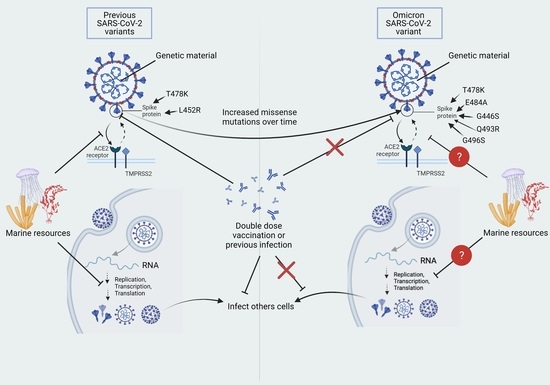
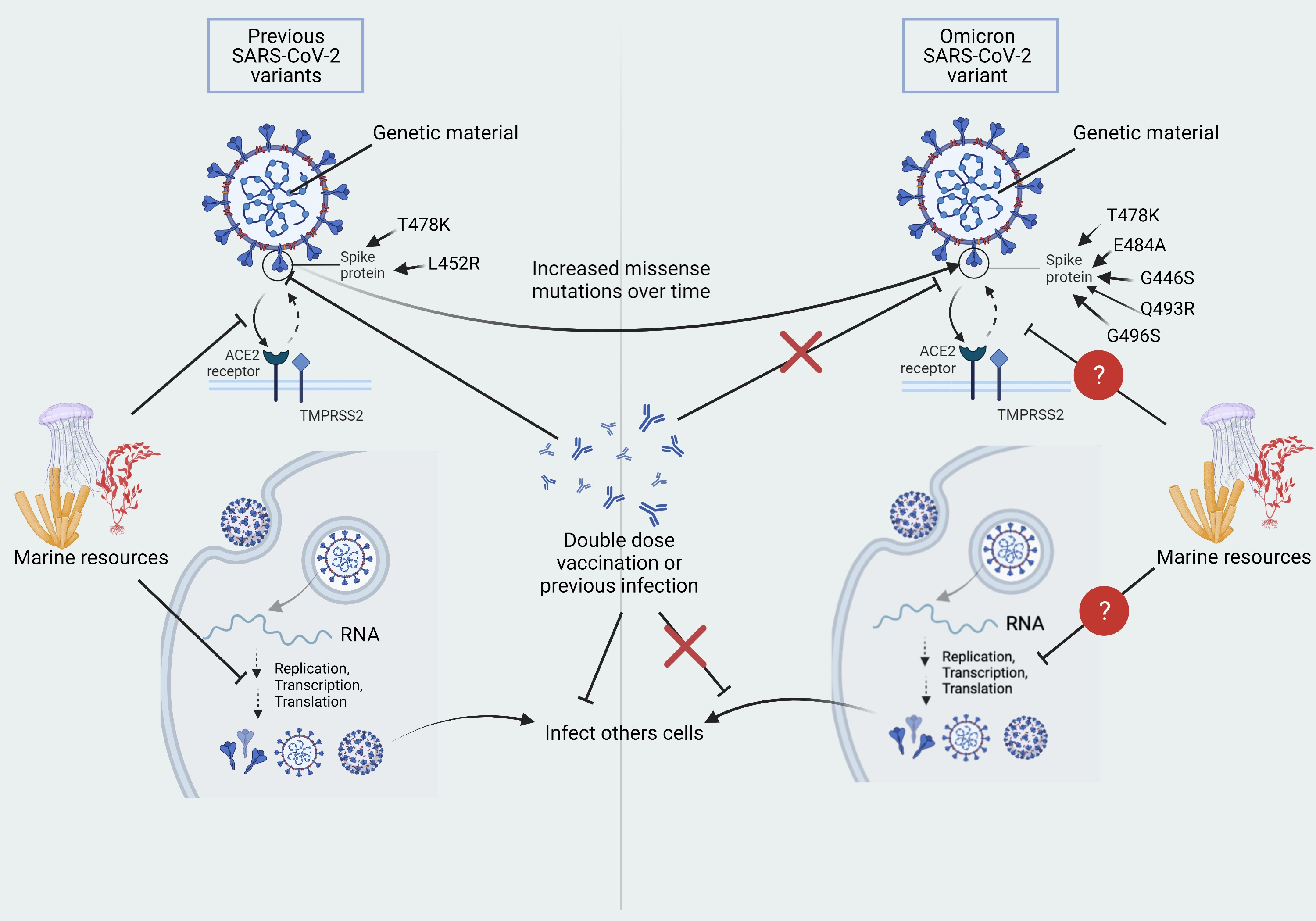
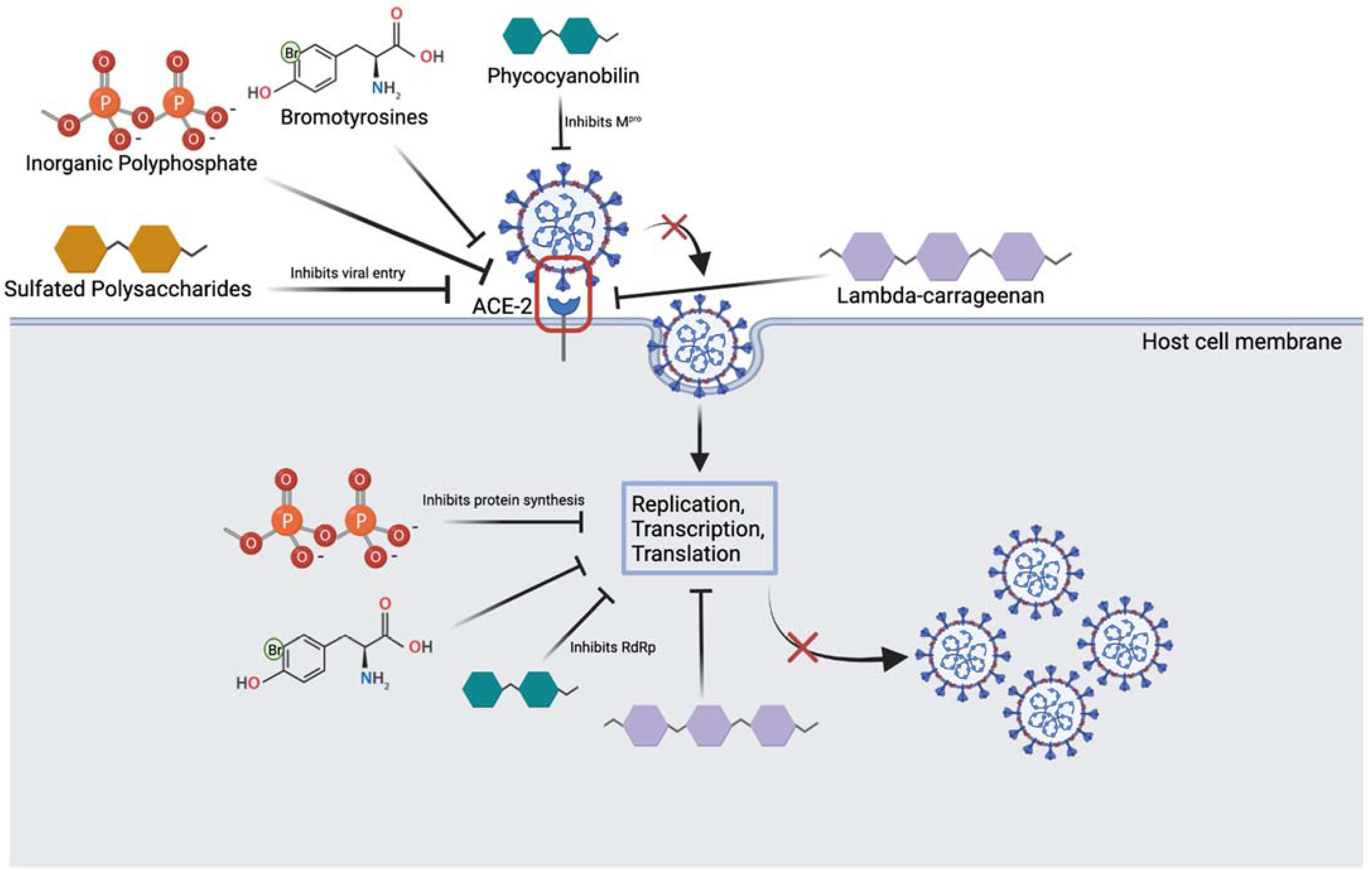
In November of 2021, a recently evolved variant of SARS-CoV-2, omicron, was discovered. In just one month, omicron has spread to more than 89 countries resulting in a rapid rise in cases and a new wave of infections. With over 46 mutations, omicron brings concern to the public health and may be able to infect at a greater capacity than previous strains. Although able to infect double vaccinated and previously infected individuals, the booster vaccine may prove promising. However, more research is needed to fully elucidate the key function of each mutation and to better develop effective drugs. Marine resources may be a promising drug discovery avenue to investigate. For example, compounds such as natural bromotyrosines and inorganic polyphosphate have been shown to have multiple mechanisms of action against viruses, like SARS-CoV-2. Through viral entry blockade and preventing viral replication and protein synthesis, metabolites produced from marine organisms may be promising against the evolving SARS-CoV-2. The present review highlights key features of the omicron SARS-CoV-2 variant, summarizes key studies and reports on omicron viral infection and examines the potential for intervention using renewable marine resources.
Keywords: SARS-CoV-2; COVID-19; Omicron; B.1.1.529; marine sponge; marine protein; anti-viral; bromotyrosine; inorganic polyphosphate SARS-CoV-2; COVID-19; Omicron; B.1.1.529; marine sponge; marine protein; anti-viral; bromotyrosine; inorganic polyphosphate
Graphical Abstract