
Article

Temporal Analysis of SARS-CoV-2 Variants during the COVID-19 Pandemic in Nepal
Department of Biotechnology, Kathmandu University, Dhulikhel P.O. Box 6250, Nepal
*
Author to whom correspondence should be addressed.
COVID 2021, 1(2), 423-434; https://doi.org/10.3390/covid1020036
Submission received: 16 September 2021 / Revised: 22 September 2021 / Accepted: 22 September 2021 / Published: 26 September 2021
(This article belongs to the Topic Burden of COVID-19 in Different Countries)

Abstract

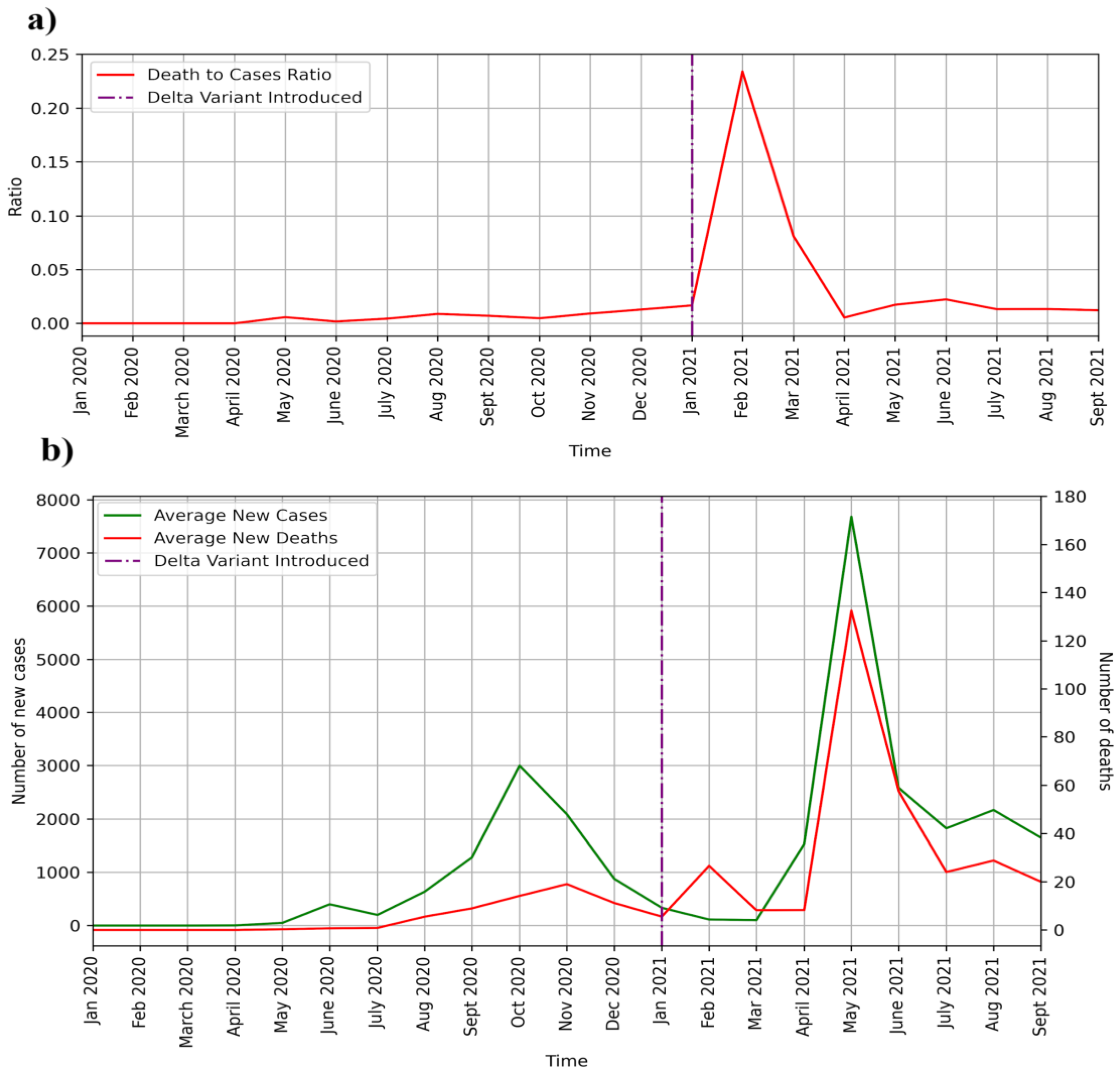
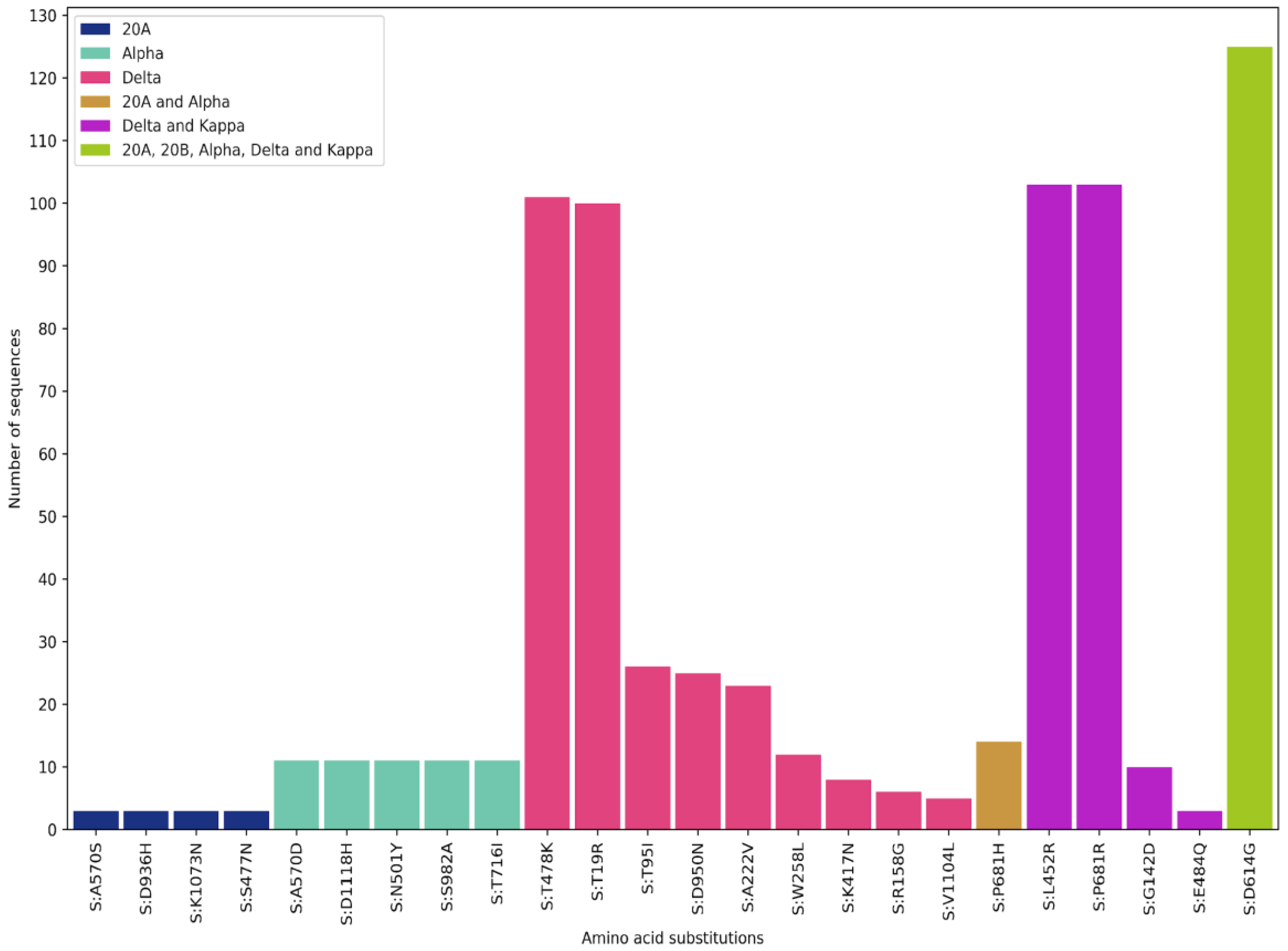
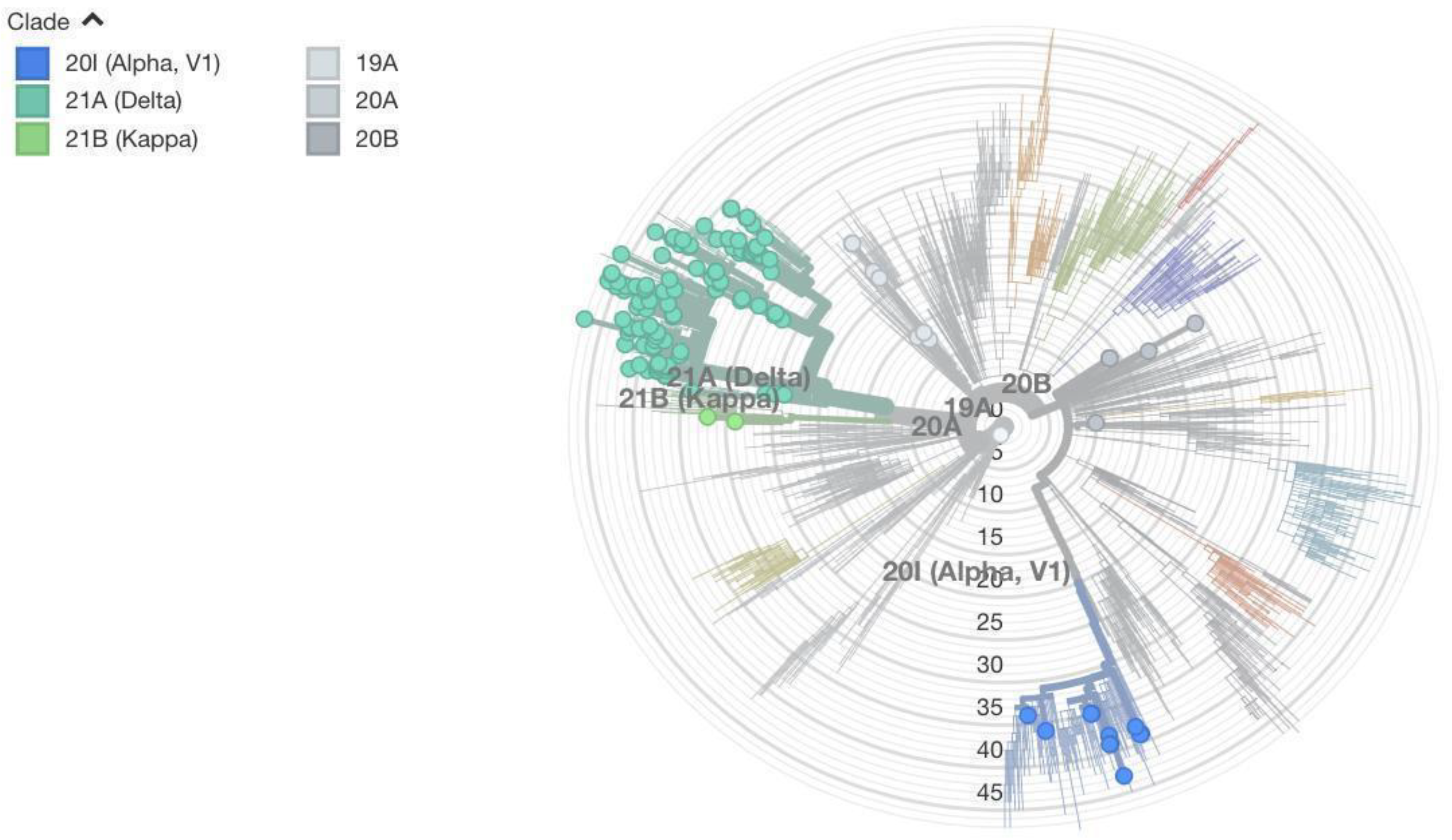
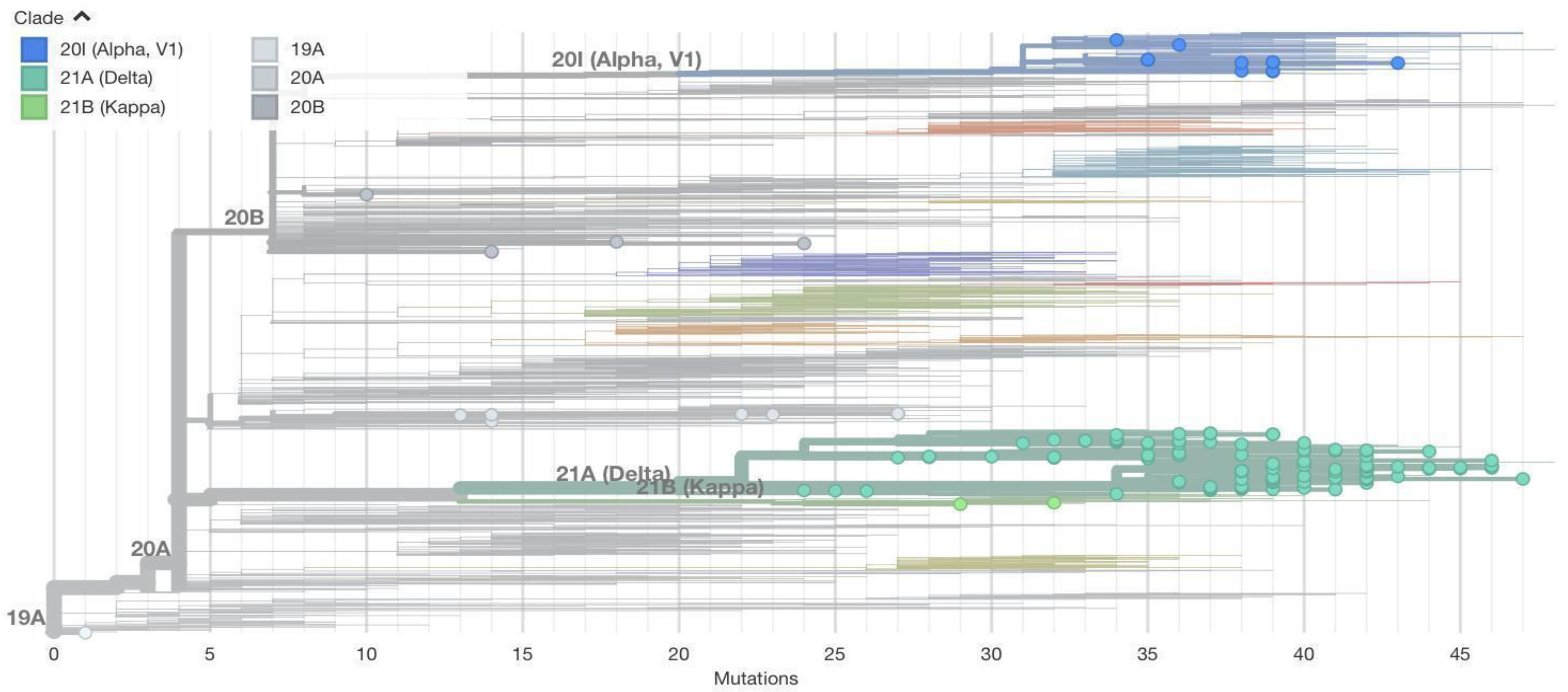
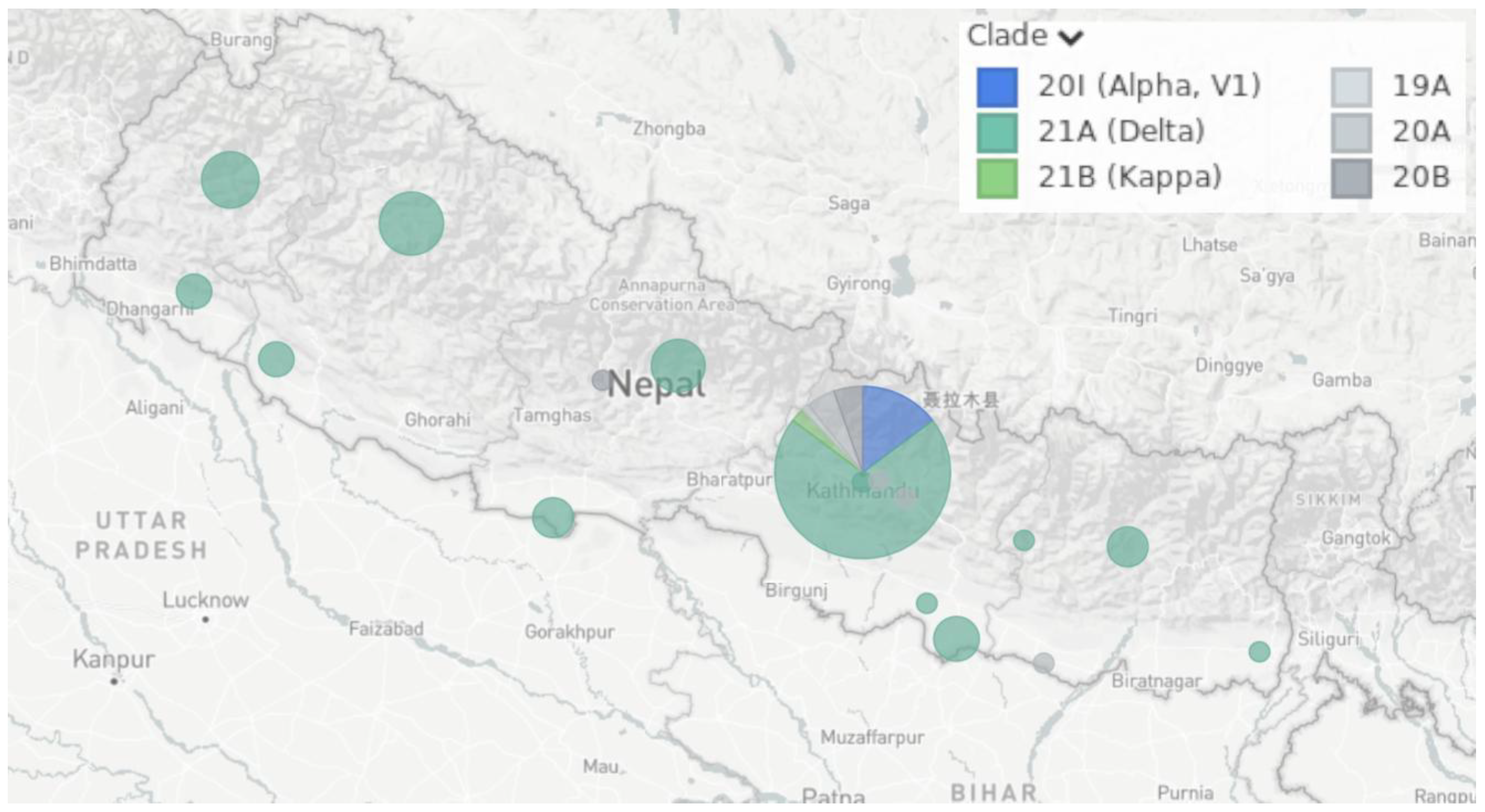
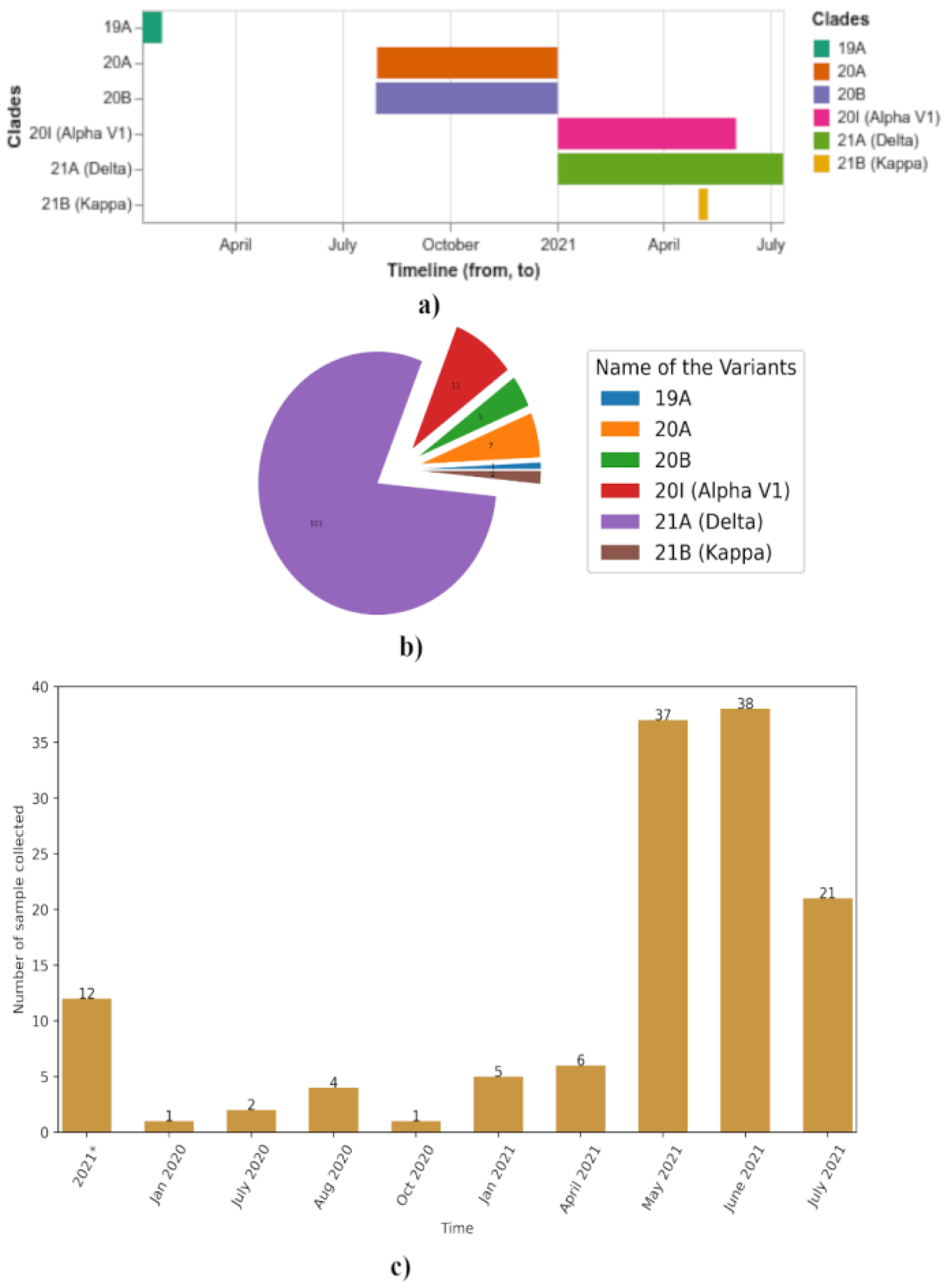
Nepal has suffered two waves of SARS-CoV-2 infections, one in the year 2020 and another in the year 2021. Although the government of Nepal keeps a detailed record of daily coronavirus infections and deaths throughout the country, and publishes the result every day, genomic surveillance of mutants in the country has lagged behind. Sequencing of COVID-19 samples has been conducted sporadically during the pandemic. From the GISAID database, 127 high-quality sequences deposited by different health authorities in Nepal were collected and analyzed. From the analysis, it can be concluded that at least two variants of concern, alpha and delta, and one variant of interest, kappa, were detected in Nepal in 2021. As in other countries, the delta variant outcompeted the kappa and alpha variants and by July 2021 had established itself as the dominant variant. It can be hypothesized that the second wave in Nepal was primarily caused by the delta variant. Further, phylogenetic tree analysis suggests cases of local transmission and global transmission of coronavirus. This analysis reveals the global nature of the disease, where variants arising in one part of the world can quickly spread to other parts of the world and can also spread through individual communities. This paper highlights a need to structure public policy of Nepal to target the delta variant since it has become the predominant variant in Nepal. A further policy suggestion is to appropriately sample and sequence genomes of SARS-CoV-2 at regular intervals to understand the dynamics of variants in the population.
Keywords: COVID-19; Nepal; variants; delta; temporal; analysis; phylogenetic tree COVID-19; Nepal; variants; delta; temporal; analysis; phylogenetic tree