Article

Depth Distribution of Microplastics Contamination and Associated Risks in Homestead Farming Soils from Industrial and Non-Industrial Regions of Bangladesh

Department of Material Science, Graduate School of Science and Engineering, Saitama University, 255 Shimo-Okubo, Sakura-ku, Saitama 338-8570, Japan
*
Author to whom correspondence should be addressed.
Micro 2026, 6(2), 42; https://doi.org/10.3390/micro6020042
Submission received: 21 April 2026 / Revised: 26 May 2026 / Accepted: 2 June 2026 / Published: 4 June 2026

Abstract

Microplastic (MP) contamination in terrestrial ecosystems has emerged as a critical environmental concern, particularly in agricultural soils influenced by anthropogenic activities. This study investigated the depth-wise distribution, polymer composition, and associated ecological and human health risks of MPs in homestead agricultural soils across four regions of Bangladesh representing different levels of industrialization: Narayanganj (old industrial), Savar (moderate industrial), Gazipur (emerging industrial), and Mymensingh (non-industrial). Soil samples were collected from two depth intervals (0–20 cm and 21–50 cm), and MPs were extracted using density separation, identified through microscopic analysis, and characterized via ATR-FTIR spectroscopy. A diverse range of MP morphologies and polymers was detected, with irregular particles and fragments dominating the composition. Polypropylene (PP), high-density polyethylene (HDPE), and polyethylene terephthalate (PET) were the most abundant polymers, reflecting widespread domestic, industrial, and agricultural plastic usage. MP abundance was consistently higher in surface soils, indicating dominant surface inputs, although vertical migration into subsoil layers was evident. Spatial analysis revealed higher MP contamination in industrial regions, particularly Narayanganj and Savar, compared to the non-industrial reference site. Ecological risk assessment indicated low risk levels across all regions; however, significant spatial variability was observed. Human exposure assessment demonstrated that inhalation was the primary pathway, followed by dermal contact and ingestion, with children exhibiting higher exposure levels than adults. Lifetime average daily dose (LADD) and carcinogenic risk estimates remained below acceptable thresholds, suggesting minimal immediate health risks. Nevertheless, the persistence, mobility, and cumulative nature of MPs highlight potential long-term concerns. Therefore, this study provides comprehensive insights into the sources, distribution, and risks of MPs in homestead agricultural soils and underscores the need for improved waste management practices, sustainable agricultural strategies, and long-term monitoring to mitigate environmental and human health impacts.

1. Introduction

Homestead agriculture, also known as homestead food production, plays a vital role in enhancing livelihoods, strengthening food security, and empowering women, particularly in developing countries facing increasing population pressure [1]. It is widely practiced in both rural and urban settings, where households cultivate vegetables, fruits, and herbs to supplement their dietary needs and income [2,3]. In recent years, homestead farming has gained new importance, alongside community gardening, as a sustainable strategy to address food security, nutrition, and environmental challenges associated with rapid population growth and urbanization [4,5]. However, increasing urban expansion has reduced available cultivable land, further intensifying reliance on homestead agricultural systems [6]. These systems, while beneficial, are increasingly exposed to environmental contaminants, including microplastics (MPs), through multiple pathways such as plastic mulching, wastewater irrigation, atmospheric deposition, sludge application, and the degradation of larger plastic debris [7].
Soils, as fundamental components of terrestrial ecosystems, are subject to growing pollution pressures, with MPs emerging as contaminants of significant concern due to their persistence, ubiquity, and potential ecological and human health impacts. Agricultural practices, including the use of plastic mulches, organic amendments, and untreated wastewater, have been identified as major sources of MPs contamination in soils [8,9]. The widespread use of plastic products in agricultural practices is largely driven by their cost-effectiveness, convenience, and broad availability [10], particularly in post-harvest management processes such as packaging, protection, handling, transportation, storage, and product presentation [11]. In industrial regions, this issue is further exacerbated by proximity to manufacturing activities, contributing additional MPs via industrial effluents and atmospheric deposition [12]. The accumulation of MPs in soil can adversely affect soil structure, microbial communities, nutrient cycling, and overall fertility [13,14]. Moreover, MPs may enter the food chain through plant uptake or surface contamination, posing potential risks to human health [8,15].
The environmental behavior of MPs in soils is highly complex and governed by factors such as particle size, shape, density, polymer composition, and soil physicochemical properties (pH, organic matter, and texture). MPs can alter soil structure, influence water retention, and interact with soil biota, thereby affecting ecosystem functioning [16,17]. Additionally, MPs can act as carriers of toxic chemicals and microorganisms, increasing the risk of their transfer into the food chain [15]. Human exposure to MPs primarily occurs through ingestion, inhalation, and dermal contact, with agricultural soils representing an important exposure pathway due to frequent human soil interactions in homestead systems. Recent studies suggest that MP exposure may be associated with inflammation, oxidative stress, and potential long-term health effects [18]. The distribution of MPs is strongly influenced by soil depth, typically exhibiting a decreasing trend with increasing depth [19]. MPs from soil surfaces into the air through processes like wind erosion, agricultural activities, and human disturbance, contributing to airborne pollution and increasing the risk of inhalation exposure and wider environmental dispersion.
MPs can progressively migrate into deeper soil layers over time [20]. Different MP particles exhibit distinct transport and retention behaviors within soil profiles. Several studies have reported depth-dependent variations in MP abundance and composition. Higher concentrations of MPs are generally observed in surface agricultural soils, whereas finer particles and fragments are often detected in deeper layers due to vertical migration processes [21]. Interestingly, mechanical harvesting has been reported to decrease MP abundance in the top and middle soil layers while increasing accumulation in the bottom layer [22]. In addition, soil texture and pore structure strongly influence MP transport, with sandy and highly porous soils facilitating deeper particle penetration compared with clay-rich soils [23]. Tillage practices also influence the abundance and distribution of MPs, as soil disturbance during tillage can increase the suspension of microplastics into the atmosphere and facilitate their transport beyond farmlands, thereby elevating potential inhalation risks for farm workers and surrounding agroecosystems [24]. Furthermore, polymer density also affects MP mobility, where low-density polymers such as polyethylene (PE) and polypropylene (PP) tend to remain concentrated near the soil surface, whereas denser polymers such as polyethylene terephthalate (PET) and polyamide (PA) exhibit greater downward migration within the soil profile [25].
In Bangladesh, where agriculture plays a central role in livelihoods, food security, and rural sustainability, understanding MP contamination in homestead agricultural soils has become increasingly important. Approximately 540 thousand hectares of agricultural land are associated with homestead farming systems, where intensive cultivation practices commonly involve the use of plastic materials, organic fertilizers, wastewater irrigation, and agrochemical inputs [26]. These practices may substantially contribute to the accumulation, transformation, and transport of MPs in agricultural soils, thereby posing potential risks to soil quality, crop productivity, environmental health, and food safety. Moreover, Bangladesh’s rapid industrialization, high population density, expanding plastic consumption, and diverse agroecosystems provide a unique environmental setting for investigating MPs dynamics in relation to varying anthropogenic pressures.
Therefore, this study aims to comprehensively assess the abundance, vertical distribution, morphological characteristics, polymer composition, and potential sources of MPs in homestead agricultural soils from industrial and non-industrial regions of Bangladesh. Particular emphasis is placed on understanding the depth penetration behavior of different MP particle types and their interactions with soil physicochemical properties that regulate transport, retention, and accumulation within soil profiles. In addition, the study evaluates potential ecological and human health risks associated with MPs exposure pathways in agricultural environments. Furthermore, the study evaluates potential ecological and human health risks associated with MPs exposure pathways. By integrating MPs’ characteristics with soil environmental processes, this research provides broader insights into the fate, mobility, and ecological implications of MPs contamination in agricultural ecosystems, contributing to the development of globally relevant knowledge and sustainable management strategies for plastic pollution in soils.

2. Materials and Methods

2.1. Description of Study Area

The study was conducted in four major regions of Bangladesh: Narayanganj, Savar, Gazipur, and Mymensingh, representing different stages and intensities of industrial development and their potential influence on homestead agricultural soils. Narayanganj is one of the oldest and most densely industrialized regions in Bangladesh, characterized by long-established textile, dyeing, and manufacturing industries. Continuous industrial activity and prolonged waste discharge have resulted in significant environmental accumulation, making it a representative site for assessing long-term industrial impacts on soil systems [27]. Savar represents a moderately industrialized region undergoing rapid urbanization and industrial expansion, including footwear industries, textile mills, printing and dyeing factories, pharmaceutical industries, soap factories, and relocated tannery operations. Gazipur is an emerging industrial hub where industrialization has expanded rapidly in recent years. The coexistence of agricultural land with newly established industries, including pharmaceuticals, ceramics, dyeing, and garment factories, makes Gazipur an ideal location for evaluating early-stage industrial impacts on soil microplastic contamination. However, inadequate management of industrial waste frequently leads to contamination of surrounding soils and water bodies, posing risks to public health and ecosystem integrity. In contrast, Mymensingh represents a non-industrial region with minimal industrial activity and relatively low anthropogenic pressure, serving as a reference site for baseline conditions. In these regions, agriculture remains a vital component of the local economy, supporting livelihoods and contributing to regional food security [28]. However, household waste is commonly deposited and allowed to decompose over extended periods, contributing to soil enrichment but also raising concerns regarding contaminant accumulation [29]. The selection of study sites was based on industrial history, density, expansion patterns, and associated environmental pressures. Accordingly, the regions were categorized as old, moderate, emerging, and non-industrial based on their development status and land-use characteristics.

2.2. Soil Sampling Procedures and Sample Preparation

A stratified sampling design was employed to capture spatial variability across gradients of industrial influence in four districts of Bangladesh. Soil samples were collected in mid-July 2024, immediately following the monsoon season, to assess post-monsoon contamination levels. Sampling was conducted using a stainless-steel hand auger at two depth intervals: 0–20 cm and 21–50 cm. A total of 24 composite samples, each with three replicates, were collected for analysis. Each composite sample comprised three subsamples randomly collected within individual homestead plots. After collection, soil samples were air-dried and homogenized, then carefully wrapped in laboratory-grade, acid-washed aluminum foil to prevent contamination during transport to Japan, where laboratory analyses were performed. This preservation and transport approach has been validated for minimizing contamination risks, and the general soil properties of the study sites have been reported in previous studies [30,31]. The soil organic matter content was determined using the Walkley–Black method. Upon arrival in Japan, the samples were re-dried, ground, and sieved through a 500 µm mesh using a vibrating shaker (AS 200 digit, Retsch GmbH, Haan, Germany). The processed samples were subsequently labeled and stored in aluminum foil until further analysis.

2.3. Pretreatment of the Soil Samples

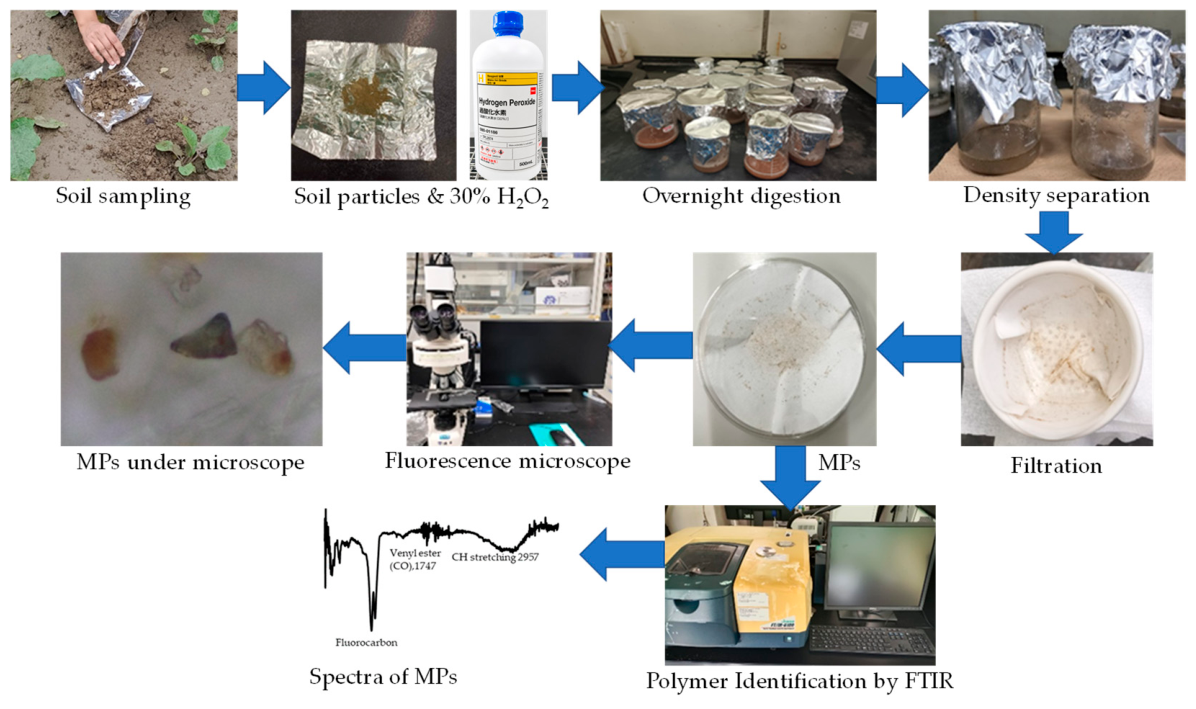
Density separation techniques were employed to isolate and characterize MPs. Dried soil samples were initially treated with 30% hydrogen peroxide (H2O2) to remove organic matter. Briefly, 20 mL of H2O2 was added to 1 g of dried soil in a 40 mL beaker and allowed to react for 12 h at 25 °C. The mixture was then filtered using filter paper with a pore size of 100 µm to remove residual H2O2. Subsequently, a saturated sodium chloride (NaCl) solution (density: 1.20 g cm−3) was added to the treated samples to facilitate density separation. The mixture was thoroughly stirred and left to stand overnight, allowing low-density plastic particles to float. After settling for 24 h, the supernatant containing floating MPs was carefully decanted and filtered through glass fiber filters (Figure 1). Finally, the collected particles were filtered using filter paper with a pore size of 5 µm for further analysis, following the method [32]. To ensure analytical accuracy and minimize contamination, reagent blanks using H2O2 and NaCl were processed alongside the samples.

2.4. Identification and Characterization of Microplastics

Particles recovered from the density separation process were examined using a fluorescence microscope (MX6300, Meiji Techno Co., Tokyo, Japan). The filtered samples were systematically analyzed under 10× magnification, and all visible particles were inspected, imaged, and counted using Pixera IN Studio software (version 3.5.2). To ensure consistency and comparability, MP abundance was normalized to the initial dry weight of sieved soil (<500 µm) used for extraction. Microplastics smaller than 5 µm were excluded due to potential loss during filtration. Each filter membrane was examined in a structured manner by dividing it into quadrants, ensuring complete coverage and minimizing counting bias. Particle identification was based on visual characteristics, including shape, size, and color. Microplastics were categorized into six morphological types: fragments, fibers/lines, films, pellets, granules, and irregular particles. Fiber-type MPs were identified by their elongated structure and high aspect ratio, whereas film-type MPs were characterized by thin, flat structures with irregular edges. Particle thickness and dimensions were estimated using a calibrated microscope scale.
For polymer identification, attenuated total reflectance-Fourier transform infrared (ATR-FTIR) spectroscopy (IR-6100, JASCO Co. Ltd., Tokyo, Japan) was employed. Spectral data were used to identify characteristic functional groups and classify MPs into specific polymer types, following the methodology [33]. The major functional groups and corresponding polymers were identified based on characteristic FTIR absorption bands. However, comparison of unknown samples with standardized plastic spectral databases would further strengthen the identification and confirmation of polymer types.

2.5. Health Risk Assessment of Microplastics

2.5.1. Assessment of Microplastic Risk Indices

The risk indices of MPs in homestead agricultural soils were calculated following the protocol described [34]. Hazard values were assigned based on the toxicity of the identified polymer types, as reported [35], and were used to derive polymer-specific hazard scores (Sj). The hazard scores assigned to the detected polymers are presented in Table 1. However, PTFE was not accessible in the analysis due to the unavailability of corresponding hazard values. Similarly, polymers such as polydimethylsiloxane (PDMS), polychloroprene, cellulose, and fibers were excluded from the risk assessment owing to insufficient toxicity data. A limitation of the present methodology is that the carcinogenic risk assessment required conversion of microplastic particle counts into estimated mass concentrations. Therefore, the calculated carcinogenic risk values should be considered semi-quantitative estimations based primarily on particle abundance rather than absolute mass-based exposure measurements.
In the following equations, pRi represents the abundance of each individual MP polymer in a given sample, while Pi and Pt denote the abundance of a specific polymer and the total polymer count, respectively. The polymer risk index (pRi) for individual samples and the overall risk index for the study area (pRarea) were calculated using Equations (1) and (2), as presented below.
pRi = ∑ (Pi/Pt × Sj)
pRarea = (pR1 × pR2 × pR3 × … × pRn)1/n

2.5.2. Estimated Average Daily Intake (EDI) of MPs

The primary exposure pathways for contaminants, including microplastics (MPs), are inhalation, ingestion, and dermal contact. The estimated average daily intake (EDI) of MPs was calculated using Equations (3)–(5), following the procedure [36]. The average daily doses (ADDs) of MPs from road dust were determined using a standard health risk assessment model, accounting for the three major exposure routes. The key parameters used in these calculations are summarized in Table 2.
A D D i n g = MPs × I n g R × E F × E D B W × A T × 10 6
A D D i n h = M P s × I n h R × E F × E D P E F × B W × A T
A D D d e r = M P s × E F × E D × S L × S A × A B S B W × A T × 10 6

2.5.3. Cancer Risk Assessment of Microplastics

Cancer risk associated with MP exposure was evaluated based on the lifetime average daily dose (LADD) and the cancer slope factor (CSF) [31]. The LADD values were estimated using Equations (6)–(8), following established methodologies [37,38]. The cancer risk (CR) was subsequently calculated by integrating LADD with the CSF, which represents the incremental lifetime probability of cancer development due to exposure to a carcinogenic substance. The CSF values applied for the major polymer types were as follows: polyethylene terephthalate (PET) = 1.02, high-density polyethylene (HDPE) = 1.02, polypropylene (PP) = 0.24, and low-density polyethylene (LDPE) = 1.02 [30]. The corresponding formulation is presented below:
L A D D i n g = M P s × E F A T × I n g R c h i l d × E D c h i l d B W c h i l d + I n g R a d u l t × E D a d u l t B W a d u l t × 10 6
L A D D i n h = M P s × E F A T × P E F × I n h R c h i l d × E D c h i l d B W c h i l d + I n h R a d u l t × E D a d u l t B W a d u l t
L A D D d e r = M P s × E F × S A × S L × A B S A T × I n g R c h i l d × E D c h i l d B W c h i l d + I n g R a d u l t × E D a d u l t B W a d u l t × 10 6
The cumulative carcinogenic risk (CCR) associated with exposure to microplastics (MPs) in street dust was estimated by integrating the carcinogenic risks from ingestion (CRingestion) and inhalation (CRinhalation). This study specifically evaluated the potential carcinogenic risks posed by dominant polymer types, including PP, PS, HDPE, LDPE, PET, PES, PA and PTFE. Based on the available cancer slope factors, ingestion and inhalation were identified as the principal exposure pathways contributing to carcinogenic risk from these polymers.
CRingestion = LADDingestion × CSFingestion
CRinhalation = LADDinhalation × CSFinhalation
CRdermal = LADDdermal × CSFdermal
CCR = ∑ CR = CRingestion + CRinhalation
Table 2. Parameters used for estimating daily intake and health risk assessment of microplastics in homestead agricultural soils.
ParameterDescription and Measurement UnitUnitsValues for ChildValues for AdultReferences
InhRInhalation ratem3/day7.6312.8[39]
PEFParticle emission factorm3/g1.36 × 1061.36 × 106[40]
IngRIngestion rateg/day0.20.1[40]
EFFrequency of exposuresdays/year180180[41]
EDDuration of exposuresYears624[38]
ATnon-cancerAverage period for non-carcinogensDaysED × 365ED × 365[38]
ATcancerAverage period for carcinogensDays70 × 36570 × 365[38]
BWBody weight averageG16,20061,800[42]
MPsNumber of MP polymersparticles/gThis study -

2.6. Quality Control

Strict quality control measures were implemented throughout sampling, processing, and analysis to minimize contamination of MPs. Soil samples were collected using a metal auger, and all handling procedures including cleaning, drying, and grinding were conducted in a plastic-free environment. Samples were stored and transported in aluminum foil to prevent external contamination. All laboratory apparatus used during analysis was free of plastic materials and was thoroughly cleaned, rinsed with ultrapure (Type 1) water, sonicated, oven-dried, and wrapped in aluminum foil prior to use. Ultrapure water was also used for the preparation of NaCl solutions and for cleaning all equipment. To further reduce contamination risk, cotton laboratory aprons and gloves were worn at all times during sample handling and analysis.
Contamination control was rigorously maintained during all analytical procedures, including sieving, digestion, density separation, filtration, transportation, identification, and characterization. Triplicate analyses were performed for each sample to ensure reproducibility and analytical precision. Blank controls (trip blanks) were included and processed alongside the samples using identical procedures including sieving, digestion, density separation, and spectroscopic analysis to detect any potential background contamination. For quantitative consistency, 5 g aliquots of sieved soil (<500 µm) were subjected to density separation. The extracted particles were filtered onto 90 mm diameter membrane filters (5 µm pore size), which were systematically examined in their entirety under 10× magnification. Each filter was divided into eight sectors to ensure complete coverage, and a minimum of 14 particles per sample were counted. Fourier Transform Infrared (FTIR) spectroscopy was calibrated using procedural blanks prior to sample analysis to ensure accurate polymer identification.

2.7. Statistical Analysis

All statistical analyses were performed using IBM SPSS Statistics (version 26), while Microsoft Excel 2013 was used for data organization and visualization. Differences among group means were evaluated using Duncan’s Multiple Range Test (DMRT) as a post hoc analysis following analysis of variance (ANOVA).

3. Results and Discussion

3.1. Morphological Characteristics of Microplastics in Soil Samples

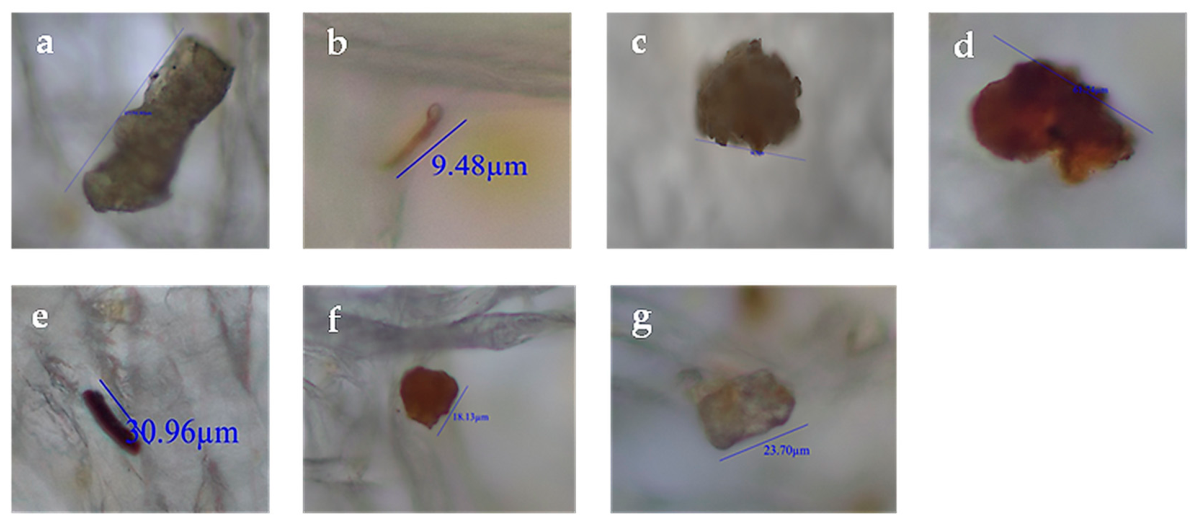
Microscopic analysis revealed a broad range of MPs morphologies in homestead agricultural soils, including irregular particles, fibers, foams, fragments, rods, pellets, and films, with sizes ranging from 9.48 to 30.96 µm (Figure 2). The predominance of irregular and fragmented particles indicates the dominance of secondary MPs generated through environmental weathering processes such as UV radiation, mechanical abrasion, and agricultural activities [14]. Fibrous MPs, likely originating from textile degradation and domestic wastewater inputs, further highlight significant anthropogenic influence and exhibit enhanced mobility within soil matrices due to their elongated structure [43]. In addition, thin film-like particles, probably derived from agricultural mulch films and plastic bags, were also detected. These films are widely reported in agricultural soils due to extensive polyethylene use, and their fragmentation is driven by mechanical disturbance and photodegradation [44,45]. Their planar structure may alter soil pore connectivity, water dynamics, and microbial interactions [46].
The occurrence of foam and film-type MPs reflects inputs from packaging materials and agricultural plastics, respectively, while pellet-shaped particles suggest localized sources of primary microplastics, such as industrial pellets from cosmetic and manufacturing activities [47,48]. Rod-shaped MPs further indicate contributions from rigid plastic residues and synthetic materials used in household and agricultural settings [49]. Collectively, these morphological variations confirm multiple contamination pathways and imply differences in environmental behavior, including transport, retention, degradation, and pollutant adsorption. The heterogeneity in shape and size may significantly influence soil physical properties, biological interactions, and the long-term fate of contaminants in homestead agricultural ecosystems.

3.2. Relative Depth Distribution of Different Microplastic Particle Types in Homestead Agricultural Soils

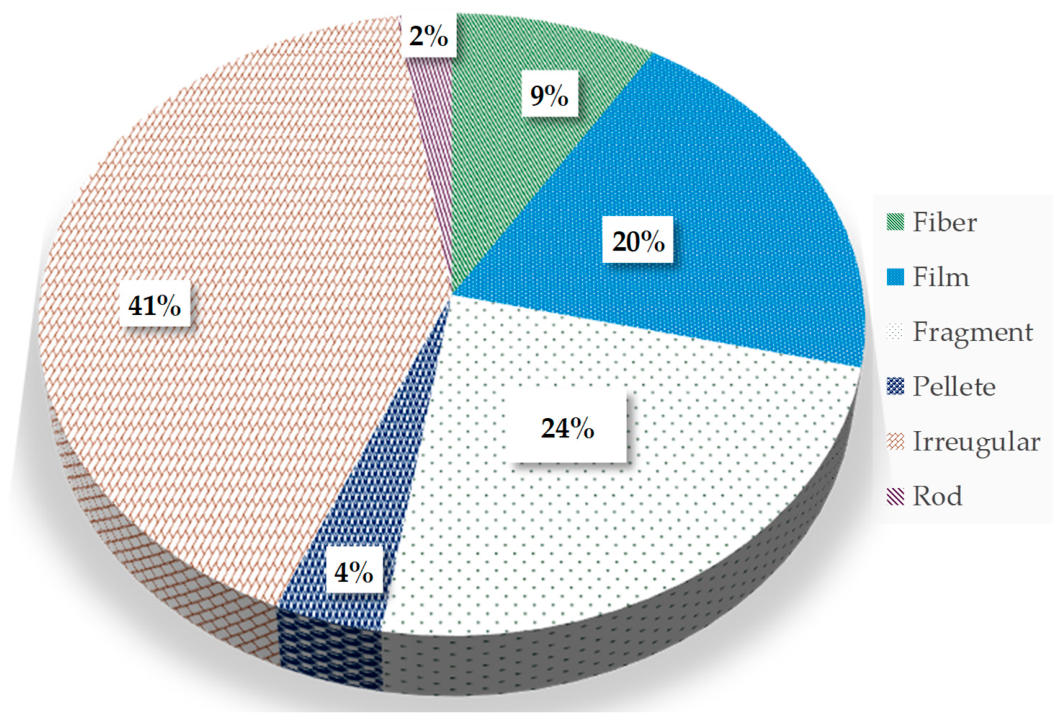
The relative distribution of MPs particle types in homestead agricultural soils demonstrates a highly heterogeneous composition, dominated by irregular particles (41.32%), followed by fragments (23.78%), films (19.82%), fibers (8.89%), pellets (3.89%), and rods (2.30%) (Figure 3). This pattern indicates the combined influence of primary plastic inputs and extensive secondary fragmentation processes within the soil environment. The predominance of irregular and fragment-type MPs suggests that most particles are secondary in origin, generated through progressive degradation of larger plastic debris under environmental stressors such as ultraviolet radiation, temperature fluctuations, and mechanical disturbance [14]. The notable proportion of film-type MPs demonstrates the significant contribution of agricultural activities, particularly the use of plastic mulching materials and packaging. In contrast, the presence of fibers reflects inputs from domestic wastewater, atmospheric deposition, and textile degradation, indicating multiple contamination pathways [50].
The relatively low abundance of pellets and rod-shaped particles suggests limited contributions from primary microplastics and specific industrial sources. Therefore, the dominance of weathered and fragmented MPs aligns with global observations, emphasizing the critical role of environmental degradation in shaping MPs’ characteristics in soils. From an ecological perspective, particle morphology strongly influences the environmental behavior of MPs [49]. Irregular and fragmented particles, with higher surface area and rough textures, may enhance the adsorption of co-contaminants and facilitate interactions with soil biota [51]. These characteristics, combined with their potential for deeper soil penetration, highlight the long-term environmental significance of MPs accumulation. Collectively, the findings underscore the need for improved plastic management strategies in agricultural systems to mitigate persistent soil contamination and associated ecological risks.

3.3. FTIR-Based Identification of Microplastic Polymers

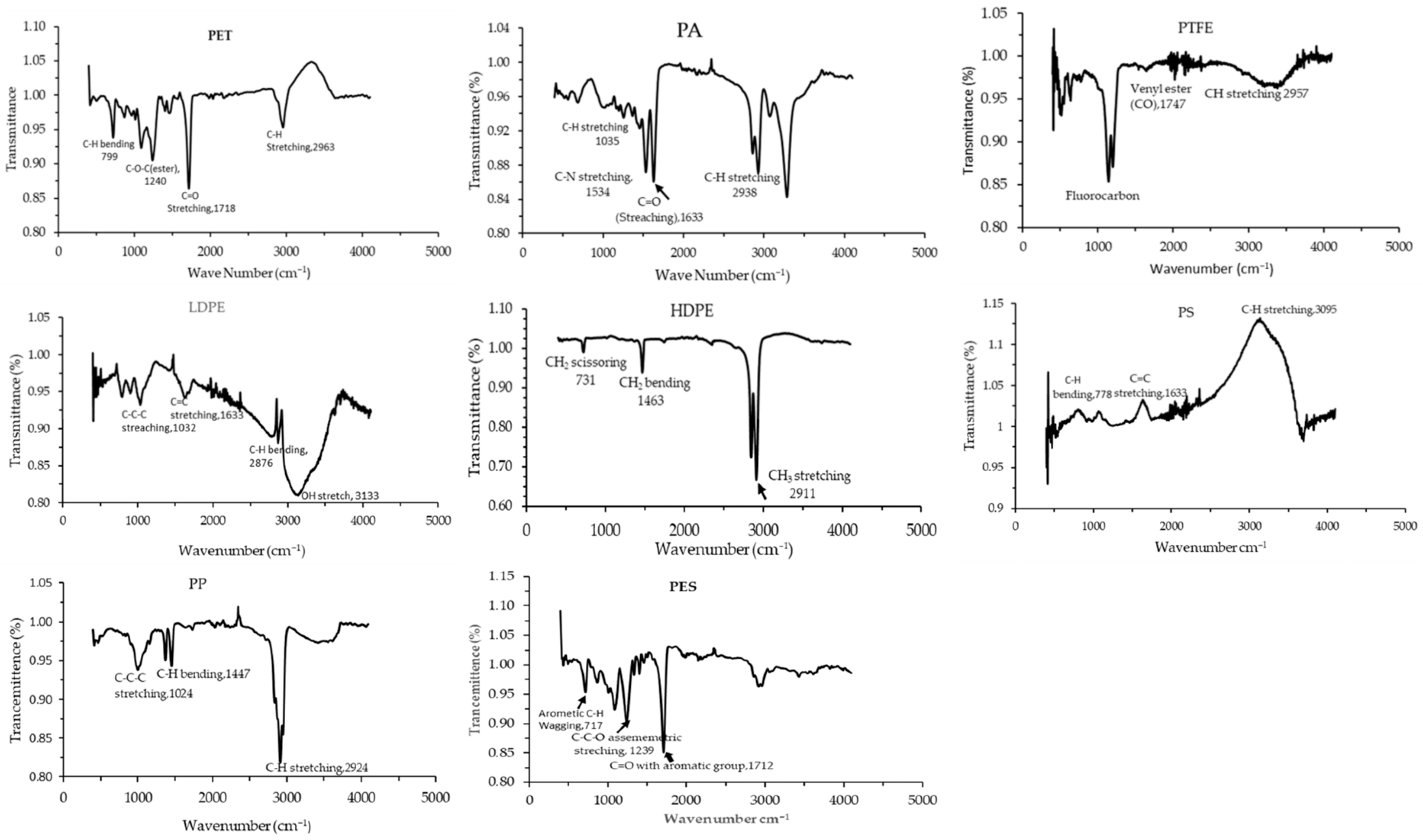
FTIR spectroscopy confirmed the presence of eight major MPs polymer types in homestead agricultural soils, including PET, PA, PTFE, LDPE, HDPE, PS, PES, and PP (Figure 4). The FTIR spectra exhibited distinct vibrational signatures corresponding to polymer-specific functional groups, enabling reliable identification and indicating their environmental occurrence and varying degrees of degradation. A comprehensive summary of the identified polymers, associated functional groups, key spectral characteristics, and potential environmental sources is presented in Table 3.
PET exhibited characteristic ester carbonyl (C=O) stretching near 1718 cm−1 and C-O-C vibrations around 1240 cm−1, indicating its origin from packaging materials and synthetic textiles. PA showed prominent amide I and II bands at 1633 and 1534 cm−1, confirming contributions from nylon-based fibers. PTFE was identified by strong fluorocarbon (C-F) absorption bands, reflecting its chemically stable structure and likely inputs from industrial materials and non-stick coatings [52]. Polyolefins (LDPE and HDPE) displayed typical aliphatic C-H stretching (2800–3000 cm−1) and CH2 bending vibrations, suggesting sources such as plastic films, containers, and agricultural inputs [48,53]. PS exhibited characteristic aromatic C-H and C=C stretching bands at 3095 and 1633 cm−1, respectively, indicative of styrene-based materials, while PP showed diagnostic C-H stretching and bending vibrations (2924 and 1447 cm−1), consistent with its widespread use in household and packaging products. PES spectra revealed aromatic and ester-related functional groups, supporting textile-derived inputs [54]. Still, a limitation of the present study is the use of a saturated NaCl solution for density separation, which may have resulted in the underestimation of high-density polymers such as PET, PES, PA, and PTFE. Therefore, the use of higher-density separation solutions, such as ZnCl2 or NaI, would likely improve the recovery efficiency and detection accuracy of high-density MP particles [55].
However, the FTIR results indicate a heterogeneous mixture of MPs polymers, dominated by polyolefins and polyester-based materials. The presence of oxidized functional groups and broadened spectral features suggests varying degrees of environmental weathering and aging of plastic particles. Nevertheless, polymer identification was performed based on characteristic FTIR absorption bands and by comparing the obtained peak positions with previously published literature (Table 3). However, comparing unknown samples with standardized reference spectral libraries would further strengthen polymer identification and improve the accuracy and reliability of polymer confirmation. These findings demonstrate that MPs contamination in homestead agricultural soils is driven by diverse anthropogenic sources, including domestic waste, agricultural plastics, and textile-derived inputs operating through multiple and interconnected contamination pathways.
Table 3. FTIR-based identification of microplastic polymers, functional groups and associated sources in homestead agricultural soils.
Polymer TypesCharacteristics Peaks (cm−1)Functional GroupsMajor SourcesReferences
PP1024, 1447, 2924C-C skeleton stretching, CH2bending, CH2 stretchingFood containers, automotive parts, household plastics[56]
HDPE731, 1463, 2842, 2911CH2 scissoring, CH2 bending, CH2 stretching, CH3 stretching Plastic pipes, detergent bottles, industrial containers[48]
LDPE1032, 1633, 2876, 3133C-C stretching, C=CPlastic films, food wraps, shopping bags[48,57]
PET799, 1240, 1718, 2963Stretching, C-H bending, OH stretchPlastic bottles for drinks and food, egg cartons, food trays[48]
PES717, 1239, 1712, 2975Aromatic C-H Wagging, C-C-O asymmetric stretching, C=O with aromatic group, C-H asymmetric stretchingSynthetic Textiles and Laundering, Agricultural Mulching Film Fragmentation[58,59]
PS778, 1633, 3095C-H bending, C=C stretching, C-H stretchingDisposable cutlery, foam packaging, insulation materials, cosmetic and pharmaceutical products[46]
PA1035, 1534, 2938, 3291C-H stretching, C-N stretching, C-N stretching, C-H stretching, N-H Stretchingmulch films, clothing, rope, irrigation pipes, fishing nets[60]
PTFE1142, 1747, 2957Fluorocarbon (CF2), Vinyl ester (CO), CH stretchingCoatings for frying pans, piping in chemical plants, semiconductor parts, automobile parts, electrical wire coating materials[48]
PP. polypropylene; HDPE. high-density polyethylene; LDPE. low-density polyethylene; PET. polyethylene terephthalate; PES. polyether sulfone; PS. polystyrene; PA. polyamide; and PTFE. polytetrafluoroethylene.

3.4. Strata-Based and Relative Distribution of Microplastic Types in Homestead Agricultural Soils

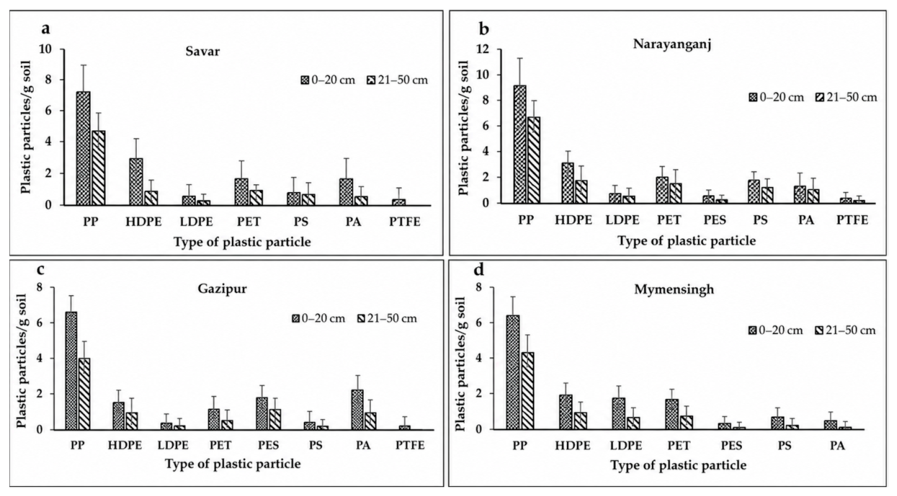
The stratified distribution of MPs in homestead agricultural soils demonstrated clear vertical variation between the surface (0–20 cm) and sub-surface (21–50 cm) layers (Figure 5). Across all study regions, MP abundance was consistently higher in the topsoil, confirming that surface deposition is the dominant input pathway, while subsurface occurrence reflects limited but measurable vertical transport. The distribution pattern was particularly higher in industrial areas (Savar, Narayanganj, and Gazipur) compared to the non-industrial region (Mymensingh), indicating the strong influence of anthropogenic activities.
Among the identified polymers, PP was the most abundant across all sites and depths, followed by HDPE and PET, emphasizing the predominance of polyolefin-based plastics. PP, HDPE, and LDPE dominated both soil layers, reflecting their widespread use, persistence, and resistance to degradation [43]. The higher concentration of PP in the surface layer suggests ongoing inputs from household and agricultural plastic waste, while its presence in deeper layers indicates partial vertical migration. The decline in MP abundance with depth is consistent with restricted transport governed by soil structure and particle characteristics [61]. However, the detection of MPs at 21–50 cm confirms that processes such as water percolation, bioturbation, and soil disturbance facilitate gradual downward movement.
Moderate levels of PET, PS, and PA across both layers suggest multiple contamination pathways, including textile-derived fibers and packaging waste, with relatively higher mobility of smaller or fibrous particles. In contrast, PES and PTFE were detected at low concentrations, likely due to their limited environmental input and polymer-specific properties [43,62]. However, the dominance of polyolefins and the concentration of MPs in the topsoil highlight the role of continuous surface deposition and environmental weathering. Thus, the dominance of polyolefins and their higher concentrations in surface soils underscore the role of continuous anthropogenic inputs and environmental fragmentation processes that raise concerns regarding their interaction with plant root systems and potential leaching into groundwater. The observed vertical distribution patterns emphasize the need for improved plastic waste management and further investigation into the long-term transport dynamics and ecological implications of MPs in agricultural soils.

3.5. Spatial Distribution and Abundance of Microplastics in Homestead Agricultural Soils

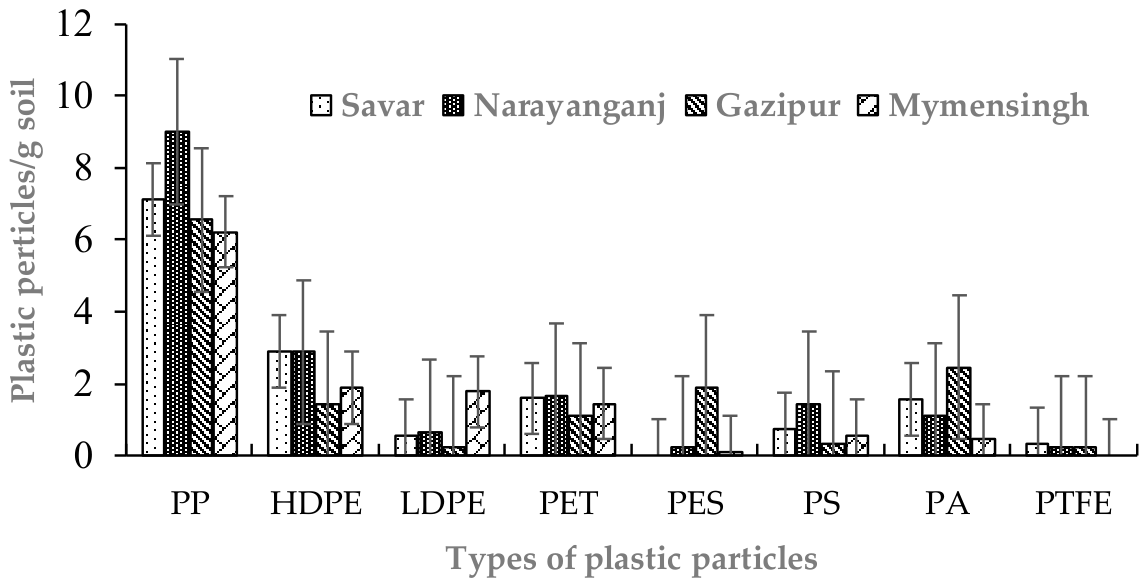
The spatial distribution of MPs across the four study regions, Savar, Narayanganj, Gazipur, and Mymensingh, revealed significant variability in both total abundance and polymer composition (Figure 6). Among these, Narayanganj exhibited the highest MPs concentrations, followed by Savar, Gazipur, and Mymensingh, indicating a strong influence of industrialization and urbanization on MPs contamination. Across all regions, PP was the dominant polymer (6–9 particles g−1), with the highest levels observed in Narayanganj, reflecting its extensive use in packaging materials and high environmental persistence. HDPE was the second most abundant polymer, particularly elevated in Savar and Narayanganj, likely due to its widespread application in industrial and household products. In contrast, LDPE showed moderate variability, with relatively higher levels in Mymensingh, suggesting the influence of agricultural plastic use even in less industrialized areas. Thus, limited use of plastic products may explain the lower occurrence of MPs in non-industrial areas. Our findings are consistent with previous reports indicating a higher abundance of MPs in agricultural soils located in industrial areas [48,63].
PET exhibited a relatively uniform distribution across all regions, indicating common sources such as beverage containers and textile fibers, as well as transport via wastewater and atmospheric deposition. Notably, PES and PA showed higher concentrations in industrial regions such as Gazipur and Savar, highlighting the contribution of the textile and garment industries. PS displayed moderate levels, particularly in Narayanganj and Gazipur, consistent with inputs from packaging materials [64]. PTFE was the least abundant polymer, reflecting its limited environmental release and specialized applications. Thus, the spatial heterogeneity of MPs underscores the combined effects of industrial activities, population density, waste management practices, and agricultural inputs. While industrial and peri-urban regions act as contamination hotspots, the presence of MPs in less impacted areas confirms the widespread nature of microplastic pollution. These findings emphasize the need for region-specific mitigation strategies, improved waste management systems, and continuous monitoring to effectively reduce MPs contamination in agricultural soils.

3.6. Correlation Analysis of Microplastic Polymers and Soil Properties

The correlation matrix (r) reveals significant relationships among MPs polymer types and selected soil physicochemical properties, indicating shared sources, co-transport mechanisms, and environmental controls on MPs distribution in homestead agricultural soils. Strong positive correlations were observed among major polyolefin and packaging-related polymers. PP showed significant correlations with HDPE (r = 0.795 *), PET (r = 0.920 **), PS (r = 0.818 *), and PTFE (r = 0.759 *), suggesting common anthropogenic sources such as household plastic waste, packaging materials, and agricultural inputs. Similarly, PET was strongly correlated with HDPE (r = 0.907 **) and PS (r = 0.746 *), indicating overlapping contamination pathways (Table 4). These results are consistent with previous studies reporting co-occurrence of consumer plastics in terrestrial environments due to improper disposal and fragmentation [65,66]. In contrast, PES exhibited negative correlations with several polymers, including HDPE (r = −0.428) and PS (r = −0.398), while PA showed significant positive correlations with PES (r = 0.738 *) and PTFE (r = 0.727 *). This pattern indicates that textile-derived MPs (PES and PA) originate from distinct sources compared to polyolefin-based plastics, likely associated with domestic wastewater, laundry effluents, and atmospheric deposition [67].
Soil properties demonstrated notable influences on MPs’ distribution. Soil organic carbon (%C) showed strong positive correlations with PP (r = 0.853 **), HDPE (r = 0.851 **), PET (r = 0.776 *), PS (r = 0.735 *), and PTFE (r = 0.868 **), suggesting preferential accumulation of MPs in carbon-rich soils due to enhanced retention by organic matter [68]. Similarly, total nitrogen (%N) was positively correlated with PTFE (r = 0.760 *) and %C (r = 0.710 *), indicating that nutrient-rich soils may facilitate MPs accumulation or co-deposition [16,17]. Additionally, soil pH showed a positive relationship with HDPE (r = 0.748 *) and PET (r = 0.656), suggesting that soil chemical conditions may influence polymer stability. In contrast, electrical conductivity (EC) exhibited weak to negative correlations with most polymers, indicating a limited role of salinity in MPs distribution [69,70]. Notably, soil organic matter (%OM) showed a strong negative correlation with PES (r = −0.789 *), implying that textile-derived MPs may be less stable or more mobile in organic-rich environments.
Thus, the results highlight the strong co-occurrence of polyolefin-based MPs associated with common anthropogenic sources, alongside the distinct behavior of textile-derived MPs governed by different input pathways. Significant correlations with soil carbon and nutrients further indicate that soil properties play a crucial role in regulating MPs accumulation, retention, and transport. These findings underscore the complexity of MPs contamination in agricultural soils and emphasize the need for integrated management strategies.

3.7. Source Identification of Microplastics in Homestead Agricultural Soils Using Principal Component Analysis

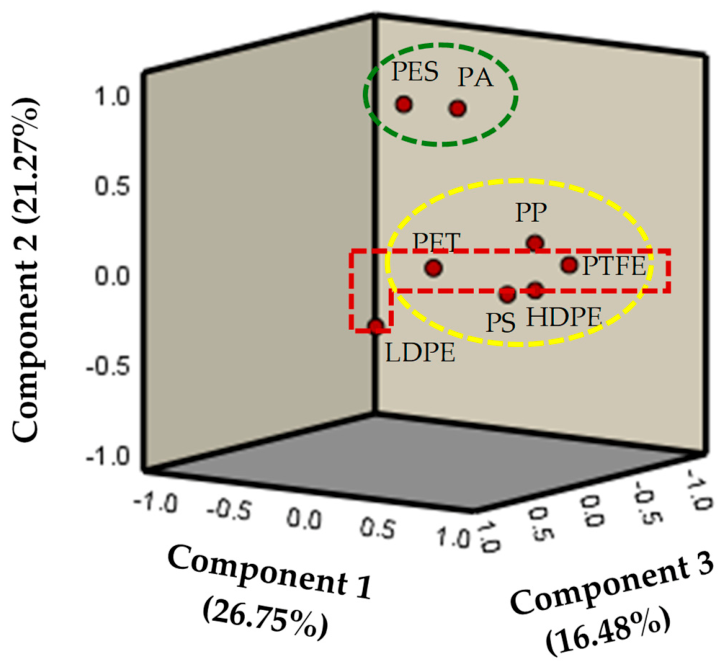
Principal component analysis (PCA) was applied to identify the distribution patterns and potential sources of MP polymers in homestead agricultural soils (Figure 7). The first three principal components (PCs) explained 64.40% of the total variance, with contributions of 26.75% (PC1), 21.17% (PC2), and 16.48% (PC3), indicating a robust multivariate structure capturing the heterogeneous distribution of MPs. The PCA ordination revealed three distinct yet partially overlapping clusters, suggesting multiple and interconnected contamination sources.
PES and PA were strongly associated along PC2, indicating a common origin primarily linked to textile-derived microplastics. These polymers are typically introduced through domestic wastewater, laundry effluents, and atmospheric deposition of synthetic fibers [71]. In contrast, a broader cluster comprising PP, HDPE, PS, and PTFE was positioned in the positive PC1–PC3 space, reflecting shared anthropogenic sources such as household plastics, packaging materials, and agricultural residues [62,72]. Their grouping suggests integrated contamination pathways, including improper waste disposal, surface runoff, and in situ degradation.
Conversely, LDPE and PET exhibited relatively distinct positions, indicating different source contributions and transport dynamics. LDPE, separated along the negative axis of PC1, is likely derived from agricultural films and plastic bags, with its distribution influenced by rapid weathering and fragmentation. The presence of LDPE and PET is associated with compost application, suggesting that the decomposition of farmyard and household waste such as polythene bags and plastic bottles contributes to their accumulation in agricultural soils [45].
Therefore, the PCA results highlight that microplastic contamination in homestead agricultural soils is multi-source and cumulative, driven by the interaction of domestic activities, agricultural practices, and waste management inefficiencies. The differentiation between textile-derived polymers and polyolefin-based plastics underscores distinct input pathways, while their partial overlap indicates that soils act as integrated sinks for diverse MP sources. These findings emphasize the need for comprehensive waste management strategies and sustainable agricultural practices to mitigate microplastic pollution.

3.8. Assessment of Human Health Risks Associated with MPs in Homestead Agricultural Soils

The carcinogenic risk assessment presented in this study is a semi-quantitative estimation based primarily on microplastic particle abundance rather than a strict mass-based exposure assessment. The actual mass, density variability, and chemical composition of individual microplastic particles were not directly determined, which may introduce uncertainty into the calculated risk values. In addition, differences in particle morphology, polymer type, and associated chemical additives may further influence the toxicological behavior of MPs in environmental and biological systems. Therefore, the estimated risk indices should be interpreted with caution and considered indicative rather than absolute measures of carcinogenic risk. Future studies incorporating direct mass quantification, polymer-specific density measurements, and chemical characterization would improve the accuracy and reliability of microplastic health risk assessments.

3.8.1. Polymer-Based Risk Indices of Microplastics

The ecological risk indices of MPs across the studied regions ranged from 4.23 to 11.53, with site-specific average values between 5.74 and 10.77 (Table 5). According to the classification [73], all sampling sites fall within the low ecological risk category, indicating that the current level of MP contamination does not pose an immediate ecological threat. However, the observed spatial and vertical variations provide important insights into the accumulation behavior and long-term environmental implications of MPs in homestead agricultural soils.
A clear spatial pattern was observed, with risk levels decreasing in the order: Gazipur (10.77) > Savar (9.72) > Narayanganj (8.96) > Mymensingh (5.74). The highest risk in Gazipur, particularly in the surface layer (11.53), likely reflects intensive industrial and textile-related activities, consistent with PCA results showing strong associations with PES and PA. Savar also exhibited relatively elevated risk due to combined urban and industrial influences, whereas Narayanganj showed moderate values, possibly due to heterogeneous waste distribution and management practices. In contrast, Mymensingh displayed the lowest risk, corresponding to reduced anthropogenic pressure. Therefore, the elevated abundance of high-risk microplastics in agricultural soils from industrial areas is of particular concern, as it may pose significant threats to local ecosystems and associated environmental health [12,57].
Risk indices generally decreased with soil depth, confirming that MPs predominantly accumulate in the topsoil, where direct inputs from agricultural plastics, domestic waste, and atmospheric deposition occur [74,75]. However, the slightly higher sub-surface value in Narayanganj suggests vertical migration, potentially driven by irrigation, soil permeability, and bioturbation, indicating that MPs can gradually penetrate deeper soil layers. Therefore, although current ecological risks appear to be low, the persistence, mobility, and cumulative accumulation of MPs indicate potential long-term environmental concerns [20]. These findings emphasize the need for proactive management strategies, including reducing plastic inputs, improving waste management, and implementing sustainable agricultural practices, alongside long-term monitoring to prevent future ecological risk escalation.

3.8.2. Estimated Daily Intake of Microplastics in the Human Body

The estimated daily intake (EDI) of MPs via ingestion, inhalation, and dermal exposure for both children and adults across the four study regions (Savar, Narayanganj, Gazipur, and Mymensingh) is summarized in Table 6. The results demonstrate clear pathway, polymer, and region-specific variations, with important implications for human exposure risk. However, inhalation was the dominant exposure pathway across all polymers and regions, followed by dermal contact, while ingestion contributed the least. Inhalation EDI values ranged from approximately 10−11 to 10−9 particles g−1 day−1, with the highest value observed for PP in Narayanganj (1.54 × 10⁻⁹ particles g−1 day−1 for children). This predominance indicates that fine and low-density MPs, particularly fibers and fragments, are readily resuspended from soil surfaces into the atmosphere, especially under dry and disturbed agricultural conditions. These findings are consistent with previous studies highlighting airborne MPs as a major exposure route in terrestrial environments [76].
In addition, dermal exposure was the second major pathway, with values ranging from 10−12 to 10−9 particles g−1 day−1. The highest dermal exposure was also associated with PP (up to 1.09 × 10⁻⁹ for children in Narayanganj), indicating enhanced particle adherence due to frequent soil contact. Although dermal penetration is limited, indirect exposure through hand-to-mouth transfer remains possible. In contrast, ingestion showed comparatively lower EDI values (10−12–10−11 particles g−1 day−1). The highest ingestion exposure was linked to PP (3.79 × 10⁻¹¹ to 5.48 × 10⁻¹¹ for children). Despite lower values, ingestion remains relevant due to incidental soil intake and potential transfer into the food chain [27]. Across all pathways, children exhibited consistently higher EDI values than adults, reflecting lower body weight and higher soil-contact behavior [77].
Regionally, Narayanganj showed the highest overall EDI values for several major polymers (notably PP and PS), indicating strong anthropogenic influence. Gazipur also exhibited elevated exposure, likely due to industrial and textile activities, whereas Savar and Mymensingh showed comparatively lower levels. Furthermore, among polymers, PP contributed the highest exposure, followed by PET, PA, and PS, reflecting their widespread use. Lower contributions from LDPE, HDPE, PES, and PTFE suggest relatively limited occurrence or mobility. Exposure to MPs via homestead agricultural soils may pose significant health risks, including respiratory disorders, gastrointestinal complications, and skin irritation [27,78]. Although current exposure levels are low, the dominance of inhalation, higher susceptibility of children, and regional variability highlight potential long-term concerns. These findings emphasize the need for improved waste management, reduced plastic inputs, and long-term monitoring to mitigate future risks in homestead agricultural systems.

3.8.3. Determination of Lifetime Average Daily Dose of Microplastics for Human Exposure

The estimated lifetime average daily dose (LADD) of MPs across ingestion, inhalation, and dermal pathways revealed pronounced differences among exposure routes, polymer types, and study locations (Table 7). However, LADD values ranged from 10−13 to 10−9 g day−1, indicating low but measurable chronic exposure to MPs in homestead agricultural environments. Across all polymers and locations, inhalation was the dominant exposure pathway, with LADD values consistently several orders of magnitude higher than ingestion and dermal contact. For instance, inhalation exposure to PP reached 5.38 × 10⁻⁹ g day−1 in Savar, significantly exceeding ingestion (~10−11) and dermal (~10−12) contributions. This trend shows the critical role of airborne microplastics, particularly fine particles and fibers, which can be resuspended from soil surfaces and inhaled. The dominance of inhalation exposure is consistent with recent global studies emphasizing atmospheric MPs as a major pathway of human exposure, especially in environments with frequent soil disturbance and dry conditions [79,80].
Among the studied polymers, PP exhibited the highest LADD values across all pathways and locations, reflecting its dominance in environmental abundance and widespread use. High inhalation exposure to PP suggests that its fragmented particles are easily aerosolized and transported [27]. HDPE and PET also showed substantial LADD values, particularly via inhalation, indicating their significant contribution to overall MP exposure [81]. These polymers are commonly associated with packaging materials and domestic waste, reinforcing the role of anthropogenic activities in exposure risks.
Spatial differences in LADD values were evident across the study regions [82]. Savar consistently exhibited the highest exposure levels, particularly for PP, HDPE, and PET, followed by Narayanganj and Gazipur. This pattern corresponds with higher MPs concentrations and industrial activities in these regions [57,64]. Mymensingh showed comparatively lower LADD values, consistent with its lower anthropogenic pressure and reduced MPs contamination levels. However, the presence of measurable LADD across all polymers and pathways indicates that MPs’ exposure is not limited to industrialized areas but is widespread across different land-use systems. Although current exposure levels remain low, the persistence and cumulative nature of MPs highlight the need for long-term monitoring and mitigation strategies to minimize potential health risks.

3.8.4. Assessment of Carcinogenic Risks Associated with Microplastics Pollution

The estimated carcinogenic risks associated with MPs exposure in homestead agricultural soils were found to be in the range of 10−10 to 10−9, with total cumulative risks varying from 8.43 × 10⁻¹⁰ to 5.03 × 10⁻⁹ across the studied regions (Table 8). These values are well below the acceptable risk threshold of 1.0 × 10⁻⁶, indicating that the current levels of MP exposure do not pose significant carcinogenic risks to human health [83] USEPA 2005. Among individual polymers, HDPE contributed the highest carcinogenic risk, particularly in Savar (2.07 × 10⁻⁹), followed by PP (1.30 × 10⁻⁹) and PET (1.24 × 10⁻⁹). This trend likely reflects the higher abundance, persistence, and exposure contribution of these polymers in homestead agricultural soils, primarily originating from common sources such as food containers, household plastics, plastic pipes, detergent bottles, industrial containers, beverage bottles, egg cartons, and food trays [48,56]. In contrast, LDPE exhibited the lowest risk values across all regions, with the minimum observed in Gazipur (4.35 × 10⁻¹¹), suggesting lower environmental presence or reduced bioavailability.
Regionally, the elevated risk in Savar is consistent with stronger anthropogenic influence, including urbanization and industrial activities, which likely increase MPs’ input and human exposure. Narayanganj also showed relatively higher risks, reflecting similar pressures. In contrast, Gazipur, despite its industrial background, recorded the lowest cumulative risk, possibly due to differences in polymer composition, dispersion, and environmental dynamics [28,57]. Mymensingh, characterized by lower human activity, exhibited comparatively low and stable risk levels. However, the results indicate that polymer type and regional anthropogenic intensity are key determinants of carcinogenic risk. Although current risk levels are within safe limits, the persistent and cumulative nature of MPs suggests that continuous monitoring and improved waste management strategies are essential to prevent future risk escalation.

3.9. Human Exposure Pathways of Microplastics in Homestead Agricultural Soils

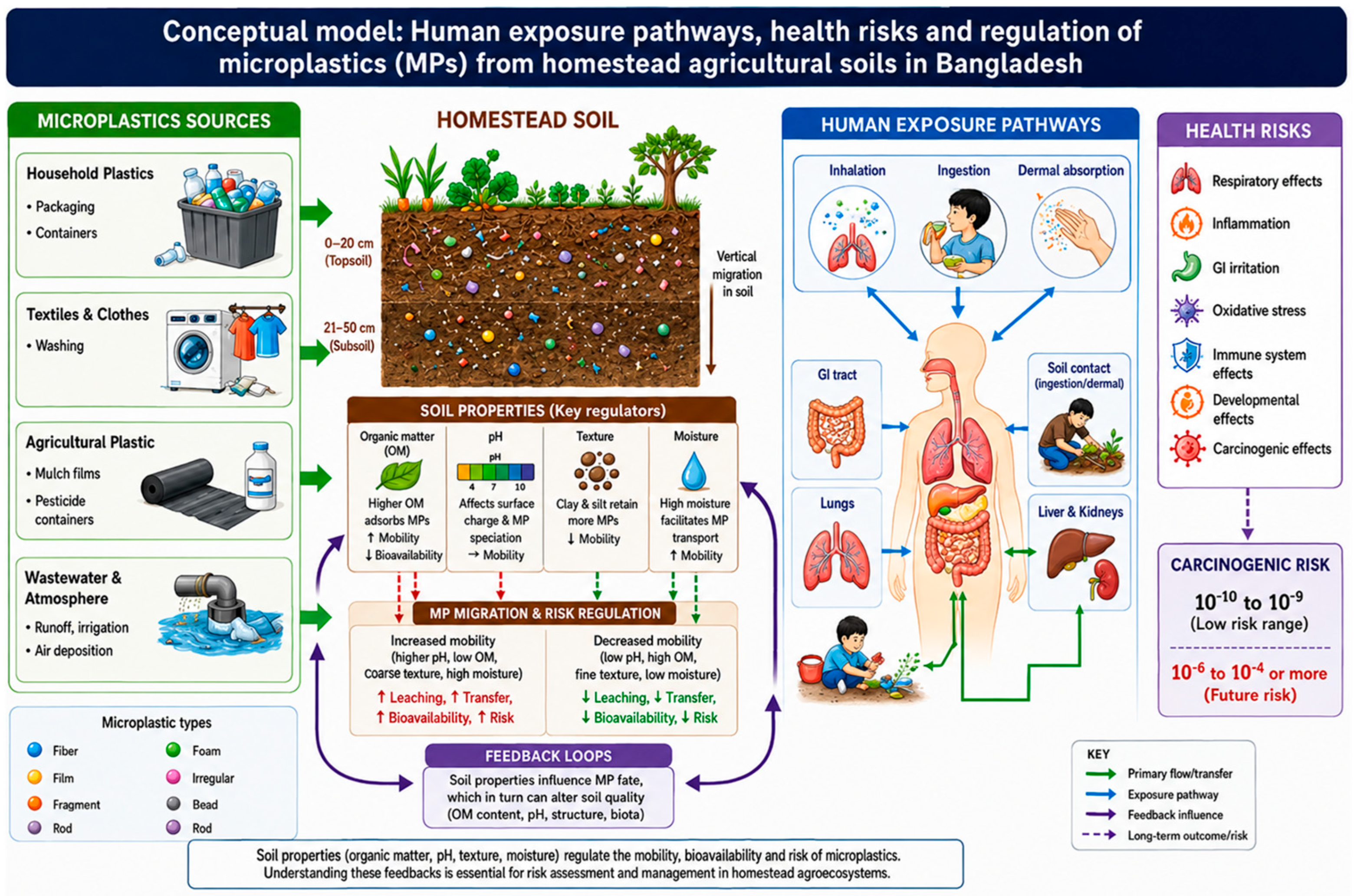
The conceptual framework illustrates the integrated pathways linking MPs sources, environmental transport, human exposure routes, and potential health effects in homestead agricultural systems (Figure 8). The model provides that MPs originate from multiple anthropogenic sources, including household plastic waste, textile fibers, agricultural plastics, and wastewater inputs, which are subsequently transported into soil systems via irrigation, surface runoff, and air deposition, leading to their accumulation primarily in the topsoil (0–20 cm), followed by gradual vertical migration into subsoil layers (21–50 cm) [84,85].
In contrast, MPs accumulated in homestead agricultural soils undergo fragmentation, forming diverse particle types (fibers, films, fragments, and irregular shapes) that re-enter the human environment via inhalation, ingestion, and dermal contact, with inhalation identified as the dominant pathway [76]. Once internalized, MPs may translocate to organs such as the lungs, gastrointestinal tract, liver, and kidneys, potentially causing adverse effects including inflammation, oxidative stress, immune disruption, and developmental impacts [86,87]. The estimated carcinogenic risk (10−10–10−9) remains well below the accepted threshold, whereas values between 10−6 and 10−4 are generally considered indicative of potential risk, and values above 10−4 denote high risk [38]. Although current exposure levels suggest negligible immediate carcinogenic risk, the persistence and cumulative nature of MPs necessitate long-term monitoring and improved management strategies to minimize environmental contamination and associated human health risks.

4. Conclusions

This study provides a comprehensive assessment of MPs contamination, distribution, sources, and associated ecological and human health risks in homestead agricultural soils from industrial and non-industrial regions of Bangladesh. The results confirmed the ubiquitous presence of MPs in all study areas, with significantly higher abundance in industrial regions such as Savar and Narayanganj compared with comparatively lower contamination levels in Mymensingh, indicating the strong influence of anthropogenic and industrial activities on MPs accumulation.
Morphological analysis demonstrated the dominance of irregular particles and fragments, suggesting that most MPs were secondary particles generated through environmental weathering and degradation of larger plastic debris. Polymer characterization identified PP, HDPE, and LDPE as the dominant polymers, followed by PET, PA, PS, PES, and PTFE, indicating multiple contamination sources including packaging materials, agricultural plastics, textile fibers, domestic waste, and industrial emissions. Strong correlations among polyolefin-based polymers suggest common anthropogenic origins, whereas textile-associated polymers formed distinct clusters in PCA and hierarchical analyses, indicating separate transport pathways and environmental behavior.
The vertical distribution patterns revealed significantly greater MPs accumulation in surface soils (0–20 cm), confirming topsoil as the major deposition and retention zone. However, the detection of MPs in subsurface layers (21–50 cm) demonstrates active vertical migration within soil profiles. The depth penetration behavior varied according to particle morphology, polymer density, and soil properties. Fibers and lightweight films tended to remain concentrated in upper layers because of entanglement with organic matter and lower settling velocity, whereas smaller fragments and dense irregular particles showed greater downward transport into deeper soil horizons. These findings suggest that MPs’ mobility is strongly regulated by particle size, shape, density, pore structure, irrigation practices, and soil physicochemical characteristics. However, significant correlations between MPs abundance and soil organic carbon, nitrogen content, and pH further indicate that soil properties play an important role in controlling MPs retention, aggregation, and migration. Soils with higher organic matter likely enhance adsorption and retention of fibrous and fragmented MPs, whereas lower organic content and porous soil structures may facilitate deeper penetration and mobility. The observed relationships between particle type, depth distribution, color variation, and polymer composition indicate that certain MPs transport and accumulation patterns may be universally applicable across agricultural ecosystems exposed to continuous anthropogenic pressure.
Human health risk assessment showed that current ecological and carcinogenic risks remain within acceptable limits. The EDI and LADD values were relatively low across all exposure pathways. However, inhalation was identified as the dominant exposure route, particularly for fine fibers and airborne fragments, indicating greater vulnerability for children and individuals exposed to frequent soil disturbance. Although immediate health risks appear minimal, the persistence, cumulative accumulation, and long-term environmental behavior of MPs raise concerns regarding future ecological and human health impacts. Therefore, these findings provide valuable baseline information for Bangladesh and contribute to the broader global understanding of MPs dynamics in homestead agricultural ecosystems.


Author Contributions

Conceptualization, methodology, formal analysis, wrote first draft of the manuscript, A.S.; supervision, investigation, funding acquisition, review and editing, Q.W.; supervision, investigation, review and editing, M.S.; methodology, data curation, C.E.E.; writing—review and editing, M.S.R.; investigation, review and editing, W.W.; resources, A.C.N. All authors have read and agreed to the published version of the manuscript.

Funding

This study was partially supported by the Grant-in-Aid for Scientific Research (KAKENHI), including Special Funds for Innovative Area Research and Basic Research (Category B), provided by the Ministry of Education, Culture, Sports, Science and Technology (MEXT), Japan. The funding was awarded under grant numbers 22H03747 (FY2022–FY2024), 24K20941 (FY2024–FY2026), and 25K03267 (FY2025–FY2028).

Institutional Review Board Statement

Not applicable.

Informed Consent Statement

Not applicable.

Data Availability Statement

All data generated or analyzed during this study are included in this published article. Additional information and materials can be obtained from the corresponding author upon reasonable request.

Acknowledgments

The authors gratefully acknowledge the Soil Science Division, Bangladesh Institute of Nuclear Agriculture (BINA), Mymensingh-2202, Bangladesh, for their support in soil sample collection and preparation.

Conflicts of Interest

The authors declare no conflicts of interest.

References

  1. Issahaku, G.; Kornher, L.; Islam, A.H.S.; Abdul-Rahaman, A. Heterogeneous impacts of home-gardening on household food and nutrition security in Rwanda. Food Secur. 2023, 15, 731–750. [Google Scholar] [CrossRef]
  2. Jeeceelee, L.; Sahoo, U.K. Mizo homegardens promote biodiversity conservation, nutritional security and environmental development in northeast India. Acta Ecol. Sin. 2022, 42, 520–528. [Google Scholar] [CrossRef]
  3. Ruba, U.B.; Talucder, M.S. Potentiality of homestead agroforestry for achieving sustainable development goals: Bangladesh perspectives. Heliyon 2023, 9, e14541. [Google Scholar] [CrossRef]
  4. Prah, S.; Asante, B.O.; Ng’ombe, J.N.; Masasi, J. Green gardens for greener lives: Heterogeneous impacts of climate-smart home gardening on food security and quality of life in Ghana. Sustain. Futures 2026, 11, 101850. [Google Scholar] [CrossRef]
  5. Baliki, G.; Weiffen, D.; Moiles, G.; Brück, T. Home garden interventions in crisis and emergency settings. Front. Sustain. Food Syst. 2023, 7, 1138558. [Google Scholar] [CrossRef]
  6. Rustiadi, E.; Pravitasari, A.E.; Setiawan, Y.; Mulya, S.P.; Pribadi, D.O.; Tsutsumida, N. Impact of continuous Jakarta megacity urban expansion on the formation of the Jakarta-Bandung conurbation over the rice farm regions. Cities 2021, 111, 103000. [Google Scholar] [CrossRef]
  7. Aslam, I.; Bux, N.; Yu, X.; Bi, M.; Guo, H.; Niu, Y.; Ma, Q.; Wang, T. Microplastics in agricultural soils: Impacts on soil microbial communities, nutrient cycling, earthworm health, and soil ecosystem functions. Environ. Chem. Ecotoxicol. 2026, 8, 1157–1175. [Google Scholar] [CrossRef]
  8. Boctor, J.; Hoyle, F.C.; Farag, M.A.; Ebaid, M.; Walsh, T.; Whiteley, A.S.; Murphy, D.V. Microplastics and nanoplastics: Fate, transport, and governance from agricultural soil to food webs and humans. Environ. Sci. Eur. 2025, 37, 68. [Google Scholar] [CrossRef]
  9. Karthika, S.; Sivasubramanian, K.; Dhevagi, P.; Thavamani, P.; Rajkishore, S.K.; Amrutha, V.M.; Sudhakaran, R.; Chitra, N.; Lakshmanan, A. Distribution pattern and risk assessment of microplastics contamination in different agricultural systems. Int. J. Environ. Anal. Chem. 2025, 105, 2243–2262. [Google Scholar] [CrossRef]
  10. Geyer, R.; Jambeck, J.R.; Law, K.L. Production, use, and fate of all plastics ever made. Sci. Adv. 2017, 3, e1700782. [Google Scholar] [CrossRef]
  11. Operato, L.; Panzeri, A.; Masoero, G.; Gallo, A.; Gomes, L.; Hamd, W. Food packaging use and post-consumer plastic waste management: A comprehensive review. Front. Food Sci. Technol. 2025, 5, 1520532. [Google Scholar] [CrossRef]
  12. Tajwar, M.; Hasan, M.; Shreya, S.S.; Rahman, M.; Sakib, N.; Gazi, M.Y. Risk assessment of microplastic pollution in an industrial region of Bangladesh. Heliyon 2023, 9, e17949. [Google Scholar] [CrossRef]
  13. Liu, S.; Suo, Y.; Wang, J.; Chen, B.; Wang, K.; Yang, X.; Liu, Y. Impact of Polystyrene Microplastics on Soil Properties, Microbial Diversity and Solanum lycopersicum L. Growth in Meadow Soils. Plants 2025, 14, 256. [Google Scholar] [CrossRef]
  14. Wang, F.; Wang, Q.; Adams, C.A.; Sun, Y.; Zhang, S. Effects of microplastics on soil properties: Current knowledge and future perspectives. J. Hazard. Mater. 2022, 424, 127531. [Google Scholar] [CrossRef] [PubMed]
  15. Li, Z.; Yang, Y.; Chen, X.; He, Y.; Bolan, N.; Rinklebe, J.; Lam, S.S.; Peng, W.; Sonne, C. A discussion of microplastics in soil and risks for ecosystems and food chains. Chemosphere 2023, 313, 137637. [Google Scholar] [CrossRef] [PubMed]
  16. Aralappanavar, V.K.; Mukhopadhyay, R.; Yu, Y.; Liu, J.; Bhatnagar, A.; Praveena, S.M.; Li, Y.; Paller, M.; Adyel, T.M.; Rinklebe, J.; et al. Effects of microplastics on soil microorganisms and microbial functions in nutrients and carbon cycling-A review. Sci. Total Environ. 2024, 924, 171435. [Google Scholar] [CrossRef] [PubMed]
  17. Tang, Y.; Li, G.; Iqbal, B.; Tariq, M.; Rehman, A.; Khan, I.; Du, D. Soil nutrient levels regulate the effect of soil microplastic contamination on microbial element metabolism and carbon use efficiency. Ecotoxicol. Environ. Saf. 2023, 267, 115640. [Google Scholar] [CrossRef]
  18. Abbas, G.; Ahmed, U.; Ahmad, M.A. Impact of microplastics on human health: Risks, diseases, and affected body systems. Microplastics 2025, 4, 23. [Google Scholar] [CrossRef]
  19. Wang, Y.; Hou, P.; Liu, K.; Hayat, K.; Liu, W. Depth distribution of nano- and microplastics and their contribution to carbon storage in Chinese agricultural soils. Sci. Total Environ. 2024, 913, 169709. [Google Scholar] [CrossRef]
  20. Saha, G.; Priya, A.K.; Chandrasekaran, N. Airborne microplastics and its impact to environmental health. Water Air Soil Pollut. 2026, 237, 215. [Google Scholar] [CrossRef]
  21. Cui, J.; Bai, R.; Yang, Y.; Cai, J.; Gao, H.; Liu, Q.; Liu, Q.; Yan, C.; Zhao, P.; He, W. Distribution Characteristics of Microplastics in Soil Profiles and Aggregates of Farmland with Different Mulching Years. J. Hazard. Mater. 2025, 500, 140439. [Google Scholar] [CrossRef] [PubMed]
  22. Zhao, S.; Dai, D.; Tan, Y.X.; Li, S.-Y.; Chen, B.-Y.; Wang, Q.; Chen, L.; Wang, J.-Y.; Zhu, S.-G.; Xie, F.-Z. Soil Microplastics at Different Depths before and after Mechanical Harvesting: Case Study in Anhui Province, China. Environ. Monit. Assess. 2026, 198, 297. [Google Scholar] [CrossRef]
  23. Yang, X.; Zhang, Z.; Guo, X. Impact of Soil Structure and Texture on Occurrence of Microplastics in Agricultural Soils of Karst Areas. Sci. Total Environ. 2023, 902, 166189. [Google Scholar] [CrossRef]
  24. Wang, B.; Sloan, J.; Lee, H.; Jung, M.; Tang, Y.J.; Jun, Y.S.; Burstein, M.; Knouft, J.H. Tillage Changes Transport and Fate of Microplastics in the Agricultural Environment. Agric. Ecosyst. Environ. 2026, 399, 110145. [Google Scholar] [CrossRef]
  25. Kumari, A.; Chakraborty, S. Vertical Profiling of Micro-Plastics in Agricultural Soils: Polymer Types, Metal Interactions, and Implication on Crop Rooting Zones. Environ. Monit. Assess. 2026, 198, 291. [Google Scholar] [CrossRef]
  26. Bangladesh Bureau of Statistics (BBS). Statistical Year Book of Bangladesh 2022; Ministry of Planning: Dhaka, Bangladesh, 2022.
  27. Nawab, A.; Ahmad, M.; Khan, M.T.; Nafees, M.; Khan, I.; Ihsanullah, I. Human exposure to microplastics: A review on exposure routes and public health impacts. J. Hazard. Mater. Adv. 2024, 16, 100487. [Google Scholar] [CrossRef]
  28. Islam, M.A.; Hossain, M.B.; Hossain, M.E.; Gazi, M.Y.; Saha, B.; Uddin, M.M. Microplastics in agricultural soils: Evidence from an industrial suburb of Bangladesh. J. Hazard. Mater. Adv. 2025, 20, 100928. [Google Scholar] [CrossRef]
  29. Correia, A.A.; Rasteiro, M.G. A review of persistent soil contaminants: Assessment and remediation strategies. Environments 2025, 12, 229. [Google Scholar] [CrossRef]
  30. Sultana, A.; Wang, Q.; Suzuki, M.; Enyoh, C.E.; Rana, M.S.; Isobe, Y.; Wang, W. Heavy metal contamination in homestead agricultural soils of Bangladesh: Industrial influence, human exposure and ecological risk assessment. Soil Syst. 2025, 9, 136. [Google Scholar] [CrossRef]
  31. Enyoh, C.E.; Verla, A.W.; Verla, E.N.; Enyoh, E.C. Effect of macro- and micro-plastics in soil on quantitative phytochemicals in different parts of juvenile lime tree (Citrus aurantium). Int. J. Environ. Res. 2020, 14, 705–726. [Google Scholar] [CrossRef]
  32. Wang, Q.; Enyoh, C.E.; Chowdhury, T.; Chowdhury, M.A.H. Analytical techniques, occurrence and health effects of micro and nano plastics deposited in street dust. Int. J. Environ. Anal. Chem. 2020, 102, 6435–6453. [Google Scholar] [CrossRef]
  33. Fox, S.; Stefánsson, H.; Peternell, M.; Zlotskiy, E.; Ásbjörnsson, E.J.; Sturkell, E.; Wanner, P.; Konrad-Schmolke, M. Physical characteristics of microplastic particles and potential for global atmospheric transport: A meta-analysis. Environ. Pollut. 2024, 342, 122938. [Google Scholar] [CrossRef]
  34. Wang, Y.; Zhu, Y.; Guo, G.; An, L.; Fang, W.; Tan, Y.; Jiang, J.; Bing, X.; Song, Q.; Zhou, Q.; et al. A comprehensive risk assessment of microplastics in soil, water, and atmosphere: Implications for human health and environmental safety. Ecotoxicol. Environ. Saf. 2024, 285, 117154. [Google Scholar] [CrossRef]
  35. Lithner, D.; Larsson, Å.; Dave, G. Environmental and health hazard ranking and assessment of plastic polymers based on chemical composition. Sci. Total Environ. 2011, 409, 3309–3324. [Google Scholar] [CrossRef]
  36. Christian, E.E.; Wang, Q.; Andrew, W.V.; Tanzin, C. Index models for ecological and health risks assessment of environmental micro- and nano-sized plastics. AIMS Environ. Sci. 2022, 9, 51–65. [Google Scholar] [CrossRef]
  37. Ferreira-Baptista, L.; De Miguel, E. Geochemistry and risk assessment of street dust in Luanda, Angola: A tropical urban environment. Atmos. Environ. 2005, 39, 4501–4512. [Google Scholar] [CrossRef]
  38. USEPA. Supplemental Guidance for Developing Soil Screening Levels for Superfund Sites; US Environmental Protection Agency: Washington, DC, USA, 2002; pp. 1–187.
  39. Li, X.; Poon, C.S.; Liu, P.S. Heavy metal pollution of urban soils and street dusts in Hong Kong. Appl. Geochem. 2001, 16, 1361–1368. [Google Scholar] [CrossRef]
  40. USEPA. Risk Assessment Guidance for Superfund (RAGS), Volume III, Part A: Process for Conducting Probabilistic Risk Assessment, Appendix B; US Environmental Protection Agency: Washington, DC, USA, 2001.
  41. Zheng, N.; Liu, J.; Wang, Q.; Liang, Z. Health risk assessment of heavy metal exposure to street dust in the zinc smelting district, northeast of China. Sci. Total Environ. 2010, 408, 726–733. [Google Scholar] [CrossRef]
  42. China Statistics Bureau. China Statistical Yearbook; National Bureau of Statistics of China: Beijing, China, 2012.
  43. Hossain, M.; Engelhardt, I. Global plastic footprint: Unveiling property trends, environmental fate, and emerging threats of microplastic and nanoplastics pollution across ecosystems. Energy Ecol. Environ. 2025, 10, 637–674. [Google Scholar] [CrossRef]
  44. Wojnowska-Baryła, I.; Bernat, K.; Zaborowska, M. Plastic waste degradation in landfill conditions: The problem with microplastics and their direct and indirect environmental effects. Int. J. Environ. Res. Public Health 2022, 19, 13223. [Google Scholar] [CrossRef]
  45. Zhang, H.; Tang, D.W.; Gooren, H.; Wang, K.; Liu, X.; Geissen, V.; Yang, X. UV and tillage abrasion facilitate macro- and microplastic fragmentation in agricultural soils. Ecotoxicol. Environ. Saf. 2026, 314, 120065. [Google Scholar] [CrossRef]
  46. Kumari, S.; Nagpal, S.; Khan, S.A.; Chinglenthoiba, C. Microbial biodegradation of polystyrene microplastics: Isolation, characterization and degradation efficiency of a river-isolated bacterium. Emerg. Contam. Environ. Health 2025, 4, 17. [Google Scholar] [CrossRef]
  47. Rashid, S.; Majeed, L.R.; Mehta, N.; Radu, T.; Martín-Fabiani, I.; Bhat, M.A. Microplastics in terrestrial ecosystems: Sources, transport, fate, mitigation, and remediation strategies. Euro-Mediterr. J. Environ. Integr. 2025, 10, 2633–2659. [Google Scholar] [CrossRef]
  48. Sharmin, S.; Wang, Q.; Islam, M.R.; Wang, W.; Enyoh, C.E. Exploring microplastic distribution in agricultural soils and health risk evaluation. Water Air Soil Pollut. 2024, 235, 511. [Google Scholar] [CrossRef]
  49. Rosal, R. Morphological description of microplastic particles for environmental fate studies. Mar. Pollut. Bull. 2021, 171, 112716. [Google Scholar] [CrossRef]
  50. Bhowmik, A.; Saha, G. Microplastics in the rural environment: Sources, transport, and impacts. Pollutants 2026, 6, 3. [Google Scholar] [CrossRef]
  51. Joo, S.H.; Liang, Y.; Kim, M.; Byun, J.; Choi, H. Microplastics with adsorbed contaminants: Mechanisms and treatment. Environ. Chall. 2021, 3, 100042. [Google Scholar] [CrossRef]
  52. Alaraby, M.; Abass, D.; Velázquez, A.; Hernández, A.; Marcos, R. Polytetrafluoroethylene microplastic properties, pollution, toxicity and analysis: A review. Environ. Chem. Lett. 2026, 24, 27–59. [Google Scholar] [CrossRef]
  53. Palansooriya, K.N.; Sang, M.K.; El-Naggar, A.; Shi, L.; Chang, S.X.; Sung, J.; Zhang, W.; Ok, Y.S. Low density polyethylene microplastics alter chemical properties and microbial communities in agricultural soil. Sci. Rep. 2023, 13, 16276. [Google Scholar] [CrossRef]
  54. En-Nejmy, K.; Hayany, B.E.; Al-Alawi, M.; Jemo, M.; Hafidi, M.; El Fels, L. Microplastics in soil: A comprehensive review of occurrence, sources, fate, analytical techniques and potential impacts. Ecotoxicol. Environ. Saf. 2024, 288, 117332. [Google Scholar] [CrossRef]
  55. Gran, A.; Vidal-Barrachina, D.; Casado-Coy, N.; Encizo-Cuartas, D.; Masó-Herrero, S.; Sanz-Lazaro, C. Comparing Methods for Optimising Microplastic Extraction in Sediment through Density Separation. Environ. Pollut. 2025, 383, 126894. [Google Scholar] [CrossRef]
  56. Smith, B.C. The infrared spectra of polymers III: Hydrocarbon polymers. Spectroscopy 2021, 36, 22–25. [Google Scholar] [CrossRef]
  57. Rana, M.S.; Wang, Q.; Suzuki, M.; Wang, W.; Enyoh, C.E.; Islam, M.R.; Maduka, T.O. Pollution sources, distribution, and health risks of microplastic in road dust of industrial, peri-urban areas and capital city of Bangladesh. Microplastics 2025, 4, 73. [Google Scholar] [CrossRef]
  58. Flores-Ocampo, I.Z.; Armstrong-Altrin, J.S. Abundance and composition of microplastics in Tampico beach sediments, Tamaulipas State, southern Gulf of Mexico. Mar. Pollut. Bull. 2023, 191, 114891. [Google Scholar] [CrossRef] [PubMed]
  59. Islam, M.S.; Hasan, M.R.; Islam, Z. Abundance, characteristics, and spatial–temporal distribution of microplastics in sea salts along the Cox’s Bazar coastal area, Bangladesh. Environ. Sci. Pollut. Res. 2023, 30, 19994–20005. [Google Scholar] [CrossRef] [PubMed]
  60. Ramakrishnan, D.; Sathiyamoorthy, M. Enhancing the remediation of polyamide microplastics: A comparative study of natural and synthetic coagulants. Front. Environ. Sci. 2025, 13, 1620074. [Google Scholar] [CrossRef]
  61. Li, Q.; Bogush, A.; Van De Wiel, M.; Wu, P.; Holtzman, R. Microplastics transport in soils: A critical review. Earth-Sci. Rev. 2025, 264, 105108. [Google Scholar] [CrossRef]
  62. Mentes, D.; Nagy, G.; Szabó, T.J.; Hornyák-Mester, E.; Fiser, B.; Viskolcz, B.; Póliska, C. Combustion behaviour of plastic waste: A case study of PP, HDPE, PET, and mixed PES-EL. J. Clean. Prod. 2023, 402, 136850. [Google Scholar] [CrossRef]
  63. Deng, H.; Wei, R.; Luo, W.; Hu, L.; Li, B.; Di, Y.N.; Shi, H. Microplastic pollution in water and sediment in a textile industrial area. Environ. Pollut. 2020, 258, 113658. [Google Scholar] [CrossRef]
  64. Haque, M.M.; Kabir, A.T.; Latifi, E.M.; Mahmud, D.S.; Hossain, M.R.; Himu, H.A.; Fatema, U.K.; Tareq, S.M. Microfiber prevalence and removal efficiency of textile effluent treatment plants in Bangladesh. J. Hazard. Mater. Adv. 2024, 14, 100436. [Google Scholar] [CrossRef]
  65. Gall, M.; Freudenthaler, P.J.; Fischer, J.; Lang, R.W. Characterization of composition and structure–property relationships of commercial post-consumer polyethylene and polypropylene recyclates. Polymers 2021, 13, 1574. [Google Scholar] [CrossRef] [PubMed]
  66. Avinash, G.P.; Namasivayam, S.K.; Bharani, R.A. A critical review on occurrence, distribution, environmental impacts and biodegradation of microplastics. J. Environ. Biol. 2023, 44, 655–664. [Google Scholar] [CrossRef]
  67. Gaylarde, C.; Baptista-Neto, J.A.; Da Fonseca, E.M. Plastic microfibre pollution: How important is clothes’ laundering? Heliyon 2021, 7, e07105. [Google Scholar] [CrossRef]
  68. Li, C.; Wang, C.; Liu, L. Effects of microplastics and organic fertilizer regulation on soil dissolved organic matter evolution. Toxics 2024, 12, 695. [Google Scholar] [CrossRef]
  69. Gencer, M.; Akca, M.O.; Acar, M.; Abdelrazik, Z.S.; Wahab, T.S.; Gündogdu, S.; Turgay, O.C. Microplastic accumulation and soil quality changes under varying plastic mulching durations in the Mediterranean region. J. Soil Sci. Plant Nutr. 2026, 26, 2513–2528. [Google Scholar] [CrossRef]
  70. Seo, Y.; Lai, Y.; Chen, G.; Dearnaley, J.; Li, L.; Song, P. Size- and concentration-dependent effects of polyethylene microplastics on soil chemistry in a microcosm study. J. Hazard. Mater. 2025, 497, 139668. [Google Scholar] [CrossRef]
  71. Sait, S.T.; Sørensen, L.; Kubowicz, S.; Vike-Jonas, K.; Gonzalez, S.V.; Asimakopoulos, A.G.; Booth, A.M. Microplastic fibres from synthetic textiles: Environmental degradation and additive chemical content. Environ. Pollut. 2021, 268, 115745. [Google Scholar] [CrossRef]
  72. Bodor, A.; Feigl, G.; Kolossa, B.; Mészáros, E.; Laczi, K.; Kovács, E.; Perei, K.; Rákhely, G. Soils in distress: The impacts and ecological risks of (micro)plastic pollution in the terrestrial environment. Ecotoxicol. Environ. Saf. 2024, 269, 115807. [Google Scholar] [CrossRef]
  73. Kabir, A.E.; Sekine, M.; Imai, T.; Yamamoto, K.; Kanno, A.; Higuchi, T. Assessing small-scale freshwater microplastics pollution, land-use, source-to-sink conduits, and pollution risks: Perspectives from Japanese rivers polluted with microplastics. Sci. Total Environ. 2021, 768, 144655. [Google Scholar] [CrossRef] [PubMed]
  74. Qiu, Y.; Zhou, S.; Zhang, C.; Chen, L.; Qin, W.; Zhang, Q. Vertical distribution and weathering characteristics of microplastics in soil profiles of different land-use types. Sci. Total Environ. 2023, 905, 166902. [Google Scholar] [CrossRef]
  75. Sajjad, M.; Huang, Q.; Khan, S.; Khan, M.A.; Liu, Y.; Wang, J.; Lian, F.; Wang, Q.; Guo, G. Microplastics in the soil environment: A critical review. Environ. Technol. Innov. 2022, 27, 102408. [Google Scholar] [CrossRef]
  76. Zhao, X.; Zhou, Y.; Liang, C.; Song, J.; Yu, S.; Liao, G.; Zou, P.; Tang, K.H.; Wu, C. Airborne microplastics: Occurrence, sources, fate, risks and mitigation. Sci. Total Environ. 2023, 858, 159943. [Google Scholar] [CrossRef]
  77. Yang, Y.; Zhang, M.; Chen, H.; Qi, Z.; Liu, C.; Chen, Q.; Long, T. Estimation of children’s soil and dust ingestion rates and health risk at e-waste dismantling area. Int. J. Environ. Res. Public Health 2022, 19, 7332. [Google Scholar] [CrossRef]
  78. Lewanska, M.; Barczynska, R. Microplastics from food packaging: Polymer degradation pathways, environmental distribution, and effects on the human gastrointestinal tract. Polymers 2025, 17, 2923. [Google Scholar] [CrossRef]
  79. Ćaleta, B.; Hackenberger Kutuzović, B.; Jug, D.; Jug, I.; Hackenberger Kutuzović, D. Impact of different soil tillage practices on microplastic particle abundance and distribution. Soil Syst. 2025, 9, 63. [Google Scholar] [CrossRef]
  80. Islam, M.Z.; Zaman, S.U.; Sami, N.I.; Roy, S.; Jeba, F.; Islam, M.S.; Salam, A. Human inhalation exposure assessment of airborne microplastics from indoor deposited dusts during winter in Dhaka, Bangladesh. Heliyon 2024, 10, e36449. [Google Scholar] [CrossRef]
  81. Enyoh, C.E.; Verla, A.W.; Rakib, M.R. Application of index models for assessing freshwater microplastics pollution. World News Nat. Sci. 2021, 38, 37–48. [Google Scholar]
  82. Leitão, I.A.; Van Schaik, L.; Ferreira, A.J.; Alexandre, N.; Geissen, V. The spatial distribution of microplastics in topsoils of an urban environment: Coimbra city case study. Environ. Res. 2023, 218, 114961. [Google Scholar] [CrossRef] [PubMed]
  83. USEPA. Guidelines for Carcinogen Risk Assessment; US Environmental Protection Agency: Washington, DC, USA, 2005.
  84. Kang, Q.; Zhang, K.; Dekker, S.C.; Mao, J. Microplastics in soils: A comprehensive review. Sci. Total Environ. 2025, 960, 178298. [Google Scholar] [CrossRef] [PubMed]
  85. Fan, W.; Qiu, C.; Qu, Q.; Hu, X.; Mu, L.; Gao, Z.; Tang, X. Sources and identification of microplastics in soils. Soil Environ. Health 2023, 1, 100019. [Google Scholar] [CrossRef]
  86. Lee, S.E.; Kim, D.Y.; Jeong, T.S.; Park, Y.S. Micro- and nano-plastic-induced adverse health effects on lungs and kidneys linked to oxidative stress and inflammation. Life 2025, 15, 392. [Google Scholar] [CrossRef]
  87. Rehman, M.F.; Khan, M.M.; Khan, M.M. Impact of microplastics and nanoplastics on human health: Mechanistic insights and exposure pathways. Toxicol. Lett. 2025, 414, 111769. [Google Scholar] [CrossRef]
Figure 1. Workflow illustrating the pretreatment of homestead agricultural soil samples, detection of MPs using fluorescence microscopy and subsequent polymer identification by FTIR spectroscopy.
Micro 06 00042 g001
Figure 2. Morphological variations in the shapes of microplastics observed under a microscope in homestead agricultural soils. (a) Irregular, (b) Fiber, (c) Foam, (d) Fragment, (e) Rod, (f) Pellet, and (g) Film.
Micro 06 00042 g002
Figure 3. Relative abundance (%) of different microplastic particle types identified in homestead agricultural soils of Bangladesh.
Micro 06 00042 g003
Figure 4. FTIR spectra of different types of microplastics identified in various layers of homestead agricultural soil. Plastic polymer PET, PA, PTFE, LDPE, HDPE, PS, PP, and PES, respectively.
Micro 06 00042 g004
Figure 5. Relative distribution of different microplastic particle types at two soil depths in homestead agricultural lands; PP. polypropylene; HDPE. high-density polyethylene; LDPE. low density polyethylene; PET. polyethylene terephthalate; PES. polyether sulfone; PS. polystyrene; PA. polyamide; and PTF. polytetrafluoroethylene; (a) Savar; (b) Narayanganj; (c) Gazipur represent industrial regions; whereas (d) Mymensingh represents a non-industrial region of Bangladesh.
Micro 06 00042 g005
Figure 6. Spatial distribution of microplastics in homestead agricultural soils across different regions of Bangladesh; Polymer types include PP. polypropylene; HDPE. high-density polyethylene; LDPE. low-density polyethylene; PET. polyethylene terephthalate; PES. polyether sulfone; PS. polystyrene; PA. polyamide; and PTFE. polytetrafluoroethylene; Mymensingh represents a non-industrial region, whereas Savar, Narayanganj and Gazipur represent industrial regions.
Micro 06 00042 g006
Figure 7. Principal component analysis (PCA) showing the distribution patterns and clustering of microplastics types in homestead agricultural soils of Bangladesh; PP. polypropylene; HDPE. high density polyethylene; LDPE. low density polyethylene; PET. polyethylene terephthalate; PES. polyether sulfone; PS. polystyrene; PA. polyamide; and PTFE. polytetrafluoroethylene.
Micro 06 00042 g007
Figure 8. Conceptual model illustrating human exposure pathways and potential health risks of microplastics originating from homestead agricultural soils in Bangladesh.
Micro 06 00042 g008
Table 1. Hazard scores of identified microplastic polymers in homestead agricultural soils.
Polymer NameHazardous Scores
Polypropylene (PP)1
High-density polyethylene (HDPE)11
Low-density polyethylene (LDPE)11
Polyethylene Terephthalate (PET)4
Polyether Sulfone (PES)4
Polystyrene (PS)30
Polyamide (PA)47
Polytetrafluoroethylene (PTFE)10
Table 4. Correlation matrix (−1.0 to +1.0) of microplastics polymer types in homestead agricultural soils.
PolymerPPHDPELDPEPETPESPSPAPTFE% CpHEC (ds/m)H (meq/100 g)% N% OM
PP1
HDPE0.795 *1
LDPE0.1810.2231
PET0.920 **0.907 **0.4221
PES−0.096−0.428−0.380−0.3381
PS0.818 *0.737 *0.0540.746 *−0.3981
PA0.4150.223−0.4290.2390.738 *0.0761
PTFE0.759 *0.696−0.2340.6920.1310.4620.727 *1
% C0.853 **0.851 **−0.2010.776 *−0.0270.735 *0.5950.868 **1
pH0.3620.748 *0.5030.656−0.6520.240−0.1980.3440.3831
EC (ds/m)−0.255−0.3180.019−0.243−0.385−0.264−0.572−0.237−0.3930.1191
H (meq/100 g)0.7000.193−0.1130.4290.4910.4430.6470.6030.494−0.317−0.2581
% N0.3760.648−0.3910.3960.0100.3290.5680.760 *0.710 *0.338−0.4480.1741
% OM0.2760.5960.0150.389−0.789 *0.676−0.3750.1430.3550.433−0.028−0.2020.4361
PP. polypropylene; HDPE. high-density polyethylene; LDPE. low-density polyethylene; PET. polyethylene terephthalate; PES. polyether sulfone; PS. polystyrene; PA. polyamide; PTFE. polytetrafluoroethylene; C. total carbon; pH. potential of hydrogen; H. hydrogen; N. nitrogen; OM. organic matter. * and ** indicate significance at the 5% and 1% levels of probability, respectively.
Table 5. Risk assessment indices of microplastics in homestead agricultural soils of Bangladesh.
City NameDepth (cm)Risk IndicesAverage ValueRisk Category
Savar0–2010.749.72Low
21–508.70
Narayanganj0–218.858.96Low
21–509.06
Gazipur0–2011.5310.77Low
21–5010.01
Mymensingh0–207.265.74Low
21–504.23
Table 6. Estimated daily intake (EDI) of microplastics (particles/g/day) through ingestion, inhalation and dermal exposure pathways in humans.
Plastic PolymerPathwaysSavarNarayanganjGazipurMymensingh
ChildAdultsChildAdultsChildAdultsChildAdults
PPIngestion4.33 × 10−115.67 × 10−125.48 × 10−117.18 × 10−123.99 × 10−115.23 × 10−123.79 × 10−114.97 × 10⁻¹²
Inhalation1.21 × 10−95.34 × 10−101.54 × 10−96.76 × 10−101.12 × 10−94.92 × 10−101.06 × 10−94.67 × 10−10
Dermal8.64 × 10−102.26 × 10−101.09 × 10−92.87 × 10−107.96 × 10−102.09 × 10−107.56 × 10−101.98 × 10⁻¹⁰
HDPEIngestion1.62 × 10−112.13 × 10−121.49 × 10−111.95 × 10−128.79 × 10−121.15 × 10−121.15 × 10−111.51 × 10⁻¹²
Inhalation4.55 × 10−102.00 × 10−104.17 × 10−101.84 × 10−102.47 × 10−101.08 × 10−103.23 × 10−101.42 × 10⁻¹⁰
Dermal3.38 × 10−124.43 × 10−134.06 × 10−125.32 × 10−131.35 × 10−121.77 × 10−131.08 × 10−111.42 × 10⁻¹²
LDPEIngestion3.38 × 10−124.43 × 10−134.06 × 10−125.32 × 10−131.35 × 10−121.77 × 10−131.08 × 10−111.42 × 10⁻¹²
Inhalation9.49 × 10−114.17 × 10−111.14 × 10−105.01 × 10−113.80 × 10−111.67 × 10−113.04 × 10−101.34 × 10⁻¹⁰
Dermal6.75 × 10−111.77 × 10−118.10 × 10−112.12 × 10−112.70 × 10−117.08 × 10−122.16 × 10−105.66 × 10⁻¹¹
PETIngestion9.74 × 10−121.28 × 10−121.01 × 10−111.33 × 10−126.76 × 10−128.87 × 10−138.79 × 10−121.15 × 10⁻¹²
Inhalation2.73 × 10−101.20 × 10−102.85 × 10−101.25 × 10−101.90 × 10−108.34 × 10−112.47 × 10−101.08 × 10⁻¹⁰
Dermal1.94 × 10−105.09 × 10−112.02 × 10−105.31 × 10−111.35 × 10−103.53 × 10−111.75 × 10−104.60 × 10⁻¹¹
PESIngestion001.35 × 10−121.77 × 10−131.15 × 10−111.51 × 10−126.76 × 10−136.76 × 10⁻¹³
Inhalation003.80 × 10−111.67 × 10−113.23 × 10−101.42 × 10−101.90 × 10−118.34 × 10⁻¹²
Dermal002.70 × 10−117.08 × 10−122.29 × 10−106.01 × 10−111.35 × 10−113.54 × 10⁻¹²
PSIngestion4.51 × 10−125.91 × 10−138.79 × 10−121.15 × 10−122.03 × 10−122.66 × 10−133.38 × 10−127.98 × 10⁻¹³
Inhalation1.27 × 10−105.56 × 10−112.47 × 10−101.08 × 10−105.69 × 10−112.50 × 10−119.49 × 10−113.30 × 10⁻¹¹
Dermal9.00 × 10−112.36 × 10−111.75 × 10−104.60 × 10−114.05 × 10−111.06 × 10−114.05 × 10−111.77 × 10⁻¹¹
PAIngestion9.47 × 10−121.24 × 10−126.76 × 10−126.76 × 10−121.49 × 10−111.95 × 10−122.71 × 10−123.55 × 10⁻¹³
Inhalation2.66 × 10−102.66 × 10−101.90 × 10−108.34 × 10−114.17 × 10−101.84 × 10−107.59 × 10−113.34 × 10⁻¹¹
Dermal1.89 × 10−104.95 × 10−111.35 × 10−103.54 × 10−112.97 × 10−107.78 × 10−115.40 × 10−111.42 × 10⁻¹¹
PTFEIngestion001.35 × 10−121.77 × 10−131.34 × 10−121.76 × 10−1300
Inhalation001.90 × 10−101.67 × 10−113.76 × 10−111.65 × 10−1100
Dermal002.70 × 10−117.08 × 10−122.67 × 10−117.01 × 10−1200
PP. Polypropylene; HDPE. High density polyethylene; LDPE. Low density polyethylene; PET. polyethylene terephthalate; PES. polyether sulfone; PS. polystyrene; PA. polyamide; and PTFE. Polytetrafluoroethylene. Here, 0 values indicate concentrations below the detection level.
Table 7. Estimated lifetime average daily dose (LADD) of microplastic particles (g/day) via ingestion, inhalation and dermal exposure pathways in humans.
Plastic PolymerPathwaysSavarNarayanganjGazipurMymensingh
PPIngestion1.79 × 10−111.37 × 10−111.65 × 10−111.57 × 10⁻¹¹
Inhalation5.38 × 10−91.70 × 10−91.24 × 10−91.18 × 10⁻⁹
Dermal2.77 × 10−123.51 × 10−122.56 × 10−122.43 × 10⁻¹²
HDPEIngestion6.72 × 10−123.72 × 10−123.64 × 10−124.76 × 10⁻¹²
Inhalation2.02 × 10−94.63 × 10−102.73 × 10−103.57 × 10⁻¹⁰
Dermal1.04 × 10−129.53 × 10−135.63 × 10−137.36 × 10⁻¹³
LDPEIngestion1.40 × 10−121.01 × 10−125.60 × 10−134.48 × 10⁻¹²
Inhalation4.20 × 10−101.26 × 10−104.20 × 10−113.36 × 10⁻¹⁰
Dermal2.17 × 10−132.60 × 10−138.66 × 10−146.93 × 10⁻¹³
PETIngestion4.03 × 10−122.54 × 10−122.80 × 10−123.64 × 10⁻¹²
Inhalation1.21 × 10−93.15 × 10−102.10 × 10−102.73 × 10⁻¹⁰
Dermal6.24 × 10−136.50 × 10−134.33 × 10−135.63 × 10⁻¹³
PESIngestion03.38 × 10−134.76 × 10−122.80 × 10⁻¹³
Inhalation04.20 × 10−113.57 × 10−102.10 × 10⁻¹¹
Dermal08.66 × 10−147.36 × 10−134.33 × 10⁻¹⁴
PSIngestion1.87 × 10−122.20 × 10−128.40 × 10−131.40 × 10⁻¹²
Inhalation5.61 × 10−102.73 × 10−106.31 × 10−111.05 × 10⁻¹⁰
Dermal2.89 × 10−135.63 × 10−131.30 × 10−132.17 × 10⁻¹³
PAIngestion3.92 × 10−121.69 × 10−126.16 × 10−121.12 × 10⁻¹²
Inhalation1.18 × 10−92.10 × 10−104.63 × 10−108.40 × 10⁻¹¹
Dermal6.06 × 10−134.334 × 10−139.53 × 10−131.73 × 10⁻¹³
PTFEIngestion8.40 × 10−133.38 × 10−135.54 × 10−130
Inhalation2.52 × 10−104.20 × 10−114.16 × 10−110
Dermal1.30 × 10−138.66 × 10−148.58 × 10−140
PP. Polypropylene; HDPE. High density polyethylene; LDPE. Low density polyethylene; PET. polyethylene terephthalate; PES. polyether sulfone; PS. polystyrene; PA. polyamide; and PTFE. Polytetrafluoroethylene. Here, 0 values indicate concentrations below the detection level.
Table 8. Carcinogenic risk associated with microplastics exposure from homestead agricultural soils.
Plastic PolymerSavarNarayanganjGazipurMymensingh
PP1.30 × 10−94.13 × 10−103.02 × 10−102.87 × 10⁻¹⁰
HDPE2.07 × 10−94.74 × 10−102.80 × 10−103.70 × 10⁻¹⁰
LDPE4.31 × 10−101.30 × 10−104.35 × 10−113.48 × 10⁻¹⁰
PET1.24 × 10−93.25 × 10−102.18 × 10−102.83 × 10⁻¹⁰
Total5.03 × 10−91.34 × 10−98.43 × 10−101.29 × 10⁻⁹
PP. Polypropylene; HDPE. High-density polyethylene; LDPE. Low-density polyethylene; PET. polyethylene terephthalate.
Disclaimer/Publisher’s Note: The statements, opinions and data contained in all publications are solely those of the individual author(s) and contributor(s) and not of MDPI and/or the editor(s). MDPI and/or the editor(s) disclaim responsibility for any injury to people or property resulting from any ideas, methods, instructions or products referred to in the content.