3.1. Structural Characterization
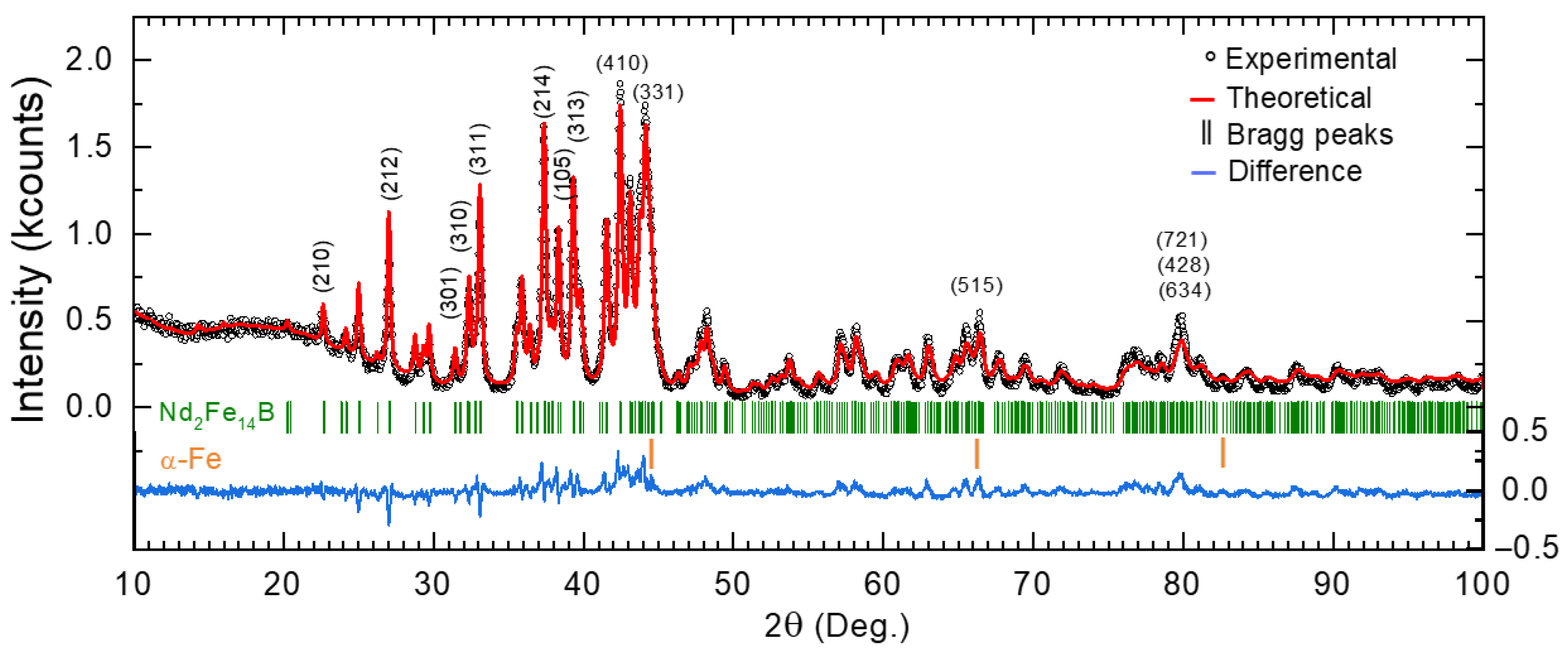
Figure 2 presents the powder X-ray diffraction patterns of the composition (Nd,Pr)
28–x(La,Ce)
x(Co,Zr)
~2B
~1Fe
bal compound with x = 0, prepared by the melt-spinning technique of polycrystalline materials. The black dots represent the experimental data collected, while the red line shows the predicted pattern obtained from the Rietveld refinement. The blue line indicates the difference between the experimental data and the Rietveld fit. The Rietveld pattern is described using the T-C-H pseudo-Voigt function No. 7. The structural model that we used consists of the Nd
2Fe
14B phase, which is characterized by space group No. 186, P-42/mnm (Hermann–Mauguin symbol), in the tetragonal crystal system with a general multiplicity of 12, and the α-Fe, described by space group No. 82, (I m–3 m), in the cubic crystal system with a general position multiplicity of 24. The free refinement parameters include the lattice constants and the Lorentzian isotropic strain and size parameters. The presence of sharp and well-defined diffraction peaks in
Figure 2 indicates that the sample exhibits high crystallinity and a well-ordered atomic structure. A small amount of amorphous phase is also present at lower degrees, which does not affect the peak positions and is a common characteristic for sample developed with the melt-spinning method [
18]. The weight fraction of the Nd
2Fe
14B-type phase is 96.5%, suggesting that the sample is composed almost entirely of one phase, with a small presence of α-Fe phase. The Rietveld analysis determined that the lattice constants of the Nd
2Fe
14B phase are a = 8.7882(1) Å and c = 12.1958(1) Å, corresponding to a cell volume of 941.91(1) Å
3. Additionally, the isotropic strain parameter is X = 0.5664(1), and the isotropic size parameter is Y = 0.0087(1), which yields an average apparent size of 1060(10) Å. The refinement converged with a weighted profile R-factor Rwp = 9.20% for the Nd
2Fe
14P phase.
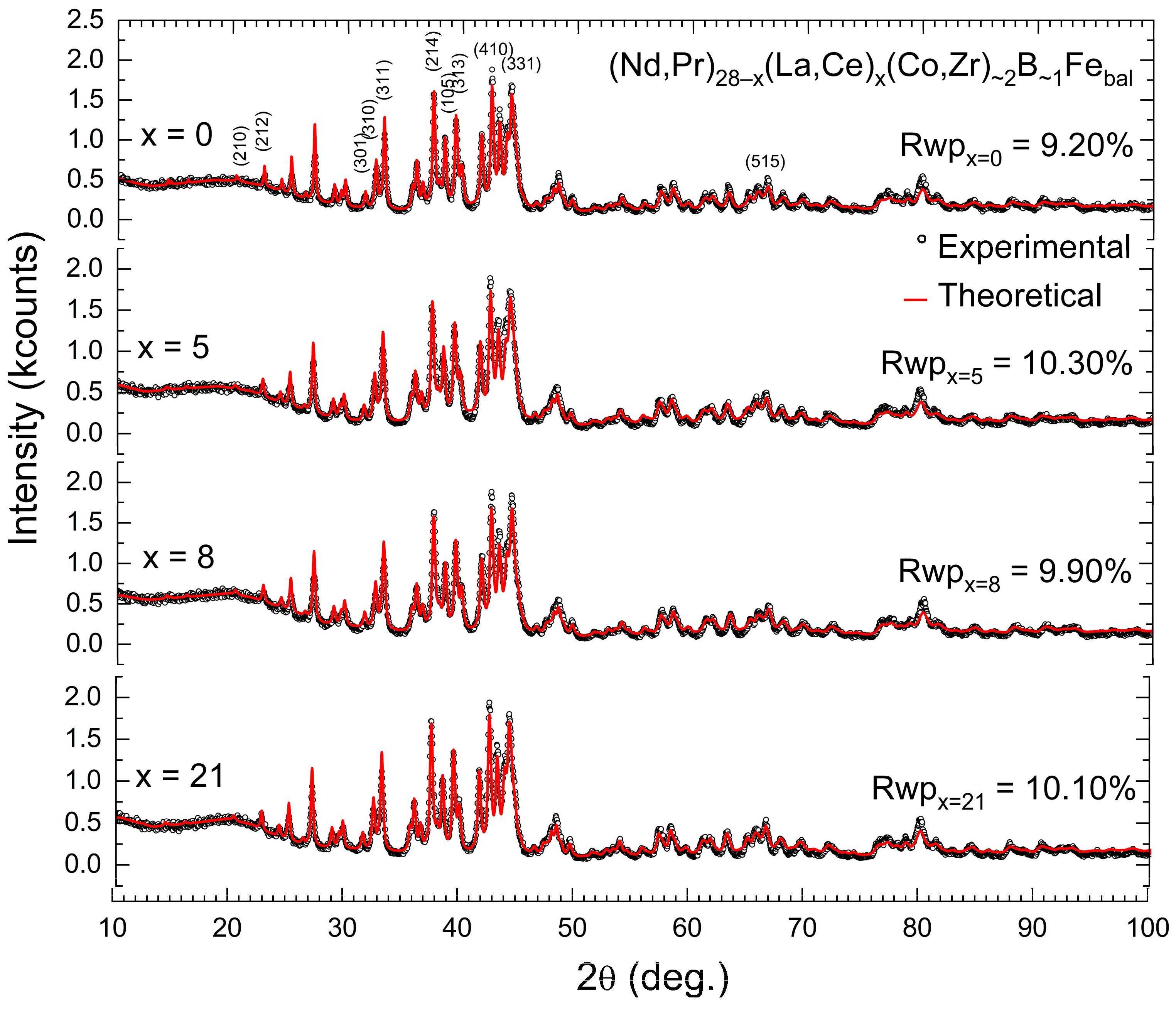
Figure 3 shows the Rietveld plots of the sample with no additional elemental substitution (x = 0), along with the samples with x = 5–21. As the substitution level (x-values) increases, no additional phases are detected, indicating the persistence of a robust 2:14:1 tetragonal crystal structure. Furthermore, increasing x leads to a slight reduction in the weight fraction of the NdFeB phase, up to approximately 95%, accompanied by a corresponding increase in the cubic α-Fe phase, as summarized in
Table 3. The introduction of elemental substitution also induces changes in the lattice constants, resulting in a subtle shift of the Bragg peaks toward higher diffraction angles.
Table 3 summarizes the weight fraction (%) of the Nd
2Fe
14B phase, together with the lattice constants (Å) and cell volumes (Å
3) for the series of samples. It is noteworthy that both the a and c lattice parameters vary with elemental substitution. Specifically, as the substitution level increases up to x = 21, both lattice constants decrease, resulting in a corresponding reduction in the overall unit-cell volume. Changes in rare-earth cations in the host lattice might be the reason for the result. Specifically, a part of the positions of Nd
3+ were occupied by both Ce
3+ (radius~1.14 Å) and Ce
4+ (radius~0.97 Å) ions, and the radius of Ce
4+ ions is small compared with that of Nd
3+ (radius~1.15 Å), which led to the decrease of the lattice constants [
19,
20,
21]. Meanwhile, the theoretical density of a Nd
2Fe
14B magnet without substitutions (ρ = 7.605 g/cm
3) was also obtained by XRD refinement.
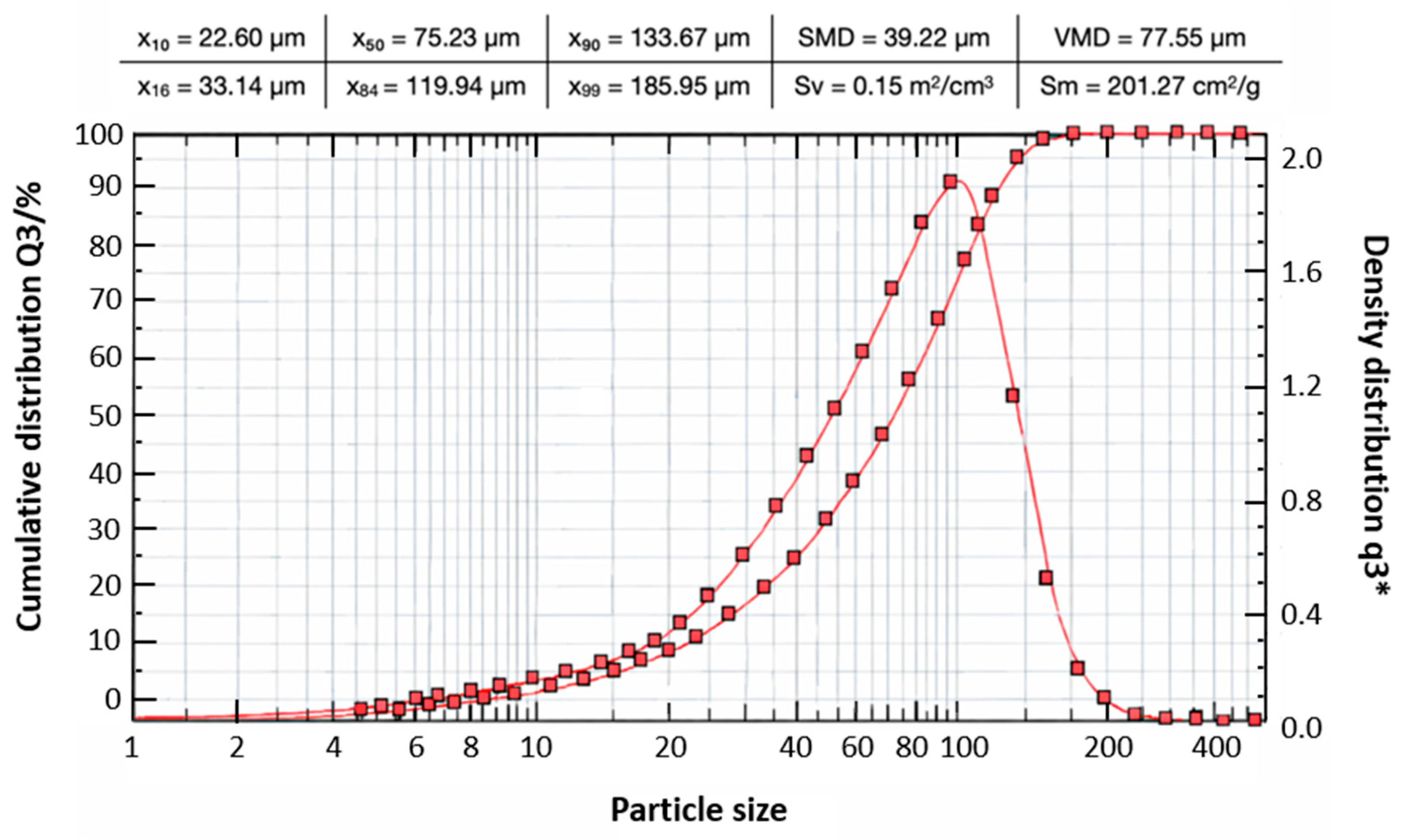
The particle size distribution (PSD) of the substituted NdFeB powder, shown in
Figure 4, reveals the overall uniformity and granularity of the powder particles. The cumulative and density distribution curves indicate that the powder exhibits a relatively narrow particle size range, with most particles falling between approximately 20 µm and 150 µm. The median particle diameter (x
50) is 75.23 µm, suggesting that half of the powder mass consists of particles smaller than this value. The distribution also shows characteristic values of x
10 = 22.60 µm, x
16 = 33.14 µm, x
84 = 119.94 µm, and x
90 = 133.67 µm, reflecting moderate size dispersion. The Sauter mean diameter (SMD) of 39.22 µm represents the surface area to weighted mean size, which is important for surface-related phenomena such as sintering and oxidation behavior. The volume mean diameter (VMD) of 77.55 µm corresponds to the dominant particle fraction and is consistent with the primary mode observed in the density distribution curve. The specific surface area (S
v = 0.15 m
2/cm
3) and specific surface (S
m = 201.27 cm
2/g) values indicate that the powder has a moderately developed surface, suitable for efficient compaction during the magnet fabrication process. Overall, the PSD analysis confirms that the powder possesses a well-balanced particle size profile, providing favorable packing density and sinterability for the subsequent processing of NdFeB-based magnetic materials [
9].
The microstructure of the (Nd,Pr)
28–x(La,Ce)
x(Co,Zr)
~2B
~1Fe
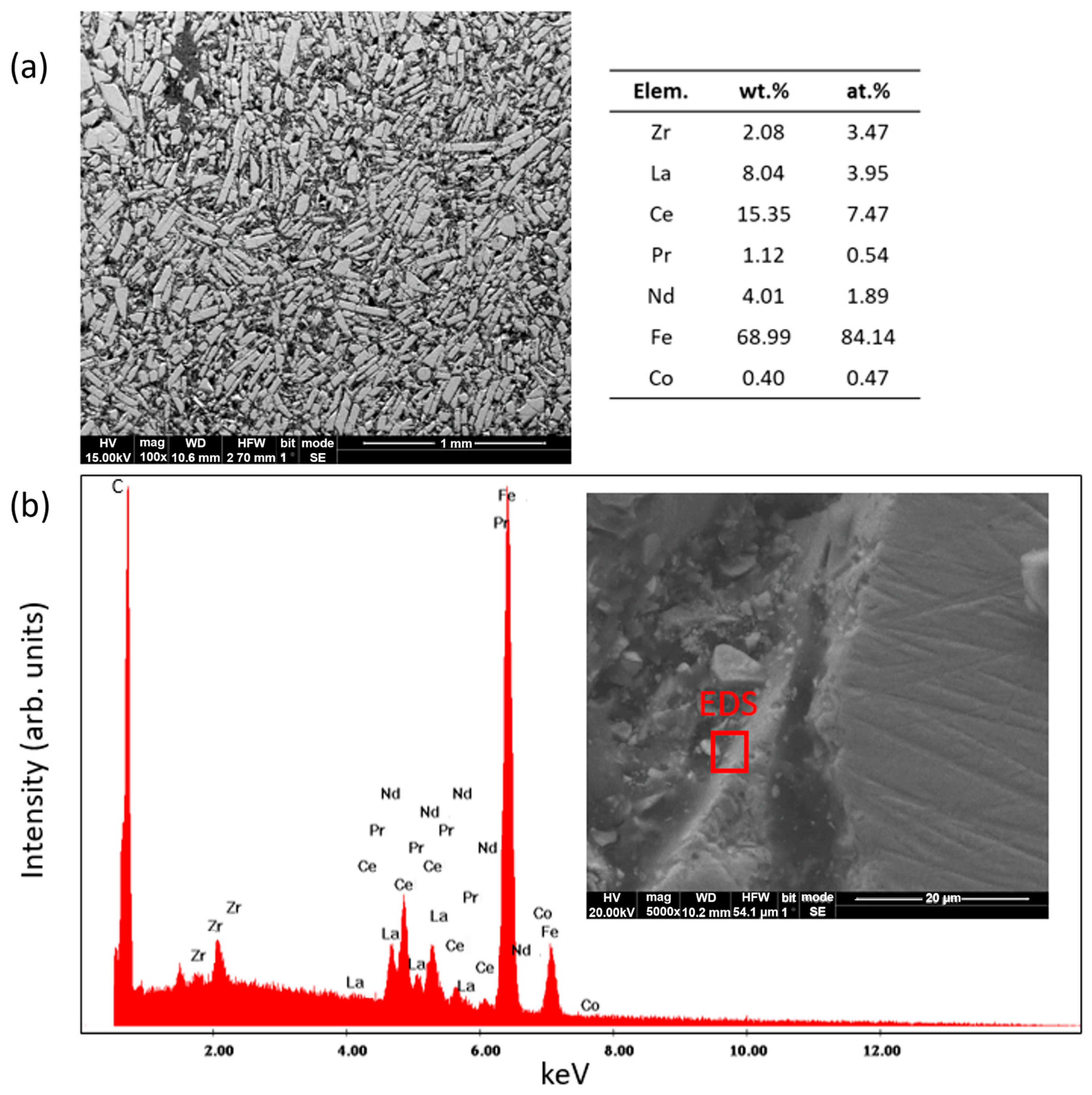
bal with x = 5 bonded magnet is presented in
Figure 5a by scanning electron microscopy (SEM) images. The observations reveal a densely packed particulate microstructure in which elongated substituted NdFeB particles are embedded within a continuous binder phase. At higher magnification, seen in
Figure 5b, a well-defined interfacial coating surrounding the particles becomes clearly visible, indicating good binder wetting and coverage of the particle surfaces. This conformal layer suggests effective particle encapsulation, which is expected to influence both interparticle coupling and the overall mechanical integrity of the composite.
Local EDS analysis performed at the particle–matrix interface (
Figure 5b) shows that Fe is the dominant elemental contribution from the particles, accompanied by characteristic peaks from rare-earth elements (La, Ce, Pr, and Nd). A pronounced C peak is detected in the interfacial regions and is attributed to the organic binder, confirming the presence of a carbon-rich coating surrounding the particles. Minor amounts of Zr and Co are also observed. The spatial association of the C signal with the interparticle regions supports the formation of a distinct binder-derived coating layer rather than a homogeneous carbon distribution throughout the particles.
3.3. Magnetic Characterization of Melt-Spun Powders
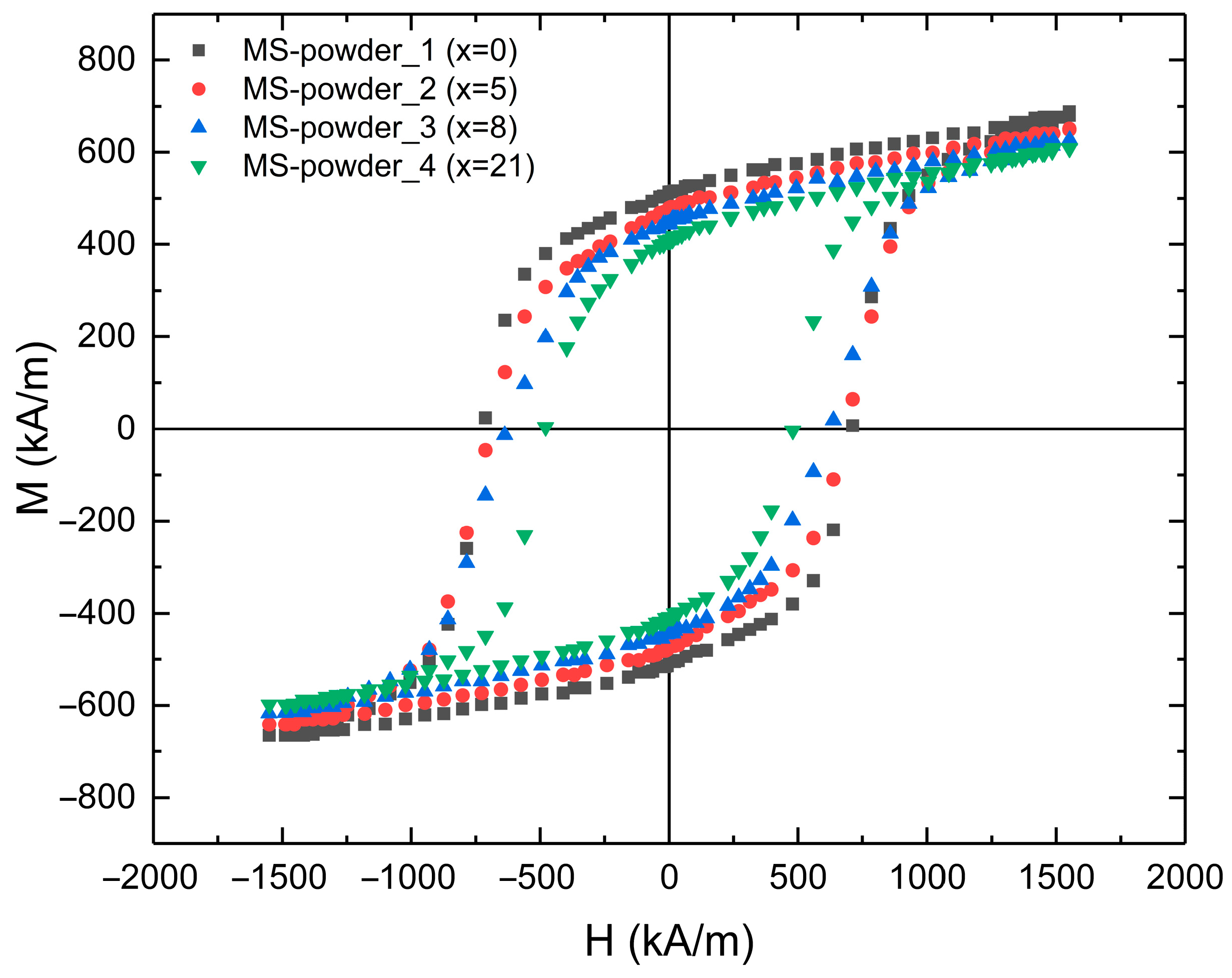
The magnetic hysteresis loops of the substituted NdFeB powders, presented in
Figure 7, reveal the influence of compositional modification on their magnetic performance. All samples exhibit typical ferromagnetic behavior with well-defined coercivity (
), remanence (
), and saturation magnetization (M
s), confirming the preservation of the Nd
2Fe
14B magnetic phase. A clear trend is observed with an increasing substitution level x, both M
s and M
r gradually decrease, accompanied by a reduction in the coercive field. The reference powder (MS-Powder_1, x = 0) shows the highest magnetic parameters
,
and
, indicating the strongest magnetocrystalline anisotropy and domain-wall pinning. In contrast, the rest of the powders display progressively narrower hysteresis loops and a noticeable shift toward lower
values. This behavior is due to the anisotropy constant and possible disruption of exchange interactions introduced by the substituent elements. The most heavily substituted sample (MS-Powder_4, x = 21) exhibits the weakest magnetic response with
,
and
, confirming that excessive substitution reduces magnetic ordering and anisotropy energy, but even then, it is sufficiently close to the reference powder. Overall, the hysteresis behavior confirms that the substituted NdFeB powders retain strong ferromagnetic properties suitable for high-performance permanent magnet applications.
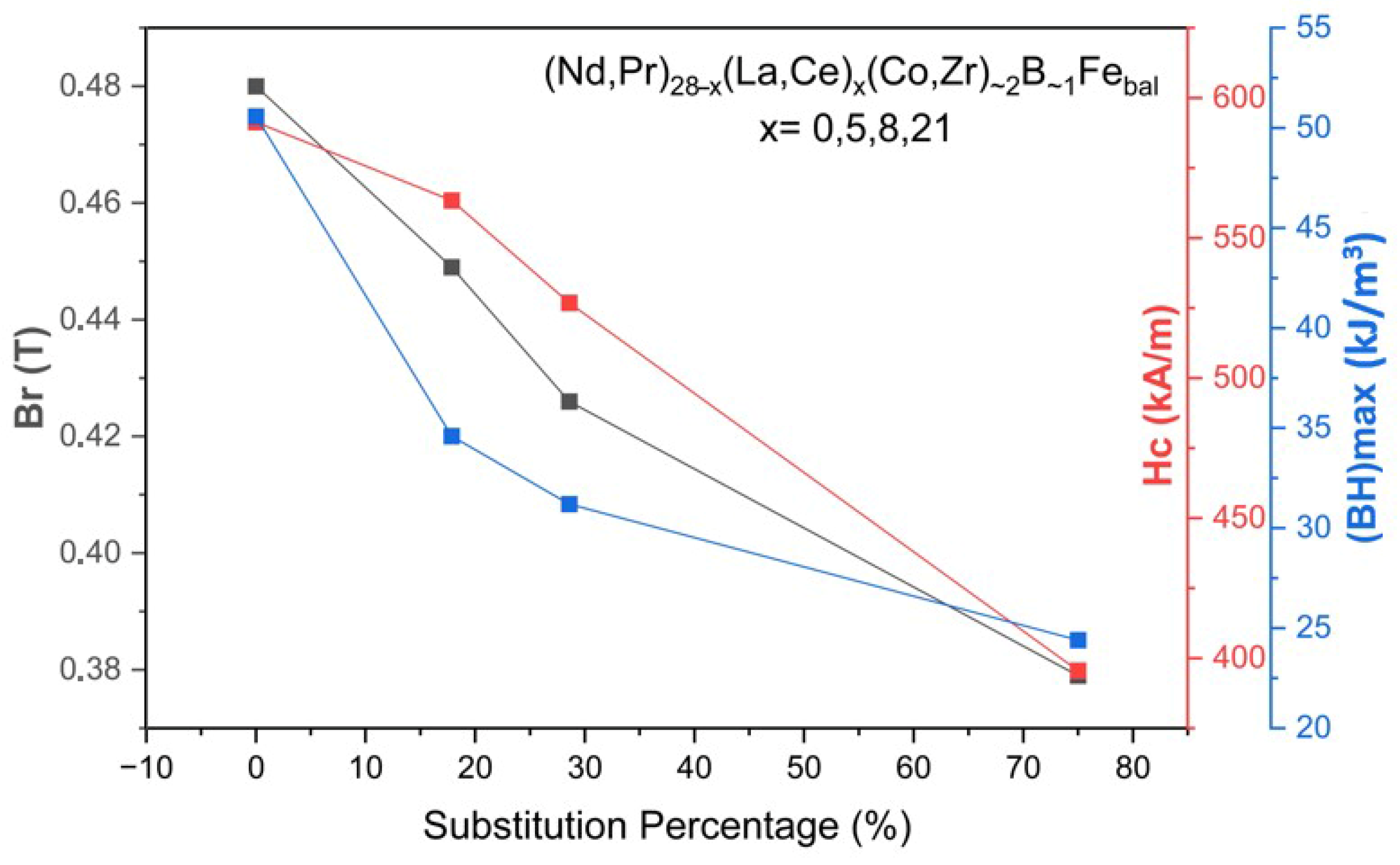
To further investigate the magnetic powders,
Figure 8 illustrates the variations in the remanent magnetization (
), coercivity (
) and maximum energy product
of the (Nd,Pr)
28–x(La,Ce)
x(Co,Zr)
~2B
~1Fe
bal powders as a function of (La,Ce) substitution level (x = 0, 5, 8, 21) at 300 K. All three magnetic parameters show a distinct decreasing trend with an increasing substitution r
sub ratio up to 75%—using Equation (1)—indicating a gradual deterioration of magnetic performance. The reference composition (x = 0) exhibits the highest
, H
C and (BH)
max values, confirming the superior intrinsic magnetic strength of the NdPrFeB system. As the content of (La,Ce) increases, both remanence and coercivity decrease significantly, which can be attributed to the lower magnetocrystalline anisotropy and reduced exchange interaction upon substitution of (Nd,Pr) with (La,Ce). The replacement of rare-earth elements with lighter, less anisotropic atoms weakens domain-wall pinning and lowers the anisotropy field, leading to the observed decline in coercivity and energy product [
4]. At the highest substitution level (x = 21), the sample exhibits the lowest magnetic performance, demonstrating that excessive (La,Ce) incorporation compromises the hard-magnetic characteristics of NdFeB-type powders. These results confirm that while partial substitution can reduce material cost and improve thermal stability, it inevitably leads to a trade-off in magnetic strength.
3.4. Magnetic Characterization of Bonded Magnets
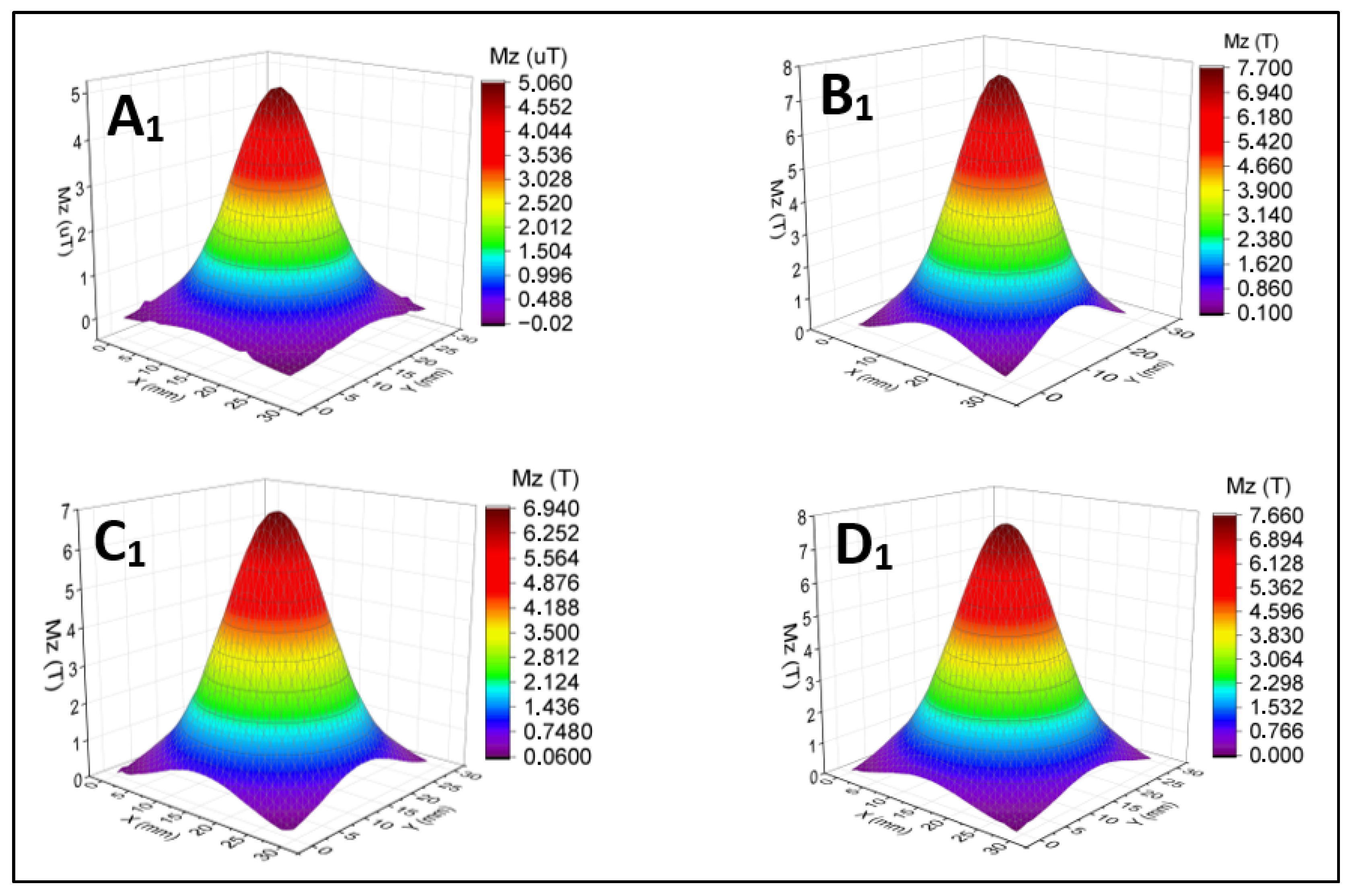
Figure 9 presents a three-dimensional magnetic field distribution map (M
z component) obtained from 3D magnetometry measurements of the bonded NdFeB sample. The surface plot represents the spatial variation in the normal magnetic flux density (Mz, in µT) across the measured area. The symmetric, bell-shaped profile centered on the
Z-axis indicates uniform magnetization and well-aligned magnetic domains within the bonded structure. The high-intensity region (red zone) corresponds to the maximum magnetic flux density near the central axis of the magnet, while the gradual decrease toward the edges (blue–green regions) reflects the expected field decay due to geometric demagnetization effects and limited particle alignment near the boundaries.
This 3D mapping confirms that the bonded magnet exhibits a high degree of isotropy and consistent magnetic field distribution, implying effective powder compaction and uniform curing of the binder during fabrication. Any deviation from perfect symmetry would suggest inhomogeneous powder dispersion or uneven magnetic orientation; however, the smooth, continuous surface of the measured field demonstrates the structural integrity and magnetic uniformity of the composite. Such analyses provide valuable insight into the local field characteristics of bonded magnets and complement the hysteresis and B–H loop results by visualizing field homogeneity and intensity distribution across the sample.
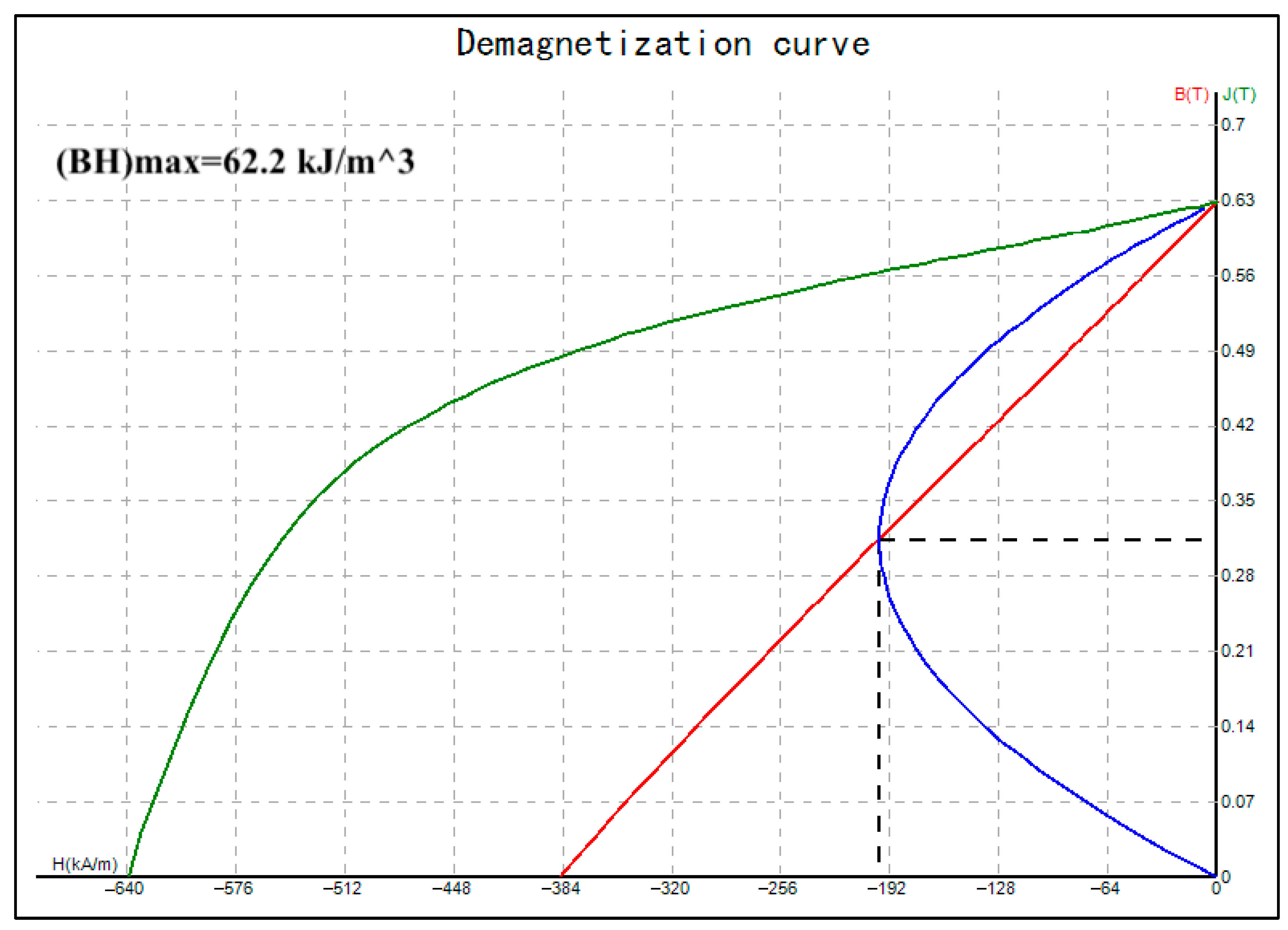
Figure 10 represents the demagnetization (B–H) curve of the bonded NdFeB sample B
2 with for the substitution level (x = 5) and powder-to-binder ratios 96.5–3.5% (similar figures were obtained for all the samples A–D). The loop illustrates the typical behavior of hard-magnetic materials, showing a wide coercive field (H
cj) and (H
cb), characteristic of NdFeB systems [
13]. Based on the data from
Table 4 it is clearly demonstrated that both the substitution level and the binder fraction influence the magnetic response. As the substitution of (La,Ce) increases from x = 5 to x = 21, the slope of the second quadrant becomes steeper, and the (BH)
max value decreases, indicating reduced magnetic energy storage capability and weakened anisotropy. Samples with lower substitution levels retain higher remanence (B
r) and coercivity (H
C). Overall, the B–H curves confirm that compositional and microstructural factors control the bonded NdFeB magnets’ performance. The resulting magnetic parameters for each bonded sample (A–D) at room temperature are summarized in
Table 4.
The measured remanence (Br), coercivity (HC), maximum energy product (BH)max, saturation magnetization (), and remanent magnetization () all demonstrate a consistent dependence on both powder composition and powder-to-binder ratio. The stable trends and small sample-to-sample variations confirm the reproducibility of the fabrication process.
As shown in
Table 4, the substitution level x significantly affects the magnetic performance of the bonded NdFeB samples. Samples B
1 and B
2 (MS-Powder_2, x = 5) exhibit the best properties, reaching B
r = 0.63 T and (BH)
max = 62.2 kJ/m
3. This enhanced behavior is attributed to the relatively low substitution level, which preserves the strong Fe–Fe exchange interactions and high magnetocrystalline anisotropy of the Nd–Fe–B phase [
22]. In contrast, samples D
1 and D
2 (MS-Powder_4, x = 21) demonstrate the lowest magnetic performance, indicating that excessive substitution weakens magnetic coupling and reduces anisotropy. The intermediate C-series samples (MS-Powder_3, x = 8) exhibit magnetic values between those of the B and D compositions, showcasing the gradual impact of increasing substitution.
The powder-to-binder ratio also plays a significant role [
15,
23]. Increasing the powder content from 95–5% to 96.5–3.5% improves all magnetic parameters across all compositions. This enhancement arises from the higher magnetic phase fraction and improved magnetic connectivity between particles, which reduces demagnetizing effects associated with the non-magnetic binder. This trend is consistent with earlier studies on epoxy-bonded and compression-molded Nd–Fe–B magnets, which report that higher powder loading increases the magnetic phase fraction and enhances particle–particle interaction, resulting in improved flux continuity and reduced demagnetizing fields [
13,
14,
23].
Despite the clear influence of substitution level on (BH)max and Hc, the magnetization-related parameters (Br, , ) remain relatively stable across all samples. Even at the highest substitution level (x = 21), samples maintain magnetization values comparable to those of the low-substitution compositions (x = 5). This robustness indicates that, although high substitution reduces anisotropy and energy product, it does not markedly compromise the overall magnetization of the bonded NdFeB magnets.
The temperature variation of
and
of the bonded magnets was measured with a DX-2012H150 magnetometer, equipped with a temperature controller from T
0 = 25 °C (room temperature) to 100 °C. At each temperature step, full demagnetization (B–H) curves were recorded after thermal equilibration. The parameters extracted from the demagnetization curves were the intrinsic coercivity (
), defined as the reverse field at which the magnetization becomes zero, and the coercivity of magnetic induction (
), defined as the reverse field at which the magnetic induction reaches zero [
4,
5]. The remanence (B
r) and maximum energy product ((BH)
max) were also determined at each temperature.
To quantify the thermal stability, the reversible temperature coefficients α and β were determined by applying Formulas (2) and (3).
where T
0 is the reference temperature (25 °C). Negative values of α and β indicate the expected decrease of remanence and coercivity with increasing temperature [
24].
Based on the literature, the values of the α and β parameters are in the range of −0.10 to −0.12 and −0.35 to −0.46, respectively [
25,
26]. The calculated median temperature coefficients
and
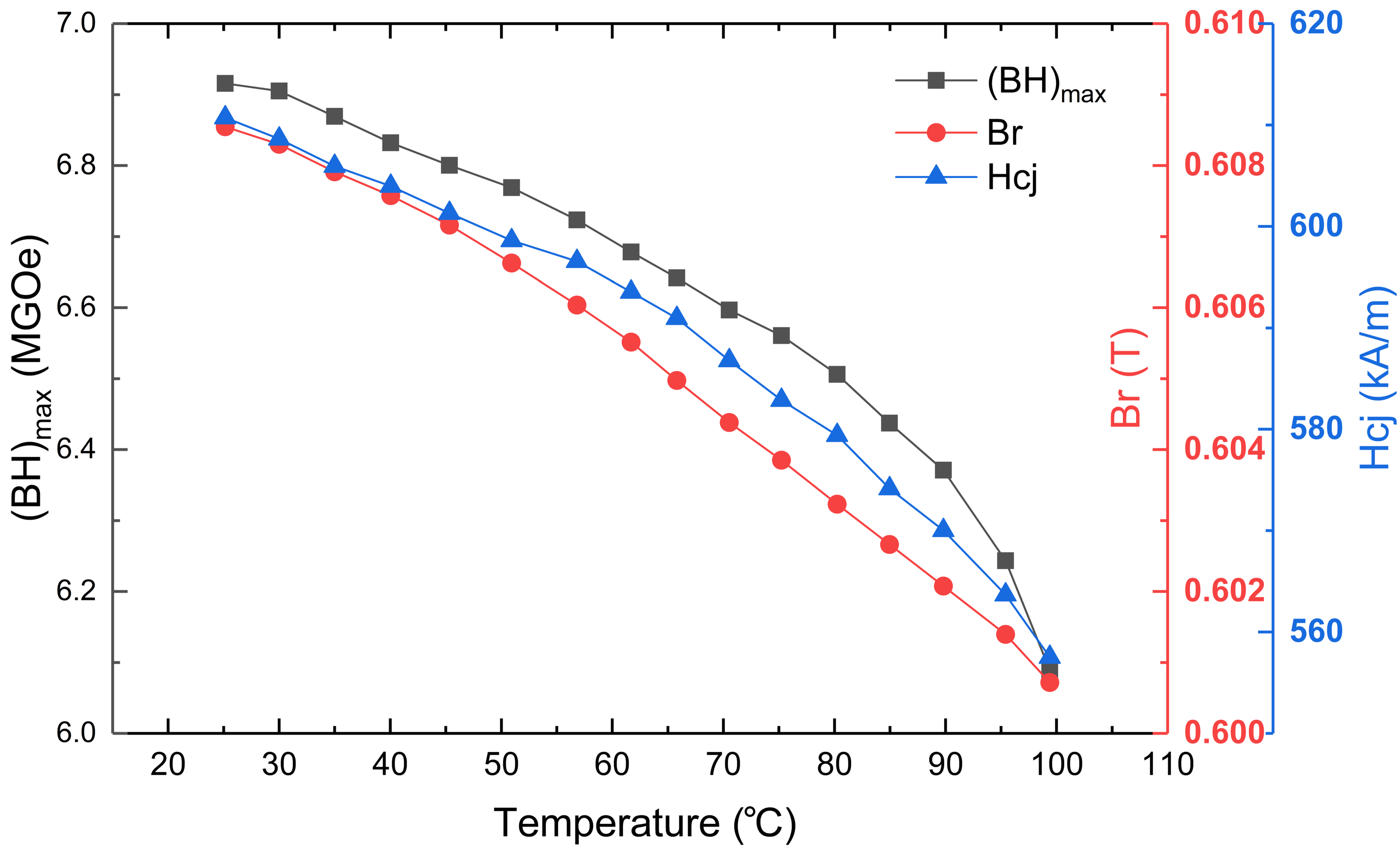
of the samples A–D are smaller in magnitude compared to those typically reported for commercial pure NdFeB magnets, indicating superior thermal stability. The median values from samples A–D for each parameter and at each thermal step are shown in
Figure 11.
The temperature dependence of B
r is mainly governed by the thermal decay of the spontaneous magnetization of the Fe(Co) sublattice [
18]. The relatively weak temperature sensitivity (small |α|) observed here is attributed to improved high-temperature magnetization retention due to Co addition, as well as enhanced densification and phase uniformity introduced by multi-rare-earth substitution, which reduces the contribution of weakly coupled regions that typically amplify remanence degradation with temperature.
The temperature dependence of coercivity is generally stronger, as
is highly sensitive to thermally activated magnetization reversal processes and to microstructural weak points that become increasingly effective at elevated temperatures. The relatively low median β coefficient value (−0.115%/°C) obtained for the present samples is attributed to the reduced temperature sensitivity of the coercive field combined with microstructural stabilization effects [
22]. Multi-rare-earth substitution, together with Zr addition and melt-spinning processing, refines the microstructure and stabilizes grain boundaries, reducing the effectiveness of thermally activated weak links and domain-wall depinning [
13,
16]. As a result, the decrease of
(T) becomes more gradual, leading to enhanced coercivity stability.
The thermal dependence of the magnetic properties shown in
Figure 11 demonstrates a gradual and consistent decrease of B
r,
, and (BH)
max with increasing temperature, without abrupt degradation up to 100 °C. This confirms that the bonded NdFeB magnets maintain excellent magnetic performance over a wide temperature range, outperforming standard commercial bonded NdFeB materials in terms of temperature stability [
26].




 ,
,