3.1. Characterization of PACQDs and PA, PP, PET MPs
The structural and chemical characterization of the PACQDs (
Figure 1a) and the selected MPs viz PA (
Figure 1b), PP (
Figure 1b), and PET (
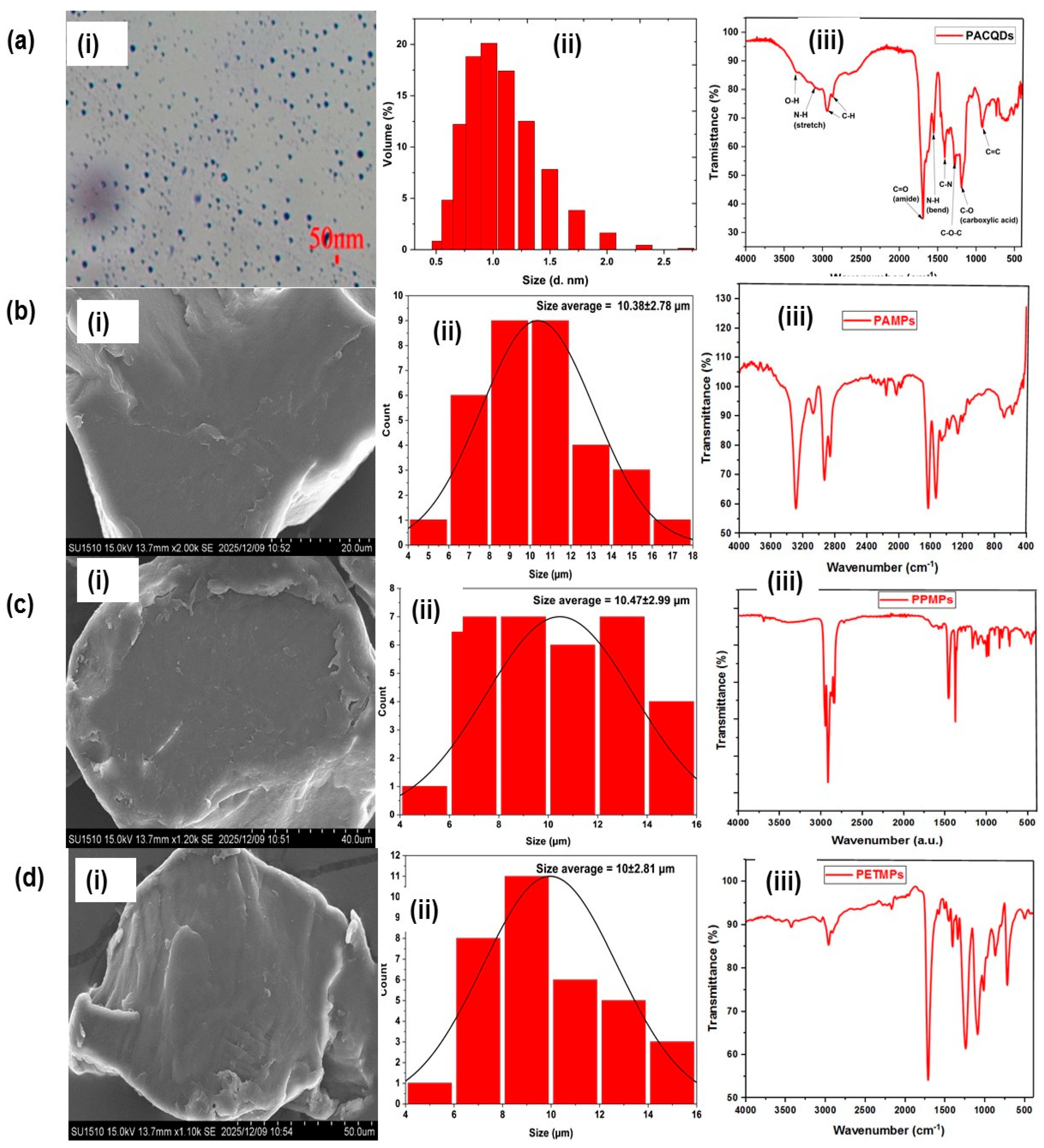
Figure 1c) confirm their integrity and distinct physicochemical features, which are essential for the proposed fluorescence sensing mechanism. The physical dimensions and morphological features of the nanomaterials and MPs were examined using electron microscopy and particle size analysis. Fluorescence images of the PACQDs reveal well-dispersed, quasi-spherical nanoparticles with a narrow size distribution (
Figure 1(ai)). Statistical analysis indicates a dominant particle size centered at approximately 1.0 nm, confirming the ultra-fine nature of the quantum dots (
Figure 1(aii)). In contrast, SEM images of the MPs display the characteristic irregular, fragmented morphologies typical of mechanically generated MPs (
Figure 1(bi,ci,di)). Size distribution analysis shows comparable particle dimensions across the polymer types, with PAMPs exhibiting a mean size of 10.38 ± 2.78 μm, PPMPs 10.47 ± 2.99 μm, and PETMPs 10.00 ± 2.81 μm (
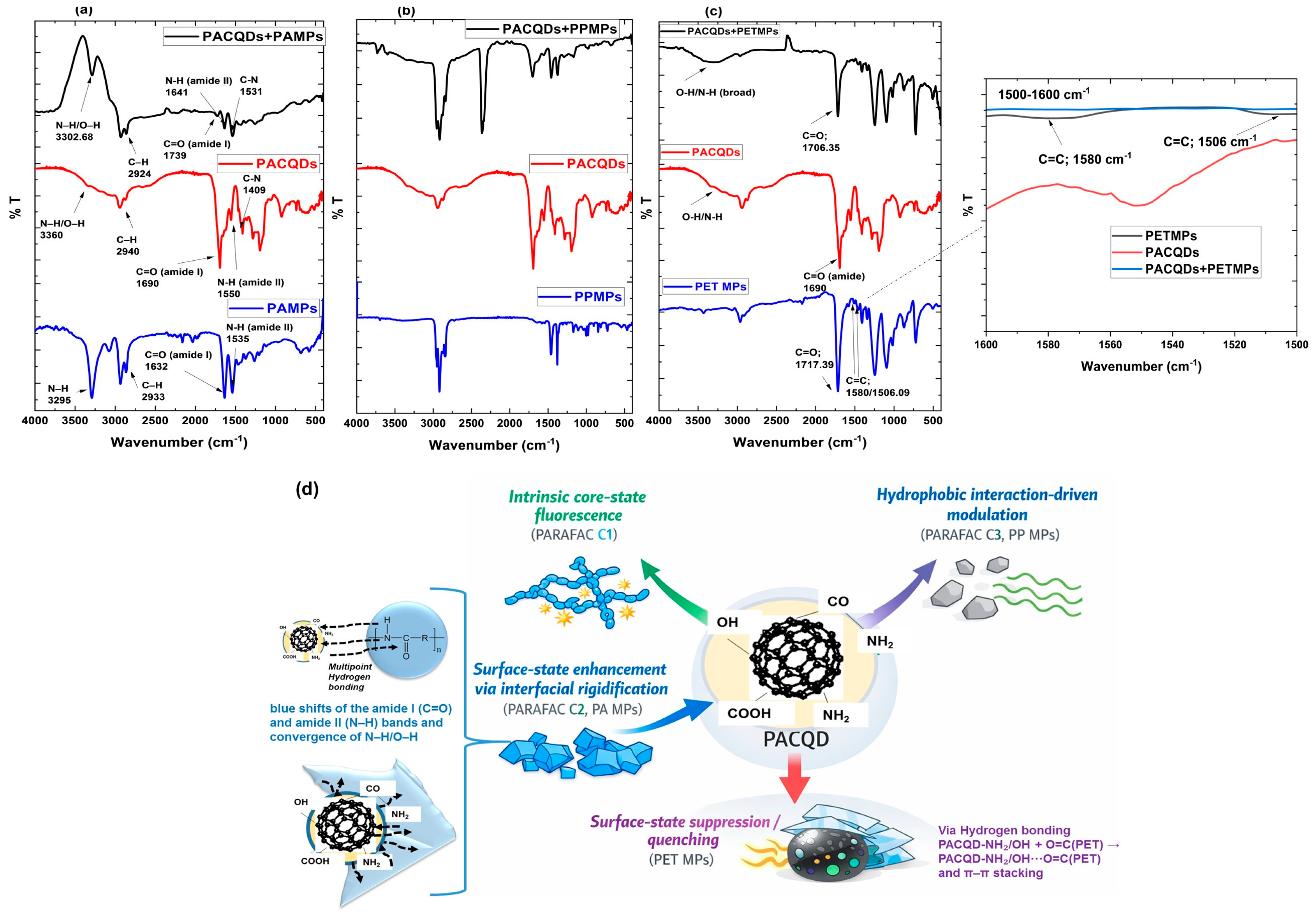
Figure 1(bii,cii,dii)). The similarity in particle size minimizes morphological bias and ensures that observed fluorescence differences arise primarily from chemical interactions rather than size effects. FTIR spectroscopy was employed to establish the molecular fingerprints of the PACQDs and MPs, identifying the functional groups responsible for their interfacial interactions (
Figure 1(aiii,biii,ciii,diii)). The PACQDs exhibit a highly functionalized surface, characterized by broad O–H/N–H stretching bands (3200–3500 cm
−1), a prominent amide C=O vibration (~1650 cm
−1), and C–O stretching associated with carboxylic acid groups (~1200 cm
−1). These amide and oxygen-containing functionalities provide multiple interaction sites and underpin the chemical recognition capability of the PACQDs. The PAMPs spectrum (
Figure 1(biii)) displays characteristic N–H stretching (~3295 cm
−1) and well-defined amide I and II bands at ~1632 and ~1535 cm
−1, respectively, closely mirroring the surface chemistry of the PACQDs. In contrast, PPMPs are dominated by aliphatic C–H stretching (2800–3000 cm
−1) and bending modes, confirming their nonpolar, hydrocarbon-rich nature and lack of functional groups for specific interactions (
Figure 1(ciii)). PETMPs are readily identified by a sharp ester C=O stretching band at ~1717 cm
−1 and distinct aromatic C=C vibrations in the 1500–1600 cm
−1 region, providing multiple interaction sites for hydrogen bonding and π–π stacking (
Figure 1(biii)).
3.2. EEM Fluorescence Fingerprinting of PACQDs + MP Interactions
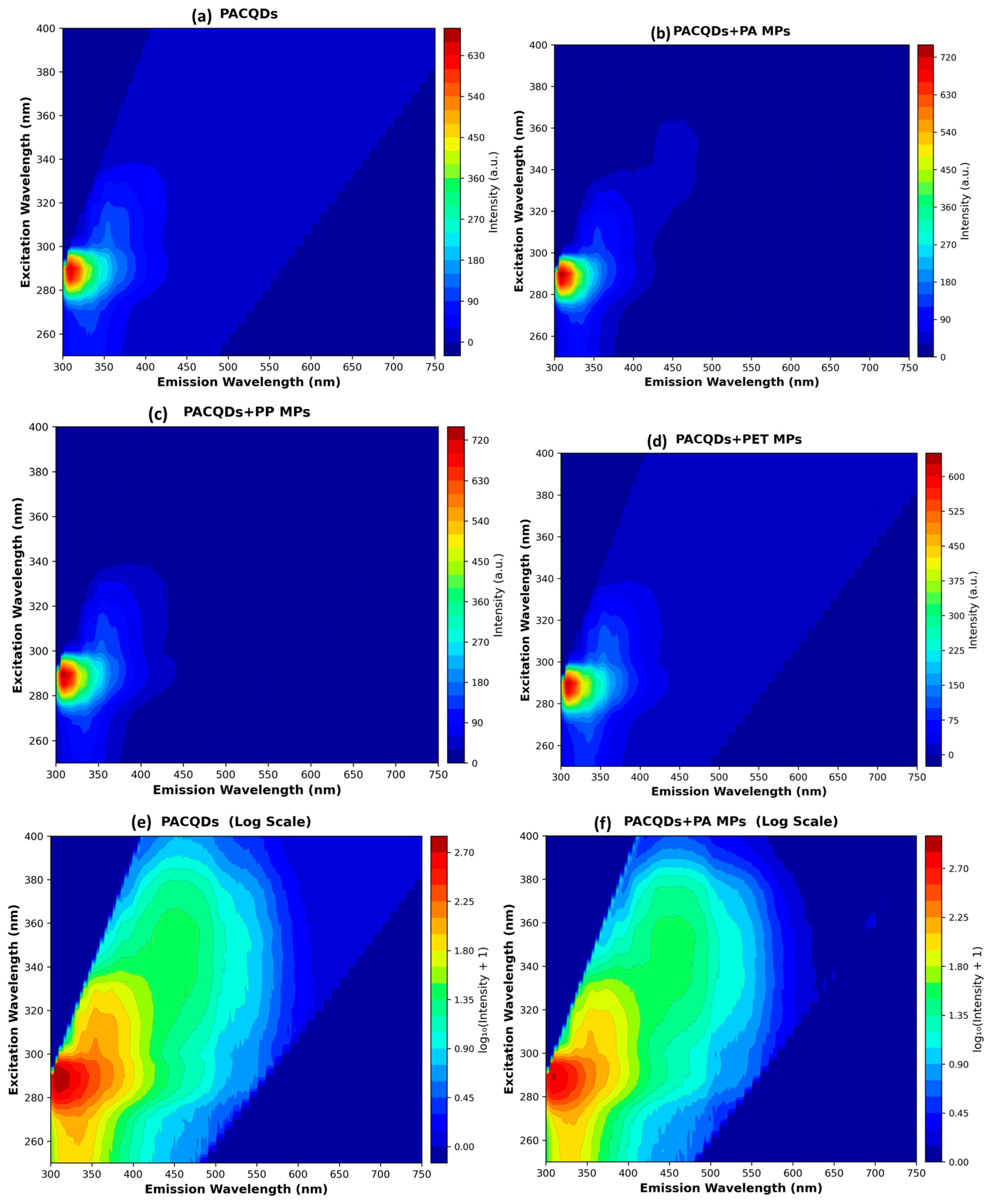
The EEM fluorescence spectroscopy revealed distinct and reproducible spectral signatures upon interaction of PACQDs with three major MP types: PET, PP, and PA. The differential fluorescence responses provide mechanistic information into the nature of PACQDs–MPs interactions while establishing a robust analytical foundation for MP discrimination. The 2D EEM is presented in
Figure 2 and the 3D EEM in
Figure S1.
Pure PACQDs exhibited characteristic fluorescence with an excitation maximum at 290 nm and emission maximum at 300–330 nm, yielding a peak intensity of approximately 630–650 a.u. (
Figure 2a,e). This excitation–emission profile is consistent with π–π* electronic transitions within the sp
2-hybridized carbon domains typical of nitrogen-doped CQDs derived from polyamide precursors [
14]. The relatively tight contour distribution indicates well-defined quantum confinement and minimal heterogeneity in the PACQDs population. The moderate Stokes shift of approximately 10–40 nm suggests efficient radiative recombination from the lowest excited singlet state with minimal energy dissipation through vibrational relaxation. The absence of significant long-wavelength emission (>500 nm) in the baseline PACQDs indicates that surface defect states, if present, contribute minimally to the overall fluorescence. This spectral purity is advantageous for sensor applications, as it establishes a well-defined baseline against which MP-induced changes can be sensitively detected.
The interaction of PACQDs with PA microplastics produced a distinctive fluorescence signature characterized by both intensity enhancement and spectral broadening (
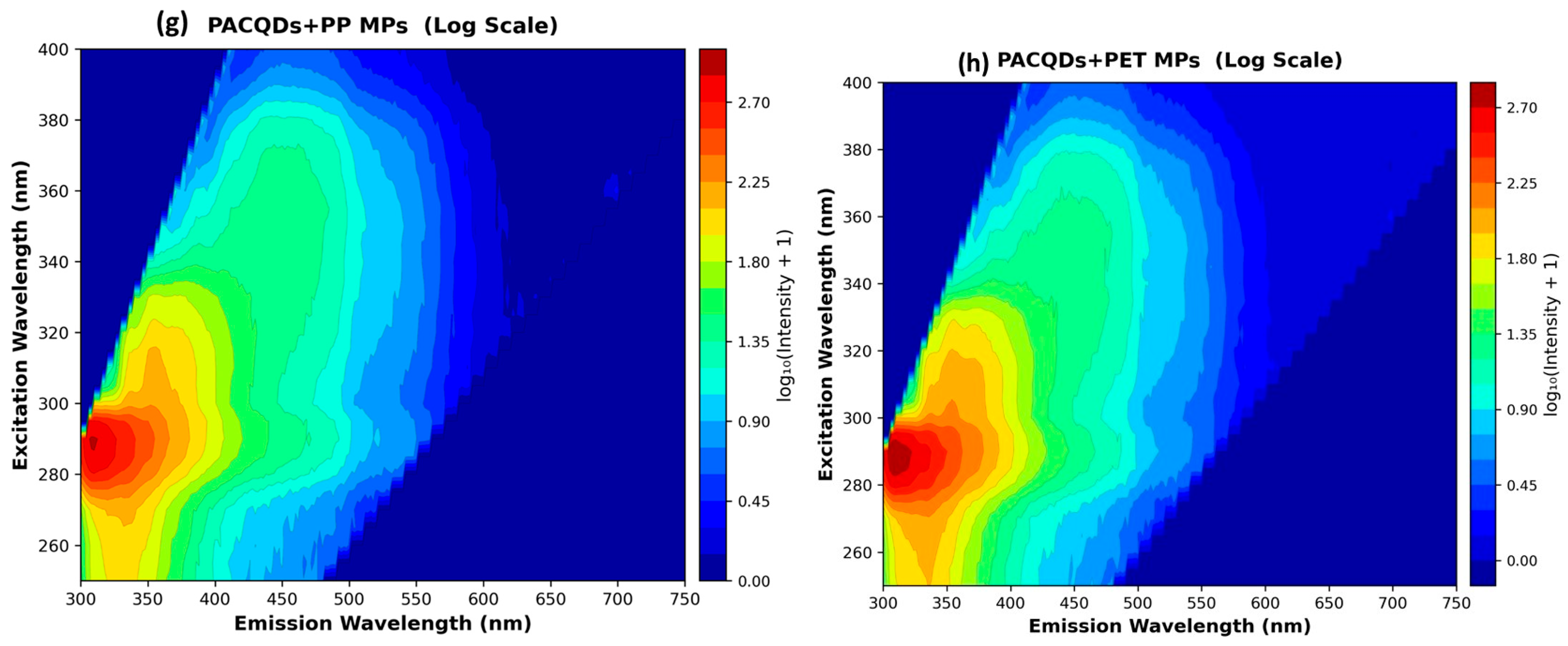
Figure 2b). The maximum peak intensity increased to approximately 720 a.u., representing 11.7% enhancement relative to baseline PACQDs. More significantly, the EEM contour revealed a pronounced expansion of the fluorescence envelope, with secondary emission extending into the 400–450 nm range and outer contours reaching 550–650 nm in log-scale representation (
Figure 2f). This spectral expansion is indicative of new electronic states formed through chemical interactions between PACQDs and PA polymer chains. Several complementary mechanisms likely contribute to this phenomenon. First, the structural similarity between polyamide-derived PACQDs and PAMPs creates favorable conditions for hydrogen bonding interactions between surface amide groups (-CONH-). These non-covalent interactions may facilitate PACQDs adsorption onto PA surfaces, where restricted molecular motion reduces non-radiative decay pathways, thereby enhancing radiative emission efficiency. Second, the formation of hydrogen-bonded complexes may create new surface states with altered electronic structures. These states, existing at lower energy than the core PACQDs transitions, would naturally emit at longer wavelengths, explaining the observed, red-shifted emission shoulder. The asymmetric contour shape in log-scale representation (
Figure 2f) further supports this interpretation, as it indicates a heterogeneous population of emissive species rather than simple intensity amplification of the baseline spectrum. The log-scale analysis (
Figure 2f) reveals that this “cloud expansion” is not merely an artifact of enhanced intensity but represents genuine population of low-energy emissive states. The outer contours (log
10 intensity > 1.35) extend significantly further in the PA sample compared to the baseline, confirming that new fluorescent centers with emission maxima at longer wavelengths are indeed formed. This spectral signature is particularly valuable for analytical purposes, as it provides a ratiometric discrimination parameter (long-wavelength/short-wavelength emission) that is less sensitive to absolute concentration variations than peak intensity alone. From a mechanistic perspective, the PA-induced spectral changes align with the concept of aggregation-induced emission (AIE) enhancement [
21]. Upon adsorption to PA surfaces, PACQDs may undergo controlled aggregation that restricts intramolecular rotations and vibrations, converting non-radiative decay pathways into radiative transitions [
22]. Simultaneously, the hydrogen-bonding network between PACQDs and PA chains may passivate surface trap states that would otherwise quench fluorescence. The net result is enhanced emission intensity coupled with activation of previously dark or weakly emissive states at longer wavelengths.
PPMPs induced fluorescence enhancement of similar magnitude to PAMPs (peak intensity ~720 a.u., 11.4% enhancement,
Table 1), yet the spectral distribution remained essentially unchanged from baseline PACQDs (
Figure 2c). This critical distinction intensity enhancement without spectral shift provides compelling evidence for a fundamentally different interaction mechanism compared to PA. The tight, symmetric contour distribution in both linear and log-scale representations (
Figure 2c,g) indicates that PP does not induce formation of new emissive species or alter the electronic structure of PACQDs. Instead, enhanced fluorescence likely arises from environmental effects that modulate the fluorescence of existing PACQDs transitions. PP is a highly hydrophobic, nonpolar polymer lacking functional groups capable of specific chemical interactions (
Figure 1(ciii)). PP-induced PACQDs aggregation may occur, but unlike the hydrogen-bonded aggregates formed with PA, PP-associated aggregates would lack the intermolecular electronic coupling necessary to generate new low-energy emissive states. Instead, PP aggregates might simply concentrate PACQDs at the polymer surface, creating local regions of enhanced fluorescence without fundamentally altering the photophysics of individual PACQDs. The log-scale analysis is particularly informative in distinguishing PP from PA interactions (
Figure 2g). While both samples show similar peak intensities, the outer contour shapes differ markedly. PP contours maintain the same compact, symmetric morphology as baseline PACQDs, merely expanding uniformly in all directions proportional to the intensity increase. In contrast, PA contours (
Figure 2f) exhibit pronounced asymmetry with preferential extension toward longer emission wavelengths. This shape-based discrimination provides a powerful analytical metric that is orthogonal to simple intensity measurements. From an analytical chemistry perspective, the PP response validates an important aspect of the detection method: intensity enhancement alone is insufficient for unambiguous MP identification. The spectral shape descriptors extracted from log-scale analysis particularly contour symmetry, emission bandwidth, and long-wavelength tail intensity are essential complementary parameters for discriminating between MP types that produce similar peak intensities through different mechanisms.
PET MPs induced fluorescence quenching, reducing peak intensity to approximately 600 a.u., representing a 4.6% decrease relative to baseline PACQDs (
Figure 2d,
Table 1). This unique quenching response provides an orthogonal discrimination parameter that distinguishes PET from the fluorescence-enhancing polymers (PP and PA). The contour analysis reveals that quenching is not spectrally uniform but shows selectivity transitions, providing mechanistic insights into the PACQDs-PET interaction. The primary emission peak centered at Ex. 290 nm/Em 300–330 nm exhibits substantial intensity reduction, as evidenced by the shrinkage of the high-intensity contour core. However, log-scale analysis (
Figure 2h) reveals an intriguing subtlety: the secondary emission shoulder at Ex 320 nm/Em 420 nm (corresponding to surface state transitions) shows less pronounced quenching than the core transition. This differential quenching pattern suggests that the mechanism selectively targets specific electronic states within the PACQDs structure. The most plausible explanation for PET-induced quenching involves photoinduced electron transfer (PET) [
23] from photoexcited PACQDs to electron-deficient sites on the PET polymer. PET contains aromatic terephthalate moieties with electron-withdrawing ester carbonyl groups, creating π-conjugated systems with relatively low-lying LUMO (lowest unoccupied molecular orbital) levels [
24,
25]. Upon photoexcitation, electrons in the PACQDs excited state can transfer to these acceptor sites on PET, creating a charge-separated state that relaxes non-radiatively rather than through fluorescence emission. Additionally, π–π stacking interactions between the aromatic domains of PACQDs and the terephthalate rings of PET may facilitate close electronic coupling necessary for efficient electron transfer. Such π–π interactions would preferentially affect the core aromatic transitions, consistent with the observed selective quenching pattern. The maintenance of surface state fluorescence suggests that functional groups at the PACQDs periphery remain relatively unperturbed by PET interaction, further supporting a core-selective quenching mechanism.
From a structural perspective, PET differs from PA and PP in possessing both aromatic rings and polar ester groups. This unique combination may prevent the formation of extensive hydrogen-bonding networks (unlike PA) or hydrophobic aggregation (unlike PP) that lead to fluorescence enhancement. Instead, the aromatic character dominates the interaction, facilitating electron transfer quenching that outweighs any potential passivation effects. The analytical utility of PET-induced quenching is substantial. While intensity reduction could potentially be confounded by factors such as PACQDs concentration variation or instrumental drift, the combination of quenching with unchanged spectral shape provides a robust signature.
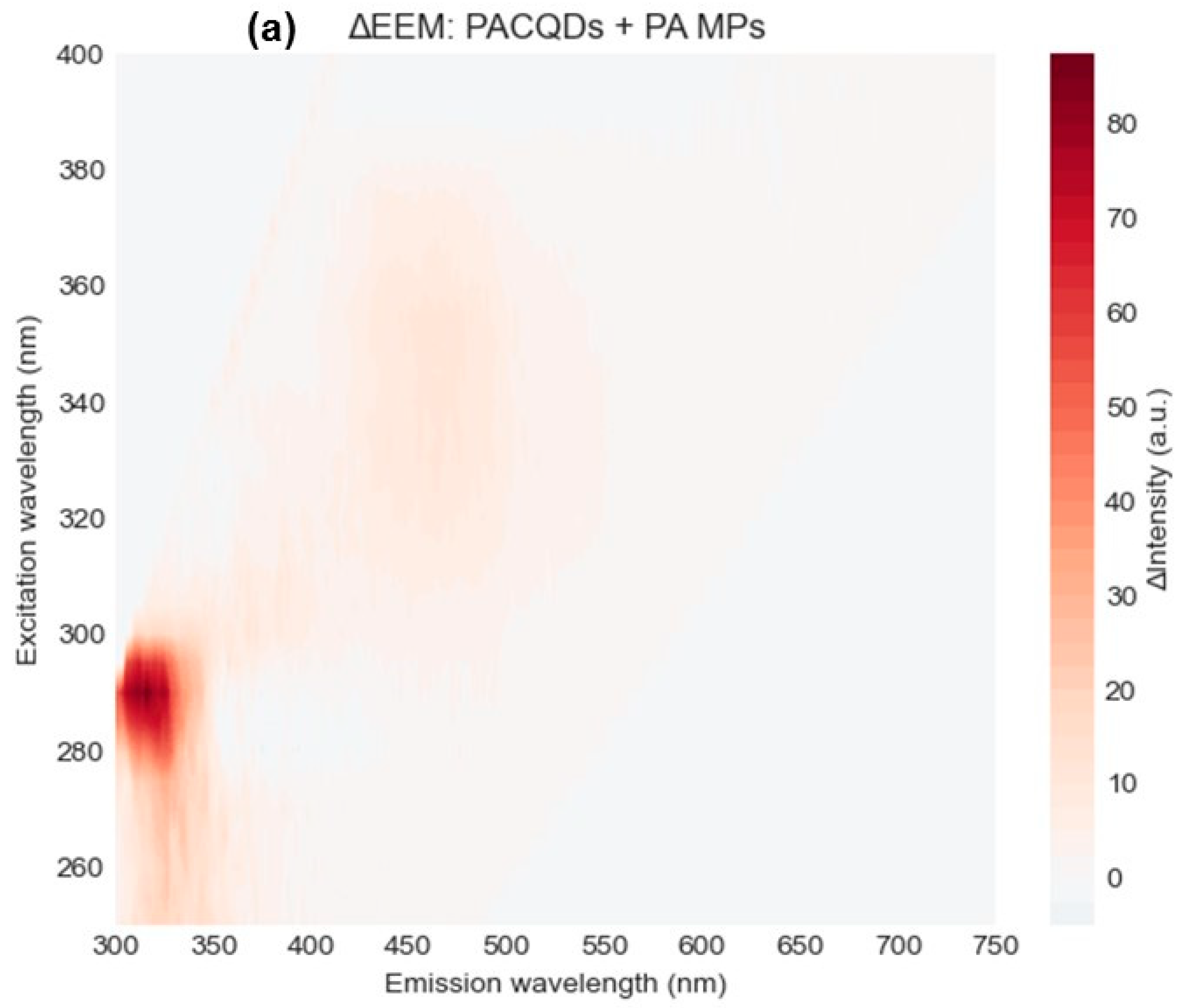
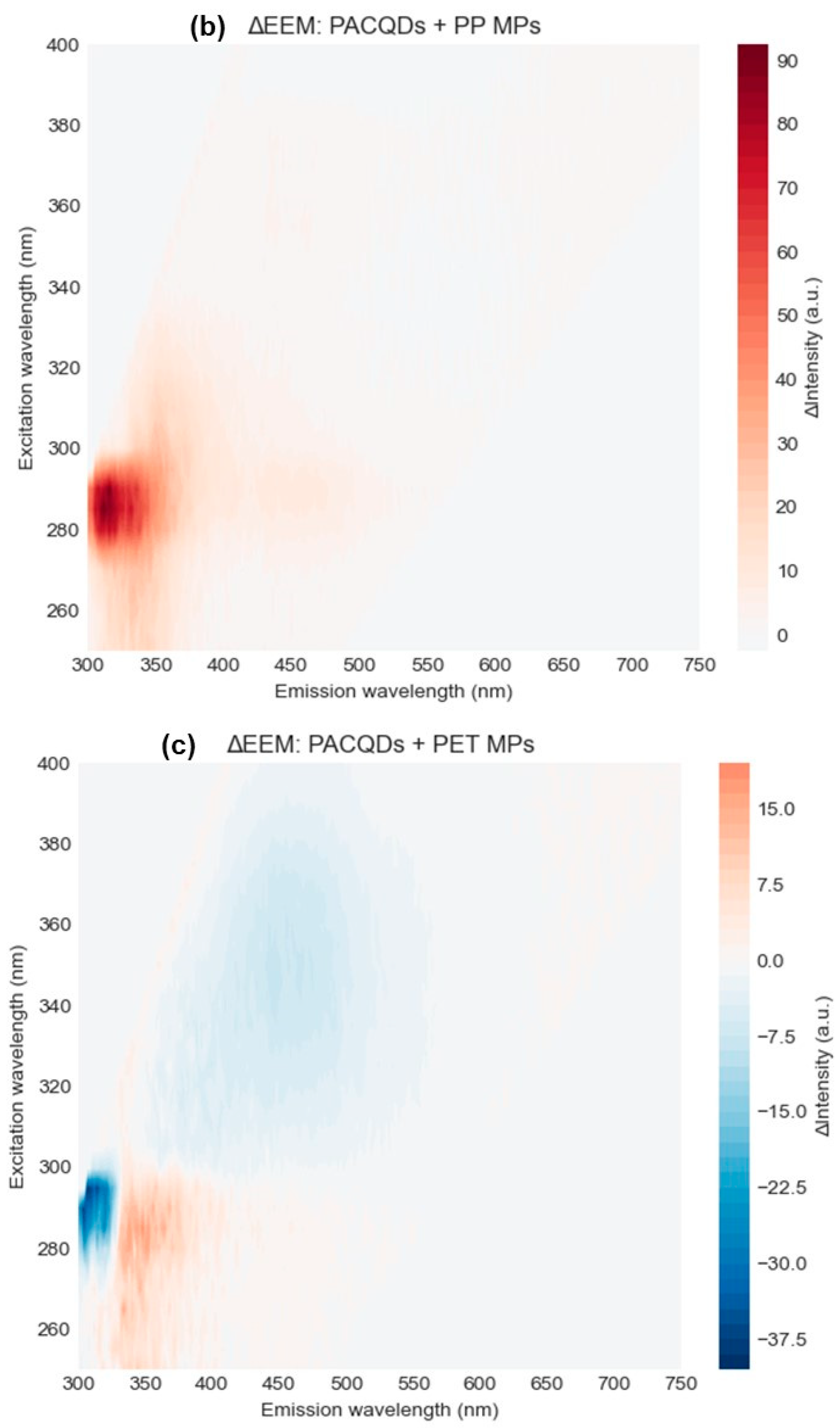
Difference excitation–emission matrices (ΔEEM = Sample − PACQDs) revealed three mechanistically distinct fluorescence responses (
Figure 3), which are further quantified in
Table S1. PAMPs induced a bimodal enhancement, with the primary core peak (Ex 290/Em 320 nm) increasing by +75 ± 5 a.u. and the shoulder region (Ex 290/Em 380 nm) by +50 ± 10 a.u., yielding a shoulder/core ratio of 0.67 and a net fluorescence increase of +125 a.u. PPMPs produced spatially localized enhancement, with the core peak increasing by +85 ± 5 a.u. but minimal shoulder enhancement (+5 ± 3 a.u.), resulting in a shoulder/core ratio of 0.06 and a net change of +90 a.u. PETMPs, in contrast, showed selective quenching of the core emission (−30 ± 5 a.u.) with minor shoulder enhancement (+12 ± 3 a.u.), giving a negative shoulder/core ratio (−0.40) and a net fluorescence decrease of −18 a.u. The ΔEEM analysis, combined with these quantitative features, provides clear mechanistic insight (
Figure 3). PAMP exhibits extended, bimodal enhancement consistent with strong chemical interactions and formation of new emissive states. PP shows localized, unimodal enhancement consistent with fluorescence improvement without structural modification. PET displays a biphasic response with core quenching and minor shoulder enhancement, indicative of photoinduced electron transfer [
26]. Importantly, the shoulder/core ratio serves as a robust discriminator (
Table S1): high values in PA reflect strong secondary emission, near-zero values in PP indicate purely physical enhancement, and negative values in PET signify electron-transfer-mediated quenching. These ratiometric metrics reduce dependence on absolute intensity calibration and enhance method robustness across varying sample concentrations.
3.3. Discrimination Strategy and Analytical Metrics
The discrimination of MPs using PACQDs was first evaluated using conventional fluorescence metrics extracted from the EEM data (
Table 1). While all samples exhibit a common primary excitation/emission maximum at 290/308 nm reflecting the intrinsic emissive core of the PACQDs, distinct quantitative differences in fluorescence intensity and spectral redistribution emerge upon interaction with different polymer types. These differences form the basis of the analytical discrimination strategy.
The integrated fluorescence intensity increases markedly in the presence of polyamide (PAMPs) and polypropylene (PPMPs), reaching 139,016.7 and 141,259.9, respectively, corresponding to enhancement factors of 11.66% and 11.43%. In contrast, polyethylene terephthalate (PETMPs) induces a net decrease in total emission (116,716.8), resulting in a negative enhancement factor (−4.61%). This clear divergence in intensity response provides a first-level distinction between PET and the other polymers but is insufficient on its own to differentiate PA from PP due to their comparable enhancement magnitudes. Further discrimination is achieved by partitioning the EEM into blue (short-wavelength) and red (long-wavelength) emission regions. Both PAMPs and PPMPs enhance the blue-region integrated intensity relative to pristine PACQDs, consistent with reduced non-radiative decay pathways arising from interfacial rigidification (PA) and hydrophobic shielding (PP). However, the red-region response reveals polymer-specific behavior. PAMPs exhibit an increased red-region contribution (1637.98), yielding the highest red/blue ratio (0.0137), whereas PPMPs show a reduced red contribution (1230.15) and a lower ratio (0.0098). PETMPs display a pronounced suppression of red-region emission (765.94), reflected in the lowest red/blue ratio (0.0072), consistent with fluorescence quenching and energy redistribution. Importantly, the peak excitation and emission wavelengths remain unchanged across all samples, indicating that discrimination cannot be achieved through peak position shifts alone. Instead, the modulation of integrated intensity and relative spectral contributions provides complementary analytical descriptors. The minimum intensity values, remaining close to zero for all systems, confirm the absence of artefactual baseline distortions and validate the robustness of the extracted metrics. Collectively, these results demonstrate that while simple fluorescence intensity metrics can partially discriminate PET from PA and PP, overlap between PA- and PP-induced enhancement necessitates a multivariate approach. This limitation directly motivates the use of EEM–PARAFAC and PCA analyses, which leverage the full three-dimensional fluorescence information to resolve subtle but mechanistically meaningful differences in emission modulation pathways, enabling reliable and statistically robust microplastic discrimination.
3.5. ATR-FTIR Analysis of PACQD Interaction with MPs and Mechanistic Interpretation
Fourier transform infrared (FTIR) spectroscopy provides direct molecular-level evidence for the specific interaction mechanism between PACQDs and PET MPs. The ATR-FTIR spectra are presented in
Figure 5. ATR-FTIR analysis of PACQDs/PAMP MP interaction reveals a strong, specific interaction between PACQDs and PAMPs (
Figure 5a), dominated by amide–amide coupling and interfacial rigidification. Upon composite formation, pronounced positive (blue) shifts are observed in the amide vibrational bands. The amide I (C=O stretching) band shifts from 1632–1690 cm
−1 to 1739 cm
−1, while the amide II (N–H bending) band shifts from 1535–1550 cm
−1 to 1641 cm
−1. These substantial upshifts indicate restricted vibrational motion and reduced conformational freedom, consistent with the formation of a rigidified hydrogen-bonded interface [
21,
22]. This mechanism is often observed in aggregation-induced emission (AIE) phenomena [
26]. Supporting this interpretation, the N–H/O–H stretching region converges and broadens around 3302 cm
−1, reflecting the establishment of an extensive, constrained hydrogen-bonding network. The C–N stretching vibration shifts upward from 1409 to 1531 cm
−1, confirming direct involvement of nitrogen functionalities in interfacial stiffening, while concurrent downshifts in C–O/C–O–C vibrations (e.g., 1259 → 1231 cm
−1) indicate cooperative rearrangement of oxygen-containing groups. Importantly, the absence of new covalent-bond signatures confirms that the interaction is non-covalent, driven by hydrogen-bond reorganization and physical adsorption. This rigidified interfacial environment provides a direct molecular explanation for the observed fluorescence enhancement, as restricted molecular motion suppresses non-radiative decay pathways. In contrast, the ATR-FTIR spectrum of the PACQD + PPMP composite (
Figure 5b) shows no discernible shifts or intensity changes in the characteristic PACQD amide I (~1690–1700 cm
−1) and amide II (~1540–1560 cm
−1) bands, indicating that amide and N–H groups do not participate in specific interactions with PP (
Figure 5b). The PPMPs retain their dominant aliphatic C–H stretching bands (2950–2835 cm
−1) and C–H bending modes (~1455 and 1375 cm
−1) without perturbation, and no new bands appear across the fingerprint region. This spectral invariance confirms the absence of hydrogen bonding, π–π interactions, or covalent coupling at the PACQD + PP MP interface. Given the nonpolar, chemically inert nature of PP, the association is best attributed to hydrophobic interactions between PP surfaces and the graphitic domains of PACQDs. Such hydrophobic adsorption promotes interfacial confinement without altering vibrational signatures, providing a mechanistic basis for fluorescence enhancement via hydrophobic shielding and reduced non-radiative relaxation, rather than chemical bonding.
For PETMPs (
Figure 5c), the ATR-FTIR spectroscopy for the interaction provides clear molecular evidence for a dual-binding interaction between PACQDs and PET MPs (
Figure 5c). First, hydrogen bonding is confirmed by an 11 cm
−1 red shift of the PET carbonyl (C=O) stretching vibration from 1717 to 1706 cm
−1, indicating bond weakening as the ester carbonyl acts as a hydrogen-bond acceptor to PACQD surface –NH/–OH groups. This interaction is further supported by broadening of the O–H/N–H stretching band (~3400 cm
−1). Second, strong evidence for π–π stacking is provided by the complete disappearance of the PET aromatic C=C stretching bands at ~1506 and 1580 cm
−1 in the composite spectrum (inset of
Figure 5c), a hallmark of close, parallel stacking between aromatic rings and sp
2-hybridized graphitic domains. The persistence of the C–O–C ester vibration (~1250 cm
−1) without shift confirms that the interaction is site-specific and non-reactive. Together, these features substantiate a synergistic “dual-clamp” mechanism, combining hydrogen bonding and π–π stacking, which explains the distinct fluorescence quenching response of PET relative to other polymers.
Generally, ATR-FTIR analysis differentiates three interaction pathways: rigidification-driven enhancement for PAMPs, hydrophobic-adsorption-driven enhancement for PPMPs, and dual-binding-induced quenching for PET MPs. These molecular-level distinctions provide a robust structural foundation for the polymer-specific fluorescence responses observed in PACQDs-based MP sensing.
Integrated Mechanistic Model from PARAFAC, PCA, and ATR-FTIR
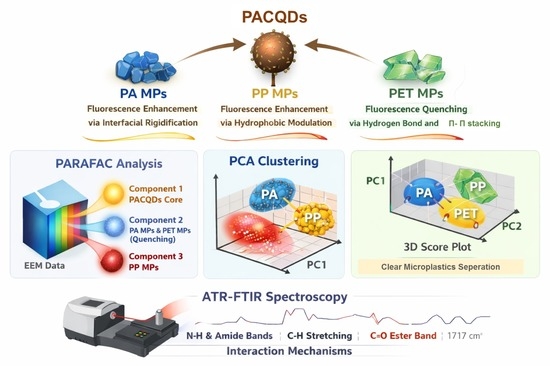
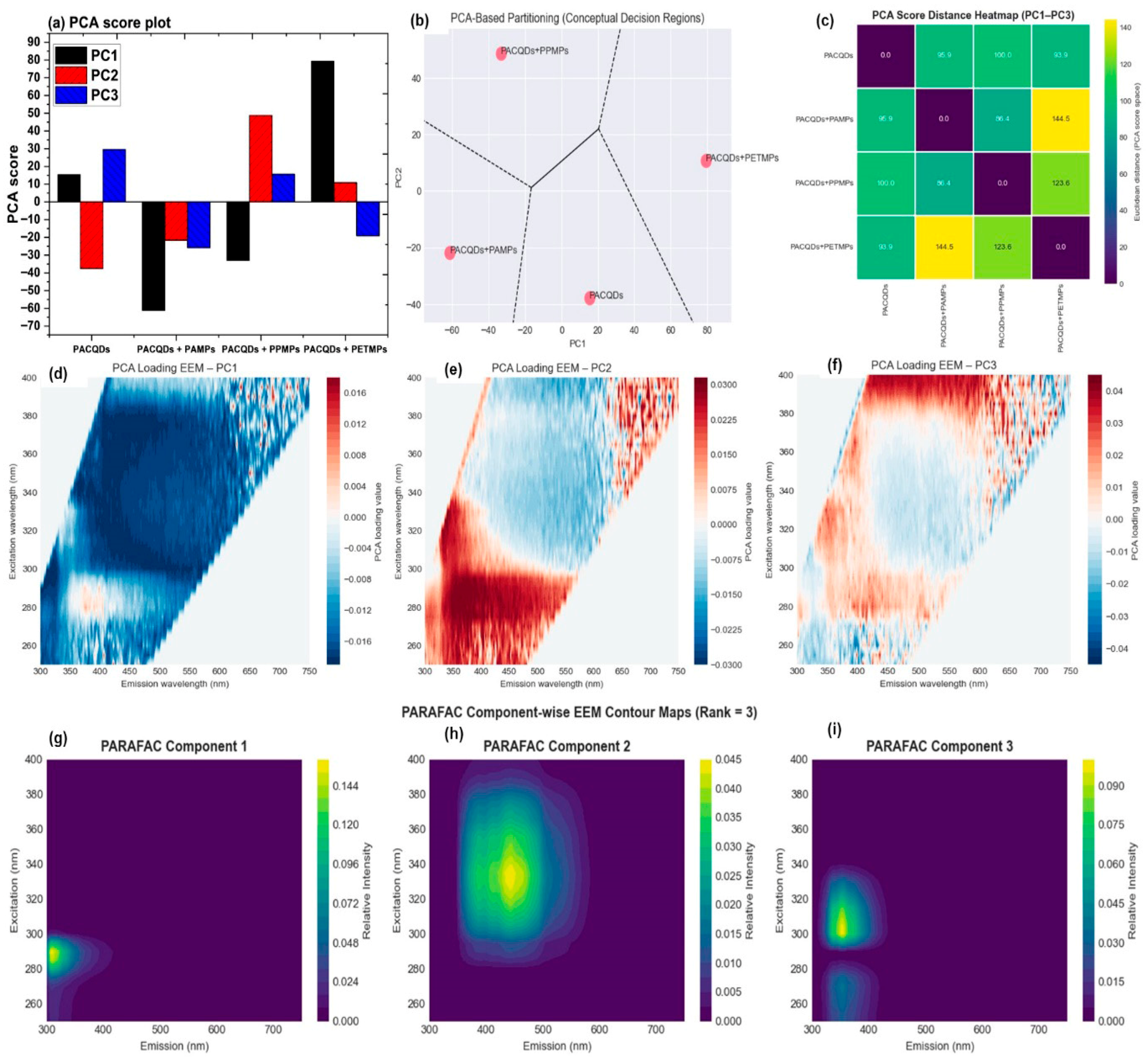
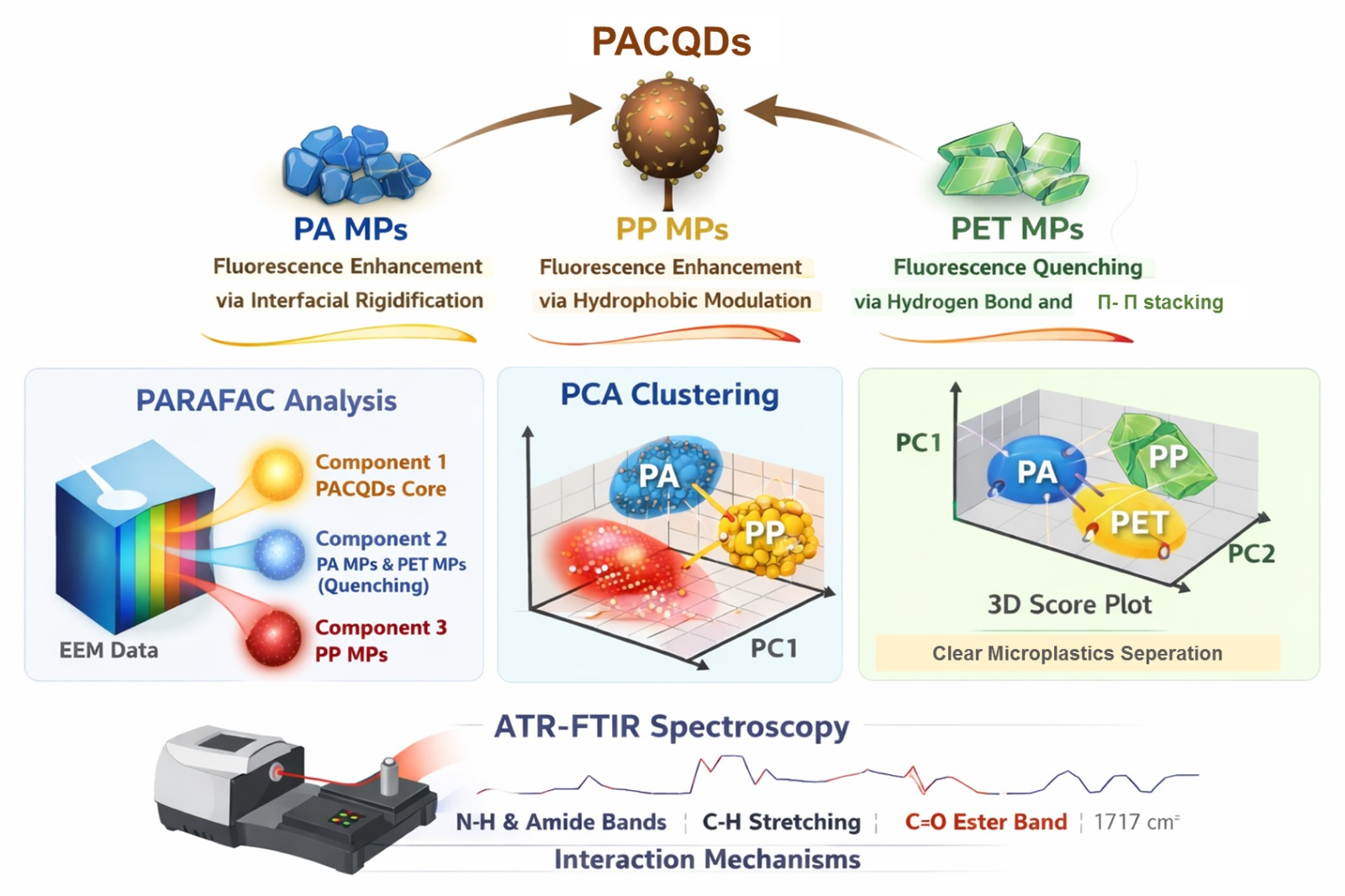
Multivariate fluorescence analysis and ATR-FTIR collectively resolve three distinct PACQDs–MP interaction pathways that govern the observed fluorescence responses (
Figure 5d). PARAFAC decomposition separated the EEM dataset into three independent components (C1–C3), while PCA clearly clustered the samples according to polymer type, confirming that each interaction mode produces a unique photophysical fingerprint. PARAFAC component C1, dominant across all samples, corresponds to intrinsic PACQDs core-state fluorescence, reflecting the graphitic π–π* transitions that remain largely unaffected by microplastic presence. This invariant component explains the strong common variance captured by PC1 in PCA. PARAFAC C2, which loads strongly for polyamide MPs, is associated with surface-state fluorescence enhancement driven by interfacial rigidification. ATR-FTIR provides direct molecular evidence for this pathway, showing pronounced blue shifts of the amide I (C=O) and amide II (N–H) bands and convergence of N–H/O–H stretching vibrations, indicative of a constrained hydrogen-bonding network. This rigidified interface suppresses non-radiative decay, producing the enhanced emission captured by C2 and the positive PC2 scores. PARAFAC C3 differentiates PP MPs and reflects hydrophobic interaction-driven fluorescence modulation. ATR-FTIR shows no band shifts or new vibrational features, confirming the absence of specific chemical bonding. Instead, hydrophobic association between PPMP surfaces and PACQDs graphitic domains promotes surface adsorption and local solvent exclusion, yielding moderate fluorescence enhancement without spectral perturbation. This mechanism is encoded in C3 and resolved by PCA along higher-order components. In contrast, PET MPs exhibit surface-state suppression, arising from dual hydrogen bonding and π–π stacking, as confirmed by carbonyl red shifts and disappearance of aromatic C=C bands in ATR-FTIR. These strong, multipoint interactions promote non-radiative pathways, leading to fluorescence quenching and a distinct PCA position. Overall, the strong agreement between PARAFAC-resolved fluorescence components, PCA clustering, and ATR-FTIR interaction chemistry establishes a direct structure–property relationship, enabling mechanistic discrimination of microplastics based on their interfacial interactions with PACQDs.
3.6. EEM Evaluation in Tap Water
To assess the influence of matrix effects on the fluorescence response and discrimination capability of the PACQDs platform, EEM measurements were extended from deionized water to tap water. Tap water represents a more chemically complex and environmentally relevant matrix, containing dissolved inorganic ions and residual organic constituents that may interfere with fluorescence signals through quenching, background emission, or competitive interactions. Evaluating PACQDs–MP interactions under these conditions provides a critical test of method robustness and helps bridge the gap between controlled laboratory studies and practical environmental applications.
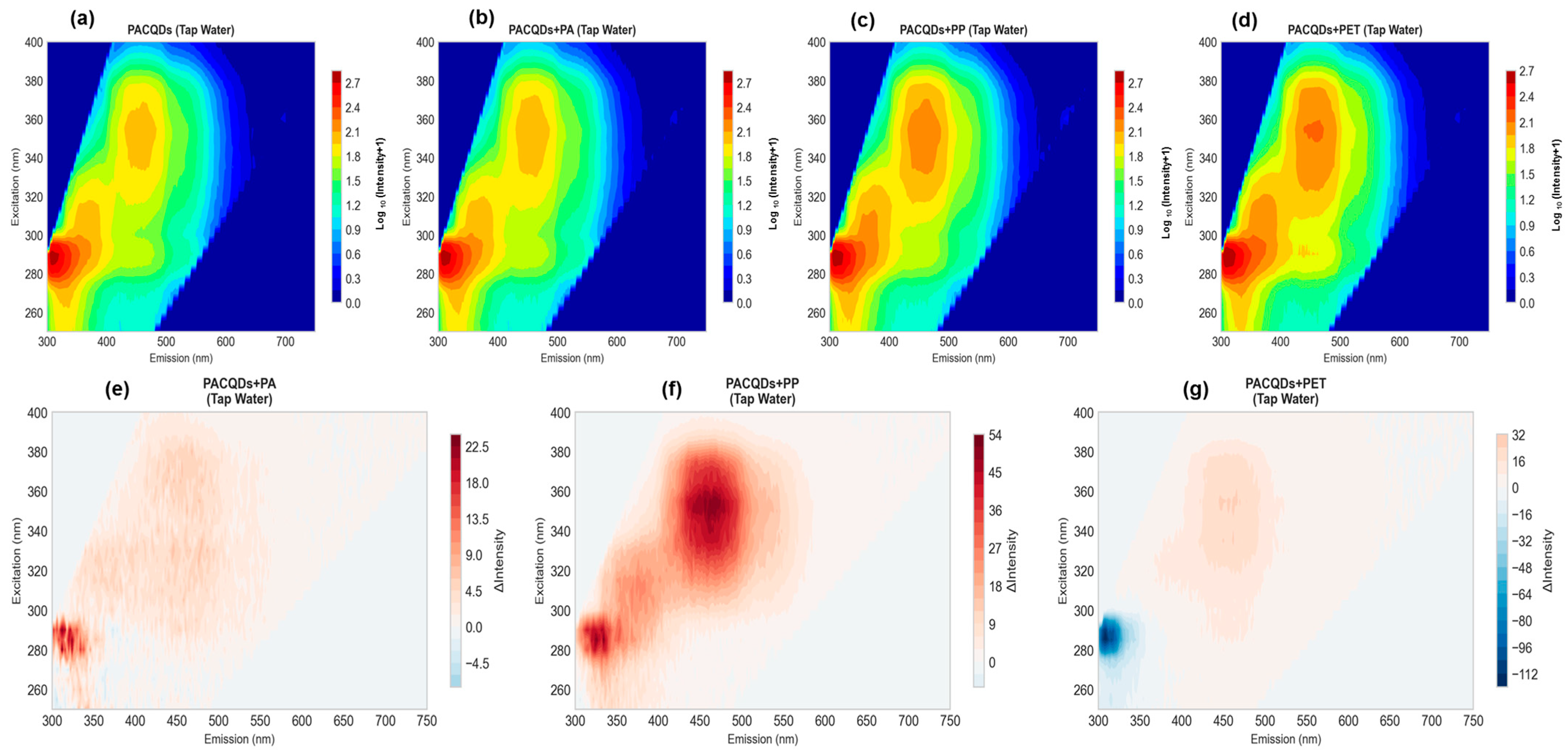
Figure 6a–d present the log-scaled EEM fluorescence landscapes of PACQDs and PACQDs–MP systems in tap water, with the corresponding fluorescence metrics summarized in
Table S3. In tap water, the intrinsic EEM profile of PACQDs exhibits a modest increase in background intensity and slight broadening of the emission contours, particularly toward longer wavelengths (
Figure 6a). Quantitatively, this is reflected by a decrease in maximum emission intensity (from 662.9 to 570.5 a.u.) accompanied by a substantial increase in total integrated fluorescence (from 1.23 × 10
5 to 1.74 × 10
5 a.u.) (
Table S3). Concurrently, the green-to-blue and red-to-blue intensity ratios increase markedly (0.276 → 0.841 and 0.013 → 0.050, respectively), indicating a redistribution of emission toward surface-state-dominated, longer-wavelength regions. These changes are attributed to dissolved inorganic ions and trace organic constituents in tap water that weakly screen surface charges or stabilize emissive defect states. The excitation maximum (290 nm), emission maximum (308 nm), and Stokes shift (18 nm) remain unchanged (
Table S3), confirming that the core photophysical framework of the PACQDs is preserved under matrix conditions. Upon interaction with MPs, the polymer-specific fluorescence fingerprints observed in deionized water are largely retained in tap water, albeit with matrix-induced modulation of intensity balance. For PAMPs (
Figure 6b), enhanced fluorescence intensity and an expanded emission footprint persist in tap water, consistent with hydrogen-bond-mediated surface rigidification. Although the maximum intensity decreases relative to pure water (740.3 → 582.6 a.u.), the total fluorescence increases (1.39 × 10
5 to 1.82 × 10
5 a.u.), and a slight red shift in emission maximum (308 to 310 nm) and increased Stokes shift (18 to 20 nm) are observed (
Table S3). The pronounced rise in the green-to-blue ratio (0.307 → 0.862) further supports matrix-assisted stabilization of PAMPs–PACQDs interactions rather than competitive quenching. For PP (
Figure 6c), the EEM landscapes show predominantly localized enhancement near the original emission maximum, indicating that hydrophobic adsorption remains the dominant interaction mechanism even in the presence of background ions. This behavior is corroborated by a moderate decrease in peak intensity (738.7 to 595.7 a.u.) but a strong increase in total integrated fluorescence (1.41 × 10
5 to 2.20 × 10
5 a.u.), the highest among all systems. The near-unity green-to-blue ratio in tap water (0.990) reflects significant redistribution of emission without displacement of the excitation or emission maxima, suggesting matrix-mediated amplification rather than alteration of the interaction pathway. In contrast, PET-associated PACQDs exhibit the strongest matrix-induced attenuation of core emission (
Figure 6d), with maximum intensity decreasing from 632.4 to 458.4 a.u., while total fluorescence increases from 1.17 × 10
5 to 1.87 × 10
5 a.u. (
Table S3). This behavior is accompanied by the most pronounced increase in green-to-blue ratio (0.228 to 1.099) and red-to-blue ratio (0.008 to 0.064), indicating broadening and flattening of the emission distribution (
Table S3). These quantitative trends align with the EEM contours showing suppressed core emission and enhanced red-shifted regions, supporting the persistence of π–π stacking and electron-transfer-assisted quenching mechanisms under matrix conditions. Compared to deionized water (
Figure 2e–h), all PACQDs–MPs systems in tap water exhibit elevated baseline fluorescence and reduced contrast between core and shoulder regions, as reflected by increased total intensities and higher green- and red-to-blue ratios across all samples. This partial attenuation of contrast arises from matrix-induced background fluorescence and competitive surface interactions. Nevertheless, the preservation of excitation–emission peak positions and polymer-specific intensity redistribution patterns demonstrates that relative spatial and ratiometric features of the EEMs, rather than absolute intensity, remain diagnostic. Therefore, the combined EEM landscapes and fluorescence metrics confirm that while tap water introduces measurable matrix effects, it does not obscure the mechanistic fluorescence signatures required for MPs discrimination. These results underscore the robustness of the PACQDs–EEM–chemometric framework as a transitional analytical platform bridging controlled laboratory studies and more complex environmental water matrices, while highlighting the need for future validation in waters with higher organic load and ionic strength.
3.6.1. ΔEEM Responses in Tap Water
Figure 6e–g presents the difference excitation–emission matrices (ΔEEM = PACQDs + MPs − PACQDs) for PAMPs, PPMPs, and PETMPs in tap water and compared with pure/deionized water (
Figure 3), enabling direct visualization of polymer-induced fluorescence modulation relative to the PACQDs baseline under different matrix conditions. In tap water, PA retains its enhancement-dominated behavior (
Figure 6e); however, the magnitude and spatial contrast of the ΔEEM features are reduced and more diffuse. This attenuation is attributed to competitive interactions with dissolved ions and background species, yet the absence of net quenching confirms that hydrogen-bond-driven interactions remain operative under matrix conditions. PP shows a broadened enhancement footprint with increased intensity in the higher-emission region (Em ≈ 380–480 nm) (
Figure 6f). This amplification likely arises from matrix-assisted aggregation or altered dielectric environments that enhance PACQDs emission upon PP association. Despite this broadening, the unimodal enhancement signature remains distinct from the bimodal PA response, preserving mechanistic discriminability. PET displays a markedly different ΔEEM signature. PET continues to induce selective quenching of the core emission (negative ΔEEM values) accompanied by weak enhancement in longer-wavelength regions, consistent with π–π stacking–assisted photoinduced electron transfer. This quenching behavior becomes more pronounced in tap water (
Figure 6g), with deeper negative ΔEEM values at the core region and expanded quenching contours. The amplification of quenching under matrix conditions suggests that dissolved ions or background species facilitate charge-transfer pathways or enhance PET–PACQDs electronic coupling, reinforcing the electron-transfer-driven mechanism. Across all polymers, tap water introduces increased baseline variability and reduced ΔEEM contrast; however, the sign, spatial distribution, and topology of the ΔEEM features remain polymer-specific. Critically, discrimination is preserved when based on relative enhancement–quenching patterns and spatial features rather than absolute intensity values. These results demonstrate that ΔEEM analysis provides a resilient, mechanism-sensitive framework capable of mitigating moderate matrix effects while retaining diagnostic power for microplastic discrimination.
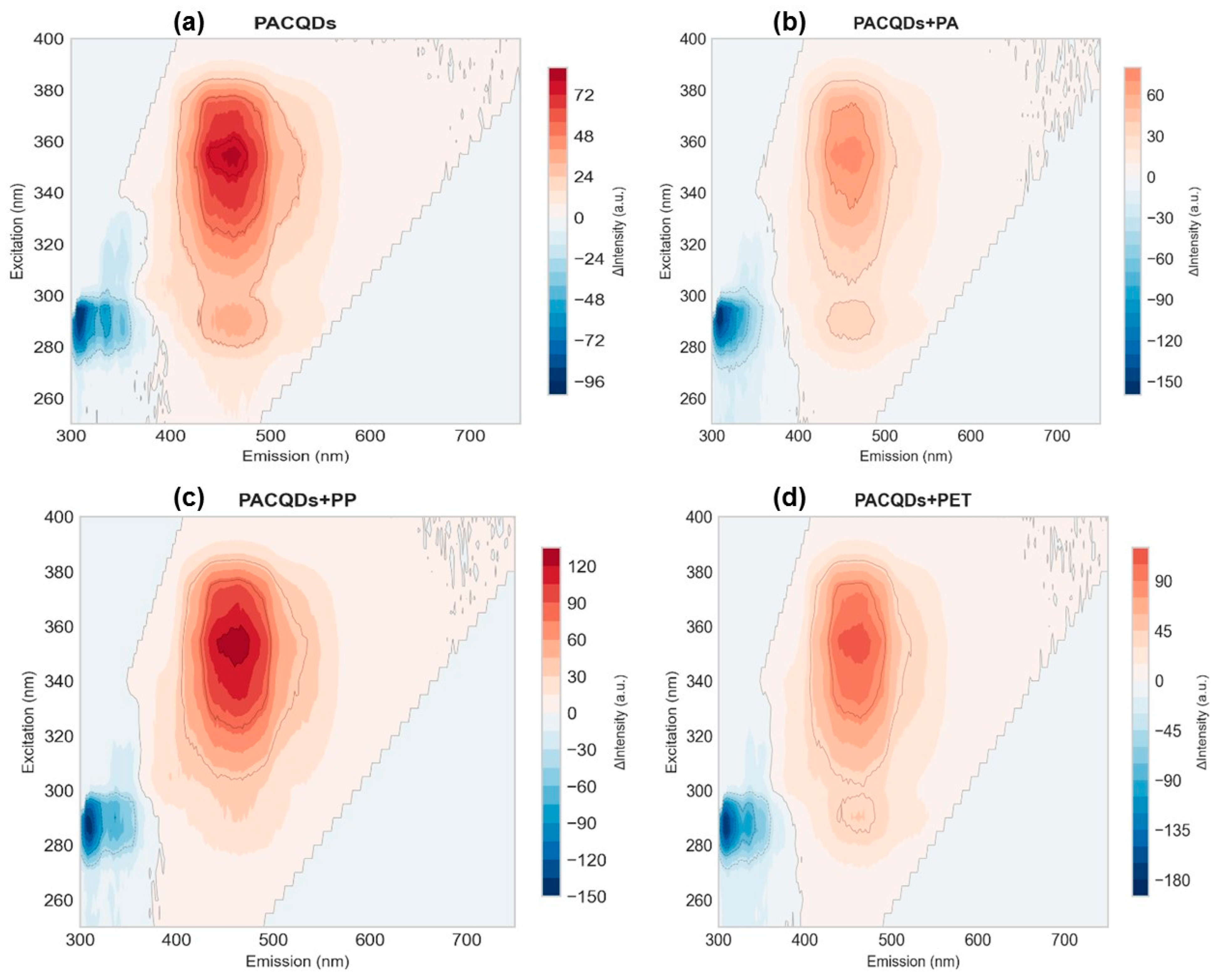
3.6.2. Matrix Effect Maps (ΔEEM = Tap Water − Pure Water)
Figure 7 presents matrix effect maps obtained by subtracting pure water EEMs from tap water EEMs (ΔEEM = tap water − pure water) for PACQDs alone and in the presence of PA, PP, and PET MPs. These maps directly visualize how the tap water matrix modifies fluorescence responses relative to controlled conditions. For PACQDs alone (
Figure 7a), tap water induces a pronounced enhancement in the higher-emission region (Em ≈ 380–480 nm) accompanied by localized quenching near the core emission (Ex ≈ 290 nm/Em ≈ 300–320 nm). This pattern is consistent with matrix-induced modulation of surface-state emission, likely arising from ionic strength effects, weak coordination with dissolved ions, or residual organic constituents present in tap water. The overall excitation–emission topology of PACQDs remains intact, indicating that the matrix alters emission intensity distribution rather than fundamentally changing the emissive states.
In the presence of PAMPs (
Figure 7b), the matrix effect map closely resembles that of PACQDs alone but with attenuated magnitude. The persistence of broad enhancement across the shoulder region (Em ≈ 360–420 nm) indicates that hydrogen-bond-mediated PACQDs–PAMP interactions remain dominant, while competitive binding or electrostatic screening by matrix species partially suppresses intensity contrast. The absence of strong negative features confirms that tap water does not induce additional quenching pathways for PA-associated PACQDs. For PPMPs (
Figure 7c), tap water produces the largest positive ΔEEM enhancement among the tested polymers, with an intense and spatially extended increase in emission centered around Em ≈ 420–480 nm. This pronounced enhancement suggests that matrix components may promote PACQDs clustering or modify the local dielectric environment upon PP association, amplifying hydrophobic adsorption–driven fluorescence enhancement. Despite this amplification, the enhancement remains unimodal and distinct from the bimodal PAMP response, preserving mechanistic differentiation. In contrast, PET exhibits a markedly different matrix response (
Figure 7d). While some enhancement is observed in the shoulder region, the matrix effect map reveals deepened quenching in the core emission region, exceeding that observed in pure water. This behavior indicates that tap water constituents facilitate or strengthen π–π stacking–assisted photoinduced electron transfer between PET and PACQDs, possibly through ionic screening that enhances electronic coupling. The enhanced quenching reinforces the electron-transfer-driven mechanism proposed for PET. These matrix effect maps demonstrate that tap water introduces polymer-dependent modulation of fluorescence intensity, rather than uniform suppression or enhancement. Crucially, the direction (enhancement vs. quenching), spatial localization, and relative magnitude of matrix-induced changes remain mechanistically consistent with the interaction pathways identified in pure water. This confirms that the PACQDs–ΔEEM framework retains discriminatory power under moderate matrix complexity when analysis is based on spatial fingerprints and relative intensity patterns rather than absolute fluorescence values.
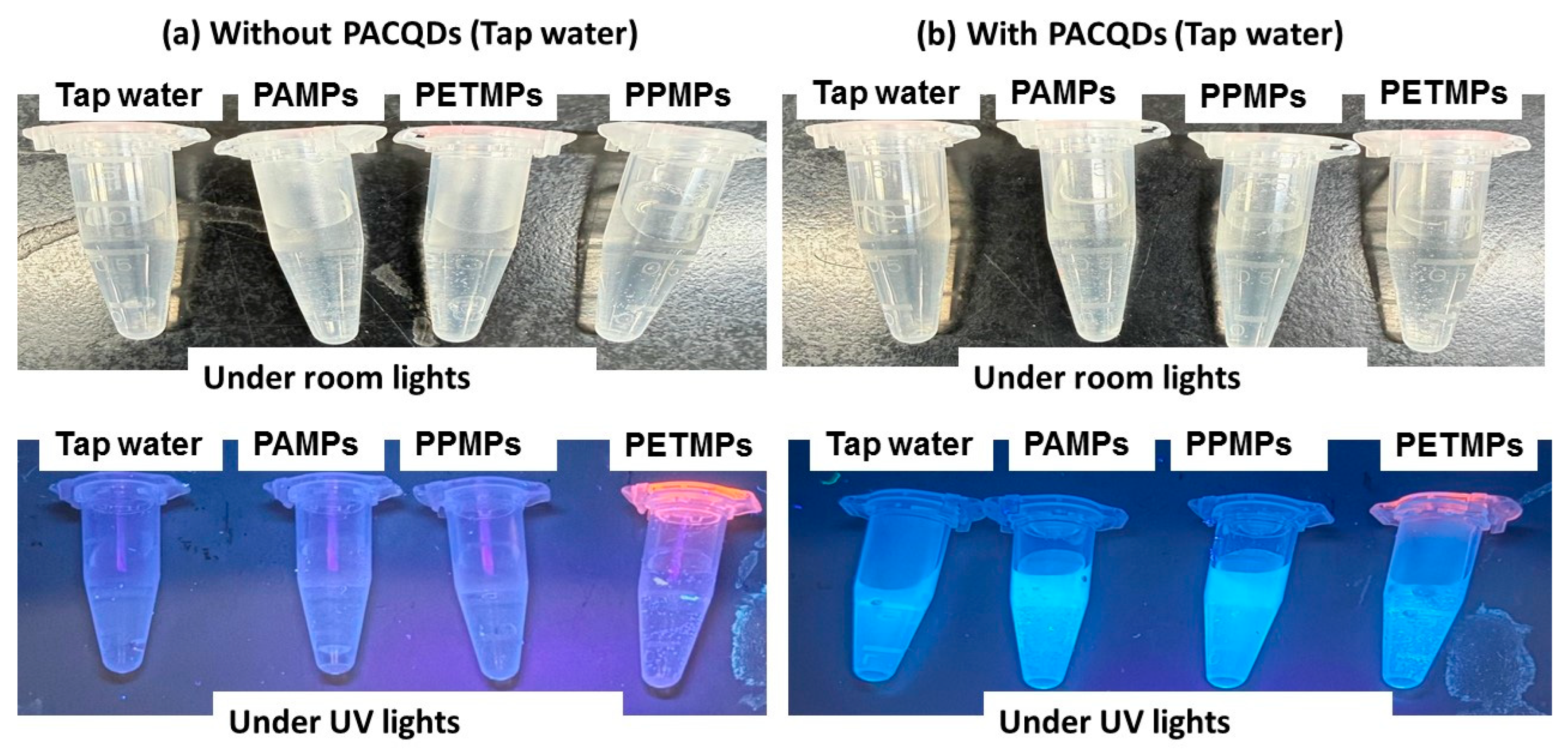
3.6.3. Visual Confirmation of Polymer-Specific Fluorescence Modulation in Tap Water
The tap water fluorescence images under room and UV lights are shown in
Figure 8. The photographic images provide direct visual confirmation of the matrix-tolerant fluorescence response of the PACQDs–MP system in tap water. Under ambient lighting, all samples remain visually transparent, indicating negligible light scattering or coloration from the MPs or the tap water matrix. Under UV illumination, neither tap water nor MP-spiked tap water without PACQDs exhibits detectable fluorescence, confirming that background emission from dissolved constituents or the polymers themselves is minimal. Upon introduction of PACQDs, a strong blue fluorescence emerges, which is distinctly modulated by the different MPs. PAMPs and PPMPs induce noticeable fluorescence enhancement, consistent with interaction-driven surface rigidification and hydrophobic adsorption mechanisms, respectively. In contrast, PETMPs produce visible fluorescence quenching, in agreement with the EEM and ΔEEM results that attribute this behavior to π–π stacking and electron-transfer-assisted interactions. The clear visual differentiation among the polymer systems demonstrates that the PACQDs platform preserves polymer-specific fluorescence signatures in tap water, reinforcing its robustness against moderate matrix effects and highlighting its potential for rapid, qualitative screening in realistic aqueous environments.