1. Introduction
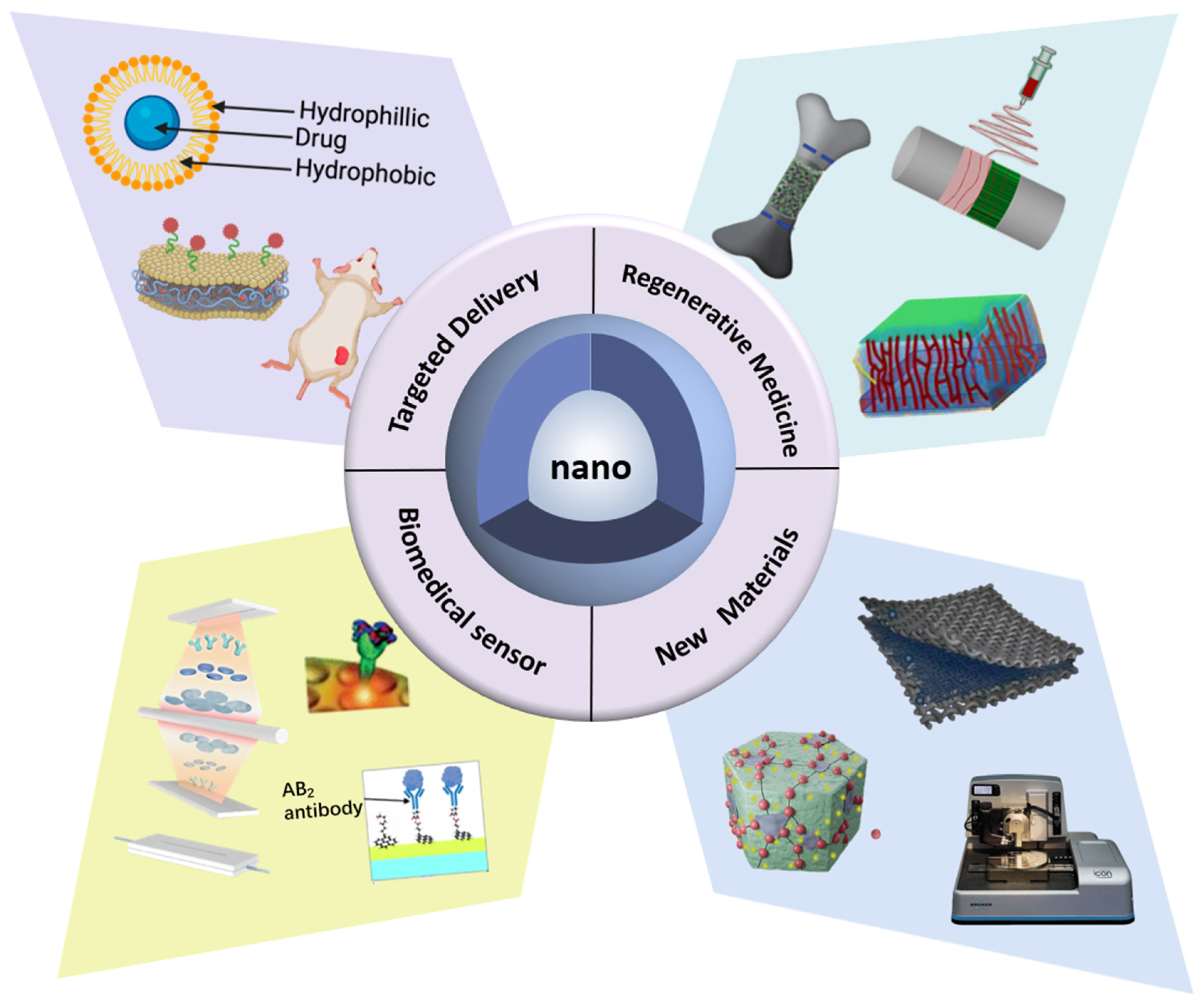
Nanotechnology is a field of materials science and technology based on the nanoscale (1 to 100 nanometers), involving the production and design of materials or devices at the nanoscale. Over the past few decades, with the rapid development of materials science, chemistry, and biology, researchers have innovatively applied nanotechnology to biomedical engineering, successfully bridging the vast gap from fundamental materials research to practical clinical applications. This has given rise to the vibrant and interdisciplinary frontier of “nanomedicine”. This article primarily introduces the design and characterization of novel nanomaterials, as well as the applications of nanomaterials in three key areas: targeted drug delivery, tissue engineering and regenerative medicine, and disease diagnosis and sensing. The overall structure and core content of this article are summarized in
Figure 1.
Targeted drug delivery is systematically examined in
Section 2. The section elucidates how nanocarriers enable efficient drug loading and precisely controlled release, thereby significantly enhancing therapeutic efficacy while minimizing systemic side effects.
Biomaterials for tissue repair and regeneration constitute the core of
Section 3. Here, nanostructured scaffolds are designed to successfully mimic the native extracellular matrix, providing critical support for guiding cell growth and facilitating the repair and regeneration of tissues and organs.
In
Section 4, the focus shifts to nano-biosensing technology for disease diagnosis and treatment. This section highlights how the integration of nanomaterials endows biosensing platforms with unprecedented sensitivity and specificity, driving progress toward ultra-early detection, real-time monitoring, and portable diagnostic solutions.
Central to the entire work is the design, synthesis and characterization of novel nanomaterials, detailed in
Section 5. This section emphasizes that precise control over material composition, morphology, and surface functionality lays the essential foundation for all the aforementioned applications.
Current challenges and future prospects are critically analyzed in the concluding
Section 6. It explores the key bottlenecks in translating nanomedicine from bench to bedside and envisions the forward trajectory of this interdisciplinary field.
2. Targeted Drug Delivery
Common nanomedicine carriers achieve efficient drug delivery, targeted delivery and enhanced safety by regulating key properties such as size, surface charge, hydrophobicity and surface functionalization. To systematically compare the characteristics of different carriers,
Table 1 classifies and summarizes them and explains their applications in combination with representative studies.
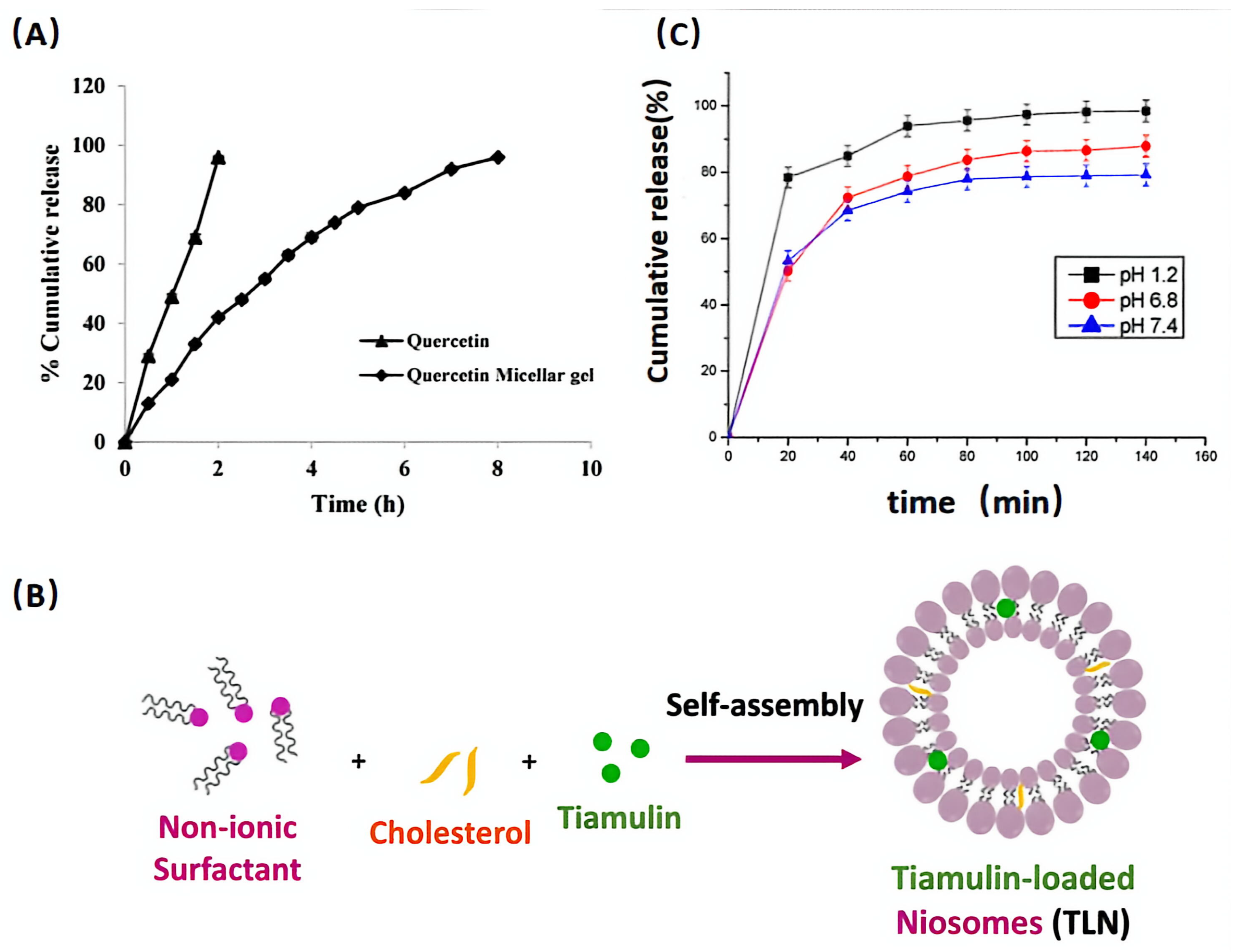
Specifically, polymeric nanoparticles/micelles are often employed to improve the delivery of poorly soluble drugs due to their tunable properties. As shown in
Figure 2A, the quercetin-loaded Pluronic F68 micellar nanogel developed by Kapare et al. significantly enhanced the drug’s solubility and stability and demonstrated a more sustained release profile compared with free quercetin (33.20 ± 0.86% released within 1.5 h vs. 96.12 ± 0.43% for the free drug within 2 h) [
1]. Liposomes/niosomes, owing to their high biocompatibility, show advantages in oral delivery. The tiamulin-loaded niosomes presented in
Figure 2B effectively increased the drug’s bioavailability and prolonged its circulation time in infected broilers [
2].
Table 1.
Classification for targeted drug delivery.
Table 1.
Classification for targeted drug delivery.
| Types of Nanocarriers | Advantages | Disadvantage | References |
|---|
| Liposomes/liposome-like substances | High biocompatibility | Instability | [2] |
| Polymer nanoparticles/micelles | Tunable property; Stability | Cytotoxicity | [1] |
| Albumin nanoparticles | High potential drug; Biocompatibility | The release of drugs is difficult to control precisely. | [3] |
| Macromolecular network | Stimulus responsiveness; Biocompatibility | The kinetics of drug release is relatively slow. | [4,5] |
| Functionalization and intelligent nanosystems | Versatility; Strong biological barrier penetration | The design and manufacturing are complex. | [6,7,8] |
To achieve active targeting, specific ligands can be conjugated onto the carrier surface. For instance, the “Antibody-Brush Prodrug Conjugates” (ABCs) platform developed by J. A. Johnson’s team has addressed the limitations of traditional antibody-drug conjugates by substantially increasing drug-loading capacity and payload diversity [
3]. Moreover, carriers can be further engineered to respond to environmental stimuli (e.g., pH) for controlled release. Researcher A.D. utilized β-cyclodextrin inclusion technology to achieve specific sustained release of 4-methylumbelliferone in the gastric environment [
4]. At the mechanistic level, simulation studies by Chen Lin’s group revealed that the self-assembled morphology and pH-responsive drug release behavior of μ-ABC miktoarm star polymers are governed by the length of the hydrophilic arms and electrostatic interactions, providing theoretical insights for the design of intelligent drug carriers [
5].
Nanotargeted delivery systems have shown promising therapeutic potential across diverse disease models, particularly in oncology, neurological disorders, and inflammatory conditions. One prominent example is the sHDL@Pt nanodiscs developed by Kun’s team. These nanodiscs employ NIR-II/SPECT dual-modal imaging to guide the delivery of platinum (IV) prodrugs. By activating the cGAS-STING pathway, they enhance antitumor immunity and have demonstrated significant efficacy in multiple preclinical tumor models [
6]. In another study, a collaboration between Guizhou Medical University and Army Medical University yielded a biomimetic nanodrug, HCeOx-D@PM. This agent functions by scavenging reactive oxygen species and releasing repair factors on demand, effectively alleviating pulmonary edema in models of acute respiratory distress syndrome (ARDS) and improving survival rates. This work presents a novel strategic avenue for the precise treatment of ARDS [
7]. Addressing the key challenges in Alzheimer’s disease (AD) therapy—such as poor blood–brain barrier (BBB) penetration, inadequate targeting, and single-target limitations—researchers have developed a novel hybrid cell membrane-based nanocarrier. This system efficiently crosses the BBB, homes to inflammatory foci in the brain, and, through the co-delivery of two therapeutic agents, enables a multi-target synergistic therapy, offering a new strategic direction for AD treatment [
8].
Looking ahead, nanodrug delivery systems are advancing toward greater intelligence and personalization. Through machine learning-driven high-throughput screening, optimal carrier parameters can be reverse-designed from vast “composition-structure-performance” datasets, enabling the selection of the most effective nanoparticle combinations. Furthermore, by integrating patient-specific multi-omics data, medical imaging (e.g., tumor vascular heterogeneity), and organoid models, these systems can predict therapeutic efficacy and thereby support the customization of individualized treatment regimens.
Although synthesis techniques for nanomedicine have become increasingly mature, their translation from laboratory to clinical application still faces multiple challenges, primarily including quality control in large-scale production, long-term biosafety after in vivo implantation, and the predictability of drug release kinetics within complex physiological environments. These factors collectively contribute to significant uncertainties in the evaluation, regulation, and ultimate market approval of novel nanomedicines. Next, I will focus on several categories of the most clinically promising nanomaterials, summarizing their specific formulations and current clinical trial stages.
Currently, various common nanoplatforms, including liposomes, polymeric micelles, nanoparticles, inorganic nanomaterials, nanodiscs, as well as novel targeted and stimuli-responsive nanocarriers, have demonstrated diverse stages of progress in clinical translation (summarized in
Table 2).
Figure 2.
(
A) Comparison of drug release rates between quercetin-loaded Pluronic F68 micellar nanogel and free quercetin. (
B) Schematic diagram of the self-assembly structure of tiamulin-loaded niosomes (TLN). (
C) β-cyclodextrin inclusion complex enables sustained release of the oral drug in different pH environments [
1,
2,
4].
Figure 2.
(
A) Comparison of drug release rates between quercetin-loaded Pluronic F68 micellar nanogel and free quercetin. (
B) Schematic diagram of the self-assembly structure of tiamulin-loaded niosomes (TLN). (
C) β-cyclodextrin inclusion complex enables sustained release of the oral drug in different pH environments [
1,
2,
4].
Table 2.
Advances in Clinical Translation of Nanomedicine.
Table 2.
Advances in Clinical Translation of Nanomedicine.
| Type of Nanomedicine | Drug/Active Agent | Trade Name/Code | Indication(s) | Stage of Clinical Translation |
|---|
| Liposome | Doxorubicin | Doxil®/Caelyx® | Ovarian cancer, metastatic breast cancer, Kaposi’s sarcoma | Approved (FDA, 1995) |
| | Doxorubicin | Myocet® | Breast cancer | Approved (EU, 2001) |
| | Doxorubicin | Lipo-dox | Various cancers | Approved (Various regions, 2013) |
| | Daunorubicin | DaunoXome® | Kaposi’s sarcoma | Approved |
| | Vincristine | Onco-TCS® | Non-Hodgkin’s lymphoma | Approved |
| | Irinotecan | Onivyde® (MM-398) | Metastatic pancreatic cancer | Approved (FDA, 2015) |
| | Daunorubicin/Cytarabine | Vyxeos® | Therapy-related AML or AML with myelodysplasia-related changes | Approved (FDA, 2017) |
| | Doxorubicin | ThermoDox® (PICN) | Liver cancer, breast cancer | Phase III |
| Polymeric Micelle | Paclitaxel | Genexol®-PM/CynviloqTM | Breast cancer, lung cancer, pancreatic cancer | Approved (South Korea); Phase II/III (US) |
| | Paclitaxel | Paclical® | Ovarian cancer | Approved (Russia) |
| | Paclitaxel | NK105 | Gastric cancer | Phase III |
| | Oxaliplatin | NC-4016 | Solid tumors | Phase I |
| Polymeric Nanoparticle | Camptothecin | CRLX101 | Ovarian cancer, renal cell carcinoma | Phase II |
| | siRNA (anti-RRM2) | CALAA-01 | Solid tumors | Phase I |
| Inorganic Nanoparticle | Silica (Fluorescent) | Cornell Dots (C dots) | Imaging for melanoma, brain tumors | Preclinical |
| | Silica-Gold Hybrid | Aurolase | Lung cancer (photothermal therapy) | Preclinical |
Among these, liposomes represent the most mature and commercially successful nanodrug platform. As early as the 1990s, doxorubicin hydrochloride liposomes (e.g., Doxil, Myocet, and Lipo-dox, approved in 1995, 2001, and 2013, respectively) were brought to market. Doxorubicin is an anthracycline antibiotic with antimitotic cytotoxic activity, successfully used to induce remission in various malignancies, including acute leukemia, lymphoma, sarcomas, pediatric cancers, and solid tumors—particularly breast and lung cancers. Further exemplifying clinical success, irinotecan liposome (Onivyde®) was approved in 2015 for advanced pancreatic cancer, and the combination liposome Vyxeos® (daunorubicin/cytarabine) was approved in 2017 for specific types of acute myeloid leukemia, highlighting the advantages of liposomes in drug loading and controlled drug ratio formulations.
Polymeric micelles and nanoparticles have also achieved significant progress. For instance, Genexol®-PM, developed by Samyang Biopharm, was the first polymeric micelle approved for human use (in Korea). It is a poly(ethylene glycol)-poly(lactide) micelle encapsulating paclitaxel without Cremophor EL. It entered Phase II/III trials in the U.S. under the trade name Cynviloq™ via the 505(b)(2) regulatory pathway, though conclusive data from these trials have not yet been disclosed. Meanwhile, the cyclodextrin-based polymer nanoparticle CRLX101, designed to enhance the delivery and efficacy of the chemotherapeutic camptothecin while reducing toxicity, is undergoing Phase II trials for indications such as ovarian cancer and renal cell carcinoma.
In the realm of inorganic nanomaterials, silica-based nanoparticles like Cornell Dots (for imaging in melanoma and brain tumors) and gold-silica hybrids like Aurolase (for photothermal therapy of lung cancer) are currently in the preclinical experimental stage.
Furthermore, actively targeted and stimuli-responsive nano-formulations are rapidly evolving. Many antibody-conjugated or ligand-modified targeted nanodrugs are in Phase I/II clinical studies, aiming to improve tumor accumulation and reduce off-target toxicity. Stimuli-responsive nanomaterials (e.g., pH-, enzyme-, or temperature-sensitive) are generally at earlier stages, mostly in preclinical or early-phase clinical proof-of-concept trials. Their controllable release properties represent a significant direction for the future of intelligent nanomedicine.
3. Biomaterials for Tissue Repair and Regeneration
The rapid advancement of tissue engineering and regenerative medicine has been significantly propelled by innovations in biomaterials. Serving as a foundational element in this field, biological scaffolds—characterized by their highly biomimetic three-dimensional porous architecture, excellent biocompatibility, tunable degradation profiles, and favorable properties for cell adhesion and tissue induction—have emerged as a crucial platform for achieving precise tissue repair. In recent years, a diverse array of functional biomaterials has been developed and successfully applied to regenerate tissues such as bone, cartilage, and skin [
9].
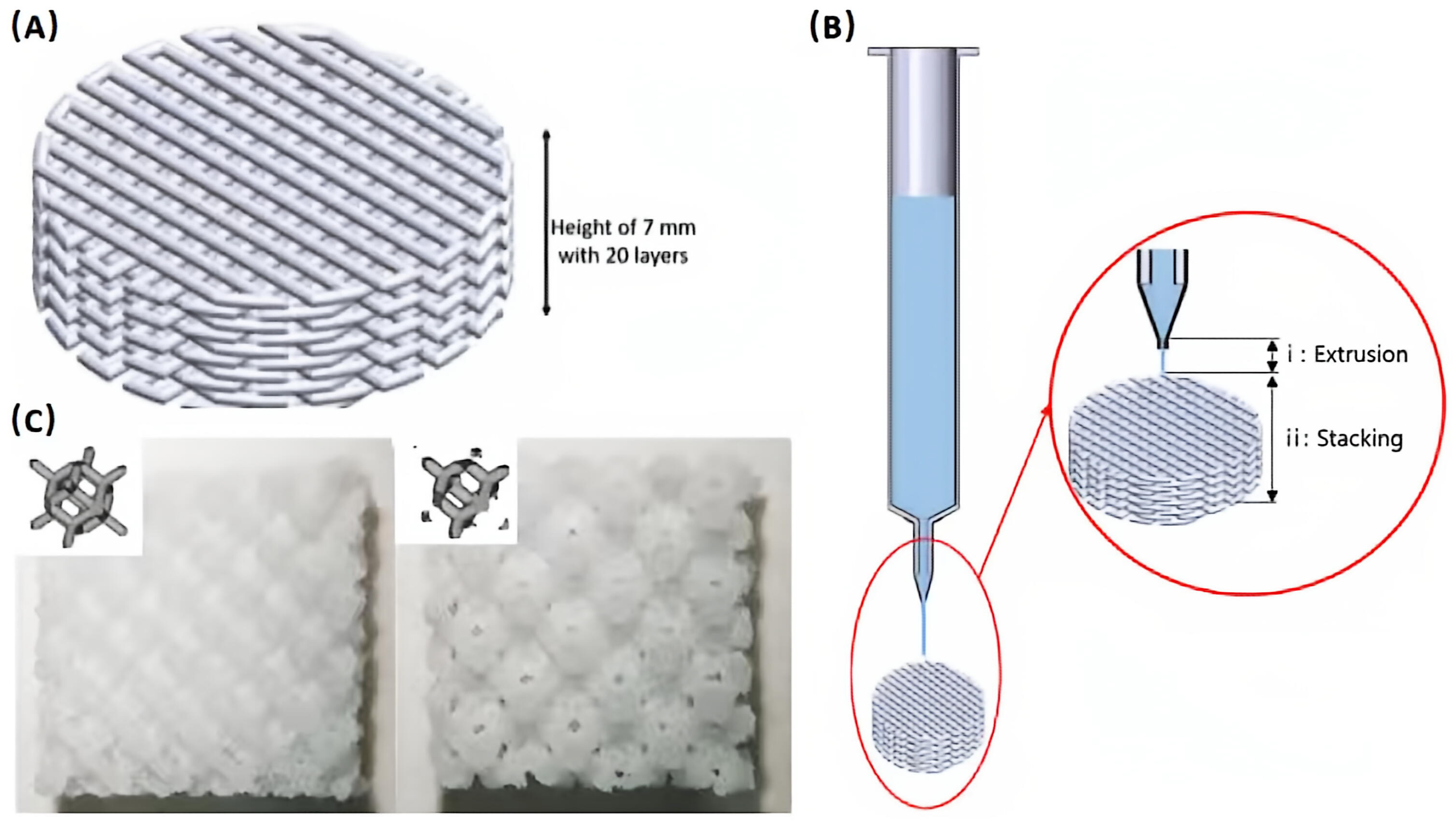
In bone tissue engineering, composite material strategies are widely employed to mimic the composition and mechanical properties of the natural bone matrix. For instance, as illustrated in
Figure 3A, researchers J.W. Jang et al. fabricated composite scaffolds by physically blending polycaprolactone (PCL) with varying proportions of dimethyl sulfoxide (DMSO
2). This approach yielded materials with enhanced hydrophilicity, higher elastic modulus, and controllable degradation rates, offering a novel strategy for the directional tailoring of biomaterial properties in tissue engineering [
10]. To further optimize the scaffold manufacturing process, the same team developed a unified numerical model capable of accurately predicting the extrusion speed and fiber diameter of PCL/DMSO
2 composites during 3D bioprinting, based on specific printing parameters and material characteristics. This model provides a reliable tool for the rational design of scaffolds, as shown in
Figure 3B [
11]. Meanwhile, Gatto et al. systematically investigated the synergistic effects of hydroxyapatite (HA) concentration and unit cell design on the properties of PCL/HA scaffolds fabricated via laser powder bed fusion. Their work, summarized in
Figure 3C, elucidated the critical roles these factors play in modulating the scaffolds’ mechanical performance, degradation behavior, and cellular response [
12].
Beyond synthetic polymers, combinations of naturally derived materials with inorganic components have also shown considerable promise. Boretti et al. demonstrated that chitosan-gelatin-genipin scaffolds, under perfusion-based dynamic culture conditions, significantly enhanced the osteogenic differentiation of human bone marrow mesenchymal stem cells and promoted extracellular matrix mineralization [
13]. In another study, Toader et al. developed a graphene oxide-reinforced fish gelatin/κ-carrageenan composite scaffold. Owing to its suitable porous structure and tunable degradation profile, this scaffold presents a novel dual-enhancement strategy for osteochondral repair [
14]. Significant progress has also been made in endowing scaffolds with therapeutic functions. For example, the team led by González, P. developed a multifunctional bone scaffold suitable for magnetic hyperthermia by embedding iron oxide nanoparticles into 3D-printed PLA/HA composite structures. Through a combination of experimental tests and simulations, they verified the scaffold’s capacity to achieve the localized temperature increase required for therapeutic applications, demonstrating a promising strategy for integrating bone repair with synergistic tumor therapy [
15]. Aerogels and functionalized scaffolds have facilitated significant breakthroughs in bone regeneration. A review by Souto-Lopes et al. highlights the potential of composite aerogel scaffolds to balance high porosity with robust mechanical strength, thereby promoting effective bone regeneration in vivo [
16]. In an innovative approach, Visai et al. combined human follicular fluid-derived mesenchymal stem cells with titanium scaffolds coated with 58S bioactive glass. Their work confirmed that this system effectively enhances osteogenic differentiation, paving the way for developing high-performance scaffolds from discarded biological materials [
17]. Recent studies indicate that an ideal scaffold must not only provide appropriate mechanical support during the initial implantation phase but also ensure that its degradation rate closely matches the growth rate of the newly formed tissue so as to avoid issues such as stress shielding or structural collapse. Utilizing a developed “soft-hard integrated” composite scaffold—comprising an upper layer of bioactive hydrogel and a lower layer of biodegradable magnesium alloy—researchers have achieved seamless integration of a stem cell- and inducer-loaded bioactive hydrogel with a customized porous magnesium alloy framework. This design successfully mimics the native mechanical gradient of the tissue. Moreover, it effectively addresses the challenge of unstable integration at the cartilage-bone interface [
18].
In addition to their pivotal role in bone tissue repair, tissue engineering scaffolds also play an indispensable role in wound healing and skin regeneration. Skin wounds, particularly chronic refractory wounds, pose a serious clinical challenge due to their complex pathological microenvironment and individual variability. To address this challenge, research strategies have evolved from providing single-function dressings to actively guiding and regulating the healing process through multimodal synergistic effects. Currently, mainstream strategies focus on the synergy between physical structure and biochemical signals. For instance, research by Xue Jiajia’s team has shown that electrospun fibers with uniaxial or radially aligned structures can provide clear physical guidance for cell migration. Further constructing concentration gradients of bioactive molecules (such as growth factors) on such scaffolds enables dual guidance through both physical and biochemical signals, thereby effectively accelerating wound closure [
19]. To tackle the core issue of persistent oxidative stress and abnormal inflammation in chronic wounds, more advanced strategies involve developing temporally responsive intelligent nanosystems. For example, a team from Naval Medical University designed an MXene-based sequential nano-regulator (TMPT), which, under near-infrared light triggering, can sequentially achieve instant photothermal antibacterial effects, sustained reactive oxygen species scavenging, and controlled release of anti-inflammatory drugs. This dynamically remodels the wound microenvironment and promotes angiogenesis and tissue regeneration [
20]. The latest cutting-edge technologies focus on utilizing and enhancing the intrinsic biophysical signals of wounds. Wounds generate an endogenous electric field due to short-circuiting of the transepithelial potential, which serves as an important physical factor regulating healing. Li Zhou’s team developed an endogenous electrostimulating dressing based on self-regulated sodium ion gradients, which selectively enhances the sodium ion gradient at the wound site, thereby amplifying this endogenous electric field and promoting various stages of repair at the energy level. This ion-manipulation-based endogenous electrostimulation strategy offers a novel physical intervention perspective for tissue repair [
21].
Looking forward, a deeper understanding of material–cell interactions and the development of intelligent, bioactive composites will further propel tissue engineering toward personalized, precise, and predictive solutions for complex tissue defects and chronic disease states [
22].
4. Nano-Biosensing Technology for Disease Diagnosis and Treatment
For biosensors used in disease diagnosis, the sensing mechanism and signal transduction are central to their function, determining how recognized biological signals are converted into measurable signals. Electrochemical sensing is one of the most commonly used techniques, detecting target analytes by measuring changes in current, potential, or impedance. H.M. fabricated a biosensor based on Prussian blue/glucose oxidase using inkjet printing technology. Modification with a Nafion multilayer film effectively enhanced the selectivity and linear range for urinary glucose detection [
23]. As shown in
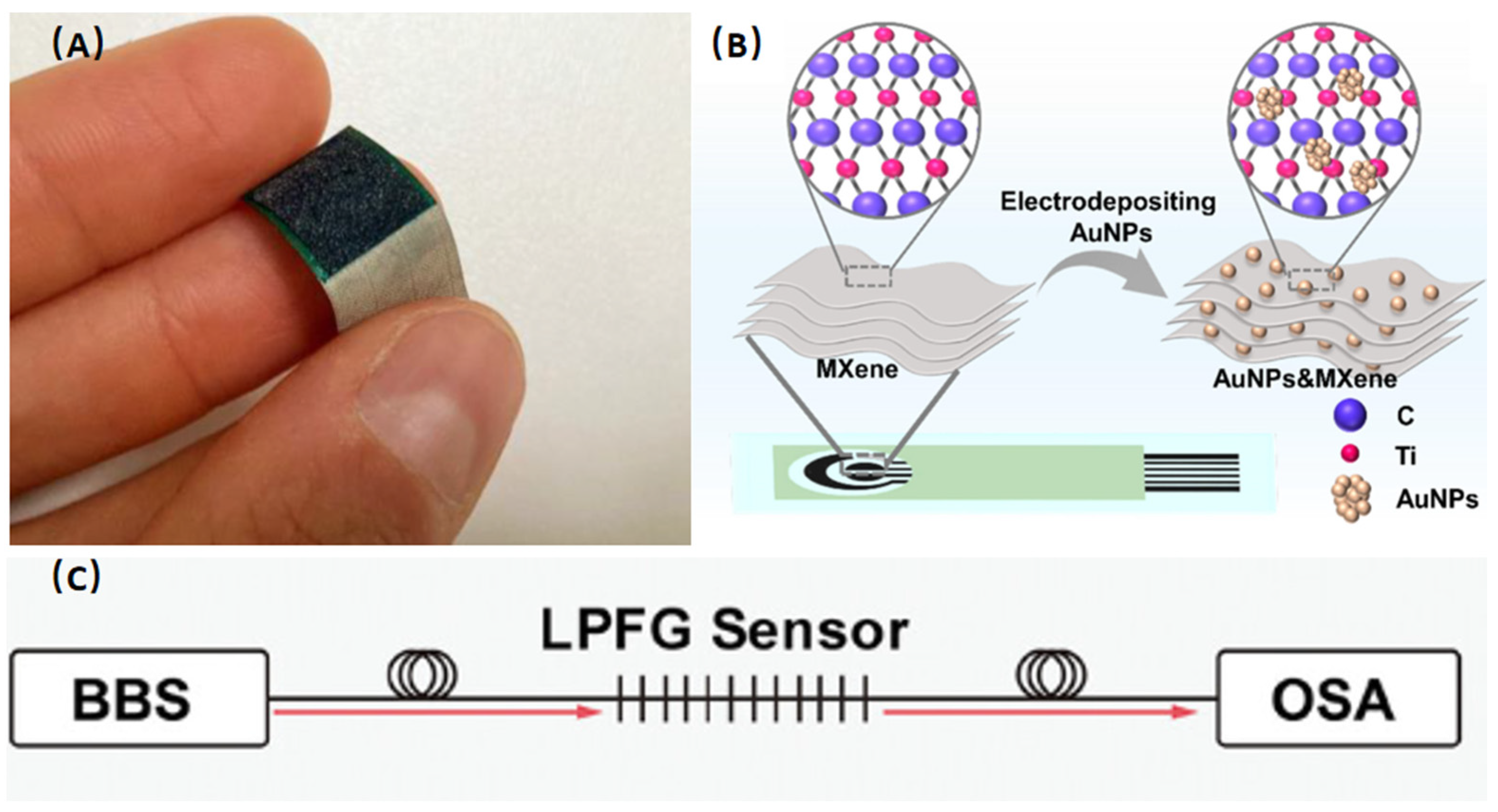
Figure 4A, R.B. developed a textile-based organic electrochemical transistor (OECT) with a porous PEDOT:PSS structure and a glucose oxidase-modified electrolyte, achieving highly sensitive and specific detection of sweat glucose [
24]. As shown in
Figure 4B, Chen Y. developed an integrated portable electrochemical sensor (ip-ECS), which combined gold nanoparticles (AuNPs) with an MXene-modified screen-printed electrode (SPE) and incorporated a low-power electronic system for clinical monitoring of serum biomarkers [
25].
Optical sensing, a relatively emerging approach, involves monitoring changes in optical signals such as fluorescence, absorbance, or chemiluminescence. Compared to electrochemical methods, optical sensing is less susceptible to interference from common matrix effects in biological samples [
26]. As illustrated in
Figure 4C, Chen et al. developed an interface-modulated plasmon-enhanced optical fiber biosensor capable of detecting BDG—a key biomarker of invasive fungal infection—with a detection limit as low as 1.66 × 10
−12 mg/mL [
27]. In another study, T-COF was synthesized and modified with chitosan (CS) to form COFC nanospheres, which enhanced electrode surface conductivity and biocompatibility. When combined with machine learning algorithms, this system enabled ultrasensitive detection of RBP
4, an early biomarker for type 2 diabetes [
28]. Researcher Y. Song further designed a dual-functional colorimetric biosensor based on functionalized magnetic MOF materials, achieving wide-range detection of exosomes (1.08 × 10
3–1.08 × 10
10 particles/mL) with an ultra-low limit of detection (8.21 × 10
2 particles/mL) [
29].
In addition to the sensing mechanism, the selection of substrate materials and the integration technology for electronic components are equally critical in sensor construction. The flexibility, durability, and integration reliability of these elements directly determine the practical applicability and user experience of the final device. For example, a team led by Professor Luo Yongfeng has developed a self-powered textile electrochemical biosensor based on low-current iontophoresis and a multi-channel sensing fiber array. This system can extract interstitial fluid with a resting current as low as 75 μA, enabling continuous and simultaneous monitoring of glucose, lactate, uric acid, and pH for up to six hours [
30]. At the device-integration level, the “low-temperature plasma-activated and water-plasticized bonding” technique reported by M. Takakuwa et al. provides a key manufacturing solution for ultra-flexible sensors. This method allows full-surface direct bonding between gold electrodes and parylene polymer substrates at temperatures as low as 85 °C, supports high-resolution routing with feature sizes below 5 μm, and exhibits outstanding mechanical durability (only 3% resistance change after 10,000 bending cycles) along with excellent electrical performance (contact resistance of 0.33 mΩ·cm
2) [
31]. Together, these advances are driving flexible sensing systems toward greater reliability, integration, and wearability.
Figure 4.
(
A) Structure of textile organic electrochemical transistors for non-invasive glucose sensing; (
B) Schematic diagram of the structure of AuNPs and MXene-modified screen-printed electrodes; (
C) Schematic diagram of long-period fiber Bragg grating sensors [
24,
25,
27].
Figure 4.
(
A) Structure of textile organic electrochemical transistors for non-invasive glucose sensing; (
B) Schematic diagram of the structure of AuNPs and MXene-modified screen-printed electrodes; (
C) Schematic diagram of long-period fiber Bragg grating sensors [
24,
25,
27].
Building upon advanced diagnostics, targeted therapeutic platforms employ functionally designed nanocarriers to precisely deliver therapeutic agents to disease sites, where controlled release is triggered by specific microenvironmental stimuli. This strategy enhances treatment efficacy while minimizing off-target toxicity. The development of these platforms is often disease-specific. For cancer therapy, particularly aggressive brain tumors like glioblastoma, Ding Zhenshan’s team developed dual-responsive nanoparticles (PC/MNPs) capable of crossing the blood–brain barrier and penetrating tumor tissue. Leveraging the tumor microenvironment to trigger drug release, they achieved targeted therapy for glioblastoma [
32]. To enhance delivery efficiency universally, understanding and overcoming biological barriers is crucial. The research group led by Warren C. W. Chan at the University of Toronto used a multi-omics strategy to identify six key serum proteins that adsorb onto nanoparticle surfaces and mediate their clearance by binding to liver macrophage receptors. Based on this insight, they designed “decoy” nanoparticles, successfully enhancing the delivery efficiency of therapeutic nanoparticles to extrahepatic tissues [
33]. Further advancing this concept, nanoparticles can be engineered to move directionally toward target areas using external fields such as light or magnetic fields—these are known as nanomotors. For example, Feng Guangxue’s team developed a light-driven Janus-type organic nanomotor (JANUS-FA) that generates localized nanomechanical forces to disrupt cancer cell membranes directly and induce pyroptosis, pioneering a novel strategy termed photomechanical cancer therapy (PMCT) [
34]. For neurodegenerative diseases, such as Parkinson’s disease, a key challenge is delivering therapeutics across the blood–brain barrier and addressing protein aggregation. Teams led by Wan Mimi and Mao Chun at Nanjing Normal University developed chemotactic chaperone nanomotors capable of sensing chemical gradients at lesion sites and autonomously crossing the blood–brain barrier. Through multi-mechanistic actions, including decomposing α-synuclein (α-syn) aggregates and inhibiting their misfolding, these nanomotors offer a synergistic therapeutic approach for Parkinson’s disease [
35].
Looking ahead, the evolution in this field is characterized by a dual trajectory: biosensors are trending towards miniaturization, multifunctional integration, and flexible wearability for continuous monitoring; simultaneously, therapeutic platforms are advancing towards greater intelligence, disease-specific targeting, and integration with diagnostic capabilities.
5. The Design, Synthesis of Novel Nanomaterials
The synthesis of nanomaterials is pivotal to realizing their structural design and performance applications. Depending on the reaction mechanisms and systems involved, synthesis methods can be primarily categorized into three major classes: chemical synthesis, physical synthesis, and biological synthesis. By precisely controlling process parameters such as temperature, pressure, precursor concentration, and catalysts, nanomaterials with targeted morphology, size, purity, and good reproducibility can be obtained.
Chemical synthesis is a typical “bottom-up” method, which constructs nanostructures by controlling the chemical reactions, nucleation and growth processes of atoms, molecules or ions in solutions or gas phases. Its core advantage lies in the ability to achieve atomic-scale regulation of composition and morphology. By altering the chemical composition and physical size of quantum dots, the internal electronic energy-level structure (band structure) can be “tuned” in a manner akin to fine-tuning an instrument to achieve desired properties [
36]. K. A. precisely controlled the composition and size of the semiconductor material by synthesizing TH@CdSe quantum dots, thereby modifying its band structure and electronic properties [
37]. Through physical or chemical means, specific atoms, molecules, or functional groups can be grafted or modified onto the surface of a material, endowing it with entirely new surface characteristics. For example, the team led by Hao Jianhua combined fluorine-free electrochemical etching with molten-salt surface modification to achieve precise tuning of the work function/band gap and a breakthrough in environmental stability for MXene [
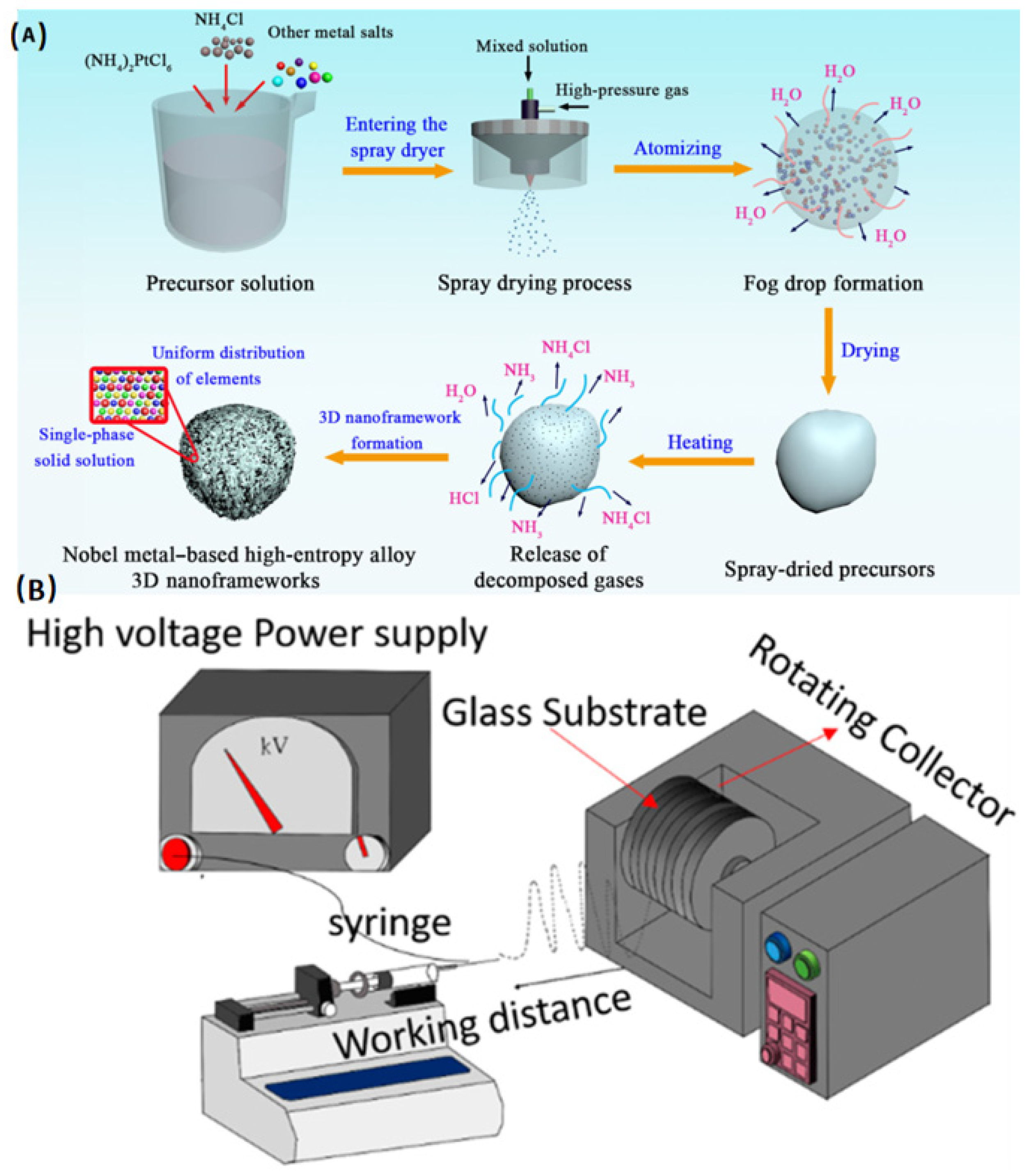
38]. The preparation of high-entropy materials also relies on multi-step chemical reactions to achieve the homogeneous incorporation of multiple elements and precise structural control. For instance, the team led by Professor Xu Binggeng from Shaanxi University of Science and Technology, in collaboration with institutions such as the Northwest Institute for Nonferrous Metal Research, innovatively employed a combined technique of spray drying and thermal decomposition reduction (SD-TDR) to successfully synthesize three-dimensional nanoporous framework materials (3DNF) of noble-metal-based high-entropy alloys (NM-HEA), as illustrated in
Figure 5A. [
39]. This work provides new insights and methods for designing high-performance, tunable high-entropy alloy catalysts. In addition, methods such as hydrothermal synthesis and chemical vapor deposition ensure the target purity, yield, and reproducibility of the synthesized materials by controlling process parameters such as temperature, pressure, and catalysts [
40,
41].
Most physical synthesis methods adopt a top-down strategy, which refines or reconstructs macroscopic materials through physical means (such as mechanical processing, physical vapor deposition, laser ablation, etc.) to obtain nanostructured materials. Their core characteristic is that no significant chemical changes occur during the process, enabling them to well retain the intrinsic properties of the raw materials. Inspired by the hierarchical design principles in nature, Zhai Wei’s team employed direct-ink-writing (DIW) 3D printing—a physical forming technology—to construct a multi-scale architectural material consisting of “5 wt% oriented ceramic flakes—highly crystalline polyvinyl alcohol (PVA) organogel—silane interface”. By precisely controlling the spatial arrangement and composite mode of the materials, this method endows the material with comprehensive properties, including high stiffness (9.6 MPa), high strength (7.8 MPa), high fracture toughness (31.1 kJ m
−2), as well as electrical/thermal conductivity and resistance to harsh mechanical environments [
42]. The performance of physically synthesized nanomaterials needs to be verified by various characterization techniques. For example, carbon nanotubes (CNTs) hold broad prospects in the field of wearable devices due to their unique mechanical and electronic properties. The purity, degree of functionalization, and sorting efficiency of CNT dispersions can be accurately evaluated by UV-Vis-NIR absorption spectroscopy [
43]. For nanocolloidal gels, their multi-scale porous structure and the morphology of their nanoscale building blocks can be directly observed through electron microscopy techniques [
44]. In addition, combining physical molding with chemical reactions is also a common way to improve material properties, making the preparation of high-performance composite nanomaterials possible. For example, researchers Wang et al. utilized electrospinning technology (at a rotation speed of 2000 rpm) and a modified ZIF-8 synthesis route to prepare ZIF-8/carbon nanofiber (CNF) composite nanomaterials, as presented in
Figure 5B. The resulting material exhibited a specific surface area as high as 999.82 m
2/g (approximately 23 times that of pure carbon nanofibers) and demonstrated an oxidation peak current of 216 μA for nitrofuran detection, offering a novel strategy for developing highly sensitive electrochemical sensors [
45].
Biosynthesis methods utilize the metabolic processes of biological systems such as microorganisms, plants, or enzymes, as well as the specific interactions of biomolecules, to synthesize nanomaterials. They possess significant advantages, including environmental friendliness, excellent biocompatibility, and mild reaction conditions, demonstrating unique value in fields such as biomedicine. Zhang pioneeringly used Escherichia coli as a living template to achieve in situ intracellular synthesis of gold-polymer nanocomposites via photoinduced electron transfer-reversible addition-fragmentation chain transfer (PET-RAFT) polymerization technology. This strategy breaks through the spatial limitations of traditional biosynthesis, and the resulting materials exhibit both surface-enhanced Raman scattering (SERS) sensing and photocatalytic properties [
46]. Peng et al. developed a bacteria-enabled dynamic nanoreactor strategy, where in situ reconstruction of AgCu bimetallic nanoparticles (AgCu NPs) was driven by bacterial incubation, successfully fabricating ultrasmall (~2 nm) and highly self-stable nanoparticles that exhibited significantly enhanced activity and good biocompatibility in dual antibacterial and anticancer therapy [
47]. These advances underscore the unique advantages of biosynthesis, such as environmental friendliness and biocompatibility. Looking forward, the integration of synthetic biology and machine learning holds promise to further overcome limitations in product variety and controllability, steering the field toward intelligent design [
48].
Figure 5.
(
A) Schematic diagram of the NM-HEA-3DNF fabricated by spray drying combined with thermal decomposition reduction; (
B) Schematic illustration of the electrospinning setup [
39,
45].
Figure 5.
(
A) Schematic diagram of the NM-HEA-3DNF fabricated by spray drying combined with thermal decomposition reduction; (
B) Schematic illustration of the electrospinning setup [
39,
45].
The synthesis technologies of nanomaterials primarily include chemical synthesis (bottom-up), physical synthesis (top-down), and biosynthesis (bioinspired growth). Looking ahead, the controllable synthesis of nanomaterials will advance toward more intelligent, integrated, and functionally oriented directions.
6. Outlook and Conclusions
Nanomedicine, as a cutting-edge field that deeply integrates materials science, chemistry, biology, and medicine, has achieved remarkable progress over the past few decades. This article systematically reviews the core applications and fundamental research of nanomaterials in biomedical engineering. In drug delivery, the use of carriers such as liposomes and polymeric nanoparticles has successfully addressed issues like poor targeting and significant side effects associated with conventional drugs, enabling efficient and precise treatment of tumors, neurological disorders, and inflammatory diseases [
49]. In tissue engineering and regenerative medicine, nanocomposite scaffolds mimic the complex structure and function of the natural extracellular matrix, providing an ideal growth microenvironment for cells and thereby effectively guiding and promoting the repair and regeneration of tissues such as bone and cartilage [
50]. In diagnostics, nanomaterials have substantially enhanced biosensor performance (e.g., sensitivity and specificity), advancing diagnostic technologies toward real-time, non-invasive, and ultra-early detection. The emergence of frontier systems such as nanomotors has opened new pathways for active targeting and theranostics [
51]. Continuous innovation in the design, synthesis, and characterization of novel nanomaterials—through a deep understanding and precise control of the structure–activity relationships among material composition, structure, and properties—has propelled biomedical development from the ground up.
Current challenges in nanomedicine include first, the lack of comprehensive evaluation standards and rigorous clinical testing for the long-term retention, metabolic pathways, potential immunogenicity, and possible cellular and genetic toxicity of nanomaterials in vivo [
52]; second, issues related to production quality stability and cost when scaling up laboratory-synthesized nano-products [
53]; and finally, significant inter-individual variability during actual treatment [
54].
Confronted with these challenges, effective feedback and evaluation mechanisms become particularly important. Specific strategies include integrating diagnostic and therapeutic functions into a single nano-platform, allowing real-time monitoring of drug distribution and treatment efficacy via imaging signals during drug delivery. This enables adaptive adjustment of treatment strategies based on feedback, forming a closed-loop theranostic system. Furthermore, drawing inspiration from nature—for example, by utilizing cell membrane coatings, biomimetic adhesion, and biomolecular motors—can endow nano-systems with superior biocompatibility, longer circulation times, and more efficient targeting and penetration capabilities [
55]. Finally, although the clinical transformation of nanomedicine faces challenges, some nanomedicines such as Abraxane
® and Onivyde
® have been successfully commercialized by using well-defined and relatively simple carrier systems (albumin nanoparticles and liposomes, respectively). Their success indicates that clinical translation often prefers robust and scalable designs rather than extreme complexity [
56].