Review

The Role of miRNAs and memiRNAs in Gut–Brain Communication and Their Therapeutic Potential

by
Natalia G. Bednarska
1,* and
Marta A. Kisiel
2
1
London School of Hygiene and Tropical Medicine, Faculty of Infectious and Tropical Diseases, Keppel Street, London WC1E 7HT, UK
2
Department of Medical Sciences, Occupational and Environmental Medicine, Uppsala University, 751 05 Uppsala, Sweden
*
Author to whom correspondence should be addressed.
Appl. Microbiol. 2026, 6(2), 31; https://doi.org/10.3390/applmicrobiol6020031
Submission received: 21 January 2026 / Revised: 5 February 2026 / Accepted: 9 February 2026 / Published: 11 February 2026
(This article belongs to the Topic News and Updates on Probiotics)

Abstract

MicroRNAs (miRNAs) are key regulators of host–microbiome interactions. They influence diverse physiological processes through post-transcriptional gene regulation. Growing evidence indicates that host-derived miRNAs and microbially encoded miRNA-like molecules contribute to bidirectional signaling between the gut microbiota and the central nervous system. These interactions play a role in gut–brain axis communication. This review summarizes current findings on how host miRNAs shape microbial composition and function. It also examines emerging evidence that microbial miRNA-like molecules can modulate host gene expression. Particular attention is given to pathways involved in metabolic regulation, immune signaling, and neuroinflammatory processes relevant to gut–brain communication. In addition, we discuss the role of extracellular vesicles in miRNA transport and signaling. We critically assess the translational potential of miRNA-based biomarkers and therapeutic strategies, highlighting both their promise and current limitations. Overall, this review provides an integrated overview of miRNA-mediated host–microbiome interactions within the gut–brain axis and outlines key conceptual and experimental challenges that remain unresolved.

1. Introduction

The 2024 Nobel Prize was awarded for the invention of microRNAs (miRNAs) as transformative regulators of gene expression. Victor Ambros discovered that the Lin-4 gene does not encode a protein; instead, it produces a short, non-coding RNA only 22 nucleotides long. Gary Ruvkun discovered that the Lin-14 gene’s expression was regulated post-transcriptionally [1,2]. MicroRNAs (miRNAs), a class of small, non-coding RNAs produced by eukaryotic cells, typically about 18–25 nucleotides in length, have emerged as key regulators of intestinal homeostasis and systemic health. A large proportion of human protein-coding genes are under selective pressure to maintain miRNA binding sites in their 3′ untranslated regions (3′UTRs), underscoring the widespread involvement of miRNAs in cellular signaling pathways.
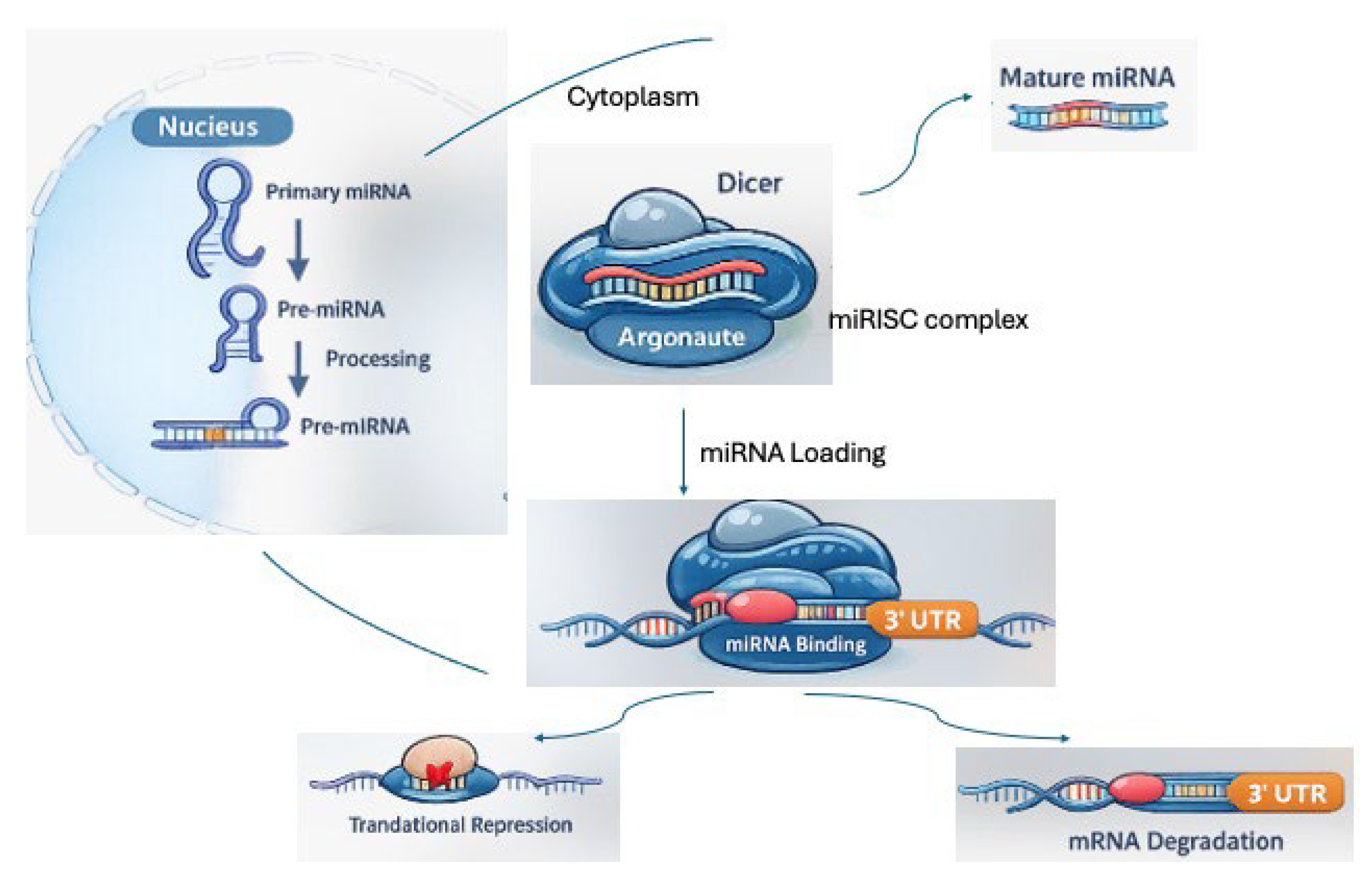
MiRNAs are synthesized in the nucleus, transported into the cytoplasm, and processed into mature miRNAs. Then they are loaded onto miRNA-induced silencing complex (miRISC) and bound to the 3′ untranslated region (3′UTR) of mRNA to mediate post-translational gene regulation, primarily by inhibiting translation or promoting transcript degradation (see Figure 1) [3].
MiRNAs are estimated to influence a substantial proportion of the human transcriptome, acting not only as regulators of individual genes but also as control nodes within complex gene-regulatory networks [4]. Plasma-circulating miRNAs are already used in biomarker discovery for various diseases, including infections, cancers, and immune diseases, as their stability and ability to reflect underlying pathological processes are very strong [5,6]. Moreover, miRNA levels in serum have been reported to exhibit a high degree of stability and reproducibility, including consistency among individuals of the same species [7].
Of relevance to this review, recent research has highlighted the reciprocal interaction between miRNAs and the gut microbiota, suggesting a dynamic crosstalk that influences host physiology and disease susceptibility. Importantly, miRNAs can directly target bacterial genes, thereby regulating bacterial communities and acting as markers for microbial fluctuations in intestinal pathologies [8]. MicroRNAs can shape microbial composition, while microbial metabolites can modulate host miRNA expression, thereby affecting intestinal immunity, epithelial integrity, and metabolic regulation [9,10,11]. This bidirectional communication is particularly relevant in the context of inflammatory bowel disease (IBD), colorectal cancer (CRC), and metabolic disorders such as type 2 diabetes mellitus (T2DM). The diagnostic potential of miRNAs is underscored by their detectability in stool and blood, making them attractive non-invasive biomarkers. For instance, fecal miR-221 and miR-18a have been proposed for CRC screening [12] while elevated miR-21 and miR-106a levels correlate with colorectal malignancies [13,14]. Additional studies have identified miR-451a, miR-21-5p, and miR-199a-5p as potential predictive markers for high-grade dysplasia, achieving reported sensitivities of up to 91% [15]. Similarly, miR-122-5p has shown promise in identifying alterations in the gut microbiota in T2DM patients [16].
Nevertheless, the extent to which the gut microbiota directly communicates with host metabolic pathways via miRNAs remains incompletely understood. Distinct miRNA expression patterns observed during bacterial and viral infections suggest that this mode of host–pathogen communication may involve context-specific regulatory mechanisms [17]. Despite extensive research done since the discovery of eukaryotic miRNAs, the microRNAs of prokaryotic cells have not been explored very much. Since prokaryotic cells do not have defined nuclear membranes and enzymes such as DROSHA, PASHA, or even DICER, the length (dictated by the number of nucleotides) of the microRNA equivalent in the prokaryotes could be larger than that of the eukaryotes, yet functions just like the miRNAs of the eukaryotes [18]. So-called Megamicro RNAs or memiRNAs of bacterial origin were identified in probiotic strains like Streptococcus thermophilus and Lactobacillus helveticus. While eukaryotic miRNAs are typically 20–24 nucleotides long, these bacterial memiRNAs have been reported to range from approximately 100 to 500 nucleotides in length [18]. Although this field remains emerging, studies of viral miRNAs further illustrate how non-host miRNAs can modulate host gene expression, providing insights into mechanisms by which pathogens hijack immune responses to promote their replication and persistence [19].

2. MicroRNA in Intestinal Tight Junction Regulation

Epithelial junctional complexes play an important role in maintaining the integrity of the intestinal barrier [20]. They are organized in sequence from the top (apical) to the bottom (basal), including tight junctions, adherent junctions, and desmosomes. Tight junctions regulate the paracellular passage of substances, facilitating or restricting their movement [21]. The regulation of tight junction proteins in the intestinal epithelium is crucial for maintaining barrier function and permeability. MiRNAs control this by modulating protein expression, thereby influencing inflammatory diseases such as Inflammatory Bowel Disease (IBD) [22].
The intestinal epithelial barrier is a complex structure that enables the selective absorption of nutrients and fluids and protects against toxins and invading microorganisms. The intestinal epithelium serves as the primary barrier between internal body compartments and the external environment, protecting against bacterial toxins, dietary antigens, and other harmful substances present in the intestinal lumen [19]. Current evidence suggests that fecal miRNA could mediate dysbiosis-related inflammation in the host [20]. Cichon et al. (2014) reported that intestinal epithelial-specific Dicer1 deficiency, resulting in global loss of mature miRNAs, including mmu-miR-192, impaired intestinal barrier function and led to spontaneous intestinal inflammation [21].
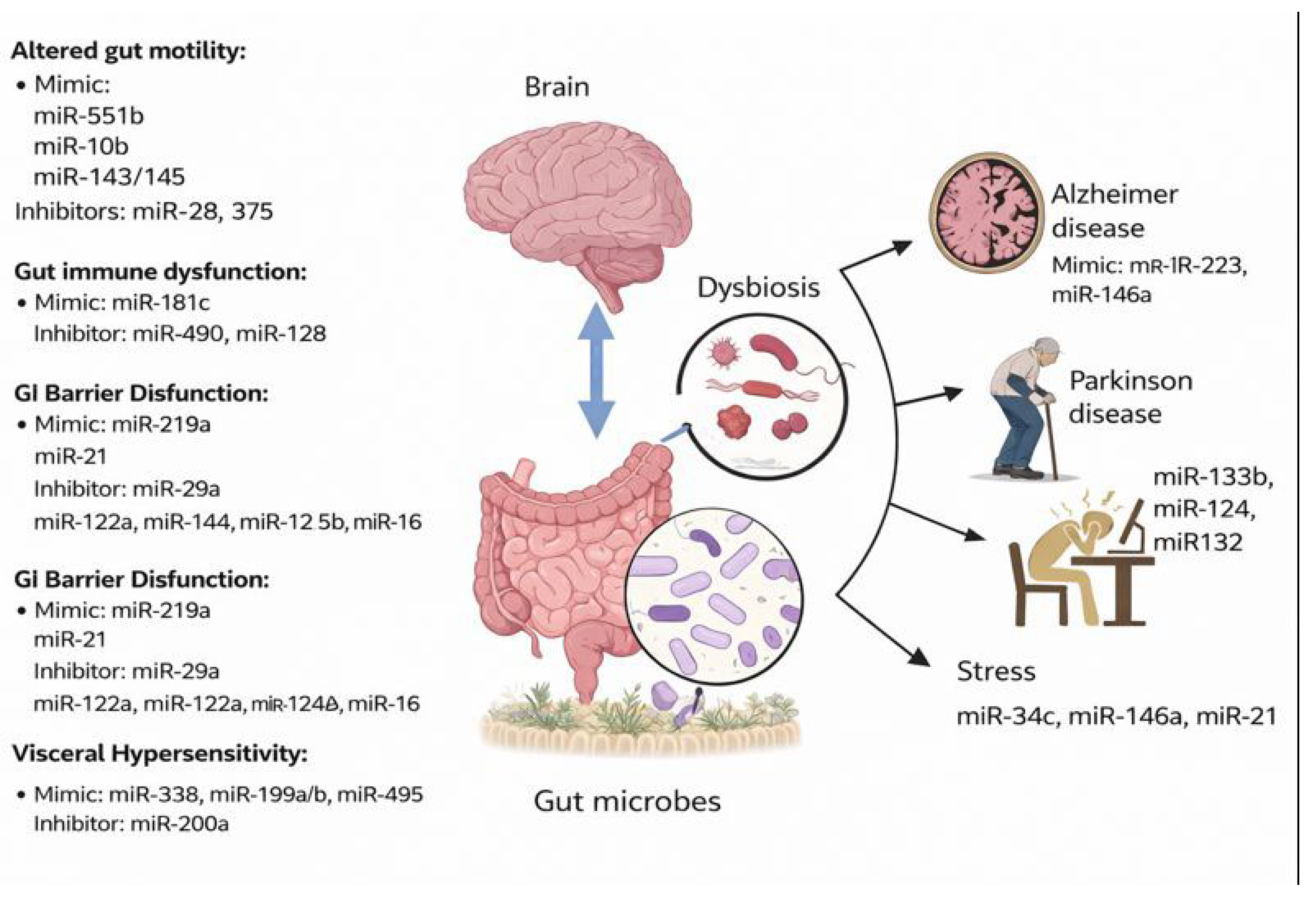
Other studies also confirmed that miRNA dysregulation in the gastrointestinal tract can disrupt normal homeostasis, contributing to the onset of digestive disorders. In inflammatory bowel disease (IBD), miR-16, miR-223, miR-155, and miR-21 play key roles in regulating immune responses, maintaining epithelial barrier integrity, and controlling inflammatory cytokine production (see Figure 2). In contrast, in colorectal cancer, miR-21, miR-598, and miR-494 are implicated in modulating tumor progression, apoptosis, and cellular proliferation [23,24].
Impairment of the intestinal barrier is linked to inflammation. TNF-α and other cytokines affect the barrier by modulating miRNAs in epithelial cells. TNF-α increases miR-122a expression in vitro and in vivo (mouse intestines), leading to tight junction leakage via occludin mRNA degradation [25]. Moreover, several miRNAs have been shown to directly target genes encoding tight junction proteins, thereby modulating epithelial permeability during inflammatory conditions. For example, miR-21 and miR-155 have been associated with altered expression of claudins and zonula occludins proteins, contributing to barrier dysfunction in IBD [26]. Dysregulated miRNA expression can therefore exacerbate mucosal inflammation by promoting increased paracellular permeability, facilitating the translocation of luminal antigens and microbial products into the lamina propria [25]. Clinically, this underscores the potential of miRNAs both as biomarkers for intestinal barrier disruption and as therapeutic targets to restore epithelial integrity [27].
In addition, emerging evidence suggests that food-derived microRNAs, also known as xenomiRs, may influence intestinal barrier function by modulating host gene expression [28]. These dietary miRNAs are believed to influence epithelial cell signaling pathways, immune responses, and the expression of tight junction proteins, thereby potentially impacting gut permeability and inflammation [29,30]. Although the clinical importance of xenomiRs is still debated, their capacity to withstand digestion and engage with intestinal epithelial cells indicates a potential new mechanism by which diet could regulate gut homeostasis and the development of inflammatory diseases [31].

3. The Role of miRNAs in the Gut–Brain Axis

The intestinal environment is linked to the brain through neural, immune, endocrine, and metabolic pathways [25]. Early studies showed that some specific miRNAs had significant differential expressions within the ileum and the colon between germ-free mice and colonized mice [32]. Subsequent in vitro experiments using Fusobacterium nucleatum and Escherichia coli showed that fecal miRNAs can regulate bacterial gene transcripts and influence bacterial growth, supporting a direct role for host miRNAs in shaping the gut microbiota [33]. The same group of researchers showed that the fecal miRNA profile of germ-free mice differed significantly from that of Specific-Pathogen-Free (SPF) colonized mice. Moreover, the treatment of SPF mice with antibiotics further increased luminal miRNA levels. Together, these findings support a bidirectional interaction between host miRNAs and the gut microbiota, although most evidence remains correlative at this stage.

3.1. Experimental Evidence for Causal Roles of miRNAs in Gut Homeostasis

Evidence for a causal role of host miRNAs in regulating gut microbial composition has been obtained from animal models. In mice, epithelial-specific deletion of Dicer1 (Dicer1^ΔIEC^) (an enzyme essential for miRNA processing) resulted in uncontrolled alterations of the gut microbiota and exacerbation of pre-existing colitis. These findings provide direct experimental support for miRNA-mediated host control of intestinal microbial communities. Bacterial small RNAs (sRNAs) regulate gene expression through ribonucleoprotein complexes that modulate mRNA stability and translational efficiency via sRNA–mRNA duplex formation [34]. A conceptually analogous mechanism operates in eukaryotic cells, where miRNAs guide Argonaute-containing complexes to target mRNAs, leading to translational repression or mRNA decay. This shared regulatory logic highlights the evolutionary conservation of RNA-based gene regulation across kingdoms [35]. The same group used a mouse model of total abdominal irradiation (TAI) and measured miR-34a-5p expression levels. Their finding confirmed that it was significantly upregulated in the small intestine and closely associated with alterations in gut microbiota composition, potentially contributing to irradiation-related cognitive impairment.

3.2. miRNAs in Metabolic Regulation and Gut–Brain Signaling

Microbiota-derived metabolites have been shown to influence human host metabolism through miRNA-dependent mechanisms. In children, modulation of insulin sensitivity was associated with regulation of the miR-181 family in white adipose tissue by microbiome-derived tryptophan metabolites [36]. While this association highlights a clinically relevant gut–brain–metabolic link, causality in humans remains to be established. Still, the miR-181 family members and their downstream targets represent potential therapeutic targets. Modulating miR-181 expression (either directly or indirectly via microbiome-derived metabolites) could offer a precision-based approach to improving insulin sensitivity. Clinically, this finding suggests that insulin resistance in children is not solely a host-driven metabolic disorder but is influenced by gut microbiota-derived metabolites acting through specific gene-regulatory mechanisms.
In contrast, causal evidence has been demonstrated in animal models. In mice, a high-fat diet reduced beneficial microbial metabolites such as indoles, leading to elevated miR-181 expression and subsequent insulin resistance [37]. Genetic inhibition of miR-181 mitigated inflammation and improved metabolic outcomes, establishing a direct mechanistic link between gut microbiota-derived signals, miRNA regulation, and metabolic dysfunction. These findings suggest that dysregulation of the gut microbiota–miR-181 axis may contribute to obesity, insulin resistance, and adipose tissue inflammation.

3.3. miRNAs in Intestinal Inflammation Affecting Neuroinflammation, Cognition, and Neuronal Function

Several miRNAs have been implicated in neuronal survival, neuroinflammation, and cognitive function, linking intestinal signals to central nervous system outcomes. For example, miR-34a-5p was shown to target the 3′UTR of brain-derived neurotrophic factor (BDNF) mRNA in the hippocampus, thereby contributing to cognitive dysfunction in mice [36].
Other studies have reported roles for miRNAs, such as miR-433, miR-9, and miR-375 in neuronal survival and gut–brain function under pathological conditions [38,39]. Specifically, the miR-375 inhibitor was shown to reduce neuronal apoptosis in mice, whilst miR-375 mimic treatment induced neuronal cell apoptosis and delayed gut transit, hence affecting both gut motility and neuronal functionality [39].
In addition, interactions between miRNAs (including miR-29, miR-192, miR-122, and miR-146a) and the innate immune receptor NOD2 have been implicated in chronic gastrointestinal inflammatory conditions, highlighting a link between miRNA regulation and mucosal immune signaling [40]. MiRNA-mediated regulation has also been implicated in visceral sensitivity and gastrointestinal inflammation. In murine models of diarrhea-predominant irritable bowel syndrome (IBS-D), miR-495 attenuated visceral hypersensitivity by suppressing the PI3K/AKT pathway through targeting PKIB, whereas miR-200a promoted visceral hyperalgesia via downregulation of cannabinoid receptor 1 (CNR1) and the serotonin transporter (SERT) [41].
Beyond gastrointestinal and metabolic effects, gut microbiota-associated miRNA dysregulation has also been linked to neurodegenerative disorders.. Adherent-invasive E. coli (AIEC), a pathogen with high prevalence in Crohn’s disease, has been shown to up-regulate miRNAs targeting genes responsible for the autophagy response (ATG5 and ATG16L) in mouse enterocytes, which may increase intestinal inflammation [42].
The lipopolysaccharide (BF-LPS) of Bacteroides fragilis can act as a neurotoxin by inducing a series of miRNAs targeting genes that regulate synaptic architecture and deficits, amyloidogenesis, and cerebral inflammatory signaling [43]. MicroRNAs showed a powerful regulatory effect on various neurodegenerative diseases. For example, in Alzheimer’s disease, the loss of miRNAs such as miR-9 and miR-125b is linked to neuroinflammation and impaired neuronal survival [44]. In Parkinson’s disease, miRNAs regulate alpha-synuclein, a protein central to the disease’s pathogenesis [45]. Modulating these miRNAs could reduce oxidative stress and neuronal cell death, opening new avenues for therapeutic intervention. While these findings underscore the regulatory potential of miRNAs across multiple neurological contexts, most evidence remains preclinical, and the specificity of miRNA-based interventions remains a key challenge despite their ability to modulate multiple targets simultaneously.

4. Extracellular Vesicles as miRNA Carriers

Microbiome-host communication was also detected via analysis of extracellular vesicles (EVs), which are non-replicating, evolutionarily well-conserved small membranous vesicles secreted by the bacteria, containing proteins, small RNAs (sRNAs), lipids, and metabolites [46]. Beyond their role as passive cargo containers, EVs represent an integrated signaling system in which vesicle composition, cellular uptake routes, and intracellular processing together determine host functional outcomes. Extracellular vesicles are lipid bilayer-delimited nanoparticles and key messengers in cell-to-cell communication, with the capability of passing the blood–brain barrier (BBB). EVs are secreted by both Gram-negative [47] and Gram-positive bacteria [48], and their small size and lipid composition facilitate systemic dissemination, cellular internalization via endocytosis, membrane fusion, or receptor-mediated uptake. To directly influence gene expression in recipient cells, RNAs contained within EVs must be delivered into the cytoplasm. Once internalized, microbial RNAs may interact with, or be modified by, host cellular factors. Sequence complementarity between microbial sRNAs and host transcripts enables post-transcriptional regulation, including repression or activation of gene expression, thereby linking EV cargo composition to context-dependent host responses. In addition, mRNAs packaged within EVs may be translated in target cells, resulting in the production of microbial proteins [49].
These principles are increasingly supported by disease-associated and mechanistic studies demonstrating how EV biodistribution and RNA cargo shape downstream inflammatory, metabolic, and neurobiological outcomes. It has been suggested that bacterial extracellular vesicles secreted by the gut microbiome may have a profound effect on tumor development, as they are small enough to enter the circulation and may disseminate across the body [50]. Metagenomic profiling of circulating EVs in patients with brain tumors has revealed disease-associated shifts in bacterial origin, including increased Firmicutes and reduced Proteobacteria and Actinobacteria, alongside depletion of Dialister spp. and Eubacterium rectale [51]. These findings suggest that EV cargo signatures may reflect and potentially contribute to pathological host states. Similarly, pathogenic EVs exemplify how vesicle-mediated RNA delivery can promote inflammatory signaling in epithelial and neural tissues. Helicobacter pylori, a causative agent of gastric ulcers, releases EVs into the gastric lumen that target epithelial cells and promote inflammatory responses, primarily via induction of IL-8 [52]. The group had performed 16SDNA-based metagenomics on the gastric juices of gastric carcinoma patients, revealing H.pylori extracellular vesicle activity and characterizing their mechanisms of action and pathogenicity mainly via activation of inflammatory cytokine IL-8 [52]. Importantly, EVs derived from H. pylori have been shown to translocate beyond the gastrointestinal tract, with evidence that they can reach the brain through transcellular pathways without disrupting intestinal or blood–brain barrier integrity [53].
A similar paradigm has been observed for a Gram-negative facultative anaerobe Aggregatibacter actinomycetemcomitans, whose EVs can cross the BBB and accumulate in the brain within 24 h of systemic administration [54]. Aggregatibacter actinomycetemcomitans produces EVs that can cross the mouse BBB and are already present in the brain 24 h after intracardiac injection. These vesicles induce TNF-α production through extracellular RNAs via TLR-8 and NF-κB signaling pathways [48]. Moreover, delivery of EV-associated RNAs to microglia and brain monocytes further amplifies neuroinflammatory cascades, including IL-6 upregulation mediated by NF-κB activation [55].
In contrast to pathogenic EVs, commensal-derived vesicles illustrate how EV cargo can support host homeostasis and neuroprotection. Members of Bacteroidetes, one of the major bacterial phyla of the human gut microbiota, are known to produce EV-enclosed enzymes aiding the digestion of nutrients [56]. The commensal species Bacteroides fragilis has been reported to secrete EVs containing the neurotransmitter gamma-aminobutyric acid (GABA) and its precursors glutamate and α-ketoglutarate, linking microbial vesicle production to neurotransmitter availability and neuromodulatory functions. As a major neurotransmitter in the brain, GABA neurotransmitters are involved in a variety of metabolic activities, such as depression, anxiety, and stress management, hypertension, diabetes, cancer activity, oxidative, inflammatory, microbial, and allergic resistance, and protection of the liver, kidney, and intestine [57]. Conversely, pathogenic strains of Bacteroides fragilis have been reported to secrete EVs embedded with histidine decarboxylase, an enzyme that catalyzes histamine synthesis [58]. Released histamine can promote neuroinflammation, alter blood–brain barrier permeability, and dysregulate histamine-dependent neurotransmission in the brain.
EV-mediated transport has also been implicated in gut–brain axis dysfunction. Orally administered EVs derived from Paenalcaligenes hominis have been shown to translocate to the brain via both hematogenous and vagal pathways, inducing colitis and cognitive impairment in mouse models [59]. In mice exposed to P. hominis or its EVs, celiac vagotomy markedly attenuated the development of cognitive impairment, but not colitis, highlighting a nerve-dependent route by which EV-associated signals influence brain function. Notably, lipopolysaccharides derived from Escherichia coli and P. hominis did not produce comparable effects.
Beneficial EV–miRNA interactions further demonstrate the regulatory potential of vesicle-mediated RNA transfer. EVs produced by Lactobacillus plantarum interact with host microRNAs such as miR-200c, strengthening epithelial tight junctions, and miR-155-5p, reducing inflammation. Postbiotic EVs from L. plantarum 1.0386 modulate host miRNAs, including miR-101a-3p, thereby protecting neurons and improving neurological recovery [60]. This miRNA-dependent mechanism, involving c-Fos/TGF-β1 signaling, illustrates how EV cargo composition translates into functional neuroprotective outcomes, including reduced neuronal apoptosis following ischemic injury.
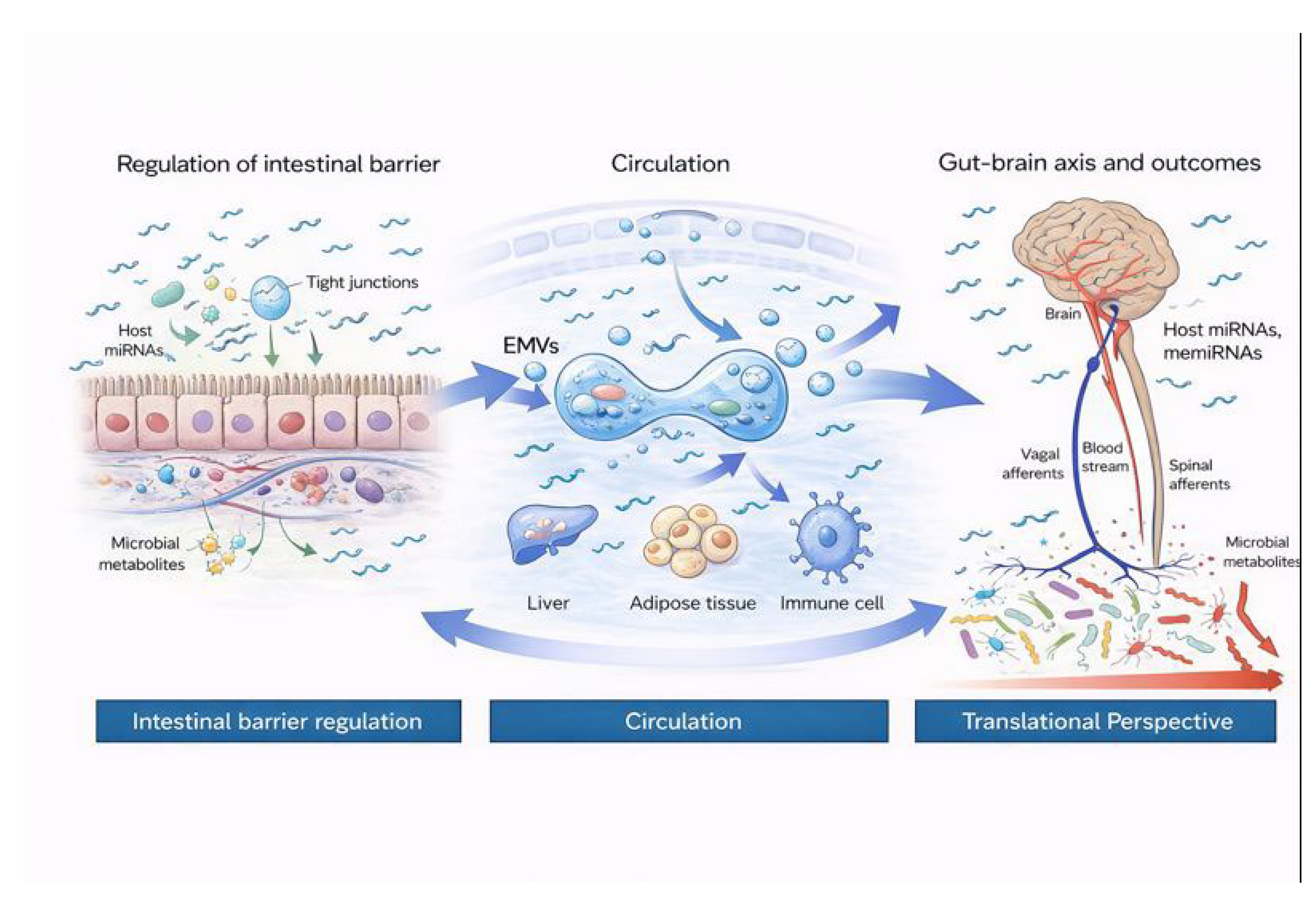
Collectively, these findings support a unifying model in which bacterial EVs act as multimodal signaling units. Their molecular cargo determines cellular uptake and intracellular processing. These events shape host gene regulation, immune responses, and neural function. These integrated mechanisms are summarized in Figure 3, which provides a consolidative schematic of miRNA-mediated regulation along the gut–brain axis.
Finally, other host miRNAs influenced indirectly by microbial metabolites, such as short-chain fatty acids or tryptophan derivatives, as well as miR-124, miR-132, and the miR-29 family, represent additional layers of regulation that may intersect with EV-mediated signaling pathways.

5. New Generation Probiotics and Postbiotics

Modulating the levels of specific miRNAs through miRNA mimics or inhibitors could enhance host immune responses to infection or suppress pathogenic pathways. The simplicity of miRNA production systems and their precise mode of action make them promising therapeutic tools or targets in various diseases such as cancer, inflammatory diseases, and neurodegenerative diseases [8,61]. However, most supporting evidence to date derives from in vitro studies or animal models, and clinical translation remains at an early stage.
MiRNAs can be delivered either as free molecules or encapsulated within extracellular vesicles (EVs), which may enhance their stability and bioavailability in the extracellular environment [62,63]. EV encapsulation may improve miRNA stability and bioavailability in the extracellular environment. For this reason, EV-based miRNA delivery systems are mainly explored as proof-of-concept platforms for targeted gene regulation.
Chemically synthesized anti-sense miRNA oligonucleotides (AMOs) are widely used miRNA inhibitors. They bind directly to mature miRNAs and block their function. Extracellular miRNAs are released either encapsulated within EVs, such as microvesicles and exosomes, or as EV-free complexes associated with high-density lipoproteins or Argonaute proteins. These mechanisms enhance miRNA stability in the extracellular environment [64].
Postbiotics are defined as non-viable microbial cells, fragments, or metabolites that can deliver health benefits to the host without requiring live microorganisms [65]. Microbial EVs belong to the category of postbiotics and are a new modality for next-generation therapy. Interest in postbiotics has grown due to challenges associated with probiotic viability and formulation stability [62]. Preclinical studies show that microbial EVs can modulate host immune responses and barrier integrity. In vitro pretreatment improved the production of the proinflammatory cytokine IL-6 by EcEV-stimulated intestinal epithelial cells. Oral therapy with Akkermansia muciniphila-derived EVs protected against LPS-induced gut barrier disruption. These effects were mediated through AMPK signaling [63].
Such findings support biological plausibility but do not yet demonstrate efficacy in humans. A class of synthetically engineered oligonucleotides capable of silencing specific miRNAs is called antagomiRs. They are widely used experimental tools for miRNA inhibition. For example, antagomir miR-31-5p ameliorated dextran sulfate-induced colitis in mice by promoting macrophage polarization toward an anti-inflammatory phenotype [66]. The upregulation of miR-31-5p was linked with inflammatory bowel disease and its association with colonic epithelial cell integrity and function [67]. Despite these promising results, major challenges remain. These include tissue specificity, off-target effects, dosing strategies, delivery efficiency, long-term safety, and regulatory considerations.

6. Conclusions

MicroRNAs can shape microbial composition, while microbial metabolites can modulate host miRNA expression, thereby affecting intestinal immunity, epithelial integrity, and metabolic regulation. This bidirectional host–microbiome communication integrates microbial and host regulatory networks. This type of communication is particularly relevant in the context of inflammatory bowel disease (IBD), colorectal cancer (CRC), and metabolic disorders such as type 2 diabetes mellitus (T2DM). The diagnostic potential of miRNAs is underscored by their detectability in stool and blood, making them attractive non-invasive biomarkers. However, clinical translation is limited by the lack of standardized methodologies for miRNA detection, normalization, and quantification.
High variability in experimental outcomes, including sex-specific differences in miRNA expression, further complicates reproducibility and interpretation [12]. Because miRNAs exert pleiotropic effects by regulating multiple targets, they tend to be less specific, potentially increasing the risk of unintended side effects during evaluation. This pleiotropy represents both a functional advantage and a translational challenge. Further research is needed to elucidate how specific bacterial species induce changes in host miRNA expression. Such knowledge would enable targeted microbiome optimization strategies and support the development of more precise postbiotic interventions. Importantly, microbiome studies should routinely incorporate host miRNA profiling, as this would provide deeper insight into host–microbiome interactions and their roles in human health and disease. MiRNAs and memiRNAs are active messengers in gut–brain communication; therefore, EV-based delivery of miRNA mimics and inhibitors represents a promising preclinical approach for new drug development. Preclinical studies indicate that some EVs can cross the blood–brain barrier via transcytosis. Given their ability to pass through the BBB, EVs can be engineered to target diseases of the central nervous system [68]. While EV engineering strategies suggest potential applications in CNS disorders, these approaches remain largely experimental. This property may offer advantages over single-target RNA-based therapies, but it also complicates safety assessment. Regulatory and safety considerations remain major barriers to the clinical translation of miRNA- and EV-based therapies. A key challenge is the lack of standardized methodologies for miRNA detection, normalization, and quantification, which contributes to poor reproducibility across studies. The pleiotropic nature of miRNAs, while therapeutically advantageous, raises concerns about off-target effects and unintended pathway modulation, complicating safety assessments. High interindividual variability, including pronounced sex-specific differences in miRNA expression, further underscores the need for stratified and precision-based approaches. EV-based delivery systems introduce additional regulatory complexity due to heterogeneity, scalability issues, and the risk of co-transporting unwanted bioactive cargo. Long-term safety, immunogenicity, biodistribution, and reversibility of miRNA modulation remain insufficiently characterized, particularly for chronic diseases. Moreover, regulatory frameworks for miRNA therapeutics are still evolving, as these agents do not fit neatly into existing drug or gene therapy classifications. Addressing these challenges through harmonized protocols, improved targeting strategies, and adaptive regulatory pathways will be essential to realize the diagnostic and therapeutic potential of miRNAs.

7. Future Directions

Future directions in miRNA research should extend beyond the characterization of individual miRNAs to embrace context- and cell-type-specific mechanisms, regulatory network dynamics, and translational relevance. While mechanistic discovery in mouse models and observational analyses in clinical cohorts remain essential, emerging approaches such as single-cell and spatial transcriptomics will be critical for resolving tissue- and microenvironment-specific miRNA functions. Increasing attention should be paid to miRNA-centered regulatory networks, including interactions with long noncoding RNAs, circular RNAs, and epigenetic modifiers, as well as to non-canonical and extracellular miRNA signaling pathways. The study of miRNA diversity, encompassing isomiRs, RNA editing, and chemical modifications, will further refine our understanding of miRNA targeting and function. In parallel, host–microbiota interactions should be explored within a coevolutionary framework, recognizing the bidirectional exchange of eukaryotic and prokaryotic miRNAs, including emerging membrane-associated microbial miRNAs with significant druggable potential that may transform probiotic and postbiotic strategies. Finally, the integration of longitudinal patient cohorts, causal inference frameworks, and artificial intelligence-driven target prediction, together with advances in delivery technologies and regulatory standardization, will be essential to translate miRNA biology into safe, precise, and effective diagnostics and therapeutics.

Author Contributions

Conceptualization, N.G.B.; investigation, N.G.B. and M.A.K.; resources, N.G.B. and M.A.K.; data curation, N.G.B. and M.A.K.; writing—original draft preparation, N.G.B.; writing—review and editing, N.G.B. and M.A.K.; visualization, N.G.B. with the help of AI; project administration, N.G.B. All authors have read and agreed to the published version of the manuscript.

Funding

This research received no external funding.

Data Availability Statement

This study is based exclusively on data reported in previously published studies, all of which are cited in the reference list.

Conflicts of Interest

The authors declare no conflicts of interest.

References

  1. Wightman, B.; Ha, I.; Ruvkun, G. Posttranscriptional Regulation of the Heterochronic Gene Lin-14 by Lin-4 Mediates Temporal Pattern Formation in C. elegans. Cell 1993, 75, 855–862. [Google Scholar] [CrossRef] [PubMed]
  2. Lee, R.C.; Feinbaum, R.L.; Ambros, V. The C. elegans Heterochronic Gene Lin-4 Encodes Small RNAs with Antisense Complementarity to Lin-14. Cell 1993, 75, 843–854. [Google Scholar] [CrossRef] [PubMed]
  3. Behrouzi, A.; Ashrafian, F.; Mazaheri, H.; Lari, A.; Nouri, M.; Riazi Rad, F.; Hoseini Tavassol, Z.; Siadat, S.D. MiRNAs in Outer Membrane Vesicles of Gut Microbiota: Friend or Foe? Microb. Pathog. 2020, 144, 104200. [Google Scholar] [CrossRef] [PubMed]
  4. Friedman, R.C.; Farh, K.K.H.; Burge, C.B.; Bartel, D.P. Most Mammalian MRNAs Are Conserved Targets of MicroRNAs. Genome Res. 2009, 19, 92–105. [Google Scholar] [CrossRef]
  5. Szelenberger, R.; Kacprzak, M.; Saluk-Bijak, J.; Zielinska, M.; Bijak, M. Plasma MicroRNA as a Novel Diagnostic. Clin. Chim. Acta 2019, 499, 98–107. [Google Scholar] [CrossRef]
  6. Giza, D.E.; Fuentes-Mattei, E.; Bullock, M.D.; Tudor, S.; Goblirsch, M.J.; Fabbri, M.; Lupu, F.; Yeung, S.C.J.; Vasilescu, C.; Calin, G.A. Cellular and Viral MicroRNAs in Sepsis: Mechanisms of Action and Clinical Applications. Cell Death Differ. 2016, 23, 1906–1918. [Google Scholar] [CrossRef]
  7. Li, Y.; Jiang, Z.; Xu, L.; Yao, H.; Guo, J.; Ding, X. Stability Analysis of Liver Cancer-Related MicroRNAs. Acta Biochim. Biophys. Sin. 2011, 43, 69–78. [Google Scholar] [CrossRef]
  8. Moloney, G.M.; Viola, M.F.; Hoban, A.E.; Dinan, T.G.; Cryan, J.F. Faecal MicroRNAs: Indicators of Imbalance at the Host-Microbe Interface? Benef. Microbes 2018, 9, 175–183. [Google Scholar] [CrossRef]
  9. Ouyang, Q.; Liu, K.; Zhu, Q.; Deng, H.; Le, Y.; Ouyang, W.; Yan, X.; Zhou, W.; Tong, J. Brain-Penetration and Neuron-Targeting DNA Nanoflowers Co-Delivering MiR-124 and Rutin for Synergistic Therapy of Alzheimer’s Disease. Small 2022, 18, 2107534. [Google Scholar] [CrossRef]
  10. Liu, T.; Gatto, N.M.; Chen, Z.; Qiu, H.; Lee, G.; Duerksen-Hughes, P.; Fraser, G.; Wang, C. Vegetarian Diets, Circulating MiRNA Expression and Healthspan in Subjects Living in the Blue Zone. Precis. Clin. Med. 2020, 3, 245–259. [Google Scholar] [CrossRef]
  11. Zhou, C.; Chen, Z.; Zhao, L.; Zhao, W.; Zhu, Y.; Liu, J.; Zhao, X. A Novel Circulating MiRNA-Based Signature for the Early Diagnosis and Prognosis Prediction of Non–Small-Cell Lung Cancer. J. Clin. Lab. Anal. 2020, 34, e23505. [Google Scholar] [CrossRef] [PubMed]
  12. Yau, T.O.; Wu, C.W.; Dong, Y.; Tang, C.M.; Ng, S.S.M.; Chan, F.K.L.; Sung, J.J.Y.; Yu, J. MicroRNA-221 and MicroRNA-18a Identification in Stool as Potential Biomarkers for the Non-Invasive Diagnosis of Colorectal Carcinoma. Br. J. Cancer 2014, 111, 1765. [Google Scholar] [CrossRef] [PubMed]
  13. Huang, J.; He, Q.; Wang, J.; Zhai, C. Prognostic Value of MiR-21 in Colorectal Cancer, Pancreatic Ductal Adenocarcinoma, and Esophageal Squamous Cell Carcinoma: Updated Systematic Review and Meta-Analysis. Oncologist 2025, 30, 309. [Google Scholar] [CrossRef] [PubMed]
  14. Schee, K.; Boye, K.; Abrahamsen, T.W.; Fodstad, Ø.; Flatmark, K. Clinical Relevance of MicroRNA MiR-21, MiR-31, MiR-92a, MiR-101, MiR-106a and MiR-145 in Colorectal Cancer. BMC Cancer 2012, 12, 505. [Google Scholar] [CrossRef]
  15. Santos, D.A.R.; Eiras, M.; Gonzalez-Santos, M.; Santos, M.; Pereira, C.; Santos, L.L.; Dinis-Ribeiro, M.; Lima, L. A Preliminary Assessment of a Stool-Based MicroRNA Profile for Early Colorectal Cancer Screening. Sci. Rep. 2025, 15, 28597. [Google Scholar] [CrossRef]
  16. Li, L.; Li, C.; Lv, M.; Hu, Q.; Guo, L.; Xiong, D. Correlation between Alterations of Gut Microbiota and MiR-122-5p Expression in Patients with Type 2 Diabetes Mellitus. Ann. Transl. Med. 2020, 8, 1481. [Google Scholar] [CrossRef]
  17. Milhelm, Z.; Chiroi, P.; Harangus, A.; Dudea, M.; Ciocan, C.; Pop, L.; Braicu, C.; Berindan-Neagoe, I. Understanding MicroRNAs in the Context of Bacterial versus Viral Infections. Med. Pharm. Rep. 2024, 97, 438. [Google Scholar] [CrossRef]
  18. Reddy, M. The Role of Prokaryotic (Probiotic) Produced Megamicro RNAs (MemiRNAs) to Prevent or Cure Viral and Nosocomial Infections, Certain Cancers, in Conjunction with Probiotic Induced Eukaryotic Micro RNAs (MiRNAs). Med. Res. Arch. 2024, 12. [Google Scholar] [CrossRef]
  19. Bauer, A.N.; Majumdar, N.; Williams, F.; Rajput, S.; Pokhrel, L.R.; Cook, P.P.; Akula, S.M. MicroRNAs: Small but Key Players in Viral Infections and Immune Responses to Viral Pathogens. Biology 2023, 12, 1334. [Google Scholar] [CrossRef]
  20. Suzuki, T. Regulation of the Intestinal Barrier by Nutrients: The Role of Tight Junctions. Anim. Sci. J. 2020, 91, e13357. [Google Scholar] [CrossRef]
  21. Cichon, C.; Sabharwal, H.; Rüter, C.; Schmidt, M.A. MicroRNAs Regulate Tight Junction Proteins and Modulate Epithelial/Endothelial Barrier Functions. Tissue Barriers 2014, 2, e944446. [Google Scholar] [CrossRef] [PubMed]
  22. Zhao, J.; Guo, M.; Yan, Y.; Wang, Y.; Zhao, X.; Yang, J.; Chen, J.; Chen, C.; Tang, L.; Zeng, W.; et al. The MiR-7/EGFR Axis Controls the Epithelial Cell Immunomodulation and Regeneration and Orchestrates the Pathology in Inflammatory Bowel Disease. J. Adv. Res. 2024, 57, 119–134. [Google Scholar] [CrossRef] [PubMed]
  23. Popa, M.L.; Ichim, C.; Anderco, P.; Todor, S.B.; Pop-Lodromanean, D. MicroRNAs in the Diagnosis of Digestive Diseases: A Comprehensive Review. J. Clin. Med. 2025, 14, 2054. [Google Scholar] [CrossRef] [PubMed]
  24. Casado-Bedmar, M.; Viennois, E. MicroRNA and Gut Microbiota: Tiny but Mighty—Novel Insights into Their Cross-Talk in Inflammatory Bowel Disease Pathogenesis and Therapeutics. J. Crohns Colitis 2022, 16, 992–1005. [Google Scholar] [CrossRef]
  25. Ye, D.; Guo, S.; Alsadi, R.; Ma, T.Y. MicroRNA Regulation of Intestinal Epithelial Tight Junction Permeability. Gastroenterology 2011, 141, 1323–1333. [Google Scholar] [CrossRef]
  26. Rawat, M.; Govindappa, P.K.; Gupta, Y.; Ma, T.Y. MicroRNA in Intestinal Tight Junction Regulation. NPJ Gut Liver 2025, 2, 11. [Google Scholar] [CrossRef]
  27. Sevim, R.; Erhan, S.; Matur, E. MicroRNAs as Key Modulators of Intestinal Barrier Function: Pattern Recognition Receptors, Epithelial Junctional Complexes, and Therapeutic Approaches. Dig. Dis. Sci. 2025, 70, 3206–3228. [Google Scholar] [CrossRef]
  28. Yang, J.; Elbaz-Younes, I.; Primo, C.; Murungi, D.; Hirschi, K.D. Intestinal Permeability, Digestive Stability and Oral Bioavailability of Dietary Small RNAs. Sci. Rep. 2018, 8, 10253. [Google Scholar] [CrossRef]
  29. Teng, Y.; Ren, Y.; Sayed, M.; Hu, X.; Lei, C.; Kumar, A.; Hutchins, E.; Mu, J.; Deng, Z.; Luo, C.; et al. Plant-Derived Exosomal MicroRNAs Shape the Gut Microbiota. Cell Host Microbe 2018, 24, 637–652.e8. [Google Scholar] [CrossRef]
  30. Díez-Sainz, E.; Lorente-Cebrián, S.; Aranaz, P.; Riezu-Boj, J.I.; Martínez, J.A.; Milagro, F.I. Potential Mechanisms Linking Food-Derived MicroRNAs, Gut Microbiota and Intestinal Barrier Functions in the Context of Nutrition and Human Health. Front. Nutr. 2021, 8, 586564. [Google Scholar] [CrossRef]
  31. Tambaro, F.; Gallicchio, C.; Orlando, S.; Carnevale, S.; Muscaritoli, M. The Conundrum of XenomiRs and Human Health. Adv. Nutr. 2025, 16, 100510. [Google Scholar] [CrossRef] [PubMed]
  32. Dalmasso, G.; Nguyen, H.T.T.; Yan, Y.; Laroui, H.; Charania, M.A.; Ayyadurai, S.; Sitaraman, S.V.; Merlin, D. Microbiota Modulate Host Gene Expression via MicroRNAs. PLoS ONE 2011, 6, e19293. [Google Scholar] [CrossRef] [PubMed]
  33. Liu, S.; Da Cunha, A.P.; Rezende, R.M.; Cialic, R.; Wei, Z.; Bry, L.; Comstock, L.E.; Gandhi, R.; Weiner, H.L. The Host Shapes the Gut Microbiota via Fecal MicroRNA. Cell Host Microbe 2016, 19, 32–43. [Google Scholar] [CrossRef] [PubMed]
  34. Ponath, F.; Hör, J.; Vogel, J. An Overview of Gene Regulation in Bacteria by Small RNAs Derived from MRNA 3′ Ends. FEMS Microbiol. Rev. 2022, 46, fuac017. [Google Scholar] [CrossRef]
  35. Cui, M.; Xiao, H.; Li, Y.; Dong, J.; Luo, D.; Li, H.; Feng, G.; Wang, H.; Fan, S. Total Abdominal Irradiation Exposure Impairs Cognitive Function Involving MiR-34a-5p/BDNF Axis. Biochim. Biophys. Acta Mol. Basis Dis. 2017, 1863, 2333–2341. [Google Scholar] [CrossRef]
  36. Cani, P.D.; Van Hul, M. Gut Microbiota in Overweight and Obesity: Crosstalk with Adipose Tissue. Nat. Rev. Gastroenterol. Hepatol. 2024, 21, 164–183. [Google Scholar] [CrossRef]
  37. Bell-Hensley, A.; Das, S.; McAlinden, A. The MiR-181 Family: Wide-Ranging Pathophysiological Effects on Cell Fate and Function. J. Cell. Physiol. 2023, 238, 698–713. [Google Scholar] [CrossRef]
  38. Karnati, H.K.; Panigrahi, M.K.; Gutti, R.K.; Greig, N.H.; Tamargo, I.A. MiRNAs: Key Players in Neurodegenerative Disorders and Epilepsy. J. Alzheimers Dis. 2015, 48, 563–580. [Google Scholar] [CrossRef]
  39. Nezami, B.G.; Mwangi, S.M.; Lee, J.E.; Jeppsson, S.; Anitha, M.; Yarandi, S.S.; Farris, A.B.; Srinivasan, S. MicroRNA 375 Mediates Palmitate-Induced Enteric Neuronal Damage and High-Fat Diet-Induced Delayed Intestinal Transit in Mice. Gastroenterology 2014, 146, 473–483.e3. [Google Scholar] [CrossRef]
  40. Chen, X.M.; Splinter, P.L.; O’Hara, S.P.; LaRusso, N.F. A Cellular Micro-RNA, Let-7i, Regulates Toll-like Receptor 4 Expression and Contributes to Cholangiocyte Immune Responses against Cryptosporidium Parvum Infection. J. Biol. Chem. 2007, 282, 28929–28938. [Google Scholar] [CrossRef]
  41. Fei, L.; Wang, Y. MicroRNA-495 Reduces Visceral Sensitivity in Mice with Diarrhea-Predominant Irritable Bowel Syndrome through Suppression of the PI3K/AKT Signaling Pathway via PKIB. IUBMB Life 2020, 72, 1468–1480. [Google Scholar] [CrossRef] [PubMed]
  42. Dalmasso, G.; Nguyen, H.T.T.; Faïs, T.; Massier, S.; Barnich, N.; Delmas, J.; Bonnet, R. Crohn’s Disease-Associated Adherent-Invasive Escherichia Coli Manipulate Host Autophagy by Impairing SUMOylation. Cells 2019, 8, 35. [Google Scholar] [CrossRef] [PubMed]
  43. Chen, J.-J.; Zeng, B.-H.; Li, W.-W.; Zhou, C.-J.; Fan, S.-H.; Cheng, K.; Zeng, L.; Zheng, P.; Fang, L.; Wei, H.; et al. Effects of Gut Microbiota on the MicroRNA and MRNA Expression in the Hippocampus of Mice. Behav. Brain Res. 2017, 322, 34–41. [Google Scholar] [CrossRef] [PubMed]
  44. YiRan Li, V.; Rosas, N.; Fleischer, S.; Vunjak-Novakovic, G.; Cheng, K. MicroRNAs Won the Nobel Prize. Now, Can Extracellular Vesicles Help Them Become Drugs? Extracell. Vesicle 2025, 5, 100080. [Google Scholar] [CrossRef]
  45. Esteves, M.; Abreu, R.; Fernandes, H.; Serra-Almeida, C.; Martins, P.A.T.; Barão, M.; Cristóvão, A.C.; Saraiva, C.; Ferreira, R.; Ferreira, L.; et al. MicroRNA-124-3p-Enriched Small Extracellular Vesicles as a Therapeutic Approach for Parkinson’s Disease. Mol. Ther. 2022, 30, 3176. [Google Scholar] [CrossRef]
  46. Yang, J.; Shin, T.S.; Kim, J.S.; Jee, Y.K.; Kim, Y.K. A New Horizon of Precision Medicine: Combination of the Microbiome and Extracellular Vesicles. Exp. Mol. Med. 2022, 54, 466–482. [Google Scholar] [CrossRef]
  47. Dorward, D.W.; Garon, C.F. DNA Is Packaged within Membrane-Derived Vesicles of Gram-Negative but Not Gram-Positive Bacteria. Appl. Environ. Microbiol. 1990, 56, 1960–1962. [Google Scholar] [CrossRef]
  48. Kaisanlahti, A.; Salmi, S.; Kumpula, S.; Amatya, S.B.; Turunen, J.; Tejesvi, M.; Byts, N.; Tapiainen, T.; Reunanen, J. Bacterial Extracellular Vesicles—Brain Invaders? A Systematic Review. Front. Mol. Neurosci. 2023, 16, 1227655. [Google Scholar] [CrossRef]
  49. Tsatsaronis, J.A.; Franch-Arroyo, S.; Resch, U.; Charpentier, E. Extracellular Vesicle RNA: A Universal Mediator of Microbial Communication? Trends Microbiol. 2018, 26, 401–410. [Google Scholar] [CrossRef]
  50. Chronopoulos, A.; Kalluri, R. Emerging Role of Bacterial Extracellular Vesicles in Cancer. Oncogene 2020, 39, 6951–6960. [Google Scholar] [CrossRef]
  51. Yang, J.; Moon, H.E.; Park, H.W.; McDowell, A.; Shin, T.S.; Jee, Y.K.; Kym, S.; Paek, S.H.; Kim, Y.K. Brain Tumor Diagnostic Model and Dietary Effect Based on Extracellular Vesicle Microbiome Data in Serum. Exp. Mol. Med. 2020, 52, 1602–1613. [Google Scholar] [CrossRef] [PubMed]
  52. Choi, H.I.; Choi, J.P.; Seo, J.; Kim, B.J.; Rho, M.; Han, J.K.; Kim, J.G. Helicobacter pylori-Derived Extracellular Vesicles Increased in the Gastric Juices of Gastric Adenocarcinoma Patients and Induced Inflammation Mainly via Specific Targeting of Gastric Epithelial Cells. Exp. Mol. Med. 2017, 49, e330. [Google Scholar] [CrossRef] [PubMed]
  53. Xie, J.; Cools, L.; Van Imschoot, G.; Van Wonterghem, E.; Pauwels, M.J.; Vlaeminck, I.; De Witte, C.; EL Andaloussi, S.; Wierda, K.; De Groef, L.; et al. Helicobacter pylori-Derived Outer Membrane Vesicles Contribute to Alzheimer’s Disease Pathogenesis via C3-C3aR Signalling. J. Extracell. Vesicles 2023, 12, 12306. [Google Scholar] [CrossRef] [PubMed]
  54. Rahamat-Langendoen, J.C.; Van Vonderen, M.G.A.; Engström, L.J.; Manson, W.L.; Van Winkelhoff, A.J.; Mooi-Kokenberg, E.A.N.M. Brain Abscess Associated with Aggregatibacter actinomycetemcomitans: Case Report and Review of Literature. J. Clin. Periodontol. 2011, 38, 702–706. [Google Scholar] [CrossRef]
  55. Ha, J.Y.; Choi, S.Y.; Lee, J.H.; Hong, S.H.; Lee, H.J. Delivery of Periodontopathogenic Extracellular Vesicles to Brain Monocytes and Microglial IL-6 Promotion by RNA Cargo. Front. Mol. Biosci. 2020, 7, 596366. [Google Scholar] [CrossRef]
  56. Elmi, A.; Nasher, F.; Jagatia, H.; Gundogdu, O.; Bajaj-Elliott, M.; Wren, B.; Dorrell, N. Campylobacter jejuni Outer Membrane Vesicle-Associated Proteolytic Activity Promotes Bacterial Invasion by Mediating Cleavage of Intestinal Epithelial Cell E-Cadherin and Occludin. Cell. Microbiol. 2016, 18, 561–572. [Google Scholar] [CrossRef]
  57. Zhang, Q.; Zhu, L.; Li, H.; Chen, Q.; Li, N.; Li, J.; Zhao, Z.; Xiao, D.; Tang, T.; Bi, C.; et al. Insights and Progress on the Biosynthesis, Metabolism, and Physiological Functions of Gamma-Aminobutyric Acid (GABA): A Review. PeerJ 2024, 12, e18712. [Google Scholar] [CrossRef]
  58. Zakharzhevskaya, N.B.; Vanyushkina, A.A.; Altukhov, I.A.; Shavarda, A.L.; Butenko, I.O.; Rakitina, D.V.; Nikitina, A.S.; Manolov, A.I.; Egorova, A.N.; Kulikov, E.E.; et al. Outer Membrane Vesicles Secreted by Pathogenic and Nonpathogenic Bacteroides fragilis Represent Different Metabolic Activities. Sci. Rep. 2017, 7, 5008. [Google Scholar] [CrossRef]
  59. Lee, K.E.; Kim, J.K.; Han, S.K.; Lee, D.Y.; Lee, H.J.; Yim, S.V.; Kim, D.H. The Extracellular Vesicle of Gut Microbial Paenalcaligenes hominis Is a Risk Factor for Vagus Nerve-Mediated Cognitive Impairment. Microbiome 2020, 8, 107. [Google Scholar] [CrossRef]
  60. Zhang, X.; Li, Y.; Zhang, C.; Chi, H.; Liu, C.; Li, A.; Yu, W. Postbiotics Derived from Lactobacillus Plantarum 1.0386 Ameliorate Lipopolysaccharide-Induced Tight Junction Injury via MicroRNA-200c-3p Mediated Activation of the MLCK-MLC Pathway in Caco-2 Cells. Food Funct. 2022, 13, 11008–11020. [Google Scholar] [CrossRef]
  61. Chen, P.; Zhou, G.; Lin, J.; Li, L.; Zeng, Z.; Chen, M.; Zhang, S. Serum Biomarkers for Inflammatory Bowel Disease. Front. Med. 2020, 7, 523971. [Google Scholar] [CrossRef] [PubMed]
  62. Barranco, I.; Salas-Huetos, A.; Berlanga, A.; Spinaci, M.; Yeste, M.; Ribas-Maynou, J. Involvement of Extracellular Vesicle-Encapsulated MiRNAs in Human Reproductive Disorders: A Systematic Review. Reprod. Fertil. Dev. 2022, 34, 751–775. [Google Scholar] [CrossRef]
  63. Lei, Z.; Chen, X.; Chen, K.; Liu, P.; Ao, M.; Gan, L.; Yu, L. Exosome-like Vesicles Encapsulated with Specific MicroRNAs Accelerate Burn Wound Healing and Ameliorate Scarring. J. Nanobiotechnol. 2025, 23, 264. [Google Scholar] [CrossRef]
  64. Creemers, E.E.; Tijsen, A.J.; Pinto, Y.M. Circulating MicroRNAs: Novel Biomarkers and Extracellular Communicators in Cardiovascular Disease? Circ. Res. 2012, 110, 483–495. [Google Scholar] [CrossRef]
  65. Aguilar-Toalá, J.E.; Arioli, S.; Behare, P.; Belzer, C.; Berni Canani, R.; Chatel, J.-M.; D’Auria, E.; de Freitas, M.Q.; Elinav, E.; Esmerino, E.A.; et al. Postbiotics—When Simplification Fails to Clarify. Nat. Rev. Gastroenterol. Hepatol. 2021, 18, 825–826. [Google Scholar] [CrossRef]
  66. Yuan, Y.; Deng, S.; Yang, J.; Shou, Z.; Wei, C.; Zhang, L.; Zhu, F.; Gao, F.; Liu, X.; Liu, Y.; et al. Antagomir of MiR-31-5p Modulates Macrophage Polarization via the AMPK/SIRT1/NLRP3 Signaling Pathway to Protect against DSS-Induced Colitis in Mice. Aging 2024, 16, 5336. [Google Scholar] [CrossRef]
  67. Toyonaga, T.; Steinbach, E.C.; Keith, B.P.; Barrow, J.B.; Schaner, M.R.; Wolber, E.A.; Beasley, C.; Huling, J.; Wang, Y.; Allbritton, N.L.; et al. Decreased Colonic Activin Receptor-Like Kinase 1 Disrupts Epithelial Barrier Integrity in Patients with Crohn’s Disease. Cell. Mol. Gastroenterol. Hepatol. 2020, 10, 779. [Google Scholar] [CrossRef]
  68. Nieland, L.; Mahjoum, S.; Grandell, E.; Breyne, K.; Breakefield, X.O. Engineered EVs Designed to Target Diseases of the CNS. J. Control. Release 2023, 356, 493–506. [Google Scholar] [CrossRef]
Figure 1. MicroRNAs and their effect on gene regulation. The right-hand panel illustrates in detail cytoplasmic processes involved in miRNA maturation and function.
Applmicrobiol 06 00031 g001
Figure 2. Schematic overview of the gut–brain axis illustrating key microRNAs (miRNAs) involved in its regulation. Altered miRNA expression affects bidirectional signaling between the gut and the brain and contributes to pathological conditions.
Applmicrobiol 06 00031 g002
Figure 3. Integrative schematic of miRNA-mediated regulation along the gut–brain axis. This schematic summarizes key mechanisms by which host-derived microRNAs (miRNAs) contribute to gut–brain axis communication. Left panel: At the intestinal interface, host miRNAs and microbiota-derived metabolites modulate epithelial barrier integrity by influencing tight junction function and epithelial signaling pathways, thereby shaping host–microbiome interactions. Middle panel: miRNAs are packaged into extracellular vesicles (EVs) and released into the circulation, enabling systemic transport and uptake by peripheral target tissues, including the liver, adipose tissue, and immune cells. Right panel: Circulating miRNAs and microbiota-derived signals converge on neural, immune, and metabolic pathways to influence gut–brain axis outcomes, including neuroinflammation, synaptic modulation, and cognitive or behavioral processes. Together, the figure provides a conceptual overview of how miRNA-mediated signaling integrates intestinal, systemic, and central nervous system processes, highlighting emerging pathways with potential translational relevance that are supported primarily by preclinical evidence.
Applmicrobiol 06 00031 g003
Disclaimer/Publisher’s Note: The statements, opinions and data contained in all publications are solely those of the individual author(s) and contributor(s) and not of MDPI and/or the editor(s). MDPI and/or the editor(s) disclaim responsibility for any injury to people or property resulting from any ideas, methods, instructions or products referred to in the content.