Epidemiology of Cocoa Swollen Shoot Disease (CSSD) on Rehabilitated Cocoa Farms in South-Western Côte d’Ivoire
by
 , ,
, ,
Koffié Kouakou
1,2,*, 
Antoine Bolou Bi Bolou
3,
Luc Bele
1,
Valentin Luis Fredrik Wolf
1,
Jacques Kobenan Tidiane
1,
Nazaire Kouassi
4,
Anatole Mian
1,
Thomas Kouakou
1,
Christophe Kouamé
1 and
Jean-Philippe Marelli
5 1
Côte d’Ivoire Country Program, World Agroforestry (ICRAF) (Operating as Landscape Alliance Together with CIFOR), Abidjan 08 BP 2823, Côte d’Ivoire
2
UFR Agroforestry, University of Jean Lorougnon Guedé (UJLoG), Daloa P.O. Box 150, Côte d’Ivoire
3
UFR Biosciences, University of Félix Houphouët-Boigny (UFHB), Abidjan 22 BP 582, Côte d’Ivoire
4
Central and West African Virus Epidemiology for Food Security (WAVE), Pôle Scientifique et d’Innovation Bingerville, Université Félix Houphouët-Boigny, Abidjan 01 BP V 34, Côte d’Ivoire
5
Mars Snacking Plant Science Center, 434 G Street, Davis, CA 95616, USA
*
Author to whom correspondence should be addressed.
Crops 2026, 6(4), 72; https://doi.org/10.3390/crops6040072
Submission received: 21 May 2026
/
Revised: 15 July 2026
/
Accepted: 20 July 2026
/
Published: 27 July 2026
Simple Summary
Cacao is an important commodity in the production of chocolate, and Côte d’Ivoire currently leads the global cocoa bean supply, with 40% of production. The sustainability of cacao production, mostly grown by smallholder farmers, is, however, threatened by the cocoa swollen shoot disease. This study was thus designed to understand the occurrence, distribution, and progression of this disease on rehabilitated farms. The goal is to use epidemiological knowledge to support the disease control strategy based on the removal of all infected cacao plants, to be replanted with tolerant cacao varieties. The results of this study indicate that the disease can reappear more rapidly than expected under specific conditions linked to cultural practices, the resistance level of the cacao planting material, and farmer awareness. The lessons learnt from this study are important for the integrated management of the disease and for the efficient protection of young and replanted farms. This study highlights the need for a collaborative effort to control cocoa swollen shoot disease in West Africa, thereby enhancing the livelihoods of cocoa farmers and improving the resilience of the cocoa supply chain.
Abstract
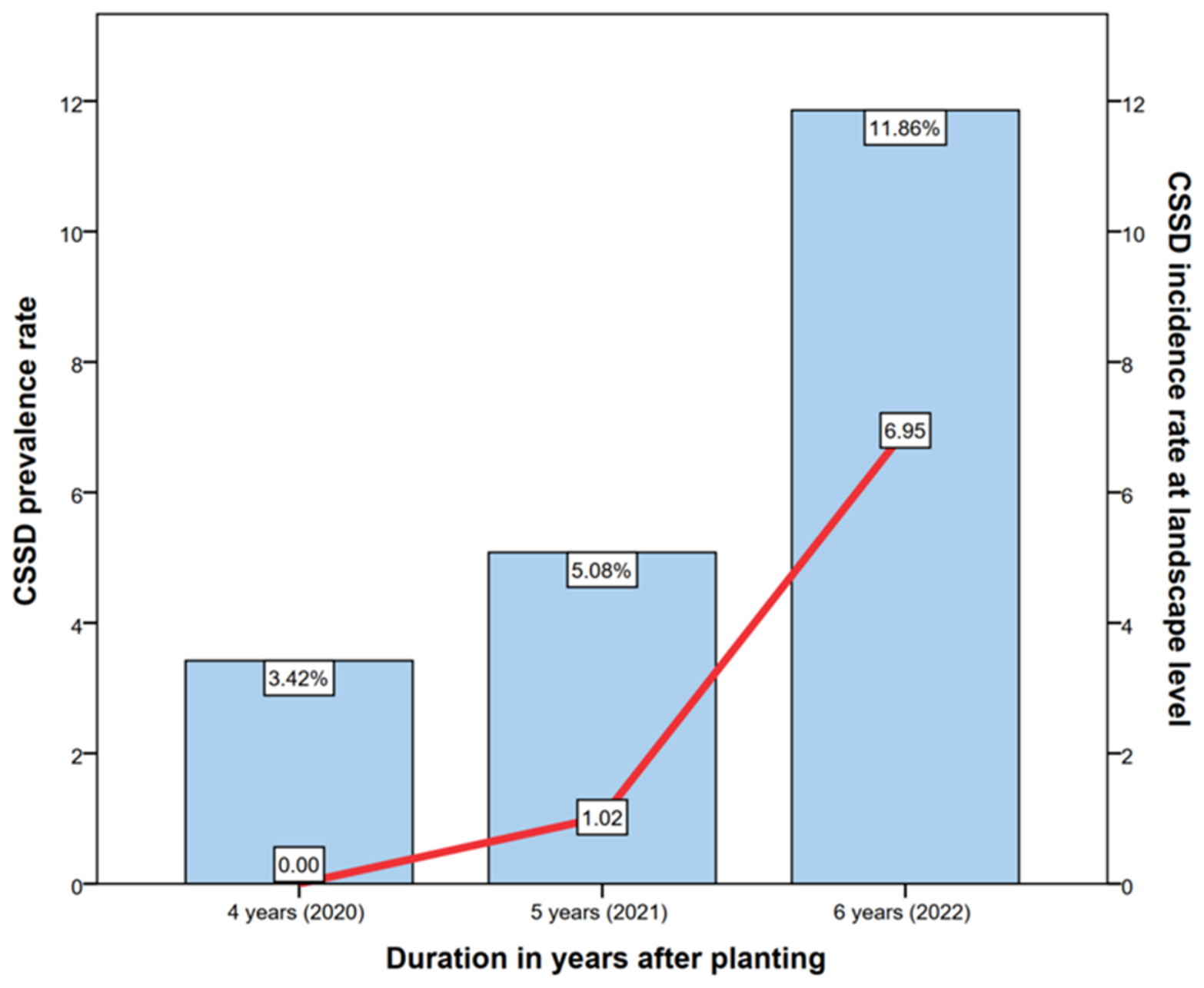
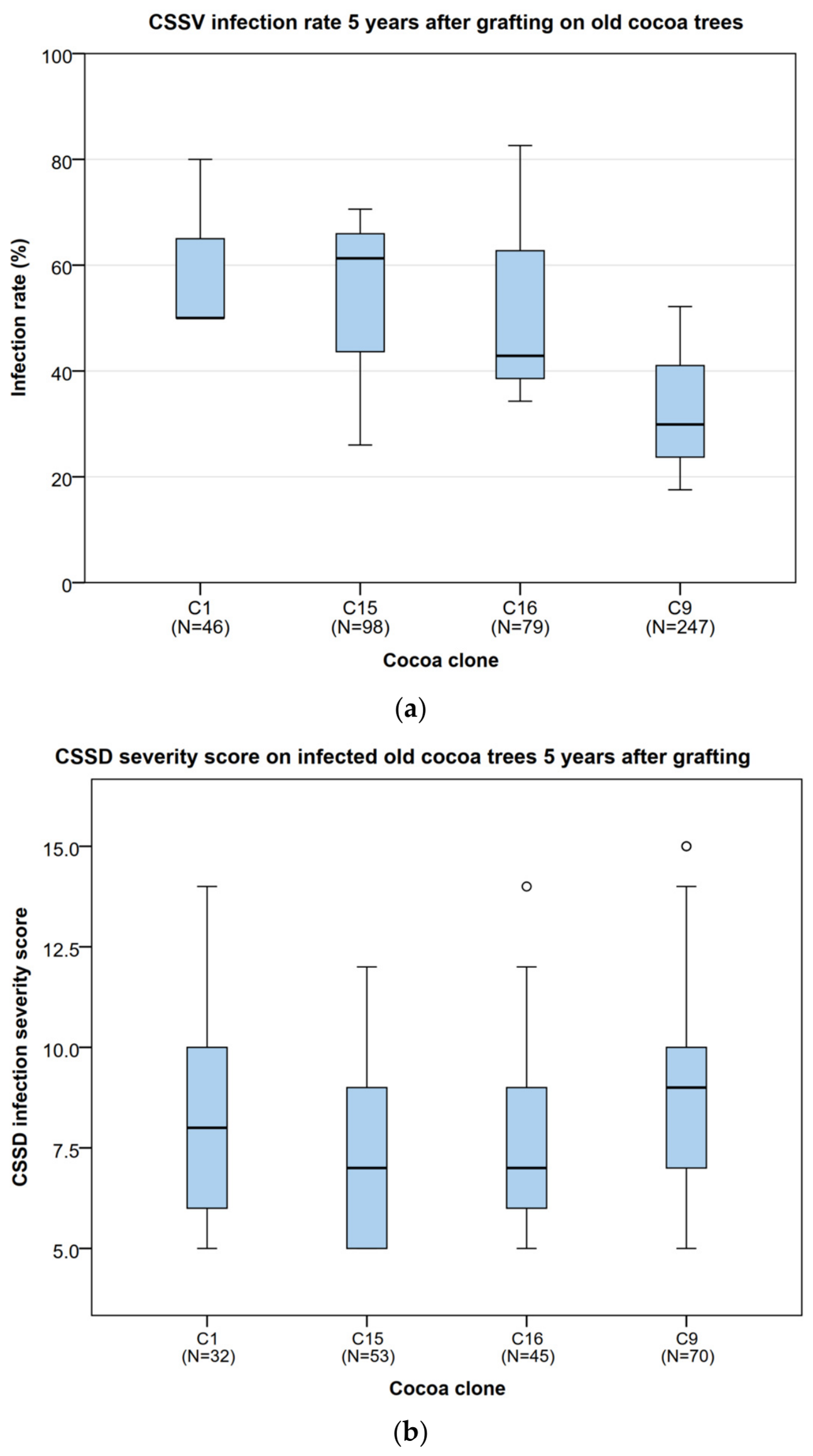
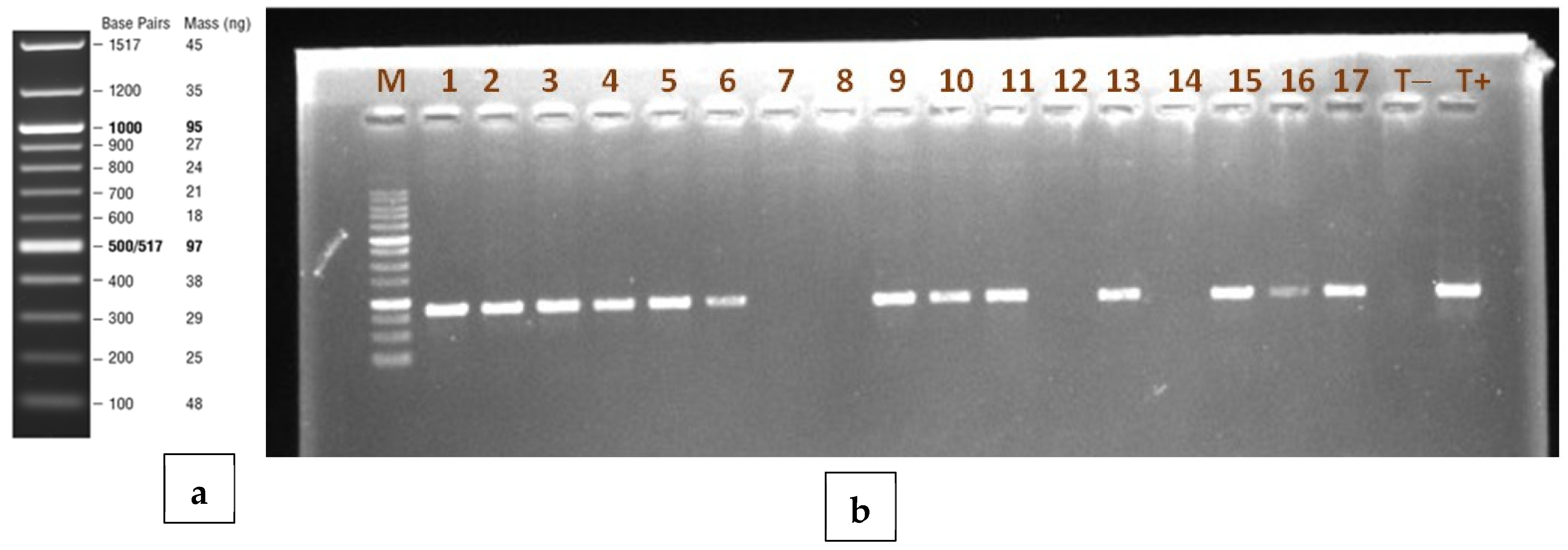
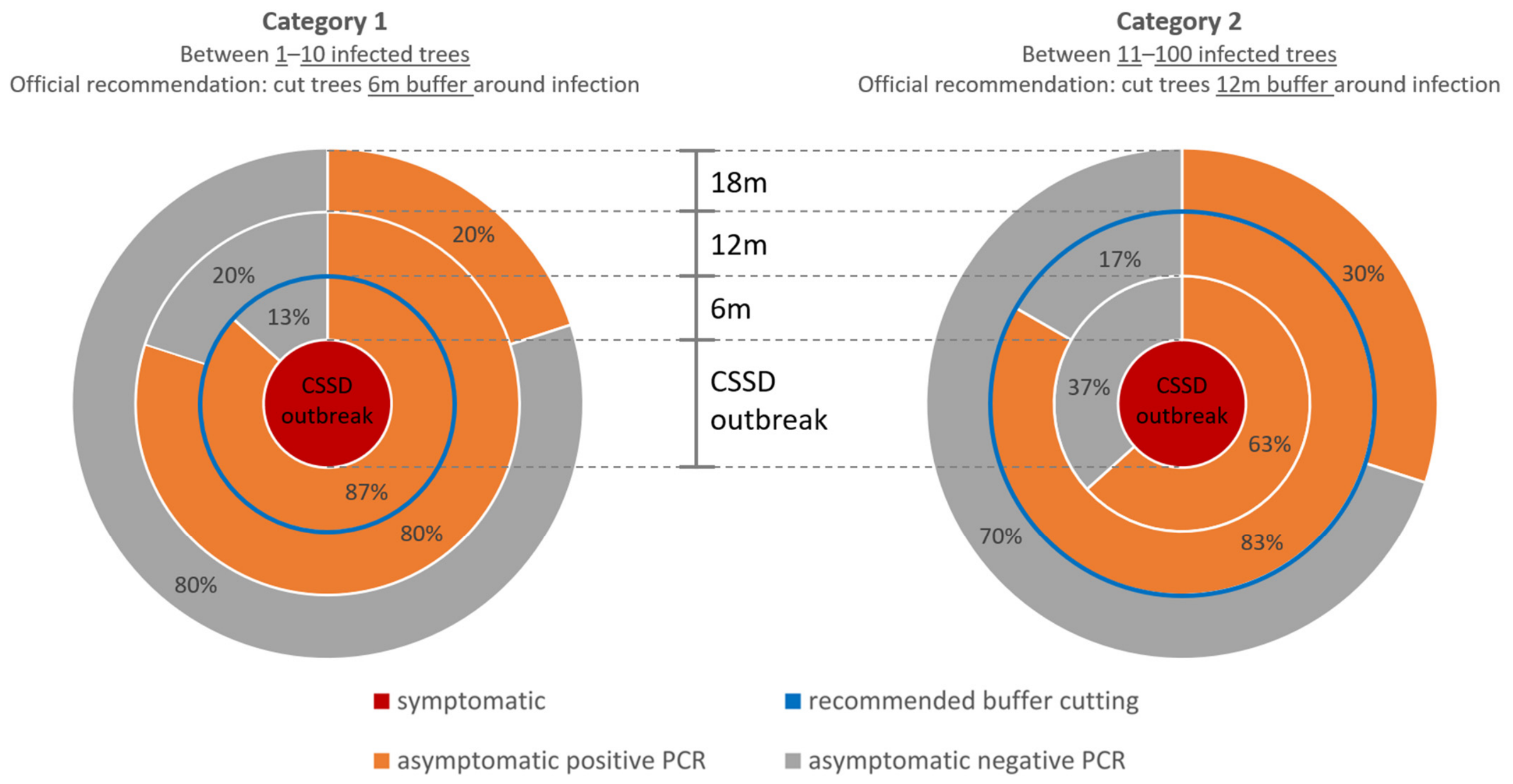
This study was conducted to understand the reinfection pattern of cocoa swollen shoot disease (CSSD) in rehabilitated plots in the cocoa landscape of the Nawa region (Soubré) in Côte d’Ivoire. CSSD was monitored over time on a sample of 200 farms randomly selected from 1200 rehabilitated cocoa farms. Disease epidemiological parameters were assessed through field observations and molecular diagnostic analysis at farm and landscape levels. The results of this study showed that reinfection occurred earlier than expected, with a high disease incidence estimated at 6.95% from 2020 to 2022. Grafting with clones on mature cocoa trees was more susceptible to reinfection than grafting on seedlings and hybrids. The use of PCR as a molecular diagnostic tool indicated missed infections in the current removal strategy when considering the buffer zone recommended in the cutting out process currently in place. Recommendations for the efficient protection of rehabilitated farms after cutting out campaigns are highlighted.
Keywords:
cocoa replantation; grafting technology; virus epidemic; CSSD reinfection; PCR