Review

Environmental and Biological Factors Shaping Metabolic Variation in Potato (Solanum tuberosum L.): A Metabolomics-Based Review


1
Biologie des Plantes et Innovation (BIOPI), BioEcoAgro, UMRt Institut National de Recherche pour l’Agriculture, l’Alimentation et l’Environnement (INRAE) 1158, Université de Picardie Jules Verne (UPJV), 80000 Amiens, France
2
Platform of Research and Analysis in Environmental Sciences (PRASE), Lebanese University, Beirut 1107, Lebanon
*
Author to whom correspondence should be addressed.
Crops 2026, 6(3), 54; https://doi.org/10.3390/crops6030054
Submission received: 23 February 2026 / Revised: 1 June 2026 / Accepted: 4 June 2026 / Published: 11 June 2026

Abstract

Potatoes (Solanum tuberosum L.) contain a diverse range of primary and secondary metabolites that determine their nutritional, storage, and defense characteristics. There has been an increasing number of metabolomics-based studies in potato breeding and stress assessments recently; however, there remains a lack of comprehensive studies addressing metabolite variation using multiple analytical techniques. Metabolomics offers valuable insights into these variations by enabling the identification of key metabolic markers, and the combined use of multiple analytical techniques on the same sample allows for broader metabolite coverage. This review provides an integrated understanding of how primary and secondary metabolism is influenced by environmental and developmental conditions across potato organs as characterized by various analytical techniques. Unlike existing reviews, this manuscript provides a critical evaluation of studies examining the effects of cultivation systems and potato plant developmental stages on primary metabolites across different organs while also emphasizing the role of newly characterized secondary metabolites in stress responses and offering a comparative assessment of extraction techniques. Metabolomic approaches assess the combined effects of multiple intrinsic and extrinsic factors, and through the integration of multi-omics datasets, enabled by the rapid advancement of bioinformatics tools, they enhance our understanding of potato physiology and support improved crop management and breeding strategies.

1. Introduction

The potato plant, Solanum tuberosum L., is grown in more than 100 countries and is the fourth most important food crop worldwide [1]. Potatoes originate from high elevations in the Andes and contain a wide range of small molecules within their cells that are essential for growth, development, environmental adaptation, and defense [2]. For basic physiological processes, such as tuber development and sprouting, photosynthesis, respiration, and energy metabolism, primary metabolites such as sugars, lipids, and amino acids are necessary. Secondary metabolites, for example, chlorogenic acids (CGA), alkaloids, flavonoids, and terpenoids, are essential for mediating plant–environment interactions, including adaptation to different abiotic stresses and defense against diseases and pests [3].
New approaches and technological developments are creating new opportunities to study potato metabolism. Metabolomics, a rapidly evolving field within systems biology, enables the comprehensive analysis of small-molecule metabolites in biological samples [4]. Using high-throughput analytical techniques such as nuclear magnetic resonance (NMR) spectroscopy and mass spectrometry (MS), including hyphenated techniques such as gas chromatography (GC-MS), high-performance liquid chromatography (HPLC-MS), ultra-high-performance liquid chromatography (UPLC–MS), and capillary electrophoresis (CE-MS), scientists can identify and quantify plant metabolites thoroughly. These advancements have the potential to uncover metabolic regulatory mechanisms and provide a scientific basis for the development of new cultivars, improved cultivation systems, and ecological preservation [5]. Despite extensive research on potato metabolism, there is still a need for a more integrated perspective on how different factors influence metabolite variability, especially through metabolomic approaches capable of differentiating between primary and secondary metabolites.
The present work is based on a structured and comparative review of the literature focusing on potato metabolism and its modulation by intrinsic and extrinsic factors.
First, a comprehensive bibliographic search was conducted using major scientific databases (Google scholar, Reaxys, Scopus) using combinations of keywords such as potato, metabolomics, primary and secondary metabolites, 1H-NMR, LC-MS, GC-MS, biotic and abiotic stresses, cultivation systems, and potato cultivars. Inclusion criteria were defined to prioritize recent (last 15 years) and experimentally validated studies. Seminal older studies were included where necessary to support fundamental concepts. Second, selected articles were subsequently screened and systematically categorized according to several key criteria. These included the experimental model employed (in vitro systems, greenhouse experiments or field conditions), nature of the influencing factors (biotic, abiotic, genetic, and biotechnological variables), and the studied organ. Third, the analytical methods utilized for metabolite detection and characterization such as UPLC, LC-MS, GC-MS, and NMR were taken into account to ensure a comprehensive evaluation of the applied methodologies. Studies were excluded if they focused on transcriptomics, food-related aspects, nutritional aspects, or sweet potatoes. This approach ensured reproducibility and coherence across selected studies.
The reported data from selected studies were analyzed in a descriptive and comparative manner. When available, statistical significance thresholds (e.g., p values, ANOVA, multivariate analyses such as principal component analysis (PCA) or partial least squares discriminant analysis (PLS-DA)) reported in the original studies were considered to evaluate metabolite variation under different biological and environmental conditions. Multivariate statistical approaches commonly used in metabolomics, including PCA and PLS-DA, were taken into account to interpret metabolic pattern separation between cultivars, treatments, or stress conditions.
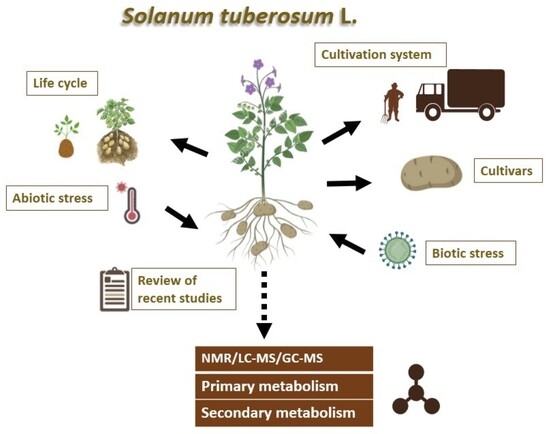
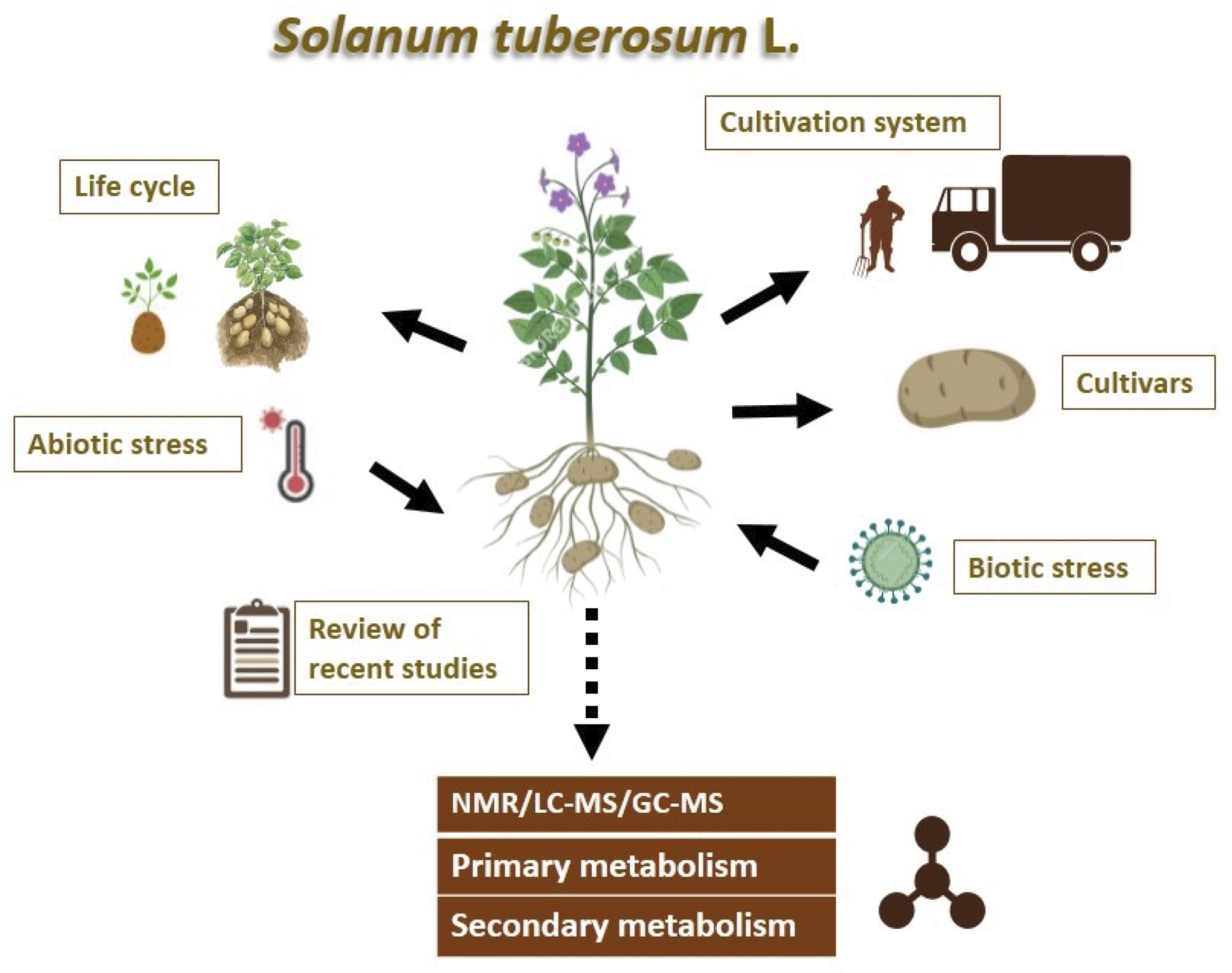
This review aims to summarize the findings from metabolomic studies examining the expression of potato plant metabolites across different cultivation systems, throughout the tuber life cycle, among different cultivars, and under various abiotic and biotic stresses.

2. Cultivation Systems

2.1. Potato Metabolome Variations in Organic and Conventional Agricultural Systems

An understanding of the potato metabolome combined with exploitation of potato production systems offers insights into how various farming methods impact the nutritional value, stress tolerance, and quality of potatoes. Potatoes are subjected to distinct environmental factors and nutrient inputs in conventional, organic, and sustainable production systems, which affect their metabolome, the entire collection of their metabolites.
The choice of the agricultural production system (conventional vs. organic) significantly affects the metabolite composition of potatoes [6]. The cultivar Sante was grown for two years using conventional and organic fertilizer regimes. Both untargeted LC-MS and GC-MS analyses revealed that lower levels of twelve amino acids (methionine, phenylalanine, tryptophan, histidine, asparagine, lysine, isoleucine, leucine, proline, valine, threonine, and tyrosine) accumulated in tubers from the organic fertilizer treatment compared to those from conventional fertilizer treatment. The decreased nitrogen content of the potatoes cultivated organically (50% lower than that for conventional agriculture) was linked to the influence of free amino acids [7]. All of the nitrogen in a conventional ammonium nitrate fertilizer is readily available to plant roots, whereas only 10–15% of the nitrogen from organic manure is readily available to the crop [8].
This result was correlated with the analysis of the potato tuber’s protein profile. Due to a lack of nutrients, it has been hypothesized that organic crops would typically grow under more stressful conditions. The accumulation of chaperones that help in the degradation of proteins and other macromolecules suggests that protein turnover and other hydrolytic reactions are more active in tubers grown organically. Additionally, these tubers had higher levels of numerous enzymes related to energy metabolism and glycolysis, which may indicate a higher rate of cell respiration. An increased abundance of aspartic proteinase, superoxide dismutase, and ascorbate peroxidase was recorded in the organic fertilization regime; the levels of these enzymes are also known to increase in oxidative stress [8]. In addition, it has been shown that compost as soil amendment can result in the activation of systemic resistance and increase in the activities of defense-related proteins [9].
An LC-MS analysis showed that the organic fertilizer regime may result in reduced levels of several glycoalkaloids (α-solanine and its derivative solasonine) in potato tubers during a single growing season [7], which agree with the findings of Abreu et al. [10] on potato tubers. On the contrary, Hajšlová et al. [11] found that organically produced tubers had somewhat higher amounts of glycoalkaloids; however, the effects of management method were overshadowed by genotypic and year-to-year variance. It has been proposed that organic management-related environmental factors can stimulate the manufacture of substances like glycoalkaloids that contribute to disease resistance [12].
Compared to conventionally produced potato tubers, organically produced tubers had a significantly higher concentration of polyphenols, including flavonoids (kaempferol-3-O-glucoside, myricetin, quercetin, and quercetin-3-O-glucoside) and phenolic acids (CGA, gallic acid, p-coumaric acid, and ferulic acid) [13]. The theory described by Bloksma et al. [14] states that in traditional farming, the content of phenolic compounds in fruits and vegetables is decreased by mineral nitrogen fertilizers, particularly in high doses. Higher synthesis of polyphenolic compounds is typically seen in plants grown organically using natural fertilizers, which restrict the amount of nitrogen available to plants. The ways in which plants are protected can also account for variations in their synthesis of polyphenols. The non-use of synthetic pesticides in organic farming increases the exposure of plants to stress factors, which may lead to the intensive production of secondary metabolites as a defense mechanism [15,16].
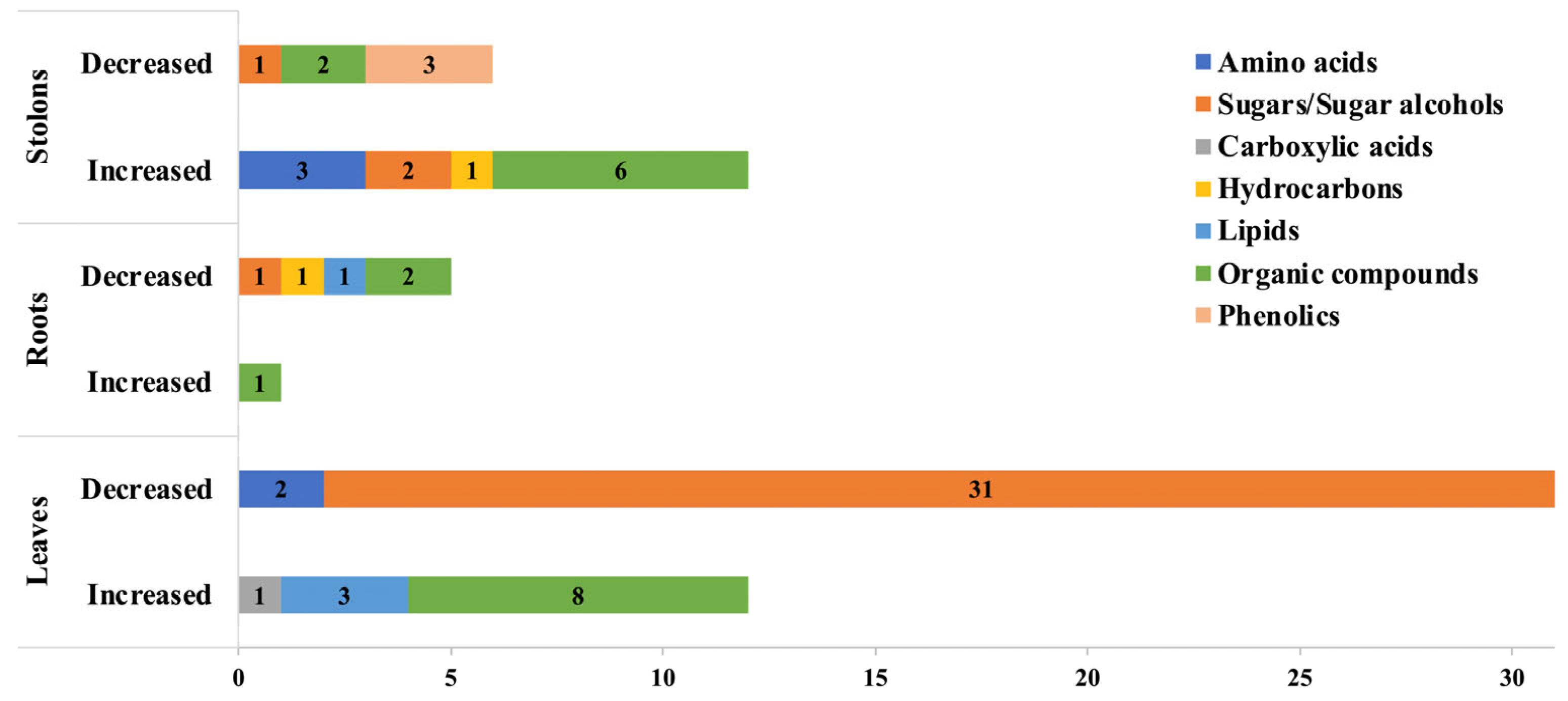
Excessive nitrogen fertilizer treatment could significantly affect secondary metabolism in potato roots, leaves and stolons, as shown using UPLC [17]. Figure 1 summarizes the changes in metabolites in different potato organs (roots, stolons, and leaves) due to an excessive use of nitrogen.
Because of their thin root systems, potatoes may have lower nutrient use efficiency (NUE) and produce more greenhouse gas emissions when they are exposed to excessive amounts of nitrogen fertilizer [18], altering the microbial population in the potato rhizosphere soil and increasing disease susceptibility in crops [19].
Organic fertilizers play a vital role in potato cultivation by enhancing soil health, improving crop yield, and promoting sustainable agricultural practices. They decompose slowly, releasing nutrients gradually over time, thus providing a steady supply of essential nutrients like nitrogen, phosphorus, and potassium, which are crucial for growth [20]. On the other hand, conventional fertilizers provide an instant source of nutrients, guaranteeing quick plant growth and greater initial harvests. The easily accessible types of nitrogen, phosphorous, and potassium found in synthetic fertilizers can promptly address nutritional deficits and temporarily increase crop output.
This is crucial in continuous potato cropping systems, where frequent planting can deplete soil nutrients and worsen pest and disease problems. Unbalanced microflora and its changes were significant contributors to ongoing potato farming. In soil collected from fields with different continuous cropping (CC) years (0, 4, and 7 years), the contents and types of potential autotoxins in potato root exudates increased significantly in CC4 and CC7 plants. The breakdown of styrene and the biosynthesis of phenylpropanoid compounds (homogentisic acid and salicylic acid) as well as other secondary metabolites (psoralin, conhydrine, and phloretin) dominated the metabolomics of the CC4 and CC7 groups as identified by an untargeted LC-MS analysis. The increased levels of these coumarins, phenols, and alkaloids suggested that the plants were experiencing oxidative stress [15]. Potatoes grown in CC systems had altered metabolism, as seen by plant root exudates, which caused the rhizosphere microbiota to shift in favor of pathogenic fungi and fewer good bacteria [16]. These difficulties can be minimized and productivity maintained over time by putting precise fertilization techniques into place in conjunction with crop rotation or integrated pest management techniques.
The use of various separation techniques together with MS, including GC–MS, LC–MS, and UPLC-MS, has provided a more comprehensive coverage of the metabolome and improved metabolite identification and quantification [5]. While GC–MS is utilized for the quantitative and qualitative analysis of volatile and thermally stable compounds, LC–MS is used to analyze non-volatile or thermally labile high-molecular-weight compounds that are not amenable to GC–MS analysis, making it an ideal choice for studying complex biological matrices due to its efficiency, simplicity, and robustness [5]. UPLC-MS, as an advanced form of LC-MS, offers higher resolution, increased sensitivity, and faster analysis time [21], allowing for improved separation and detection of metabolites, particularly in high-throughput metabolomics studies as shown by the high number of metabolites detected in the different studied organs.
Nevertheless, different detection instruments produce data in different formats, which is a major issue in metabolomics [22]; the lack of uniform standards makes data integration and sharing difficult.

2.2. In Vitro Tubers, the Faithful Phenotype of Soil-Grown Tubers

The environment in which potatoes are grown has a significant impact on their metabolic profile. In contrast to plants cultivated in fields, plants cultivated in vitro under carefully controlled conditions display unique metabolomic traits. These differences result from changes in light exposure, stressors, and nutrient availability, all of which influence the build-up of primary and secondary metabolites necessary for quality, development, and defense [23].
According to morphological, molecular, and biochemical data, in vitro-grown potato tubers are thought to be a faithful phenotype of soil-grown tubers. The untargeted metabolic profiling of S. tuberosum L. cv. Desirée using GC-MS revealed major differences between soil- and in vitro-grown tubers. The levels of some amino acids were significantly increased in in vitro-grown tubers compared to those in soil-grown ones, particularly glutamic acid and other amino acids like glutamine, proline, and arginine that are generated from α-ketoglutaric acid as well as amino acids like lysine and asparagine that are formed from oxaloacetic acid. However, in vitro-grown tubers had lower levels of tyrosine, glycine, alanine, β-alanine, and phenylalanine than soil-grown tubers. In general, microtubers had significantly higher levels of amino acids than soil-grown tubers [23].
The greater levels of substances suggestive of osmotic stress such as mannitol, inositol, and glycerol in the in vitro tubers compared to those in soil-grown ones was another significant distinction between the two types of tubers. The decline in levels of citric acid cycle intermediates including citric acid, malic acid, succinic acid, and isocitric acid in in vitro-grown tubers could be explained by a high anaplerotic demand for carbon. Similarly, a decrease in the levels of glucose, sucrose, and fructose-6-phosphate in microtubers was observed compared to those in soil-grown tubers [23].
These modifications could result from the microtubers receiving more nitrate. Since the tuber-inducing mix contained a lot of sugars, the in vitro-grown tubers were not likely to be limited in their supply of carbohydrates; therefore, the rate of nitrate assimilation might be significantly higher than that in soil-grown tubers [23].

2.3. Influence of Altitude on Potato Secondary Metabolites

A comprehensive strategy for maximizing potato development and yield is provided by combining in vitro propagation methods with in-soil cultivation using soils from various elevations. Environmental diversity such as variations in temperature, soil composition, and atmospheric pressure can have a substantial impact on tuber quality attributes such as starch content or disease resistance. Therefore, it is important to evaluate the potato cultivars’ adaptability at different altitudes.
The metabolic profiles of potato tubers are greatly impacted by altitude, with both primary and secondary metabolites showing notable alterations. The accumulation of CGAs in plant leaves was influenced by light intensity. In winter, leaves grown in light-rich conditions had significantly higher CGA contents than those grown in back-shade conditions; in summer, the CGA contents of leaves were twice as high as those in winter [24]. Numerous factors influence CGA biosynthesis. These include external environmental factors like water, inorganic salts, and nutrient elements, as well as internal factors like genotype, tissue site, and developmental period [25].
Metabolomic profiling was carried out on two pigmented potato varieties from Yunnan, Huaxinyangyu and Jianchuanhong, at four elevations (1800 m, 2300 m, 2800 m, and 3300 m) using UPLC-MS/MS. The levels of CGAs (3-O-caffeoylquinic acid, 4-O-caffeoylquinic acid, 5-O-caffeoylquinic acid, 3-O-p-coumaroylquinic acid, 4-O-p-coumaroylquinic acid, 5-O-p-coumaroylquinic acid, and isochlorogenic acid) increased with altitude in both tubers; the maximum content was recorded at 2800 m and decreased slightly at 3300 m [24]. This was confirmed by Piñeros-Niño et al. [26] who demonstrated that the level of CGAs in potato tubers sown in the fall under alpine agroclimatic circumstances (2650 m altitude) was shown to be higher than in those sown under flatland agroclimatic conditions (1850 m altitude).
The inorganic salts and nutrients required for plant growth are supplied by the soil. In this study, the Huaxinyangyu and Jianchuanhong varieties were cultivated in pots using a uniform substrate, in order to minimize the influence of soil environmental variability on CGA content. In addition, CGA biosynthesis originates from phenylpropane metabolism, and plant phenylpropane metabolism mainly consists of phenylalanine metabolism and the synthesis of secondary metabolites such as downstream branches of CGAs [27].
These findings highlight the strong influence of environmental conditions, particularly altitude and associated abiotic factors, on the regulation of CGA biosynthesis in potato tissues. The observed increase in CGA accumulation with rising altitude (up to 2800 m) may be attributed to enhanced exposure to abiotic stresses such as increased ultraviolet (UV) radiation, lower temperatures, and altered oxygen availability, all of which are known to activate phenylpropanoid metabolism. The slight decrease in CGA content at the highest altitude (3300 m) may reflect physiological constraints or metabolic trade-offs under excessive environmental stress, where carbon allocation is redirected toward essential survival processes rather than secondary metabolite production. In addition, the consistency between tuber and leaf responses suggests a coordinated systemic regulation of phenolic metabolism across plant organs [28].
The interplay between fertilizer treatments, in vitro and in soil cultivation, and altitude-specific conditions significantly shapes the potato metabolome. Organic fertilizer application influences nutrient availability, directly decreasing amino acids in potato tubers. When combined with in vitro soil cultivation, higher levels of amino acids were detected in in vitro-grown tubers; this allows for controlled evaluation of nutrient uptake and plant development under defined conditions. Altitude further adds a critical dimension, as environmental factors such as temperature, UV radiation, and soil properties vary, inducing specific metabolic responses. Together, these factors reveal how external inputs interact to modulate biochemical pathways in potatoes, offering insights for optimizing tuber quality and yield under diverse agroecological scenarios.

3. Plant Life Cycle

The potato cultivation system significantly impacts the potato metabolome throughout its life cycle, influencing the production and accumulation of key metabolites in potato leaves, tubers, and stolons. Its life cycle can be divided into seven stages: dormancy, sprouting, vegetative growth, tuber initiation, tuber bulking, maturation, and senescence. The analysis of potato leaf metabolites can reveal different chemical pathways that regulate tuber formation and development.

3.1. Unveiling the Chemical Wealth of Potato Leaves

Potato leaves play a crucial role in tuber growth and development. They are the primary site of photosynthesis, and they transport sugars through the phloem to the tubers, the storage organ.
Using HPLC-electrospray ionization (ESI)-quadrupole time-of-flight (QTOF)-MS, a non-targeted metabolite profiling conducted on Daisy potato leaves collected in an organic experimental field demonstrated an interesting source of phenolic compounds: quinic acid derivatives (ferulic acid and quinic acid), gentisic acid derivative glycosides (gentisic acid and hydroxymethylglutaric acid), caffeoyl derivatives (N-caffeoylputrescine and caffeoylmalic acid), sinapic acid derivatives (sinapic acid 4-O-glucoside and p-coumarylmalic acid), and phenolic acids (benzoic acid and 3,4-diacetoxybenzoic acid) [29].
Kaempferol, rutin, quercetin, kaempferol rutoside, and 2-phenylethyl-D-rutinoside were the flavonoids present in this cultivar. Concerning glycoalkaloids, leptines (leptine I and leptine II) were detected in the leaves, with the most representative glycoalkaloids being α-solanine and α-chaconine. Oxygenated derivatives of fatty acids (furannonanoic acid, trihydroxyoctadecenoic acid, and colneleic acid) and jasmonates (tuberonic acid glucoside isomer 1 and cyclopentaneacetic acid) were also detected in leaves. Jasmonate molecules play an important role in plant defense against pathogens and as signaling molecules between plants [29]. Organic acids (malic acid, citric acid, quinic acid, and ascorbic acid) as well as amino acids and their derivatives (pyroglutamic acid, leucine, isoleucine, fructose leucine, fructose phenylalanine, and uridine) were also present in potato leaves [29].
Changes in plant metabolism induced by variations in soil nitrogen availability under conventional and organic management systems may explain the elevated levels of phenolic compounds observed in organic products (carbon/nutrient balance theory). Nitrogen availability is typically lower in organic cultivation, leading to the enhanced biosynthesis of carbon-based compounds, including secondary metabolites that do not contain nitrogen. Phenolic compounds, such as flavonoids and phenolic acids, tend to accumulate when nitrogen deficiency activates the phenylpropanoid pathway. In contrast, when nitrogen is more readily available, plants preferentially synthesize proteins and other nitrogen-containing molecules [30].

3.2. Tuber Peel and Pulp: Variability in Composition

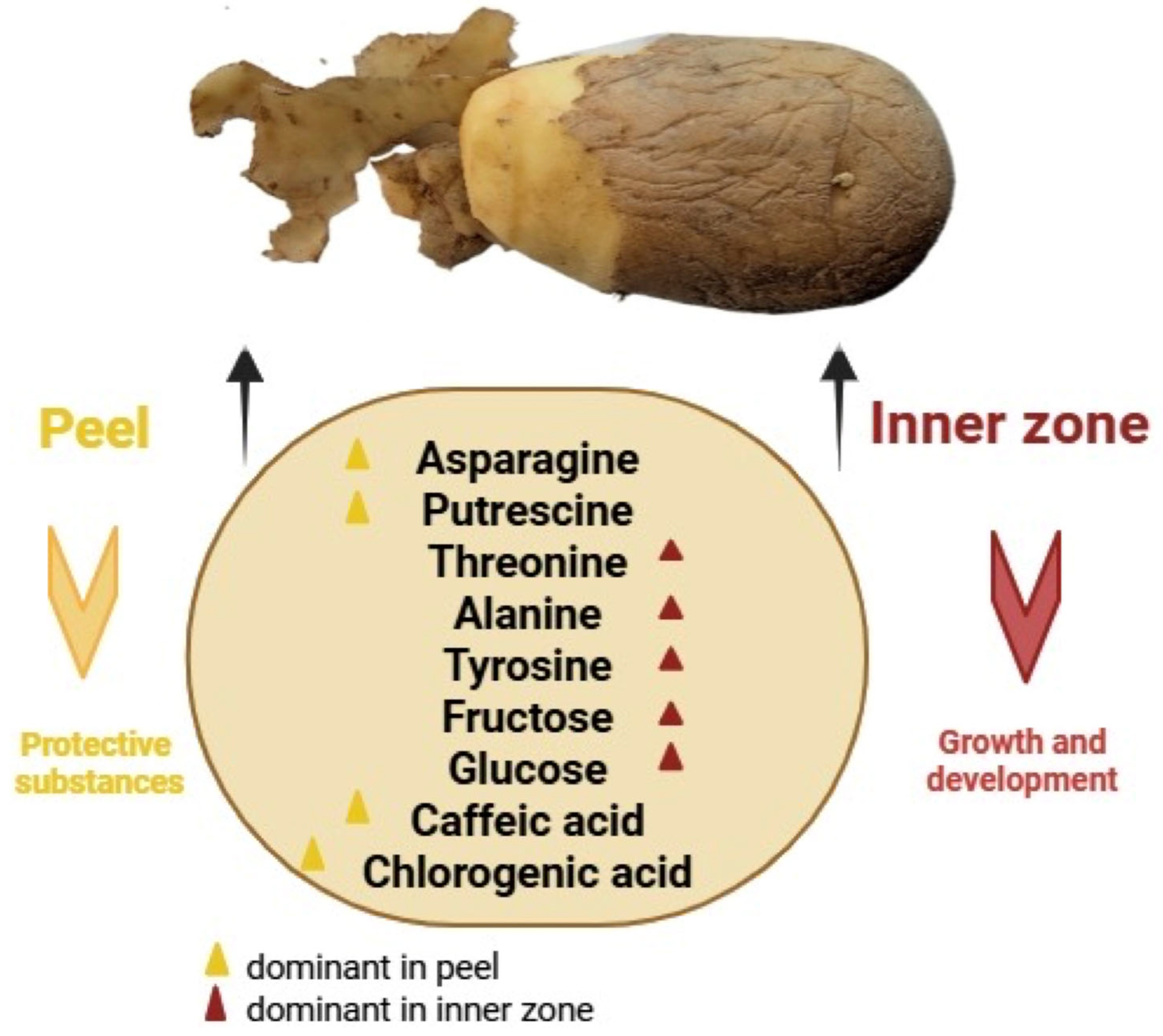
The metabolite profiling of samples taken from different zones of the potato tuber in field plants (core, inner cortex, outer cortex, and peel) demonstrated both radial and axial (from tuber apex to stolon) gradients of metabolites. The gradients of metabolite concentrations in potato were radial in general. For example, amino acids such as threonine, alanine, and tyrosine were predominantly accumulated in the inner zones of the tuber, while the content of asparagine was maximal in the peel. A negative concentration gradient directed toward the center was revealed for secondary metabolites (putrescine, caffeic acid, and CGAs), while an opposite one for sugars (fructose and glucose) was shown. The peel was characterized by an increased content of CGA and caffeic acid, which serve as protective substances, as well as antioxidants (Figure 2) [31].

3.3. Dynamic Metabolic Shifts Throughout the Life Cycle

Potato tubers stay metabolically active from the beginning of tuber formation through maturation and finally into the dormant phase; there is no dehydration period during tuber maturation [32]. Following a break in dormancy and sprouting, the plant completes its life cycle by establishing itself in the field. Thus, the potato tuber serves as a valuable model for research pertaining to development and metabolism.
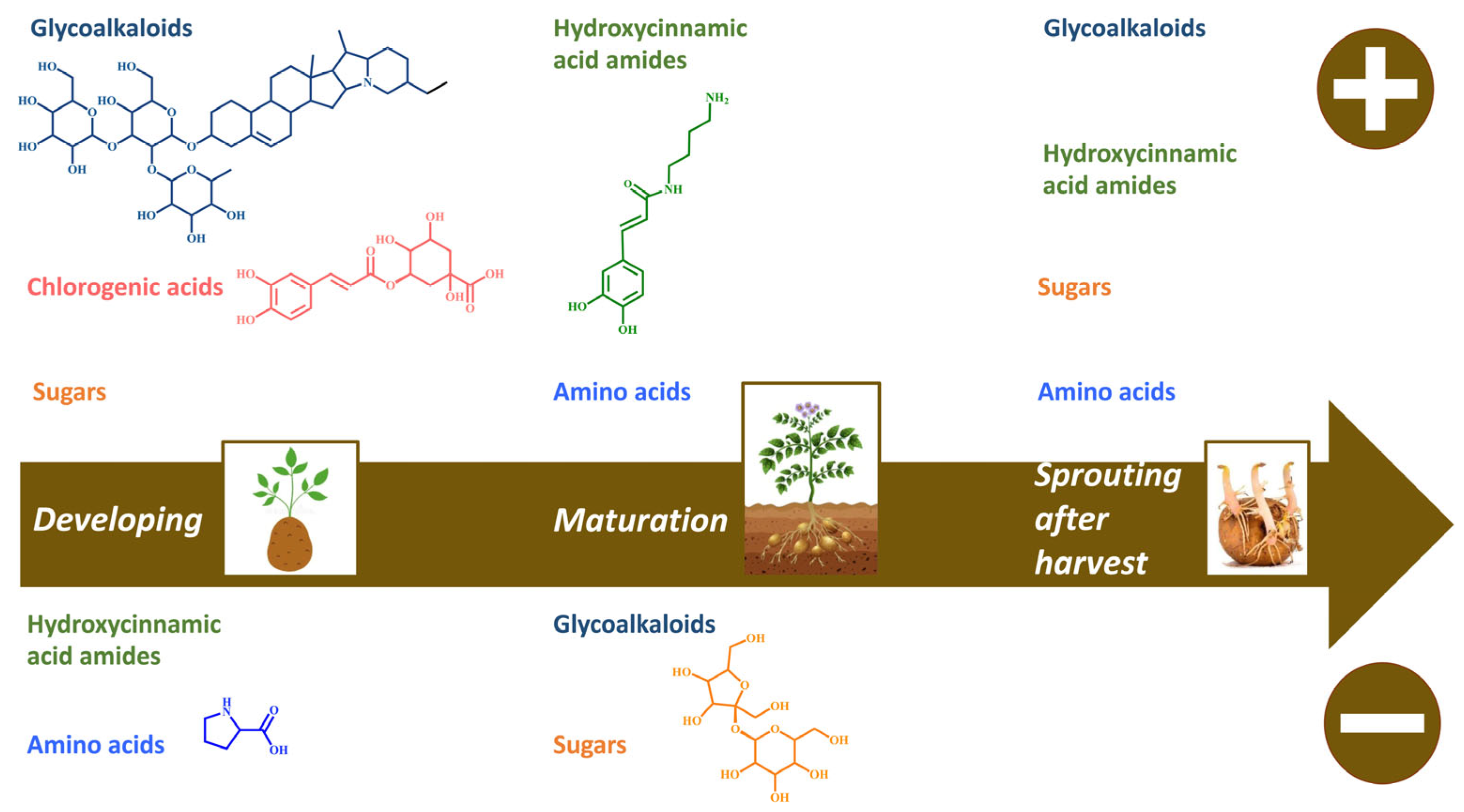
Glycoalkaloids were analyzed using LC-MS with an ESI source in positive mode during the different growth stages of potato tubers (Desirée). The levels of α-solanine and α-chaconine were increased in growing tubers, reduced as the tubers matured (pre-sprouting), and then increased again during tuber sprouting [33].
Throughout the developing stage, the levels of amino acids (tryptophan, arginine, tyrosine, histidine, lysine, proline, and aspartic acid), detected by GC-MS, were reduced; they then increased during tuber maturation and sprouting. A comparison of polar metabolites from developing and mature Desirée tubers revealed that the levels of other amino acids, such as glycine, homoserine, alanine, and polyamine putrescine; sugars, such as glucose, fructose, sucrose, and hexose phosphates; organic acids, such as fumaric acid, malic acid, quinic acid, gluconic acid, oxalic acid, caffeic acid, and succinic acid; and sugar alcohols, such as glycerol and α-glycerophosphate, significantly decreased during tuber maturation and increased again during tuber sprouting. However, mature tubers had higher levels of asparagine, γ-aminobutyric acid (GABA), methionine, phenylalanine, glutamic acid, 2-piperidine carboxylic acid, trihydroxypentanoic acid, and glucaric/galactaric acid [33].
High reducing sugar concentrations and low starch concentrations could be the reason for tubers sprouting at harvest [34]. Caffeoyl and feruloyl putrescine, two hydroxycinnamic acid amides, were reduced during the growing stage and then increased once the tuber sprouted. The tubers of Huaxinyangyu and Jianchuanhong cultivars were sampled at various altitudes during two reproductive stages, namely, the developing stage and maturation stage, to determine the total CGA content in the tubers using UPLC-MS/MS. Both cultivars had the greatest CGA (3-O-feruloylquinic acid and isochlorogenic acid) concentrations when they were in the developing and maturation stages [24]. The changes in metabolite families in the various phases of potato tubers are summarized in Figure 3.
It is well-recognized that a variety of methods are needed to increase the scope of metabolome investigation. The above studies evaluated changes in metabolite composition over important stages in the tuber life cycle using UPLC-MS, LC-MS and GC-MS. Thus, it is possible to distinguish changes in the metabolome of potato tubers over a broad range of developmental phases by using the right combinations of technologies.

3.4. Early- and Late-Maturing Potato Lines

A GC-MS analysis of tubers from early- and late-maturing potato genotypes showed that differences between the two types of tubers were in the amounts of L-aspartic acid, L-glutamine, and L-asparagine. These metabolites were found in lower concentrations in the late-maturing tubers than in the early-maturing ones, while the levels of L-proline, D-glucose, D-fructose, and glucose-6-phosphate were higher in the tubers of late-maturing potato lines. Soluble carbohydrates—notably sucrose—are strong inducers of tuberization, which is triggered by mobile signals transported from leaves to stolon tips. Storage organs are generally net importers of assimilates like starch, reducing sugars, L-asparagine, L-glutamine, L-serine, L-threonine, galactinol, and L-aspartic acid [35].

3.5. Diurnal Metabolome Fluctuations

As changes in the metabolomic profiles might be very dynamic, diurnal fluctuations in the carbohydrate content and a wide range of metabolites in potato leaves (Desirée variety) were analyzed. The levels of compounds involved in photorespiration such as glycine, serine, and tyrosine reached their maximum at the end of the light period. For citrate and isocitrate, the Krebs cycle intermediates, a decrease in their pools was established during the light period, and an increase was established in the dark period. Illumination resulted in a sharp increase in the pools of glucose-6-phosphate, fructose-6-phosphate, and sucrose and only a slight increase in fructose, glucose, and the sugar alcohol mannitol [36]. In contrast, during the dark period, maltose, maltitol, and uracil were accumulated [31].
KEGG enrichment analysis of the differential metabolites showed that the roots’ distinct metabolites were primarily enriched in metabolic pathways such as creation of fatty acids and metabolism of fructose and mannose. Differential metabolites in stolons were primarily concentrated in metabolic pathways such as production of nucleotide sugars and galactose metabolism, whereas in leaves, enrichment was seen in metabolic pathways such as ABC transporters, galactose metabolism, and starch and sucrose metabolism [17].

4. Metabolic Variability Among Potato Cultivars

4.1. Metabolomic Signatures of Breeding-Derived Cultivars

Developing new potato varieties with improved traits such as disease resistance, yield, nutritional content, storage life, and adaptation to different climates was analyzed using different metabolomic techniques.
In China, the common potato variety Atlantic, prized for its tuber quality and used for fresh consumption and food processing, faced challenges related to susceptibility to storage diseases and postharvest handling issues. Metabolomic analysis of three newly developed potatoes, Longshu 7 (bred for stronger growth potential), Longshu 10 (bred for stronger adaptability), and Longshu 14 (bred for stronger growth, stronger adaptability and greater yield), was conducted to decipher the metabolic signatures that distinguish these cultivars from the Atlantic cultivar [37]. This analysis was carried out using ULPC-tandem electrostatic field orbitrap mass spectrometry (UPLC-Q Exactive HFX), and the differences in metabolites are presented in Table 1.
These findings could indicate enhanced biochemical diversity and metabolic activity in the newer cultivars, possibly due to genetic variations or environmental influences [34]. They also highlight the value of metabolomic profiling for elucidating the biochemical mechanisms driving varietal differences and may contribute to breeding strategies aimed at improving crop resilience and quality [38].
Another GC-MS metabolite profiling analysis conducted on bred Bulgarian tubers showed that the Kalina cultivar was considered the best among six other Bulgarian cultivars as it contained the highest number of useful metabolites. It produced the highest concentrations of aminobutyric and isocitric acids, methionine, and alanine and lower levels of fumaric acid, pyroglutamic acid, and glycine, in contrast to other cultivars like Pavelsko and Iverce, which had high concentrations of carbohydrates and relatively low concentrations of most of the amino acids. High levels of organic acids like citrate and isocitrate have an impact on the darkening of tuber flesh, and the Bor cultivar was found to tolerate prolonged storage periods without flesh darkening [39]. Low amounts of reducing sugars, such as fructose, are associated with good frying quality [40] as fewer dark pigments are generated; therefore, Kalina, Bor, and Rozhen were recommended for frying.
The main distinction between Hópehely (HP) and White Lady (WL) tubers, according to a non-targeted metabolite study employing GC-MS, is the concentration of sucrose; HP tubers contained more sucrose than WL tubers [34]. In both cultivars, the sucrose concentration was higher than that of glucose and fructose. This variation was detected similarly in the leaves of HP and WL; the highest concentrations of sucrose, glucose, and fructose were found in HP leaves at mg/g fresh weight, while WL leaves had lower concentrations of these same components.

4.2. Russet Tubers

The Norkotah Russet potato is a widely grown early-maturing cultivar known for its high-quality tubers, uniform shape, and smooth skin. Their peels contain high amounts of hydroxycinnamic acid amides like feruloylputrescine, caffeoylputrescine, and feruloyltyramine−feruloyloctopamine dimers. Russet tubers have enhanced protective capacities against microbial pathogens, as this compound class has been implicated broadly in plant metabolic signaling and suggested to be involved in protection against potato pathogens [39,40]. The levels of solanine and chaconine, which are polar metabolites, were found to be notably different in this cultivar in comparison with those in Atlantic, Chipeta, and Yukon Gold cultivars.
The most prevalent class of nonpolar metabolites identified by GC-MS in the peel of the four potato cultivars mentioned above are long-chain fatty acids and their derivatives (30–37%). Fatty acids, which represent 15–22% of the total soluble nonpolar constituents in each cultivar, range in chain length from C9 to C30, with the C16 and C18 homologues comprising more than half of this fraction. Six to nine percent of the total was made up of unsaturated fatty acids, including palmitelaidic (16:1, 50), linoleic (18:2, 51), oleic (18:1, 52), and linolenic (18:3, 53) analogs [41].
The reduced accumulation of these numerically significant nonpolar metabolites has been found to compromise the protective functions of a genetically modified potato peel and it may have a similar effect on the Norkotah Russet tubers. The latter long-chain 1-alkanols and n-alkanes are exactly the dominant components of suberin-associated waxes that are thought to regulate water transport and pathogen invasion. Additionally, findings of thinner wax layers and faster peel maturation in potatoes with russeted skin morphology observed in association with notably higher rates of water loss support this theory [41].
In the Norkotah Russet, five phenolic compounds were found to be the prevalent nonpolar metabolites: methyl caffeate, 4-hydroxy-3-methoxybenzaldehyde (vanillin), 4-hydroxy-3-methoxybenzoic acid (vanillic acid), ferulic acid, and 4-hydroxybenzoic acid. Ferulic acids are important metabolic precursors of vanillin, vanillic acid, and 4-hydroxybenzoic acid and are believed to create covalent cross-links between suberin and cell-wall polysaccharides. Additionally, these phenolic compounds have been shown to possess antibacterial properties. The Norkotah Russet cultivar’s increased synthesis of these five phenolic compounds may strengthen this native peel’s capacity to defend tubers from infections, making up for its thinner wax layer; the decreased waterproofing may encourage microbial invasion. The rich phytosterol markers, β-sitosterol and stigmasterol, which have been linked to plant innate immunity, may also contribute to this cultivar’s antibacterial defensive activity (Table 2) [41].
Metabolic variations between cultivars affects characteristics like frying suitability, disease resistance, storage, and nutritional quality. For example, the Bulgarian cultivars, Kalina and Bor, are excellent for frying and storing, while the Longshu cultivars accumulate metabolites related to stress response and antioxidant activity. Norkotah Russet contains phenolic chemicals involved in disease protection. This emphasizes the importance of metabolomics in breeding programs. There are still several cultivars with undiscovered features, which presents research prospects. Novel metabolites related to agricultural practices may be uncovered using sophisticated techniques like LC-MS or GC-MS, which would boost breeding efforts for more adaptable and higher-quality potatoes.

5. Harnessing Potato Resilience to Abiotic Stress

Potato plants exhibit significant differences in their ability to cope with abiotic stresses, such as drought, salinity, extreme temperatures, and nutrient deficiencies, due to variations in their genetic composition. Consequently, metabolite production is altered in response to stress.

5.1. Water’s Vital Role in Potato Growth

Potato plants have a maximum tolerance threshold that should not be exceeded by harsh environmental circumstances. These plants may have impaired growth, development, production, and quality if they are subjected to temperature or soil moisture circumstances that are outside of their optimal tolerance ranges. Furthermore, physiological changes such as photoassimilate partitioning, evapotranspiration rate, and photosynthesis can be brought on by extremes in temperature or water stress.
Cultivars that were exposed to flood and drought treatment had reduced yield and the tubers showed visible defects in terms of weight, diameter and height [42]. Flooding reduces oxygen and leads to the accumulation of gases like CO2 and ethylene, which impacts root growth and respiration. This causes the potato cells to deteriorate and become weak, which hinders their ability to form a healthy canopy. Similarly, the growth of potato plants was negatively impacted by drought circumstances as their root systems are shallow and can only extract a limited quantity of water from the soil. This may reduce their capacity to recover after a water stress period [42].
Metabolic studies on glasshouse-grown plants under three different water regimes (flooding, drought and adequate moisture) identified underlying metabolite variations between the treatments. 1H-NMR spectra showed that the main metabolic increases were observed in sugars (maltose, sucrose, α-glucose, and β-glucose) in plants that received the drought treatment, and a reduced concentration of linoleic acid was observed in those under the same stress. The amounts of many amino acids (cysteine, tryptophan, homocysteine and histidine) varied depending on the moisture stress, and this can be explained by the membrane and osmotic adjustment of reactive oxygen species (ROS) [43]. The production of many metabolites increased, some of which were associated with methylation reactions, signal transduction, recycling of nitrogen, and modification of oxidative stress, suggesting that the plant developed a defense against moisture stress [42].
These insights were made possible through the use of 1H-NMR, one of the earliest and most established analytical techniques in metabolomics [44], based on the physical properties of atoms that possess a non-zero magnetic moment [45,46]. NMR is particularly well-suited for such studies because it is non-destructive, highly reproducible, and inherently quantitative. In this case, 1H-NMR enabled the detection and comparison of metabolite levels across different treatments, with signal intensities directly reflecting relative concentrations [46]. This makes it especially powerful for identifying trends such as the accumulation of sugars or the depletion of specific lipids under drought stress.
Moreover, the minimal sample preparation and ability of NMR to provide rich structural information allow for the simultaneous observation of multiple classes of metabolites (sugars, amino acids, fatty acids) in a single experiment. However, the technique’s lower sensitivity [47] compared to mass spectrometry explains why the study focuses on metabolites and overall metabolic shifts rather than a complete metabolome characterization. Thus, NMR serves as a robust tool for identifying key metabolic biomarkers associated with plant stress responses, even if it does not capture low-abundance compounds.

5.2. Thermal Stress Responses

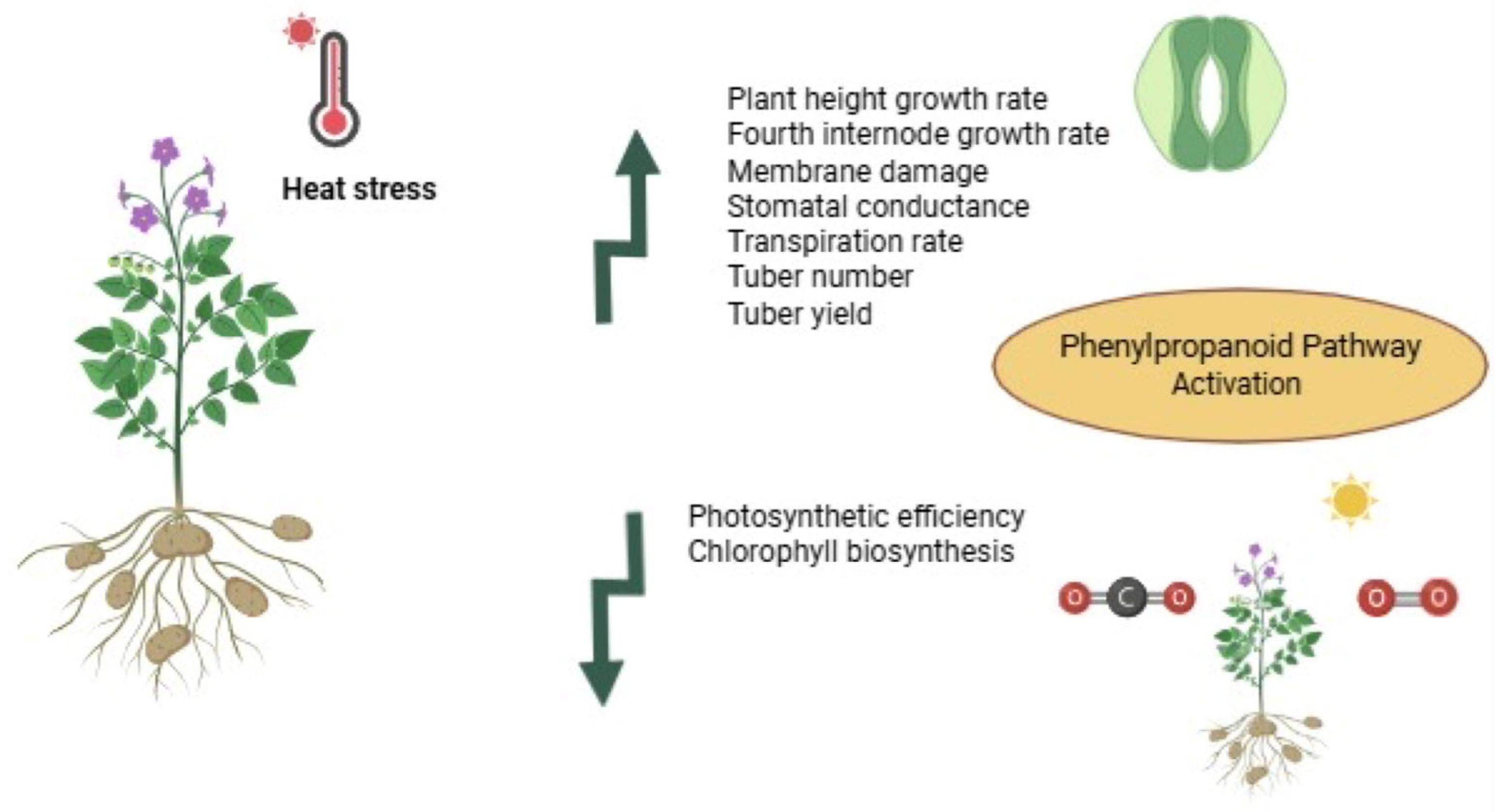
Figure 4 summarizes the different physiological responses in potato under heat-induced chloroplast damage (30 °C) [48].
Metabolomic analyses showed that response and tolerance to heat stress are associated with the accumulation of secondary metabolites, including flavonoids. Isoprenoids, simple phenols, and the genes encoding their biosynthesis enzymes were all specifically upregulated in response to short-term heat stress, while genes associated with phenylpropanoids were selectively upregulated in response to prolonged heat stress [49]. In response to heat stress, potato leaves showed sustained activation of six genes associated with phenylpropanoid metabolism. These behaviors are mostly linked to quenching ROS after they are synthesized and phenylpropanoids are thought to be essential for protecting plants from biotic and abiotic stress. One of the main mechanisms behind cells’ adaptation to heat stress was an increase in the activity of phenylalanine ammonia-lyase (PAL), an essential enzyme of the phenylpropanoid pathway. Following heat treatment, the precursor metabolites of flavone and flavonol production were accumulated in potato leaves [49].
Abiotic stress in plants is intimately linked to a number of changes in amino acid metabolism. In general, under various abiotic stress situations, plants’ levels of free amino acids rise significantly. Particularly, under brief and prolonged heat stress, proline and tyrosine was markedly synthetized on a metabolic level, indicating that these substances are heat-responsive and possibly linked to tolerance [50]. Proline is a well-known amino acid that is necessary for plants to withstand a variety of environmental stressors. Other genes associated with amino acid metabolism, including those for glutamate decarboxylase, threonine, and lysine degradation as well as tryptophan, aspartate and aromatic amino acid synthesis, were consistently induced during heat stress [49].
Severe damage with wilting stems and leaves was observed in a sensitive variety of S. tuberosum after 12 h of freezing treatment (−3 °C). However, the same conditions applied to a resistant cultivar showed only mild damage with slightly curled leaves. The higher freezing tolerance of freeze-resistant potato varieties may be explained by the fact that freezing stress greatly boosted the flavonoid pathway and that resistant cultivars accumulated more glycosylated flavonoids than the sensitive ones [51].
Cold stress is known to induce cold-induced sweetening (CIS), a physiological process that leads to the accumulation of reducing sugars, primarily glucose and fructose. Cui et al. [52] investigated transcriptional and metabolic changes in tubers of the “Netherlands No. 15” variety during cold storage to explore sugar accumulation under different post-harvest conditions. In freshly harvested tubers stored at 4 °C for 0, 1, 3, 5, 10, and 15 days, a significant accumulation of glucose and fructose, was observed using UPLC-MS/MS, with a marked increase from day five onward. In contrast, sugar levels remained relatively stable at 20 °C and significantly lower than those observed under cold storage. Sucrose content decreased after five days, declined further by day 10, and increased again by day 15, suggesting its initial utilization for producing reducing sugars, followed by later resynthesis. These findings align with previous studies identifying sucrose breakdown and reducing sugar accumulation as central to the CIS mechanism [53]. On the other hand, fatty acids, lipids and lipid-like molecules showed a significant decrease.
In terms of significant secondary metabolites, most alkaloids were elevated during cold storage, but most phenylpropanoids and polyketides and terpenoids were downregulated [54].
The observed variations in sucrose levels throughout storage period—initial decrease followed by subsequent resurgences—indicate complex regulatory mechanisms governing the balance between sucrose breakdown and resynthesis. The concurrent activation of various enzyme pathways during the course of cold storage is probably reflected in this pattern. The simultaneous downregulation of lipid metabolism suggests a more extensive metabolic reprogramming in response to cold stress, which may promote membrane remodeling to preserve cellular integrity at low temperatures and shift energy consumption toward carbohydrate metabolism [54].

5.3. Influence of Salt

Another abiotic challenge that can severely impact potato plant growth is salt stress. This stress often leads to diminished photosynthetic efficiency, stunted growth, and poor tuber development.
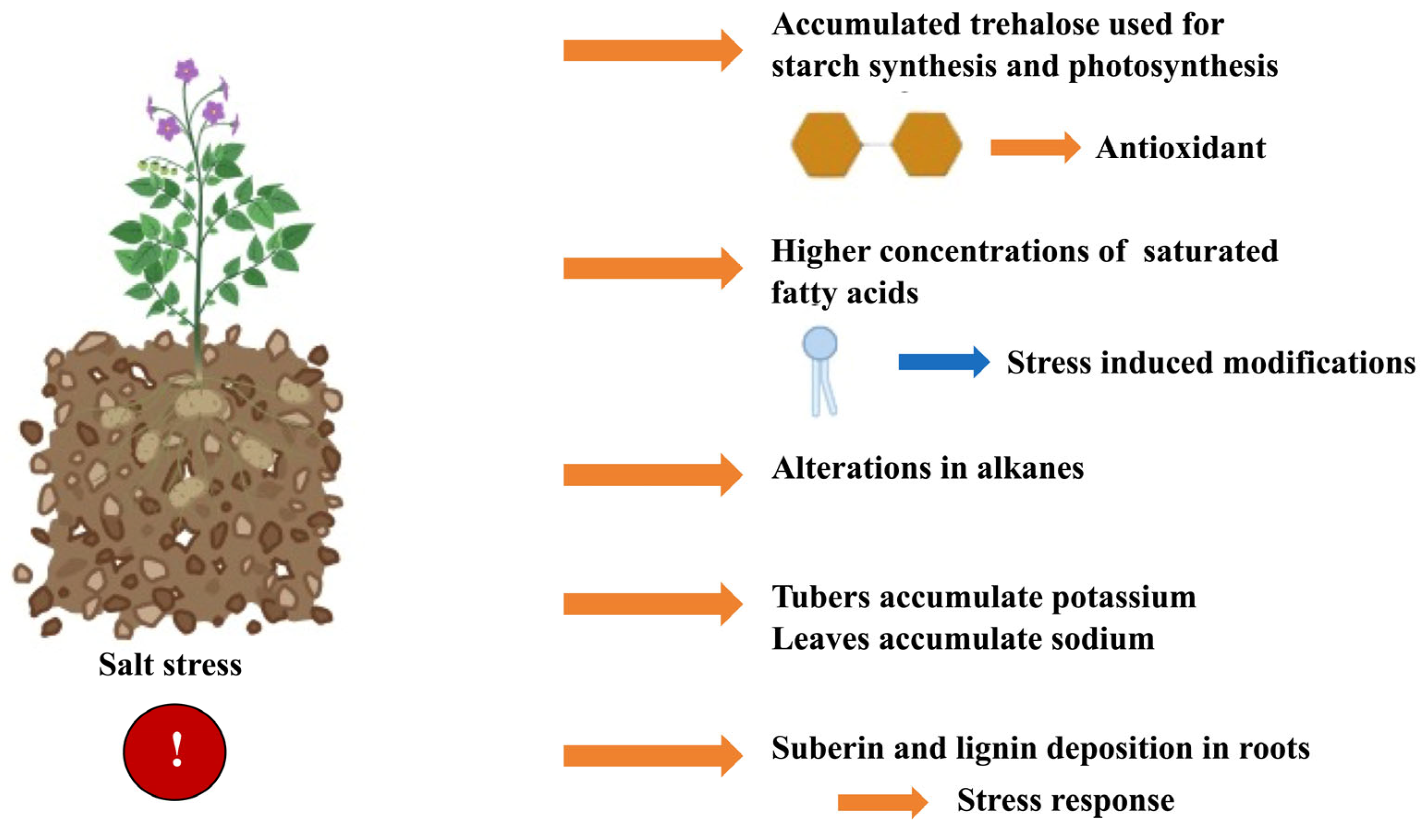
In comparing the two cultivars BARI-401 and Spunta, the stress-tolerant latter reacts to salt stress by producing larger alterations in metabolite composition. When exposed to salt stress, trehalose is accumulated in potato tubers as it is an important osmolyte and osmo-protectant, and may reduce cell permeability by maintaining the integrity of plasma membranes or play a role as an antioxidant [55]. Stress tolerance is significantly influenced by the metabolism of carbohydrates, which is closely linked to photosynthetic activity. Under stress, plants use fructans and starches instead of glucose as an energy source. Plastids contain trehalose-6-phosphate (T6P), which controls the synthesis of starch and photosynthesis [55].
LiCl and mannitol treatments induced increased levels of saturated fatty acids, such as myristic acid (tetradecanoic acid) and stearic acid (17-octadecynoic acid, methyl ester), particularly in Spunta. The production of α-linolenic acid (9,12,15-octadecatrienoic acid, 2,3-dihydroxypropyl ester), detected by GC-MS, in Spunta during LiCl treatment also boosted the content of unsaturated fatty acids. Polymers, such as suberin and cutin, are crucial extracellular lipid polymers that modify the fluidity of membranes to protect against harmful environmental conditions. Alterations in alkanes might be the result of stress-induced modifications to the wax compositions of leaf cuticles (Figure 5) [56].
Under salt stress, sodium is not accumulated in tubers; however, their potassium content is increased. Na+ likely accumulates in the leaves/stems of Innovator and Mozart varieties, while suberin and lignin deposition occurs in salt-stressed potato roots. Both Innovator and Mozart varieties have higher levels of abscisic acid, a hormone mediating stress responses, in their leaves, which is consistent with their enhanced levels of Na+ storage. This indicates a more robust stress response to salt [57].
Because of the variability in different traits, potato cultivars differ in their ability to withstand abiotic stress. Choosing cultivars that can withstand these abiotic stressors, improving irrigation methods, and using agronomic strategies that reduce their negative effects on the environment are all necessary for effective management. Potato growers can enhance crop resilience and output consistency, and ensure high-quality food even in challenging environmental conditions by understanding and managing these aspects.

6. Shaping the Potato Metabolome During Biotic Stress

In addition to abiotic stressors, biotic ones such as pests and microorganisms cause serious problems and can negatively impact tuber production. The plant must activate intricate defense mechanisms to combat biotic stress caused by living organisms like bacteria, fungi, viruses, and insects, as opposed to abiotic stress which is caused by environmental factors.

6.1. Battling Bacteria, Parasites and Oomycetes

S. tuberosum has a sophisticated defense system that helps protect it from challenges in nature; this defense system involves both physical and chemical mechanisms, including the production of secondary metabolites and the activation of immune signaling pathways.
Most secondary metabolites that have antimicrobial properties are derived from the phenylpropanoid, isoprenoid, alkaloid, or fatty acid pathways. Plant defensive responses during plant-pathogen interactions include the production of phytoalexins and cell wall reinforcement with lignin. Because of their broad-spectrum antimicrobial activity, phenylpropanoids are thought to be involved in combating microbial infections in plants [58].
A targeted analysis conducted by Jose et al. [59] to elucidate the defense mechanism of an in vitro potato through a bacterial wilt disease caused by Ralstonia solanacearum showed distinct profiles in the different cultivars, Desirée, Calalo Gaspar, and Cruza 148. More changes were observed in the concentrations of several metabolites in the roots of Desiree and Calalo Gaspar cultivars than in Cruza 148, a resistant cultivar. The levels of CGA detected by LC-MS in Calalo Gaspar and Cruza 148 roots were higher than those in Desirée. In contrast, the levels of cryptochlorogenic acid, neochlorogenic acid, vanillin, syringaldehyde, and all three quercetin derivatives (quercetin-3,4-diglucoside, quercetin-4-O-glucoside, and quercetin-3-O-galactoside) were much higher in Calalo Gaspar roots than in those in the other cultivars. In addition to its well-known antibacterial and antioxidant properties, CGA plays a role in the creation of lignin and suberin biopolymers, which are essential for strengthening and reinforcing cell walls in response to pathogen invasion as demonstrated by an enhanced lignification in the stele of the Cruza 148 cultivar [60,61].
Another study on Spongospora subterranea, a parasite causing powdery scab, in susceptible and tolerant potato cultivars using an untargeted metabolomic technique UPLC-QTOF/MS showed similar results. The tolerant potato roots inoculated with S. subterranea had a greater abundance of alkaloids than the susceptible inoculated one. Solanidine was the most abundant alkaloid detected in the tolerant inoculated and un-inoculated potato roots [38]. Solanidine can inhibit pathogen infection; it is produced from acetyl coenzyme A in the cytosol via the mevalonate (MVA) pathway and it can also be made from the citric acid by the enzyme ATP-citrate lyase [38]. Solanine was found abundantly in the tolerant un-inoculated potato roots but not in the tolerant inoculated one. Other alkaloids like solanidane, solasodiene, solasodine, veratramine, cyclopamine, dehydrosolasodine, and tomatidine were found in abundance in the tolerant inoculated roots [38].
Regarding amino acids, the levels of proline increased during S. subterranea infection in the susceptible and tolerant roots [38]. The primary building block for the synthesis of cell wall proteins, including hydroxyproline-rich glycoproteins and proline-rich proteins, is L-proline. Due to its abundance in susceptible infected cultivars compared to tolerant infected cultivars, glutamine serves as a biomarker for potato root sensitivity to S. subterranea. Glutamine is a key precursor for the synthesis of the porphyrin ring of chlorophyll and a shuttle for delivering nitrogen in numerous vital intermediate reactions in plant cells. GABA and β-aminobutyric acid (BABA) were also expressed in abundance in the roots of the inoculated tolerant potato cultivars compared to inoculated susceptible cultivars. GABA could be a potential biomarker for tolerance to this bacteria since it is an isomer of the agrochemical BABA, which is used to induce resistance to S. subterranea root infection [38].
Fatty acids and lipids (octanoic acid and C16 sphinganine) were also present in high amounts in the tolerant potato infected roots; they play a role in the energy intensive processes that underlie the plant defense response.
Citric acid and azelaic acid are organic acids found in greater abundance in the tolerant inoculated cultivars than in the sensitive inoculated ones, demonstrating their role in protecting potato roots against powdery scab.
Sugars like D-ribulose and heterodendrin were found in higher amounts in the tolerant root cultivars upon infection with S. subterranean [38], while lactitol dehydrate, the sugar alcohol, was abundant in the susceptible inoculated one. Sugars are the building blocks of the middle lamellae of the cell wall. They are also involved in the modification of proteins and fatty acids, and are precursors of numerous metabolic processes [62].

6.2. The Most Devastating Oomycete, Phytophthora infestans

One of the primary biotic stresses reducing potato yield is late blight caused by Phytophthora infestans Mont de Bary, a diploid oomycete in the kingdom of stramenopiles. The Solanaceae plant family’s living tissues, including leaves, stems, and tubers, are attacked by this hemibiotrophic disease [63]. After landing on a plant surface, the asexual, aerially disseminated sporangia may directly germinate, or first develop into zoospores, which encyst, germinate, and infiltrate the host tissue. Even though this stage of infection is invisible to the human eye, a variety of molecular interactions occur inside the plant cell [64,65].
The biochemical mechanisms underlying the infection process of P. infestans were studied in two potato cultivar types, a resistant Ziyun No. 1 and a susceptible Favorita. Resistance-related metabolites extracted from Ziyun potato leaves with methanol–water (4:1) and analyzed using LC-MS included compounds from different metabolite families like steroids (β-1-tomatidine), prenol lipids (monotropein), organooxygen compounds (caffeic acid 4-O-glucuronide), fatty acids (1,2-anhydridoniveusin), carboxylic acids (gliadorphin), and flavonoids (precarthamin) [66].
P. infestans cytospores release small, water-soluble glucans into their germination fluid. These glucans inhibit the synthesis of rishitin, a phytoalexin isoprenoid, in potatoes as well as inhibit cell death during a hypersensitive reaction [67]. Cell wall-bound phenolics also accumulate locally to restrict fungal penetration; CGA, ferulic acid, caffeic acid, scopoletin, scopolin, and p-coumaroyloctopamine are phenolic chemicals linked to potato resistance to P. infestans [68]. The isoprenoids, phytuberin and lubimin, are also associated with potato resistance to this oomycete. However, these substances have a wide range of activities, and are involved in isolated interactions arising from the inoculation of a single potato line with a single P. infestans isolate [69].
In methanol 80%/ethyl acetate leaf extracts, rutin was identified by HPLC in the susceptible Russet Burbank cultivar and, at lower concentrations, in the moderately resistant Defender cultivar after inoculation with P. infestans. However, it was absent in the control leaves, suggesting that it may be involved in potato defense. While rutin may play a role in plant defense, it does not appear to be linked to the two cultivars’ differing levels of resistance to P. infestans [69].
Other secondary metabolites like catechin and an unidentified terpenoid were present in different concentrations in the inoculated and control leaves of the Russet Burbank and Defender cultivars. The accumulation of catechin in resistant cultivars after a time may inhibit pathogen conidial germination and appressorial formation [69]. Preformed flavonoids are naturally produced as plant tissue develops normally and many become further involved in host–pathogen interactions [69].
Identified as an inducer of plant disease resistance, salicylic acid is a β-hydroxy acid with a hormonal role that is produced in plants from the amino acid phenylalanine or chorismate. The accumulation of salicylic acid is necessary to promote several aspects of plant disease resistance. Prior to infection, the levels of salicylic acid were significantly higher in the resistant cultivar Ziyun No. 1 than those in the susceptible cultivar. This phytohormone regulates the production of terpenoids, alkaloids, flavonoids, and phytoalexins. Prior to P. infestans infection, the resistant cultivar had higher levels of the upstream intermediates of the phenylpropanoid biosynthesis pathway, such as phenylalanine, 2-hydroxycinnamic acid, ferulic acid, and the phytoalexin sakuranetin, than the sensitive cultivar Favorita [66].
Regarding amino acids, the conversion of L-glutamic acid to proline using α-ketoglutarate as a precursor was significantly upregulated by P. infestans infection since L-proline is a crucial building block for the synthesis of cell wall proteins [62]. However, leucine, isoleucine, and valine were found in the leaves of both susceptible and tolerant cultivars upon P. infestans infection, following extraction using a methanol–water (40%, 60%) solvent system [68]. Lastly, BABA has been shown to induce resistance to P. infestans [70].
Across the studies investigating P. infestans potato interactions, the extraction strategies were closely linked to the chemical diversity of the detected metabolites, particularly when using LC-MS and complementary chromatographic techniques.
The physico-chemical diversity of metabolites makes extraction methods challenging [71]. The advantage of extracting samples with mixtures of water–methanol:ethyl acetate is the generation of a biphasic sample. Metabolites are separated into polar aqueous and lipophilic organic fractions, which can be analyzed separately [72].
In the LC-MS analysis of resistant Ziyun No. 1 leaves [66], a methanol–water (4:1) extraction system was used. This monophasic polar solvent efficiently extracts a wide range of polar and semi-polar metabolites, which explains the detection of structurally diverse resistance-related compounds. In the HPLC-based analysis of flavonoids such as rutin, a sequential extraction approach was used involving 80% methanol combined with ethyl acetate partitioning. Here, methanol served as the primary extraction solvent for intracellular metabolites, while ethyl acetate extracted phenolic compounds through liquid–liquid partitioning, enabling the detection of rutin, catechin, and other flavonoids.
ESI is considered suboptimal for the analysis of non-polar metabolites and is highly susceptible to matrix effects [73]; therefore, optimization of ionization parameters according to the specific sample matrix is essential. In this context, starch-rich and lipid-poor matrices, such as potato tuber and other cereal-based commodities, have been reported to cause either signal enhancement or ion suppression in LC-ESI-MS analyses [74]. These matrix-related effects are closely linked to the chemical complexity of plant systems, which contain a broad diversity of metabolites occurring at highly variable concentrations. Consequently, no single extraction protocol is capable of efficiently recovering all metabolite classes. Indeed, metabolite solubility is governed by intermolecular interactions between solutes and solvents, commonly summarized by the principle of “like dissolves like,” which further explains the need for tailored extraction strategies.
In reaction to pathogen infection, sugars play a crucial role in the synthesis of structural defense elements including callose and papillae. There have been reports of callose ((1–3) β-D-glucan) chains being deposited in Solanum clones after P. infestans infection. The glycoalkaloid solanidine has been detected in higher abundance in potato leaves infected by P. infestans [62]. Other untargeted studies showed that the amount of steroidal glycoalkaloids (SGAs) detected by UPLC in tubers is markedly increased after infection by P. infestans. Four SGAs, α-solanine, α-chaconine, solasonine, and solamargine, showed significant inhibitory effects on the movement of P. infestans zoospores in vitro, according to zoospore-mobility test studies [75]. However, α-solanine and α-chaconine do not significantly suppress P. infestans mycelial growth, whereas solanidine, their non-glycosylated precursor, does [76].
The effects of SGAs on P. infestans are also highly variable and depend on multiple factors, including the pathogen strain, experimental conditions (in vivo versus in vitro), and disease severity. Differences in virulence among P. infestans isolates, as well as environmental and physiological conditions of the host plant, can significantly influence the observed antimicrobial activity of SGAs. Consequently, the inhibitory effects of SGAs cannot be generalized and should be interpreted in the context of host–pathogen interactions.
Understanding the biosynthesis and regulation of SGAs becomes especially crucial in this context since it sheds light on how their production is regulated and may be increased during plant defense responses.
Genotype, tissue type, and environmental circumstances are among the genetic and environmental factors that affect the amounts of SGAs in potatoes. They have been identified in various species, with more than 80 types discovered in potatoes with α-solanine and α-chaconine as the main constituents, accounting for about 90% of all glycoside alkaloids [77].
The biosynthesis of SGAs is divided into two segments—the pre-cholesterol pathway and the post-cholesterol pathway, with cholesterol serving as an intermediate marker. While the post-cholesterol pathway is crucial for producing a variety of SGAs both within and between plant species, the pre-cholesterol pathway is a common element in the sterol synthesis of all plants [78].
In the pre-cholesterol pathway, acetyl-CoA enters the MVA pathway, leading to the production of cycloartenol, a plant sterol intermediate molecule. Cycloartenol then serves as a key branching intermediate, leading either to the phytosterol biosynthetic pathway or to cholesterol biosynthesis via sterol side chain reductase 2. The post-cholesterol pathway involves the conversion of cholesterol into various SGAs.
Plants generate jasmonic acid (JA), a crucial class of lipid hormones that are essential for plant growth, development, and stress reactions. Levels of SGA in tubers can rise when methyl jasmonate (MeJA) is applied exogenously. The phenomena of elevated SGA levels brought on by damage may be explained by the fact that injury frequently results in a rise in endogenous JA levels [79,80,81]. Research has shown that a modest amount of ethylene encourages SGA accumulation in excised tubers, whereas a larger amount prevents SGA accumulation [82].
These hormone-mediated signaling pathways, particularly involving jasmonates and ethylene, thus provide a mechanistic link between stress perception and the observed modulation of secondary metabolite accumulation, including SGAs, during biotic stress.
The potato’s metabolome is subject to major changes (Table 3), especially with respect to secondary metabolites, when the plant is infected by various microorganisms. Depending on the type of microorganism and the immunological signaling pathways of the plant, these infections cause various defense responses. Improving the potato plant’s ability to withstand biotic stress will be essential for meeting the growing global demand for this vital food crop.

7. Conclusions

Research on the dynamics of the potato metabolome provides valuable insights into how multiple factors, including agricultural practices, tuber developmental stages, cultivar-specific traits, and biotic and abiotic stresses, influence the molecular composition of potatoes. The potato metabolomic profile is highly sensitive to both genetic background and environmental conditions, thereby affecting not only plant defense mechanisms but also industrial and nutritional quality. In this context, metabolomic profiling enables the identification of novel bioactive compounds that may serve as natural alternatives to synthetic pesticides. However, many studies remain limited to reporting lists of differential metabolites without offering functional validation or biological interpretation of these changes, thereby restricting the understanding of their physiological relevance. Consequently, further research is required to elucidate how biocontrol/biostimulant agents modulate the potato metabolome, with particular emphasis on linking metabolite variations to their functional roles and underlying biological mechanisms. Moreover, the integration of multi-omics approaches represents a promising avenue for advancement in this field. By combining metabolomics with genomics, transcriptomics, and proteomics, a more comprehensive and systems-level understanding of plant responses to environmental and biological factors can be achieved.

Author Contributions

Conceptualization, O.F.; methodology, S.B. and R.R.; investigation, D.R., D.H., K.H., E.V. and G.M.; resources, F.M.; writing—original draft preparation, D.R.; writing—review and editing, O.F. and F.M.; supervision, A.H., H.R., F.M. and O.F.; funding acquisition, O.F. and F.M. All authors have read and agreed to the published version of the manuscript.

Funding

This research was funded by SAFAR France-Lebanon program, grant number 118137Y.

Data Availability Statement

No new data were created or analyzed in this study. Data sharing is not applicable to this article.

Conflicts of Interest

The authors declare no conflicts of interest.

References

  1. Stegner, M.; Buchner, O.; Schäfernolte, T.; Holzinger, A.; Neuner, G. Responses to Ice Formation and Reasons of Frost Injury in Potato Leaves. Crops 2022, 2, 378–389. [Google Scholar] [CrossRef]
  2. R, A.S.; S, S.; N, R.; Ts, G.; Karthikeyan, M.; Gnanasekaran, A.; Gk, C.; Basalingappa, K.M. Solanum Tuberosum L: Botanical, Phytochemical, Pharmacological and Nutritional Significance. Int. J. Phytomed. 2018, 10, 115–124. [Google Scholar] [CrossRef]
  3. Ahlawat, Y.K.; Singh, M.; Manorama, K.; Lakra, N.; Zaid, A.; Zulfiqar, F. Plant Phenolics: Neglected Secondary Metabolites in Plant Stress Tolerance. Braz. J. Bot. 2023, 47, 703–721. [Google Scholar] [CrossRef]
  4. Kumar, R.; Bohra, A.; Pandey, A.K.; Pandey, M.K.; Kumar, A. Metabolomics for Plant Improvement: Status and Prospects. Front. Plant Sci. 2017, 8, 1302. [Google Scholar] [CrossRef]
  5. Hao, Y.; Zhang, Z.; Luo, E.; Yang, J.; Wang, S. Plant Metabolomics: Applications and Challenges in the Era of Multi-Omics Big Data. aBIOTECH 2025, 6, 116–132. [Google Scholar] [CrossRef]
  6. Capuano, E.; Boerrigter-Eenling, R.; Van Der Veer, G.; Van Ruth, S.M. Analytical Authentication of Organic Products: An Overview of Markers. J. Sci. Food Agric. 2013, 93, 12–28. [Google Scholar] [CrossRef] [PubMed]
  7. Shepherd, L.V.T.; Hackett, C.A.; Alexander, C.J.; Sungurtas, J.A.; Pont, S.D.A.; Stewart, D.; McNicol, J.W.; Wilcockson, S.J.; Leifert, C.; Davies, H.V. Effect of Agricultural Production Systems on the Potato Metabolome. Metabolomics 2014, 10, 212–224. [Google Scholar] [CrossRef]
  8. Lehesranta, S.J.; Koistinen, K.M.; Massat, N.; Davies, H.V.; Shepherd, L.V.T.; McNicol, J.W.; Cakmak, I.; Cooper, J.; Lück, L.; Kärenlampi, S.O.; et al. Effects of Agricultural Production Systems and Their Components on Protein Profiles of Potato Tubers. Proteomics 2007, 7, 597–604. [Google Scholar] [CrossRef] [PubMed]
  9. Vallad, G.E.; Goodman, R.M. Systemic Acquired Resistance and Induced Systemic Resistance in Conventional Agriculture. Crop Sci. 2004, 44, 1920–1934. [Google Scholar] [CrossRef]
  10. Abreu, P.; Relva, A.; Matthew, S.; Gomes, Z.; Morais, Z. High-Performance Liquid Chromatographic Determination of Glycoalkaloids in Potatoes from Conventional, Integrated, and Organic Crop Systems. Food Control 2007, 18, 40–44. [Google Scholar] [CrossRef]
  11. Hajšlová, J.; Schulzová, V.; Slanina, P.; Janné, K.; Hellenäs, K.E.; Andersson, C. Quality of Organically and Conventionally Grown Potatoes: Four-Year Study of Micronutrients, Metals, Secondary Metabolites, Enzymic Browning and Organoleptic Properties. Food Addit. Contam. 2005, 22, 514–534. [Google Scholar] [CrossRef]
  12. Friedman, M. Potato Glycoalkaloids and Metabolites: Roles in the Plant and in the Diet. J. Agric. Food Chem. 2006, 54, 8655–8681. [Google Scholar] [CrossRef]
  13. Kazimierczak, R.; Średnicka-Tober, D.; Hallmann, E.; Kopczyńska, K.; Zarzyńska, K. The Impact of Organic vs. Conventional Agricultural Practices on Selected Quality Features of Eight Potato Cultivars. Agronomy 2019, 9, 799. [Google Scholar] [CrossRef]
  14. Bloksma, J.; Northolt, M.; Huber, M.; Van Der Burgt, G.-J.; Van De Vijver, L. A New Food Quality Concept Based on Life Processes. In Handbook of Organic Food Safety and Quality; Elsevier: Amsterdam, The Netherlands, 2007; pp. 53–73. [Google Scholar]
  15. Yan, Z.; Wang, D.; Cui, H.; Zhang, D.; Sun, Y.; Jin, H.; Li, X.; Yang, X.; Guo, H.; He, X.; et al. Phytotoxicity Mechanisms of Two Coumarin Allelochemicals from Stellera chamaejasme in Lettuce Seedlings. Acta Physiol. Plant. 2016, 38, 248. [Google Scholar] [CrossRef]
  16. Xing, Y.; Zhang, P.; Zhang, W.; Yu, C.; Luo, Z. Continuous Cropping of Potato Changed the Metabolic Pathway of Root Exudates to Drive Rhizosphere Microflora. Front. Microbiol. 2024, 14, 1318586. [Google Scholar] [CrossRef] [PubMed]
  17. Wei, Q.; Yin, Y.; Tong, Q.; Gong, Z.; Shi, Y. Multi-Omics Analysis of Excessive Nitrogen Fertilizer Application: Assessing Environmental Damage and Solutions in Potato Farming. Ecotoxicol. Environ. Saf. 2024, 284, 116916. [Google Scholar] [CrossRef] [PubMed]
  18. Wang, M.; Ma, L.; Strokal, M.; Chu, Y.; Kroeze, C. Exploring Nutrient Management Options to Increase Nitrogen and Phosphorus Use Efficiencies in Food Production of China. Agric. Syst. 2018, 163, 58–72. [Google Scholar] [CrossRef]
  19. Huang, H.; Nguyen Thi Thu, T.; He, X.; Gravot, A.; Bernillon, S.; Ballini, E.; Morel, J.-B. Increase of Fungal Pathogenicity and Role of Plant Glutamine in Nitrogen-Induced Susceptibility (NIS) To Rice Blast. Front. Plant Sci. 2017, 8, 265. [Google Scholar] [CrossRef]
  20. Edmeades, D.C. The Long-Term Effects of Manures and Fertilisers on Soil Productivity and Quality: A Review. Nutr. Cycl. Agroecosyst. 2003, 66, 165–180. [Google Scholar] [CrossRef]
  21. Nassar, A.F.; Wu, T.; Nassar, S.F.; Wisnewski, A.V. UPLC–MS for Metabolomics: A Giant Step Forward in Support of Pharmaceutical Research. Drug Discov. Today 2017, 22, 463–470. [Google Scholar] [CrossRef]
  22. Montenegro-Burke, J.R.; Aisporna, A.E.; Benton, H.P.; Rinehart, D.; Fang, M.; Huan, T.; Warth, B.; Forsberg, E.; Abe, B.T.; Ivanisevic, J.; et al. Data Streaming for Metabolomics: Accelerating Data Processing and Analysis from Days to Minutes. Anal. Chem. 2017, 89, 1254–1259. [Google Scholar] [CrossRef]
  23. Roessner, U.; Wagner, C.; Kopka, J.; Trethewey, R.N.; Willmitzer, L. Simultaneous Analysis of Metabolites in Potato Tuber by Gas Chromatography–Mass Spectrometry. Plant J. 2000, 23, 131–142. [Google Scholar] [CrossRef]
  24. Dong, Q.-J.; Xu, X.-Y.; Fan, C.-X.; Xiao, J.-P. Transcriptome and Metabolome Analyses Reveal Chlorogenic Acid Accumulation in Pigmented Potatoes at Different Altitudes. Genomics 2024, 116, 110883. [Google Scholar] [CrossRef] [PubMed]
  25. Su, Z.; Sun, M.; Cai, Z.; Guo, S.; Li, J.; Zhao, B.; Shen, Z.; Ma, R.; Yan, J.; Yu, M. Identification and Expression Analysis of Chlorogenic Acid Biosynthesis Key Gene PpHCT in Peach. Hortic. Plant J. 2023, 9, 670–680. [Google Scholar] [CrossRef]
  26. Piñeros-Niño, C.; Narváez-Cuenca, C.; Kushalappa, A.C.; Mosquera, T. Hydroxycinnamic Acids in Cooked Potato Tubers from Solanum tuberosum Group Phureja. Food Sci. Nutr. 2017, 5, 380–389. [Google Scholar] [CrossRef] [PubMed]
  27. Khanam, U.K.S.; Oba, S.; Yanase, E.; Murakami, Y. Phenolic Acids, Flavonoids and Total Antioxidant Capacity of Selected Leafy Vegetables. J. Funct. Foods 2012, 4, 979–987. [Google Scholar] [CrossRef]
  28. Kumar, K.; Debnath, P.; Singh, S.; Kumar, N. An Overview of Plant Phenolics and Their Involvement in Abiotic Stress Tolerance. Stresses 2023, 3, 570–585. [Google Scholar] [CrossRef]
  29. Rodríguez-Pérez, C.; Gómez-Caravaca, A.M.; Guerra-Hernández, E.; Cerretani, L.; García-Villanova, B.; Verardo, V. Comprehensive Metabolite Profiling of Solanum tuberosum L. (Potato) Leaves by HPLC-ESI-QTOF-MS. Food Res. Int. 2018, 112, 390–399. [Google Scholar] [CrossRef]
  30. Zuchowski, J.; Jonczyk, K.; Pecio, L.; Oleszek, W. Phenolic Acid Concentrations in Organically and Conventionally Cultivated Spring and Winter Wheat. J. Sci. Food Agric. 2011, 91, 1089–1095. [Google Scholar] [CrossRef]
  31. Puzanskiy, R.K.; Yemelyanov, V.V.; Gavrilenko, T.A.; Shishova, M.F. The Perspectives of Metabolomic Studies of Potato Plants. Russ. J. Genet. Appl. Res. 2017, 7, 744–756. [Google Scholar] [CrossRef]
  32. Fernie, A.R.; Willmitzer, L. Molecular and Biochemical Triggers of Potato Tuber Development. Plant Physiol. 2001, 127, 1459–1465. [Google Scholar] [CrossRef]
  33. Shepherd, L.V.T.; Alexander, C.A.; Sungurtas, J.A.; McNicol, J.W.; Stewart, D.; Davies, H.V. Metabolomic Analysis of the Potato Tuber Life Cycle. Metabolomics 2010, 6, 274–291. [Google Scholar] [CrossRef]
  34. Odgerel, K.; Bánfalvi, Z. Metabolite Analysis of Tubers and Leaves of Two Potato Cultivars and Their Grafts. PLoS ONE 2021, 16, e0250858. [Google Scholar] [CrossRef]
  35. Villányi, V.; Gondor, O.K.; Bánfalvi, Z. Metabolite Profiling of Tubers of an Early- and a Late-Maturing Potato Line and Their Grafts. Metabolomics 2022, 18, 88. [Google Scholar] [CrossRef] [PubMed]
  36. Urbanczyk-Wochniak, E.; Baxter, C.; Kolbe, A.; Kopka, J.; Sweetlove, L.J.; Fernie, A.R. Profiling of Diurnal Patterns of Metabolite and Transcript Abundance in Potato (Solanum tuberosum) Leaves. Planta 2005, 221, 891–903. [Google Scholar] [CrossRef] [PubMed]
  37. Zhao, L.; Hu, F.; Keremu, N.; Cheng, Y.; He, L.; Yu, H. Comparative Metabolomics Analysis of 3 New Potato Varieties against the Atlantic Cultivar; Bioinformatics Based Experimental Study. Indian J. Agric. Res. 2024, 59, 158–169. [Google Scholar] [CrossRef]
  38. Lekota, M.; Modisane, K.J.; Apostolides, Z.; Van Der Waals, J.E. Metabolomic Fingerprinting of Potato Cultivars Differing in Susceptibility to Spongospora subterranea f. sp. subterranea Root Infection. Int. J. Mol. Sci. 2020, 21, 3788. [Google Scholar] [CrossRef] [PubMed]
  39. Tomlekova, N.; Mladenov, P.; Dincheva, I.; Nacheva, E. Metabolic Profiling of Bulgarian Potato Cultivars. Foods 2022, 11, 1981. [Google Scholar] [CrossRef]
  40. Batuwita, B.K.H.H.; Jayasinghe, J.M.J.K.; Marapana, R.A.U.J.; Jayasinghe, C.V.L.; Jinadasa, B.K.K.K. Reduction of Asparagine and Reducing Sugar Content, and Utilization of Alternative Food Processing Strategies in Mitigating Acrylamide Formation—A Review. Food Bioprocess Technol. 2025, 18, 2101–2144. [Google Scholar] [CrossRef]
  41. Huang, W.; Serra, O.; Dastmalchi, K.; Jin, L.; Yang, L.; Stark, R.E. Comprehensive MS and Solid-State NMR Metabolomic Profiling Reveals Molecular Variations in Native Periderms from Four Solanum tuberosum Potato Cultivars. J. Agric. Food Chem. 2017, 65, 2258–2274. [Google Scholar] [CrossRef]
  42. Mdlalose, S.P.; Raletsena, M.; Ntushelo, K.; Bodede, O.; Modise, D.M. 1H-NMR-Based Metabolomic Study of Potato Cultivars, Markies and Fianna, Exposed to Different Water Regimes. Front. Sustain. Food Syst. 2022, 6, 801504. [Google Scholar] [CrossRef]
  43. Wegener, C.B.; Jansen, G.; Jurgens, H.-U. Influence of Drought and Wounding Stress on Soluble Phenols and Proteins in Potato Tubers. Sustain. Agric. Res. 2014, 3, 1–15. [Google Scholar] [CrossRef]
  44. Nicholson, J.K.; Lindon, J.C.; Holmes, E. ‘Metabonomics’: Understanding the Metabolic Responses of Living Systems to Pathophysiological Stimuli via Multivariate Statistical Analysis of Biological NMR Spectroscopic Data. Xenobiotica 1999, 29, 1181–1189. [Google Scholar] [CrossRef] [PubMed]
  45. Neild, G.H.; Foxall, P.J.; Lindon, J.C.; Holmes, E.C.; Nicholson, J.K. Uroscopy in the 21st Century: High-Field NMR Spectroscopy. Nephrol. Dial. Transplant. 1997, 12, 404–417. [Google Scholar] [CrossRef] [PubMed]
  46. Markley, J.L.; Brüschweiler, R.; Edison, A.S.; Eghbalnia, H.R.; Powers, R.; Raftery, D.; Wishart, D.S. The Future of NMR-Based Metabolomics. Curr. Opin. Biotechnol. 2017, 43, 34–40. [Google Scholar] [CrossRef]
  47. Dunn, W.B.; Erban, A.; Weber, R.J.M.; Creek, D.J.; Brown, M.; Breitling, R.; Hankemeier, T.; Goodacre, R.; Neumann, S.; Kopka, J.; et al. Mass Appeal: Metabolite Identification in Mass Spectrometry-Focused Untargeted Metabolomics. Metabolomics 2013, 9, 44–66. [Google Scholar] [CrossRef]
  48. Zhang, S.; Ye, H.; Kong, L.; Li, X.; Chen, Y.; Wang, S.; Liu, B. Multivariate Analysis Compares and Evaluates Heat Tolerance of Potato Germplasm. Plants 2024, 13, 142. [Google Scholar] [CrossRef]
  49. Liu, B.; Kong, L.; Zhang, Y.; Liao, Y. Gene and Metabolite Integration Analysis through Transcriptome and Metabolome Brings New Insight into Heat Stress Tolerance in Potato (Solanum tuberosum L.). Plants 2021, 10, 103. [Google Scholar] [CrossRef]
  50. Mierziak, J.; Kostyn, K.; Kulma, A. Flavonoids as Important Molecules of Plant Interactions with the Environment. Molecules 2014, 19, 16240–16265. [Google Scholar] [CrossRef]
  51. Zhu, Z.; Wei, L.; Guo, L.; Bao, H.; Wang, X.; Kear, P.; Wang, Z.; Zhu, G. Integrated Full-Length Transcriptome and Metabolome Profiling Reveals Flavonoid Regulation in Response to Freezing Stress in Potato. Plants 2023, 12, 2054. [Google Scholar] [CrossRef]
  52. Cui, G.; Zhou, T.; Liu, Z.; Wang, T.; Wang, Q.; Liu, T. Deciphering the Regulatory Mechanisms of Potato Cold-Induced Sweetening via Integrated Time-Course Transcriptome and Metabolome Analysis. Front. Plant Sci. 2025, 16, 1551265. [Google Scholar] [CrossRef]
  53. Liu, X.; Chen, L.; Shi, W.; Xu, X.; Li, Z.; Liu, T.; He, Q.; Xie, C.; Nie, B.; Song, B. Comparative Transcriptome Reveals Distinct Starch-Sugar Interconversion Patterns in Potato Genotypes Contrasting for Cold-Induced Sweetening Capacity. Food Chem. 2021, 334, 127550. [Google Scholar] [CrossRef] [PubMed]
  54. Liang, S.; Kuang, J.; Ji, S.; Chen, Q.; Deng, W.; Min, T.; Shan, W.; Chen, J.; Lu, W. The Membrane Lipid Metabolism in Horticultural Products Suffering Chilling Injury. Food Qual. Saf. 2020, 4, 9–14. [Google Scholar] [CrossRef]
  55. Iordachescu, M.; Imai, R. Trehalose Biosynthesis in Response to Abiotic Stresses. J. Integr. Plant Biol. 2008, 50, 1223–1229. [Google Scholar] [CrossRef] [PubMed]
  56. Hamooh, B.T.; Sattar, F.A.; Wellman, G.; Mousa, M.A.A. Metabolomic and Biochemical Analysis of Two Potato (Solanum tuberosum L.) Cultivars Exposed to In Vitro Osmotic and Salt Stresses. Plants 2021, 10, 98. [Google Scholar] [CrossRef]
  57. Nicolas, M.; Bouma, J.; Venema, J.H.; Van Der Schoot, H.; Verstappen, F.; De Zeeuw, T.; Langedijk, S.E.; Boer, D.; Bucher, J.; Staal, M.; et al. Potato Cultivars Use Distinct Mechanisms for Salt Stress Acclimation. Plant Stress 2025, 15, 100798. [Google Scholar] [CrossRef]
  58. Ninkuu, V.; Aluko, O.O.; Yan, J.; Zeng, H.; Liu, G.; Zhao, J.; Li, H.; Chen, S.; Dakora, F.D. Phenylpropanoids Metabolism: Recent Insight into Stress Tolerance and Plant Development Cues. Front. Plant Sci. 2025, 16, 1571825. [Google Scholar] [CrossRef]
  59. Jose, J.; Éva, C.; Bozsó, Z.; Hamow, K.Á.; Fekete, Z.; Fábián, A.; Bánfalvi, Z.; Sági, L. Global Transcriptome and Targeted Metabolite Analyses of Roots Reveal Different Defence Mechanisms against Ralstonia solanacearum Infection in Two Resistant Potato Cultivars. Front. Plant Sci. 2023, 13, 1065419. [Google Scholar] [CrossRef]
  60. Malinovsky, F.G.; Fangel, J.U.; Willats, W.G.T. The Role of the Cell Wall in Plant Immunity. Front. Plant Sci. 2014, 5, 178. [Google Scholar] [CrossRef]
  61. Ding, K.; Shan, Y.; Wang, L.; Zhang, Y.; Tian, G. Transcriptomics Combined with Physiological Analysis and Metabolomics Revealed the Response of Potato Tuber Formation to Nitrogen. BMC Plant Biol. 2024, 24, 1109. [Google Scholar] [CrossRef]
  62. Abu-Nada, Y.; Kushalappa, A.C.; Marshall, W.D.; Al-Mughrabi, K.; Murphy, A. Temporal Dynamics of Pathogenesis-Related Metabolites and Their Plausible Pathways of Induction in Potato Leaves Following Inoculation with Phytophthora infestans. Eur. J. Plant Pathol. 2007, 118, 375–391. [Google Scholar] [CrossRef]
  63. Judelson, H.S.; Ah-Fong, A.M.V. Exchanges at the Plant-Oomycete Interface That Influence Disease. Plant Physiol. 2019, 179, 1198–1211. [Google Scholar] [CrossRef]
  64. Rhouma, A.; HajjiHedfi, L.; Atallaoui, K. Potato Late Blight: The Pathogen, the Menace, the Sustainable Control. DYSONA-Life Sci. 2024, 5, 37–51. [Google Scholar] [CrossRef]
  65. Chepsergon, J.; Motaung, T.E.; Bellieny-Rabelo, D.; Moleleki, L.N. Organize, Don’t Agonize: Strategic Success of Phytophtora Species. Microorganisms 2020, 8, 917. [Google Scholar] [CrossRef] [PubMed]
  66. Zhu, J.; Tang, X.; Sun, Y.; Li, Y.; Wang, Y.; Jiang, Y.; Shao, H.; Yong, B.; Li, H.; Tao, X. Comparative Metabolomic Profiling of Compatible and Incompatible Interactions Between Potato and Phytophthora infestans. Front. Microbiol. 2022, 13, 857160. [Google Scholar] [CrossRef]
  67. Wang, X.; El Hadrami, A.; Adam, L.R.; Daayf, F. Differential Activation and Suppression of Potato Defence Responses by Phytophthora infestans Isolates Representing US-1 and US-8 Genotypes. Plant Pathol. 2008, 57, 1026–1037. [Google Scholar] [CrossRef]
  68. Abuley, I.K.; Pedersen, H.A.; Lekfeldt, J.D.S.; Fomsgaard, I.S.; Ravnskov, S. Metabolite Profiling of Solanum tuberosum Reveals a Differential Response to Phytophthora infestans Dependent on Host Resistance and Pathogen Isolate. Plant Pathol. 2023, 72, 924–932. [Google Scholar] [CrossRef]
  69. Henriquez, M.A.; Adam, L.R.; Daayf, F. Alteration of Secondary Metabolites’ Profiles in Potato Leaves in Response to Weakly and Highly Aggressive Isolates of Phytophthora infestans. Plant Physiol. Biochem. 2012, 57, 8–14. [Google Scholar] [CrossRef]
  70. Bengtsson, T.; Holefors, A.; Witzell, J.; Andreasson, E.; Liljeroth, E. Activation of Defence Responses to Phytophthora infestans in Potato by BABA. Plant Pathol. 2014, 63, 193–202. [Google Scholar] [CrossRef]
  71. Hajnajafi, K.; Iqbal, M.A. Mass-Spectrometry Based Metabolomics: An Overview of Workflows, Strategies, Data Analysis and Applications. Proteome Sci. 2025, 23, 5. [Google Scholar] [CrossRef]
  72. Dettmer, K.; Aronov, P.A.; Hammock, B.D. Mass Spectrometry-based Metabolomics. Mass Spectrom. Rev. 2007, 26, 51–78. [Google Scholar] [CrossRef]
  73. Claassen, C.; Kuballa, J.; Rohn, S. Polar Lipids in Starch-Rich Commodities to Be Analyzed with LC-MS-Based Metabolomics—Optimization of Ionization Parameters and High-Throughput Extraction Protocols. Metabolites 2019, 9, 167. [Google Scholar] [CrossRef] [PubMed]
  74. Malachová, A.; Sulyok, M.; Beltrán, E.; Berthiller, F.; Krska, R. Optimization and Validation of a Quantitative Liquid Chromatography–Tandem Mass Spectrometric Method Covering 295 Bacterial and Fungal Metabolites Including All Regulated Mycotoxins in Four Model Food Matrices. J. Chromatogr. A 2014, 1362, 145–156. [Google Scholar] [CrossRef] [PubMed]
  75. Baur, S.; Bellé, N.; Frank, O.; Wurzer, S.; Pieczonka, S.A.; Fromme, T.; Stam, R.; Hausladen, H.; Hofmann, T.; Hückelhoven, R.; et al. Steroidal Saponins─New Sources to Develop Potato (Solanum Tuberosum L.) Genotypes Resistant against Certain Phytophthora Infestans Strains. J. Agric. Food Chem. 2022, 70, 7447–7459. [Google Scholar] [CrossRef]
  76. Dahlin, P.; Müller, M.C.; Ekengren, S.; McKee, L.S.; Bulone, V. The Impact of Steroidal Glycoalkaloids on the Physiology of Phytophthora infestans, the Causative Agent of Potato Late Blight. Mol. Plant-Microbe Interact. 2017, 30, 531–542. [Google Scholar] [CrossRef] [PubMed]
  77. Sonawane, P.D.; Jozwiak, A.; Panda, S.; Aharoni, A. ‘Hijacking’ Core Metabolism: A New Panache for the Evolution of Steroidal Glycoalkaloids Structural Diversity. Curr. Opin. Plant Biol. 2020, 55, 118–128. [Google Scholar] [CrossRef]
  78. Liu, Y.; Liu, X.; Li, Y.; Pei, Y.; Jaleel, A.; Ren, M. Potato Steroidal Glycoalkaloids: Properties, Biosynthesis, Regulation and Genetic Manipulation. Mol. Hortic. 2024, 4, 43. [Google Scholar] [CrossRef]
  79. Petersson, E.V.; Arif, U.; Schulzova, V.; Krtková, V.; Hajšlová, J.; Meijer, J.; Andersson, H.C.; Jonsson, L.; Sitbon, F. Glycoalkaloid and Calystegine Levels in Table Potato Cultivars Subjected to Wounding, Light, and Heat Treatments. J. Agric. Food Chem. 2013, 61, 5893–5902. [Google Scholar] [CrossRef]
  80. Nahar, N.; Westerberg, E.; Arif, U.; Huchelmann, A.; Olarte Guasca, A.; Beste, L.; Dalman, K.; Dutta, P.C.; Jonsson, L.; Sitbon, F. Transcript Profiling of Two Potato Cultivars during Glycoalkaloid-Inducing Treatments Shows Differential Expression of Genes in Sterol and Glycoalkaloid Metabolism. Sci. Rep. 2017, 7, 43268. [Google Scholar] [CrossRef]
  81. Merino, I.; Guasca, A.O.; Krmela, A.; Arif, U.; Ali, A.; Westerberg, E.; Jalmi, S.K.; Hajslova, J.; Schulzova, V.; Sitbon, F. Metabolomic and Transcriptomic Analyses Identify External Conditions and Key Genes Underlying High Levels of Toxic Glycoalkaloids in Tubers of Stress-Sensitive Potato Cultivars. Front. Plant Sci. 2023, 14, 1210850. [Google Scholar] [CrossRef]
  82. Bergenstråhle, A.; Tillberg, E.; Jonsson, L. Regulation of Glycoalkaloid Accumulation in Potato Tuber Discs. J. Plant Physiol. 1992, 140, 269–275. [Google Scholar] [CrossRef]
  83. Lulai, E.C.; Orr, P.H. Techniques for Detecting and Measuring Developmental and Maturational Changes in Tuber Native Periderm. Am. Potato J. 1994, 71, 489–505. [Google Scholar] [CrossRef]
Figure 1. Number of secondary metabolites detected by UPLC under excessive nitrogen use (increased and decreased) and classified into different metabolite families in potato leaves, roots and stolons [17].
Crops 06 00054 g001
Figure 2. Metabolic differentiation within the potato tuber, highlighting the predominant metabolites in the peel and flesh tissues.
Crops 06 00054 g002
Figure 3. Overview of the major metabolite families detected during tuber development, maturation, and postharvest sprouting (single representative structure example). “+” indicates an increase, while “−” indicates a decrease in metabolite family levels.
Crops 06 00054 g003
Figure 4. Physiological responses of potted potato plants to heat stress (60 days at 35/28 °C, day/night).
Crops 06 00054 g004
Figure 5. Accumulation of organic and inorganic compounds in different potato organs in vitro 45 days after salt stress.
Crops 06 00054 g005
Table 1. Potential metabolites associated with the different Longshu varieties [37].
Cultivar (Tubers)Upregulated MetabolitesDownregulated Metabolites
Longshu 7 vs. AtlanticGlucosideHydroxyproline
Longshu 10 vs. AtlanticKaempferolAscorbic acid
Longshu 14 vs. AtlanticPhenyl-butyryl-glutamineAscorbic acid
Longshu 14 vs. Longshu 7Feruloyl lysineTrimethylammonobutanoic acid
Longshu 10 vs. Longshu 7CaffeoylglucopyranoseTrimethylammonobutanoic acid
Longshu 14 vs. Longshu 10Feruloyl lysineGlucoside
Table 2. Abundance of metabolites in the peel of Norkotah Russet compared to those in the other three cultivars (Yukon Gold, Atlantic, and Chipeta) ↑: increase, ↓: decrease.
Metabolite ClassIdentified CompoundsAccumulation
Hydroxycinnamic acid amidesN-feruloylputrescine; N-caffeoylputrescine; N-feruloyltyramine; spermidine; spermine
Fatty acidsLauric acid; myristic acid; palmitelaidic acid
Phenolic compoundsMethyl caffeate; vanillin; vanillic acid; ferulic acid; 4-hydroxybenzoic acid
GlycoalkaloidsSolanine; chaconine
Phytosterolsβ-sitosterol; stigmasterol
Table 3. Systematic overview of metabolite classes affected by the factors described below.
FactorConditionClass of Metabolites AffectedAnalytical TechniqueReferences
Cultivation systemOrganic vs. ConventionalAmino acids, Glycoalkaloids, PolyphenolsGC-MS/LC-MS[7,10,11,13,17]
In vitro vs. Soil grownAmino acids, Citric acid intermediates, CarbohydratesGC-MS[23]
AltitudePhenolic compounds (CGAs)UPLC-MS/MS[24,26]
Potato life cycleDevelopmental stageAmino acids, Carbohydrates Glycoalkaloids, PolyphenolsGC-MS/LC-MS/UPLC-MS/MS[24,33,34]
CultivarsImproved TraitsCarbohydrates, Organic compounds, Fatty acids, Phenolic compounds, GlycoalkaloidsUPLC-MS, GC-MS[37,39,41,83]
Abiotic stressWater drought/FloodCarbohydrates, Fatty acids, Amino acids1H-NMR[42]
Heat/Freeze stressAmino acids, Carbohydrates, Phenylpropanoids, Alkaloids, FlavonoidsUPLC-MS/MS[49,51,52,53]
Salt stressCarbohydrates, Fatty acidsGC-MS[56]
Biotic stressBacteria, ParasitesAmino acids, Fatty acids, Carbohydrates, Organic compounds, Phenolic compounds, Glycoalkaloids,LC-MS/UPLC-Q-TOF-MS[38,58,59]
OomycetesAmino acids, Organic compounds, Phenylpropanoids, Glycoalkaloids (SGA), PhytoalexinsLC-MS/HPLC/UPLC[62,66,68,69,73]
Disclaimer/Publisher’s Note: The statements, opinions and data contained in all publications are solely those of the individual author(s) and contributor(s) and not of MDPI and/or the editor(s). MDPI and/or the editor(s) disclaim responsibility for any injury to people or property resulting from any ideas, methods, instructions or products referred to in the content.