Article

Effects of Black Point on Wheat Seed Mass and Seedling Growth

1
Division of Genetics and Plant Breeding, Czech Agrifood Research Center, Drnovska 507/73, 16100 Prague, Czech Republic
2
Laboratory of Phytopathology, Institute of Plant Protection, National Academy of Agrarian Science of Ukraine, Vasylkivska 33, 03022 Kyiv, Ukraine
3
Cryobiophysics Department, Institute for Problems of Cryobiology and Cryomedicine, National Academy of Sciences of Ukraine, Pereyaslavskaya 23, 61016 Kharkiv, Ukraine
*
Authors to whom correspondence should be addressed.
Crops 2026, 6(1), 14; https://doi.org/10.3390/crops6010014
Submission received: 31 December 2025 / Revised: 17 January 2026 / Accepted: 21 January 2026 / Published: 23 January 2026

Abstract

Black point (BP) and Fusarium-damaged kernels are common disorders affecting wheat grains worldwide. While the negative impact of Fusarium head blight (FHB) on yield and grain quality is well established, the biological significance of BP remains debated. This study evaluated the effects of BP on yield-related traits and seedling performance of winter wheat and compared them with the effects of FHB. Four winter wheat cultivars (Mercedes, Adina, Steffi, and LG Mocca) were examined under field and laboratory conditions. Fusarium infection was induced by artificial inoculation with Fusarium culmorum, whereas BP was assessed under natural field conditions using non-inoculated control plants. Fusarium infection significantly reduced thousand-grain weight (up to 46%) and grain number per ear (up to 35%). In contrast, BP was not associated with yield reduction. Grain with BP symptoms showed a 10–30% higher thousand-grain weight compared with BP-free grain. Seedlings originating from BP-affected seeds exhibited equal or improved biometric traits and a higher vigor index. Phytopathological analysis showed that Alternaria spp. dominated the endophytic mycoflora of both BP-affected and BP-free seeds. These results indicate that, under the conditions of this study, BP did not negatively affect wheat yield or seedling vigor and differed fundamentally from the damaging effects of FHB, highlighting the importance of distinguishing BP from Fusarium-related damage in wheat production.

1. Introduction

Wheat seeds can act as both hosts and vectors for a wide range of fungi and bacteria species, which may be present endogenously or exogenously. Among the most harmful seed- and grain-borne diseases are smut diseases caused by fungi of the genera Tilletia and Ustilago; Fusarium head blight (FHB), caused by a complex of Fusarium species (F. graminearum, F. culmorum, F. sporotrichioides, F. poae, etc.); and Septoria nodorum blotch, caused by Phaeosphaeria nodorum. Another widespread disorder affecting wheat grain is black point (BP), characterized by dark discoloration of the embryo area, which may arise from various biotic and abiotic factors [1].
Fungi of the genus Fusarium are particularly widespread in Europe and worldwide and are of major concern due to their ability to produce mycotoxins that pose serious risks to human and animal health. Deoxynivalenol (DON), also known as vomitoxin, is the most common mycotoxin found in Fusarium-infected wheat grain and is primarily produced by F. graminearum and F. culmorum [2]. DON frequently cooccurs with zearalenone, as both toxins are synthesized by the same fungal species. It is estimated that 60–80% of global crops are contaminated with mycotoxins, with approximately 20% exceeding the food safety limits established by the European Union [3].
Black point has traditionally been associated with dark-colored hyphomycetous fungi, most commonly from the genera Alternaria, Bipolaris (syn. Cochliobolus), Cladosporium, and others [1,4]. These fungi may colonize the outer layers of the grain, resulting in characteristic discoloration of the embryo region. However, the biological significance and harmfulness of BP remain controversial and appear to depend on the dominant fungal taxa present in the endophytic mycoflora of affected seeds.
When Alternaria spp. dominate, the presence of secondary metabolites such as alternariol, alternariol monomethyl ether, tenuazonic acid, and altenuene has been reported [5]. These compounds exhibit various toxic effects, although their production is highly strain-dependent. In contrast, strains belonging to the Alternaria Infectoriae section are considered weakly toxigenic or non-toxigenic [6], highlighting the heterogeneity within the genus and complicating risk assessment.
In contrast, in many Asian and African regions, Bipolaris sorokiniana is the species most frequently isolated from BP-affected grain. Infection with this pathogen is well documented to reduce seed quality, cause seed rot and seedling death, and ultimately decrease germination and yield [7,8,9]. However, the prevalence B. sorokiniana in European wheat grain is relatively low, both in BP-affected and BP-free seeds [10].
Management of grain health, particularly with respect to FHB and other fungal infections, commonly relies on fungicide applications during flowering to limit pathogen penetration and development in the grain. In addition, biological control strategies using antagonist microorganisms have shown promise in reducing BP incidence. Treatments with biofungicides such as Chitosan (active ingredient: chitosan), Trichophyte (Trichoderma lignorum), and Gaupsin (Pseudomonas aurefaciens) have been reported to decrease the proportion of grains exhibiting BP symptoms [11].
Despite these approaches, increasing evidence suggests that BP is not always directly associated with pathogenic infection. Several studies indicate that genetic predisposition of wheat cultivars and environmental stress conditions may play a major role in BP development [12,13]. To date, more than 230 loci associated with BP resistance have been identified, and research has highlighted the involvement of stress-responsive proteins in genotypes prone to BP formation [14,15,16].
The aim of this study was to evaluate the impact of black point on yield-related traits and sowing properties of winter wheat seeds and to compare its effects with those caused by FHB. In addition, the endophytic mycoflora of BP-affected and BP-free seeds was analyzed to better understand the potential biological and agronomic implications of black point occurrence.

2. Materials and Methods

2.1. Plant Material

Four winter wheat (Triticum aestivum L.) cultivars were included in the study: Mercedes, Adina, and Steffi, developed by the Czech breeding company Selgen (Prague, Czech Republic), and LG Mocca, developed by Limagrain Europe S.A.S. (Saint-Beauzire, France). Mercedes is characterized by a soft endosperm structure, low volume weight, and low lodging resistance. Adina has high nitrogen content and high bulk density and exhibits moderate frost resistance. LG Mocca is a cultivar with a soft endosperm structure, low bulk density, and low falling number, showing resistance to brown rust and low resistance to yellow rust. Steffi is characterized by a low falling number and low green sedimentation value and is resistant to powdery mildew and yellow rust, with moderate resistance to brown rust [17].

2.2. Fusarium Inoculation, Disease Assessment, and DON Determination

Wheat ears were inoculated with a highly pathogenic isolate of Fusarium culmorum at the full flowering stage, following the protocol described by Chrpová et al. [18]. F. culmorum isolate (no. VURV-F 425) was obtained from the Culture Collection of Microorganisms of the Czech Agrifood Research Center (Prague, Czech Republic).
A conidial suspension (0.8 × 10⁷ mL−1) was applied by spraying 10 randomly selected flowering ears per plot. To achieve 100% relative humidity and ensure optimal infection development, inoculated ears were covered with polyethylene bags for 24 h [19]. Additionally, experimental plots were surface-irrigated throughout the flowering-to-harvest period to promote disease development.
Fusarium head blight severity was evaluated using a 1–9 scale, where 1 = <5%, 2 = 5–17%, 3 = 18–30%, 4 = 31–43%, 5 = 44–56%, 6 = 57–69%, 7 = 70–82%, 8 = 83–95%, and 9 = >95% of spikelets showing FHB symptoms [20]. Visual symptom scores (VSS) were recorded 28 days after inoculation.
Tolerance to the infection was expressed as the percentage reduction compared to the non-inoculated control in the traits thousand-grain weight and grain weight per spike. Ten infected spikes and ten spikes of non-inoculated variant were analyzed.
For mycotoxin analysis, grain from infected spikes was examined for DON content using ELISA and RIDASCREEN® FAST DON kits (R-Biopharm GmbH, Darmstadt, Germany). The method for determining DON content followed the protocol outlined by Chrpová et al. [21].

2.3. Determination of Biometric Parameters

Seed germination tests were performed using rolled filter paper at 20 °C in the dark, in accordance with ISTA guidelines [22]. Only normally germinated seeds were used for biometric evaluation, abnormal seedlings and those showing rot or visible damage were excluded.
Measurements of total seedling length (from root tip to shoot apex), root length, and shoot height were taken from 7-day-old seedlings. For each measurement, four replicates of 10 seedlings were analyzed. Total fresh seedling weight was recorded for each replicate.
The vigor index was calculated according to [23] as
Vigor index = Germination% × Seedling length (Root + Shoot)

2.4. Assessment of Black Point Symptoms and Endophytic Mycoflora of Seeds

Black point incidence was assessed using seeds harvested from non-inoculated control plots under natural field conditions. Randomly selected ears were threshed manually, and seeds exhibiting dark discoloration of the embryo area, dark spots, or streaks were classified as BP-affected. BP-affected and BP-free seeds were counted and weighed using a balance with an accuracy of 0.01 g.
The endophytic mycoflora was analyzed in both BP-affected and BP-free seeds collected from control plots. For this analysis, 120 seeds were examined, including both BP-affected and BP-free seeds. Seed surface sterilization was performed using a 3% solution of SAVO (active ingredient: sodium hypochlorite, NaClO 47 g L−1) for 2 min, followed by three rinses with sterile distilled water and drying on sterile filter paper. Sterilized seeds were plated on potato dextrose agar (PDA) and incubated for 7–14 days at 20 °C under UV-B light with an 8/16 h light/dark cycle. Fungal identification was based on colony morphology, growth characteristics, and the structural features of conidia and fruiting bodies, using standard mycological keys [1,24,25].

2.5. Statistical Analysis

Statistical analysis was conducted using Statistica version 14.0.0.15 (TIBCO Software Inc., Palo Alto, CA, USA).

3. Results

3.1. Climate Conditions During the Ripening Period of Wheat

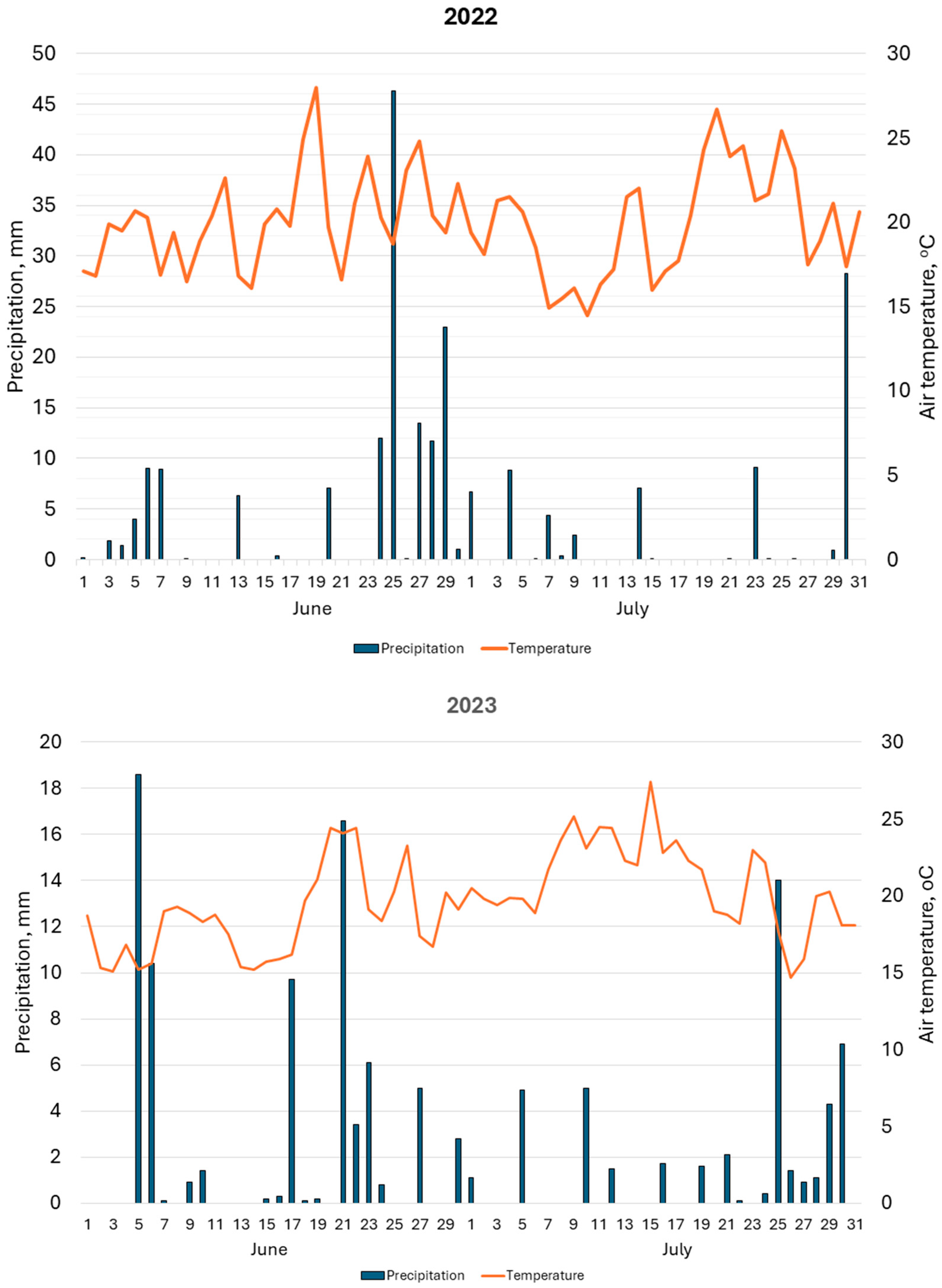
The field experiments were conducted in Prague–Ruzyně, Czech Republic (50°05′03.3″ N, 14°18′15.4″ E), under natural field conditions. Each winter wheat cultivar was grown in three replicates under two variants: Fusarium-inoculated and non-inoculated control. Meteorological conditions during the critical period of wheat flowering, grain development, and maturation in 2022 and 2023 are presented in Figure 1.
The two growing seasons differed markedly in both temperature and precipitation patterns. In 2022, the average daily air temperature during June was 20.2 °C, decreasing slightly to 19.8 °C in July. In contrast, the 2023 growing season was characterized by a cooler June (18.5 °C) followed by a warmer July, with an average daily temperature of 21.0 °C. Thus, while the overall mean temperatures during the grain development period were comparable between years, the temporal distribution of thermal conditions differed substantially.
Precipitation showed even greater interannual variability. In June 2022, total precipitation reached 146.9 mm, almost twice the amount recorded in June 2023 (76.6 mm). July precipitation followed a similar pattern, with 84.2 mm recorded in 2022 compared with only 47.0 mm in 2023. In addition to differences in cumulative rainfall, the distribution of precipitation events varied between seasons. In 2022, several high-intensity rainfall events occurred during the flowering and early grain-filling stages, whereas in 2023 precipitation was generally lower and more sporadic, with longer dry intervals between rainfall events.
Because moisture availability is a key factor influencing the development of Fusarium head blight, supplemental irrigation was applied during flowering and early grain development when natural precipitation was insufficient. Irrigation was used to maintain favorable conditions for infection and disease progression in both years, ensuring comparable exposure of cultivars to Fusarium infection despite contrasting weather patterns.
Overall, the 2022 season was characterized by higher and more frequent precipitation combined with moderate temperatures, while the 2023 season exhibited lower rainfall and greater temperature variability. These differences in meteorological conditions provided contrasting environmental backgrounds for the assessment of Fusarium head blight severity, mycotoxin accumulation, black point incidence, and their effects on yield parameters and seedling performance in winter wheat.

3.2. Severity of Fusarium Head Blight and Its Impact on Yield Parameters

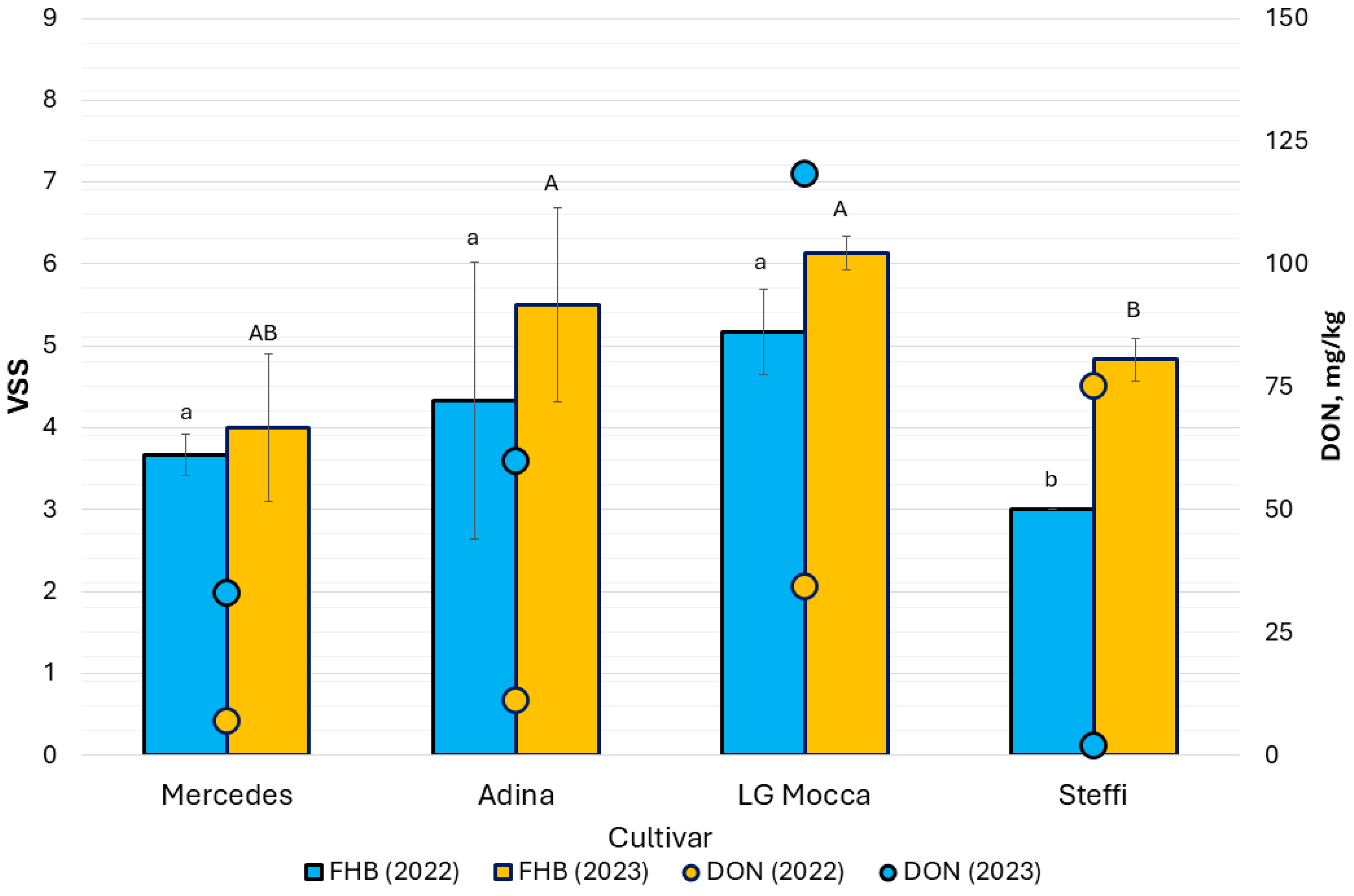
The severity of FHB and associated DON accumulation differed among cultivars and between years. Disease severity was assessed using VSS, while DON content was determined in grain harvested from inoculated ears. The results for both parameters are presented in Figure 2.
Across all cultivars and years, VSS values ranged from moderate to high, reflecting successful infection following artificial inoculation. In 2022, VSS values varied from 3.7 in Mercedes to 5.2 in LG Mocca, whereas in 2023 disease severity increased in all cultivars, with VSS values ranging from 4.0 in Mercedes to 6.1 in LG Mocca. Among the studied cultivars, LG Mocca consistently exhibited the highest FHB severity in both years, while Mercedes showed the lowest VSS values. Differences between years were not statistically significant, although a tendency toward higher disease severity was observed in 2023.
The accumulation of DON in grain differed markedly between years and among cultivars (Figure 2). In 2022, DON concentrations were relatively low, ranging from 7.5 mg kg−1 in Steffi to 53.4 mg kg−1 in LG Mocca. In contrast, DON content increased substantially in 2023, reaching 114.6 mg kg−1 in LG Mocca and 74.8 mg kg−1 in Steffi. Averaged across cultivars, DON concentrations in 2023 were approximately 2.5-fold higher than in 2022. In Mercedes, Adina, and LG Mocca, higher DON content corresponded to higher VSS values. In Steffi, however, DON accumulation in 2023 remained lower than expected based on VSS values.
The impact of FHB on yield-related traits is summarized in Table 1. Fusarium infection resulted in a significant reduction in thousand-grain weight in all cultivars and both years. In 2022, thousand-grain weight decreased by 6.0–30.3% relative to the non-inoculated control, whereas in 2023 the reduction was more pronounced, ranging from 17.0% to 47.2%. The strongest reduction was observed in Adina in 2023, while Steffi exhibited the smallest decrease in both years.
Changes in the number of grains per 10 ears following Fusarium infection were cultivar- and year-dependent (Table 1). In 2022, a reduction in grain number was observed in Mercedes and LG Mocca, while Adina and Steffi showed no significant decrease. In 2023, Fusarium infection caused a significant reduction in grain number in all cultivars except Mercedes. Overall, the reduction in thousand-grain weight represented the most consistent and pronounced yield response to Fusarium infection across cultivars and years.
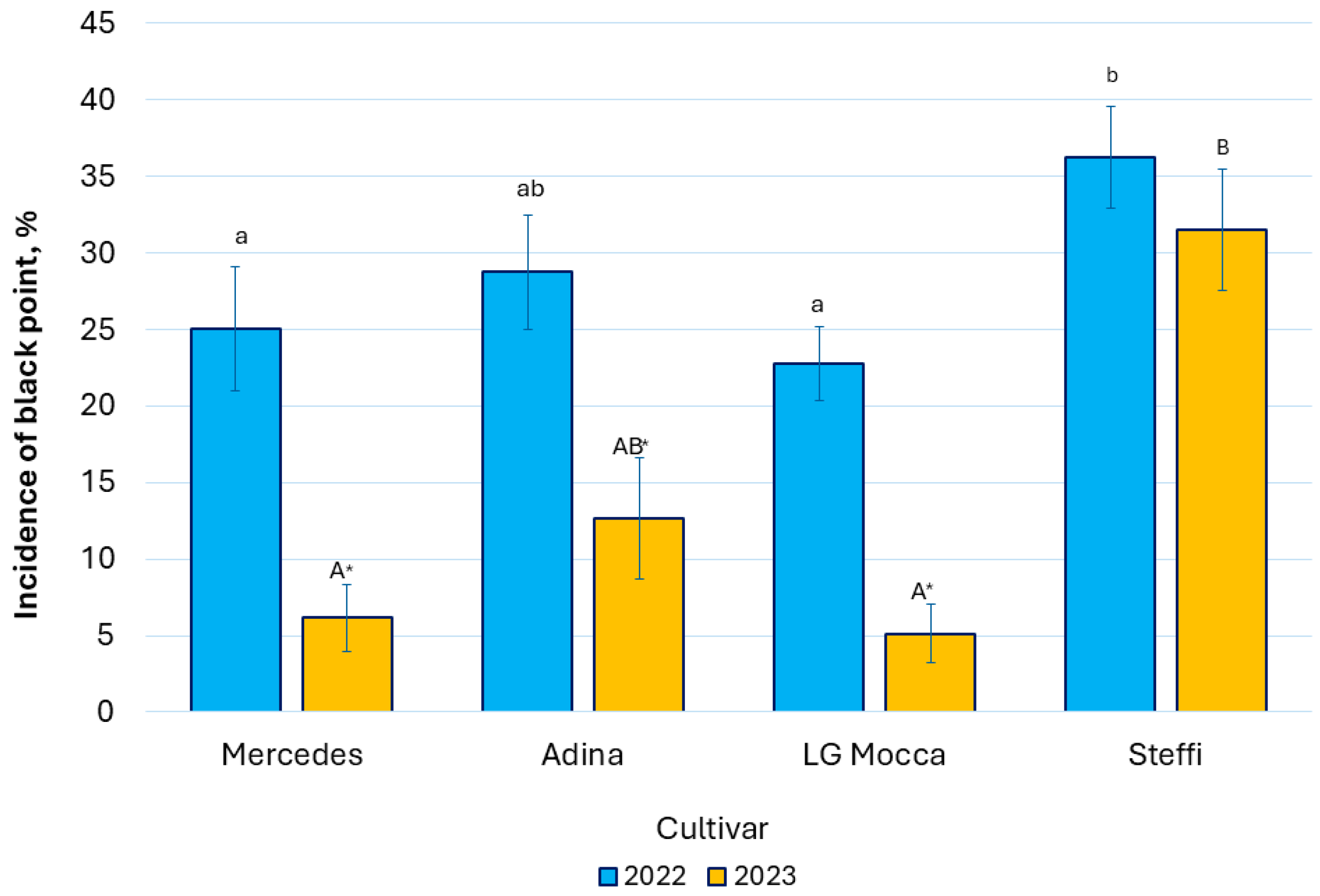
In contrast to Fusarium head blight, the development of BP was more pronounced under the environmental conditions prevailing in 2022 (Figure 3). Averaged across cultivars, the proportion of seeds exhibiting BP symptoms reached 28.2% in 2022, compared with 13.9% in 2023. Cultivar-specific differences were evident in both years. Steffi consistently showed the highest incidence of BP, exceeding 30% in 2022 and remaining high in 2023. Mercedes and LG Mocca also exhibited significantly higher BP incidence in 2022 than in 2023, whereas Adina showed intermediate and more stable levels across years.
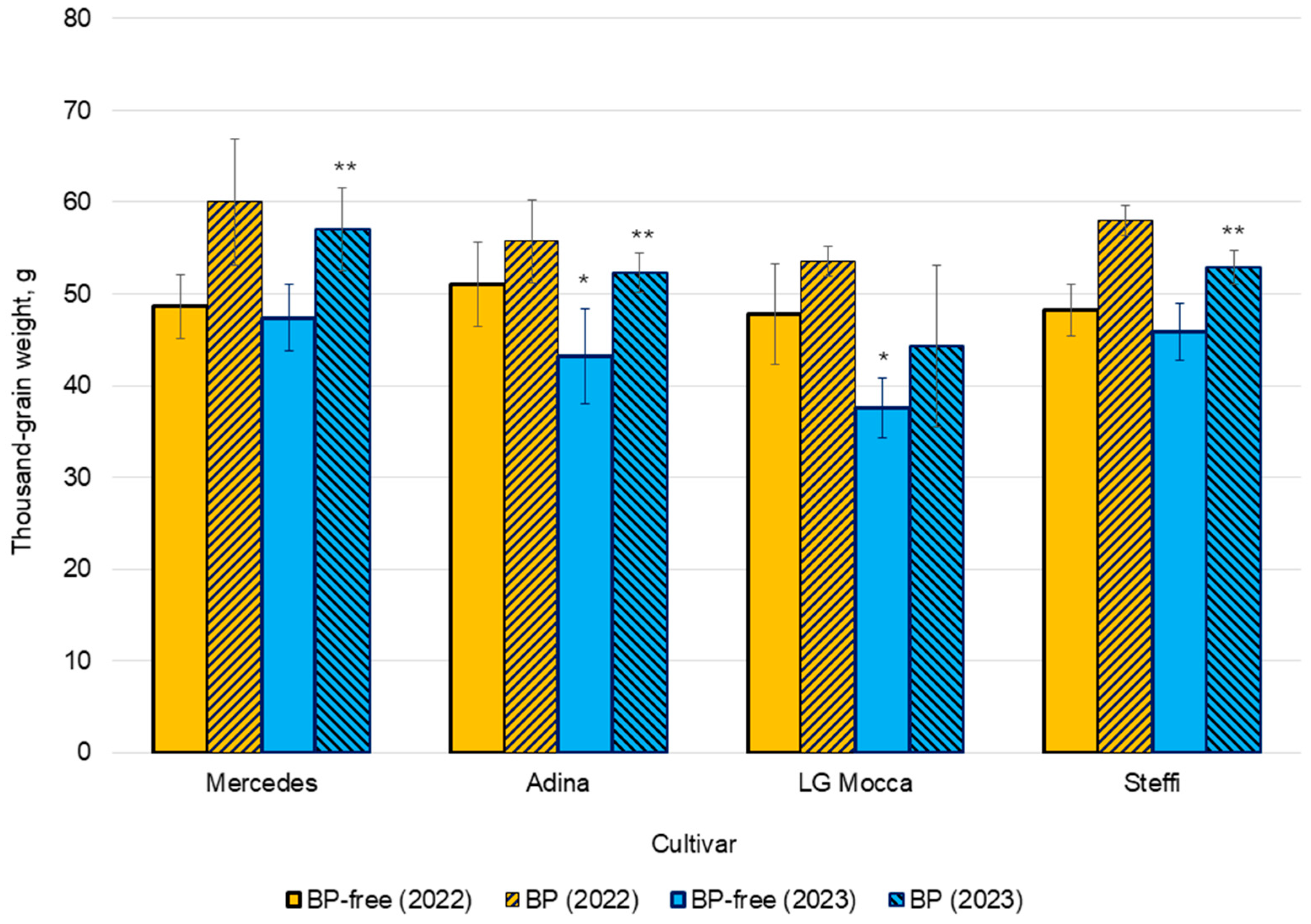
Despite the relatively high incidence of BP in some cultivars, BP-affected seeds were characterized by higher thousand-grain weight compared with BP-free seeds in both experimental years (Figure 4). Averaged across cultivars, BP-affected seeds exhibited a 16.6% higher thousand-grain weight in 2022 and an 18.6% higher thousand-grain weight in 2023 relative to BP-free seeds. In 2023, statistically significant increases in thousand-grain weight associated with BP were observed in Mercedes, Adina, and Steffi, whereas LG Mocca showed a similar trend without reaching statistical significance.
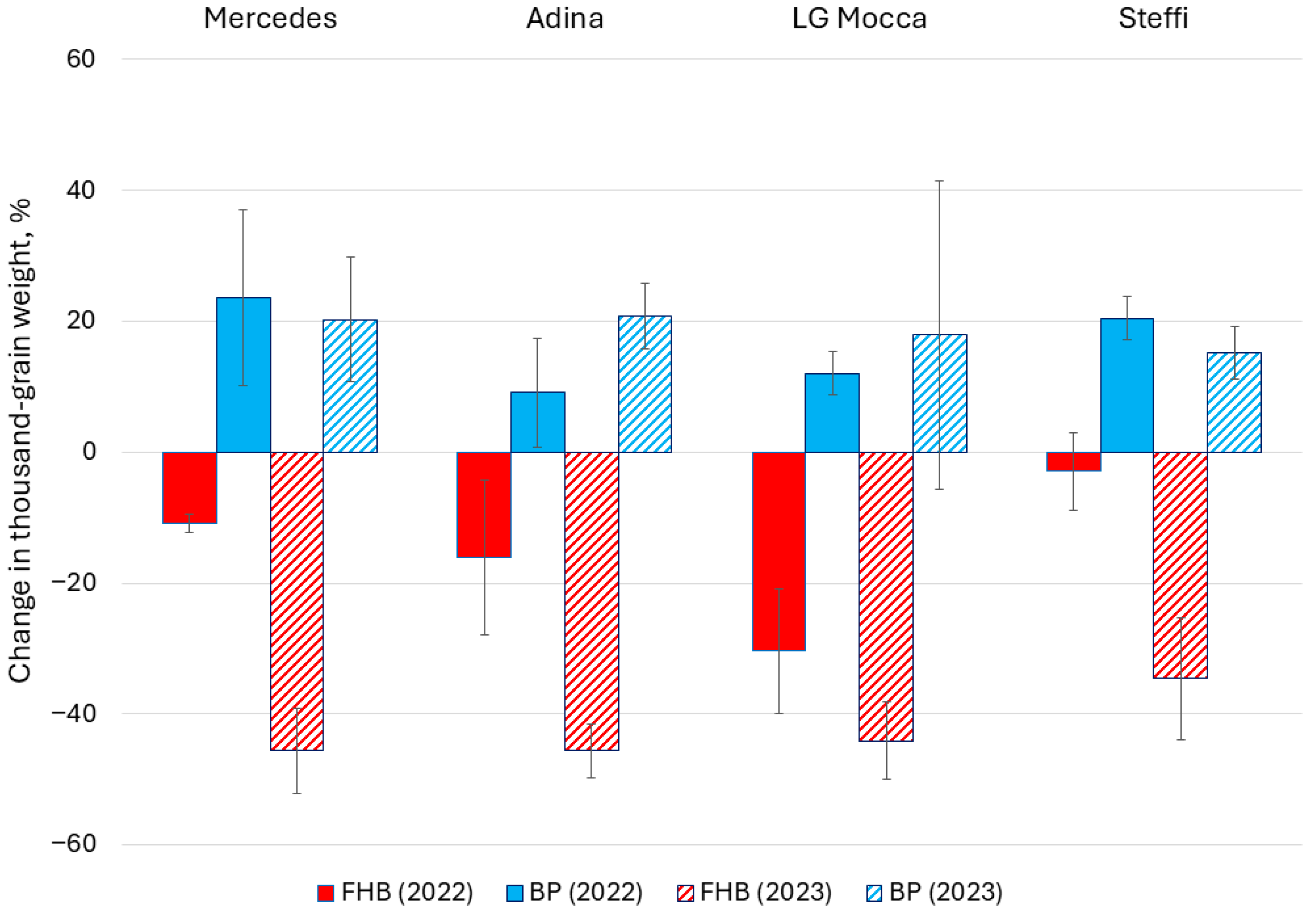
When changes in thousand-grain weight were expressed as relative differences compared with the corresponding controls, Fusarium infection resulted in a pronounced reduction across all cultivars and both years, whereas BP was associated with neutral or positive changes in grain weight (Figure 5). In contrast to FHB, the presence of BP did not result in a reduction in thousand-grain weight or overall yield in any cultivar or year. These results clearly demonstrate distinct and contrasting effects of FHB and BP on wheat grain development and yield-related traits under the conditions of this study.

3.3. Mycoflora in Wheat Seeds

The composition of the endophytic mycoflora in wheat seeds from the 2022–2023 harvests is summarized in Table 2. Phytopathological analysis revealed the presence of fungi representing ten genera: Alternaria, Fusarium, Microdochium, Epicoccum, Arthrinium, Cladosporium, Pyrenophora, Stemphylium, Bipolaris, and Pithomyces, as well as representatives of Coelomycetes and non-sporulating mycelium-forming fungi.
Across both years and seed categories, Alternaria was the dominant genus, accounting for 52–79% of the total isolated mycoflora. Other genera were detected at substantially lower frequencies. Fusarium, Microdochium, Epicoccum, and Arthrinium were present at moderate levels, whereas Cladosporium, Pyrenophora, Stemphylium, Bipolaris, and Pithomyces occurred sporadically, each representing less than 5% of the total fungal population.
Clear differences in mycoflora composition were observed between years. In 2022, the fungal community was characterized by lower overall diversity, with Alternaria strongly predominating and limited representation of other genera. In contrast, seed samples collected in 2023 exhibited greater taxonomic diversity, including the presence of Microdochium, which was not detected in 2022. Conversely, Arthrinium was isolated only in 2022 and was not detected in seed samples from 2023. These findings indicate marked interannual variability in the composition of endophytic mycoflora.
Comparison of BP-affected and BP-free seeds revealed no consistent qualitative differences in fungal composition between these two categories. The relative abundance of dominant and minor genera was similar in BP-affected and BP-free seeds within each year. Overall, variation in mycoflora composition was more pronounced between years than between seeds exhibiting black point symptoms and those without visible symptoms.

3.4. Biometric Parameters of Wheat Seedlings

Biometric parameters of 7-day-old wheat seedlings, including root length, shoot length, and fresh seedling weight, differed significantly between seedlings derived from BP-affected and BP-free seeds (Table 3). Across cultivars, seedlings originating from BP-affected seeds exhibited consistently higher biometric values than those derived from BP-free seeds. Significant differences were observed among cultivars, whereas no consistent or statistically significant effect of harvest year on these parameters was detected.
The average main root length of seedlings derived from BP-free seeds was 97.5 mm across cultivars, while seedlings originating from BP-affected seeds reached an average root length of 113.4 mm. Root length varied among cultivars in both seed categories. In the BP-free group, Steffi exhibited the longest main roots (108.4 mm), whereas Mercedes showed the shortest roots, which were on average 26.0 mm shorter than those of Steffi. Similar cultivar-dependent trends were observed in seedlings derived from BP-affected seeds.
Shoot length followed a pattern comparable to that observed for root length. Across cultivars, the mean shoot length of seedlings derived from BP-free seeds was 54.0 mm, whereas seedlings originating from BP-affected seeds were, on average, 9.4 mm longer. Among BP-free seedlings, Steffi produced significantly longer shoots than the other cultivars, while LG Mocca exhibited the shortest shoots, with an average length of 46.7 mm. Differences among cultivars remained evident in the BP-affected group.
Fresh seedling weight also differed between seed categories. Seedlings derived from BP-affected seeds had an average fresh weight that was 10.2% higher than that of seedlings originating from BP-free seeds. The magnitude of this increase varied among cultivars and years. The most pronounced increase was observed in LG Mocca from the 2022 harvest, where seedling fresh weight increased by 19.8% relative to BP-free seedlings. Across all cultivars and years, changes in fresh seedling weight associated with BP ranged from a slight decrease (−0.5%) to a marked increase (+19.8%).
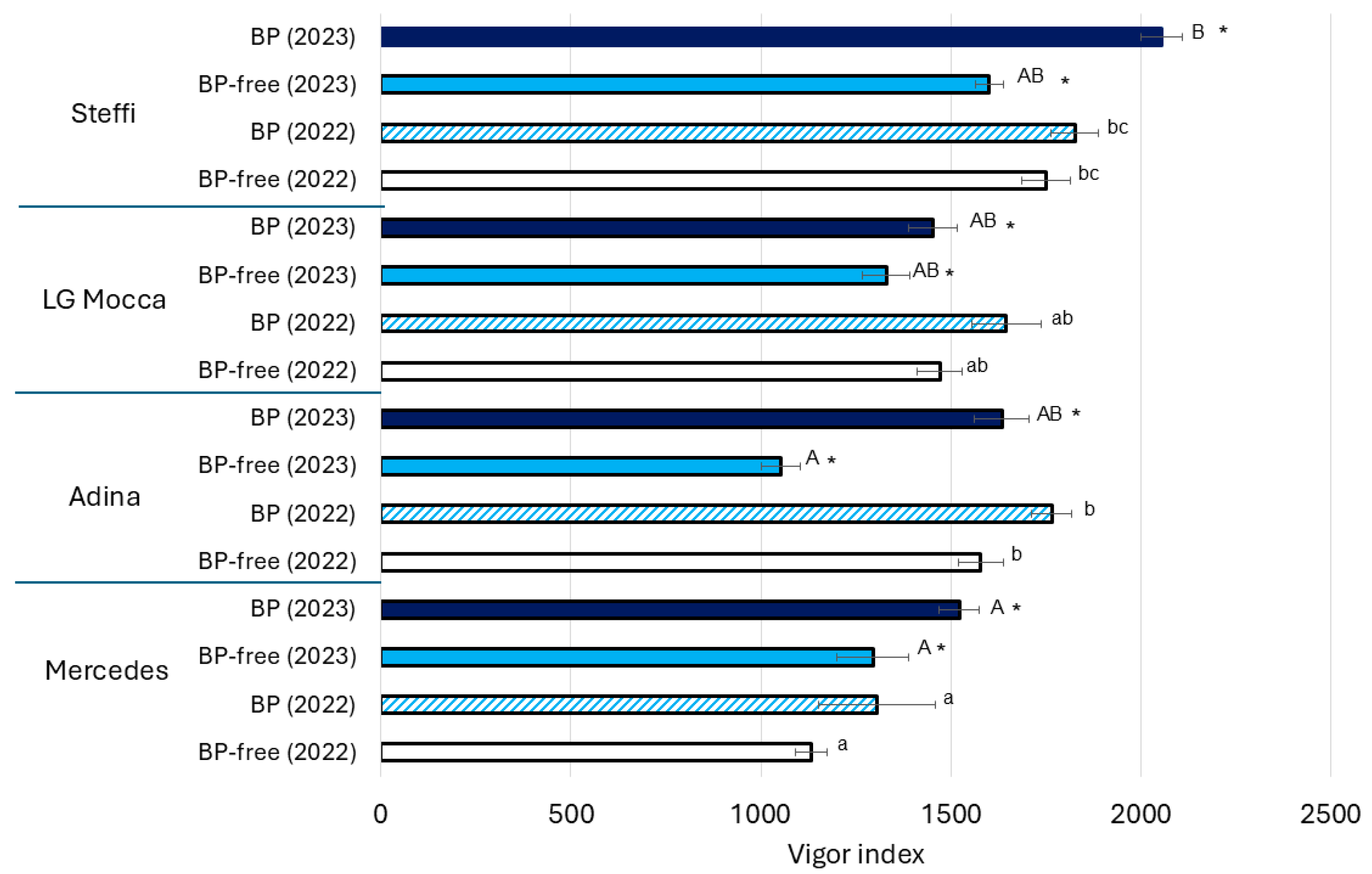
Seedling vigor, expressed as the vigor index calculated from germination percentage and mean seedling length, is presented in Figure 6. Across all cultivars and both years, seedlings derived from BP-affected seeds exhibited a higher vigor index than those derived from BP-free seeds. On average, the vigor index of BP-affected seedlings was 17.8% higher than that of BP-free seedlings. This trend was consistent across cultivars in both years and reached statistical significance. The largest increases in vigor index were observed in Adina in 2023 (+55%) and Steffi in 2023 (+28%) relative to seedlings derived from BP-free seeds.

4. Discussion

Black point in wheat grain is a complex and multifactorial phenomenon that has been associated with genetic predisposition, environmental conditions, and fungal colonization during grain development. Previous studies have shown that BP symptoms tend to appear in susceptible genotypes under conditions of high humidity and moderate temperatures during early stages of seed development and are expressed as dark discoloration of the embryo region without visible tissue damage [12]. The severity of BP symptoms is therefore considered to be determined by the interaction between genotype, environmental conditions, and developmental stage.
A wide range of fungal genera has been reported in association with BP-affected wheat seeds, most frequently Alternaria and Bipolaris, but also Fusarium, Curvularia, Aspergillus, Cladosporium, Epicoccum, Nigrospora, Penicillium, Trichothecium, Ulocladium, and others [15,26,27]. However, the role of these fungi in BP development remains controversial, as their presence does not necessarily imply causation.
Our previous investigations conducted in the Forest-Steppe and Polesia regions of Ukraine (2018–2019) demonstrated that Alternaria spp. dominated the mycobiota of BP-affected seeds, with frequencies ranging from 59.0% to 83.1% depending on region [28]. Similar dominance of Alternaria spp. was later reported in BP-affected seeds harvested in the Czech Republic in 2021 (68.5%) [29]. In contrast, the present study showed no consistent qualitative differences in the composition of endophytic mycoflora between BP-affected and BP-free seeds, despite the dominance of Alternaria spp. in both categories. This finding suggests that the presence of Alternaria spp. in seeds may represent a common component of the wheat seed mycobiome rather than a specific indicator of BP development.
Experimental studies have demonstrated that fungi isolated from BP-affected seeds are capable of inducing BP symptoms under artificial inoculation conditions. Xu et al. [27] reported that inoculation of wheat ears with Alternaria and Bipolaris isolates resulted in the development of BP symptoms, while pre-sowing inoculation of seeds with Alternaria alternata and Cochliobolus sativus increased disease incidence and negatively affected yield components and seedling growth [7]. However, these studies did not evaluate the natural endophytic mycoflora of seeds prior to inoculation, making direct comparison with field-based observations difficult.
In the present study, Alternaria spp. were the dominant fungi detected in the endophytic mycoflora, yet their presence was not associated with reduced germination, lower seedling vigor, or decreased yield. In contrast, Fusarium head blight caused significant reductions in thousand-grain weight and grain number per ear. These findings are consistent with previous reports demonstrating strong negative effects of Fusarium spp., including F. culmorum, F. graminearum, F. avenaceum, and Microdochium nivale, on seed germination and quality, while other species such as F. poae exert minimal or no impact [30].
The influence of BP on seed quality reported in the literature remains inconsistent. Malaker et al. [31,32] observed that BP incidence may increase during storage and that changes in mycoflora composition occur over time, with field-associated fungi decreasing and saprophytic fungi becoming more prevalent. These findings suggest that BP expression and its biological consequences may differ substantially between freshly harvested and stored grain, which may partly explain discrepancies among studies.
In the present study, BP-affected seeds were consistently larger and exhibited higher thousand-grain weight than BP-free seeds. Seed size is a well-established determinant of germination potential and seedling vigor [33]. Accordingly, seedlings derived from BP-affected seeds in our experiment exhibited longer roots and shoots, greater fresh biomass, and a significantly higher vigor index compared with seedlings derived from BP-free seeds. These results contrast with those of Yadav et al. [34], who reported reduced seed size, lower germination, and decreased seedling vigor in BP-affected seeds. Notably, those authors did not analyze the composition of seed mycoflora, which may represent a critical factor influencing seed performance and may contribute to the observed discrepancies.
Interestingly, Malaker et al. [31,32] also reported increased protein, fat, and mineral content (including N, P, Ca, S, and B) in BP-affected wheat seeds. Such compositional changes may partially explain the improved biometric performance observed in seedlings derived from BP-affected seeds in the present study. Although the nutritional composition of BP-affected seeds was not directly analyzed here, the observed enhancement of seedling growth supports the hypothesis that BP expression may be linked to physiological or biochemical traits that do not necessarily impair seed performance.
Overall, our results demonstrate that the dominance of Alternaria spp. in the endophytic mycoflora does not, by itself, provide evidence for a causal role in BP development. Under the conditions of this study, BP did not negatively affect wheat yield or seedling performance and differed fundamentally from the damaging effects of Fusarium head blight. Nevertheless, phytopathological examination of wheat seeds remains essential, regardless of the presence of BP symptoms, to assess potential risks to grain quality and food safety. Further studies integrating mycoflora composition, seed biochemistry, and environmental factors are required to fully elucidate the biological nature and agronomic significance of black point in wheat.

5. Conclusions

Fusarium head blight (FHB) and black point (BP) are among the most frequently observed disorders affecting wheat grain, and their expression is strongly influenced by both environmental conditions and cultivar characteristics. In the present study, these two phenomena differed fundamentally in their impact on yield parameters and seed performance.
Fusarium infection had a pronounced negative effect on wheat production, manifested by substantial reductions in thousand-grain weight and grain number per ear, accompanied by high deoxynivalenol accumulation. These results confirm that FHB represents a serious threat to wheat yield and grain quality and requires continued attention in disease management and breeding strategies.
In contrast, black point associated with Alternaria-type mycoflora did not negatively affect yield-related traits or seedling performance. Seeds exhibiting BP symptoms consistently showed higher thousand-grain weight than BP-free seeds, and seedlings derived from these seeds displayed improved biometric parameters and increased vigor. The composition of endophytic mycoflora did not differ substantially between BP-affected and BP-free seeds, indicating that the presence of Alternaria spp. alone is not sufficient to explain BP development or to predict adverse effects on seed quality.
Overall, the results demonstrate that BP of the Alternaria type should be clearly distinguished from Fusarium-related damage. Under the conditions of this study, BP did not impair grain yield or germination potential and, in several cultivars, was associated with improved seedling performance. Nevertheless, routine phytopathological analysis of wheat grain remains essential to identify potential risks related to mycotoxin contamination and to ensure grain quality and safety.

Author Contributions

Conceptualization, L.G. and J.C.; methodology, L.G.; formal analysis, O.B. and L.G.; investigation, L.G.; resources, J.C. and M.F.; data curation, L.G. and O.B.; writing—original draft preparation, L.G. and O.B.; writing—review and editing, J.C., J.P. and M.F.; visualization, L.G. and O.B. All authors have read and agreed to the published version of the manuscript.

Funding

This research was funded by the Ministry of Agriculture of the Czech Republic, the Institutional project number MZE-RO0425.

Data Availability Statement

The dataset is available upon reasonable request from the authors.

Conflicts of Interest

The authors declare no conflicts of interest.

Abbreviations

The following abbreviations are used in this manuscript:
DONDeoxynivalenol
BPBlack point
FHBFusarium head blight

References

  1. Warham, E.J.; Butler, L.D.; Sutton, B.C. Seed Testing of Maize and Wheat: A Laboratory Guide; CIMMYT: El Batan, Mexico, 1996; Available online: https://scholar.google.com/scholar?hl=ru&as_sdt=0%2C5&q=1.%09Warham%2C+E.J.%3B+Butler%2C+L.D.%3B+Sutton%2C+B.C.+Seed+Testing+of+Maize+and+Wheat%3A+A+Laboratory+Guide%3B+CIMMYT%3A+El+Batan%2C+Mexico%2C+1996.+&btnG= (accessed on 1 December 2025).
  2. Ekwomadu, T.I.; Akinola, S.A.; Mwanza, M. Fusarium mycotoxins, their metabolites (free, emerging, and masked), food safety concerns, and health impacts. Int. J. Environ. Res. Public Health 2021, 18, 11741. [Google Scholar] [CrossRef]
  3. Johns, L.E.; Bebber, D.P.; Gurr, S.J.; Sarah, J.; Brown, N.A. Emerging health threat and cost of Fusarium mycotoxins in European wheat. Nat. Food 2022, 3, 1014–1019. [Google Scholar] [CrossRef]
  4. Al-Sadi, M. Bipolaris sorokiniana-induced black point, common root rot, and spot blotch diseases of wheat: A review. Front. Cell. Infect. Microbiol. Sec. Fungal Pathog. 2021, 11, 584899. [Google Scholar] [CrossRef]
  5. Somma, S.; Amatulli, M.T.; Masiello, M.; Moretti, A.; Logrieco, A.F. Alternaria species associated with wheat black point identified through a multilocus sequence approach. Int. J. Food Microbiol. 2019, 293, 34–43. [Google Scholar] [CrossRef] [PubMed]
  6. Masiello, M.; Somma, S.; Susca, A.; Ghionna, V.; Logrieco, A.F.; Franzoni, M.; Ravaglia, S.; Meca, G.; Moretti, A. Molecular identification and mycotoxin production by Alternaria species occurring on durum wheat, showing black point symptoms. Toxins 2020, 12, 275. [Google Scholar] [CrossRef]
  7. Draz, I.S.; El-Gremi, S.M.; Youssef, W.A. Pathogens associated with wheat black point disease and responsibility in pathogenesis. J. Environ. Agric. Sci. 2016, 8, 71–78. [Google Scholar]
  8. Zaman, R.; Aminuzzaman, F.M.; Islam, M.R.; Chowdhury, S.R. Eco-friendly seed treatment in controlling Black Point (Bipolaris sorokiniana) of wheat. Int. J. Sustain. Crop Prod. 2010, 5, 35–42. [Google Scholar]
  9. Sharma, A.B.; Singh, A.; Singh, T.P. Effect of black point on seed germination parameters in popular wheat cultivars of Northern India. Indian Phytopathol. 2021, 74, 271–275. [Google Scholar] [CrossRef]
  10. Hudec, K.; Muchová, D. Correlation between black point symptoms and fungal infestation and seedling viability of wheat kernels. Plant Prot. Sci. 2008, 44, 138–146. [Google Scholar] [CrossRef]
  11. Khani, M.; Cheong, J.; Mrva, K.; Mares, D. Wheat black point: Role of environment and genotype. J. Cereal Sci. 2018, 82, 25–33. [Google Scholar] [CrossRef]
  12. Rozhkova, T.; Burdulanyuk, A.; Tatarynova, V.; Yemets, O.; Demenko, V.; Spychak, Y.; Rozhkova, Y. Macroanalysis of winter wheat seeds and features of their germination. Ecol. Eng. Environ. Technol. 2024, 25, 304–311. [Google Scholar] [CrossRef]
  13. Liu, J.; He, Z.; Rasheed, A.; Wen, W.; Yan, J.; Zhang, P.; Wan, Y.; Zhang, Y.; Xie, C.; Xia, X. Genome-wide association mapping of black point reaction in common wheat (Triticum aestivum L.). BMC Plant Biol. 2017, 17, 220. [Google Scholar] [CrossRef] [PubMed]
  14. Li, Q.-Y.; Gao, C.; Li, Y.-K. Advances in genetic studies of black point disease in wheat. J. Plant Dis. Prot. 2021, 128, 887–895. [Google Scholar] [CrossRef]
  15. Li, Q.; Li, M.; Jiang, Y.; Wang, S.; Xu, K.; Liang, X.; Niu, J.; Wang, C. Assessing genetic resistance in wheat to black point caused by six fungal species in the yellow and huai wheat area of China. Plant Dis. 2020, 104, 3131–3134. [Google Scholar] [CrossRef]
  16. Li, Q.; Niu, H.; Xu, K.; Xu, Q.; Wang, S.; Liang, X.; Jiang, Y.; Niu, J. GWAS for resistance against black point caused by Bipolaris sorokiniana in wheat. J. Cereal Sci. 2020, 91, 102859. [Google Scholar] [CrossRef]
  17. Horáková, V.; Dvořáčková, O.; Nečas, M. Cereals. List of Recommended Varieties: Winter Wheat, Spring Wheat, Spring Barley, Winter Barley, Winter Triticale, Spring Oats. Overview of Varieties: Winter Rye, Naked Oats, Winter Oats; Agrární Komora České Republiky: Brno, Czech Republic, 2023. Available online: https://ukzuz.gov.cz/public/portal/ukzuz/odrudy/seznam-doporucenych-odrud/x2023/publikace/obilniny (accessed on 1 December 2025). (In Czech)
  18. Chrpová, J.; Šíp, V.; Štočková, L.; Stehno, Z.; Capouchová, I. Evaluation of resistance to Fusarium head blight in spring wheat genotypes belonging to various Triticum species. Czech J. Genet. Plant Breed. 2013, 49, 149–156. [Google Scholar] [CrossRef]
  19. Mesterházy, Á. Methodology of resistance testing and breeding against Fusarium head blight in wheat and results of the selection. Cereal Res. Commun. 1997, 25, 631–637. [Google Scholar] [CrossRef]
  20. Trávníčková, M.; Chrpová, J.; Palicová, J.; Kozová, J.; Martinek, P.; Hnilička, F. Association between Fusarium head blight resistance and grain colour in wheat (Triticum aestivum L.). Cereal Res. Commun. 2024, 52, 1599–1611. [Google Scholar] [CrossRef]
  21. Chrpová, J.; Šíp, V.; Matějová, E.; Sýkorová, S. Resistance of winter wheat varieties registered in the Czech Republic to mycotoxin accumulation in grain following inoculation with Fusarium culmorum. Czech J. Genet. Plant Breed. 2007, 43, 44–52. [Google Scholar] [CrossRef]
  22. ISTA. Chapter 5: The Germination Test. In Rules Proposal for the International Rules for Seed Testing; International Rules Seed Testing: Bassersdorf, Switzerland, 2017; pp. 1–62. [Google Scholar]
  23. Vashisth, A.; Nagarajan, S. Effect on germination and early growth characteristics in sunflower (Helianthus annuus) seeds exposed to static magnetic field. J. Plant Physiol. 2010, 167, 149–156. [Google Scholar] [CrossRef]
  24. Watanabe, T. Pictorial Atlas of Soil and Seed Fungi; CRC Press: Boca Raton, FL, USA, 2002; 504p. [Google Scholar] [CrossRef]
  25. Seifert, K.A.; Morgan-Jones, G.A.; Gams, W.; Kendrick, B. The Genera of Hyphomycetes; CBS Biodiversity (Series 10); CBS Fungal Diversity Centre: Utrecht, The Netherlands, 2011; 997p. [Google Scholar]
  26. El-Gremi, S.M.; Draz, I.S.; Youssef, W.A.-E. Biological control of pathogens associated with kernel black point disease of wheat. Crop Prot. 2017, 91, 13–19. [Google Scholar] [CrossRef]
  27. Xu, K.-G.; Jiang, Y.-M.; Li, Y.-K.; Xu, Q.-Q.; Niu, J.-S.; Zhu, X.-X.; Li, Q.-Y. Identification and Pathogenicity of Fungal Pathogens Causing Black Point in Wheat on the North China Plain. Indian J. Microbiol. 2018, 58, 159–164. [Google Scholar] [CrossRef]
  28. Golosna, L. Mycobiota of wheat seeds with signs of “black point” under conditions of Forest-Steppe and Forest zones of Ukraine. Chem. Proc. 2022, 10, 93. [Google Scholar] [CrossRef]
  29. Golosna, L.; Palicova, J.; Chrpová, J. Occurrence of color changes in wheat grains in 2021. Harvest 2023, 2, 32–34. (In Czech) [Google Scholar]
  30. Browne, R.A.; Cooke, B.M. Resistance of wheat to Fusarium spp. in an in vitro seed germination assay and preliminary investigations into the relationship with Fusarium head blight resistance. Euphytica 2005, 141, 23–32. [Google Scholar] [CrossRef]
  31. Malaker, P.K.; Mian, I.H. Population dynamics of mycoflora and incidence of black point disease in wheat grains. Bangladesh J. Agric. Res. 2010, 35, 1–10. [Google Scholar] [CrossRef]
  32. Malaker, P.K.; Mian, I.H.; Bhuiyan, K.A.; Reza, M.M.A.; Mannan, M.A. Effect of black point disease on quality of wheat grain. Bangladesh J. Agric. Res. 2010, 34, 181–187. [Google Scholar] [CrossRef]
  33. Kandasamy, S.; Weerasuriya, N.; Gritsiouk, D.; Patterson, G.; Saldias, S.; Ali, S.; Lazarovits, G. Size variability in seed lot impact seed nutritional balance, seedling vigor, microbial composition and plant performance of common corn hybrids. Agronomy 2020, 10, 157. [Google Scholar] [CrossRef]
  34. Yadav, R.D.S.; Kumar, A.; Vneet, D.; Purushottam; Singh, R.K.; Tripathi, R.M. Effect of black point on seed quality in wheat (Triticum aestivum L.). Int. J. Chem. Stud. 2020, 8, 2584–2586. [Google Scholar] [CrossRef]
Figure 1. Weather conditions during grain development in 2022 and 2023 at Prague–Ruzyně, Czech Republic. Daily precipitation (bars) and air temperature (line) are shown for June and July.
Crops 06 00014 g001
Figure 2. Severity of Fusarium head blight (FHB) and deoxynivalenol (DON) content in winter wheat cultivars in 2022 and 2023. Bars represent visual symptom scores (VSS), and markers represent DON concentration (mg/kg). Data are shown as means ± SD. Different lowercase and uppercase letters indicate significant differences among cultivars within 2022 and 2023, respectively (Wilcoxon matched pairs test, p < 0.05).
Crops 06 00014 g002
Figure 3. Incidence of black point in winter wheat seeds in 2022 and 2023. Data are presented as means ± SD. Asterisks indicate statistically significant differences between years for the same cultivar, while different lowercase and uppercase letters indicate significant differences among cultivars within 2022 and 2023, respectively (Wilcoxon matched pairs test, p < 0.05).
Crops 06 00014 g003
Figure 4. Thousand-grain weight of winter wheat grain affected by black point (BP) and BP-free grain in 2022 and 2023. Data are presented as means ± SD. Asterisks indicate statistically significant differences between years for the same group (*), and between BP-affected and BP-free grain within the same cultivar (**), according to the Wilcoxon matched pairs test (p < 0.05). No significant differences were detected among cultivars.
Crops 06 00014 g004
Figure 5. Change in thousand-grain weight (%) under the influence of Fusarium head blight (FHB) and black point (BP) infection in 2022 and 2023 for four winter wheat cultivars. Negative values indicate a reduction relative to the non-infected control. Data are presented as means ± SD.
Crops 06 00014 g005
Figure 6. Vigor index of 7-day-old winter wheat seedlings derived from black point–affected (BP) and BP-free grain in 2022 and 2023. Data are presented as means ± SD. Asterisks indicate statistically significant differences between years within the same group, while different lowercase and uppercase letters indicate significant differences among cultivars within 2022 and 2023, respectively (Wilcoxon matched pairs test, p < 0.05).
Crops 06 00014 g006
Table 1. Effect of Fusarium infection on yield traits of winter wheat cultivars in 2022 and 2023. Data are presented as means ± SD. Asterisks indicate statistically significant differences between years for the same treatment (*), and between Fusarium-infected and control grain within the same cultivar (**), according to the Wilcoxon matched pairs test (p < 0.05). Different lowercase and uppercase letters indicate significant differences among cultivars within 2022 and 2023, respectively; means sharing the same letter are not significantly different.
CultivarYearThousand-Grain Weight, gNumber of Grains per 10 Ears (Count)
ControlFusariumControlFusarium
Mercedes202248.6 ± 3.41 a43.3 ± 0.68 ab**477.0 ± 129.33 ab421.3 ± 36.76 a
202347.4 ± 3.67 A35.4 ± 3.10 A*,**443.0 ± 32.29 A375.0 ± 59.20 AB
Adina202251.1 ± 4.64 a42.9 ± 6.04 ab**437.0 ± 39.23 b564.7 ± 66.99 b
202343.2 ± 5.16 AB*23.5 ± 1.79 B*,**521.3 ± 59.57 AB*336.3 ± 58.41 AB*,**
LG Mocca202247.8 ± 5.50 a33.3 ± 4.56 a**703.0 ± 101.54 a524.0 ± 101.65 ab
202337.5 ± 3.26 B*21.0 ± 2.20 BC*,**516.3 ± 8.50 B*299.3 ± 46.67 A*,**
Steffi202248.2 ± 2.82 a46.8 ± 2.82 b467.7 ± 43.23 b516.0 ± 16.42 ab**
202345.9 ± 3.17 AB30.0 ± 4.25 AB*,**445.7 ± 68.89 AB417.7 ± 22.46 B*
Table 2. Endophytic mycoflora of winter wheat seeds with and without black point (BP) symptoms in 2022 and 2023. Data are presented as means ± SD (%). BP, black point.
Pathogens20222023
BP-FreeBPBP-FreeBP
Alternaria62.6 ± 23.0879.6 ± 12.7653.6 ± 17.6352.4 ± 34.06
Fusarium16.08 ± 16.729.8 ± 7.9210.6 ± 10.6914.4 ± 26.92
Microdochium0013.98 ± 19.5415.46 ± 26.60
Epicoccum5.3 ± 0.735.6 ± 5.5014.0 ± 9.149.4 ± 6.39
Arthrinium3.0 ± 6.71000
Cladosporium002.6 ± 3.711.0 ± 2.24
Pyrenophora001.0 ± 2.241.0 ± 2.24
Stemphylium001.0 ± 2.240.8 ± 1.79
Bipolaris1.3 ± 2.91000
Pithomyces01.0 ± 2.2400
Coelomucety1.1 ± 2.46000.8 ± 1.79
Sterile mycelium1.84 ± 4.11000
Table 3. Biometric parameters of 7-day-old winter wheat seedlings derived from black point–affected (BP) and BP-free grain in 2022 and 2023. Data are presented as means ± SD. Asterisks indicate statistically significant differences between years for the same group (*), and between BP-affected and BP-free seedlings within the same cultivar (**), according to the Wilcoxon matched pairs test (p < 0.05). Different lowercase and uppercase letters indicate significant differences among cultivars within 2022 and 2023, respectively; means sharing the same letter are not significantly different.
CultivarYearRoot Length, mmSeedling Length, mmSeedling Fresh Weight, g
BP-FreeBPBP-FreeBPBP-FreeBP
Mercedes202279.3 ± 22.71 a92.2 ± 18.34 a**49.5 ± 18.00 ac52.8 ± 14.70 a1.60 ± 0.042 a1.85 ± 0.133 a**
202385.5 ± 18.94 A99.1 ± 13.69 A**47.9 ± 16.82 A56.6 ± 15.23 A**1.73 ± 0.046 AB*2.04 ± 0.047 A*,**
Adina2022102.3 ± 17.96 b115.9 ± 18.97 b**58.8 ± 16.38 a64.2 ± 15.83 bc1.80 ± 0.066 abc1.87 ± 0.131 a
202394.5 ± 31.18 AB109.4 ± 25.89 AB**51.6 ± 20.28 AB68.3 ± 14.10 BC**1.60 ± 0.046 A*1.79 ± 0.112 B**
LG Mocca2022104.4 ± 18.9 b125.3 ± 25.41 b**45.7 ± 9.86 ac61.8 ± 13.26 ab**2.02 ± 0.113 bc2.42 ± 0.092 b**
202395.2 ± 27.02 AB114.6 ± 31.95 B**47.8 ± 12.24 A56.4 ± 16.32 ABC**1.82 ± 0.137 B*1.81 ± 0.042 B*
Steffi2022108.6 ± 32.04 b118.6 ± 37.20 b71.8 ± 23.60 bc73.6 ± 17.03 bc1.83 ± 0.102 bc2.10 ± 0.176 ab**
2023109.8 ± 19.53 B132.1 ± 18.85 C**59.0 ± 12.84 B*73.4 ± 15.60 BC**1.91 ± 0.094 B2.23 ± 0.182 A*,**
Disclaimer/Publisher’s Note: The statements, opinions and data contained in all publications are solely those of the individual author(s) and contributor(s) and not of MDPI and/or the editor(s). MDPI and/or the editor(s) disclaim responsibility for any injury to people or property resulting from any ideas, methods, instructions or products referred to in the content.