Review

Transport Sector GHG Mitigation Measures: Abatement Costs Application Review

by
Lorena Mirela Ricci
*,
Daniel Neves Schmitz Gonçalves
and
Marcio de Almeida D’Agosto
Transport Engineering Program (PET), Freight Transport Laboratory (LTC), Federal University of Rio de Janeiro (UFRJ), Rio de Janeiro 21941-914, Brazil
*
Author to whom correspondence should be addressed.
Future Transp. 2025, 5(4), 195; https://doi.org/10.3390/futuretransp5040195
Submission received: 23 October 2025 / Revised: 25 November 2025 / Accepted: 4 December 2025 / Published: 11 December 2025

Abstract

The transport sector is a major contributor to global greenhouse gas emissions, making its decarbonization critical for climate change mitigation efforts. The Marginal Abatement Cost (MAC) curve is a vital tool that evaluates the cost-effectiveness of mitigation measures by comparing their emission reduction potential against their implementation costs. This paper conducts a literature review to analyze the application of the MAC curve in the transport sector, identifying common mitigation measures, comparing abatement costs, and assessing the tool’s role in shaping decarbonization policies. The findings reveal a predominance of technology-focused, bottom-up methodologies, with a significant research gap in the freight sector, which is largely overlooked compared with passenger transport. The results show that the abatement costs for similar measures vary considerably across geographical contexts, influenced by local factors such as fuel prices and gross domestic product (GDP). The analysis suggests that combining technological solutions with behavioral and structural changes creates synergistic effects, yielding greater benefits than isolated actions. The strong alignment observed between measures analyzed in the literature and subsequent national climate policies confirms the MAC curve’s strategic importance as an evidence-based instrument for policymakers to construct economically rational decarbonization pathways.

1. Introduction

As climate change and global warming advance, measures must be taken to ensure the sustainable development of society. This has led to a global effort to mitigate the impacts caused by the emission of Greenhouse Gases (GHGs), with one of the main goals being reducing the share of fossil fuels in the world’s energy mix [1]. The goal is to lower energy-related CO2 emissions and help limit the global temperature increase to 1.5 °C above pre-industrial levels [2].
The transport sector plays a key role in the global race for decarbonization, as mobility accounts for approximately 21.4% of the energy sector’s global GHG emissions [3]. This number could rise to 40% by 2030 if no action is taken [4]. In the Brazilian context, transport is even more representative, contributing around 53% of the energy sector’s GHG emissions [5]. To align the sector with global Net Zero emissions by 2050, a 3% annual reduction in emissions is necessary until 2030 [6].
Within the transport sector, the most prominent mode for both passenger and freight transport is road transport. It was responsible for 70% of the sector’s direct emissions worldwide in 2019 [2], which highlights the need for transformative changes in the sector to meet GHG mitigation goals. Achieving this requires identifying optimal implementation measures; however, a crucial factor in this decision-making process is balancing the implementation cost against the emission reduction potential of these mitigating measures.
The Marginal Abatement Cost curve (MAC) is one of the methods used to determine the cost-effectiveness of selected mitigating measures. It enables the calculation of the cost of avoided emissions and the feasibility of applied strategies [7,8], providing clarity for decision-makers proposing policies.
While the existing literature features many individual case studies using the MAC curve, it lacks a systematic review that compiles and quantitatively contrasts abatement costs and reduction potentials within the transport sector across different regional contexts. Furthermore, a consolidated examination of how these academic works translate into subsequent climate policies is absent. This review aims to bridge this gap by providing an evidence-based summary of the trends, costs, and real-world policy outcomes of applying the MAC curve.
Following this introduction, Section 2 presents a brief introduction of the main concepts and context pertaining to the MAC curve. Section 3 presents the article selection methodology for the literature review and mitigation name standardization. Section 4 provides an overview of the selected articles and presents the results on emission reduction potential and cost. Section 5 discuss the findings and their role in policy development. Section 6 consolidates the conclusions obtained in this study.

2. Background Information

There are three methods for developing a MAC curve: top-down, bottom-up, or hybrid. The top-down method focuses on macroeconomic models that consider energy supply and demand, as well as market and scenario changes [9]. The bottom-up method, on the other hand, focuses on technological development and existing policies [9]. The hybrid method combines the technological aspects of the bottom-up method with the policies and future scenarios of the top-down approach; however due to the high volume of data and complexity required, it is still rarely used [9,10].
Graphically represented by a step graph, the MAC curve is built by applying N GHG mitigation measures, with each step corresponding to a specific measure. The curve illustrates the Marginal Abatement Cost in $/tCO2(e) (Y-axis) versus the potential for emission reduction in MtCO2(e)/year (X-axis). Figure 1 illustrates a graphical representation of the MAC curve.
The MAC curve can show measures with both negative and positive abatement costs. For measures with negative costs, there are net savings over time, which makes them more financially attractive. However, this does not mean that decision-makers will necessarily choose these options, as it depends on their chosen strategy for prioritizing the implementation of measures. This can also be reflected in the choice based on abatement potential, where the measure with the highest mitigation potential is not always the most utilized [12], highlighting the need for progress in created policies and guidelines for the application of the MAC curve as a tool supporting the decision-making process.
Equation (1) provides the basic structure for calculating the MAC curve. It is composed of the cost difference (ΔC) from implementing a mitigation measure (Cmit) compared to the business-as-usual (BAU) scenario (CBAU), divided by the emissions difference (ΔE) between the business-as-usual scenario (EBAU) and the scenario with the mitigation measure (Emit).
MAC = A n n u a l i z e d   n e t   c o s t s   o f   t h e   m i t i g a t i o n   m e a s u r e A n n u a l   e m i s s i o n   r e d u c t i o n = C E = C m i t C B A U E B A U E m i t ,
It is important to note that the evaluated cost is the net cost, meaning it includes both the Capital Expenditure (Capex) and Operational Expenditure (Opex) for implementing the measure [9]. Additionally, to account for projections over time, the discount rate (r) variable must be added to the equation [13,14], leading to Equation (2). Equations (1) and (2) provide the basic parameters for calculating the MAC.
C i = i = 1 ; t = t 0 N ; T C a p e x i + O p e x i ( 1 + r ) t t 0
  • Ci: Marginal Abatement Cost for Measure N.
  • Capexi: Capital Expenditure for measure N.
  • Opexi: Operational Expenditure for measure N.
  • r: discount rate.
  • t: projected year.
  • t0: BAU year.
Factors such as gross domestic product (GDP), energy consumption, emissions, energy price, and technical changes can impact MAC calculations [10]. Specifically, the transport sector is significantly affected by fleet type, fleet age, fuel used, transport structure, and travel behavior [15].
The MAC curve can be a crucial tool for decision-making because it balances environmental benefits with economic viability. Its essence lies in demonstrating that decarbonization is not only an environmental issue but also an economic imperative. This is especially relevant given the political instability that affects global climate commitments. For example, the United States’ withdrawal from and subsequent rejoining of the Paris Agreement [16] illustrates how sustainability can be vulnerable to changes in government. By providing a solid economic foundation, the MAC curve offers a pragmatic argument for action, making mitigation efforts more resilient to political volatility and more attractive to nations with limited capital.

3. Methodology

To select articles for review, a bibliographic search was conducted in April 2025 using the Scopus and Web of Science scientific databases, which were chosen for their rigorous selection criteria, extensive coverage and well-established metrics. The terms “transport”, “abatement cost”, and “mitigation” were used to delimit the search, resulting in 219 articles, published between January of 2010 and April 2025. Table 1 presents the query and filters applied for the search.
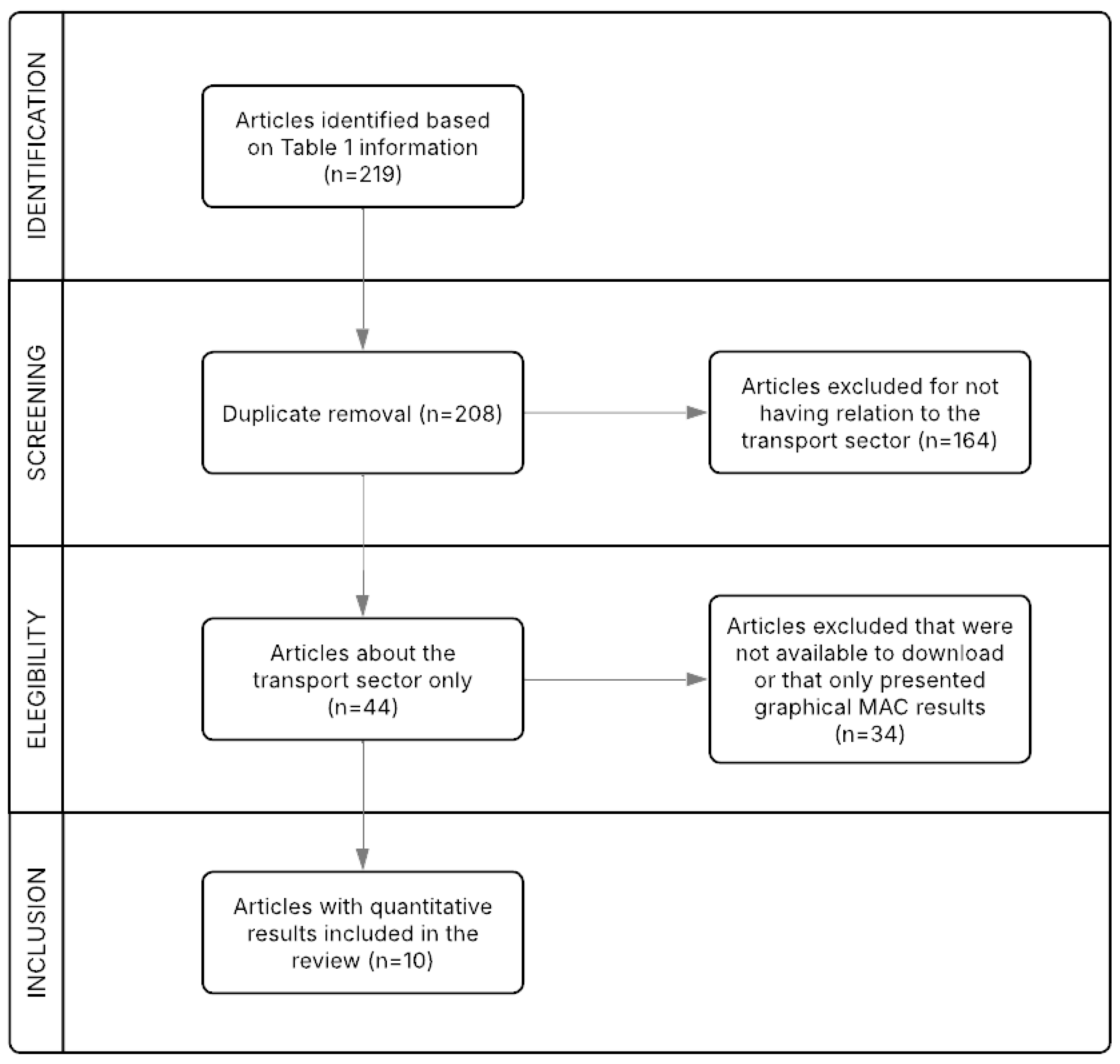
From the 219 resulting articles, a primary screening step removed duplicate articles, yielding 208 unique articles. A second screening step then selected articles exclusively focusing on applications in the transport sector; their titles and abstracts were analyzed, removing 164 articles and narrowing the results to 44. From these, the full articles, that were accessible via download, were analyzed to determine whether they provided values for the abatement potential and cost for each mitigation measure. This eliminated articles that only graphically expressed the MAC curve, resulting in 10 articles selected for further analysis that featured a quantitative calculation of the MAC curve, allowing for a comparative analysis of abatement costs and reduction potential, which is a central objective of this study. Figure 2 provides a workflow of the article selection process.
In order to allow for comparison between the studies, which use varying terminology, the names of the mitigation measures were standardized into categories based on their technical purpose. For the standardization process, six groups of mitigation measures were created, named as follows: alternative fuels; alternative vehicles; energy efficiency; fleet modernization; modal shift; and travel behavior. The resulting standardization is presented in Table A1 of Appendix A.

4. Results

This section presents and summarizes the findings obtained in this study.

4.1. Articles Selected and Characterization

Table 2 presents the 10 selected articles that met the inclusion criteria described in Section 3, listing the articles’ titles and their respective authors and also identifying the country where the study was conducted, the transport mode, the transport focus, and the type of intervention addressed in the study.
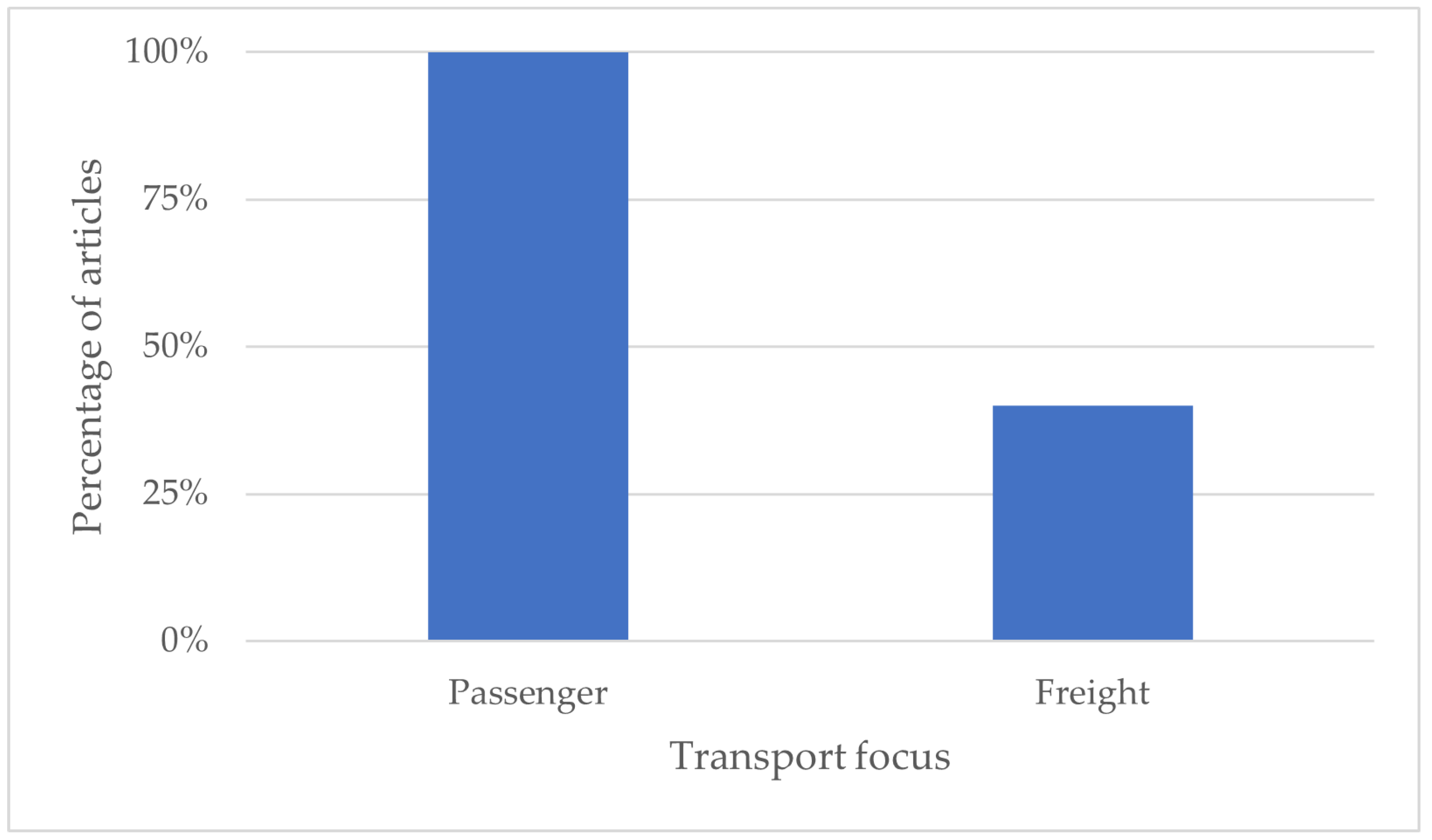
All of the studies address passenger transport, relegating freight transport to the background (Figure 3), with freight being studied alongside passenger transport. None of the studies focus solely on freight transport.
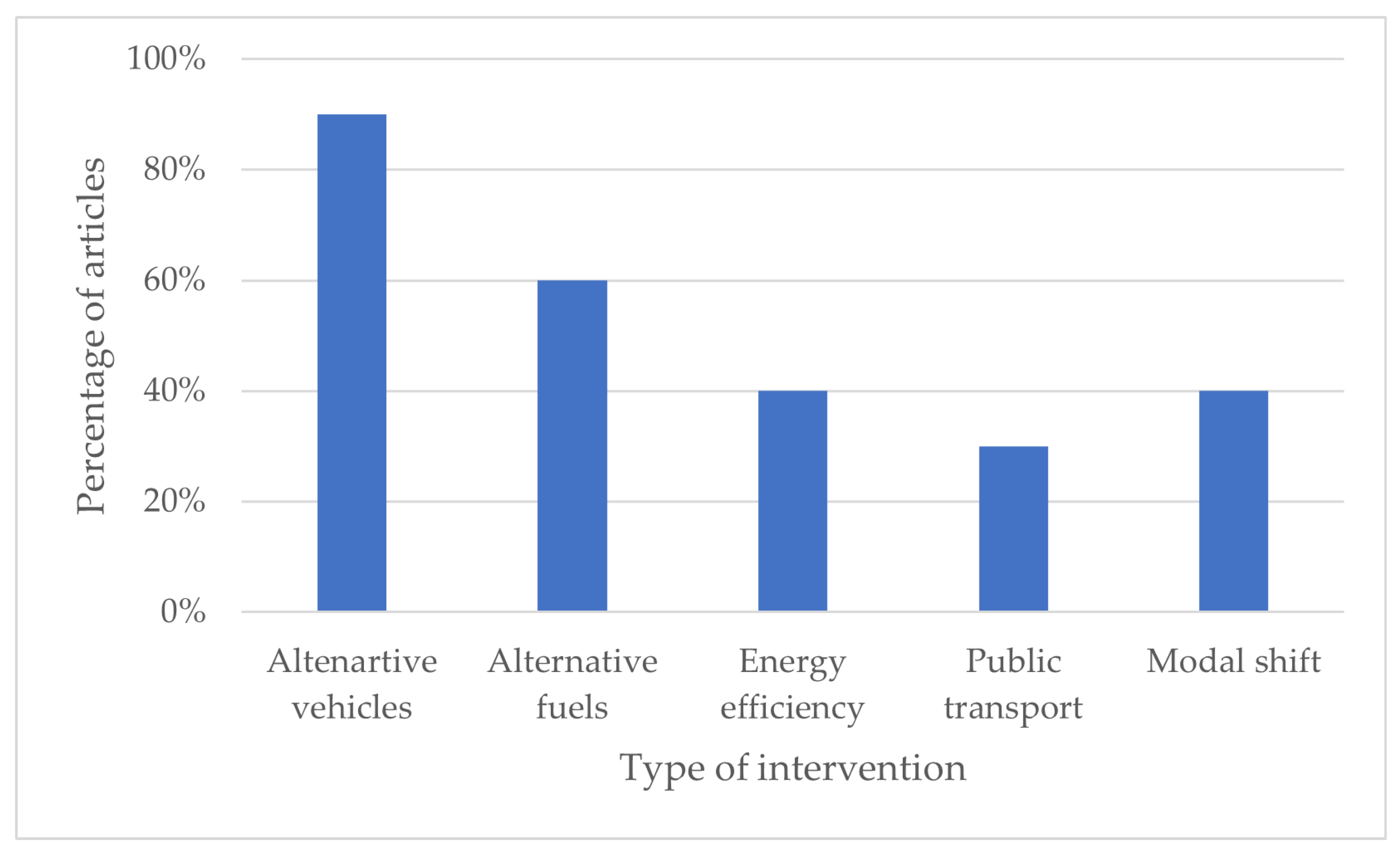
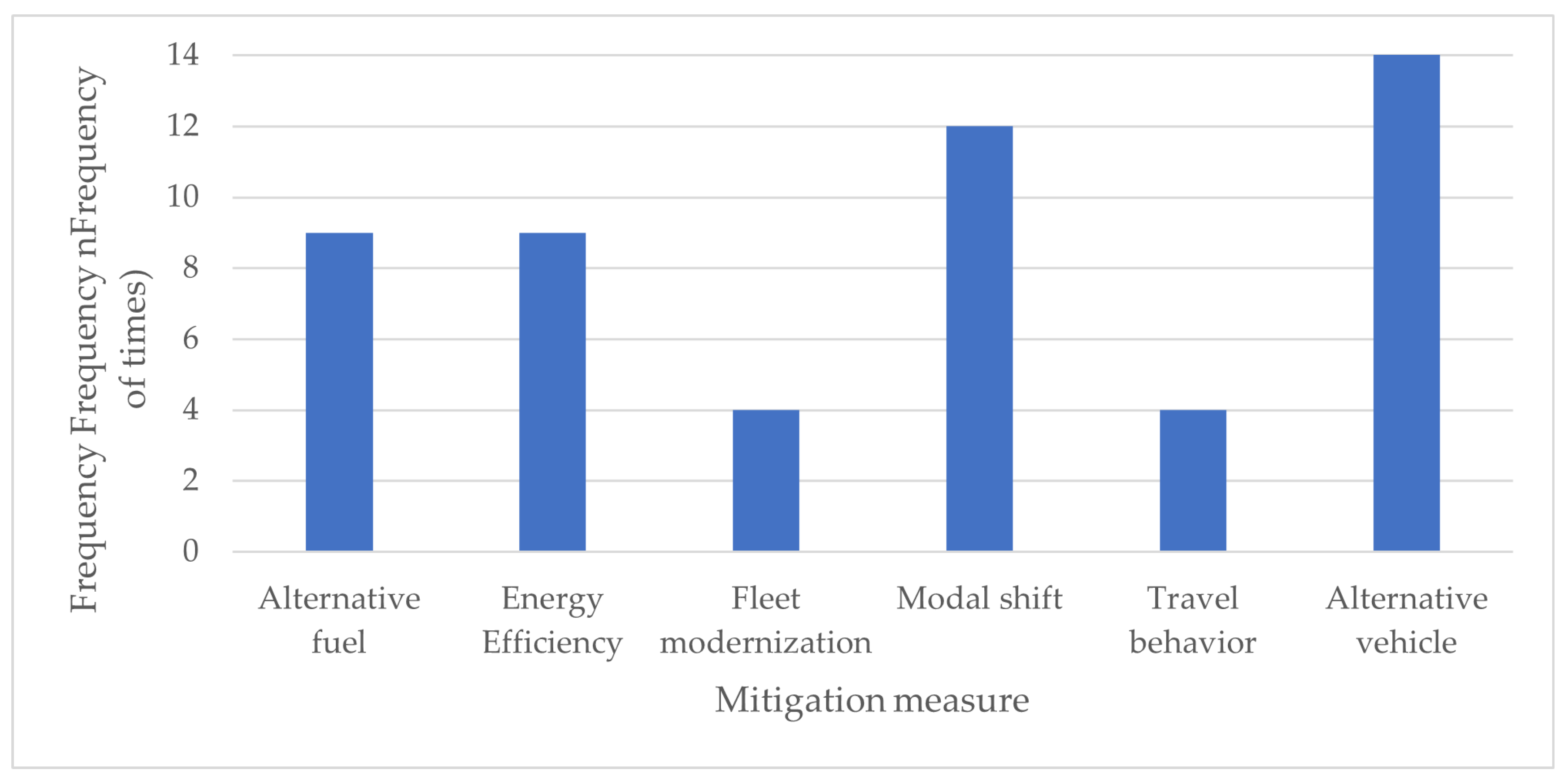
A modal shift intervention is often associated with freight transport, as seen in Table 2, where three [12,18,21] of the four studies that addressed freight transport had this type of intervention. Most of the interventions focused on the implementation of alternative vehicles and alternative fuels, as shown in Figure 4, which presents graphically the results from Table 2.

4.2. Assumptions and Methodological Approach

Table 3 presents an overview of the method used to calculate the MAC curve and the assumptions that influence the curve variables.
Regarding the assumptions for projecting the MAC curve (Table 3), the period considered generally follows a pattern of 2010/2015 to 2030/2050. This aligns with the scenarios from the United Nations’ 2030 Agenda for Sustainable Development [25]. The year 2050 also aligns with the IEA [6] and IPCC scenarios for achieving Net Zero and limiting the temperature increase to 1.5 °C.
For the implemented scenarios, the variations include different implementation timelines for the measures [23], measures implemented in isolation and simultaneously [14], variations in the discount rates considered in the MAC curve calculation [14,22], the definition of emissions taxes [21], different levels of penetration and ambition for the goals to be achieved with the implementation of mitigating measures [12,21], and different final years for the curve projection [18,19].

4.3. Calculating the Marginal Abatement Cost (MAC)

Among the selected studies, only two [19,23] did not present the formula for calculating the MAC curve. Of the remaining works, three [12,17,20] presented the annualized cost calculation, and the remaining five presented the calculation of the cumulative cost for the reference year(s), as seen in Table 4.
Although various GHGs contribute to environmental pollution, the studies tend to focus on calculating emissions and MAC based only on CO2. As seen in Table 4, seven studies only considered CO2 for their calculations. Three studies [12,14,18] considered CO2e.
Table 4 also presents the average abatement cost, where it is possible to observe how the average cost for a set of simultaneously applied measures can behave differently from the individual cost. Of the six studies that presented the average abatement cost, only two had a negative average cost [12,18]. The study by Espinosa Valderrama et al. [18] showed a negative cost in only one of the projected years (2030), with the implementation cost of these measures increasing over time. This could indicate that the measures may become less cost-effective over time. Another impact observed in the Jayatilaka and Limmeechokchai [23] study was that the initial year of measure implementation impacted cost and effectiveness, being negatively affected by delays in implementation.

4.4. Mitigation Measures Applied

Table 5 lists the mitigating measures applied in each study, along with their respective emission reduction potentials (except for the Saujot & Lefèvre [22] study) and the abatement cost of each measure (except for the Espinosa Valderrama et al. [18] study).
The Marginal Abatement Costs presented a significant variation between the studies, as seen in Table 5. The values ranged from negative costs (−2065 USD/tCO2 [23]) to high positive costs (2046 USD/tCO2 [22]).
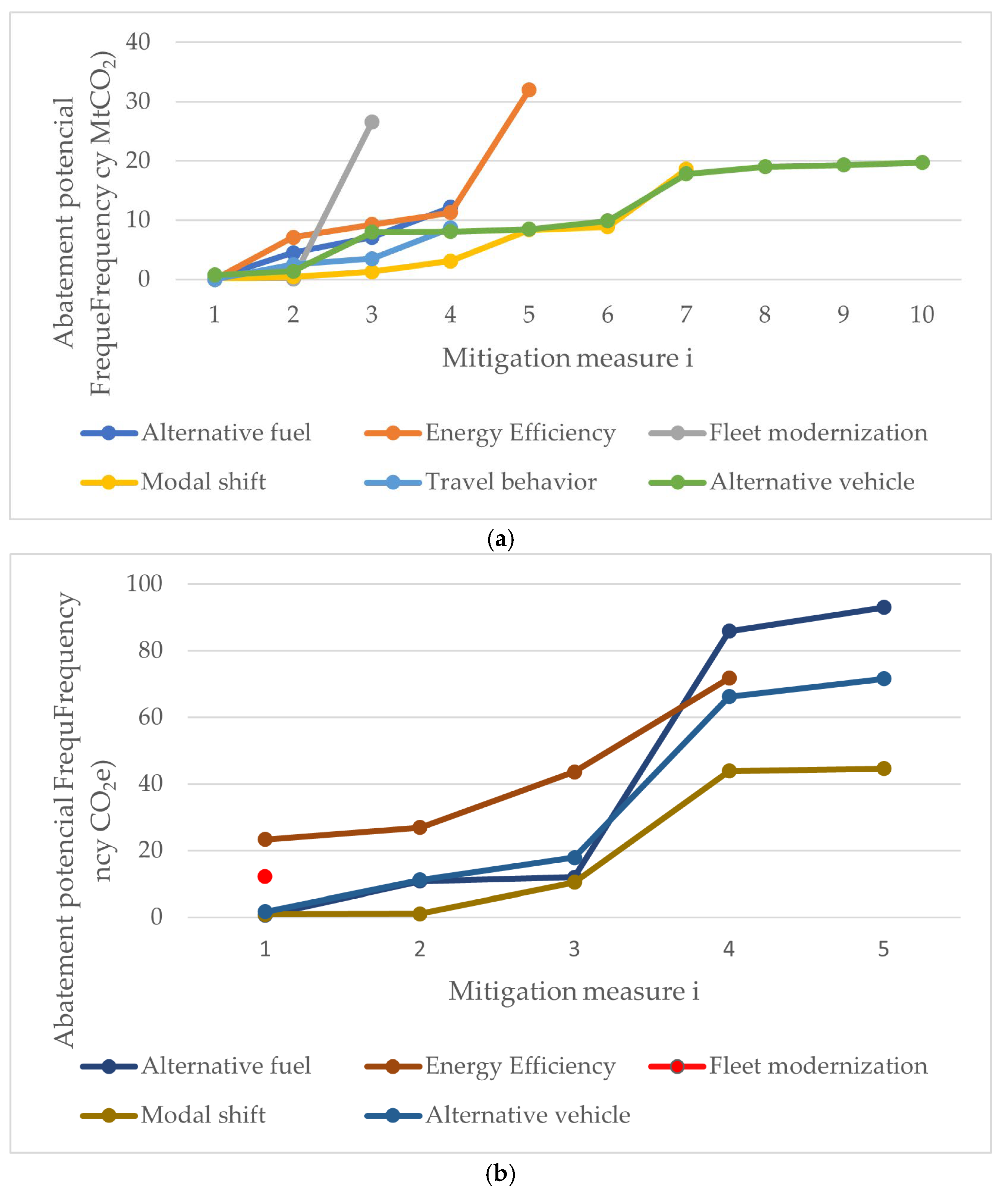
The standardization of the mitigation measures names presented in Table 5, previously described in Section 3 and presented on Table A1 in Appendix A, made it possible to verify the range of abatement potential for the mitigation measures shown in Figure 5 and the most sought-after measures (Figure 6).

4.5. Impact of the Mitigation Measures

Table 6 ranks the applied measures and indicates which dimension of the Avoid–Shift–Improve (ASI) methodology they impact, with the ASI methodology being a hierarchical policy and planning structure for sustainable transport developed by the GIZ [26], as well as their impact on the Activity–Structure–Intensity–Fuel (ASIF) methodology, which is an analytical tool for breaking down the causes of emissions [27]. These methodologies are consistent with the MAC curve application because they incentivize emission reduction (ASI) and diagnose what impacts the emission changes (ASIF).
Most measures (alternative vehicles, energy efficiency, and fleet modernization) are related to the optimization and improvement of resources use (ASI). A direct connection is observed with the reduction in the intensity of their use (ASIF). These measures require technological advancements for implementation, aligning with the bottom-up methodology used in the studies.
For measures that focus on shifting the transport activity, where a modal shift affects existing infrastructure, even though it was the second most applied measure (Figure 6), a change in the infrastructure may require a longer time for implementation, mostly when dealing with the construction phase. Meanwhile, the use of alternative fuels impacts the shift to energy sources with lower emissions, directly affecting GHG emissions. Finally, the behavior of transport system users affects the level of transport activity; the desired scenario is to avoid an increase in activity, which reduces energy demand.

4.6. Policy Implications Based on the Analyzed Studies

Based on the mitigation measures used in the MAC curves developed in the analyzed studies, a verification of whether there were policies made or actions taken pertaining to the said measures after the date of publication of the studies resulted in Table 7. The results indicate a strong alignment, suggesting that the measures analyzed in the academic studies can be incorporated into climate policy planning.

5. Discussion

This section interprets the results presented in Section 4, exploring their implications, the reasons behind the observed trends, and the research gaps identified.

5.1. The Gap in Freight Transport Application

A standout result is the negligence of freight transport research in the literature on MAC curve applications, as seen in Table 2 and Figure 3. This may result from policies developed with an urban context in mind, which prioritize passenger transport. Other factors that could impact research into freight transport are as follows:
  • Data complexity: The freight sector is highly fragmented, involving multiple private actors, complex logistics, and heterogeneous fleets, making the collection of cost and activity data significantly more difficult than in passenger transport, which is usually centered on public institutions [39].
  • Transnational nature: Freight (road, sea, air) often operates in international corridors, which complicates national scope analyses that are common in MAC curve studies aligned with NDCs [40].
  • Investments periods: Freight infrastructure (railways, ports) has very long investment cycles, making cost–benefit analysis more complex than replacing passenger vehicles [41].
This gap can lead to an underestimation of both the costs and the abatement potential reductions in the transport sector as a whole.

5.2. Implications of Methodological Approach

The strong predominance of bottom-up methodologies (Table 3) suggests that the literature has focused on the technical feasibility and implementation cost of specific technologies; 70% of the studies used the bottom-up approach, which results in interventions that focus on measures such as changing the technology of vehicles and fuels, which are technological in nature.
While useful, this approach fails to capture the macroeconomic impacts (effects on GDP, employment) that a top-down approach would analyze. The absence of hybrid models, which integrate both aspects, is a notable limitation, likely due to the high complexity and data requirements. Only the study by Goes et al. [12] used the hybrid method, which combines the bottom-up, top-down, and Activity–Structure–Intensity–Fuel (ASIF) methods for its model development.

5.3. Mitigation Measures and Their Cost and Abatement Variation

Upon analyzing the mitigating measures that have been applied, it is clear that research focuses on alternative technologies (which is consistent with the use of the bottom-up approach). This includes measures that change the type of vehicle or the type of fuel used, as well as incentives for greater use of higher-capacity transport modes for both freight and passengers (Figure 5). The studies also cover the practice of multimodality and improvements in logistics processes.
The research trend for using vehicles with alternative technology tends to focus on the application of electric vehicles. Six of the ten studies present this as a mitigating measure, with the study by Gopal et al. [20] focusing exclusively on the application of electric vehicles. Regarding the abatement cost of this measure, only two of the six studies had a negative abatement cost, which may reflect the country where the technology is being applied.
Another frequently mentioned measure (50% of the studies) was fuel substitution, either with more efficient or less polluting fuels. In this case, two of the five studies had a positive abatement cost, another two had a negative abatement cost, and one did not specify the abatement cost.
The variation in the abatement cost reflects the variables that influence the calculation of the MAC curve (as noted in Section 2), which considers aspects that are susceptible to local aspects, such as GDP, fuel prices, etc. Thus, it is expected that there is a range of abatement for the same measure, which means that the curve must be constructed using the local context. On the other hand, one way to address the lack of comparability of measures in absolute terms due to the variation in local context would be to express the potential for emissions abatement as a percentage. Doing so would make it possible to compare results and potentially establish a range for the abatement potential.
Based on Figure 5, the implementation of alternative fuels was the measure with the greatest range of abatement, followed by alternative vehicles, demonstrating how the technological advancement associated with the use of renewable energy could have a greater abatement potential.
From Figure 6, we can see that the use of alternative vehicles and modal shift are the most sought-after measures, with the use of alternative vehicles being supported by using electric vehicles for passenger transport, even though it resulted in a negative abatement cost in only two studies. In addition, for measures focused on passenger modal shift, which involves replacing individual transport with public transport or active transport (walking and cycling) for short distances, a negative abatement cost was reported in three studies and a positive one in a single study.
For example, the study by Gopal et al. [20] found negative costs for HEVs (−USD138/tCO2) and BEVs (−USD515/tCO2), whereas other studies on the same measures show higher values. This variation suggests that costs depend on the technology, market conditions, and regional contexts. This heterogeneity highlights the need for measures that are adaptable to each region’s conditions, advocating for a decentralization of global policies in favor of measures that can be tailored to each specific region or market.
An interesting finding from the Saujot and Lefèvre [22] study is that a change in the discount rate from 4% to 20% led to a decrease of approximately half of the abatement cost for four of the five measures applied. The variation in the articles’ discount rate ranged from 4% to 20% as previously seen in Table 3.
Overall, 70% of the studies analyze measures and technologies in isolation within the regional contexts, which creates an opportunity to develop integrated packages. In the studies by Selvakkumaran and Limmeechokchai [21] and Jayatilaka and Limmeechokchai [23], modal shift measures—such as promoting public transport or non-motorized modes—yield strongly negative abatement costs. When combined with higher-level technological actions (like improving vehicle efficiency or using alternative fuels in the energy mix for the transport sector), these measures have a synergistic effect that can surpass the economic and environmental benefits of isolated measures.

5.4. Political Relevance

The close correlation between academic research and Nationally Determined Contributions (NDCs) (as shown in Table 7) is beneficial, demonstrating that academic work genuinely contributes to evidence-based public policy formulation. The MAC curve analyses offer a consistent metric (cost per ton of CO2) that assists policymakers in prioritizing investments.
It is evident that all reviewed studies propose measures consistent with their respective countries’ national strategies and policies, as reflected in their NDCs. Consequently, MAC curves can be a valuable instrument for policymakers, enabling them to choose from an evidence-based selection of measures. This allows for the combination of affordable, quickly implementable solutions (like efficiency improvements and fleet modernization) with impactful, long-term investments (such as electrification and modal shifts), thereby ensuring that NDC goals are both ambitious and economically sound.
Three measures are highly recommended by the studies and seen as priorities by the NDCs: Modal shift to public transport, since it led to negative abatement cost [12,19,23]. The implementation of electric mobility, for their abatement potential and quality of air improvement in the urban context, even though it can lead to either positive or negative abatement cost [14,20,24]. Finally, the use of biofuels, since they have a greater abatement potential [12,17].

5.5. Future Research

This review suggests potential pathways for future research aimed at refining the implementation and policy development that relies on the MAC curve tool:
  • Develop robust MAC curves for the freight transport sector.
  • Employ hybrid methodologies to capture both technical feasibility and macroeconomic impacts.
  • Explore the standardization of abatement potentials (such as a percentage reduction) to allow for better comparability between studies.

6. Conclusions

Driven by the need to limit global warming and slow down the progress of climate change, measures must be implemented to mitigate the impact of economic activities that emit atmospheric pollutants. The transport sector is one of the biggest contributors to these emissions.
To quantitatively understand trends in transport sector mitigation measures and identify unaddressed research areas and policy implications, this study conducted a literature review of previously published works. It specifically focused on studies that assessed mitigation measures through a cost-effective lens, utilizing the Marginal Abatement Cost curve, which led to the analysis of 10 articles.
The analysis of the selected studies reveals a trend for applying bottom-up, technology-focused methodologies, which consequently prioritize interventions such as the adoption of alternative vehicles and fuels, followed by a modal shift. A predominant focus on passenger transport was identified across the literature, creating a significant research gap concerning the decarbonization of freight transport, a major contributor to the sector’s emissions.
The findings demonstrate considerable variability in the abatement costs for similar measures across different studies, underscoring the critical influence of local contexts, including economic conditions, fuel prices, and existing infrastructure. This high sensitivity to local parameters suggests a limitation in using the MAC for formulating standardized national policies, a challenge further compounded by a lack of methodological transparency in some studies which hinders direct comparability
Notably, while the introduction of electric vehicles is a frequently assessed measure, its cost-effectiveness varies, with some studies reporting negative costs and others positive. Conversely, measures promoting a modal shift towards public and active transport consistently showed negative abatement costs, highlighting their potential for yielding net economic savings. The analysis also suggests that integrating technological solutions with behavioral and structural changes, such as combining vehicle efficiency improvements with modal shift incentives, can create synergistic effects, leading to greater economic and environmental benefits than isolated actions.
The strong alignment observed between the measures analyzed in the reviewed papers and the subsequent climate policies and NDCs of the respective countries affirms the MAC curve’s strategic importance for policymakers. It serves as an evidence-based tool to construct economically rational decarbonization pathways by balancing high-impact, long-term investments with low-cost, readily implementable options.
Future studies should aim to critically address the identified gap in freight transport research. While urban passenger transport is an important target, the decarbonization of logistics chains and long-haul road transport is fundamental to achieving Net Zero targets. Applying the MAC curve to assess measures like truck electrification and the shift in goods to rail and waterways is therefore essential, as the current absence of cost-effective studies for this segment makes it difficult to create effective policies for one of the sector’s largest emitters.
Another gap identified in this research is that only one study considered varying the discount rate. While this study showed a desirable result—a reduction in abatement costs—further research with other parameters is needed to verify if there is a consistent pattern in the curve’s behavior.
Furthermore, a greater emphasis on hybrid methodologies could provide a more holistic analysis by integrating technological detail with macroeconomic factors. To enhance the comparability of findings across different regions, future studies could benefit from standardizing the expression of abatement potential, for instance, as a percentage, since the costs of transport decarbonization are highly context-dependent. Ultimately, this review reaffirms the MAC curve’s role as a crucial and pragmatic instrument that grounds climate action in local economic reality, thereby making mitigation efforts more resilient and achievable.

Author Contributions

Conceptualization, L.M.R. and D.N.S.G.; methodology, L.M.R.; validation, L.M.R. and D.N.S.G.; investigation, L.M.R.; data curation, L.M.R.; writing—original draft preparation, L.M.R.; writing—review and editing, D.N.S.G. and M.d.A.D.; visualization, L.M.R.; supervision, M.d.A.D. All authors have read and agreed to the published version of the manuscript.

Funding

This research received no external funding.

Institutional Review Board Statement

Not applicable.

Informed Consent Statement

Not applicable.

Data Availability Statement

No new data were created or analyzed in this study.

Conflicts of Interest

The authors declare no conflict of interest.

Abbreviations

The following abbreviations are used in this manuscript:
MACMarginal Abatement Cost
GHGGreenhouse Gas
NDCNationally Determined Contributions
EVElectric Vehicle
HEVHybrid Electric Vehicle
PHEVPlug-in Hybrid Electric Vehicle
TDMTravel Demand Management
ASIAvoid–Shift–Improve
ASIFActivity–Structure–Intensity–Fuel
GDPGross Domestic Product

Appendix A

Table A1 standardizes the mitigation measures presented in the selected studies.
Table A1. Standardization of the mitigation measures.
PaperMitigation MeasuresStandardized Mitigation Measures
[17]Improvement of driver behaviorEnergy efficiency
Improvement of travel behaviorTravel behavior
Advancement of vehicle equipmentFleet modernization
Introduction of low-carbon fuelsAlternative fuels
Improvement of vehicle fleetFleet modernization
[18]Improved fuel efficiency and green drivingEnergy efficiency
Electric mobilityAlternative vehicle
Reduction in freight fleet oversupply and renewalFleet modernization
Fuel substitutionAlternative fuel
Modal changeModal shift
[19]Urban form, walking, cycling, and public transportModal shift
Car-sharing and ride-sharingTravel behavior
Cars with reduced energy consumptionEnergy efficiency
Cars exploiting alternative energyAlternative fuels
Alternative fuelsAlternative fuels
Energy efficiency in road freight vehiclesEnergy efficiency
Alternative energy in freight transportAlternative fuels
[14]Improved fuel economy fully implemented Energy efficiency
Improved fuel economy partially implementedEnergy efficiency
EVAlternative vehicle
Natural gas vehicleAlternative fuel
[20]HEVAlternative vehicle
BEVAlternative vehicle
[21]New vehiclesFleet modernization
HEVAlternative vehicle
PHEVAlternative vehicle
BEVAlternative vehicle
TDMTravel behavior
Sedan modal shiftModal shift
Taxi modal shiftModal shift
Motorcycle modal shiftModal shift
[22]BRTModal shift
Urban tollModal shift
TramwayModal shift
EV-HEVAlternative vehicle
Car-sharingTravel behavior
[23]Efficient vehiclesEnergy efficiency
HEVAlternative vehicle
PHEVAlternative vehicle
BEVAlternative vehicle
Travel demand managementTravel behavior
Modal shift busModal shift
Modal shift non-motorizedModal shift
Modal shift trainModal shift
[12]Urban public transport enhancements and expansion of the electric and hybrid buses fleetAlternative vehicle
Expansion of the electric and hybrid urban freight fleetAlternative vehicle
Changes in freight transport patterns and infrastructure—railModal shift
Changes in freight transport patterns and infrastructure—waterModal shift
Expansion of active transport and tele-activitiesModal shift
Logistics optimizationEnergy efficiency
Increased use of hydrous ethanolAlternative fuel
Increased use of biodieselAlternative fuel
Expansion of the electric and hybrid light-duty passenger fleetAlternative vehicle
Expansion of mass transportation systems
Increased use of biokerosene
Modal shift
Alternative fuel
[24]Improved Fuel EconomyEnergy efficiency
EVAlternative vehicle
HEVAlternative vehicle

References

  1. IPCC. Climate Change 2022: Mitigation of Climate Change. Available online: https://www.ipcc.ch/report/ar6/wg3/ (accessed on 25 May 2025).
  2. IRENA. Energy Transition Outlook. Available online: https://www.irena.org/Energy-Transition/Outlook? (accessed on 15 May 2025).
  3. Climate Watch. GHG Emissions. Available online: https://www.climatewatchdata.org/ghg-emissions?breakBy=sector&chartType=line&end_year=2022&sectors=energy%2Ctotal-including-lucf%2Ctransportation&start_year=1990 (accessed on 25 February 2025).
  4. ITF. Decarbonising Transport Initiative. Available online: https://www.itf-oecd.org/decarbonising-transport (accessed on 13 May 2025).
  5. MCTI. Brazil’s National Inventory Report of Anthropogenic Emissions by Sources and Removals by Sinks of Greenhouse Gases. Available online: https://unfccc.int/documents/644855 (accessed on 17 September 2025).
  6. IEA. Net Zero Roadmap: A Global Pathway to Keep the 1.5 °C Goal in Reach–Analysis. Available online: https://www.iea.org/reports/net-zero-roadmap-a-global-pathway-to-keep-the-15-0c-goal-in-reach (accessed on 4 March 2024).
  7. Kesicki, F.; Ekins, P. Marginal Abatement Cost Curves: A Call for Caution. Clim. Policy 2012, 12, 219–236. [Google Scholar] [CrossRef]
  8. Huang, S.K.; Kuo, L.; Chou, K.-L. The Applicability of Marginal Abatement Cost Approach: A Comprehensive Review. J. Clean. Prod. 2016, 127, 59–71. [Google Scholar] [CrossRef]
  9. Nur Chairat, A.S.; Abdullah, L.; Maslan, M.N.; Batih, H. Applications of Marginal Abatement Cost Curve (MACC) for Reducing Greenhouse Gas Emissions: A Review of Methodologies. Nat. Environ. Pollut. Technol. 2022, 21, 1317–1323. [Google Scholar] [CrossRef]
  10. Jiang, H.-D.; Dong, K.-Y.; Zhang, K.; Liang, Q.-M. The Hotspots, Reference Routes, and Research Trends of Marginal Abatement Costs: A Systematic Review. J. Clean. Prod. 2020, 252, 119809. [Google Scholar] [CrossRef]
  11. Vogt-Schilb, A.; Hallegatte, S. Marginal Abatement Cost Curves and the Optimal Timing of Mitigation Measures. Energy Policy 2014, 66, 645–653. [Google Scholar] [CrossRef]
  12. Goes, G.V.; Schmitz Gonçalves, D.N.; de Almeida D’Agosto, M.; de Mello Bandeira, R.A.; Grottera, C. Transport-Energy-Environment Modeling and Investment Requirements from Brazilian Commitments. Renew. Energy 2020, 157, 303–311. [Google Scholar] [CrossRef]
  13. de Oliveira, M.A.N.; Szklo, A.; Branco, D.A.C. Implementation of Maritime Transport Mitigation Measures According to Their Marginal Abatement Costs and Their Mitigation Potentials. Energy Policy 2022, 160, 112699. [Google Scholar] [CrossRef]
  14. Zeng, Y.; Tan, X.; Gu, B.; Guo, J.; Jiang, J.; Wang, D.; Tang, J. Cost-Effectiveness Analysis on Improving Fuel Economy and Promoting Alternative Fuel Vehicles: A Case Study of Chongqing, China. J. Clean. Prod. 2021, 323, 129075. [Google Scholar] [CrossRef]
  15. Jiao, J.; Huang, Y.; Liao, C.; Zhao, D. Sustainable Development Path Research on Urban Transportation Based on Synergistic and Cost-Effective Analysis: A Case of Guangzhou. Sustain. Cities Soc. 2021, 71, 102950. [Google Scholar] [CrossRef]
  16. United Nations UN Regrets US Exit from Global Cooperation on Health, Climate Change Agreement. Available online: https://news.un.org/en/story/2025/01/1159211 (accessed on 23 September 2025).
  17. Dedinec, A.; Markovska, N.; Taseska, V.; Duic, N.; Kanevce, G. Assessment of Climate Change Mitigation Potential of the Macedonian Transport Sector. Energy 2013, 57, 177–187. [Google Scholar] [CrossRef]
  18. Espinosa Valderrama, M.; Cadena Monroy, Á.I.; Behrentz, E. Challenges in Greenhouse Gas Mitigation in Developing Countries: A Case Study of the Colombian Transport Sector. Energy Policy 2019, 124, 111–122. [Google Scholar] [CrossRef]
  19. Liimatainen, H.; Pöllänen, M.; Viri, R. CO2 Reduction Costs and Benefits in Transport: Socio-Technical Scenarios. Eur. J. Futures Res. 2018, 6, 22. [Google Scholar] [CrossRef]
  20. Gopal, A.R.; Park, W.Y.; Witt, M.; Phadke, A. Hybrid- and Battery-Electric Vehicles Offer Low-Cost Climate Benefits in China. Transp. Res. Part D Transp. Environ. 2018, 62, 362–371. [Google Scholar] [CrossRef]
  21. Selvakkumaran, S.; Limmeechokchai, B. Low Carbon Society Scenario Analysis of Transport Sector of an Emerging Economy—The AIM/Enduse Modelling Approach. Energy Policy 2015, 81, 199–214. [Google Scholar] [CrossRef]
  22. Saujot, M.; Lefèvre, B. The next Generation of Urban MACCs. Reassessing the Cost-Effectiveness of Urban Mitigation Options by Integrating a Systemic Approach and Social Costs. Energy Policy 2016, 92, 124–138. [Google Scholar] [CrossRef]
  23. Jayatilaka, P.R.; Limmeechokchai, B. Scenario Based Assessment of CO2 Mitigation Pathways: A Case Study in Thai Transport Sector. Energy Procedia 2015, 79, 969–975. [Google Scholar] [CrossRef]
  24. Valenzuela, M.M.; Espinosa, M.; Virgüez, E.A.; Behrentz, E. Uncertainty of Greenhouse Gas Emission Models: A Case in Colombia’s Transport Sector. Transp. Res. Procedia 2017, 25, 4606–4622. [Google Scholar] [CrossRef]
  25. United Nations. Transforming Our World: The 2030 Agenda for Sustainable Development. Available online: https://sdgs.un.org/2030agenda (accessed on 15 July 2025).
  26. GIZ. Sustainable Urban Transport: Avoid-Shift-Improve (A-S-I). Available online: https://sutp.org/publications/sustainable-urban-transport-avoid-shift-improve-a-s-i/ (accessed on 15 November 2025).
  27. IEA. Carbon-Dioxide Emissions from Travel and Freight in Iea Countries: The Recent Past and the Long-Term Future. Available online: https://onlinepubs.trb.org/Onlinepubs/trcircular/492/492-005.pdf (accessed on 15 November 2025).
  28. MOEPP. The Republic of North Macedonia First NDC (Updated Submission). Available online: https://unfccc.int/documents/497726 (accessed on 26 September 2025).
  29. MOEPP. Long-Term Strategy on Climate Action and Action Plan. Available online: https://unfccc.int/documents/309566 (accessed on 26 September 2025).
  30. Republica de Colombia. Contribución Determinada a Nivel Nacional (NDC 3.0) de Colombia-Transformaciones Para La Vida. Available online: https://unfccc.int/sites/default/files/2025-09/NDC%203.0%20Declarativa%20Colombia%20Transformaciones%20para%20la%20Vida%20V.25.09.2025%20Gob.%20Nacional.pdf (accessed on 26 September 2025).
  31. Ministry of Economic Affairs and Employment of Finland. Carbon Neutral Finland 2035–National Climate and Energy Strategy. Available online: https://julkaisut.valtioneuvosto.fi/bitstream/handle/10024/164323/TEM_2022_55.pdf (accessed on 26 September 2025).
  32. GIZ. Towards Zero Emissions. Available online: https://changing-transport.org/publications/towards-zero-emissions/ (accessed on 26 September 2025).
  33. Office of Natural Resources and Environmental Policy and Planning. Thailand’s 2nd Updated Nationally Determined Contribution. Available online: https://unfccc.int/NDCREG (accessed on 26 September 2025).
  34. Office of Natural Resources and Environmental Policy and Planning. Thailand’s Long-Term Low Greenhouse Gas Emission Development Strategy (Revised Version). Available online: https://unfccc.int/documents/622276 (accessed on 26 September 2025).
  35. French Republic. LOI N° 2019-1428 Du 24 Décembre 2019 d’orientation Des Mobilités. Available online: https://www.legifrance.gouv.fr/jorf/id/JORFTEXT000039666574 (accessed on 26 September 2025).
  36. European Parliament. France’s Climate Action Strategy. Available online: https://www.europarl.europa.eu/thinktank/en/document/EPRS_BRI(2024)767181 (accessed on 28 September 2025).
  37. Brazil Government. “Nova NDC Do Brasil Representa Paradigma Para o Desenvolvimento Do País”, Diz Marina Na COP29. Available online: https://www.gov.br/mma/pt-br/assuntos/noticias/nova-ndc-do-brasil-representa-paradigma-para-o-desenvolvimento-do-pais-diz-marina-na-cop29 (accessed on 28 September 2025).
  38. MME. Combustível Do Futuro. Available online: https://www.gov.br/mme/pt-br/assuntos/secretarias/petroleo-gas-natural-e-biocombustiveis/combustivel-do-futuro (accessed on 29 September 2025).
  39. WEF. Intelligent Transport, Greener Future: AI as a Catalyst to Decarbonize Global Logistics. Available online: https://reports.weforum.org/docs/WEF_Intelligent_Transport_Greener_Future_2025.pdf (accessed on 8 November 2025).
  40. ITF. A Guide to Integrating Transport into Nationally Determined Contributions (NDCs). Available online: https://www.itf-oecd.org/transport-ndc-guide (accessed on 8 November 2025).
  41. IEA. Aligning Investment and Innovation in Heavy Industries to Accelerate the Transition to Net-Zero Emissions–Analysis. Available online: https://www.iea.org/commentaries/aligning-investment-and-innovation-in-heavy-industries-to-accelerate-the-transition-to-net-zero-emissions (accessed on 8 November 2025).
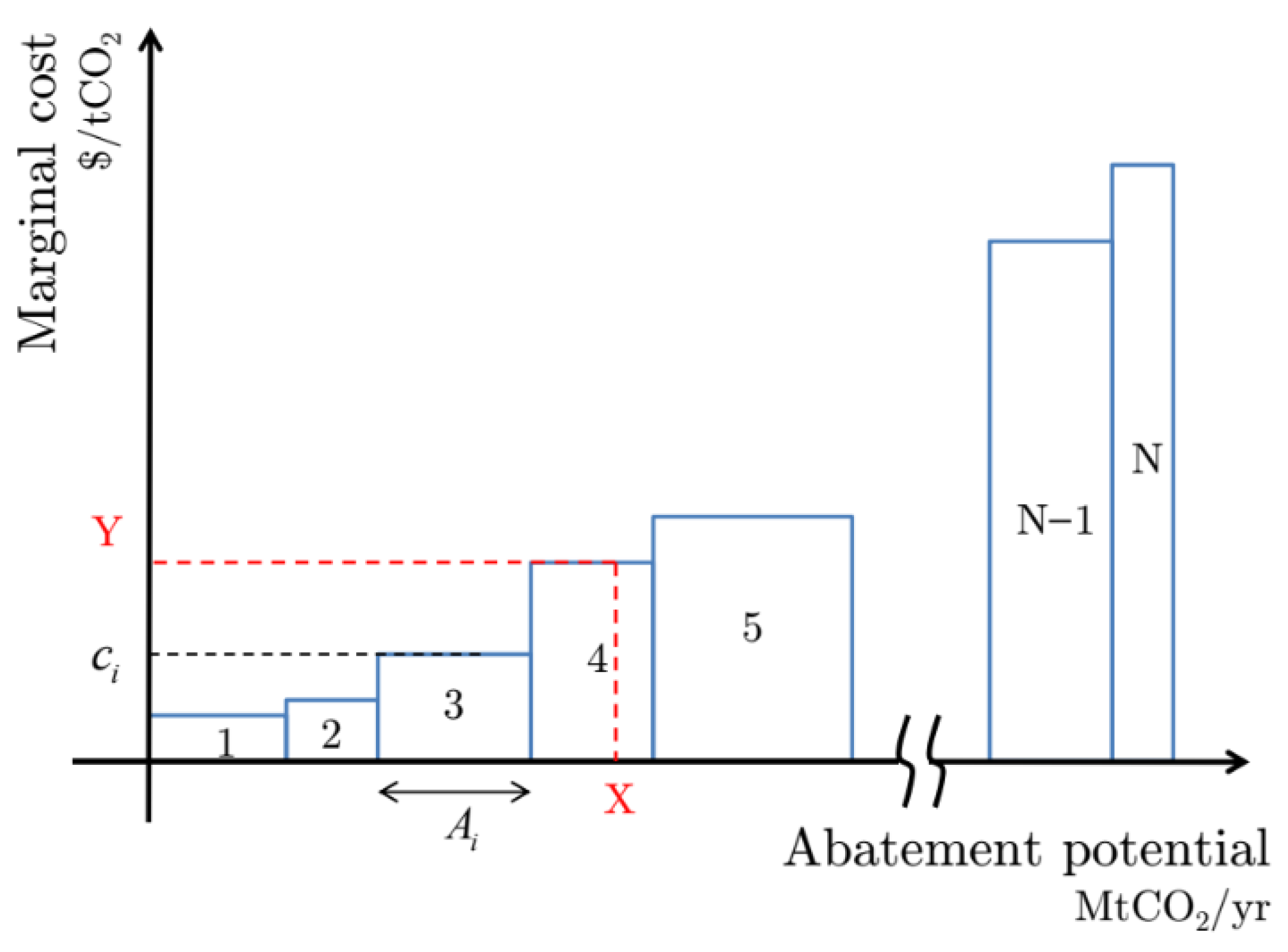
Figure 1. Graphic representation of the MAC curve. N measures ranked from least to most expensive. Each option i is characterized by their abatement potential Ai and their Marginal Abatement Cost Ci. X is the target abatement potential at a given date T and Y is the abatement cost corresponding to X on the curve. Source: [11].
Futuretransp 05 00195 g001
Figure 2. Article selection process.
Futuretransp 05 00195 g002
Figure 3. Focus of the transport studies.
Futuretransp 05 00195 g003
Figure 4. Types of intervention present in the studies.
Futuretransp 05 00195 g004
Figure 5. Range of the abatement potential: (a) MtCO2; (b) MtCO2e.
Futuretransp 05 00195 g005
Figure 6. Frequency of the measures applied.
Futuretransp 05 00195 g006
Table 1. Search information.
DatabaseQueryFilter
Web of Science“abatement cost” and “transport” and “mitigation” (Title) OR “abatement cost” and “transport” and “mitigation” (Author Keywords) OR “abatement cost” and “transport” and “mitigation” (Abstract)Years: 2010 to 2025
ScopusTITLE-ABS-KEY (abatement cost AND transport AND mitigation) AND PUBYEAR > 2009 AND PUBYEAR < 2026Years: 2010 to 2025
Document type: Article
Table 2. Articles selected.
Author (Year)TitleCountryTransport ModeTransport FocusType of Intervention
Dedinec et al. (2013) [17]Assessment of climate change mitigation potential of the Macedonian transport sector MacedoniaRoadPassengerEnergy efficiency and alternative fuels
Espinosa Valderrama et al. (2019) [18]Challenges in greenhouse gas mitigation in developing countries: A case study of the Colombian transport sector ColombiaRoad, rail maritime, and airPassenger and FreightAlternative vehicles, alternative fuels, modal shift, public transport, and energy efficiency
Liimatainen et al. (2018) [19]CO2 reduction costs and benefits in transport: socio-technical scenariosFinlandRoadPassenger and FreightAlternative vehicles, alternative fuels, and energy efficiency
Zeng et al. (2021) [14]Cost-effectiveness analysis on improving fuel economy and promoting alternative fuel vehicles: A case study of Chongqing, ChinaChinaRoadPassengerAlternative vehicles, alternative fuels, and energy efficiency
Gopal et al. (2018) [20]Hybrid- and battery-electric vehicles offer low-cost climate benefits in ChinaChinaRoadPassengerAlternative vehicles
Selvakkumaran and Limmeechokchai (2015) [21]Low carbon society scenario analysis of transport sector of an emerging economy-The AIM/End use modelling approachThailandRoad and railPassenger and FreightAlternative vehicles, alternative fuels, and modal shift
Saujot and Lefèvre (2016) [22]The next generation of urban MACCs. Reassessing the cost-effectiveness of urban mitigation options by integrating a systemic approach and social costsFranceRoad and railPassengerAlternative vehicles and public transport
Jayatilaka and Limmeechokchai (2015) [23]Scenario Based Assessment of CO2 Mitigation Pathways: A Case Study in Thai Transport SectorThailandRoad and railPassengerAlternative vehicles and modal shift
Goes et al. (2020) [12]Transport-energy-environment modeling and investment requirements from Brazilian commitmentsBrazilRoad, rail, and maritimePassenger and FreightAlternative vehicles, alternative fuels, modal shift, and public transport
Valenzuela et al. (2017) [24]Uncertainty of greenhouse gas emission models: A case in Colombia’s transport sector ColombiaRoadPassengerAlternative vehicles and fuel efficiency
Table 3. Overview of methods and assumptions.
PaperMethodologyBase YearProjected YearAlternative ScenariosDiscount Rate
[17]Bottom-up201020201No data
[18]Bottom-up20102030/2050210%
[19]Not available20102030/20502No data
[14]Bottom-up2015203545% and 8%
[20]Bottom-up2015203017%
[21]Bottom-up201020507No data
[22]Bottom-up2010203044% and 20%
[23]Bottom-up201020504No data
[12]Hybrid2020203038%
[24]Not available201020402No data
Table 4. General results.
PaperCO2CO2eBase Emissions for the Projected Year (Mt)Cumulative Potential of Reduced Emissions (Mt)Average Abatement Cost (USD 2020) e
[17]X 20.4590 USD/tCO2
[18] X48.6 a58.4/449 b−13/638 c USD/tCO2e
[19]X No data6881.6 USD/tCO2
[14] XNo data193No data
[20]X No data2.12No data
[21]X No data1230125.8 USD/tCO2
[22]X No data30% d373.7 USD/tCO2
[23]X 120840No data
[12] X245398−123.2 USD/tCO2e
[24]X No data59No data
a Only the baseline emissions for the year 2030 were specified. b On the left is the cumulative potential for 2030 and on the right for 2050. c On the left is the average abatement cost for 2030 and on the right for 2050. d The study by Saujout and Lefèvre (2016) [22] was the only one that only presented the potential in percentage. e Conversion formula: USD (2010) = EUR (2010) × 1.325; USD (2020) = USD (2010) × 1.185.
Table 5. Applied mitigating measures, potential emission reduction, and abatement cost.
PaperMitigation MeasuresPotential CO2 or CO2e Reduction per Measure (Mt)Abatement Cost per Measure (USD 2020) c
[17]Improvement of driver behavior0.02 (CO2)−625 (USD/tCO2)
Improvement of travel behavior0.01−560
Advancement of vehicle equipment0.03−91
Introduction of low-carbon fuels0.2691
Improvement of vehicle fleet0.1298
[18]Improved fuel efficiency and green driving23.3/152.5 a (CO2e)No data
Electric mobility11.2/118.2
Reduction in freight fleet oversupply and renewal12.2/72.6
Fuel substitution10.8/69.3
Modal change0.9/36.7
[19]Urban form, walking, cycling, and public transport18.6 (CO2)−270.1 (USD/tCO2)
Car-sharing and ride-sharing8.7−1497.9
Cars with reduced energy consumption7.1530.7
Cars exploiting alternative energy4.5279.5
Alternative fuels7.187.9
Energy efficiency in road freight vehicles9.3252.8
Alternative energy in freight transport12.2245
[14]Improved fuel economy fully implemented 71.8 (CO2e)−66.7 (USD/tCO2e)
Improved fuel economy partially implemented43.6−61.9
EV66.2110.2
Natural gas vehicle12−108.4
[20]HEV1.38 (CO2)−138 (USD/tCO2)
BEV0.74−515
[21]New vehicles26.6 (CO2)113.7 (USD/tCO2)
HEV19.3605.1
PHEV17.847.5
BEV8.5754.9
TDM2.5−366.3
Sedan modal shift8.4−1173.6
Taxi modal shift0.16−328
Motorcycle modal shift0.43−938.1
[22]BRTNo data1203.8/474.3 b (USD/tCO2)
Urban toll665.5/329.7
Tramway1220.9/646.7
EV-HEV1320.1/2046
Car-sharing−1361.7/−2030.6
[23]Efficient vehicles11.3 (CO2)−47 (USD/tCO2)
HEV9.976
PHEV8.1508
BEV19.7559
Travel demand management3.5−438
Modal shift bus3.1−438
Modal shift non-motorized1.3−999
Modal shift train8.9−2065
[12]Urban public transport enhancements and expansion of the electric and hybrid buses fleet71.6 (CO2e)−419.6 (USD/tCO2e)
Expansion of the electric and hybrid urban freight fleet1.7−401.2
Changes in freight transport patterns and infrastructure—rail44.6−220.7
Changes in freight transport patterns and infrastructure—water43.9−149.2
Expansion of active transport and tele-activities10.5−101.4
Logistics optimization26.9−42.6
Increased use of hydrous ethanol93−15.4
Increased use of biodiesel85.90.9
Expansion of the electric and hybrid light-duty passenger fleet17.963
Expansion of mass transportation systems1.1254.1
Increased use of biokerosene0.6456.9
[24]Improved fuel economy32 (CO2)18 (USD/tCO2)
EV1947
HEV8114
a Potential reduction for the year 2030 on the left and 2050 on the right. b Abatement cost for a discount rate of 4% on the left and 20% on the right. c Conversion formula: USD (2010) = EUR (2010) × 1.325; USD (2020) = USD (2010) × 1.185; USD (2015) = JPY (2015) × 0.158; USD (2020) = USD (2015) × 1.088. Abbreviations: EV—Electric Vehicle. BEV—Battery Electric Vehicle. PHEV—Plug—in Hybrid Electric Vehicle. HEV—Hybrid Electric Vehicle. TDM—Travel Demand Management.
Table 6. Classification of the mitigation measures according to the ASI and ASIF methodologies.
Mitigation MeasureASIASIF
Modal shiftSS
Alternative vehiclesII
Energy efficiencyII
Alternative fuelsSF
Fleet modernizationII
Travel behaviorAA
Table 7. Policies alignment of the studies.
Country (Year)Measures for MACPolicies/Plans/Strategies Developed
Macedonia
(2013)
Energy efficiency
Travel behavior
Fleet modernization
Alternative fuels
Update of the NDC a in 2021. Target for transport (2030): 10% in final energy consumption [28].
Long-term Strategy on Climate Action and Action Plan; Measures: Biofuels introduction (10% of energy consumption), penetration of HEV and BEV by 2030, introduction of hydrogen and greater penetration of CNG, expansion of HEV for freight transport by 2040, energy efficiency, fleet modernization, modal shift—railway, travel behavior (walking, cycling, and electric scooters) [29].
Colombia (2017; 2019)Energy efficiency
Alternative vehicle
Fleet modernization
Alternative fuel
Modal shift
Update of the NDC in 2025 (version 3). Measures: establishment of the National Adaptation Plan on Climate Action, development of national policies and strategies that promote the use of electric vehicles (600.000 vehicles by 2030), fleet modernization, changes in travel behavior (active mobility: a 5.5%increase in the modal share by 2030), intermodality for freight transport, modal shift (waterway and railway), alternative fuels for public transport [30].
Finland (2018)Modal shift
Travel behavior
Energy efficiency
Alternative fuels
Follow the Europe Union (EU) NDC, last updated in 2023.
Carbon-neutral Finland 2035—national climate and energy strategy. Measures: follow the EU binding CO2 limitations values on cars, vans, and trucks; promote energy efficiency, electric vehicles, biofuels, fleet modernization, and modal shift [31].
China (2018; 2021)Energy efficiency
Alternative vehicle
Alternative fuel
NDC published in 2021, progress update in 2022. Measures: promotion of multimodality, energy efficiency, alternative vehicles, alternative fuels, and travel behavior (active mobility and public transportation) [32].
Thailand (2015)Energy efficiency
Alternative vehicle
Travel behavior
Modal shift
Fleet modernization
Updated NDC in 2022. Measures: modal shift, energy efficiency, travel behavior, and alternative vehicles [33,34].
Thailand’s Long-Term Low Greenhouse Gas Emission Development Strategy (Thailand’s LT-LEDS). Measures: alternative vehicles (estimated 30% by 2030), energy efficiency, travel behavior, and alternative fuels [3].
France (2016)Modal shift
Alternative vehicle
Travel behavior
Follow the Europe Union (EU) NDC, last updated in 2023.
The Law on Mobility Orientation published in 2019. Measures: modal shift, travel behavior, alternative fuels, and energy efficiency [35].
France’s climate action strategy. Measures: alternative vehicles (66% of new cars sales by 2030), travel behavior (increase public transport by 25% by 2030), modal shift (rail transport), and alternative fuels [36].
Brazil (2020)Travel behavior
Alternative vehicle
Modal shift
Energy efficiency
Alternative fuel
Updated NDC in 2024. Measures: alternative fuels (expansion of biofuels share by 50%, Law Fuel of the Future), alternative vehicles, energy efficiency, travel behavior, and modal shift [37].
Law Fuel of the Future [38]: subsidizes the Brazilian strategy for sustainable low-carbon mobility, integrating consolidated public policies such as RenovaBio, the Mover Program, the Brazilian Vehicle Labeling Program (PBEV), and the Vehicle Emissions Control Program (Proconve).
a NDC—Nationally Determined Contribution.
Disclaimer/Publisher’s Note: The statements, opinions and data contained in all publications are solely those of the individual author(s) and contributor(s) and not of MDPI and/or the editor(s). MDPI and/or the editor(s) disclaim responsibility for any injury to people or property resulting from any ideas, methods, instructions or products referred to in the content.