Phase Response Error Analysis in Dynamic Testing of Electric Drivetrains: Effects of Measurement Parameters

Abstract
1. Introduction
2. Theoretical Background
2.1. Calculation of Phase Error at Resonance Frequency
2.2. Phase Error via Interpolation
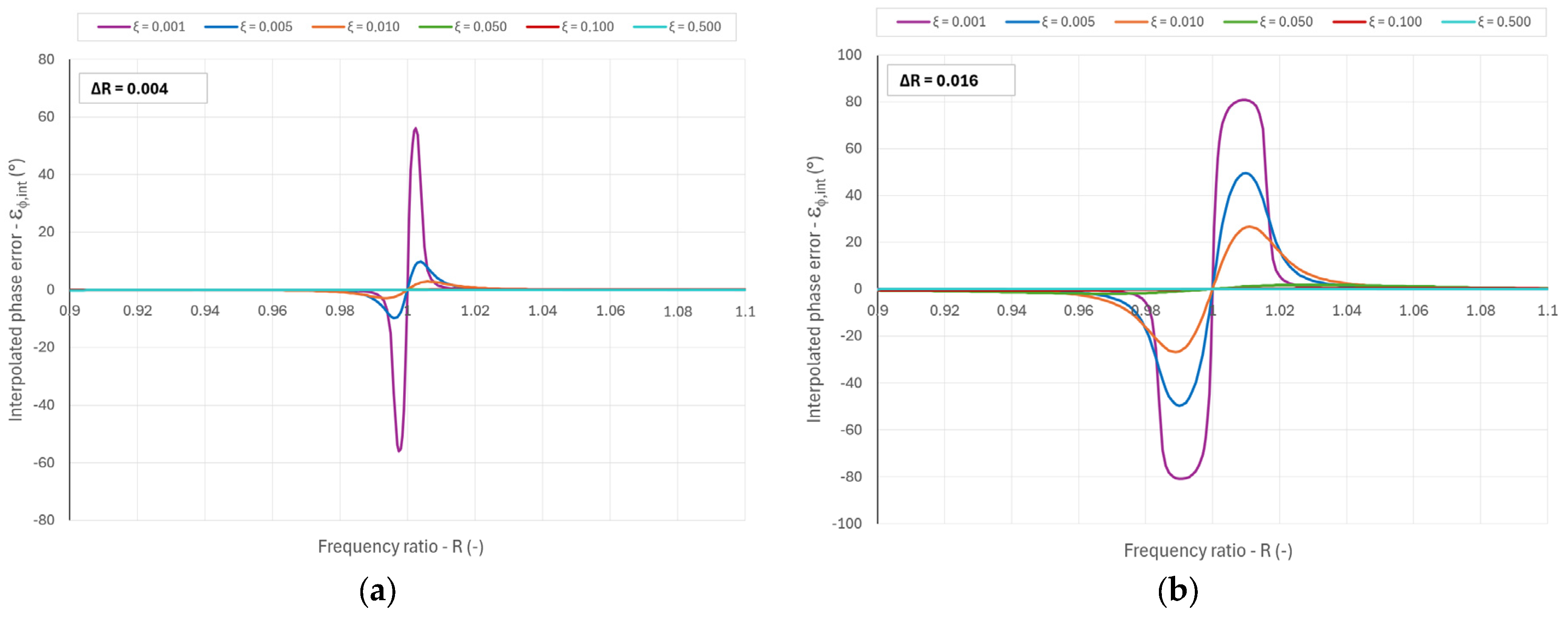
- On the one hand, most evaluation software is capable of calculating interpolated results between two neighboring frequency samples—to get a more accurate phase response even at the exact resonance frequency or at any other frequency.
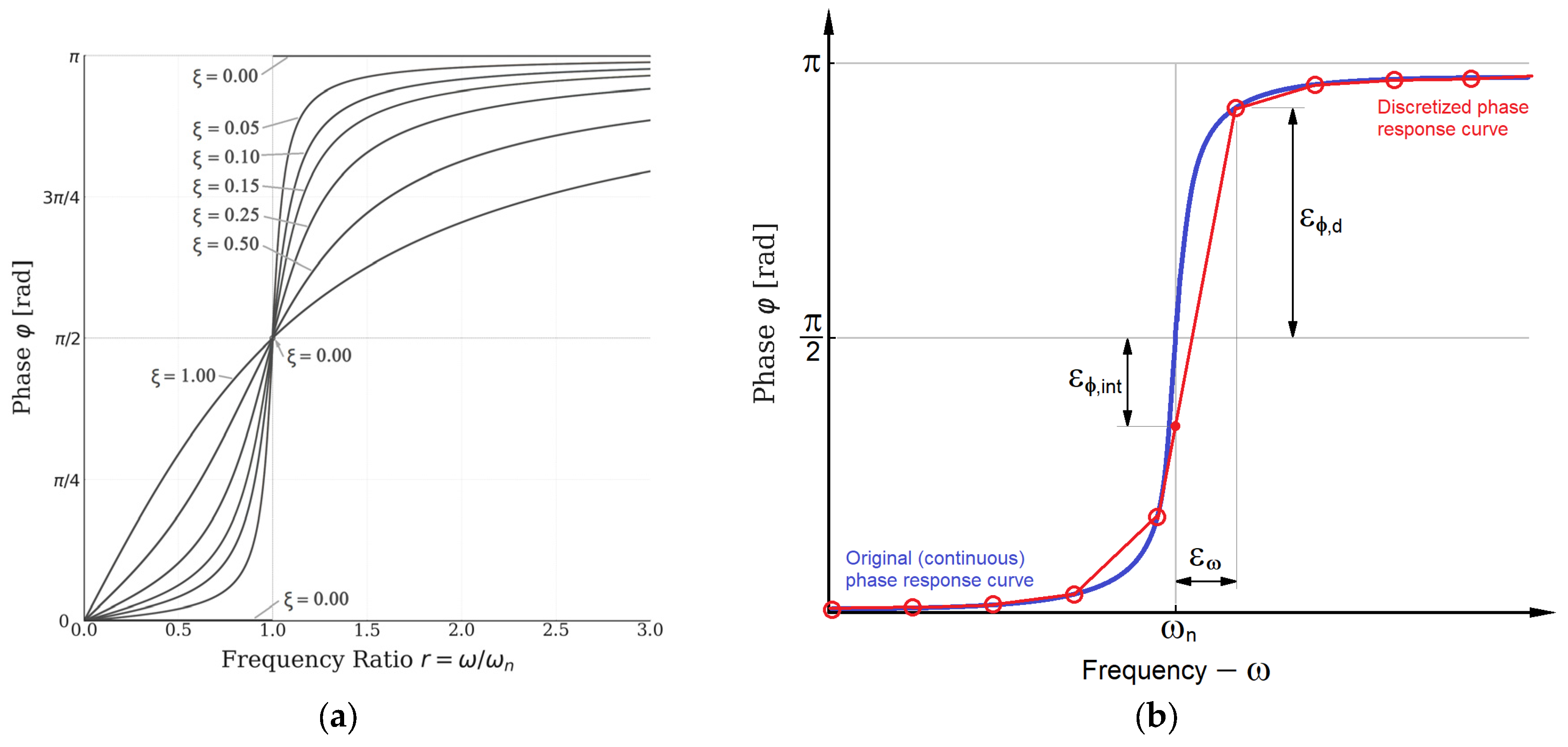
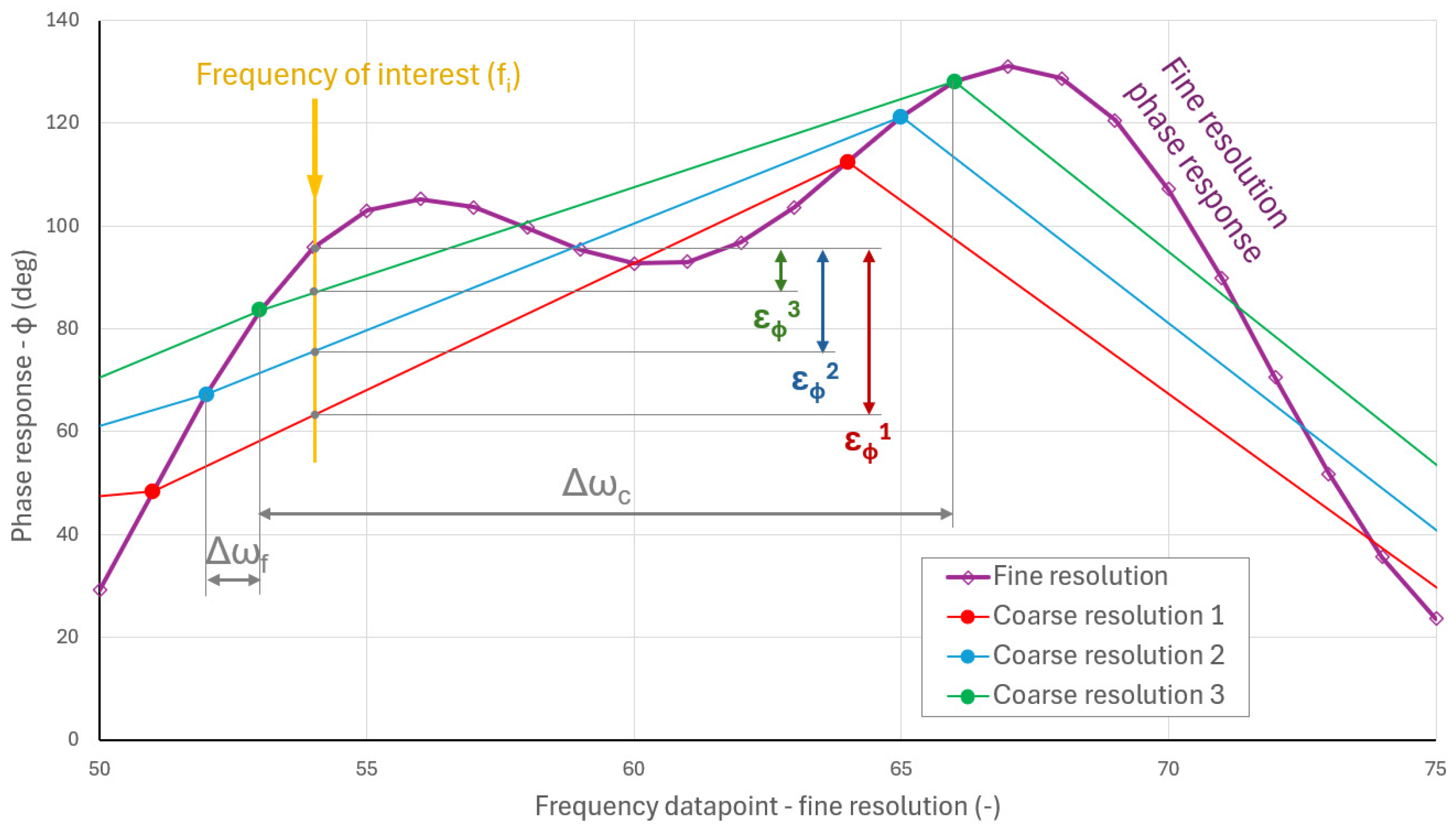
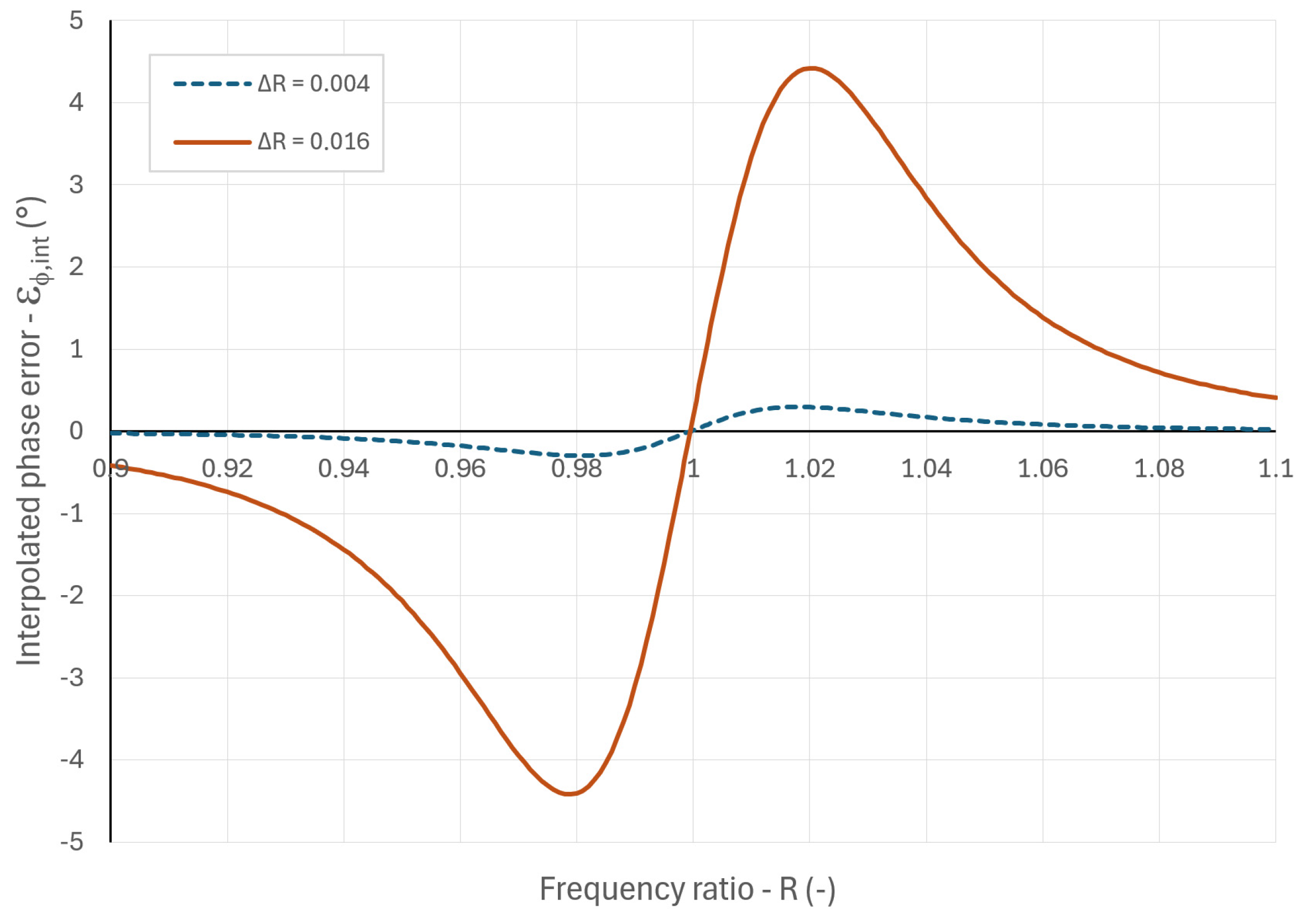
- On the other hand, we can assume that phase error will not reach its maximum at resonance, but slightly away from it—considering the curvature characteristics in Figure 4 (i.e., at resonance, the inflexion point will result in a smaller chord distance than at highly curved regions below and above). This assumption will be proven in this chapter.
3. Measurement Evaluation Method
Maximum Phase Error Analysis (MPEA)
4. Experimental Test
5. Results and Discussion
6. Conclusions
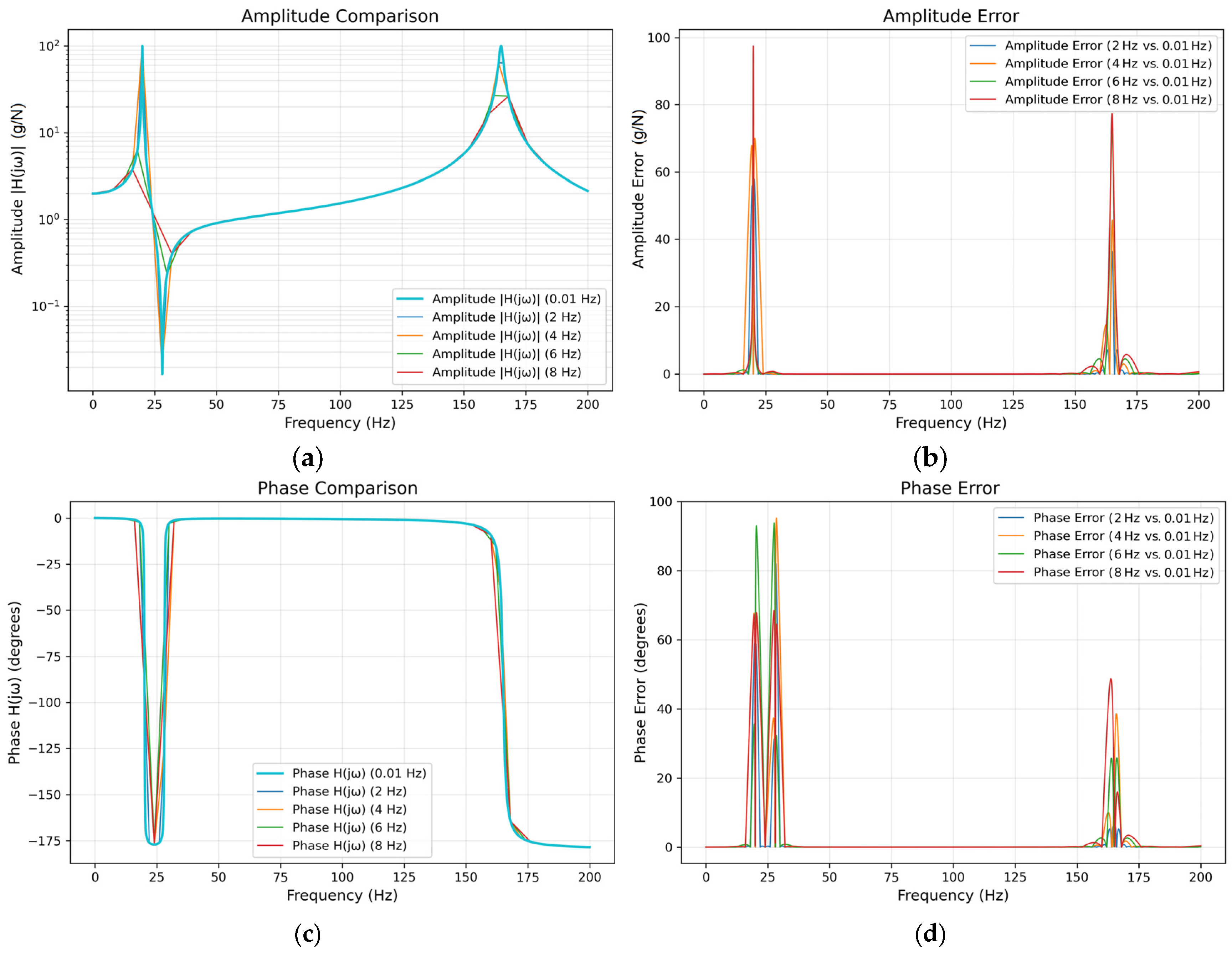
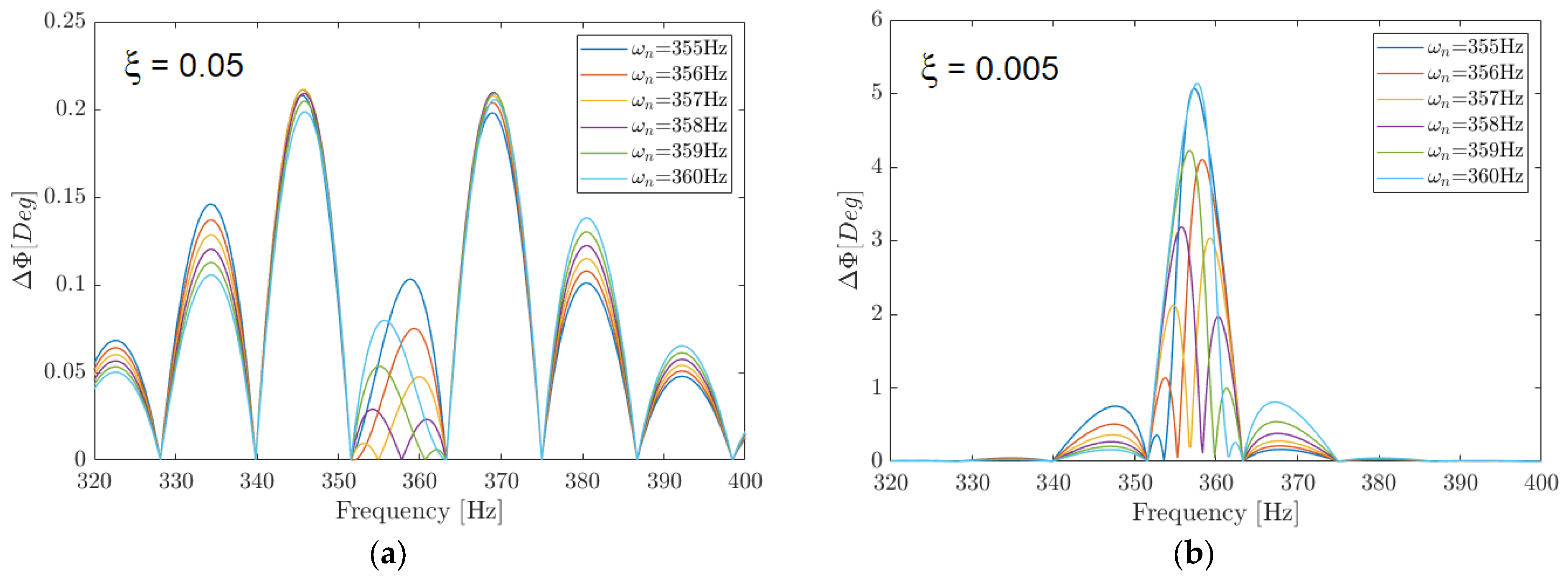
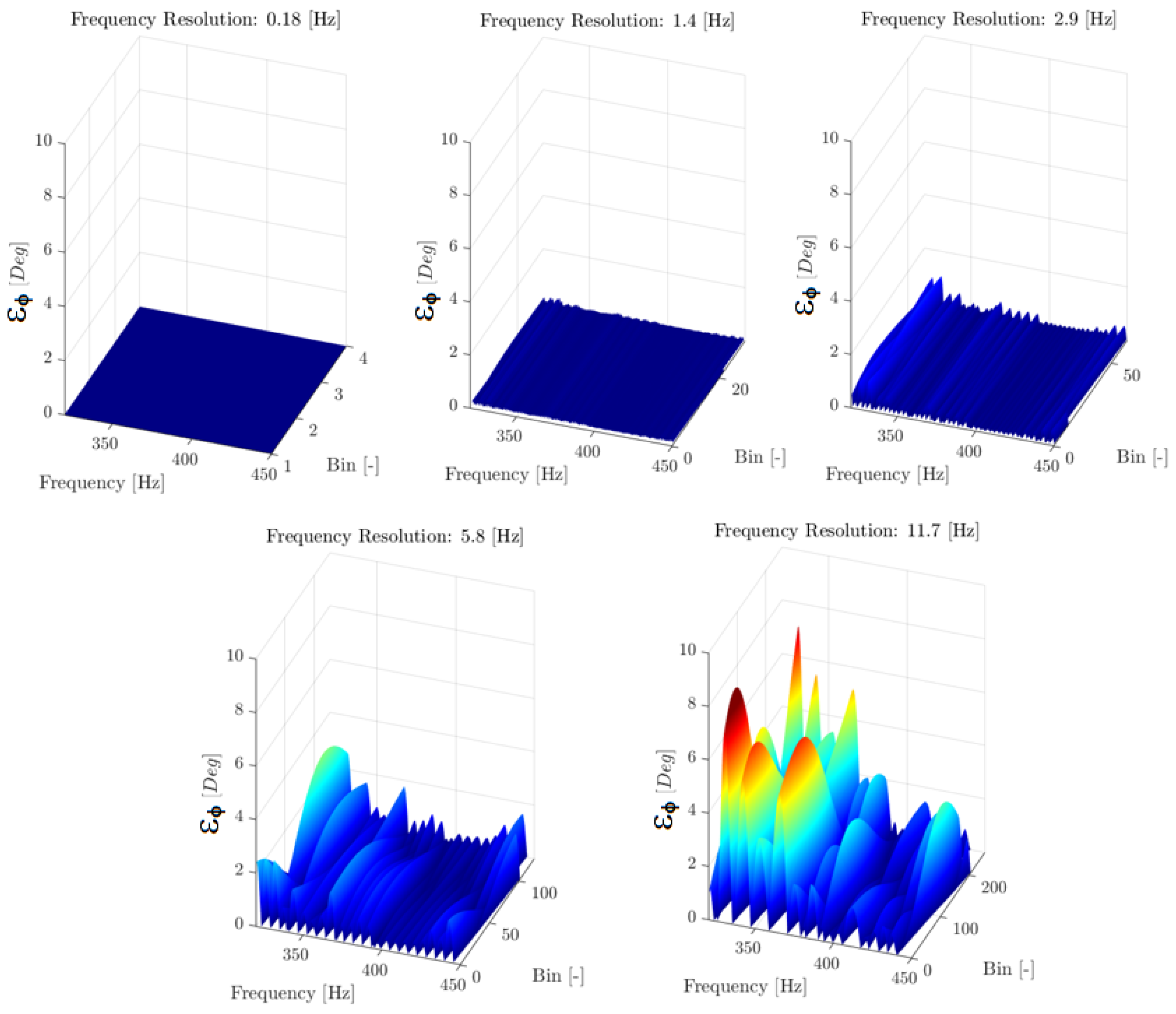
- Phase error is analyzed theoretically around resonance for 1DOF systems. Both the error at the nearest frequency line and the error in the case of phase interpolation were determined. The proposed method can be used to maximize the phase error around a dominant, single resonance peak. However, this theoretical approach was proven to be inaccurate in real, multi-DOF cases, especially for high-frequency resolutions.
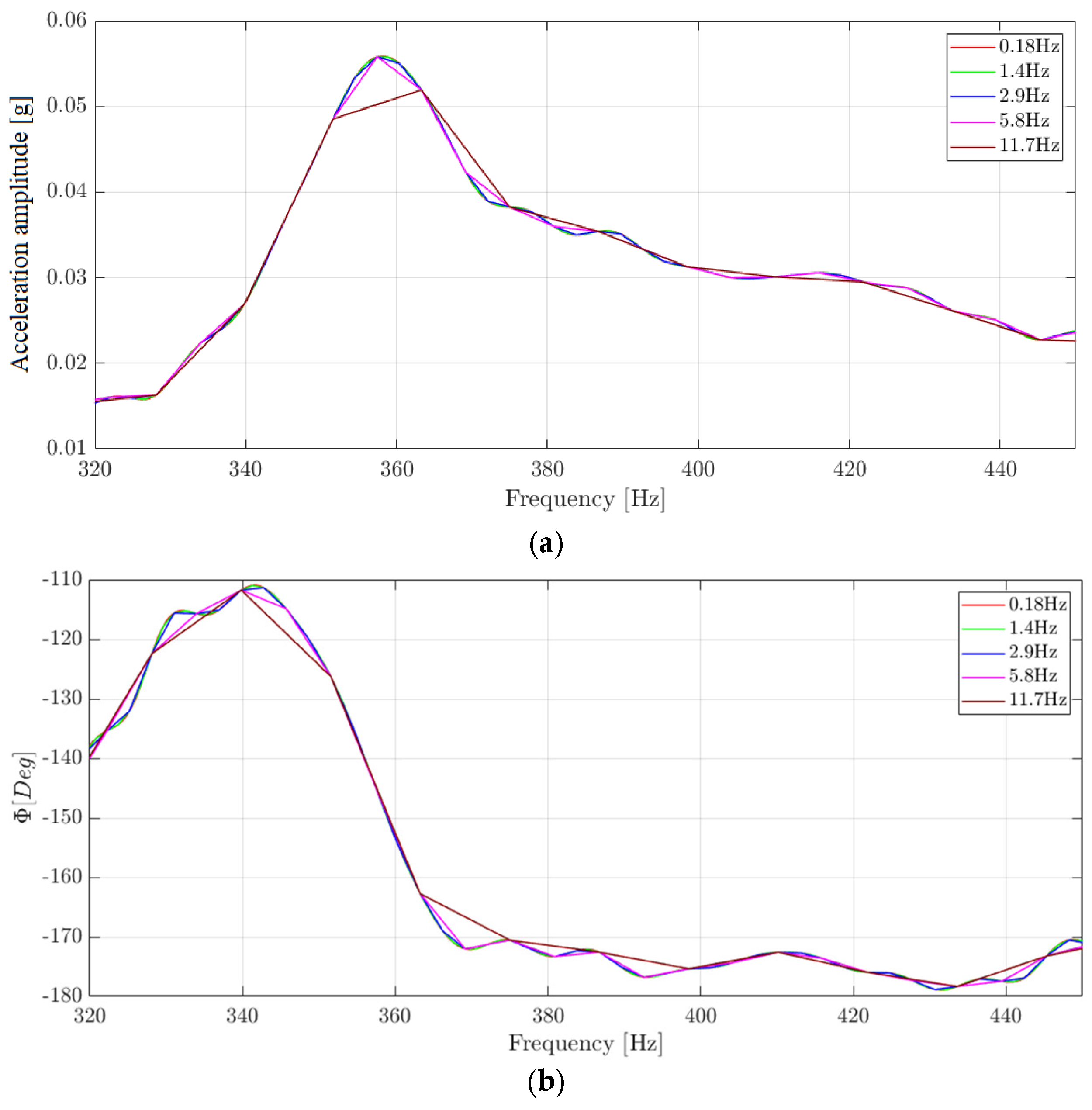
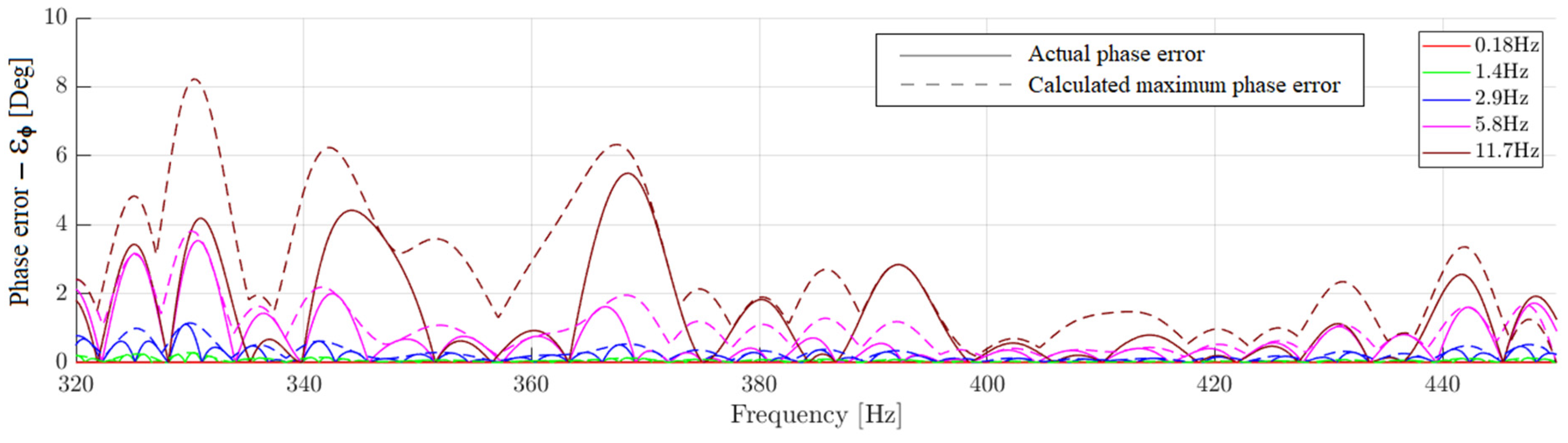
- For a more complex, real, multi-DOF system, the phase error should be determined more accurately by comparing the coarse resolution data with an extremely fine one. In the case of the tested system (an electric drive assembly—e-Axle), this phase error was around 5.45°—slightly higher than the value obtained for the interpolated phase error analysis of the corresponding 1-DOF system (4.5°).
- The detailed analysis confirmed the hypothesis that—in contrast with the amplitude error—the largest phase error does not occur at the resonance frequency, but somewhat below and above. It was proven analytically for 1-DOF systems, and empirically on the measured e-Axle too.
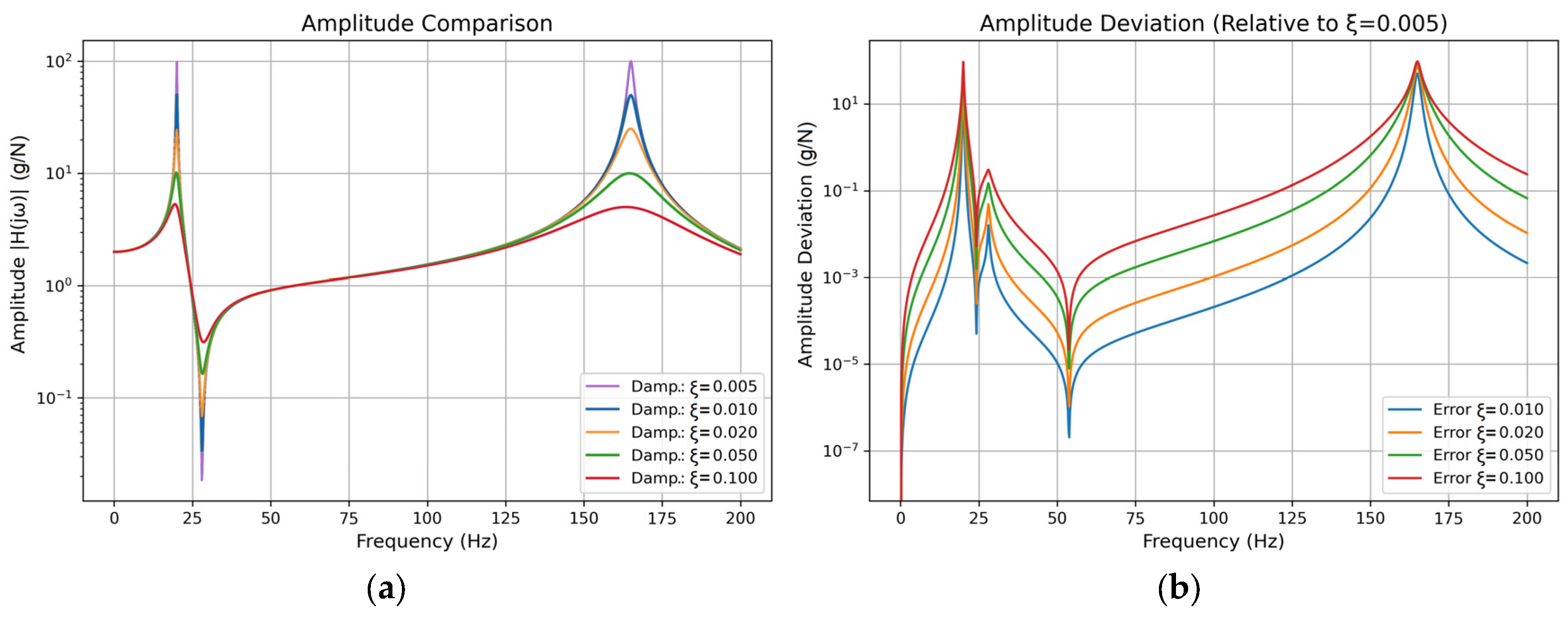
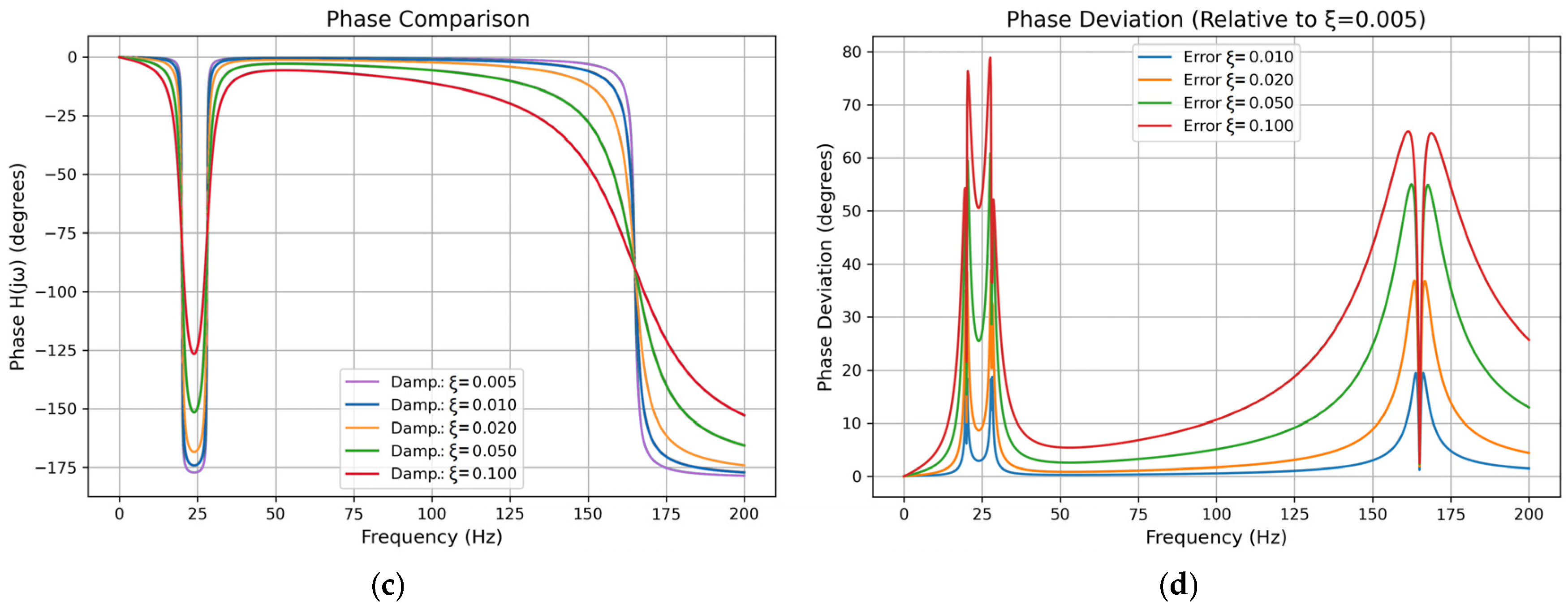
- Finally, a numerical method (Maximum Phase Error Analysis—MPEA) was proposed and demonstrated to determine the theoretically maximum phase error—considering any possible coincidence of the coarse frequency lines and the resonance frequency. It is especially important when the damping is small (ξ < 0.05) and slight changes in resonance frequency may occur. In such cases, setting the frequency resolution limit based on one measured piece is not appropriate; a significantly higher phase error may occur due to a small shift in resonance frequencies (more than 50% higher in our case).
Outlook—Future Work
Author Contributions
Funding
Institutional Review Board Statement
Informed Consent Statement
Data Availability Statement
Conflicts of Interest
Abbreviations
| DFT | Discrete Fourier transform |
| DOF | Degree(s) of freedom |
| FFT | Fast Fourier transform |
| FRF | Frequency response function |
| MPEA | Maximum phase error analysis (method introduced by the authors) |
| NVH | Noise, vibration, and harshness (synonym for engineering acoustics) |
Appendix A
- (A)
- If allowed phase error is smaller than the maximum phase error ), then decrease M and repeat steps 2…5 until . The last value will define the optimal coarse resolution ().
- (B)
- If allowed phase error is larger than the maximum phase error ), increase M and repeat steps 2…5 until . The value before the last () will define the optimal coarse resolution ().
References
- Michon, M.; Holehouse, R.; Shahaj, A.; Jafarali, H.; Janakiraman, V. System Interactions Affecting NVH Performance of an Electric Vehicle Drivetrain; SAE Technical Papers; SAE: Warrendale, PA, USA, 2019. [Google Scholar]
- Masri, J.; Amer, M.; Salman, S.; Ismail, M.; Elsisi, M. A survey of modern vehicle noise, vibration, and harshness: A state-of-the-art. Ain Shams Eng. J. 2024, 15, 102957. [Google Scholar] [CrossRef]
- Bendat, J.S.; Piersol, A.G. Engineering Applications of Correlation and Spectral Analysis, 3rd ed.; Wiley: New York, NY, USA, 2009. [Google Scholar]
- Ewins, D.J. Modal Testing: Theory, Practice and Application, 2nd ed.; Research Studies Press Ltd.: Hertfordshire, UK, 2009. [Google Scholar]
- Gazdagh, Z.; Vehovszky, B. Influence of frequency resolution in case of frequency response function measurement in structural dynamics. Acta Tech. Jaurinensis 2021, 14, 508–520. [Google Scholar] [CrossRef]
- Gazdagh, Z.G.; Acs, D.; Vehovszky, B.; Fukker, B. Control of transfer function distortion during RPM-sweep testing of e-drive systems. In Proceedings of the ISMA 2025, Leuven, Belgium, 9–11 September 2024. [Google Scholar]
- Liu, C.; Lai, S.-K.; Ni, Y.-Q.; Chen, L. Dynamic modelling and analysis of a physics-driven strategy for vibration control of railway vehicles. Veh. Syst. Dyn. 2024, 63, 1080–1110. [Google Scholar] [CrossRef]
- Yang, Y.; Liu, C.; Chen, L.; Zhang, X. Phase deviation of semi-active suspension control and its compensation with inertial suspension. Acta Mech. Sin. 2024, 40, 523367. [Google Scholar] [CrossRef]
- Lalanne, C. Random Vibration: Mechanical Vibration and Shock Analysis, 1st ed.; Wiley: New York, NY, USA, 2009; Volume 3. [Google Scholar]
- Haber, H.E. The Argument of a Complex Number. Lecture Material. Santa Cruz Institute for Particle Physics, Physics 116A. 2019. Available online: https://scipp.ucsc.edu/~haber/ph116A/arg_19.pdf (accessed on 2 July 2025).
- Meirovitch, L. Fundamentals of Vibrations, 1st ed.; McGraw-Hill: New York, NY, USA, 2001. [Google Scholar]


| FFT Window Size | Frequency Resolution |
|---|---|
| 256 | 11.72 |
| 512 | 5.86 |
| 1024 | 2.93 |
| 2048 | 1.46 |
| 4096 | 0.73 |
| 8192 | 0.37 |
| 16,384 | 0.18 |
| 32,768 | 0.09 |
| 65,536 | 0.05 |
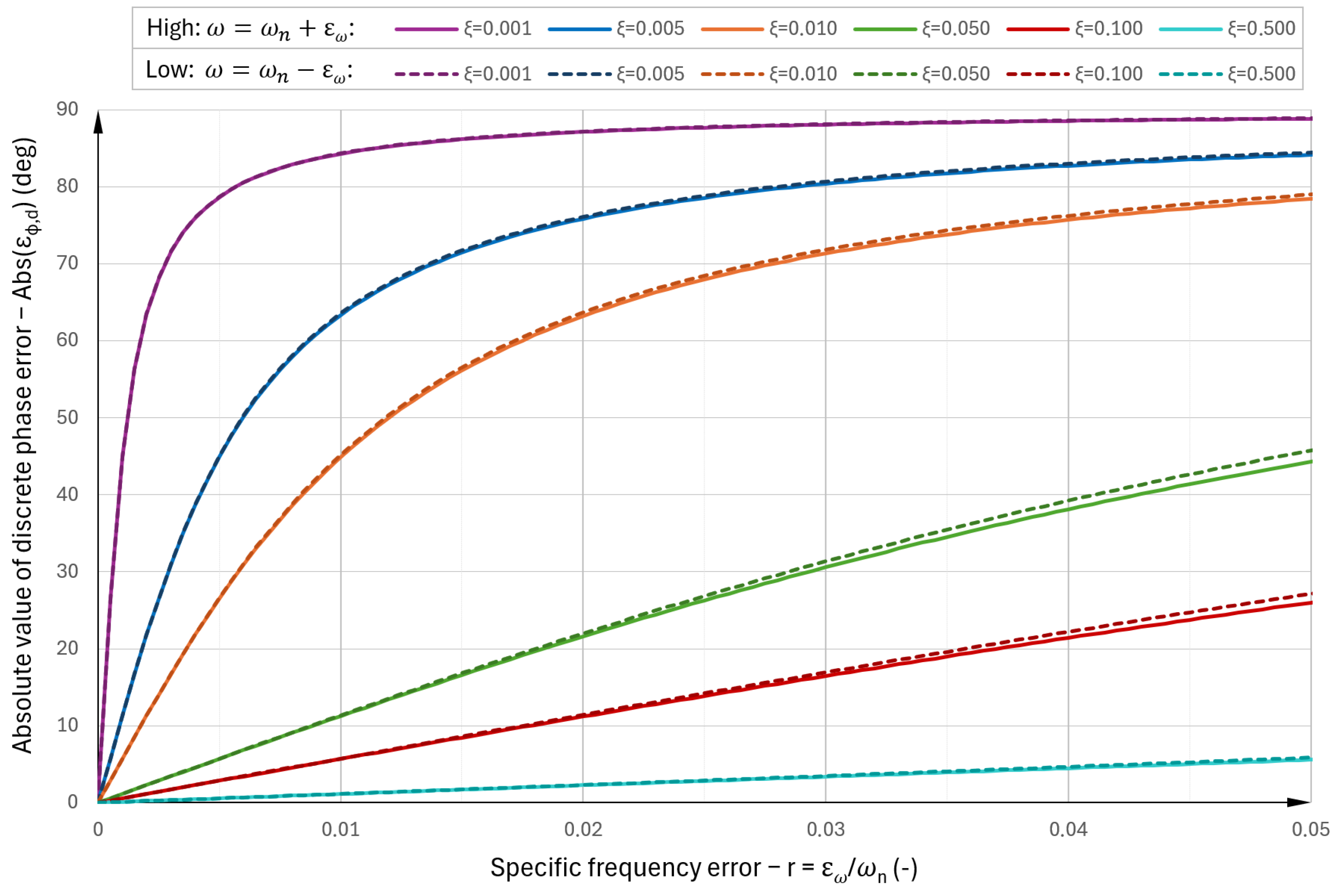
| Δω (Hz) | r (=ΔR) (-) | εϕ,dhigh (°) | εϕ,dlow (°) |
|---|---|---|---|
| 0.18 | 0.0003 | −0.459 | 0.459 |
| 1.4 | 0.0021 | −3.650 | 3.657 |
| 2.9 | 0.0041 | −7.263 | 7.292 |
| 5.8 | 0.0082 | −14.271 | 14.384 |
| 11.7 | 0.0165 | −26.871 | 27.251 |
| Δω (Hz) | Interpolated Phase Error from the 1DOF Approximation for fr = 358 Hz | Measured Real Phase Error (Relative to Δωf = 0.04 Hz Response) | Determined Maximum Phase Error Based on MPEA Method |
|---|---|---|---|
| 0.18 | 0.001° | 0.018° | 0.02° |
| 1.4 | 0.069° | 0.27° | 0.29° |
| 2.9 | 0.303° | 1.12° | 1.15° |
| 5.8 | 1.161° | 3.55° | 3.84° |
| 11.7 | 4.505° | 5.45° | 8.25° |
Disclaimer/Publisher’s Note: The statements, opinions and data contained in all publications are solely those of the individual author(s) and contributor(s) and not of MDPI and/or the editor(s). MDPI and/or the editor(s) disclaim responsibility for any injury to people or property resulting from any ideas, methods, instructions or products referred to in the content. |
© 2025 by the authors. Licensee MDPI, Basel, Switzerland. This article is an open access article distributed under the terms and conditions of the Creative Commons Attribution (CC BY) license (https://creativecommons.org/licenses/by/4.0/).
Share and Cite
Gazdagh, Z.G.; Vehovszky, B. Phase Response Error Analysis in Dynamic Testing of Electric Drivetrains: Effects of Measurement Parameters. Future Transp. 2025, 5, 166. https://doi.org/10.3390/futuretransp5040166
Gazdagh ZG, Vehovszky B. Phase Response Error Analysis in Dynamic Testing of Electric Drivetrains: Effects of Measurement Parameters. Future Transportation. 2025; 5(4):166. https://doi.org/10.3390/futuretransp5040166
Chicago/Turabian StyleGazdagh, Zoltán Gábor, and Balázs Vehovszky. 2025. "Phase Response Error Analysis in Dynamic Testing of Electric Drivetrains: Effects of Measurement Parameters" Future Transportation 5, no. 4: 166. https://doi.org/10.3390/futuretransp5040166
APA StyleGazdagh, Z. G., & Vehovszky, B. (2025). Phase Response Error Analysis in Dynamic Testing of Electric Drivetrains: Effects of Measurement Parameters. Future Transportation, 5(4), 166. https://doi.org/10.3390/futuretransp5040166