


Highlights
What are the main findings?
- We have established a methodology using the CAPPI radar product to identify convection initiation in mountainous areas.
- We have validated the objective methodology through comparison with subjective observations.
What are the implications of the main findings?
- The methodology can be applied to any area with available radar data to improve understanding of this type of convection.
- By better identifying convection initiation hotspots, we can apply prevention techniques for managing flash floods in remote areas.
Abstract
Every year, thunderstorms initiating in the eastern Pyrenees cause a wide range of adverse phenomena, not only in the mountainous areas but also in the surrounding regions. Events such as heavy rainfall leading to flash floods, large or giant hail, and strong winds are common in this area. These phenomena cause significant damage and have major impacts on the population. We used remote sensing data, specifically weather radar, to identify areas that are more prone to convection initiation. This initial analysis covers the period from 2022 to 2024 and is intended to serve as the foundation for a more extensive study. The aim of this study is to characterize the diurnal convection cycle over the Pyrenees. Additionally, we plan to develop a technique that can be applied to other mountainous regions where similar data are available. The steps are as follows: (1) identifying events with precipitation over the area; (2) selecting cases associated with diurnal convection; (3) applying algorithms to determine the tracks of convective cells; and finally, (4) selecting the initial points of these trajectories. The result is a map highlighting these “hotspot” areas, which will allow us to incorporate other variables in the future, both meteorological and non-meteorological, to identify the main factors influencing the characteristics of each event.
1. Introduction
According to Doswell et al. (1996) [1] and Johns and Doswell (1992) [2], the three necessary ingredients for deep convection are (1) a conditionally unstable environmental lapse rate; (2) sufficient moisture (a deep moist layer at low levels) to produce a level of free convection (LFC) along a moist adiabat from a rising parcel; and (3) a lifting mechanism capable of raising the parcel to its LFC. Multiple convection triggers exist, such as fronts, outflow boundaries, sea-breeze fronts, dry lines, and topography [1,3]. Weckwerth and Parsons (2006) [4] added to these elements’ horizontal convective rolls and solitary waves. Most of these triggers play a similar role to topography, but with the difference that they involve motion [5].
The interaction between topography and the previously mentioned factors can enhance the triggering strength [6]. Therefore, deep convection can occur in weakly to moderately unstable environments when orography (or other factors) helps trigger the air mass. Moreover, new thunderstorms that develop after the first convection initiation in mountainous regions often produce heavier precipitation and other severe weather phenomena [7]. Ref. [8] showed that the combination of mountain size and thermal forcing are the main ingredients controlling precipitation amounts, while [9] added another factor: the wind profile. Regarding thermal forcing, Ref. [10] observed that convection often initiates over or downwind of the mountain crest during diurnal convection, due to thermally driven circulation—results that coincide with those of [11]. These authors provided an interesting summary of the types of convection initiation associated with topography, including mechanical causes (direct orographic lifting, upstream blocking, lee-side convergence, and mountain waves) and thermally driven circulations (daytime and nighttime flows).
Most previously cited research was carried out using weather radar combined with other sources (numerical weather models, air soundings, automatic weather stations, among others). Therefore, weather radar has become the primary tool for understanding convection initiation in orographic environments ([7,9,10]). Convection initiation climatology allows for locating the areas most prone to thunderstorm development in a region, and, moreover, to identify the most favorable causality. Some projects such as CACTI [12], COPS [7,13], IHOP [4], or PECAN [14] analyzed the phenomenon systematically in different regions, orographic or not, for different seasons of the year. These campaigns provided valuable information not only from a meteorological point of view, but also from other aspects, such as the way to reduce radar limitations in the measurements, the variability of events from one year to another, or the integration of different platforms. Apart from those studies, mainly focused on different parts of the United States of America or South America, other regions have been studied, such as China [15], where Bai et al. used radar data and a 40 dBZ reflectivity threshold (and other secondary reflectivity and distance parameters) to generate convection initiation maps. Moving to Europe, the Alps are a focus of interest within this topic. In fact, the COPS project was centered on this region, with a nine-year climatology for identifying the hotspots and the variability, the time of occurrence, or the duration of the events [13]. Furthermore, Nisi et al. [16] conducted an exhaustive analysis of the life cycle of hailstorms for the same region for a 13-year period, also identifying some regions and periods of interest. Finally, Manzato et al. [17] conducted similar research, but considering cloud to ground lightning, for a longer period (15 years), finding some differences, associated with the nature of the thunderstorm’s path and life cycle.
Many previous works studied the Pyrenees from a meteorological point of view, but with different objectives. For instance, Ref. [18] showed that heavy rainfall events occur in this area when moisture flow interacts with the orography, which favors high values of precipitation exceeding 100 mm in 24 h. Consequently, it is not a surprise that flood events are usual in all parts of the Pyrenees, but according to [19], they are more common in the eastern part. It is important to bear in mind that heavy rainfall events in this area have a return period of only 5 years for cases with daily cumulation over 150 mm [20].
These authors observed two different behaviors of precipitation patterns over the Pyrenees, depending on the area most affected: the western or the eastern Pyrenees. Of the nine weather type patterns, seven produce mean precipitation greater than 25 mm in some parts of the eastern Pyrenees. However, there are large differences between the precipitation distribution depending on the pattern. Nevertheless, one common feature is that the maximum is located close to a region whose shape is determined by the topography and the maritime flow.
Ref. [21] compared thunderstorms that occurred in the Pyrenees (in the central part, west of our study area) with those that developed over the surrounding plain. They observed a slower motion of the cells growing over the mountains; in addition, they had a shorter trajectory than those forming in flat areas. Therefore, the topography does not only play a major role in the formation of thunderstorms, but also in the other parts of the life cycle. Furthermore, the Pyrenees not only influence small and medium thunderstorms systems, but they also contribute to the life cycle of large Mesoscale Convective Systems (MCSs) over the French plains [22]. This result is consistent with that obtained by Maurer et al. (2017) [23] for MCSs occurring over northern Africa or by Rasmussen & Houze (2016) [24] for the Andes region. In this way, the influence of the topography on the convection cycle is not only at the initiation stage, but also at later stages in the life cycle of the thunderstorms.
Ref. [25] was probably one of the first studies referenced on convection in the eastern Pyrenees, focusing on an analysis with numerical models and radar of thunderstorm cases occurring under anticyclonic conditions and relative stability. They found a high correlation between their occurrence and the diurnal cycle, caused by the interaction between the topography and the breeze, which introduces a complementary moist contribution in the eastern part of the region. On the other hand, the western part received less extra maritime humidity, due to the larger distance to the sea. These results corroborate those found by [20] using backward trajectories. Ref. [26] observed a peak of lightning activity in the eastern Pyrenees during the summer, mainly in June, while at the end of August, the activity in this area decreased and moved to the Catalan coastal region.
Vilar and Rigo (2022) [27] (hereafter, VR22) conducted a preliminary analysis of convection initiation using radar imagery, but focusing exclusively on the first initiation in each event. That study was the first systematic and climatologic analysis using weather radar in an orographic region and only analyzed the first daily convection initiation in the Pyrenees. The results revealed that the eastern part of the Pyrenees massif, with high altitudes but closest to the sea, is the area with the most initiations. However, we observed that in most events, there was one or multiple secondary initiations, which occurred close to or far from the first one. Therefore, the motivation for this manuscript is to develop an objective methodology for improving the identification of all convective initiations using weather radar data.
2. Data and Methodology
2.1. The Area of Study
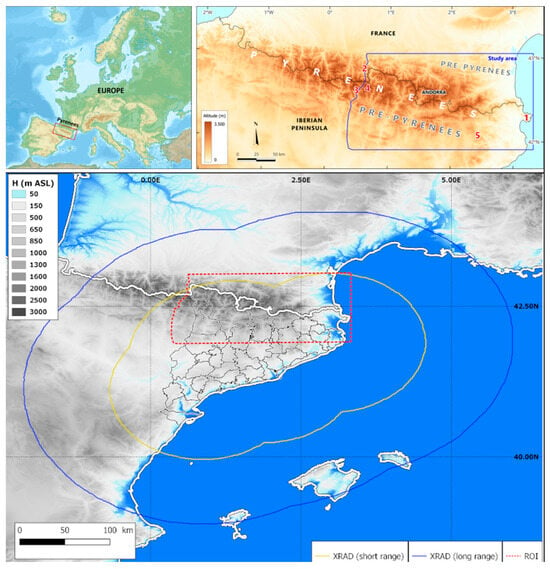
The Pyrenees are the most important orographic system on the Iberian Peninsula (Figure 1), forming a natural border between it and the rest of Europe. Geographically, they stretch from Cap de Creus on the Mediterranean to the Bay of Biscay on the Atlantic, with a total length of over 400 km. Geologically, the Pyrenees extend for about 1000 km, continuing into the Basque Mountains and the Cantabrian Mountains. Several peaks exceed 3000 m, with the highest point at 3404 m. The valleys are mostly oriented north–south, with a distinctive orographic feature: the northern flank of the range has a steeper slope than the southern one.
Figure 1.
(Top-left) Location of the Pyrenees in the European context. (Top-right) Map of the Pyrenees range and delimitation of the study area corresponding to the eastern Pyrenees. (Bottom) The study area (marked by the red dashed rectangle) and the short-range radar coverage (volumetric, yellow solid line) and long-range radar coverage (ground-based, blue solid line). (1) indicates the Cap de Creus, (2) and (3) the Pique and Benasque valleys, (4) the Maladeta Massif, and (5) the Catalan Transversal Range. EPSG: 25831.
This study focuses on the eastern half of the Pyrenees range from a broad geographical perspective. It also includes the Pre-Pyrenees—mountain ranges attached to both sides of the axial Pyrenees—and some adjacent ranges and lands, such as the Catalan Transversal Range (5), to provide a more regular delimitation of the study area. Thus, the entire eastern half of the Pyrenees is considered, covering an east–west length of about 220 km, from Cap de Creus (1) in the east to the Pique (N)–Benasque (S) valleys (2, 3) at the western limit. We have aimed to preserve the unity of the main massifs, such as the prominent Maladeta Massif (4).
2.2. Data Used
The primary data source for this research is the composite radar from XRAD (the radar network of the Meteorological Service of Catalonia). It consists of four radars distributed to provide short-range coverage of the Catalan territory (see Figure 1). Only a small area in the northwestern part is not included in this coverage. Short-range coverage (between 130 and 150 km, depending on the radar) is a 3D field that allows highly precise observation of the vertical distribution of precipitation structures. It is very useful for nowcasting and surveillance purposes. In contrast, the long-range field consists of a single elevation (0.6°) PPI (Plan Position Indicator) covering distances up to 240 km from the radars. This product is useful for detecting distant precipitation structures moving toward Catalonia. Both the short- and long-range fields have a temporal resolution of 6 min, and the pixel size is 1 km in both axes.
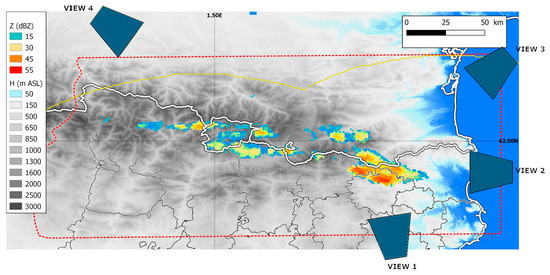
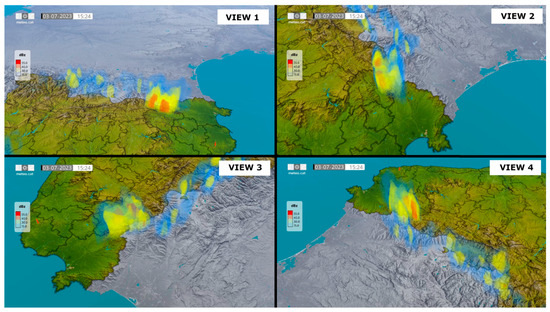
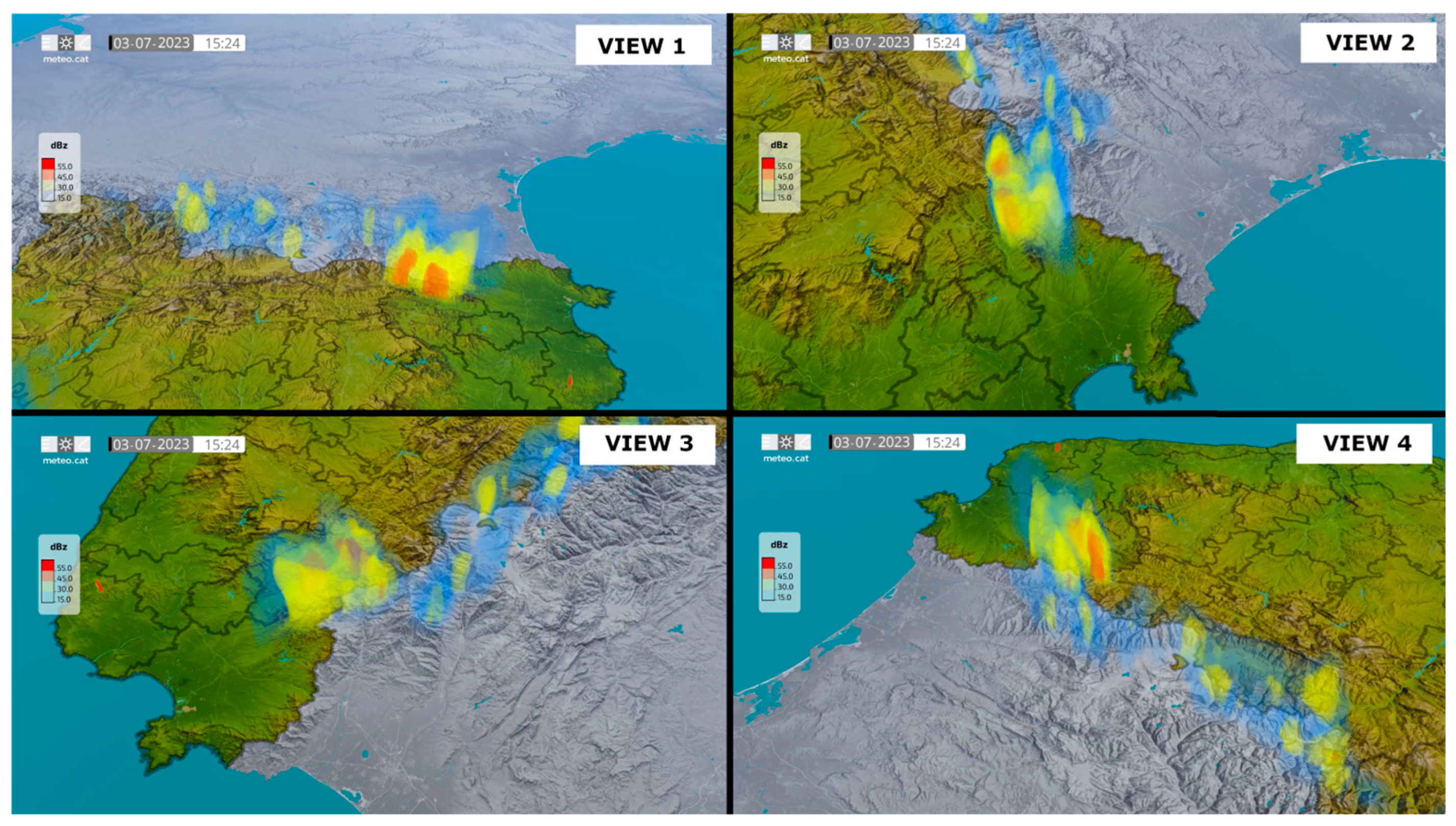
As shown in Figure 1, part of the study area (the red dashed rectangle) lies outside the short-range coverage. Therefore, it is not possible to use the 3D fields systematically. For this reason, we relied on the planar long-range product to identify convection initiation points. However, volumetric images were also used for complex events to assess the probability of a new convection case and to extrapolate the results to other events. Figure 2 and Figure 3 present examples of each data type for the same time. Volumetric data allow for a better understanding of the processes occurring within thunderstorms and their interactions with the surrounding environment. However, these data are more challenging to process and require longer computational times.
Figure 2.
Example of planar images used to identify convection initiation in this study. 3 July 2023, at 15:24 UTC. The irregular rectangles labeled “View 1,” “View 2,” “View 3,” and “View 4” indicate the camera positions in the 3D images shown in Figure 3. EPSG: 25831.
Weather radar data have some limitations in complex topographical regions such as the one considered in this study. Beam blockage (the partial or total occultation of the radar beam caused by the presence of a mountain along the beam path [28]) is the main issue affecting radar data in these areas. Beam blockage can affect one or more beam elevations, and the angle of occultation depends on the distance of the obstacle to the radar. Other limitations under these conditions have also been reported by [29]. Nevertheless, VR22 demonstrated that deep convection (thunderstorms with strong vertical development) is well detected in the study area. Therefore, radar limitations are minimized in the present study, as we consider echoes exceeding the 45 dBZ threshold, which is commonly associated with convective activity [30].
2.3. Methodology
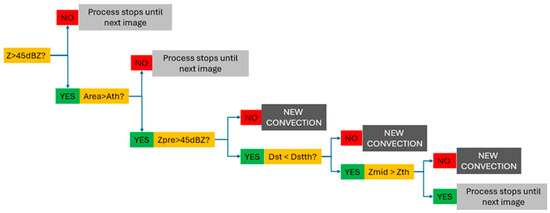
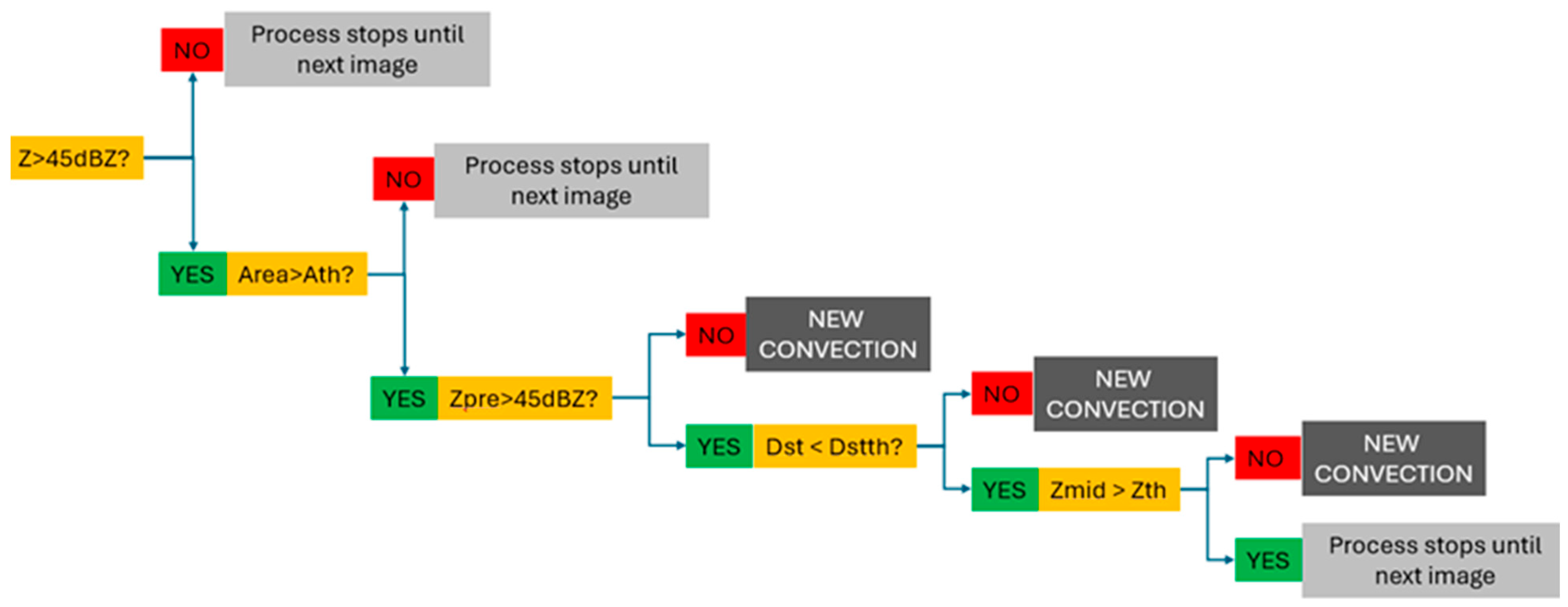
Figure 4 illustrates the methodology used in this study. The method is structured as a sequence of questions; depending on each answer, the process advances to the next step:
Figure 4.
Schematic representation of the method used to identify convection initiation points. Ath indicates the “Area threshold”, Zpre corresponds to “reflectivity (Z) for the previous cell”, Dst is the “Distance”, Dstth means the “Distance threshold”, Zmid is “reflectivity in the middle of the current and old cells”, and Zth corresponds to the “Reflectivity threshold”.
- Is there any reflectivity pixel exceeding 45 dBZ?As explained previously, the selection of this threshold is based on the available literature on convective events in the region [30].
- −
- If not, the procedure waits for the next image (6 min later).
- −
- If yes, it moves to the next question.
- Has the 45 dBZ area reached a size larger than a given threshold?
- −
- If not, the procedure waits for the next image.
- −
- If yes, the script proceeds to the next step.
- Are there any pixels exceeding 45 dBZ in any of the previous Ni images (where Ni is the number of previous images)?
- −
- If not, the 45 dBZ area in the current image is classified as convection initiation.
- −
- If yes, more questions must be addressed.
- Is the distance between the two convective cells (current and previous) lower than a given threshold?
- −
- If not, the current 45 dBZ area is considered a new convective cell.
- −
- If yes, continue with the next question.
- Is there any reflectivity pixel between the two convective cells (current and previous) exceeding a certain threshold?
- −
- If not, the current cell is considered independent from the previous one. Consequently, it is classified as a new convection initiation.
- −
- If yes, the process stops and waits for the next image.
The algorithm was applied to all valid events (see the definition at the end of this section) during the 2022–2024 period, considering only the summer months (June to August). Because the focus is on diurnal convection (which is more closely related to orography), only the daytime period (08:00–20:00 UTC) was analyzed. Consequently, although more convective days occurred in the study region during the analysis period, some were excluded because their convection had a different nature: in some cases, it was nocturnal (not driven by solar forcing), while in others, the thunderstorms developed elsewhere and later moved into the eastern Pyrenees.
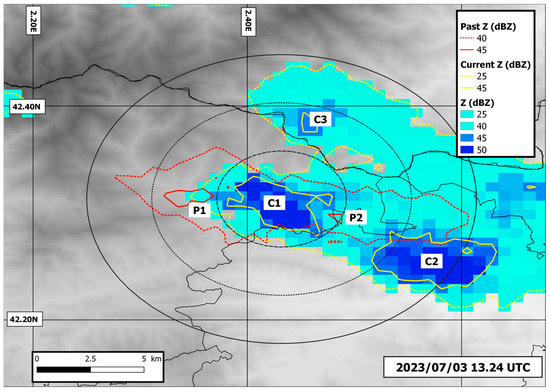
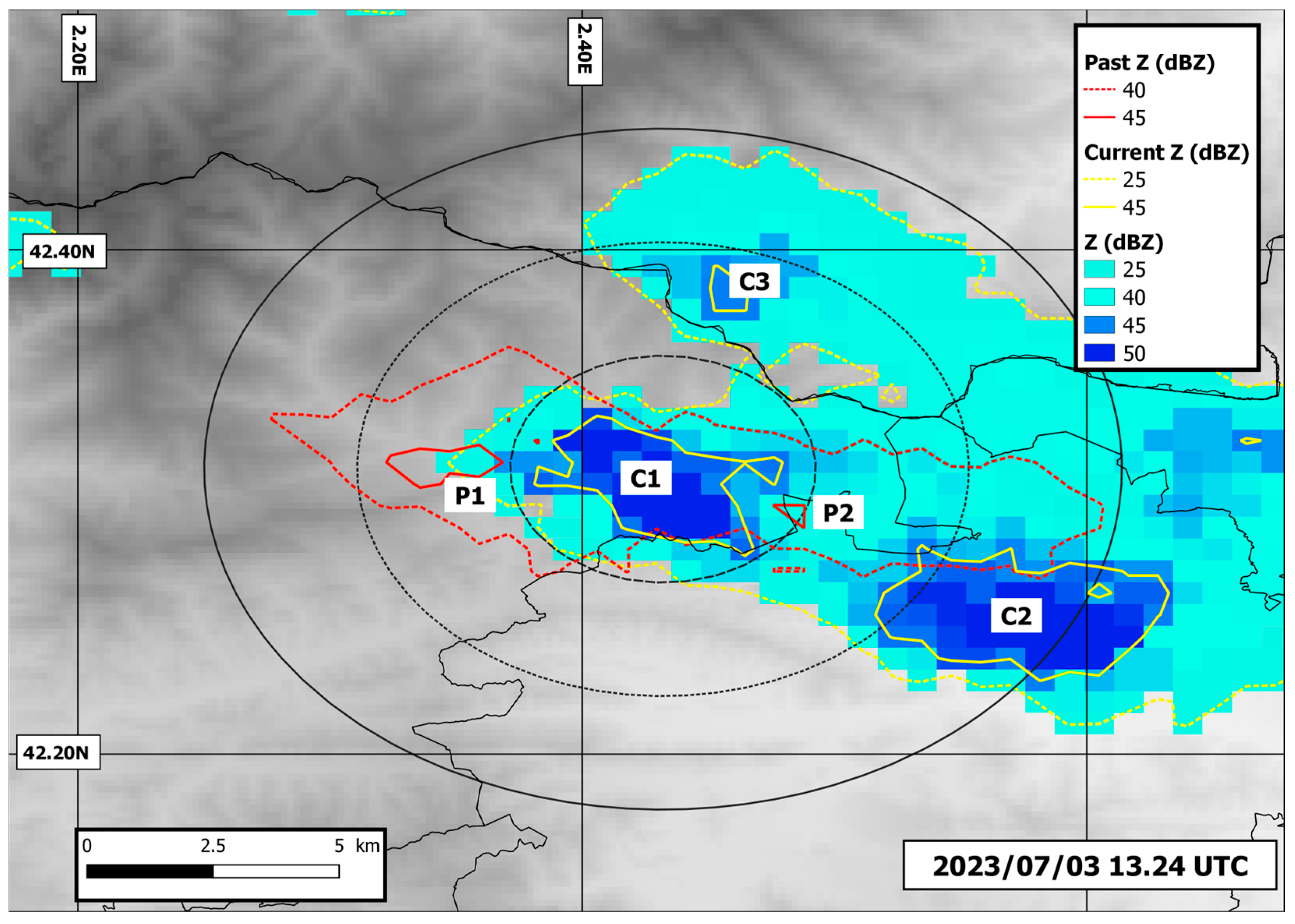
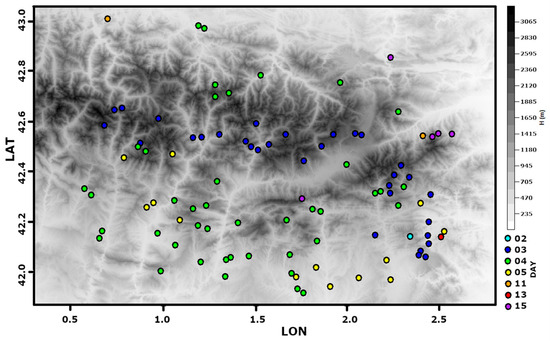
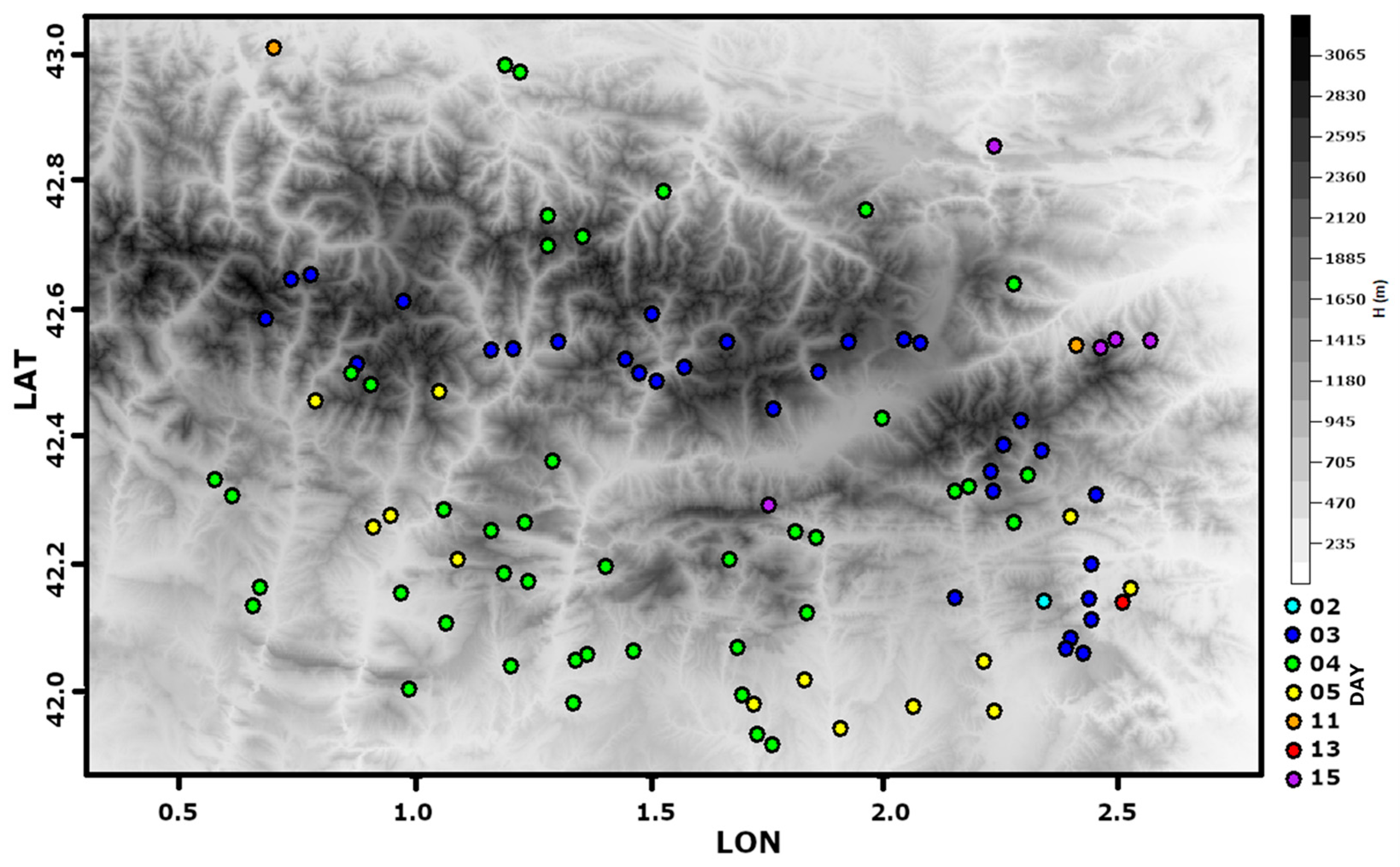
To illustrate the procedure, Figure 5 shows an example from 3 July 2023, at 13:24 UTC. At that time, there were three candidates for convection initiation (yellow outlines, labeled “C1”, “C2”, and “C3”). To determine which of them—if any—are valid candidates, we examined the maximum values of the cumulative reflectivity fields (red outlines) over the previous hour (in this case, this corresponds to the previous 48 min, as convection had initiated at 12:30 UTC). The first step the algorithm checks is whether the area is large enough. The “C1” cell had a size of 21 pixels, whereas the “C2” cell had a size of 42 pixels and the “C3” cell had a size of 4 pixels. Therefore, all cells met the size criterion. Moreover, the “C1” and “C2” cells have closed previous cells (“P1” and “P2”). In summary, the “C1” and “C2” cells do not meet the criteria for being considered a new convection initiation, whereas the “C3” one is the unique good candidate when applying the criteria of (i) a minimum distance of 5 km from previous cells, (ii) a time gap between 18 min and 1 h, and (iii) an area exceeding 3 pixels. To validate these thresholds, we compared the results with the previous visual analysis, which confirmed that the “C1” and “C2” candidates were not a convection initiation point, and that “C3” was the valid one (Figure 6).
Figure 5.
Example of a 2D image from 3 July 2023, at 13.24 UTC, focused on the three candidate convective initiation points (C1, C2, and C3). P1 and P2 indicate areas of past convection initiation. Shaded pixels indicate reflectivity exceeding the 25 dBZ threshold. Yellow lines show areas exceeding 25 dBZ (dashed) and 45 dBZ (solid) at that time. Red lines correspond to the same exceedances in the composite of the previous hour. Black circles indicate 5 km (long dashed), 10 km (dashed), and 15 km (dotted) distances surrounding the C1 candidate. EPSG: 25831.
Figure 6.
All convective initiation cells visually identified during the test period (first two weeks of July 2023). The color of the dots indicates the day of the month (e.g., yellow for 5 July and red for 13 July). EPSG: 25831.
It is important to keep in mind that, in the present study, we used the following definitions:
- Convective cell: an area exceeding the 45 dBZ threshold.
- Convection initiation: the first time a convective cell is identified; this is determined according to criteria such as size, the occurrence of previous convection, and the distance to prior occurrences. It should be noted that this time refers to when the radar data reach 45 dBZ, not to the actual onset of convection.
- Valid event: any day with reflectivity cores exceeding 45 dBZ that originate exclusively within the study area, i.e., not moving into the region from any neighboring area.
The primary goal of this research was to identify optimal thresholds for the different variables: minimum area of 45 dBZ (between 3 and 9 pixels, in steps of 2), number of previous images (between 3 and 10, in steps of 1 image), minimum distance between current and previous 45 dBZ cores (between 5 and 50 km, in steps of 5 km), and minimum reflectivity between the two cores (for 25, 30, and 35 dBZ). Using this approach, we manually identified convection initiation points (from planar images and 3D data in complex cases) for seven events in July 2023 (see Figure 6). These points were considered the ground truth (defined as the information verified via direct observation, which helps to verify an image processing analysis, such as the current research [31]), and this period served as the test dataset (or the data considered for analyzing model performance [31]).
The verification process was based on the estimation of different skill scores presented by Richardson [32], using the R package verification Version 1.44 [33,34]. These skill scores are calculated based on the relationship between the forecasted (F) and observed (O) events, considering a contingency table with the options “a” (event observed and forecasted), “b” (event not observed but forecasted), “c” (event observed and not forecasted), and “d” (event not observed and not forecasted). This technique considers the economic benefits of applying some mitigation resources to reduce the loss effects caused by the adverse phenomenon. Thus, if the phenomenon is forecasted, we will dedicate some efforts (Cost, C), whether the phenomenon occurs or not. If the phenomenon occurs and it was not forecasted, we will have to dedicate a budget to pay the resulting losses (Loss, L). Finally, if the event did not occur and it was not forecasted, the benefit would be zero. Therefore, the skill scores used are the HIT and FALSE rates (respectively, the proportions of occurrences correctly forecasted and of non-occurrences incorrectly forecasted), the BASE rate (the occurrence probability of the observed event), and the VMAX (the relationship between the costs and benefits when the cost/loss ratio equals the base rate). VMAX has values between −1 and 1. A zero value for VMAX corresponds to the worst scenario, while 1 represents the perfect case, and a value of −1 is also a perfect scenario, but with a wrong calibration of the algorithm. The equations for the four parameters considering n events are as follows:
VMAX = HIT − FALSE
Once the validation determined the optimal thresholds, they were applied to the remaining data (June to August 2022–2024) to identify all convection initiation points and generate a map of hotspots in the study area, which represents the final objective of this work.
3. Results
The verification metrics (derived from contingency tables for different thresholds of distance, time, area, and reflectivity, Table 1, Table 2, Table 3 and Table 4) between observed and predicted convection initiation (CI) events (or those points automatically obtained by applying the different conditions to the set of CAPPI radar fields) enable the assessment and establishment of the most suitable values for each variable in defining the application criteria across all episodes in the series.
Table 1.
Contingency table for the distance parameter (the selected values are marked in bold).
Table 2.
Same as Table 1, but for time.
Table 3.
Same as Table 1, but for area.
Table 4.
Same as Table 1, but for reflectivity.
In the present case, regarding the first variable—distance—the optimal threshold was determined to be 30 km. Although the overall level of agreement (VMAX) is already very high from 15 km onward (with the strong penalty from false positives largely disappearing), the 30 km threshold provides a better event prevalence (Base Rate or BASE). For the second variable, time, referring to the number of preceding radar images considered, all thresholds yielded high VMAX values, and several candidates could have been selected. Ultimately, the 30 min window (up to five preceding radar images) was chosen as the most appropriate combination of VMAX and BASE.
Regarding the third variable, the area of pixels exceeding 45 dBZ, the threshold of 3 pixels was found to be among the most suitable options. Although 9 pixels yielded a slightly higher VMAX, the 3-pixel criterion was preferred as it matches the manual analysis approach. Finally, for the reflectivity between two convective cores, a threshold of 25 dBZ was adopted, as the verification metrics returned better results than for the rest of the tested values, which supports the individualization of the convective cores.
Although the objective of this study—which covers only three years—is not to analyze the overall geographical distribution of 45 dBZ hotspots but rather to establish a consistent and robust methodology suitable for long and representative time series that enables the detection of areas with the highest density of convection initiation, some preliminary remarks can nonetheless be made.
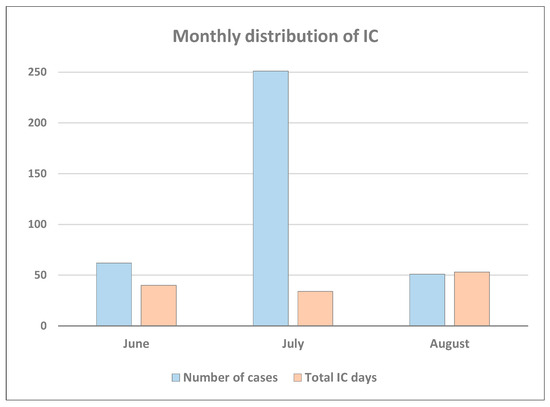
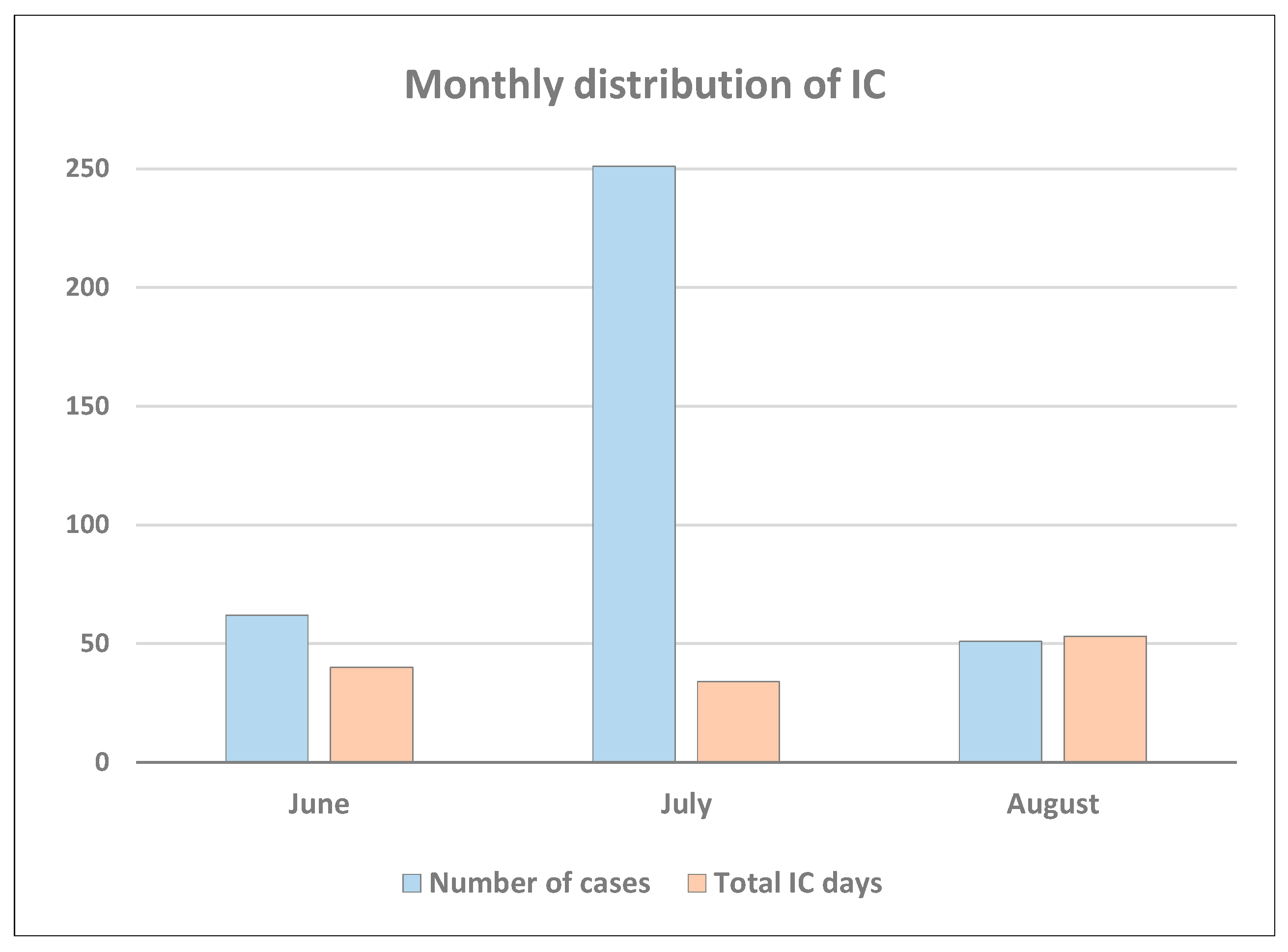
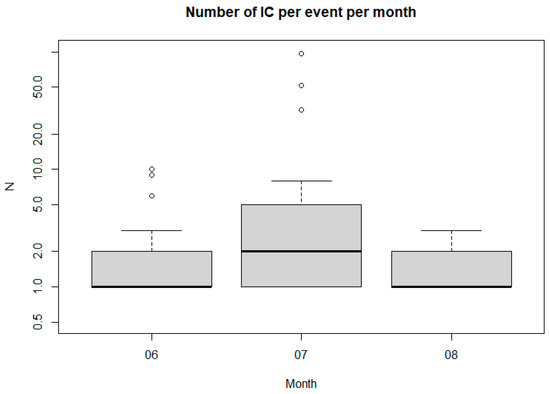
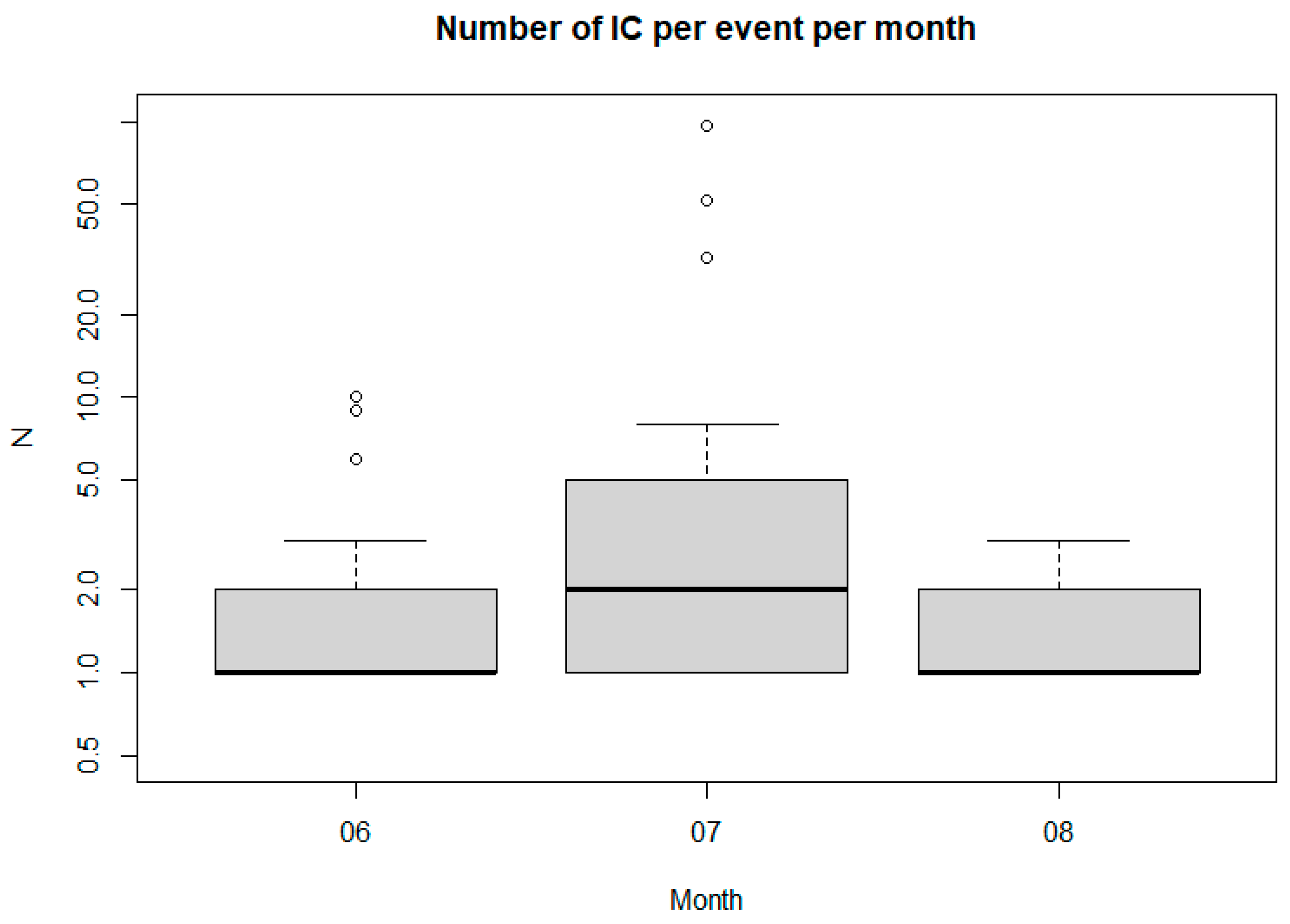
In this sense, in the monthly distribution of convection initiation events during summer (Figure 7), July clearly stands out, with nearly 250 cases recorded, despite having the smallest number of days (34), compared with June and August, which present around 50–60 cases and 40 and 53 days, respectively. Thus, July days with convection presented, on average, a higher number of initiation events per day, with some days exceeding 50 cases (Figure 8). Future studies based on longer datasets will be needed to verify whether this represents a persistent feature or is merely specific to this limited sample.
Figure 7.
Monthly distribution of convection initiation (CI) cases and CI days (those with at least one CI occurrence in the study region) during the 2022–2024 period.
Figure 8.
Boxplot of the number of CI cases per month during the 2022–2024 period.
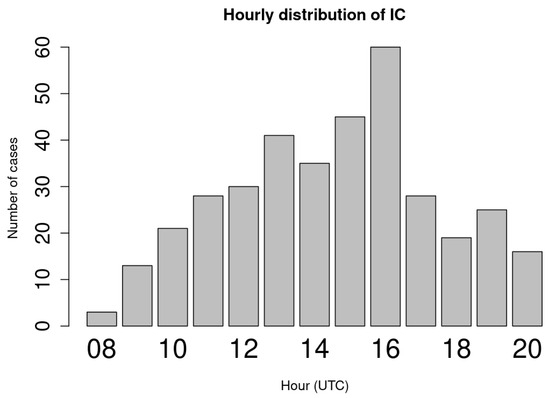
It is also worth highlighting the analysis of the diurnal distribution of convection initiation events between 08:00 and 20:00 UTC (Figure 9). The hour with the maximum number of cases was 16–17 UTC. The bulk of convection initiation occurred between 13 and 17 UTC, the four-hour intervals with the highest number of cases. This result is fully consistent with the diurnal evolution of convection in this mountain range and with previous studies, in which, for the Catalan Pyrenees, the hourly distribution of only the first 45 dBZ convective initiation of the day was analyzed, showing the bulk of events between 11 and 16 UTC VR22 [21].
Figure 9.
Hourly distribution of convection initiation (CI) cases during the 2022–2024 period.
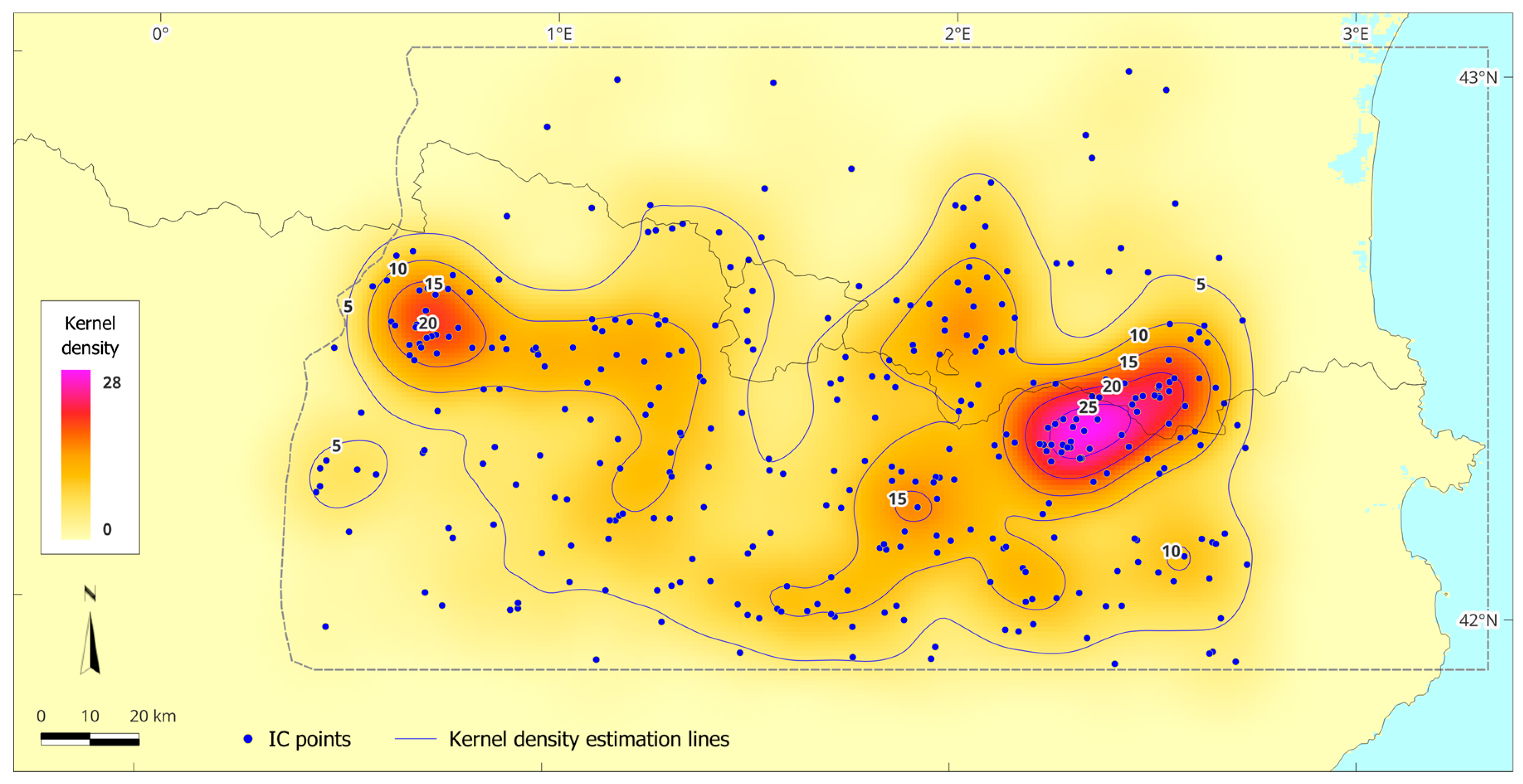
Finally, the production of a heatmap or kernel density map based on the three-year sample (Figure 10), aimed at preliminarily identifying the sectors with the highest density of convection initiation across the study area, made it possible to locate two important regions of initial convection: the main one, in the eastern part of the study area, straddling the Catalan and French Pyrenees, and a secondary one, in the westernmost part of the area, straddling the Catalan and Aragonese Pyrenees. In the previous study mentioned above, which focused on the first 45 dBZ daily initiation in the Catalan Pyrenees, the sector of maximum activity coincided with the main core identified in this sector. This indicates that, even with a short series, maximum activity remains concentrated in the same sector, which may explain the regularity of this phenomenon in the area and supports the validity of the methodology developed here. By contrast, the secondary core was not apparent in that study, a finding that should be confirmed in future work, as it will apply the detection of all possible convection initiation clusters across the entire eastern Pyrenees using longer datasets.
Figure 10.
Spatial distribution of convection initiation (CI) cases during the 2022–2024 period. EPSG: 25831.
4. Discussion
There are no published studies regarding convection initiation climatology using weather radar in the Pyrenees. In any case, other research in different regions around the world, but mainly the United States [4,14], South America [12], China [15], or the Alps [13,16] has been instrumental in developing the methodology presented in this article. The tuning of the different parameters (area, reflectivity, time, and distance) of the methodology is the objective of the current work. The most similar technique is the one used by Bai et al. for Southern China [15], which considered time, reflectivity and distance, but not the size of the cell. We observed that to avoid some spurious reflectivity structures, it is necessary to consider the area as a constraining condition. Other works, mainly that of Weckwerth et al. [13], indicated the high variability of the thunderstorm hotspots throughout the years (also observed in field campaigns in different regions). This fact makes it necessary to develop a climatology for a period of ten or more years, which is one of the future objectives of our research.
Analysis of events [3,6] or field campaign summaries [4,5] demonstrates the complexity of forecasting this type of event. Furthermore, [12,13,14] documented the high occurrence of heavy rainfall in the Pyrenees, with high impact on infrastructure and the population caused by floods, debris flows, and other phenomena. In this context, it is necessary to have a precise map of the thunderstorm initiation hotspots to aid in the water cycle management of the region. We have focused on diurnal convection (instead of the complete day, such as Nisi et al. [16] or Bai et al. [15], or in nocturnal episodes, such as Stelten and Gallus [14]) because it is the cause of the most severe events in Catalonia during summer. We believe that the future map of the convection initiation hotspots with more than 10 years will provide enough information to characterize and forecast different types of convective modes. To reach this point, following the identification of all of the centers of convection initiation, each one must be analyzed individually. This individual analysis would make it possible to determine the usual types of convection based on the reflectivity fields and the cell organization around each point.
Moving to other analyses in the same study region. Ref. [25] performed an analysis of thunderstorm cases in the Eastern Pyrenees occurring under anticyclonic conditions and low instability through numerical models and radar of thunderstorm cases. Although the area and the meteorological conditions were not the same as the present study, the hotspots are quite similar to those obtained here. They also sought the meteorological causes, mainly explained by the interaction between the topography and the breeze. These meteorological conditions were also referred to in the analysis of lightning activity [26], in which the monthly activity peak occurred in June. In our case, we have analyzed a few years to compare with, but the goal of the current research was to develop the methodology. Therefore, we plan to apply this methodology in the future to a larger database, to obtain more robust results that can be compared with those previous studies. Furthermore, from the comparison of lightning data and radar studies (for instance [13,16,17] in the Alps, or [25,26] in the Pyrenees), there is a gap between the initiation detected by the two sources. Therefore, this could be another point of interest in future research.
The preliminary analysis of VR22 showed the same hotspots. However, the new results indicated that other areas are also prone to convection development, probably in secondary or tertiary growth (thunderstorms initiated in the interaction between orography and the flow of older cells). As ref. [6] indicated, the newly formed cells are usually more intense and produce larger precipitation amounts. This point, combined with the information provided by different field campaigns in other parts of the world (especially in mountainous areas of America), indicates the necessity of searching for the meteorological causes associated with the different maxima. We expect to analyze the different events meteorologically to provide, in subsequent articles, some key elements to have in mind at the time of forecasting the region of interest. Our future work will include, among other things, a more robust map of initiation hotspots and the relationship between this map and the different factors observed in the previous analysis, apart from the topography: wind, thermal, and dynamic conditions [1,3,4].
Moving to the purpose of the current research, the patterns shown in [20,21] are clearly consistent with those obtained in our study. Furthermore, the results were validated by means of the visual analysis made previously, to identify the convective initiations manually. In any case, we believe that more data, that is, a higher number of cases, will help to adjust the thresholds obtained for the different parameters. Moreover, it seems that the distance between reflectivity peaks is the least restrictive magnitude, while, on the contrary, the size of the area and the time between peaks play a major role.
Finally, as other authors have indicated [7,13,15,16] and we confirmed in previous sections, the main limitations of the methodology are those associated with radar data problems over complex terrain: the partial or complete beam blockage, the partial occultation of thunderstorms, and the time between consecutive images reduce the capability of generating a map without certain uncertainties. However, the used parameters and the considered thresholds reduce those limitations. In any case, we believe that a combination with lightning data would improve the results. The identification of the first cloud-to-ground flashes associated with the radar reflectivity should confirm the results of our methodology. However, according to Pineda et al. [26], some differences in location could appear, caused by the temporal and spatial resolution of both sources.
5. Conclusions
To the best of our knowledge, this is the first study to develop an automatic methodology for identifying convection initiation in the Pyrenees region using weather radar. The technique employs CAPPI reflectivity products and multiple parameters (reflectivity, area, size, and time) to detect points associated with new convection, even in regions where thunderstorms have previously occurred.
Due to data limitations, mainly radar coverage and beam blockage, we detected the time when thunderstorms reach 45 dBZ at low levels, rather than the exact time when convection begins. However, the temporal and spatial separation between these two events is generally small, according to the typical convection life cycle. We focus on the 45 dBZ threshold because it corresponds to intense precipitation and, in some cases, severe weather. The values of the VMAX skill score (between 0.8 and 0.9) show promising results and are a good indicator that future research with more years can provide a very valuable tool for improving the forecast of convective events in the region.
The methodology was initially applied to a small sample, as the focus was on the technique rather than the results. Nevertheless, the preliminary results show a high level of agreement with previous analyses in the same area or other regions, despite some differences between our study and others (e.g., the period, the data, and the study region, among others).
Identifying hotspots of convection initiation in complex topographic regions enables the detection of areas that water resource managers should consider when planning future infrastructure development.
Author Contributions
Conceptualization, T.R. and F.V.-B.; methodology, T.R. and F.V.-B.; software, T.R.; validation, T.R. and F.V.-B.; formal analysis, F.V.-B.; investigation, T.R. and F.V.-B.; data curation, T.R.; writing—original draft preparation, T.R. and F.V.-B.; writing—review and editing, T.R. and F.V.-B.; visualization, T.R. and F.V.-B. All authors have read and agreed to the published version of the manuscript.
Funding
This research received no external funding.
Institutional Review Board Statement
Not applicable.
Informed Consent Statement
Not applicable.
Data Availability Statement
Data is available upon request via e-mail to the authors.
Acknowledgments
We want to thank the Meteorological Service of Catalonia for the data provided. We also want to thank the three anonymous reviewers for their interesting suggestions that were very useful in improving the quality of the manuscript.
Conflicts of Interest
The authors declare no conflicts of interest.
Abbreviations
The following abbreviations are used in this manuscript:
| LFC | Free Convection Level |
| MCS | Mesoscale Convective Systems |
| XRAD | Radar network of the Meteorological Service of Catalonia |
| PPI | Plan Position Indicator |
| CAPPI | Constant Altitude Plan Position Indicator |
| UTC | Universal Time Coordinated |
References
- Doswell, C.A., III; Brooks, H.E.; Maddox, R.A. Flash flood forecasting: An ingredients-based methodology. Weather Forecast. 1996, 11, 560–581. [Google Scholar] [CrossRef] [Scilit]
- Johns, R.H.; Doswell, C.A., III. Severe local storms forecasting. Weather Forecast. 1992, 7, 588–612. [Google Scholar] [CrossRef] [Scilit]
- Abulikemu, A.; Ming, J.; Xu, X.; Zhuge, X.; Wang, Y.; Zhang, Y.; Zhang, S.; Yu, B.; Aireti, M. Mechanisms of Convection Initiation in the Southwestern Xinjiang, Northwest China: A Case Study. Atmosphere 2020, 11, 1335. [Google Scholar] [CrossRef] [Scilit]
- Weckwerth, T.M.; Parsons, D.B. A review of convection initiation and motivation for IHOP_2002. Mon. Weather. Rev. 2006, 134, 5–22. [Google Scholar] [CrossRef] [Scilit]
- Ziegler, C.L.; Rasmussen, E.N. The initiation of moist convection at the dryline: Forecasting issues from a case study perspective. Weather Forecast. 1998, 13, 1106–1131. [Google Scholar] [CrossRef] [Scilit]
- Abulimiti, A.; Sun, Q.; Yuan, L.; Liu, Y.; Yao, J.; Yang, L.; Ming, J.; Abulikemu, A. A Case Study on the Convection Initiation Mechanisms over the Northern Edge of Tarim Basin, Xinjiang, Northwest China. Remote Sens. 2023, 15, 4812. [Google Scholar] [CrossRef] [Scilit]
- Bennett, L.J.; Blyth, A.M.; Burton, R.R.; Gadian, A.M.; Weckwerth, T.M.; Behrendt, A.; Di Girolamo, P.; Dorninger, M.; Lock, S.; Smith, V.H.; et al. Initiation of convection over the Black Forest mountains during COPS IOP15a. Q. J. R. Meteorol. Soc. 2011, 137, 176–189. [Google Scholar] [CrossRef] [Scilit]
- Göbel, M.; Serafin, S.; Rotach, M.W. Adverse impact of terrain steepness on thermally driven initiation of orographic convection. Weather. Clim. Dyn. 2023, 4, 725–745. [Google Scholar] [CrossRef] [Scilit]
- Hagen, M.; Van Baelen, J.; Richard, E. Influence of the wind profile on the initiation of convection in mountainous terrain. Q. J. R. Meteorol. Soc. 2011, 137, 224–235. [Google Scholar] [CrossRef] [Scilit]
- Kirshbaum, D.J.; Adler, B.; Kalthoff, N.; Barthlott, C.; Serafin, S. Moist orographic convection: Physical mechanisms and links to surface-exchange processes. Atmosphere 2018, 9, 80. [Google Scholar] [CrossRef] [Scilit]
- Wang, Q.; Xue, M.; Tan, Z. Convective initiation by topographically induced convergence forcing over the Dabie Mountains on 24 June 2010. Adv. Atmos. Sci. 2016, 33, 1120–1136. [Google Scholar] [CrossRef] [Scilit]
- Varble, A.C.; Nesbitt, S.W.; Salio, P.; Hardin, J.C.; Bharadwaj, N.; Borque, P.; DeMott, P.J.; Feng, Z.; Hill, T.C.J.; Marquis, J.N.; et al. Utilizing a storm-generating hotspot to study convective cloud transitions: The CACTI experiment. Bull. Am. Meteorol. Soc. 2021, 102, 1597–1620. [Google Scholar] [CrossRef] [Scilit]
- Weckwerth, T.M.; Wilson, J.W.; Hagen, M.; Emerson, T.J.; Pinto, J.O.; Rife, D.L.; Grebe, L. Radar climatology of the COPS region. Quart. J. Roy. Meteor. Soc. 2011, 137, 31–41. [Google Scholar] [CrossRef] [Scilit]
- Stelten, S.; Gallus, W.A., Jr. Pristine nocturnal convective initiation: A climatology and preliminary examination of predictability. Weather Forecast. 2017, 32, 1613–1635. [Google Scholar] [CrossRef] [Scilit]
- Bai, L.; Chen, G.; Huang, L. Image processing of radar mosaics for the climatology of convection initiation in South China. J. Appl. Meteorol. Clim. Climatol. 2020, 59, 65–81. [Google Scholar] [CrossRef] [Scilit]
- Nisi, L.; Martius, O.; Hering, A.; Kunz, M.; Germann, U. Spatial and temporal distribution of hailstorms in the Alpine region: A long-term, high resolution, radar-based analysis. Q. J. R. Meteorol. Soc. 2016, 142, 1590–1604. [Google Scholar] [CrossRef] [Scilit]
- Manzato, A.; Serafin, S.; Miglietta, M.M.; Kirshbaum, D.; Schulz, W. A pan-Alpine climatology of lightning and convective initiation. Mon. Weather. Rev. 2022, 150, 2213–2230. [Google Scholar] [CrossRef] [Scilit]
- Trapero, L.; Bech, J.; Lorente, J. Numerical modelling of heavy precipitation events over Eastern Pyrenees: Analysis of orographic effects. Atmos. Res. 2013, 123, 368–383. [Google Scholar] [CrossRef] [Scilit]
- Llasat, M.C.; Llasat-Botija, M.; Pardo, E.; Marcos-Matamoros, R.; Lemus-Canovas, M. Floods in the Pyrenees: A global view through a regional database. Nat. Hazards Earth Syst. Sci. 2024, 24, 3423–3443. [Google Scholar] [CrossRef] [Scilit]
- Lemus-Canovas, M.; Lopez-Bustins, J.A.; Martín-Vide, J.; Halifa-Marin, A.; Insua-Costa, D.; Martinez-Artigas, J.; Trapero, L.; Serrano-Notivoli, R.; Cuadrat, J.M. Characterisation of extreme precipitation events in the Pyrenees: From the local to the synoptic scale. Atmosphere 2021, 12, 665. [Google Scholar] [CrossRef] [Scilit]
- Castro, A.; Sánchez, J.L.; Fraile, R. Statistical comparison of the properties of thunderstorms in different areas around the Ebro-Valley (Spain). Atmos. Res. 1992, 28, 237–257. [Google Scholar] [CrossRef] [Scilit]
- Bresson, E.; Ducrocq, V.; Nuissier, O.; Ricard, D.; de Saint-Aubin, C. Idealized numerical simulations of quasi-stationary convective systems over the Northwestern Mediterranean complex terrain. Q. J. R. Meteorol. Soc. 2012, 138, 1751–1763. [Google Scholar] [CrossRef] [Scilit]
- Maurer, V.; Bischoff-Gauß, I.; Kalthoff, N.; Gantner, L.; Roca, R.; Panitz, H.J. Initiation of deep convection in the Sahel in a convection-permitting climate simulation for northern Africa. Q. J. R. Meteorol. Soc. 2017, 143, 806–816. [Google Scholar] [CrossRef] [Scilit]
- Rasmussen, K.L.; Houze, R.A., Jr. Convective initiation near the Andes in subtropical South America. Mon. Weather. Rev. 2016, 144, 2351–2374. [Google Scholar] [CrossRef] [Scilit]
- Callado, A.; Pascual, R. Diagnosis and modelling of a summer convective storm over Mediterranean Pyrenees. Adv. Geosci. 2005, 2, 273–277. [Google Scholar] [CrossRef] [Scilit]
- Pineda, N.; Rigo, T.; Bech, J.; Soler, X. Lightning and precipitation relationship in summer thunderstorms: Case studies in the North Western Mediterranean region. Atmos. Res. 2007, 85, 159–170. [Google Scholar] [CrossRef] [Scilit]
- Vilar-Bonet, F.; Rigo, T. A Characterization of the Initiation of the Summer Diurnal Evolution Convection in the Catalan Pyrenees: An 11-year (2010–2020) Radar-Data Based Analysis. Tethys 2022, 19, 1–13. [Google Scholar] [CrossRef] [Scilit]
- Bech, J.; Gjertsen, U.; Haase, G. Modelling weather radar beam propagation and topographical blockage at northern high latitudes. Q. J. R. Meteorol. Soc. J. Atmos. Sci. Appl. Meteorol. Phys. Ocean. Oceanogr. 2007, 133, 1191–1204. [Google Scholar] [CrossRef] [Scilit]
- Germann, U.; Boscacci, M.; Clementi, L.; Gabella, M.; Hering, A.; Sartori, M.; Sideris, I.V.; Calpini, B. Weather Radar in Complex Orography. Remote Sens. 2022, 14, 503. [Google Scholar] [CrossRef] [Scilit]
- Rigo, T.; Llasat, M.C. Analysis of mesoscale convective systems in Catalonia using meteorological radar for the period 1996–2000. Atmos. Res. 2007, 83, 458–472. [Google Scholar] [CrossRef] [Scilit]
- Khatibi, S.M.H.; Ali, J. Harnessing the power of machine learning for crop improvement and sustainable production. Front. Plant Sci. 2024, 15, 1417912. [Google Scholar] [CrossRef] [Scilit] [PubMed]
- Richardson, D.S. Economic Value and Skill. In Forecast Verification; Jolliffe, I.T., Stephenson, D.B., Eds.; Wiley: Hoboken, NJ, USA, 2011; pp. 167–184. [Google Scholar] [CrossRef] [Scilit]
- Eric Gilleland. Verification: Weather Forecast Verification Utilities. R Package Version 1.44. 2024. Available online: https://CRAN.R-project.org/package=verification (accessed on 9 November 2025).
- Core Team. R: A Language and Environment for Statistical Computing; R Foundation for Statistical Computing: Vienna, Austria, 2021; Available online: https://www.R-project.org/ (accessed on 15 November 2025).

Disclaimer/Publisher’s Note: The statements, opinions and data contained in all publications are solely those of the individual author(s) and contributor(s) and not of MDPI and/or the editor(s). MDPI and/or the editor(s) disclaim responsibility for any injury to people or property resulting from any ideas, methods, instructions or products referred to in the content. |
© 2025 by the authors. Licensee MDPI, Basel, Switzerland. This article is an open access article distributed under the terms and conditions of the Creative Commons Attribution (CC BY) license (https://creativecommons.org/licenses/by/4.0/).