


Abstract
The transition toward renewable energy sources has become a critical global objective. For developing nations facing the dual challenges of inefficient waste management and limited energy access, waste-to-energy (WTE) technologies offer a transformative solution to mitigate environmental concerns while enhancing power grid stability. This paper presents a detailed performance analysis of a proposed WTE thermal power plant for Dire Dawa City, Ethiopia, utilizing municipal solid waste (MSW) as a sustainable feedstock. The primary objective of this study is to estimate the power generation potential of the city’s MSW through thermal incineration integrated with a Rankine Vapor Cycle. Field data collection reveals that Dire Dawa City produces an average of 237.2 tons of waste daily, with a per capita generation rate of 0.49 kg. Laboratory characterization indicates that the waste possesses high energy potential, featuring an average calorific value of 18.20 MJ/kg (18.20 × 10³ kJ/kg), a volatile matter content of 73.50%, and fixed carbon at 19.18%. Thermodynamic modeling and energy-flow simulations demonstrate that the facility can achieve a power output ranging from 7.64 MW to 22.80 MW, providing a nearly constant total energy yield of approximately 183,360 kWh per day. These results confirm that Dire Dawa City’s waste stream is a potent strategic resource for renewable energy. Ultimately, this research provides a technical roadmap for stakeholders, facilitating informed investment decisions and resource planning to ensure the successful implementation of sustainable thermal energy infrastructure in the region.
1. Introduction
1.1. Waste Estimation Background and Justification
Waste is the result of daily living activities [1]. Hence, the disposed waste across the world requires sustainable management. MSW management is becoming increasingly popular around the world as a means of accommodating the growing amounts of waste that the thriving global population generates [2]. Therefore, turning waste into energy can be one key to a circular economy, enabling the value of products, materials, and resources to be maintained on the market for as long as possible, minimizing waste and resource use [3]. WTE can be considered a potential alternative source of energy which is economically viable and environmentally sustainable [4].
In waste-to-energy incineration plants, trash is burnt in a combustion chamber [5]. The combustion process produces hot combustion gas, which contains N2, CO2, H2O, flue gas, oxygen, and noncombustible byproducts [6]. Hot flue gas products are then delivered to the heat exchanger by heating water to produce steam. Finally, a steam turbine is employed to create power through the Rankine cycle. This technique is extensively adopted in both developing and developed countries. In Japan, energy recovery is 80% through the incineration of 35 million tons of MSW, whereas MSW treatment in the European zone is around 23%, or 111 kg per inhabitant of the amount collected [7].
Solid waste management is a severe challenge in developing countries like Ethiopia because of the growing mixture of waste characteristics and the lack of operational application of reliable waste policies and technologies [8]. Waste management is a concern in Ethiopia, affecting both water quality and health. Thus, the country launched the Reppie waste-to-energy facility in Addis Ababa to handle municipal trash in the city [9]. Dire Dawa City is Ethiopia’s second-biggest city [10]; the city has generates a relatively high volume of waste due to industrialization, consumer behavior, economic development, and a wealthy urban population, which affects the life of the society at large [11]. Consequently, the region’s waste potential requires a proper solution.
1.2. Necessity of Waste-to-Energy Implementation
According to the International Renewable Energy Agency (IRENA), the capability for power generation through biological and thermal means from municipal wastes in the world was around 11,540 MW in 2018 [12]. This figure mainly comes from plants located in the most developed nations. In Africa, waste-to-energy recovery plants through thermal means are at their infant stage. The pioneering work in waste incinerator plants for the continent was completed in Ethiopia in August 2018 with an annual power generating capacity of 185 GWh, though numerous plants can be installed across metropolitan cities [13].
The amount of waste generated has a direct relationship with the number of populations of a city. Dire Dawa City is the second most populous city in Ethiopia and has a significant waste management problem [14]. To address the aforementioned problem of Dire Dawa City, there are several viable alternatives. Among the methods, incineration and utilizing the heat generated for running the steam power plant are feasible options that give a ‘two birds, one stone’ approach, which implies both MSW disposal and renewable energy production [15]. The Rankine cycle, or Rankine vapor cycle, is the process widely used by power plants such as coal-fired power plants or nuclear reactors. Furthermore, modern WTE systems are increasingly viewed as essential infrastructure for carbon mitigation and urban sanitation in rapidly growing secondary cities [16].
This study analyzed the performance of the cycle by replacing the coal or nuclear waste generated from Dire Dawa City. The city has a large population, so it is scientifically possible to predict that the municipality has the potential to install a waste incinerator power plant. Therefore, this research investigates the amount of combustible waste generated in the city, the thermochemical characteristics of the waste, and predicts the amount of power that could be generated through thermal means by using solid waste as a fuel for a steam power plant.
In summary, this research is vital for Dire Dawa City, as it addresses the interlocking challenges of energy scarcity, waste accumulation, and environmental degradation. Implementing such a system would catalyze economic growth, enhance environmental protection, and provide a policy framework for sustainable urban evolution. Beyond waste mitigation, a localized WTE sector would foster economic flourishing and generate employment for residents. By leveraging locally available waste resources, Dire Dawa City can secure a reliable energy supply and ensure a clean, green, and prosperous environment for future generations.
Review of Some Related Previous Studies
Estimation of the power potential of MSW has transitioned from simple combustion models to integrated techno-economic and environmental life cycle assessments. While earlier research by Tsai [17] and Dos Santos et al. [18] provided foundational frameworks for Taiwan and Brazil, recent evaluations highlight the urgency of WTE to mitigate a projected global rise in MSW to 3.40 billion tonnes by 2050 [19]. Modern systems increasingly favor gasification over traditional incineration; research indicates that MSW gasification can achieve a 208% return on investment and a climate change benefit of 100 kg CO2 equivalent per ton of waste [20]. In the African context, studies have evolved from general feasibility in Zimbabwe and Ethiopia [21,22] to detailed sectoral analysis. For instance, in Tamale, Ghana (2024), household waste was found to have an energy content of 6693 Kilocalories per kg, significantly higher than market or industrial waste, emphasizing the potential for localized energy recovery as indicated by Abubakar et al. [23].
The experimental determination of waste characteristics is essential for identifying viable thermochemical pathways. While Moya et al. [24] and Makarichi et al. [25] established the suitability of African waste for WTE, more recent data from Jimma City, Ethiopia (2026), reports a daily per capita waste generation of 0.65 kg, with organic components making up 55.5% of the stream [26]. In Shashemene City (2026), despite a high organic fraction (43.18%), only 18% of waste is formally collected, highlighting a major infrastructure barrier to WTE implementation [27]. Modern experimental studies also note a shift in waste composition toward non-biodegradable materials, such as single-use plastics and electronic waste, which necessitate more sophisticated thermal treatment units to manage toxic by-products [28].
Existing literature suggests MSW can significantly cover the power demand of urban producers. However, most Ethiopian cities lack functional WTE facilities. Recent spatial analyses of Dire Dawa (2024) show that the city’s built-up area expanded from 6.21 km2 to 21.54 km2 over thirty years, leading to a massive increase in waste volume that remains under-studied [29]. Most current studies in the region are fragmented, focusing only on generation rates or disposal without providing a unified engineering estimation of power potential. This research fills that gap by providing a localized, updated assessment for Dire Dawa City while carrying out performance simulation of the power generation cycle, targeting realization of a pathway towards circular economy.
2. Materials and Methods
2.1. Waste Estimation
To estimate the waste in Dire Dawa City, appropriate methodologies were followed to ensure the results are accurate and reliable. The study utilized Yamane’s mathematical correlation with the sample size [30].
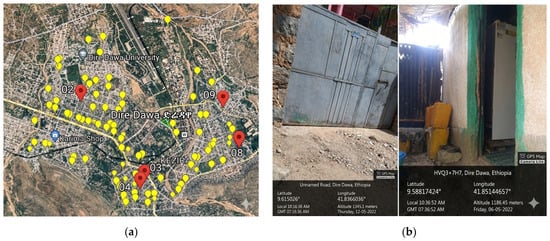
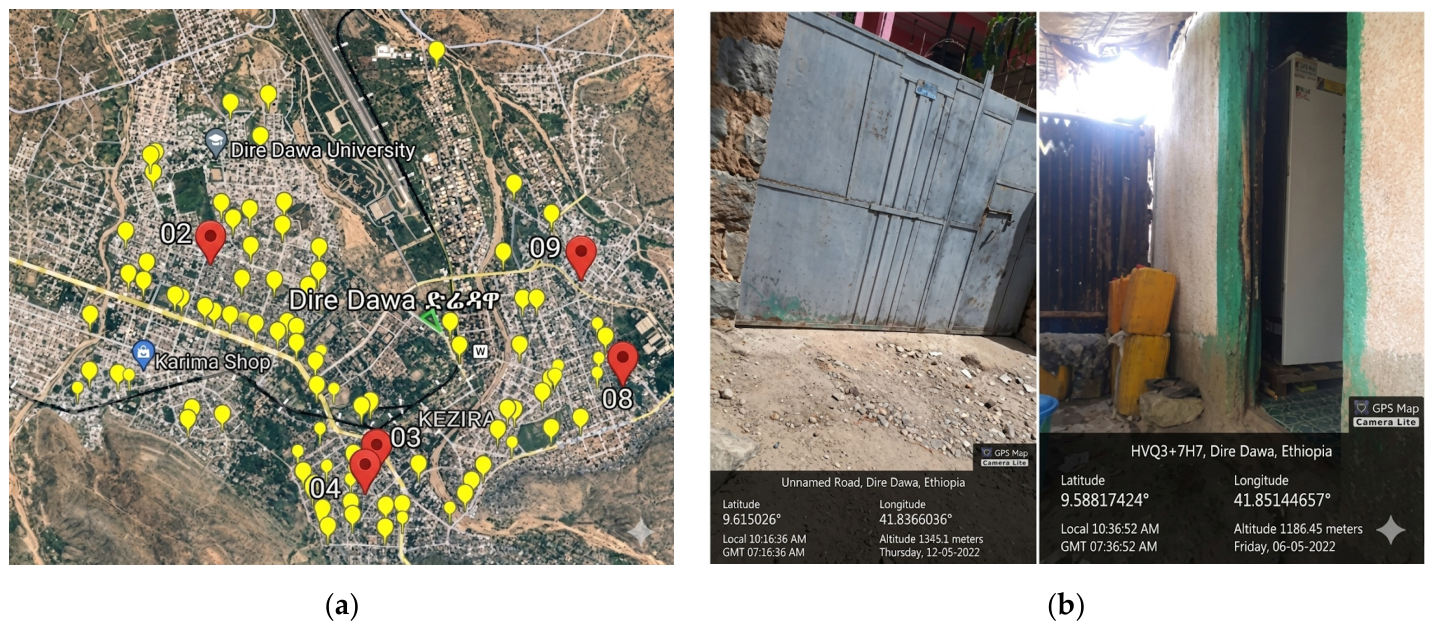
In this formula, N represents the total population size (total number of households), e signifies the level of precision (set at 0.05), and n denotes the resulting sample size. Based on this calculation, a total sample size of 105 households was determined. To ensure representation across the city of Dire Dawa, a stratified random sampling method was employed to select these 105 households proportionally from seven administrative kebeles (02, 03, 04, 05, 06, 08, and 09).
For the sample houses selected in this study, the registration process was conducted using an Android application called GPS Map Cam version number 1.9.17. After the registration was completed, the information of the registered houses was entered into Google Earth. A stratified sample is selected based on previous studies, which was showed in Table 1 that education level, income level, and family type are major factors affecting household waste quantities [31].
Table 1.
Selected strata.
Using the stratified sampling technique, this study will be able to explain how education, income, and family structure influence the waste behavior of the citizens in the study area. This study will give an explicit explanation of waste behavior mechanisms of the citizens in Dire Dawa City, Ethiopia. Finally, the study will help to design interventions and appropriate policies for improving the household waste management behavior of each specific group of people.
The mapping of house registration data via Google Earth reveals significant spatial clusters and distribution patterns across the study site, as illustrated in Figure 1b. In this visualization, red pins designate the sampled administrative kebeles, while yellow pins identify the specific households selected within them, as indicated in Figure 1a. This spatial analysis establishes a clear geographical context, offering a robust foundation for the subsequent interpretation of the study’s findings.
Figure 1.
(a,b): Overview of selected samples from 02, 03, 04, 08 & 09 administrative kebeles in Dire Dawa City.
Table 2 summarizes the sample households from Administrative kebele 03. The coding system is exemplified by “FT-03-3b322,” where FT denotes family type, 03 represents the administrative kebele, 3b indicates family size (a = family size up to three children; b = family size above three children), and the subsequent digits represent income level (3), education level (2), and religious perspective (2).
Table 2.
Administrative kebele 03 summarized strata.
The waste characterization study was conducted over three separate assessment periods. Each period spanned three consecutive days, during which the total accumulated waste was comprehensively evaluated. This evaluation involved two primary methods: mass quantification using a precision balance and physical categorization. For physical categorization, waste was manually sorted into three specific streams: (1) organic/biological waste (e.g., food scraps), (2) recyclables (e.g., plastics, paper, and metals), and (3) non-recyclable residuals. This categorization process was applied to the aggregate waste collected over each 72 h assessment period, providing a representative overview of the waste fractions present in the study. Additionally, socioeconomic factors—specifically education level and religious affiliation—were analyzed to determine waste generation rates per capita (kg/person/day) of Dire Dawa city.
2.2. Thermochemical Characterization
Thermochemical characteristics of municipal solid waste and its relevance to energy recovery processes will be presented. Parameters measured include moisture content, volatile matter, fixed carbon, and ash content using methods such as proximate and ultimate analysis, calorimeters, etc. These characteristics of the waste feedstock determine the viability of its thermochemical conversion (incineration, pyrolysis, and gasification) into useful forms of energy, i.e., heat, work, and transportation fuel. To accurately estimate the heating value, a combination of methods is employed. Firstly, the bomb calorimeter, a standard laboratory instrument, is utilized to directly measure the heat released during the combustion of a sample of the waste material. This method provides precise and reliable data on the calorific value of the waste, aiding in the determination of its energy content.
2.3. Performance Analysis Waste-to-Energy Thermal Power Plant
This topic initiates with a comprehensive exploration into the operational efficacy and environmental impact of a WTE plant situated in Dire Dawa City, Ethiopia. At its core, this theme delves into the intricate process of designing and estimating the thermal performance of the WTE facility, a critical endeavor aimed at addressing the region’s waste management challenges while meeting its energy demands sustainably. By integrating empirical data inputs, advanced software tools, and laboratory results, the theme sets out to provide a nuanced understanding of the plant’s functionality and its broader implications for energy infrastructure and environmental stewardship.
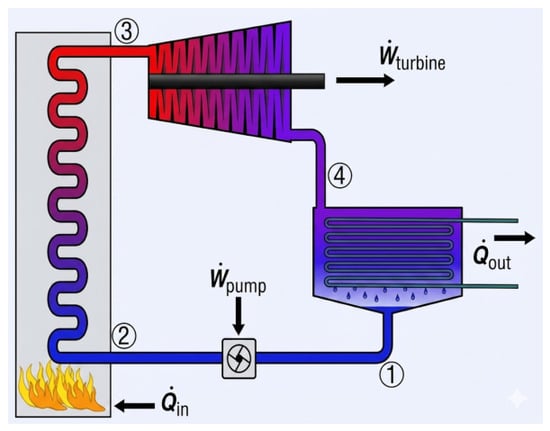
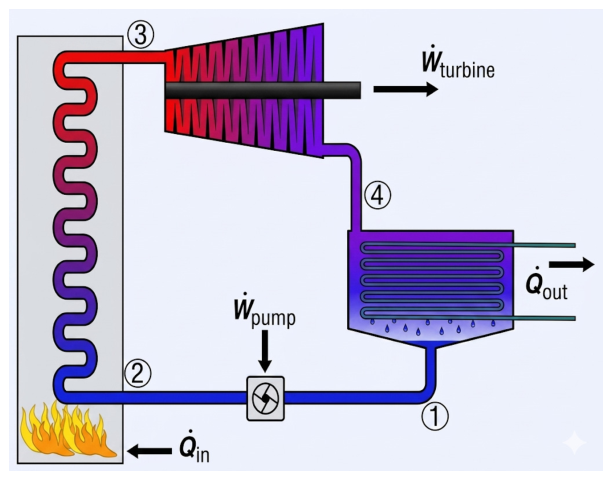
As shown in Figure 2, and represent the rates of heat input and heat rejection, respectively, while and denote the power produced by the turbine and the power consumed by the pump. Additionally, proximate analysis devices obtained from the Ethiopian Geological Survey are utilized to assess the composition of the waste feedstock. The foundation of the analysis lies in the utilization of Thermoflow STEAM-PRO 21.00 software, a sophisticated tool tailored for thermal performance assessment in power generation facilities.
Figure 2.
Typical layout of Rankine cycle. The numbered components are: (1) Boiler—where heat from waste combustion generates high-pressure steam; (2) Turbine—where steam expands to produce mechanical work (); (3) Condenser—where exhaust steam rejects heat () and condenses back to liquid; (4) Pump—which pressurizes the condensate and returns it to the boiler, consuming work ().
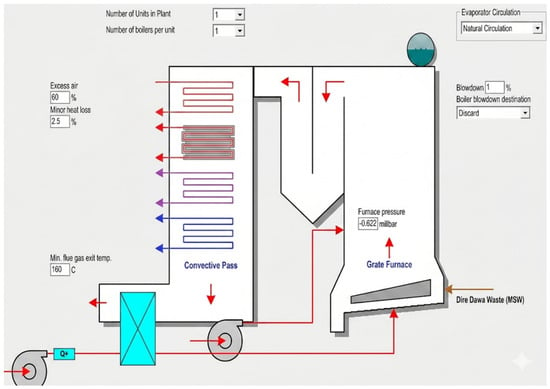
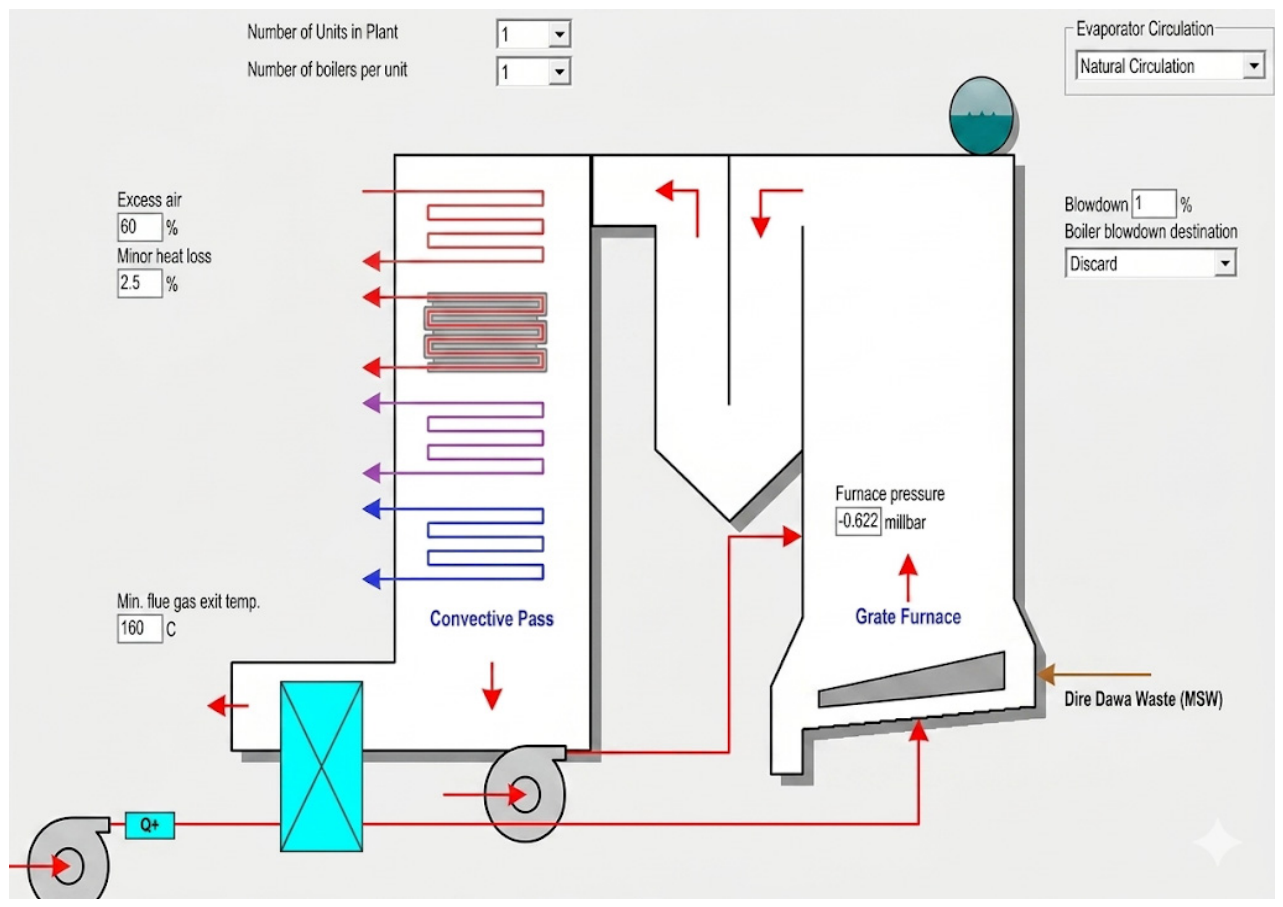
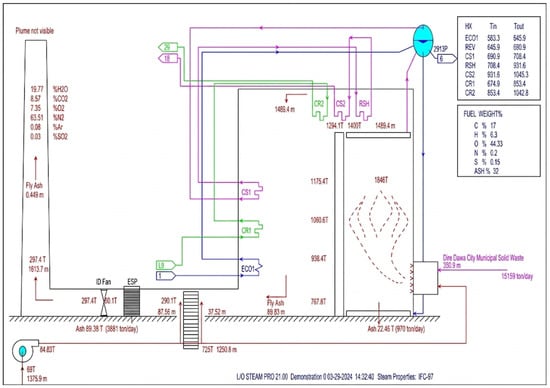
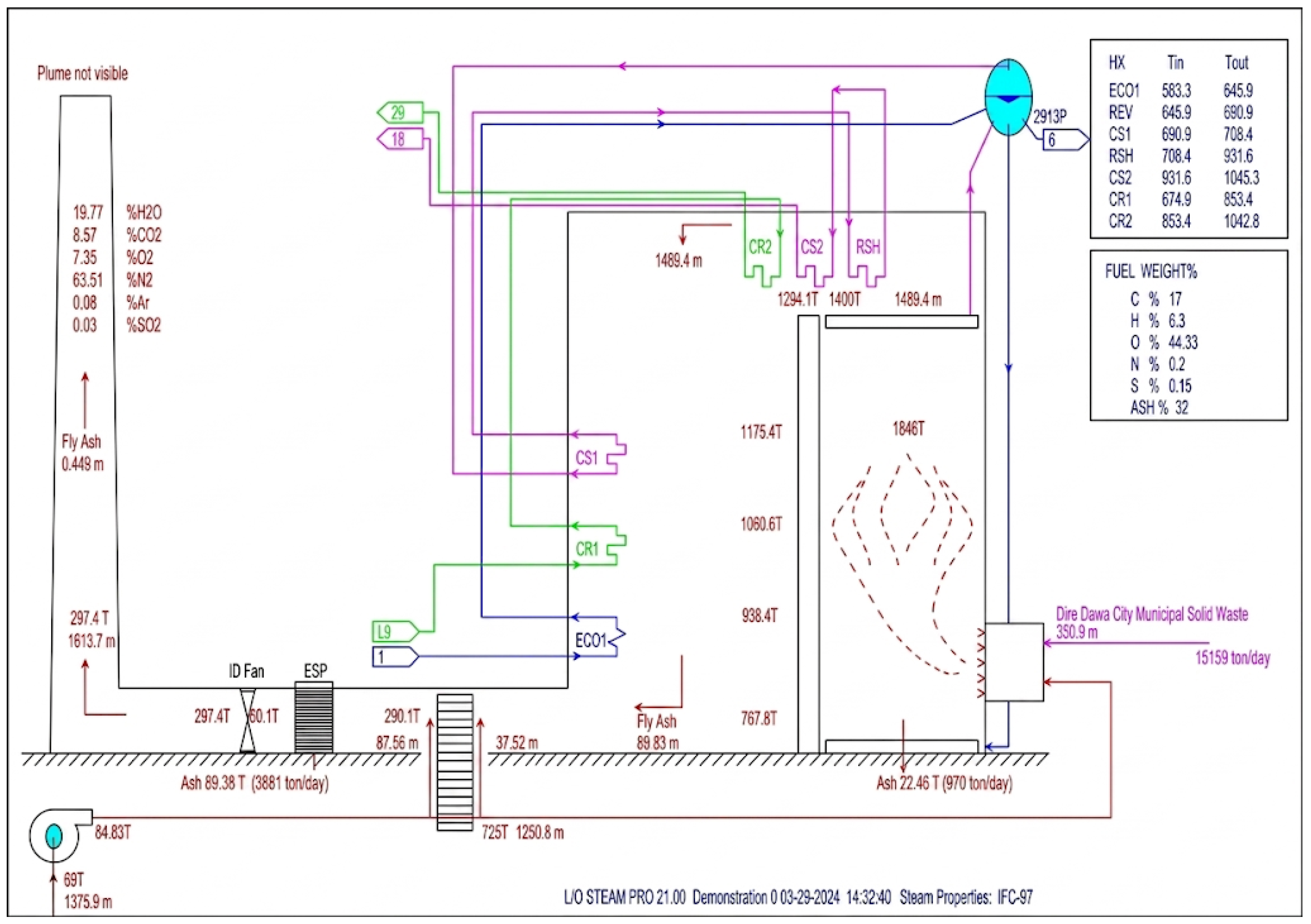
The wall-mounted water tube design provides the Dire Dawa City WTE plant with the flexibility to maintain high thermal performance despite fluctuations in waste quality or volume, as shown in Figure 3. By accommodating inconsistent fuel distribution on the grate, this boiler ensures stable, efficient energy production and sustainable waste disposal. This robust engineering allows the facility to maximize energy recovery from the local waste stream while maintaining consistent operational availability.
Figure 3.
Thermal performances of grate furnace steam boiler system.
3. Result and Discussion
3.1. Amount of Waste Estimation Results
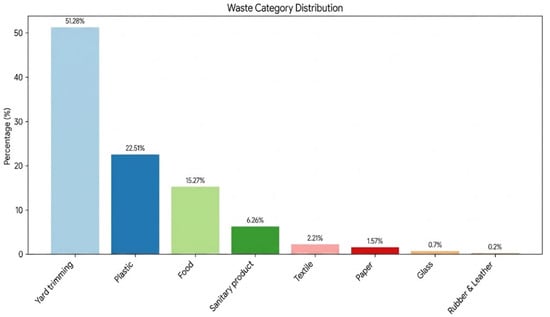
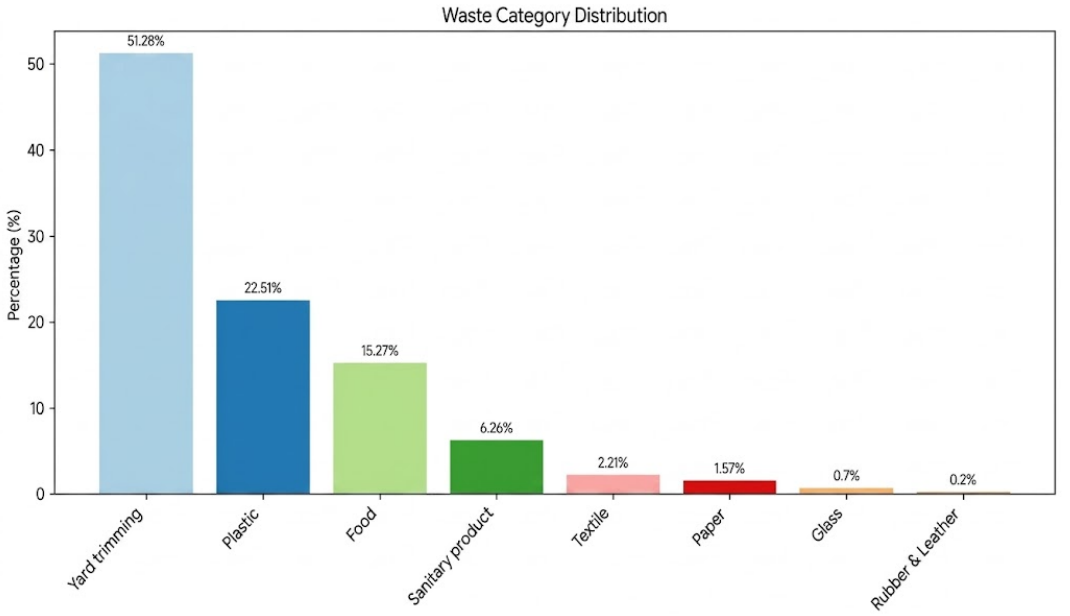
The waste composition analysis provides valuable information about the types of trash found in the area. It reveals that yard trimmings, including khat and organic waste, make up a significant portion, accounting for 51.28% of the total waste, as indicated in Figure 4. This suggests that there is a substantial amount of natural materials like leaves and plants being disposed of. Plastics are another major component, constituting 22.51% of the waste. Plastics can persist in the environment for a long time and pose serious threats to ecosystems and wildlife. Therefore, it is crucial to find ways to reduce plastic usage and increase recycling efforts to mitigate environmental harm.
Figure 4.
Waste composition of Dire Dawa City.
From the estimated population of the city, sourced from World population review, it was determined that the total amount of waste generated in 2024 is approximately 237.2 tons per day. This calculation takes into account the daily waste generation per capita of 0.49 kg per day per capita and the estimated population size of the city. By extrapolating the per capita waste generation rate to the entire population, we can estimate the total daily waste production of the city. This information is crucial for waste management authorities and policymakers to plan and allocate resources effectively for waste collection, transportation, and disposal.
3.2. Calorific Value and Combustion
Following the estimation of waste, the subsequent step involved evaluating its heating value and characterizing its composition. The entire sample mix, predominantly composed of organic waste accounting for up to 70% of the sample, was forwarded to the Ethiopian Geological Survey for analysis.
As illustrated in Table 3, the thermo-chemical characteristics of the waste indicate a calorific value of 18.20 × 10³ kJ/kg, accompanied by a moisture content of 2.75%. Notably, the volatile matter constitutes the highest proportion at 73.5%, while the fixed carbon content stands at 19.18%. However, it is essential to acknowledge that the moisture content in the actual scenario may deviate from these findings. During the examination period, adjustments were necessary to finely mesh the waste and marginally reduce its moisture content, ensuring more accurate and representative results.
Table 3.
Laboratory result.
3.3. Thermal Performance Analysis
As shown below in Figure 5, analyzing a pump’s thermal performance involves evaluating pressure head, flow rate, and power consumption to determine its fluid circulation efficiency. The selection of 1 MPa as an operating pressure in Rankine cycle for WTE plants is usually a strategic balance between thermal efficiency and mechanical complexity. Given the waste-to-energy plant’s broad operating range (5.6 kPa to 1 MPa), selecting a pump capable of maintaining high performance across diverse pressures and flow rates is critical. Effectively, these metrics ensure the system minimizes energy waste while meeting demanding operational requirements. The thermal performance analysis results for the pump, boiler, turbine, and condenser are as follows.
Figure 5.
Schematic layout of Thermal power plant.
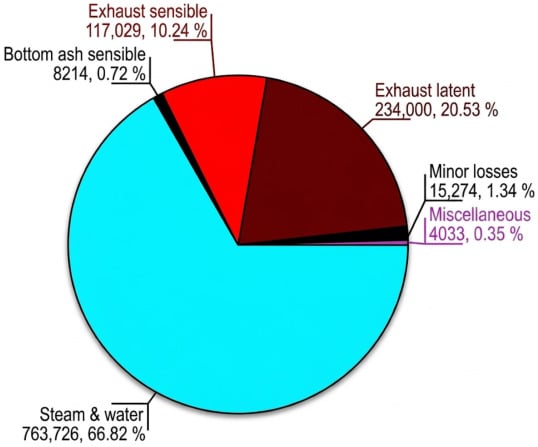
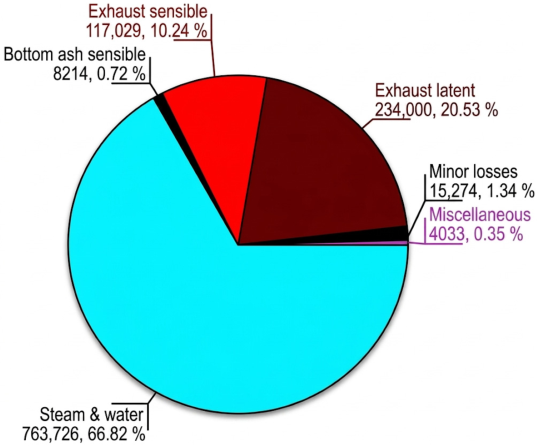
The thermoflow simulation carried out, utilizing Dire Dawa City waste as feed for the selected grate-fired boiler, has provided insightful results regarding the net energy analysis of the boiler. Illustrated in Figure 6 is a representation indicating that 66.82% of the calorific value from the waste is effectively converted into steam energy.
Figure 6.
Boiler temperature-heat diagram.
3.4. Temperature–Entropy Diagram
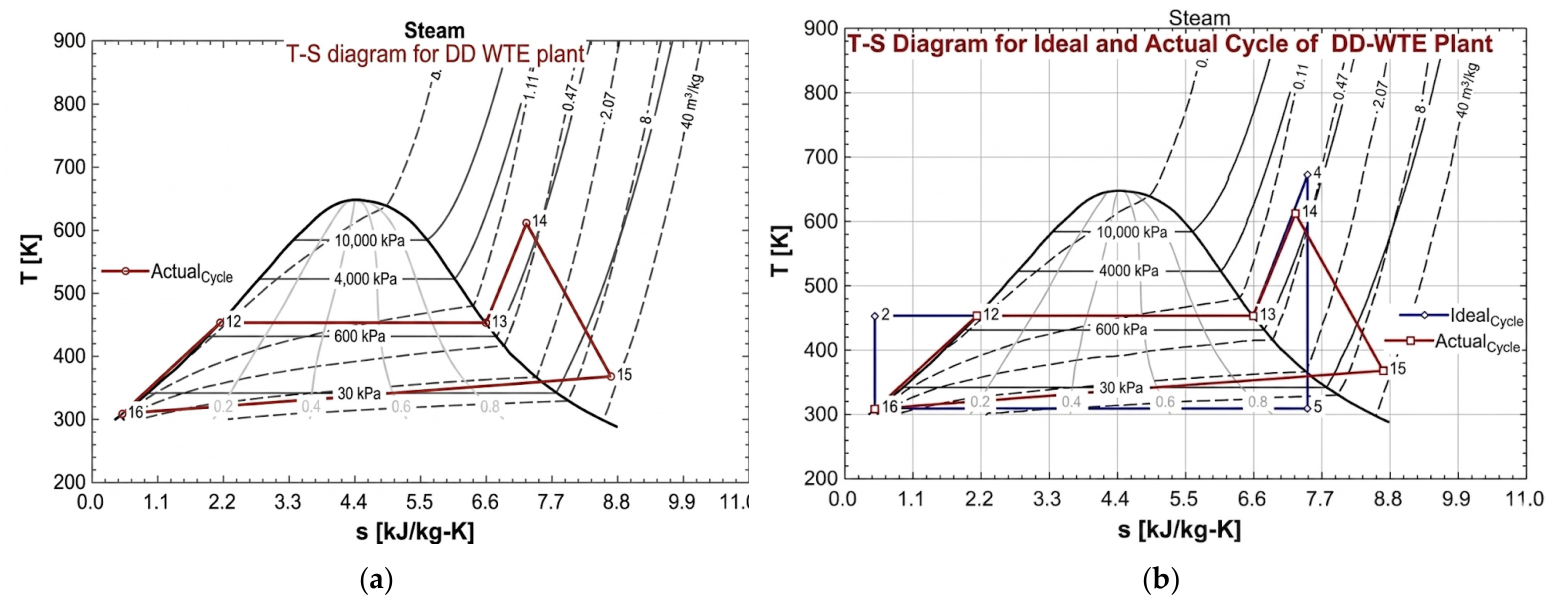
This section presents the temperature–entropy (T-s) diagram derived from the thermodynamic cycle analysis of the WTE plant, modeled using the Engineering Equation Solver (EES). The model solves for the state points of the cycle using the following primary inputs: boiler pressure, superheat temperature, condenser pressure, and mass flow rate. Based on these inputs, EES determines the enthalpy, entropy, and quality at each state point by solving the fundamental property relations for steam and flue gas. The primary outputs include the specific work generated by the turbine, the heat rejected in the condenser, and the resulting thermal performance. The ideal thermal efficiency (ηth) of the cycle, calculated as the ratio of network output to total heat input, is determined to be 31.21% (Figure 7a). This metric represents the theoretical maximum efficiency achievable by the plant under ideal conditions, where all energy input is converted into useful work output without any losses.
Figure 7.
(a,b): T-s diagram for ideal and actual WTE cycle.
However, in real-world operating conditions, the plant experiences entropy sources such as heat loss and head loss, which reduce its overall efficiency. When considering these entropy sources, the actual efficiency of the plant is found to be 25.67% (Figure 7b). This discrepancy between the ideal and actual efficiencies highlights the impact of practical limitations and inefficiencies on the performance of the WTE plant. Factors such as imperfect insulation, frictional losses, and incomplete combustion contribute to entropy generation within the system, leading to energy losses and reduced efficiency.
3.5. Pressure–Enthalpy Diagram
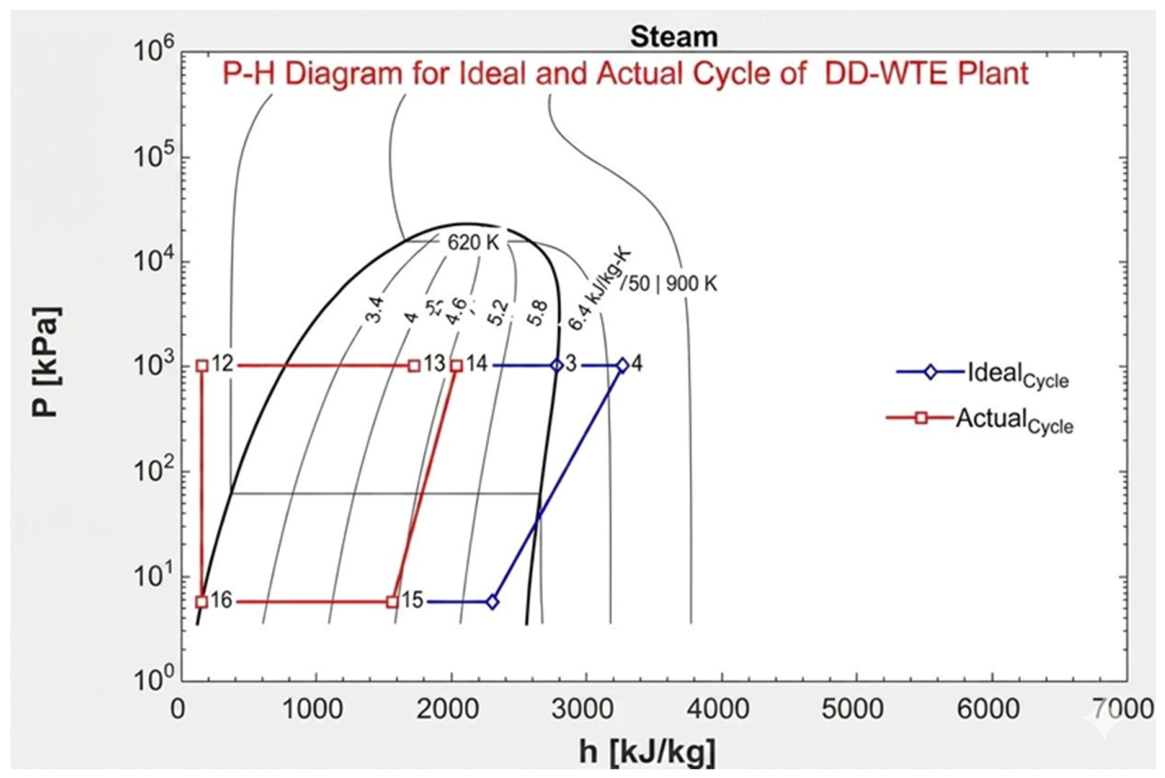
Another essential tool for analyzing thermal performance is the Pressure–Enthalpy (P-h) diagram. Similar to the T-s diagram, the P-h diagram is drawn for the three cases to visualize the thermodynamic processes occurring within the waste-to-energy plant, as specified in Figure 8. This diagram provides a graphical representation of pressure and enthalpy, allowing stakeholders to assess the energy flow and efficiency of the system across different stages of the thermodynamic cycle.
Figure 8.
Pressure–enthalpy Curve.
From the engineering equation solver analysis, the researchers discovered that it is possible to extract 485.9 kJ of energy, which refers to a specific work output from each kilogram of steam. While total daily generation is 237.2 tons, approximately 224 tons are categorized as combustible feedstock; this amounts to a substantial energy resource for power generation. Moreover, the graphical representation of results in T-s and P-h diagrams further aids the understanding of the thermodynamic processes and helps analyze the dynamics of energy flow and efficiency in the plant.
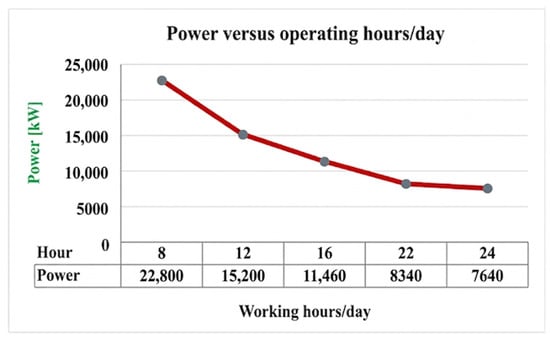
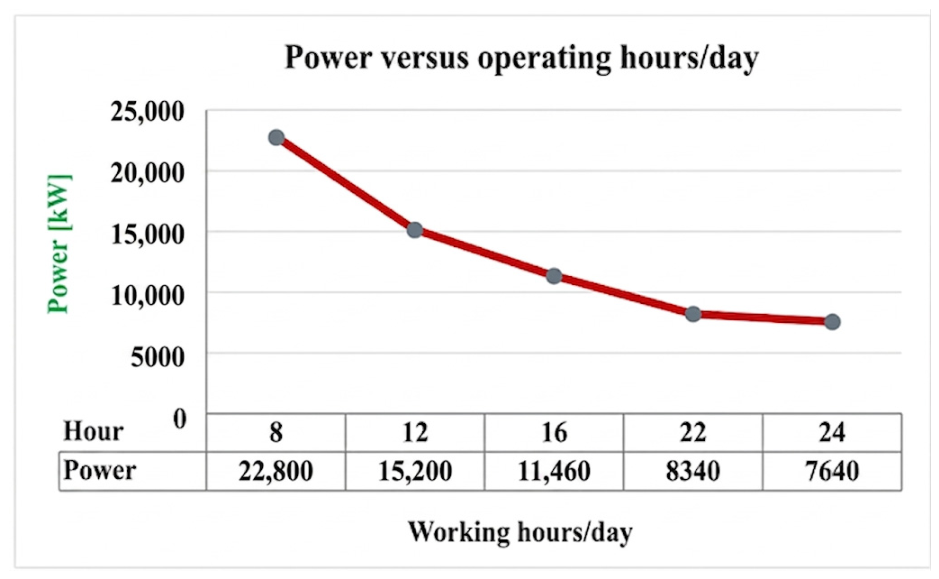
Figure 9 illustrates an inverse relationship between the daily operating duration and the power output capacity of the system, likely constrained by a fixed daily energy budget. When the system is operated for a limited 8 h window, it achieves a peak output of 22.8 MW, whereas continuous 24 h operation results in a base load output of 7.64 MW. This downward trend follows a nearly constant total energy yield of approximately 183,360 kWh per day, meaning that as the operating hours are extended, the power output must be proportionally reduced to sustain the duration. The steepest decline in capacity occurs between 8 and 12 h, eventually stabilizing as it approaches full-day operation. This trade-off is a central consideration in waste-to-energy management, as it determines whether the facility is better utilized for peak-shaving—providing high power during the city’s busiest hours—or as a base-load provider that supports the grid’s minimum requirements around the clock.
Figure 9.
Effect of Operational Hours on Power Plant Capacity.
By harnessing this resource efficiently, we can contribute significantly to the local power grid, providing sustainable electricity for our community. This underscores the importance of optimizing our plant’s operations to maximize energy extraction and utilization, ensuring that we make the most of this valuable resource while minimizing environmental impact.
4. Conclusions
This research underscores the transformative potential of WTE technology as a sustainable solution for municipal solid waste management and renewable energy production in Dire Dawa City, Ethiopia. By evaluating the thermo-chemical characteristics of local waste and employing advanced thermo-flow simulations, this study confirms that the city’s waste stream is a viable fuel source for a thermal power plant operating on the Rankine cycle.
The technical analysis yielded the following key conclusions:
Energy Efficiency: The grate-fired boiler system demonstrates a 66.82% energy conversion rate, efficiently processing municipal solid waste into high-pressure steam to generate thermal energy;
Power Generation Potential: Based on the current waste availability and population metrics of Dire Dawa City, the proposed facility can generate a power output ranging from 7.64 MW to 22.80 MW. This translates to a daily energy yield of 182,400 kWh to 183,360 kWh, which could significantly augment the local power grid;
Thermodynamic Stability: The T-s and P-h analyses characterize the system’s energy distribution and state points, confirming that the system operates within efficient thermodynamic parameters at the design point. This analysis validates the theoretical feasibility of the proposed cycle configuration under nominal operating conditions. The effect of variable operating conditions related to variability in energy content of the waste, as well as its quantity based on seasonal and other variations, needs additional data and as such has been recommended as scope for further research.
Beyond the technical metrics, the implementation of a WTE facility in Dire Dawa City offers a ‘two-birds-one-stone’ strategic advantage. It provides a sophisticated method for managing the city’s escalating waste volume while simultaneously addressing regional energy deficits. Such a project aligns with Ethiopia’s broader goals for a circular economy, offering a blueprint for environmental protection, job creation, and sustainable urban development. Ultimately, transitioning from traditional waste disposal to energy recovery will foster a cleaner, greener, and more economically resilient future for the residents of Dire Dawa City.
Author Contributions
Conceptualization, methodology, original draft preparation, formal analysis, A.A.W.; software, data encoding, investigation, G.F.A.; supervision, writing-reviewing and editing, V.R.A.; supervision, writing-reviewing and editing, A.J.S. All authors have read and agreed to the published version of the manuscript.
Funding
This research received no external funding.
Data Availability Statement
The data presented in this study are available on request from the corresponding author.
Acknowledgments
This work has been supported by Dire Dawa University technology institute and Venkata Ramayya Ancha from Jimma University, Ethiopia.
Conflicts of Interest
The authors declare no conflicts of interest.
Abbreviations
The following abbreviations are used in this manuscript:
| DD | Dire Dawa (City in Ethiopia) |
| HHV | Higher Heating Value |
| MSW | Municipal Solid Waste |
| IRENA | International Renewable Energy Agency |
| WTE | Waste-To-Energy |
References
- Khan, S.; Anjum, R.; Raza, S.T.; Bazai, N.A.; Ihtisham, M. Technologies for municipal solid waste management: Current status, challenges, and future perspectives. Chemosphere 2022, 288, 132403. [Google Scholar] [CrossRef] [Scilit]
- Havukainen, J.; Zhan, M.; Dong, J.; Liikanen, M.; Deviatkin, I.; Li, X.; Horttanainen, M. Environmental impact assessment of municipal solid waste management incorporating mechanical treatment of waste and incineration in Hangzhou, China. J. Clean. Prod. 2017, 141, 453–461. [Google Scholar] [CrossRef] [Scilit]
- Malinauskaite, J.; Jouhara, H.; Czajczyńska, D.; Stanchev, P.; Katsou, E.; Rostkowski, P.; Thorne, R.; Colón, J.; Ponsá, S.; Al-Mansour, F.; et al. Municipal solid waste management and waste-to-energy in the context of a circular economy and energy recycling in Europe. Energy 2017, 141, 2013–2044. [Google Scholar] [CrossRef] [Scilit]
- Ouda, O.K.; Raza, S.A.; Nizami, A.S.; Rehan, M.; Al-Waked, R.; Korres, N.E. Waste to energy potential: A case study of Saudi Arabia. Renew. Sustain. Energy Rev. 2016, 61, 328–340. [Google Scholar] [CrossRef] [Scilit]
- Patil, A.A.; Kulkarni, A.A.; Patil, B.B. Waste to energy by incineration. J. Comput. Technol. 2014, 3, 12–15. [Google Scholar]
- Kabir, I.I.; Wang, C.; Yuen, A.C.; Yeoh, G.H. Cellulose-based flame retardants for polymeric materials. In Bio-Based Flame-Retardant Technology for Polymeric Materials; Elsevier: Amsterdam, The Netherlands, 2022; pp. 97–131. [Google Scholar]
- Wang, Y.; Lai, N.; Zuo, J.; Chen, G.; Du, H. Characteristics and trends of research on waste-to-energy incineration: A bibliometric analysis, 1999–2015. Renew. Sustain. Energy Rev. 2016, 66, 95–104. [Google Scholar] [CrossRef] [Scilit]
- Hussien, K.; Meaza, H. A GIS-based multi-criteria evaluation approach location suitability modeling for solid waste disposal: Dire Dawa City, East Hararghe, Ethiopia. Pap. Appl. Geogr. 2019, 5, 272–293. [Google Scholar] [CrossRef] [Scilit]
- Yimam, Y.M.; Tesfaye, N. Environmental and health impacts of and challenges on Rappie Koshe waste-to-energy facility, Addis Ababa. Int. Res. J. Multidiscip. Scope 2020, 1, 9–17. [Google Scholar] [CrossRef] [Scilit]
- Turner, B. (Ed.) Ethiopia. In The Statesman’s Yearbook 2020: The Politics, Cultures and Economies of the World; Palgrave Macmillan: London, UK, 2020; pp. 453–457. [Google Scholar]
- Girma, G. Barriers influencing implementation of plastic recycling process: A case of Dire Dawa City, Ethiopia. Ind. Eng. Lett. 2020, 10, 1–12. [Google Scholar]
- International Renewable Energy Agency (IRENA). Renewable Capacity Statistics 2020; IRENA: Abu Dhabi, United Arab Emirates, 2020. [Google Scholar]
- Daniel, Z. Designing and Simulation of Waste to Energy Plant for Adama Municipality Solid Waste via Incineration Technology. Doctoral Dissertation, Adama Science and Technology University (ASTU), Adama, Ethiopia, 2017. [Google Scholar]
- Alemayehu, D.S.; Regasa, M.S.; Mengestie, B.; Alemayehu, T. Household solid waste management practice associated factors and service delivery performance of private solid waste collectors in Dire Dawa City, Eastern Ethiopia. Int. J. Innov. Res. Sci. Eng. Technol. 2017, 6, 1–12. [Google Scholar]
- Traven, L. Sustainable energy generation from municipal solid waste: A brief overview of existing technologies. Case Stud. Chem. Environ. Eng. 2023, 8, 100491. [Google Scholar] [CrossRef] [Scilit]
- Aslan, N.; Salman, O.; Konakci, R.; Akan, A.P. Circular economy approach to promote sustainable energy from waste. Sustain. Futures 2025, 10, 101238. [Google Scholar] [CrossRef] [Scilit]
- Tsai, W.T. An analysis of operational efficiencies in the waste-to-energy (WTE) plants of Kaohsiung municipality (Taiwan). Resources 2019, 8, 125. [Google Scholar] [CrossRef] [Scilit]
- Dos Santos, I.F.; Mensah, J.H.; Gonçalves, T.; Barros, R.M. Incineration of municipal solid waste in Brazil: An analysis of the economically viable energy potential. Renew. Energy 2020, 149, 1386–1394. [Google Scholar] [CrossRef] [Scilit]
- Bano, S. Citizens’ attitudes and practices towards waste reduction, separation, and recycling: A systematic review. Sustainability 2025, 16, 9969. [Google Scholar] [CrossRef] [Scilit]
- Maphuhla, N.G.; Oyedeji, O.O. From Trash to Treasure: Systematic Evaluation of Potential and Efficiency of Waste-to-Energy Incineration for Electricity Generation. Waste 2025, 3, 39. [Google Scholar] [CrossRef] [Scilit]
- Mbohwa, C.; Zvigumbu, B. Feasibility study for waste incinerator plant for the production of electricity in Harare, Zimbabwe. Adv. Mater. Res. 2007, 18, 509–518. [Google Scholar] [CrossRef] [Scilit]
- Usman, R.A.; Paramasivam, V.; Selvaraj, S.K. Some study on the potential energy extraction from solar-assisted solid waste for produce electricity in Adama city in Ethiopia. Mater. Today Proc. 2021, 46, 7537–7547. [Google Scholar] [CrossRef] [Scilit]
- Abubakar, S.; Oumarou, M.B. Evaluation of energy potential of MSW in the Tamale metropolis, Ghana: An assessment of solid waste characteristics and energy content. J. Air Waste Manag. Assoc. 2024, 74, 210–225. [Google Scholar] [CrossRef] [Scilit]
- Moya, D.; Aldás, C.; Jaramillo, D.; Játiva, E.; Kaparaju, P. Waste-to-energy technologies: An opportunity of energy recovery from municipal solid waste, using Quito-Ecuador as case study. Energy Procedia 2017, 134, 327–336. [Google Scholar] [CrossRef] [Scilit]
- Makarichi, L.; Kan, R.; Jutidamrongphan, W.; Techato, K.A. Suitability of municipal solid waste in African cities for thermochemical waste-to-energy conversion: The case of Harare Metropolitan City, Zimbabwe. Waste Manag. Res. 2019, 37, 83–94. [Google Scholar] [CrossRef] [Scilit] [PubMed]
- Kitesa, G.D.; Gebre, S.L.; Getahun, T. From waste to resource: Opportunities and barriers for household solid waste recovery in Jimma City, Ethiopia. Sci. Rep. 2026, 16, 1285. [Google Scholar]
- Abebe, G.B. Factors affecting the sustainable solid waste management the case of Shashemene City, Ethiopia. J. Environ. Plan. Manag. 2026, 15, 45–58. [Google Scholar]
- Wong, S.L.; Ngadi, N.; Abdullah, T.A.T.; Inuwa, I.M. Current state and future prospects of plastic waste as source of fuel via pyrolysis: A review. Renew. Sustain. Energy Rev. 2015, 50, 1167–1180. [Google Scholar] [CrossRef] [Scilit]
- Meyad, A.M.; Ambelu, A.; Zeleke, G. Spatiotemporal analysis of urban expansion: The case of Dire Dawa City, eastern Ethiopia. Sustainability 2024, 17, 7760. [Google Scholar] [CrossRef] [Scilit]
- Sanana, S.; Mwanza, B.G. An assessment of e-waste management challenges in Zambia. Int. J. Eng. Manag. Res. 2024, 14, 26–35. [Google Scholar]
- Zhao, Y.; Diunugala, H.P.; Mombeuil, C. Factors affecting household solid waste generation and management in Sri Lanka: An empirical study. Environ. Monit. Assess. 2021, 193, 838. [Google Scholar] [CrossRef] [Scilit]

Disclaimer/Publisher’s Note: The statements, opinions and data contained in all publications are solely those of the individual author(s) and contributor(s) and not of MDPI and/or the editor(s). MDPI and/or the editor(s) disclaim responsibility for any injury to people or property resulting from any ideas, methods, instructions or products referred to in the content. |
© 2026 by the authors. Licensee MDPI, Basel, Switzerland. This article is an open access article distributed under the terms and conditions of the Creative Commons Attribution (CC BY) license.