


Abstract
This study presents an experimental performance evaluation of an oil-based indirect solar fryer system designed for injera baking. The system consists of a receiver vessel, a closed-loop delivery and return pipe network, and a 60 cm diameter aluminum baking plate with spiral grooves on its bottom surface. Heat transfer oil circulates within the closed loop to transfer thermal energy from the receiver to the baking plate. The system was experimentally investigated under controlled electrical heating conditions using input power levels of 1.0, 1.3, 1.6, 1.75, 2.0, and 2.4 kW, representing equivalent solar thermal input scenarios with varying intensity. The results confirmed the technical feasibility of the system for injera baking across all tested conditions, with performance strongly dependent on input power. At higher input levels (≥2.0 kW), faster heating and shorter baking cycles of approximately 2.5–3 min were achieved; however, increased oil temperatures and thermal instability were observed due to limited heat redistribution within the fixed low-flow circulation system. At lower input levels (≤1.3 kW), the system remained thermally stable but exhibited long initial heating times (up to approximately 85 min) and reduced operational efficiency, limiting its practical applicability. The most balanced performance was observed at intermediate input power levels of 1.6–1.75 kW, where the system achieved approximately 45–60 min initial heating time, stable temperature behavior during operation, and consistent baking cycles of about 3 min with 1 min reheating time. This range provided an optimal compromise between thermal efficiency, operational stability, and energy utilization under the present configuration. Overall, the study demonstrates that the indirect solar fryer system is a promising alternative for energy-efficient injera baking; however, performance is strongly influenced by thermal input and circulation conditions, highlighting the need for further optimization and validation under real solar operating environments.
1. Introduction
Injera is a staple food indigenous to Ethiopia and Eritrea and constitutes a major component of the daily diet for a large proportion of the 139 million population [1] in the two countries. It is prepared from fermented dough made primarily from Eragrostis teff flour and water [2,3,4], and baked into a thin, circular pancake on a heated plate. Due to its widespread consumption, often multiple times per day, injera baking represents one of the most significant household cooking activities in both countries.
The injera baking is highly energy-intensive process which arises from the conventional technology and inefficient ulitization of the energy resources. The traditional method involves the use of inefficient large-sized clay pan with typical sizes of 500 to 600 mm in diaemter and 20 to 30 mm in thickness [5,6]. The baking process is predominantly dependent on biomass fuels such as firewood, agricultural residues, and dung, particularly in rural areas [7,8,9,10]. This reliance contributes to low energy efficiency, indoor air pollution, and increasing pressure on biomass resources [11,12,13]. Although electricity-based baking systems are available in urban settings, their adoption remains constrained by limited grid access and supply challenges [10,14]. As a result, injera baking represents a major share of household energy consumption, with the domestic sector accounting for about 89% of total energy use, of which 96% is derived from biomass sources [15,16]. A significant portion of this energy is used for cooking and baking purposes [17,18,19], highlighting the economic, environmental, and health implications of the current practice.
Various efforts have been made to improve the efficiency of conventional biomass and electric baking systems, as well as to develop alternative technologies [5,20,21,22,23,24,25]. Conventional baking systems typically employ large clay plates with low thermal conductivity, resulting in high specific energy consumption and inefficient heat utilization [5,16,17,18,19,26,27,28]. Solar-based injera baking technologies have emerged as a promising alternative due to the abundant solar energy resources available in the region [29,30,31,32,33,34,35,36]. These systems can generally be classified as direct systems, which utilize solar radiation directly at the baking surface, and indirect systems, which employ an intermediate heat transfer medium for energy transport. Previous studies have demonstrated the feasibility of both approaches, including direct systems [37,38,39] and indirect systems incorporating thermal fluids and storage components [40,41,42,43]. However, these technologies often face limitations related to efficiency, operational complexity, safety, and adaptability to real operating conditions.
In particular, indirect solar fryer systems using heat transfer fluids have shown potential for improved thermal control and energy transport. Nevertheless, existing studies remain limited in their evaluation of system performance under realistic and dynamically varying energy input conditions, such as fluctuations in solar radiation, changes in operating environment, and varying thermal loads during baking cycles. Furthermore, detailed experimental analyses of transient thermal behavior and system response during key operational phases, such as initial heating, baking, and reheating are still lacking.
The present study addresses these gaps by providing a comprehensive experimental investigation of an oil-based indirect solar fryer system developed for injera baking [44]. The novelty of this work lies in the evaluation of system performance under realistic, fluctuating energy input conditions and the detailed characterization of temperature evolution and energy transfer across system components during operation. Unlike previous studies that primarily demonstrated feasibility under controlled conditions [40,41,42,43], this study emphasizes dynamic performance assessment representative of practical use scenarios.
Accordingly, the objective of this study is to experimentally analyze the thermal and operational performance of the developed solar fryer system. The analysis focuses on temperature distribution within system components, energy input characteristics, initial heating time, baking and reheating duration, and overall system behavior under varying operating conditions. The findings aim to contribute to the development of efficient, reliable, and sustainable alternative energy solutions for injera baking applications.
2. Materials and Methods
This section outlines the methodological approach followed during the design of the solar fryer system and experimental tests. The thermal design and system development process was guided by both analytical and experimental considerations, taking into account the system’s suitability for injera baking applications under local solar radiation conditions. Both geometrical and thermal design aspects were systematically evaluated to achieve efficient solar energy concentration, heat transfer, and temperature distribution on the baking surface. In addition, material selection, system configuration, and operational modes were optimized to balance material availability, performance, simplicity for local manufacturing, and operational practicality. The following subsections present the geometrical and thermal design features of the system, followed by descriptions of the experimental setup and performance evaluation methods.
2.1. Description of the Indirect Solar Fryer System
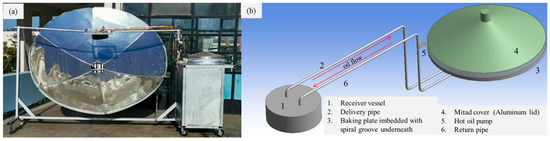
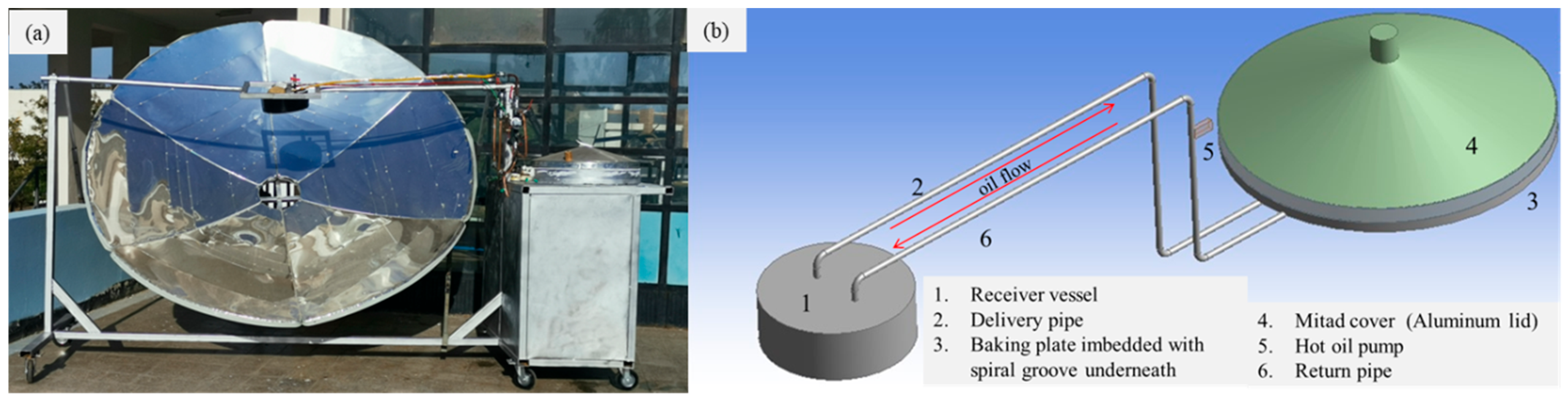
The prototype of the oil-based indirect solar fryer system is indicated in Figure 1, with Figure 1a showing the developed prototype and Figure 1b a schematic diagram and the main components of the system. The system consists of the receiver vessel, delivery and return pipe, baking plate with helical groove, and heat transfer oil filled inside the entire pipe network and plate groove. The geometrical dimensions of the main components in the system and their respective material property are summarized in Table 1.
Figure 1.
The oil-based indirect solar fryer system (a) the prototype (b) system schematic diagram with main components. A more detailed system description is also reported in the authors’ previous work [40].
Table 1.
Summarized geometrical description and material property of the components of the system.
The input heat flux, which simulated concentrated solar radiation from a collector dish, was applied to the bottom surface of the receiver vessel. This heat continuously warmed the oil inside the receiver vessel. A DC battery-powered hot oil pump circulated the heated oil from the receiver vessel through the delivery pipe to the aluminum baking plate. The baking plate contains six spiral grooves on its bottom surface, extending from the center to the outer edge.
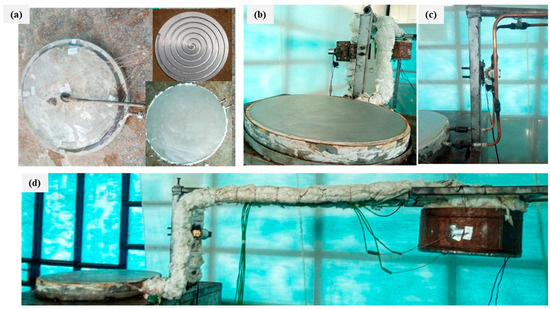
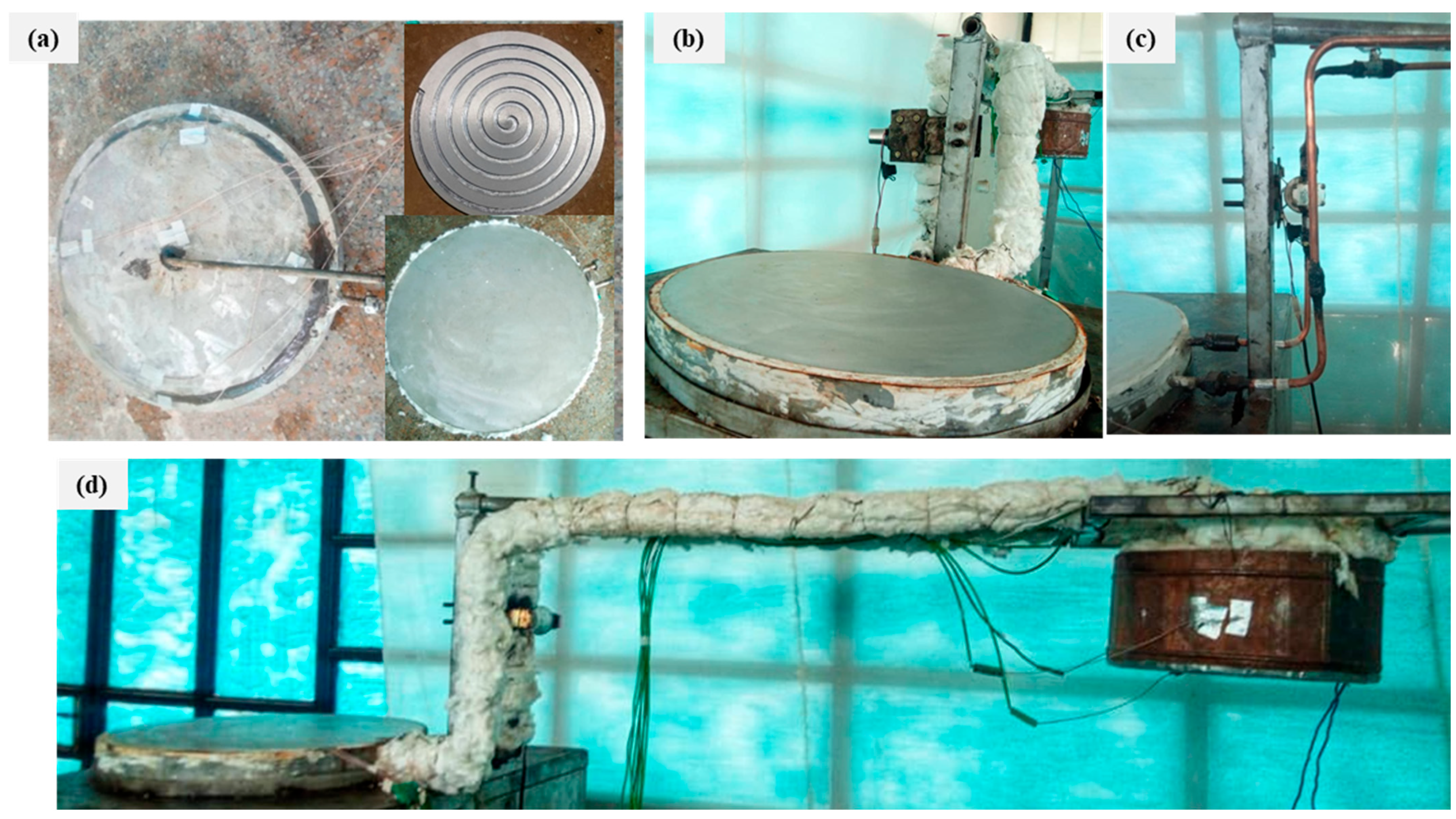
The hot oil flows through these spiral channels and returns via the return pipe to the receiver vessel, forming a closed-loop circulation system. During circulation, heat is transferred from the oil to the baking plate, causing a gradual temperature drop in the fluid before it returns for reheating. Proper thermal insulation was applied to key components including the baking plate, pipes, and receiver vessel, as shown in Figure 2.
Figure 2.
The oil-based indirect solar fryer system with some construction detail in the main components (a) the baking plate with spiral grooves, bottom cover and insulation cover; (b) the baking plate and pipe network connection; (c) hot-oil pump connection, delivery and return pipe; (d) insulation at baking plate, pipes and receiver vessel.
2.2. Experimental Setup
Extensive experiments were conducted on the solar fryer, including no-load heating tests and baking tests with load. The experimental tests were carried out at the Solar Demonstration Center of Mekelle University, Tigray Region, Ethiopia (latitude: 13°28′34.46″; longitude: 39°29′2.12″).
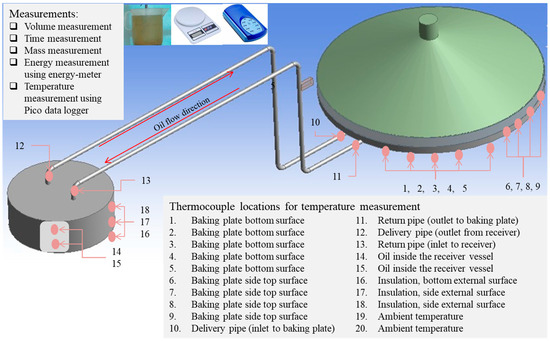
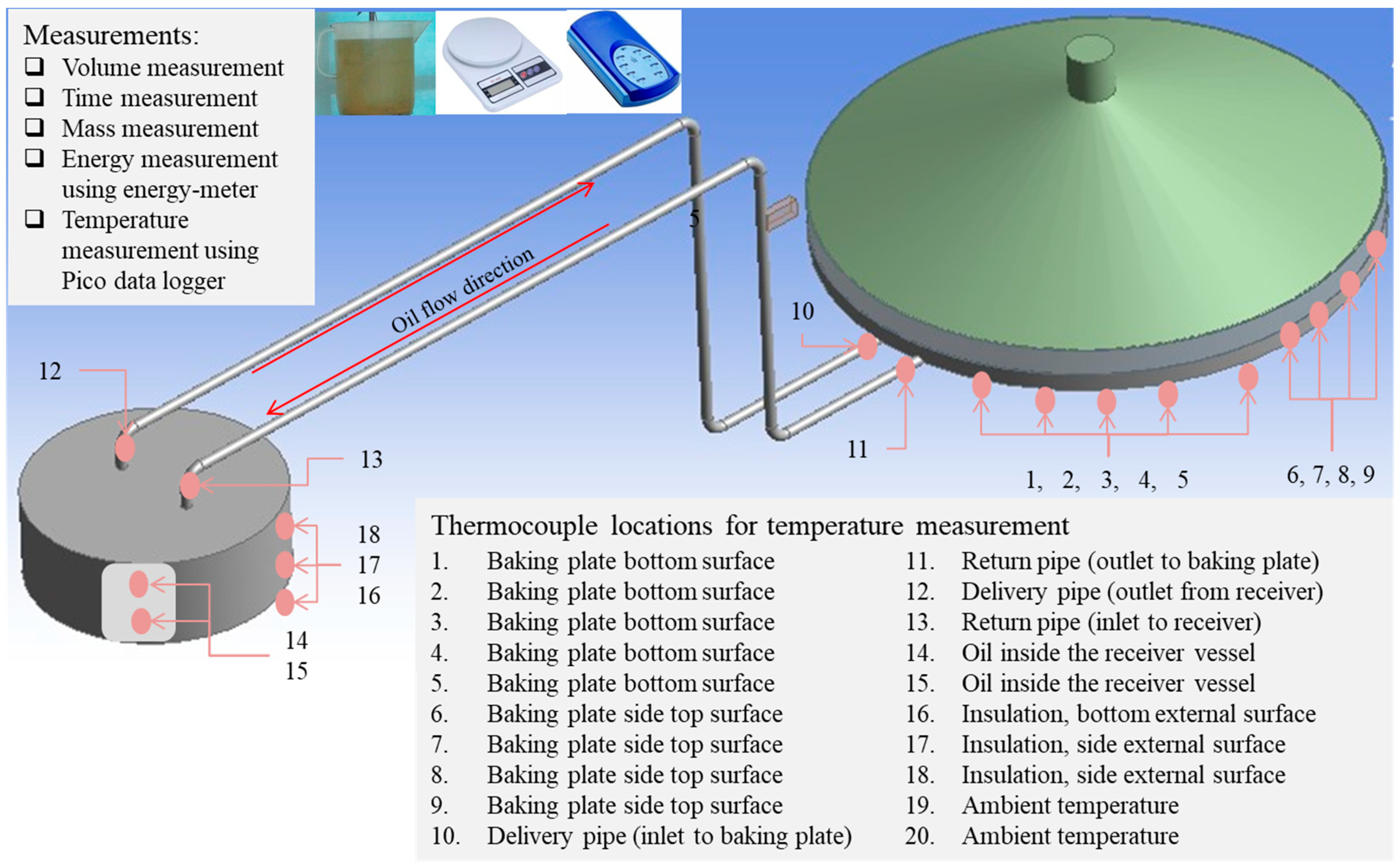
Temperature, mass, time, and energy inputs were measured throughout all phases of the heating and baking processes. Temperature measurements were taken at multiple locations in the system, as shown in Figure 3.
Figure 3.
Experimental setup for temperature, volume, time, mass and energy measurement.
The oil temperature inside the receiver vessel was measured at two points (T14 and T15), and the average was taken as the representative temperature. The oil temperature in the delivery and return pipes was measured at (T10, T12) and (T11, T13), respectively. The baking plate temperature was measured at two zones: bottom surface (T01–T05) and upper side surface (T06-T09). Insulation surface temperatures were measured at (T16–T18). The thermocouple uncertainty and measurement reliability was determined based on the thermocouple calibration uncertainty taken from the manufacturer specification, giving a tolerance of ±1.5 °C within the operating temperature range. Additional uncertainty contributions from the data acquisition system (±0.5 °C), cold junction compensation (±0.5 °C), measurement resolution (0.1 °C), and repeatability were also considered, and all components were combined using the root-sum-square method. The resulting expanded uncertainty, evaluated at a 95% confidence level (k = 2), was estimated to be approximately ±2.0 °C, which is considered acceptable for transient thermal performance evaluation of the system.
Oil flow rate was determined using volume and time measurements at different operating temperatures. Mass measurements of dough and baked injera were also recorded. An energy meter was used to measure electrical energy input during all experimental tests.
To simulate different levels of solar thermal input, the system was supplied with an electrical heater attached to the bottom surface of the receiver vessel. This approach provided controlled and repeatable heat input conditions equivalent to different levels of concentrated solar radiation, enabling systematic evaluation of system performance under varying operating conditions. However, it should be noted that this method does not fully replicate real solar operating conditions, particularly the temporal fluctuations in solar irradiance and environmental effects such as wind speed and ambient temperature variations. Therefore, the experimental results represent controlled condition performance rather than full outdoor solar behavior.
2.3. Performance Evaluation
The thermal performance of the oil-based indirect solar fryer systems was evaluated by assessing the following four factors: Temperature development, time heating and baking cycles, input energy, and Injera quality.
2.3.1. Temperature Development
The maximum temperature reached by the heat transfer oil and baking plate was used to evaluate system performance during no-load heating, baking, and reheating phases. The heating duration and temperature evolution depended on the input heat flux, which influenced both the maximum temperature and the onset of baking cycles. Higher input power resulted in faster heating and higher steady-state temperatures. Therefore, this temperature evolution was used as a key performance indicator.
2.3.2. Time for Initial Heating and Baking–Reheating Cycles
The time required for the system to reach target temperatures from a cold start was recorded as the initial heating time. Additionally, baking cycle duration and reheating time between consecutive cycles were analyzed. These parameters were used to evaluate the system’s thermal responsiveness and stability during repeated operation.
2.3.3. Thermal Energy Modeling
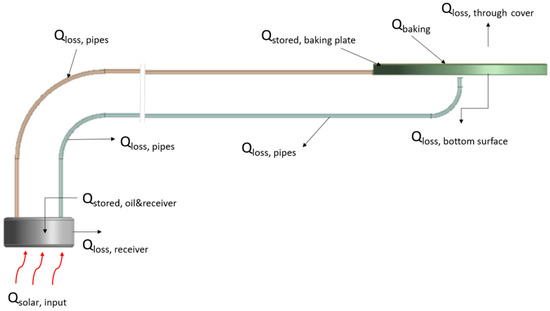
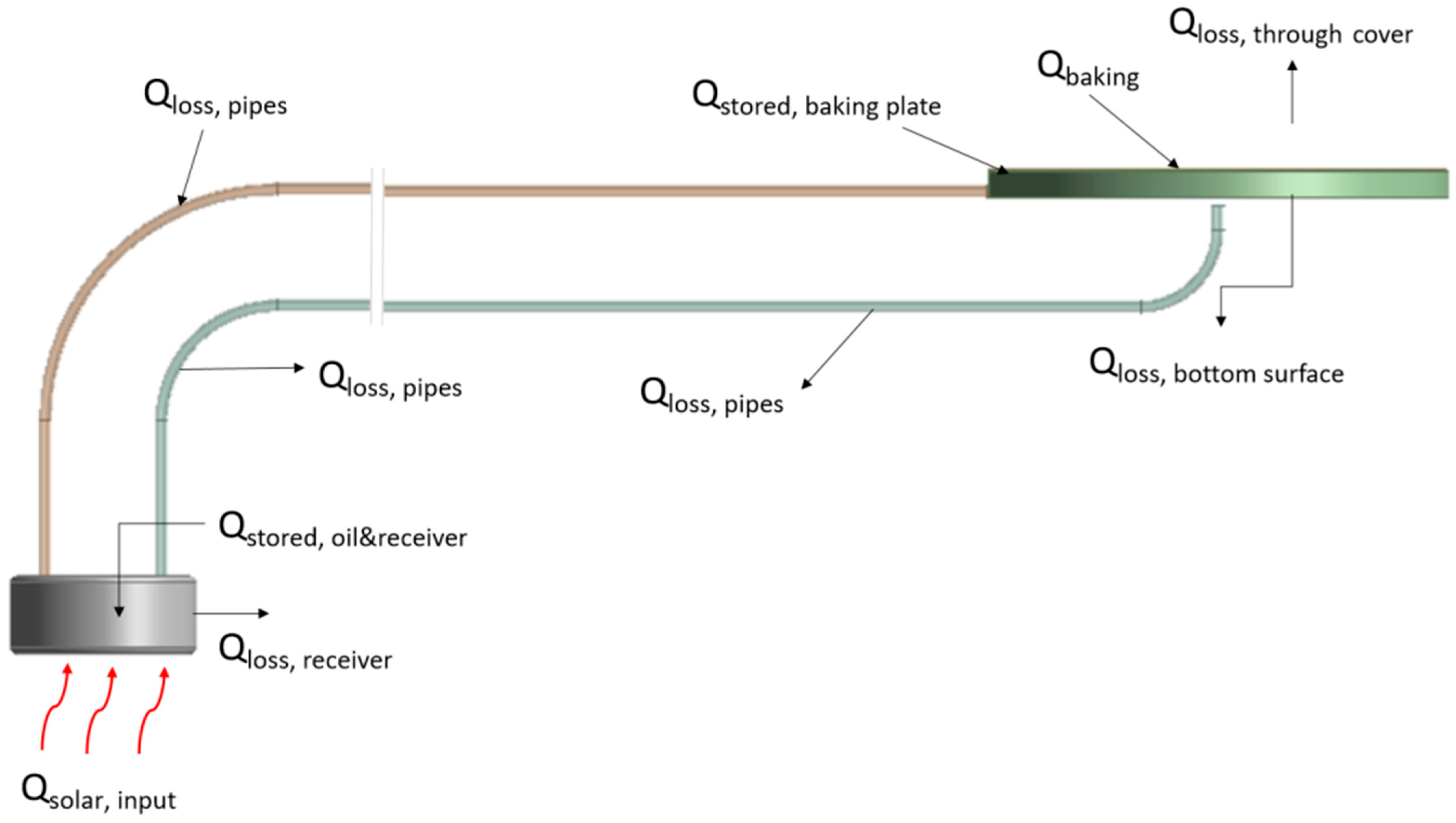
The thermal analysis was based on the overall energy balance of the system, as schematically shown in Figure 4. The input energy to the system was the heat supplied to the receiver vessel, representing the effective solar energy input (collector area Aapp and efficiency ղeff). This energy heated the oil inside the receiver, which was then circulated through the closed loop consisting of the delivery and return pipes and the spiral grooves in the baking plate.
Figure 4.
Energy balance of the indirect solar fryer system.
Heat losses occurred from all external surfaces due to convection and radiation to the surrounding environment. The system energy balance included input energy, thermal storage within system components, energy required for baking, and heat losses. Governing equations are summarized in Table 2.
Table 2.
Summary of thermal energy balance for the indirect solar fryer system.
The electrical heater input powers used in this study (1.0–2.4 kW) are treated as equivalent thermal power inputs representing variations in solar irradiance incident on the collector. Using Equation (3), each heater power level can be interpreted as an effective solar input condition based on the collector aperture area and system efficiency. The system efficiency defined in Equation (4) accounts for site-specific and system-dependent losses, including geometrical imperfections of the reflector surface, tracking inaccuracies, and the optical properties of both the reflector and absorber surfaces. These factors collectively influence the overall solar-to-thermal conversion efficiency under real operating conditions. Once these local parameters are defined, a direct relationship can be established between the electrical heater input power, the collector aperture area, and the available solar irradiance at the installation site. This enables a consistent mapping between laboratory-controlled thermal inputs and equivalent field solar conditions. Therefore, this formulation allows direct translation of the experimental results into real-world operating scenarios under varying solar irradiance levels and collector sizes, enhancing the practical applicability of the study.
2.3.4. Injera Quality Assessment
The injera baking performance was evaluated based on achieving acceptable product quality under different operating conditions. The selection of appropriate temperature levels and heating duration was determined through experimental iteration, guided by previous studies [49]. The quality of baked injera was assessed qualitatively through physical inspection, considering thickness, color, eye (pore) formation, underside appearance, texture, and overall sensory acceptability.
It should be noted that this assessment is qualitative in nature and does not include quantitative measurements such as texture analysis, moisture content, or standardized sensory evaluation methods. While this approach provides practical insight into baking performance, it introduces subjectivity in the evaluation. Future work is recommended to incorporate quantitative and standardized quality assessment techniques.
3. Results
In this study, experimental tests were conducted to evaluate the thermal performance of an oil-based indirect solar fryer system for injera baking. The system performance was analyzed in terms of temperature development, heating and baking time, and energy consumption under different input power conditions. The results are presented and discussed in the following sections.
3.1. No-Load Performance Evaluation
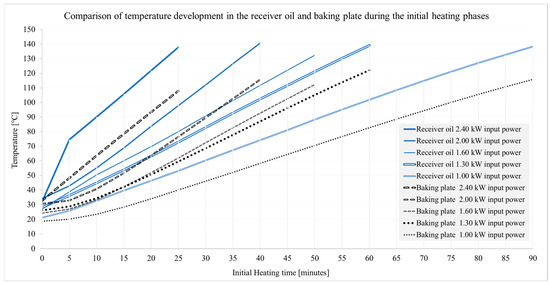
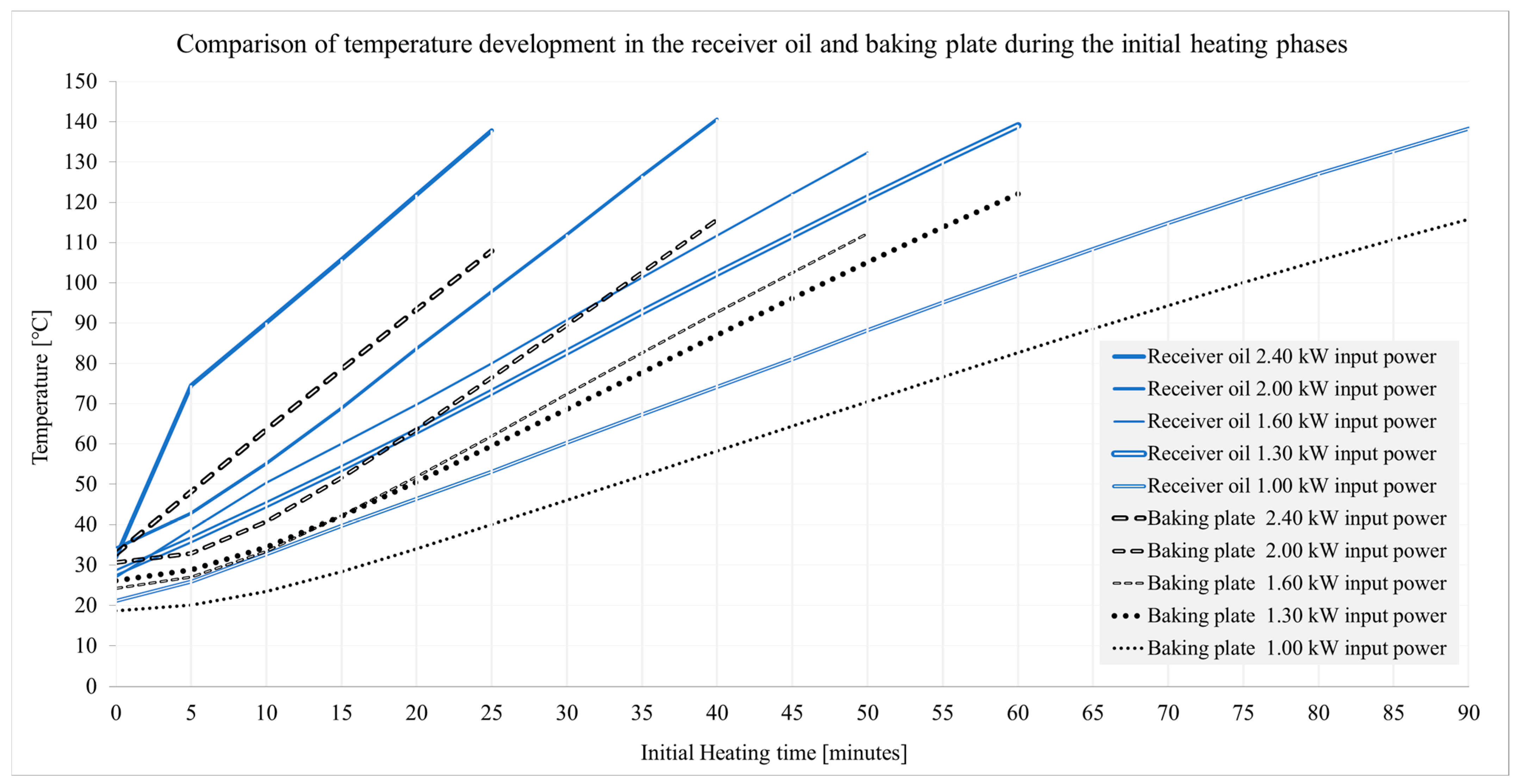
Figure 5 shows the temperature development of the heat transfer oil in the receiver vessel and the baking plate during no-load testing. Experiments were conducted at input power levels ranging from 1 kW to 2.4 kW. The system was operated until the oil temperature reached approximately 140 °C under all test conditions. It should be noted that each heating curve corresponds to a distinct input power level, representing equivalent solar irradiance conditions in the experimental setup.
Figure 5.
Experimental results for temperature development for the oil inside the receiver vessel and the baking plate during the no-load testing. These experiments were conducted from May to August 2025.
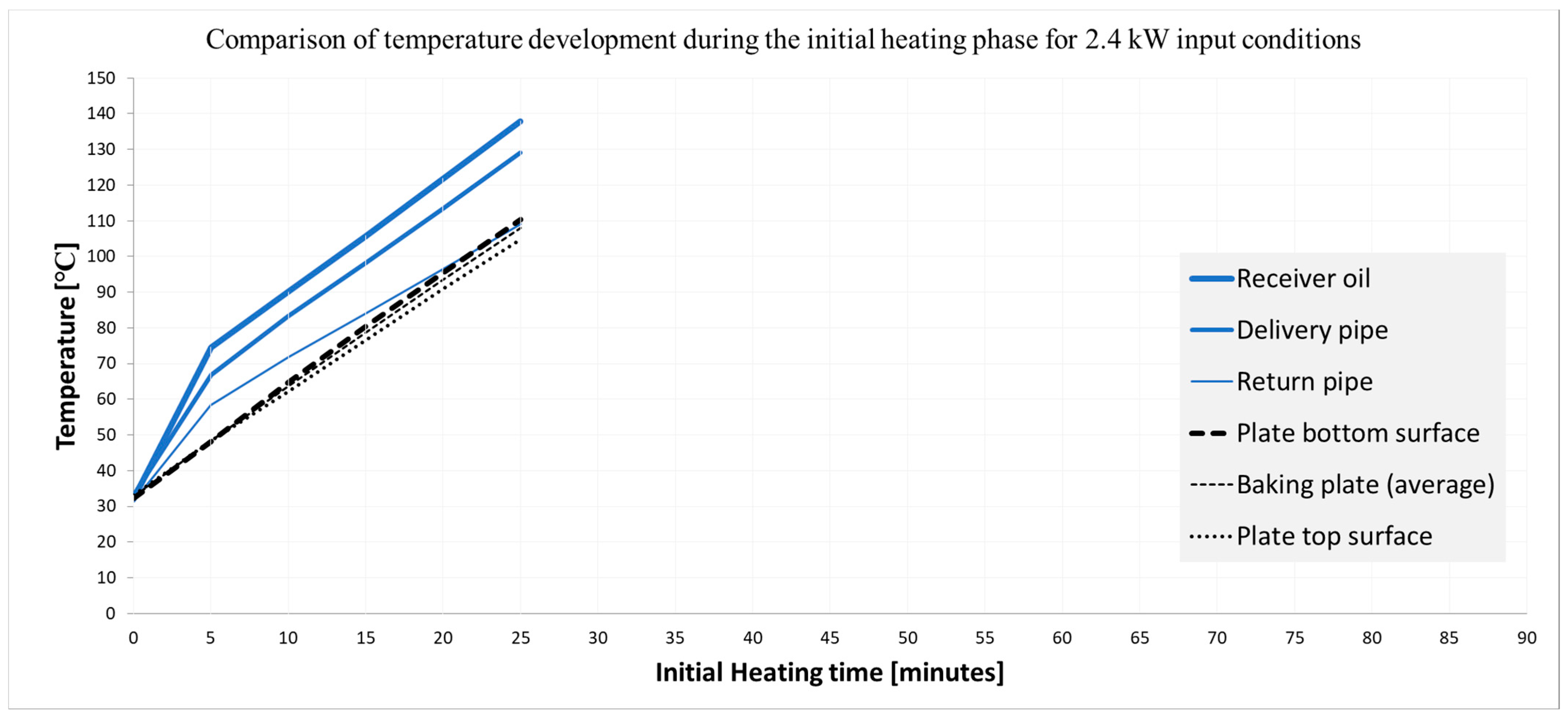
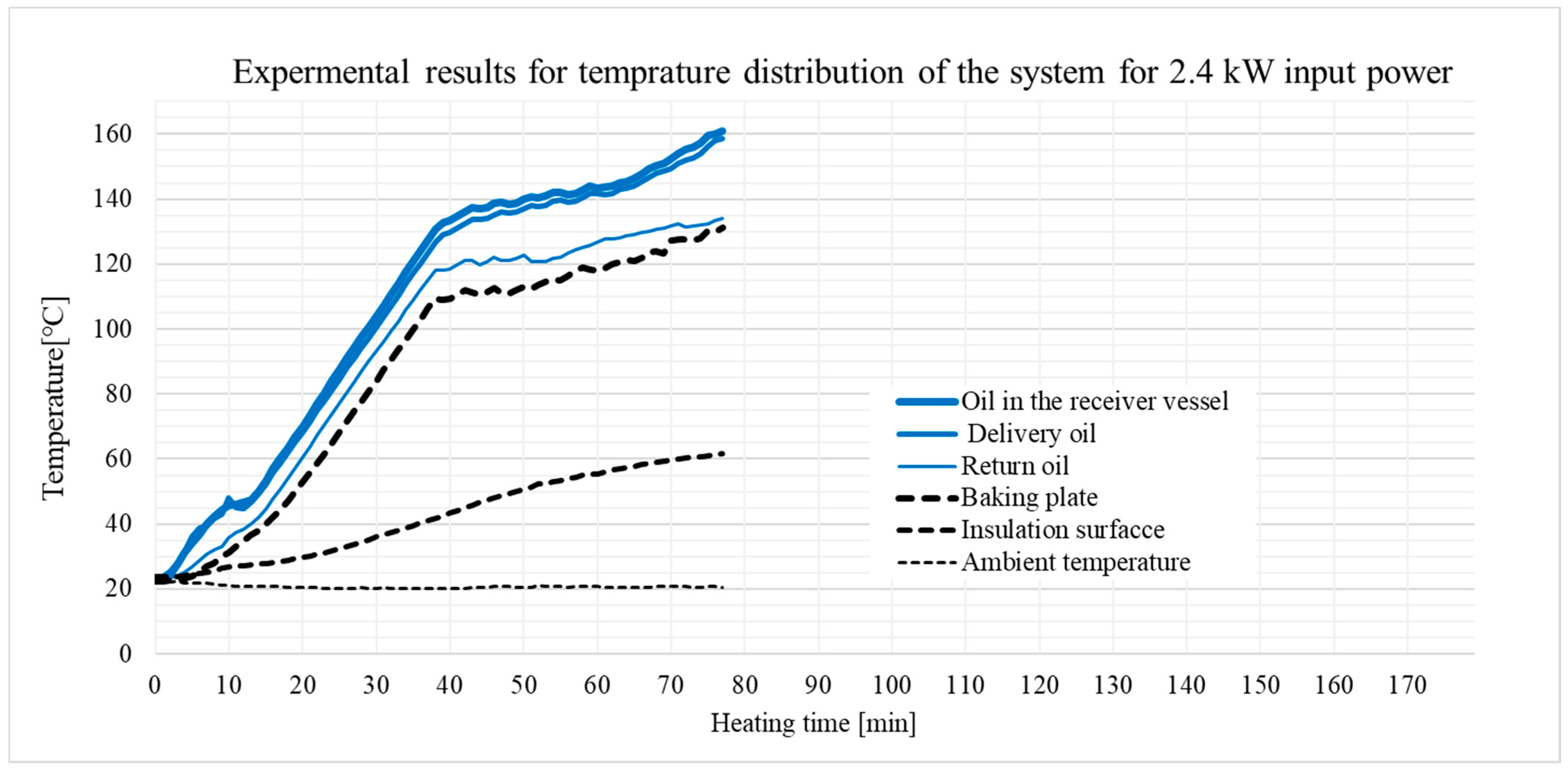
The results show a clear dependence of heating rate on input power. At the highest input power of 2.4 kW, the system reached the target temperature within approximately 25 min, while the baking plate reached about 110 °C. In contrast, at 1 kW input, the heating time increased significantly to approximately 90 min to reach similar temperature levels. Intermediate power levels (1.3–2 kW) showed proportional heating times between these extremes.
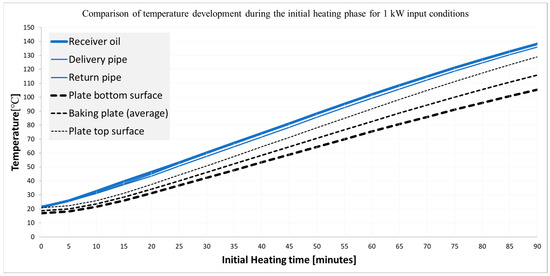
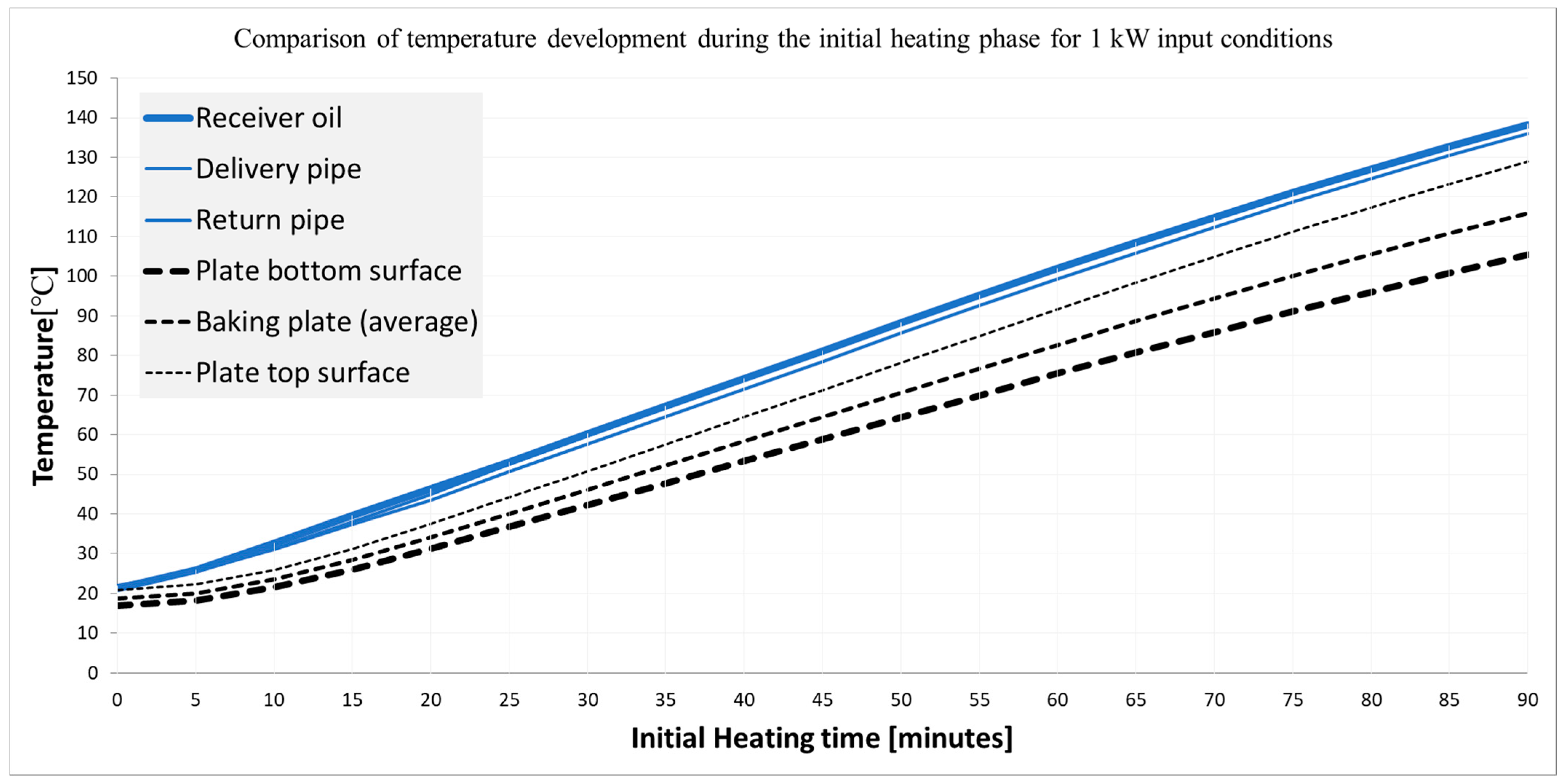
Figure 6 and Figure 7 further illustrate temperature distributions across system components at the minimum (1 kW) and maximum (2.4 kW) input power conditions. The results indicate that lower input power leads to longer heating periods and increased cumulative thermal losses due to extended operation time. Conversely, higher input power results in faster heating but also larger instantaneous temperature gradients between the oil and the baking plate, which increases localized heat losses from system surfaces.
Figure 6.
Experimental results for temperature development in the different components in the indirect solar fryer system during the no-load testing for 1 kW input heater scenario. These experiments were conducted from May to August 2025.
Figure 7.
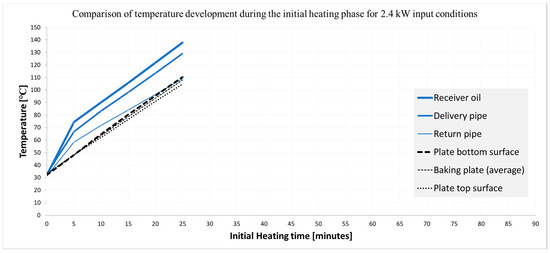
Experimental results for temperature development in the different components in the indirect solar fryer system during the no-load testing for 2.4 kW input heater scenario. These experiments were conducted from May to August 2025.
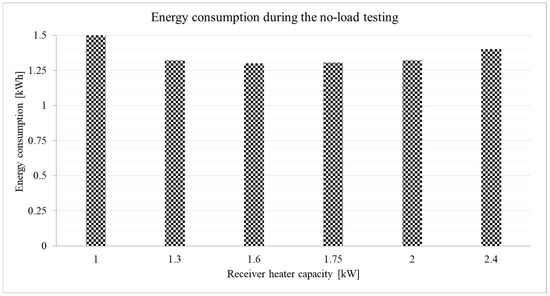
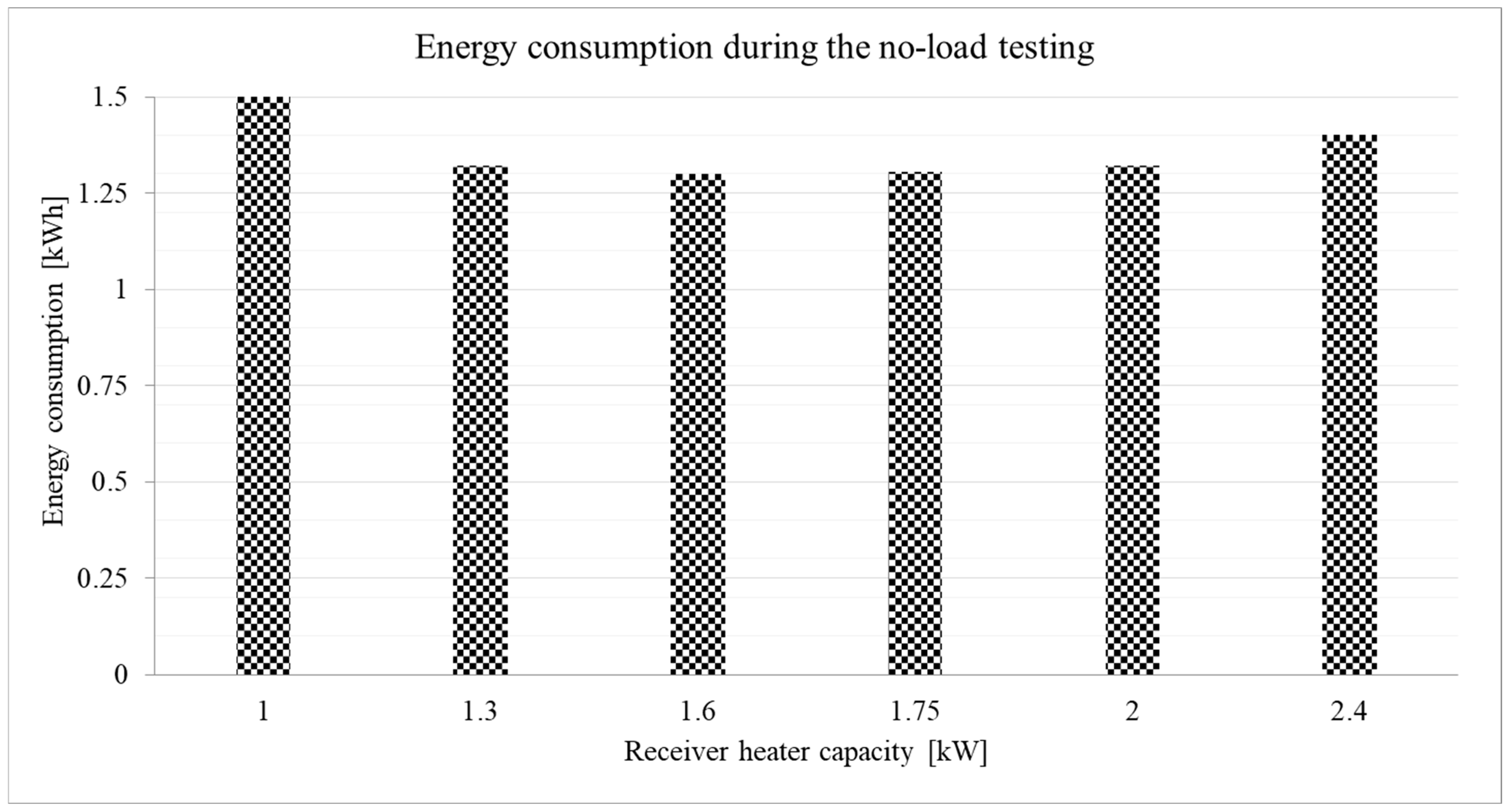
The total energy consumption during no-load operation indicated in Figure 8 shows relatively small variation between test cases (approximately 0.1–0.2 kWh). However, the trend indicates that lower power inputs require longer operating times, while higher power inputs operate more efficiently in terms of time but with higher instantaneous energy demand. Minor deviations between trends in Figure 8 arise from averaging cycle-based measurements and rounding recorded energy consumption during continuous heating operation.
Figure 8.
Experimental results for energy consumption during the no-load testing (i.e., initial heating). These experiments were conducted from May to August 2025.
3.2. With-Load Performance Evaluation
Table 3 summarizes the performance of the system during baking operation under different input power conditions. Each test condition was evaluated over 10 consecutive baking cycles to ensure repeatability.
Table 3.
Summarized results for performance evaluation of the indirect fryer system.
The results indicate that the initial heating time required to reach baking conditions decreased significantly with increased input power. At 1 kW, approximately 80 min were required to initiate baking, whereas at 2.4 kW, this was reduced to approximately 25 min. Similarly, individual baking cycle duration decreased from approximately 5 min (1 kW) to 2.5 min (2.4 kW). Reheating times between cycles remained relatively constant across all cases (approximately 1 min), indicating stable transient recovery behavior.
Overall, lower input power resulted in prolonged heating periods and reduced practicality for real-time baking applications. In contrast, higher input power improved responsiveness and reduced cycle time but introduced higher temperature fluctuations within the system during operation.
The repeatability of the 10-cycle baking tests can be ensured as each baking cycle gives stable cyclic performance under each steady-state operating conditions. This produces the same baking time as the number of baking cycles is varied from the test conditions of 10 cycles.
3.3. Temperature Behavior During Baking Operation
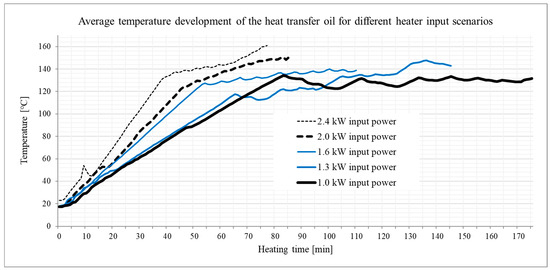
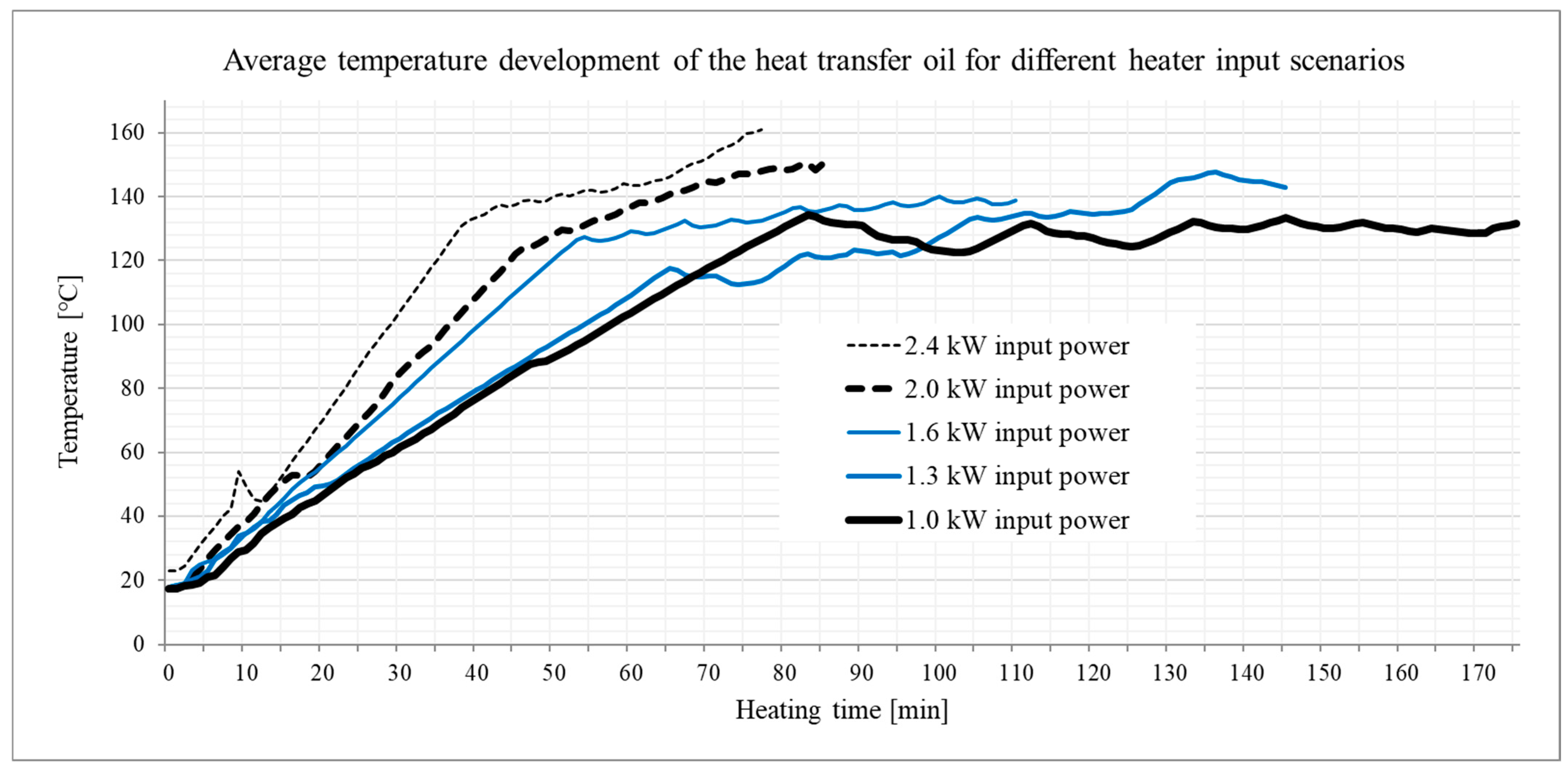
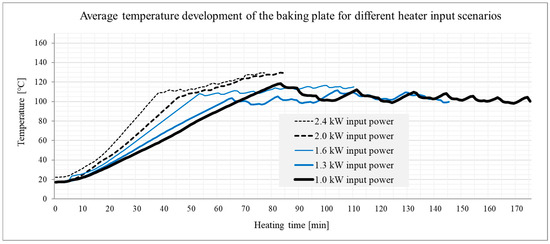
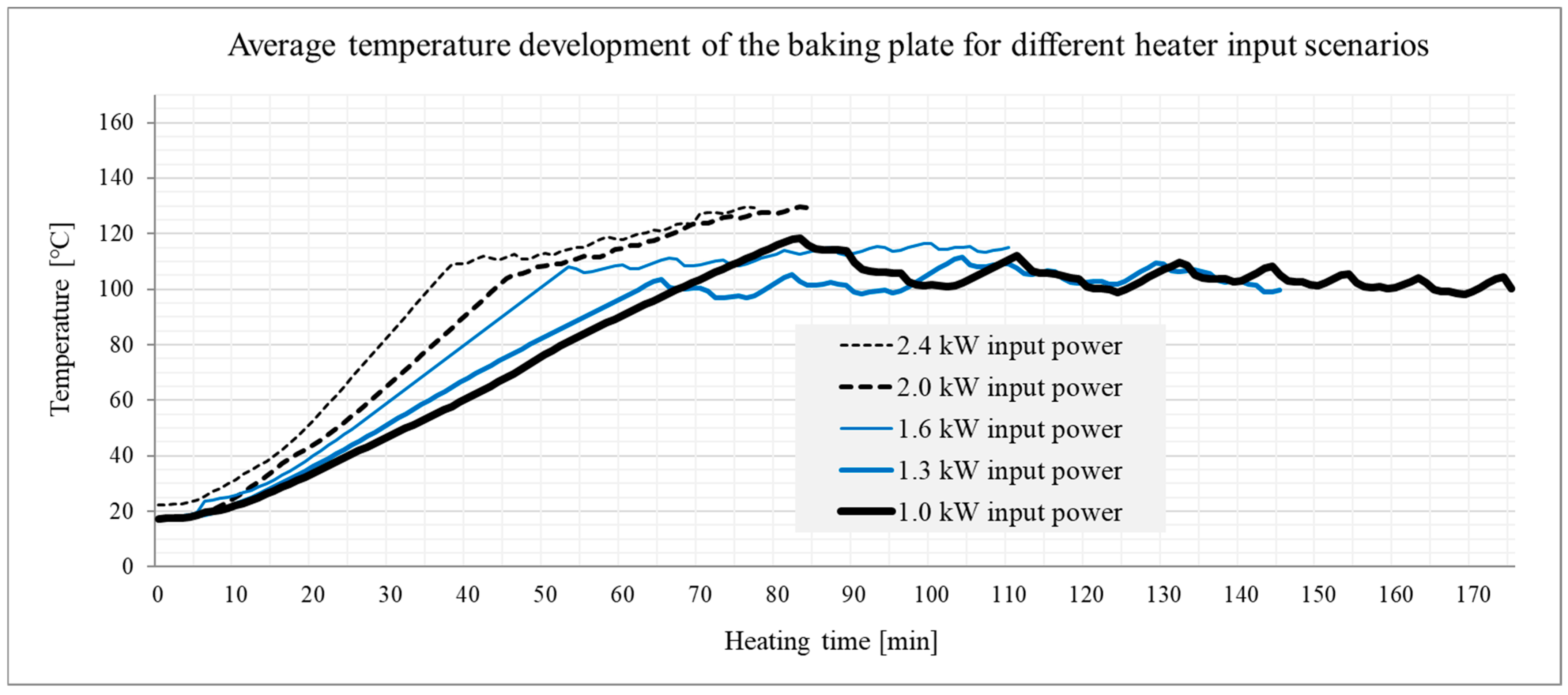
Figure 9 and Figure 10 present temperature variations in the receiver oil and baking plate during load conditions. At higher input powers (2.0–2.4 kW), a noticeable increase in system temperature was observed during baking cycles, indicating excess energy accumulation in the system. At intermediate input power (approximately 1.6 kW), the system exhibited relatively stable temperature behavior, with moderate fluctuations during successive baking cycles. At lower input power (1 kW), the system showed gradual temperature rise but significant cooling between cycles, resulting in longer recovery periods and less stable operation.
Figure 9.
Experimental results for temperature development in the oil inside the receiver vessel during with load testing as the input power is varied from 1 kW to 2.4 kW. These experiments were conducted from May to August 2025.
Figure 10.
Experimental results for temperature development in the baking plate with load testing as the input power is varied from 1 kW to 2.4 kW. These experiments were conducted from May to August 2025.
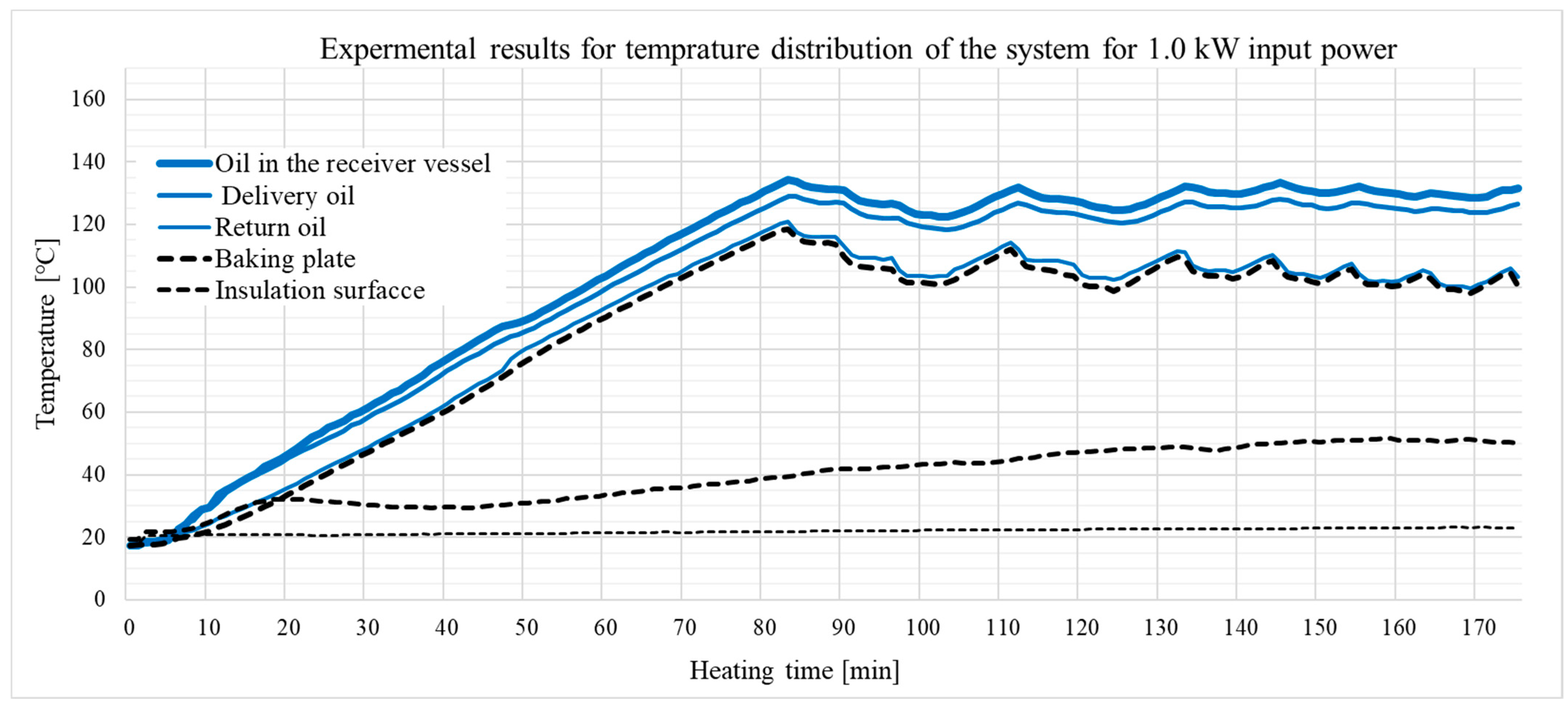
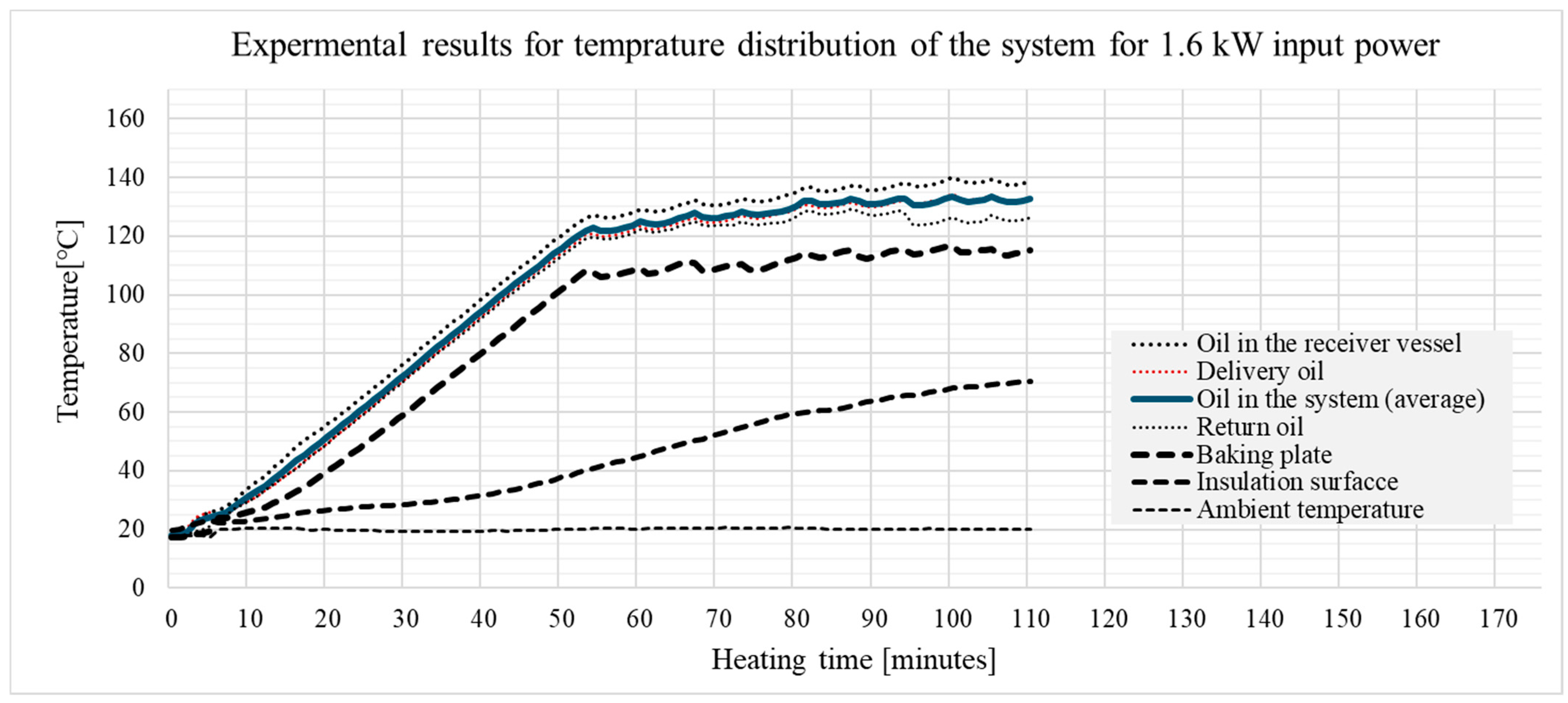
Figure 11, Figure 12 and Figure 13 further illustrate detailed temperature profiles under representative operating conditions (1 kW, 1.6 kW, and 2.4 kW, respectively). These results confirm that system stability improves at intermediate power levels, where energy input and thermal losses are more balanced.
Figure 11.
Experimental results for temperature development in the different components on the oil-based indirect solar fryer with the receiver heat input of 1 kW. These experiments were conducted from May to August 2025.
Figure 12.
Experimental results for temperature development in the different components on the oil-based indirect solar fryer with the receiver heat input of 1.6 kW. These experiments were conducted from May to August 2025.
Figure 13.
Experimental results for temperature development in the different components on the oil-based indirect solar fryer with the receiver heat input of 2.4 kW. These experiments were conducted from May to August 2025.
3.4. Effect of Input Power and System Limitation
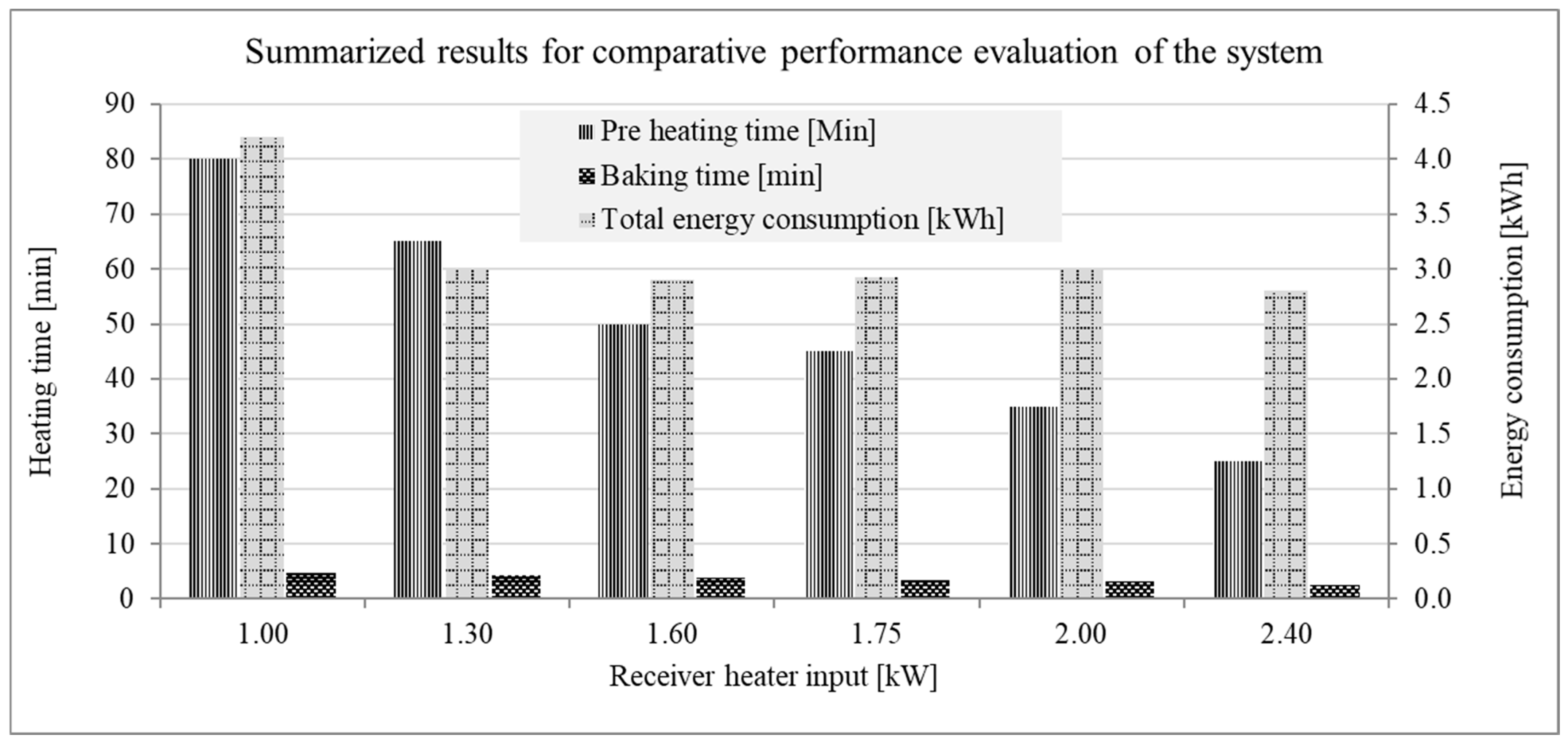
Figure 14 summarizes the overall performance trends of the system. The results indicate that system behavior is strongly influenced by input power level.
Figure 14.
Summary of experimental results for performance evaluation of the system at different input power. These experiments were conducted from May to August 2025.
- At low input power (1.0–1.3 kW), long heating times and low operational efficiency are observed.
- At high input power (2.0–2.4 kW), rapid heating is achieved but with increased thermal intensity and instability in temperature distribution.
- At intermediate input power (1.6–1.75 kW), a balanced performance is achieved in terms of heating time, energy utilization, and thermal stability.
The improved performance in the intermediate range is attributed to a better balance between heat input and thermal distribution within the closed-loop oil circulation system. This range allows sufficient energy input for baking while maintaining stable temperature behavior during repeated cycles.
3.5. Discussion of Optimal Operating Range
The experimental results consistently indicate that the system performs most effectively within the input power range of approximately 1.6–1.75 kW. Within this range, the system achieves:
- Reasonable initial heating time;
- Stable temperature distribution during baking cycles;
- Improved overall operational efficiency.
At lower power levels, insufficient heat input limits system responsiveness, while at higher power levels, excessive heat input leads to increased thermal loading and reduced stability. Therefore, the intermediate range provides the most suitable operational compromise for the current system configuration. Although the present study did not experimentally vary the flow rate, a qualitative assessment indicates that increasing the oil mass flow rate would enhance convective heat removal from the receiver vessel and reduce peak oil temperature at higher input powers. A higher flow rate is therefore expected to improve thermal stability and reduce overheating observed at ≥2 kW operation. Based on observed thermal behavior, a higher circulation rate than the current 0.0676 kg/s is recommended for future system optimization, particularly for high-power operation above 2 kW.
4. Conclusions and Recommendation
This study investigated the thermal performance and technical feasibility of an oil-based indirect solar fryer system for injera baking. The prototype consisted of a receiver vessel, closed-loop thermal oil circulation system, a 60 cm diameter aluminum baking plate with spiral grooves, and a DC-powered oil circulation pump. The system was experimentally evaluated under controlled indoor conditions using an electrical heater to simulate different levels of thermal input to the receiver vessel. Input power levels of 1.0, 1.3, 1.6, 1.75, 2.0, and 2.4 kW were investigated. All tests were conducted using a fixed-capacity pump providing an average oil mass flow rate of 0.0676 kg/s.
Based on the experimental results, the following conclusions are drawn:
- The oil-based indirect solar fryer system is technically feasible for injera baking and represents a promising alternative to conventional biomass- and electricity-based baking systems. The system is capable of producing acceptable baking performance across a range of input power levels, demonstrating its operational flexibility.
- System performance is strongly dependent on the applied thermal input and the oil circulation characteristics. In particular, the fixed low-flow pump significantly influences heat transfer behavior, temperature distribution, and system stability. Observed performance trends, including heating rate and thermal response, are therefore specific to the current configuration.
- At higher input power levels (≥2.0 kW), faster heating and shorter baking cycles were achieved; however, excessive temperature rise in the heat transfer oil and receiver vessel was observed during extended operation. This behavior is attributed to insufficient heat removal capacity due to the limited oil circulation rate. As a result, operation at these higher power levels is not recommended for the present pump configuration due to thermal management and operational safety concerns.
- At lower input power levels (≤1.3 kW), the system exhibited long initial heating times (up to approximately 85 min) and extended baking and reheating cycles. Although thermally stable, these conditions are not suitable for practical injera baking applications due to low operational efficiency and increased energy losses.
- An intermediate input power range of approximately 1.6–1.75 kW provided the most balanced performance in terms of heating time, energy utilization, and thermal stability. Within this range, the system demonstrated relatively stable temperature behavior during successive baking cycles, indicating improved operational reliability under the existing flow conditions.
- The identified optimal operating range is specific to the present system configuration, particularly the fixed-capacity pump. Variations in flow rate are expected to significantly influence heat transfer performance and may shift the optimal operating conditions. Therefore, further studies incorporating variable flow control are recommended.
- The selection of system capacity (receiver input power) should consider both site-specific solar resource availability and economic factors, including system cost and user requirements. A detailed techno-economic analysis is recommended to determine optimal system sizing for practical deployment.
In conclusion, the study demonstrates that an oil-based indirect solar fryer system, when properly configured, can provide a technically viable and sustainable alternative for injera baking. However, system performance is strongly influenced by the interaction between input thermal power and oil circulation rate. Future improvements should focus on optimizing pump flow control and validating performance under real outdoor solar conditions to further enhance system applicability and efficiency.
Author Contributions
M.H.H. has contributed in conceptualization, methodology, software, validation, formal analysis, investigation, experimental testing, resources, data curation, writing—original draft preparation, Z.M.G. have contributing in experimental testing, M.B.K., A.H.T. and O.J.N. have contributed in review and editing and supervision. All authors have read and agreed to the published version of the manuscript.
Funding
This research was funded by the Norwegian Agency for Development Cooperation NORAD under the EnPe capacity 5 project and NORHED II (P13) project.
Data Availability Statement
The original data presented in this study are included in the article; further inquiries can be directed to the corresponding author.
Conflicts of Interest
The authors declare no conflicts of interest.
Abbreviations
The following abbreviations are used in this manuscript:
| Aperture area of the satellite dish [m2] | |
| Receiver heating area [m2] | |
| Beam (direct) irradiance at the application site [W/m2] | |
| Available solar energy at the application site [W] | |
| Input solar energy to the parabolic collector [W] | |
| Input heat energy to the receiver surface [W] | |
| Heat flux supplied to the receiver [W/m2] | |
| Receiver shading factor [ ] | |
| Optical efficiency of the parabolic dish [%] | |
| Efficiency loss due to geometry deformation and reflector strip construction [%] | |
| The effective (overall) efficiency of the system [%] | |
| Reflectance of the concentrating dish [ ] | |
| Effective transmittance—absorptance of the receiver surface [ ] | |
| Heat transfer coefficient [W/(m2K)] | |
| T | Temperature [K] |
| E | The total energy per unit mass [J/kg] |
| K | Thermal conductivity [W/(m K)] |
References
- World Population Review. Available online: https://worldpopulationreview.com/countries (accessed on 1 September 2025).
- Gebremariam, M.M.; Zarnkow, M.; Becker, T. Teff (Eragrostis tef) as a raw material for malting, brewing and manufacturing of gluten-free foods and beverages: A review. J. Food Sci. Technol. 2014, 51, 2881–2895. [Google Scholar] [CrossRef] [Scilit]
- Aptekar, L. In the Lion’s Mouth: Hope and Heartbreak in Humanitarian Assistance; XLibris LLC.: Bloomington, IN, USA, 2013; p. 9. ISBN 978-1-4836-9519-8. [Google Scholar]
- Demissie, A. Teff genetic resources in Ethiopia. In Narrowing the Rift: Teff Research and Development; Tefera, H., Belay, G., Sorrells, M., Eds.; Ethiopian Agricultural Research Organization: Debre Zeit, Ethiopia, 2000; pp. 27–31. [Google Scholar]
- Hailu, M.H.; Kahsay, M.B.; Tesfay, A.H.; Dawud, O.I. Energy consumption performance analysis of electrical Mitad at Mekelle City. Momona Ethiop. J. Sci. 2017, 9, 43–65. [Google Scholar] [CrossRef] [Scilit]
- DANAS Electrical Engineering. Project document, Electric Injera Mitad Energy Efficiency Standards and Labeling. Available online: https://www.academia.edu/33020865 (accessed on 1 September 2025).
- Liyew, K.W.; Ejigu, N.A.; Habtu, N.G. Analysis of energy supply, energy policies, and the final energy end-use consumption of the residential sector in Ethiopia. Heliyon 2024, 10, e34809. [Google Scholar] [CrossRef] [Scilit]
- Beyene, G.E.; Kumie, A.; Edwards, R.; Troncoso, K. Opportunities for Transition to Clean Household Energy: Application of the Household Energy Assessment Rapid Tool: Ethiopia; World Health Organization: Geneva, Switzerland, 2018; Available online: https://www.who.int/publications/i/item/9789241514491 (accessed on 2 August 2024).
- Benti, N.E.; Gurmesa, G.S.; Argaw, T.; Aneseyee, A.B.; Gunta, S.; Kassahun, G.B.; Aga, G.S.; Asfaw, A.A. The current status, challenges and prospects of using biomass energy in Ethiopia. Biotechnol. Biofuels 2021, 14, 209. [Google Scholar] [CrossRef] [Scilit]
- Dumga, K.T.; Goswami, K. Energy choice and fuel stacking among rural households of Southern Ethiopia. Energy Sustain. Dev. 2023, 76, 101260. [Google Scholar] [CrossRef] [Scilit]
- Kyayesimira, J.; Muheirwe, F. Health concerns and use of biomass energy in households: Voices of women from rural communities in Western Uganda. Energy Sustain. Soc. 2021, 11, 42. [Google Scholar] [CrossRef] [Scilit]
- Downward, G.S.; van der Zwaag, H.P.; Simons, L.; Meliefste, K.; Tefera, Y.; Carreon, J.R.; Vermeulen, R.; Smit, L.A.M. Occupational exposure to indoor air pollution among bakery workers in Ethiopia; A comparison of electric and biomass cookstoves. Environ. Pollut. 2018, 233, 690–697. [Google Scholar] [CrossRef] [Scilit] [PubMed]
- Addis Alemayehu, Y. Status and Benefits of Renewable Energy Technologies in the Rural Areas of Ethiopia: A Case Study on Improved Cooking Stoves and Biogas Technologies. Int. J. Renew. Energy Dev. 2015, 4, 103–111. [Google Scholar] [CrossRef] [Scilit]
- Yalew, A.W. The Ethiopian energy sector and its implications for the SDGs and modeling. Renew. Sustain. Energy Transit. 2022, 2, 100018. [Google Scholar] [CrossRef] [Scilit]
- Energypedia. Ethiopian Energy Situation. Available online: https://energypedia.info/wiki/Ethiopia_Energy_Situation (accessed on 1 September 2025).
- GIZ. The Development Intervention in Ethiopia; GiZ ECO Ethiopia Report; GiZ Energy Coordination Office Ethiopia: Addis Ababa, Ethiopia, 2011. [Google Scholar]
- Gebreegziabher, Z. Urban Domestic Energy Problems in Ethiopia: An Overview; EDRI (Ethiopian Development Research Institute): Addis Ababa, Ethiopia, 2004. [Google Scholar]
- Gebreegziabher, Z. Household Fuel Consumption and Resource Use in Rural-Urban Ethiopia. Ph.D. Dissertation, Department of Social Sciences, Wageningen University, Wageningen, The Netherlands, 2007. [Google Scholar]
- RTPC (Rural Technology Promotion Center). Biomass Stove (Mogogo Eton) Test Report; RTPC: Mekelle, Ethiopia, 1998. [Google Scholar]
- Moges, G. Electrical Injera Mitad energy Efficiency Standards & Labeling, challenges and prospects: Ethiopian Energy Agency. In Proceedings of the Vienna Energy Forum, Vienna, Austria, 9–12 May 2017. [Google Scholar]
- Tadesse, M. The Developmental Patterns of Injera Baking Stoves: Review on the Efficiency, and Energy Consumption in Ethiopia. SSRG Int. J. Mech. Eng. 2020, 7, 7–16. [Google Scholar] [CrossRef] [Scilit]
- Adem, K.D.; Ambie, D.A. A review of injera baking technologies in Ethiopia: Challenges and gaps. Energy Sustain. Dev. 2017, 41, 69–80. [Google Scholar] [CrossRef] [Scilit]
- Gebreegziabher, Z.; Beyene, A.D.; Bluffstone, R.; Martinsson, P.; Mekonnen, A.; Toman, M.A. Fuel savings, cooking time and user satisfaction with improved biomass cookstoves: Evidence from controlled cooking tests in Ethiopia. Resour. Energy Econ. 2018, 52, 173–185. [Google Scholar] [CrossRef] [Scilit]
- Getnet, L.A.; Meku, A.A.; Getie, M.Z.; Mebratu, M.M. Technological Development and Adoption Rates of Injera Baking Stoves: A Review. In Advancement of Science and Technology; Woldegiorgis, B.H., Mequanint, K., Getie, M.Z., Mulat, E.G., Alemayehu Assegie, A., Eds.; Green Energy and Technology; Springer: Cham, Switzerland, 2023. [Google Scholar] [CrossRef] [Scilit]
- Liyew, K.W.; Habtu, N.G.; Louvet, Y.; Guta, D.D.; Jordan, U. Technical design, costs, and greenhouse gas emissions of solar Injera baking stoves. Renew. Sustain. Energy Rev. 2021, 149, 111392. [Google Scholar] [CrossRef] [Scilit]
- Berhanu, H.; Bekele, A.; Venkatachalam, C.; Sivalingam, S. Performance improvement of an electric injera baking pan (Mitad) using copper powder as additive material. Energy Sustain. Dev. 2022, 68, 242–257. [Google Scholar] [CrossRef] [Scilit]
- Sood, D. Injera Electric Baking: Energy Use Impacts in Addis Ababa Ethiopia; Ethiopia Electric Company: Addis Ababa, Ethiopia; The World Bank African Region: Washington, DC, USA, 2010. [Google Scholar]
- Tekle, A. Experimental Investigation on Performance Characteristics and Efficiency of Electric Injera Baking Pans (“mitad”). Master’s Thesis, Addis Ababa University, Addis Ababa, Ethiopia, 2011. [Google Scholar]
- Saxena, A.; Norton, B.; Goel, V.; Singh, D.B. Solar cooking innovations, their appropriateness, and viability. Environ. Sci. Pollut. Res. 2022, 29, 58537–58560. [Google Scholar] [CrossRef] [Scilit]
- Aramesh, M.; Ghalebani, M.; Kasaeian, A.; Zamani, H.; Lorenzini, G.; Mahian, O.; Wongwises, S. A review of recent advances in solar cooking technology. Renew. Energy 2019, 140, 419–435. [Google Scholar] [CrossRef] [Scilit]
- Shrivastava, A.; Thombre, R.; Dutt, S. A Review Based Assessment of Solar Box-Type Cooker. IOSR J. Eng. 2019, 19, 24–29. [Google Scholar]
- Nkhonjera, L.; Bello-Ochende, T.; John, G.; King’ondu, C.K. A review of thermal energy storage designs, heat storage materials and cooking performance of solar cookers with heat storage. Renew. Sustain. Energy Rev. 2017, 75, 157–167. [Google Scholar] [CrossRef] [Scilit]
- Sedighi, M.; Zakariapour, M. A Review of Direct and Indirect Solar Cookers. Sustain. Energy 2014, 2, 44–51. [Google Scholar]
- Cuce, E.; Cuce, P.M. A comprehensive review on solar cookers. Appl. Energy 2013, 102, 1399–1421. [Google Scholar] [CrossRef] [Scilit]
- Schwarzer, K.; da Silva, M.E.V. Characterisation and design methods of solar cookers. Sol. Energy 2008, 82, 157–163. [Google Scholar] [CrossRef] [Scilit]
- Ebersviller, S.M.; Jetter, J.J. Evaluation of performance of household solar cookers. Sol. Energy 2020, 208, 166–172. [Google Scholar] [CrossRef] [Scilit]
- Gallagher, A. A solar fryer. Sol. Energy 2011, 85, 496–505. [Google Scholar] [CrossRef] [Scilit]
- Hailu, M.H.; Kahsay, M.B.; Tesfay, A.H.; Neydal, O.J. A Direct Solar fryer for Injera baking application. In Proceedings of the SWC International Solar Energy Society (ISES) Solar World Congress SHC IEA SHC Solar Heating and Cooling Conference, SWC2017/SHC2017 Proceedings, Abu Dhabi, United Arab Emirates, 29 October–2 November 2017; pp. 1475–1485. [Google Scholar]
- Hailu, M.H.; Kahsay, M.B.; Tesfay, A.H.; Nydal, O.J. An Experimental Comparative Study of Large-Sized Direct Solar Fryers for Injera Baking Applications. Energies 2024, 17, 4949. [Google Scholar] [CrossRef] [Scilit]
- Hailu, M.H.; Kahsay, M.B.; Tesfay, A.H.; Neydal, O.J. An oil based indirect Solar fryer for Injera baking application. In Proceedings of the SOLARTR Solar Conference and Exhibition, Istanbul, Turkey, 29–30 November 2018; pp. 109–118. [Google Scholar]
- Hassen, A.A.; Amibe, D.A.; Nydal, O.J. Performance investigation of solar powered injera baking oven for indoor cooking. In Proceedings of the ISES Solar World Congress Proceedings, Kassel, Germany, 28 August–2 September 2011; pp. 186–196. [Google Scholar] [CrossRef] [Scilit]
- Tesfay, A.H.; Kahsay, M.B.; Nydal, O.J. Design and Development of Solar Thermal Injera Baking: Steam Based Direct Baking. Energy Procedia 2014, 57, 2946–2955. [Google Scholar] [CrossRef] [Scilit]
- Jemal, T.; Fatoba, O.; Shimels, S.; Tegenaw, Y. Design and experimental Analyses of enhanced heat transfer performance in solar powered Injera baking pan using Cu/Oil and A12O2/Oil nanofluids. Mater. Today Proc. 2022, 62, 2839–2848. [Google Scholar] [CrossRef] [Scilit]
- Eastman Chemical Company. Therminol 66 Heat Transfer Fluid: Technical Bulletin TF- 8695; Eastman Chemical Company: Kingsport, TN, USA, 2019. [Google Scholar]
- Rahman, M.S. (Ed.) Food Properties Handbook, 2nd ed.; CRC Press: Boca Raton, FL, USA, 2009. [Google Scholar] [CrossRef] [Scilit]
- Datta, A.K. Porous media approaches to studying simultaneous heat and mass transfer in food processes. I: Problem formulations. J. Food Eng. 2007, 80, 80–95. [Google Scholar] [CrossRef] [Scilit]
- Baik, O.D.; Marcotte, M.; Sablani, S.S.; Castaigne, F. Thermal and Physical Properties of Bakery Products. Crit. Rev. Food Sci. Nutr. 2001, 41, 321–352. [Google Scholar] [CrossRef] [Scilit]
- Vanin, F.M.; Lucas, T.; Trystram, G. Crust formation and its role during bread baking. Trends Food Sci. Technol. 2009, 20, 333–343. [Google Scholar] [CrossRef] [Scilit]
- Girma, T.; Bultosa, G.; Bussa, N. Effect of grain tef [Eragrostis tef (Zucc.) Trotter] flour substitution with flaxseed on quality and functionality of injera. Int. J. Food Sci. Technol. 2013, 48, 350–356. [Google Scholar] [CrossRef] [Scilit]

Disclaimer/Publisher’s Note: The statements, opinions and data contained in all publications are solely those of the individual author(s) and contributor(s) and not of MDPI and/or the editor(s). MDPI and/or the editor(s) disclaim responsibility for any injury to people or property resulting from any ideas, methods, instructions or products referred to in the content. |
© 2026 by the authors. Licensee MDPI, Basel, Switzerland. This article is an open access article distributed under the terms and conditions of the Creative Commons Attribution (CC BY) license.