Article

Experimental Investigation of a Miniature Refrigeration System Using R134a and a Low GWP Blend R515B


by
Juan Carlos Silva-Romero
1,
José Luis Rodríguez-Muñoz
2,
Francisco Noé Demesa-López
3,
Donato Hernández-Fusilier
4,
Vicente Pérez-García
1 and
Juan Manuel Belman-Flores
1,*
1
IRSE Research Group, Department of Mechanical Engineering, Engineering Division, Campus Irapuato-Salamanca, University of Guanajuato, Salamanca-Valle de Santiago km 3.5 + 1.8, Salamanca 36885, Mexico
2
Ingeniería Mecánica, Escuela Superior de Ciudad Sahagún, Universidad Autónoma del Estado de Hidalgo, Carretera Cd. Sahagún-Otumba s/n, Zona Industrial, Ciudad Sahagún 43970, Mexico
3
Tecnológico Nacional de México, Campus Pachuca, Carretera México–Pachuca km 87.5, Colonia Venta Prieta, Pachuca de Soto 42080, Mexico
4
Department of Electronic Engineering, Engineering Division, Campus Irapuato-Salamanca, University of Guanajuato, Salamanca-Valle de Santiago km 3.5 + 1.8, Salamanca 36885, Mexico
*
Author to whom correspondence should be addressed.
Thermo 2026, 6(2), 36; https://doi.org/10.3390/thermo6020036
Submission received: 7 April 2026 / Revised: 7 May 2026 / Accepted: 16 May 2026 / Published: 19 May 2026

Abstract

Miniature vapor compression refrigeration systems are gaining increasing relevance in cutting-edge applications such as drone docking station cooling, electric vehicle battery thermal management, portable medical and diagnostic devices, compact beverage dispensers, field-mounted telecom cabinet cooling, as well as the already established fields of electronics and personal cooling. These systems offer a promising pathway to localized and mobile cooling solutions. When coupled with the implementation of alternative low-GWP refrigerants that match or even enhance system performance, the result is a more efficient, environmentally responsible, and potentially sustainable refrigeration technology. Therefore, this study experimentally evaluates the performance of R515B as a low-GWP drop-in replacement for R134a in a miniature vapor compression refrigeration system. Key parameters were analyzed to determine the most suitable operating conditions, resulting in a capillary length of 1.25 m, refrigerant charge of 110 g, compressor speed of 4500 rpm, and high condenser fan speed, under which R515B achieved a COP of 5.16 and a cooling capacity of 252.20 W, representing improvements of 38% and 6.5%, respectively, compared to R134a. These results confirm the viability of R515B as an efficient, environmentally friendly alternative for miniature small-scale vapor compression systems.

1. Introduction

The importance of vapor compression refrigeration lies in its widespread use and its effects on other branches, such as energy consumption and environmental impact, as it is estimated that 5 billion units are in operation worldwide [1]. For this reason, the study of this technology should continue, especially in areas that may be particularly promising, such as miniature vapor compression refrigeration systems for small-scale cooling applications. While significant efforts have been devoted to the miniaturization, component development, and performance optimization of vapor-compression refrigeration systems, the experimental evaluation of alternative low-GWP refrigerants as replacements for R134a in miniature systems remains largely unexplored. This gap is particularly relevant given the ongoing phase-out of R134a and the growing interest in compact refrigeration technologies.
Miniaturization in refrigeration refers to highly compact, lightweight systems with applications ranging from electronic cooling and personal cooling to medical and healthcare, mobile air conditioning, food, and commercial and industrial applications. Cooling capacities for these applications are typically below 1000 W [2].
Some of the published works in this engineering area for electronic cooling are those of Wu and Du [3], who evaluated the energy performance of a miniature system with a refrigeration capacity of 200 W using R134a. The authors defined optimal design conditions for capillary length, refrigerant charge, and compressor speed, and achieved a coefficient of performance (COP) of 8.5. Yang et al. [4] used a miniature cooling system, focusing on the mass flow rate and chilled water temperature. The authors defined an optimal refrigerant charge of 40 g, which resulted in a cooling capacity of 63 W, a power consumption of 24.5 W, and a COP of 2.5. Possamai et al. [5] designed a compact system for laptop cooling; they used R600a as the refrigerant and achieved a cooling capacity of 30 W with a COP of 2.55 for an evaporation temperature of 10 °C and a condensation temperature of 45 °C. A more recent study, similar to the previous ones, was proposed by Poachaiyapoom et al. [6]; it focused on a variable-speed refrigeration system comprising a microchannel condenser, a capillary tube, and a microchannel heat sink evaporator. For a heating power of 200 W, a COP of 9.0 was obtained. Zhou and Li [7] also proposed a miniature prototype for electronic cooling using a simple porous media evaporator. The system dissipated 100 W while ensuring an adequate chip temperature, with an energy efficiency ratio (EER) of 2.5.
Another critical application of miniature systems is in electronic cooling in the aerospace industry. For example, Mancin et al. [8] experimentally studied a system comprising a cold plate evaporator, a tube-in-tube condenser, and a fixed-speed linear compressor, achieving cooling capacities of 37–374 W and COPs of 1–5.8. Similarly, but with a different design than the previous system, Chen et al. [9] obtained a cooling capacity of up to 1000 W with a COP of 3.1 using R134a. Zhi et al. [10] also built and evaluated the performance of a miniature Wankel compressor for aerospace applications. The authors varied the R134a refrigerant charge, compressor speed, and cooling water temperature. For a thermal load of 100 W, the system consumed 40 W and achieved a COP of 2.5; at 4800 rpm, it achieved a COP of 2.8.
Modeling has also been presented as an essential tool in the design and simulation of small-scale refrigeration systems. In this regard, Sung et al. [11] developed an empirical model of a mesoscale vapor compression system to predict its dynamic behavior. They defined the compressor speed and cooling load as inputs to the model, with the output variable being the heat source temperature. On the other hand, the model proposed by Moctezuma-Hernández et al. [12] was based on physical foundations and empirical correlations, and they used multi-objective heuristic algorithms to maximize the COP and minimize the refrigerant mass flow rate. The results showed a COP of 7 for a cooling capacity of 500 W. Yee and Hermes [13] modeled a miniature system that evaluated the COP as a function of the orifice size used as an expansion device and the compressor stroke and speed. The system comprises a reciprocating compressor, a fin-and-plate multi-layered condenser, a fixed orifice, and a roll-bond plate-type evaporator. With a heat source at 40 °C, the authors achieved 110 W of cooling capacity and a COP of 1.6. Dhumane et al. [14] presented a dynamic model for a miniature system operating with a rotary compressor, which was experimentally validated using alternative refrigerants to R134a, such as R32, R1234yf, R1234ze(E), and R290. The results showed that R1234yf could be considered as a direct replacement refrigerant for R134a. Goenaga et al. [15] also developed a physics-based numerical model to estimate cooling capacity and COP. They simulated several alternative refrigerants to R134a, including R513A, R448A, R449A, and R600a, with R600a being the best option, offering a high COP and the lowest pressure ratio. These latest works are among the few that encourage the development and adoption of low-environmental-impact refrigerants in miniature vapor-compression systems, where R134a remains the most widely used. However, while this refrigerant is still the standard in many countries, it is also being phased out by the Kigali Amendment to the Montreal Protocol [16].
To the authors’ knowledge, experimental studies of refrigerant substitution in custom-made miniature vapor-compression refrigeration systems under controlled operating conditions have not yet been reported. Consequently, the experimental identification and validation of suitable low-GWP drop-in refrigerants for such systems remain an open research challenge.
This work evaluates R515B as an alternative to R134a. Several works in the literature on the refrigerant R515B primarily focus on its properties. For example, Tangri et al. [17] investigated the effect of temperature on the solubility and miscibility of R515B with POE32, compared to conventional refrigerants such as R404A, R410A, and R134a. Kang et al. [18] experimentally evaluated the effect of temperature on the density and viscosity of R515B. Other studies focused on the flow boiling heat transfer characteristics of R515B in smooth and microfinned tubes, increasing the heat transfer coefficient due to the favorable thermophysical properties [19]. Furthermore, recent work on comparable low-GWP near-azeotropic refrigerants, such as R513A, has concluded that nucleate boiling mechanisms are important for evaporator performance. For example, experimental studies on R513A in smooth tubes have shown that boiling heat transfer is strongly influenced by surface tension, thermal conductivity, and bubble dynamics, which directly affect heat transfer coefficients and system performance [20]. These findings suggest that, beyond thermodynamic cycle considerations, evaporator-side heat transfer mechanisms may play a relevant role in the performance of low-GWP azeotropic blends such as R515B.
Irannezhad et al. [21] evaluated several alternative refrigerants, including R515B, and found improved heat transfer under specific condenser geometric conditions. Other works have assessed the energetic and exergy performance of R515B [22] and found energy efficiencies comparable to those of R134a [23]. There are also 3E studies [24] in which R515B showed the lowest exergy destruction, and 4E studies [25] in which R515B has been compared with R134a.
According to the above, miniature refrigeration based on vapor compression, particularly that driven by variable-speed miniature compressors, has not yet reached a mature research stage. These compressors, characterized by their compact size, low weight, and reduced power consumption, enable flexible control of cooling capacity but typically exhibit lower nominal cooling output than full-scale units. Understanding their behavior under different operating conditions, especially when using low-GWP refrigerants, is critical to their adoption in emerging applications. In this context, the novelty of this work lies in both the evaluation of alternative refrigerants in miniature vapor compression systems and the experimental assessment of R515B. This refrigerant has scarcely been investigated beyond theoretical and thermodynamic analyses. Only a few studies have assessed its performance under real operating conditions in vapor compression systems. Therefore, this study provides original experimental data on R515B in a miniature refrigeration setup, contributing to a better understanding of its performance and expanding the limited experimental knowledge available for this low-GWP refrigerant.
The present study conducts an experimental characterization of a custom-made and assembled miniature vapor-compression refrigeration prototype, specifically developed as an experimental platform for refrigerant performance evaluation. The system, which includes a variable speed rolling piston rotary compressor, a microchannel condenser, a capillary tube, and a brazed plate evaporator, differs from other configurations reported in the literature in both dimensions and capabilities. It is tested with R134a and the low-GWP alternative refrigerant R515B as a drop-in replacement under the same operating conditions.
The experimental campaign includes identifying the most suitable operating parameters and directly comparing the performance of both refrigerants based on cooling capacity, compressor power consumption, and coefficient of performance (COP). In addition, key system variables, including superheating, subcooling, and pressure ratio, are analyzed as the refrigerant charge, capillary tube length, compressor speed, and condenser fan speed are varied. Through this approach, the present work directly addresses the lack of experimental studies on refrigerant substitution in miniature vapor compression refrigeration systems. It provides original experimental data supporting the feasibility of R515B as a drop-in replacement for R134a, while also offering insights into the operational limits and performance behavior of a miniature variable speed compressor under different operating conditions.

2. R515B as a Replacement for R134a

R515B is an azeotropic, low-GWP refrigerant blend developed as a potential drop-in replacement for R134a in medium-temperature refrigeration and air-conditioning applications. It consists of R1234ze(E) and R227ea in a mass proportion of 91.1% and 8.9%, respectively, combining favorable thermodynamic behavior with reduced environmental impact. One of its main advantages is its classification as A1, which allows for safe implementation in existing systems without major design modifications. Furthermore, its global warming potential is 77% lower than that of R134a, aligning with current environmental regulations aimed at phasing down high GWP substances. A comparison of key thermophysical properties of R515B and R134a is presented in Table 1.
As can be observed, R515B has a higher normal boiling point than R134a, which may limit its suitability for specific medium or low-temperature applications. R515B has a lower critical pressure and higher critical temperature, which could lead to reduced compressor energy consumption and improved performance under high ambient temperatures. Regarding density, its lower liquid density may allow for a reduced refrigerant charge, although its lower vapor density compared to R134a may result in a lower mass flow rate and, consequently, reduced cooling capacity. Despite these differences, and given the general similarity in several thermodynamic properties, R515B may be considered a viable alternative to R134a for specific applications, particularly where flammability safety is a critical concern.

3. Description of the Experimental Apparatus and Test Conditions

The experimental test bench developed for this research is based on a miniature vapor compression refrigeration system designed to deliver cooling capacities below 1000 W. It features a secondary circuit for thermal load simulation, a real-time data acquisition system, and a control system for independent regulation of the compressor and condenser fan speeds.

3.1. Experimental Test Bench

The vapor compression system incorporates a miniature, variable-speed rotary compressor (Q4245100 model, Aspen Compressor, Marlborough, MA, USA). This low-noise, brushless DC compressor employs a rolling-piston mechanism and has a volumetric displacement of 1.4 cm3, operating within a speed range of 2100 to 6500 rpm. It supports an input voltage range of 20–30 VDC, weighs approximately 900 g, and has a compact housing measuring 3.46 inches in height and 2.64 inches in diameter. When using R134a refrigerant, it delivers a nominal cooling capacity of 360 W. The condenser (0.97 m2) is an aluminum microchannel heat exchanger with 17 multiport tubes arranged in a two-pass refrigerant configuration, coupled with a DC axial fan. A capillary tube was selected as the expansion device, with an internal diameter of 0.7874 mm (1/32 in) and two available lengths to be evaluated: 1.00 m and 1.25 m. The evaporator (0.16 m2) is a brazed plate heat exchanger made of stainless-steel grade 316L with a total of 10 plates. Additional components include a sight glass and a filter-drier, enhancing the system’s reliability and stability. The system was assembled using ¼″ flexible copper tubing. Figure 1 shows this miniature vapor compression refrigeration system.
To simulate the thermal load, a secondary circuit was integrated. It consists of a storage tank filled with a 70/30% volumetric mixture of water and ethylene glycol, respectively, heated by an immersion electric heater regulated by a PID controller. The fluid is circulated through the evaporator by a pump with a variable frequency drive, working in conjunction with a manual control valve to enable precise control of the flow rate, which is measured by an electromagnetic flow meter.

3.2. Instrumentation and Data Acquisition System

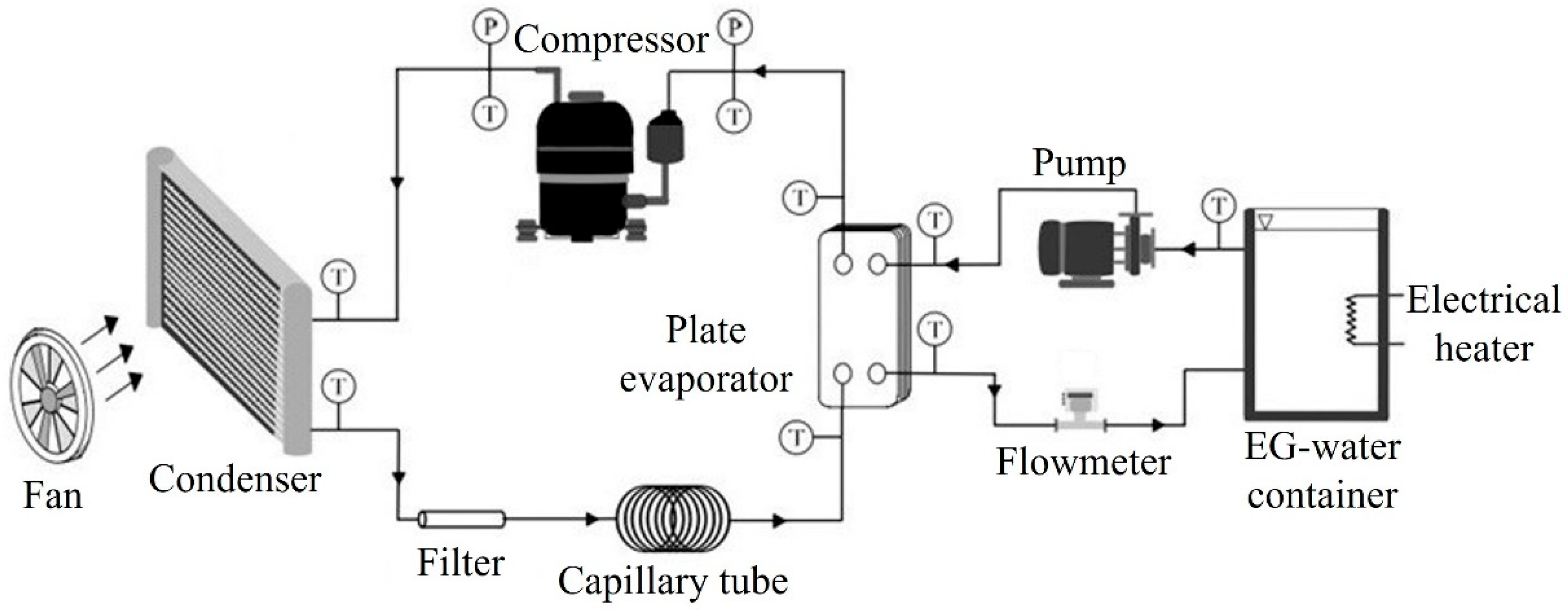
The test bench is equipped with two Instrutek IT100 series pressure transducers installed at the compressor’s suction and discharge lines, along with K-type thermocouples placed at critical locations, including the compressor inlet/outlet, condenser, evaporator, and secondary circuit. Figure 2 shows the vapor compression system and the secondary circuit, with pressure transducers and thermocouples labeled “P” and “T,” respectively.
A CompactDAQ system (cDAQ-9174) from National Instruments was employed for data acquisition. This system includes NI-9219, NI-9213, and NI-9207 modules for pressure, temperature, and voltage measurement, respectively, the latter correlating the current consumed by the compressor at a 0.1 volts per amp ratio. All data were visualized and recorded every 3 s using a custom-developed LabVIEW 2024 (NI, Austin, TX, USA) interface, which enables real-time monitoring of the system’s thermodynamic variables, graphical visualization of performance over time, and direct control of compressor and fan speeds.
In this study, steady-state operation was defined as the condition in which the suction and discharge pressures exhibited negligible temporal variation. Over this period, time-averaged operating pressures were calculated, and the corresponding maximum and minimum values were used to quantify pressure fluctuations. In all tests conducted in this study, pressure variations remained below 2% of the mean. The steady-state interval analyzed was 15 min.
Table 2 presents the measurement uncertainty associated with each instrument used in the experimental setup to ensure the reliability of the data collected throughout the experimental campaign. Subsequently, uncertainty propagation was conducted using Engineering Equation Solver (EES) [27] to estimate the combined uncertainty in key performance metrics, including cooling capacity, power consumption, and coefficient of performance. The propagation follows the standard method based on the root-sum-of-squares approach, expressed in Equation (1):
u y = i = 1 n ( y x i · u x i ) 2
where u y is the combined uncertainty of the derived quantity y ; u x i are the standard uncertainties of the input variables; and y x i are their respective sensitive coefficients. The results of this analysis are presented in Section 4.2.2.

3.3. Test Conditions

The experimental tests were first conducted using the baseline refrigerant R134a, for which the most suitable capillary tube length was determined based on system performance results, as discussed in Section 4.1. Subsequently, refrigerant R515B was evaluated as a potential drop-in replacement, with a focus on identifying an alternative that would offer a comparable or improved coefficient of performance (COP). The appropriate charge for each refrigerant was determined by assessing the system’s performance over a range of 70–130 g in increments of 20 g. In this study, the charge that resulted in the highest COP was selected.
The compressor was tested at three distinct speed levels: 3000, 4500, and 6000 rpm. Compressor speed is regulated via a voltage input signal applied to a dedicated input tab on the manufacturer-provided control board, which linearly modulates the compressor’s rotational speed based on the input voltage level. Similarly, the condenser fan was operated at three airflow settings corresponding to low (600 rpm), medium (900 rpm), and high speed (1200 rpm). These configurations enabled a comprehensive evaluation of the system’s performance under various operating conditions. Finally, the inlet conditions of the secondary fluid supplying the thermal load to the evaporator were set to a flow rate of 26 kg h−1 and an average temperature of 20 °C. Each operating condition was tested twice to ensure repeatability. For each test, time-averaged values of the measured variables were first computed over the steady-state interval. The results presented in Section 4 correspond to the average of these time-averaged values obtained from the two independent tests conducted under identical operating conditions. In addition, the uncertainty propagation analysis for the main performance parameters is presented in Section 4.2.3.

4. Results Discussion

4.1. Effect of Capillary Tube Length and Refrigerant Charge

Determining the geometric characteristics of the capillary tube in a vapor compression refrigeration system is a key aspect to ensure proper system operation, as it directly influences various operating parameters and overall energy performance. Likewise, defining the appropriate refrigerant charge is crucial, particularly in custom-designed systems or when replacing the refrigerant. An incorrect charge can significantly compromise system efficiency and performance [28]. In this study, the first stage of experimental testing focused on determining and appropriately matching these two key parameters (capillary length and refrigerant charge) for the baseline refrigerant R134a. This was carried out by performing a charge sweep from 70 g to 130 g in increments of 20 g, using two capillary tube lengths (1.00 m and 1.25 m), which were selected based on a previous theoretical study [29].
The behavior of key performance parameters, including superheating, subcooling, pressure ratio, cooling capacity, and compressor power consumption, is presented below. However, the final selection criterion was primarily based on the highest coefficient of performance (COP) achieved, given its integrative indication of system efficiency.

4.1.1. Superheating

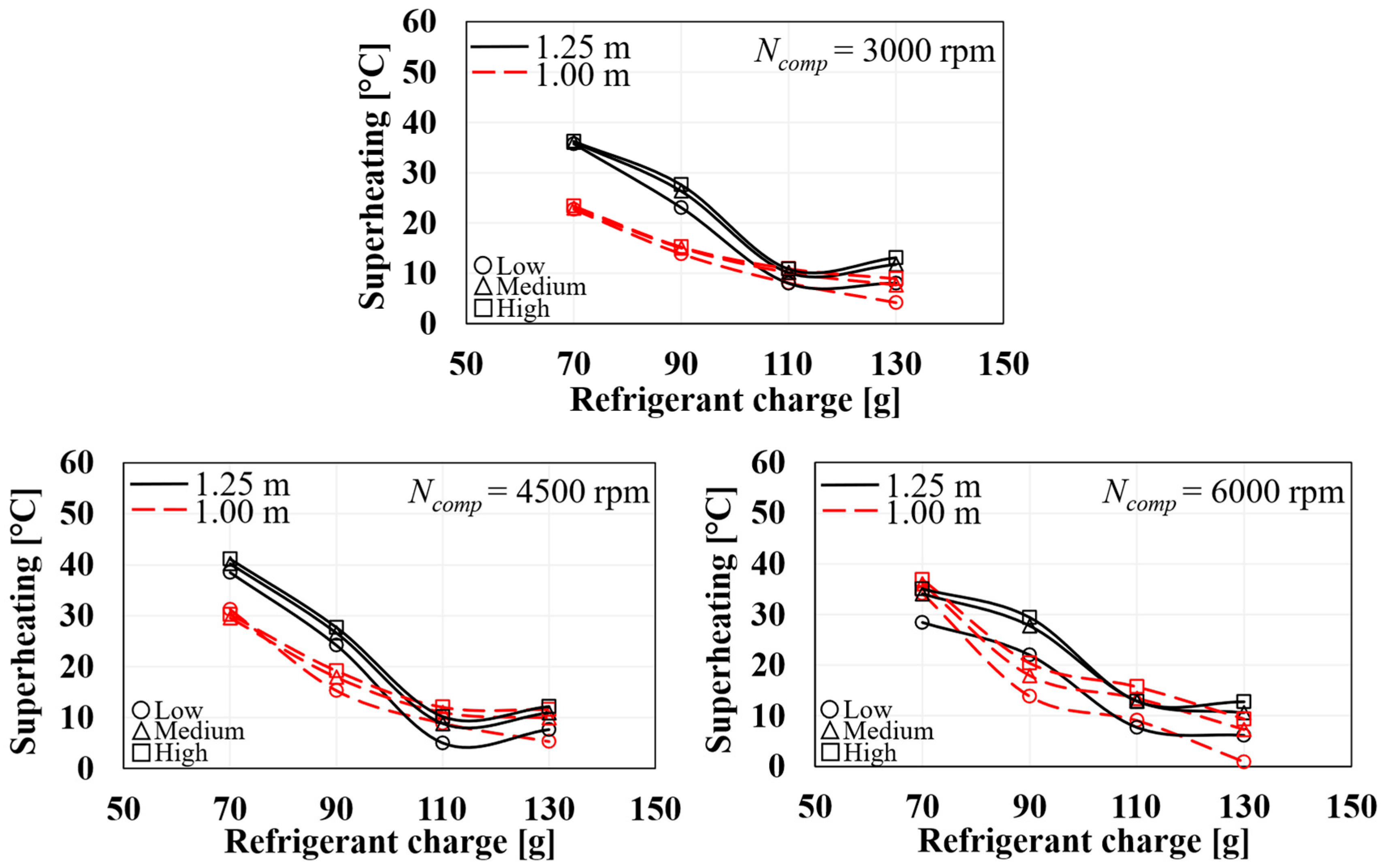
Figure 3 presents the variation in refrigerant superheating as a function of refrigerant charge for the two capillary tube lengths and three compressor speeds (3000, 4500, and 6000 rpm), using the baseline R134a. The dashed red lines correspond to the 1.00 m capillary length, while the solid black lines represent the 1.25 m configuration. Marker shapes indicate the condenser fan speed: circles for low, triangles for medium, and squares for high. These patterns are consistent across all evaluated compressor speeds.
As shown in the figure, at low refrigerant charges (70 g and 90 g), superheat is significantly high due to insufficient liquid refrigerant reaching the evaporator. This results in rapid evaporation, early vapor formation, and increased sensible heat gain. As the refrigerant charge increases (up to 110 g), more liquid reaches the evaporator, improving heat transfer and reducing superheat. However, an excessive charge can lead to evaporator flooding, reflecting lower superheat, as observed at 130 g. On the other hand, for a fixed refrigerant charge, the shorter capillary tube reduced superheat in almost all cases. The longer capillary tube imposes a greater restriction on the refrigerant flow, limiting the refrigerant supply to the evaporator.
For its part, increasing the condenser fan speed enhances heat rejection, lowering condensing temperature and pressure and thus the pressure drop across the capillary tube. Therefore, the mass flow rate of refrigerant to the evaporator is reduced [30], resulting in faster evaporation and a larger superheated region [31], thus increasing the superheat.

4.1.2. Subcooling

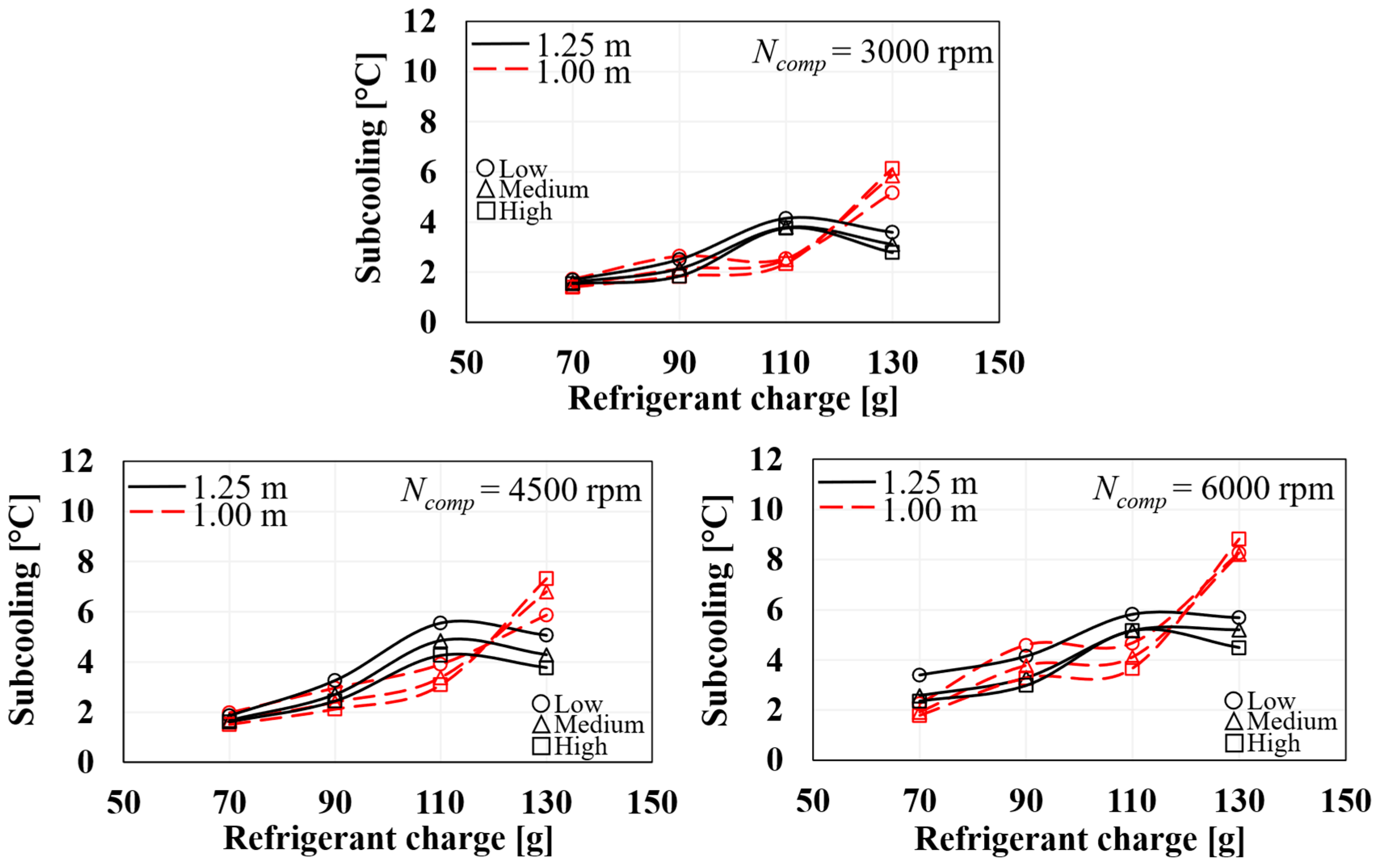
In contrast to superheating, subcooling generally increases with refrigerant charge due to greater liquid accumulation in the condenser (see Figure 4), which raises the condensation pressure and saturation temperature. However, with the 1.25 m capillary, an excessive charge (130 g) overly saturates the condenser because the longer capillary imposes greater flow resistance, limiting refrigerant passage and shortening the single-phase liquid section, which reduces subcooling. Conversely, the 1.00 m capillary allows higher mass flow at 130 g, extending the subcooling section, especially at high fan speed, which enhances heat rejection. The increased subcooling for the 1.00 m capillary may significantly improve the system’s cooling capacity, as discussed later. The opposite fan speed effect is thus observed: for 1.00 m, higher airflow increases subcooling, whereas for 1.25 m, it lowers condensing pressure, further restricting flow, increasing condenser flooding, and reducing subcooling. Consequently, this behavior indicates the higher superheating observed for the 1.25 m capillary in Figure 3. Regarding compressor speed, higher speeds tend to increase subcooling, likely because the microchannel condenser’s high effectiveness helps manage greater thermal loads.

4.1.3. Pressure Ratio

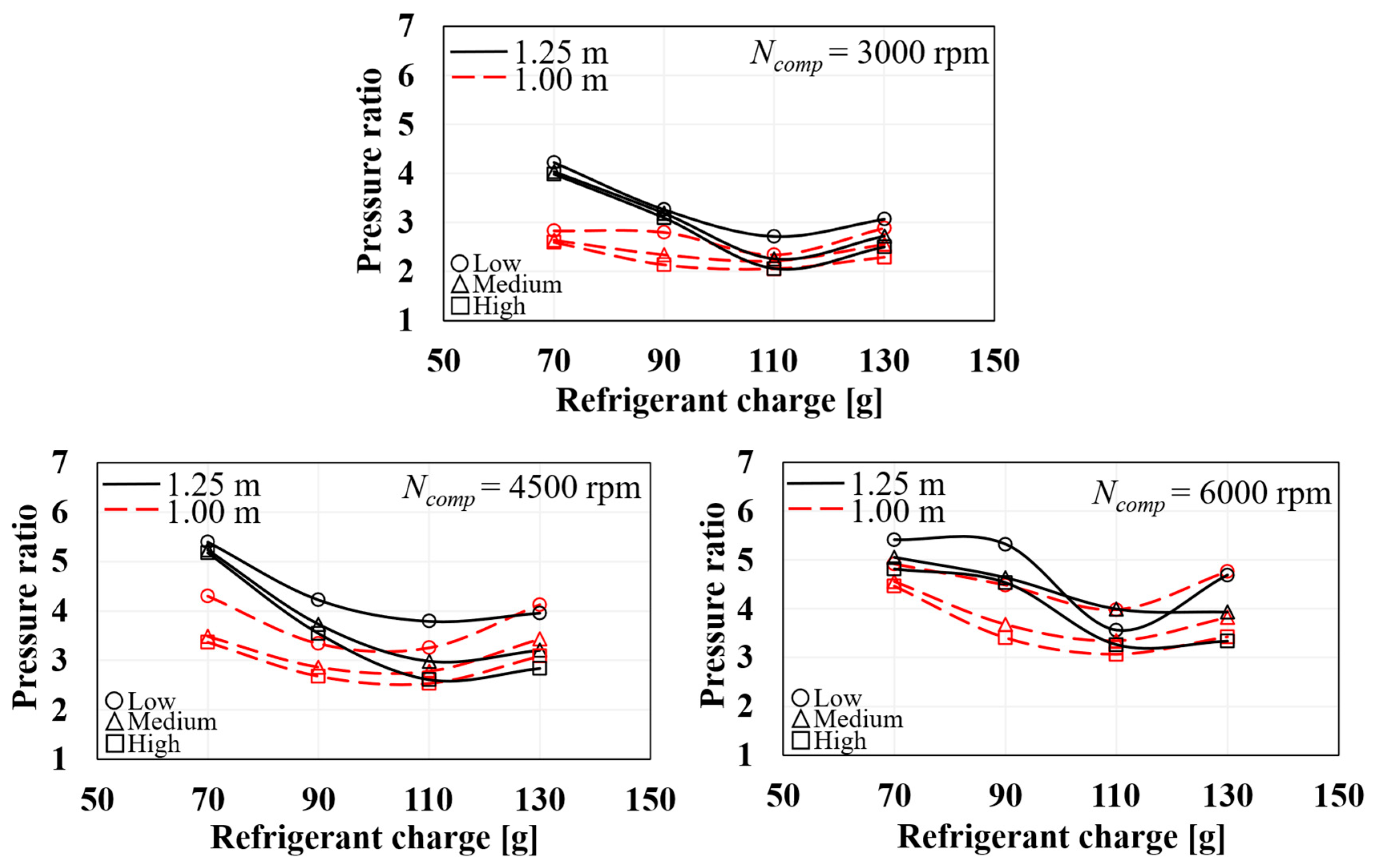
The pressure ratio does not vary linearly with refrigerant charge; instead, it exhibits parabolic behavior with a minimum value. As the charge increases, both suction and discharge pressures tend to rise due to higher refrigerant mass and fuller heat exchangers. However, this increase is not proportional across successive charge levels, resulting in the non-linear trend observed in Figure 5. In most cases, the lowest pressure ratio is observed at 110 g, while at 130 g it rises again, likely due to refrigerant buildup in the condenser. Additionally, longer capillary tubes were found to increase discharge pressure and decrease suction pressure due to greater flow restriction, leading to higher pressure ratios [32].
On the other hand, according to the data acquisition results, increasing the condenser fan speed reduces the pressure ratio, primarily due to lower operating pressures, particularly the condensation pressure. In contrast, increasing the compressor speed raises the high-side pressure and lowers the low-side pressure, thereby increasing the pressure ratio.

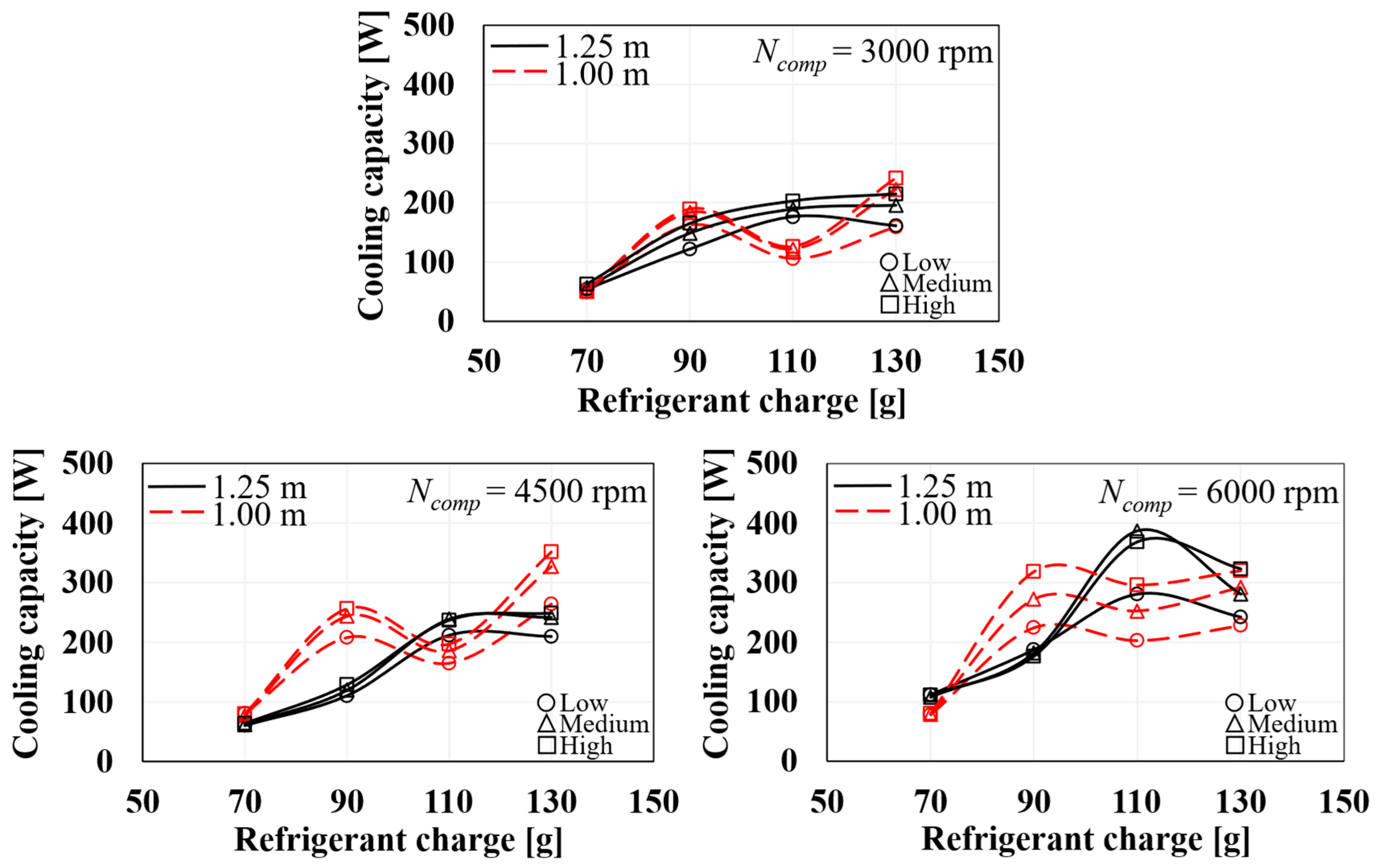
4.1.4. Cooling Capacity

Figure 6 shows that cooling capacity increases with refrigerant charge due to higher mass flow, enhanced heat transfer in the evaporator, and greater subcooling. However, above a certain charge level, the heat exchangers tend to become saturated, limiting further gains in cooling capacity. For its part, the differences observed between capillary lengths result from competing effects: longer tubes reduce the temperature difference on the secondary side but increase subcooling, which may either enhance or limit performance depending on charge level.
As anticipated, the increase in cooling capacity observed in the dashed red line (130 g, 1.00 m capillary) is likely due to the significant increase in subcooling at that point, in addition to the fact that the data analysis showed a reduction in evaporation temperature, which could favor heat transfer in the evaporator. On the other hand, the decrease in cooling capacity at 130 g of refrigerant with the 1.25 m capillary tube (more evident at 6000 rpm) may be attributed to excessive liquid accumulation in the condenser, reducing subcooling and impairing the expansion process. Furthermore, as mentioned above, the increased flow resistance associated with the longer capillary limits the amount of refrigerant reaching the evaporator. These combined factors likely explain the reduction in cooling capacity observed at these operating conditions.
A higher compressor speed increases cooling capacity by increasing the refrigerant mass flow rate (which is directly proportional to rotational speed), enabling greater heat absorption in the evaporator. Likewise, increasing the condenser fan speed improves heat rejection to the ambient, resulting in lower condensing pressure and a larger enthalpy difference across the evaporator, which further enhances cooling capacity [33].

4.1.5. Power Consumption

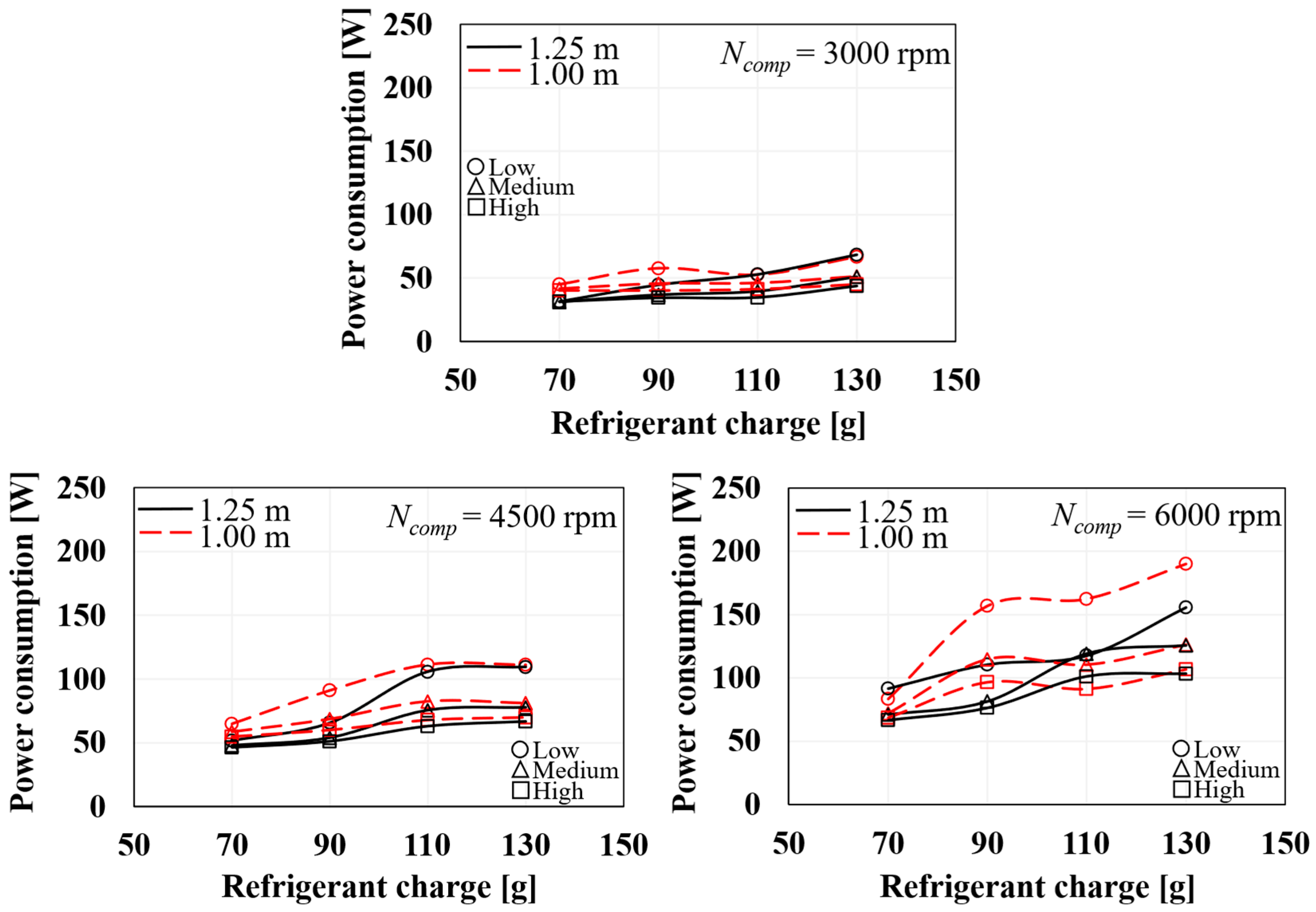
Regarding compressor power consumption, Figure 7 shows that it increases with refrigerant charge; greater refrigerant mass causes an increase in system pressures, primarily the condensation pressure, so more mechanical work is required by the compressor to compress the refrigerant from suction to discharge conditions. Additionally, a higher refrigerant charge results in an increased mass flow rate and greater vapor density at the suction line, further increasing compressor work. Conversely, although the pressure ratio tends to be higher with the longer capillary tube, power consumption tends to decrease. The behavior is attributed to the greater flow restriction, which limits the amount of refrigerant available for evaporation and subsequent compression, thus reducing the compressor work [34]. As expected, increasing compressor speed results in higher power consumption due to greater mechanical work. In contrast, increasing the condenser fan speed tends to reduce power consumption, primarily by lowering operating pressures, thereby reducing the overall pressure ratio and mechanical demand on the system [35].

4.1.6. Coefficient of Performance

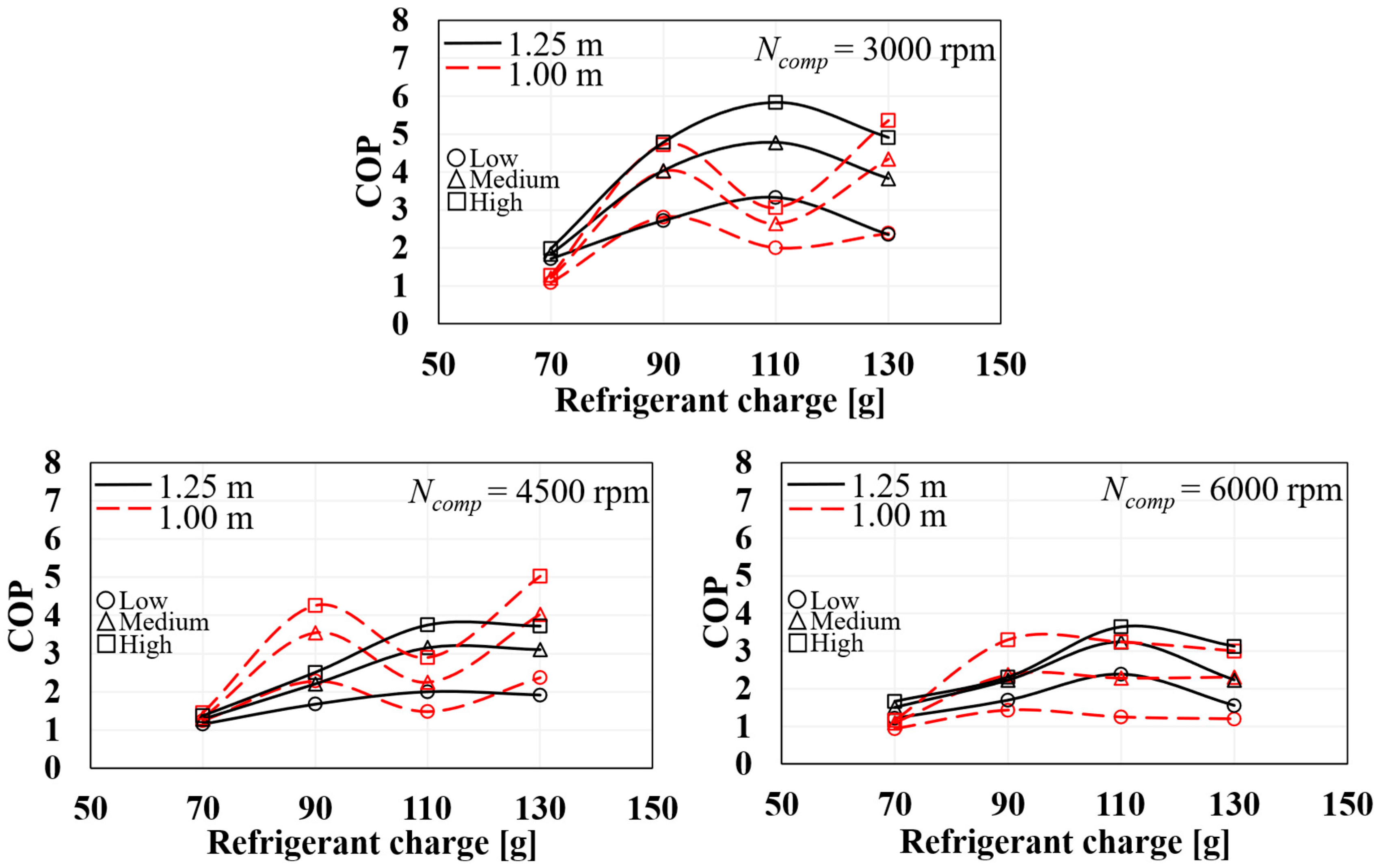
Finally, Figure 8 shows the coefficient of performance of the miniature refrigeration system, calculated from the cooling capacity and the compressor’s power consumption. As shown, the system has an adequate refrigerant charge, which maximizes performance. The trend is clearly observed for the 1.25 m capillary, where a consistent COP peak is found around 110 g of refrigerant, more evident at 3000 and 6000 rpm. The results suggest that a longer capillary tube allows for stabilized refrigerant flow and enhances overall system efficiency. Conversely, the results for the 1.00 m capillary show significant oscillations and lack a clear trend. Unstable flow conditions may be indicated, possibly due to an insufficient pressure drop across the shorter capillary, which could hinder proper refrigerant expansion. As a result, it becomes more difficult to identify a well-defined, adequate charge for this configuration, reducing the reliability and repeatability of the system’s performance.
In addition, Figure 8 shows that higher compressor speeds reduce the COP, as the increase in power consumption outweighs the gain in cooling capacity. In contrast, increasing fan speed improves COP by enhancing cooling capacity and reducing power consumption.
As can be noted, the capillary tube length directly affects the refrigerant flow: if the tube is too long, the flow may be excessively restricted, leading to a higher expansion pressure drop; if it is too short, the flow may be too fast, causing insufficient subcooling and potential flow instability [3,32]. Therefore, selecting an appropriate length is crucial for stable operation. Based primarily on these results and considering the trends observed in the previously analyzed parameters for refrigerant R134a, it can be concluded that the most suitable values for the capillary tube length and refrigerant charge for this study are 1.25 m and 110 g, respectively.

4.2. Comparison Between Refrigerants

4.2.1. Refrigerant Charge Determination for R515B

After identifying 1.25 m as the most suitable capillary tube length for the miniature refrigeration system with the baseline refrigerant R134a, the same experimental sweep was conducted under identical operating conditions using the alternative refrigerant R515B to determine the most appropriate charge for this fluid as a potential drop-in replacement. The analysis primarily focused on COP results, while also considering the behavior of other relevant parameters analyzed in this study.
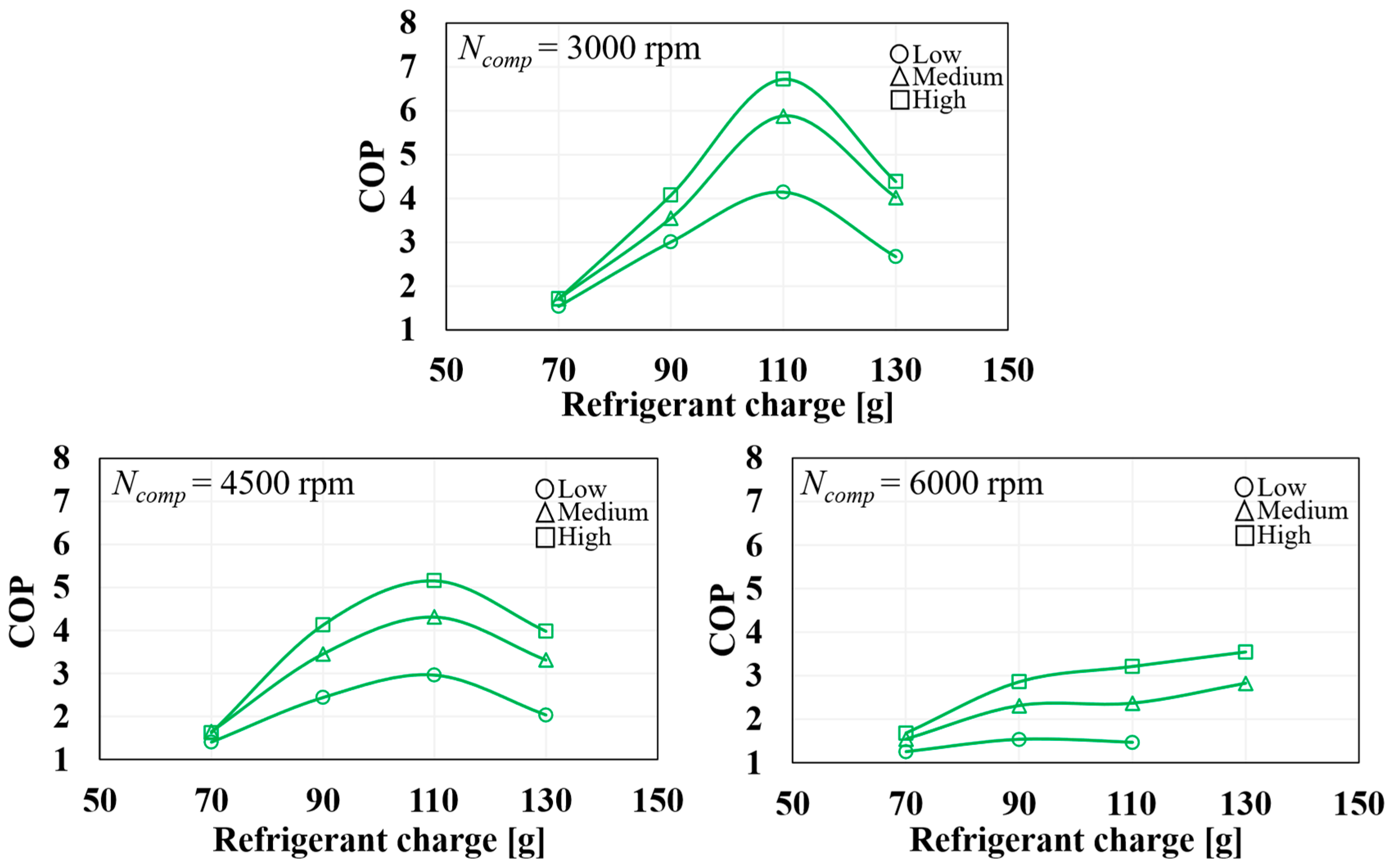
The findings indicate that a charge of 110 g yields the best overall system performance in terms of COP, especially at compressor speeds of 3000 and 4500 rpm, as shown in Figure 9. Although this trend is less evident at 6000 rpm, this charge (110 g) was still selected as the reference value. In practice, the refrigerant mass in a sealed system must remain fixed regardless of operating conditions. Furthermore, when using 130 g of R515B at 6000 rpm, the system exhibited very low superheat levels, posing a risk of liquid slugging at the compressor inlet, which could jeopardize the system’s integrity and long-term reliability. Therefore, the choice of 110 g is justified as the most suitable refrigerant charge, offering a balanced compromise between energy efficiency and operational safety under varying working conditions.

4.2.2. Refrigeration Cycle Comparison: R134a vs. R515B

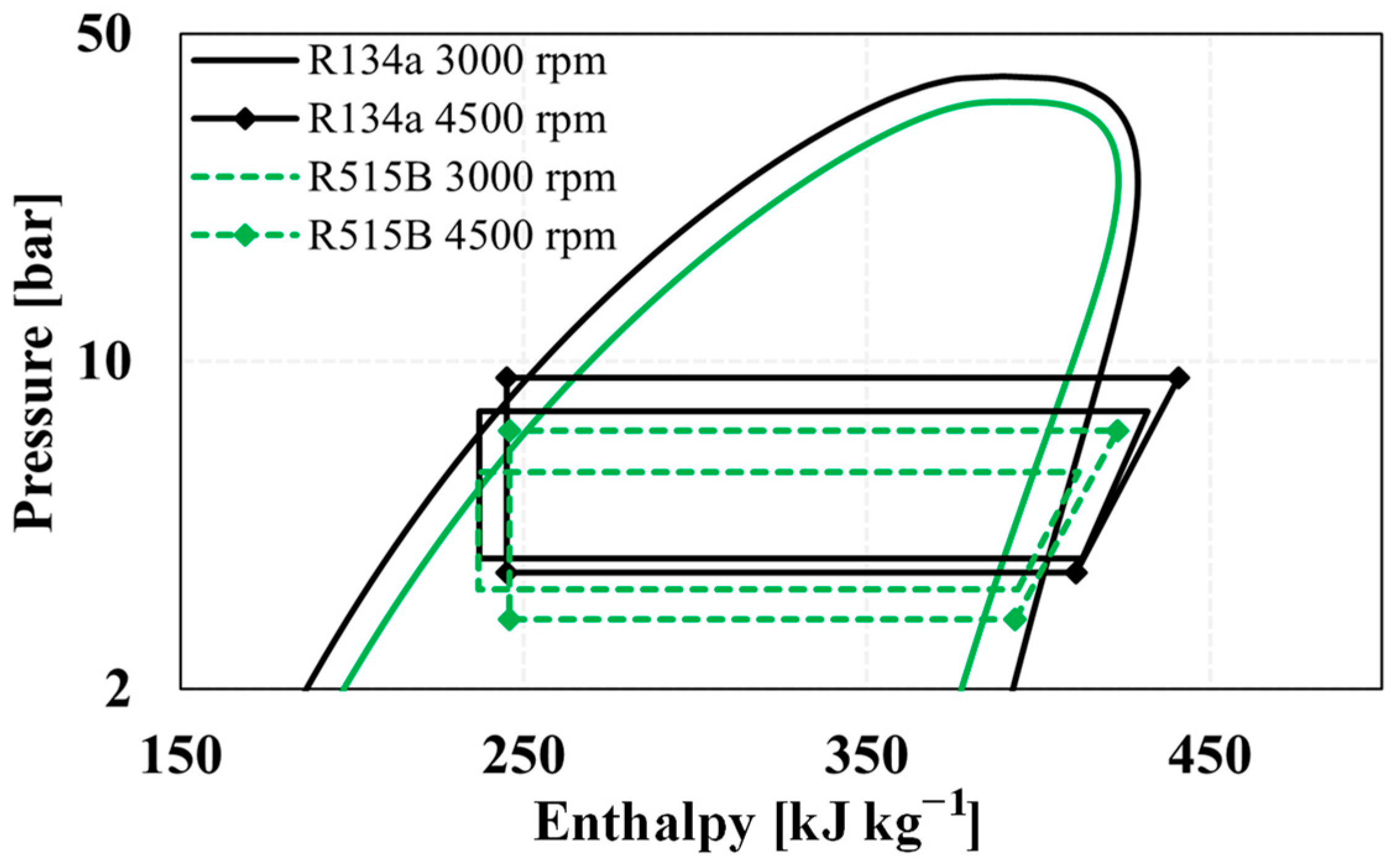
Once the most suitable refrigerant charge for R515B was established, a more direct comparison between the two refrigerants could be made, focusing on the charge levels that yielded the best system performance, i.e., 110 g of refrigerant mass. Figure 10 presents the refrigeration cycles constructed from the experimental data, plotted on a P-h diagram.
Based on the previously discussed results, the high fan speed was identified as the most appropriate and was maintained constant across all cycles shown in the figure. Additionally, the effect of compressor speed on the refrigeration cycle is illustrated, aiming to identify the most favorable operating condition. The solid black lines represent the saturation curve and vapor compression cycles for R134a, while the solid and dashed green lines correspond to the saturation curve and cycles for R515B, respectively. The cycles with markers correspond to a compressor speed of 4500 rpm, whereas those without markers correspond to 3000 rpm. It is important to note that the 6000 rpm condition was excluded, as it yielded the lowest COP values.
According to Figure 10, R134a exhibits a higher latent heat of vaporization than R515B at a fixed compressor speed. However, cooling capacity also depends on the refrigerant mass flow rate. On the other hand, the significantly lower operating pressures of R515B reduce compression work and compressor power consumption, which may lead to an improvement in the overall COP. Additionally, increasing compressor speed raises the condensing pressure and lowers the evaporating pressure, resulting in a higher pressure ratio and increased power consumption. Simultaneously, although the enthalpy difference across the evaporator decreases with the increasing speed, the corresponding rise in refrigerant mass flow rate compensates for this effect, resulting in a net increase in cooling capacity.
Table 3 presents a comparative analysis of the main performance parameters under the previously described operating conditions: a capillary tube length of 1.25 m, a refrigerant charge of 110 g, and high condenser fan speed, for both refrigerants and the two selected compressor speeds (3000 and 4500 rpm).
As shown, R515B exhibited notable performance differences relative to R134a across both compressor speeds. At 3000 rpm, it delivered 17% lower cooling capacity, 28% lower power consumption, and 15% higher COP. Conversely, at 4500 rpm, R515B outperformed R134a, exhibiting a 6.5% higher cooling capacity. This improvement is primarily attributed to an increased refrigerant mass flow rate, estimated indirectly via an energy balance between the refrigerant and the secondary fluid in the evaporator, since the reported cooling capacity in this study was measured on the secondary fluid side. The heat load was calculated from the secondary fluid’s properties (mass flow rate, specific heat, and temperature difference) and then equated to the refrigerant’s cooling effect. The corresponding mass flow rate was estimated from the enthalpy difference in the refrigerant at the evaporator’s inlet and outlet.
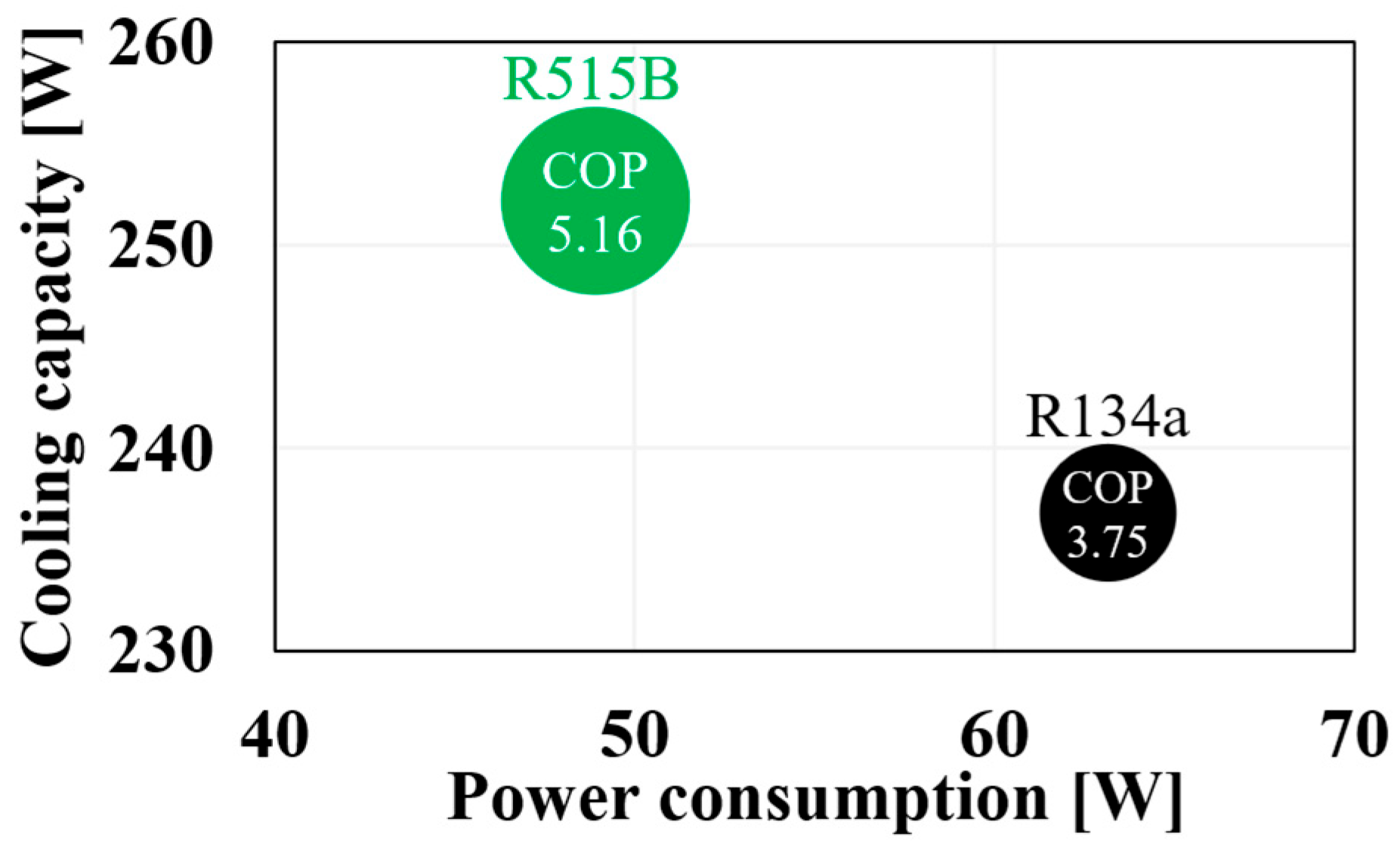
The increase in flow may be associated with the lower pressure ratio observed with R515B under this condition, which could lead to a higher volumetric efficiency and allow more refrigerant to be admitted per cycle despite its lower vapor density. These conclusions are based on the experimental data collected and the theoretical analysis, since a direct measurement of the compressor efficiency was not performed. Additionally, compressor power consumption decreased by 22.5% due to the lower operating pressures of R515B. Since COP depends on the ratio of cooling capacity to compressor power consumption, this substantial reduction in compression work was the dominant factor leading to the observed 38% improvement in COP, further reinforced by the additional 6.5% increase in cooling capacity. Considering these findings, a compressor speed of 4500 rpm was determined to be the most advantageous configuration for R515B, yielding superior cooling capacity and the greatest relative enhancement in COP. In summary, the most suitable capillary tube length was 1.25 m; the most appropriate refrigerant charge was 110 g for both refrigerants; the most effective fan speed was the high level; and the most advantageous compressor speed was 4500 rpm. Figure 11 presents a concise graphical comparison of the main performance parameters for both refrigerants under the most suitable operating conditions.
Finally, according to the experimental data for R515B, the compressor exhibited stable thermal behavior, with casing and discharge temperatures remaining within a narrow range. These observations suggest that R515B does not negatively affect compressor performance, supporting its suitability as a potential direct replacement for R134a from a thermal stability standpoint.

4.2.3. Uncertainty Propagation

Table 4 presents the uncertainty propagation for the calculated cooling capacity, power consumption, and COP for R134a and R515B. The analysis was conducted for the three compressor speeds, with a constant refrigerant charge of 110 g and the condenser fan operating at high speed. These results provide insight into the influence of measurement uncertainties on the system’s key performance indicators, enabling a more reliable comparison across refrigerants and operating conditions.

5. Concluding Remarks

The technology of miniature vapor compression refrigeration systems for small-scale cooling applications has not yet reached full research maturity, and R134a remains one of the most commonly used refrigerants in this type of system. In this study, the potential drop-in replacement of R134a with the low-GWP refrigerant R515B was experimentally evaluated. The main findings can be summarized as follows:
The interaction between refrigerant charge and capillary tube length strongly influenced the system’s behavior. Through experimental evaluation, a capillary tube length of 1.25 m was identified as the most suitable for R134a, providing greater system stability. This length was then adopted for tests with R515B as a drop-in replacement refrigerant. Additionally, the refrigerant charge was selected to achieve the highest COP, resulting in a charge of 110 g for both refrigerants.
The experimental assessment of compressor and condenser fan speeds on cycle performance revealed that their primary effect on operating pressures strongly influences cooling capacity, power consumption, and COP. Results indicate that high fan speed maximizes COP, while a compressor speed of 4500 rpm enhances cooling capacity and improves COP relative to R134a, making these the most suitable conditions.
Replacing R134a with R515B is viable from a COP perspective at both 3000 and 4500 rpm compressor speeds, despite a decrease in cooling capacity at the lower speed. However, under the most suitable operating conditions previously identified, the substitution becomes even more advantageous, with R515B showing a cooling capacity increase of approximately 6.5%, a reduction in compressor power consumption of about 22.5%, and a COP improvement of 38%.
The results indicate that R515B is a technically viable, low-GWP drop-in replacement for R134a in miniature vapor compression systems, offering significant improvements in energy efficiency and environmental performance.
Future work could explore hybrid configurations, such as PCM or thermoelectric modules, in which a variable-speed compressor could improve transient load management. The system could also serve as a mechanical subcooler in transcritical CO2 cycles, which are gaining increasing attention. Finally, integrating IoT-enabled sensors and renewable energy sources may further enhance performance, efficiency, and sustainability.

Author Contributions

Conceptualization, J.M.B.-F. and J.C.S.-R.; investigation, J.C.S.-R.; writing—original draft preparation, V.P.-G. and D.H.-F.; writing—review and editing, J.L.R.-M. and F.N.D.-L. All authors have read and agreed to the published version of the manuscript.

Funding

This research was funded by University of Guanajuato CIIC 2024.

Data Availability Statement

The original contributions presented in this study are included in the article. Further inquiries can be directed to the corresponding author.

Acknowledgments

We thank Honeywell for its support with the R515B refrigerant.

Conflicts of Interest

The authors declare no conflict of interest.

Abbreviations

COPCoefficient of Performance
DCDirect Current
EEREnergy Efficiency Ratio
EESEngineering Equation Solver
GWPGlobal Warming Potential
hSpecific enthalpy [kJ·kg−1]
IoTInternet of Things
NCompressor Rotational Speed [rpm]
NBPNormal Boiling Point
PPressure [Bar]
PCMPhase Change Material
PIDProportional–Integral–Derivative
TTemperature [°C]
u x i Standard Uncertainty
u y Combined Uncertainty
x Input Variable
y Derived Quantity
Greek symbol
ρ Density [kg·m−3]
Subscripts
cCritical
compCompressor
condCondensing
evapEvaporating
lLiquid
vVapor
vapVaporization

References

  1. International Institute of Refrigeration. The Role of Refrigeration in the Global Economy (2019), 38th Note on Refrigeration Technologies; International Institute of Refrigeration: Paris, France, 2019. [Google Scholar]
  2. Silva-Romero, J.C.; Belman-Flores, J.M.; Aceves, S.M. A review of small-scale vapor compression refrigeration technologies. Appl. Sci. 2024, 14, 3069. [Google Scholar] [CrossRef]
  3. Wu, Z.; Du, R. Design and experimental study of a miniature vapor compression refrigeration system for electronics cooling. Appl. Therm. Eng. 2011, 31, 385–390. [Google Scholar] [CrossRef]
  4. Yang, J.J.; Li, K.; Cui, X.Y. Experimental study on miniature-refrigeration system. Key Eng. Mater. 2012, 531–532, 584–587. [Google Scholar] [CrossRef]
  5. Possamai, F.; Lilie, D.E.B.; Zimmermann, A.J.P.; Mongia, R. Miniature Vapor Compression System. In Proceedings of the 12th International Refrigeration and Air Conditioning Conference at Purdue, West Lafayette, IN, USA, 14–17 July 2012. [Google Scholar]
  6. Poachaiyapoom, A.; Leardkun, R.; Mounkong, J.; Wongwises, S. Miniature vapor compression refrigeration system for electronics cooling. Case Stud. Therm. Eng. 2019, 13, 100365. [Google Scholar] [CrossRef]
  7. Zhou, H.; Li, J. Development and analysis of a simple structured and economic miniature vapor compression refrigerator for cooling electronics in harsh environment. Appl. Therm. Eng. 2023, 223, 120047. [Google Scholar] [CrossRef]
  8. Mancin, S.; Zilio, C.; Righeti, G.; Rosseto, L. Mini vapor cycle system for high density electronic cooling applications. Int. J. Refrig. 2013, 36, 1191–1202. [Google Scholar] [CrossRef]
  9. Chen, W.; Huang, J.; Ma, H.; Zhan, H.; Zhang, P. Dynamic characteristics of an integrated cooling system comprising vapor compression and thermosyphon loop for electronics cooling. Case Stud. Therm. Eng. 2021, 28, 101424. [Google Scholar] [CrossRef]
  10. Zhi, R.; Ma, R.; Zhang, D.; Wu, Y.T. Experimental research on a lightweight miniature Wankel compressor for a vapor compression refrigeration system in aerospace. Sustainability 2023, 15, 8826. [Google Scholar] [CrossRef]
  11. Sung, T.; Kim, Y.J.; Kim, H.S.; Kim, J. Empirical modeling and robust control of a novel meso-scale vapor compression refrigeration system (mVCRS). Int. J. Refrig. 2017, 77, 99–115. [Google Scholar] [CrossRef]
  12. Moctezuma-Hernández, J.A.; Belman-Flores, J.M.; Soria-Alcaraz, J.A.; Espinal-Jiménez, A.; Rubio-Maya, C. Modeling and multiobjective optimization of a miniature refrigeration system. J. Therm. Sci. Eng. Appl. 2022, 14, 1001007. [Google Scholar] [CrossRef]
  13. Yee, R.P.; Hermes, C.J.L. Thermodynamic design of a mesoscale vapor compression cooling device. Appl. Therm. Eng. 2019, 147, 509–520. [Google Scholar] [CrossRef]
  14. Dhumane, R.; Ling, J.; Aute, V.; Radermacher, R. Performance Comparison of low GWP refrigerants for a miniature vapor compression system integrated with enhanced phase change material. Appl. Therm. Eng. 2021, 182, 116160. [Google Scholar] [CrossRef]
  15. Goenaga, A.; Martin-Escudero, K.; Flores-Abascal, I.; Azkorra-Larrinaga, Z.; Escudero, C.; Soriano, J. Design of a microscale refrigeration system for optimizing the usable space in compact refrigerators. Energies 2022, 15, 819. [Google Scholar] [CrossRef]
  16. UNEP. Amendment to the Montreal Protocol on Substances That Deplete the Ozone Layer; United Nations Environment Programme: Kigali, Rwanda, 2016; Available online: https://ozone.unep.org (accessed on 23 November 2022).
  17. Tangri, H.; Purohit, N.; Sethi, A.; Hulse, R. Solubility, miscibility and compatibility studies of low GWP non-flammable refrigerants and lubricants for refrigeration and air conditioning applications. Int. J. Refrig. 2023, 148, 45–63. [Google Scholar] [CrossRef]
  18. Kang, K.; Yang, S.; Cui, J.; Gu, Y. Theoretical study and experimental verification of the viscosities of azeotropic refrigerant R515B. Int. J. Refrig. 2024, 168, 59–69. [Google Scholar] [CrossRef]
  19. Oudah, M.H.; Yasser, Z.K. Low-GWP refrigerants performance evaluation: R513A and R515B boiling within smooth and microfinned tubes. Int. J. Therm. Sci. 2025, 211, 109724. [Google Scholar] [CrossRef]
  20. Shafiq, Q.N.; Hung, K.-S.; Wang, C.-C. An experimental investigation of nucleate boiling performance for low-GWP azeotropic refrigerant R513A on a smooth tube. Int. J. Refrig. 2024, 162, 150–157. [Google Scholar] [CrossRef]
  21. Irannezhad, N.; Rossetto, L.; Diani, A. Optimization considerations in the design of shell and tube condensers implementing enhanced tubes: Experimental and theoretical analysis. Appl. Therm. Eng. 2025, 273, 126408. [Google Scholar] [CrossRef]
  22. Yildirim, R.; Sahin, A.S. Prediction of energy and exergy performance for subcooled and superheated vapor compression refrigeration system working with new generation refrigerants. Sustain. Energy Technol. Assess. 2023, 57, 103177. [Google Scholar]
  23. Conte, R.; Azzolin, M.; Bernardinello, S.; Del Col, D. Experimental investigation of large scroll compressors working with six low-GWP refrigerants. Therm. Sci. Eng. Progr. 2023, 44, 102043. [Google Scholar] [CrossRef]
  24. Al-Sayyab, A.K.S.; Navarro-Esbrí, J.; Mota-Babiloni, A. Energy, exergy, and environmental (3E) analysis of a compound ejector-heat pump with low GWP refrigerants for simultaneous data center cooling and district heating. Int. J. Refrig. 2022, 133, 61–72. [Google Scholar] [CrossRef]
  25. Yıldırım, R.; Şahin, A.Ş.; Dikmen, E. Comparative energetic, exergetic, environmental and enviroeconomic analysis of vapour compression refrigeration systems using R515B as substitute for R134a. Int. J. Thermodyn. 2022, 25, 125–133. [Google Scholar] [CrossRef]
  26. Lemmon, E.W.; Bell, I.H.; Huber, M.L.; McLinden, M.O. NIST Standard Reference Database 23: Reference Fluid Thermodynamic and Transport Properties-REFPROP; Version 10.0; National Institute of Standards and Technology, Standard Reference Data Program: Gaithersburg, MD, USA, 2018. [Google Scholar]
  27. Klein, S.A. Engineering Equation Solver, Version 9.944; F-Chart Software; Wisconsin-Madison University: Middleton, WI, USA, 2011.
  28. Li, Z.; Jiang, H.; Chen, X.; Liang, K. Optimal refrigerant charge and energy efficiency of an oil-free refrigeration system using R134a. Appl. Therm. Eng. 2020, 164, 114473. [Google Scholar] [CrossRef]
  29. Silva-Romero, J.C.; Belman-Flores, J.M.; Elizalde-Blancas, F.; Rodríguez-Alejandro, D.A. Effect of Capillary Tube Geometric Parameters in a Refrigeration System Using R1234yf as a Replacement for R134a. Academia Journals; Las Ingenierías Como puente Hacia la Innovación. México, 8–9 November 2023. (In Spanish) Available online: https://static1.squarespace.com/static/55564587e4b0d1d3fb1eda6b/t/655d4822d1c0f4729bb7c008/1700612139370/Tomo+06+-+Ingenier%C3%ADas+-+Art%C3%ADculos+Academia+Journals+Celaya+2023.pdf (accessed on 17 November 2025).
  30. Shimizu, G.K.K.; Colmanetti, A.R.A.; Gardenghi, Á.R.; Cabezas-Gomez, L.; Tibiriçá, C.B. An experimental study of refrigerant expansion inside coiled adiabatic capillary tubes and development of a general correlation. J. Braz. Soc. Mech. Sci. Eng. 2021, 43, 71. [Google Scholar] [CrossRef]
  31. Prabakaran, R.; Lal, D.M. A novel exergy based charge optimisation for a mobile air conditioning system: An experimental study. J. Therm. Anal. Calorim. 2018, 132, 1241–1252. [Google Scholar] [CrossRef]
  32. Wu, Y.T.; Ma, C.F.; Zhong, X.H. Development and experimental investigation of a miniature-scale refrigeration system. Energy Convers. Manag. 2010, 51, 81–88. [Google Scholar] [CrossRef]
  33. Trutassanawin, S.; Groll, E.A.; Garimella, S.V.; Cremaschi, L. Experimental Investigation of a Miniature-Scale Refrigeration System for Electronics Cooling. IEEE Trans. Compon. Packag. Technol. 2006, 29, 678–687. [Google Scholar] [CrossRef]
  34. Baskaran, A.; Manikandan, N.; Jule, L.T.; Nagaprasad, N.; Saka, A.; Badassa, B.; Ramaswamy, K.; Seenivasan, V. Influence of capillary tube length on the performance of domestic refrigerator with eco-friendly refrigerant R152a. Sci. Rep. 2022, 12, 14460. [Google Scholar] [CrossRef] [PubMed]
  35. Larsen, L.S.; Thybo, C. Potential energy savings in refrigeration systems using optimal set-points. In Proceedings of the 2004 IEEE International Conference on Control Applications, Taipei, Taiwan, 2–4 September 2004; Volume 1, pp. 701–704. [Google Scholar]
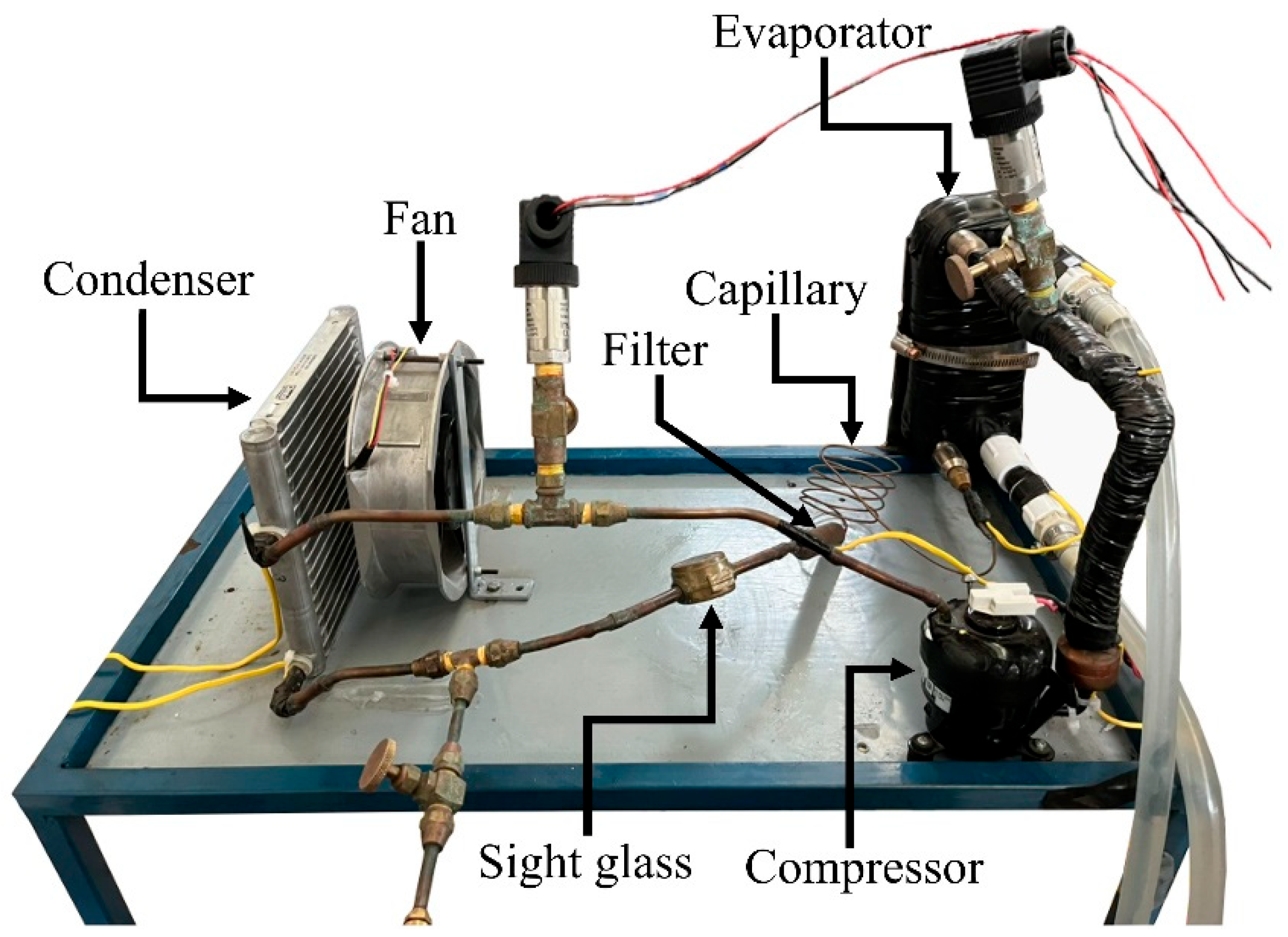
Figure 1. Miniature vapor compression refrigeration system.
Thermo 06 00036 g001
Figure 2. Schematic diagram of the test bench, instrumentation, and main components.
Thermo 06 00036 g002
Figure 3. Effect of refrigerant charge, capillary tube length, and condenser fan speed on superheating at different compressor speeds (3000, 4500, and 6000 rpm).
Thermo 06 00036 g003
Figure 4. Effect of refrigerant charge, capillary tube length, and condenser fan speed on subcooling at different compressor speeds (3000, 4500, and 6000 rpm).
Thermo 06 00036 g004
Figure 5. Effect of refrigerant charge, capillary tube length, and condenser fan speed on pressure ratio at different compressor speeds (3000, 4500, and 6000 rpm).
Thermo 06 00036 g005
Figure 6. Effect of refrigerant charge, capillary tube length, and condenser fan speed on cooling capacity at different compressor speeds (3000, 4500, and 6000 rpm).
Thermo 06 00036 g006
Figure 7. Effect of refrigerant charge, capillary tube length, and condenser fan speed on power consumption at different compressor speeds (3000, 4500, and 6000 rpm).
Thermo 06 00036 g007
Figure 8. Effect of refrigerant charge, capillary tube length, and condenser fan speed on COP at different compressor speeds (3000, 4500, and 6000 rpm).
Thermo 06 00036 g008
Figure 9. Effect of R515B refrigerant charge and condenser fan speed on COP at different compressor speeds (3000, 4500, and 6000 rpm).
Thermo 06 00036 g009
Figure 10. Pressure-enthalpy diagrams for R134a and R515B, operating with 110 g of refrigerant and a 1.25 m capillary length, at compressor speeds of 3000 and 4500 rpm.
Thermo 06 00036 g010
Figure 11. Main performance parameters of R134a and R515B at 110 g refrigerant charge, 1.25 m capillary tube length, high condenser fan speed, and a compressor speed of 4500 rpm.
Thermo 06 00036 g011
Table 1. Properties of R134a and alternative refrigerant R515B (Lemmon et al. [26] @ 25 °C).
RefrigerantNBP [°C]TC [°C]PC [Bar] ρ l
[kg·m−3]
ρ v
[kg·m−3]
Δhvap
[kJ·kg−1]
GWP100ASHRAE Class
R134a−26.07101.0640.591206.7032.35177.781300A1
R515B−18.97108.8835.831180.9126.95162.01299A1
Table 2. Uncertainty of measuring instruments.
InstrumentUncertaintyMeasurement Span
Instrutek IT100 pressure transducers±0.06 bar0–13.79 bar
K-type thermocouple±0.87 °C−200 °C–1260 °C
Electromagnetic flow meter (Burkert type 8045)±0.01 L min−10.2–10 m s−1
NI 9207 (current measurement)±0.02 A0–2A
Table 3. Comparative performance analysis of R134a and R515B under selected operating conditions.
Compressor Speed [rpm]Pcond/Pevap
[Bar]
Cooling Capacity [W]Power Consumption [W]COP
R134aR515BR134aR515BR134aR515BR134aR515B
30007.81/3.805.80/3.27203.30169.0034.8625.165.836.72
45009.25/3.547.11/2.81236.80252.2063.1548.913.755.16
Table 4. Uncertainty propagation in performance parameters for R134a and R515B under a 110 g refrigerant charge and high condenser fan speed.
RefrigerantCompressor Speed [rpm]Cooling Capacity [W]Power Consumption [W]COP
R134a3000203.30 ± 2.07234.86 ± 0.2505.83 ± 0.073
4500236.80 ± 2.39363.15 ± 0.35763.75 ± 0.043
6000368.40 ± 3.709101.2 ± 0.3743.64 ± 0.039
R515B3000169.00 ± 1.70325.16 ± 0.1136.72 ± 0.074
4500252.20 ± 2.53248.91 ± 0.1995.16 ± 0.056
6000241.7 ± 2.43575.17 ± 0.2093.22 ± 0.034
Disclaimer/Publisher’s Note: The statements, opinions and data contained in all publications are solely those of the individual author(s) and contributor(s) and not of MDPI and/or the editor(s). MDPI and/or the editor(s) disclaim responsibility for any injury to people or property resulting from any ideas, methods, instructions or products referred to in the content.