1. Introduction
Polyvinyl chloride (PVC) is one of the most widely used thermoplastics due to its low cost, good mechanical strength, chemical resistance, and versatility across construction, medical, automotive, and consumer applications [
1,
2]. A critical factor governing its industrial applicability is thermal behavior, particularly during processing, where PVC is exposed to elevated temperatures under shear. Unlike many commodity polymers, PVC does not undergo simple melting but instead exhibits inherent thermal instability associated with dehydrochlorination, which limits its processing window and long-term performance. Consequently, understanding and controlling the thermal behavior of PVC-based systems remains a challenge in polymer engineering [
3,
4,
5,
6].
The thermal instability of PVC originates from the relatively labile C–Cl bonds along its backbone, which undergo dehydrochlorination upon heating, leading to hydrogen chloride (HCl) release and the formation of conjugated polyene sequences [
7,
8]. This process is autocatalytic, as the evolved HCl further accelerates degradation, resulting in discoloration, embrittlement, and deterioration of material properties [
9,
10,
11]. Although stabilizers are commonly employed to delay this process, thermal degradation can still occur during thermal exposure [
12]. Therefore, improving the thermal behavior of PVC requires strategies that go beyond conventional stabilization and address the molecular factors governing chain mobility and degradation kinetics.
Plasticization is widely used to impart flexibility and processability to PVC; however, conventional plasticizers, most commonly phthalates, are physically blended rather than chemically bound to the polymer matrix [
13,
14]. This leads to long-term migration, volatilization, and leaching, raising significant health and environmental concerns [
15,
16,
17]. Regulatory restrictions on phthalates have intensified the search for alternative plasticizers that are both effective and environmentally benign. Bio-based plasticizers derived from renewable or waste resources have emerged as promising candidates, offering reduced toxicity and improved sustainability [
18,
19,
20]. Nevertheless, their influence on the thermal behavior and stability of PVC, particularly in multicomponent systems, remains not yet fully understood.
Blending PVC with thermoplastic polyurethane (TPU) represents another strategy to improve flexibility and toughness. TPU is characterized by its segmented structure, combining soft and hard domains that confer elasticity and thermal resilience [
21,
22,
23]. While PVC/TPU blends have been explored primarily from a mechanical perspective [
18,
24], their thermal behavior remains complex due to differences in degradation mechanisms, polarity, and phase interactions. In many cases, TPU alone does not enhance the intrinsic thermal stability of PVC and may even accelerate degradation if interfacial interactions are insufficiently controlled [
25]. This underscores the importance of compatibility and molecular interactions in governing the thermal response of such blends.
Despite extensive research on PVC plasticization and blending [
26,
27], a critical knowledge gap remains regarding the combined effect of bio-based plasticizers and TPU on the thermal behavior and stability of PVC systems. Most existing studies emphasize mechanical performance, migration resistance, or miscibility [
28,
29,
30], whereas thermal stability, particularly resistance to dehydrochlorination, has received comparatively limited direct attention. Moreover, the interplay between intermolecular interactions, segmental mobility, and degradation kinetics in ternary PVC/TPU/bio-plasticizer systems has not been adequately explored.
In this context, the present study focuses on the thermal behavior and stability of PVC/TPU blends plasticized with glycerol diacetate monolaurate, a bio-based plasticizer derived from waste cooking oil. While the mechanical properties of related systems have been addressed in our previous work [
18], the current study concentrates on clarifying the thermal response and degradation mechanisms of these blends. By integrating dynamic mechanical analysis (DMA), Fourier transform infrared spectroscopy (FTIR), scanning electron microscopy (SEM), conductivity-based dehydrochlorination measurements, and thermogravimetric analysis (TGA/DTG), this work establishes correlations between molecular interactions, microstructural organization, segmental dynamics, and thermal degradation behavior.
The aim of this study is to examine how the combined presence of TPU and a bio-based plasticizer influences the thermal behavior, degradation pathways, and stability of PVC-based blends. Through a comprehensive thermal and morphological analysis, this work demonstrates how interaction-driven formulation strategies can enhance flexibility, delay dehydrochlorination, and support sustainable material design. The findings provide fundamental insight into the development of thermally balanced PVC systems that reduce reliance on conventional phthalate plasticizers while maintaining industrial relevance.
2. Materials and Methods
2.1. Materials
Suspension-polymerized polyvinyl chloride (PVC) with a K-value of 70 and a polyester-based thermoplastic polyurethane (TPU) were used in this study; both polymers were supplied by BorsodChem Zrt. (Kazincbarcika, Hungary). A commercial CaZn stabilizer and E-Wax external lubricant were used as processing additives in all PVC-containing formulations. Glycerol diacetate monolaurate, a low-molecular-weight bio-based plasticizer derived from waste cooking oil, was obtained from Rikevita Fine Chemical & Food Industry Co., Ltd. (Shanghai, China). The plasticizer contains ester functional groups and was employed in various binary and ternary blend formulations with PVC and TPU. All materials were used as received. The investigated compositions included PVC/bio-plasticizer, PVC/TPU, TPU/bio-plasticizer, and PVC/TPU/bio-plasticizer systems, allowing for evaluation of thermal behavior across different blend compositions.
2.2. Preparation of the Blends
Polymer blends were prepared by combining suspension-polymerized PVC, polyester-based TPU, and the bio-based plasticizer at the compositions listed in
Table 1. The required amounts of PVC with its additives and TPU were first introduced into a 10 L laboratory mixer (MTI Mischtechnik, Detmold, Germany) and mixed at 2500 rpm until the temperature reached approximately 80 °C. At this stage, the bio-plasticizer was gradually added to promote uniform dispersion within the polymer mixture. As mixing progressed and the temperature increased to 125 °C, the rotation speed was reduced to 400 rpm, and cooling water was applied to maintain the target temperature. The blend was then allowed to cool to approximately 40 °C, yielding a dry, slightly agglomerated powder suitable for further processing.
The resulting powder was processed on an electrically heated Schwabenthan 150 U laboratory roll mill (Berlin, Germany) at 175 °C, using a roll speed ratio of 1:1 and a rotation speed of 21 rpm. Homogeneous mixing was achieved by repeatedly cutting, rotating, and repositioning the material between the heated rolls, thereby ensuring effective mechanical shearing and uniform distribution of all components. The roll-milled sheets, with thicknesses ranging from 0.4 to 0.6 mm, were subsequently compression-molded at the same temperature to obtain smooth, uniform specimens for thermal characterization.
2.3. Dynamic Mechanical Analysis (DMA)
Dynamic mechanical analysis was performed using a Metravib DMA 25 (ACOEM Group, Limonest, France) operated in tensile mode. Rectangular specimens with dimensions of approximately 30 mm × 15 mm × 0.6 mm were prepared from the roll-milled sheets and tested over a temperature range of −120 °C to 120 °C at a controlled heating rate of 2 °C/min, with liquid nitrogen used to achieve and maintain low-temperature conditions. Measurements were conducted at a constant oscillation frequency of 10 Hz, applying a static displacement amplitude of 0.5 mm and a dynamic amplitude of 0.1 mm. The temperature dependence of the mechanical loss factor (tan δ) was recorded, and the glass transition temperature () was determined from the peak position of the tan δ curve. Changes in with blend composition were used to assess variations in segmental mobility associated with intermolecular interactions among PVC, TPU, and the bio-plasticizer.
2.4. Fourier Transform Infrared (FTIR) Spectroscopy
Fourier transform infrared (FTIR) spectroscopy was used to examine intermolecular interactions among PVC, TPU, and the bio-plasticizer in the prepared blends. Spectra were obtained using a Bruker Tensor 27 spectrometer (Bruker Optik GmbH, Ettlingen, Germany) equipped with an attenuated total reflectance (ATR) accessory featuring a diamond crystal. Measurements were carried out over the wavenumber range of 400–4000 cm−1 with a spectral resolution of 4 cm−1, averaging 128 scans per sample to improve the signal-to-noise ratio. All measurements were performed under ambient conditions, and the ATR crystal was thoroughly cleaned between samples to avoid cross-contamination. Spectral analysis was conducted using OPUS software (version 7.5, Bruker Optik GmbH), with particular attention paid to changes in characteristic band positions, intensities, and peak broadening associated with functional groups of PVC, TPU, and the bio-plasticizer. These spectral features were used to assess molecular-level interactions relevant to the thermal behavior and stability of the blends.
2.5. Scanning Electron Microscopy (SEM)
Morphological characterization of the blends was performed using a Thermo Scientific Helios G4 PFIB SEM CXE system (Thermo Fisher Scientific, Waltham, MA, USA), equipped with a high-stability Schottky field-emission cathode. Prior to imaging, samples were treated with methyl ethyl ketone (MEK) to selectively remove the more soluble phase, then sectioned and dried at 70 °C to eliminate residual solvent. The specimens were mounted on conductive holders, sputter-coated with gold, and examined in secondary electron (SE) mode using the in-column (ICE) detector at an accelerating voltage of 15 kV.
2.6. Conductivity-Based Thermal Stability Testing
The thermal stability of PVC-containing blends was evaluated using a Thermomat 895 instrument (Metrohm, Herisau, Switzerland), which monitors dehydrochlorination through changes in the conductivity of an absorbent solution. Samples with masses ranging from 0.5 to 0.85 g (corresponding to a PVC content of 0.5 g ± 2%) were placed in the reaction chamber and tested at a constant temperature of 180 °C. Nitrogen was used as the carrier gas to transport the evolved degradation products into a conductivity cell containing deionized water as the absorbent medium. The release of hydrogen chloride (HCl) during thermal degradation was indirectly quantified by recording the increase in conductivity (µS/cm) as a function of time. The characteristic thermal stability time was determined from the inflection point of the conductivity–time curve and used as a comparative measure to evaluate the influence of TPU and bio-plasticizer content on the thermal resistance of PVC-based blends.
2.7. Thermogravimetric Analysis (TGA)
Thermogravimetric analysis (TGA) was performed to investigate the thermal degradation behavior of PVC, TPU, and bio-plasticizer-containing blends using a Q600 simultaneous DSC–TGA analyzer (TA Instruments, New Castle, DE, USA). Approximately 10 mg of each sample was placed in a platinum crucible and heated from 30 °C to 550 °C at a constant heating rate of 10 °C/min under a flowing argon atmosphere (100 mL/min) to maintain inert conditions. The sample mass was continuously recorded as a function of temperature. The resulting TG and derivative thermogravimetric (DTG) curves were used to analyze thermal degradation behavior, decomposition stages, and degradation pathways, enabling a comparative evaluation of the effects of blend composition and bio-plasticizer incorporation on thermal stability.
3. Results and Discussion
3.1. Dynamic Mechanical Analysis (DMA) of Polymer Blends
Dynamic mechanical analysis was employed to examine the temperature-dependent segmental mobility of PVC, TPU, and their binary and ternary blends. The tan δ response provides direct insight into molecular relaxation behavior and the extent to which blending and plasticization modify chain dynamics.
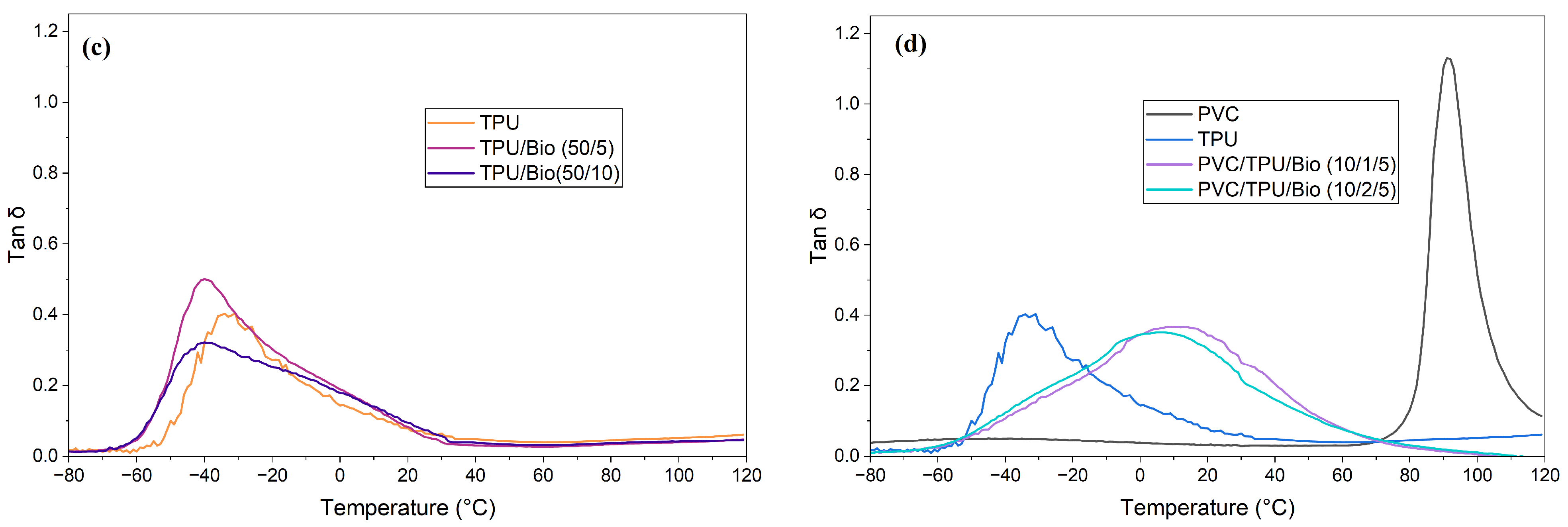
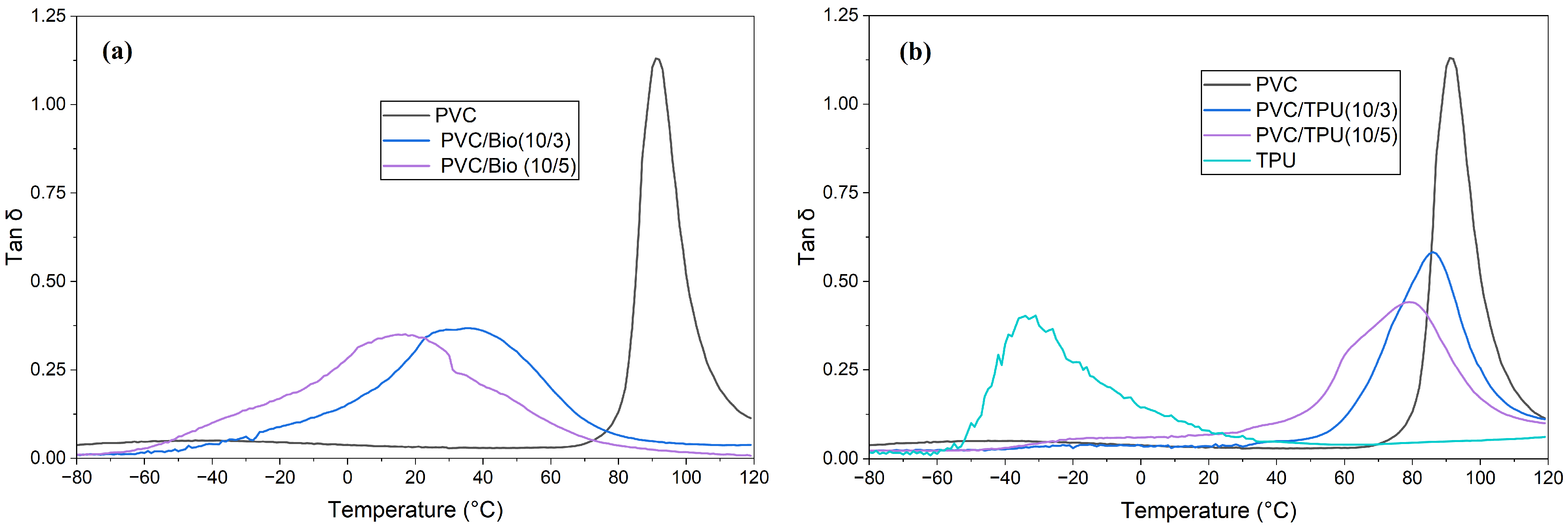
Figure 1a–d show the tan δ response as a function of temperature in the range from −80 to 120 °C, as no additional relaxation processes were observed at lower temperatures for the investigated compositions.
Neat PVC exhibits a sharp tan δ maximum at 92 °C, characteristic of its rigid amorphous structure and restricted segmental mobility (
Figure 1a). Upon incorporation of the bio-plasticizer, the tan δ peak shifts markedly toward lower temperatures and becomes broader, indicating enhanced chain flexibility and a wider distribution of relaxation times [
31]. The glass transition temperature decreases to 35 °C for PVC/Bio (10/3) and further to about 17 °C for PVC/Bio (10/5). This progressive reduction reflects the increasing ability of the bio-plasticizer to disrupt PVC–PVC intermolecular associations, thereby facilitating cooperative segmental motion [
32]. The broadened damping peaks further suggest the development of a more heterogeneous relaxation environment induced by plasticizer incorporation.
Blending PVC with TPU (
Figure 1b) also modifies the viscoelastic response, though to a lesser extent than bio-plasticization. The tan δ peak associated with PVC shifts modestly to lower temperatures, appearing at 86 °C for PVC/TPU (10/3) and 79 °C for PVC/TPU (10/5). These shifts indicate a partial relaxation of PVC chain constraints arising from interactions with the TPU phase. The dominant relaxation remains PVC-related, while the low-temperature relaxation characteristic of TPU appears only as a weak shoulder at higher TPU content. This behavior suggests that TPU contributes to localized mobility enhancement without fully disrupting the PVC glassy network.
Neat TPU displays a tan δ maximum at −32 °C, corresponding to the glass transition of its soft segments (
Figure 1c). The addition of the bio-plasticizer shifts this transition slightly to lower temperatures (−40 to −41 °C) and increases the damping intensity, reflecting enhanced flexibility within the soft-segment domains. The relatively small shift compared with PVC indicates that TPU already possesses significant intrinsic mobility, and the bio-plasticizer acts primarily as a secondary mobility enhancer rather than inducing substantial structural modification.
In contrast, the ternary PVC/TPU/bio-plasticizer blends (
Figure 1d) exhibit a distinctly different relaxation behavior. Rather than displaying separate PVC- and TPU-related transitions, they exhibit a single broad tan δ peak at substantially lower temperatures, around 12 °C for PVC/TPU/Bio (10/1/5) and 5 °C for PVC/TPU/Bio (10/2/5). The disappearance of the TPU-related low-temperature shoulder and the pronounced downward shift of the main relaxation indicate a redistribution of segmental mobility across the blend, and the bio-plasticizer facilitates molecular-level interactions between PVC and TPU segments, leading to a more cooperative relaxation process and reduced dynamic heterogeneity.
Overall, the DMA results show that TPU incorporation and bio-plasticization influence segmental dynamics through distinct mechanisms. TPU moderately relaxes the PVC matrix through interfacial interactions, whereas the bio-plasticizer exerts a stronger effect by increasing free volume and promoting cooperative chain motion. In the ternary blends, these effects act synergistically, resulting in a unified relaxation response with enhanced mobility at lower temperatures. This modified segmental behavior provides an important basis for understanding the thermal stability and degradation characteristics discussed in the following sections.
3.2. Fourier Transform Infrared (FTIR) Analysis
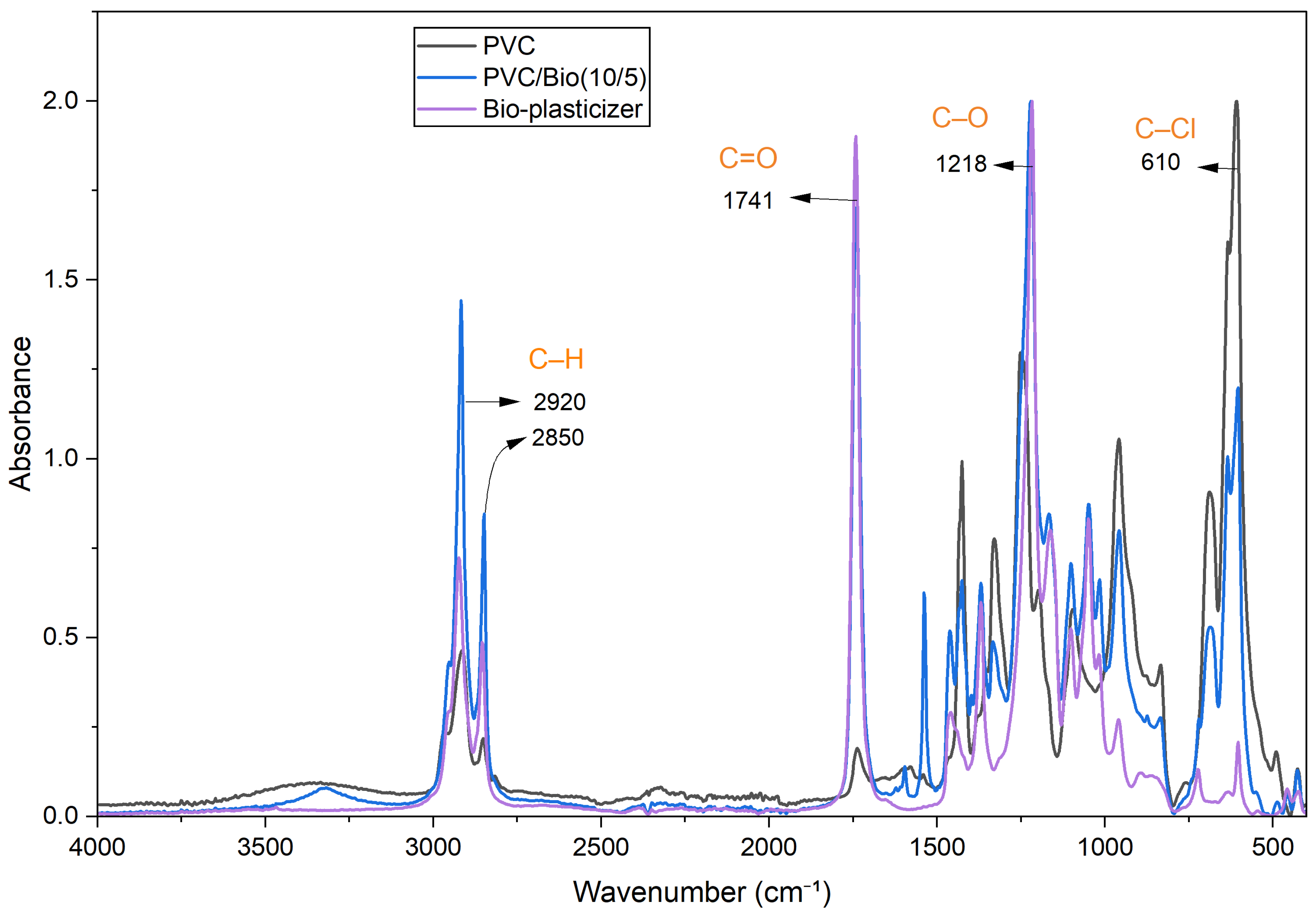
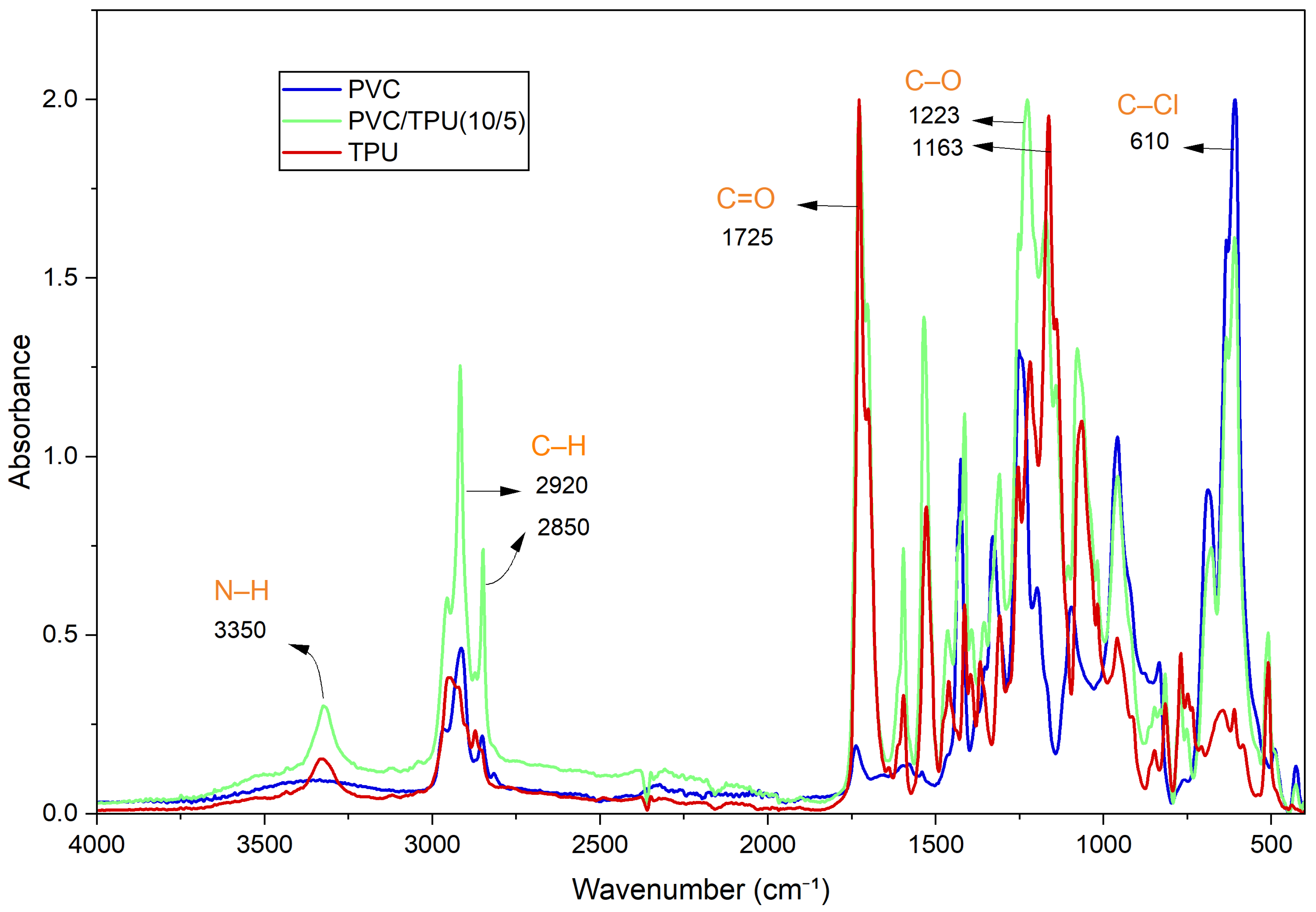
FTIR spectroscopy was employed to examine intermolecular interactions among PVC, TPU, and the bio-plasticizer in selected representative formulations. The spectra are presented for compositions chosen to highlight plasticizer–polymer interactions (
Figure 2), polymer–polymer interactions in binary blends (
Figure 3), and interaction effects in ternary systems (
Figure 4).
The FTIR spectrum of neat PVC is characterized by prominent aliphatic C–H stretching vibrations in the 3000–2800 cm
−1 region and characteristic C–Cl absorptions below 700 cm
−1, while the bio-plasticizer exhibits a strong ester carbonyl (C=O) absorption band in the 1750–1730 cm
−1 region together with aliphatic C–H stretching bands (
Figure 2) [
33]. In the PVC/Bio (10/5) blend, the ester carbonyl band remains clearly observable at approximately 1741 cm
−1 with a spectral profile similar to that of the neat bio-plasticizer, indicating physical incorporation of the plasticizer into the PVC matrix without chemical modification. A slight broadening of the carbonyl absorption envelope toward lower wavenumbers is observed, which reflects overlap with neighboring PVC-related bands and a distribution of local molecular environments arising from molecular-level mixing. The C–O absorption band at approximately 1218 cm
−1 and the C–Cl vibration of PVC near 610 cm
−1 are also retained in the blend spectrum. The reduced intensity of the C–Cl absorption region relative to neat PVC primarily reflects the dilution of the PVC phase by the plasticizer. While no new absorption bands or pronounced peak shifts are detected, the coexistence of polar functional groups and the observed band broadening support physical compatibility between PVC and the bio-plasticizer, consistent with the substantial reduction in glass transition temperature and unified relaxation behavior observed by DMA.
The FTIR spectrum of TPU exhibits characteristic urethane-related absorptions, including carbonyl stretching vibrations centered at approximately 1725 cm
−1 (within the 1700–1730 cm
−1 range) and N–H stretching vibrations around 3400–3300 cm
−1 (
Figure 3) [
34]. In the PVC/TPU (10/5) blend, the coexistence of characteristic bands from both components confirms the physical nature of the blending. Compared with neat TPU, the urethane carbonyl band in the blend shows slight broadening, accompanied by modest changes in the N–H stretching region. In addition, the C–O band associated with the urethane group shifts from approximately 1163 cm
−1 in neat TPU to about 1223 cm
−1 in the PVC/TPU blend. These observations indicate the presence of weak intermolecular interactions between PVC segments and TPU urethane groups, such as dipole–dipole interactions involving the polar C–Cl groups of PVC. However, the persistence of distinct PVC- and TPU-related spectral features suggests that these interactions are limited in extent, consistent with the moderate
shifts and partial relaxation behavior identified by DMA.
The FTIR spectrum of the ternary PVC/TPU/Bio (10/2/5) blend (
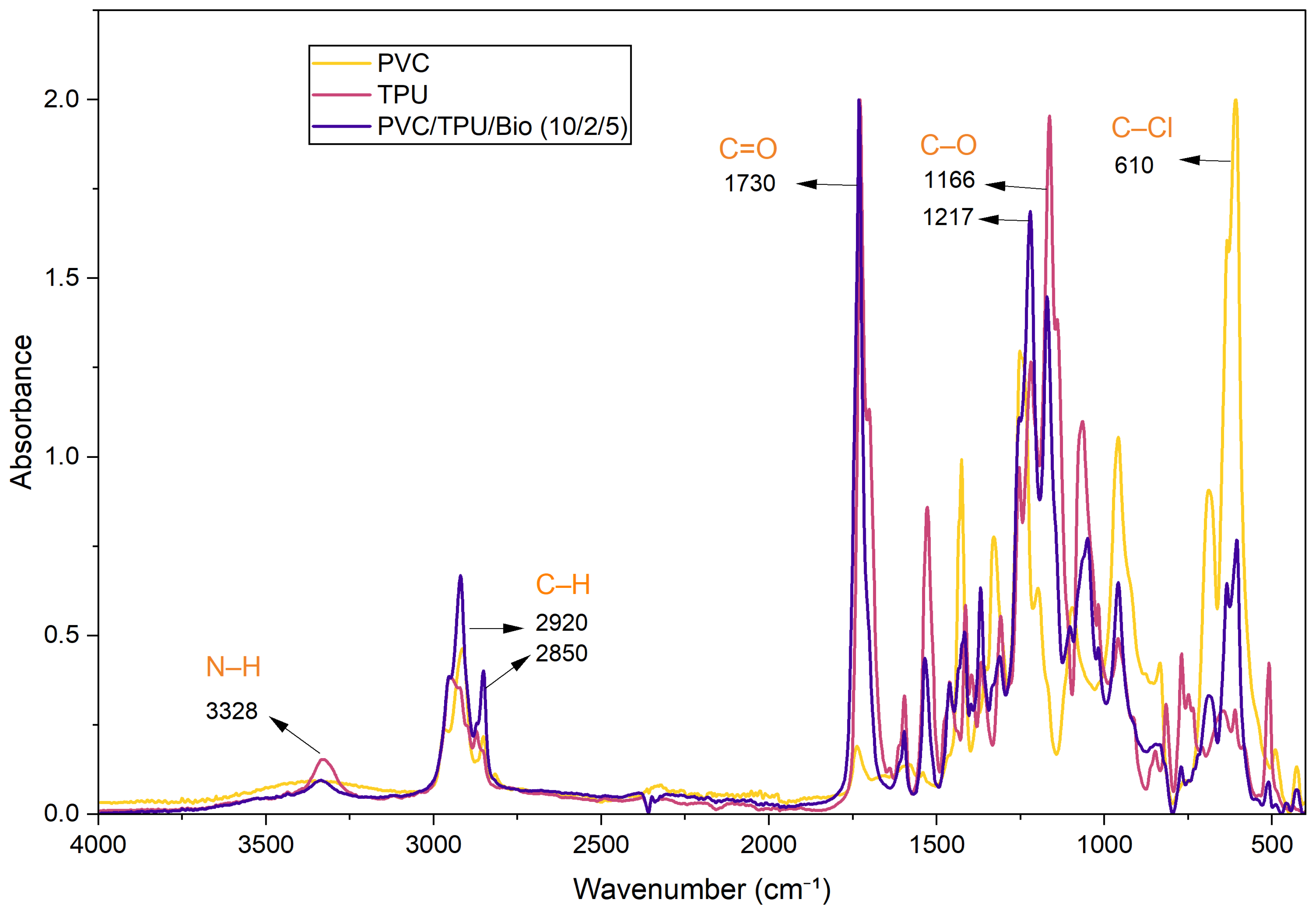
Figure 4) retains the characteristic absorption features of PVC, TPU, and the bio-plasticizer, confirming that blending occurs without chemical modification. In comparison with the corresponding binary systems, the carbonyl region in the ternary blend exhibits a more complex absorption profile arising from the overlapping contributions of urethane and ester carbonyl groups, while the N–H stretching band near 3328 cm
−1 appears less distinct than in neat TPU. These features indicate a redistribution of local molecular environments within the blend rather than the formation of new chemical species.
The observed spectral changes are consistent with the presence of dipole–dipole interactions involving polar functional groups from all three components, facilitated by the bio-plasticizer. By increasing molecular proximity and reducing local rigidity, the bio-plasticizer promotes a more integrated molecular environment between PVC and TPU segments. This interpretation is consistent with the emergence of a single, significantly shifted relaxation process observed in DMA and supports the enhanced compatibility inferred for the ternary system.
3.3. Scanning Electron Microscopy (SEM) Analysis
The SEM micrographs in
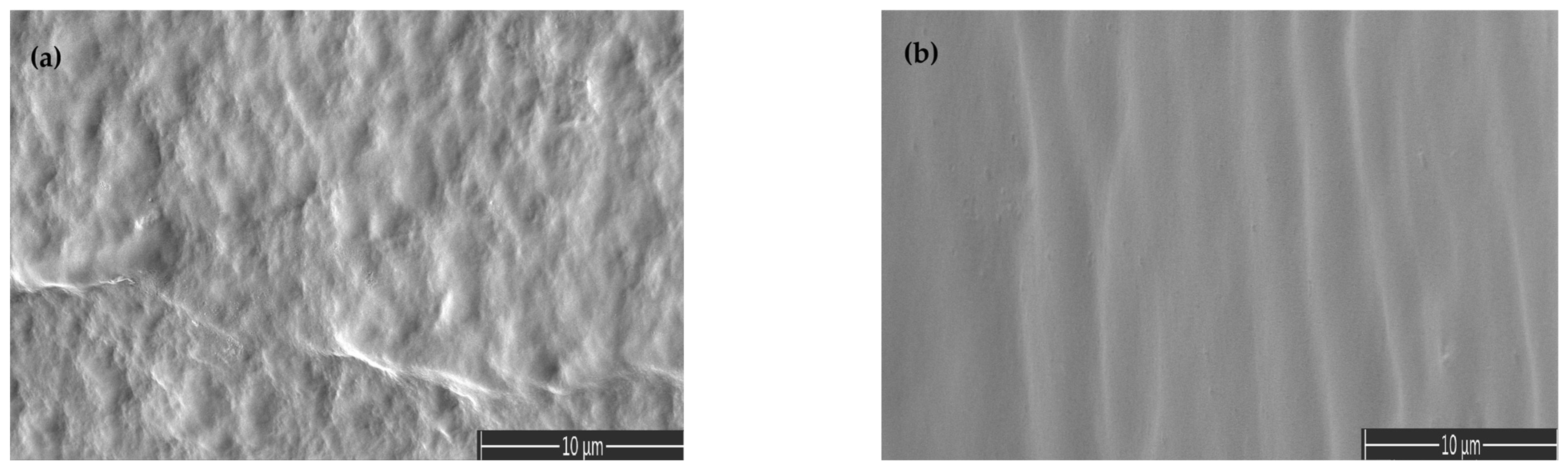
Figure 5 compare the fracture surface morphology of the PVC/TPU (10/5) and PVC/TPU/Bio (10/2/5) blends, showing differences in phase organization between the binary and ternary systems.
The PVC/TPU (10/5) blend (
Figure 5a) exhibits a moderately irregular fracture surface with localized microstructural variations. Localized contrasts and discontinuities suggest partial phase differentiation and limited structural uniformity at this composition.
In contrast, the ternary PVC/TPU/Bio (10/2/5) blend (
Figure 5b) displays a more continuous and integrated morphology, with a smoother fracture surface and reduced evidence of microphase separation. The absence of pronounced domain boundaries suggests improved interphase compatibility when the bio-plasticizer is incorporated. These observations indicate that the ternary formulation exhibits a more homogeneous phase distribution compared to the corresponding binary blend.
3.4. Dehydrochlorination Resistance of PVC-Containing Blends
The thermal stability of PVC-containing blends was assessed by monitoring conductivity–time profiles associated with hydrogen chloride (HCl) release during thermal exposure.
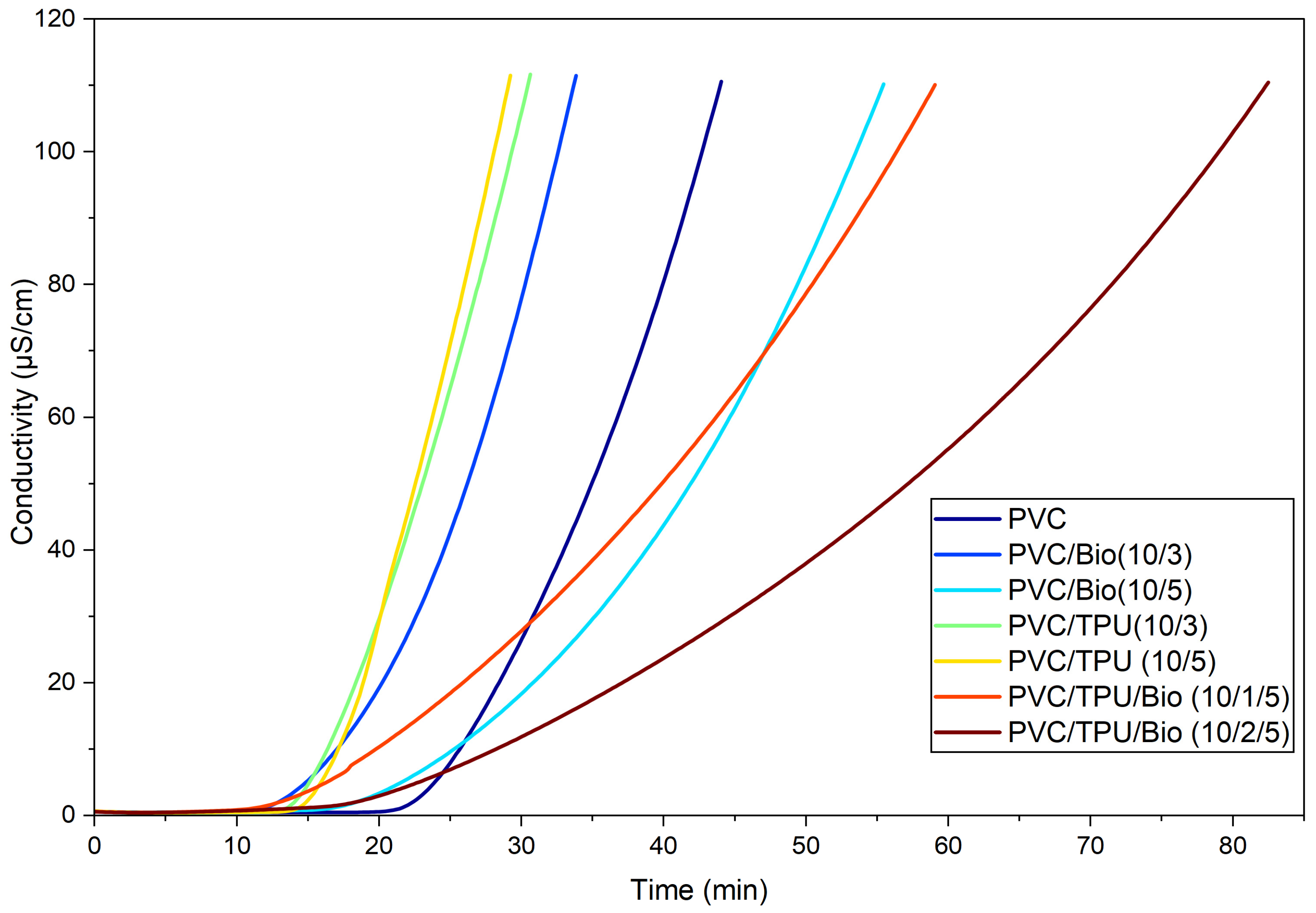
Figure 6 shows the conductivity profiles of neat PVC and PVC-based binary and ternary blends measured under identical conditions. The thermal stability time was determined from the inflection point of the conductivity–time curve, corresponding to the transition into the rapid autocatalytic stage of PVC dehydrochlorination. Minor conductivity increases at earlier times may occur due to trace HCl release from thermally labile sites, but these do not represent the rapid degradation stage. Therefore, the stability time reflects the point at which HCl evolution accelerates and was used as a comparative measure of resistance to dehydrochlorination [
35].
Neat PVC exhibited a thermal stability time of 35.2 min, corresponding to the onset of rapid autocatalytic dehydrochlorination. Upon incorporation of the bio-plasticizer at a lower content (PVC/Bio (10/3)), the stability time decreased to 26.4 min, indicating earlier HCl release. This behavior is consistent with increased segmental mobility induced by plasticization, which facilitates initial C–Cl bond cleavage. In contrast, at higher bio-plasticizer content (PVC/Bio (10/5)), the stability time increased to 42.2 min, suggesting that changes in the molecular environment at elevated plasticizer levels counteract the mobility effect and delay dehydrochlorination.
The addition of TPU alone resulted in a pronounced reduction in thermal stability. Both PVC/TPU (10/3) and PVC/TPU (10/5) blends exhibited stability times of approximately 23 min, significantly lower than that of neat PVC. This behavior is consistent with the SEM observation of partial microstructural inhomogeneity in the PVC/TPU (10/5) blend, which may facilitate localized degradation and earlier HCl release. These results demonstrate that TPU, in the absence of a mediating component, does not enhance the intrinsic thermal stability of PVC.
A markedly different response was observed for the ternary PVC/TPU/bio-plasticizer blends. Incorporation of the bio-plasticizer into the PVC/TPU system led to a substantial delay in the increase in conductivity, with stability times of 40.2 min for PVC/TPU/Bio (10/1/5) and 57.7 min for PVC/TPU/Bio (10/2/5). This pronounced improvement is consistent with the SEM observation of a more homogeneous morphology in the ternary system and is also supported by the DMA and FTIR results, indicating enhanced interphase interaction and reduced susceptibility to rapid autocatalytic dehydrochlorination.
Overall, these results indicate that thermal stability is governed not solely by segmental mobility but by the overall molecular environment surrounding PVC chains. While plasticization or TPU incorporation alone may accelerate degradation, their combined presence effectively delays HCl release, resulting in improved thermal resistance of the ternary blends.
3.5. Thermogravimetric Analysis (TGA and DTG)
Thermogravimetric analysis was used to examine the thermal degradation behavior of PVC, TPU, and selected blend systems. Representative compositions were chosen to identify dominant degradation features and to complement the thermal stability trends obtained from conductivity-based thermal stability testing.
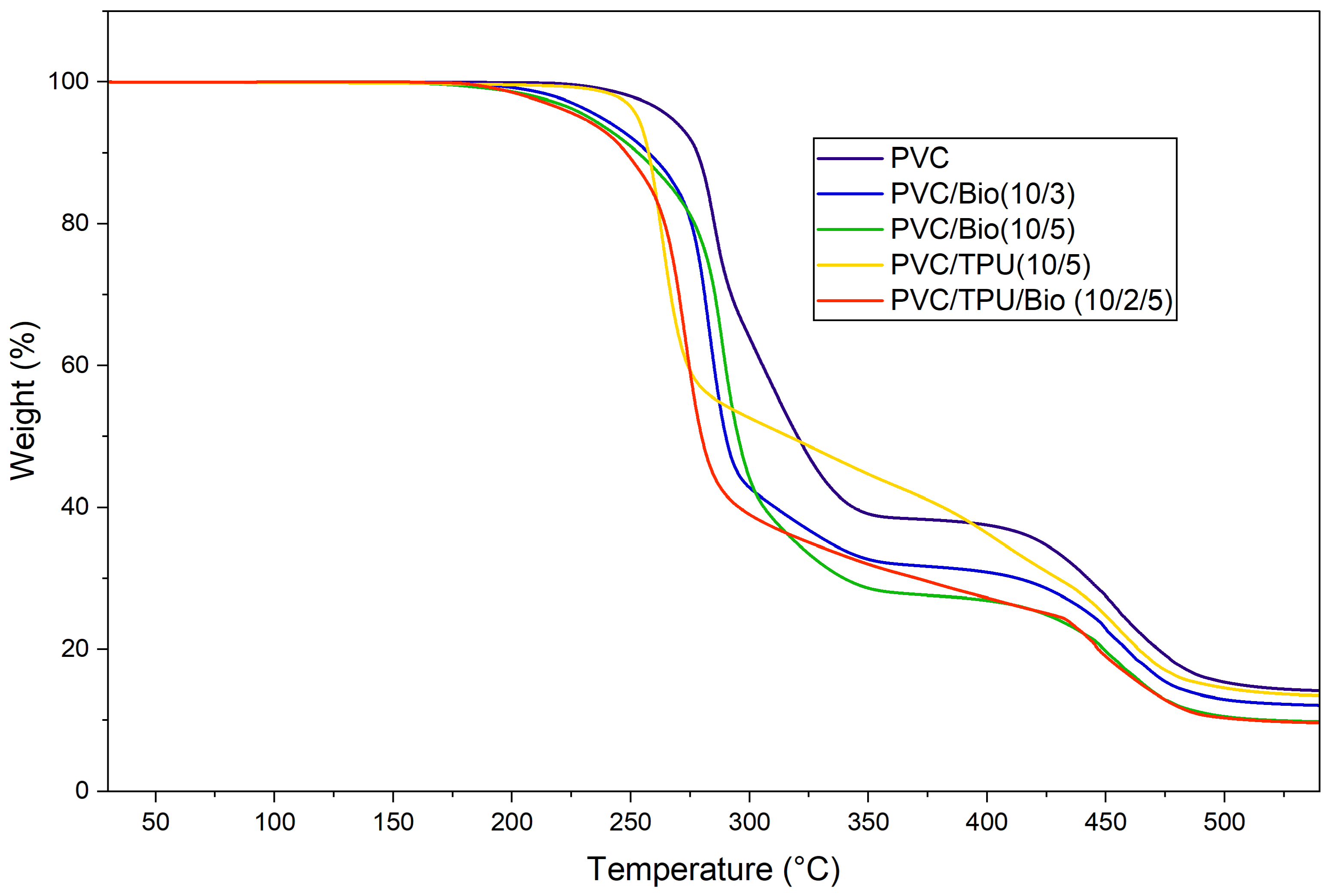
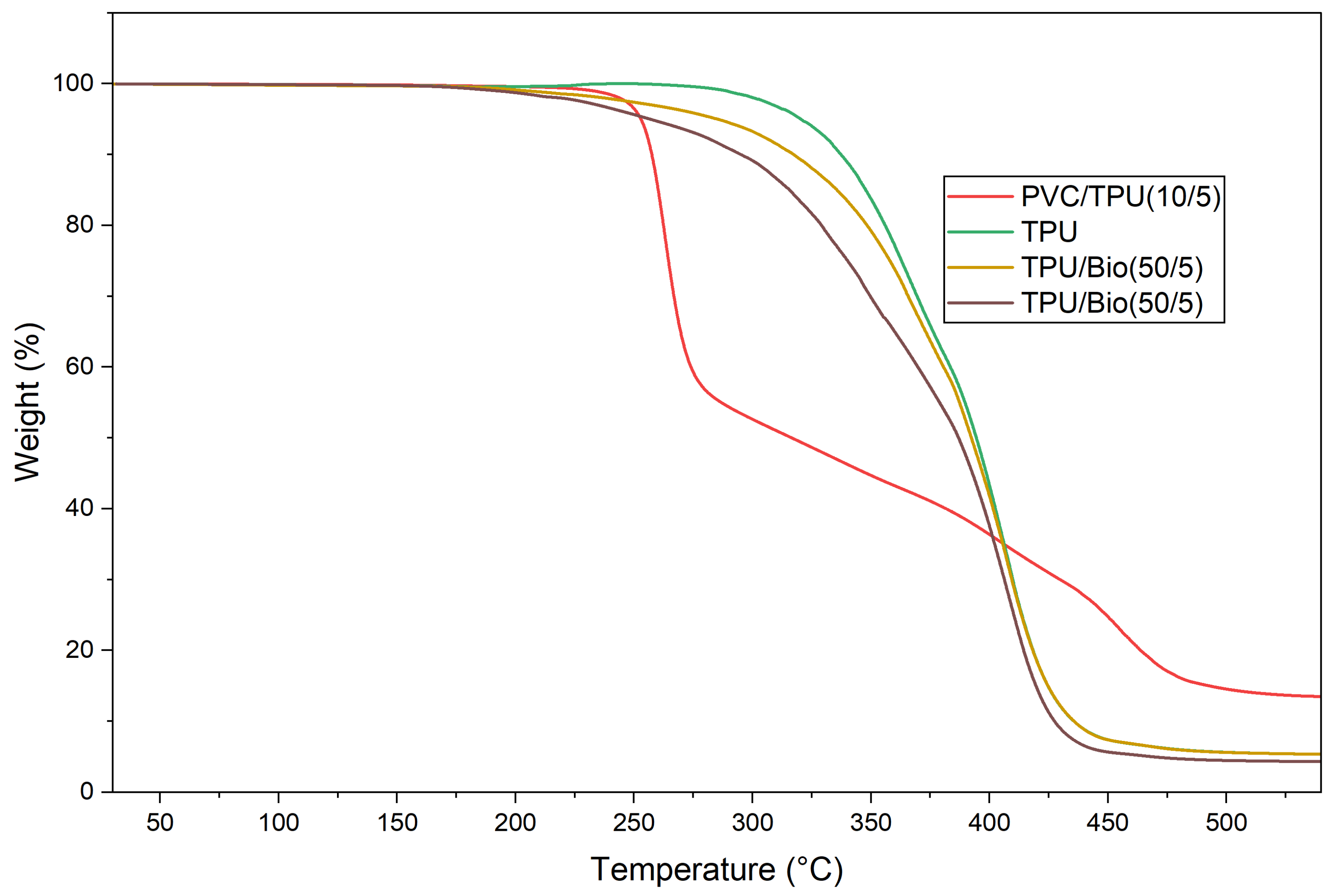
The thermogravimetric (TG) curves shown in
Figure 7 illustrate the characteristic multi-step degradation behavior of PVC and PVC-containing blends. Neat PVC exhibits an initial major mass-loss step beginning near 270 °C, associated with dehydrochlorination and the formation of conjugated polyene sequences, followed by a secondary degradation stage at higher temperatures corresponding to backbone breakdown and char formation [
36]. The relatively high residual mass reflects the formation of carbonaceous char promoted by chlorine-containing structures.
Incorporation of the bio-plasticizer modifies the TG profile of PVC in a composition-dependent manner. At lower bio-plasticizer content (PVC/Bio (10/3)), the onset of mass loss shifts slightly toward lower temperatures, consistent with increased chain mobility and facilitated initiation of degradation. In contrast, at higher bio-plasticizer content (PVC/Bio (10/5)), the mass-loss profile exhibits a more continuous transition across the main degradation region, suggesting a redistribution of degradation processes rather than a simple acceleration. This behavior is consistent with the delayed HCl release observed in thermal stability measurements and reflects the balance between enhanced segmental mobility and interaction-mediated modification of the local molecular environment.
The PVC/TPU (10/5) blend displays a broadened degradation region, indicating overlapping contributions from both PVC and TPU components. Although TPU does not suppress the initial degradation of PVC, its presence moderates the sharp mass-loss step characteristic of neat PVC, resulting in a more progressive thermal decomposition.
A further modification of the degradation profile is observed for the ternary PVC/TPU/Bio (10/2/5) blend. Although the initial degradation onset occurs within a similar temperature range to the binary systems, the mass-loss profile exhibits a more continuous transition across the main degradation region, indicating a redistribution of degradation processes rather than a simple shift in onset temperature. This behavior suggests altered degradation kinetics arising from the modified molecular environment in the ternary blend.
Figure 8 presents the TG curves of TPU-based systems. Neat TPU exhibits a dominant single-step degradation process at higher temperatures than PVC, associated with cleavage of urethane linkages followed by decomposition of soft and hard segments. Incorporation of the bio-plasticizer into TPU results in a modest shift in the main degradation step toward lower temperatures, reflecting the lower thermal resistance of the plasticizer and increased segmental mobility within the TPU matrix. The PVC/TPU (10/5) blend shows a combined degradation profile, with early mass loss attributable to PVC and a broader high-temperature region influenced by TPU, highlighting the contribution of both components.
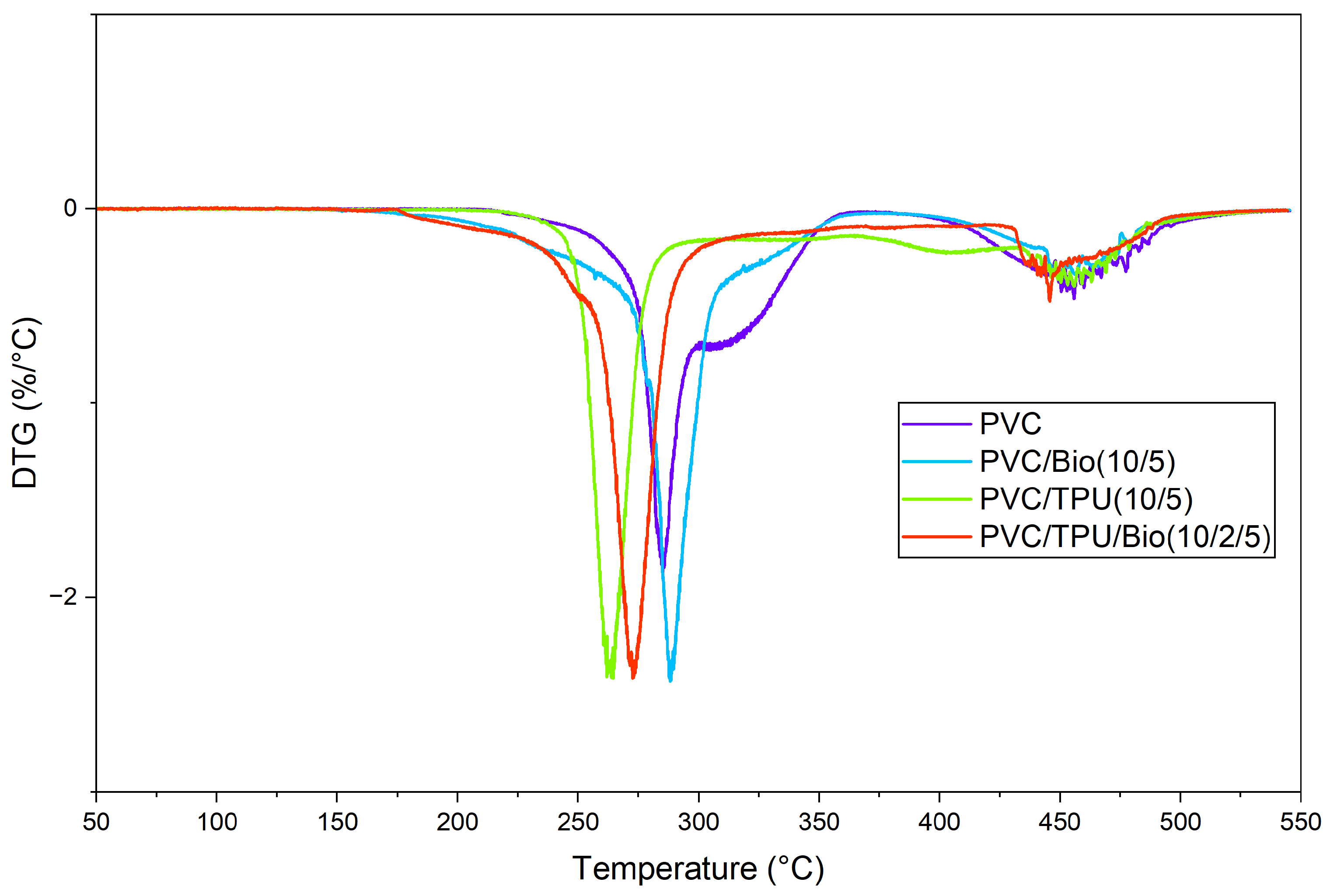
The derivative thermogravimetric (DTG) curves presented in
Figure 9 provide further insight into the degradation behavior of selected PVC-based systems. Neat PVC exhibits a sharp primary DTG peak corresponding to dehydrochlorination, followed by a broader secondary peak associated with the degradation of the conjugated backbone [
36]. In the PVC/Bio (10/5) blend, the primary DTG peak becomes slightly broadened and less intense, indicating a redistribution of degradation kinetics consistent with modified intermolecular interactions. In the PVC/TPU (10/5) blend, the primary degradation peak remains relatively sharp but exhibits partial asymmetry, reflecting the contribution of overlapping degradation events from the PVC and TPU components. Notably, the ternary PVC/TPU/Bio (10/2/5) system shows further attenuation and broadening of the primary DTG peak, accompanied by a smoother transition between degradation stages, consistent with the suppression of rapid autocatalytic dehydrochlorination observed in thermal stability measurements.
Overall, the TG and DTG results demonstrate that the thermal degradation behavior of PVC-based blends is influenced not only by the intrinsic stability of individual components but also by interaction-driven modification of the molecular environment. The presence of the bio-plasticizer plays a key role in mediating these effects, contributing to the improved degradation behavior observed in the ternary systems.
4. Conclusions
This study investigated the thermal behavior and stability of PVC/TPU blends plasticized with glycerol diacetate monolaurate, a bio-based plasticizer derived from waste cooking oil, with particular emphasis on the relationship between segmental dynamics, intermolecular interactions, microstructural organization, and thermal degradation. Dynamic mechanical analysis revealed that TPU and the bio-plasticizer modify PVC chain mobility through different mechanisms, while their combined incorporation in ternary blends resulted in a unified relaxation response characterized by a single, shifted glass transition. FTIR analysis further indicated interaction-driven modifications in the molecular environment, particularly within the carbonyl and urethane regions.
SEM observations demonstrated that the ternary system exhibits a more homogeneous phase organization compared to the corresponding binary PVC/TPU blend, suggesting improved interphase integration when the bio-plasticizer is present. Consistent with these structural and molecular findings, conductivity-based thermal stability measurements showed that neither TPU nor the bio-plasticizer alone enhanced resistance to dehydrochlorination, whereas their combined presence in ternary formulations significantly delayed hydrogen chloride evolution. Thermogravimetric analysis confirmed that this stabilization effect is associated with modified degradation kinetics and a more gradual mass-loss profile rather than a simple shift in degradation onset.
Overall, the results demonstrate that thermal stability in PVC-based blends is governed not solely by chain mobility but by the combined effects of blend composition and interaction-driven modification of the molecular environment. The bio-plasticizer plays a critical role in mediating interactions between PVC and TPU, enabling simultaneous enhancement of flexibility and thermal resistance. These findings provide valuable insight into the design of thermally balanced, flexible PVC materials and support the use of waste-derived bio-plasticizers as sustainable alternatives to conventional phthalate plasticizers in PVC-based systems.




 ,
,