1. Introduction
The widespread use of plastics in agriculture, commonly referred to as plasticulture, has grown significantly across the globe since the early 2000s [
1]. Plastic films began to be applied in horticulture in the 1960s to improve crop yields, protect plants from adverse weather, and extend growing seasons [
2]. Over the past two decades, the development and diversification of polymer-based materials for agricultural use has contributed to the expansion of a dedicated industrial sector that includes not only films and mulches, but also textile-based solutions.
While plastic films remain a central component of plasticulture, the emergence of agrotextiles (a broad category of textile materials designed for agricultural applications) has significantly extended the scope and technical potential of polymer use in crop production. These materials include thermal blankets, insect-proof nets, shade nets, ground covers and mulches, and support meshes, among others. Unlike conventional plastic films, agrotextiles offer greater versatility in terms of structure (e.g., woven, knitted, or nonwoven configurations with adjustable porosity and thickness), mechanical behaviour, and functional performance, enabling more precise control over environmental conditions and pest management [
3].
Recent market assessments indicate that the global agrotextiles sector follows a sustained growth trajectory. Based on updated market estimates from the 2023–2024 period, the global sector was valued at approximately USD 5.30 to 6.20 billion, with projections expected to reach around USD 7.73 to 9.50 billion by 2030–2033, corresponding to a compound annual growth rate (CAGR) of approximately 4.1–4.9% [
4,
5]. Broader sector definitions that incorporate aquaculture nets and heavy geotextiles estimate higher baseline values, with medium-term forecasts climbing up to USD 13.04 billion [
6]. This expansion is consistently propelled by climate-resilience needs, the expansion of protected cultivation, and material innovations (such as UV-stabilised, photo-selective, and biodegradable matrices) highlighted both in market analyses and academic reviews [
4,
7]. Within specific submarkets, shade nets show robust expansion, valued at approximately USD 2.34 billion in 2024 and forecast to reach around USD 4.02 billion by 2033 [
8], while anti-hail and bird-protection nets are reported with even higher growth rates, reaching an estimated 8.5% CAGR in medium-term forecasts [
9]. Across sources, sustainability policies, technological upgrades, and climate-related risks consistently emerge as key demand drivers [
4].
In Europe, approximately 674 kt of plastics were used in agriculture in 2015, representing about 1.2% of total plastic consumption (56 Mt). Spain stood out as the leading country in the production and consumption of agricultural plastic films, with more than 90 kt, followed by Italy, Germany, and France [
10,
11,
12].
In Spain, the agrotextile market has shown clear signs of expansion, with recent analyses highlighting increased imports in 2024 and a positive outlook through 2031. Among the different product categories, insect-proof nets are consistently identified as a key segment, reflecting the growing demand for sustainable crop protection solutions.
At the global level, the agriculture nets market is projected to grow from USD 11.2 billion in 2024 to USD 16.7 billion by 2030, at a CAGR of 6.8%, with insect nets expected to be the fastest-growing segment due to the shift toward organic farming and reduced pesticide use [
13,
14]. Meanwhile, the Asia-Pacific region has emerged as the largest and fastest-growing market for agrotextiles, accounting for more than one-third of global demand in 2019. Growth in countries such as China and India is particularly strong, driven by extensive use of shade nets, mulch films, and fishing nets in agriculture and aquaculture. The expansion of crop protection systems and the rising need to safeguard food production against climate variability have further accelerated the adoption of greenhouse structures and textile-based solutions across the region [
15].
This growing demand is closely tied to global population growth, climate uncertainty, and the need for sustainable, high-quality food production systems [
16,
17]. The performance of agrotextiles depends strongly on the properties of the fibres used, whether synthetic (e.g., polypropylene, polyethylene), biodegradable (e.g., polylactic acid), or natural (e.g., jute, coir) [
7,
18]. While synthetic fibres are widely preferred for their strength and durability, growing environmental concerns are prompting efforts to develop eco-friendly, recyclable, or compostable alternatives [
17].
Beyond the expansion of protected cultivation, agrotextiles such as photoselective covers, shade nets, and insect-exclusion screens play a central role in microclimate and pest management by modifying radiation, airflow, temperature, and humidity [
19,
20,
21]. However, these functions involve well-known trade-offs, such as exclusion efficiency versus ventilation [
21,
22] and may generate secondary agronomic effects, such as impacts on pollination [
23,
24], which are highly context- and crop-dependent [
25,
26,
27,
28,
29]. This functional complexity, together with the diversity of textile designs and variable reporting practices, underscores the need for a comprehensive scoping review to systematically map applications, dominant functional categories, material innovations, and emerging sustainability challenges across the literature.
The aim of this review is to provide a comprehensive overview of the main types of agrotextiles currently used in crop production, examining their design characteristics, materials, functional roles, and environmental implications. Special emphasis is placed on recent technological innovations that enhance the performance and sustainability of these materials, including advances in biodegradable, photoselective, and multifunctional textiles. By synthesizing the available literature, this work aims to contribute to a deeper understanding of how agrotextiles can support the transition toward more resilient and resource-efficient agriculture.
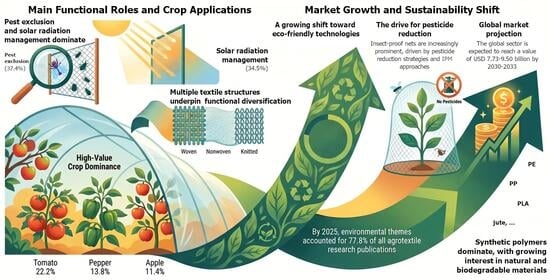
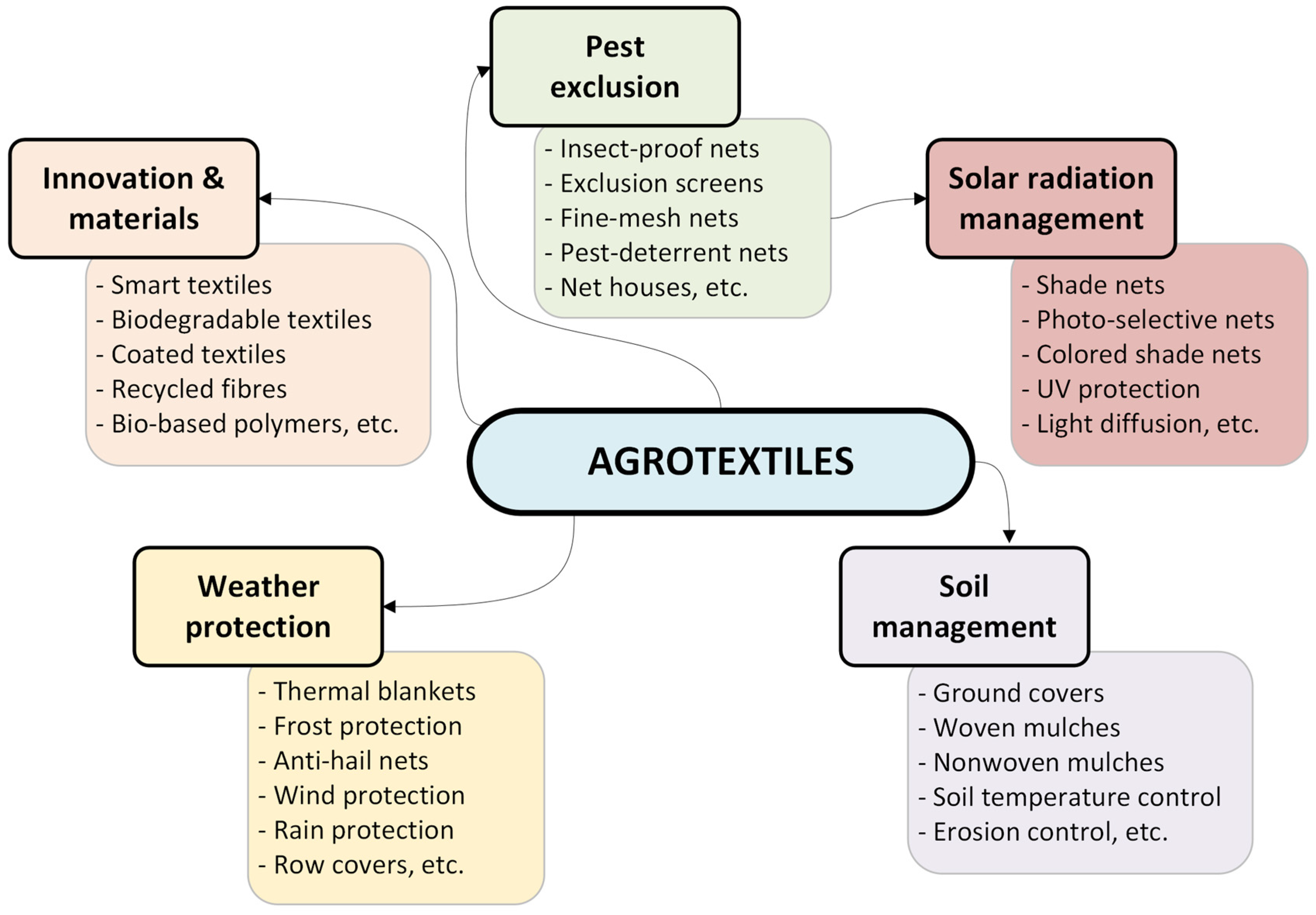
Figure 1 presents a conceptual and functional classification of agrotextiles according to their primary role in crop production systems, organized into five broad categories: pest exclusion, solar radiation management, soil management, weather protection, and innovation and materials, each illustrated with representative examples. For the bibliographic analysis, this framework was expanded into a more detailed system comprising seven categories (Insect-proof nets and screens, Shade and photo-selective nets, Protective covers, Ground covers and mulches, Smart and innovative textiles, Materials and construction types, and Production systems) to capture the diversity of materials and applications described in the literature.
To achieve this objective, the following research questions were defined: (i) What are the main types and structural configurations of agrotextiles used in crop production? (ii) How are these materials applied in different agricultural contexts and cropping systems? (iii) What innovations are being developed to improve their functionality and environmental performance? These questions define the scope and structure of the review, which focuses on studies involving agrotextile applications in plant-based agricultural systems across various climatic and geographical settings.
Given the broad and multidisciplinary nature of the topic, this study adopts a scoping review approach based on the framework proposed by [
30]. This methodology is well suited to mapping the extent, variety, and conceptual structure of the scientific literature on agrotextiles. It enables a systematic exploration and categorization of textile types, applications, environmental implications, and emerging trends, while also identifying knowledge gaps and future research needs.
2. Review Scope and Methodological Approach
This section describes the scoping review methodology, including protocol registration, eligibility criteria, information sources and search strategy, study selection and data management, and the classification framework used for data charting and synthesis.
2.1. Review Design and Protocol Registration
The review was designed according to the methodological framework for scoping studies proposed by Arksey and O’Malley [
30] and was operationalized and reported in accordance with the PRISMA-ScR guidelines [
31]. The review protocol was registered in the Open Science Framework (OSF) on 10 July 2025 (
https://doi.org/10.17605/OSF.IO/7NZKD) to ensure transparency and minimize bias, with full details of inclusion/exclusion criteria, data charting templates, and variable definitions available in the registered protocol.
2.2. Eligibility Criteria and Review Boundaries
Although publications in English or Spanish were eligible a priori, the search strategy using English keywords in Scopus and Web of Science Core Collection retrieved only studies published in English. Therefore, the final corpus is restricted to English-language studies, which may have excluded relevant research published in other languages.
2.3. Information Sources and Search Strategy
Systematic searches were conducted in two major bibliographic databases: Scopus and Web of Science Core Collection (WoSCC). Both searches were performed in July 2025. These databases were selected because they provide broad multidisciplinary coverage of peer-reviewed literature and allow reproducible searches across agricultural, environmental, engineering, and materials-related research areas. However, specialized agricultural and textile databases, such as CAB Abstracts, AGRIS, AGRICOLA, FSTA, Textile Technology Complete, and Compendex, were not searched; therefore, the corpus should be interpreted as representative of the mainstream peer-reviewed literature indexed in Scopus and WoSCC, rather than as an exhaustive inventory of all agrotextile-related research, potentially omitting regional publications or niche studies that are primarily indexed in specialized agricultural or textile repositories.
The search strategy was designed to capture a comprehensive range of agrotextile-related terminology, including functional descriptors (e.g., insect-proof nets, shade nets, thermal blankets), material types (e.g., biodegradable, smart textiles), and agricultural contexts.
Scopus search string:
TITLE-ABS-KEY(
“agrotextile*” OR “crop protection textile*” OR “agricultural textile*”
OR “insect-proof net*” OR “insect-proof screen*” OR “insect net*”
OR “insect screen*” OR “protective net*” OR “thermal blanket*”
OR “floating row cover*” OR “shade net*” OR “ground cover*”
OR “mulching textile*” OR “biodegradable agrotextile*”
OR “eco-friendly textile*” OR “biopolymer*” OR “smart textile*”
OR “multifunctional textile*”
)
AND TITLE-ABS-KEY(
crop OR agriculture OR greenhouse OR field OR horticulture
OR pest OR weed OR irrigation
)
AND TITLE-ABS-KEY(
“pest control” OR “weed control” OR “climate adaptation”
OR “crop protection” OR “crop yield”
)
AND PUBYEAR > 1999 AND PUBYEAR < 2026
AND (LIMIT-TO (DOCTYPE,“ar”) OR LIMIT-TO (DOCTYPE,“re”))
Web of Science Core Collection search string:
TS = (agrotextile* OR “crop protection textile*” OR “agricultural textile*”
OR “insect-proof net*” OR “insect-proof screen*” OR “insect net*”
OR “insect screen*” OR “protective net*” OR “thermal blanket*”
OR “floating row cover*” OR “shade net*” OR “ground cover*”
OR “mulching textile*” OR “biodegradable agrotextile*”
OR “eco-friendly textile*” OR biopolymer* OR “smart textile*”
OR “multifunctional textile*”)
AND
TS = (crop OR agriculture OR greenhouse OR field OR horticulture
OR pest OR weed OR irrigation)
AND
TS = (“pest control” OR “weed control” OR “microclimate”
OR “climate adaptation” OR “crop protection” OR “crop yield”)
AND
PY = (2000–2025)
AND
(DT = (“Article”) OR DT = (“Review”))
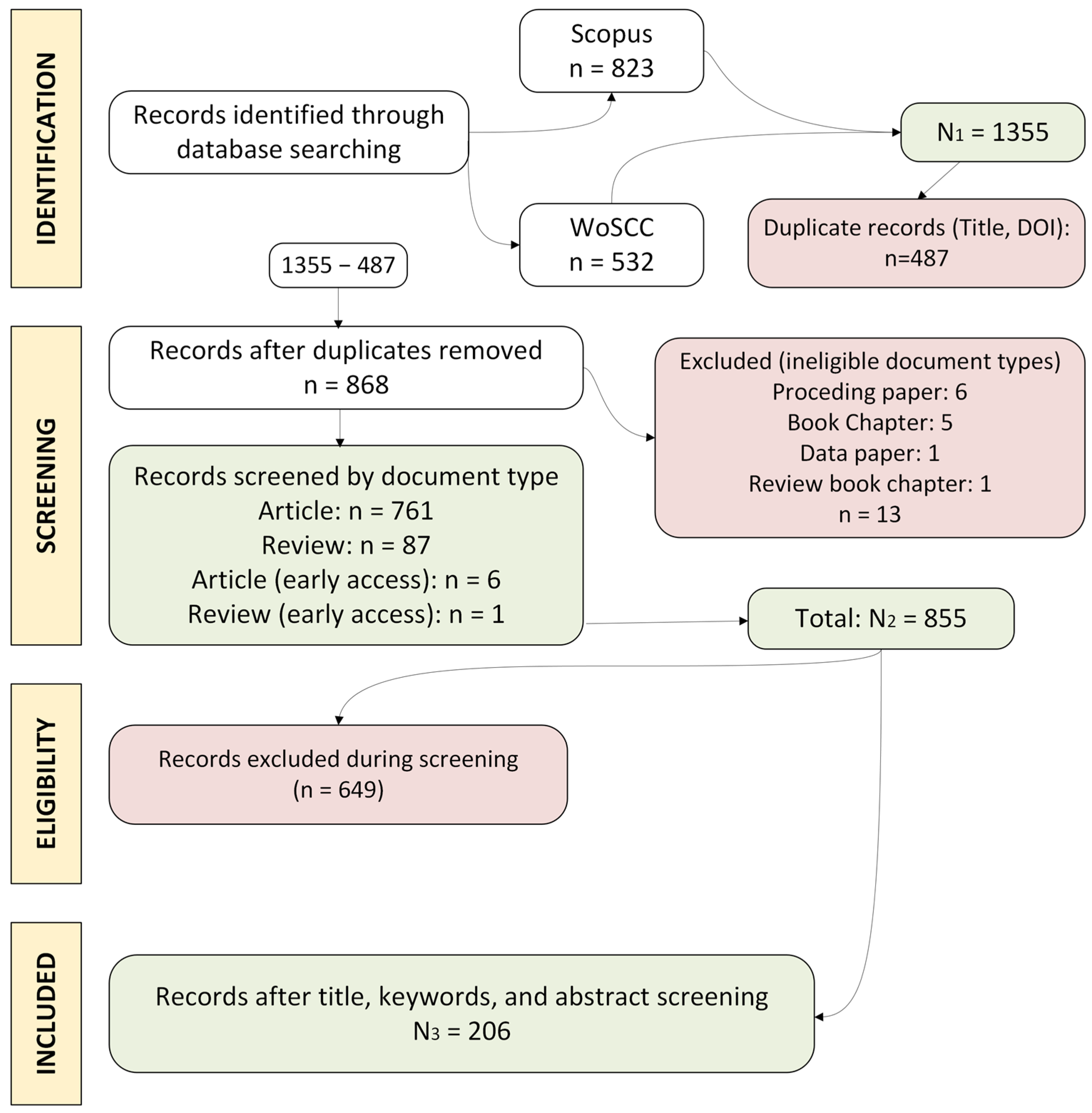
The Scopus search yielded 823 records, while the WoSCC search returned 532 records, totalling 1355 records before deduplication.
2.4. Study Selection and Data Management
2.4.1. Deduplication and Initial Screening
All retrieved records were exported with complete bibliographic metadata and imported into a Jupyter-compatible notebook environment in Visual Studio Code (notebook 7.1.3; Python 3.12.2) for data management. The following metadata fields were collected directly from Scopus and WoSCC: authors, DOI, publication year, title, database source, citation count, author keywords, Keywords Plus, abstract, author countries, affiliated institutions, WoS categories, research areas, funding information, open access status, publication type, and document type.
Duplicate records were identified and removed using DOI, title, and author matching through custom Python scripts. After deduplication, 868 unique records remained for screening. These records were then subjected to an AI-assisted preliminary screening step followed by human validation, as described in
Section 2.4.3.
2.4.2. Data Charting
For each included study, we extracted a structured set of analytical variables covering:
(i) Bibliographic information (authors, year, country/region);
(ii) Agrotextile characteristics (material, structure, physical properties, colour, functional additives);
(iii) Agronomic function (microclimate modification, pest exclusion, abiotic stress mitigation, yield or quality effects);
(iv) Crop system (crop type, production environment);
(v) Target problem or pest;
(vi) Technological or sustainability innovations;
(vii) Main outcomes and reported limitations.
These variables were charted consistently across studies to enable descriptive synthesis and thematic mapping.
2.4.3. AI-Assisted Screening and Selection Validation
To manage the large volume of records while maintaining methodological rigour, a hybrid screening workflow was implemented, combining AI-assisted preliminary classification with systematic human validation. After duplicate removal, Google Gemini (Advanced tier, custom “Gems” feature, Google LLC; accessed September–October 2025) was used to support the initial organization and classification of the 868 unique records based on titles, keywords, and abstracts.
The AI-assisted step was used only as a decision-support aid to help identify records that were potentially relevant, clearly outside the scope, or uncertain according to the predefined eligibility criteria. It did not replace human judgement and was not used to make final inclusion or exclusion decisions. In particular, the tool supported the preliminary sorting of records according to their apparent relevance to agrotextile materials, agricultural applications, and the exclusion of continuous non-textile plastic films outside the scope of the review.
All AI-assisted classifications were subsequently reviewed and validated by the two human reviewers, who are the authors of this study. Records considered uncertain, borderline, or potentially relevant were retained for full-text assessment rather than excluded at the AI-assisted stage. The full-text screening phase was conducted entirely by the human reviewers, and all final inclusion and exclusion decisions were made by consensus according to the predefined eligibility criteria and the registered protocol.
Formal inter-rater agreement statistics were not calculated because the AI-assisted procedure was not treated as an independent reviewer and final eligibility decisions were reached through human validation and consensus. No record was excluded from the final corpus solely on the basis of an AI-generated recommendation. Following this validation and full-text assessment process, 206 studies were consolidated into the final analysis dataset.
2.5. Classification Framework for Agrotextile Studies
A multi-dimensional classification framework comprising seven categories was developed through an inductive process based on content analysis of the included studies (
Table 2). This framework enables systematic and comprehensive categorization of the diverse and interdisciplinary nature of agrotextile research.
The classification system comprises five functional categories representing the primary purpose of agrotextiles:
Pest exclusion (insect-proof nets and screens): textiles designed to physically exclude insect pests and/or birds through barrier-based mechanisms.
Light regulation (solar radiation management) (shade and photo-selective nets): textiles that modify the intensity and/or spectral composition of solar radiation reaching the crop canopy.
Soil covers (ground covers and mulches): textiles applied to the soil surface for purposes such as weed suppression, moisture conservation, and thermal regulation.
Environmental protection (protective covers): textiles aimed at protecting crops from adverse environmental conditions, including rain, hail, frost, extreme temperatures, and wind.
Innovation and sustainability (smart and innovative textiles): advanced agrotextiles incorporating emerging technologies, including functional coatings, sensors, biodegradable materials, recycled fibres, or other sustainability-oriented innovations.
In addition, two cross-cutting dimensions were defined to provide complementary classification perspectives:
- 6.
Materials and construction: classification based on textile structure (woven, knitted, nonwoven) and material composition (synthetic polymers, natural fibres, biodegradable polymers).
- 7.
Production systems (crop system applications): classification according to the agricultural context in which agrotextiles are applied, including greenhouse horticulture, open-field production, and orchard or vineyard systems.
Categories were not mutually exclusive, and individual studies could be assigned to multiple categories when addressing several agrotextile functions or dimensions. Each category was operationally defined by a guiding classification question reflecting its primary functional or contextual role (e.g., pest exclusion, solar radiation management, soil application, or production system), ensuring consistent and reproducible category assignment.
Classification decisions were guided by predefined criteria detailed in
Table 2, which specifies the primary classification rationale, key distinguishing questions, defining characteristics, and illustrative examples for each category.
Table 2 provides a detailed overview of the classification framework, listing the seven main categories together with their corresponding subcategories. This table serves as a reference for understanding the hierarchical structure of the framework and the relationships between specific agrotextile applications and broader functional or contextual dimensions.
In this review, the term “solar radiation management” is used as an agronomically more precise umbrella concept for functions commonly described in the literature as light regulation, shading, or light management. The term “light” is retained only when it appears as part of established product terminology or when used directly by the original studies.
Detailed criteria for category assignment, including key questions, distinguishing features, and examples of representative agrotextile types, are provided in the
Supplementary Materials (Table S2).
Category Assignment Process
Category assignment was performed using the validated metadata obtained during the AI-supported automatic classification and human review process (
Section 2.4.3). Each study was assigned to all applicable categories of the classification framework based on explicit information reported in the title, keywords, and abstract.
Categories were not mutually exclusive. When a study addressed multiple aspects within the same category (e.g., different types of protective covers within the Protective covers category), it was counted once for that category while being recorded under all relevant subcategories.
Category prevalence was defined as the proportion of unique publications assigned to each category relative to the total final corpus (n = 206). As individual studies could be assigned to more than one category, cumulative category percentages exceed 100%. To avoid statistical bias, prevalence values were calculated using unique studies as the denominator, whereas multiple assignments were interpreted descriptively as evidence of thematic overlap and multifunctionality rather than as independent observations.
2.6. Data Synthesis and Analysis Approach
Data synthesis followed a descriptive and exploratory approach consistent with the objectives of a scoping review. No meta-analysis or inferential statistical testing was conducted, as the aim was to map the extent, characteristics, and thematic patterns of agrotextile research rather than to quantify effect sizes or causal relationships.
All extracted variables were compiled into a structured database and analysed using Python-based scripts developed in a Jupyter Notebook environment.
2.6.1. Descriptive Synthesis
Descriptive analyses were conducted to characterize the final corpus in terms of temporal trends, geographic distribution, research domains, functional categories, material types, textile structures, crop systems, and protection targets (biotic and abiotic stressors addressed by agrotextile applications).
Frequencies and relative proportions were calculated for all categorical variables to identify dominant research trends and distribution patterns across the dataset. These descriptive analyses underpin the results reported in
Section 3.2,
Section 3.3 and
Section 3.6.
2.6.2. Relational and Co-Occurrence Analyses
To explore relationships within the dataset, co-occurrence analyses were performed between functional categories, subcategories, material types, production systems, and crop groups. Cross-tabulations and co-occurrence matrices were used to identify common category combinations and to assess category multiplicity across studies.
Additional exploratory analyses examined the distribution of innovation-related and sustainability-related attributes across time, functional categories, and production systems. Temporal patterns were analysed by grouping studies into publication periods to assess the evolution of emerging materials, smart textiles, and environmental themes. Results from these analyses are reported in
Section 3.4 and
Section 3.5.
2.7. Review Robustness and Potential Source of Bias
In line with the objectives and methodological principles of scoping reviews, no formal appraisal of methodological quality or risk of bias of individual studies was performed. The purpose of this review was to map the extent, thematic structure, and research characteristics of the agrotextile literature rather than to evaluate evidence quality or intervention effectiveness.
Nevertheless, several methodological safeguards were implemented throughout the review process to minimise potential sources of bias and to enhance transparency and reproducibility:
Pre-registration of the review protocol;
A systematic and reproducible search strategy applied across multiple bibliographic databases;
AI-assisted preliminary screening followed by two-reviewer human validation and consensus-based final decisions;
Clearly defined and transparently applied inclusion and exclusion criteria;
A structured classification framework with explicit decision rules;
Comprehensive reporting in accordance with PRISMA-ScR guidelines.
Together, these measures contribute to the robustness of the review process while remaining consistent with the exploratory and descriptive aims of a scoping review.
2.8. Limitations of the Review
This review has several limitations that should be acknowledged. First, the literature search was restricted to Scopus and WoSCC. Although these databases provide broad multidisciplinary coverage and are appropriate for mapping the mainstream peer-reviewed literature, the exclusion of specialized agricultural and textile databases may have led to the omission of regional, technical, or niche studies not indexed in these sources. Consequently, the final corpus should be interpreted as representative of the indexed literature rather than as an exhaustive account of all agrotextile-related research worldwide.
Second, only publications written in English were included in the final corpus, which may have excluded relevant research published in other languages or focused on specific regional contexts. Third, the exclusion of continuous plastic films was based on textile technology criteria; however, the conceptual boundary between textile and non-textile agricultural covers can be ambiguous in certain applications, which may have led to the exclusion of borderline cases.
Finally, although AI-assisted preliminary screening substantially improved efficiency in managing a large corpus of records, it required careful human supervision to ensure consistency and accuracy in study selection and thematic classification. Because the AI-assisted procedure was used only as a decision-support tool and not as an independent reviewer, formal inter-rater agreement statistics were not calculated. However, all AI-assisted classifications were human-validated, uncertain records were retained for full-text assessment, and final eligibility decisions were reached by consensus.
These limitations should be considered when interpreting the findings and their generalizability. Nevertheless, they are inherent to the scope and objectives of a scoping review and do not compromise its primary aim of providing a structured mapping of the agrotextile research landscape.
3. Research Landscape and Thematic Synthesis of Agrotextiles
3.1. Study Selection and Corpus Overview
The database searches yielded 1355 records (Scopus: 823; WoSCC: 532). After removing 487 duplicates, 868 unique records underwent title and abstract screening. Following the application of eligibility criteria and exclusion of studies focused on continuous plastic films (non-textile technologies), 206 studies were included in the final analysis corpus (
Figure 2).
3.2. Temporal, Geographic, and Disciplinary Patterns
This section describes the main descriptive characteristics of the studies included in the final analysis corpus, focusing on their temporal evolution, geographic distribution, and disciplinary scope.
3.2.1. Temporal Distribution
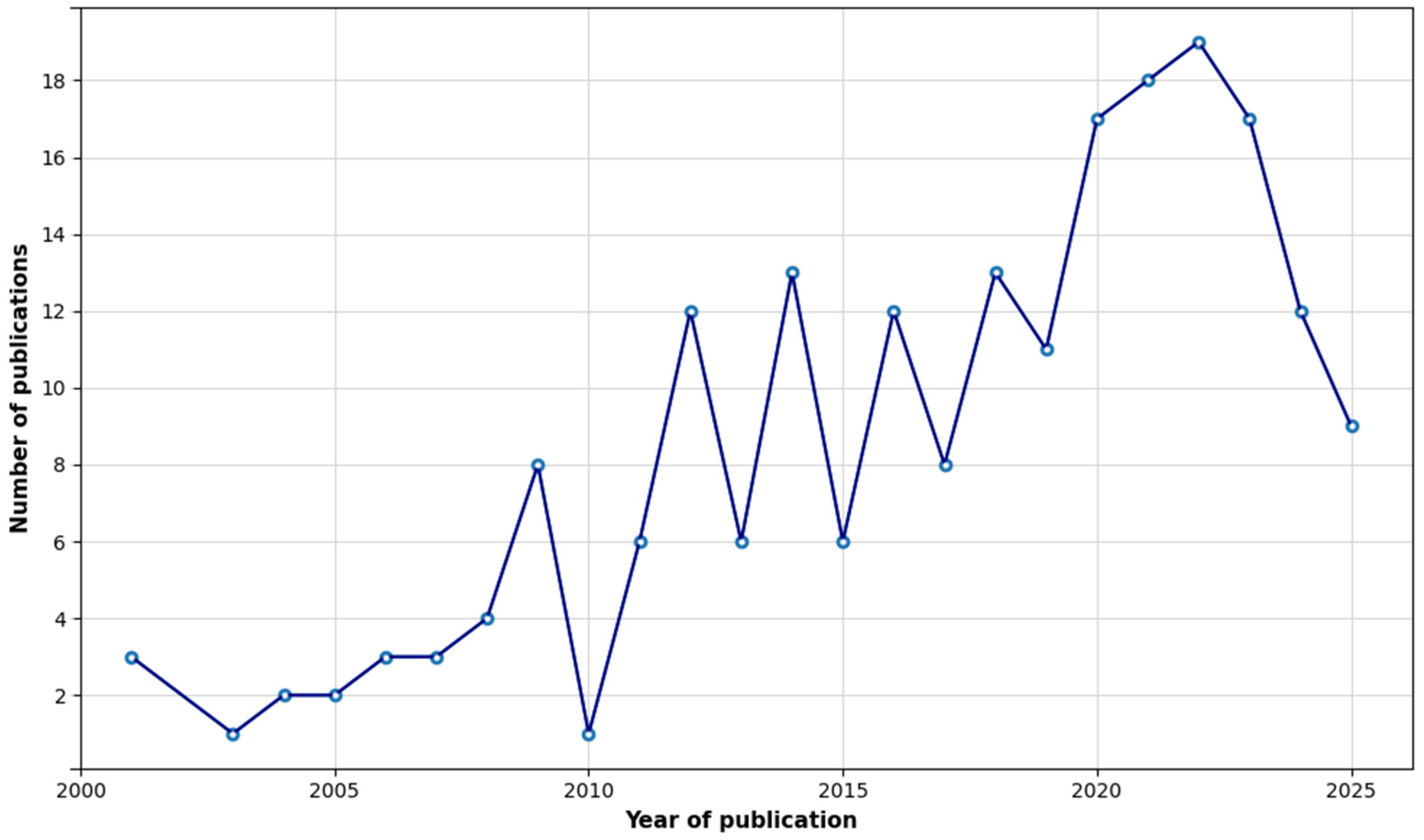
The temporal distribution of the included studies reveals a progressive increase in research activity on agrotextiles over the last two decades (
Figure 3). Prior to 2008, publication output was sporadic and limited, with fewer than four studies per year. From 2009 onwards, a gradual growth can be observed, punctuated by occasional fluctuations.
A more pronounced increase in publication volume emerged after 2012, with annual outputs consistently exceeding ten studies in several years. This upward trend became particularly evident from 2018 onwards, culminating in a peak between 2020 and 2022, when annual publications reached their highest levels (17–19 studies per year).
Although a slight decline is observed in the most recent years (2023–2025), this pattern should be interpreted with caution, as recent periods are subject to indexing delays and incomplete coverage in bibliographic databases; therefore, the observed decrease may not indicate a genuine reduction in research activity.
3.2.2. Geographic Distribution
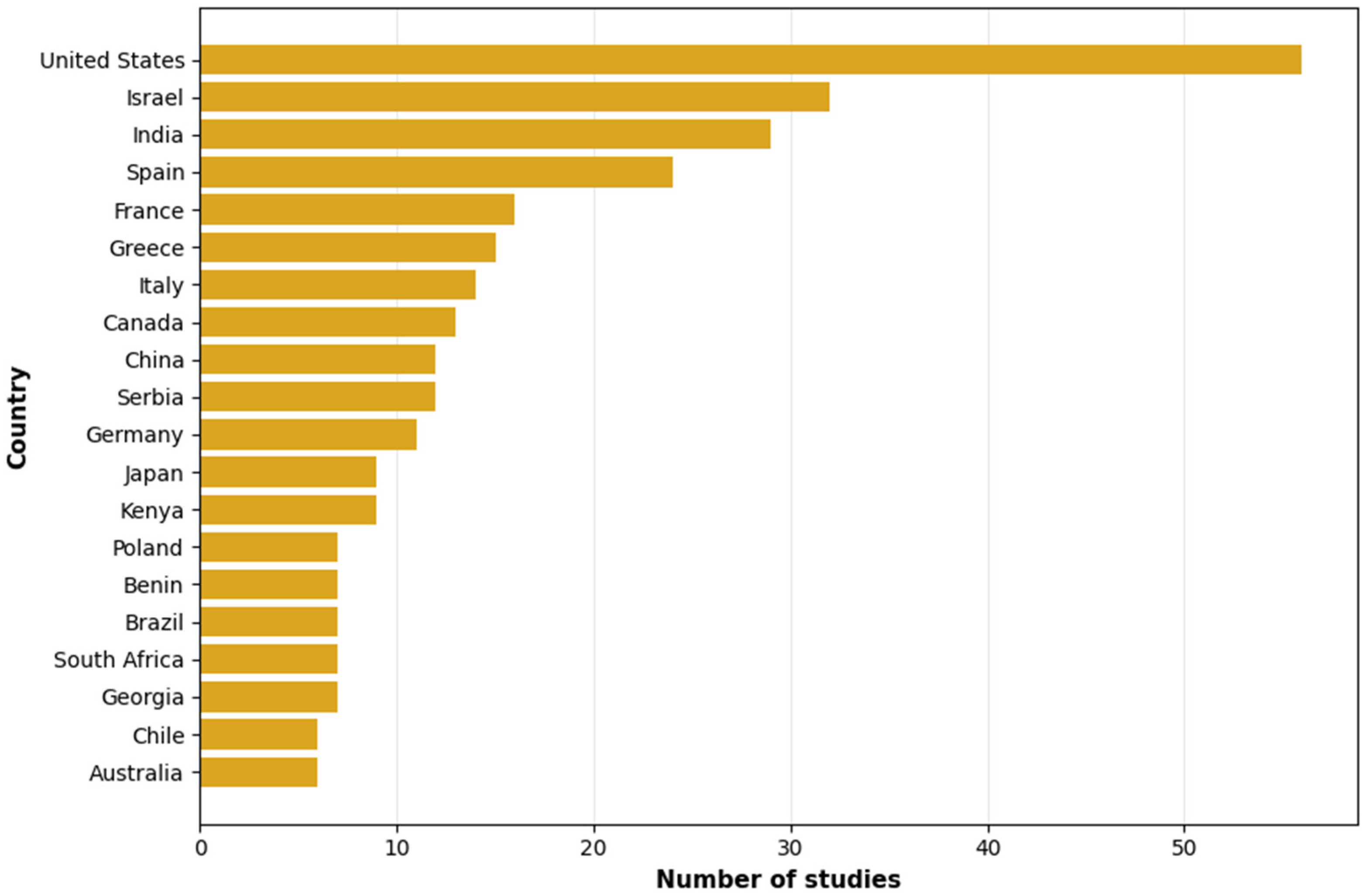
The geographic distribution of the included studies indicates a strong concentration of agrotextile research in a limited number of countries (
Figure 4). The United States represented the largest contribution, followed by Israel, India, and Spain, while several European countries also showed consistent research activity. Rather than being evenly distributed worldwide, the evidence base is concentrated in regions with well-established protected horticulture, orchard production, or agrotextile-related research capacity.
This uneven distribution suggests that current knowledge on agrotextiles is shaped largely by the production priorities, technological infrastructures, and research capacities of North America, Europe, and parts of Asia. In contrast, contributions from Africa, South America, and other regions remain comparatively limited, despite the potential relevance of agrotextiles for climate adaptation, pest management, and resource-efficient agriculture in these contexts.
3.2.3. Research Areas and Disciplinary Scope
This section characterises the thematic breadth and disciplinary scope of the included studies by examining their engagement with the predefined agrotextile categories. This approach provides insight into the dominant research areas and the extent to which individual studies adopt a function-specific versus integrative perspective.
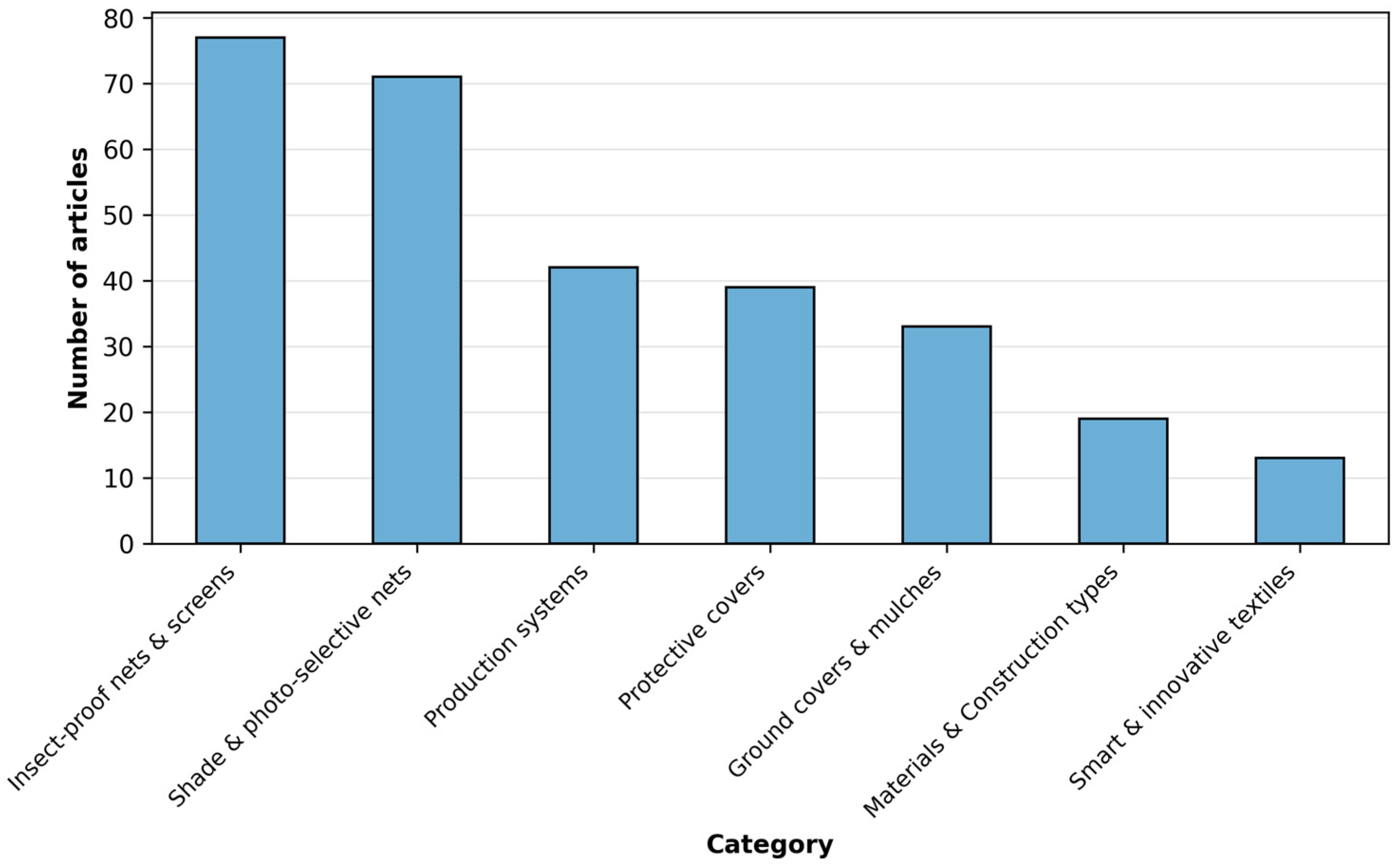
As illustrated in
Figure 5, research has predominantly focused on Insect-proof nets and screens as well as Shade and photo-selective nets, highlighting the central role of pest exclusion and solar radiation management in agrotextile applications [
20,
32,
33]. Other areas, such as Crop system applications and Protective covers, were moderately represented, while studies addressing Ground covers, Materials and construction, or Smart and innovative textiles formed a smaller but emerging body of work [
34,
35]. Overall, this distribution suggests that the literature is still dominated by application-driven agronomic research, whereas materials- and technology-oriented contributions are comparatively less frequent but growing.
3.3. Functional Prevalence and Thematic Overlap
Building on the thematic overview of research areas presented in
Section 3.2, this section quantitatively examines the distribution, prevalence, and overlap of the predefined agrotextile categories across the final corpus. By analysing category frequencies and assignment patterns, the relative weight of each functional and cross-cutting dimension within the literature can be systematically assessed.
3.3.1. Overall Functional Prevalence
The 206 included studies were classified into seven non-mutually exclusive agrotextile categories (
Table 2 and
Table 3). Overall, the distribution shows a clear thematic concentration around pest exclusion and solar radiation management. Insect-proof nets and screens and Shade or photo-selective nets were the two dominant categories, together accounting for more than two-thirds of the corpus [
25,
32,
36,
37]. This pattern indicates that agrotextile research has been primarily driven by immediate agronomic needs in high-value crop systems, particularly pest management, vector exclusion, light modulation, and microclimate regulation.
A second group of studies addressed Crop system applications, Protective covers, and Ground covers or mulches, reflecting the broader use of agrotextiles as context-specific tools for crop protection, soil management, and adaptation to environmental stress. In contrast, Materials and construction types and Smart or innovative textiles were less frequently represented, suggesting that research on textile design, advanced materials, and multifunctional or sustainability-oriented technologies is still emerging within the field.
Because categories were not mutually exclusive, individual studies could contribute to more than one functional or cross-cutting domain. This multi-label structure highlights the multifunctional character of agrotextiles, as a single material may simultaneously influence pest exclusion, radiation transmission, ventilation, soil conditions, and crop performance [
33,
38,
39,
40,
41]. Detailed category frequencies and subcategory occurrences are provided in
Table 3.
3.3.2. Thematic Multiplicity Across Studies
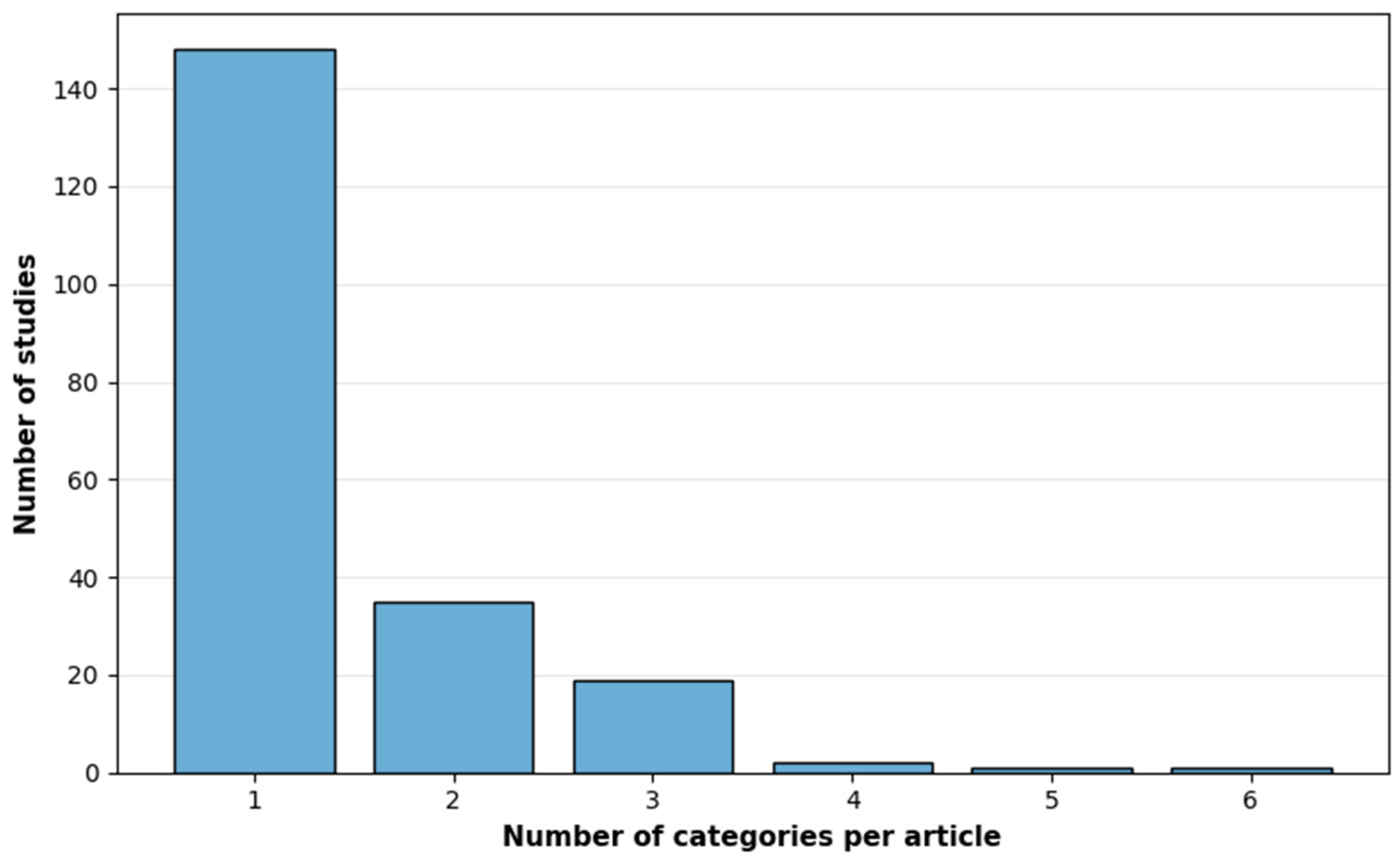
The distribution of category assignments per study highlights the multidimensional nature of agrotextile research (
Figure 6). Although most studies focused on a single functional category, a substantial minority addressed multiple categories, reflecting the increasing recognition of agrotextiles as multifunctional technologies rather than single-purpose inputs.
This thematic overlap is particularly relevant because agrotextiles often influence several agronomic processes simultaneously, such as pest exclusion, ventilation, radiation transmittance, crop microclimate, and yield performance. Therefore, a non-mutually exclusive classification approach was necessary to capture the complexity of the field and avoid oversimplifying the functional role of these materials.
3.4. Interconnections and Multifunctionality Across Agrotextile Domains
To further explore the interconnectedness of research themes, we examined co-occurrence patterns across the seven agrotextile categories. This analysis highlights how different functional and contextual dimensions are studied in combination, revealing prevalent interdisciplinary linkages and potential synergies. The following section presents a detailed assessment of inter-category relationships, identifying the most frequently co-addressed categories and providing insights into the structural patterns of agrotextile research.
3.4.1. Inter-Category Relationships
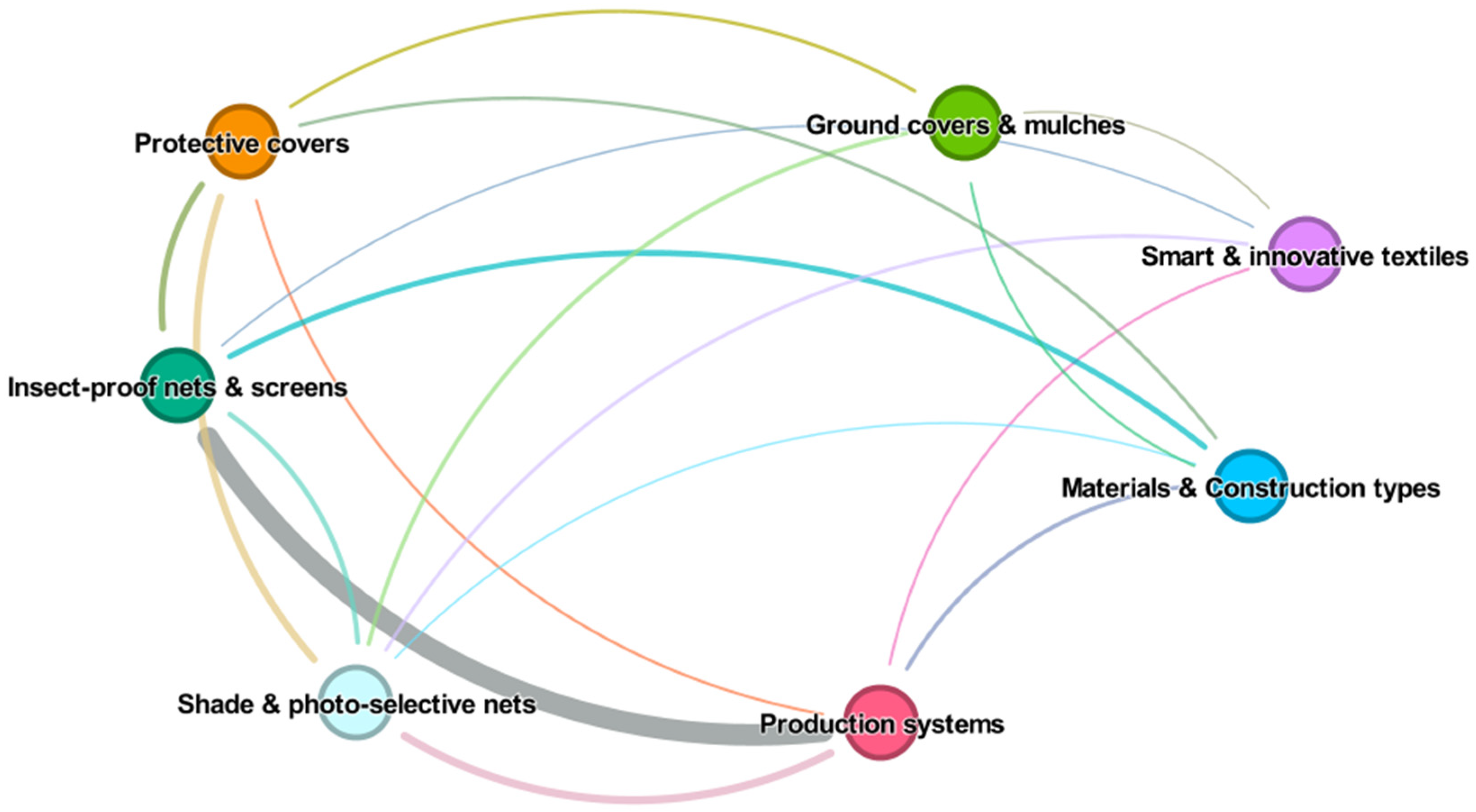
Co-occurrence analysis revealed clear interdisciplinary linkages among the seven agrotextile categories (
Figure 7;
Table S3). The strongest connections were observed between Production systems and Insect-proof nets and screens (
n = 29; 22.5%), indicating a strong integration of pest-exclusion strategies within specific cropping contexts. A comparatively lower, yet still relevant, association was found between Production systems and Shade and photo-selective nets (
n = 11; 8.5%), suggesting a more moderate coupling between light management applications and production system considerations.This pattern indicates that agrotextile research is often framed around the evaluation of specific technologies within defined production contexts, particularly greenhouse horticulture, open-field vegetable systems, and other high-value crop environments.
Relevant associations were also observed between Protective covers and Shade and photo-selective nets [
42,
43], suggesting that microclimate management is frequently addressed through combined or overlapping agrotextile functions. In these cases, agrotextiles are not only evaluated as single-purpose materials, but as components of broader protective strategies that may simultaneously influence radiation, temperature, physical protection, and crop quality.
Materials and Construction types and Smart and innovative textiles showed more distributed co-occurrence patterns across several functional domains. This suggests that material design, textile structure, and sustainability-oriented innovation increasingly operate as cross-cutting dimensions rather than isolated research topics. Their links with multiple categories reflect the growing relevance of material science and multifunctional design in agrotextile development.
Overall, these patterns underscore the multifunctional and interconnected nature of agrotextile research. Rather than being confined to discrete functional categories, many studies combine crop context, pest protection, solar radiation management, environmental protection, and material innovation. Full co-occurrence data, including category pair frequencies and relative percentages, are provided in
Table S3 (Supplementary Materials).
3.4.2. Subcategory Diversity and Linkages
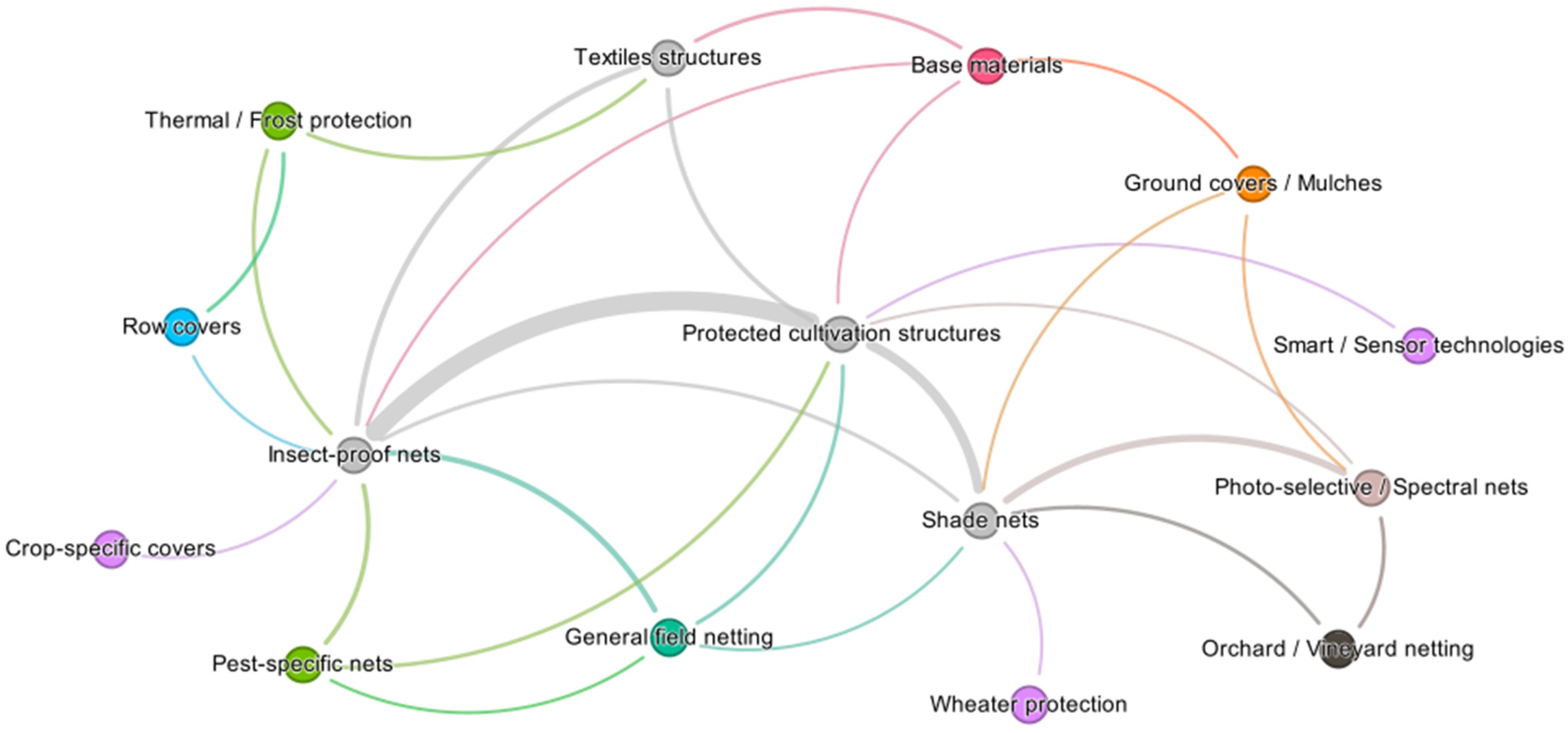
At the subcategory level, co-occurrence analysis revealed a highly interconnected research structure encompassing 18 predefined subcategories (
Tables S3 and S4). To enhance interpretability and focus on the most meaningful relationships, the network diagram (
Figure 8) was constructed using a minimum edge weight threshold of
n ≥ 3.
At the subcategory level, the network shows that Insect-proof nets and Protected cultivation structures form one of the main axes of agrotextile research. This association underscores the central role of pest-exclusion systems within controlled-environment agriculture, particularly in greenhouses, screenhouses, and other protected cropping systems. The close connection between protected cultivation and light-management subcategories, including Shade nets and Photo-selective/Spectral nets, further indicates that pest protection and microclimate regulation are often studied as complementary rather than independent functions.
Additional linkages between Insect-proof nets, Textile structures, and General field netting suggest increasing attention to the material and structural characteristics of agrotextiles, as well as to the adaptation of netting technologies beyond conventional greenhouse contexts. These connections highlight the transition from purely application-oriented studies toward a more integrated understanding of how textile design, mesh geometry, porosity, and deployment context influence agrotextile performance.
Innovation-oriented subcategories, including Smart/Sensor technologies and Sustainable/Eco-friendly materials, were connected with several functional and structural domains. This pattern suggests that digitalization, advanced materials, and sustainability considerations are emerging as cross-cutting research themes rather than isolated lines of inquiry. Their links with Protected cultivation structures, Shade nets, and Ground covers/Mulches indicate that innovation is increasingly being incorporated into established agrotextile applications.
Overall, the subcategory co-occurrence network (
Figure 8) depicts a diversified and interconnected research landscape. Traditional agrotextile functions (such as pest protection, shading, and thermal or soil-related management) are increasingly combined with advances in materials science, functional design, and sustainability-oriented development [
20,
28,
33,
44,
45,
46,
47,
48]. This reinforces the view of agrotextiles as multifunctional technologies whose performance depends on the interaction between material properties, structural configuration, crop system, and environmental context.
3.5. Innovation and Sustainability Pathways
Innovation and sustainability constitute emerging but still secondary focal areas within agrotextile research. As summarized in
Table 4, Material-oriented innovations (particularly those involving biodegradable polymers and recycled textiles) represent the most prevalent innovation pathway and show the clearest alignment with environmental objectives. In contrast, Photoselective technologies and Smart or functional textiles define frontier research domains characterized by high technological complexity and diversification.
Although temporal trends indicate a gradual increase in the consideration of environmental aspects, overall innovation rates remain relatively stable across the reviewed period. Notably, the limited integration between design and optimisation-driven innovations and explicit sustainability considerations highlights a persistent conceptual gap. This suggests that sustainability is often addressed as an auxiliary outcome rather than embedded as a core design principle, underscoring the need for more holistic innovation frameworks in agrotextile development.
3.5.1. Overview of Innovation and Environmental Emphasis
Among the 206 studies included in the review, innovation and sustainability emerged as identifiable but still secondary themes within the agrotextile literature (
Table 4). Approximately one quarter of the corpus incorporated innovation-related indicators, whereas explicit environmental or sustainability considerations were less frequent. The overlap between both dimensions was comparatively limited, indicating that technological development and environmental assessment are not yet systematically integrated in agrotextile research.
Studies addressing both innovation and sustainability typically combined biodegradable or recycled materials with advanced functionalities, such as photoselective behaviour, nanocoatings, or smart control systems. This convergence reflects an emerging paradigm in which technological advancement and environmental responsibility are increasingly conceived as complementary rather than competing objectives in agrotextile development.
Three main synergy patterns were identified among studies integrating both dimensions. First, several studies focused on enhancing biodegradable or recycled materials with advanced functional properties, including PLA-based mulches with controlled degradation behaviour or recycled cotton textiles incorporating antimicrobial nanocomposites [
47,
48,
49,
50,
51]. Second, other contributions linked innovation to pesticide reduction through physical or optical pest control strategies, such as nanocoated exclusion nets or photoselective–insect exclusion systems [
33,
39,
44,
52,
53,
54,
55,
56]. Third, a smaller group of studies addressed resource efficiency through technological optimisation, including CFD-guided design approaches aimed at optimising aerodynamic performance and microclimate homogeneity in screened structures [
57,
58,
59]. Collectively, these patterns suggest a gradual shift toward integrated design strategies in which sustainability considerations are embedded within innovation processes.
Innovation-oriented studies were distributed across all agrotextile application categories but were more visible in domains related to solar radiation management and pest exclusion, reflecting the strong role of photoselective technologies, exclusion systems, and functional coatings in recent agrotextile development. Environmental sustainability themes showed a slightly different emphasis, with stronger links to soil covers, smart textiles, and pest exclusion systems. This distribution suggests that sustainability is currently incorporated mainly through material substitution, reduction of chemical inputs, and emerging multifunctional designs, rather than being systematically embedded across all agrotextile categories. Detailed frequencies for innovation types, environmental themes, and their overlap are provided in
Table 4.
3.5.2. Innovation Pathways in Agrotextiles
Innovation indicators identified in the reviewed literature clustered into five primary types, reflecting diverse technological and conceptual approaches to advancing agrotextile systems (
Table 4). These pathways included material innovation, photoselective technologies, smart and functional textiles, design and optimisation strategies, and hybrid or integrated systems.
Material innovation represented one of the most prominent pathways and was closely linked to the search for alternatives to conventional synthetic polymers. This group included biodegradable polymers, recycled textiles, nanocomposites, and bioactive materials. Examples such as jute-based agrotextiles, cotton waste-derived mulches, and PLA nonwoven mulches illustrate how material development is increasingly connected to sustainability objectives, particularly biodegradability, waste valorisation, and reduced dependence on polyethylene-based products.
Photoselective technologies formed a second major innovation pathway focused on manipulating the quantity and spectral quality of radiation reaching the crop canopy. Commercial and experimental systems, including ChromatiNet
®, pearl-coloured woven films, fluorescent compounds, quantum dots, and photovoltaic integrations, illustrate the growing interest in agrotextiles that combine solar radiation management with additional functions such as canopy cooling or energy generation [
20,
60,
61,
62,
63,
64]. This pathway reflects the transition from passive shading materials toward more functionally engineered optical systems.
Smart and functional textiles represented an emerging frontier in agrotextile research. These technologies incorporate sensing capabilities, functional coatings, active pest control mechanisms, or bioactive treatments. Examples include SiO
2-coated insect-proof screens [
44], long-lasting insecticide-incorporated nets [
65], electrostatic exclusion systems [
45], bioactive nonwoven materials [
51,
66], and artificial intelligence–based environmental control systems for greenhouse management [
67]. Although still limited in scale, these approaches suggest a shift toward agrotextiles capable of performing active or semi-active roles within crop protection and controlled-environment agriculture.
Design and optimisation innovations emphasized engineering-based improvements in agrotextile performance. These studies focused on ventilation, airflow, mesh geometry, structural characterisation, and deployment efficiency through approaches such as computational fluid dynamics modelling [
57,
68,
69], geometric characterisation software [
70], enhanced-porosity mesh configurations [
54,
55,
71], and experimental tools for assessing airflow or sensor placement [
72,
73] as well as standardised laboratory procedures for evaluating water permeability [
74]. This pathway highlights the importance of linking textile structure and physical performance, particularly in systems where pest exclusion must be balanced against ventilation and microclimate control.
Hybrid and integrated systems combined multiple technologies or functions within single agrotextile solutions. Examples included reflective ground covers, aluminium-based alternatives to plastic films [
75], optimised management of thermal blankets [
76], and nonwoven cover strategies designed to influence pollination dynamics and harvest uniformity [
77]. These systems illustrate the increasing tendency to design agrotextiles not as isolated materials, but as multifunctional components within broader crop management strategies.
Together, these five innovation pathways delineate a technologically diverse but unevenly developed research landscape. Material-based and photoselective innovations appear more consolidated, whereas smart textiles, hybrid systems, and engineering optimisation remain more fragmented or application-specific. This distribution suggests that future progress in agrotextile innovation will depend not only on developing new materials or functionalities but also on integrating performance, sustainability, durability, and end-of-life considerations within coherent design frameworks.
3.5.3. Sustainability Themes and Environmental Challenges
Environmental and sustainability considerations were explicitly addressed in a limited but clearly identifiable subset of the reviewed literature (
Table 4). These studies clustered around four main themes: biodegradable materials, pesticide reduction, resource efficiency, and circular economy.
Biodegradable materials represented a central sustainability pathway. Studies in this group examined biodegradable polymers, particularly PLA and photodegradable plastics, as alternatives to conventional polyethylene, as well as natural fibre-based mulches derived from materials such as jute, hemp, and viscose [
49,
78,
79]. Several contributions also incorporated life cycle assessment (LCA) perspectives to evaluate carbon footprint, biodegradability, and end-of-life scenarios, with particular attention to soil mineralization and the prevention of microplastic accumulation [
46,
47,
50,
80]. In this context, agrotextiles were framed not only as crop production inputs, but also as materials whose recovery, recycling, degradation, or controlled environmental release must be considered from the design stage [
47,
66].
Pesticide reduction emerged as another major sustainability theme. In these studies, agrotextiles were primarily presented as enabling technologies for non-chemical crop protection, particularly through physical exclusion mechanisms that reduce reliance on synthetic insecticides [
32,
39,
53,
81]. This approach was associated with several potential benefits, including lower environmental contamination, reduced human health risks, and mitigation of pesticide resistance development [
56,
82,
83,
84]. Agrotextiles were therefore frequently positioned as functional components of integrated pest management (IPM) strategies and as tools for supporting more sustainable crop protection systems.
A smaller but relevant group of studies addressed resource efficiency, mainly in relation to energy and water use. These contributions included thermal management strategies aimed at reducing heating or cooling requirements, intelligent control systems for optimizing resource use, and protective covers designed to limit evapotranspiration or improve water-use efficiency. Although this theme was less frequently represented than material substitution or pesticide reduction, it highlights the potential role of agrotextiles in improving the environmental performance of protected and open-field production systems.
Circular economy, primarily focused on end-of-life management and plastic pollution mitigation, appeared as a distinct but still underdeveloped research theme. Studies in this area examined degradation behaviour, soil pollution risks, recyclability, disposal challenges, and the potential of biodegradable alternatives to reduce the accumulation of agricultural plastic waste [
47,
66]. This theme is particularly relevant given the continued reliance of agrotextile applications on synthetic polymers and the limited reporting of material composition observed elsewhere in the review.
Overall, environmental research within the agrotextile literature remains limited in scope but shows increasing conceptual alignment with material innovation, circular economy strategies, non-chemical crop protection, and resource-efficient production. These patterns suggest that sustainability is progressively becoming part of agrotextile research, although it is still more often addressed through specific material or application choices than through fully integrated design and assessment frameworks.
3.5.4. Temporal and Cross-Category Patterns
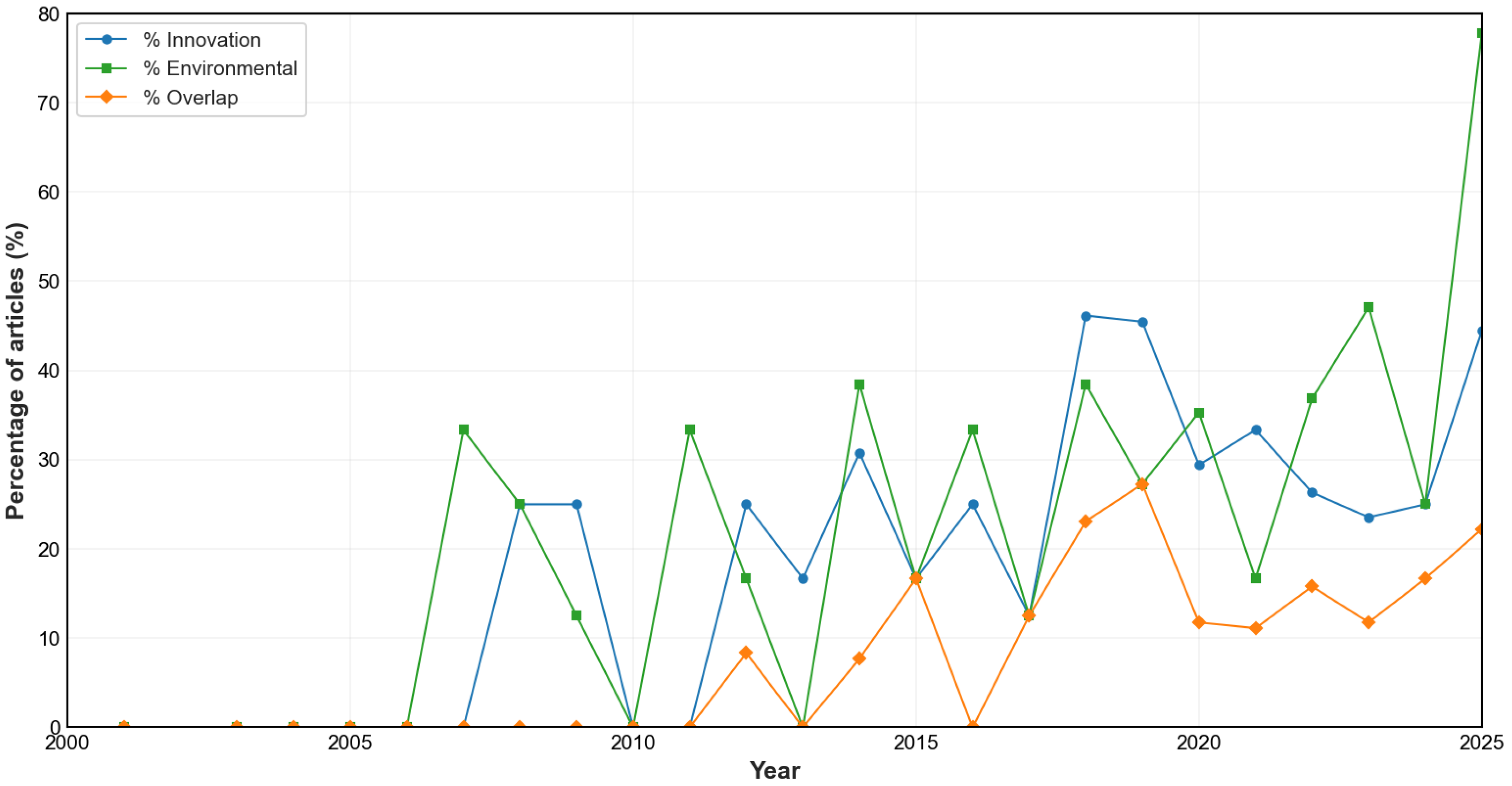
Temporal analysis revealed contrasting trajectories for innovation and environmental sustainability within agrotextile research over the 2000–2025 period (
Figure 9). Innovation-related studies displayed relatively stable but fluctuating representation across years, ranging from negligible levels in early periods to annual peaks of approximately 45%, without evidence of a consistent linear trend. In contrast, environmental and sustainability themes exhibited a clearer upward trajectory, evolving from sporadic early occurrences to pronounced prominence in recent years, reaching 77.8% of publications in 2025. This pattern suggests a growing prioritization of environmental performance within the field.
The intersection between innovation and sustainability followed a similar temporal pattern. Before the mid-2010s, studies simultaneously addressing both dimensions were rare, whereas a more consistent integration emerged in the late 2010s and early 2020s. Although this trend suggests an increasing convergence between technological advancement and environmental considerations, such integration remains limited to a subset of the literature rather than representing a generalized feature of agrotextile research.
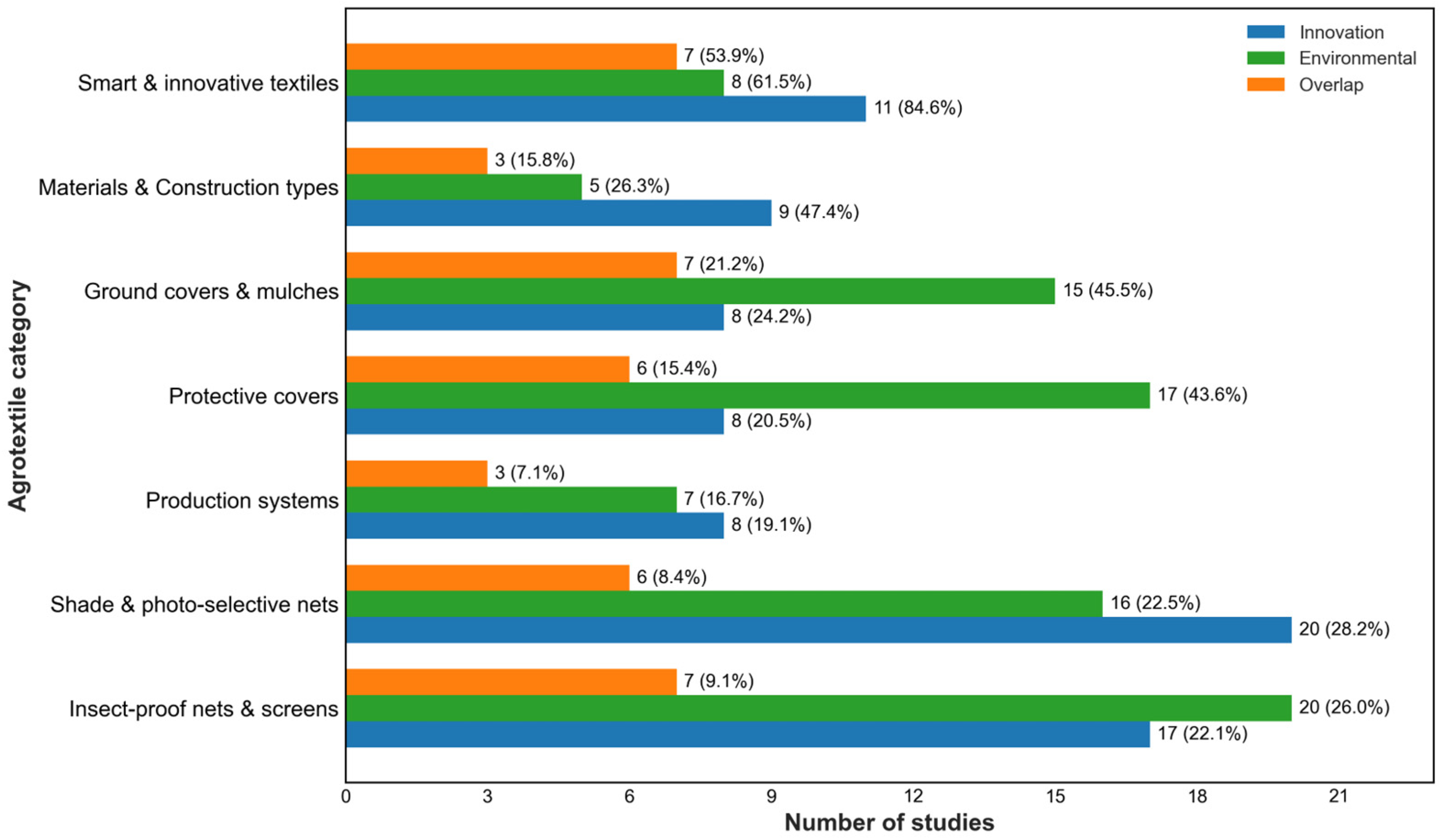
Category-specific analysis further revealed heterogeneous innovation and sustainability profiles across agrotextile domains (
Figure 10). Smart & innovative textiles showed the strongest innovation orientation and emerged as a key locus of sustainability-driven technological development. This reflects the inherently experimental nature of this category, where advanced materials, functional coatings, sensing technologies, and environmental objectives are more frequently combined. Materials & construction types also showed a clear innovation-oriented profile, consistent with the engineering and material-science focus of studies in this domain.
Shade and photo-selective nets (solar radiation management) occupied an intermediate position, with innovation mainly associated with photoselective technologies and spectral manipulation. Soil covers and protective covers showed a more balanced relationship between functional performance and environmental concerns, reflecting their relevance for biodegradable materials, resource efficiency, and mitigation of environmental stress. These categories illustrate how sustainability considerations are increasingly being incorporated into agrotextile applications that directly interact with soil conditions, crop microclimate, or weather protection.
In contrast, Insect-proof nets and screens (pest exclusion), despite being one of the most extensively studied domains, showed a comparatively more applied and incremental innovation profile. Advances in this category were mainly associated with material coatings, mesh design, and functional optimisation rather than disruptive technological shifts. Crop system applications showed the lowest engagement with innovation and sustainability themes, which is consistent with its context-specific orientation and its focus on evaluating agrotextile performance under particular crop or production conditions.
Cross-tabulation of innovation types and environmental themes revealed both synergies and gaps. Material-based innovations were strongly aligned with sustainability objectives, especially when linked to biodegradable polymers, recycled fibres, or reduced environmental burden. Conversely, design and optimisation studies less frequently incorporated explicit environmental assessment, highlighting a persistent disconnect between engineering-driven performance improvement and sustainability evaluation frameworks.
Overall, these temporal and categorical patterns indicate that sustainability is gaining visibility within agrotextile research, but its integration with innovation remains uneven. Rather than being systematically embedded across the field, sustainability-oriented innovation is concentrated in specific categories (particularly Smart & innovative textiles, Materials & construction types, Soil covers, and Protective covers) and in material-based innovation pathways.
3.6. Materials, Structures, Crop Systems, and Target Pests
Agrotextiles encompass a wide range of materials, structures, and applications across agricultural systems. This section provides a systematic characterisation of their base material composition and distribution (
Section 3.6.1), textile structures and functional roles (
Section 3.6.2), crop and production contexts (
Section 3.6.3), and pest targets in protective applications (
Section 3.6.4).
3.6.1. Base Material Composition and Distribution
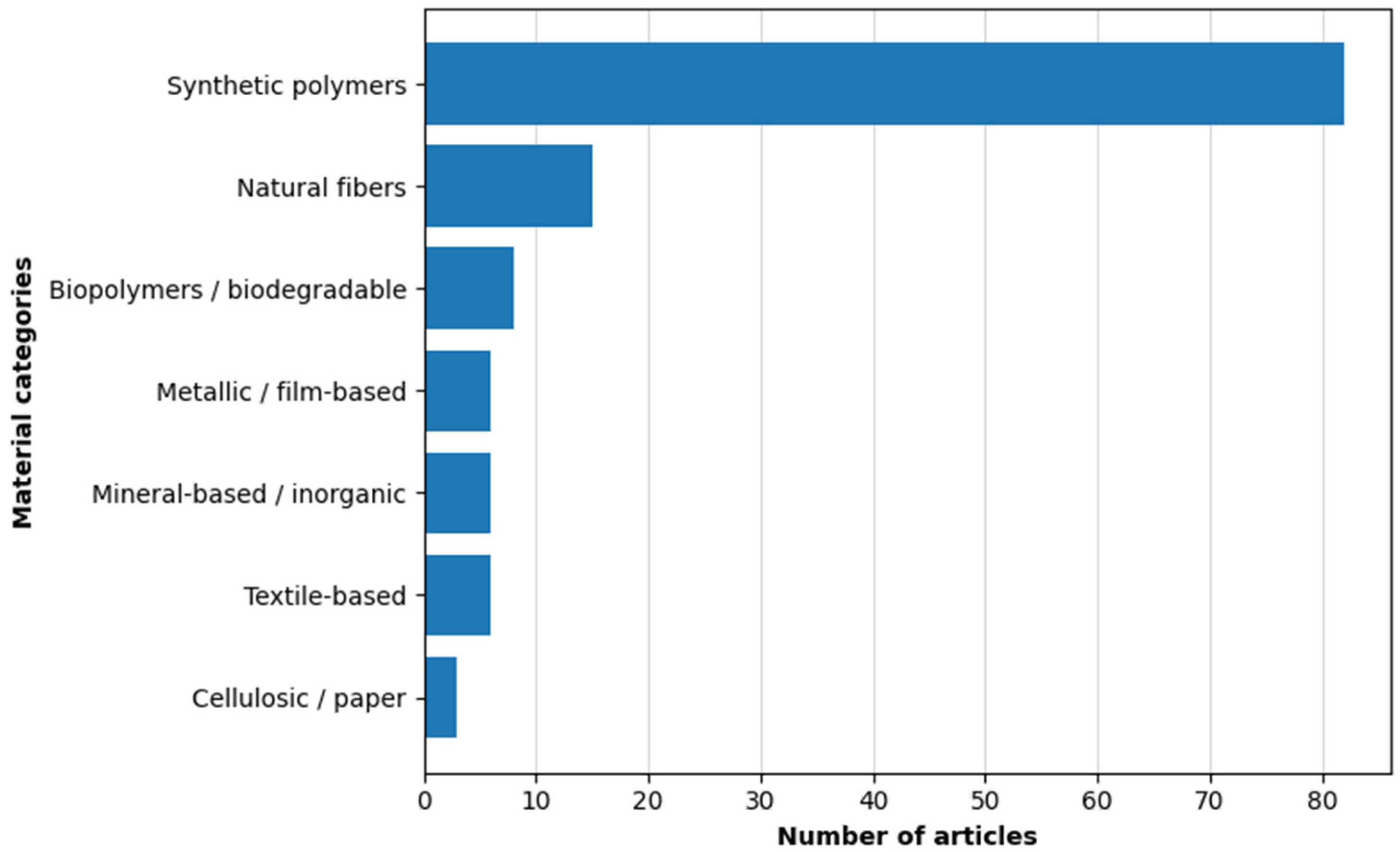
A total of seven main families of base materials were identified among the agrotextiles analysed (
Figure 11). Synthetic polymers were the dominant reported material group, particularly polyethylene (PE) and polypropylene (PP). Within the PE family, a technical distinction should be made between High-Density Polyethylene (HDPE) and Low-Density Polyethylene (LDPE). HDPE, often combined with UV stabilizers, is widely used for monofilament nets, shade nets, insect-proof nets, windbreak nets, and other high-strength textile structures because of its tensile strength, durability, and suitability for outdoor exposure. By contrast, LDPE is more commonly associated with agricultural films and flexible plastic applications, although it may also be used in specific flexible textile-related applications or as a coating material. The prevalence of PE and PP reflects their widespread use in agrotextile applications due to their mechanical performance, availability, processability, durability, and relatively low cost.
Less frequently reported material families included natural fibres, biopolymers and other biodegradable materials, metallic or mineral-based components, textile composites, and cellulosic or paper-based materials. Although these groups represented a smaller portion of the corpus, they are particularly relevant from a sustainability perspective. Natural fibres such as jute, hemp, cotton, sisal, and coir, together with biodegradable polymers such as PLA or starch-based materials, point to growing interest in alternatives that may reduce environmental burden and improve end-of-life management. Metallic and mineral-based materials were mainly associated with reflective functions, structural elements, additives, or functional coatings.
A particularly important finding was that more than half of the records did not explicitly report the base material of the agrotextile. This lack of material transparency represents a significant limitation for reproducibility, LCA, and cross-study comparison. Therefore, beyond confirming the predominance of synthetic polymers, the material analysis highlights a broader reporting gap in agrotextile research and reinforces the need for clearer and more standardised material descriptions in future publications.
3.6.2. Textile Structures and Functional Roles
In the field of agrotextiles, a precise terminological distinction between “nets” and “screens” is important, although both terms are often used interchangeably in the literature. Nets generally refer to highly porous, open-mesh textiles designed primarily for physical protection against external agents, such as rain, hail, birds, insects, or excessive wind, while maintaining natural ventilation and radiation transmittance. Screens, by contrast, usually describe denser or more technically specialized textiles whose main function is microclimate regulation, including shading, energy saving, radiation control, or photoperiod management.
This distinction becomes particularly nuanced in the case of insect-proof textiles, which are variously described as insect nets or insect screens. Although their primary objective is physical exclusion, their high-density structure and reduced porosity can substantially affect airflow and greenhouse microclimate. From a functional standpoint, these materials may therefore behave not only as physical barriers, but also as microclimate-modifying screens. For this reason, the present review classified agrotextiles according to their primary functional impact whenever possible, while acknowledging that several products combine protective and microclimatic roles.
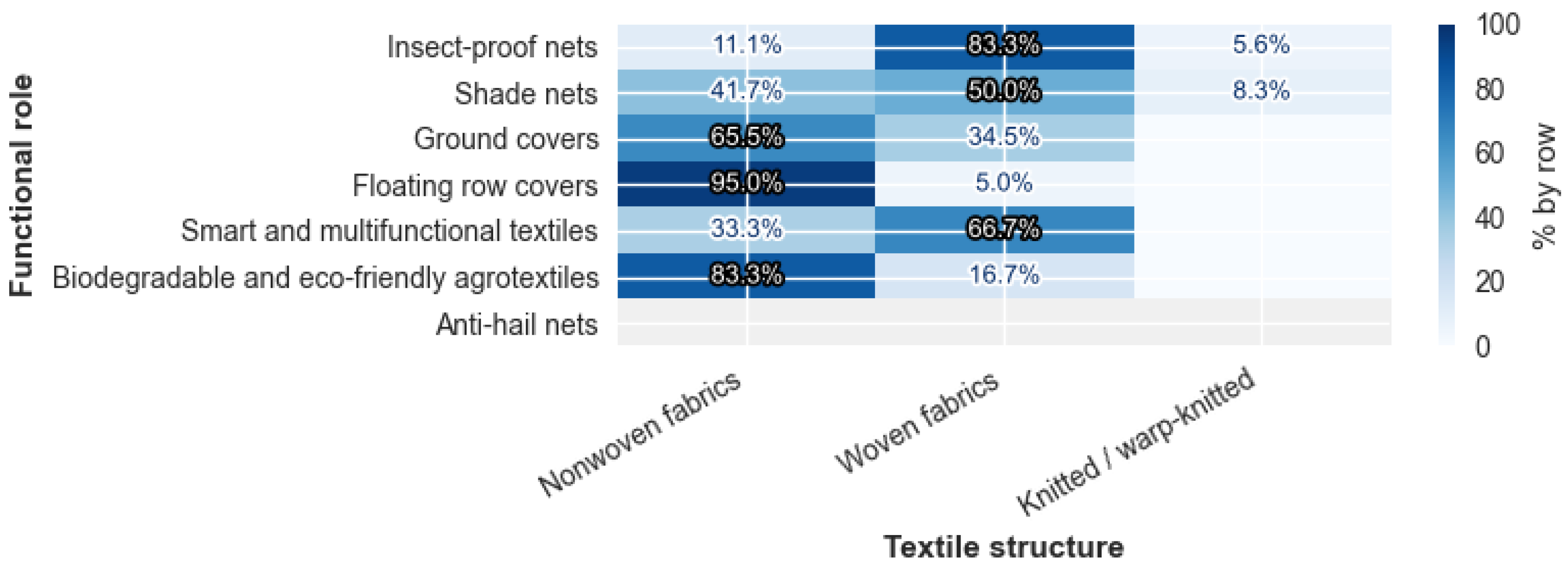
Textile structural characteristics were reported only in a minority of the reviewed studies, revealing a substantial gap in technical reporting. When structural information was available, woven, nonwoven, and knitted or warp-knitted configurations were identified. Woven fabrics were mainly associated with applications requiring dimensional stability and precise mesh geometry, particularly insect-proof systems and some smart or multifunctional textiles. Nonwoven fabrics appeared more frequently in applications where temporary deployment, conformability, or degradability were important, such as floating row covers and biodegradable agrotextiles. Knitted structures were less commonly reported and were generally linked to specialized netting applications where elasticity, porosity, or three-dimensional geometry may provide functional advantages.
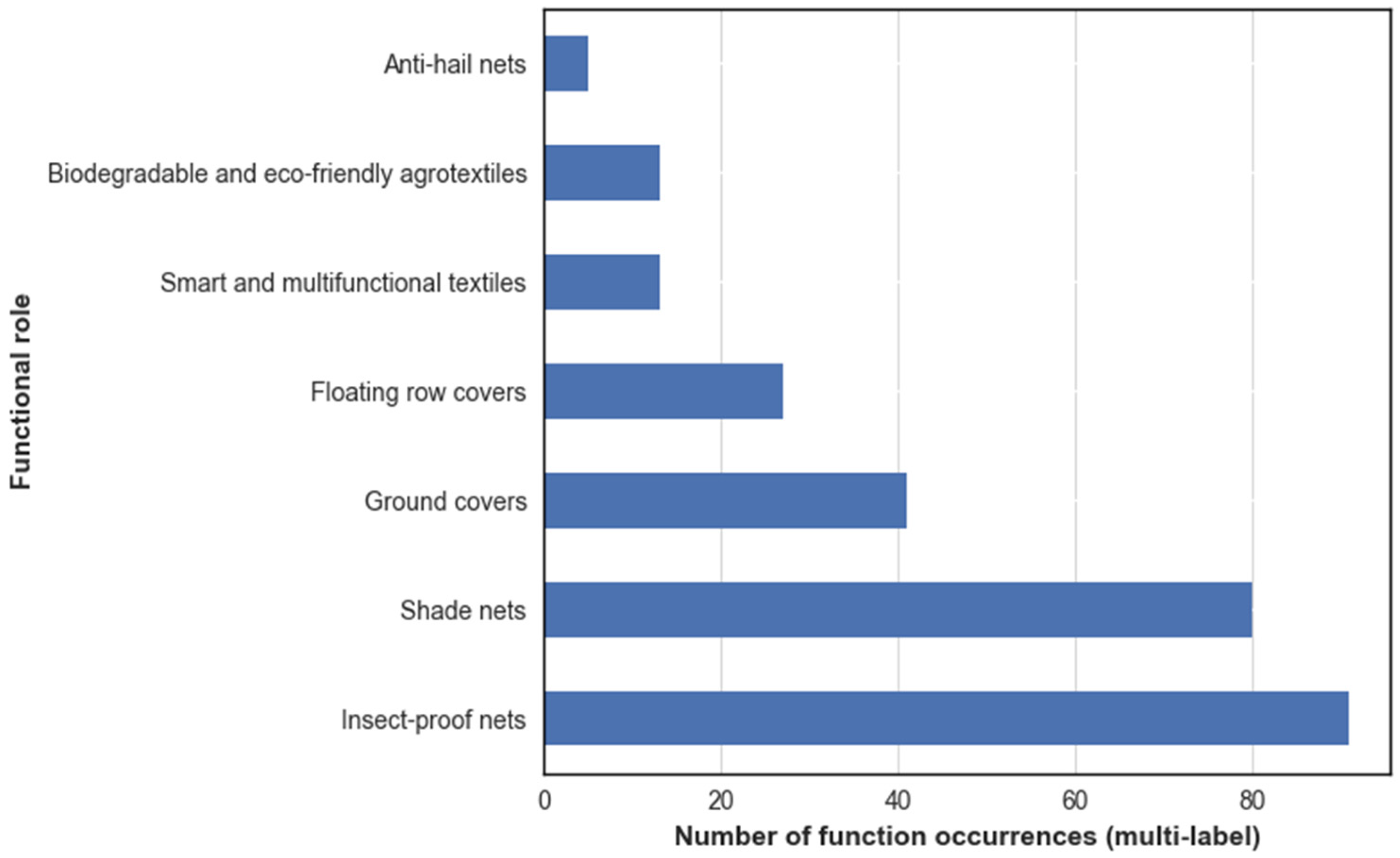
Functional role analysis identified seven main agrotextile applications across the corpus (
Figure 12). Insect-proof nets and shade nets were the most prominent functions, confirming the central role of pest exclusion and solar radiation regulation in agrotextile research. Ground covers, floating row covers, biodegradable or eco-friendly agrotextiles, smart and multifunctional textiles, and anti-hail nets represented additional functional domains. This distribution indicates that the field remains strongly oriented toward applied crop protection and microclimate management, while more specialized or innovation-oriented functions are still comparatively less consolidated.
Cross-tabulation of textile structures and functional roles revealed clear structure–function relationships (
Figure 13). Woven fabrics were closely linked to insect-proof applications, reflecting the need for stable and accurately defined mesh openings to balance pest exclusion with ventilation. Nonwoven fabrics were more strongly associated with floating row covers and biodegradable agrotextiles, where short-term protection, flexibility, soil contact, or degradability may be more important than long-term structural stability. Shade nets showed greater structural diversity, suggesting that different textile constructions can be used depending on whether the priority is optical performance, cost, durability, or temporary crop protection.
These structure–function patterns highlight the importance of textile engineering parameters in determining agrotextile performance. Mesh geometry, porosity, fibre composition, fabric construction, and mechanical stability can influence not only pest exclusion or shading capacity, but also airflow, temperature, humidity, crop development, and overall agronomic outcomes. Therefore, the limited reporting of structural information constrains reproducibility, technology transfer, and cross-study comparison.
Overall, the results indicate that agrotextiles cannot be fully characterized by their agronomic function alone. Their performance depends on the interaction between material composition, textile structure, functional role, and production context. The low rate of structural specification in the literature therefore represents a significant methodological limitation and reinforces the need for minimum technical reporting standards in future agrotextile studies.
3.6.3. Crop Systems and Production Contexts
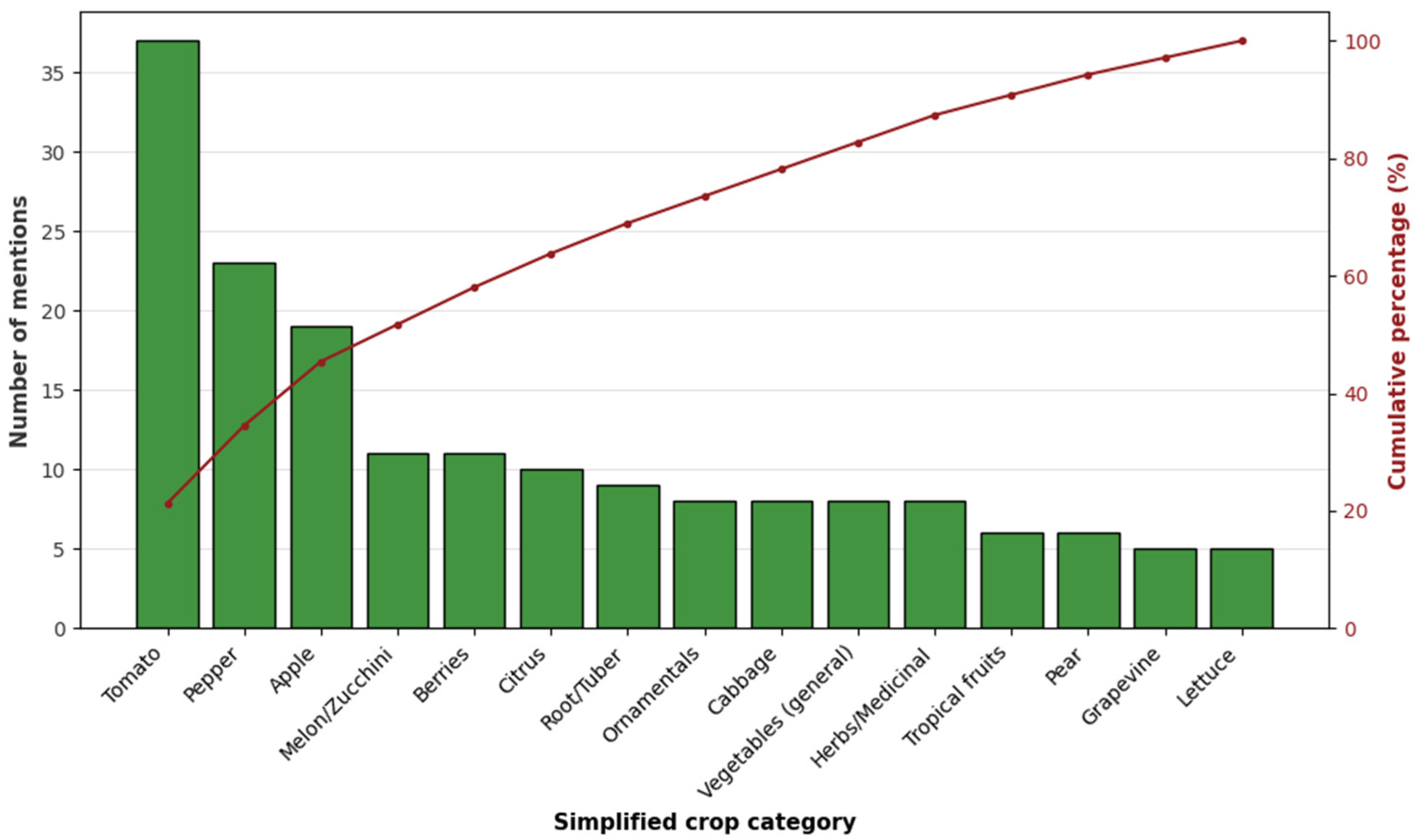
Crop type information was explicitly reported in most of the included studies, although a smaller subset did not specify a crop because they corresponded mainly to laboratory-based experiments, modelling approaches, reviews, or methodological studies without a crop-specific context. Among the studies reporting crop information, agrotextile research encompassed a wide diversity of species, but the distribution was strongly concentrated in a limited number of high-value horticultural and fruit crops (
Figure 14).
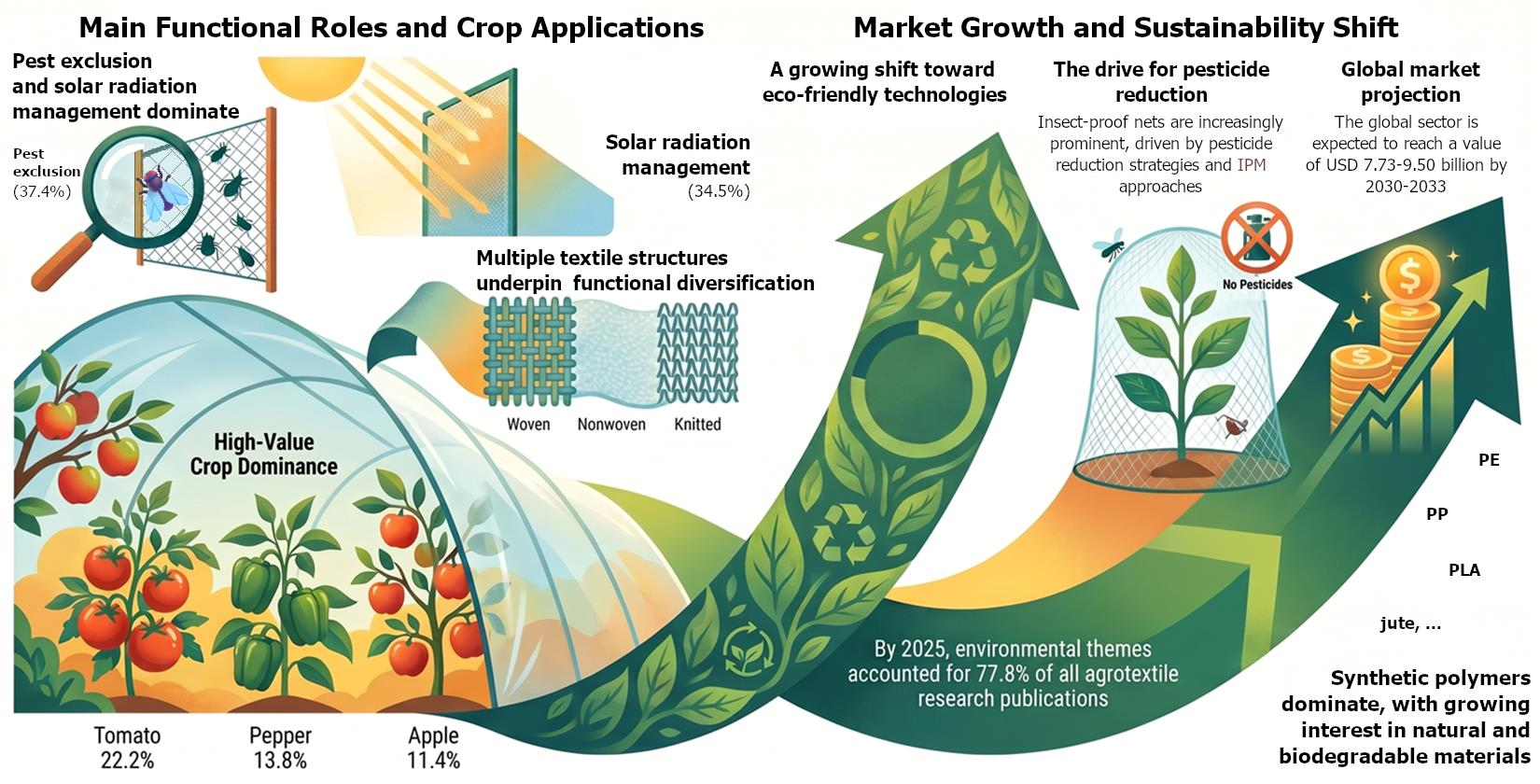
Tomato, pepper, and apple were among the most frequently investigated crops, reflecting the importance of greenhouse horticulture and orchard systems as major application domains for agrotextile technologies. This concentration suggests that research activity has been shaped by production systems where agrotextiles can provide clear agronomic or economic benefits, such as pest exclusion, solar radiation management, fruit quality improvement, and protection against adverse weather.
When aggregated at the crop-family level, vegetable and fruit crops dominated the corpus, whereas ornamentals, cereals, herbs, and other specialty crops were less frequently represented. This pattern reinforces the applied orientation of agrotextile research toward high-value systems in which crop protection, microclimate control, and quality enhancement are particularly relevant.
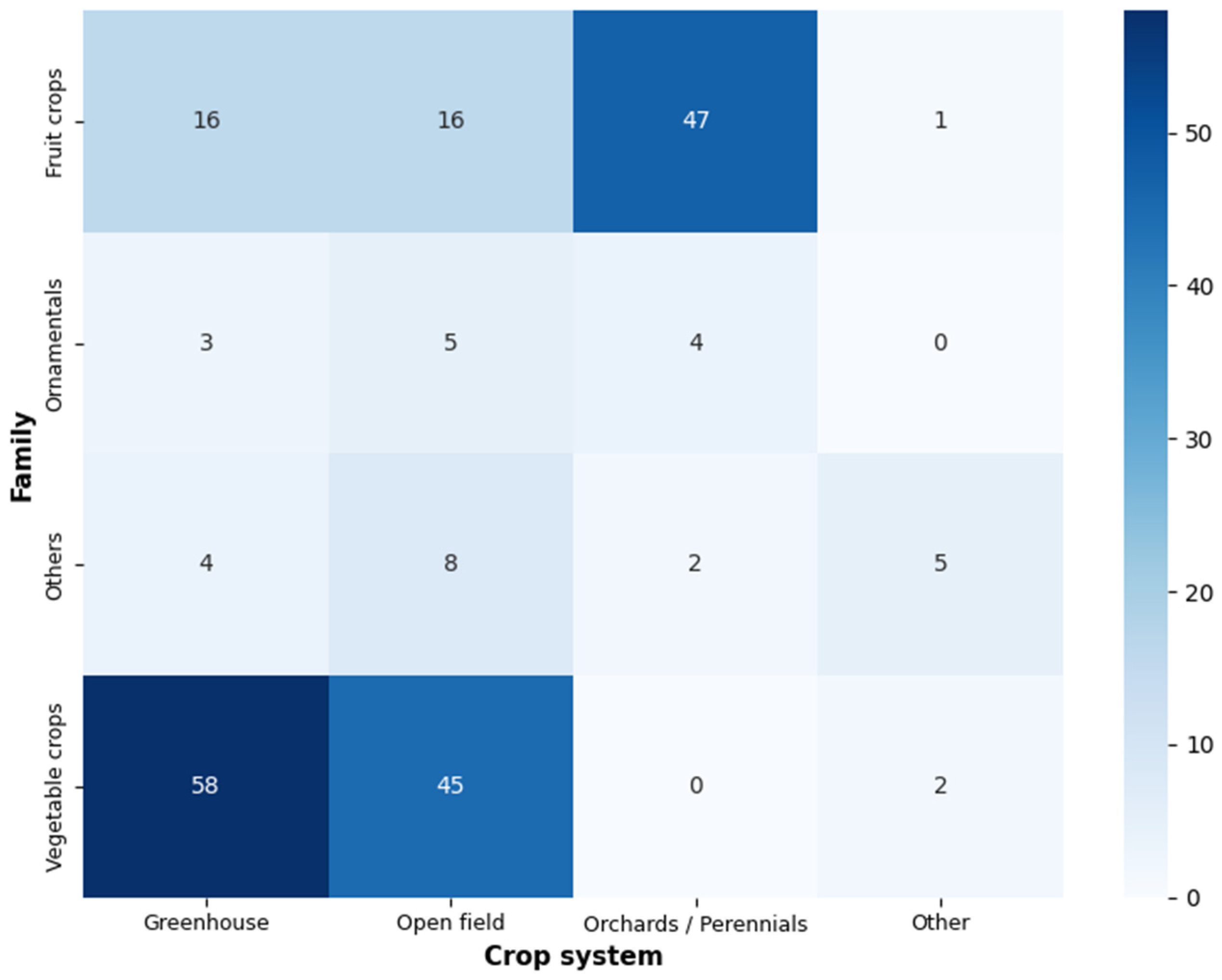
Production system analysis showed a similar concentration pattern (
Figure 15). Greenhouse production and open-field horticulture accounted for most studies, while orchards and perennial cropping systems represented a substantial secondary domain. In contrast, large-scale field crop production was only marginally represented. This imbalance likely reflects both the economic feasibility of agrotextile deployment in high-value crops and the logistical challenges associated with applying textile-based technologies at hectare scale.
Cross-tabulation of crop families and production systems revealed distinct functional alignments (
Figure 15). Vegetable crops were mainly associated with greenhouse and open-field horticulture, where agrotextiles are commonly used for pest exclusion, shading, and season extension. Fruit crops were more closely linked to orchard and perennial systems, where agrotextiles are often deployed to manage light exposure, reduce physical damage, improve fruit quality, or mitigate weather-related risks. Ornamental crops showed a more dispersed pattern, consistent with the diversity of floriculture and nursery production systems.
Crop-specific analysis further confirmed that agrotextile functions are strongly shaped by production constraints rather than by generic technological adoption (
Table 5). In greenhouse vegetables, particularly tomato and pepper, agrotextile applications were mainly associated with pest exclusion and solar radiation regulation, reflecting the need to manage insect vectors, crop microclimate, and radiation conditions in intensive production systems. In orchard crops, such as apple and citrus, applications were more diversified, combining solar radiation management, pest exclusion, ground covers, and protective functions to address multiple constraints related to fruit quality, pest pressure, hail, and environmental stress.
Other crop groups showed more specialized functional patterns. Berry crops and cucurbits were frequently linked to ground covers, thermal protection, or floating row covers, emphasizing weed suppression, soil temperature regulation, moisture conservation, and early-season protection. Leafy vegetables were mainly associated with pest exclusion and solar radiation management, while the limited number of studies on field crops addressed more specific constraints such as pest incidence, weed pressure, or frost risk.
Overall, these results indicate that agrotextile research is predominantly driven by crop-specific production challenges. Greenhouse vegetables prioritize pest exclusion and spectral composition of solar radiation optimisation, orchard systems adopt multifunctional strategies combining quality enhancement and physical protection, and open-field row crops focus more strongly on ground covers and thermal management. This functional alignment underscores the adaptive nature of agrotextile applications while highlighting persistent research gaps in extensive, tropical, subtropical, and low-input cropping systems.
3.6.4. Pest Targets and Protection Functions
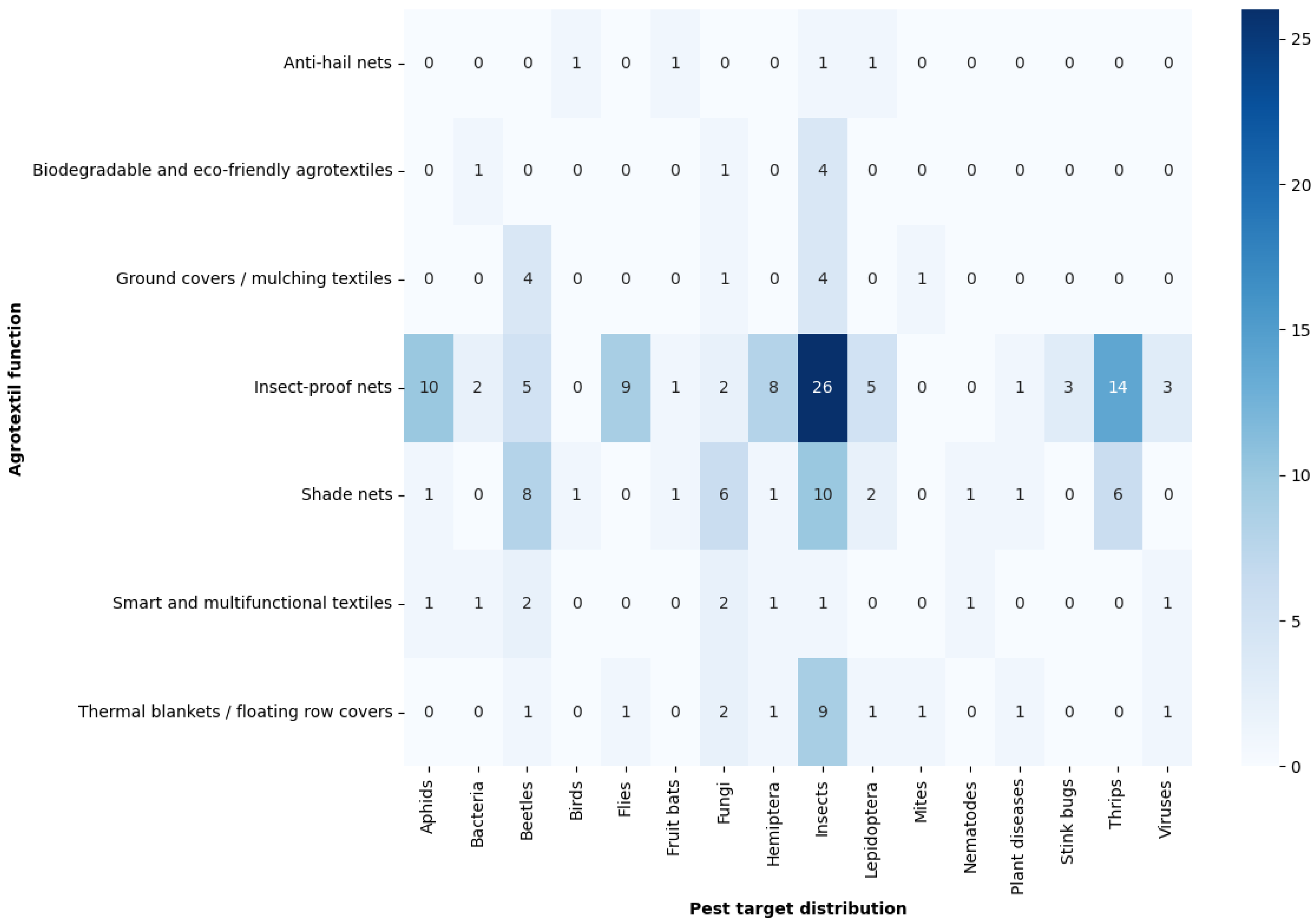
Pest and disease targets were explicitly specified across multiple agrotextile functional categories, although the level of taxonomic resolution varied considerably among studies (
Figure 16). Some records identified target organisms at species level, such as
Drosophila suzukii or
Frankliniella occidentalis, whereas others used broader descriptors such as “insects” or “pests.” To preserve interpretability despite this heterogeneity, reported targets were grouped into aggregated taxonomic and functional categories, including arthropod pests, vertebrate pests, and disease agents. Records lacking sufficient taxonomic resolution were retained under the category “Insects (unspecified)”. This limitation is further addressed in
Section 4, where minimum taxonomic reporting criteria are proposed to improve the comparability of future agrotextile trials.
Insect-proof nets showed the broadest diversity of pest targets and were mainly associated with small, highly mobile insects such as thrips, aphids, flies, and whiteflies. This pattern reflects the central role of fine-mesh textiles in excluding pests that are difficult to manage through conventional methods and that frequently act as vectors of plant pathogens. The association between insect-proof nets and disease management also highlights their indirect contribution to reducing vector-mediated transmission within integrated pest management strategies.
Shade nets, although primarily designed for microclimate and radiation management, were also linked to several pest and disease outcomes. This indicates that many studies assessed shade nets not only as light-regulating materials but also as multifunctional agrotextiles with potential crop protection effects. The overlap between shading and pest exclusion functions likely reflects the use of coloured, photoselective, or sufficiently dense netting systems that can simultaneously modify the light environment and reduce pest pressure.
Ground covers and mulching textiles were more closely associated with soil-borne or root-zone pests and diseases. Their protective role appears to be linked to weed suppression, reduced soil splash, modified soil microclimate, and physical interference with pest development or movement. In contrast, thermal blankets and floating row covers showed broader but less specific pest-related functions, suggesting that pest exclusion is often a secondary benefit of materials primarily deployed for thermal regulation, season extension, or early crop protection.
Smart and multifunctional textiles showed a more heterogeneous pest-target profile. Although less frequent in absolute terms, these studies included diverse functional mechanisms, ranging from insecticidal or repellent coatings to antimicrobial, nematicidal, or sensor-integrated approaches. This diversity reflects the experimental nature of smart agrotextile research and its potential to expand crop protection beyond passive physical exclusion.
Vertebrate pest targeting was comparatively rare and appeared mainly in specific applications involving birds or fruit bats. This limited representation may reflect the geographic specificity of vertebrate damage pressure, as well as the existence of a separate literature on wildlife exclusion netting that is only partially captured within agrotextile-focused research.
Overall, cross-functional patterns revealed a strong alignment between agrotextile function and pest biology. Fine-mesh exclusion textiles were mainly associated with small mobile insect pests; soil-covering textiles were linked to subterranean and soilborne agents; and thermal covers provided more general exclusion benefits secondary to microclimate management. The overlap between shade nets and insect-proof nets suggests a growing convergence toward multifunctional textile solutions that simultaneously modify microclimate and reduce pest pressure, consistent with broader trends in integrated and sustainable crop management.
A notable limitation across the corpus was the frequent use of generic pest terminology, particularly in studies dealing with insect-proof nets. While such terminology may be understandable in exploratory or farmer-oriented field trials, limited taxonomic resolution constrains reproducibility, technology transfer, and evidence synthesis. Improved reporting standards specifying pest targets at least to order or family level would strengthen the agrotextile evidence base and facilitate comparative assessments of efficacy across pest groups.
3.7. Synthesis of Major Patterns
This scoping review reveals a highly structured but uneven research landscape in agrotextile science, characterized by strong thematic concentration, emerging innovation pathways, and persistent reporting gaps.
Temporally, agrotextile research has expanded steadily since 2000, with marked acceleration after 2015 and increasing attention to environmental sustainability in recent years. While innovation-related studies have remained relatively stable over time, sustainability-oriented research shows a clear upward trajectory, and the overlap between both dimensions has intensified since the late 2010s, indicating a gradual convergence between technological development and environmental considerations.
Research activity is geographically concentrated in a limited number of regions with strong protected horticulture and orchard sectors and thematically dominated by a small set of functional categories. Insect-proof nets and shade or photoselective nets constitute the most extensively studied agrotextile types, reflecting the centrality of pest exclusion and solar radiation management in high-value crop systems. In contrast, smart textiles, biodegradable systems, and multifunctional designs remain comparatively underrepresented despite their high innovation intensity.
Co-occurrence analyses highlight the inherently interdisciplinary nature of agrotextile research, with frequent integration of functional categories rather than isolated technological approaches. Crop system applications act as a central connecting domain, while materials and construction-focused studies provide cross-cutting support to multiple functional areas.
Innovation in agrotextiles is primarily driven by material-based advances, photoselective technologies, and engineering optimisation, whereas environmental research emphasizes biodegradable materials, pesticide reduction, and resource efficiency. However, the limited integration of sustainability considerations within design and optimisation studies suggests missed opportunities for more holistic innovation frameworks.
From a material and functional perspective, agrotextile research remains heavily reliant on synthetic polymers, with incomplete reporting of material composition and textile structure in a substantial proportion of studies. Functional deployment is strongly crop- and system-specific, with greenhouse vegetables and orchard crops accounting for most applications, and pest control efforts predominantly targeting small-bodied insect pests through fine-mesh exclusion strategies.
Collectively, these findings indicate that agrotextile research has matured in applied performance evaluation but remains fragmented in terms of material transparency, structural characterisation, and integrated sustainability design. These patterns provide a critical foundation for thefollowing section, which examines implications for research standardisation, innovation pathways, and future agrotextile development are examined.
4. Implications for Sustainable Agricultural Development
This scoping review provides a comprehensive synthesis of agrotextile research over the last 25 years, revealing a field that has expanded substantially in scope and technical sophistication but remains uneven in thematic balance, methodological reporting, and integration of sustainability principles. The results highlight both the maturity of certain application domains and the persistence of structural gaps that constrain comparability, innovation transfer, and evidence-based design.
4.1. Thematic Concentration, Application-Driven Trajectories, and Socio-Economic Determinants
The predominance of insect-proof nets and shade or photoselective nets reflects the strongly application-driven nature of agrotextile research, particularly in high-value horticultural and orchard systems. These technologies directly address key production constraints (pest pressure, solar radiation management, and microclimate control) making them attractive targets for experimental evaluation and technological refinement [
20,
25,
32,
36]. The concentration of studies in greenhouse vegetables, notably tomato and pepper, and perennial fruit crops, especially apple and citrus, further underscores this applied orientation, as these systems combine high economic value with controlled or semi-controlled environments that facilitate experimental manipulation.
This geographic and thematic imbalance is not merely incidental but is closely linked to economic feasibility, market structure, and policy-driven incentives. While the focus on intensive systems has generated a robust evidence base, it has also resulted in limited diversification toward extensive field crops, cereal and oilseed systems, tropical regions, and low-input production contexts. Agrotextile research is strongly concentrated in high-value crops because their higher market value per unit area can facilitate the amortization of investment, installation, and maintenance costs associated with nets, covers, screens, and related supporting structures. For instance, intensive pepper production protected by nets can achieve substantially higher economic profitability than extensive crops such as sorghum or maize, making the latter less attractive for both private and public R&D investment [
85].
Policy and market incentives also help explain the concentration of agrotextile research in regions with well-developed protected horticulture and orchard sectors. In Europe and North America, policy targets and regulatory pressures aimed at pesticide reduction [
86,
87], together with the promotion of organic farming and IPM, have created favourable conditions for the evaluation of non-chemical crop protection tools, including insect-proof nets and multifunctional covers [
32]. These drivers are often reinforced by retailer standards, consumer demand for low-residue produce, and sustainability-oriented certification schemes, positioning agrotextiles as valuable tools for both agronomic performance and compliance with environmental or market requirements.
In contrast, in many tropical, subtropical, and developing regions, adoption and research may be constrained by high initial capital requirements, limited access to credit, weaker supply chains, insufficient technical support, and limited price premiums for products grown with reduced chemical inputs [
27,
88]. This economic disconnect, combined with more limited specialized R&D infrastructure, can restrict the development of locally adapted agrotextile solutions, even in regions where these technologies could contribute to climate resilience, pest exclusion, water-use efficiency, or reduced pesticide dependence. Bridging this gap will require not only technological adaptation to tropical and low-input production conditions, but also policy frameworks, financing mechanisms, extension services, and market incentives that support sustainable and resource-efficient agrotextile applications across a broader range of cropping systems and geographic regions [
89].
4.2. Multifunctionality and System-Level Integration
Co-occurrence analyses at both category and subcategory levels demonstrate that agrotextile research is inherently interdisciplinary, with studies frequently spanning multiple functional domains rather than addressing isolated applications. Crop system applications emerge as a central integrating category, linking pest exclusion, solar radiation regulation, protective covers, and material innovation. This reflects the reality of agricultural decision-making, where agrotextiles are deployed as part of integrated management strategies rather than as single-purpose inputs [
20,
33,
55].
The growing convergence between shading, pest exclusion, and microclimate regulation (particularly evident in photoselective and fine-mesh netting systems) signals a shift toward multifunctional agrotextile designs. Such convergence aligns with broader trends in sustainable intensification, where technologies are expected to deliver multiple agronomic and environmental benefits simultaneously. However, the uneven distribution of co-occurrence strength across categories suggests that multifunctionality is more advanced in some domains (e.g., protected cultivation) than in others (e.g., ground covers or extensive field systems).
4.3. Innovation Pathways and Sustainability Integration
Innovation-related research represents a substantial but still minority component of the agrotextile literature. Material innovations dominate this space, particularly biodegradable polymers, recycled textiles, and functional coatings. These advances are often closely aligned with environmental objectives, as evidenced by the strong overlap between material innovation and sustainability themes. In contrast, design and engineering optimisation, despite its technical sophistication, shows comparatively limited integration of environmental considerations, suggesting that sustainability is more readily incorporated through material substitution than through system-level design [
20,
28,
55,
57,
64,
90,
91,
92].
A significant finding of this review is the persistent disconnect between design/optimisation innovations and sustainability assessment. While material-based research is often inherently linked to environmental goals, studies focused on engineering optimisation such as computational fluid dynamics (CFD) modelling, mesh geometry refinement, ventilation improvement, or structural characterisation) rarely embed explicit sustainability metrics. This gap reflects several inherent barriers. First, optimisation studies often focus on immediate technical trade-offs, such as balancing pest-exclusion efficiency with ventilation, airflow resistance, radiation transmission, or microclimate control [
91,
92,
93]. These trade-offs are frequently treated as isolated engineering problems rather than as components of broader sustainability challenges. Second, integrating LCA, end-of-life scenarios, durability, or material footprint into fluid-mechanical or structural models increases methodological complexity and often exceeds the scope of single-discipline studies [
46]. Third, fragmented technical reporting (particularly the lack of consistent information on polymer type, mass per unit area, additives, porosity, or textile construction) limits the possibility of linking design refinements to their environmental footprint.
Better integration between innovation and sustainability will require a shift from single-objective performance optimisation toward multi-objective design frameworks. Future agrotextile studies should incorporate sustainability-related indicators, such as material intensity, expected service life, recyclability, biodegradability, carbon footprint, and end-of-life pathway, alongside conventional performance variables such as air permeability, radiation transmittance, mechanical resistance, pest exclusion efficiency, and crop response [
20,
33]. This would allow agrotextile designs to be evaluated not only in terms of immediate agronomic or engineering performance, but also in terms of their broader environmental consequences.
In addition, sustainability should be embedded as a design principle from the earliest stages of agrotextile development rather than being assessed only after material selection or prototype validation. This implies moving beyond a narrow focus on material substitution toward integrated design approaches in which agrotextiles are conceived as components of broader agroecological and resource-efficient production systems. For example, optimised physical barriers may contribute to sustainability not only by improving ventilation or exclusion efficiency, but also by reducing chemical pesticide dependence, extending product service life, minimizing material use, or improving compatibility with circular economy strategies [
56,
82].
Achieving this integration will also require stronger interdisciplinary collaboration between textile engineering, agronomy, environmental science, and LCA. Such collaboration would support the development of holistic innovation frameworks capable of evaluating functional performance, environmental impact, durability, and end-of-life management simultaneously. The increasing temporal convergence between innovation and environmental focus observed in recent years suggests that this transition is beginning (
Figure 9 and
Figure 10), but the overall proportion of studies explicitly addressing both dimensions remains modest. Therefore, future agrotextile research should prioritize co-design approaches that embed environmental performance alongside functional efficiency from the earliest stages of development.
4.4. Material Dependence, Transparency, and Reporting Gaps
The overwhelming reliance on synthetic polymers, particularly polyethylene and polypropylene, confirms their central role in agrotextile deployment due to favourable mechanical properties, durability, and cost-effectiveness [
7,
80,
94]. However, the high proportion of studies that do not explicitly report material composition represents a critical limitation for reproducibility, LCA, and cross-study comparison [
19,
53,
70,
80,
95]. Similar reporting gaps are evident for textile structure, with fewer than one-third of studies specifying whether fabrics were woven, nonwoven, or knitted.
These omissions are especially problematic given the strong structure–function relationships identified in the analysis. Fine-mesh woven fabrics dominate insect-proof applications, while nonwoven structures are closely associated with floating row covers and biodegradable systems. Without consistent reporting of these parameters, it becomes difficult to disentangle performance effects attributable to material, structure, functional treatment, or deployment context [
96].
To address this limitation, future agrotextile studies should adopt a minimum technical reporting framework ensuring the consistent description of key material, structural, functional, and deployment parameters (
Table 6). Such a framework should include, at minimum, information on material composition, textile structure, mesh geometry, relevant physical properties, functional treatments, agronomic deployment conditions, and durability or end-of-life characteristics.
Such reporting standards would improve reproducibility, facilitate cross-study comparison, and support more robust assessments of agrotextile performance, environmental impact, and technology transfer. They would also help distinguish whether observed agronomic effects are primarily driven by material composition, textile structure, functional treatment, or deployment context. Establishing a unified reporting checklist for agrotextile research would therefore represent an important step toward integrating agronomic evaluation with textile engineering and sustainability assessment.
4.5. Pest Targeting and Functional Alignment
Pest control remains a central driver of agrotextile research, with fine-mesh exclusion systems targeting small-bodied, highly mobile insects such as thrips, aphids, and flies. The strong alignment between agrotextile function and pest biology (particularly the use of insect-proof nets for vector-mediated disease management) highlights the strategic role of physical barriers within IMP frameworks [
56,
97,
98].
At the same time, the widespread use of generic pest terminology limits the precision and transferability of findings. While aggregation of pest categories is often necessary in broad reviews, improved taxonomic resolution in primary studies would facilitate more targeted assessments of agrotextile efficacy and support evidence-based recommendations for specific pest groups. The relatively low representation of vertebrate pests and soilborne pathogens further reflects both geographic specificity and the functional boundaries of current agrotextile applications.
To reduce ambiguity in future agrotextile trials, minimum pest taxonomic reporting criteria should be adopted. Studies should report target organisms at least to order and family level whenever species-level identification is not possible, while species-level identification should be provided for key pests, invasive species, quarantine organisms, or pathogen vectors. Generic terms such as “insects” or “pests” should be avoided unless clearly defined. Reporting should also include the pest life stage, crop affected, type of damage or transmission pathway, and identification method. Such criteria would improve comparability across studies and facilitate the interpretation of agrotextile efficacy in relation to mesh geometry, porosity, pest morphology [
99], and vector-mediated disease suppression.
4.6. Priorities for Future Research and Development
Taken together, the findings indicate that agrotextile research has reached a stage of applied maturity in certain domains but remains fragmented in others. Future progress will depend on:
(i) Expanding research beyond a narrow set of crops and production systems [
21,
68,
100], particularly toward extensive field crops, cereal and oilseed systems, tropical regions, and low-input contexts, while incorporating socio-economic assessments of cost-effectiveness, adoption barriers, policy incentives, and farmer-level feasibility;
(ii) Strengthening integration between innovation and sustainability objectives through multi-objective design frameworks that combine functional performance, material efficiency, durability, LCA, and end-of-life considerations [
20,
29,
48];
(iii) Improving transparency and standardisation in material and structural reporting [
19,
70] through minimum technical descriptors, including polymer or fiber type, textile construction, mesh geometry, porosity, thickness, fabric density, mass per unit area, functional additives, durability, and end-of-life characteristics;
(iv) Advancing multifunctional designs that address agronomic performance, environmental impact, and economic feasibility simultaneously [
23,
101,
102].
By consolidating existing knowledge and identifying persistent gaps, this scoping review provides a structured foundation for more coordinated and impactful agrotextile research. The challenge moving forward is not only to develop new materials or designs, but also to embed agrotextiles within broader agroecological and climate-resilient production strategies.
5. Conclusions
This scoping review provides a structured overview of agrotextile research, consolidating evidence from a diverse and rapidly expanding body of literature. The analysis reveals a field largely driven by applied agronomic needs, with insect-proof nets and shading systems dominating the research landscape, particularly within high-value horticultural and fruit production systems. These application domains have reached a relatively high level of technical maturity, supported by a substantial experimental evidence base.
At the same time, the review identifies clear imbalances and limitations. Research efforts remain geographically and crop-specific, with limited representation of extensive field systems and low-input contexts. Functional multifunctionality is increasingly evident (especially through the convergence of pest exclusion, solar radiation regulation, and microclimate management) but is unevenly developed across agrotextile categories. Innovation activities are primarily material-focused, while system-level design optimisation and integrated sustainability assessments are less consistently addressed.
A major cross-cutting finding is the insufficient reporting of fundamental textile parameters, particularly material composition and fabric structure. Given the strong structure–function relationships observed, these omissions hinder reproducibility, comparative analyses, and the translation of research findings into practice. Establishing minimum technical reporting standards would substantially enhance the robustness and cumulative value of future agrotextile studies.
Overall, this review underscores the need for a more holistic and standardised research approach, integrating agronomic performance, textile engineering, and environmental sustainability. By mapping current knowledge, identifying dominant trends, and highlighting persistent gaps, the present work provides a reference framework to guide future research priorities and support the development of agrotextiles as key components of resilient and sustainable agricultural systems.