Article

Broadband Sound-Absorbing Tile Comprising Nonwoven Sheet with Back Air Space and Helmholtz Resonator


1
Department of Engineering, Niigata University, Ikarashi 2-no-cho 8050, Nishi-ku, Niigata City 950-2181, Japan
2
Graduate School of Science and Technology, Niigata University, Ikarashi 2-no-cho 8050, Nishi-ku, Niigata City 950-2181, Japan
3
Graduate School of Integrated Arts and Science, Niigata University, Ikarashi 2-no-cho 8050, Nishi-ku, Niigata City 950-2181, Japan
*
Author to whom correspondence should be addressed.
Textiles 2026, 6(2), 69; https://doi.org/10.3390/textiles6020069 (registering DOI)

Submission received: 21 April 2026 / Revised: 9 June 2026 / Accepted: 9 June 2026 / Published: 11 June 2026

Abstract

A broadband sound-absorbing structure that combines a nonwoven sheet with a back air space and a Helmholtz resonator is proposed. The incident surface of the nonwoven sheet with the back air space is divided into two areas, and a sound-absorbing tile with high sound absorption coefficients across a wide frequency range is created by incorporating a Helmholtz resonator at the end of one of the back air spaces. Theoretical and experimental analyses were performed. Sound absorption coefficients were measured using a two-microphone impedance measurement tube and the theoretical values were derived using the transfer matrix method. The results demonstrate that the proposed sound-absorbing structure exhibits high sound absorption coefficients across a wide frequency range for both experimental and theoretical values. The sound absorption coefficient of the proposed sound-absorbing tile is improved in the low-frequency range, and the dip in the high-frequency range is eliminated. The sound absorption curve of the proposed tile became broader compared with either the Helmholtz resonator alone or the nonwoven sheet with a back air space alone. Theoretical values closely match experimental trends; thus, it is possible to estimate the sound absorption coefficients of the proposed structure with sufficient accuracy for practical applications.

1. Introduction

Porous elastic materials, e.g., fibrous materials [1], exhibit high sound absorption performance in the mid-to-high frequency range; thus, they are frequently utilized in various fields, including the automotive sector [2,3].
The acoustic properties of nonwoven fabrics vary with the fibers used, the layering method, the surface density, and the ventilation resistance [4]. To achieve sound absorption coefficients in the low-frequency range using nonwoven sheets, a corresponding back air space thickness is required. In addition, sound absorption structures comprising porous sheets and back air space exhibit periodic absorption peaks and dips; thus, previous studies have attempted to broaden the absorption curve [5,6]. To achieve sufficient sound absorption across a wide frequency range, structures that combine multiple porous materials or absorbers have been researched [7,8,9,10]. Among these, the Helmholtz resonator, which offers a simple structure and excellent sound absorption coefficient at low frequencies, has been employed in various sound-absorbing structures. Structures combining multiple Helmholtz resonators [11,12], hybrid structures incorporating other materials [13,14,15], and configurations integrated with active Helmholtz resonators [16] have been investigated.
Previous studies have also investigated ways to estimate the sound absorption coefficient of porous materials, including work by Rayleigh [17,18,19]. Furthermore, several models, e.g., the Rayleigh, Miki [20], and Komatsu [21] models, have been employed to estimate the sound absorption coefficient of nonwoven sheets.
In this study, we propose a space-efficient sound-absorbing structure that integrates the features of a Helmholtz resonator and a nonwoven fabric sheet with a rear air layer into a single structure. This combination allows for high sound absorption across a wide frequency range without increasing the footprint. The proposed acoustic tiles have several practical applications, including sound-absorbing panels for walls and ceilings, partitions in architectural acoustics, and integration into automotive interiors and industrial machinery. To demonstrate the effectiveness of the proposed structure, structural parameters were investigated through fundamental element experiments using a small impedance tube. Furthermore, a prototype of a tiled array structure for practical applications was fabricated and evaluated using a large impedance tube. Alongside these experiments, regardless of impedance tube size, a theoretical prediction model for this structure was developed using the transfer matrix method and validated via experimental testing.
In the theoretical analysis performed in this study, the nonwoven sheet, the back air space of the nonwoven sheet, the neck of the Helmholtz resonator [22], and the air cavity were mathematically represented using transfer matrices. In addition, the Rayleigh model [17] was employed as the theoretical estimation model of the nonwoven sheet’s sound absorption coefficient. These acoustic elements were represented by equivalent circuits and transfer matrices, and the sound absorption coefficient was determined using the transfer matrix method. Here, a two-microphone impedance measurement tube was employed to measure the sound absorption coefficients, and then the theoretical and experimental values were compared.

2. Measurement Apparatus and Samples

In this study a Brüel & Kjær (Nærum, Denmark) Type 4206 two-microphone impedance measurement tube was employed to measure sound absorption coefficients. Here, the test sample was mounted in the impedance measurement tube. Then, a sine wave signal was generated from the signal generator integrated within a fast Fourier transform (FFT) analyzer (Ono Sokki DS-3000, Kanagawa, Japan). Based on the generated signal, sound waves were radiated into the tube via a loudspeaker. Then, the transfer function between the sound pressure signals from the two microphones attached to the measurement tube was measured using the FFT analyzer. The measured transfer function was employed to calculate the normal incidence sound absorption coefficient in accordance with ISO 10534-2 [23]. The measurement tubes used to enclose the samples had inner diameters of either 29 or 100 mm. The system’s measurement frequency range was 500–6400 Hz for the 29 mm tube and 50–1600 Hz for the 100 mm tube.
The air ventilation resistance of the nonwoven sheets (3A01A, 3A51AD, and 3701B from Toyobo Co. Ltd., Osaka, Japan and RW2100 and RW2250 from Idemitsu Kosan Co. Ltd., Tokyo, Japan) was measured using a Kato Tech (Kyoto, Japan) KES-F8-AP1 automatic air permeability tester. Here, air at a constant volume velocity was passed through the nonwoven fabric, expelling and inhaling air in both directions, and the air ventilation resistance Rn was calculated from the pressure loss during this process.
Table 1 shows the specifications of each nonwoven fabric used in the experiment. In the experiment, a nonwoven fabric sheet was secured to a stainless-steel honeycomb panel; therefore, the vibration of the nonwoven fabric was considered negligible in this analysis [5].
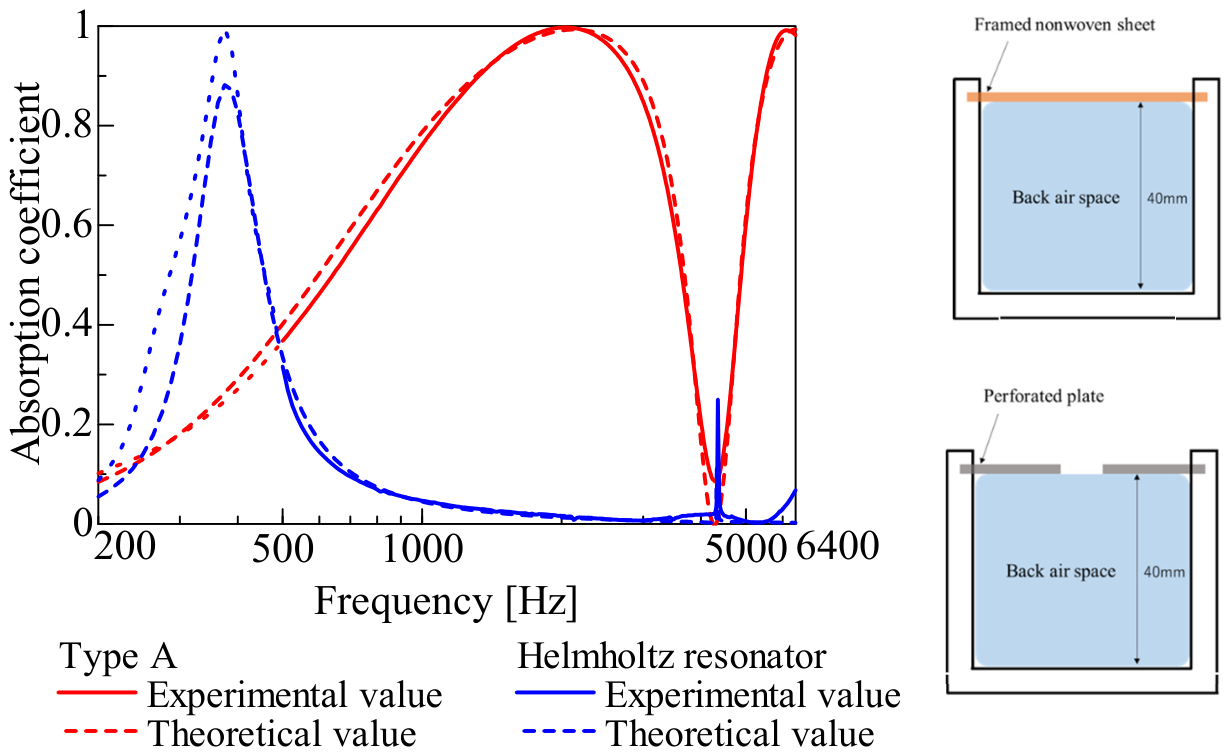
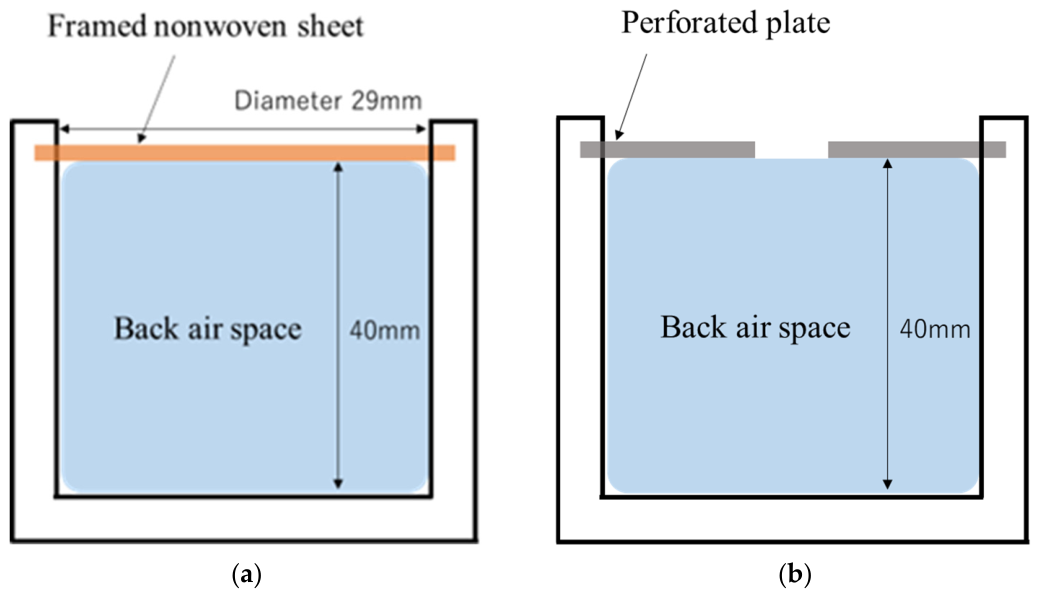
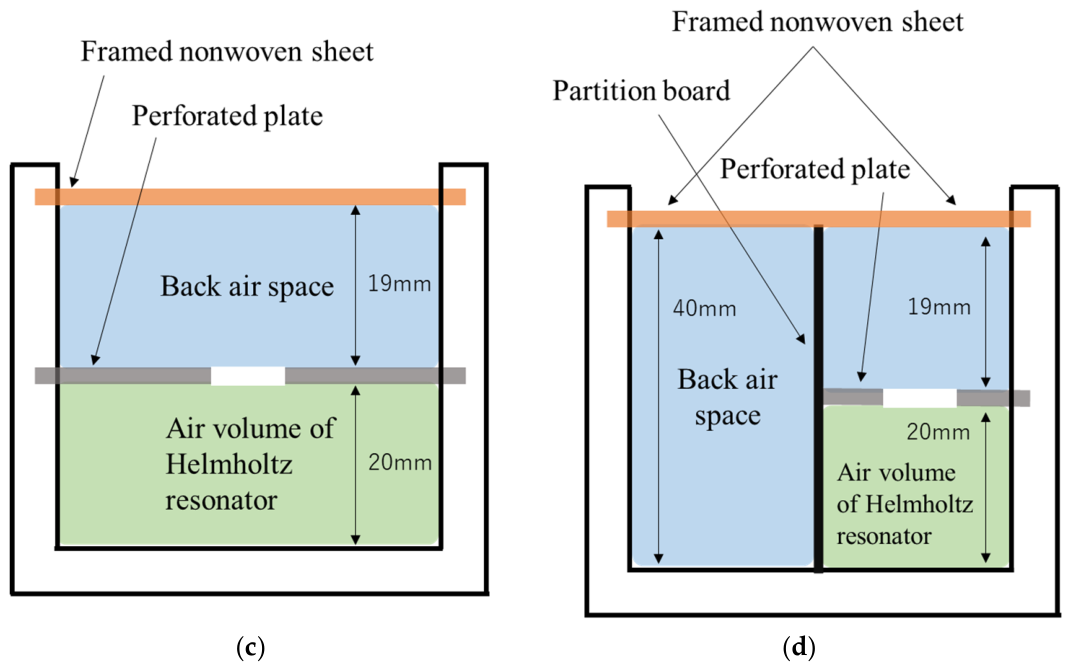
Figure 1 shows a schematic diagram and the dimensions of the specimens used in the experiment. As can be seen, Type A (Figure 1a) is a nonwoven sheet with a back air space. Figure 1b shows a Helmholtz resonator, where the neck of the resonator is a perforated plate with a thickness of 1 mm. Type B (Figure 1c) is a nonwoven sheet with a back air space containing a Helmholtz resonator, with a perforated plate positioned at the midpoint of the back air space. Type C (Figure 1d) is an absorption structure comprising Types A and B with half the incident area. Here, the incident surface is divided in half by a partition plate, with a perforated plate positioned at the midpoint of one back air space. The perforation diameter of the perforated plates is either 2 mm or 1 mm, and the plates are made of stainless steel with a thickness of 1 mm.
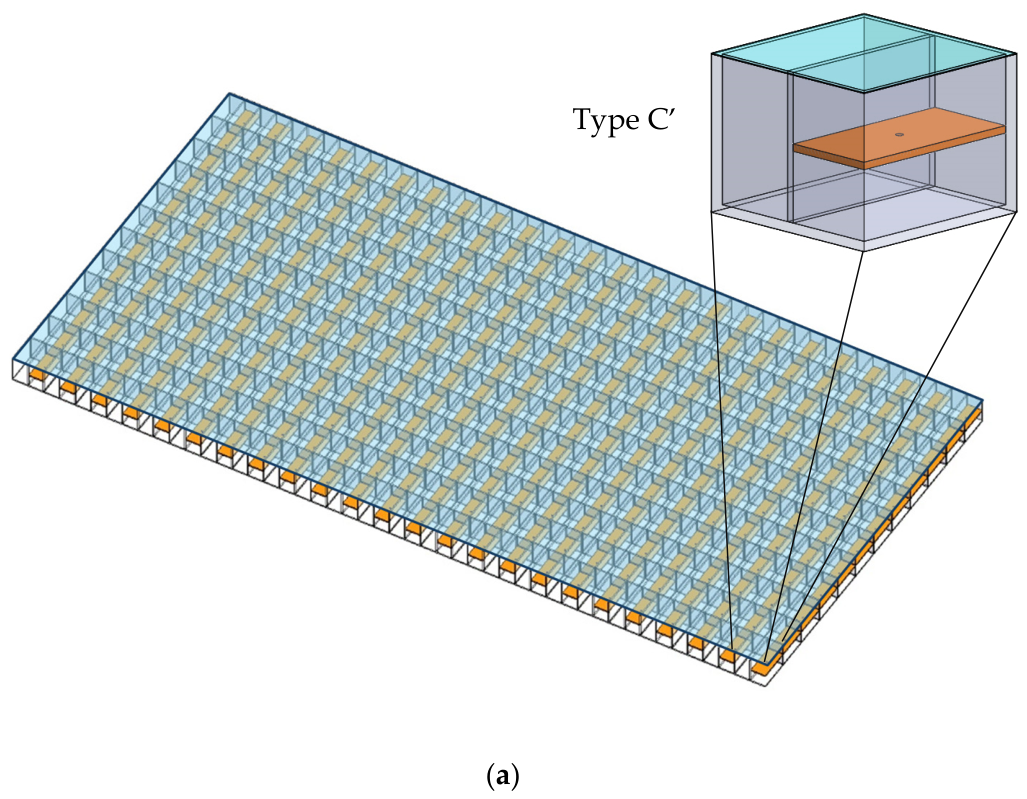
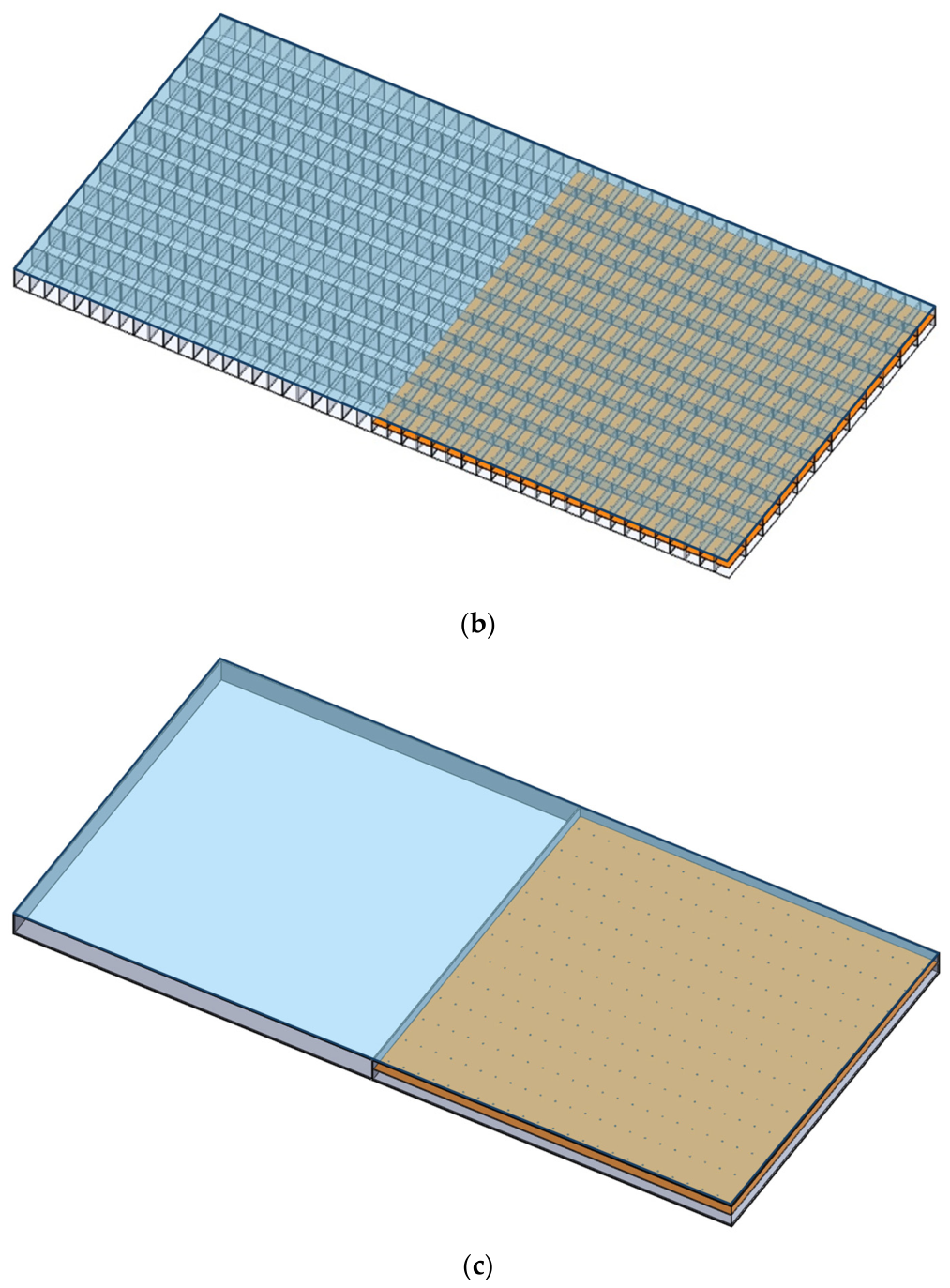
Figure 2 shows a schematic diagram assuming sound-absorbing tiles. Here, Type C’ is equivalent to Type C acoustically, with the incident surface made square. When considering an array of sound-absorbing tiles (Figure 2a), the sound absorption effect remains equivalent even if the arrangement is changed to that shown in Figure 2b.
Here, the portion corresponding to Type A on the left of Figure 2b exhibits similar sound absorption characteristics even if the partition plate is omitted; thus, it can be replaced with the left side of Figure 2c. In addition, for the portion corresponding to Type B on the right of Figure 2b, the upper half is a nonwoven sheet with a back air space. Thus, omitting the partition plate (Figure 2c, right) yields equivalent sound absorption characteristics. Furthermore, the lower half of Figure 2b, i.e., the array-like Helmholtz resonator, is equivalent to a perforated plate with a back air space. Note that omitting the partition plate yields nearly identical sound absorption characteristics; therefore, Figure 2b can be considered nearly equivalent to Figure 2c.
As described previously, Type C assumes sound-absorbing tiles such as those shown in Figure 2c for practical applications.

3. Theoretical Analysis

3.1. Analytical Models Corresponding to Each Sound-Absorbing Structure

In this study, we employed transfer matrices relating sound pressure and volume velocity to analyze the acoustic systems and derive the sound absorption coefficients.
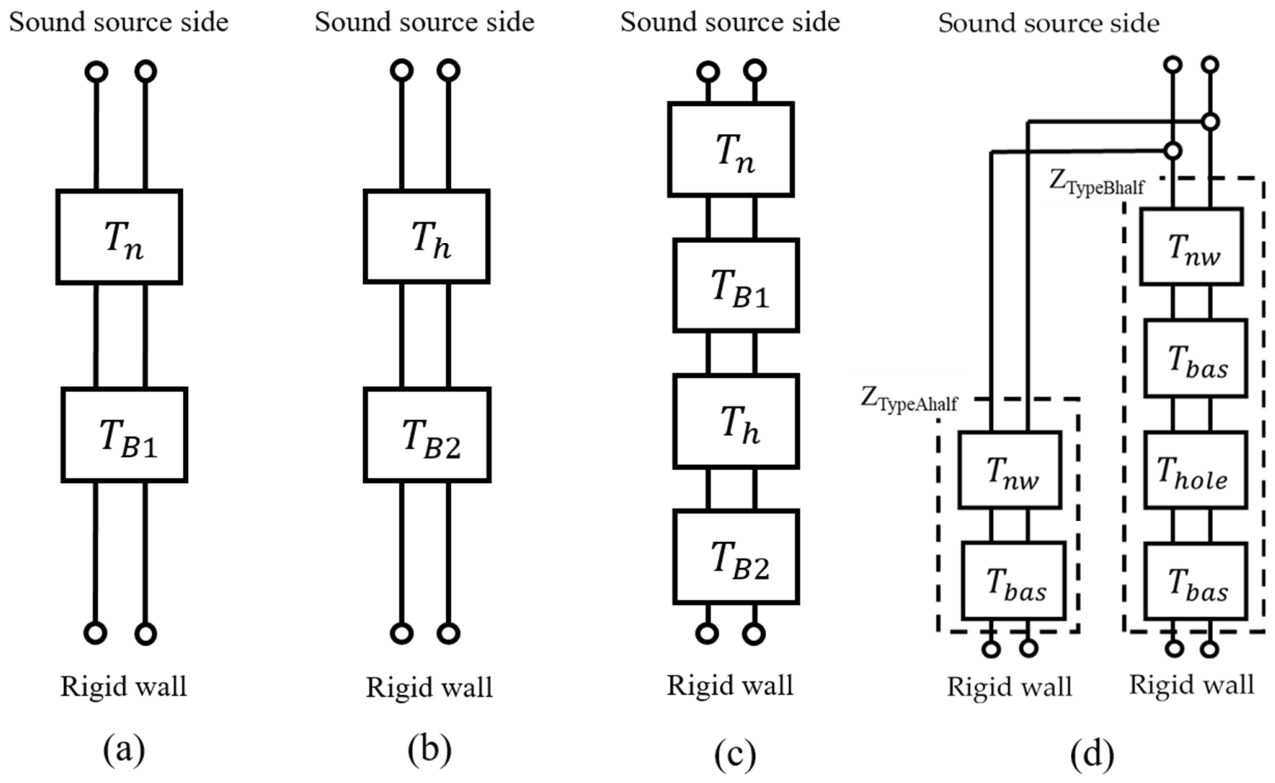
The equivalent circuits represented by electrical four-terminal networks corresponding to the analytical models for Type A, the Helmholtz resonator, Type B, and Type C, are shown in Figure 3a, Figure 3b, Figure 3c and Figure 3d, respectively.

3.2. Transfer Matrix Based on One-Dimensional Wave Equation

When a plane wave propagates through the sample used in this experiment, the transfer matrix is expressed using the one-dimensional (1D) wave equation. This analysis assumes 1D plane-wave propagation; however, practical applications may involve three-dimensional (3D) acoustic behaviors due to edge effects, non-normal incidence of sound waves, or large-scale installations. Here, the sound pressure at the incident surface is denoted p1, the particle velocity is denoted u1, the sound pressure at the sample holder end surface (rigid wall) is denoted p2, the particle velocity is denoted u2, and the cross-sectional area of the sample holder is denoted S. Then, the transmission matrix T relating the sound pressure and volume velocity between the incident surface and the end surface can be expressed as follows [24].
p 1 S u 1 = T p 2 S u 2 = A B C D p 2 S u 2
Here, the four-terminal constants A, B, C, and D in the transfer matrix T are expressed by the 1D wave equation as follows:
T   =   A B C D   =   cosh γ l Z c S sinh γ l S Z c sinh γ l cosh γ l ,
where γ, Zc, and l denote the propagation constant, the characteristic impedance, and the length of the acoustic element, respectively.

3.3. Transfer Matrix of Nonwoven Sheets

The nonwoven sheet is represented by a transfer matrix. Here, the propagation constant γnw and characteristic impedance Znw of the nonwoven sheet are expressed by the following equations [17] using the Rayleigh model.
γ n w = j ω c 1 + σ n w j ω ρ
Z n w = ρ c 1 + σ n w j ω ρ
Here, j and σnw denote the imaginary unit and the flow resistivity of the nonwoven sheet, respectively.
The transfer matrix Tnw of the nonwoven sheet is obtained by substituting Equations (3) and (4) into Equation (2), where Snw and tnw denote the area and thickness of the nonwoven sheet, respectively.
T n w = cosh γ n w t n w Z n w S n w sinh γ n w t n w S n w Z n w sinh γ n w t n w cosh γ n w t n w = A n w B n w C n w D n w

3.4. Transfer Matrix of Helmholtz Resonator Neck

Using the impedance Zhole of the Helmholtz resonator neck, the transfer matrix Thole of the neck is expressed as follows [25].
T h o l e = 1 Z h o l e 0 1
The acoustic impedance Zhole of the neck is expressed as follows.
Z h o l e = R h o l e + i ω ρ l h o l e + 2 δ d h o l e S h o l e
Here, the neck thickness is denoted lhole, the neck inner diameter is denoted dhole, the neck area is denoted Shole, the acoustic resistance of the neck is denoted Rhole, and the coefficient correcting for the influence of acoustic radiation is denoted δ.
Acoustic energy is dissipated within the neck due to the viscosity and thermal conductivity of the inner wall. The acoustic resistance based on this theory is denoted Rhole and expressed as follows [26].
R h o l e = 4 R v S h o l e l h o l e + l R d h o l e   0.83 × 10 2 f S h o l e l h + d h o l e d h o l e   = 4 × 0.83 × 10 2 1 + l h o l e / d h o l e S h o l e
Here, Rv is the viscous resistance coefficient 0.83 × 10 2 f , where f and lR denote the frequency and the additional resistance correction length, respectively. Note that lR can be approximated by the neck inner-diameter dhole.
In addition, the correction coefficient δ is expressed as follows [27].
δ = 0.4 1 1.47 S h o l e S b a s 1 / 2 + 0.47 S h o l e S b a s 3 / 2
Here, Sbas denotes the cross-sectional area of the rear air layer, where Sbas = Snw.
From the above, the transfer matrix Thole for the neck region is obtained by substituting Equation (8) into Equation (7).
T h o l e = 1 R h o l e + i 2 π f ρ ( l h o l e + 2 δ d h o l e ) S h o l e 0 1 = A h o l e B h o l e C h o l e D h o l e

3.5. Transmission Matrix for Back Air Space

The transfer matrix Tbas for the back air space can be expressed as follows by neglecting attenuation in the transfer matrix based on the 1D wave formula in Equation (2).
T b a s = cos k L j ρ c S t sin k L j S t ρ c sin k L cos k L = A b a s B b a s C b a s D b a s
Here, k, ρ, c, and L denote the wave number, the density of air, the speed of sound in air, and the length of the back air space, respectively.

3.6. Transfer Matrices and Sound Absorption Coefficients for Each Type

The transfer matrix for the entire acoustic system of each type is constructed by multiplying the transfer matrices of each element from the sound wave incident surface side. The transfer matrix TA for the acoustic system for Type A (Figure 3a) is expressed as follows.
T A = A n w B n w C n w D n w × A b a s B b a s C b a s D b a s = A A B A C A D A
The transfer matrix TH for the acoustic system of the Helmholtz resonator (Figure 3b) is expressed as follows.
T H = A h o l e B h o l e C h o l e D h o l e × A b a s B b a s C b a s D b a s = A H B H C H D H
The transfer matrix TB for the entire acoustic system of Type B (Figure 3c) is expressed as follows.
T B = A n w B n w C n w D n w × A b a s B b a s C b a s D b a s × A h o l e B h o l e C h o l e D h o l e × A b a s B b a s C b a s D b a s = A B B B C B D B
The sound absorption coefficient is calculated using the transfer matrix for each type. Then, using the four-terminal constants A, B, C, D of the transfer matrix, and under the condition of a rigidly terminated wall u2 = 0, Equations (12)–(14) are expressed as follows.
p 1 S u 1 = A p 2 C p 2
In addition, the specific acoustic impedance Z of this acoustic system, as viewed from the incident surface, is defined as follows.
Z = p u
Here, with p = p1 and Su1 = Su, the specific acoustic impedance Z is expressed as follows.
Z = p u = p S u S = p 1 S u 1 S = A C S
We determine the specific acoustic impedance ZTypeC as seen from the incident surface of Type C in Figure 3d, where ZTypeC is represented by the parallel combination of the specific acoustic impedances associated with Types Ahalf and Bhalf, which each possessing half the incident area of Types A and B, respectively. Here, ZTypeAhalf and ZTypeBhalf denote the specific acoustic impedance of Types Ahalf and Bhalf, respectively, as seen from the incident surface when they are contained within Type C. Then, using Equation (17), ZTypeC can be expressed as follows, where the factor of 2 in the numerator arises because the incident surface of Type C is divided into two parts.
Z T y p e C = 2 1 Z T y p e A h a l f + 1 Z T y p e B h a l f
When calculating ZTypeC, the incident areas of the included Types Ahalf and Bhalf each become half their original values. Then, the relationship between the specific acoustic impedance Z and the reflectance R for each type is expressed as follows.
R = Z ρ c Z + ρ c
Furthermore, the sound absorption coefficient α is expressed as follows using the reflectance R.
α = 1 R 2

4. Comparison of Experimental and Theoretical Values

4.1. Comparison of Experimental and Theoretical Values for Each Sound-Absorbing Structure

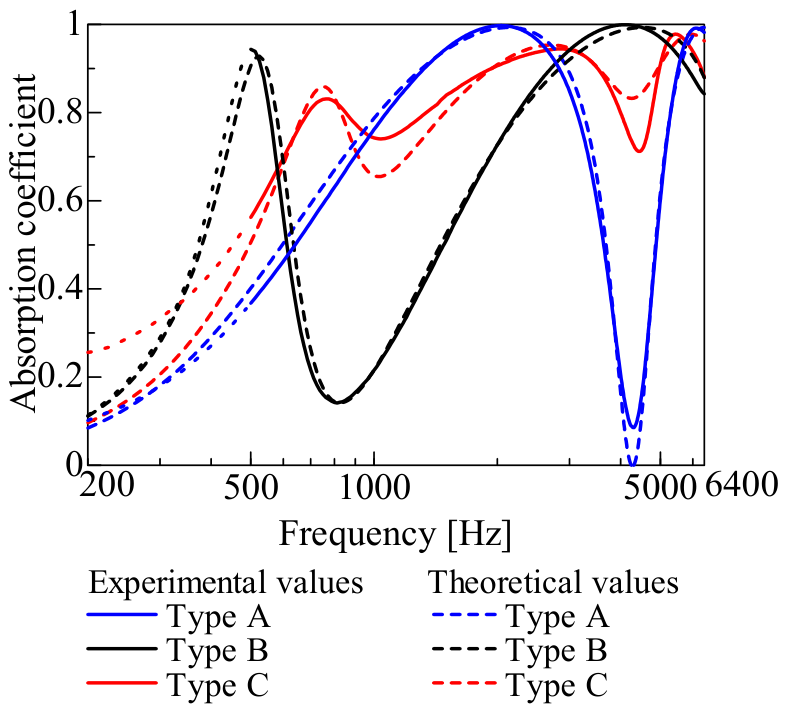
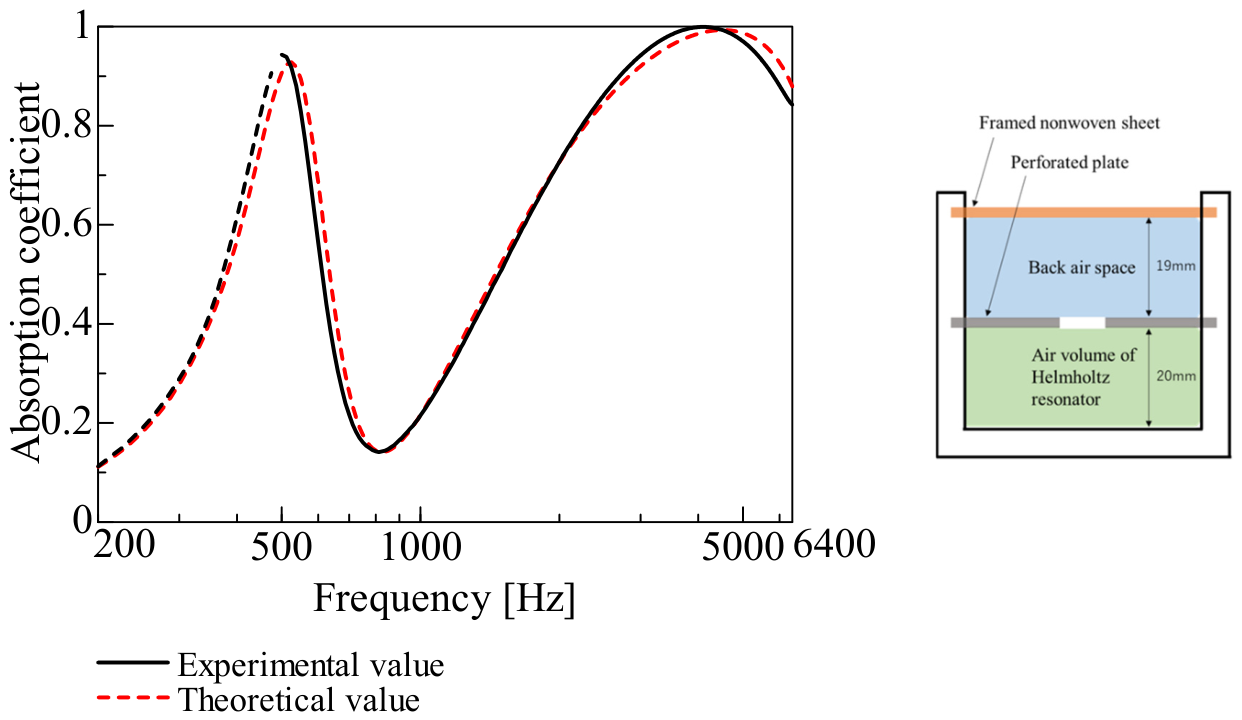
Figure 4, Figure 5 and Figure 6 present the experimental results measured using the small tube and the estimated results for each type, respectively. Although Helmholtz resonators are typically advantageous for sound absorption in low-frequency bands, the structure proposed in this study features a small cavity volume, limiting its sound absorption effectiveness below 500 Hz. In addition, constraints such as microphone spacing in the impedance tube measurement system, conforming to ISO 10534-2, restrict low-frequency measurements. Therefore, results below 500 Hz are treated as reference values. Nonetheless, a comparison with the measurement results of Type C12 using the large impedance tube, discussed later, shows that the qualitative trends in sound absorption characteristics for the low-frequency range are consistent. Thus, the measurement data obtained with the small impedance tube below 500 Hz can also serve as reference values for discussion.
Figure 4 shows the experimental and estimated sound absorption coefficients for Type A and the Helmholtz resonator. The sound absorption curve for Type B (Figure 5) combines the characteristics of Type A and the Helmholtz resonator from Figure 4. In addition, the length of the back air space and the volume of the Helmholtz resonator incorporated in Type B are half those of the case shown in Figure 4; thus, both of the absorption peak frequencies in Figure 5 are higher than the two absorption peak frequencies shown in Figure 4.
Figure 6 compares Types A, B, and C. As shown, the sound absorption curve for Type C combines the characteristics of both Types A and B. In addition, the volume of Type B contained within Type C is halved; thus, the first peak frequency (due to the Helmholtz resonance) in Type C is higher than that in Type B. The second peak in Type C (due to the contained Type A) exhibits a reduced peak value and an increased peak frequency, influenced by the sound absorption curve of Type B. Furthermore, for Type A, the absorption dip near 4 kHz is counteracted by Type B’s second absorption peak (due to the upper back air space), which enables Type C to maintain a high absorption coefficient. As demonstrated above, Type C achieves a high absorption coefficient across a broad frequency range.
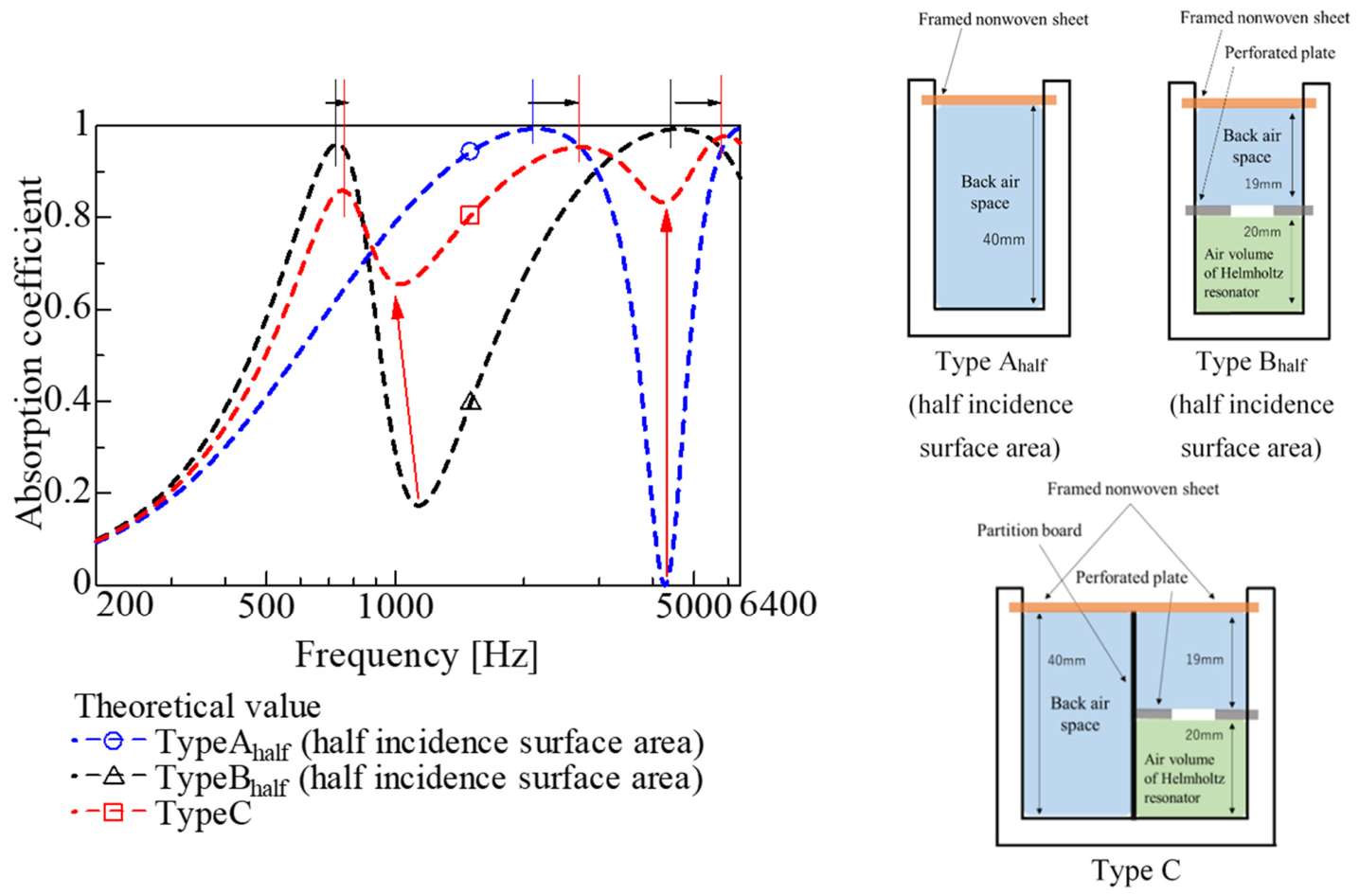
Figure 7 compares the theoretical values for Type C with those for Types Ahalf and Bhalf, where the incident area is halved, to account for the fact that the incident area of Types A and B contained in Type C is also halved. In other words, Type C can be described as a structure where Types Ahalf and Bhalf are arranged in a side-by-side manner. Figure 7 indicates that the first peak of Type C corresponds to the first peak of Type B offset to higher frequencies, whereas the second peak of Type C corresponds to the first peak of Type A, also offset to higher frequencies. The third peak of Type C corresponds to the second peak of Type B (originating from the nonwoven fabric), again offset to higher frequencies. These results demonstrate that Type C achieves a high absorption coefficient over a broad frequency band by superimposing the characteristics of Types Ahalf and Bhalf.
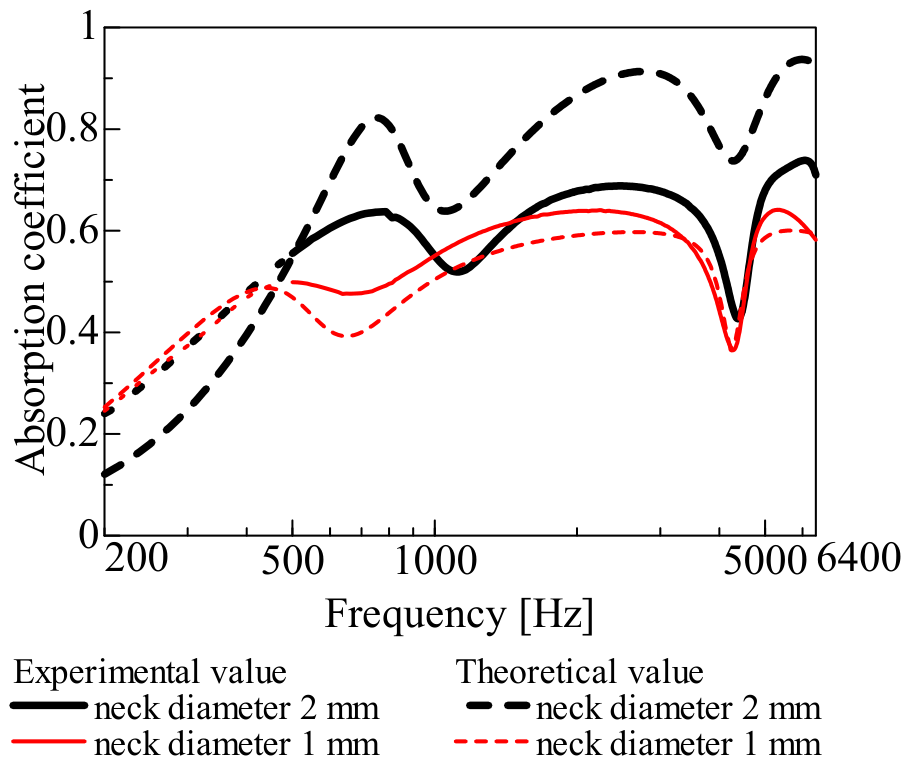
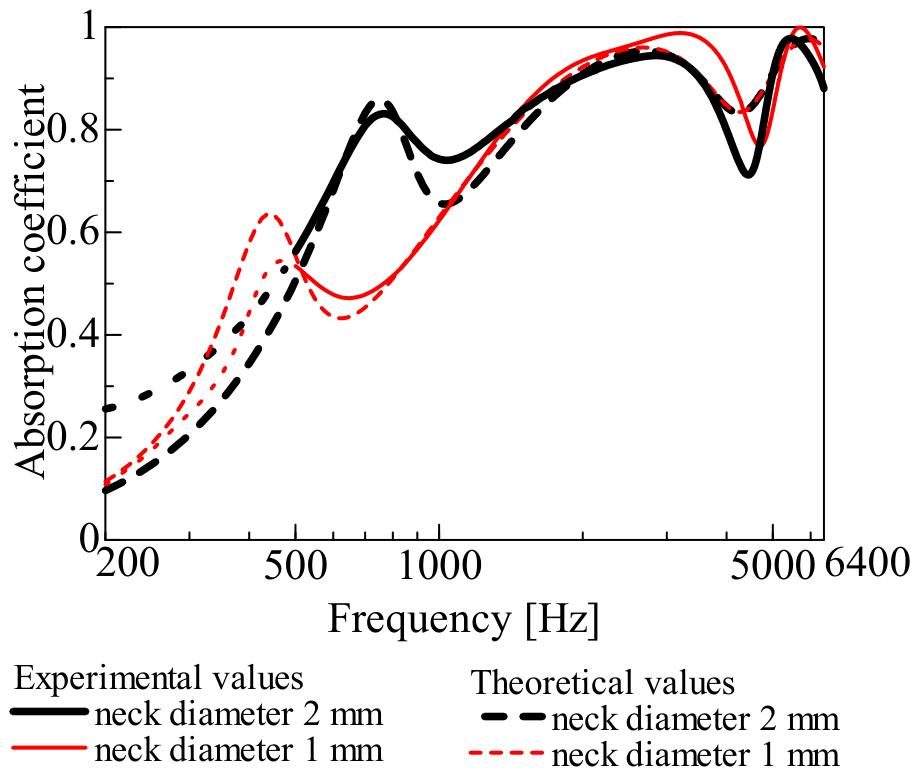
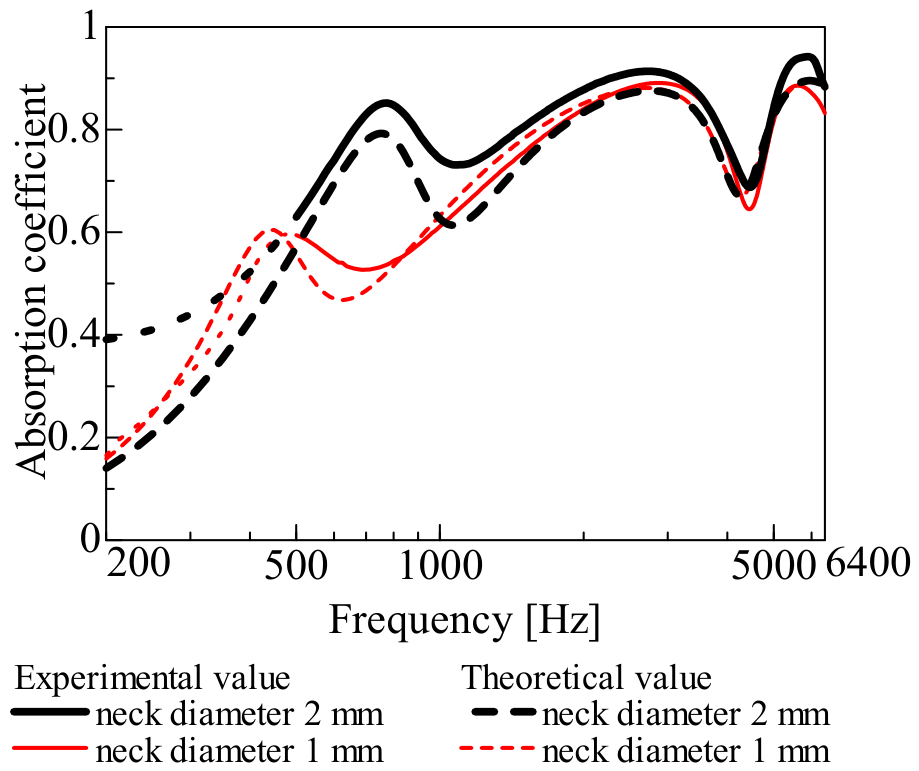
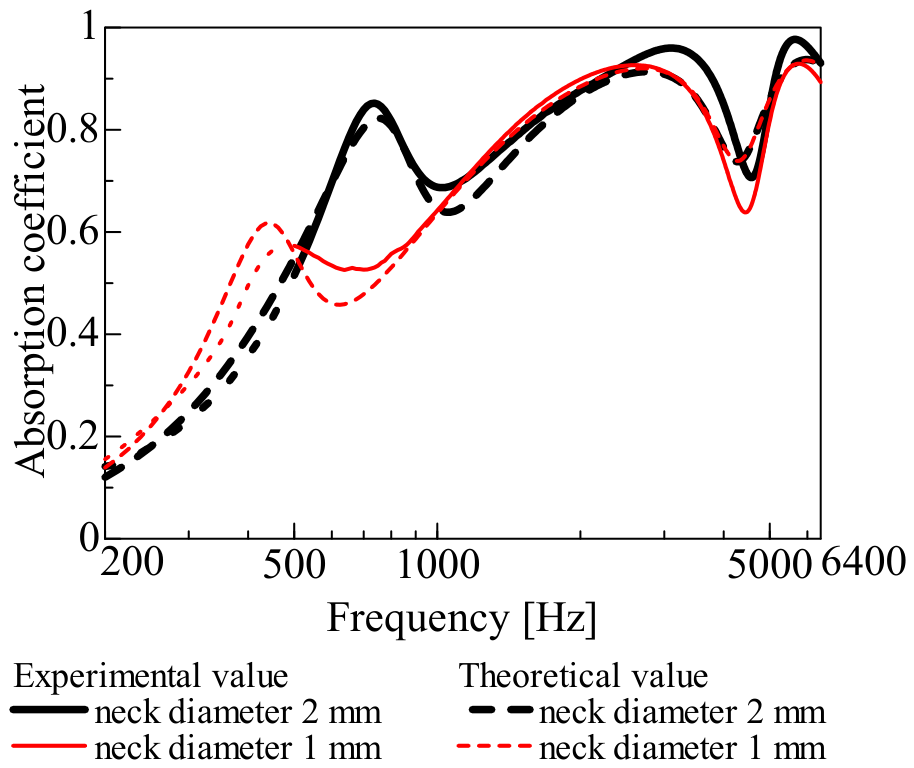
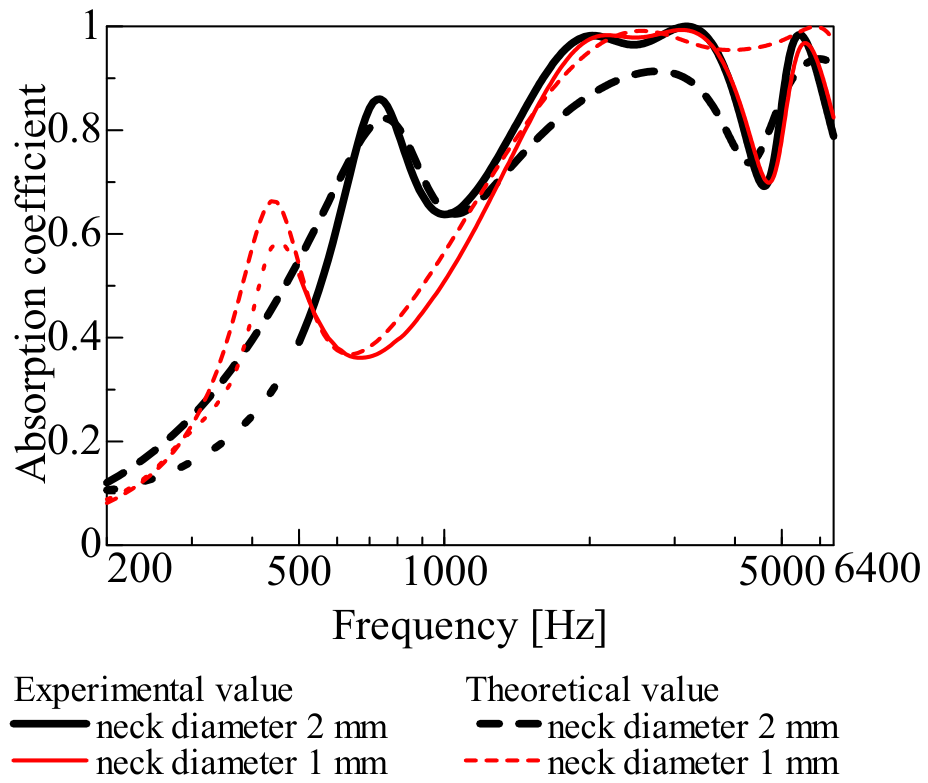
Figure 8, Figure 9, Figure 10, Figure 11 and Figure 12 show the experimental and estimated results for Type C for five types of nonwoven sheet. Here, the hole diameter of the Helmholtz resonator used was either 2 mm or 1 mm. For all nonwoven sheets, the general trends of the experimental and estimated results matched. In addition, for the 2 mm hole diameter, high sound absorption coefficients were obtained over a wide frequency range for all nonwoven sheets (except for the RW2250 product). The low sound absorption coefficient obtained using RW2250 was due to its excessive ventilation resistance, as shown in Table 1. However, due to its thickness and strength, RW2250 is considered highly practical for various applications, e.g., ceiling tiles, where a large sound-absorbing area can be utilized. For the 1 mm hole diameter, the smaller neck cross-sectional area of the Helmholtz resonator shifted the initial sound absorption peak to lower frequencies; however, the peak sound absorption coefficient decreased. This is attributed to the lower frequency band of the sound absorption coefficient (corresponding to the Type Ahalf sound absorption curve in Figure 7) being superimposed on the Helmholtz resonance peak.
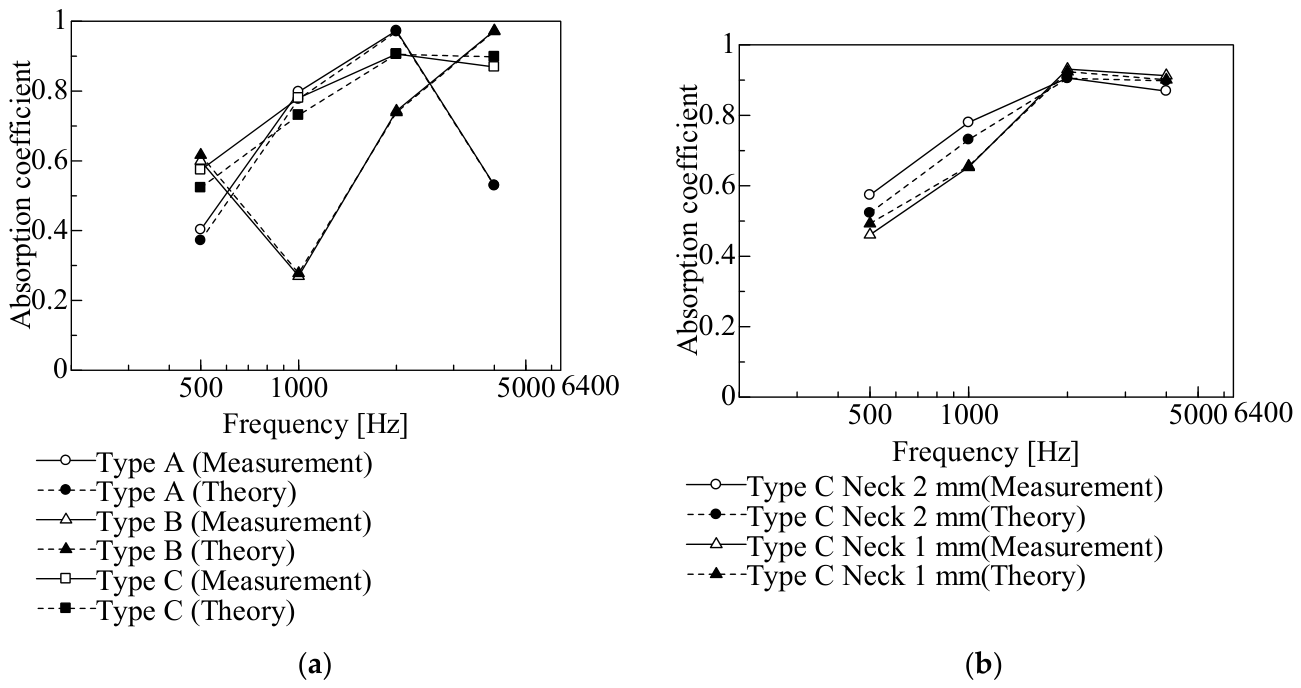
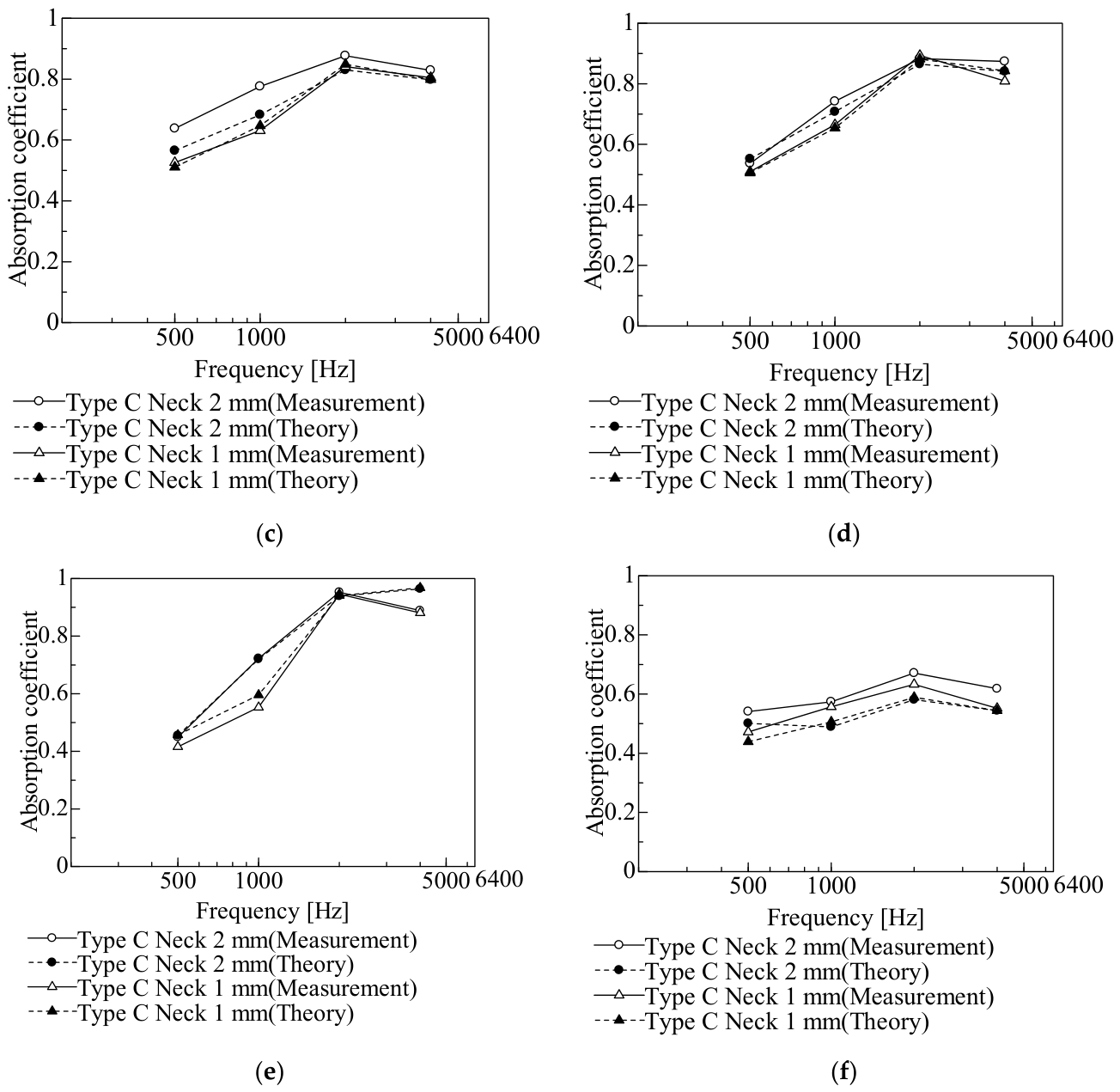
To quantitatively evaluate the sound absorption coefficients of Types A, B, and C between the experimental and theoretical values, Table 2 and Figure 13a show the average sound absorption coefficients for each octave band based on the results shown in Figure 6. As can be seen, Type C exhibits a high sound absorption coefficient across a broad frequency range compared with Types A and B. Furthermore, it can be observed that the experimental and theoretical average sound absorption coefficients for all three types agree well. Table 3 and Figure 13b–f present the average sound absorption coefficients for Type C, corresponding to the five types of nonwoven fabrics (Figure 8, Figure 9, Figure 10, Figure 11 and Figure 12). These results are presented for Helmholtz resonator neck diameters of 1 and 2 mm. The results confirmed the following trend: the average sound absorption coefficient was higher across all frequency bands when the neck diameter was 2 mm compared to 1 mm. The average sound absorption coefficient in the 304–707 Hz range shown in Table 2 is provided for reference, as it includes values below 500 Hz measured with the small impedance tube. However, comparisons with Type C12 indicate that the experimental data below 500 Hz obtained with the small impedance tube possess sufficient accuracy to serve as reliable reference values.

4.2. Parameter Study and Demonstration

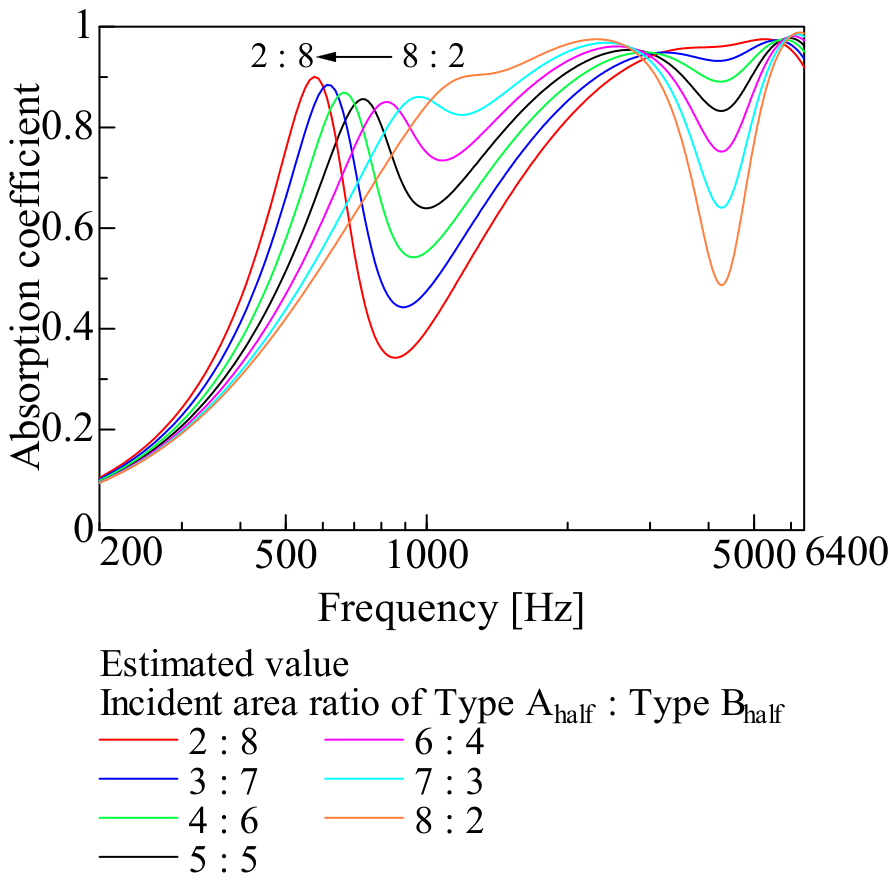
The sound absorption coefficients for Type C obtained by varying the ratio of incident area between the Type Ahalf and Type Bhalf sections, which had previously been set to 1:1, are shown in Figure 14. As shown, the incident area occupied by the Type Bhalf section increases, the primary peak shifts toward lower frequencies, and the dip between the primary and secondary peaks becomes larger. In addition, in such cases, the sound absorption coefficient derived from the Helmholtz resonator, i.e., the primary absorption peak, increases overall.
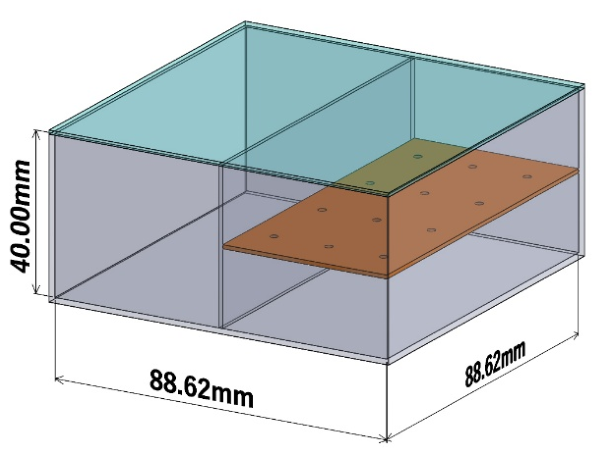
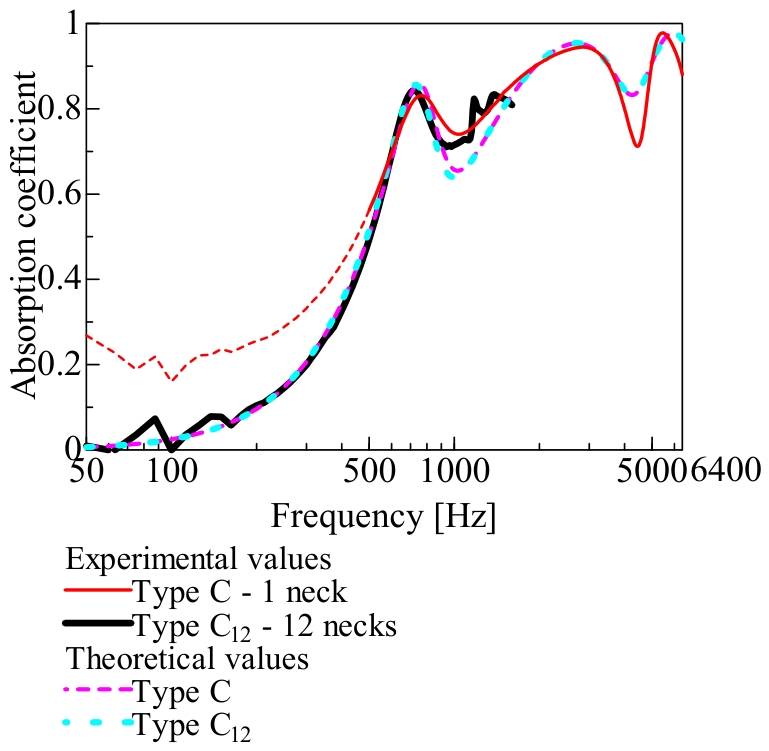
The determination of the dimensions for each part of Type C up to the previous section was constrained by the cross-sectional area of the small impedance tube. Thus, this section discusses a parameter study of the Type C12 acoustic tile, assuming a case similar to that shown in Figure 2c, with an area of 88.62 mm × 88.62 mm and a thickness of 40 mm. Figure 15 shows a schematic diagram and the dimensions of Type C12. Here, the incident area of Type C12 is approximately 12 times that of Type C. In addition, experimental values for Type C12 were measured using the large impedance tube, which has an incident area 12 times larger than that of Type C. Figure 16 presents the experimental and theoretical results for Type C12, along with those for Type C for comparison. The theoretical values for both Type C and Type C12, as well as the experimental values for Type C12, nearly overlap, indicating that Type C12 and Type C are acoustically equivalent. Furthermore, although the experimental results for Type C are slightly overestimated at frequencies below 500 Hz, they remain within an acceptable range for reference purposes. These results indicate that under normal incidence conditions, expanding the sample size and the lateral coupling from the presence or absence of partition plates have a negligible effect on sound absorption characteristics. This supports the validity of the present model, which treats the two subregions as parallel acoustic impedances. However, it should be noted that in practical acoustic environments with oblique incidence or diffuse field conditions, 3D acoustic behaviors may contribute, potentially limiting the predictive capability of the 1D model.
The sound absorption coefficient of the nonwoven sheet with a back air space portion (equivalent to Type Ahalf) is primarily determined by the ventilation resistance of the nonwoven sheet and the thickness of the back air space. As a result, it is not affected by the size of the tile. Thus, the ventilation resistance of the nonwoven sheet and its proportion of the incident area become the key parameters.
In addition, for the portion corresponding to Type Bhalf, there is considerable design flexibility regarding several key parameters, e.g., the ventilation resistance of the nonwoven sheet, the diameter and length of the neck portion of the Helmholtz resonator, the resonator’s internal volume, and the proportioning of the thickness between the upper back air space and the lower Helmholtz resonator. Thus, in the Type C12 acoustic tile, the sound absorption curve can be modified to match the desired absorption frequency by optimizing these parameters.
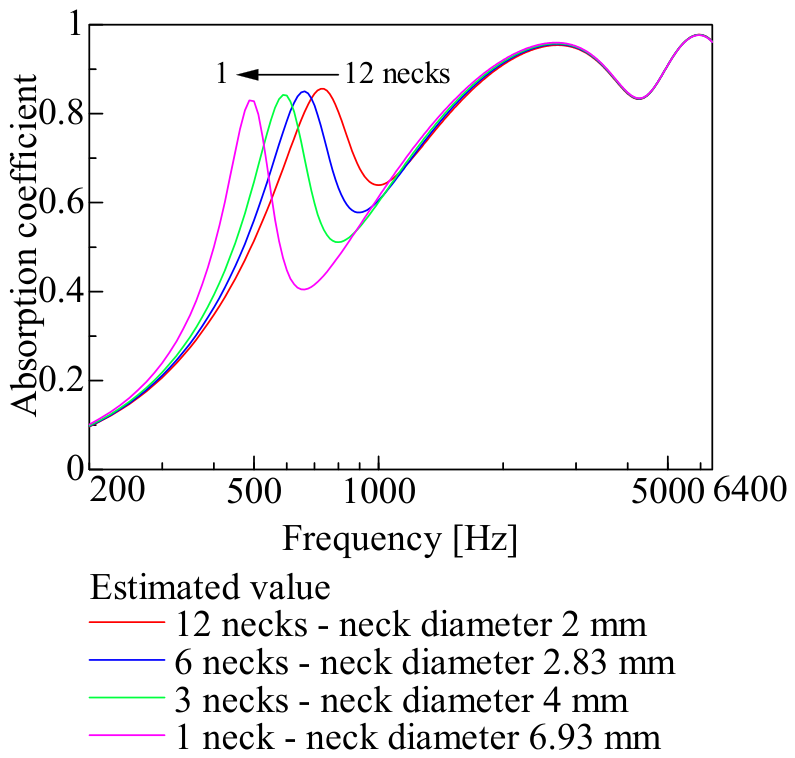
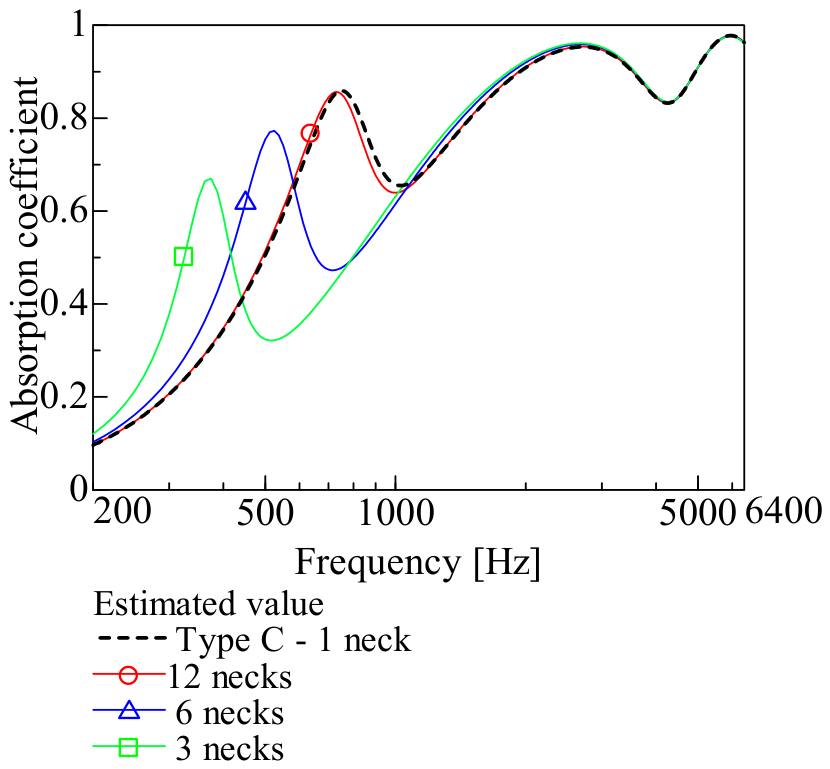
Furthermore, Figure 17 and Figure 18 show the sound absorption coefficients obtained by varying the number and diameter of holes in the Helmholtz resonator. First, we consider the Type C12 case in Figure 15. Type C12 corresponds to simply arranging 12 Type C units side by side and removing the boundary wall. Consequently, the two exhibit close agreement. The slight difference between them occurs because the incident area of Type C12 is precisely 11.89 times greater (not exactly 12 times).
In Figure 17, the overall aperture ratio of the Helmholtz resonator decreases as the number of holes decreases. In contrast, in Figure 18, the hole area is increased to correspond with the reduction in the number of holes; thus, the overall aperture ratio of the Helmholtz resonator remains unchanged. In Figure 17, the peak frequency shifts significantly toward the low-frequency range as the number of holes decreases; however, the peak sound absorption value decreases. In addition, in Figure 18, the peak frequency shifts toward the low-frequency range as the number of holes decreases, although the peak sound absorption value does not decrease significantly. In both Figure 17 and Figure 18, the primary absorption peak frequency from the Helmholtz resonator and the secondary absorption peak frequency around 2.5 kHz from the nonwoven sheet with a backing air space (equivalent to Type Ahalf) become more separated as the number of holes decreases. As a result, the dip between the primary and secondary absorption peaks becomes larger.
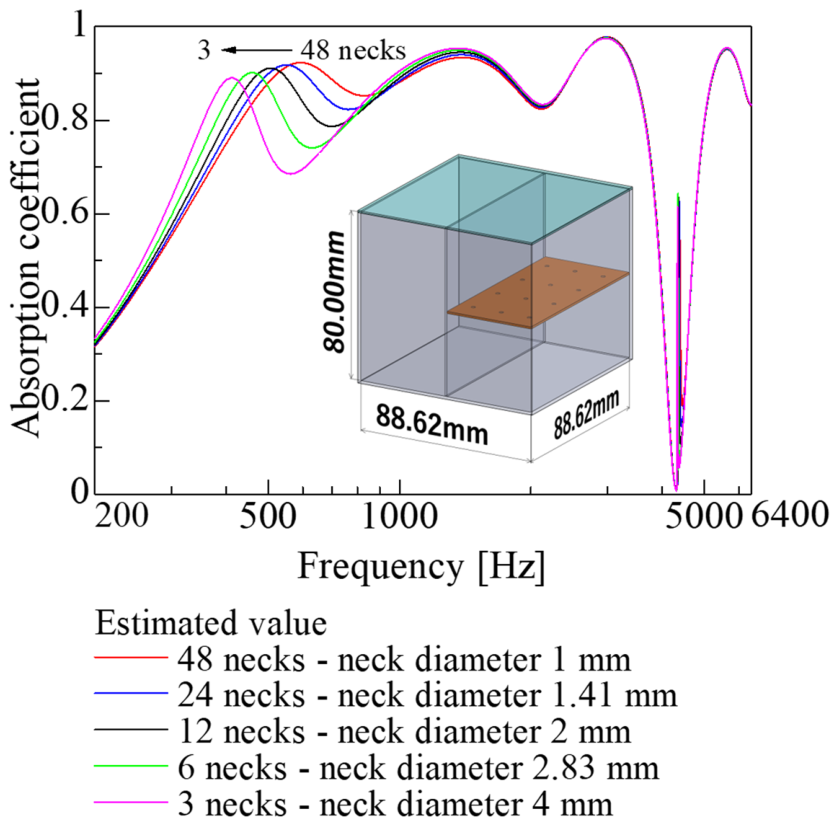
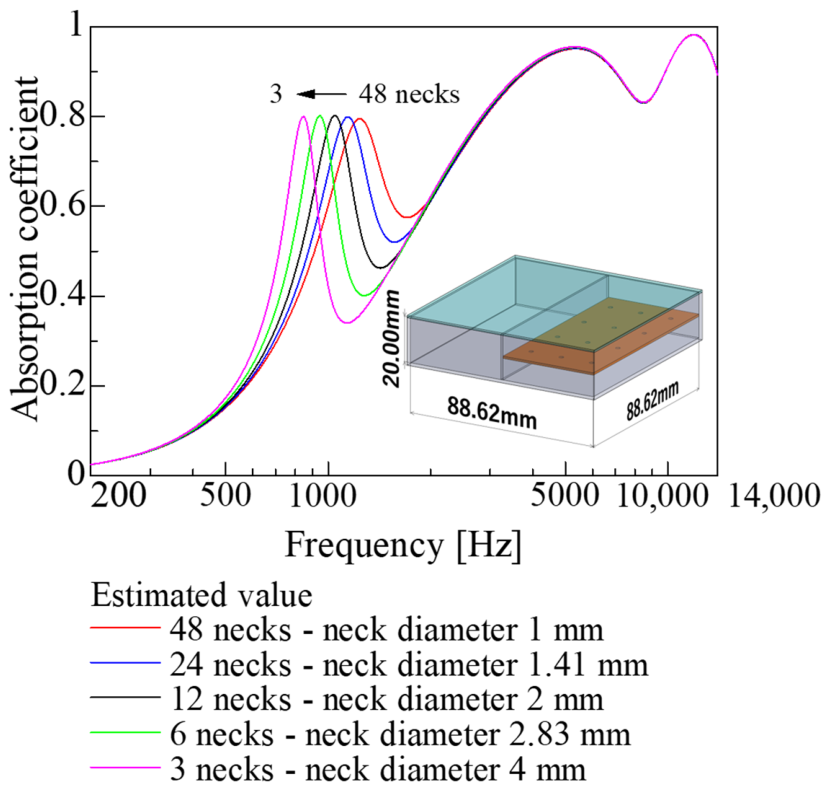
Figure 19 and Figure 20 show the sound absorption coefficients obtained by altering the thickness of Type C12. Similar to the result shown in Figure 18, the number of holes and the hole area were varied in such a way that the overall aperture ratio of the Helmholtz resonator remained unchanged. Figure 19 compares the sound absorption coefficients when the thickness was set to 80 mm. Here, the length of the air space behind the nonwoven fabric and the volume of the Helmholtz resonator cavity doubled compared with the 40 mm thickness. As a result, the overall sound absorption peak shifted toward lower frequencies, achieving a high sound absorption coefficient across a frequency range spanning approximately a decade. In addition, when the thickness was set to 20 mm, the overall sound absorption peak shifted toward higher frequencies, as shown in Figure 20.

5. Conclusions

This paper has proposed acoustic tiles comprising a layered structure of a nonwoven sheet with a backing air space and a Helmholtz resonator, and a nonwoven sheet with a back air space arranged in a parallel configuration. In the future, these tiles are expected to be utilized in the architectural sector, automotive sector, and machinery-related applications. Moreover, employing optimization techniques such as machine learning, as demonstrated by Casaburo et al. [28], is expected to enhance sound absorption performance. The validity of the theoretical model was investigated by comparing the experimental values measured using a two-microphone impedance measurement tube with the estimated values. The primary findings of this study are summarized as follows.
(1)
Compared with the nonwoven sheet with only a back air space, the proposed sound-absorbing tile demonstrated improved sound absorption performance in the low-frequency range and eliminated the dip in the high-frequency range.
(2)
The proposed sound-absorbing tile exhibits a broader sound absorption curve compared with both the nonwoven sheet with only a back air space and that with a back air space containing a Helmholtz resonator.
(3)
The good agreement between the theoretical and experimental trends demonstrates that it is possible to estimate the sound absorption coefficients with sufficient accuracy for practical applications. As a result, the estimation of the normal incidence sound absorption coefficient through a parametric study has provided design guidelines for the sound-absorbing tiles discussed in this study.

Author Contributions

Conceptualization, S.S.; data curation, N.T., S.H., G.M. and Y.N.; formal analysis, K.K. and N.T.; project administration, S.S.; software, K.K., S.H., G.M. and Y.N.; supervision, S.S. All authors have read and agreed to the published version of the manuscript.

Funding

This research received no external funding.

Data Availability Statement

Data are contained within the article.

Conflicts of Interest

The authors declare no conflicts of interest.

Abbreviations

The following abbreviations are used in this manuscript:
FFTFast Fourier transform

References

  1. Cao, L.; Fua, Q.; Si, Y.; Ding, B.; Yu, J. Porous materials for sound absorption. Compos. Commun. 2018, 10, 25–35. [Google Scholar] [CrossRef]
  2. Parikh, D.V.; Chen, Y.; Sun, L. Reducing Automotive Interior Noise with Natural Fiber Nonwoven Floor Covering Systems. Text. Res. J. 2006, 76, 813–820. [Google Scholar] [CrossRef]
  3. Lee, J.W.; Park, S.W. Effect of Fiber Cross Section Shape on the Sound Absorption and the Sound Insulation. Fibers Polym. 2021, 22, 2262–2273. [Google Scholar] [CrossRef]
  4. Delany, M.E.; Bazley, E.N. Acoustic properties of fibrous absorbent materials. Appl. Acoust. 1970, 3, 105–116. [Google Scholar] [CrossRef]
  5. Sakamoto, S.; Iizuka, R.; Nozawa, T. Effect of Sheet Vibration on the Theoretical Analysis and Experimentation of Nonwoven Fabric Sheet with Back Air Space. Materials 2022, 15, 3840. [Google Scholar] [CrossRef]
  6. Sakamoto, S.; Nozawa, T.; Sato, K. Nonwoven fabric sheet with back air space serving as Helmholtz resonator. Noise Control Eng. J. 2024, 72, 37–50. [Google Scholar] [CrossRef]
  7. Wang, J.; Bennett, G.J. Multi-chamber micro-perforated panel absorbers optimized for high amplitude broadband absorption using a two-point impedance method. J. Sound Vib. 2023, 547, 117527. [Google Scholar] [CrossRef]
  8. Park, S.H. Acoustic properties of micro-perforated panel absorbers backed by Helmholtz resonators for the improvement of low-frequency sound absorption. J. Sound Vib. 2013, 332, 4895–4911. [Google Scholar] [CrossRef]
  9. Lee, T.; Nomura, T.; Iizuka, H. Damped resonance for broadband acoustic absorption in one-port and two-port systems. Sci. Rep. 2019, 9, 13077. [Google Scholar] [CrossRef] [PubMed]
  10. Sakamoto, S.; Sato, K.; Muroi, G. Improvement of Sound-Absorbing Wool Material by Laminating Permeable Nonwoven Fabric Sheet and Nonpermeable Membrane. Technologies 2024, 12, 195. [Google Scholar] [CrossRef]
  11. Cai, C.; Mak, C.M. Acoustic performance of different Helmholtz resonator array configurations. Appl. Acoust. 2018, 130, 204–209. [Google Scholar] [CrossRef]
  12. Xu, M.B.; Selamet, A.; Kim, H. Dual Helmholtz resonator. Appl. Acoust. 2010, 71, 822–829. [Google Scholar] [CrossRef]
  13. Choi, E.; Jeon, W. Near-perfect sound absorption using hybrid resonance between subwavelength Helmholtz resonators with non-uniformly partitioned cavities. Sci. Rep. 2024, 14, 3174. [Google Scholar] [CrossRef] [PubMed]
  14. Gai, X.L.; Xing, T.; Li, X.H.; Zhang, B.; Wang, W.J. Sound absorption of microperforated panel mounted with Helmholtz resonators. Appl. Acoust. 2016, 114, 260–265. [Google Scholar] [CrossRef]
  15. Mahesh, K.; Mini, R.S. Theoretical investigation on the acoustic performance of Helmholtz resonator integrated microperforated panel absorber. Appl. Acoust. 2021, 178, 108012. [Google Scholar] [CrossRef]
  16. Liu, J.; Zhang, P.; Lin, Y.; Sun, Z.; Yang, Y.; Jia, H. Enhanced Low-frequency Sound Absorption via Cavity Pressure Regulation in an Active Helmholtz Resonator. SSRN 2026. [Google Scholar] [CrossRef]
  17. Rayleigh, J.W.S. The Theory of Sound; Dover: New York, NY, USA, 1945; Volume II. [Google Scholar]
  18. Sakamoto, S.; Shintani, T.; Hasegawa, T. Simplified Limp Frame Model for Application to Nanofiber Nonwovens (Selection of Dominant Biot Parameters). Nanomaterials 2022, 12, 3050. [Google Scholar] [CrossRef]
  19. Prasetiyo, I.; Desendra, G.; Hermanto, M.N.; Adhika, D.R. On woven fabric sound absorption prediction. Arch. Acoust. 2018, 43, 707–715. [Google Scholar] [CrossRef]
  20. Miki, Y. Acoustical properties of porous materials-Modifications of Delany-Bazley models. J. Acoust. Soc. Jpn. 1990, 11, 19–24. [Google Scholar] [CrossRef]
  21. Komatsu, T. Improvement of the Delany-Bazley and Miki models for fibrous sound-absorbing materials. Acoust. Sci. Technol. 2008, 29, 121–129. [Google Scholar] [CrossRef]
  22. Sakamoto, S.; Fujisawa, K.; Watanabe, S. Small plate vibration sound-absorbing device with a clearance and without surrounding restriction: Theoretical analysis and experiment. Noise Control Eng. J. 2021, 69, 30–38. [Google Scholar] [CrossRef]
  23. ISO 10534-2:1998; Acoustics-Determination of Sound Absorption Coefficient and Impedance in Impedance Tubes-Part 2: Transfer-Function Method. International Organization for Standardization: Geneva, Switzerland, 1998.
  24. Suyama, E.; Hirata, M. The four terminal matrices of tube system based on assuming of plane wave propagation with frictional dissipation: Acoustic characteristic analysis of silencing systems based on assuming of plane wave propagation with frictional dissipation part 2. J. Acoust. Soc. Jpn. 1979, 35, 165–170. [Google Scholar] [CrossRef]
  25. Morse, P.M.; Ingard, K.U. Theoretical Acoustics; McGraw-Hill Book Co.: New York, NY, USA, 1968; p. 489. [Google Scholar]
  26. Ingard, U. On the theory and design of acoustic resonators. J. Acoust. Soc. Am. 1953, 25, 1037–1061. [Google Scholar] [CrossRef]
  27. Cremer, L.; Muller, H.A. Principles and Applications of Room Acoustics, Vol. I.; Schultz, T.J., Translator; Applied Science Publishers: London, UK, 1982. [Google Scholar]
  28. Casaburo, A.; Magliacano, D.; Petrone, G.; Franco, F.; De Rosa, S. Optimizing the acoustic properties of a meta-material using machine learning techniques. In Proceedings of the 50th International Congress and Exposition on Noise Control Engineering (INTER-NOISE 2021), Washington, DC, USA, 1–5 August 2021. [Google Scholar] [CrossRef]
Figure 1. Schematic of samples: (a) Type A (a nonwoven sheet with back air space); (b) Helmholtz resonator; (c) Type B (a nonwoven sheet with back air space including a Helmholtz resonator); and (d) Type C (Types A and B with half the incident area).
Textiles 06 00069 g001aTextiles 06 00069 g001b
Figure 2. Example arrangements for sound-absorbing tiles: (a) gathered Type C’; (b) rearranged gathered Type C’; and (c) rearranged gathered Type C’ without the partition (sound-absorbing tile).
Textiles 06 00069 g002aTextiles 06 00069 g002b
Figure 3. Equivalent circuits corresponding to test samples: (a) Type A; (b) Helmholtz resonator; (c) Type B; (d) Type C.
Textiles 06 00069 g003
Figure 4. Comparison of experimental and theoretical values (Type A and Helmholtz resonator, nonwoven: 3A01A, neck diameter: 2 mm).
Textiles 06 00069 g004
Figure 5. Comparison of experimental and theoretical values (Type B, nonwoven: 3A01A, neck diameter: 2 mm).
Textiles 06 00069 g005
Figure 6. Comparison of experimental and theoretical values (Types A, B, and C, nonwoven: 3A01A, neck diameter: 2 mm).
Textiles 06 00069 g006
Figure 7. Type C as the combined theoretical result of Types Ahalf (half incidence surface area) and Bhalf (half incidence surface area) (nonwoven: 3A01A, neck diameter: 2 mm).
Textiles 06 00069 g007
Figure 8. Comparison of experimental and theoretical values (Type C, nonwoven: 3A01A).
Textiles 06 00069 g008
Figure 9. Comparison of experimental and theoretical values (Type C, nonwoven: 3A51AD).
Textiles 06 00069 g009
Figure 10. Comparison of experimental and theoretical values (Type C, nonwoven: 3701B).
Textiles 06 00069 g010
Figure 11. Comparison of experimental and theoretical values (Type C, nonwoven: RW2100).
Textiles 06 00069 g011
Figure 12. Comparison of experimental and theoretical values (Type C, nonwoven: RW2250).
Textiles 06 00069 g012
Figure 13. Average sound absorption coefficient at octave band frequencies corresponding to (a) Figure 6 and (bf) Figure 8, Figure 9, Figure 10, Figure 11 and Figure 12, respectively.
Textiles 06 00069 g013aTextiles 06 00069 g013b
Figure 14. Variation in estimated absorption coefficient with incident area ratio (Type C, nonwoven: 3A01A, neck diameter: 2 mm).
Textiles 06 00069 g014
Figure 15. Schematic of Type C12.
Textiles 06 00069 g015
Figure 16. Comparison of experimental and theoretical values (Type C12 and C, nonwoven: 3A01A).
Textiles 06 00069 g016
Figure 17. Variation in estimated absorption coefficient with number of necks (Type C12 and C, nonwoven: 3A01A, neck diameter: 2 mm).
Textiles 06 00069 g017
Figure 18. Variation in estimated absorption coefficient with number of necks and neck diameter (Type C12, nonwoven: 3A01A).
Textiles 06 00069 g018
Figure 19. Variation in estimated absorption coefficient with neck diameter (Type C12, thickness: 80 mm, nonwoven: 3A01A).
Textiles 06 00069 g019
Figure 20. Variation in estimated absorption coefficient with neck diameter (Type C12, thickness: 20 mm, nonwoven: 3A01A).
Textiles 06 00069 g020
Table 1. Specifications of nonwoven sheets.
Name of ProductArea Density
m [g/m2]
Thickness
t [mm]
Ventilation Resistance
R [kPa × s/m]
Flow Resistivity
σ [Ns/m4]
3A01A1030.40.3368.41 × 105
3A51AD1520.450.5281.17 × 106
3701B700.240.4401.83 × 106
RW21001000.580.2143.69 × 105
RW22502500.821.2551.53 × 106
Table 2. Average sound absorption coefficient at octave band frequencies corresponding to Figure 6 (nonwoven: 3A01A, neck diameter: 2 mm). ★ Values at 500 Hz are for reference due to limitation of the measurement setup.
500 Hz ★
(304–707 Hz)
1 kHz
(707–1414 Hz)
2 kHz
(1414–2828 Hz)
4 kHz
(2828–5657 Hz)
3A01AType AMeasurement0.4030.7980.9730.530
Theory0.3720.7770.9700.529
Type BMeasurement0.6000.2700.7430.973
Theory0.6170.2780.7390.971
Type CMeasurement0.5740.7800.9060.869
Theory0.5230.7310.9050.898
Table 3. Average sound absorption coefficient at octave band frequencies corresponding to Figure 8, Figure 9, Figure 10, Figure 11 and Figure 12 (nonwoven: 3A01A, 3A51AD, 3701B, RW2100, RW2250, neck diameter: 1 mm, 2 mm). ★ Values at 500 Hz are for reference due to limitation of the measurement setup.
500 Hz ★
(304–707 Hz)
1 kHz
(707–1414 Hz)
2 kHz
(1414–2828 Hz)
4 kHz
(2828–5657 Hz)
3A01AType C
Neck 2 mm
Measurement0.5740.780.9060.869
Theory0.5230.7310.9050.898
Type C
Neck 1 mm
Measurement0.4610.6530.9310.913
Theory0.4930.6560.9240.901
3A51ADType C
Neck 2 mm
Measurement0.6380.7760.8770.829
Theory0.5650.6830.8300.798
Type C
Neck 1 mm
Measurement0.5260.6310.8410.805
Theory0.5110.6470.8490.799
3701BType C
Neck 2 mm
Measurement0.5370.7420.8830.874
Theory0.5520.7080.8650.841
Type C
Neck 1 mm
Measurement0.5100.6650.8940.809
Theory0.5060.6540.8820.843
RW2100Type C
Neck 2 mm
Measurement0.4490.7230.9530.889
Theory0.4550.7200.9390.964
Type C
Neck 1 mm
Measurement0.4160.5530.9460.881
Theory0.4570.5960.9410.968
RW2250Type C
Neck 2 mm
Measurement0.5410.5740.6710.618
Theory0.5010.4890.5810.544
Type C
Neck 1 mm
Measurement0.4720.5570.6330.552
Theory0.4390.5060.5890.544
Disclaimer/Publisher’s Note: The statements, opinions and data contained in all publications are solely those of the individual author(s) and contributor(s) and not of MDPI and/or the editor(s). MDPI and/or the editor(s) disclaim responsibility for any injury to people or property resulting from any ideas, methods, instructions or products referred to in the content.