Article

Indigo: Textile Print Removal Using Aqueous-Based Solutions and Ozone Technology

CITEVE—Technological Centre for the Textile and Clothing Industries of Portugal, 4760-034 Vila Nova de Famalicão, Portugal
*
Author to whom correspondence should be addressed.
Textiles 2026, 6(2), 50; https://doi.org/10.3390/textiles6020050
Submission received: 2 March 2026 / Revised: 3 April 2026 / Accepted: 16 April 2026 / Published: 21 April 2026

Abstract

The textile and clothing industry exerts a significant environmental impact in the EU, contributing heavily to water, land, and resource depletion, with waste generation expected to rise sharply due to fast fashion trends. Accelerating circularity and closed-loop production is critical to reduce the sector’s ecological footprint. This study investigates newer approaches for the removal of indigo prints from cotton (CO) and polyester (PES) textiles using aqueous-based solutions and/or ozone treatment. Aqueous alkaline solutions containing reducing agents and surfactants were evaluated, as well as dry and wet ozone treatments. The efficacy of colour removal was assessed via spectrophotometric analysis [colour strength (K/S) and colour difference (ΔE)] and the fabrics were tested for dimensional stability and tensile strength before and after treatment. Results reveal that surfactant-assisted aqueous treatments enable effective pigment removal and maintain textile properties, supporting subsequent reprinting for textile upcycling. Wet ozone treatment also promoted substantial decolourisation, particularly in cellulosic substrates. Although PES samples exhibited better mechanical resistance, they revealed limited pigment extraction upon ozone treatment. These findings demonstrate the potential of chemical treatments using aqueous-based solutions and surfactants for circular textile applications, facilitating pigment removal without compromising substrate integrity, and boosting the upcycling.

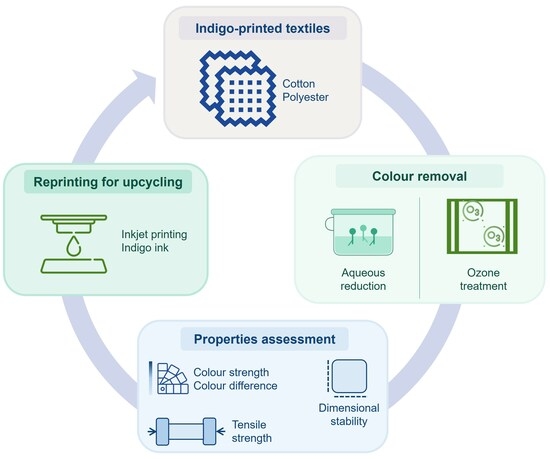
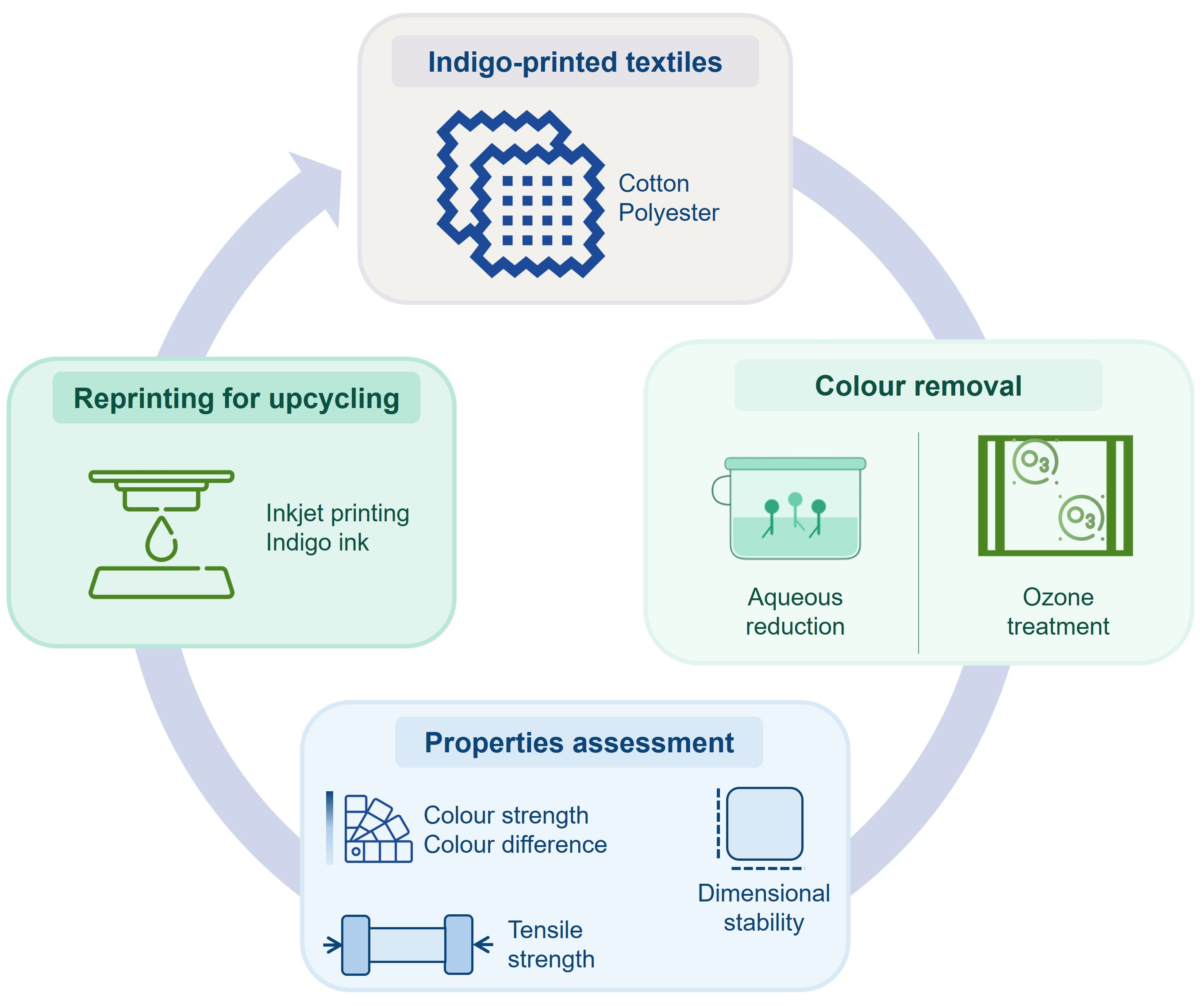
Graphical Abstract

1. Introduction

The textile and clothing industry (T&CI) represents a significant contributor to environmental degradation within the European Union (EU). According to the European Environment Agency, textile consumption in the EU in 2020 exerted the third greatest pressure on both water resources and land use among all consumption categories. Additionally, textiles ranked fifth in terms of raw material consumption and greenhouse gas emissions, underscoring the sector’s substantial role in resource depletion and climate impact [1,2]. The environmental impact of the T&CI is further intensified by the rise of “fast fashion”, a business model defined by the rapid introduction of new styles at low consumer prices. This approach significantly accelerates the product life cycle, leading to a marked reduction in the average useful life of garments. As a result, the frequency of clothing disposal increases, driving to an unprecedented accumulation of textile waste [1,3]. Each year, the EU produces between 7 and 7.5 million tonnes of textile waste, a number expected to rise to 8.5 to 9 million tonnes by 2030 [3].
The achievement of a sustainable transition in the textile industry requires a multifaceted approach that addresses social, economic, and environmental dimensions. To mitigate the significant ecological footprint in the T&CI system, changes must be implemented across the entire value chain [4]. The transition towards circular economy models within the T&CI is increasingly being adopted as a strategic response. By implementing closed-loop production systems, these models promote product reuse, upcycling, or recycling, reducing reliance on virgin raw materials and natural resources, minimising waste generation, and creating added value, thereby advancing environmental sustainability [5]. Current circular economy frameworks emphasise three critical efficiency strategies: optimising the utilisation of raw materials, extending the functional lifespan of textile products, and integrating intelligent, sustainability-oriented design principles into product development [4]. Textile upcycling is a key strategy within the circular economy framework, as it transforms post-consumer or pre-consumer waste into higher-value products, thereby extending material lifecycles, reducing resource demand, and minimising environmental impact [3].
Dye and pigment removal, reprinting, and redesigning of textiles represent scientifically established upcycling strategies that support circularity by extending the useful life of textile materials and reducing waste. These approaches are increasingly recognised as essential components of a circular end-of-life (EoL) solution for textiles [6]. By enabling textiles to be recoloured and reintroduced into the value chain, these strategies support a closed-loop or circular system, where materials are continually reused and recycled rather than discarded. This reduces reliance on virgin resources, lowers water and energy consumption, and minimises chemical pollution associated with conventional dyeing and waste disposal. The conventional approaches used for colour removal from textile prints are generally based on chemical stripping/discharge treatments, which aim to destroy or reduce the chromophore of the applied colourant. These methods rely on reductive agents or oxidative agents, such as caustic soda, hydrosulphite, or thiourea dioxide, and have been used to decolourise both pigment- and dye-based textile prints, although their effectiveness depends strongly on the colourant class, fibre substrate, and treatment conditions [7,8]. For example, conventional vat dye reduction in cellulosic fibres (e.g., cotton) relies on strong alkaline media and chemical reducing systems, typically based on sodium dithionite [9]. In contrast, for polyester-based systems, colour removal mechanisms rely on reduction clearing, targeting surface-deposited dye aggregates rather than dye within the fibre, which may influence treatment efficiency and process requirements [10]. However, these approaches not only rely on large quantities of harmful chemicals but also on harsh processing conditions, which can degrade fabric quality and hinder effective upcycling [11]. Conventional indigo dyeing and stripping processes, one of the most commonly used stripping methods, are inherently resource-intensive and associated with substantial water consumption, as well as the generation of highly loaded effluents resulting from the use of alkaline agents and reducing chemicals [9]. These conditions contribute to increased process complexity and environmental burden, thereby motivating the development of milder alternatives, such as advanced aqueous reducing treatments [12], physical (e.g., abrasion) [13] or biochemical (e.g., using enzymes) methods [9,10,11], and oxidation/ozone-based approaches [12,13].
In this study, we investigated aqueous reducing solutions and ozone-based wet and dry treatments for the removal of indigo pigment from inkjet-printed textiles. The indigo used was biosynthetically produced via a combined approach of bacterial fermentation and chemical synthesis. Indigo dye is one of the most widely employed pigments in the textile industry, primarily due to its exceptional chemical stability and compatibility with a variety of natural and synthetic fibres. Classified as a vat dye, indigo is water-insoluble in its oxidised form and requires reduction to a soluble leuco form for application on textiles. Its molecular structure (C16H10N2O2) features a conjugated system responsible for its intense blue colour (λ ≈ 600 nm, ε ≈ 2 × 10⁴ M−1 cm−1). While indigo exhibits high colourfastness and resistance to environmental factors, it can be oxidised by one- or two-electron oxidants, providing a potential pathway for its removal under controlled, milder conditions [14,15,16]. Following the colour removal process, colour strength was evaluated using the absorption-to-scattering coefficient ratio (K/S), while colour difference (ΔE) was calculated to compare treated and untreated samples. The physical integrity of the fabrics was assessed by measuring changes in mechanical properties and dimensional stability before and after the colour removal treatment. By employing alternative, less aggressive treatments for indigo removal, this work aims to facilitate textile upcycling while avoiding some conventional hazardous chemical reagents and preserving fabric quality.

2. Materials and Methods

2.1. Materials

The textiles used, as examples of natural and synthetic fibres, were two woven fabrics used in the fashion industry, based on cotton (99% cotton and 1% elastane, 370 g/m2, 4-end twill, yarn count Ne 7/1 in the warp and Ne 10/1 + 78 dtex in the weft, with 73 warp threads/cm and 38 weft threads/cm, reference TRUE) and polyester (100% polyester, 295 g/m2, plain weave, yarn count Ne 26/1 in both warp and weft, with 152 warp threads/cm and 95 weft threads/cm, reference DORSET), kindly supplied by RIOPELE (Vila Nova de Famalicão, Portugal).
The polymers used in the pre-treatments were a Biopolymer based on a cationic polysaccharide (viscosity 600–1200 mPa·s; turbidity ≤ 30 NTU), and a synthetic polymer (Binder A) based on polyurethane (PU) comprising an aliphatic polycarbonate–polyether backbone (non-ionic aqueous dispersion; viscosity < 1.000 mPa·s; density around 1.1 g/cm3; pH value 6.0–8.0). The indigo pigment was supplied by PILI (Toulouse, France) and produced via bacterial fermentation using a patented process. All chemicals and reagents used were of analytical grade: sodium carbonate anhydrous (Merck KGaA, Darmstadt, Germany), thiourea dioxide-based reducing agent (Prochimica Novarese S.P.A., San Pietro Mosezzo (NO), Italy), and hydrogen peroxide 30% (Carlo Erba Reagents, Milan, Italy). ECO Tween® 80 and Tween® 20 surfactants were kindly supplied by Croda Inc. (New Castle, DE, USA).

2.2. Textile Substrates Preparation: Pre-Treatment and Digital Printing

The textile substrates were pre-treated according to Antunes et al. [17]. Briefly, the pre-treatment involved applying either the Biopolymer or Binder A to the textiles using foulard impregnation, after which the samples were dried at 100 °C for 3–5 min.
The pre-treated textile fabrics were printed using digital printing technology and water-based inks with bio-based indigo according to Antunes et al. [18]. After printing, the samples were dried at 100 °C for 3–5 min, followed by thermofixation at 150 °C for 5 min.

2.3. Printing Removal Strategies

2.3.1. Aqueous Solutions

The removal of indigo pigment was performed using a solution of 4 g/L of the reducing agent, 4 g/L of sodium carbonate, using a liquor ratio of 1:100, and 1% of Tween® 20 or ECO Tween® 80. The treatment was performed using Mathis LABOMAT equipment (Werner Mathis AG, Oberhasli, Switzerland) for 1 h and 25 rpm at 80 °C or 135 °C for CO or PES samples, respectively. After the treatment, a washing step was carried out in the same equipment using an aqueous solution containing 1% (v/v) of the same surfactant used in the process, for 30 min at 80 °C.

2.3.2. Ozone

The ozone treatment was performed using an ozone-generating machine (Clean Cabinet Ozone PHYSXL, MTEX NS, Vila Nova de Famalicão, Portugal), in which the textile samples were exposed to 20 cycles (10 ppm) of approximately 25 min each. Additionally, three exposure conditions were applied to each sample: (i) dry, without any pre-treatment; (ii) wet with a reducing solution, where the fabrics were impregnated with a 4 g/L solution of the thiourea dioxide-based reducing agent prior to ozone exposure, and (iii) wet with an oxidising solution, where a 10 g/L solution of hydrogen peroxide was applied. For the wet pre-treatments, the fabrics were impregnated in a reducing or oxidising solution, and subsequently passed through a foulard (Mathis Padder HVF, Werner Mathis AG, Oberhasli, Switzerland) to remove excess solution (wet pick-up ~80%).

2.4. Sample Characterisation

2.4.1. Colourimetric Analysis

The colour coordinates (CIELAB), colour strength values (K/S) and colour difference (ΔE) from the raw and treated samples were assessed using a DataColor Spectro 750 spectrophotometer (Datacolor AG Europe, Risch-Rotkreuz, Switzerland). The analysis was performed at three different points for each sample.

2.4.2. Mechanical Properties

The mechanical properties were assessed according to [19], using a 68TM-50 (Instron, Norwood, MA, USA) equipment. This standard uses a strip method test to measure the maximum force (N) of woven textile fabrics. For each sample, two sets of strips were prepared, one in the warp direction and one in the weft direction. The experiment was performed in triplicate.

2.4.3. Dimensional Stability Analysis

To assess the dimensional stability of the samples, untreated and treated samples were measured in length and width, allowing for the calculation of the percentage of shrinkage using Equation (1).
% S h r i n k a g e = ( x f i n a l x i n i t i a l ) x i n i t i a l × 100
where x i n i t i a l is the width (or length) of the original sample, and x f i n a l is the width (or length) of the sample after treatment. The experiment was performed in triplicate.

2.5. Reprinting

Following the print removal procedures and subsequent sample characterisations, the samples underwent a digital reprinting process to assess and validate the feasibility of the method.

2.6. Statistical Analysis

All quantitative experiments were made in triplicate and the results were expressed as means ± standard deviation for n = 3. A statistical analysis of the data was conducted using GraphPad Prism v.10.5.0 for Windows (GraphPad Software, San Diego, CA, USA). After the evaluation of the normality of the results through the Shapiro–Wilk test, when presenting a normal distribution, the data were analysed using one-way ANOVA and Tukey’s multiple comparisons test; when not presenting a normal distribution, a nonparametric Kruskal–Wallis test was performed. Differences at p ≤ 0.05 were considered significant (with * denoting statistical differences for p ≤ 0.05; ** denoting statistical differences for p ≤ 0.01; *** denoting statistical differences for p ≤ 0.001; and **** denoting statistical differences for p ≤ 0.0001).

3. Results and Discussion

In this work, samples of CO and PES fabrics printed with water-based inks containing bio-based indigo pigment, produced through fermentation, and digital printing technology [18] were investigated to advance innovative print removal methods, namely on indigo prints, including aqueous-based solutions and ozone technology.

3.1. Indigo Printing Removal Using Aqueous Solutions

In a first set of experiments, aqueous alkaline solutions containing a reducing agent were tested for their ability to remove indigo pigment from textile samples. The reducing aqueous solution was applied to both CO and PES samples, using the adequate temperature for each fabric, as detailed in Section 2.3.1. CO and PES require different conditions for dye removal because of their distinct fibre structures. CO, a natural cellulose fibre, is porous and hydrophilic, allowing pigment molecules to be accessed and broken down more easily. As a result, decolourisation is effective at around 80 °C, a temperature high enough to promote fibre swelling, without damaging cellulose. In contrast, PES is a synthetic, highly crystalline, and hydrophobic polymer where dyes and pigments are physically trapped within the dense fibre matrix. To release these compounds, the fibre chains must become mobile, which only occurs at elevated temperatures near 135 °C under pressurised conditions.
The tests were conducted under two conditions: (i) without the washing step described in Section 2.3.1, and (ii) with a subsequent washing step in water and surfactant, performed under the same conditions described above (30 min at 80 °C).
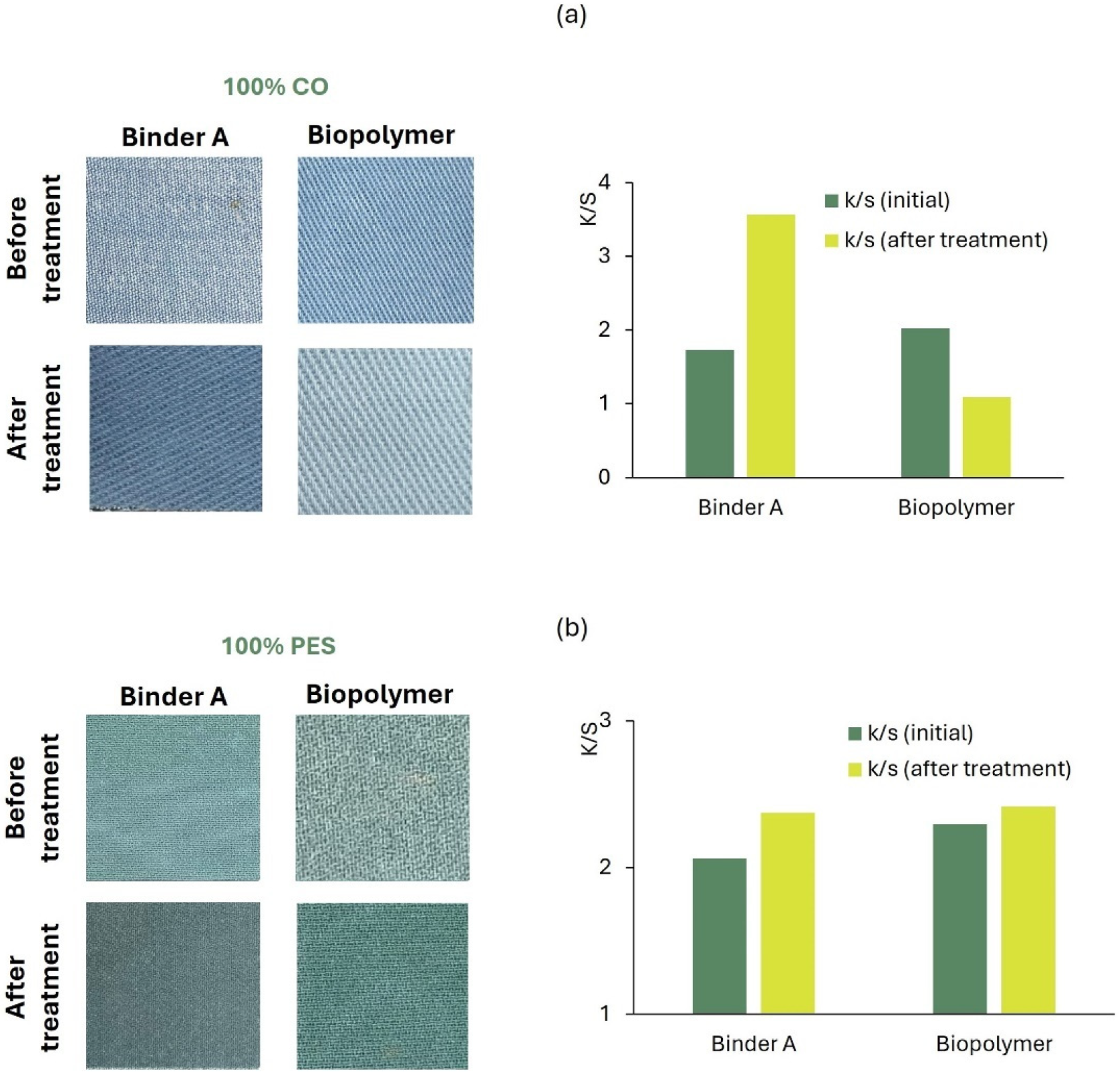
The outcomes under condition (i) are shown in Figure 1, revealing unsatisfactory colour removal.
For the CO samples (Figure 1a), visual inspection reveals that the reducing treatment has minimal effect on the colour removal. In samples pre-treated with Binder A, a significant darkening of the fabric is observable, as confirmed by an increase in K/S from approximately 1.7 to 3.6, suggesting an interaction that deepens the colour rather than removing the pigment. In contrast, the samples pre-treated with Biopolymer result in lighter shades after the reducing treatment, with the K/S decreasing from about 2.1 to 1.1. This indicates some pigment removal or fading effect, although still not satisfactory. Similarly, for PES samples (Figure 1b), the treatment caused minimal effect. The K/S values show a slight increase for the fabrics with both pre-treatments, reflecting no pigment removal. Overall, these results demonstrate that the treatments tested are more effective at removing colour on CO than on PES, but neither achieves meaningful pigment removal, underscoring the challenges of indigo removal from both fibres under the tested conditions.
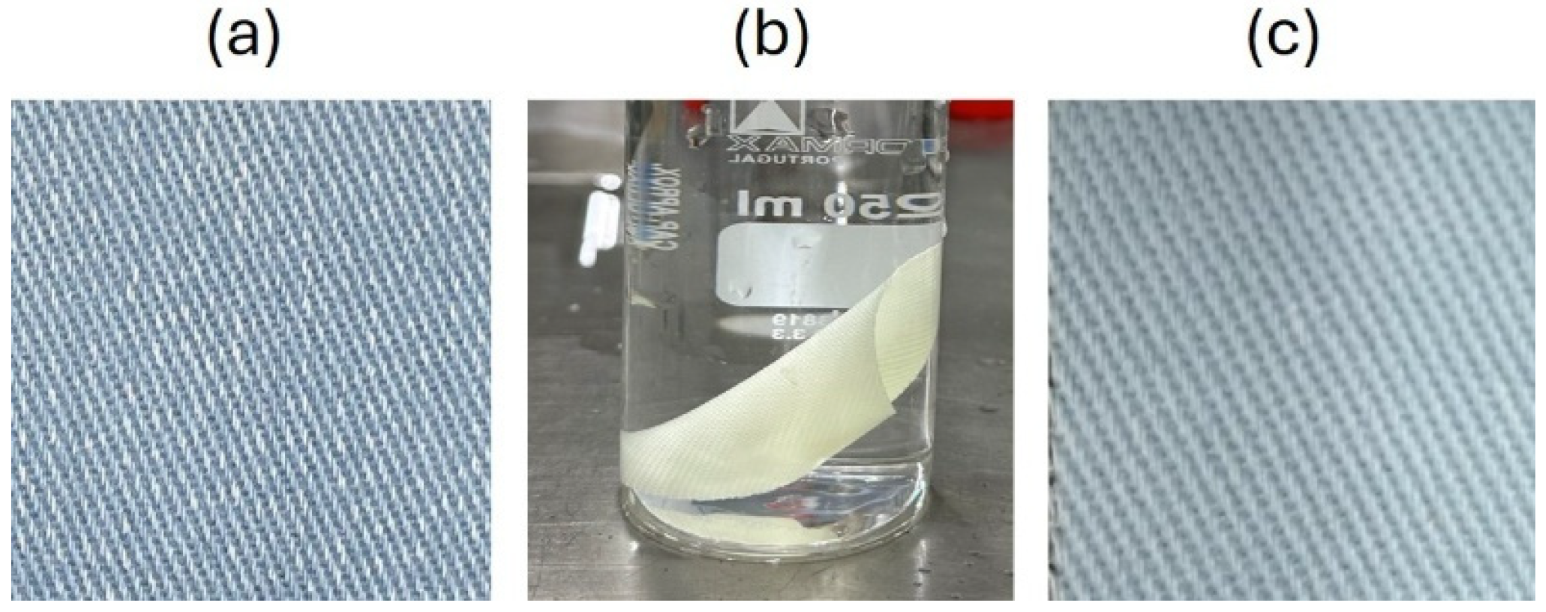
Despite the non-satisfactory results, immediately after removal from the test vials, the samples appeared white, as shown in Figure 2b.
This behaviour is consistent with the reduction in indigo in alkaline medium: the insoluble blue indigo (oxidised form) is converted to its soluble, colourless or pale-yellow leuco-indigo form through reduction by the added agent. In this reduced state, the dye molecules are either partially desorbed from the fibres or rendered invisible due to disruption of their conjugated π-system, which is responsible for the characteristic blue absorption [20]. However, upon exposure to air, the samples rapidly regained their blue colouration (Figure 2c). This reappearance reflects the high sensitivity of leuco-indigo to atmospheric oxygen: the reduced leuco form is readily oxidised back to indigo, which subsequently reprecipitates within the fibres, restoring the pigment [15,20,21].
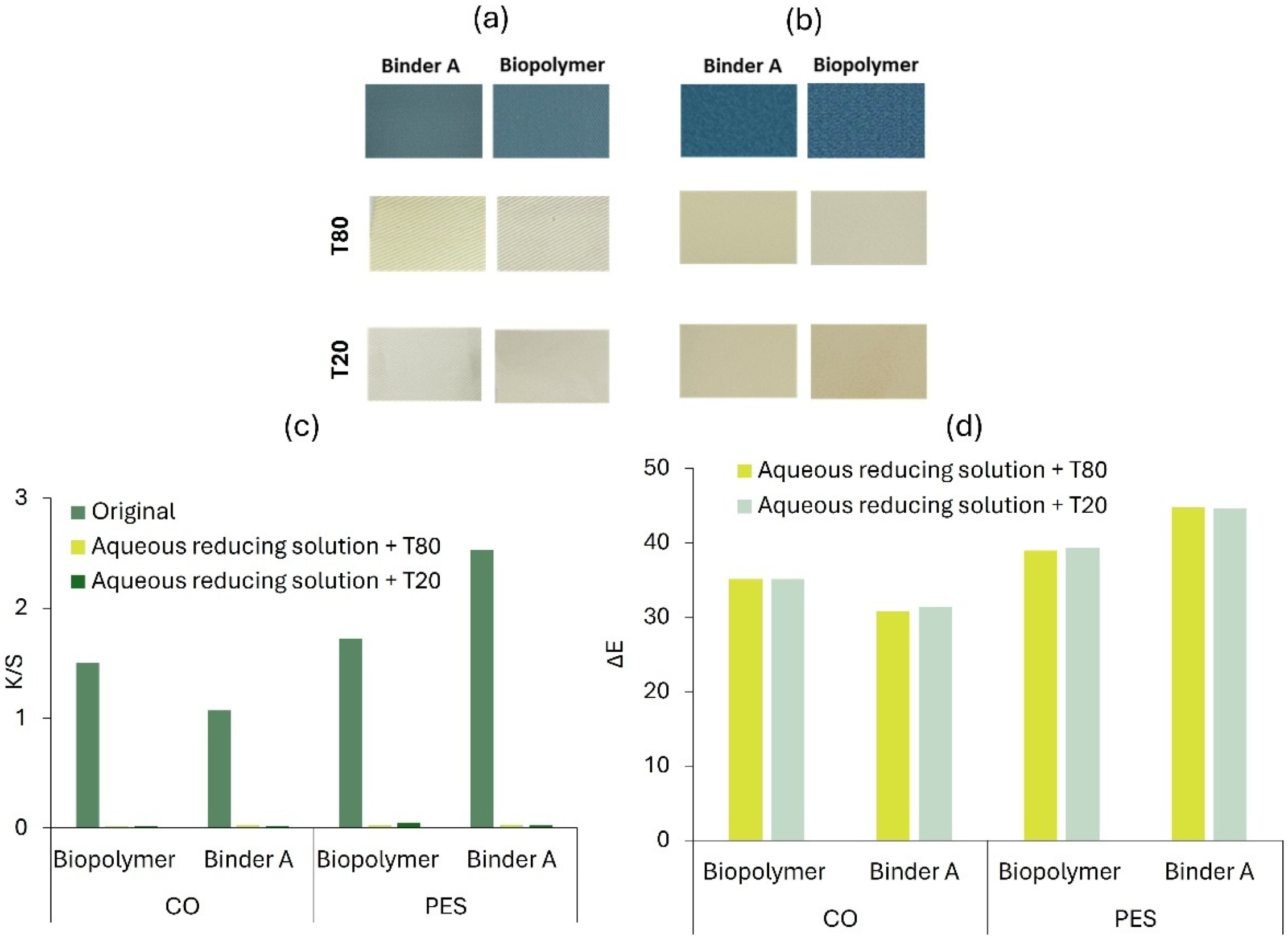
This regeneration process underlines a key challenge in the removal of indigo; while reduction can transiently decolourise the material, the stability of the reduced form is low, and unless it is solubilised and extracted from the fibre matrix before oxidation occurs, the dye remains entrapped and becomes visible upon oxidation. To address this, and with the aim of stabilising the soluble form of indigo for its effective removal, we tested a new strategy: incorporating an aqueous surfactant solution, prepared with ECO Tween® 80 (T80) and Tween® 20 (T20), into the washing step. ECO Tween® products, such as T80 explored here, are bio-based ethoxylated sorbitan esters that typically employ natural fatty acids and emphasise renewable raw materials and sustainable sourcing, while maintaining functional roles comparable to conventional Tween variants. T80 and T20 are herein explored, aiming to stabilise indigo in its soluble, reduced form due to their surfactant properties. Indigo in its oxidised form is naturally hydrophobic and poorly soluble in water, but after reduction in the printing removal solution, it is expected that non-ionic surfactants can form micelles that encapsulate the dye in its soluble form, improving its dispersion in aqueous solutions [22]. The macroscopic results of the printing removal for both CO and PES samples, as well as the K/S and ΔE before and after treatment, are shown in Figure 3.
The visual appearance of the treated CO and PES fabrics indicates effective colour removal, since the indigo-blue print was completely removed (Figure 3a,b) with either surfactant. This observation is supported by the K/S and ΔE results presented in Figure 3c,d, respectively. Considering the different pre-treatments applied to the textile samples prior to the digital printing step, an increased difficulty in printing removal could have been expected, since these polymers are commonly applied to increase pigment fixation and enhance the print wash fastness [17,23]. However, it was observed that none of the pre-treatments posed an obstacle to the reduction reaction, indicating that the process is efficient even with substrates with pre-treatments that enhance pigment fixation. The significant decrease in the K/S, together with the high ΔE values observed after the aqueous reducing treatment when followed by a washing step with aqueous surfactant solutions, confirms that this approach was successful in removing the indigo pigment from both fabric types. During the washing step, the surfactants prevented the reduced indigo from rapidly re-oxidising and precipitating. This stabilisation kept the reduced indigo dissolved long enough to diffuse out of the fibre matrix. By maintaining the pigment in solution, the surfactants enhance its removal during washing. Additionally, T80 and T20 are mild, biodegradable, and textile-friendly, making them suitable for environmentally conscious printing removal processes.
Following successful pigment removal, the dimensional stability of the samples was assessed. The results demonstrated no observable changes in the samples, with shrinkage percentages of zero for all tested conditions, confirming that the dimensional stability was effectively maintained. In the context of printing removal for upcycling, dimensional stability is especially critical because any shrinkage, distortion, or deformation can compromise the quality and functionality of the textile for subsequent reprinting and reuse. Maintaining dimensional stability is essential in ensuring the reliability, performance, and durability of materials and components throughout their lifecycle, which are particularly important, as upcycling aims to extend the lifecycle of textiles while preserving their functional and aesthetic properties [24].
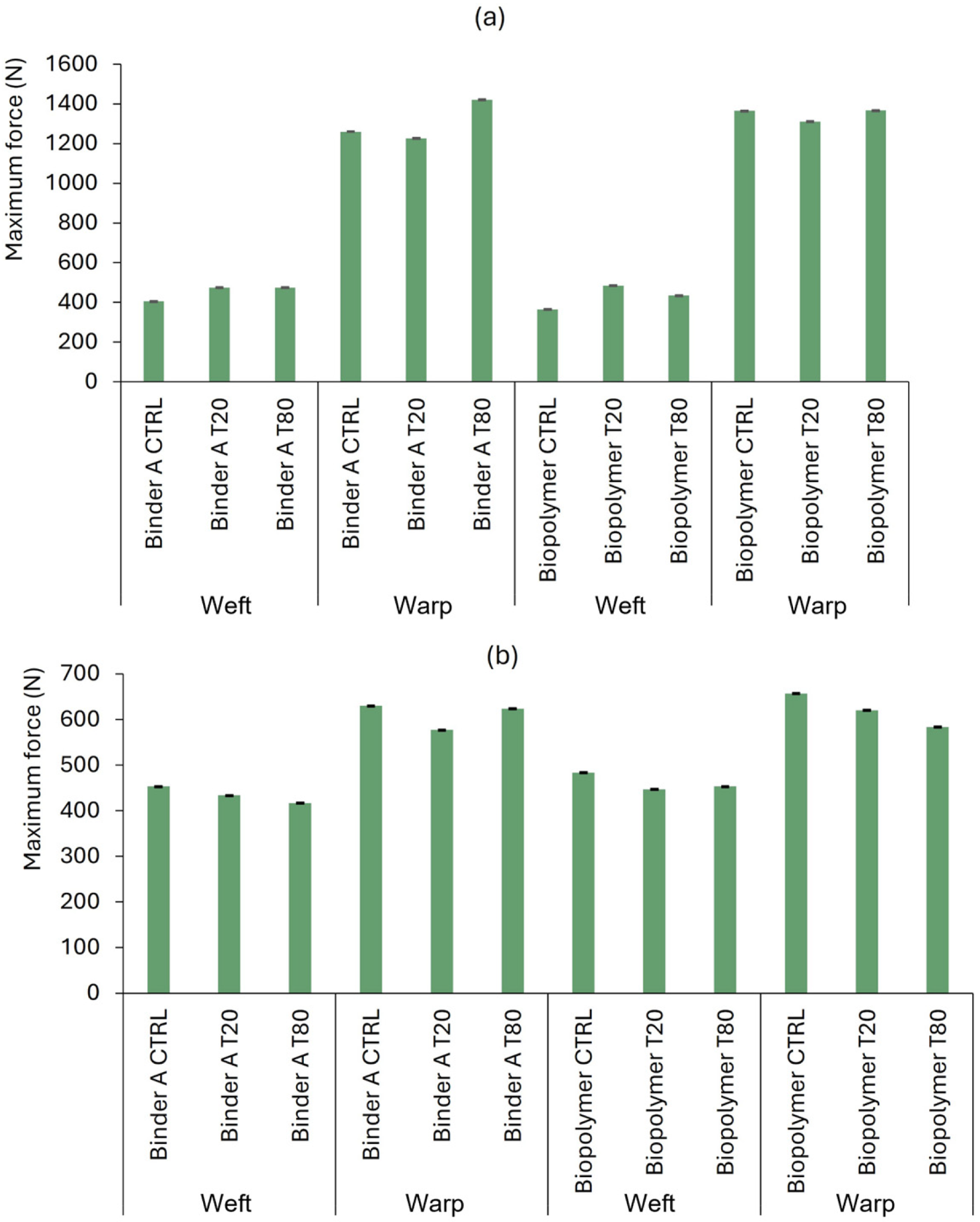
The mechanical properties of the fabrics were also evaluated through the assessment of tensile strength, before and after treatment, and the results are presented in Figure 4. Tensile strength, together with dimensional stability, was selected as a primary indicator, as these properties are commonly regarded as critical for maintaining fabric serviceability and are particularly sensitive to fibre and yarn degradation induced by wet chemical treatments [25,26]. Other parameters, such as wrinkle recovery, bursting strength, tear strength, and abrasion and pilling resistance, although relevant for specific end-uses, were not assessed in this initial screening. The statistical analysis performed using a nonparametric Kruskal–Wallis test, since the data set failed the normality test, revealed that there are no significant differences between the control samples (CO Binder A CTRL, CO Biopolymer CTRL, PES Binder A CTRL and PES Biopolymer CTRL) and the treated samples at weft and warp. This indicates that the applied treatments did not negatively affect the fabric strength in either CO or PES substrates. As shown in Figure 4, the maximum force values for both warp and weft directions remain stable across treatments, with only slight variations observed. Specifically, for CO fabrics (Figure 4a), the warp direction exhibited a higher maximum force compared to the weft, as expected due to the yarn density and orientation, and this trend was consistent across all treatments. Similarly, for PES fabrics (Figure 4b), no remarkable loss of tensile strength was observed, supporting the compatibility of the treatment with the mechanical integrity of the substrates. The preservation of mechanical properties after printing removal is a critical aspect to ensure the practical applicability of the treatments, particularly in textile processing, where strength and durability are essential, including for upcycling purposes.

3.2. Indigo Printing Removal Using Ozone

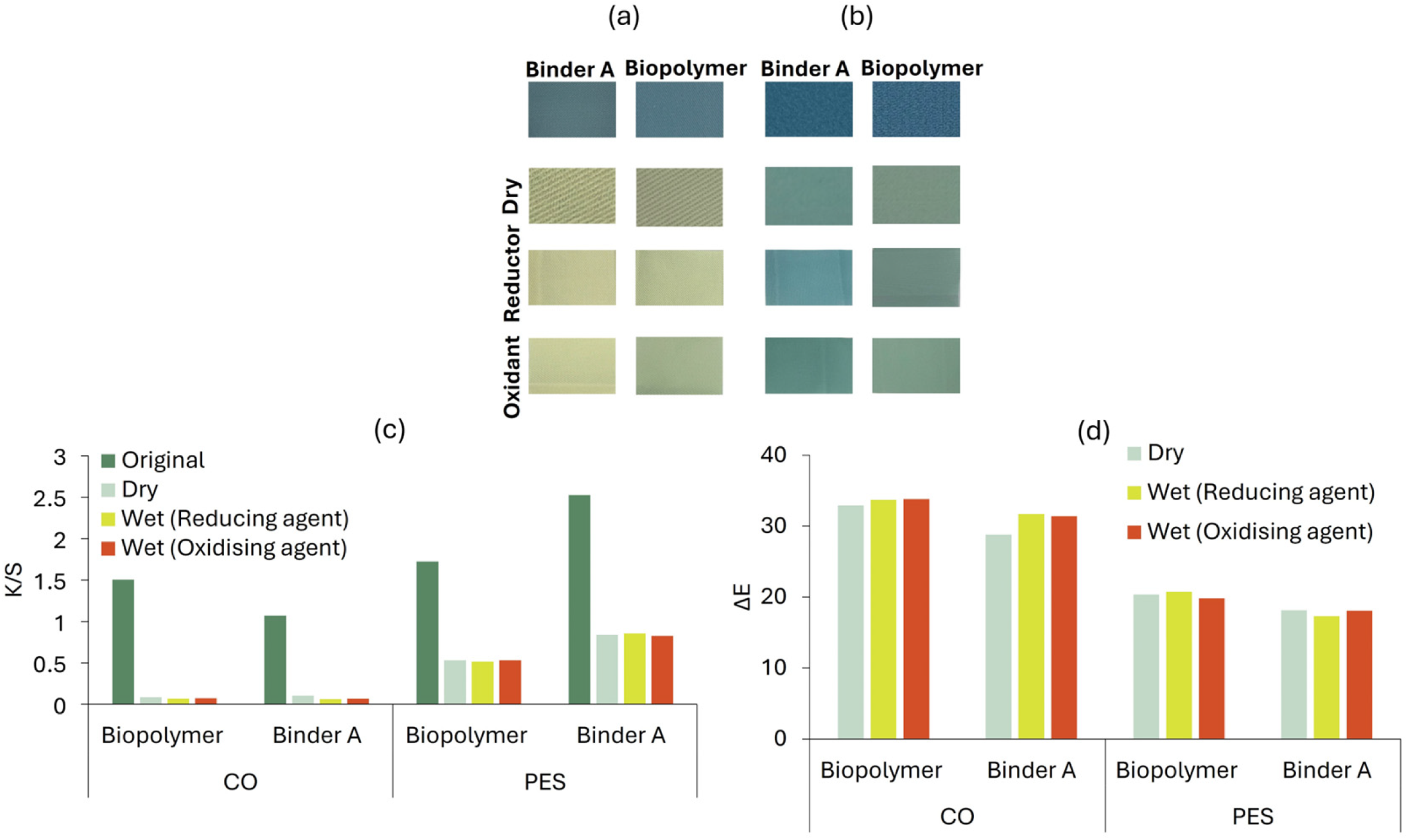
In another approach, the printed CO and PES samples were submitted to ozone treatment. Three different exposure conditions were tested, namely: dry, where the samples were exposed to ozone without any pre-treatment, and wet, where the samples were impregnated with either a reducing or an oxidising solution. These conditions were tested to systematically evaluate how pre-treatment conditions influence indigo pigment removal from textiles. Figure 5a,b shows the visual appearance of the CO and PES samples after treatment, respectively. As with the samples treated using aqueous solutions, the colourimetric parameters of the ozone-treated samples were measured and are presented in Figure 5c,d.
Ozone is known to remove indigo pigment from textiles through a mechanism of oxidation that breaks down the chromophore, the part of the molecule responsible for its blue colour, into non-coloured products such as isatin and isatoic anhydride. A pre-treatment with a reducing agent can convert indigo into its leuco (reduced and colourless) form, which may enhance subsequent oxidation or solubilisation by ozone [14]. In contrast, a pre-treatment with oxidising agents initiates partial degradation of indigo, making its structure more vulnerable to rapid ozone-induced decomposition and thus improving the efficiency of pigment removal [22]. Overall, visual observations show that wet treatments caused significant colour fading compared to dry ozone exposure, with CO (Figure 5a) fabrics exhibiting greater pigment removal than PES (Figure 5b). Quantitative data confirm a decrease in colour intensity (K/S values) for wet treatments, while dry exposure resulted in a slightly minor colour loss. Both Binder A and Biopolymer pre-treatments retained some colour, with Binder A demonstrating faintly higher residual colour, particularly in PES fabrics. The total colour difference was substantial for all ozone treatments, indicating effective decolourisation.
These findings demonstrate that wet ozone treatments enhance indigo removal efficiency regardless of pre-treatment, with fabric type influencing the durability and extent of pigment removal. This outcome can be attributed to the higher hydrophilicity of cellulosic fibres, which enhances the interaction with the aqueous solutions and facilitates removal. Nevertheless, the differences between dry and wet processes were relatively small, suggesting that future applications at an industrial scale may not require this additional step, and its associated cost, to achieve effective colour removal, as well as its potential application in other articles that may not be as washable as, for example, shoes.
Again, after successful pigment removal, the dimensional stability of the samples was assessed. The results revealed no detectable changes, with shrinkage percentages of zero for all tested conditions, indicating that the structural integrity of all treated samples was preserved in both fibre types and all tested conditions. These findings confirm that ozone treatment maintains dimensional stability, thereby supporting its suitability for printing removal in upcycling and reuse applications.
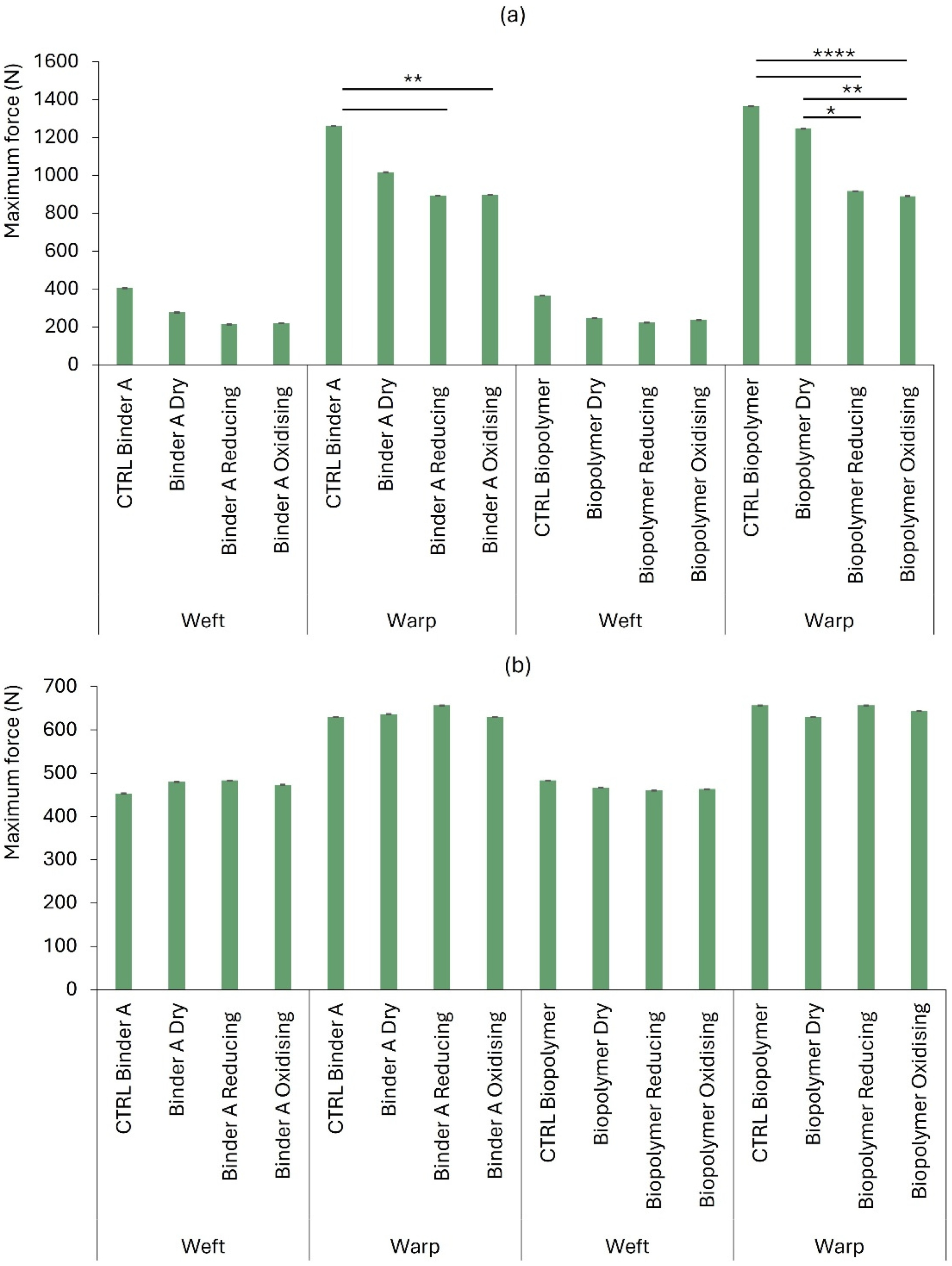
The mechanical properties’ evaluation through tensile strength revealed distinct substrate-dependent effects of ozone treatment (Figure 6). For CO, the maximum force values were substantially higher in the warp direction (~1200–1300 N) than in the weft (~300–400 N), reflecting the inherent anisotropy of woven fabrics. After ozone exposure, both Binder A- and Biopolymer-pre-treated samples showed a marked reduction in tensile strength, with the extent of decrease dependent on the treatment medium. Binder A-treated fabrics exhibited a moderate strength decrease (~20–30%) under ozone exposure, with a statistically significant difference detected between the control and oxidising treatment in the warp direction. In contrast, Biopolymer pre-treated CO fabrics were more sensitive to ozone, particularly under oxidising conditions, where the warp strength dropped to ~750 N (≈40% reduction). The statistical analysis confirmed highly significant differences between CTRL Biopolymer and oxidising treatment, between CTRL Biopolymer and reducing treatment, and between reducing and oxidising treatments, highlighting the influence of the chemical environment during ozone exposure. However, to fully assess this relation between tensile strength after treatment and pre-treatment of the textile, a more extensive study would be required, where textile samples with only the pre-treatments (no inkjet process) would be submitted to the ozone treatments. By comparison, PES fabrics maintained consistent maximum force values across all conditions, with warp and weft strengths in the range of ~450–600 N and no significant statistical differences observed, confirming the higher ozone resistance of PES relative to CO [27]. However, in the PES samples, the printing removal was not satisfactory, indicating that despite mechanical stability under ozone, this substrate showed lower efficiency in indigo removal compared to CO. Despite this limitation, the dry ozone-based printing removal approach proved to be as effective as the wet ozone approach and may offer advantages when integrated with other strategies.

3.3. Reprinting

The reprinting of the samples following colour removal was conducted to validate the potential for textile reuse enabled by both pigment removal procedures. In these validation assays, the most effective conditions for both aqueous solutions and ozone were identified and selected.
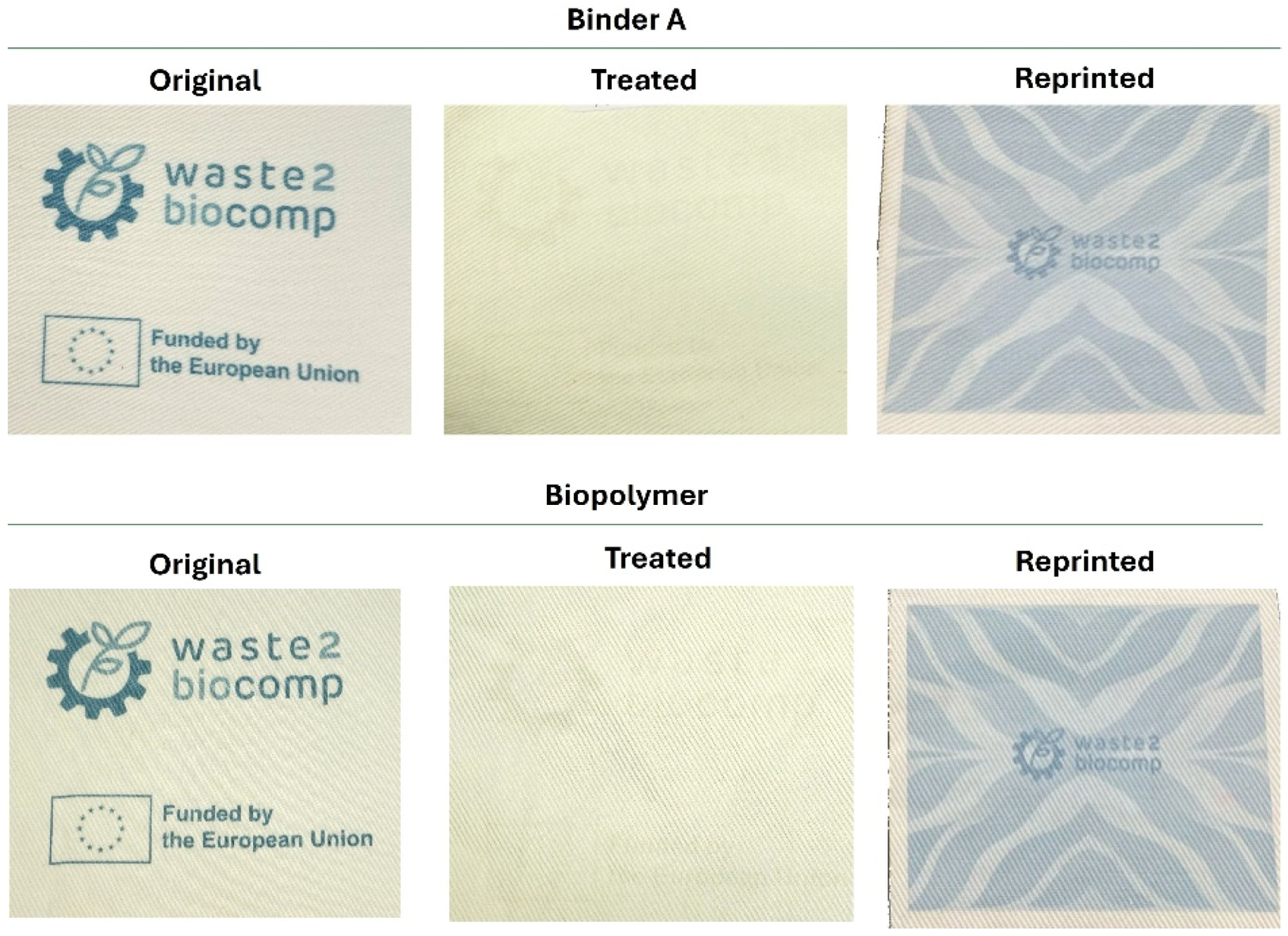
Considering pigment removal in aqueous solutions, samples pre-treated with both Binder A and the Biopolymer were evaluated. The washing step was carried out using T80, since all tested washing conditions showed very good performance. For subsequent testing, CO was selected as the substrate, and the results of the reprinting assays are presented in Figure 7.
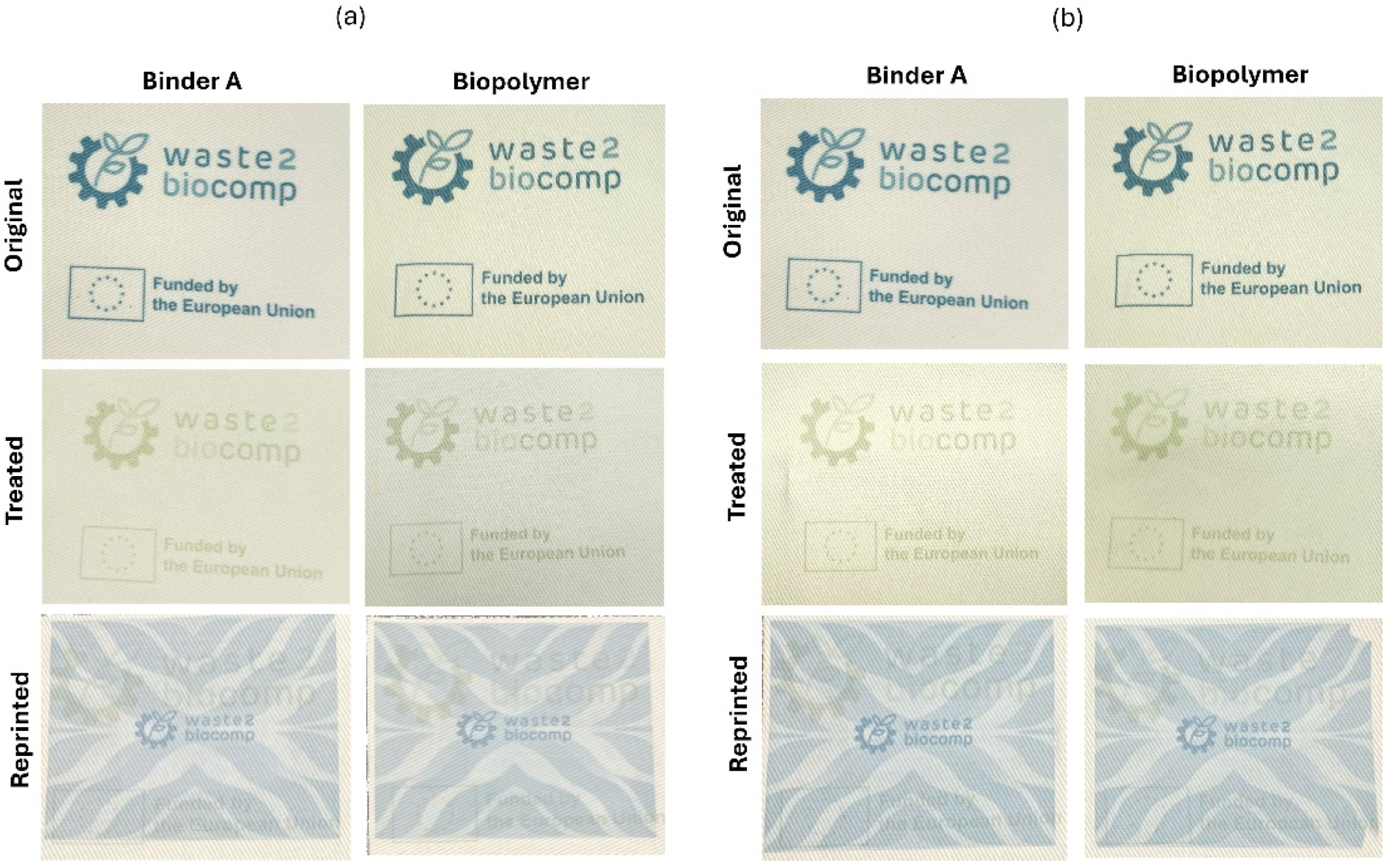
Upon reprinting, both Binder A- and Biopolymer-pre-treated fabrics allow clear re-deposition of new patterns (Figure 7), validating that the use of aqueous solutions followed by a surfactant washing step treatment efficiently eliminates the initial pigment layer while maintaining the fabric’s printability.
For the ozone methodology, only the wet treatments were applied, as this approach yielded better results for the CO samples, despite the poor mechanical properties observed after treatment. The results, depicted in Figure 8, show that the reprinting process was partially compromised by the incomplete removal of residual colour in the case of the ozone technology, which may have interfered with the uniformity and vibrancy of the new print.
Overall, both methodologies, aqueous reducing solutions and ozone exposure, successfully achieved colour removal and subsequent reprinting. However, the aqueous solutions delivered superior results, demonstrating more effective pigment removal and better reprintability, while keeping the mechanical integrity of the textile substrates. These findings confirm that overall pigment removal does not compromise the fabrics’ ability to undergo new printing cycles, reinforcing the feasibility of reprinting as a circular strategy for textile products.


4. Conclusions

This work demonstrates that aqueous-based solutions and ozone-based treatments can offer effective solutions for sustainable indigo print removal from CO and PES textiles, supporting circular textile lifecycles. Aqueous reducing and surfactant solutions successfully removed indigo pigment from both cellulosic and synthetic fabrics, maintaining both mechanical properties (measured by tensile strength) and dimensional stability, and enabling subsequent reprinting for upcycling purposes. Wet ozone treatments proved more efficient than dry ozone processes in the case of CO, while in PES, all ozone-based treatments revealed similar results, but this requires more robust protocols due to higher pigment retention. Overall, the developed methodologies minimise the use of harmful chemicals, such as sodium dithionite, often used for indigo stripping, and preserve material quality, confirming their viability for industrial-scale textile circularity and reuse, as the techniques here employed are all scalable.

Author Contributions

Conceptualisation, C.R., J.M.G. and C.J.S.; methodology, C.R. and J.M.G.; investigation, C.R., M.S. and J.M.G.; writing—original draft preparation, C.R. and J.M.G.; writing—review and editing, M.S. and H.V.; supervision, J.M.G. and C.J.S.; project administration, H.V. and C.J.S.; funding acquisition, H.V. and C.J.S. All authors have read and agreed to the published version of the manuscript.

Funding

This work was carried out under the Waste2BioComp project, converting organic waste into sustainable bio-based components, GA 101058654, funded under the topic HORIZON-CL4-2021-TWIN-TRANSITION-01-05 of the Horizon Europe 2021–2027 programme.

Data Availability Statement

The original contributions presented in the study are included in the article; further inquiries can be directed to the corresponding author.

Acknowledgments

The authors would like to thank Croda Iberica (Barcelona, Spain) for providing the ECO Tween® 80 and Tween® 20 surfactants used in this work, and RIOPELE (Vila Nova de Famalicão, Portugal) for providing the textile substrates. We also thank our colleagues Jéssica Antunes, Marisa Lopes, Beatriz Marques, and Augusta Silva for providing the printed samples.

Conflicts of Interest

The authors declare no conflicts of interest.

References

  1. Ramírez-Escamilla, H.G.; Martínez-Rodríguez, M.C.; Padilla-Rivera, A.; Domínguez-Solís, D.; Campos-Villegas, L.E. Advancing Toward Sustainability: A Systematic Review of Circular Economy Strategies in the Textile Industry. Recycling 2024, 9, 95. [Google Scholar] [CrossRef] [Scilit]
  2. European Environment Agency. Textiles. Available online: https://www.eea.europa.eu/en/topics/in-depth/textiles (accessed on 10 July 2025).
  3. Saif, M.; Blay-Roger, R.; Zeeshan, M.; Bobadilla, L.F.; Reina, T.R.; Nawaz, M.A.; Odriozola, J.A. Navigating the Legislative Interventions, Challenges, and Opportunities in Revolutionizing Textile Upcycling/Recycling Processes for a Circular Economy. ACS Sustain. Resour. Manag. 2024, 1, 2338–2349. [Google Scholar] [CrossRef] [Scilit] [PubMed]
  4. Amicarelli, V.; Bux, C.; Spinelli, M.P.; Lagioia, G. Life Cycle Assessment to Tackle the Take-Make-Waste Paradigm in the Textiles Production. Waste Manag. 2022, 151, 10–27. [Google Scholar] [CrossRef] [Scilit] [PubMed]
  5. Farrukh, A.; Sajjad, A. Drivers for and Barriers to Circular Economy Transition in the Textile Industry: A Developing Economy Perspective. Sustain. Dev. 2024, 32, 7309–7329. [Google Scholar] [CrossRef] [Scilit]
  6. Rahaman, M.T.; Khan, M.S.H. Green Merchandising of Textiles and Apparel in a Circular Economy: Recent Trends, Framework, Challenges and Future Prospects towards Sustainability. J. Open Innov. Technol. Mark. Complex. 2025, 11, 100457. [Google Scholar] [CrossRef] [Scilit]
  7. Cook, A.A.; Ridge, G.; Sapers, I.; Newark, N.J. Process for Removal of Pigments from Printed Textiles and Agents Useful Therein. U.S. Patent US2587597A, 14 July 1949. [Google Scholar]
  8. Kıcık, H.; Eren, H.A. Application of Ozone Gas for the Stripping of Fabric Ink-Jet-Printed with Reactive Dyes. Color. Technol. 2017, 133, 485–490. [Google Scholar] [CrossRef] [Scilit]
  9. Saikhao, L.; Setthayanond, J.; Karpkird, T.; Bechtold, T.; Suwanruji, P. Green Reducing Agents for Indigo Dyeing on Cotton Fabrics. J. Clean. Prod. 2018, 197, 106–113. [Google Scholar] [CrossRef] [Scilit]
  10. Eren, H.A. Simultaneous Afterclearing and Decolorisation by Ozonation after Disperse Dyeing of Polyester. Color. Technol. 2007, 123, 224–229. [Google Scholar] [CrossRef] [Scilit]
  11. Uddin, M.G.; Islam, M.M.; Islam, M.R. Effects of Reductive Stripping of Reactive Dyes on the Quality of Cotton Fabric. Fash. Text. 2015, 2, 8. [Google Scholar] [CrossRef] [Scilit]
  12. Munasinghe Arachchilage, E.A.; Stegschuster, G.; Cetin, M.; Rabe, M. Effective Dye Removal from Post-Consumer Cotton Textiles and Its Influence on the Quality of the Textiles. Textiles 2025, 5, 62. [Google Scholar] [CrossRef] [Scilit]
  13. Cheung, H.F.; Kan, C.W.; Yuen, C.W.M.; Yip, J.; Law, M.C. Colour Fading of Textile Fabric by Plasma Treatment. J. Text. 2013, 2013, 214706. [Google Scholar] [CrossRef] [Scilit]
  14. Ben Hamida, S.; Srivastava, V.; Sillanpää, M.; Shestakova, M.; Tang, W.Z.; Ladhari, N. Eco-Friendly Bleaching of Indigo Dyed Garment by Advanced Oxidation Processes. J. Clean. Prod. 2017, 158, 134–142. [Google Scholar] [CrossRef] [Scilit]
  15. Sarafpour, M.; Alihosseini, F.; Bayat, M. New Laccase-Mediated System Utilized for Bio-Discoloration of Indigo-Dyed Denim Fabrics. In Applied Biochemistry and Biotechnology; Springer: Berlin/Heidelberg, Germany, 2022; Volume 194, pp. 5848–5861. [Google Scholar]
  16. Vadivel, V.K.; Cikurel, H.; Mamane, H. Removal of Indigo Dye by CaCO3/Ca(OH)2Composites and Resource Recovery. Ind. Eng. Chem. Res. 2021, 60, 10312–10318. [Google Scholar] [CrossRef] [Scilit]
  17. Antunes, J.; Lopes, M.; Marques, B.; Silva, A.; Vilaça, H.; Silva, C.J. Development of Water-Based Inks with Bio-Based Pigments for Digital Textile Printing Using Valve-Jet Printhead Technology. Colorants 2025, 4, 24. [Google Scholar] [CrossRef] [Scilit]
  18. Antunes, J.; Nolasco, A.; Lopes, M.; Marques, B.; Silva, A.; Vilaça, H.; Silva, J.C. Bio-Based Pigment Water-Based Inks for Piezoelectric Inkjet Printing. Colorants 2026, 5, 13. [Google Scholar] [CrossRef] [Scilit]
  19. ISO 13934-1:2013; Textiles—Tensile Properties Of Fabrics, Part 1: Determination of Maximum Force and Elongation at Maximum Force Using the Strip Method. International Organization for Standardization (ISO): Geneva, Switzerland, 2013.
  20. Buscio Olivera, V.; Crespi Rosell, M.; Gutiérrez Bouzán, M.C. A Critical Comparison of Methods for the Analysis of Indigo in Dyeing Liquors and Effluents. Materials 2014, 7, 6184–6193. [Google Scholar] [CrossRef] [Scilit] [PubMed]
  21. Hordieieva, I.O.; Kushch, O.V.; Hordieieva, T.O.; Sirobaba, S.I.; Kompanets, M.O.; Anishchenko, V.M.; Shendrik, A.N. Eco-Friendly TEMPO/Laccase/O2 Biocatalytic System for Degradation of Indigo Carmine: Operative Conditions and Laccase Inactivation. RSC Adv. 2023, 13, 20737–20747. [Google Scholar] [CrossRef] [Scilit]
  22. Fallah, N.; Bloise, E.; García-López, E.I.; Mele, G. Carbon-Based Materials in Combined Adsorption/Ozonation for Indigo Dye Decolorization in Constrain Contact Time. Molecules 2024, 29, 4144. [Google Scholar] [CrossRef] [Scilit]
  23. Glogar, M.; Ercegovic Razic, S. Sustainable Pre-Treatment of Cellulose Knitwear in Digital Pigment Printing Processes. Int. J. Cloth. Sci. Technol. 2024, 37, 679–697. [Google Scholar] [CrossRef] [Scilit]
  24. Cooper, T.; Claxton, S. Garment Failure Causes and Solutions: Slowing the Cycles for Circular Fashion. J. Clean. Prod. 2022, 351, 131394. [Google Scholar] [CrossRef] [Scilit]
  25. Jasińska, I. Industrial Washing Conditions as Factor That Influence the Cellulose Structure and Mechanical Strength of Bed Linens. Sci. Rep. 2023, 13, 12214. [Google Scholar] [CrossRef] [Scilit]
  26. Elkateb, S.N. Prediction of Mechanical Properties of Woven Fabrics by ANN. Fibres Text. East. Eur. 2022, 151, 54–59. [Google Scholar] [CrossRef] [Scilit]
  27. Körlü, A. Use of Ozone in the Textile Industry. In Textile Industry and Environment; IntechOpen: London, UK, 2018. [Google Scholar]
Figure 1. Macroscopic appearance and K/S comparison of indigo-printed (a) CO and (b) PES fabrics, before and after aqueous-based reducing treatment. Discussion on the colour shade of each print can be found in [18].
Textiles 06 00050 g001
Figure 2. Indigo-printed CO fabric (a) before treatment, (b) immediately after treatment (wet state), and (c) after treatment and drying.
Textiles 06 00050 g002
Figure 3. (a) CO and (b) PES indigo-printed fabrics, (c) K/S, and (d) ΔE, before and after treatment with the reducing aqueous solution followed by a washing step containing the surfactants ECO Tween® 80 or Tween® 20.
Textiles 06 00050 g003
Figure 4. Maximum force of the (a) CO and (b) PES indigo-printed fabrics before and after aqueous reducing treatment (this last being followed by a washing step). Differences at p ≤ 0.05 were considered to be significant.
Textiles 06 00050 g004
Figure 5. Macroscopic appearance of (a) CO and (b) PES indigo-printed fabrics before and after treatment with ozone technology; (c) K/S and (d) ΔE before and after treatment.
Textiles 06 00050 g005
Figure 6. Maximum force of the (a) CO and (b) PES indigo-printed fabrics before and after ozone treatment. Differences at p ≤ 0.05 were considered to be significant (where * denotes statistical differences for p ≤ 0.05; ** denotes statistical differences for p ≤ 0.01; and **** denotes statistical differences for p ≤ 0.0001).
Textiles 06 00050 g006
Figure 7. Reprinting of CO substrates after pigment removal using aqueous reducing solutions.
Textiles 06 00050 g007
Figure 8. Reprinting of CO substrates after pigment removal using ozone wet treatment with (a) oxidising and (b) reducing agents.
Textiles 06 00050 g008
Disclaimer/Publisher’s Note: The statements, opinions and data contained in all publications are solely those of the individual author(s) and contributor(s) and not of MDPI and/or the editor(s). MDPI and/or the editor(s) disclaim responsibility for any injury to people or property resulting from any ideas, methods, instructions or products referred to in the content.