3.1. Indigo Printing Removal Using Aqueous Solutions
In a first set of experiments, aqueous alkaline solutions containing a reducing agent were tested for their ability to remove indigo pigment from textile samples. The reducing aqueous solution was applied to both CO and PES samples, using the adequate temperature for each fabric, as detailed in
Section 2.3.1. CO and PES require different conditions for dye removal because of their distinct fibre structures. CO, a natural cellulose fibre, is porous and hydrophilic, allowing pigment molecules to be accessed and broken down more easily. As a result, decolourisation is effective at around 80 °C, a temperature high enough to promote fibre swelling, without damaging cellulose. In contrast, PES is a synthetic, highly crystalline, and hydrophobic polymer where dyes and pigments are physically trapped within the dense fibre matrix. To release these compounds, the fibre chains must become mobile, which only occurs at elevated temperatures near 135 °C under pressurised conditions.
The tests were conducted under two conditions: (i) without the washing step described in
Section 2.3.1, and (ii) with a subsequent washing step in water and surfactant, performed under the same conditions described above (30 min at 80 °C).
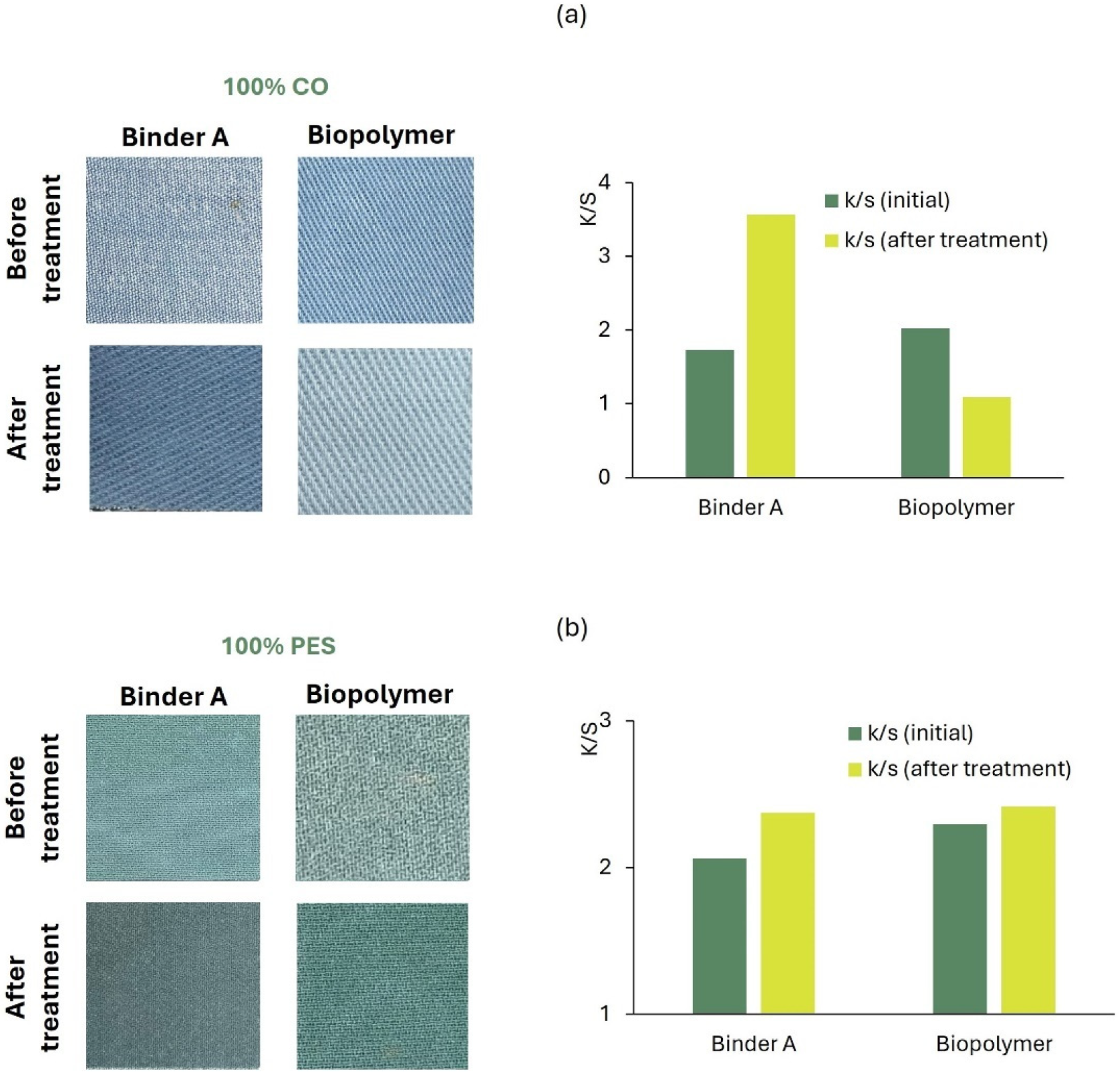
The outcomes under condition (i) are shown in
Figure 1, revealing unsatisfactory colour removal.
For the CO samples (
Figure 1a), visual inspection reveals that the reducing treatment has minimal effect on the colour removal. In samples pre-treated with Binder A, a significant darkening of the fabric is observable, as confirmed by an increase in K/S from approximately 1.7 to 3.6, suggesting an interaction that deepens the colour rather than removing the pigment. In contrast, the samples pre-treated with Biopolymer result in lighter shades after the reducing treatment, with the K/S decreasing from about 2.1 to 1.1. This indicates some pigment removal or fading effect, although still not satisfactory. Similarly, for PES samples (
Figure 1b), the treatment caused minimal effect. The K/S values show a slight increase for the fabrics with both pre-treatments, reflecting no pigment removal. Overall, these results demonstrate that the treatments tested are more effective at removing colour on CO than on PES, but neither achieves meaningful pigment removal, underscoring the challenges of indigo removal from both fibres under the tested conditions.
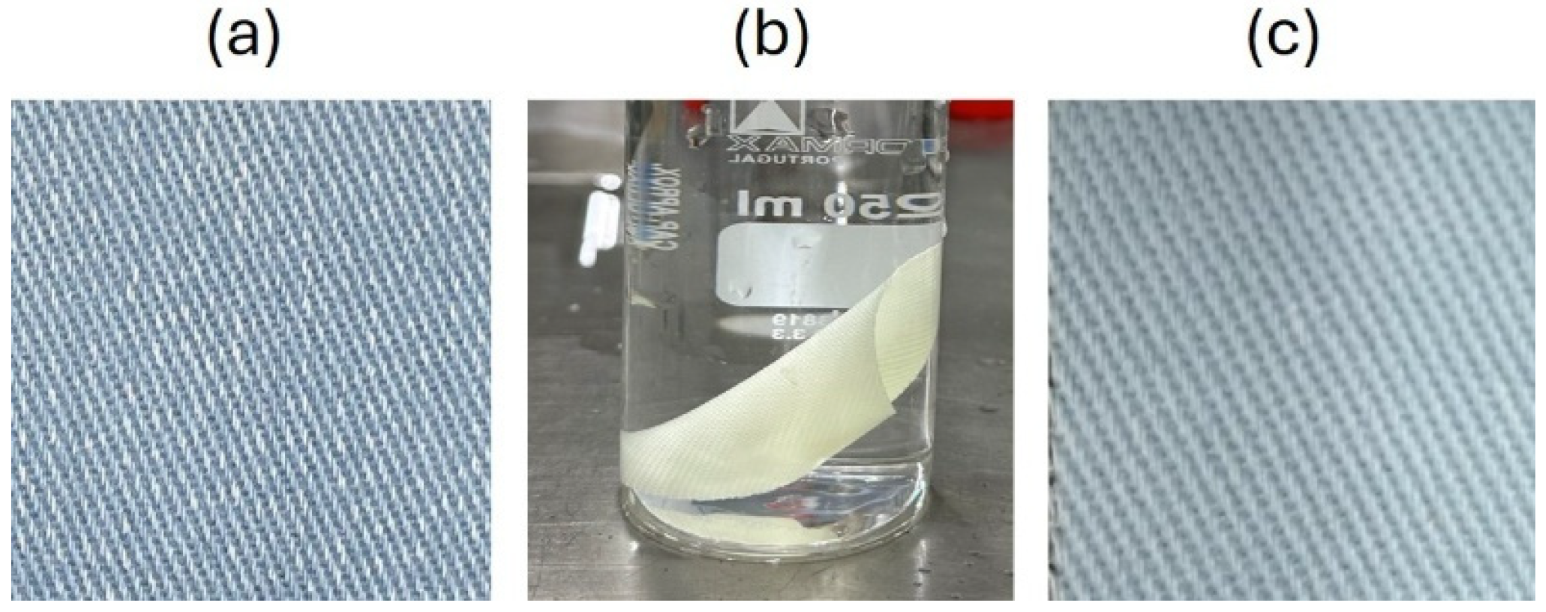
Despite the non-satisfactory results, immediately after removal from the test vials, the samples appeared white, as shown in
Figure 2b.
This behaviour is consistent with the reduction in indigo in alkaline medium: the insoluble blue indigo (oxidised form) is converted to its soluble, colourless or pale-yellow leuco-indigo form through reduction by the added agent. In this reduced state, the dye molecules are either partially desorbed from the fibres or rendered invisible due to disruption of their conjugated π-system, which is responsible for the characteristic blue absorption [
20]. However, upon exposure to air, the samples rapidly regained their blue colouration (
Figure 2c). This reappearance reflects the high sensitivity of leuco-indigo to atmospheric oxygen: the reduced leuco form is readily oxidised back to indigo, which subsequently reprecipitates within the fibres, restoring the pigment [
15,
20,
21].
This regeneration process underlines a key challenge in the removal of indigo; while reduction can transiently decolourise the material, the stability of the reduced form is low, and unless it is solubilised and extracted from the fibre matrix before oxidation occurs, the dye remains entrapped and becomes visible upon oxidation. To address this, and with the aim of stabilising the soluble form of indigo for its effective removal, we tested a new strategy: incorporating an aqueous surfactant solution, prepared with ECO Tween
® 80 (T80) and Tween
® 20 (T20), into the washing step. ECO Tween
® products, such as T80 explored here, are bio-based ethoxylated sorbitan esters that typically employ natural fatty acids and emphasise renewable raw materials and sustainable sourcing, while maintaining functional roles comparable to conventional Tween variants. T80 and T20 are herein explored, aiming to stabilise indigo in its soluble, reduced form due to their surfactant properties. Indigo in its oxidised form is naturally hydrophobic and poorly soluble in water, but after reduction in the printing removal solution, it is expected that non-ionic surfactants can form micelles that encapsulate the dye in its soluble form, improving its dispersion in aqueous solutions [
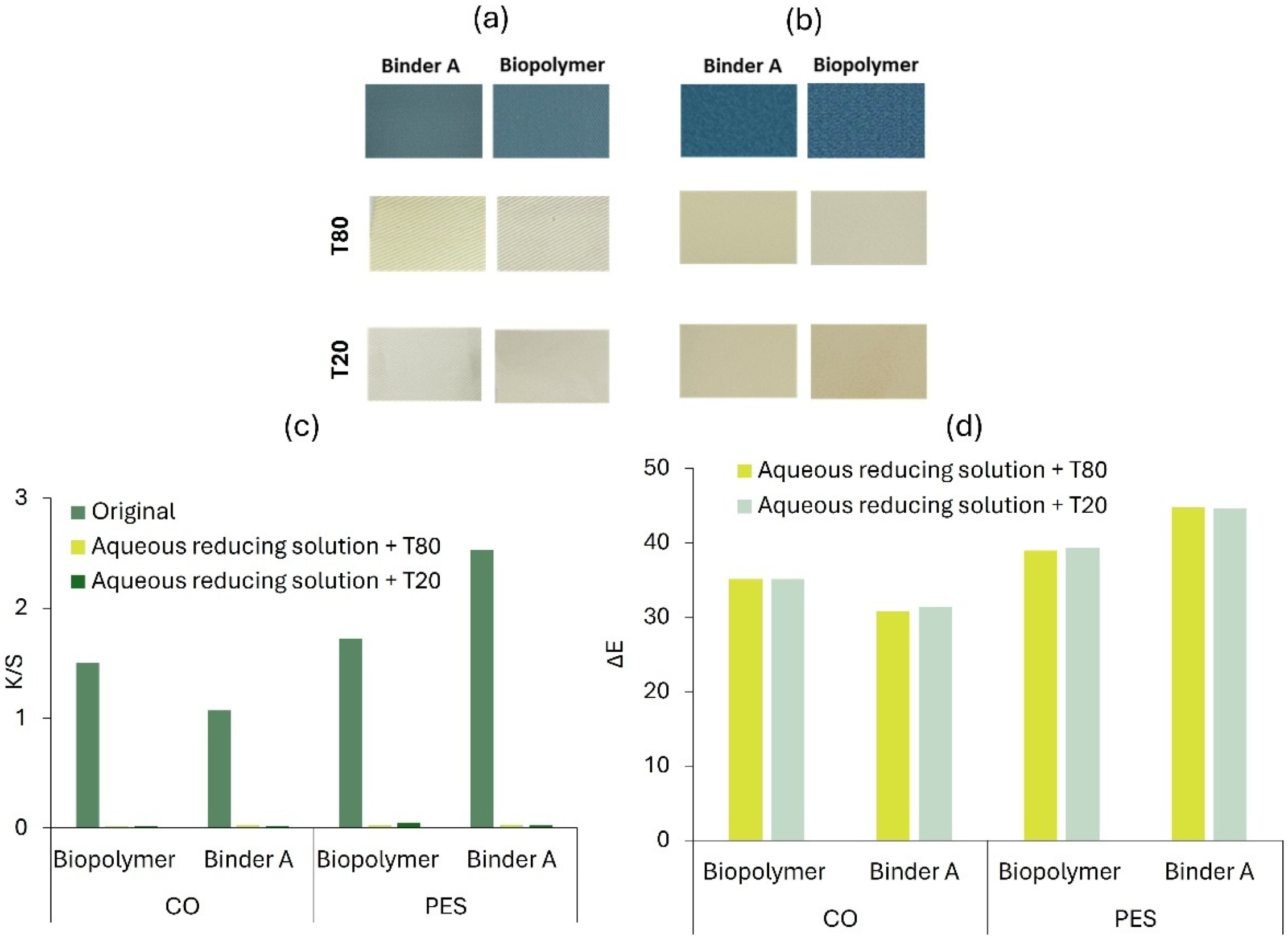
22]. The macroscopic results of the printing removal for both CO and PES samples, as well as the K/S and ΔE before and after treatment, are shown in
Figure 3.
The visual appearance of the treated CO and PES fabrics indicates effective colour removal, since the indigo-blue print was completely removed (
Figure 3a,b) with either surfactant. This observation is supported by the K/S and ΔE results presented in
Figure 3c,d, respectively. Considering the different pre-treatments applied to the textile samples prior to the digital printing step, an increased difficulty in printing removal could have been expected, since these polymers are commonly applied to increase pigment fixation and enhance the print wash fastness [
17,
23]. However, it was observed that none of the pre-treatments posed an obstacle to the reduction reaction, indicating that the process is efficient even with substrates with pre-treatments that enhance pigment fixation. The significant decrease in the K/S, together with the high ΔE values observed after the aqueous reducing treatment when followed by a washing step with aqueous surfactant solutions, confirms that this approach was successful in removing the indigo pigment from both fabric types. During the washing step, the surfactants prevented the reduced indigo from rapidly re-oxidising and precipitating. This stabilisation kept the reduced indigo dissolved long enough to diffuse out of the fibre matrix. By maintaining the pigment in solution, the surfactants enhance its removal during washing. Additionally, T80 and T20 are mild, biodegradable, and textile-friendly, making them suitable for environmentally conscious printing removal processes.
Following successful pigment removal, the dimensional stability of the samples was assessed. The results demonstrated no observable changes in the samples, with shrinkage percentages of zero for all tested conditions, confirming that the dimensional stability was effectively maintained. In the context of printing removal for upcycling, dimensional stability is especially critical because any shrinkage, distortion, or deformation can compromise the quality and functionality of the textile for subsequent reprinting and reuse. Maintaining dimensional stability is essential in ensuring the reliability, performance, and durability of materials and components throughout their lifecycle, which are particularly important, as upcycling aims to extend the lifecycle of textiles while preserving their functional and aesthetic properties [
24].
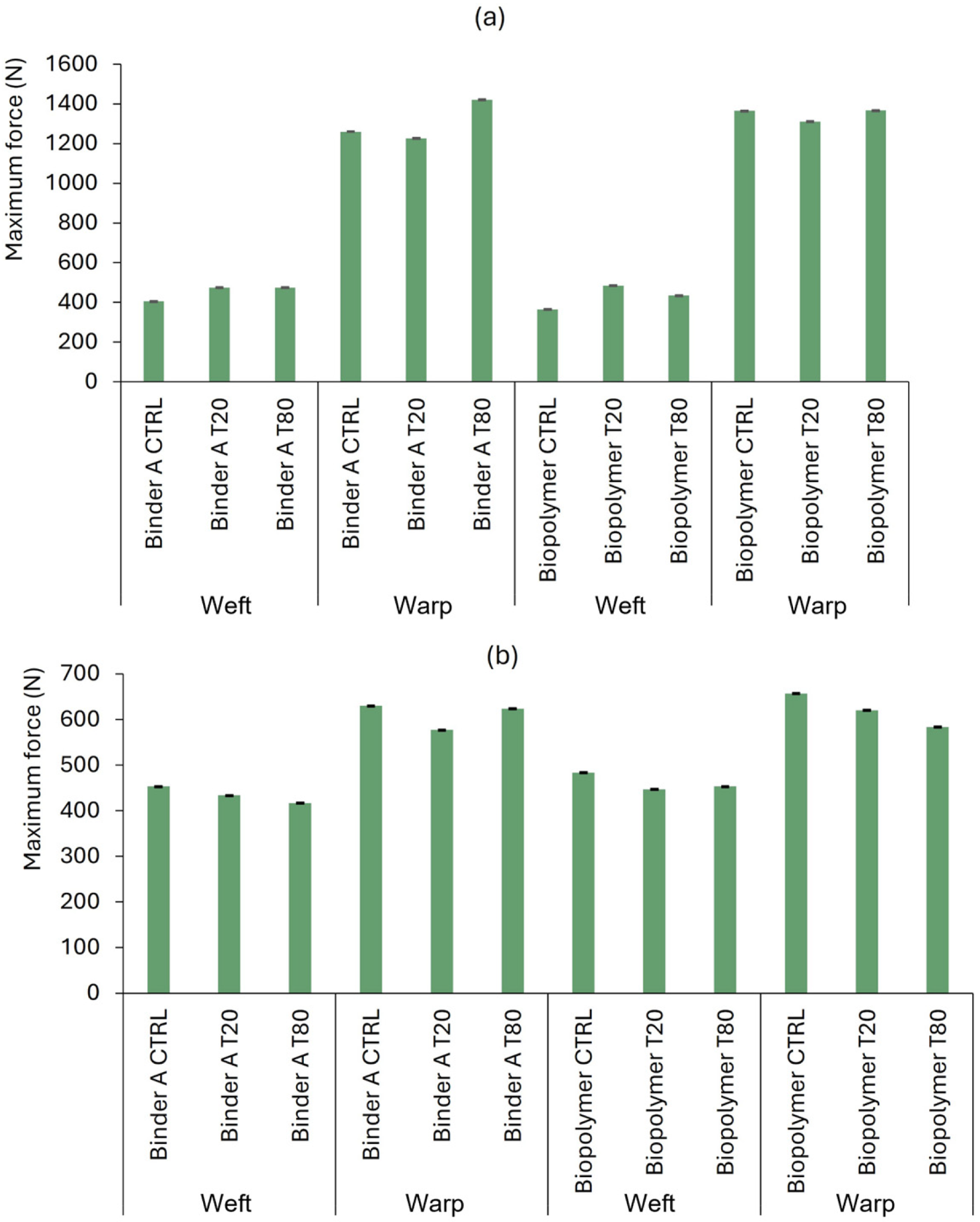
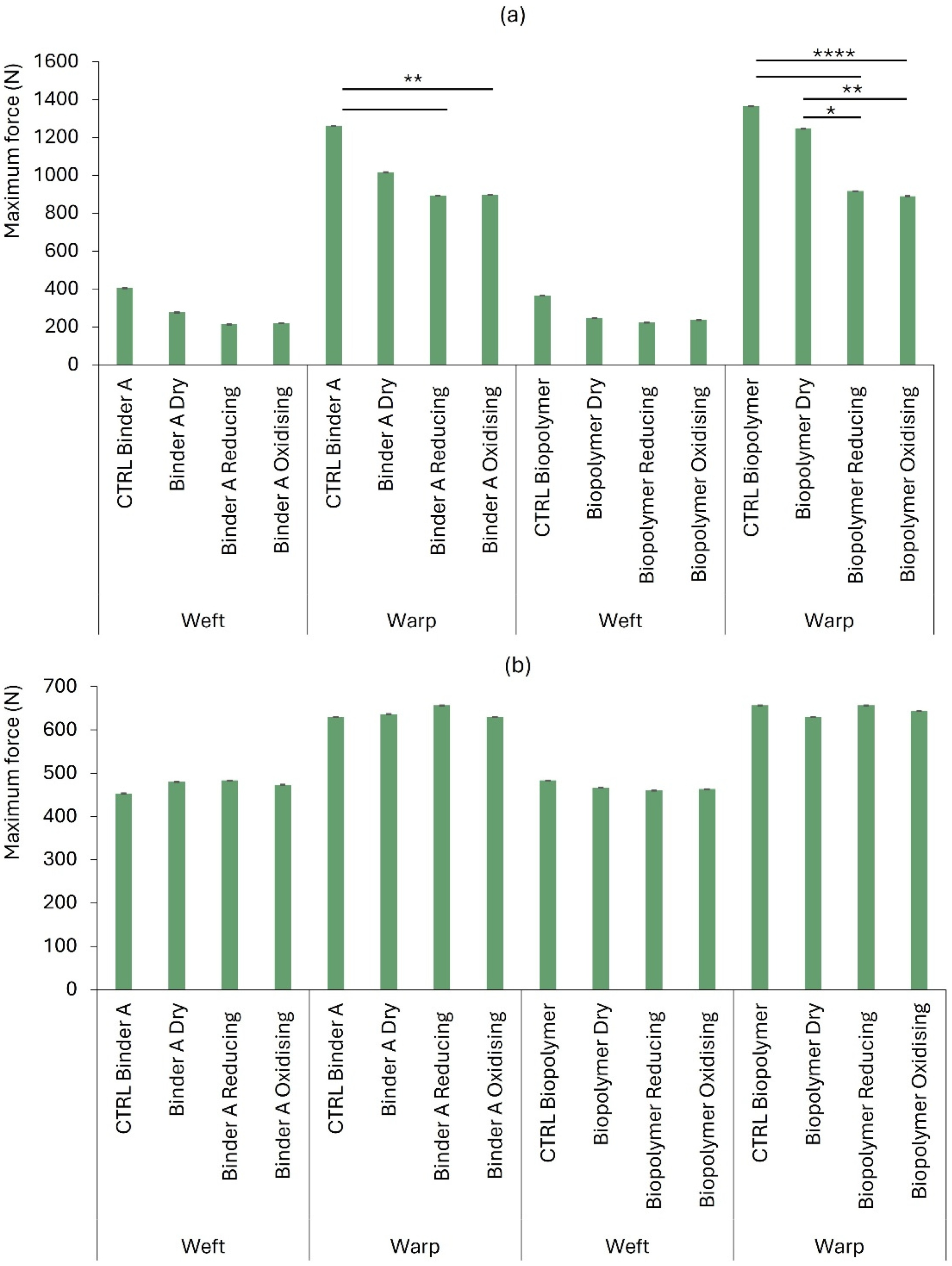
The mechanical properties of the fabrics were also evaluated through the assessment of tensile strength, before and after treatment, and the results are presented in
Figure 4. Tensile strength, together with dimensional stability, was selected as a primary indicator, as these properties are commonly regarded as critical for maintaining fabric serviceability and are particularly sensitive to fibre and yarn degradation induced by wet chemical treatments [
25,
26]. Other parameters, such as wrinkle recovery, bursting strength, tear strength, and abrasion and pilling resistance, although relevant for specific end-uses, were not assessed in this initial screening. The statistical analysis performed using a nonparametric Kruskal–Wallis test, since the data set failed the normality test, revealed that there are no significant differences between the control samples (CO Binder A CTRL, CO Biopolymer CTRL, PES Binder A CTRL and PES Biopolymer CTRL) and the treated samples at weft and warp. This indicates that the applied treatments did not negatively affect the fabric strength in either CO or PES substrates. As shown in
Figure 4, the maximum force values for both warp and weft directions remain stable across treatments, with only slight variations observed. Specifically, for CO fabrics (
Figure 4a), the warp direction exhibited a higher maximum force compared to the weft, as expected due to the yarn density and orientation, and this trend was consistent across all treatments. Similarly, for PES fabrics (
Figure 4b), no remarkable loss of tensile strength was observed, supporting the compatibility of the treatment with the mechanical integrity of the substrates. The preservation of mechanical properties after printing removal is a critical aspect to ensure the practical applicability of the treatments, particularly in textile processing, where strength and durability are essential, including for upcycling purposes.
3.2. Indigo Printing Removal Using Ozone
In another approach, the printed CO and PES samples were submitted to ozone treatment. Three different exposure conditions were tested, namely: dry, where the samples were exposed to ozone without any pre-treatment, and wet, where the samples were impregnated with either a reducing or an oxidising solution. These conditions were tested to systematically evaluate how pre-treatment conditions influence indigo pigment removal from textiles.
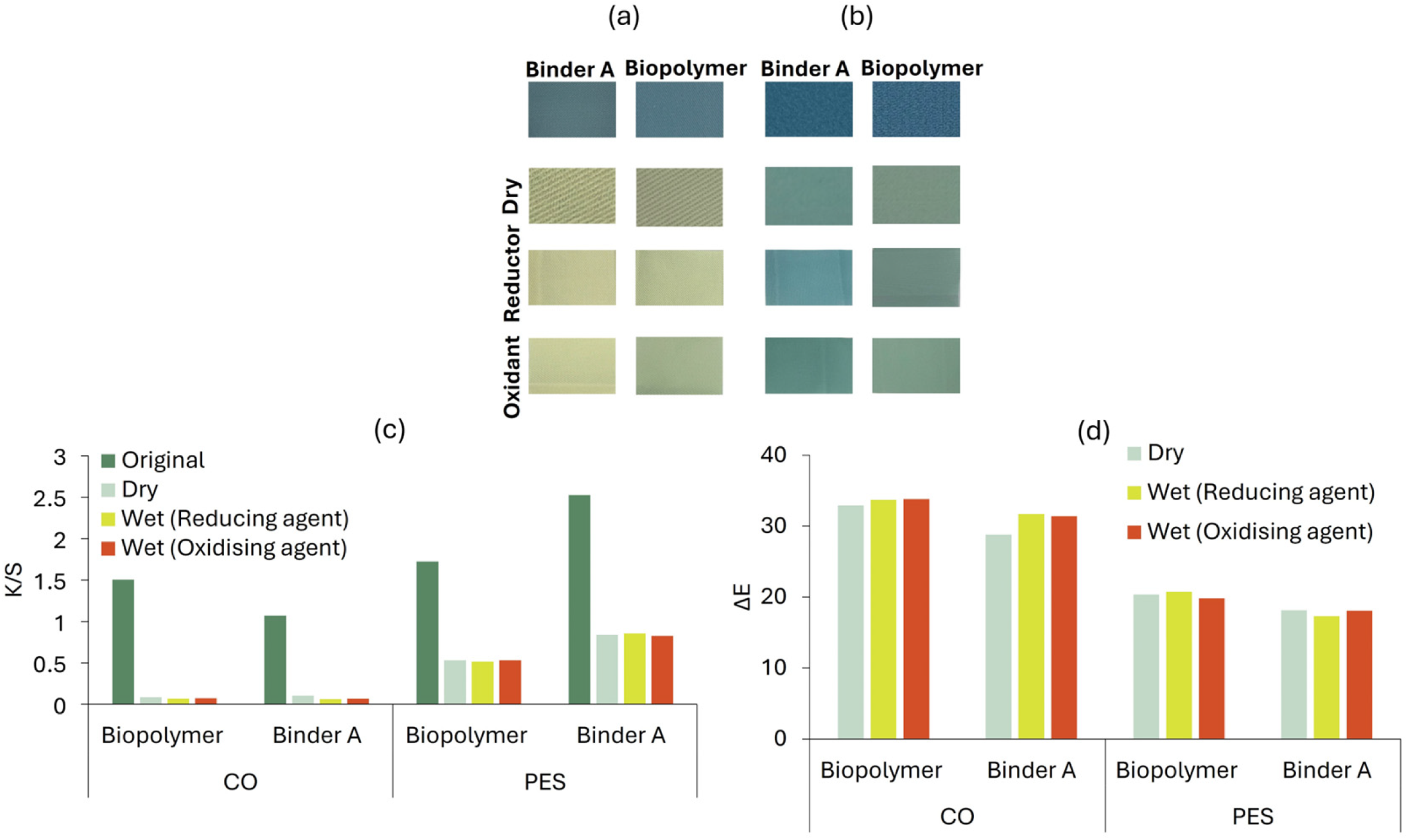
Figure 5a,b shows the visual appearance of the CO and PES samples after treatment, respectively. As with the samples treated using aqueous solutions, the colourimetric parameters of the ozone-treated samples were measured and are presented in
Figure 5c,d.
Ozone is known to remove indigo pigment from textiles through a mechanism of oxidation that breaks down the chromophore, the part of the molecule responsible for its blue colour, into non-coloured products such as isatin and isatoic anhydride. A pre-treatment with a reducing agent can convert indigo into its leuco (reduced and colourless) form, which may enhance subsequent oxidation or solubilisation by ozone [
14]. In contrast, a pre-treatment with oxidising agents initiates partial degradation of indigo, making its structure more vulnerable to rapid ozone-induced decomposition and thus improving the efficiency of pigment removal [
22]. Overall, visual observations show that wet treatments caused significant colour fading compared to dry ozone exposure, with CO (
Figure 5a) fabrics exhibiting greater pigment removal than PES (
Figure 5b). Quantitative data confirm a decrease in colour intensity (K/S values) for wet treatments, while dry exposure resulted in a slightly minor colour loss. Both Binder A and Biopolymer pre-treatments retained some colour, with Binder A demonstrating faintly higher residual colour, particularly in PES fabrics. The total colour difference was substantial for all ozone treatments, indicating effective decolourisation.
These findings demonstrate that wet ozone treatments enhance indigo removal efficiency regardless of pre-treatment, with fabric type influencing the durability and extent of pigment removal. This outcome can be attributed to the higher hydrophilicity of cellulosic fibres, which enhances the interaction with the aqueous solutions and facilitates removal. Nevertheless, the differences between dry and wet processes were relatively small, suggesting that future applications at an industrial scale may not require this additional step, and its associated cost, to achieve effective colour removal, as well as its potential application in other articles that may not be as washable as, for example, shoes.
Again, after successful pigment removal, the dimensional stability of the samples was assessed. The results revealed no detectable changes, with shrinkage percentages of zero for all tested conditions, indicating that the structural integrity of all treated samples was preserved in both fibre types and all tested conditions. These findings confirm that ozone treatment maintains dimensional stability, thereby supporting its suitability for printing removal in upcycling and reuse applications.
The mechanical properties’ evaluation through tensile strength revealed distinct substrate-dependent effects of ozone treatment (
Figure 6). For CO, the maximum force values were substantially higher in the warp direction (~1200–1300 N) than in the weft (~300–400 N), reflecting the inherent anisotropy of woven fabrics. After ozone exposure, both Binder A- and Biopolymer-pre-treated samples showed a marked reduction in tensile strength, with the extent of decrease dependent on the treatment medium. Binder A-treated fabrics exhibited a moderate strength decrease (~20–30%) under ozone exposure, with a statistically significant difference detected between the control and oxidising treatment in the warp direction. In contrast, Biopolymer pre-treated CO fabrics were more sensitive to ozone, particularly under oxidising conditions, where the warp strength dropped to ~750 N (≈40% reduction). The statistical analysis confirmed highly significant differences between CTRL Biopolymer and oxidising treatment, between CTRL Biopolymer and reducing treatment, and between reducing and oxidising treatments, highlighting the influence of the chemical environment during ozone exposure. However, to fully assess this relation between tensile strength after treatment and pre-treatment of the textile, a more extensive study would be required, where textile samples with only the pre-treatments (no inkjet process) would be submitted to the ozone treatments. By comparison, PES fabrics maintained consistent maximum force values across all conditions, with warp and weft strengths in the range of ~450–600 N and no significant statistical differences observed, confirming the higher ozone resistance of PES relative to CO [
27]. However, in the PES samples, the printing removal was not satisfactory, indicating that despite mechanical stability under ozone, this substrate showed lower efficiency in indigo removal compared to CO. Despite this limitation, the dry ozone-based printing removal approach proved to be as effective as the wet ozone approach and may offer advantages when integrated with other strategies.
3.3. Reprinting
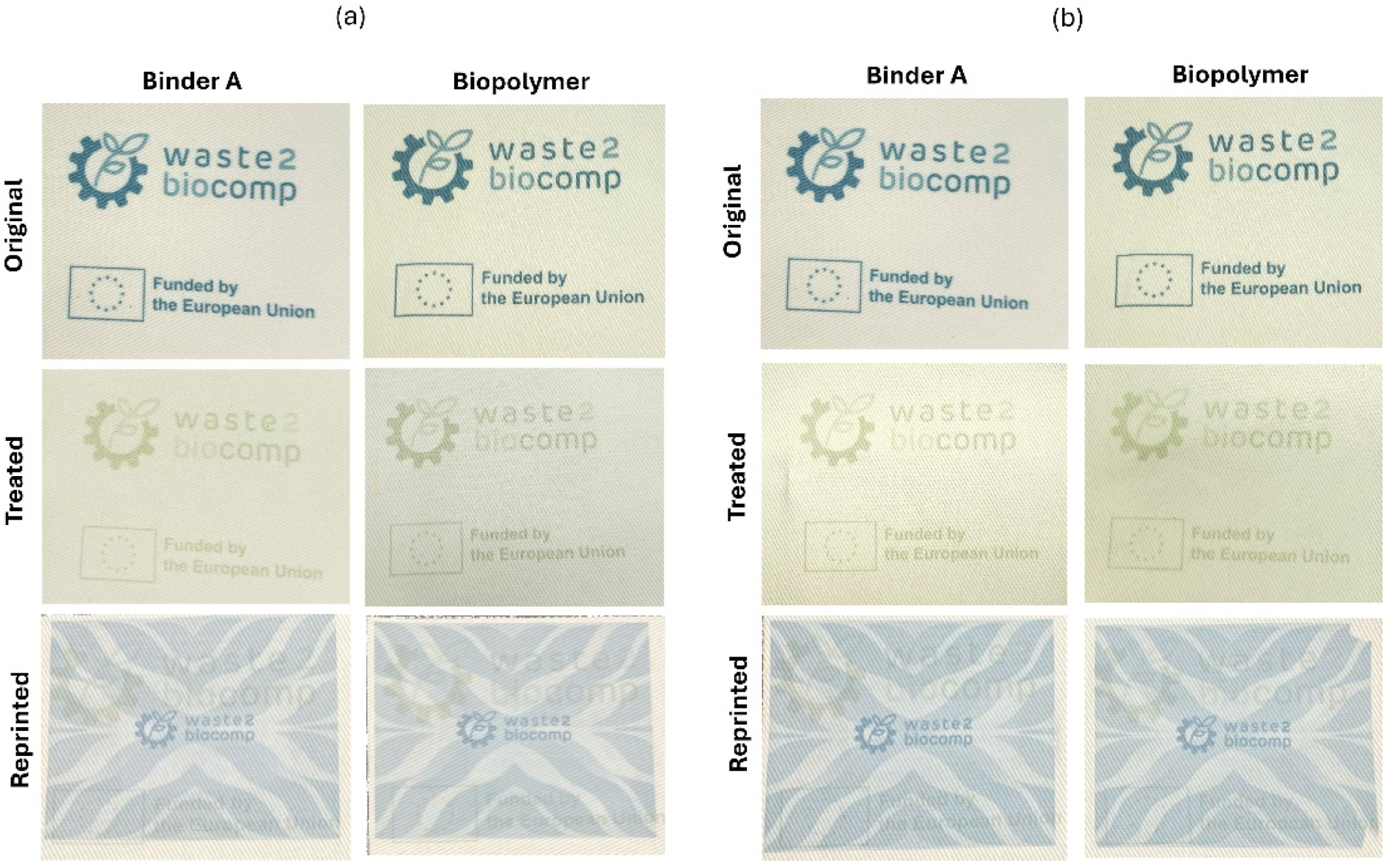
The reprinting of the samples following colour removal was conducted to validate the potential for textile reuse enabled by both pigment removal procedures. In these validation assays, the most effective conditions for both aqueous solutions and ozone were identified and selected.
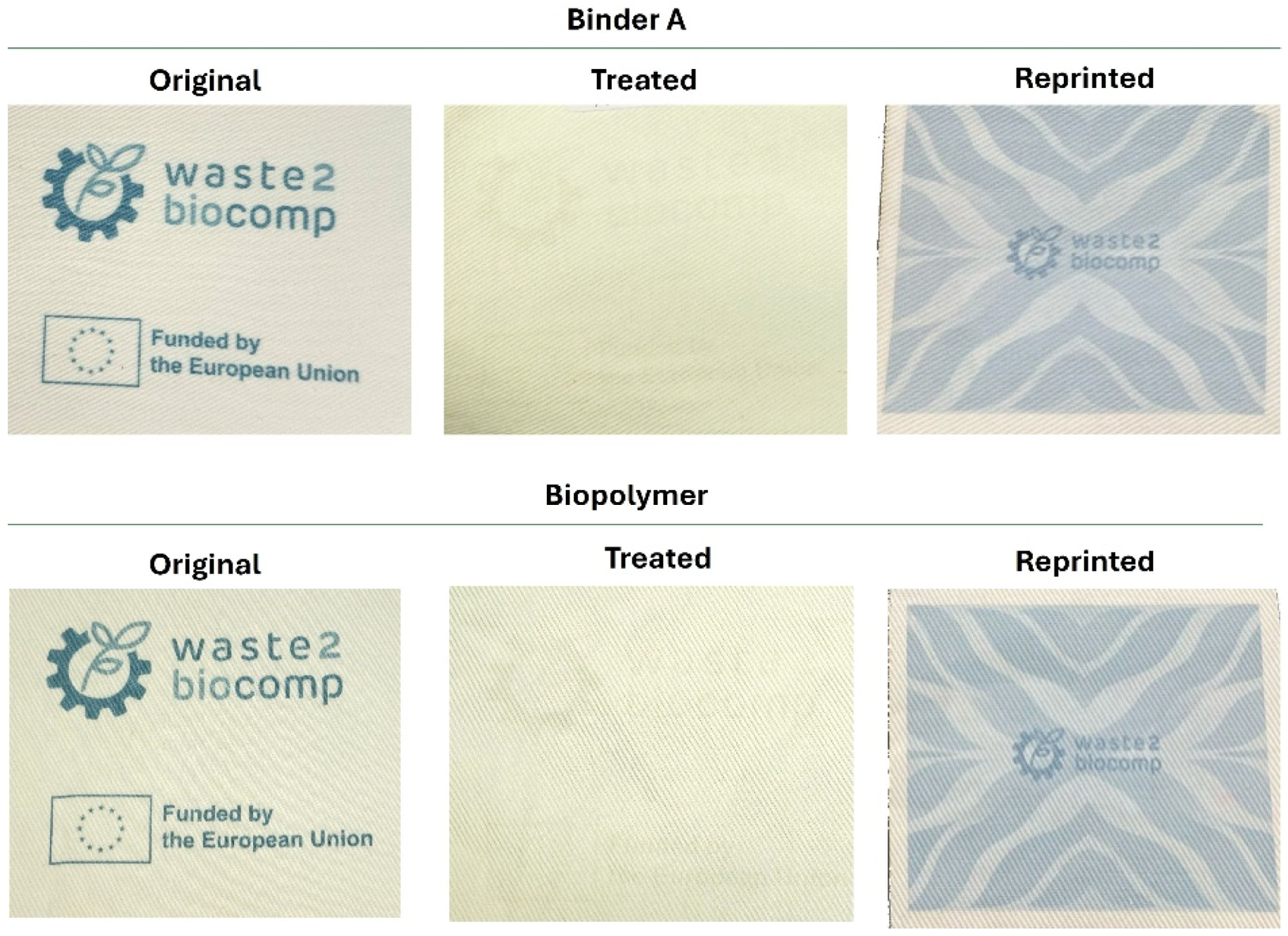
Considering pigment removal in aqueous solutions, samples pre-treated with both Binder A and the Biopolymer were evaluated. The washing step was carried out using T80, since all tested washing conditions showed very good performance. For subsequent testing, CO was selected as the substrate, and the results of the reprinting assays are presented in
Figure 7.
Upon reprinting, both Binder A- and Biopolymer-pre-treated fabrics allow clear re-deposition of new patterns (
Figure 7), validating that the use of aqueous solutions followed by a surfactant washing step treatment efficiently eliminates the initial pigment layer while maintaining the fabric’s printability.
For the ozone methodology, only the wet treatments were applied, as this approach yielded better results for the CO samples, despite the poor mechanical properties observed after treatment. The results, depicted in
Figure 8, show that the reprinting process was partially compromised by the incomplete removal of residual colour in the case of the ozone technology, which may have interfered with the uniformity and vibrancy of the new print.
Overall, both methodologies, aqueous reducing solutions and ozone exposure, successfully achieved colour removal and subsequent reprinting. However, the aqueous solutions delivered superior results, demonstrating more effective pigment removal and better reprintability, while keeping the mechanical integrity of the textile substrates. These findings confirm that overall pigment removal does not compromise the fabrics’ ability to undergo new printing cycles, reinforcing the feasibility of reprinting as a circular strategy for textile products.