1. Introduction
In recent years, the textile industry has promoted sustainable solutions, minimized the use of synthetic chemicals, and explored eco-friendly alternatives. As a result, there is now a lot of interest in investigating naturally occurring biomaterials, especially when it comes to creative use of biological resources such as insects, which have gained global interest as a potential major source of protein due to the current food scarcity scenario in many developing nations and the prospective challenges of feeding over 9 billion people by 2050 [
1].
Many insects naturally feed on organic waste and convert the biomass into nutrients, thereby reducing the amount of waste materials [
2]. Generally, two fly species, the house fly (
Musca domestica L.) and the BSF, are well-known insects for the biodegradation of organic waste. The BSF is an insect of the order Diptera belonging to the family Stratiomyidae. The BSF has obtained significant recognition as an effective agent in the management of organic waste for its exceptional capacity to convert unused nutrients left in organic waste, such as food waste, animal manure, and agricultural residues, into their body mass made of lipids, proteins, and chitin [
3,
4,
5] In Europe there are many companies (around 200 in 2017) that engage in insect breeding. These companies breed BSFs and/or mealworms to produce mainly protein meals for sale as animal feed for fish, chickens and pets [
1]. In this study, since BSFs are fed with food waste and cannot be used as animal feed, a different purpose for the use of insect proteins obtained after fat extraction has been investigated (e.g., the production of natural dyes).
It is essential to comprehend the biology and life cycle of the BSF to optimize its use in converting organic waste into valuable products. The duration of each stage varies depending on temperature, humidity, and food supply, but BSFs survive for 45–50 days [
6]. The BSF life cycle consists of four major stages: eggs, larvae, pupae, and adults. The female fly lays a cluster of 500–900 eggs (4–5 days) at a time [
7], laid near decomposing organic waste. The eggs develop into tiny larvae (14–18 days), which grow rapidly and increase in size [
8]. At this stage, BSFs can be reduced to up to 80% of the total organic waste volume [
9]. Once they reach maturity, they turn into pupae (7–14 days), become dark in color, lose weight, and are capsule-like in shape [
10]. After this stage, it becomes an adult (5–8 days), with shiny black and transparent wings, and is ready to mate and lay eggs for the next generation [
8,
11].
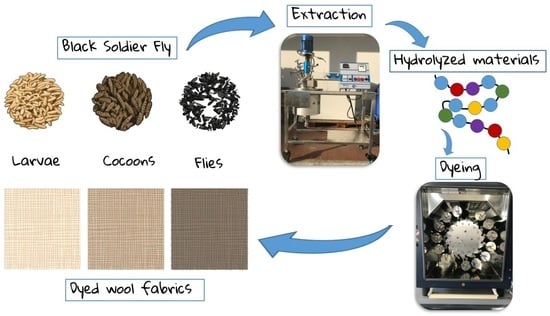
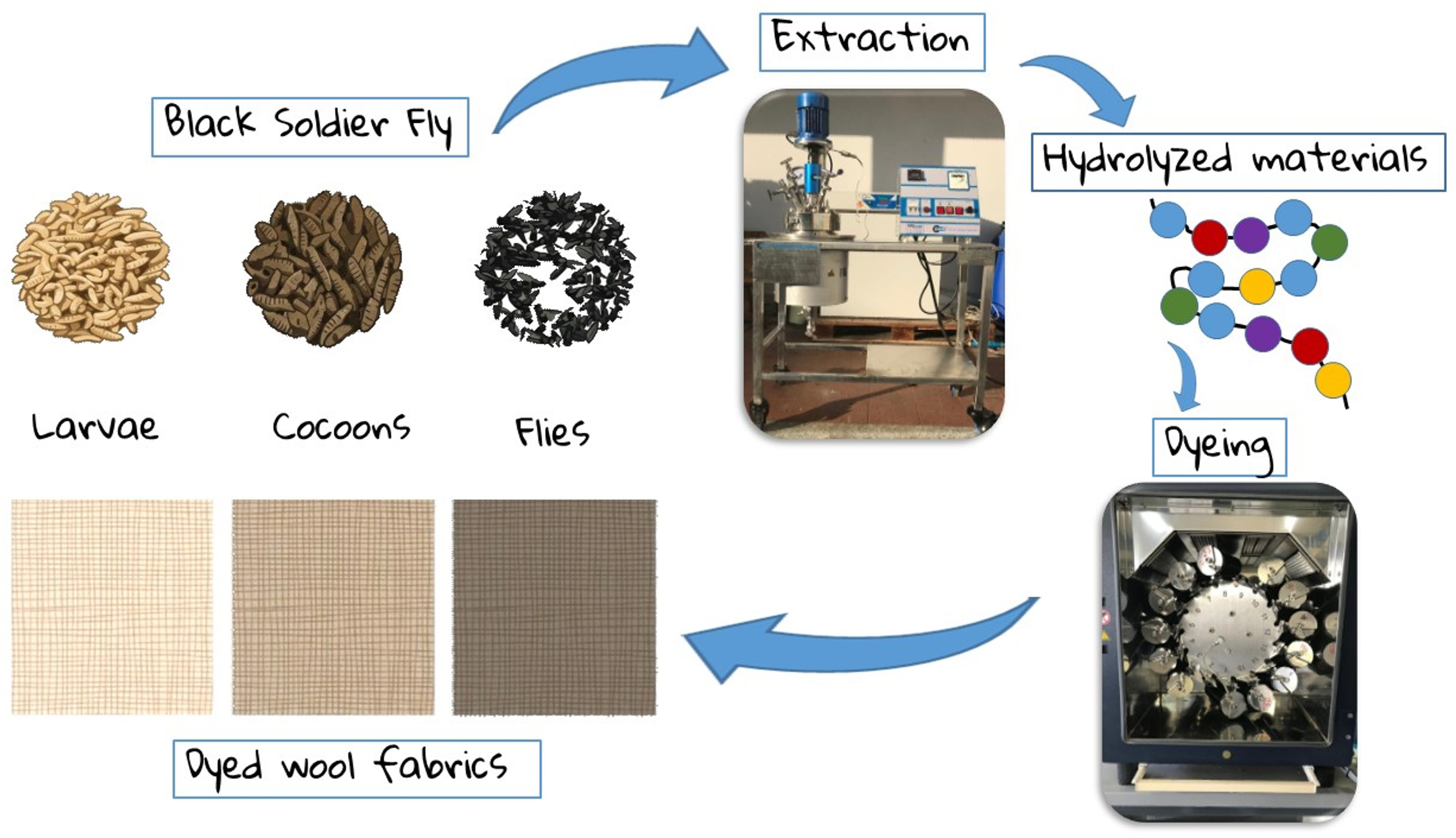
In this work, proteins were extracted from BSF larvae, cocoons (the empty cocoons of the pupae), and flies and used as natural dyes for dyeing woolen fabrics. The extraction of BSF protein has typically been conducted using acids [
12], alkalis [
13], enzymatic hydrolysis [
14], and ultrasonication [
15,
16]. There are benefits and drawbacks associated with each of the approach strategies. Some drawbacks of the acid and alkali extraction processes include the use of toxic reagents, the need for additional purification procedures, handling challenges, and high chemical costs. Although enzyme hydrolysis is a sustainable method, it is not suitable for industrial-scale use due to its high cost and lengthy processing time. Ultrasonication’s drawbacks include high energy requirements, which hinder its commercial implementation, the lack of residual effects, and its need for temperature control [
15,
16]. In light of these constraints, this work introduces the utilization of superheated water hydrolysis for the production of protein hydrolyzates from BSFs. Water under pressure that lies between the atmospheric boiling point of 100 °C and the critical temperature of 374 °C is referred to as superheated water [
17] and it can be used as a green solvent in place of conventional solvents. Superheated water has found widespread application across various industries, including the food, coffee, and waste treatment sectors, among others [
18,
19].
Furthermore, the extraction of natural dyes from BSF with superheated water represents a more sustainable alternative compared to traditional methods based on chemical alkaline agents. This process can exploit temperatures above 100 °C and controlled pressure, ensuring that the water acts as a solvent and allowing the selective recovery of a protein hydrolyzate without the use of toxic substances [
20]. The advantages this technology offers are multiple, starting with greater energy efficiency, due to short times and low electricity consumption; the production of a hydrolyzate in an aqueous solvent that can be used directly without further purification and the material sterilization. Furthermore, the non-extracted products can be reused in agriculture as fertilizers and this reduces waste in terms of raw materials. The use of superheated water for the extraction of natural dyes not only improves production efficiency but also contributes to environmental protection, thus lowering the ecological impact of the entire process.
Wool dyeing is usually carried out in an aqueous bath at boiling temperature using synthetic dyes such as acid dyes, metal-complex dyes, chrome dyes and reactive dyes, although other more environmentally friendly dyeing methods have been studied [
21].
However, synthetic dyes are substances produced from non-renewable resources, such as oil, coal or natural gas. Despite their innumerable advantages, such as low cost, wide range of shades, high resistance to environmental agents and availability, the growing environmental concerns related to their production and disposal have brought back to the fore the interest in natural alternatives, which can be derived from plants, fruits, agricultural waste and insects [
22]. For a more sustainable future, the textile sector must continue investing in sustainable alternatives, and promote a more responsible approach to fabric dyeing. The combination of conscious resource use and technological innovation will be crucial to creating an eco-friendly production system. As demand for eco-friendly, sustainable colors grows, natural alternatives made from plants, microbes, and insects are getting more attention. Natural dyes have been widely used in dyeing fabrics for centuries, but with the advent of synthetic dyes, their use has decreased dramatically. One of the main limitations of natural dyes is their poor affinity for textile fibers, which results in reduced resistance to washing and rubbing. To circumvent this problem and improve color fixation, metallic mordants made of iron and alum have been adopted [
23,
24]. In the context of textile dyeing applications, the protein fraction of BSFs has the potential to be one of the choices that can be investigated as a possible natural dye source. To promote a more sustainable economy, the current study focuses on the effectiveness of BSF-derived proteins on wool fabric dyeing. One of the objectives of the present study is to evaluate the variations in the type and quantity of extract on color strength and its interaction with the wool fiber. No study has been reported until now on the application of hydrolyzed protein of BSF fractions (larvae, cocoons and flies) as a coloring agent of wool fabrics. The dyeing of wool fabrics was assessed by color strength, washing and rubbing fastness properties on both dry and wet bases, and by morphological studies using scanning electron microscopy (SEM) and optical microscopy.
2. Materials and Methods
2.1. Materials
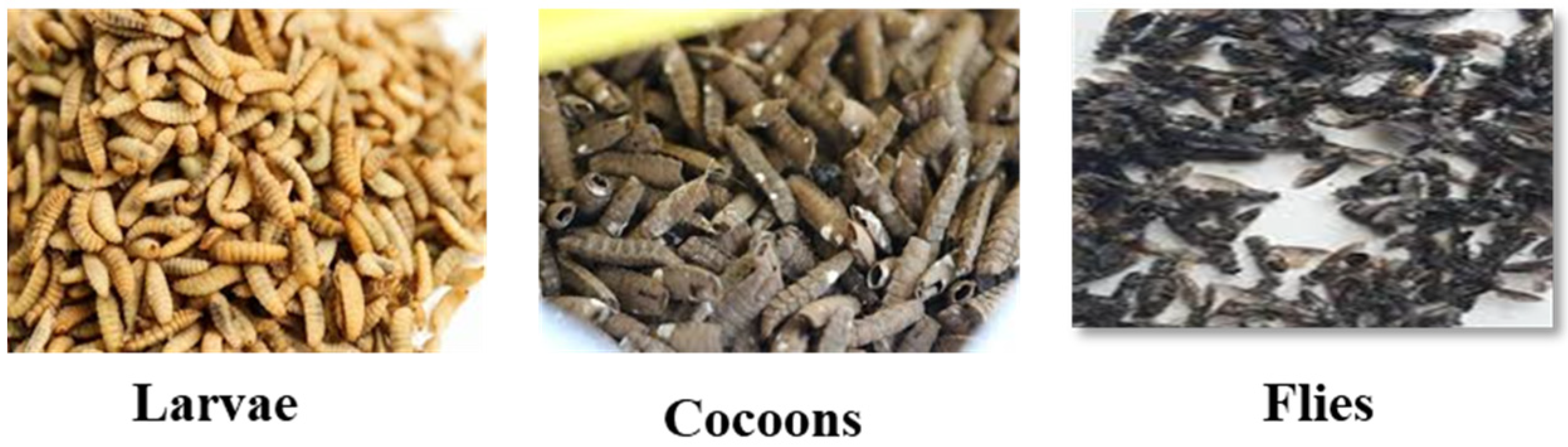
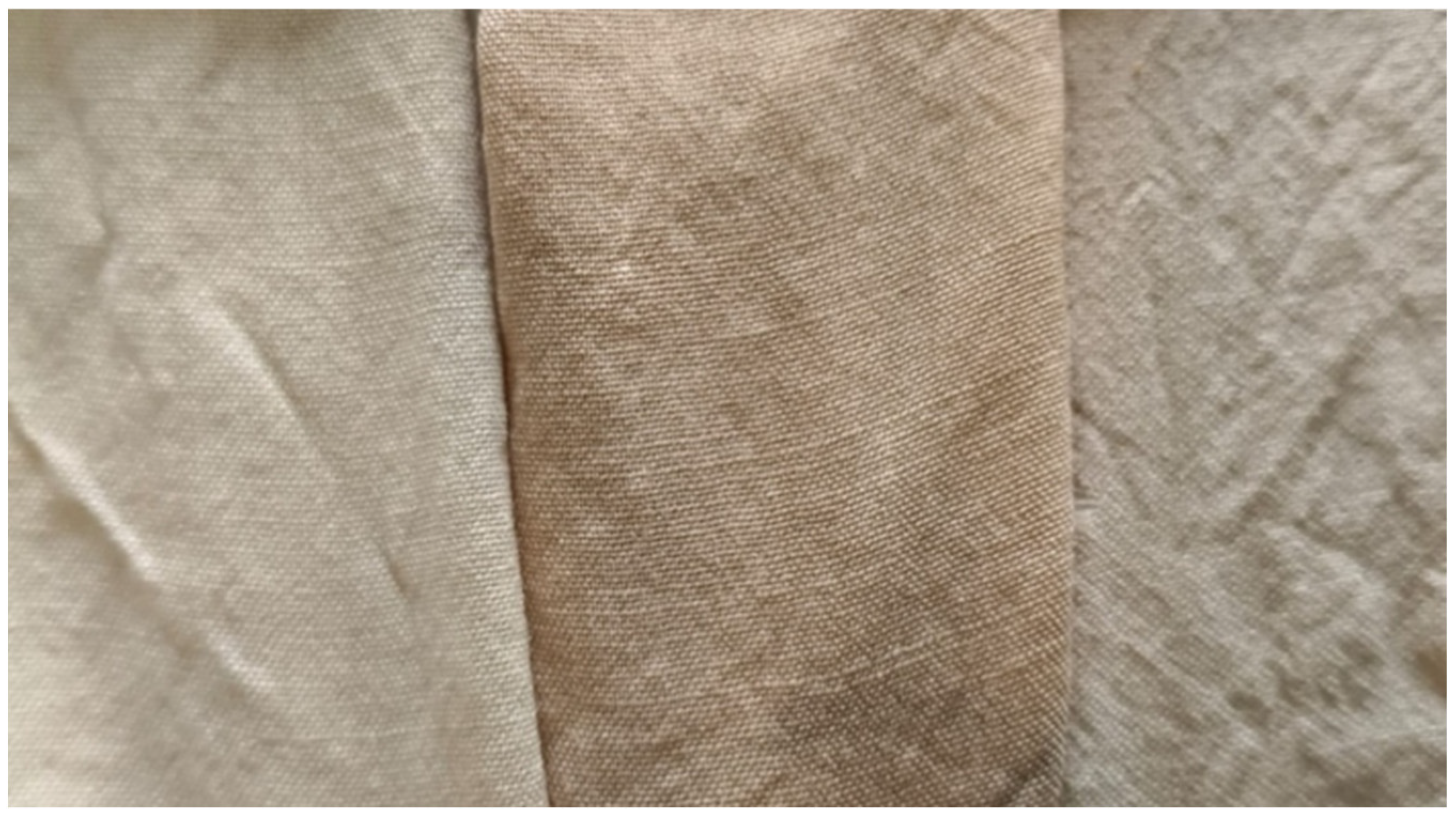
BSF larvae, cocoons and flies (
Figure 1) were supplied by the University of Turin, Department of Agricultural, Forest and Food Sciences, Italy. These insects were reared at the Tetto Frati Agrozootechnical Center in Carmagnola (Turin) in a climate-controlled chamber where temperature (29 ± 0.5 °C) and relative humidity (60 ± 5%) are precisely controlled and regulated. A ventilation system ensures a constant flow of air, thus avoiding stratification, maintaining adequate oxygenation and preventing overheating. Ammonia and carbon dioxide levels are also monitored to ensure an optimal environment.
Hexane (C6H14), iron sulfate (FeSO4 7H2O), ECE detergent, and sodium perborate (NaBO3 H2O) with a purity of >99% were purchased from Sigma-Aldrich (Milan, Italy). The wool fabric was purchased from Ausiliari Tessili Srl (Cornaredo, Milan, Italy). All of the chemicals were used as received from the supplier.
2.2. Methods
2.2.1. BSF Collection and Preparation
Each BSF sample of larva, cocoon and fly was manually selected by eliminating impurities such as soil or any food scraps. Furthermore, care was taken to prevent picking BSF cocoons or flies when gathering BSF larvae. Each sample was washed three times with distilled water, and dried in an oven at 55 °C for 24 h. After cleaning, 50 g of each BSF sample was coarsely ground in a home mixer (Bosch MSM66150 Immersion Mixer, 600 W, Milan, Italy) for 70 s before further analysis and refining.
2.2.2. Moisture, Ash and Lipid Content of BSFs
A total of 1 g of larvae, cocoons and flies was dried in a vented oven at 105 °C until it reached a consistent weight to evaluate the moisture content and the results were then computed using the following formula:
where A
i = initial weight of the BSF samples and A
f = final weight of the BSF samples.
For the ash content determination, 3 g of BSF larvae, cocoons and flies was taken in a small platinum container and heated in a muffle oven at a temperature of 550 °C for 5 h + 5 h until complete mineralization. The ash content was calculated by using the following formula:
where A
f = final weight of the ash and A
i = initial dry weight of the BSF powder sample.
A Soxhlet apparatus was used to extract the lipid content of each BSF sample, which included larvae, cocoons, and flies. Hexane was used as a solvent during the 4 h reflux of the dried BSF powder samples (20–30 g) in cellulose extraction thimbles. The amount of lipids recovered from BSF powder at the end of solvent extraction was estimated and reported to the original dry weight of the BSF powder sample using the following formula:
where W
f = weight of the extracted lipids and W
i = initial dry weight of the BSF powder sample.
2.2.3. Superheated Water Hydrolysis of BSF Samples and Hydrolyzate Amount Determination
The hydrolysis of each defatted BSF sample was conducted in a laboratory-scale reactor (Amar Equipment, Mumbai, India, model number 1-T-A-CE) utilizing superheated water. Initially, the BFS larva, cocoon and fly powder (50 g) after the lipid extraction was introduced into the reactor with one liter of water. The experiment was conducted at 170 °C, under 7 bar pressure, with a stirring speed of 403 rpm and a reaction duration of 60 min. The hydrolysis process led to uniform water penetration within the BSF powder, followed by maximal protein solubility in water. Each hydrolyzate was filtered through a wire mesh, and the protein-rich liquid was subsequently centrifuged 3 times at 8000 rpm for 15 min to remove precipitated solid material before being applied to wool fabric for hydrolyzate coloring. To ascertain the hydrolyzate concentration for wool fabric coloration, 10 mL from each liquid extract was dried in an oven at 105 °C for 4 h, and the resulting dry weight was recorded.
Moreover, the extraction yield was determined after calculating the final volume of each extract using the following formula:
where W
f is the dry weight of the hydrolyzate and W
i is the dry weight of the defatted BSF before hydrolysis.
2.2.4. FTIR Spectroscopy
A Thermo Nicolet iZ10 spectrometer (Thermo Fisher Scientific, Waltham, MA, USA) fitted with a Smart Endurance TM (diamond crystal) was used to obtain FTIR spectra in attenuated total reflectance mode. A total of 100 scans were performed with a resolution of 4 cm−1 and a gain of 8.0 in the range of 4000−650 cm−1. The current study examined FTIR spectra of original insect material, ashes and dry hydrolyzate from larvae, cocoons and flies.
2.2.5. Wool Fabric Coloration
The hydrolyzate obtained was used to color wool fabric. For coloration, previously optimized parameters [
17] such as a temperature of 90 °C, a material to liquor ratio (MLR) of 1:40, and a processing time of 60 min were used. The pH of the dye bath was set to 4.5, which corresponds to the isoelectric point of the wool fiber. To investigate the effect of hydrolyzate concentration on the dyeing of wool fabrics, five sets of different hydrolyzate concentrations, i.e., 2%, 5%, 10%, 30% and 50% o.w.f., were used. The dyeing of wool fabric using hydrolyzate was performed in a Datacolor Ahiba Nuance Top Speed II rotary dyeing machine. To enhance the dye uptake capacity of wool fiber, mordant of iron sulphate at a fixed concentration of 5% o.w.f. was used with a meta-mordanting technique. After dyeing, fabric samples were washed with cold and hot water, then soaped with 2 g/L non-ionic soap at 90–95 °C for 10 min, rinsed with cold water, and dried at room temperature.
2.2.6. Dyed Wool Fabric Characterization
A Data Color Spectro Flash SF 600X (Suzhou, China) was used to assess the color strength (K/S) of the dyed samples. The K/S values are derived from the Kubelka–Munk theory, in which the connection between the absorption coefficient (K), the scattering coefficient (S), and the fabric reflectance at maximum absorption (R) is defined by the equation shown below.
where K = the absorption coefficient; S = the scattering coefficient; R = the reflectance of fabric at maximum absorption.
The dyed samples’ color fastness to washing was determined according to the UNI EN ISO 105 C06 standard (UNI EN ISO 105-C06: Textiles Tests for color fastness Part C06: Color fastness to domestic and commercial laundry) [
25]. The UNI EN ISO 105-X12 standard (Textiles Tests for Color Fastness. Part X12: Color fastness to rubbing) [
26] was used to measure both dry and wet rubbing fastness.
An EVO 10 SEM (Carl Zeiss AG, Oberkochen, Germany) was used to perform morphological analyses on samples of wool fabric dyed with and without mordant at different concentrations of hydrolyzate. The samples were compared to a reference original wool fabric. The following parameters were set: working distance of 30 mm, acceleration voltage of 15 kV, and current probe of 50 pA. Aluminum specimen stubs were used to mount the samples using double-sided adhesive tape. The samples were sputter-coated with a 20–30 nm thick gold layer in rarefied argon using a sputter coater at a current intensity of 20 mA for 4 min.
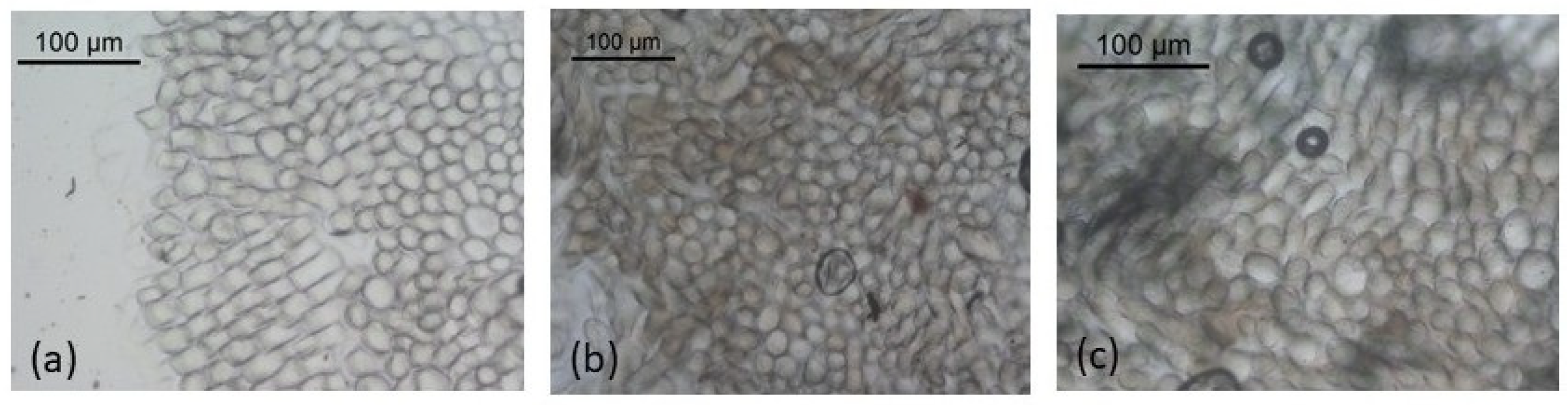
The internal structure and distribution of the dye into the fibers were visualized using a Leica DMLP light microscope in wool samples treated with the different hydrolyzates of larvae, cocoons and flies for comparison with the wool sample before dyeing.
The fiber cross-sections were prepared using a manual microtome for fibers, with the fibers incorporated and held in place with a collodion solution. Glycerin triacetate was used as a dispersion reagent.
3. Results and Discussion
3.1. BSF Composition
Table 1 shows the humidity, ash and lipid content of BSF larvae, cocoons and flies. The ash amounts determined in the larvae, cocoons and flies were 11.0%, 8.3% and 12.9%
w/
w respectively, and are in agreement with the results obtained by other authors in the different stages of BSF development [
8,
20,
27].
It is worth highlighting the high lipid content of larvae and flies (22.47%
w/
w and 21.21%
w/
w respectively), which can be considered excellent sources of fats for biodiesel production [
27,
28]. In comparison the lipid content in cocoons is much lower (4.39%
w/
w), in accordance with the results obtained by Frike et al. [
29].
3.2. Extraction Yield of Hydrolyzed Materials
In
Table 2, the hydrolyzate concentration and extraction yield for different BSF materials are shown. The concentration of hydrolyzate in water after superheated water hydrolysis is used to calculate the amount of hydrolyzate to add as a dye to the dye baths. The extraction yield of materials (mainly proteins as suggested by FTIR spectroscopy) after lipid extraction shows that high amounts of material are extractable with superheated water in larvae and flies, as already evidenced in other works [
30]. In defatted cocoons, however, the extraction yield of the hydrolyzate is much lower, in accordance with the results obtained by Fricke et al. [
29].
3.3. FTIR Analysis
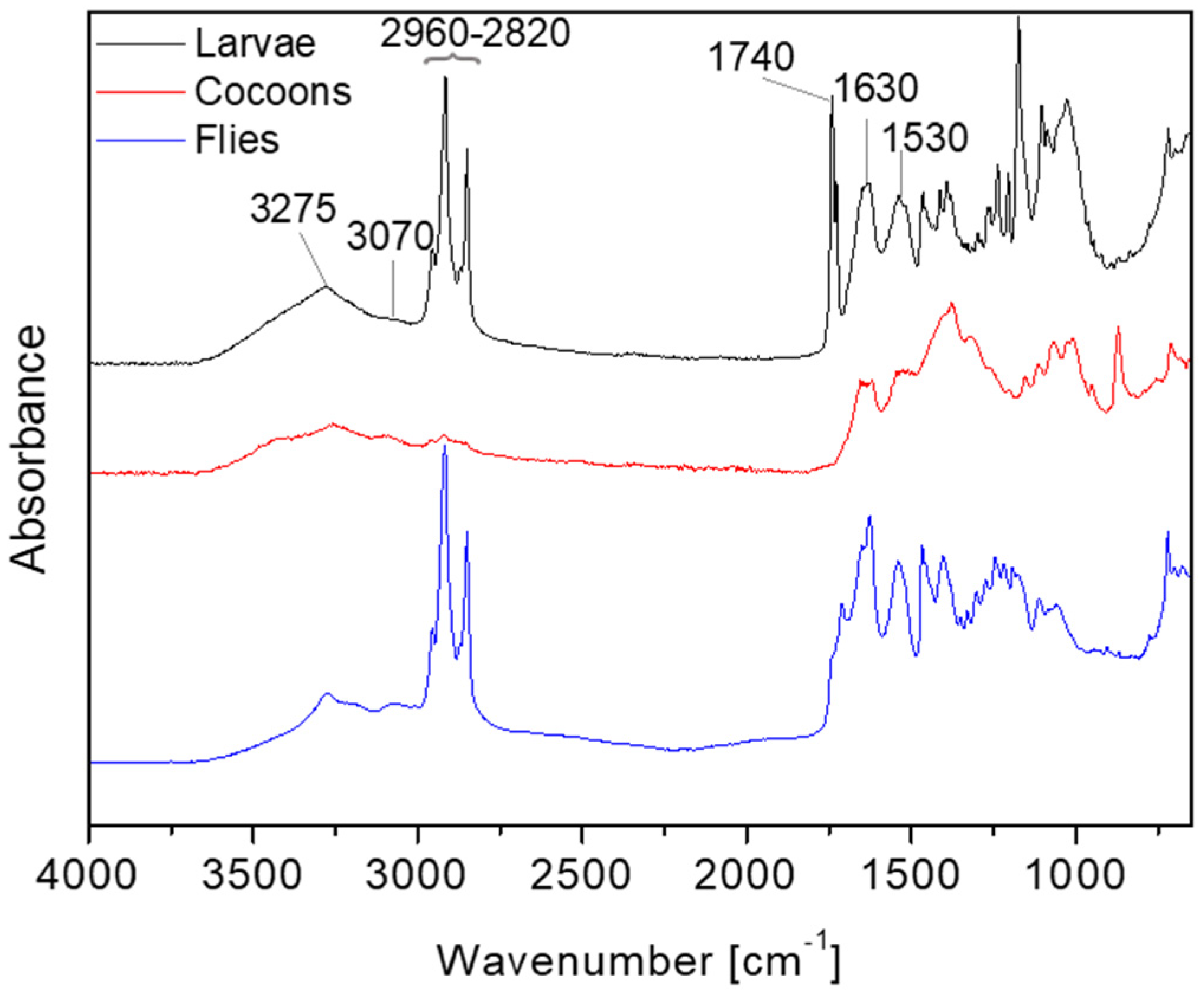
To obtain biochemical information of the BSF insect material samples, FTIR analysis was applied to the initial sample of BSF larvae, cocoons, and flies. The FTIR analysis gives solid information about the molecular composition, based on absorptions from functional groups in the mid-infrared spectrum, which can help direct towards different technological applications.
The results obtained are depicted in
Figure 2, where the different BFS compositions are clearly visible in the different insect materials. In the larvae and flies, the peaks of amides (Amide A at 3275 cm
−1, Amide B at 3070 cm
−1, Amide I at 1630 cm
−1 and Amide II at 1530 cm
−1) attributable to the presence of proteins and the absorption peaks of the -CH
2 and -CH
3 from lipids in the range 2960–2820 cm
−1 appear evident. In cocoons, lipid absorptions are less evident, while protein amide absorptions overlap with chitin amide peaks [
31], confirming the low amount of proteins and lipids present in cocoons.
Moreover, in the FTIR spectra of the larvae, the presence of the strong absorption at 1740 cm−1 attributable to the stretching of the C=O carbonyl group indicates the presence of the ester group in triglycerides.
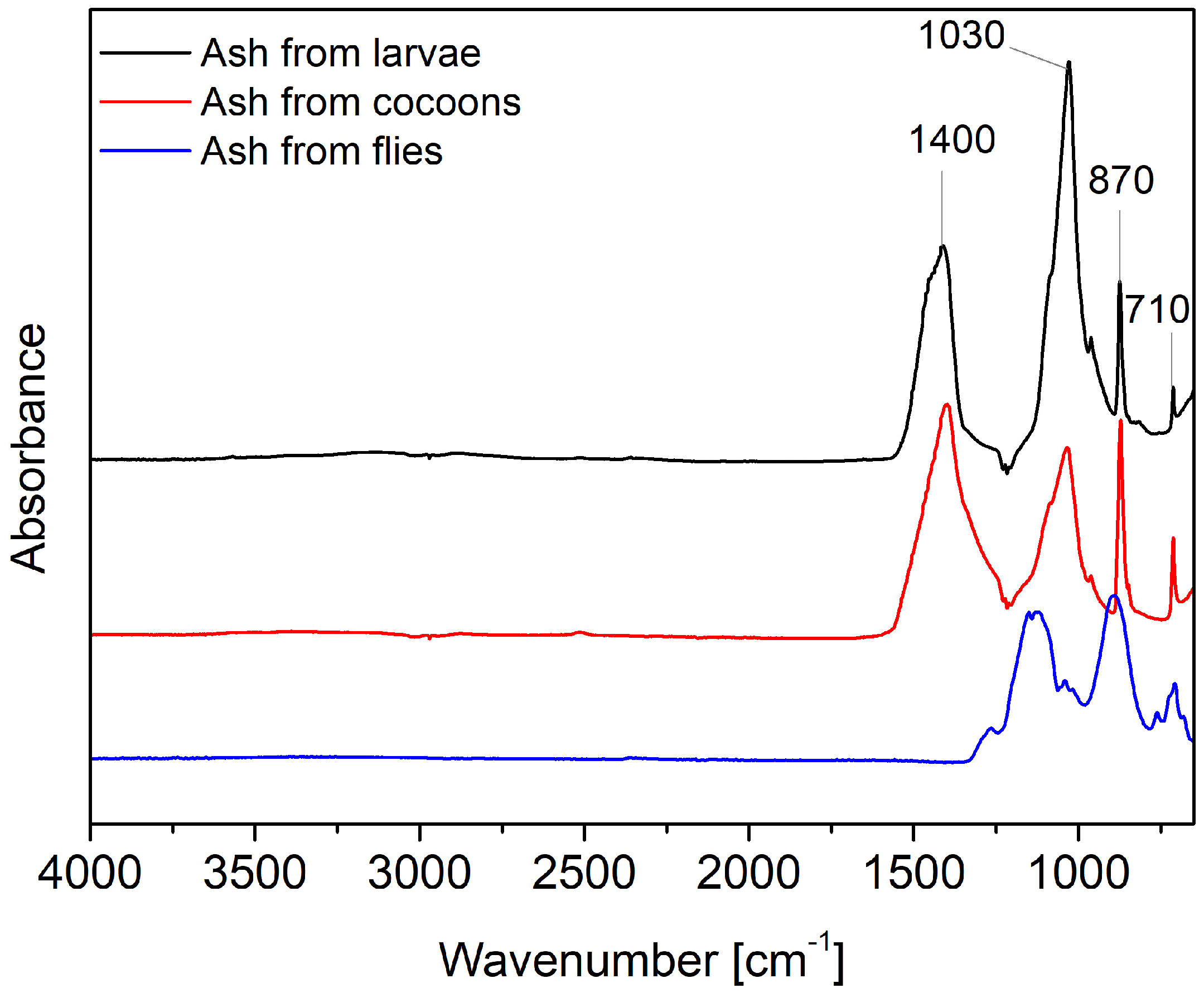
To better investigate the chemical composition of the different stages of BSF, the spectra of ash, lipids and hydrolyzates were acquired.
Figure 3 shows the ash spectrum in the larva, cocoon and fly samples. Although the different insect materials show quite similar ash content values, the spectra of ash in larvae and cocoons are different from the ash spectrum in flies. Ash spectra of larvae and cocoons show the peaks characteristic of calcite [
20,
32]. In particular, the peak at 1400 cm
−1 is attributed to the asymmetric CO
3 stretching band, while the band at 1030 cm
−1 is attributed to the symmetric CO
3 stretching band. Additionally, the band at 870 cm
−1 is attributed to the out-of-plane bending of CaO, and the band at 710 cm
−1 is attributed to the in-plane bending of CaO [
33]. In adult flies a different mineral composition is detected, as highlighted by other authors, who report that BSF flies contain very little Ca since Ca remains concentrated in the cocoons [
8].
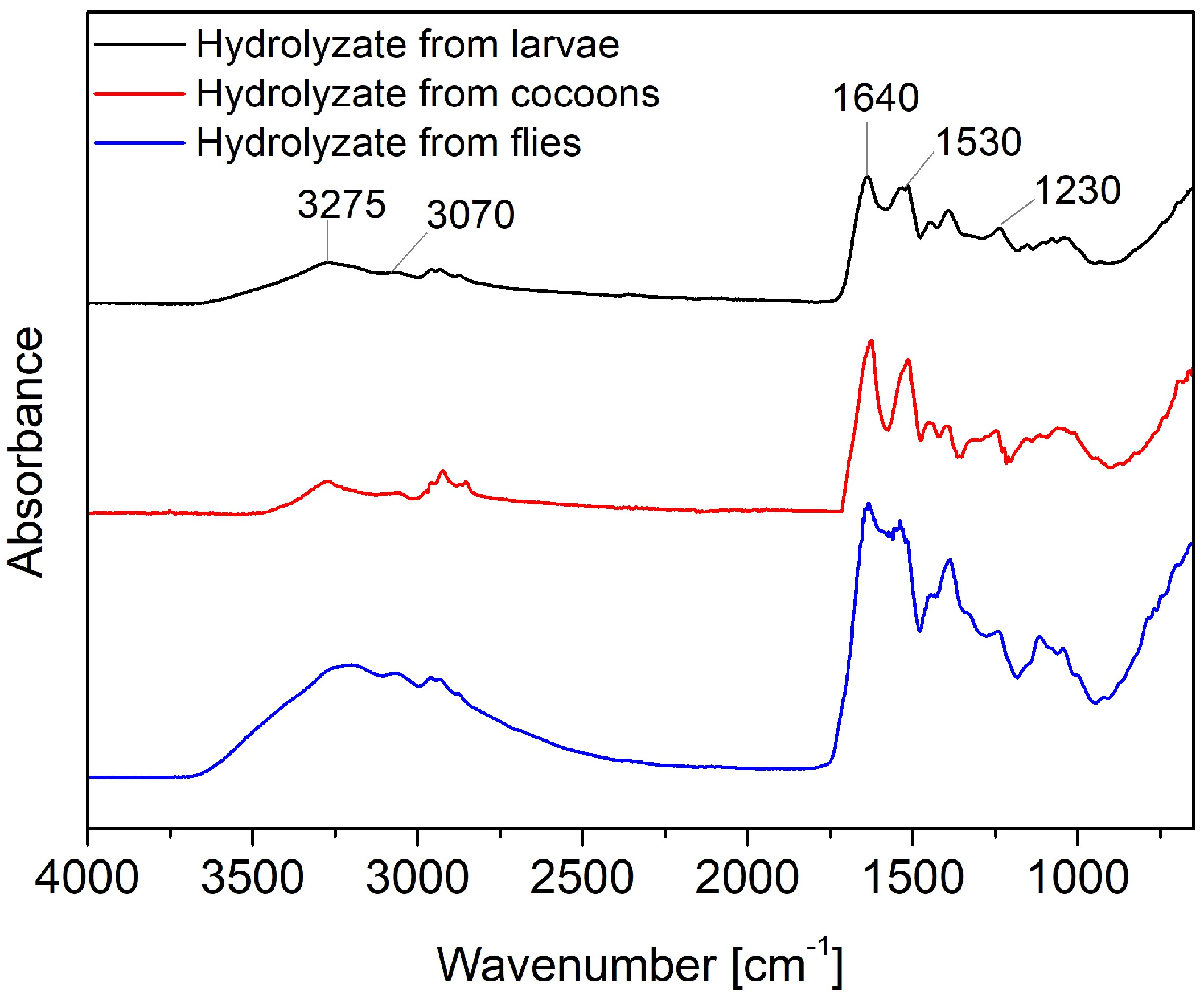
Finally, the FTIR spectra of hydrolyzates obtained with superheated water after drying by BSF larvae, cocoons and flies are quite similar and confirm their prevalent protein composition. However, other materials not detectable by FTIR spectroscopy, such as salts and pigments, may be present.
Figure 4 clearly shows that distinct FTIR spectral regions can be identified corresponding to the amide group due to the presence of peptide bonds between amino acids. These characteristic bands correspond to Amide I at 1640 cm
−1 (C=O stretching), Amide II at 1530 cm
−1 (C=N stretching and N-H bending), and Amide III at 1230 cm
−1 (C-N stretching and N-H bending). Moreover, the Amide A band at 3275 cm
−1 and the Amide B band at 3070 cm
−1, which are caused by the N-H stretching and C-H stretching, respectively, are also visible [
30,
34].
3.4. Wool Fabric Dyeing
The dyeing of wool fabrics using hydrolyzates from various BSF stages, i.e., larvae, cocoons, and flies, as dyes was studied and the fabric color strength and color fastness were measured by varying the concentration of the dye (2%, 5%, 10%, 30% and 50% o.w.f.) with and without ferrous sulfate used as a mordant. Morphological characterizations of dyed fabrics were also performed.
3.4.1. Color Strength
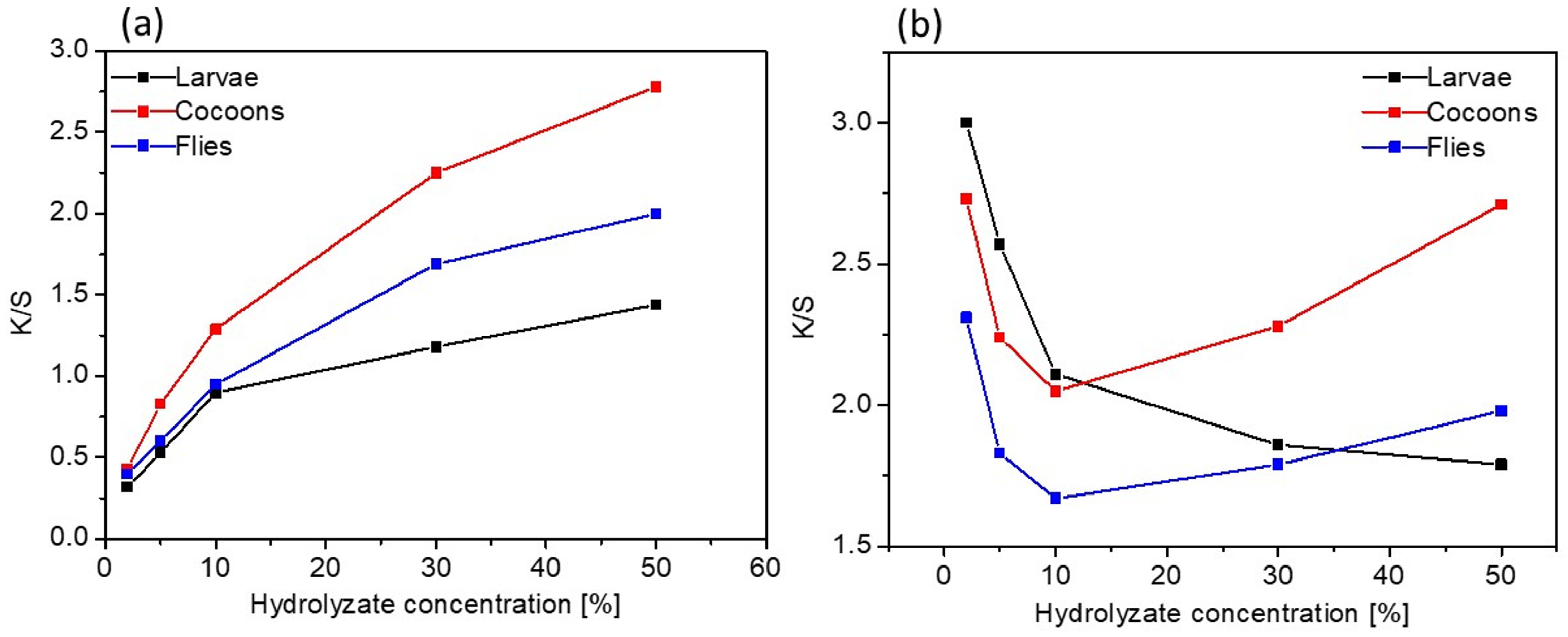
The results from the color strength (K/S value) of dyed wool fabrics without mordants are shown in
Table 3 and
Figure 5a.
It can clearly be observed that as the dye concentration increases from 2% to 50% (o.w.f.), the color strength (K/S value) of dyed wool fabrics also increases from 0.32 to 1.44 when the fabrics are treated with mordant-free hydrolyzate derived from larvae, indicating a direct relationship between dye concentration and wool fabric color strength. Hydrolyzates from cocoons and flies also show a similar trend, but their K/S values are higher than the K/S values of wool fabrics dyed with hydrolyzate from larvae at all concentrations (
Figure 5a).
The maximum K/S value of 2.78 was obtained using cocoon hydrolyzate, while the maximum K/S value of 2.00 was obtained using fly hydrolyzate, both without the use of mordant. The coloration obtained could be due to two main factors: (1) melanin pigment, which is widely present in flies and cocoons [
35], and (2) the Maillard process, a well-known browning reaction that occurs when amino acids and reducing sugars are heated, resulting in the creation of brown chemicals [
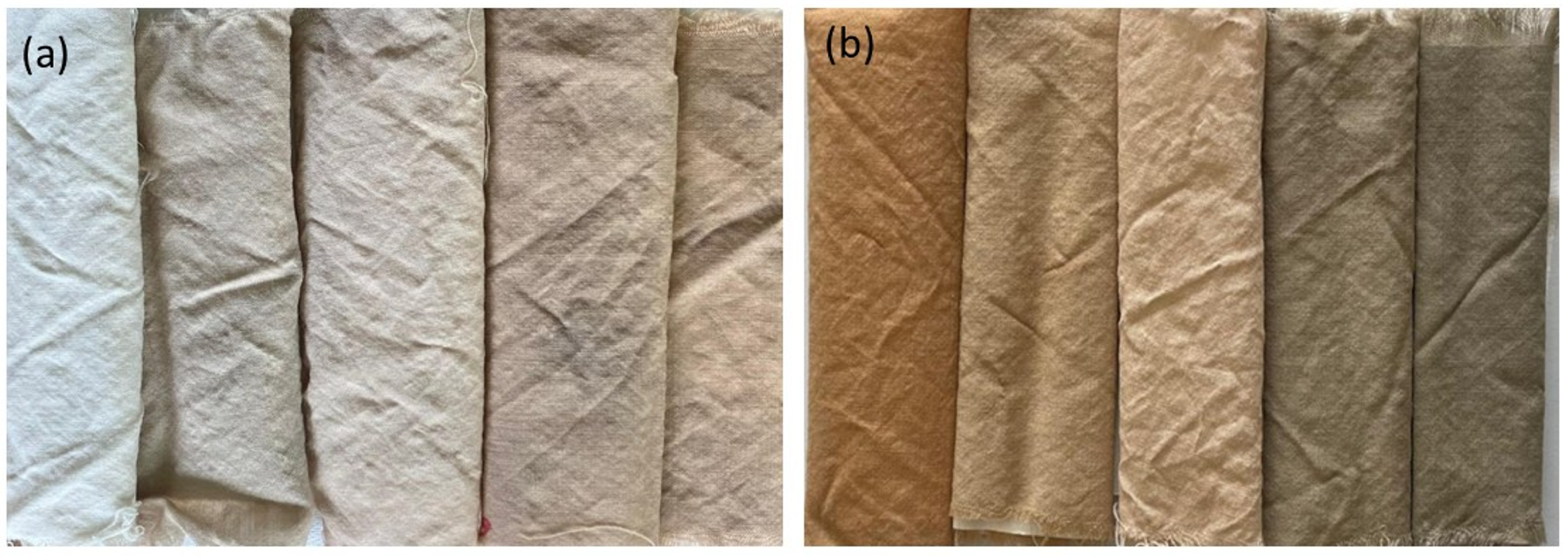
36]. The lower melanin content of the larvae most likely explains the lower color strength compared to other biomass sources. The color strength of wool fabrics dyed with hydrolyzates derived from BSF biomass is in the order hydrolyzate from cocoons > flies > larvae when no mordant is used (
Figure 6).
When iron sulfate is used in the dyeing bath as a mordant at the concentration of 5% o.w.f. it is highlighted as a decreasing trend in K/S value from 3.0 to 1.79 in wool fabrics treated with the dye extracted from larvae, with an increase in hydrolyzate concentration from 2% to 50% o.w.f. (
Table 4 and
Figure 7b). Similar trends were observed for wool fabrics dyed with hydrolyzate from cocoons and flies. The color strength of wool fabrics dyed with hydrolyzate from cocoons initially decreased from 2.73 to 2.05 as the hydrolyzate concentration increased from 2% to 10%. However, with a further increase in the hydrolyzate concentration from 30% to 50%, the color strength of the wool fabrics increased from 2.28 to 2.71 (
Table 4 and
Figure 7b). Similarly, the K/S value of fly hydrolyzate dyed tissues initially decreases from 2.31 to 1.67 as the hydrolyzate concentration increases from 2% to 10% and then increases to 1.98% with increasing hydrolyzate concentration at 50%. It is important to keep in mind that when used as a mordant, ferrous sulfate fixes natural dyes on textile fibers and alters their hues, making the colors reddish. High K/S values with mordant at low hydrolyzate concentration may be due to ferrous sulfate, which anchors the dye to the fabric and also gives wool fabrics a reddish color. Overall, the results show the effectiveness of hydrolyzate and mordant in dyeing wool, and that the hydrolyzate from cocoons showed the highest K/S values.
3.4.2. Color Fastness to Washing
The color fastness to washing grades of dyed wool fabrics at 50% o.w.f hydrolyzate concentrations from larvae, cocoons, and flies with and without mordant are given in
Table 5. From the table it can be seen that the color fastness to washing is good (grade 4) for wool fabrics dyed using hydrolyzates from larvae and cocoons in the absence of mordant and lower for hydrolyzates from flies, probably due to the presence of melanin in the extracted color which does not interact with the wool fibers. Furthermore, there were no discharges of dye on synthetic fibers and wool (grades 5 or 4/5) and an acceptable discharge on cotton fabrics. The presence of ferrous sulfate as a mordant in the dyeing recipe does not appear to improve the results obtained.
3.4.3. Color Fastness to Rubbing
Dry and wet rubbing of wool fabrics dyed with BSF hydrolyzate was studied to assess the resistance of a dyed fabric to fading or discoloration under rubbing. The results are shown in
Table 6.
Color dry rubbing fastness was found to be in the range 4–5, that is, from good to very good for wool fabrics dyed without mordant. The presence of ferrous sulfate does not seem to improve the results. The wet rubbing fastness values are slightly lower than values obtained from dry rubbing as expected [
21]. Overall, good to medium color fastness to dry and wet rubbing was achieved with this natural dye.
3.5. Morphological Characterization of Dyed Wool Fabrics
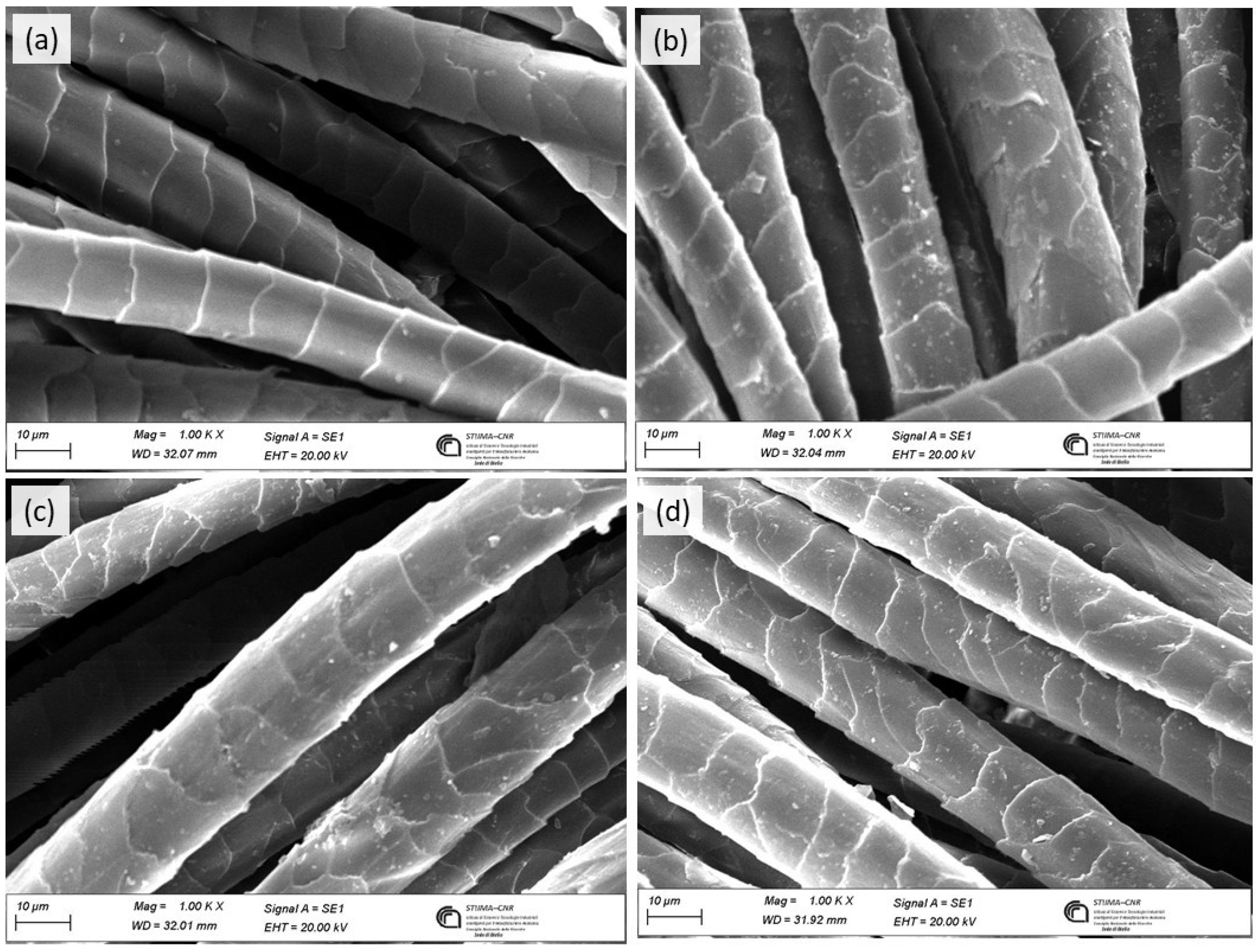
Wool fabric samples dyed with hydrolyzate from BSF were characterized using a scanning electron microscope (SEM) at 1000× magnification to evaluate the fiber surface morphology (see
Figure 8). From the figure, it can be easily observed that the untreated reference wool fabric (
Figure 8a) has a smooth, intact surface with distinct cuticular cells, characteristic of the natural morphology of wool [
37]. However, after dyeing with BSF-derived hydrolyzates with and without mordant, slight alterations were observed in the cuticle region: wool fibers appeared partially rough with surface deposits, which can be attributed to fragments of BSF-derived dyes and the residual ferrous sulfate mordant.
Cross-sections of dyed wool fabrics for comparison with undyed reference fabric were examined under the light microscope, as shown in
Figure 9. The pictures revealed that the internal part of the dyed wool fibers appeared visibly darker than the untreated wool fiber, both with and without mordant. This shows that the dye and mordant have penetrated the fibers’ internal matrix via the amorphous regions, which allow molecular diffusion [
38].
4. Conclusions
The present work clearly demonstrates that the hydrolyzates derived from BSF larvae, cocoons and flies can be used as natural dyes for wool dyeing. The process was combined with the economically viable use of superheated water hydrolysis to extract natural dyes from BSF biomass. Different insect materials, i.e., larvae, cocoons and flies, were characterized for moisture (7.3%, 9.2% and 9.8% respectively), ash (11.0%, 8.3% and 12.9%) and lipid content (22.47%, 4.39%, and 21.21%). The highest extraction yield from mainly protein material using superheated water was 47.6% in larvae, followed by a slightly lower extraction yield of 47.4% in flies, and the lowest extraction yield was 19.3% in cocoons. Hydrolyzate concentrations ranging from 2% to 50% o.w.f. with and without a 5% iron sulfate fixed mordant were applied for dyeing wool fabrics. Fabrics treated with hydrolyzate from larvae without mordant show an increase in K/S values from 0.32 to 1.44 as the dye concentration increases from 2% to 50%. Fabrics dyed with hydrolyzates from cocoons and flies show a similar pattern, but their K/S values are higher at all concentrations than the K/S values of wool fabrics dyed with hydrolyzates extracted from larvae.
Furthermore, it has been shown that the mordant is more effective at lower dye concentrations. High K/S values with mordant may be due to dye anchoring or ferrous sulfate, which alters the shades. The color fastness to washing tests gave good to poor results for color change on dyed fabrics and good to excellent grades for color release on the other fabrics, particularly on wool and human-made fibers. The dry and wet rubbing color fastness tests showed variable degrees of color discharge on the reference abrading fabric. Scanning electron microscope analysis of the fabrics showed deposits of dye and mordant on the dyed wool fabrics, while optical microscope analysis of the dyed wool fiber cross-section confirmed that the dye entered the fibers through the amorphous regions and spread homogeneously within the fibers. Overall, the superheated water extracted fraction of BSF was found to be an efficient and sustainable coloring agent. The described technique helps replace synthetic chemical dyes in production with renewable and biodegradable alternatives, which not only encourages the valorization of insect biomass but also supports the use of insects for the disposal of organic waste.





 ,
,