1. Introduction
With the growing need for the development of eco-friendly processes and increasing concerns regarding the vast use of synthetic dyes in the textile industry, natural colorants represent a promising solution to current environmental sustainability challenges [
1,
2]. Recent research on textile coloration using natural dyes has evolved beyond merely replacing synthetic dyes, moving toward multifunctional and sustainable textile finishing strategies. Natural colorants are generally regarded as biodegradable and environmentally compatible alternatives to synthetic dyes and have been investigated for dyeing a wide range of fibers (especially natural fibers). Several renewable sources of natural colorants are reported in the literature, including diverse plant extracts obtained through green extraction protocols, mineral colorants, and insect-derived and waste-derived pigments [
3,
4]. Despite the above-mentioned advantages, natural colorants often exhibit limited stability and affinity toward textile substrates of different chemical compositions, which may affect fabric color strength and fastness properties [
4]. To address these limitations, studies increasingly focus on advanced mordanting strategies which include bio-mordants, enzymatic treatments, and nano-assisted application techniques aimed at improving dye–fiber interactions [
4,
5]. In parallel, dyeing treatments that use natural colorants are being explored as multifunctional finishes capable of imparting additional properties such as antibacterial activity, UV protection, and antioxidant performance [
1,
5,
6]. Nevertheless, broader industrial implementation remains challenging due to variability color source, reproducibility issues, and difficulties in process standardization and scale-up. Consequently, recent investigations frequently compare the fiber dyeing process using natural and synthetic dyes and evaluate waste-derived feedstocks as sustainable resources, seeking to balance environmental benefits with technological feasibility.
In addition, another suitable alternative to the chemical synthesis of organic dyes is biotransformation of natural compounds via enzymatic processes. For this purpose, laccases (EC 1.10.3.2), eco-friendly multicopper oxidases with the ability to oxidize a wide spectrum of substrates, have been applied for dyeing and functionalization of textile materials [
7,
8]. Wool fabric was successfully colored using Chinese gallnut treated with laccase [
9] while Garg et al. [
10] reported in situ wool coloration and functionalization employing laccase-mediated oxidation of green tea phenolics, primarily epicatechin. Borah et al. [
11] reported successful example of dyeing and functionalization of mulberry silk utilizing polymerized catechin and gallic acid. Also, various reports show the positive effect of polymerized natural plant phenolic compounds [
12,
13,
14,
15] and polymerized polyphenol-rich extracts [
16] on cotton fabric’s color and/or functional properties. Among natural phenolic compounds, flavonoids are the most abundant ones, as they are present in plants as their secondary metabolites [
1,
17]. This large group of compounds is characterized by structural heterogeneity and different biological activities (antioxidant, antimicrobial, anti-inflammatory, etc.), which opens up many possible application routes [
18]. Oxidative biotransformation of different flavonoids by laccases can yield novel colored products in the form of their oligomers or polymers which can be used as colorants and/or functionalization agents [
11,
12,
13,
14,
19].
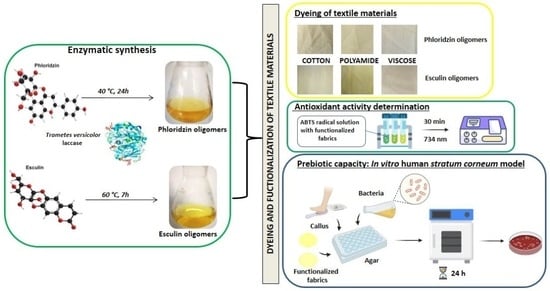
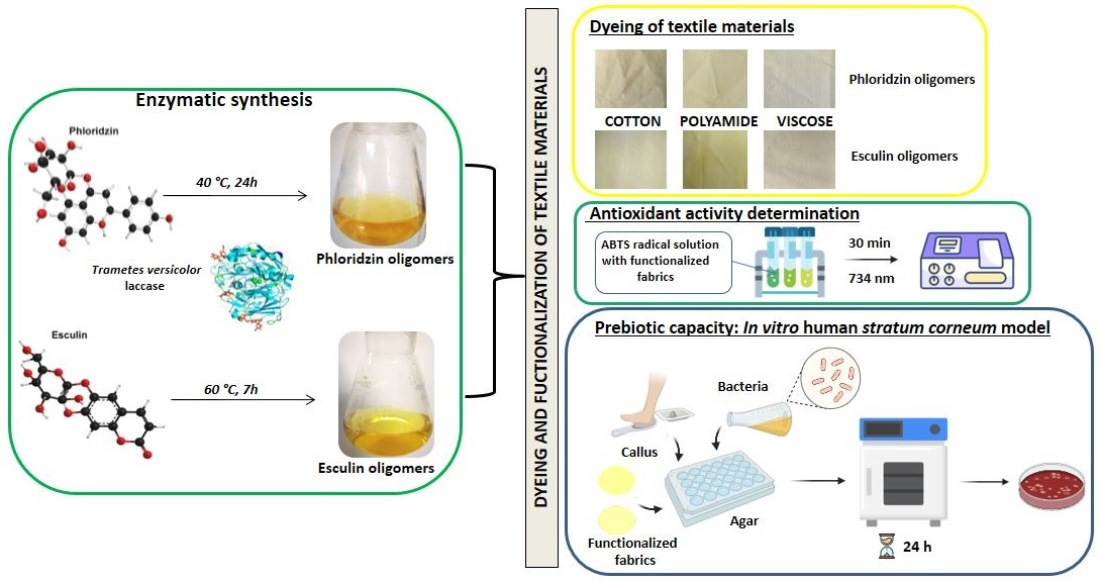
In our previous works, the laccase-catalyzed synthesis and characterization of phloridzin oligomers (oligoPh) [
20] as well as esculin oligomers (oligoE) [
21] were performed. Given the fact that this biotransformation yielded colored bioactive products with good antioxidant properties and beneficial effects on skin microbiome composition, the focus of this research was to evaluate the potential of synthesized colored oligomers’ mixtures in simultaneously dyeing and functionalizing fabric of different chemical compositions. Notably, phloridzin and esculin oligomers’ mixtures have never been applied to such combined fabric dyeing and functionalization, highlighting the originality of this approach. The optimal dyeing and functionalization conditions were determined at different conditions of temperature, time, and oligomers’ concentration, by evaluating fabrics’ color strength, color fastness to washing, as well as their antioxidant activity before and upon washing. Another key novelty of this study lies in exploring the prebiotic potential of functionalized fabrics for the first time, extending the concept of skin–microbiome modulation beyond traditional cosmetic and pharmaceutical applications. We assessed how these fabrics modulate the growth of key model strains, representing the most prevalent harmful (
Staphylococcus aureus) and beneficial (
Staphylococcus epidermidis) bacteria found on human skin. For the first time in textile research, an in vitro callus-based
stratum corneum model was applied, enabling a physiologically relevant assessment of how functionalized fabrics influence the balance between commensal and pathogenic skin bacteria without the oversimplification of standard antimicrobial assays or the cost and complexity of full organotypic 3D skin models. Unlike traditional antimicrobial tests, the
stratum corneum model preserves key structural and biochemical features that influence skin microbiota. At the same time, it offers higher throughput, lower variability, and easier interpretation compared with multi-layer 3D systems, making it an efficient and biologically meaningful platform for early-stage screening of skin–microbiome-supporting compounds.
2. Materials and Methods
2.1. Preparation of Oligomers’ Mixtures
Commercially available flavonoids, phloridzin dihydrate (99%, Sigma-Aldrich Chemie GmbH, St. Louis, MO, USA) and esculin hydrate (>97%, Acros Organics, New Jersey, USA), were used as substrates for laccase-catalyzed oligomerization, with the goal of producing flavonoid oligomers. Both reaction mixtures were produced following the previously optimized reaction conditions [
20,
21], using laccase from white-rot fungus
Trametes versicolor (>0.5 U/mg, Sigma-Aldrich Chemical GmbH, Steinheim, Germany). Briefly, for phloridzin oligomerization, the following conditions were applied: phloridzin concentration of 5 mg/mL, laccase concentration of 0.5 mg/mL, and temperature of 40 °C in 10% of acetonitrile solution for 24 h. In the case of esculin, the reaction was performed at an esculin concentration of 7 mg/mL, laccase concentration of 1.14 mg/mL, and temperature of 60 °C for 7 h in 14% methanol solution. Both described reactions were carried out under constant shaking at 130 rpm and stopped at set times by treatment at 100 °C for 5 min in order to inactivate the enzyme. Upon laccase-catalyzed oxidative oligomerization of flavonoid solutions, yellow-colored oligomers’ mixtures were obtained (
Figure S1, Supplementary Materials). In the following text, the abbreviations oligoPh and oligoE will be used to denote phloridzin oligomers’ mixture, and esculin oligomers’ mixture, respectively.
2.2. HPLC Analysis of Oligomers’ Mixtures
Reverse-Phase High-Performance Liquid Chromatography (HPLC) with UV-VIS detector was used to calculate the concentrations of phloridzin and esculin and their corresponding oligomers. The data analysis was performed using Dionex UltiMate3000 HPLC system (Thermo Scientific, Waltham, MA, USA) with the Chromeleon 7.2 software. For the separation of the phloridzin reaction species, ZORBAX Eclipse Plus C18 column (4.6 mm × 100 mm, particle diameter 3.5 μm, Agilent Technologies, Santa Clara, CA, USA) was used, while esculin reaction species separation was performed using ZORBAX Eclipse Plus C18 column (3.0 mm × 100 mm, particle diameter 3.5 μm, Agilent Technologies, Santa Clara, CA, USA). The column temperature was kept at 30 °C, the flow rate was set at 0.5 mL/min and as mobile phases, and 0.1% (v/v) formic acid solution in deionized water (phase A) and acetonitrile (phase B) were used. Phloridzin samples were analyzed using the mobile phase gradient with the following steps: 0–5 min 0–15% B, 5–35 min 15–40% B, and 35.1–40.0 min 0% B (detection wavelength 280 nm). Esculin samples were analyzed using the mobile phase gradient with the following steps: 0–5 min 0–8% B, 5–20 min 8–15% B, 20–45 min 15–35% B, and 45.1–51.0 min 0% B (detection wavelength 335 nm).
2.3. Functionalization of Multifiber Fabric
In order to determine the applicability of prepared colored oligomers’ mixtures for simultaneous dyeing and functionalization of different fabrics, initial screening was performed using Multifiber Adjacent Fabric-American Style 49 (James Heal, Lake View, UK). Multifiber fabric, containing diacetate (DI), cotton (CO), polyamide (PA), polyester (PES), polyacrylonitrile (PAN), silk (SILK), viscose (CV) and wool (WO), was immersed into each monomer solution and oligomers’ mixture (fabric-to-liquid ratio of 1:25) and incubated in a water bath WNE 14 (Memmert, Schwabach, Germany) with constant shaking at 35 °C for 24 h. After 24 h, the fabrics were removed from the vials, rinsed with distilled water, and then dried at room temperature.
2.4. Optimization of Dyeing and Functionalization Process of Commercially Produced CO, PA, and CV Fabrics
Upon the initial test on multifiber fabric, simultaneous dyeing and functionalization of commercially produced CO, PA, and CV fabrics were performed in a variety of conditions in order to study the effect of different experimental factors such as temperature (35 °C and 75 °C), time (6 h, 19 h), and oligomers’ concentration (1.5 or 3.0 mg/mL) on the fabrics’ bioactive properties and coloration. CO, PA, and CV fabrics were immersed in each oligomers’ mixture at a fabric-to-liquid ratio of 1:25 and incubated in a water bath with shaking under set conditions. The selected experimental conditions for simultaneous fabric dyeing and functionalization were chosen based on a combination of literature data and preliminary experiments, with the aim of maximizing dye uptake and functionalization efficiency while preserving the stability of oligomers’ mixtures. HPLC analysis of the oligomer solutions before and after functionalization showed no new or missing peaks, and decreases in peak areas were due to adsorption onto fabrics rather than degradation, indicating stability under process conditions. All fabrics were rinsed with distilled water upon the completion of the dyeing and functionalization process and dried at room temperature.
2.5. Characterization of Simultaneously Dyed and Functionalized Fabrics
2.5.1. Testing the Fabric Antioxidant Activity
The antioxidant activity of studied fabrics was determined by ABTS and DPPH methods [
22] with minor modifications. Briefly, 25 mg of each fabric was immersed into 0.975 mL of freshly prepared ABTS radical. The reaction took place in the dark at room temperature for 30 min, and after that, the change in absorbance at 734 nm was measured using a UV–Vis spectrophotometer (Ultraspec TM 3300 pro, Amersham Biosciences, Little Chalfont, UK). For DPPH assay, 25 mg of each fabric was added to 1.5 mL of freshly prepared DPPH in methanol (0.15 mM) and left in the dark for 1 h, after which the absorbance was measured at 517 nm. For both methods, inhibition (Inh, %) of radicals was calculated by Equation (1):
where A
c represents the initial absorbance of the ABTS or DDPH reagent, while A
s denotes the absorbance measured after completion of the antioxidant activity assay of the fabric.
2.5.2. Determination of Fabrics’ Color Strength and Color Fastness to Washing
The determination of fabrics’ color strength (K/S) was based on their reflectance recorded on the UV–Vis spectrophotometer UV-Vis 2600 (Shimadzu, Kyoto, Japan). The reflectance values for dyed and functionalized fabrics were determined at the absorbance maximum previously measured for each oligomers’ mixture (280 nm for oligoPh and 335 nm for oligoE). The Kubelka–Munk equation was used to calculate the fabrics’ color strength (K/S).
Color coordinates (L, a*, b*) in the CIELab color space were determined using the Color i7 Benchtop Spectrophotometer (X-Rite, Grand Rapids, MI, USA) under illuminant D65 using the 10° standard observer.
In order to evaluate the stability of the bonds formed between colored oligoPh or oligoE and selected fabrics, color fastness to washing was evaluated according to the ISO 105-C08:2010 standard [
23]. Dry dyed and functionalized fabrics underwent washing with 5 g/L of standard detergent (ECE Formulation Phosphate Reference Detergent (B), James Heal, Lake View, UK) at a fabric-to-liquid-ratio of 1:50 for 30 min at 40 °C in a water bath. Upon washing, the fabrics were thoroughly rinsed with distilled water, and dried overnight at room temperature.
2.5.3. Testing the Fabrics’ Prebiotic Capacity
Dyed and functionalized CO, PA, and CV fabrics that demonstrated the highest retained antioxidant activity after washing were further evaluated for their prebiotic capacity using the in vitro human
stratum corneum model according to the literature [
24]. For analysis, two skin microbiome constituents were chosen, namely opportunistic pathogen coagulase-positive
Staphylococcus aureus ATCC 25923 (American-Type Culture Collection, Rockville, MD, USA) and commensal coagulase-negative
Staphylococcus epidermidis DSM 20044 (Leibniz Institute DSMZ, German Collection of Microorganisms and Cell Culture GmbH, Braunschweig, Germany). Briefly, 24-well plates were used and 1 mL of sterile 2% agar solution in phosphate-buffered saline (PBS) was added to each well. After drying, 0.1 mL of the sterile suspension of pulverized callus in PBS was added on the top of agar-containing wells. The plates were then dried and stored at 4 °C until use. Overnight inoculums were prepared by transferring one colony of each bacterium in a sterile brain heart infusion (BHI) broth (Biolife Italiana S.r.l, Milan, Italy). Prepared bacteria were diluted 100 times in BHI medium and allowed to grow for an additional 2.5 h at 37 °C. Bacteria collection was performed by centrifugation and washing in PBS, while the resuspension of collected bacteria was performed in PBS. The bacteria were added to each of the agar-callus-containing wells at the concentration of ~10
4 CFU/mL prior to the addition of fabrics previously sterilized by heating in a sterile environment. The plates were incubated overnight at 32 °C and each model was removed from the well and added to a sterile tube containing 10 mL of PBS. The tubes were vortexed for 1 min in order to suspend the bacteria from the model and the growth of bacteria was determined for each fabric by counting the number of colonies. Control samples were prepared in the same manner, using unmodified fabric counterparts.
The growth of each bacterium in the presence of dyed and functionalized fabrics and their untreated corresponding fabrics was used to determine the fabric prebiotic capacity (PC), by using Equation (2):
where SE
S,24 and SE
S,0 are the CFU/mL values of
S. epidermidis in the presence of dyed and functionalized fabric after 24 h of incubation and at the start (0 h), respectively. SE
24 and SE
0 are the CFU/mL values for
S. epidermidis growth in the presence of non-functionalized corresponding fabric, while the SA values (SA
S,24, SA
S,0, SA
24, and SA
0) refer to
S. aureus CFU/mL values obtained under the same incubation conditions.
2.6. Determination of Fabric Suitability as Reusable Textiles
The ranking method was applied to estimate the suitability of simultaneously dyed and functionalized fabrics for use as reusable textiles. Evaluation of fabric suitability for reusable applications was based on the change in antioxidant activity after washing (ΔAntiox), color fastness to washing (ΔE), and the change in prebiotic capacity after washing (ΔPC). Each of the evaluated properties was assigned a grade from one to n, where n represents the total number of fabrics, i.e., six. A grade of “1” denotes the most favorable fabric property, while a grade of “6” indicated the poorest performance with respect to the mentioned property. In this study, higher ΔPC values indicate superior fabric performance, whereas lower ΔAntiox and ΔE values correspond to better fabric quality. Based on the average grade values, the final ranking of the fabrics was established.
2.7. Statistical Analysis
All experiments were performed in duplicate and all results are presented as mean values ± standard deviation. For the results of prebiotic capacity determination, statistical comparison was performed using one-way analysis of variance (ANOVA) followed by post hoc Tukey’s test using OriginPro 8.5. The value of p ≤ 0.05 was considered as statistically significant.
3. Results and Discussion
3.1. Dyeing and Functionalization of Mutifiber Fabric
Flavonoid oligomers’ mixtures were prepared as described in
Section 2.1, in order to obtain appropriate solutions for simultaneous dyeing and functionalization of different fabrics. HPLC analysis of reaction mixtures indicated an oligomer yield of 3.54 mg/mL for oligoPh, whereas oligoE yielded 3.67 mg/mL. The nature of tested compounds and their good antioxidant activity as well as their skin prebiotic potential [
20,
21] support our decision to evaluate the ability of these oligomers’ mixtures to simultaneously dye and functionalize fabrics with diverse chemical compositions.
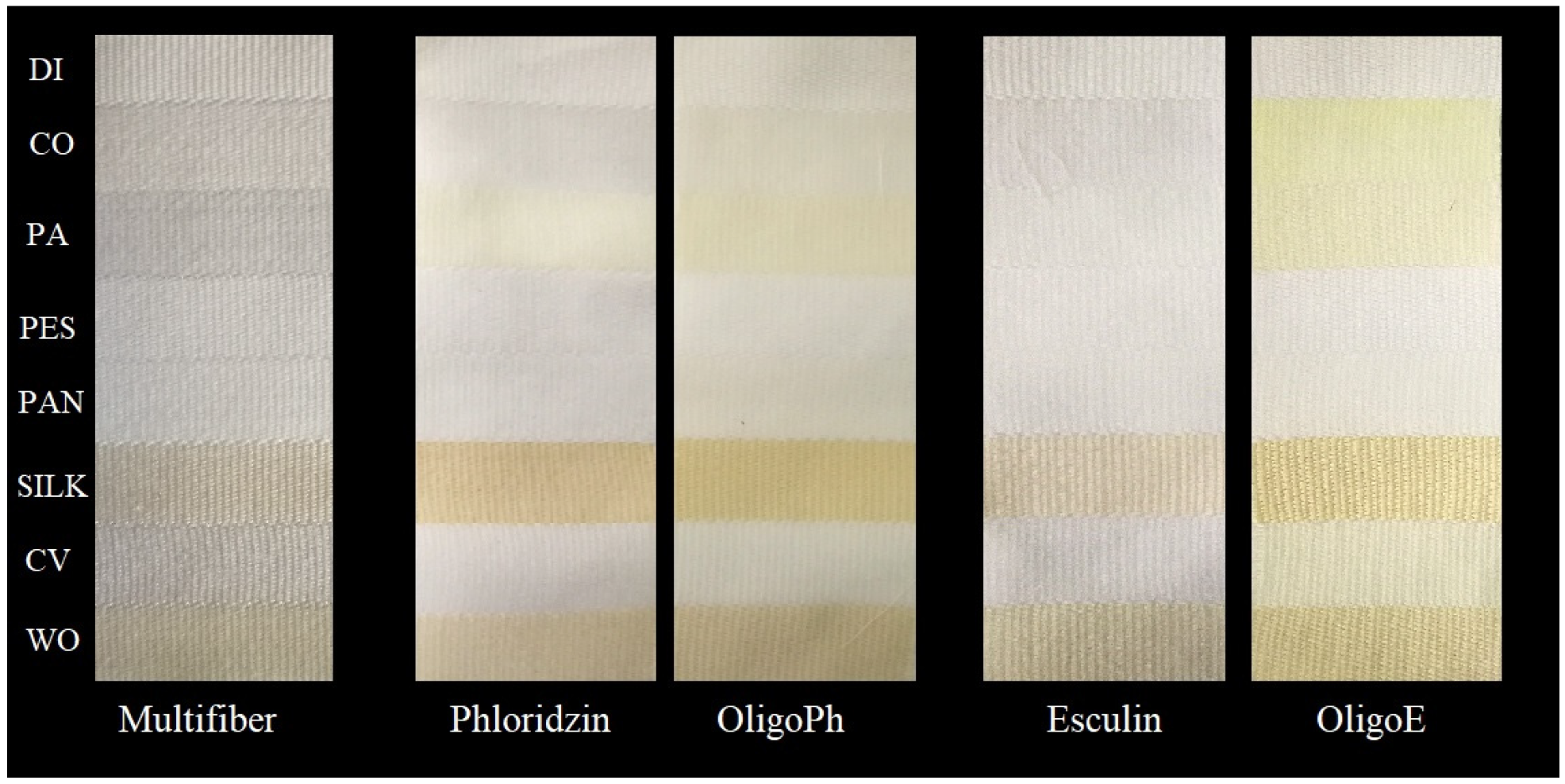
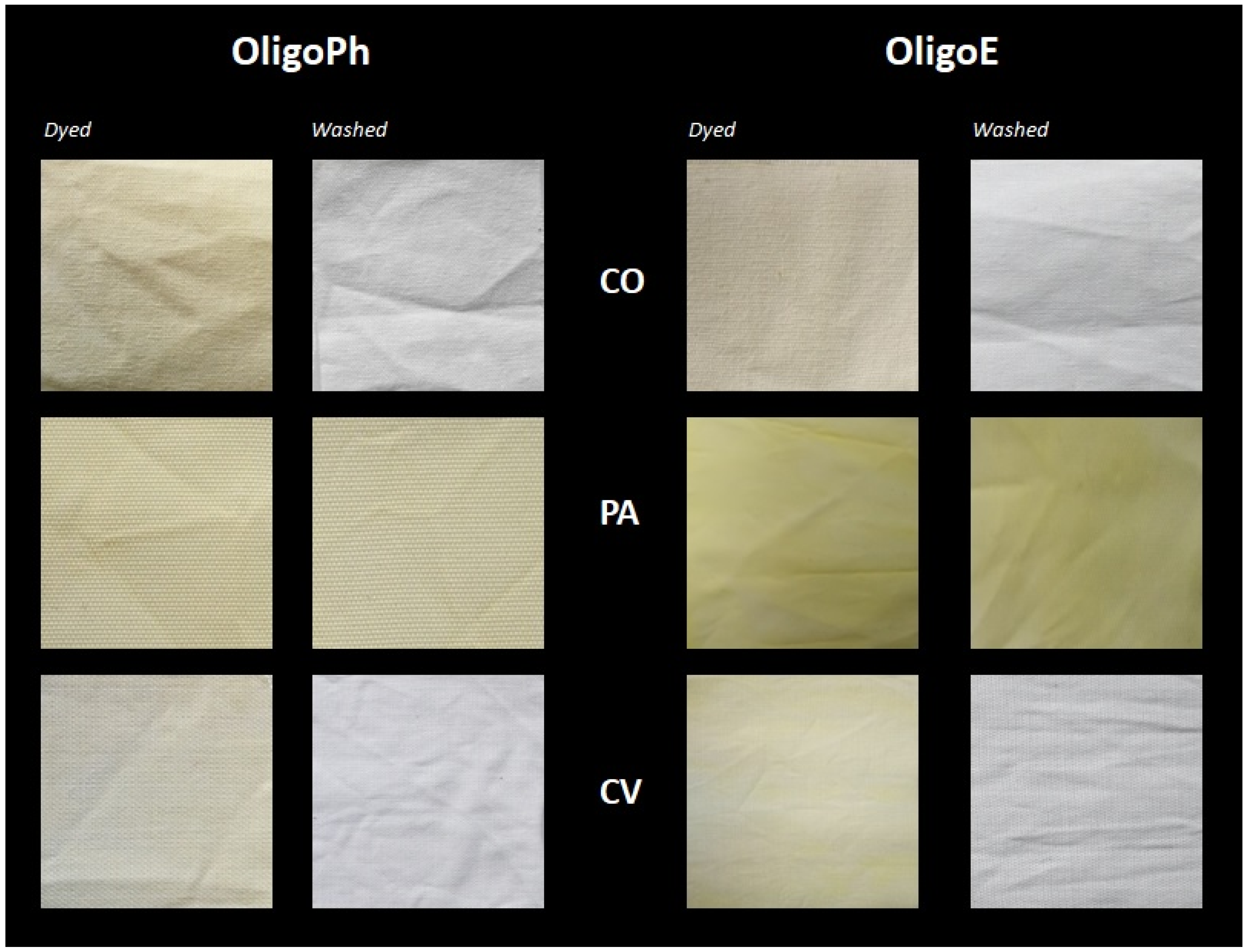
Preliminary experiments regarding the potential of oligoPh and oligoE to simultaneously dye and functionalize a range of textile materials were carried out using multifiber fabric. Simultaneous dyeing and functionalization of multifiber fabrics was performed with enzymatically synthesized oligoPh and oligoE, as well as with solutions of corresponding monomers. After drying, differences in coloration were observed between fabrics dyed and functionalized with monomer solutions and those with yellow-colored oligomers’ mixtures (
Figure 1). Upon treatment with phloridzin monomer solution (characterized by a pale yellow hue;
Figure S1; Supplementary Materials), slight color changes were observed in the PA, SILK, and WO fabrics compared to the untreated counterparts. As expected, treatment of the multifiber fabric with the colorless esculin monomer solution (
Figure S1, Supplementary Materials) did not result in any observable color change. In contrast, functionalization with oligoE resulted in a noticeable coloration of the SILK and WO fabrics, while lighter coloration of CO, PA, and CV was also observed (
Figure 1). The observed differences in color appearance among the individual fabrics within the multifiber fabric can be attributed to their distinct chemical compositions and varying affinities for binding colored compounds from the oligomers’ mixture [
25]. Compared to oligoE, oligoPh exhibited slightly lower affinity for dyeing PA, SILK, and WO, and showed slight affinity towards the CO and CV fabrics. It can be inferred that colored oligoPh and oligoE bind more effectively to natural fibers (CO, SILK, and WO) compared to synthetic ones such as PES and PAN. The reason for the latter lies in the more severe dyeing conditions required for synthetic fabrics (typically 125–135 °C under pressure for PES and 90–100 °C for PAN) to achieve adequate dye penetration [
25]. Interestingly, oligoE efficiently dyed PA unlike monomeric parent molecules, indicating improved dying properties even at mild process conditions.
To investigate whether, in addition to coloration, monomers and oligomers’ mixtures also contributed to the simultaneous functionalization of fabrics, their antioxidant activity was evaluated using ABTS and DPPH radical scavenging assays and the results are summarized in
Table 1. Additionally, untreated multifiber fabric components were tested as control. High ABTS antioxidant activity was recorded for all fabrics functionalized with phloridzin and its oligomers’ mixture oligoPh (
Table 1). Notably, total or almost total ABTS radical inhibition (>99%) was achieved for all eight fabrics functionalized with oligoPh. Similarly, in the case of esculin and its oligomers’ mixture (oligoE), very high to total ABTS radical scavenging activity (82.86–100%) was determined for all tested fabrics (
Table 1).
Regarding DPPH radical scavenging activity, four fabrics (CO, PES, PAN, and CV) functionalized with the esculin monomer and six fabrics (DI, CO, PA, PES, PAN, and CV) functionalized with the phloridzin monomer exhibited no measurable antioxidant activity response. As anticipated, functionalization of the fabrics with oligomers’ mixtures led to an increased DPPH radical scavenging activity in comparison with the effect of the corresponding monomers, highlighting the efficiency of oligomer-based functionalization in enhancing the antioxidant performance of the fabric. The observed differences in the antioxidant activity of the same fabric when evaluated using different assays (ABTS and DPPH) can be ascribed to the distinct reaction mechanisms involved, as well as the use of different model radicals [
22].
Based on the preliminary results presented in this section, CO, PA, and CV were selected for further experiments, since these fabrics demonstrated promising potential for simultaneous dyeing and functionalization using oligoPh and oligoE.
3.2. Effect of Experimental Factors on the Dyeing and Functionalization of Commercially Produced CO, PA, and CV Fabrics
After initial screening was performed on multifiber fabric, the optimization of dyeing and the functionalization process was performed on commercially produced CO, PA, and CV fabrics by varying the temperature, time, and oligomers’ mixtures’ concentration. Besides the initial temperature of 35 °C used in preliminary experiments, the effect of elevated temperature (75 °C) was also investigated, along with the reduced functionalization time (19 h and 6 h). According to the Best Available Techniques (BAT) Reference Document for the Textiles Industry [
26], dyeing of PA with reactive and disperse dyes is usually performed at near-boiling temperatures, while dyeing of cellulose-based materials such as CO and CV with reactive dyes is usually carried out at temperatures up to 80 °C. In this context, the temperature of 75 °C was selected to enable effective dye uptake while remaining slightly below conventional industrial dyeing temperatures of PA, CA, and CV, which is in line with our objective to apply milder and more sustainable processing conditions. The lower temperature of 35 °C was chosen to evaluate the oligomers’ mixtures–fabric interactions while maintaining the eco-friendly character and improved energy efficiency of the dyeing and functionalization process. The processing times (6 h and 19 h) were selected to compare shorter and prolonged treatment durations and to assess whether extended exposure enhances functionalization efficiency. The investigated oligomers’ mixtures’ concentrations (1.5 and 3.0 mg/mL) were selected based on the oligomers’ yields obtained after enzymatic synthesis [
20,
21], and preliminary screening experiments performed on multifiber fabric, which indicated that lower concentrations, should also be examined. Giving the fact that the initial screening revealed high ABTS antioxidant activity of all tested fabrics, in this section, we investigated the effect of lower oligomers’ mixtures’ concentrations (1.5 and 3.0 mg/mL) on the fabrics’ antioxidant activity both before and after washing. The optimization of the conditions for simultaneous fabrics’ dyeing and functionalization was performed in a series of experiments by evaluating the fabrics’ color strength, color fastness to washing, and differences in their antioxidant activity and prebiotic capacity before and after washing. Based on the obtained results, the quality of studied fabrics was evaluated.
3.2.1. Dyeing of CO, PA, and CV Fabrics with Flavonoid Oligomers
The ability of oligoPh and oligoE to dye CO, PA, and CV fabrics was tested under various experimental conditions by measuring the fabric color strength (K/S) values (
Table 2). The results indicate that the affinity of oligoPh compounds towards the tested fabrics is highly dependent on their chemical composition, with CO fabrics demonstrating the highest K/S values, whereas PA fabrics showed the lowest.
The concentration of oligoPh had a significant impact on dyeing performance: as oligoPh concentration increased, the K/S values of CO also increased. Prolongation of dyeing time had only a minor effect on the K/S values of CO fabrics, with the exception of the sample dyed at 35 °C with 3.0 mg/mL oligoPh. Furthermore, elevated temperature negatively affected the coloration of CO. The highest color uptake by CO (K/S = 14.46) was achieved under the following conditions: dyeing at 35 °C for 19 h with 3.0 mg/mL oligoPh (
Table 2, Exp. 4). Post-dyeing analysis of the remaining solution using HPLC pointed out that 16.81% of the initial oligomer mixture was adsorbed by CO fabric under these optimal conditions. In contrast, the color strength of PA fabrics remained consistently low under all tested conditions, with K/S values ranging from 0.12 to 1.27.
For CV fabrics, the dyeing behavior with oligoPh was more complex. K/S values: (i) decreased with increasing oligoPh concentration when dyeing was carried out for 19 h, but increased with increasing oligoPh concentration when dyeing was carried out for 6 h; (ii) generally increased with increasing temperature and time (with exception of Exp. 8,
Table 2). With a shorter treatment time (6 h), increasing the oligoPh concentration led to higher K/S values, which can be explained by the greater availability of oligomers’ mixtures’ compounds in the dyebath, promoting enhanced adsorption onto accessible binding sites on the CV surface. Under these conditions, the diffusion and fixation processes are still kinetically limited, and higher oligomers’ mixtures’ concentration favor increased surface deposition and coloration. In contrast, during prolonged treatment (19 h), increasing the oligoPh concentration resulted in lower K/S values. This behavior may be associated with the aggregation phenomena of oligomers’ mixtures’ compounds at higher concentrations and an extended time. Such aggregation can reduce the effective mobility and accessibility of oligomer compounds, limiting their penetration into the CV structure and leading to less efficient absorption. Additionally, prolonged exposure time (19 h) may promote partial desorption–re-adsorption equilibria, resulting in lower K/S values. The general increase in K/S values with rising temperature and time can be associated with enhanced molecular mobility and diffusion of oligomer compounds, as well as increased swelling of the cellulose-based fabric, which facilitates penetration and interaction of oligomer compounds with hydroxyl groups present in CV. CV fabric dyed with 3.0 mg/mL oligoPh at 75 °C for 6 h (Exp. 6) showed the highest K/S value of 6.00. It should be mentioned that HPLC analysis of the remaining solution revealed the oligomers’ uptake of 14.84% under these conditions.
The applicability of the oligoE for dyeing CO, PA, and CV fabrics was tested under the same conditions used for dyeing with oligoPh (
Table 2). From the obtained results, it is obvious that both CO and CV fabrics dyed with oligoE demonstrated significantly lower K/S values compared to their counterparts dyed with oligoPh. The highest K/S value of 2.35 was obtained for CO fabric dyed at 35 °C for 19 h using 3.0 mg/mL of oligoE (Exp. 4,
Table 2). Under the mentioned conditions, the performed HPLC analysis revealed that oligomers’ uptake reached 10.88%. It should be noted that the binding of oligomer compounds to CO primarily occurs through hydrogen bonding and Van der Waals forces. These interactions are generally less stable at higher temperatures, which explain why higher K/S values have CO dyed at 35 °C compared to those dyed at 75 °C.
Regardless of the fabric type (CO, PA, or CV), among the three experimental variables, the concentration of oligoE had the most pronounced impact on dyeing performance. Precisely, increasing the oligoE concentration resulted in higher K/S values, indicating enhanced fabric coloration. In the case of PA and CV fabrics dyed with oligoE, temperature also had a notable positive effect. Higher fabric K/S values were obtained when the dyeing was performed at 75 °C, especially when 3.0 mg/mL of the oligomers was used. Under these conditions, the best results for both fabrics were achieved when the dyeing was performed for 6 h. K/S values of 1.32 (for PA) and 2.39 (for CV) were recorded, with corresponding oligomers’ uptake of 13.80% and 7.10%, respectively.
3.2.2. Testing the Antioxidant Activity of Fabrics Simultaneously Dyed and Functionalized with OligoPh and OligoE
In addition to serving as colorants, the potential of flavonoid oligomers’ mixtures for simultaneous dyeing and functionalization of CO, PA, and CV fabrics was evaluated through the assessment of their antioxidant activity. This functional property was selected due to the pivotal role of oxidative stress on the onset of various skin disorders and infections, which can ultimately lead to tissue damage and cell death [
27]. Moreover, the durability of antioxidant activity after washing was also investigated, as this parameter can influence the long-term performance and potential applicability of functionalized fabrics as reusable textiles.
The ABTS radical scavenging activity of the functionalized CO, PA, and CV fabrics was determined, and the obtained results are summarized in
Table 3 and
Table 4. Remarkably, the outstanding ABTS radical scavenging activity (97–100%) of all oligoPh-functionalized fabrics was obtained, regardless of the treatment conditions (
Table 3). However, the washing cycle revealed the influence of different conditions, as variations in ABTS radical scavenging activities were detected, due to the differences in the strength and stability of interactions between the compounds present in the oligomers’ mixtures and fabrics of different chemical compositions. Among the three tested fabrics, and irrespective of the functionalization conditions, PA fabrics demonstrated the highest durability of antioxidant activity. Taking into consideration the HPLC analysis of remaining solutions after fabric functionalization, which showed that PA fabric exhibited the highest ability for binding oligomeric compounds, these findings indicate that the compounds within the oligoPh mixture form stronger and more stable interactions with PA compared to the other studied fabrics. It should be emphasized that PA fabrics treated in Exps. 2 and 3 exhibited similarly high durability of antioxidant activity, despite differences in treatment duration and oligomers’ mixture concentration. In both cases, the functionalization was conducted at 35 °C. Given the minimal difference in antioxidant activity observed after washing, and considering the more efficient use of oligoPh, the condition involving a lower concentration (1.5 mg/mL) and extended treatment time was selected as optimal. Upon washing, CO fabrics functionalized with oligoPh showed good durability of antioxidant activity, with an average retention of approximately 50%,
Table 3. The antioxidant activity of washed CV fabrics functionalized with oligoPh exhibited greater variations depending on the treatment conditions, especially the concentration of the oligomers’ mixture. Lower concentration negatively influenced the retention of antioxidant functionality, likely due to insufficient content of bioactive compounds and their weak interaction with CV fabric. Conversely, higher oligoPh concentrations appeared to enhance binding efficiency. It is interesting to note that the best durability of antioxidant activity for both CO and CV fabrics was achieved in Exp. 4 (
Table 3). Overall, these results indicate that a temperature of 35 °C combined with an extended treatment duration (19 h) has the best effect on the durability of these fabrics, i.e., yields the most favorable outcome for maintaining their antioxidant activity after washing.
Regarding the functionalization of CO, PA, and CV fabrics with oligoE, it can be seen that in case of natural cellulose fabric (CO) and regenerated cellulose fabric (CV), high antioxidant activity in the range of 96.0–100% (with the exception of CO, Exp. 7) was achieved under a broad range of conditions (
Table 4). On the other hand, the antioxidant activity of PA fabrics functionalized with oligoE was highly depended on the treatment conditions, indicating that a higher oligomers’ mixture concentration is required to achieve high inhibition rates and, consequently, effective functionalization of this synthetic fabric. However, by looking at the results given in
Table 4, it is obvious that higher temperature has no significant effect on antioxidant activity; therefore, a temperature of 35 °C was determined sufficient for PA functionalization. Moreover, no clear effect of the third studied variable, functionalization time, was observed on the free radical scavenging ability of the PA fabric. As observed for oligoPh-functionalized fabrics, those functionalized with oligoE also showed a decline in antioxidant activity following washing. According to the data presented in
Table 4, the durability of the antioxidant activity of CO fabrics was not significantly influenced by any of the examined experimental variables. Consequently, the application of strong functionalization conditions was deemed unnecessary for this fabric. For PA fabrics functionalized with oligoE, temperature did not exert a significant influence on the durability of antioxidant activity; however, it can be stated that extended treatment time and increased oligomers’ mixture concentration facilitated better interactions and enhanced retention of antioxidant molecules with PA. The retention of antioxidant activity in all functionalized CV fabrics after washing showed a clear dependence on oligoE concentration.
The best functionalization conditions for each fabric were determined based on antioxidant activity retention. In the case of all fabrics functionalized with oligoPh, a temperature of 35 °C and longer functionalization time (19 h) were determined as optimal, while the effect of oligomers’ concentration varied depending on the type of fabric. The best antioxidant activity retention was determined for the PA fabric functionalized with 1.5 mg/mL of oligoPh, while in the case of CO and CV, better results were obtained with higher concentration of 3.0 mg/mL oligoPh. Regarding the functionalization with oligoE, a temperature of 35 °C was also selected as optimal for all fabrics, while greater differences in the effect of time and oligoE concentration were observed. The following conditions were determined as optimal: CO-oligoE 6 h—1.5 mg/mL; PA-oligoE 19 h—3.0 mg/mL; CV-oligoE 6 h—3.0 mg/mL.
3.3. Coloration Properties of Selected Fabrics
Fabrics selected in the previous section were further characterized from the aspect of their coloration properties through the determination of color coordinates (
L*,
a*, and
b*) and color fastness to washing (ΔE). A comparative analysis of the appearance of the functionalized fabrics and their corresponding color coordinates (
Figure 2 and
Table 5) revealed that among CO-oligoPh, PA-oligoPh, and CV-oligoPh samples, the PA-oligoPh fabric exhibited the most intense coloration, as indicated by its lowest
L* value. This sample showed a greener and more yellowish hue, which is evident from its lowest
a* value and highest
b* value. The same trend was observed for fabrics functionalized with the oligoE mixture.
In the next phase of the investigation, the dyed fabrics were subjected to a domestic washing procedure, after which their color coordinates were remeasured to assess the durability of coloration. After washing, all fabrics became lighter, redder, and bluer, which is reflected in increased
L* and
a* values and decreased
b* values. Based on the data presented in
Table 5, color fastness to washing was calculated. The obtained ΔE values demonstrated that PA fabrics exhibited the highest color fastness to washing, regardless of the applied functionalization protocol. In particular, PA-oligoE 35 °C-19 h-3.0 mg/mL showed no visually perceptible color change (ΔE < 1) upon washing, indicating its suitability for reusable textile applications. In contrast, the remaining six fabrics showed poor color fastness to washing, with ΔE values ranging from 13.95 to 26.77, suggesting their suitability for disposable textile applications.
3.4. The Effect of Functionalized Fabrics on Skin Staphylococci Representatives
Human skin microbiota is a diverse group of microorganisms, whose imbalance can be linked to the occurrence of inflammations and skin diseases, such as atopic dermatitis in which case
S. aureus overgrowth can be noted [
28]. However, many cutaneous microorganisms, such as
S. epidermidis, can produce compounds that can combat the overgrowth of pathogens (primarily
S. aureus) and have a significant role in skin disease manifestation [
29]. Given the notable antioxidant activities of functionalized and washed fabrics, their multifunctionality was further assessed from the aspect of their effect on skin
Staphylococci representatives and potential skin prebiotic activity. Specifically, the effect of the functionalized fabrics on the growth of pathogenic coagulase-positive
S. aureus and skin commensal coagulase-negative
S. epidermidis was tested by using an in vitro human
stratum corneum model which mimics the conditions of human skin surface.
In general, the method for evaluating prebiotic capacity involves analyzing how the addition of a potential prebiotic sample to a surface of callus-based model influences the growth of both beneficial microorganism (S. epidermidis) and undesirable pathogen (S. aureus). A positive prebiotic capacity value indicates that the tested sample promotes a favorable microbial balance, suggesting prebiotic potential. Conversely, negative prebiotic capacity values imply an adverse impact, favoring the growth of harmful bacteria over beneficial ones.
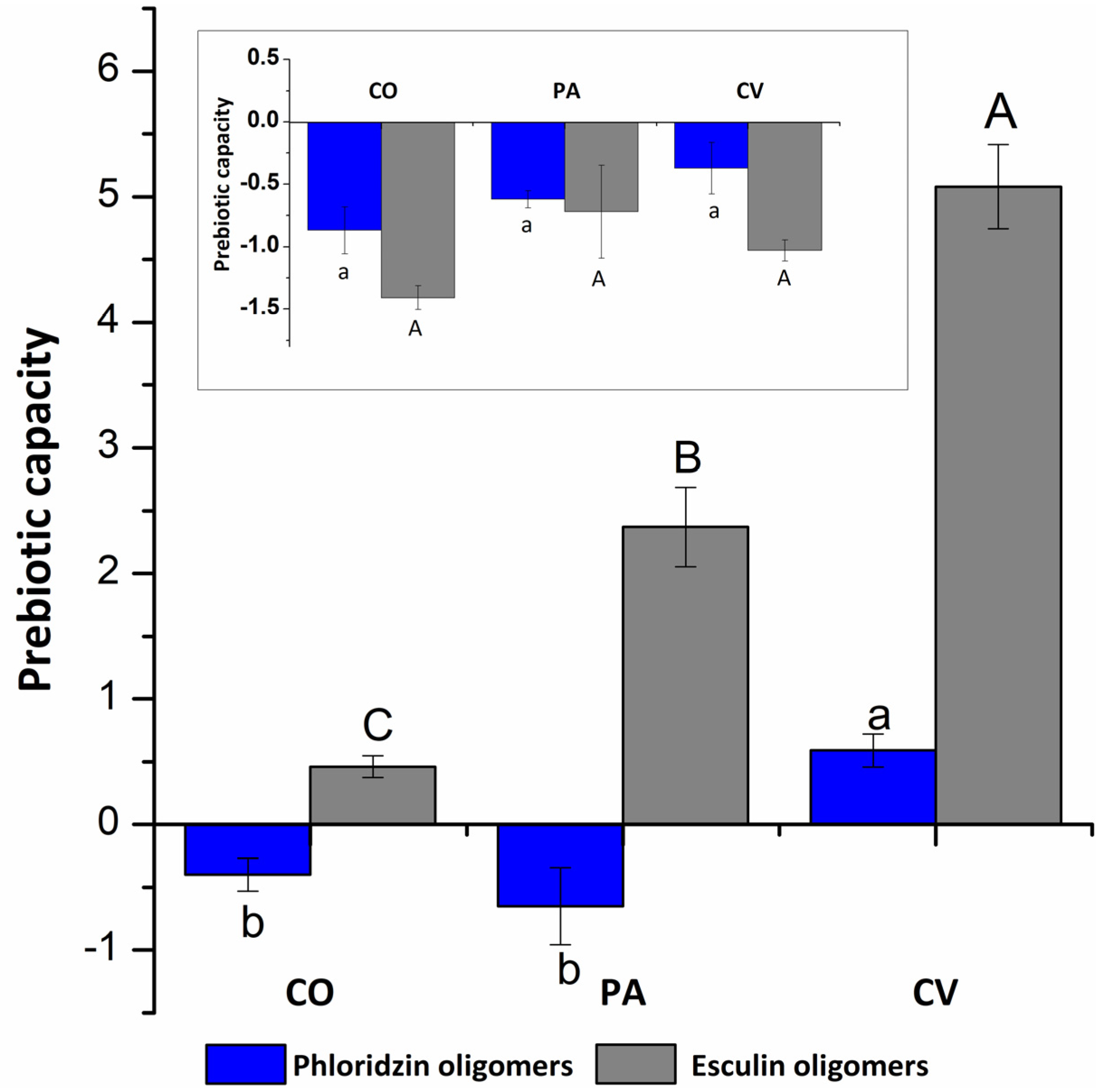
The summarized effects of the tested fabrics are presented in
Figure 3 as prebiotic capacity (PC) values, calculated according to our previously published methodology [
20]. Although the functionalized fabrics (prior to washing) exhibited high antioxidant activity (
Table 3 and
Table 4), they did not demonstrate prebiotic potential under the applied experimental conditions. In fact, all samples showed slightly negative PC values (
Figure 3, inset), indicating mild antibacterial activity toward both evaluated bacterial strains. In contrast, the prebiotic capacity of the washed fabrics differed notably from that of the simultaneously dyed and functionalized samples. These differences can be attributed to variations in the amount of oligomeric compounds retained within the fabrics after washing, as previous studies have shown that the prebiotic potential of polyphenol-rich extracts strongly depends on polyphenol concentration [
29].
For the phloridzin oligomer-functionalized fabrics, it can be seen (
Figure 3) that, after washing, the PC value for PA-oligoPh remained the same as before washing, while the PC value for CO-oligoPh was slightly higher compared to its pre-washing value, but still negative, suggesting that the reduction in the concentration of active oligomers during washing was insufficient to modulate bacterial growth in a positive way. Nevertheless, the CV-oligoPh sample exhibited a positive prebiotic effect, with a PC value of 0.76, indicating a potentially beneficial influence on skin microbiota.
A more pronounced response was observed for the washed fabrics functionalized with oligoE. All three fabrics displayed positive PC values. Among them, CV-oligoE demonstrated the strongest prebiotic potential (PC = 5.08), indicating a substantial capacity to promote the growth of beneficial S. epidermidis over pathogenic S. aureus. Additionally, PA-oligoE also exerted a significant prebiotic effect (PC = 2.37). Moreover, although CO-oligoE exhibited the lowest PC value (0.46), it still showed a mild positive prebiotic effect. Overall, these findings indicate that washed CV and PA fabrics previously dyed and functionalized with esculin oligomers’ mixtures show considerable promise for the development of healthcare textiles with targeted prebiotic functionality.
3.5. Proposing the Potential Application of Selected Fabrics
The average grade value assigned to each simultaneously dyed and functionalized fabric was used to establish the rank order of the tested samples (
Table 6). Based on the evaluated parameters, change in antioxidant activity after washing (G1), color fastness to washing (G2), and change in prebiotic capacity after washing (G3), the PA fabric functionalized with the esculin oligomers’ mixture (PA-oligoE 35 °C-19 h-3.0 mg/mL) was identified as the most suitable material (Rank I) for application as a reusable textile.
As seen from
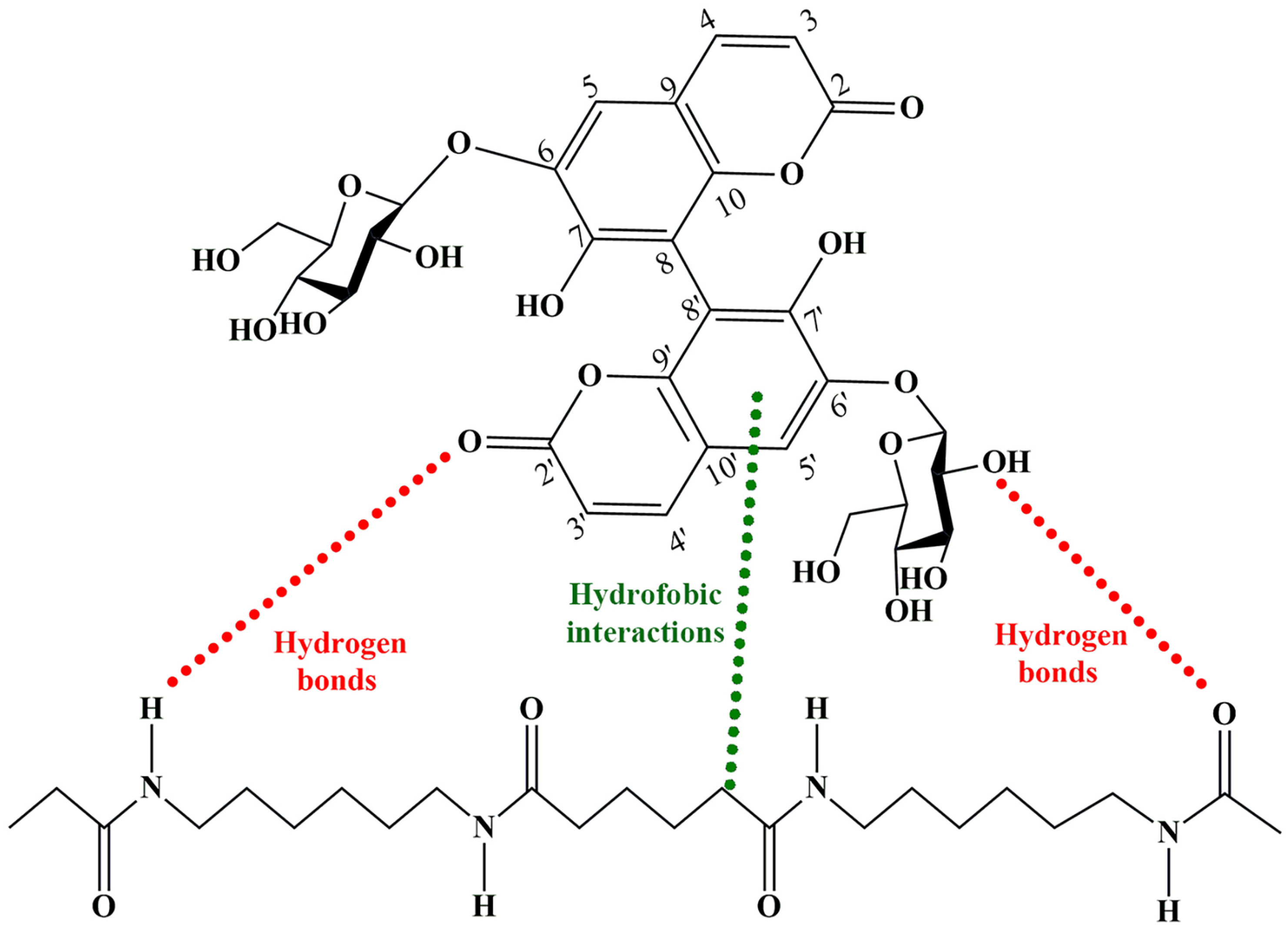
Table 6, PA-oligoE 35 °C-19 h-3.0 mg/mL fabric demonstrated the highest G2 rating and second-best G1 rating, suggesting strong bonding between oligoE and PA. Taking into account the structural complexity of both the tested oligomers and the PA fabric, it can be assumed that the binding mechanisms are multifaceted and involve multiple types of interactions. PA fibers consist of amide groups regularly arranged along alkyl chains, with a relatively low abundance of free amino and carboxylic groups. Given that oligomeric flavonoid compounds contain numerous hydroxyl groups, it is presumable that their interaction with PA fibers’ amide groups is predominantly mediated through hydrogen bonding [
30]. Additionally, hydrophobic forces driven by the tendency of oligomers’ nonpolar aromatic rings to interact with nonpolar moieties of PA chains are expected, similarly to naturally occurring flavonoids [
31].
Figure 4 shows the scheme of possible interactions between oligomeric compounds and PA, with esculin C8-C8 dimer as the model compound. Regarding G3 rating, which is second-best among tested fabrics, it suggests the strong capacity of PA-oligoE 35 °C-19 h-3.0 mg/mL to stimulate the growth of beneficial coagulase-negative
S. epidermidis and inhibit the growth of harmful coagulase-positive
S. aureus, thus demonstrating a prebiotic effect on skin microbiota. This fabric can be used for the production of dermathology-oriented clothing (garments for individuals with sensitive or atopic skin), sports and activewear (sport socks or liners), protective workwear (reusable face coverings or inner layers of protective masks, reusable gloves or glove liners for occupational use), and daily use functional clothing (reusable hygienic pads, or cloth liners).
3.6. Technological and Sustainability Considerations
From a technological perspective, the results obtained in this study should be considered with respect to both their dyeing and functional performance and process-related constraints. Although the proposed functionalization routes enable the development of colored textiles with bioactive properties, the relatively long processing times (6 h and 19 h) and the limited color range may represent limitations for direct industrial implementation. Compared with conventional synthetic dyeing processes, which are typically faster (lasts about 3–4 h at 60–80 °C) and offer a broader and more standardized shade range, the present approach prioritizes mild processing conditions and multifunctionality over color versatility. Nevertheless, the studied method demonstrates potential added value for specialized or high-performance textile applications where functional properties such as antioxidant activity and prebiotic capacity are more important than color diversity. From a sustainability standpoint, a simultaneous dyeing and functionalization protocol is environmentally favorable due to the use of bio-based compounds, low processing temperatures, and the absence of conventional metal-based mordants. Future research should address a full life-cycle assessment (LCA) and techno-economic evaluation, with the aim of facilitating further process optimization and improvement in its industrial feasibility.
4. Conclusions
The simultaneous dyeing and functionalization of CO, PA, and CV can be efficiently performed by utilization of enzymatically synthesized colored oligomers’ mixtures from two naturally occurring flavonoids, esculin and phloridzin. Among various studied fabrics, polyamide functionalized with 3.0 mg/mL esculin oligomers’ mixture for 19 h at 35 °C, possessed 95.37% antioxidant activity (57.08% after washing), excellent color fastness to washing (ΔE = 0.87), as well as moderate prebiotic capacity after washing (PC = 2.37). It was identified as suitable for producing reusable colored textiles, including dermatology-oriented garments, sportswear, protective workwear, and daily use functional items such as hygienic pads or cloth liners. This research broadens the scope of flavonoids and integration of laccases in textile dyeing and functional finishing.





 ,
,