


Abstract
This scientometric review examines the evolution and scope of invasive (blood and tissue) and non-invasive (faeces, hair, and saliva) sampling in terrestrial mammal population genetics, with particular emphasis on the comparability of observed heterozygosity (Ho), expected heterozygosity (He), and the inbreeding coefficient (Fis) between studies published from 1985 to 2026. Searches in Web of Science and Scopus, filtered under PRISMA/PRISMA-S criteria, yielded a compendium of articles analysed with Bibliometrix and VOSviewer 1.6.20 to quantify temporal production, keyword evolution, collaborative networks, and publication outlets. Searches in Web of Science and Scopus, filtered under PRISMA/PRISMA-S criteria, yielded a broad corpus of 145 articles for general scientometric analyses, of which 85 met the eligibility criteria for the focused analysis of Ho, He, and Fis. The field shows steady growth (annual rate ≈ 6.1%), substantial authorship and international collaboration, and increasing thematic diversity. Adoption of non-invasive sampling has accelerated, broadening spatial and taxonomic coverage, but also increasing exposure to DNA degradation and genotyping error when laboratory quality control is insufficient. Across the literature, reporting of quality control practices (e.g., extraction blanks, negative PCR controls, multi-tube replication, and error-rate estimation) has improved over time but remains inconsistent. Comparisons indicate that differences in Ho, He, and Fis between invasive and non-invasive sampling are generally modest once marker system and species are taken into account. These findings indicate that quality control and transparency in reporting, rather than invasiveness per se, are the main factors determining comparability among studies. The scientometric patterns also reveal a methodological transition from microsatellites to SNP-based and reduced representation approaches, with implications for synthesis across marker types. Overall, this review identifies geographic and taxonomic biases in research effort and highlights the need for standardised reporting of DNA quality indicators, inclusion thresholds, and validation protocols to strengthen genetic monitoring in mammalian conservation.
1. Introduction
Habitat loss, fragmentation and other anthropogenic pressures continue to erode the genetic diversity of wild mammal populations, with consequences for demographic viability, adaptive potential and extinction risk [1,2]. In conservation and population genetics, a basic set of metric-observed statistics—heterozygosity (Ho), expected heterozygosity (He) and inbreeding coefficient (Fis)—provides comparable indicators of genetic status and deviations from Hardy–Weinberg equilibrium at loci [3,4]. These statistics inform management by revealing excess homozygosity (Fis > 0) or heterozygosity (Fis < 0) and by flagging populations at risk of genetic erosion. It is critical to note that the reliability and comparability of Ho, He and Fis estimates depend on how the DNA is obtained. Invasive samples (e.g., blood and tissue biopsies) often produce high-integrity DNA, which minimises genotyping errors, but they require animal capture and pose ethical and logistical constraints [5]. Non-invasive samples (faeces, hair, and saliva) extend spatial and taxonomic coverage, especially for elusive or threatened species, but often contain low-quality or degraded DNA, raising the risks of allele loss and false alleles, unless strict laboratory and bioinformatics security measures are in place [6,7]. As genetic monitoring gains importance in conservation policy and assessment (e.g., integration of genetic indicators into threat assessments), understanding how the mode of sampling shapes the literature and the metrics that are published is of immediate practical relevance [8]. Despite the plethora of case studies covering marker systems from microsatellites to SNP panels, no field-level synthesis has been conducted that reflects how the choice between invasive and non-invasive sampling has influenced scientific productivity, collaborative networks, keyword trajectories and, most importantly, the comparability of He, Ho and Fis in terrestrial mammal studies. Scientometric tools such as Bibliometrix and VOSviewer allow for quantitative scientific mapping of temporal production, co-authorship structure and thematic co-occurrence to address precisely these questions [9,10]. In this paper, we conduct a scientometric analysis (1985–2025) of terrestrial mammal studies reporting on Ho, He and Fis, paying particular attention to the mode of sampling (invasive vs. non-invasive). Specifically, we (1) characterise temporal trends in publication volume and emerging themes; (2) identify the countries, institutions and journals driving production and describe the architecture of their collaborative networks; and (3) quantify the expansion of non-invasive sampling and assess its implications for DNA quality control, genotyping error management and inter-study comparability of key genetic metrics. By integrating scientific mapping with targeted assessment of sampling practices, our synthesis provides an evidence-based agenda for standardising DNA quality indicators, reporting thresholds and validation protocols, thereby improving the robustness and interoperability of genetic monitoring in mammalian conservation. In this paper, we conduct a scientometric review of terrestrial mammal studies published between 1985 and 2025 that used invasive or non-invasive samples in conservation-oriented population genetic research. The primary objective of the study is descriptive: to map temporal trends in publication output, thematic development, geographic participation, collaboration networks, and journal patterns in this field. As a complementary objective, we examine how sampling mode, marker system, and quality control practices have been reported in the subset of studies that included Ho, He, or Fis, in order to assess the methodological conditions under which these indices are interpreted and compared in the literature. Thus, the manuscript is intended principally as a scientometric mapping exercise with a focused methodological synthesis.
2. Materials and Methods
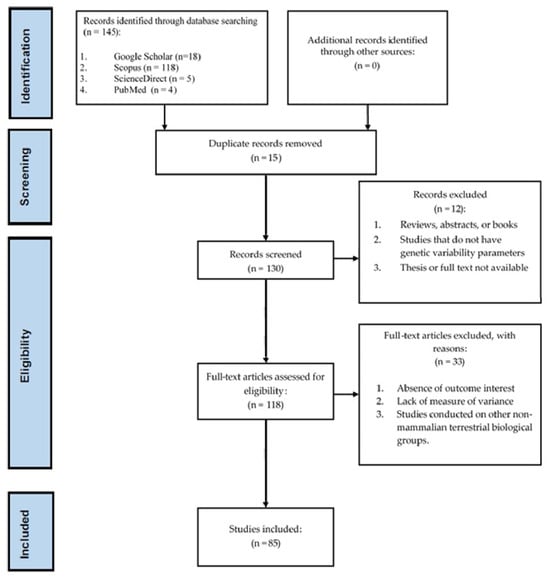
We followed the PRISMA 2020 and PRISMA-S guidelines [11] for literature searching and reporting (Figure 1). A detailed protocol (search strings, selection form, codebook and R scripts) was prepared a priori. Explanatory note: The difference between the 85 studies retrieved using PRISMA and the 145 articles reported in the Results Section is that only the former met the eligibility criteria for the analysis of Ho, He and Fis. The latter set was used to describe general publication and scientometric patterns. Consequently, the total number of articles is not listed in the References Section; only articles supporting the main focus of this review are included.
Figure 1.
PRISMA flow chart showing the literature search strategy and study selection in this scientometric review.
This review was organised around two nested datasets. The first was a scientometric corpus of 145 articles, used exclusively for analyses of publication trends, keyword evolution, collaboration networks, countries, institutions, and journal patterns. The second was a focused analytical subset of 85 studies, comprising those articles from the broader corpus that explicitly reported at least one of the population genetic metrics—Ho, He, or Fis—and met the eligibility criteria for the targeted methodological synthesis. Unless otherwise stated, bibliometric and network-based analyses were conducted using the 145-article corpus, whereas analyses and descriptive syntheses related specifically to Ho, He, and Fis, sampling-mode classification, and quality control reporting were based on the 85-study subset or on the corresponding classified records within the broader corpus, as indicated in each section.
2.1. Eligibility Criteria
Population and scope: We focused on studies on terrestrial mammals (class: Mammalia) in free-ranging or reintroduction contexts that reported any of the following population genetic metrics: observed heterozygosity (Ho), expected heterozygosity (He) and inbreeding coefficient (Fis). Study designs: Primary research reporting empirical genetic data from wild populations (including museum/archival specimens) using any marker system (microsatellite/SSR, SNP, mitochondrial DNA, nuclear sequences, reduced representation sequencing, and WGS) were eligible. Mode of sampling: Items had to allow for classification of the sample type as invasive (blood, tissue/biopsy, ear notch, muscle, liver, and skin, including remote dart biopsy) or non-invasive (faeces/excreta, hair, saliva/chewed material, urine, and shed skin). Exclusions: Marine mammals; exclusively captive or laboratory colonies without wild origin; purely methodological articles lacking field data; reviews, editorials, theses and conference abstracts; studies without Ho, He or Fis; and non-mammalian focal taxa were excluded.
2.2. Sources of Information and Dates of Coverage
The Web of Science Core Collection (WoSCC) and Scopus were searched from 1 January 1985 to 1 March 2026. Only scientific writings in English were used.
2.3. Search Strategy (Exact and Reproducible)
We used controlled Boolean expressions targeting population genetic metrics, mammalian and typical sampling keywords. Field labels reflect the syntax of each database.
Marine filter: Marine mammals were excluded during selection using habitat fields and title/summary clues (e.g., “pinniped”, “cetacean”, and “marine”).
De-duplication: Before selection, combined exports were merged by DOI (case-insensitive). Records without DOIs were merged using exact title matching after Unicode normalisation and then by approximate title matching (Levenshtein ratio ≥ 0.92 with the same main author and year).
2.4. Selection Workflow
Selection was carried out in two stages using a pre-screened form (title/abstract → full text). Two independent reviewers screened all records; disagreements were resolved by consensus or with the help of a third reviewer. Inter-rater reliability for inclusion decisions at the title/abstract stage was quantified with Cohen’s κ coefficient (95% CI).
2.5. Data Extraction
For each included article, two reviewers extracted independently:
Bibliographic fields: DOI, title, year, journal, country of corresponding author, all author affiliations (subsequently harmonised by country), funding text (when available), and open access status.
Study descriptors: focal species (scientific name), continent/region, biome, sample size (per population), number of populations, and year(s) of sampling.
Genetic methods: marker system; genotyping platform; number of loci (for SSR) or SNP; filtering thresholds (e.g., MAF and missing data); HWE testing and multiple testing correction.
Sampling mode (primary variable): invasive vs. non-invasive vs. mixed vs. unclear (see operational definitions below).
Quality control (QC) indicators (binary/quantitative): replication rate, allele loss estimates, false allele rate, use of multiple tubes for non-invasive DNA, negative controls, extraction targets, authentication steps for old/archived DNA, and reported genotyping error model/use of PEDANT/STaRT.
Population genetic metrics: Ho, He, and Fis (as reported); number of loci used in their calculation; and values per population when available.
Discrepancies were resolved by discussion. If a study reported on multiple populations, the study population was treated as the unit of analysis for metric distributions; bibliometric analyses were kept at article level.
Operational definitions: sampling mode
Invasive: any procedure that pierces the skin or removes tissue (including remote dart biopsy); includes blood draws; or removes organs or tissues from euthanised animals.
Non-invasive: DNA obtained without capturing/handling animals (faeces/excreta, hair traps, saliva/chewed sticks, urine, and shed skin).
Mixed: both modes were used with an analysable breakdown.
Unclear: insufficient detail after review of full text and supplements.
Ambiguities were resolved using method sections and Supplementary Materials; where still unclear, correspondence sections were consulted for clarification.
2.6. Data Curation and Harmonisation
Species names were standardised according to the Mammal Species of the World/ITIS spelling. Author and institution names were disambiguated using ORCID, ROR, GRID and string distance clustering with manual verification for high-degree nodes. Country names were harmonised with ISO-3166-1 alpha-3 codes. Open access status was assigned using DOI searches with Unpaywall exports (where available in metadata dumps) and journal policies.
2.7. Bibliometric and Scientific Mapping Analyses
All analyses were performed in R 4.3.x with Bibliometrix (≥4.3) and bibliometrixData, complemented by VOSviewer 1.6.20 for network visualisation.
Performance analysis: annual scientific output; top journals, countries, institutions and authors; and collaboration indices (authors/article and institutions/article).
Co-authorship and cross-country collaboration networks: fractional counting; edges were preserved if ≥2 co-publications; labels were limited to the top N = 50 nodes per degree, unless otherwise stated.
Keyword analysis: authors’ keywords plus Keywords-Plus (WoS)/index terms (Scopus) after lemmatisation and removal of empty words; a thesaurus was applied to merge synonyms (e.g., “microsatellite(s)” ↔ “SSR”, “STR”). Minimum occurrence threshold = 5 (sensitivity: 3–10).
Thematic evolution and trending themes: 5-year moving windows; K = 50 main keywords per window; Sankey plots for thematic evolution.
Thematic map: Callon centrality versus density with predetermined clustering (Bibliometrix), using normalised weights per field.
2.8. Software, Versions and Computational Environment
Core packages: Bibliometrix ≥ 4.3, tidyverse ≥ 2.0, stringdist ≥ 0.9, countrycode ≥ 1.6, mgcv ≥ 1.9, lme4 ≥ 1.1, nlme ≥ 3.1, and irr ≥ 0.84. Visualisations were performed in VOSviewer 1.6.20 and ggplot2. Random seeds were set to 12,345 for any stochastic routines (e.g., cluster initialisation). Operating system: Windows 10.
2.9. Ethical Statement
This study analysed the published literature only; no animals or human subjects were used.
3. Results
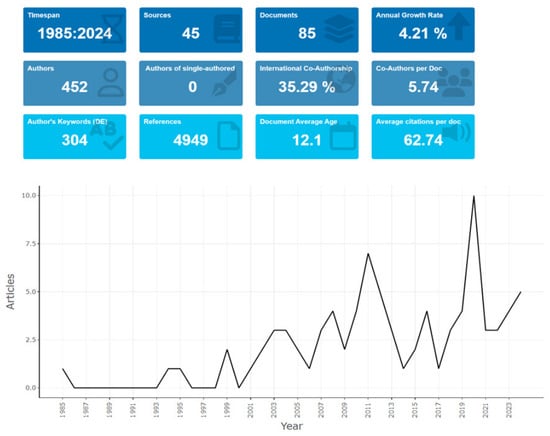
The publications analysed covered the period from 1985 to 2024 and comprised 145 scientific articles. The annual growth rate was 6.08%, and the mean number of citations per article was 51.31, indicating sustained scientific interest in the topic. A total of 400 author keywords were identified, reflecting substantial thematic diversity in this field.
3.1. Scientific Production over Time
Despite an annual growth rate of 6.08% in publications, no scientific production was recorded between 1985 and 2002 (Figure 2). This is probably because the basis for estimating inbreeding coefficients was still being investigated during this period. Between 2003 and 2011, there was an increase of 32 scientific articles (27% of the total), with an average of 3–4 articles per year.
Figure 2.
Scientific production over the years of articles related to the estimation of genetic variability through inbreeding coefficients for mammals.
However, between 2012 and 2024, around 54 studies were published, equivalent to 45% of the publications, with an average of 5–8 articles per year, which places this topic as one of current interest.
3.2. Distribution and Temporal Trends of Invasive and Non-Invasive Sampling
Of the 145 articles included in the scientometric corpus, 34 used invasive samples, 21 used non-invasive samples, 64 used mixed sampling designs, and 26 did not provide sufficient methodological detail for unambiguous classification. Within the focused subset of 85 studies that reported Ho, He, or Fis, 23 were based on invasive samples, 12 on non-invasive samples, and 33 on mixed designs, and 17 were classified as unclear. Overall, non-invasive sampling became more frequent in the later years of the study period, particularly after [2010–2024], whereas invasive sampling predominated in earlier studies. This descriptive pattern is consistent with the increasing adoption of minimally disruptive genetic monitoring approaches in terrestrial mammal research.
3.3. Keyword Concurrence
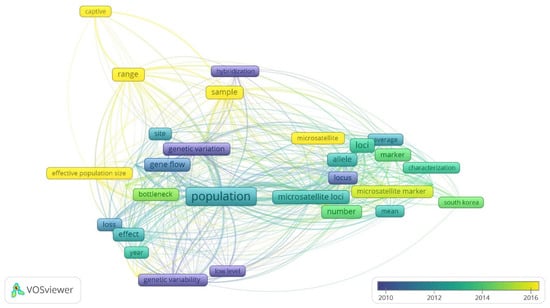
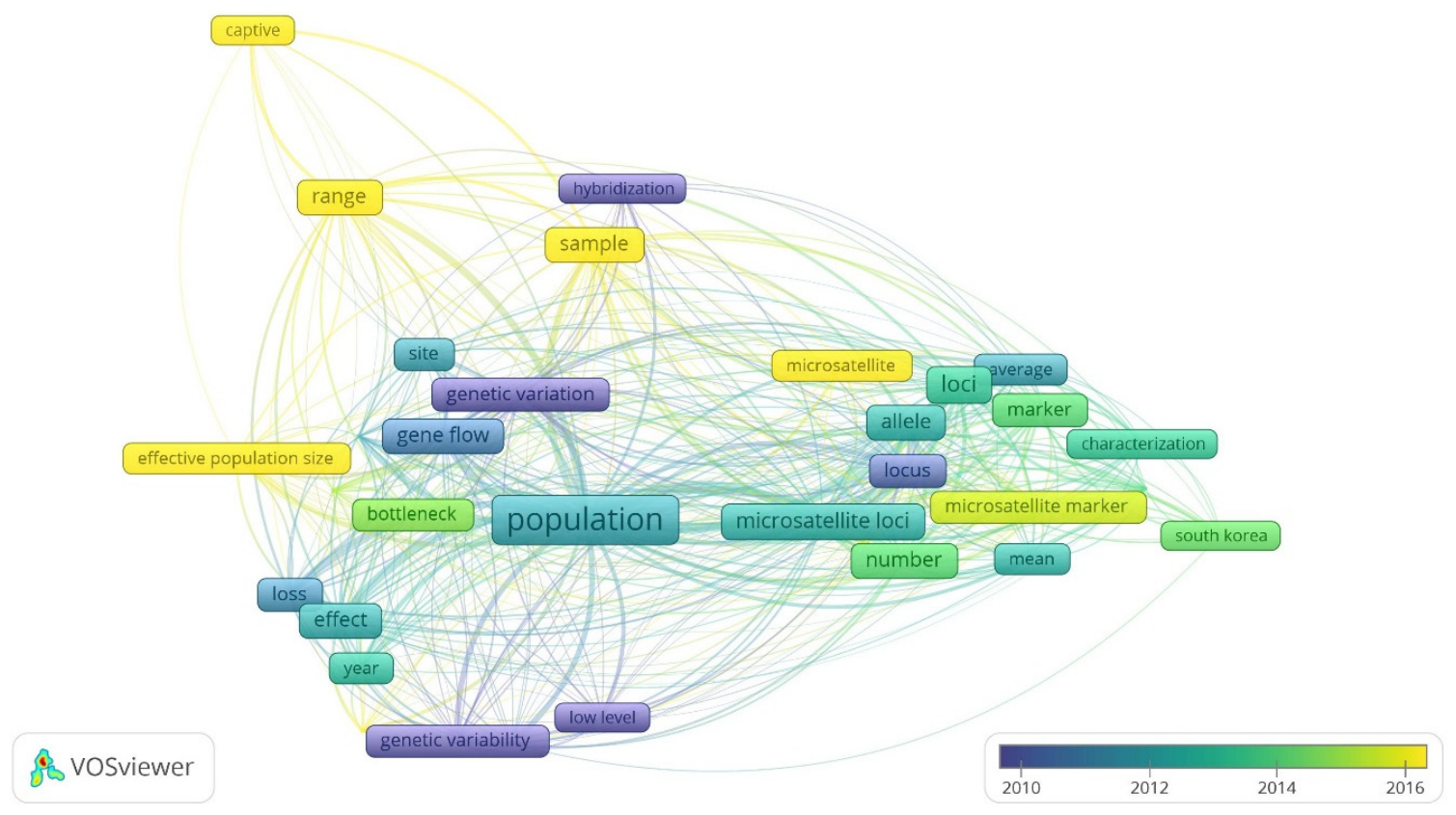
In this analysis, 76 different keywords were obtained, with a network of 46 main words with a minimum occurrence of 10 times, from the total dataset of the WoSCC database. The first group (green) consists of 15 keywords with terms such as loci, microsatellite and marker. The second group (yellow) consists of 10 words mainly related to the words population and genetic variability. The third group (blue) is made up of nine keywords in which the main concept is genetic variability. In the case of groups 4, 5 and 6 (purple, strong blue and aqua green), there are five keywords in groups 4 and 5 and two keywords in group 6, the most referential concepts for these groups being sample, polymorphism and allelic richness. According to the history of the population and the use of each of the words in 2008, words such as genetic variability, genetic variation, distance, hybridisation and low level were used. Subsequently, in the period 2010–2012, the most used words were population, microsatellite, loci, differentiation and variation. According to the mapping in the period 2014–2016, terms such as sample, marker, subpopulation, reintroduction, allelic richness and habitat fragmentation were used (Figure 3).
Figure 3.
Keyword matching in published articles on estimating genetic variability through inbreeding coefficients for mammals.
3.4. Analysis of Author Productivity and Collaborative Networks
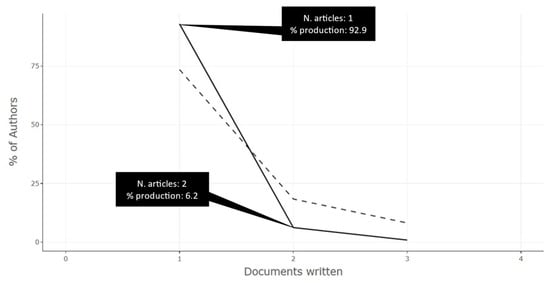
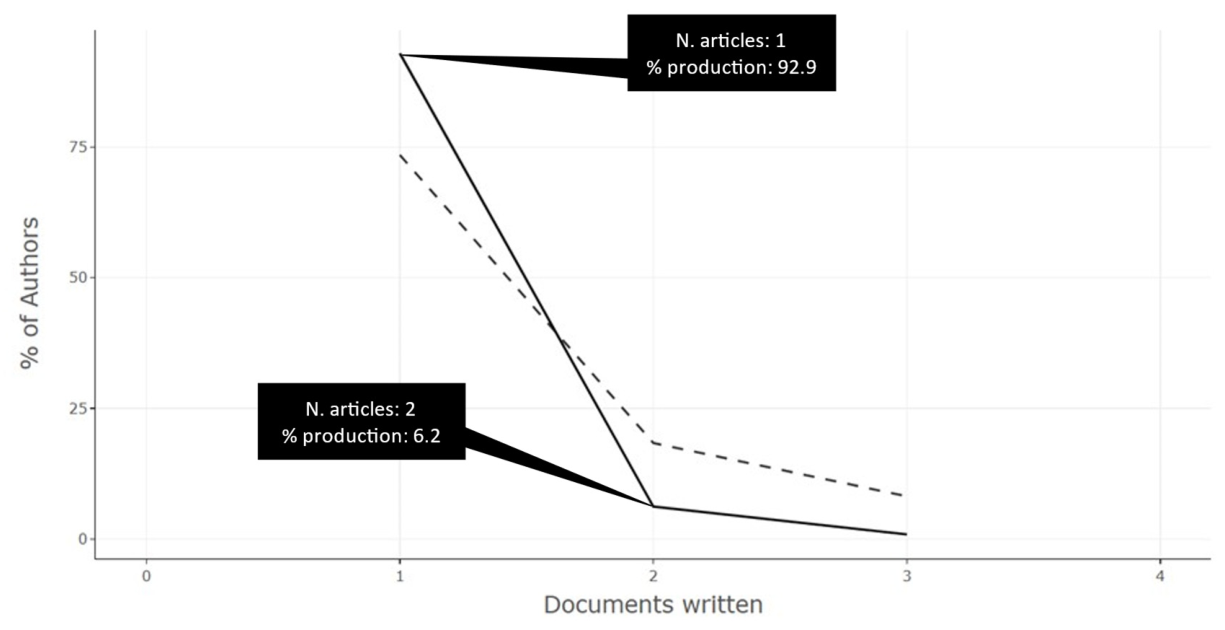
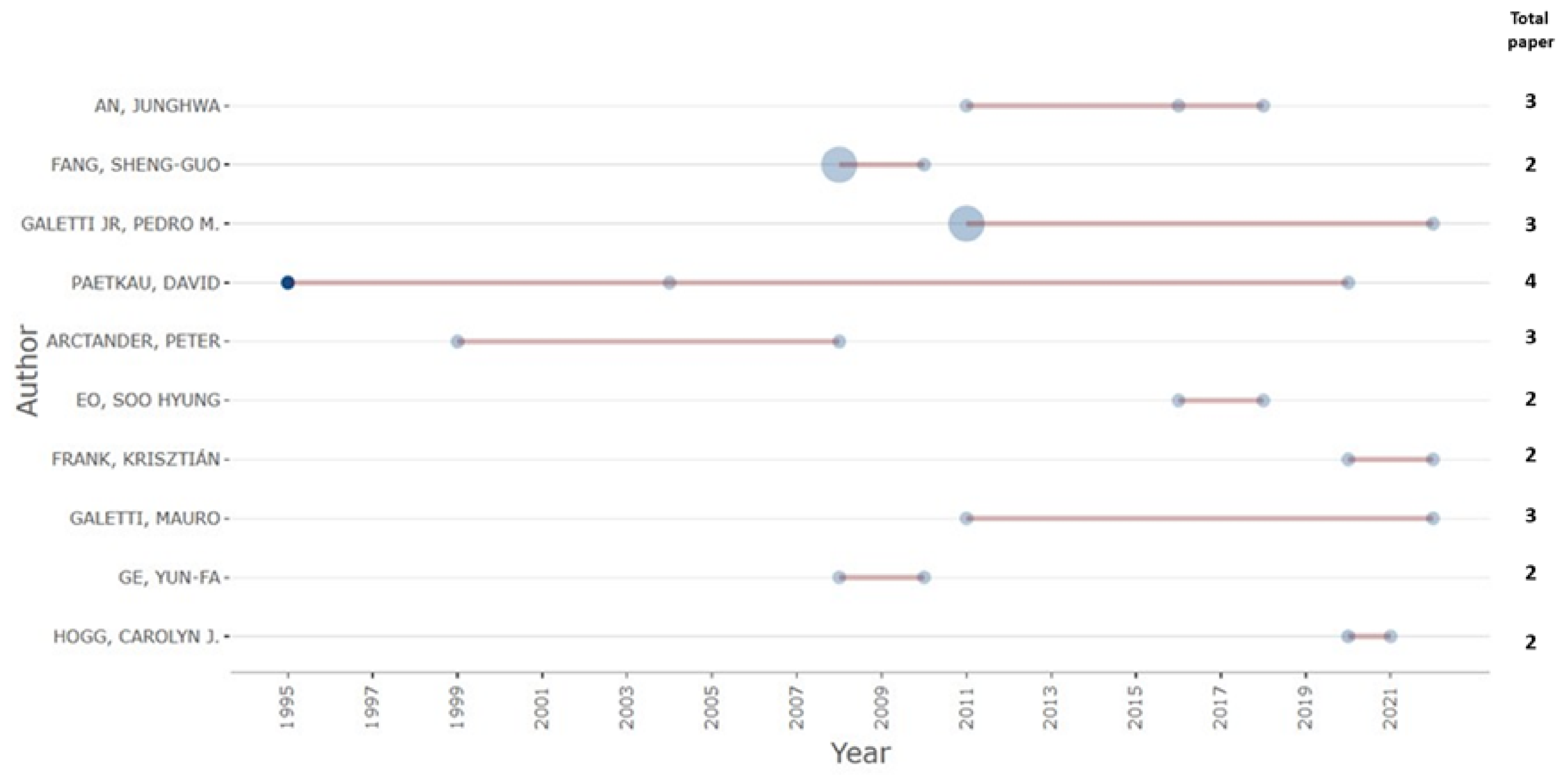
The Lotka plot shows that most authors wrote between one (93.1%) and two articles (6.1%) (Figure 4). The author with the most published papers was Paetkau D., with four papers between 1995 and 2020. He was followed by the author An, J., with three contributions in the annual period 2011–2018; Shen-Guo, F., in 2008–2010; Galleti, J.R., in the period 2011–2022; and Ettore, R., with the same production, but in a longer period, 1999–2021 (Figure 5).
Figure 4.
Scientific production of researchers related to the topic of genetic variability through inbreeding coefficients for mammals according to Lotka’s law.
Figure 5.
Scientific production related to genetic variability through inbreeding coefficients for mammals, according to the 13 most productive researchers. The solid line represents the trajectory of the researcher. The size of the circle reflects the annual production, and the intensity of the colour indicates the number of citations received that year.
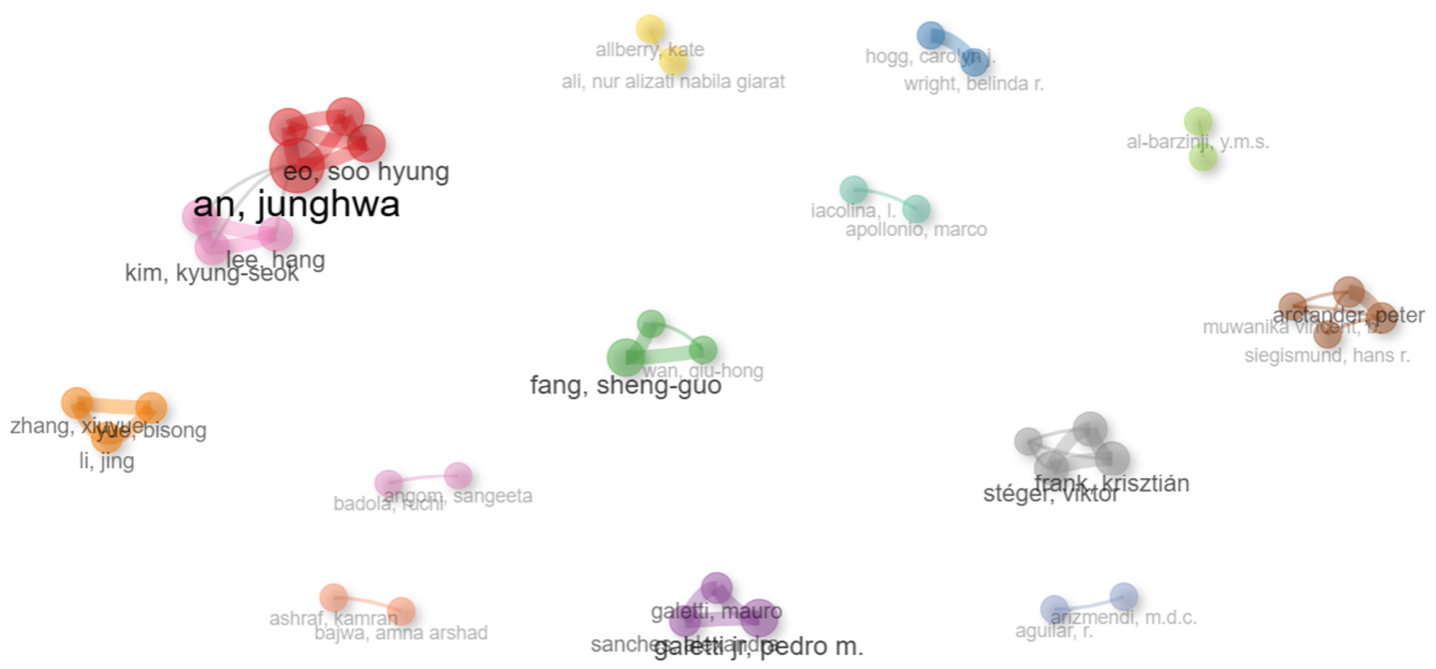
The authors with the longest track record were Paetkau D., Ettore, R. and Arctander, P., who maintain a low but extensive output due to the number of years of research, at least in this type of study. The above-mentioned researchers did not collaborate with each other, as they each maintained their own working groups (Figure 6).
Figure 6.
Collaborative networks investigating genetic variability through inbreeding coefficients in mammals.
3.5. Global Scientific Collaboration
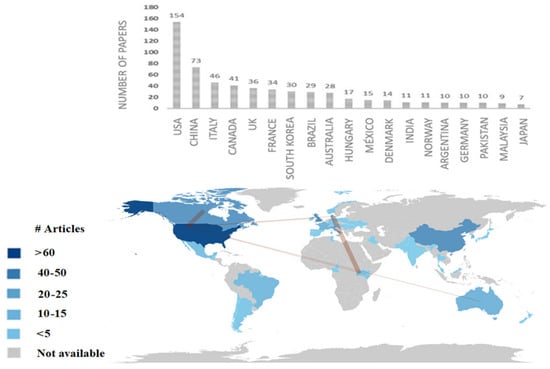
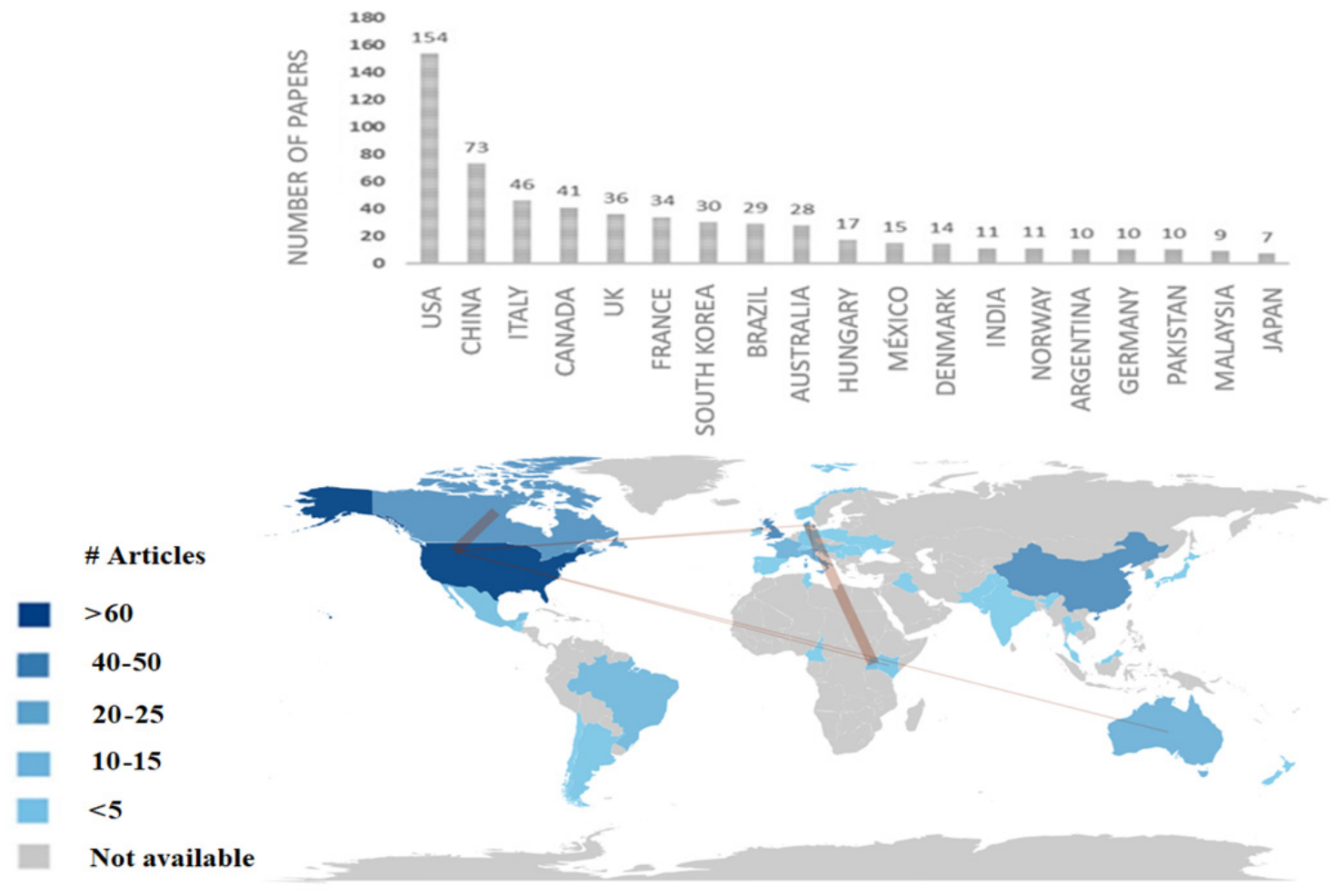
The countries publishing the most studies on the estimation of inbreeding coefficients in invasive and non-invasive mammalian samples were the United States, China, Italy, Canada, the United Kingdom, and France. Figure 7 illustrates the international collaboration network derived from co-authorship affiliations among countries. In this map, node size reflects the relative scientific output of each country, while the connecting lines represent collaborative links between countries based on co-authored publications. The brown lines indicate the existence and relative intensity of these international collaborations; thicker or more prominent links denote stronger collaboration based on a greater number of shared publications. Thus, the figure should be interpreted as a visual representation of the structure and strength of cross-country scientific cooperation in this research field. (Figure 7).
Figure 7.
International scientific production and collaboration network in studies addressing genetic variability and inbreeding coefficients in mammals. Node size represents the relative scientific output of each country. Connecting lines represent collaborative links between countries based on co-authored publications; the brown lines indicate international collaborations, and their prominence reflects the relative strength or frequency of these collaborations. The colour intensity of the map reflects the level of collaboration among countries.
3.6. Scientific Production by Indexed Journals
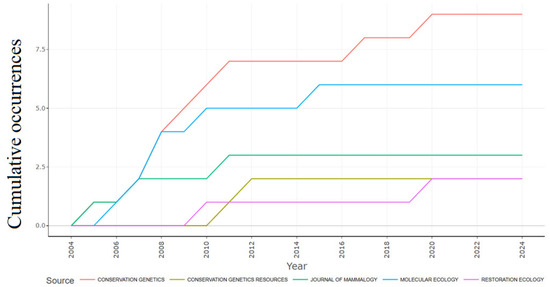
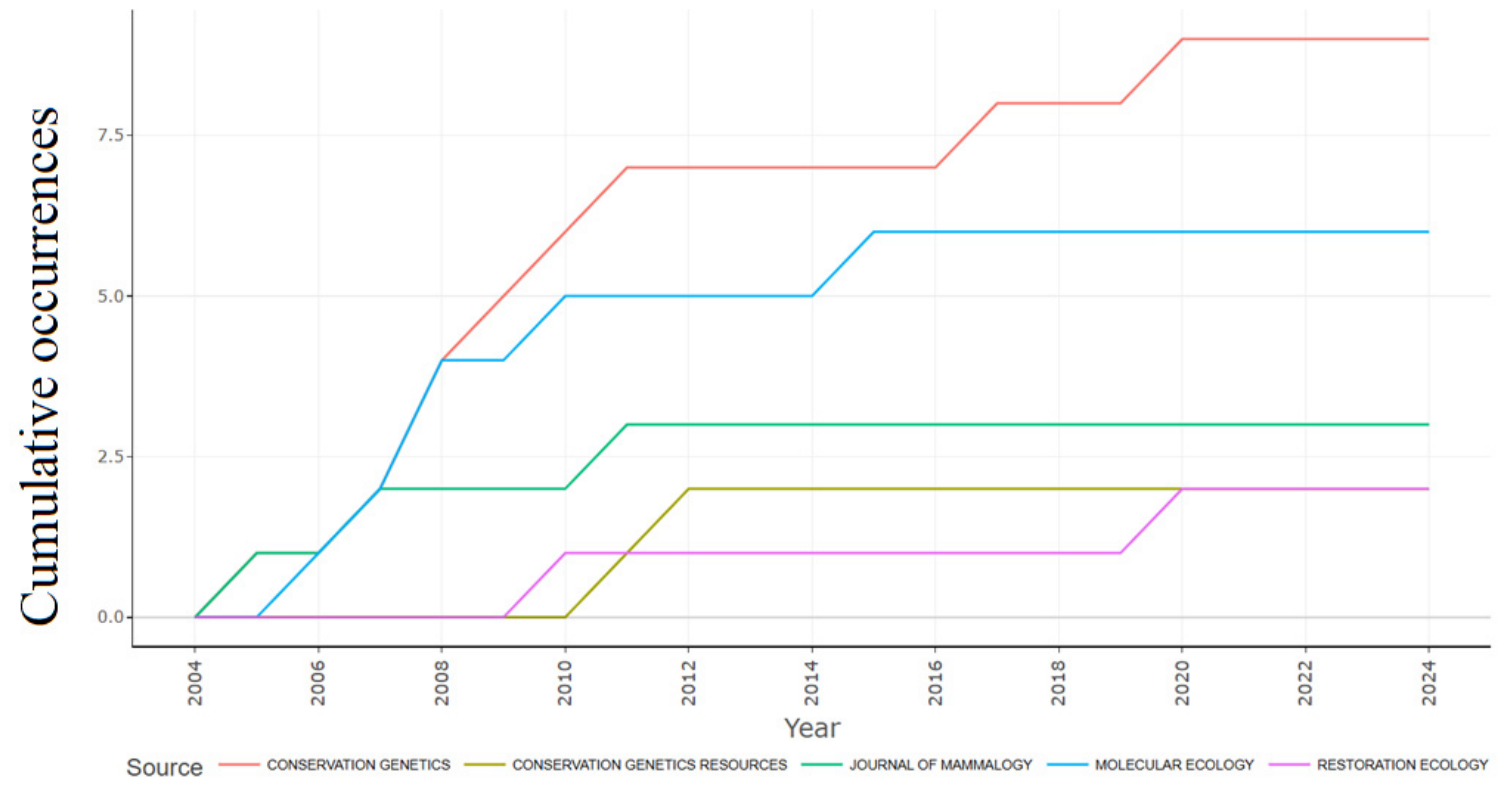
The analysis of scientific production over time on the estimation of inbreeding coefficients in invasive and non-invasive samples showed that at least five journals have made important contributions to this research topic (Figure 8).
Figure 8.
Scientific production related to the topic of genetic variability through inbreeding coefficients for mammals by the main specialised journals.
Between 1994 and 2023, the most efficient journal on these topics was Molecular Ecology, with more than 15 publications in total. This growth was remarkable in the period 2003–2009, from 4 to 13 scientific articles. Other journals on similar topics have stood out for their scientific articles, such as Conservation Genetics, which experienced significant growth in 2011 and, to date, leads the trend in the publication of scientific articles on this topic. However, the Journal of Mammalogy maintained a population trend of five articles per year between 2012 and 2023. On the other hand, in 2014, the Journal of Wildlife Management experienced an increase in its scientific production, as did Molecular Biology Reports, but in more recent years (2020–2023).
4. Discussion
Taken together, these findings should be interpreted primarily as evidence of how the field has developed bibliometrically and how methodological practices have been reported, rather than as a formal quantitative demonstration of causal differences in Ho, He, or Fis between sampling modes.
4.1. Expansion of Non-Invasive Sampling and Its Consequences for Coverage
Our analysis shows a pronounced and sustained increase in the use of non-invasive sampling (e.g., faeces, hair and saliva) in terrestrial mammal studies, especially in the last 10–15 years. Conceptually, this shift reflects the long-recognised benefits of minimising animal handling while expanding spatial and taxonomic coverage, advantages highlighted in seminal reviews on non-invasive genetics [12,13]. Ethically, the trend is in line with contemporary applications of the 3Rs in wildlife research, which encourage refinement or replacement of invasive practices where equivalent data quality can be achieved [8]. In practice, greater acceptance of non-invasive approaches is likely to have enabled work on elusive or threatened taxa and in jurisdictions with stricter permits [14]. The implication is a more inclusive evidence base for conservation genetics; however, these benefits depend on rigorous quality control (QC) to manage degraded DNA and contamination risks inherent in non-invasive substrates [14,15].
4.2. Quality Control Reporting: Improvements, Remaining Gaps and Impact on Genetic Metrics
We observed improvement in quality control reporting over time (e.g., extraction blanks, negative PCR controls, and replication of low-quality extracts), but documentation remained inconsistent across studies [8]. This is important because allele loss and false alleles arise from suboptimal PCR and low-quality or degraded DNA, inflating homozygosity and biassing Fis upwards, which could mimic inbreeding or Wahlund effects if not accounted for [16]. Suboptimal PCR conditions can produce stutter patterns, spurious peaks, overloaded amplicons and signal saturation, all of which can mask and distort the genuine allelic signal during fragment analysis, whereas degraded DNA can produce allelic dropout, false alleles and unbalanced heterozygotes. Empirical evaluations show that the adoption of multi-tube replication, consensus genotyping, explicit error rate estimation and inspection of raw reads significantly improve reliability in non-invasive datasets [14]. Therefore, theoretical and practical orientations converge: journals and reviewers should require transparent quality checklists during the allele analysis workflow (replication criteria, genotyping error quantification, read-level verification, and data curation steps), as the interpretability of Ho, He and Fis depends on both laboratory practice and field sampling mode [13].
In this regard, it is essential to establish a clearer distinction between the sampling method itself and the quality control framework applied to the resulting DNA [17]. In the field of non-invasive genetics, degraded DNA or DNA with low template content is particularly vulnerable to allele loss and false alleles. These errors can directly distort population genetic estimates if not addressed through the implementation of structured analytical and laboratory safeguards. Allele loss is a process that has the effect of converting true heterozygotes into apparent homozygotes, which in turn tends to reduce observed heterozygosity (Ho) while leaving expected heterozygosity (He) comparatively less affected. This process can result in an inflation of F_i, which in turn can generate spurious signals of inbreeding or Hardy–Weinberg imbalance [16].
From this standpoint, the organisation of robust quality control in non-invasive genetics can be conceptualised around four fundamental components. Firstly, the replication strategy is to employ repeated amplification of low-quality extracts and, where appropriate, multi-tube approaches to reduce stochastic genotyping errors. Secondly, regarding estimation of error rate, studies must explicitly quantify allele loss and false allele rates so that the reliability of genotypes can be assessed transparently. Thirdly, consensus genotyping is to be advocated for, whereby final multilocus genotypes should be based on predefined consensus rules rather than on single amplifications, especially when working with degraded DNA. Fourthly, it is imperative that reports specify the thresholds employed for locus and sample inclusion, missing-data filtering, and genotype acceptance. In addition, any identity-based criteria, such as PID siblings, must be specified when individual discrimination is relevant. The classical methodological literature has long emphasised the need for replication and formal error assessment in low-quality DNA. More structured non-invasive workflows have demonstrated that reliable genetic inference can be achieved when these safeguards are rigorously applied. For instance, Zarzoso-Lacoste et al. [17] provide a clear implementation of a structured QC framework in non-invasive mammalian genetics, incorporating replication, error estimation, and explicit validation criteria. In this context, the central interpretive issue is not simply invasive versus non-invasive sampling, but the degree of methodological stringency used to authenticate degraded DNA datasets and to document residual uncertainty.
4.3. Comparability of Ho, He and Fis Between Sampling Modes After Accounting for Methods
When we accounted for the marker system and species as random effects, differences in Ho, He and Fis distributions between invasive and non-invasive surveys were modest. This pattern is consistent with theory: the mode of sampling itself should not alter population genetic parameters if genotyping error is minimised and filtering and reporting are standardised [15,16,17,18]. Apparent deficits in heterozygosity or excess homozygosity are more parsimoniously explained by technical artefacts, null alleles or population substructures, rather than by the invasiveness of sampling per se [19]. The practical implication is twofold. First, syntheses across studies should be stratified by marker type and level of quality control before drawing biological conclusions. This is essential because SSR and SNP differ fundamentally in genomic density, allele spectra and mutation dynamics and therefore, metrics such as Ho, He and Fis are not directly comparable. Second, authors should clearly separate the biological signal (e.g., true inbreeding) from the methodological signal (e.g., thresholds of missing data, data processing and null allele detection could vary among studies, further influencing estimates of genetic diversity and inbreeding), following recommended diagnostics and reporting conventions [18,19].
4.4. Transitioning the Marker System: From SSR to SNP and Reduced Representation Sequencing
The transition from the microsatellite (SSR) field to SNP panels through genome reduced representation and whole genome sequencing follows in the wake of broader advances in ecological and conservation genomics [16,17,18,19]. This transition has a direct influence on the scientometric patterns of our dataset: as SNP-based studies proliferate, driven by the decreasing cost of the genotyping platforms, reported diversity and structure metrics increasingly reflect high-density genotyping with different ascertainment properties that differ from those of SSRs [8]. While SNPs provide superior genome-wide coverage and reproducibility, comparisons of Ho/He between marker systems should be approached with caution, as absolute values and variance may differ due to mutation patterns, allelic spectra and underlying mutation models [18]. Future syntheses would benefit from marker-specific summaries or databases, in which studies based on microsatellites and SNPs are organised and interpreted separately, with explicit cross-referencing only when comparisons across marker systems are justified. This approach would improve transparency and reduce overinterpretation when integrating datasets generated with different genetic technologies [16,17,18,19,20].
4.5. Geographic and Taxonomic Bias in the Research Effort
We detected persistent regional and taxonomic imbalances, for example, the concentration of results in higher-income countries and in a subset of charismatic or well-resourced mammal clades. These biases reflect broader barriers to global biodiversity research, including disparities in funding, computational and bioinformatic infrastructure, language and security [21]. Methodologically, non-invasive sampling can partly compensate for logistical and permitting barriers in under-represented regions, but equitable capacity building, incentives for data sharing and multilingual dissemination are also required to diversify the evidence base [13,14,15,16,17,18,19,20,21,22]. Policymakers and funders can leverage this knowledge to prioritise support for regions and taxa with the largest knowledge gaps, especially where genetic monitoring could have the greatest impact on conservation outcomes.
4.6. Collaborative Networks, Openness and Consolidation in the Field
Co-authorship networks in our data became denser and more modular over time, indicating a consolidation of specialised groups and inter-institutional collaborations. This is consistent with patterns identified across scientific mapping workflows and reflects the maturation of conservation genetics towards a more collaborative and methodologically standardised field [9,10]. We also observed a growth in open access publications. This is associated with increased visibility and reusability of curated genomic resources, features that are especially valuable for comparative and follow-up studies [22]. The implication is practical: open methods and shared data and codes accelerate harmonisation of quality control standards and facilitate reproducible syntheses across taxa and regions [10,11,12,13,14,15,16,17,18,19,20,21,22,23].
4.7. Implications for Genetic Monitoring and Conservation Decision-Making
Taken together, our findings support a pragmatic way forward: non-invasive sampling can provide reliable population genetic indicators when combined with rigorous quality control and clear reporting. This allows for more frequent and ethically refined monitoring of at-risk populations [24]. For conservation practice, this means that agencies can adopt standardised quality control checklists and require reporting of error rates, replication criteria and screening thresholds, along with Ho, He and Fis, which is essential for ensuring comparability across studies that rely on different marker systems. On the research side, the community should agree on minimum reporting standards independent of sampling mode (e.g., multi-tube replication for low-quality DNA; missing locus diagnosis and HWE), thereby improving interoperability between studies and the evidentiary value of genetic metrics in management plans [14].
4.8. Limitations and Future Directions
As a scientometric synthesis, our inferences are limited by database coverage, indexing practices and heterogeneity of reporting across journals. Although we applied rigorous de-duplication and disambiguation processes, some affiliation and country assignments remain imperfect. This is an endemic limitation of bibliographic metadata [10]. Future work should integrate full-text mining to capture QC details not present in abstracts, assess how study design modulates the effects of sampling mode on genetic metrics, and jointly develop domain-wide reporting templates with journals and societies to standardise QC methods and disclosure across marker and taxon systems [9,10].
4.9. Recommendations for Future Studies and Reporting Practice
Based on the patterns identified in this scientometric review, we propose several recommendations to improve the comparability, transparency, and utility of terrestrial mammal population genetic studies using invasive and non-invasive samples.
First, studies should report sampling mode explicitly and operationally, including the biological material collected, whether samples were obtained with or without capture or handling, and whether mixed sampling designs were used. Clear classification of sample origin is essential for comparing methodological approaches across studies.
Second, minimum quality control information should be reported routinely, particularly for non-invasive and low-quality DNA sources. At a minimum, authors should state whether extraction blanks and negative PCR controls were used, whether replicate amplifications or multi-tube approaches were applied, and whether genotyping error rates such as allelic dropout or false alleles were estimated.
Third, reports of Ho, He, and Fis should be accompanied by sufficient methodological context to support interpretation, including marker system, number of loci or SNPs retained, filtering thresholds, missing-data criteria, and whether Hardy–Weinberg equilibrium diagnostics and multiple-testing corrections were applied. Without this information, comparisons across studies remain difficult and potentially misleading.
Fourth, future syntheses and monitoring frameworks should treat marker systems separately where possible, because microsatellites and SNP-based approaches differ in mutation properties, allele frequency spectra, and analytical assumptions. Marker-specific reporting and synthesis will improve comparability and reduce overinterpretation of absolute metric values across technologies.
Finally, greater standardisation of reporting templates across journals, institutions, and conservation programmes would strengthen the long-term value of genetic monitoring datasets. We therefore encourage the adoption of study-level checklists that integrate sample type, DNA quality safeguards, marker characteristics, and analytical thresholds alongside the reporting of population genetic indices.
5. Conclusions
This scientometric synthesis shows that terrestrial mammal population genetics has expanded rapidly over the past four decades, with a decisive shift towards non-invasive sampling that expands taxonomic and geographic coverage while reducing animal handling. Crucially, once the marker system and species are taken into account, differences in Ho, He and FIS between invasive and non-invasive surveys are modest, underlining that data quality control and transparency of reporting, rather than invasiveness of sampling per se, determine the reliability and comparability of core genetic indicators.
From a methodological point of view, the transition from the microsatellite field to SNP-based, reduced representation sequencing increases resolution but complicates synthesis between studies; absolute values and variance structures differ between marker systems. Our mapping also reveals persistent regional and taxonomic biases in the research effort, along with denser international collaborative networks and an encouraging increase in open access practices that facilitate reuse and tracking. For the biological and conservation sciences, these findings have three practical implications. First, the value of non-invasive genetic data depends less on sample type itself than on rigorous quality control and transparent reporting, including replication strategies, genotyping error assessment, filtering thresholds, and diagnostics for analytical artefacts. Second, journals, societies, and conservation agencies would benefit from harmonised reporting templates that account for marker system, so that Ho, He, and Fis are interpreted more consistently across taxa and technologies. Third, strategic allocation of funding and research support to under-represented regions and taxa—together with open sharing of data, codes, and methods—would help reduce persistent knowledge gaps and strengthen conservation genetic capacity where it is most needed.
Looking ahead, integrating full-text mining of methodological details, expanding high-throughput genotyping capacity in biodiversity hotspots and jointly developing community quality checklists will improve the interoperability of genetic indicators. By harmonising ethical sampling, rigorous laboratory practices and open, standardised reporting, conservation genetics can provide timely and comparable metrics that directly inform species recovery and long-term population viability.
Supplementary Materials
The following supporting information can be downloaded at: https://www.mdpi.com/article/10.3390/conservation6020053/s1, S1: Total number of studies included in the scientometric analysis. S2: Summary of the 85 studies used in the analysis of population genetic indicators Ho, He and Fis.
Author Contributions
Conceptualization, S.P.M.-T. and L.D.G.-R.; methodology, E.N.-R. and P.A.B.; software, L.D.G.-R.; validation, M.H.-R. and S.P.M.-T.; formal analysis, J.G.R.-G.; investigation, L.D.G.-R.; resources, S.P.M.-T.; data curation, L.D.G.-R.; writing—original draft preparation, J.G.R.-G.; writing—review and editing, L.D.G.-R.; visualisation, M.H.-R.; supervision, P.A.B.; project administration, S.P.M.-T. and L.D.G.-R.; funding acquisition, L.D.G.-R. All authors have read and agreed to the published version of the manuscript.
Funding
This research received no external funding.
Institutional Review Board Statement
Not applicable.
Informed Consent Statement
Not applicable.
Data Availability Statement
The original contributions presented in this study are included in the article. Further inquiries can be directed to the corresponding author.
Conflicts of Interest
The authors declare no conflicts of interest.
References
- Lino, A.; Fonseca, C.; Rojas, D.; Fischer, E.; Ramos-Pereira, M. A meta-analysis of the effects of habitat loss and fragmentation on genetic diversity in mammals. Mamm. Biol. 2019, 94, 69–76. [Google Scholar] [CrossRef] [Scilit]
- Díaz, S.; Zafra-Calvo, N.; Purvis, A.; Verburg, P.H.; Obura, D.; Leadley, P.; Chaplin-Kramer, R.; De Meester, L.; Dulloo, E.; Martín-López, B. Set ambitious goals for biodiversity and sustainability. Science 2020, 370, 411. [Google Scholar] [CrossRef] [Scilit]
- Nei, M. Estimation of average heterozygosity and genetic distance from a small number of individuals. Genetics 1978, 89, 583–590. [Google Scholar] [CrossRef] [Scilit]
- Wright, S. The genetical structure of populations. Ann. Eugen. 1951, 15, 323–354. [Google Scholar] [CrossRef] [Scilit]
- Zemanova, M.A. Towards more compassionate wildlife research through the 3Rs principles: Replace, reduce, refine. Trends Ecol. Evol. 2020, 35, 776–786. [Google Scholar] [CrossRef] [Scilit]
- Waits, L.P.; Paetkau, D. Noninvasive genetic sampling tools for wildlife biologists: A review. J. Wildl. Manag. 2005, 69, 1419–1433. [Google Scholar] [CrossRef] [Scilit]
- Lefort, M.C.; Cruickshank, R.H.; Descovich, K.; Adams, N.J.; Barun, A.; Emami-Khoyi, A.; Ridden, J.; Smith, V.R.; Sprague, R.; Waterhouse, B. Blood, sweat and tears: A review of non-invasive DNA sampling. Peer Community J. 2022, 2, 16. [Google Scholar] [CrossRef] [Scilit]
- Ramírez-García, J.G.; Maciel-Torres, S.P.; Hernández-Rodríguez, M.; Arenas-Báez, P.; Orzuna-Orzuna, J.F.; Granados-Rivera, L.D. Non-invasive sampling for population genetics of wild terrestrial mammals (2015–2025): A systematic review. Diversity 2025, 17, 760. [Google Scholar] [CrossRef] [Scilit]
- Van Eck, N.J.; Waltman, L. Software survey: VOSviewer, a computer program for bibliometric mapping. Scientometrics 2010, 84, 523–538. [Google Scholar] [CrossRef] [Scilit]
- Aria, M.; Cuccurullo, C. bibliometrix: An R-tool for comprehensive science mapping analysis. J. Informetr. 2017, 11, 959–975. [Google Scholar] [CrossRef] [Scilit]
- Page, M.J.; McKenzie, J.E.; Bossuyt, P.M.; Boutron, I.; Hoffmann, T.C.; Mulrow, C.D.; Shamseer, L.; Tetzlaff, J.M.; Akl, E.A.; Brennan, S.E.; et al. The PRISMA 2020 statement: An updated guideline for reporting systematic reviews. Rev. Esp. Cardiol. 2021, 74, 790–799. [Google Scholar] [CrossRef]
- Andrews, K.R.; Good, J.M.; Miller, M.R.; Luikart, G.; Hohenlohe, P.A. Harnessing the power of RADseq for ecological and evolutionary genomics. Nat. Rev. Genet 2016, 17, 81–92. [Google Scholar] [CrossRef] [Scilit]
- Byrne, M.S.; Peralta, D.M.; Ibañez, E.A.; Nardelli, M.; Túnez, J.I. Non-invasive sampling techniques applied to conservation genetic studies in mammals. In Molecular Ecology and Conservation Genetics of Neotropical Mammals; Springer Nature: Cham, Switzerland, 2021; pp. 63–83. [Google Scholar] [CrossRef] [Scilit]
- Schilling, A.-K.; Mazzamuto, M.V.; Romeo, C. A review of non-invasive sampling in wildlife disease and health research: What’s new? Animals 2022, 12, 1719. [Google Scholar] [CrossRef] [Scilit]
- Lear, G.; Dickie, I.; Banks, J.; Boyer, S.; Buckley, H.L.; Buckley, T.R.; Cruickshank, R.; Dopheide, A.; Handley, K.M.; Hermans, S.; et al. Methods for the extraction, storage, amplification and sequencing of DNA from environmental samples. N. Z. J. Ecol. 2018, 42, 10–50. [Google Scholar] [CrossRef] [Scilit]
- Kardos, M.; Waples, R.S. Low-coverage sequencing and Wahlund effect severely bias estimates of inbreeding, heterozygosity and effective population size in North American wolves. Mol. Ecol. 2025, 34, e17415. [Google Scholar] [CrossRef] [Scilit]
- Zarzoso-Lacoste, D.; Jan, P.-L.; Lehnen, L.; Girard, T.; Besnard, A.-L.; Puechmaille, S.J.; Petit, E.J. Combining noninvasive genetics and a new mammalian sex-linked marker provides new tools to investigate population size, structure and individual behaviour: An application to bats. Mol. Ecol. Resour. 2018, 18, 217–228. [Google Scholar] [CrossRef] [Scilit]
- Allendorf, F.W.; Luikart, G.; Aitken, S.N. Conservation and the Genetics of Populations, 2nd ed.; Wiley-Blackwell: Hoboken, NJ, USA, 2012. [Google Scholar]
- Waples, R.S. Testing for Hardy–Weinberg proportions: Have we lost the plot? J. Hered. 2015, 106, 1–19. [Google Scholar] [CrossRef] [Scilit]
- Davey, J.W.; Hohenlohe, P.A.; Etter, P.D.; Boone, J.Q.; Catchen, J.M.; Blaxter, M.L. Genome-wide genetic marker discovery and genotyping using next-generation sequencing. Nat. Rev. Genet. 2011, 12, 499–510. [Google Scholar] [CrossRef] [Scilit]
- Amano, T.; Sutherland, W.J. Four barriers to the global understanding of biodiversity conservation: Wealth, language, geographical location and security. Trends Ecol. Evol. 2013, 28, 131–139. [Google Scholar] [CrossRef] [Scilit]
- Piwowar, H.; Priem, J.; Larivière, V.; Alperin, J.P.; Matthias, L.; Norlander, B.; Farley, A.; West, J.; Haustein, S. The state of OA: A large-scale analysis of the prevalence and impact of open access articles. PeerJ 2018, 6, e4375. [Google Scholar] [CrossRef] [Scilit]
- Schwartz, M.K.; Luikart, G.; Waples, R.S. Genetic monitoring as a promising tool for conservation and management. Trends Ecol. Evol. 2007, 22, 25–33. [Google Scholar] [CrossRef] [Scilit] [PubMed]
- Browett, S.S.; O’Meara, D.B.; McDevitt, A.D. Genetic tools in the management of invasive mammals: Recent trends and future perspectives. Mamm. Rev. 2020, 50, 200–210. [Google Scholar] [CrossRef] [Scilit]
Disclaimer/Publisher’s Note: The statements, opinions and data contained in all publications are solely those of the individual author(s) and contributor(s) and not of MDPI and/or the editor(s). MDPI and/or the editor(s) disclaim responsibility for any injury to people or property resulting from any ideas, methods, instructions or products referred to in the content. |
© 2026 by the authors. Licensee MDPI, Basel, Switzerland. This article is an open access article distributed under the terms and conditions of the Creative Commons Attribution (CC BY) license.