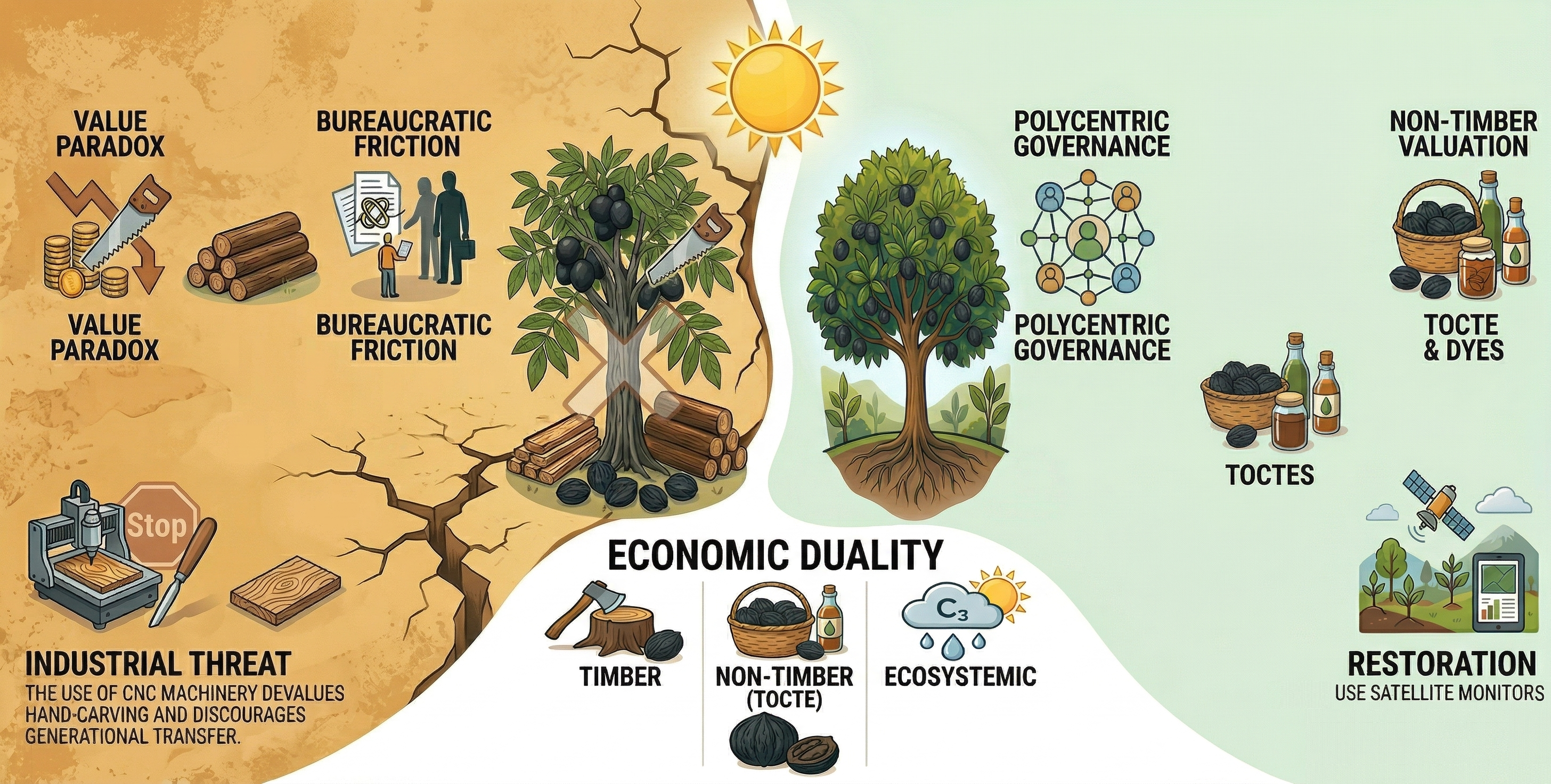


Socio-Ecological Barriers to the Sustainable Management of the Andean Walnut (Juglans neotropica) and the Value Paradox in the Ecuadorian Andes: A Case Study from Imbabura Province, Ecuador

 ,
,  ,
,  and
and 
Abstract
1. Introduction
1.1. The Crisis of Forest Management in the Tropical Andes
1.2. Juglans neotropica: A Species at a Crossroads
1.3. The Value Paradox as a Theoretical Framework
1.4. Research Gap and Objectives
2. Materials and Methods
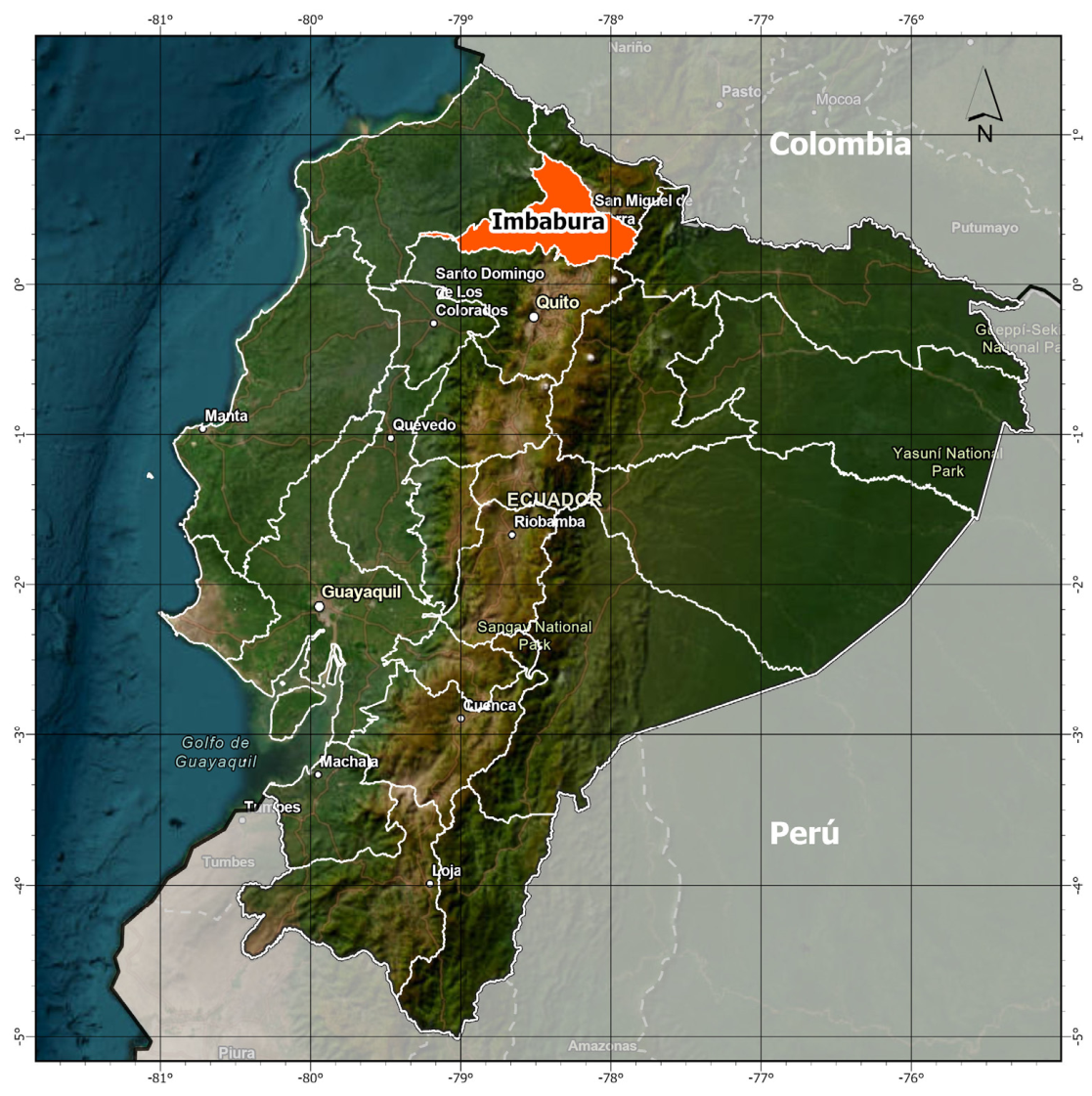
2.1. Study Area
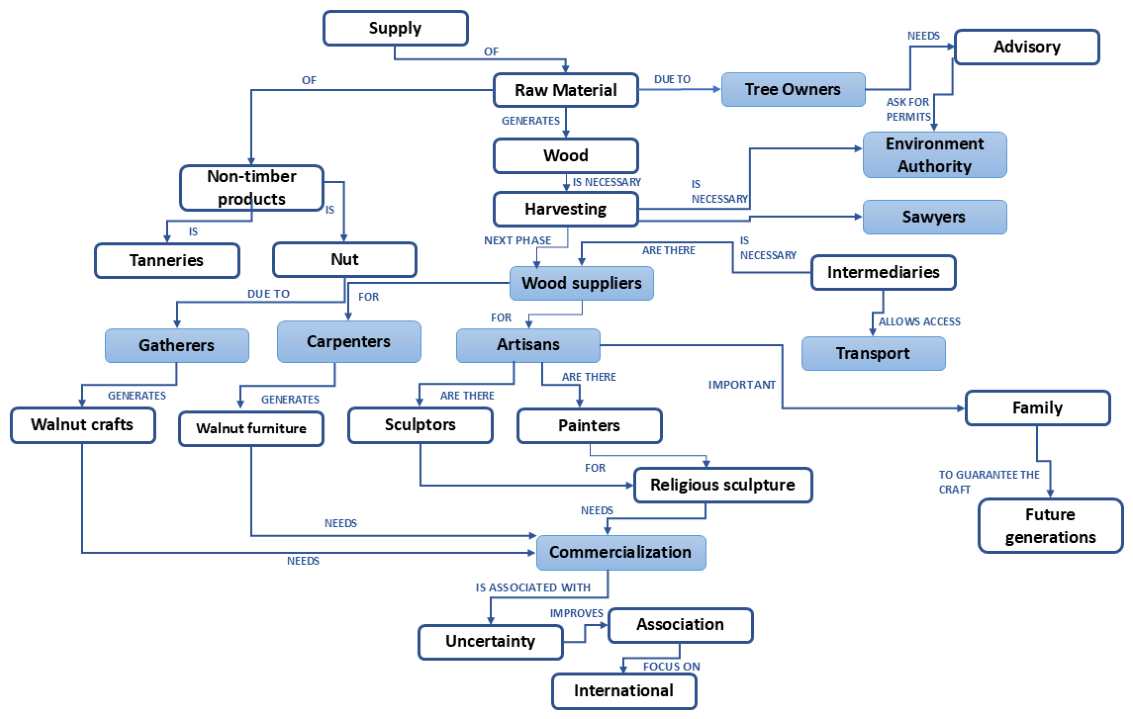
2.2. Research Design
2.3. Participant Selection and Data Collection
2.4. Data Analysis
- Deductive coding: Pre-established concepts related to sustainable value chains, the value paradox, and commons management guided the initial round of coding. Categories such as market access, property rights, institutional weakness, and scarcity perception were used to assess how existing theoretical frameworks mapped onto the empirical material collected from Imbabura [11,13,14].
- Inductive coding: Additional, highly specific categories emerged organically from the iterative reading of the transcripts. This generative phase produced situated themes such as institutional distrust, bureaucratic friction, and the cultural erosion of artisanal knowledge among younger generations.
3. Results
3.1. Perceived Value and Value Chain Actors
“There was a natural supply. Legal restrictions did not initially prevent us from working with this species. But when shortages began here, we had to start looking for basic material elsewhere. Now, an entire generation is lost because the artisanship is simply not yielding the income that parents see as a viable future for their children. Rebuilding that trust is difficult”.(E21)
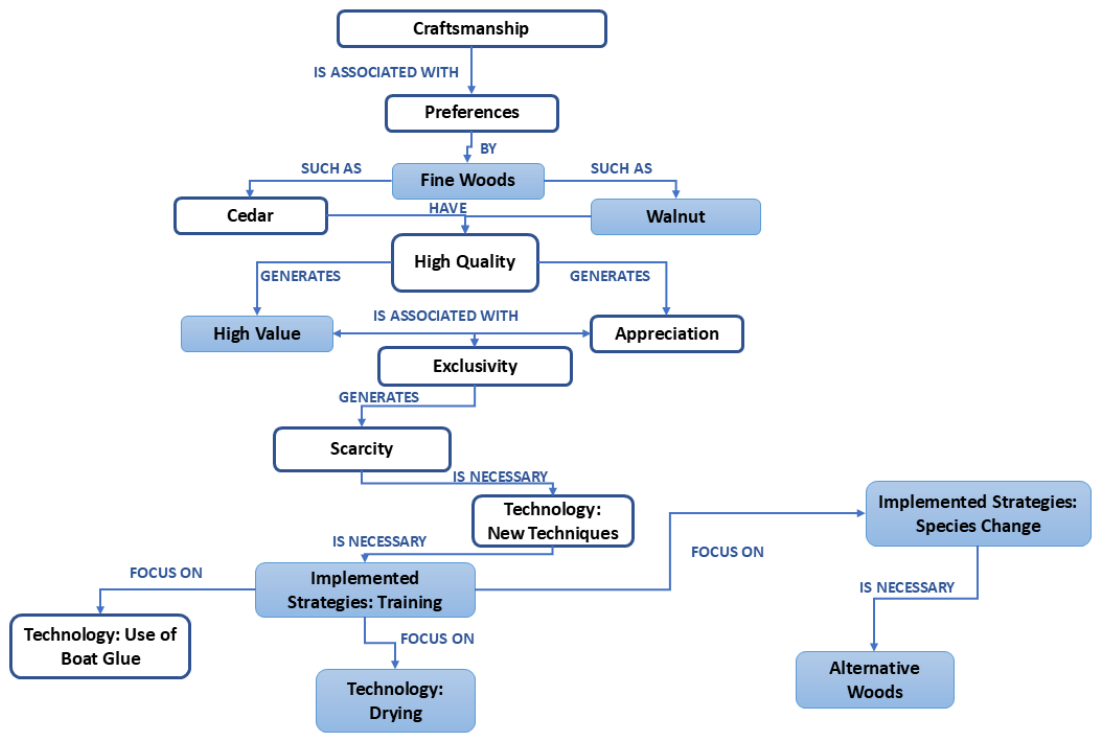
“Many things come from the walnut tree. First there were the nogadas, because Ibarra has a whole identity tied to them. The nut was also heavily used to dye clothes and regional fabrics, and from there, other specific handicrafts emerged naturally. Today, we are losing all of that because the trees are just chopped for blocks”.(E13)
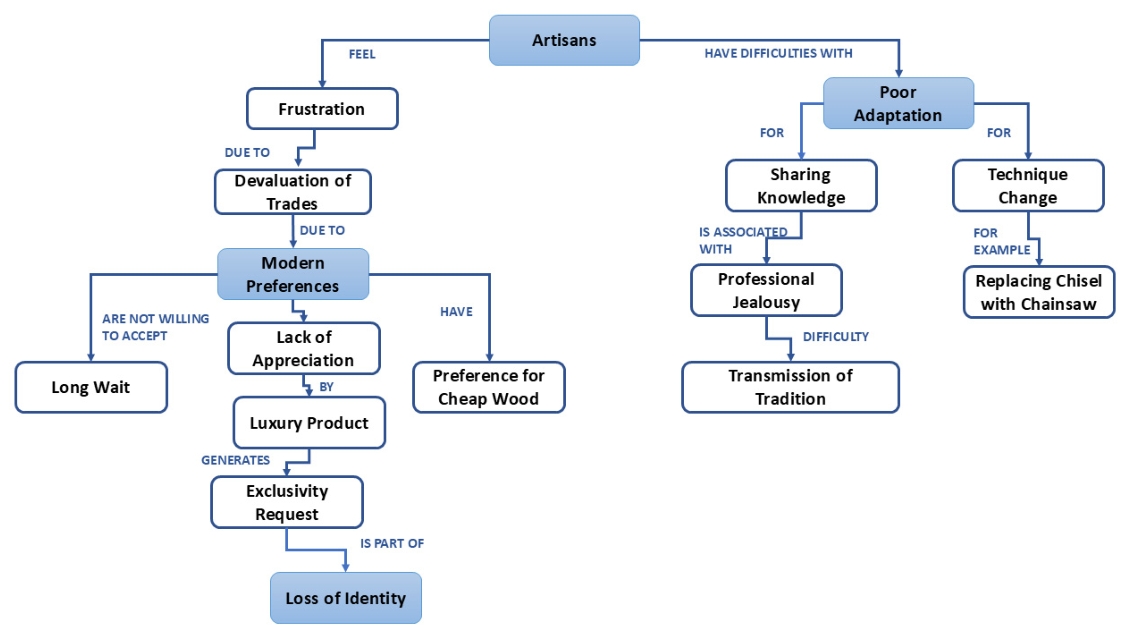
“My mother taught many people in the village. I also taught my children; they still help me sometimes, but honestly, they want to study something else. They see the struggle with the wood scarcity and the low pay, and they prefer to dedicate themselves to something completely different. It’s sad, but it’s the reality”.(E2)
3.2. Perceptions of Basic Material Sources
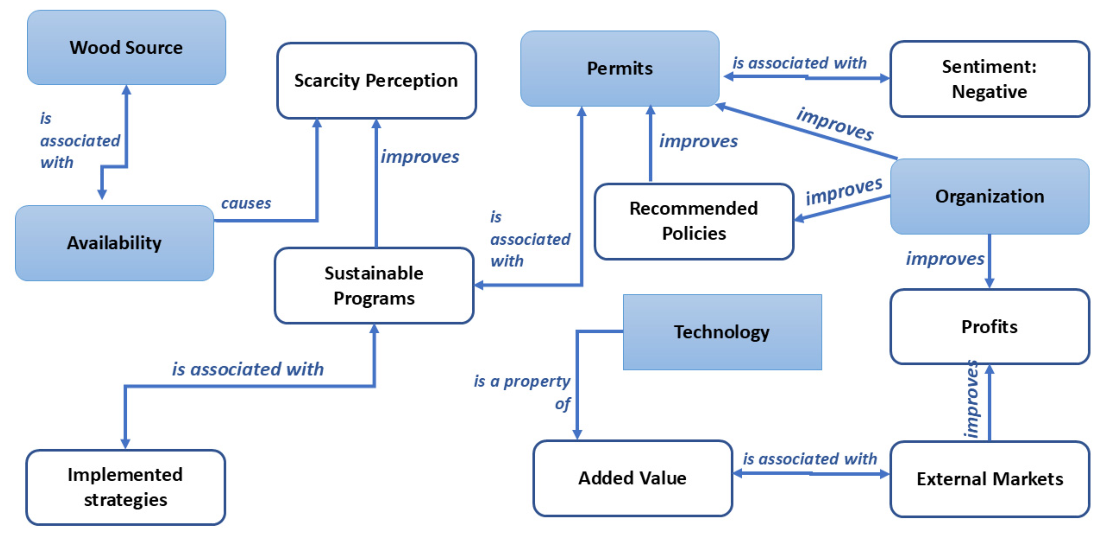
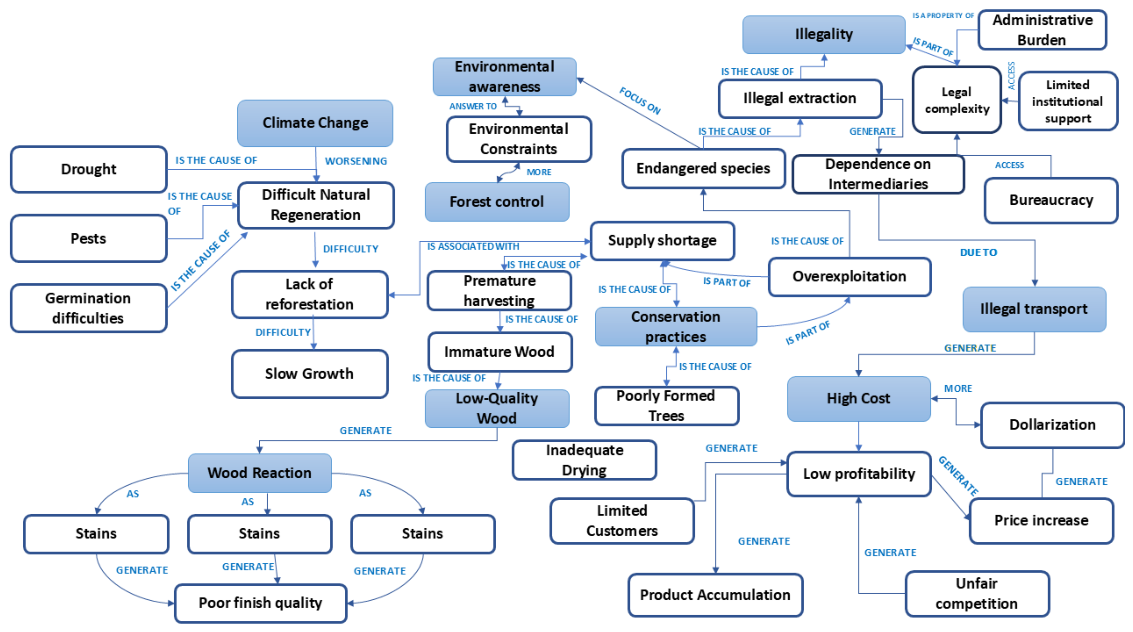
“If a truck transports wood we are talking about loading 1000 or 1200 boards. Where are they going to get 1200 boards from here? It’s impossible. Before, we had enough walnut heartwood locally in San Antonio, but now it is almost impossible to get a full load. We have to go to other distant cantons just to find fragments because here it is completely gone”.(E1)
“The problem is that we depend entirely on those who bring the heartwood. Yet, often they do it through illegal or informal channels because getting the true MAATE permit is a massive headache. That makes the material more expensive with bribes, and we the artisans end up earning much less”.(E4)
“We try to promote reforestation programs with Andean walnut, but there is still a profound lack of commitment from the independent artisans and the local authorities to maintain the young plantations. Without long-term follow up, these initial plantings fail, and people lose hope in the system entirely”.(E5)
3.3. Information Asymmetry and Disconnected Governance
“The condition for exploiting a native species is that it must meet a minimum cutting diameter and guarantee a reserve tree to ensure regeneration. But that is simply never fulfilled because no functional management or replanting programs exist. The Technical University could lead these projects, linking communities, parish boards, and the municipality to insert the species into urban parks, but instead, they are paradoxically planting malignant exotic species like the African tulip”.(E20)
“The problem is that for the big exporting companies, it’s a free pass. They grease the Ministry wheels, pay the officials, and extract all the timber they want. But if a local poor farmer brings in a single small log to sell to an artisan, they confiscate it immediately. There is no authority here defending the artisan; Imbabura has become a complete disaster in that regard”.(E18)
3.4. Cultural Devaluation and the Industrialization Threat
“The problem is that we haven’t valued ourselves. The machines came and accelerated everything, eliminating the deep learning process. A young boy learns to use a machine and simply cleans a pre-made figure, charging $15 for a half-day’s work. This drastically cheapens the final costs and hurts the true master sculptor, because the external client eventually stops caring if it is carefully handmade or rapidly stamped out by a machine”.(E8)
“When I delivered a custom piece historically, the buyers would constantly change the requested color just to exploit us and pay less. My children saw how I suffered, returning home with rejected artwork after working all week without pay. That’s precisely why they chose entirely different professions. The young people see the struggle and naturally refuse to endure it”.(E14)
3.5. NTFPs and the Unrealized Potential of the “Nogada”
“Because there is practically no wood left, there are no nuts. If we ever wanted to export to European countries, it would be impossible because we simply cannot offer the persistent quantities they demand. There is no qualified labor, and there is immense local selfishness among the artisans instead of unity. That fragmentation totally prevents us from advancing or exporting our traditional products”.(E10)
“Honestly, in the governmental nurseries, there is a massive scarcity of many species. You see the exact same four or six easy species repeated in Pichincha, Santo Domingo, and Loja. The technicians already know how to handle the seeds of those common species. Since they want to produce thousands of plants quickly with no germination problems, they completely ignore complex native species like the walnut”.(E12)
4. Discussion
4.1. The Value Paradox and the Institutional Void in Imbabura
4.2. Overcoming Fragmentation: The Imperative for Polycentric Stewardship
4.3. Silvicultural Interventions and the Restoration of the Walnut Landscape
4.4. Financial Valuation Models and Real Options Analysis Under Uncertainty
4.5. The Critical Economic Power of NTFPs and Generational Transitions
4.6. Methodological Limitations and Replicability in the Tropical Andes
4.7. Strategic Roadmap for Sustainable Value Chain Transformation
- Formalize Inclusive Legal Frameworks: Completely restructure current forestry regulations to drastically lower the bureaucratic barriers and financial transaction costs placed on small rural producers [43,54]. Implement accessible, highly simplified, and heavily digitized permitting systems that explicitly recognize and support traditional agroforestry, actively displacing the informal intermediaries who currently exploit the regulatory burden [14,39].
- Promote Community Forestry Enterprises (CFEs): Facilitate the active creation and structural strengthening of formal local associations composed of tree owners, seed collectors, sawyers, and master sculptors [28,41]. These legally recognized networks can negotiate far better, standardized prices directly with the artisanal demand centers, implement rigorous internal chain-of-custody traceability mechanisms and meaningfully reduce the highly damaging dependency on exploitative transport middlemen [11,48,55].
- Elevate NTFPs within Regional Economic Planning: Systematically prioritize the development, sanitary certification, and targeted marketing of the walnut-derived nogadas and natural textile dyes [6,7]. Integrating these historically marginalized products thoroughly into provincial tourism and cultural initiatives can provide the rural stakeholders with the immediate, consistent financial incentive required to preserve the standing trees until absolute silvicultural maturity [9,10,58].
- Deploy Geospatial Technology for Ecological Restoration: Deploy advanced cloud-based remote sensing and spatial analysis algorithms to meticulously map the remaining J. neotropica genetic populations and accurately identify optimal, highly suitable sites for massive reforestation across Imbabura [12,45,51]. These efforts must systematically integrate carefully selected resilient seed provenances to ensure long-term population survival amidst accelerating global climate shifts [29,30,31].
- Implement Localized Payment for Ecosystem Services (PES): Design and execute strong, community-centered PES contracts that directly compensate the rural land-owning families for the critical carbon sequestration and hydrological regulation actively provided by their native walnut trees [8,22,44,50]. This model powerfully corrects the core market failure of the value paradox, realigning short-term individual financial profitability perfectly with long-term regional ecological stability [13,14,19].
- Establish Inter-Institutional Capacity-Building and Training Programs: Design and implement structured, multi-stakeholder training cycles convening regulatory authorities (MAATE, GADs), municipal governments, academic institutions, artisanal guild representatives, and community organizations around shared learning objectives. These programs must pursue four complementary goals: (a) translate current forestry legislation into accessible, practical guidance for rural timber producers and non-timber forest product collectors; (b) expose regulatory officials to the socio-economic pressures facing smallholders and master artisans, fostering empathy-driven norm design; (c) support the co-development of enforceable, locally adapted monitoring protocols for Juglans neotropica harvesting and regeneration; and (d) strengthen institutional capacity to produce updated, efficient, and equitable forest laws that reflect the ecological complexity and biocultural significance of the species. Without this mutual investment in institutional learning, the governance and financial reforms outlined in Points 1–5 risk remaining formally sound but institutionally disconnected from the communities and ecosystems they are designed to serve.
4.8. Contextualization of Findings Within the Existing Literature
5. Conclusions
Author Contributions
Funding
Institutional Review Board Statement
Informed Consent Statement
Data Availability Statement
Acknowledgments
Conflicts of Interest
Correction Statement
Abbreviations
| ATLAS.ti | Archiv für Technik, Lebenswelt und Alltagssprache (qualitative data analysis software) |
| CFE | Community Forestry Enterprise |
| GAD | Decentralized Autonomous Government (Gobierno Autónomo Descentralizado) |
| GICFOR | Forest Science Research Group (Grupo de Investigación en Ciencias Forestales) |
| IUCN | International Union for Conservation of Nature |
| MAATE | Ministry of Environment, Water and Ecological Transition (Ministerio del Ambiente, Agua y Transición Ecológica) |
| NPV | Net Present Value |
| NTFPs | Non-Timber Forest Products |
| PES | Payment for Ecosystem Services |
| ROA | Real Options Analysis |
| UNESCO | United Nations Educational, Scientific and Cultural Organization |
| UTN | Universidad Técnica del Norte |
Appendix A

| No. | Actor Type | Coding |
|---|---|---|
| E1 | President of Ibarra Sawmills | Sawyer 1 |
| E2 | Sculptor | Sculptor 1 |
| E3 | Transporter | Transporter |
| E4 | Sawyer, Grandson of Sculptor, Intermediary | Sawyer 2 |
| E5 | MAATE Technician | Environmental Authority 1 |
| E6 | Nogada Artisan | Artisan 1 |
| E7 | MAATE Technician | Environmental Authority 2 |
| E8 | Sculptor | Sculptor 2 |
| E9 | Sculptor, Intermediary | Merchant 1 |
| E10 | Sculptor | Sculptor 3 |
| E11 | Sculptor | Sculptor 4 |
| E12 | Forest Restoration Projects Technician | Environmental Authority 3 |
| E13 | Nogada Artisan | Artisan 2 |
| E14 | Sculptor | Sculptor 5 |
| E15 | Sculptor | Sculptor 6 |
| E16 | Academic Researcher | Academic |
| E17 | Nogada Artisan | Artisan 3 |
| E18 | Handicraft Merchant | Merchant 2 |
| E19 | MAATE Technician | Environmental Authority 4 |
| E20 | President of the National College of Forest Engineers | Leader of the forestry guild |
| E21 | President of GAD San Antonio de Ibarra | Authority of GAD San Antonio de Ibarra |
Appendix B. Interview Script
- Introduction and Ethical Consent
- “Good morning/afternoon. We are conducting a study on the sustainability of the Andean walnut (Juglans neotropica) value chain in Imbabura. Our goal is to understand the tensions between conservation, wood utilization, and traditional fruit use.”
- Consent: “Your participation is voluntary and anonymous. Data will be used solely for academic purposes. Do you agree to proceed?”
- Actor Profile and Value Chain Role
- Role Identification: “How would you describe your primary activity? (e.g., Sawyer, Sculptor, Nogadas Artisan, Merchant, Official).”
- Experience: “How many years have you been working with Andean walnut? Has your role changed over time?”
- The ‘Value Paradox’: Timber vs. Non-Timber Uses
- Resource Competition: “In your opinion, is it more profitable today to cut the tree for timber or to preserve it for the annual ‘tocte’ (nut) harvest? Why?”
- Trade-offs: “Have you noticed a decline in nut availability due to increased logging? How does this affect local traditions like ‘nogadas’ production?”
- Market Pressure: “Does the high price of walnut wood encourage premature harvesting of young trees?”
- Sourcing, Legality, and Scarcity
- Perception of Scarcity: “How has the availability of walnut wood changed compared to 10 or 20 years ago? Is it harder to find large logs?”
- Regulatory Impact: “How do current environmental regulations and permits (MAATE) affect your work? Do they encourage conservation or create barriers?”
- Informality: “Is the ‘informal’ transport of wood common due to bureaucratic difficulties? How does this impact the final cost?”
- Cultural Heritage and Intergenerational Transfer
- Succession: “Are young people in your community interested in learning this trade (carving/processing)? If not, why?”
- Knowledge Sharing: “Is there a culture of sharing techniques among artisans, or do you perceive a level of professional jealousy or secrecy?”
- Technology vs. Tradition: “How has the introduction of modern tools (e.g., chainsaws) changed the traditional quality of the work?”
- Commercialization and Power Dynamics
- Price Setting: “Who determines the price of the wood or the final artwork? Do you feel you have bargaining power?”
- Intermediaries: “What role do intermediaries play? Do they facilitate the market or capture most of the profit?”
- Markets: “Where are your products sold? (Local, National, International). Have consumer preferences changed?”
- Solutions and Governance
- Associativity: “Would you be willing to join a cooperative or guild to improve management and sales? What has stopped this from happening so far?”
- Policy Recommendations: “What specific actions should local authorities (GADs) or the Ministry (MAATE) take to save the Andean walnut?”
- Sustainability Vision: “What is your vision for the future of this trade? What needs to happen for the Andean walnut to survive?”
- Closing
- Open Floor: “Is there anything else crucial about the walnut chain that we haven’t discussed?”
- Feedback: “Would you be interested in seeing the final results of this study?”
References
- Montoya, E.; Matthews-Bird, F.; Brooks, S.J.; Gosling, W.D. Forests protect aquatic communities from detrimental impact by volcanic deposits in the tropical Andes (Ecuador). Reg. Environ. Chang. 2021, 21, 53. [Google Scholar] [CrossRef]
- Arango-Ulloa, J.; Bohorquez, A.; Duque, M.C.; Maass, B.L. Diversity of the calabash tree (Crescentia cujete L.) in Colombia. Agrofor. Syst. 2009, 76, 543–553. [Google Scholar] [CrossRef]
- Guariguata, M.R.; García-Fernández, C.; Sheil, D.; Nasi, R.; Herrero-Jáuregui, C.; Cronkleton, P.; Ingram, V. Compatibility of timber and non-timber forest product management in natural tropical forests: Perspectives, challenges, and opportunities. For. Ecol. Manage. 2010, 259, 237–245. [Google Scholar] [CrossRef]
- Paredes Rodríguez, H.O. Plan de Forestación y Reforestación de la Provincia de Imbabura; Gobierno Provincial de Imbabura—GPI: Ibarra, Ecuador; Ministerio de Agricultura, Ganadería, Acuacultura y Pesca (MAGAP): Quito, Pichincha, 2014.
- Albuja-Illescas, L.M.; Eraso Terán, O.H.; Arias-Muñoz, P.; Basantes-Vizcaíno, T.-F.; Jiménez-Lao, R.; Lao, M.T. Multi-Criteria Analysis of a Potential Expansion of Protected Agriculture in Imbabura, Ecuador. Agronomy 2025, 15, 1518. [Google Scholar] [CrossRef]
- Acebey, A.; Krömer, T.; Maass, B.L.; Kessler, M. Ecoregional distribution of potentially useful species of Araceae and Bromeliaceae as non-timber forest products in Bolivia. Biodivers. Conserv. 2010, 19, 2553–2564. [Google Scholar] [CrossRef]
- Jensen, A. Valuation of non-timber forest products value chains. For. Policy Econ. 2009, 11, 34–41. [Google Scholar] [CrossRef]
- Belcher, B.M.; Ruíz Pérez, M.; Achdiawan, R. Global Patterns and Trends in the Use and Management of Commercial NTFPs: Implications for Livelihoods and Conservation. World Dev. 2005, 33, 1435–1452. [Google Scholar] [CrossRef]
- FAO. Chakra Andina: Un Sistema Agrícola Ancestral de las Comunidades Kichwas de Cotacachi; FAO: Rome, Italy, 2022. [Google Scholar]
- Vilcacundo, E.; Alvarez, M.; Silva, M.; Carpio, C.; Morales, D.; Carrillo, W. Fatty acids composition of tocte (Juglans neotropica Diels) Walnut from Ecuador. Asian J. Pharm. Clin. Res. 2018, 11, 395–398. [Google Scholar] [CrossRef]
- Shackleton, C.M.; Pandey, A.K. Positioning non-timber forest products on the development agenda. For. Policy Econ. 2014, 38, 1–7. [Google Scholar] [CrossRef]
- Loughlin, N.J.D.; Gosling, W.D.; Duivenvoorden, J.F.; Cuesta, F.; Mothes, P.; Montoya, E. Incorporating a palaeo-perspective into Andean montane forest restoration. Front. Conserv. Sci. 2022, 3, 980728. [Google Scholar] [CrossRef]
- Cronkleton, P.; Pulhin, J.M.; Saigal, S. Co-management in Community Forestry: How the Partial Devolution of Management Rights Creates Challenges for Forest Communities. Conserv. Soc. 2012, 10, 91–102. Available online: https://www.jstor.org/stable/26393067 (accessed on 19 March 2026). [CrossRef]
- Mejía, E.; Pacheco, P. (Eds.) Aprovechamiento Forestal y Mercados de la Madera en la Amazonía Ecuatoriana; Center for International Forestry Research (CIFOR): Bogor, Indonesia, 2014. [Google Scholar] [CrossRef]
- Robson, J.P.; Klooster, D.J. Migration and a New Landscape of Forest Use and Conservation. Environ. Conserv. 2019, 46, 1–8. [Google Scholar] [CrossRef]
- Saransig Leon, H.I.; Chiriboga-Ortega, R.D.; Velarde-Cruz, E.; Ona-Rocha, T. Conservation Status of Ferns and Lycophytes in the Western Andes of Ecuador. Acta Biol. Colomb. 2024, 29, 14–23. [Google Scholar] [CrossRef]
- León-Yánez, S.; Valencia, R.; Pitman, N.; Endara, L.; Ulloa Ulloa, C.; Navarrete, H. (Eds.) Libro Rojo de las Plantas Endémicas del Ecuador, 2nd ed.; Herbario QCA, Pontificia Universidad Católica del Ecuador: Quito, Ecuador, 2011. [Google Scholar]
- Cronkleton, P.; Bray, D.B.; Medina, G. Community Forest Management and the Emergence of Multi-Scale Governance Institutions: Lessons for REDD+ Development from Mexico, Brazil and Bolivia. Forests 2011, 2, 451–473. [Google Scholar] [CrossRef]
- Brandt, P.; Kvakić, M.; Butterbach-Bahl, K.; Rufino, M.C. How to target climate-smart agriculture? Concept and application of the consensus-driven decision support framework “targetCSA”. Agric. Syst. 2017, 151, 234–245. [Google Scholar] [CrossRef]
- Ramos-Veintimilla, R.; Murillo-Gamboa, O.; Castro-Gómez, R. 4,5 years-old provenance/progeny test analysis of Juglans neotropica Diels in Tunshi, Ecuador. Salud, Cienc. Tecnol.—Ser. Conf. 2024, 3, 1426. [Google Scholar] [CrossRef]
- Giraldo-Aristizábal, C.I.; Mera-Velasco, Y.A.; Rivas-Zúñiga, S.C.; Muñoz-Lara, D.G.; Acosta-Hílamo, L.M.; Pérez-Muñoz, N.; Villalba-Malaver, J.C.; Ordóñez-Hoyos, A.E. Evaluación fitosanitaria de Juglans neotropica y Quercus humboldtii en arbolado urbano de Popayán-Cauca, Colombia. Rev. Acad. Colomb. Cienc. Exactas Fis. Nat. 2022, 46, 169–181. [Google Scholar] [CrossRef]
- Carrasco Baquero, J.C.; Lema Palaquibay, L.F.; Chávez Velásquez, C.R.; Caballero-Serrano, V.; Itle, R.; Chavez, D.J. Social Perception of the Ecosystem Services of Prunus serotina subsp. capuli in the Andes of Ecuador. Land 2023, 12, 1086. [Google Scholar] [CrossRef]
- Toro-Vanegas, E.; Roldan-Rojas, I.C. Estado del arte, propagación y conservación de Juglans neotropica Diels., en zonas andinas. Madera Bosques 2018, 24, e2411560. [Google Scholar] [CrossRef]
- Vilcacundo, E.; Gaibor, J.; Albán, G.; Vilcacundo, R.; Carrillo, W. Gastrointestinal Evaluation of Tocte Protein Con-centrate (Juglans neotropica Diels) and Their Chemical Composition. Biotechnology 2020, 19, 23–30. [Google Scholar] [CrossRef]
- DeArmond, D.; Emmert, F.; Pinto, A.C.M.; Lima, A.J.N.; Higuchi, N. A Systematic Review of Logging Impacts in the Amazon Biome. Forests 2023, 14, 81. [Google Scholar] [CrossRef]
- Robledo-Arnuncio, J.J.; Gil, L. Patterns of pollen dispersal in a small population of Pinus sylvestris L. revealed by total-exclusion paternity analysis. Heredity 2005, 94, 13–22. [Google Scholar] [CrossRef]
- Fischer, H.W.; Chhatre, A.; Duddu, A.; Pradhan, N.; Agrawal, A. Community forest governance and synergies among carbon, biodiversity and livelihoods. Nat. Clim. Chang. 2023, 13, 1340–1347. [Google Scholar] [CrossRef]
- Humphries, S.; Holmes, T.P.; Kainer, K.; Koury, C.G.G.; Cruz, E.; de Miranda Rocha, R. Are community-based forest enterprises in the tropics financially viable? Case studies from the Brazilian Amazon. Ecol. Econ. 2012, 77, 62–73. [Google Scholar] [CrossRef]
- Thomas, E.; Jalonen, R.; Loo, J.; Boshier, D.; Gallo, L.; Cavers, S.; Bordács, S.; Smith, P.; Bozzano, M. Genetic considerations in ecosystem restoration using native tree species. For. Ecol. Manage. 2014, 333, 66–75. [Google Scholar] [CrossRef]
- Ramos-Veintimilla, R.A.; Romero-Cañizares, F.; González-Narváez, M.; Vera-Velez, R.; García-Mora, M. Evaluation of Adaptive Responses of Juglans neotropica Diels Progenies Based on Dasometric Traits. Int. J. Plant Biol. 2025, 16, 26. [Google Scholar] [CrossRef]
- Llaja, J.C.; Fernandez-Güimac, S.L.J.; Bustamante, D.E.; Calderon, M.S. Population genetics of the endangered black walnut Juglans neotropica (Juglandaceae) based on plastid data from the Amazonas region. J. Trop. Ecol. 2025, 41, e14. [Google Scholar] [CrossRef]
- Marín, F.; Báez, S.; Palomeque, X.; Bauters, M.; Perring, M.P.; Overtoom, N.; Tamargo, E.; León-Yánez, S.; Verbeeck, H. Cattle grazing exclusion and precipitation are key factors associated with early-stage tree carbon productivity in reforested Andean montane forests. For. Ecol. Manage. 2025, 587, 122752. [Google Scholar] [CrossRef]
- Ramírez, F. Nut length–weight relationships in the endangered Nogal (Juglans neotropica Diels). Genet. Resour. Crop Evol. 2022, 69, 1731–1736. [Google Scholar] [CrossRef]
- Palacios-Herrera, B.; Pereira-Lorenzo, S.; Pucha-Cofrep, D. Phenological Variation of Native and Reforested Juglans neotropica Diels in Response to Edaphic and Orographic Gradients in Southern Ecuador. Diversity 2025, 17, 627. [Google Scholar] [CrossRef]
- Alfaro, R.I.; Fady, B.; Vendramin, G.G.; Dawson, I.K.; Fleming, R.A.; Sáenz-Romero, C.; Lindig-Cisneros, R.A.; Murdock, T.; Vinceti, B.; Navarro, C.M.; et al. The role of forest genetic resources in responding to biotic and abiotic factors in the context of anthropogenic climate change. For. Ecol. Manage. 2014, 333, 76–87. [Google Scholar] [CrossRef]
- Ramírez-López, J.-L.; Añazco, M.; Vallejos, H.; Arcos, C.; Estrada, K. Assessment of Three Provenances of Juglans neotropica Diels to Identify Optimal Seed Sources in the Northern Ecuadorian Andes. Int. J. Plant Biol. 2025, 16, 87. [Google Scholar] [CrossRef]
- Palacios-Herrera, B.; Pereira-Lorenzo, S.; Pucha-Cofrep, D. Phenotypic Variability of Juglans neotropica Diels from Different Provenances During Nursery and Plantation Stages in Southern Ecuador. Forests 2025, 16, 1141. [Google Scholar] [CrossRef]
- Gonzalez-Gamboa, V.; Barkmann, J.; Marggraf, R. Modeling information-sharing networks on agroforestry species in rural ethnic-based communities using ERGM. Appl. Netw. Sci. 2025, 10, 33. [Google Scholar] [CrossRef]
- Pokorny, B.; Johnson, J.; Medina, G.; Hoch, L. Market-based conservation of the Amazonian forests: Revisiting win–win expectations. Geoforum 2012, 43, 387–401. [Google Scholar] [CrossRef]
- Devaux, A.; Horton, D.; Velasco, C.; Thiele, G.; López, G.; Bernet, T.; Reinoso, I.; Ordinola, M. Collective action for market chain innovation in the Andes. Food Policy 2009, 34, 31–38. [Google Scholar] [CrossRef]
- Humphries, S.; Holmes, T.; Carvalho de Andrade, D.F.; McGrath, D.; Dantas, J.B. Searching for win-win forest outcomes: Learning-by-doing, financial viability, and income growth for a community-based forest management cooperative in the Brazilian Amazon. World Dev. 2020, 125, 104336. [Google Scholar] [CrossRef]
- Torres-Celi, J.; Knoke, T.; Castro, L.M. Land-use strategies for dry forest ecosystems: A multicriteria approach for enhanced socioeconomic benefits and ecosystem services under uncertainty. Agrofor. Syst. 2025, 99, 150. [Google Scholar] [CrossRef]
- Boscolo, M.; Lehtonen, P.; Di Girolami, E.; Duong, G. Enhancing the Sustainability and Financing of Forest-Based Value Chains; Food and Agriculture Organization of the United Nations (FAO): Rome, Italy, 2024. [Google Scholar] [CrossRef]
- Wunder, S. Payments for Environmental Services: Some Nuts and Bolts; CIFOR Occasional Paper No. 42; Center for International Forestry Research (CIFOR): Bogor, Indonesia, 2005. [Google Scholar] [CrossRef]
- Eraso Terán, O.H.; Badia Perpinyà, A.; Gisbert Traveria, M. Google Earth Engine aplicado al monitoreo de superficies quemadas y cambios de coberturas y usos del suelo. GeoFocus, Rev. Int. Cienc. Tecnol. Inf. Geogr. 2022, 29, 89–113. [Google Scholar] [CrossRef]
- Saunders, B.; Sim, J.; Kingstone, T.; Baker, S.; Waterfield, J.; Bartlam, B.; Burroughs, H.; Jinks, C. Saturation in qualitative research: Exploring its conceptualization and operationalization. Qual. Quant. 2018, 52, 1893–1907. [Google Scholar] [CrossRef] [PubMed]
- Fereday, J.; Muir-Cochrane, E. Demonstrating Rigor Using Thematic Analysis: A Hybrid Approach of Inductive and Deductive Coding and Theme Development. Int. J. Qual. Methods 2006, 5, 80–92. [Google Scholar] [CrossRef]
- Reed, J.; van Vianen, J.; Foli, S.; Clendenning, J.; Yang, K.; MacDonald, M.; Petrokofsky, G.; Padoch, C.; Sunderland, T. Trees for life: The ecosystem service contribution of trees to food production and livelihoods in the tropics. For. Policy Econ. 2017, 84, 62–71. [Google Scholar] [CrossRef]
- Bohnett, E.; Lamichhane, S.; Liu, Y.T.; Yabiku, S.; Dahal, D.S.; Mammo, S.; Fandjinou, K.; Ahmad, B.; An, L. The Implications of Community Forest Income on Social and Environmental Sustainability. Sustainability 2023, 15, 6603. [Google Scholar] [CrossRef]
- Deaconu, A.; Berti, P.R.; Cole, D.C.; Mercille, G.; Batal, M. Market Foods, Own Production, and the Social Economy: How Food Acquisition Sources Influence Nutrient Intake among Ecuadorian Farmers and the Role of Agroecology in Supporting Healthy Diets. Sustainability 2021, 13, 4410. [Google Scholar] [CrossRef]
- Uvidia, K.; Salazar-Cotugno, L.; Molina, J.R.; Silva, G.F.; Bonilla-Bedoya, S. Effects on Soil Organic Carbon Stock in the Context of Urban Expansion in the Andes: Quito City Case. Forests 2025, 16, 1409. [Google Scholar] [CrossRef]
- Mensah, P.; Pimenta, A.S.; de Melo, R.R.; Amponsah, J.; Tuo, G.; Chakurah, I.; Ampadu, S.D.; Buckman, I.; Nikoi, M.; Minkah, E.; et al. The Global Supply Chain of Wood Products: A Literature Review. Forests 2025, 16, 1036. [Google Scholar] [CrossRef]
- Oelkers, R.C.; Andreu-Hayles, L.; D’Arrigo, R.; Pacheco-Solana, A.; Rodriguez-Caton, M.; Fuentes, A.; Santos, G.M.; Tejedor, E.; Ferrero, M.E.; Maldonado, C. Recent growth increase in endemic Juglans boliviana from the tropical Andes. Dendrochronologia 2023, 79, 126090. [Google Scholar] [CrossRef]
- Palacios-Herrera, B.; Pereira-Lorenzo, S.; Pucha-Cofrep, D. Natural and artificial occurrence, structure, and abundance of Juglans neotropica Diels in southern Ecuador. Agronomy 2023, 13, 2531. [Google Scholar] [CrossRef]
- Medina, J.; Quizhpe, W.; Déleg, J.; Gonzalez, K.; Aguirre, Z.; Aguirre, N.; Montaño, L.; Benítez, Á. Are Juglans neotropica Plantations Useful as a Refuge of Bryophytes Diversity in Tropical Areas? Life 2021, 11, 434. [Google Scholar] [CrossRef]
- Quichimbo, P.; Jiménez, L.; Veintimilla, D.; Potthast, K.; Tischer, A.; Günter, S.; Mosandl, R.; Hamer, U. Nutrient dynamics in an Andean forest region: A case study of exotic and native species plantations in southern Ecuador. New For. 2020, 51, 313–334. [Google Scholar] [CrossRef]
- Caballero-Serrano, V.; Alday, J.G.; Amigo, J.; Caballero, D.; Carrasco, J.C.; McLaren, B.; Onaindia, M. Social Perceptions of Biodiversity and Ecosystem Services in the Ecuadorian Amazon. Hum. Ecol. 2017, 45, 475–486. [Google Scholar] [CrossRef]
- Torres, B.; Tipán-Torres, C.; Reyes, H.; Tapia, A.; Muñoz-Rengifo, J.; Herrera-Feijoo, R.; García, A. Biocultural Pro-ductive Landscapes in the Andean–Amazon: Carbon, Biodiversity, and Livelihoods in Market-Linked Traditional Systems. Sustainability 2026, 18, 2451. [Google Scholar] [CrossRef]
- Ektvedt, T.M.; Evans, M.N.; Falk, D.A.; Sheppard, P.R. Dendrochronology and Isotope Chronology of Juglans neotropica and Its Response to El Niño-Related Rainfall Events in Tropical Highlands of Piura, Northern Peru. Plants 2025, 14, 1704. [Google Scholar] [CrossRef] [PubMed]
Disclaimer/Publisher’s Note: The statements, opinions and data contained in all publications are solely those of the individual author(s) and contributor(s) and not of MDPI and/or the editor(s). MDPI and/or the editor(s) disclaim responsibility for any injury to people or property resulting from any ideas, methods, instructions or products referred to in the content. |
© 2026 by the authors. Licensee MDPI, Basel, Switzerland. This article is an open access article distributed under the terms and conditions of the Creative Commons Attribution (CC BY) license.
Share and Cite
Eraso Terán, O.H.; Varela Jacome, G.D.; Añazco Romero, M.J.; Vallejos Álvarez, H.V. Socio-Ecological Barriers to the Sustainable Management of the Andean Walnut (Juglans neotropica) and the Value Paradox in the Ecuadorian Andes: A Case Study from Imbabura Province, Ecuador. Conservation 2026, 6, 52. https://doi.org/10.3390/conservation6020052
Eraso Terán OH, Varela Jacome GD, Añazco Romero MJ, Vallejos Álvarez HV. Socio-Ecological Barriers to the Sustainable Management of the Andean Walnut (Juglans neotropica) and the Value Paradox in the Ecuadorian Andes: A Case Study from Imbabura Province, Ecuador. Conservation. 2026; 6(2):52. https://doi.org/10.3390/conservation6020052
Chicago/Turabian StyleEraso Terán, Oscar Hernando, Guillermo David Varela Jacome, Mario José Añazco Romero, and Hugo Vinicio Vallejos Álvarez. 2026. "Socio-Ecological Barriers to the Sustainable Management of the Andean Walnut (Juglans neotropica) and the Value Paradox in the Ecuadorian Andes: A Case Study from Imbabura Province, Ecuador" Conservation 6, no. 2: 52. https://doi.org/10.3390/conservation6020052
APA StyleEraso Terán, O. H., Varela Jacome, G. D., Añazco Romero, M. J., & Vallejos Álvarez, H. V. (2026). Socio-Ecological Barriers to the Sustainable Management of the Andean Walnut (Juglans neotropica) and the Value Paradox in the Ecuadorian Andes: A Case Study from Imbabura Province, Ecuador. Conservation, 6(2), 52. https://doi.org/10.3390/conservation6020052