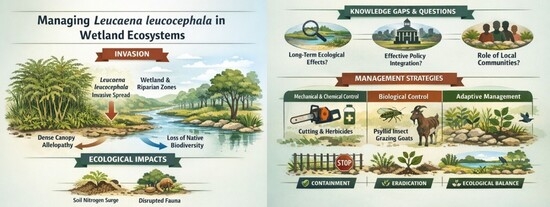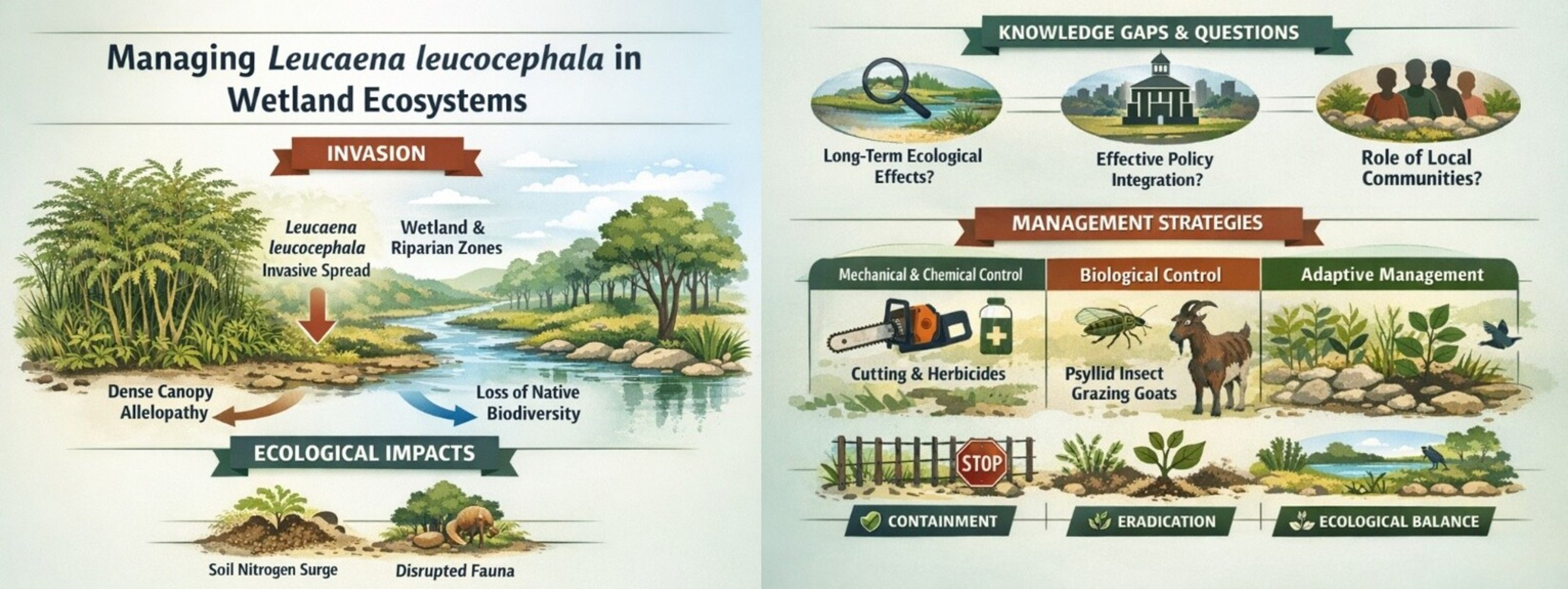
Sustainable Management of Leucaena leucocephala in Wetland and Riparian Ecosystems: A Systematic Review of Ecological Impacts and Control Strategies

Abstract
1. Introduction
2. Materials and Methods
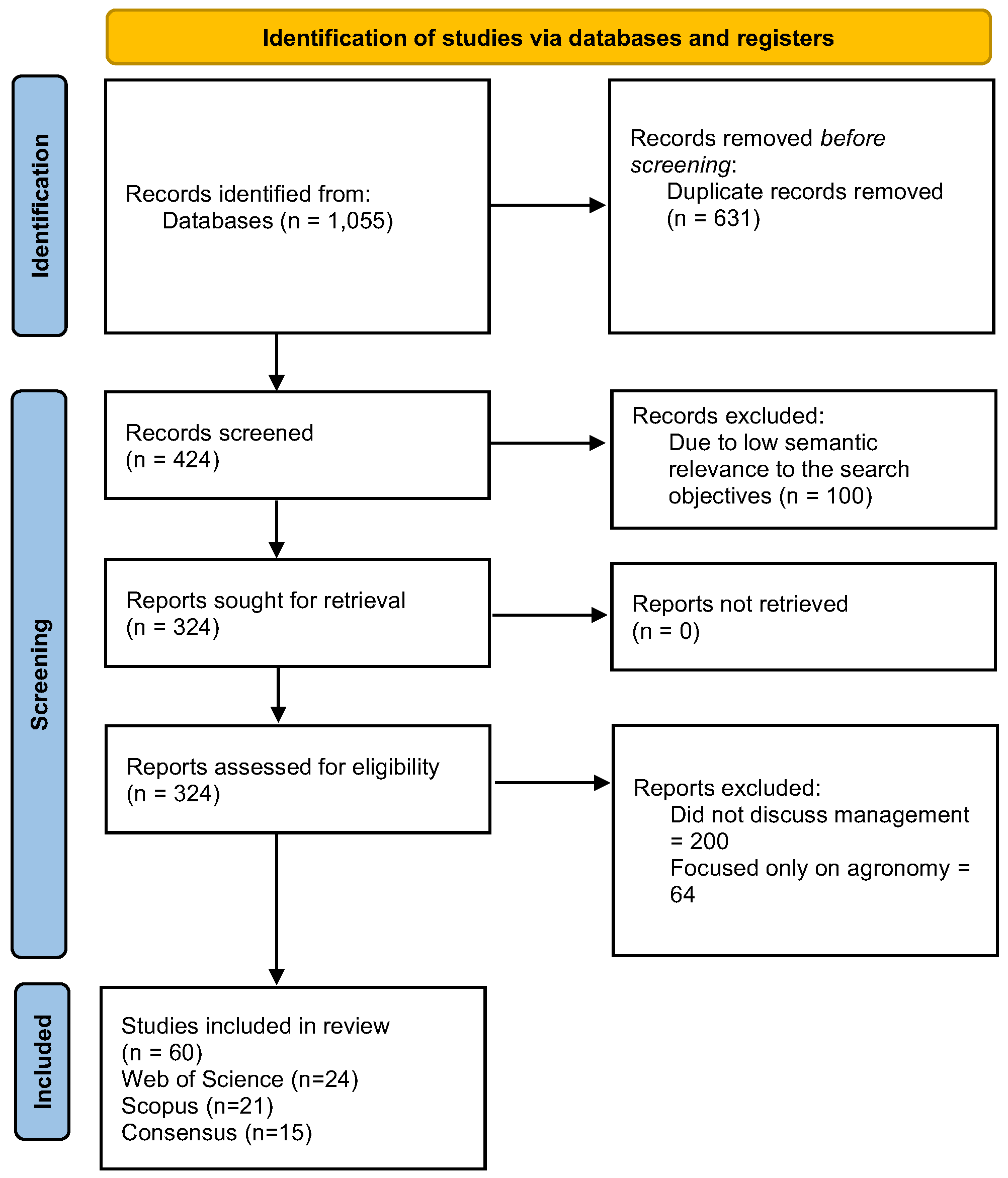
2.1. Search Strategy and Databases
- Species: “Leucaena leucocephala”
- Environment: wetland, riparian zone, floodplain, river bank, flooded forest
- Process: management, sustainable management, restoration, control, invasion
2.2. Study Selection and Eligibility Criteria
2.3. Data Extraction and Evidence Synthesis
2.4. Risk of Bias Assessment
3. Results and Discussion
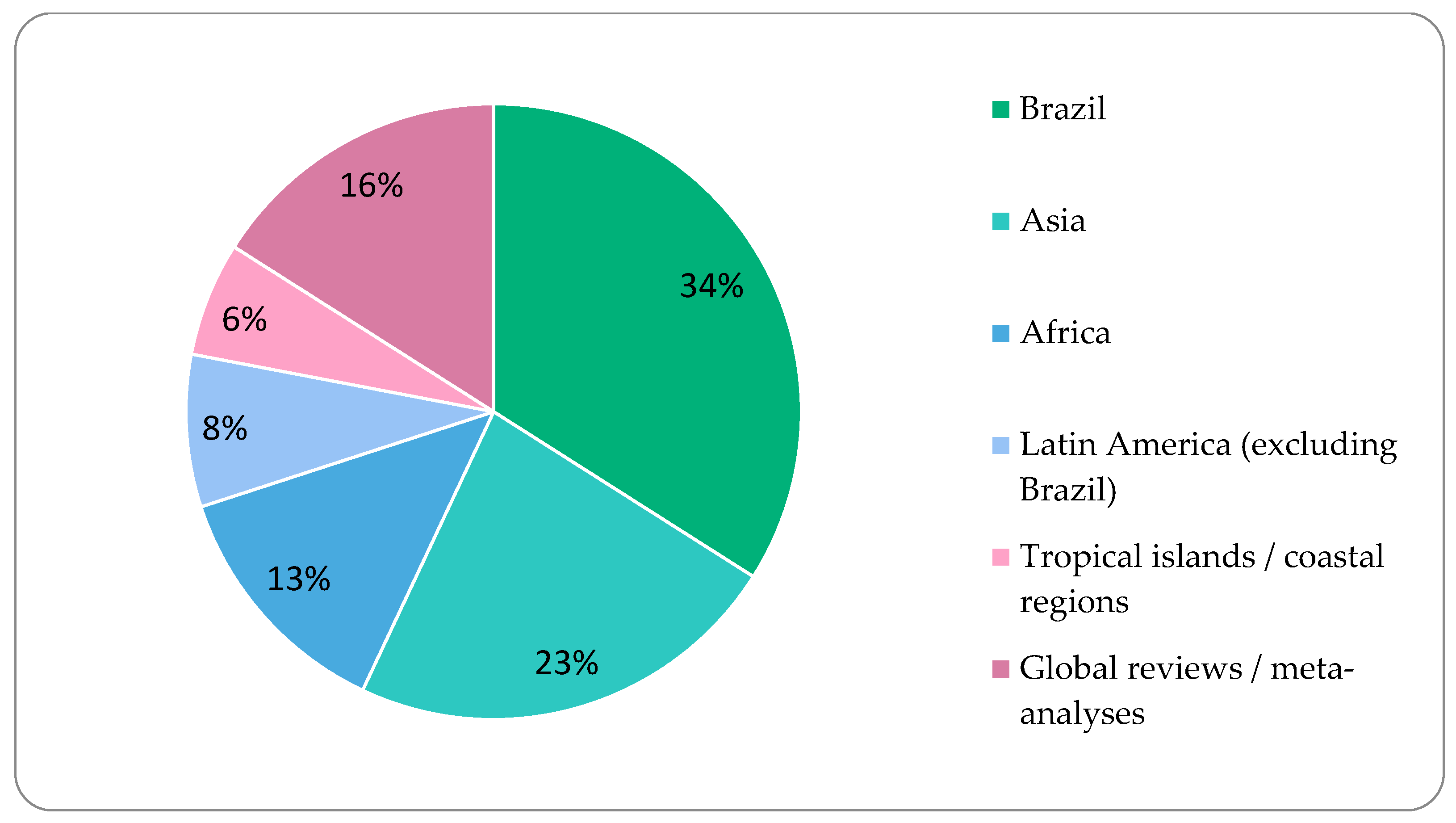
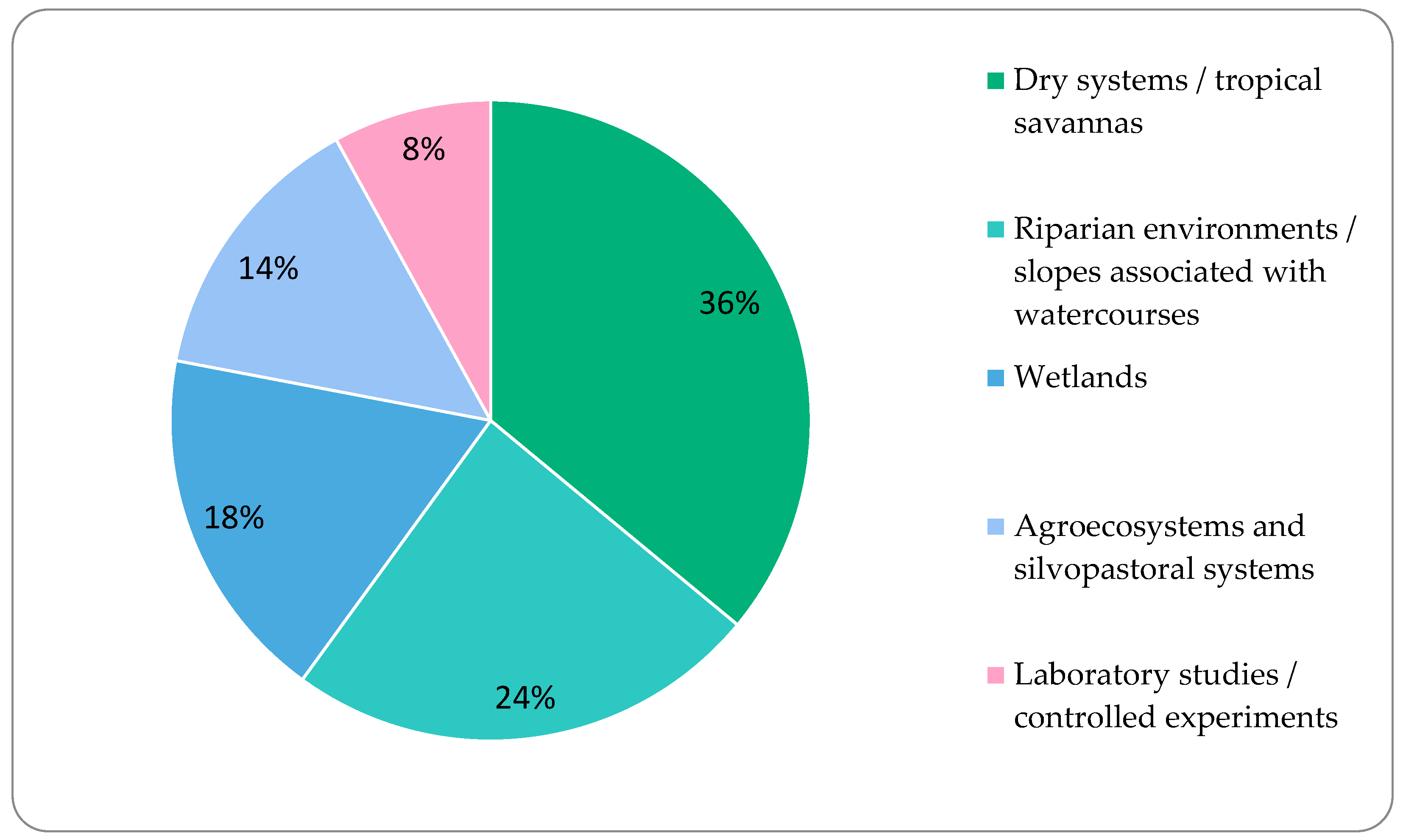
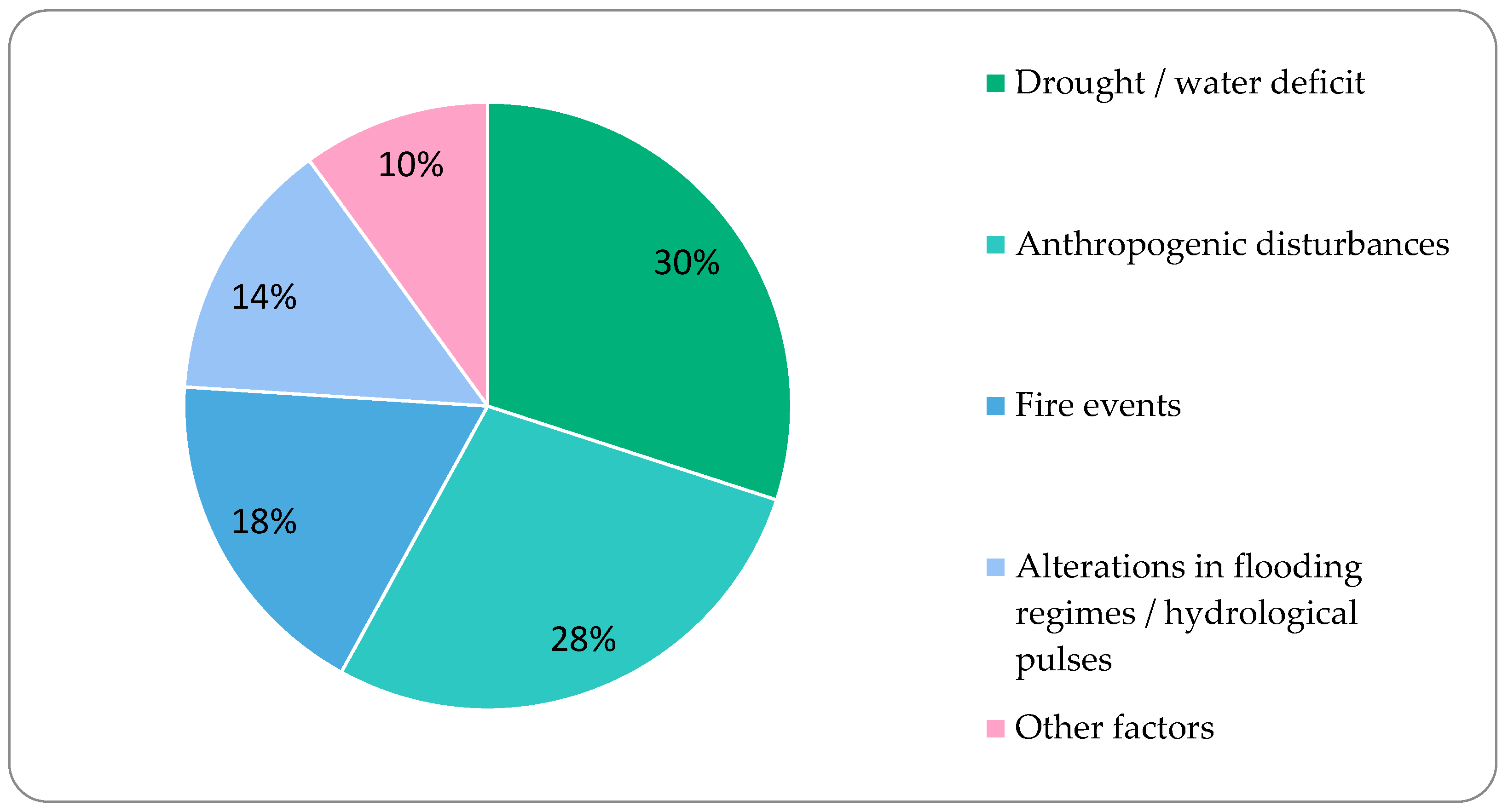
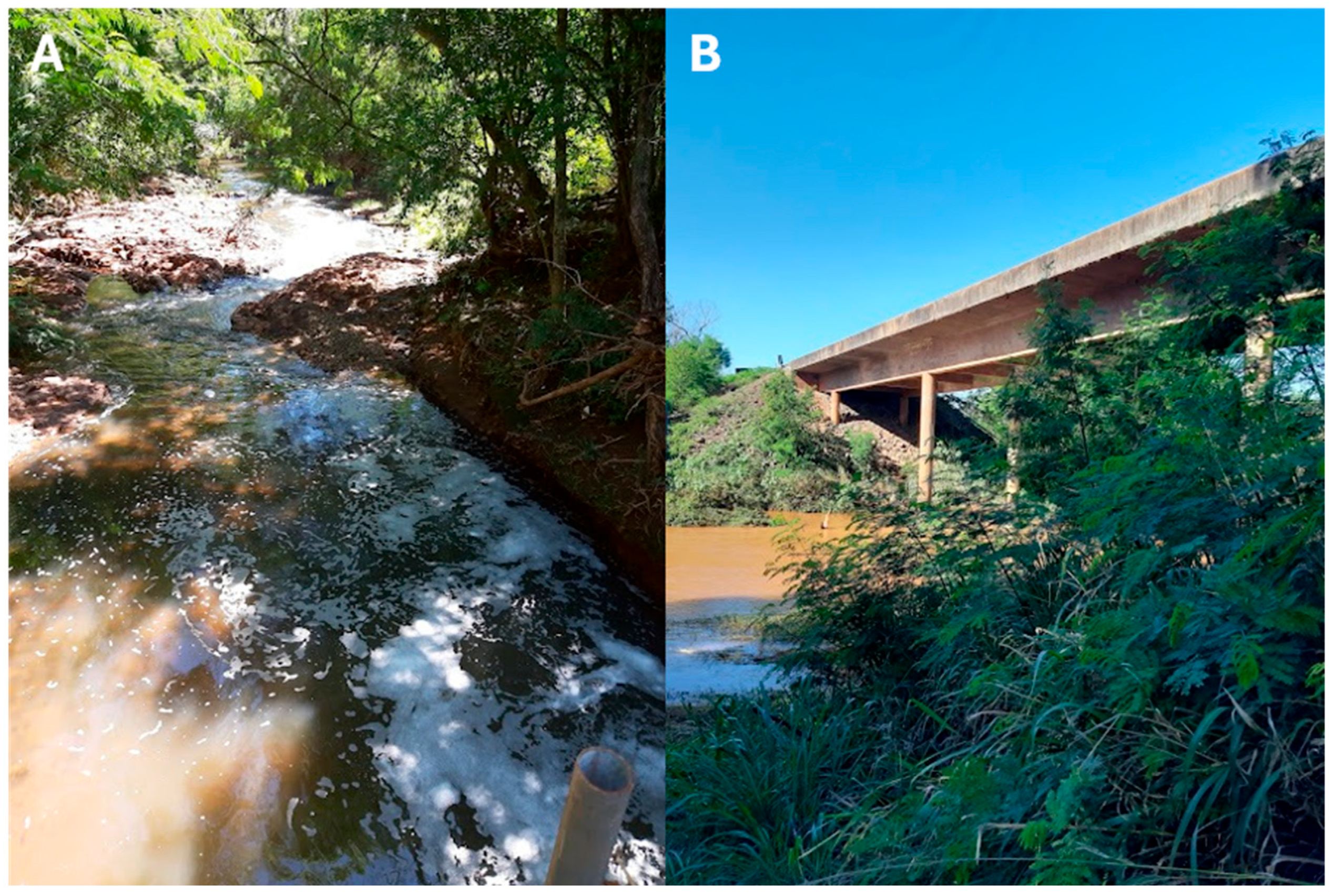
3.1. Geographic Distribution, Ecosystems, and Associated Disturbances
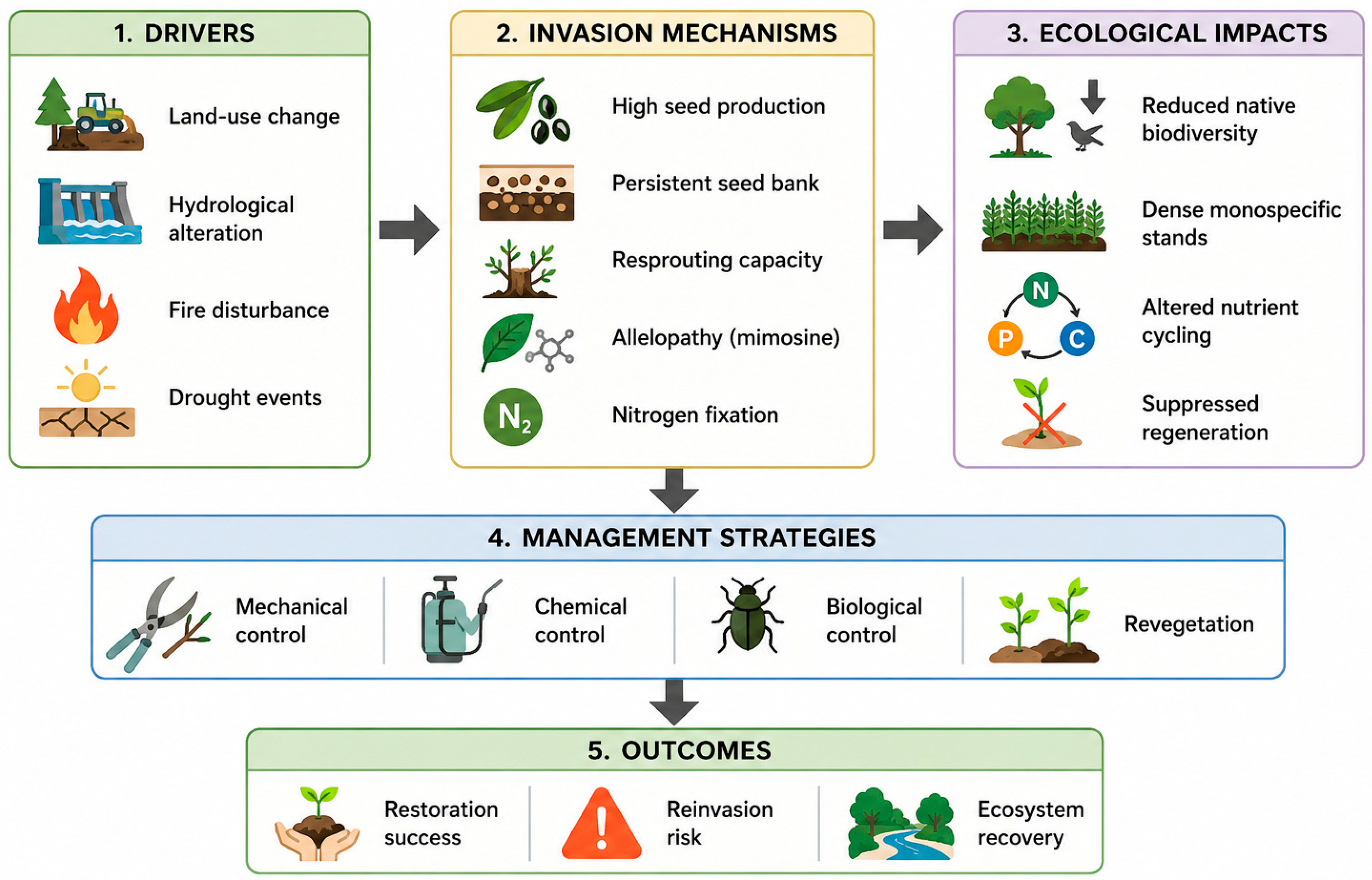
3.2. Ecological Mechanisms Associated with Invasive Success
3.3. Ecological Impacts on Natural Ecosystems and Wetlands
3.4. Management and Control Strategies for Leucaena leucocephala
3.4.1. Mechanical Control
3.4.2. Chemical Control
3.4.3. Combined Mechanical and Chemical Control
3.4.4. Innovative Chemical Methods in Sensitive Areas
3.4.5. Biological Control
3.4.6. Revegetation and Enrichment with Native Species
3.4.7. Management Through Productive Use
3.4.8. Adaptive Management and the “Code of Practice”
3.5. Synthesis of Evidence on Management Strategies
3.6. Ecosystem Recovery and Functional Impacts
3.7. Critical Success Factors
3.8. Interdisciplinary Applications
3.9. Challenges Under Climate Change
3.10. Research Gaps and Futures Directions
4. Conclusions
5. Limitations of the Review Process
Supplementary Materials
Author Contributions
Funding
Institutional Review Board Statement
Informed Consent Statement
Data Availability Statement
Acknowledgments
Conflicts of Interest
References
- Adams, C.; Hovick, S.; Kettenring, K. Integrating the disconnected: Enhancing wetland restoration by uniting invasive species management and native revegetation. Restor. Ecol. 2025, 33, e70097. [Google Scholar] [CrossRef]
- Hernandez, J.; Cortes, D.; Park, B. Research geographical distribution, strategies, and environmental and socioeconomic factors influencing the success of land-based restoration: A systematic review. Sustainability 2024, 16, 6381. [Google Scholar] [CrossRef]
- Sharma, P.; Kaur, A.; Batish, D.R.; Kaur, S.; Chauhan, B.S. Critical insights into the ecological and invasive attributes of Leucaena leucocephala, a tropical agroforestry species. Front. Agron. 2022, 4, 890992. [Google Scholar] [CrossRef]
- Rojas-Sandoval, J.; Acevedo-Rodríguez, P. Leucaena leucocephala (Leucaena). Plant. Wise Knowl. Bank. 2022, 18, 165–170. [Google Scholar] [CrossRef]
- Luz, G.P.D.; Peluso, L.M.; Costa, J.N.M.N.; Souza, E.B.; Damasceno-Junior, G.A.; Paranhos Filho, A.C.; Encina, C.C.C.; Ribeiro, A.A.; Garcia, L.C. Dryer Pantanal wetlands may increase Leucaena leucocephala (Fabaceae) invasion. Wetlands 2024, 44, 121, Correction in Wetlands 2025, 45, 27. [Google Scholar] [CrossRef]
- Tomás, D.; Cristóvão, L.; Abilio João, G.; Albino Dauala, G.; Pinto Mulima, E.; Rocha, A. Edaphic recovery of degraded soils with combined use of Leucaena (Leucaena leucocephala) and vetiver grass (Chrysopogon zizanioides) in Vandúzi, Mozambique. Rev. Verde Agroecol. Desenvolv. Sustentável 2024, 19, 100–107. [Google Scholar] [CrossRef]
- Camelo, D.; Dubeux, J.C.B., Jr.; dos Santos, M.V.F.; Lira, M.A., Jr.; Fracetto, G.G.M.; Fracetto, F.J.C.; de Freitas, E.V. Soil microbial activity and biomass in semiarid agroforestry systems integrating forage cactus and tree legumes. Agronomy 2021, 11, 1558. [Google Scholar] [CrossRef]
- Normaniza, O.; Faisal, H.; Barakbah, S. Engineering properties of Leucaena leucocephala for prevention of slope failure. Ecol. Eng. 2008, 32, 215–221. [Google Scholar] [CrossRef]
- Opoku, E.; Dzomeku, B.M.; Opata, J.; Adam, A.M.; Rasche, F. Perennial legumes Pueraria phaseoloides and Leucaena leucocephala exhibit high potential for fertility restoration of degraded mined soils in Ghana. J. Plant Nutr. Soil Sci. 2026, early view. [Google Scholar] [CrossRef]
- Zhang, H.; Zheng, B.; Zhang, J.; Wen, G.; Tian, B.; Feng, D.; Yang, C.; Zhang, M.; Sun, Y.; Song, Q.; et al. Natural regeneration outperforms active restoration in enhancing biodiversity and biomass along an altitudinal gradient in chinese savanna ecosystems. Integr. Conserv. 2025, 4, 491–502. [Google Scholar] [CrossRef]
- Zardetto, J.; Siqueira, T. The effects of white-popinac on regenerating seasonal semideciduous forests propagate across spatial scales. Biol. Inv. 2024, 26, 1457–1470. [Google Scholar] [CrossRef]
- Eleutério, W.J.; Lacorte, G.A.; Suzuki, L.P.Z.L.; Duarte, N.F. Analysis of biological invasion and use of different methods for the control of Leucaena leucocephala. Rev. Agroecossistemas 2023, 15, 67–84. [Google Scholar] [CrossRef]
- Campbell, S.; Vogler, W.; Brazier, D.; Vitelli, J.; Brooks, S. Weed leucaena and its significance, implications and control. Trop. Grassl.-Forrajes Trop. 2019, 7, 280–289. [Google Scholar] [CrossRef]
- Beraldi, J.M.; Vazquez, G.H. Superação da dormência em sementes de leucena (Leucaena leucocephala). Rev. Científica Eletrônica Ciências Apl. 2020, 1, 1–10. [Google Scholar]
- Zhang, H.; Jiang, K.; Zhao, Y.; Xing, Y.; Ge, H.; Cui, J.; Liu, T.; Wang, C. A trait-based protocol for the biological control of invasive exotic plant species. Front. Ecol. Evol. 2021, 9, 586948. [Google Scholar] [CrossRef]
- Badalamenti, E.; Pasta, S.; Sala, G.; Catania, V.; Quatrini, P.; La Mantia, T. The paradox of the alien plant Leucaena leucocephala subsp. glabrata (Rose) S. Zárate in Sicily: Another threat for the native flora or a valuable resource? Int. J. Plant Biol. 2020, 11, 8637. [Google Scholar] [CrossRef]
- Luo, J.H.; Tan, Z.Y.; Chen, B.; Chen, G.W.; Jiang, K.; Hei, Q.F.; Zhang, H. Key characteristics for facilitating Leucaena leucocephala to successfully invade pioneer communities of tropical rain forests. Chin. J. Plant Ecol. 2020, 44, 1215–1223. [Google Scholar] [CrossRef]
- Dalzell, S.; Shelton, M.; Mullen, B.; Larsen, P.; McLaughlin, K. Leucaena: A Guide to Establishment and Management; Meat and Livestock Australia: Brisbane, Australia, 2006. [Google Scholar]
- Peng, S.H.; Wang, H.H.; Kuo, Y.L. Methods for preventing the invasion of Leucaena leucocephala in coastal forests. Taiwan J. For. Sci. 2019, 34, 99–112. [Google Scholar]
- Tzec-Gamboa, M.; Álvarez-Rivera, O.O.; Ortíz-Vázquez, E.; Solorio-Sánchez, F.J. Native rhizobia and their role in the nodulation, growth, and development of Leucaena leucocephala seedlings. Agro Product. 2025, 18, 73–85. [Google Scholar] [CrossRef]
- Kato-Noguchi, H.; Kurniadie, D. Allelopathy and allelochemicals of Leucaena leucocephala as an invasive plant species. Plants 2022, 11, 1672. [Google Scholar]
- López-Cantú, D.G.; Maldonado-Torres, A.; Crespo-Reyes, E.; Requena-Lara, G.N.; Morales-Pacheco, J.F.; Garay-Martínez, J.R. Modelo de distribución potencial de Leucaena leucocephala y Acacia farnesiana para el Noreste de México. Ecosist. Recur. Agropec. 2024, 11, e4071. [Google Scholar] [CrossRef]
- Stevens, G.C.; Feller, I.C. The seed bank of Leucaena leucocephala and the effects of fire on seed germination. J. Trop. Ecol. 1991, 7, 271–275. [Google Scholar]
- Brooks, M.L.; D’antonio, C.M.; Richardson, D.M.; Grace, J.B.; Keeley, J.E.; DiTomaso, J.M.; Hobbs, R.J.; Pellant, M.; Pyke, D. Effects of invasive alien plants on fire regimes. BioScience 2004, 54, 677–688. [Google Scholar] [CrossRef]
- Hughes, C.E. Leucaena: A Genetic Resources Handbook; Oxford Forestry Institute: Oxford, UK, 1998. [Google Scholar]
- Monsalvo, J.A.B.; Demétrio, R.; Pupin, G.B.; Creton, G.G.; Lima-Santos, J.; Serrano, F.C.; Oehlmeyer, A. The invasive tree River Tamarind Leucaena leucocephala as a seasonal food item for a threatened population of Southern Mealy Amazon Amazona farinosa. Acta Ornithol. 2025, 59, 53–61. [Google Scholar] [CrossRef]
- Hutton, E.M. Leucaena leucocephala Research in Brazil. Leucaena Res. Rep. 1990, 11, 14–17. [Google Scholar]
- Revell, C.; Moore, G.; Real, D.; Crouch, S. Environmental adaptation of leucaena in Western Australia-challenges and opportunities. Trop. Grassl.-Forrajes Trop. 2019, 7, 112–119. [Google Scholar] [CrossRef]
- Cook, B.G.; Pengelly, B.C.; Brown, S.; Donnelly, J.R.; Eagles, D.; Franco, A.; Hanson, J.; Mullen, B.; Partridge, I.; Peters, M.; et al. Tropical forages: An interactive selection tool. In Tropical Forages: an Interactive Selection Tool; Cook, B.G., Pengelly, B.C., Brown, S., Donnelly, J.R., Eagles, D., Franco, A., Hanson, J., Mullen, B., Partridge, I., Peters, M., et al., Eds.; CSIRO Sustainable Ecosystems, Queensland Department of Primary Industries and Fisheries, Centro Internacional de Agricultura Tropical (CIAT), International Livestock Research Institute (ILRI): Brisbane, QLD, Australia, 2005; Available online: http://hdl.handle.net/102.100.100/181193?index=1 (accessed on 6 April 2026).
- Jiménez-Ruiz, J.; Santín-Montanyá, M.I.; Pokrovsky, O.S. An approach to the integrated management of exotic invasive weeds in riparian zones. In Riparian Zones: Characteristics, Management Practices, and Ecological Impacts; Pokrovsky, O.S., Ed.; Nova Science Publishers: Hauppauge, NY, USA, 2016; pp. 99–124. [Google Scholar]
- Werema, C.; Wilson, C. Avian use of habitat patches dominated by exotic Leucaena leucocephala or native tree species in urban Dar es Salaam, Tanzania. Tanz. J. Sci. 2022, 48, 15. [Google Scholar] [CrossRef]
- Pachas, N.A.; Radrizzani, A.; Murgueitio, E.; Uribe, F.; Cadavid, Á.Z.; Chará, J.; Ramírez-Avilés, L. Establishment and management of leucaena in Latin America. Trop. Grassl.-Forrajes Trop. 2019, 7, 127–132. [Google Scholar] [CrossRef]
- Oliveira, C.; Melo, A.; Durigan, G. Thinning enhances success of enrichment planting with selected tree species under a pure stand of Leucaena leucocephala. Restort. Ecol. 2023, 32, e13985. [Google Scholar] [CrossRef]
- Wolfe, B.T.; Van Bloem, S.J. Subtropical dry forest regeneration in grass-invaded areas of Puerto Rico: Understanding why Leucaena leucocephala dominates and native species fail. For. Ecol. Manag. 2012, 267, 253–261. [Google Scholar] [CrossRef]
- Zardetto, J.; Simioni, W.; Siqueira, T. Widespread negative effects of Leucaena leucocephala invasion on regenerating areas of the Atlantic Forest. Ecol. Solut. Evid. 2025, 6, e70156. [Google Scholar] [CrossRef]
- Mishra, A.; Rajak, P.; Raghubanshi, A.; Singh, H. Understanding competition between two invasive woody plants of India under an altered rainfall regime. Plant Ecol. 2024, 226, 27–45. [Google Scholar] [CrossRef]
- Koch, J.; Pearson, D.E.; Huebner, C.D.; Young, M.K.; Sniezko, R.A. Restoration of Landscapes and Habitats Affected by Established Invasive Species. In Invasive Species in Forests and Rangelands of the United States: A Comprehensive Science Synthesis for the United States Forest Sector; Springer: Berlin/Heidelberg, Germany, 2021; pp. 185–202. [Google Scholar]
- Lowe, S.; Browne, M.; Boudjelas, S.; De Poorter, M. 100 of the World’s Worst Invasive Alien Species: A Selection from the Global Invasive Species Database; The Invasive Species Specialist Group (ISSG): Auckland, New Zealand, 2000; p. 12. [Google Scholar]
- Weidlich, E.W.A.; Flórido, F.G.; Sorrini, T.B.; Brancalion, P.H.S. Controlling invasive plant species in ecological restoration: A global review. J. Appl. Ecol. 2020, 57, 1806–1817. [Google Scholar] [CrossRef]
- Rai, R. Threat imposed by O3-induced ROS on defense, nitrogen fixation, physiology, biomass allocation, and yield of legumes. In The Plant Family Fabaceae: Biology and Physiological Responses to Environmental Stresses; Springer: Singapore, 2020. [Google Scholar]
- Sithole, N.; Tsvuura, Z.; Kirkman, K.; Magadlela, A. Nitrogen source preference and growth carbon costs of Leucaena leucocephala (Lam.) de Wit saplings in South African grassland soils. Plants 2021, 10, 2242. [Google Scholar] [CrossRef] [PubMed]
- Dalzell, S.A.; Burnett, D.J.; Dowsett, J.E.; Forbes, V.E.; Shelton, H.M. Prevalence of mimosine and DHP toxicity in cattle grazing Leucaena leucocephala pastures in Queensland, Australia. Anim. Prod. Sci. 2012, 52, 365–372. [Google Scholar] [CrossRef]
- Milanović, M.; Knapp, S.; Pyšek, P.; Kühn, I. Linking traits of invasive plants with ecosystem services and disservices. Ecosyst. Serv. 2020, 42, 101072. [Google Scholar] [CrossRef]
- Marod, D.; Duengkae, P.; Kutintara, U.; Sungkaew, S.; Wachrinrat, C.; Asanok, L.; Klomwattanakul, N. The influences of an invasive plant species (Leucaena leucocephala) on tree regeneration in Khao Phuluang forest, Northeastern Thailand. Agric. Nat. Resour. 2012, 46, 39–50. [Google Scholar]
- Vossler, F.G.; Delucchi, G. Leucaena leucocephala (Fabaceae), especie invasora en la Argentina. Bol. Soc. Arg. Bot. 2022, 57, 785–800. [Google Scholar] [CrossRef]
- Dias, R.; Gomes, D.; Anunciato, V.; Bianchi, L.; Carbonari, C.; Velini, E. Herbicides selectivity on seedlings of White Leadtree (Leucaena leucocephala). Científica 2020, 48, 56–66. [Google Scholar] [CrossRef]
- Rejmánek, M.; Pitcairn, M.J. When Is Eradication of Exotic Pest Plants a Realistic Goal? In Turning the Tide: The Eradication of Invasive Species; Veitch, C.R., Clout, M.N., Eds.; IUCN SSC Invasive Species Specialist Group: Gland, Switzerland, 2002; pp. 243–248. [Google Scholar]
- Wittenberg, R.; Cock, M.J.W. Invasive Alien Species: A Toolkit of Best Prevention and Management Practices; CAB International: Wallingford, UK, 2001. [Google Scholar]
- Richardson, D.M.; Holmes, P.M.; Esler, K.J.; Galatowitsch, S.M.; Stromberg, J.C.; Kirkman, S.P.; Pyšek, P.; Hobbs, R.J. Riparian vegetation: Degradation, alien plant invasions, and restoration prospects. Divers. Distrib. 2007, 13, 126–139. [Google Scholar] [CrossRef]
- Ziller, S.R. Os Processos de Invasão Biológica e o Manejo de Espécies Exóticas Invasoras. In I Simpósio Brasileiro Sobre Espécies Exóticas Invasoras; Ministério do Meio Ambiente: Brasília, Brazil, 2001. [Google Scholar]
- Moody, M.E.; Mack, R.N. Controlling the spread of invading population: Importance of the nascent foci. J. Appl. Ecol. 1988, 25, 1009–1021. [Google Scholar] [CrossRef]
- Simberloff, D. Eradication—Preventing invasions at the outset. Weed Sci. 2003, 51, 247–253. [Google Scholar] [CrossRef]
- Harris, S.A. Systematics and randomly amplified polymorphic DNA in the genus Leucaena (Leguminosae, Mimosoideae). Plant Syst. Evol. 1995, 197, 195–208. [Google Scholar] [CrossRef]
- Lorenzi, H.; Souza, H.M. Plantas Invasoras do Brasil: Terrestres, Aquáticas, Parasitas e Tóxicas, 4th ed.; Instituto Plantarum: Nova Odessa, Brazil, 2008. [Google Scholar]
- Buck, S. Leucaena: A Guide to Establishment and Management, 2nd ed.; Meat and Livestock Australia: Brisbane, Australia, 2019. [Google Scholar]
- Olckers, T. Biological Control of Leucaena leucocephalaI (Lam.) de Wit (Fabacae) in South Africa: A Tale of Opportunism, Seed Feeders and Unanswered Questions. Afr. Entomol. 2011, 19, 356–365. [Google Scholar] [CrossRef]
- Olckers, T.; Egli, D.; Sharratt, M. Factors Affecting the Biological Control of Leucaena leucocephala in South Africa. In Proceedings of the XIII International Symposium on Biological Control of Weeds, Waikoloa, HI, USA, 11–16 September 2011. [Google Scholar]
- Sharratt, M.; Olckers, T. Responses of the seed-feeding beetle Acanthoscelides macrophthalmus and its recruited parasitoids to resource availability—Implications for the biological control of Leucaena leucocephala in South Africa. Biol. Control 2019, 135, 83–90. [Google Scholar] [CrossRef]
- Marler, T.E.; et al. Leucaena leucocephala as a nurse tree for restoration of degraded tropical forests. J. Trop. For. Sci. 2016, 28, 245–255. [Google Scholar]
- Mello, T.J.; Oliveira, A.A.D. Making a bad situation worse: An invasive species altering the balance of interactions between local species. PLoS ONE 2016, 11, e0152070. [Google Scholar] [CrossRef]
- Shelton, H.M.; Franzel, S.; Peters, M. The Leucaena Network: Promoting the responsible use of Leucaena. Trop. Grassl. 2005, 39, 198–209. [Google Scholar]
- Williams, J.; Williams, L.; Evans, K.; Siebring, E.; Carper, J.; Rasmussen, Z.; Leclerc, D. Vegetating Mine Tailings: The Benefits of Using Non-Native Species in the Remediation of a Bauxite Residue Site in Jamaica. In Mine Closure 2023: Proceedings of the 16th International Conference on Mine Closure, Reno, NV, USA, 2–5 October 2023; Australian Centre for Geomechanics: Crawley, Australia, 2023. [Google Scholar]
- Verly, O.M.; Olivo-Neto, A.M.; Domiciano, C.A.R.; Comini, I.B.; Silva, S.; Torres, C.M.M.E.; Medeiros, R.A. Are the anthropized Cerradão of the Cerrado-Pantanal ecotone resistant to alien species invasion? Br. J. Bot. 2024, 47, 519–532. [Google Scholar] [CrossRef]
- Mishra, A.; Sharma, S.D.; Khan, G.H. Improvement in physical and chemical properties of sodic soil by 3, 6 and 9 years old plantation of Eucalyptus tereticornis: Biorejuvenation of sodic soil. For. Ecol. Manag. 2003, 184, 115–124. [Google Scholar] [CrossRef]
- Bandara, W.A.R.T.W.; Ranasinghe, O.; Perera, P.; Vlosky, R.; Kizha, A.R. Potential to use invasive plants in biomass energy production: A case study Prosopis juliflora in coastal wetlands of Sri Lanka. Trees For. People 2022, 10, 100330. [Google Scholar] [CrossRef]
- Ndabankulu, K.; Tsvuura, Z.; Magadlela, A. Alien invasive Leucaena leucocephala successfully acquires nutrients by investing in below-ground biomass compared to native Vachellia nilotica in nutrient-amended soils in South Africa. AoB Plants 2022, 14, plac026. [Google Scholar] [CrossRef] [PubMed]
- Honda, M.D.; Borthakur, D. Mimosine concentration in Leucaena leucocephala under various environmental conditions. Trop. Grassl.-Forrajes Trop. 2019, 7, 164–172. [Google Scholar] [CrossRef]
- Marifatul, H.S.; Mohammed, D.; Muhammad, W.; Manoj, K.; Manzer, S.H.; Rainer, B.W. Predicting potential invasion risks of Leucaena leucocephala (Lam.) de Wit in the arid area of Saudi Arabia. J. Arid Land 2024, 16, 983–999. [Google Scholar] [CrossRef]
- de Sousa Machado, M.T.; Drummond, J.A.; Barreto, C.G. Leucaena leucocephala (Lam.) de Wit in Brazil: History of an invasive plant. Estud. Ibero Am. 2020, 46, e33976–e33976. [Google Scholar] [CrossRef]
- Silva, J.G.; da Silva, W.M.; Urquiza, M.V.S.; Zanata, L.H. Physiological quality of Leucaena leucocephala seeds collectedin pantanal sul-mato-grossense and submitted to thermal shock in different positions on the soil. Rev. GeoPantanal 2023, 18, 167–182. [Google Scholar] [CrossRef]
- Pinto, G.C.; Lourenço, V.O.; Tonelli, F.M.P.; Delgado, V.M.S.; Tonelli, F.C.P. Leucaena leucocephala: An Invasive Plant and Source of Allelochemicals in Brazil. In Allelopathy; Apple Academic Press: New York, NY, USA, 2025; pp. 341–351. [Google Scholar]
- Mendes, R.R.; Biffe, D.F.; Constantin, J.; de Oliveira, R.S., Jr.; Rosa, Ê.L.; Cuba, A.L.F.; Baladeli, R.B. Controle de amarelinho (Tecoma stans) em pastagem com aplicações localizadas de herbicidas. Weed Control J. 2016, 15, 303–312. [Google Scholar] [CrossRef]
- Caldeira, S.F.; Castro, C.K.D.C.E. Herbicidas e danos físicos em tocos de teca para controle de brotos após o desbaste. Ciênc. Rural 2012, 42, 1826–1832. [Google Scholar] [CrossRef]
- Ruiz, T.E.; Alonso, J.; Valenciaga, N.; Febles, G.; Lok, S.; Galindo, J.; Lopez, A. Relation between management and Leucaena (Leucaena leucocephala) to prevent its transformation into an invasive plant. Cuba. J. Agric. Sci. 2018, 52, 87–95. Available online: https://cjascience.com/index.php/CJAS/article/view/791. (accessed on 6 April 2026).
- Wan, J.; Wang, C. Expansion risk of invasive plants in regions of high plant diversity: A global assessment using 36 species. Ecol. Inform. 2018, 46, 8–18. [Google Scholar] [CrossRef]
- Gomo, M.-S.M.; Goma, A.M.M.; Ndzai, S.F.; Mpela, G.F.; Kimposso, E.K.O.; Douh, C.; Koubouana, F.; N’zala, D. Possibilities for restoring the ecosystem degraded by the species Albizia lebbeck (L.) Benth and Leucaena leucocephala (Lam.) de Wit, in Brazzaville. J. Chem. Biol. Phys. Sci. 2024, 14, 50–62. [Google Scholar] [CrossRef]
- Pachas, A.N.A.; Shelton, H.M.; Lambrides, C.J.; Dalzell, S.A.; Murtagh, G.J. Effect of tree density on competition between Leucaena leucocephala and Chloris gayana using a Nelder Wheel trial. I. Aboveground interactions. Crop Pasture Sci. 2018, 69, 419–429. [Google Scholar] [CrossRef]
- Nulik, J.; Hau, D.K. Review of establishment practices of Leucaena leucocephala cv. Tarramba in West Timor, Indonesia. Trop. Grassl.-Forrajes Trop. 2019, 7, 136–140. [Google Scholar] [CrossRef]
- Amaya-Martín, S.M.; Ballina-Gómez, H.S.; Ruíz-Sánchez, E.; Azcorra-Perera, G.J.; Ruiz-Santiago, R.R.; Pierre, J.F. Interactive effect of copper and herbivory on the whole-plant growth of Leucaena leucocephala. Int. J. Plant Biol. 2025, 16, 76. [Google Scholar] [CrossRef]
- Bomfim, N.C.P.; Aguilar, J.V.; Ferreira, T.C.; Dos Santos, B.S.; De Paiva, W.D.S.; De Souza, L.A.; Camargos, L.S. Root development in Leucaena leucocephala (Lam.) de Wit enhances copper accumulation. Environ. Sci. Pollut. Res. 2023, 30, 80245–80260. [Google Scholar] [CrossRef] [PubMed]
- Giraldo, C.; Escobar, F.; Chara, J.D.; Calle, Z. The adoption of silvopastoral systems promotes the recovery of ecological processes regulated by dung beetles in the Colombian Andes. Insect Conserv. Divers. 2011, 4, 115–122. [Google Scholar] [CrossRef]
- Dhanda, S.; Chauhan, B.S. Seed germination ecology of leucaena (Leucaena leucocephala) as influenced by various environmental parameters. Weed Sci. 2022, 70, 335–340. [Google Scholar] [CrossRef]
- Ishiaku, Y.M.; Abdullahi, U.; Ogundun, N.J. Improvement of leucaena (Leucaena leucocephala) Benth. seeds emergence using hot saline water treatment durations. Niger. J. Anim. Prod. 2022, 49, 333–339. [Google Scholar] [CrossRef]
- Teles, M.M.; Alves, A.A.; Oliveira, J.C.G.D.; Bezerra, A.M.E. Métodos para quebra da dormência em sementes de leucena Leucaena leucocephala (Lam.) de Wit. Rev. Bras. Zootec. 2000, 29, 387–391. [Google Scholar] [CrossRef]
- Yousif, M.A.I.; Wang, Y.R.; Dali, C. Seed dormancy overcoming and seed coat structure change in Leucaena leucocephala and Acacia nilotica. For. Sci. Tech. 2020, 16, 18–25. [Google Scholar]
- Idol, T. A short review of leucaena as an invasive species in Hawaii. Trop. Grassl.-Forrajes Trop. 2019, 7, 290–294. [Google Scholar] [CrossRef]
- Mendel, Z.; Nazarian, I.; Protasov, A. Notes and biocontrol insights on the occurrence of leucaena tree and the establishment of leucaena psyllid in Israel. Phytoparasitica 2025, 53, 107. [Google Scholar] [CrossRef]
- Bageel, A.; Honda, M.D.; Carrillo, J.T.; Borthakur, D. Giant leucaena (Leucaena leucocephala subsp. glabrata): A versatile tree-legume for sustainable agroforestry. Agrofor. Syst. 2020, 94, 251–268. [Google Scholar] [CrossRef]
- Jetana, T.; Vongpipatana, C.; Usawang, S.; Thongruay, S. The use of tropical protein-rich leaves as supplements to Thai swamp buffalo receiving a basal diet of rice straw and treated leucaena (Leucaena leucocephala). Trop. Anim. Health Prod. 2011, 43, 57–67. [Google Scholar] [CrossRef]
- Saifuddin, M.; Osman, N.; Khandaker, M.M. Evaluation of root profiles and engineering properties of plants for soil reinforcement. J. Trop. For. Sci. 2022, 34, 176–186. [Google Scholar] [CrossRef]


| Aspect | Effect of L. leucocephala | Implications for Restoration | Sources |
|---|---|---|---|
| Plant diversity | Decline in species richness and dominance of a single species | Leads to community impoverishment rather than ecosystem recovery | [3,5,10,11] |
| Invasion dynamics | High seed production and persistent soil seed bank | Increases risk of reinvasion and requires continuous and costly control | [3,5,11] |
| Riparian/wetland zones | Colonizes riverbanks and areas with variable flooding regimes | Competes with natural regeneration of floodplain species | [3,5,11] |
| Chemical Treatment | Dose/Method | Mortality (24 Months) | Speed of Action |
|---|---|---|---|
| Aminopyralid + Metsulfuron | Capsule | 100% | High (complete mortality within 12 months) [30] |
| Picloram | Capsule | 100% | Moderate to slow [30] |
| Clopyralid | Capsule | 98.3% | Moderate [30] |
| Glyphosate | Capsule | 56.7% | Inconsistent [30] |
| Triclopyr + Picloram | Liquid (Drill & Fill) | 100% | High [30] |
| Key Finding | Proportion of Evidence | Ecological Rationale | References |
|---|---|---|---|
| Large disturbances facilitate reinvasion | 25% | Disturbances such as pasture abandonment, urban development, extreme droughts, or hydrological alterations create open niches that favor Leucaena colonization from persistent seed banks. These environments often exhibit degraded soils and increased connectivity with propagule sources. | [3,11,14,16,20,35,36,41,62,63,64,65,66,67,68] |
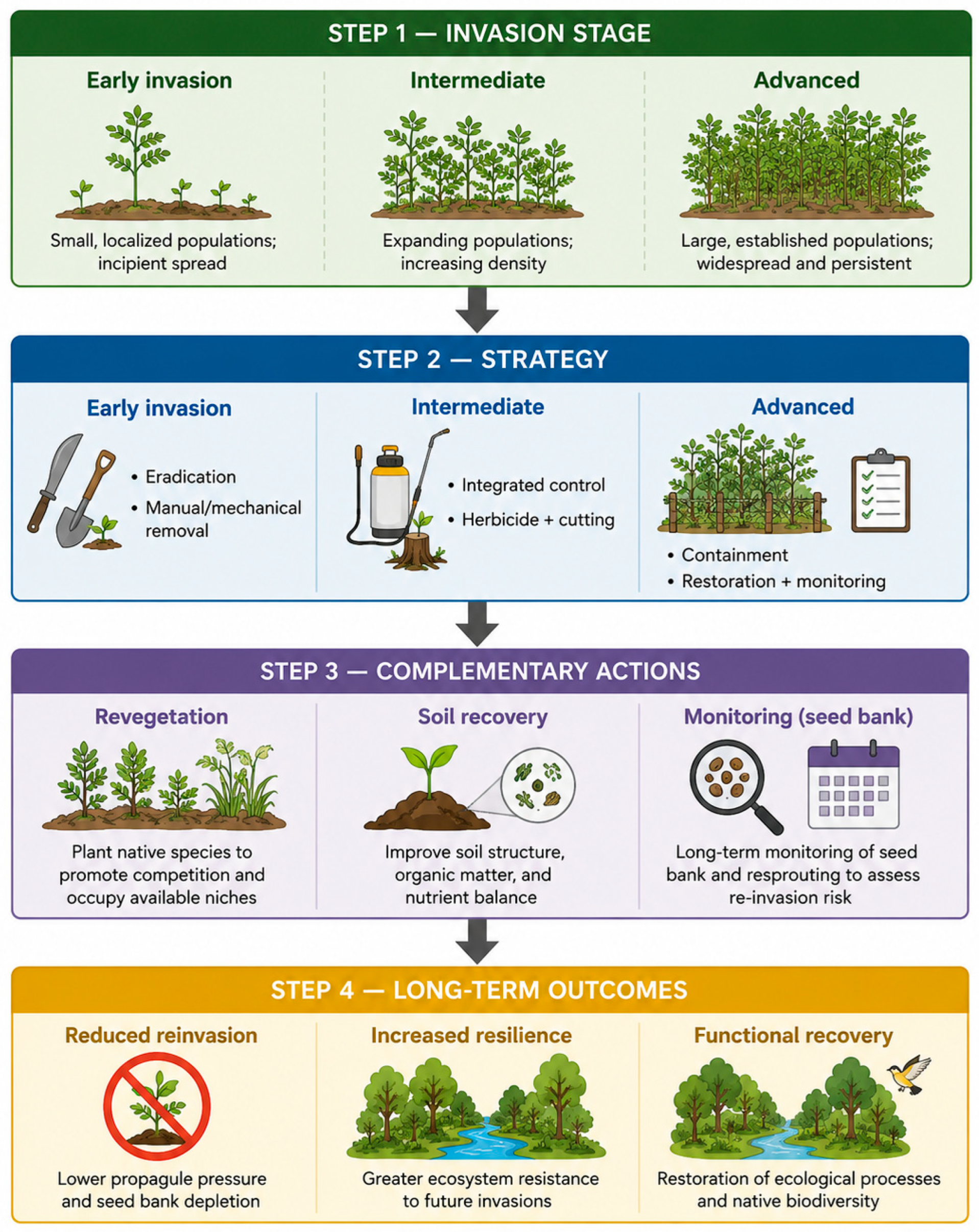
| Integrated control (cutting + herbicide) is the most effective method | 20% | Mechanical clearing followed by application of systemic herbicides to the stump (e.g., glyphosate, triclopyr, or picloram) drastically reduces resprouting and can achieve 80–90% effectiveness. Integration with revegetation, soil management, and grazing reduces the seed bank and prevents reinvasion. Modeling studies indicate that combining strategies reduces the need for repeated treatments. | [1,2,6,12,13,46,69,70,71,72,73,74] |
| Mechanical removal alone leads to intense resprouting | 20% | Due to its deep root system and stored nutrient reserves, Leucaena exhibits strong regeneration capacity after cutting. Mechanical removal alone often results in multiple shoots per stump and rapid canopy recovery, requiring chemical control or complementary management. | [8,13,16,17,19,45,64,75,76,77,78,79,80] |
| Revegetation or enrichment with native species reduces reinvasion | 13% | Dense planting or assisted regeneration of native species creates shading and competition for resources, limiting Leucaena germination and growth. Niche occupation following invasive removal reduces reinvasion risk and promotes ecosystem recovery. | [1,10,15,17,33,35,37,81] |
| Fire should not be used as a control tool | 12% | Fire acts as a thermal scarification agent, breaking seed dormancy and increasing germination rates. Surface fires may trigger massive regeneration pulses and promote Leucaena dominance over native vegetation. | [5,13,16,82,83,84,85] |
| Biological control has limited effect when used alone | 8% | The seed-feeding beetle Acanthoscelides macrophthalmus reduces seed viability and the seed bank but does not eliminate established adult trees. Psyllid infestation causes severe defoliation, yet the species rapidly resprouts. In regions such as Hawaii and other tropical islands, biocontrol reduced productive use but did not prevent naturalization, indicating the need for complementary management. | [13,56,86,87,88] |
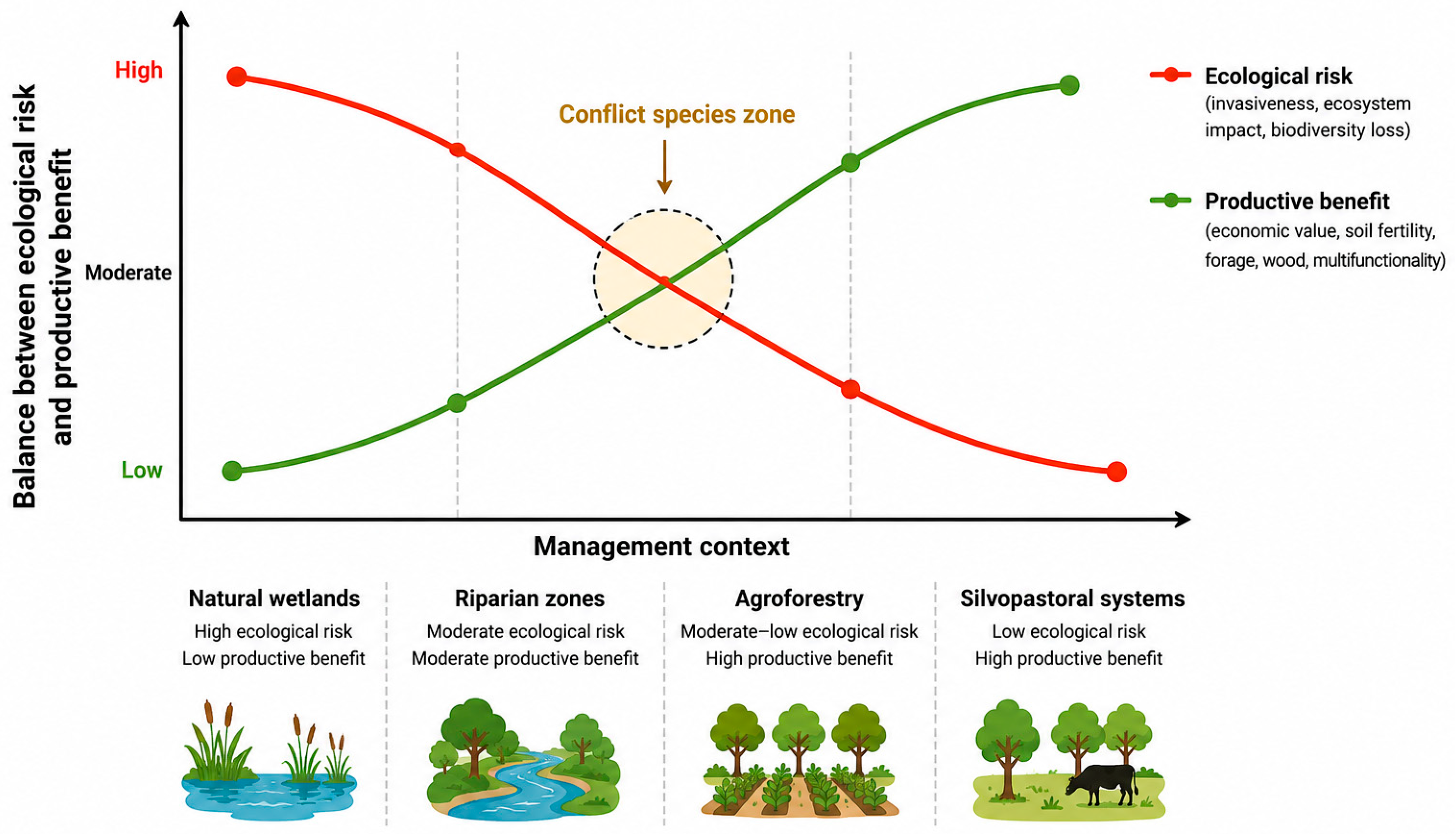
| Management through utilization (forage/bioenergy) as control | 5% | Utilizing Leucaena biomass for forage, timber, or bioenergy can reduce seed production and gradually decrease population density in invaded areas. Although rarely sufficient alone, it may lower management costs and create economic incentives for continuous removal. | [13,16,89] |
| Topic | Integrated Physical-chemical Control | Revegetation/Enrichment with Natives | Biological Control | Fire Use |
|---|---|---|---|---|
| Tropical wetlands | 7 | 4 | 3 | 2 |
| Urban riparian areas | 2 | 2 | 2 | 1 |
| Silvopastoral systems | 3 | 6 | 4 | 4 |
Disclaimer/Publisher’s Note: The statements, opinions and data contained in all publications are solely those of the individual author(s) and contributor(s) and not of MDPI and/or the editor(s). MDPI and/or the editor(s) disclaim responsibility for any injury to people or property resulting from any ideas, methods, instructions or products referred to in the content. |
© 2026 by the authors. Licensee MDPI, Basel, Switzerland. This article is an open access article distributed under the terms and conditions of the Creative Commons Attribution (CC BY) license.
Share and Cite
Camillo, L.C.; Polastri, P.; Piedade, M.T.F.; Lopes, A. Sustainable Management of Leucaena leucocephala in Wetland and Riparian Ecosystems: A Systematic Review of Ecological Impacts and Control Strategies. Stresses 2026, 6, 31. https://doi.org/10.3390/stresses6020031
Camillo LC, Polastri P, Piedade MTF, Lopes A. Sustainable Management of Leucaena leucocephala in Wetland and Riparian Ecosystems: A Systematic Review of Ecological Impacts and Control Strategies. Stresses. 2026; 6(2):31. https://doi.org/10.3390/stresses6020031
Chicago/Turabian StyleCamillo, Lilian Cristine, Paula Polastri, Maria Teresa Fernandez Piedade, and Aline Lopes. 2026. "Sustainable Management of Leucaena leucocephala in Wetland and Riparian Ecosystems: A Systematic Review of Ecological Impacts and Control Strategies" Stresses 6, no. 2: 31. https://doi.org/10.3390/stresses6020031
APA StyleCamillo, L. C., Polastri, P., Piedade, M. T. F., & Lopes, A. (2026). Sustainable Management of Leucaena leucocephala in Wetland and Riparian Ecosystems: A Systematic Review of Ecological Impacts and Control Strategies. Stresses, 6(2), 31. https://doi.org/10.3390/stresses6020031