

Proposed Epigenetic Regulatory Frameworks at the Plant–Microbiome Interface Under Cadmium Stress

Abstract
1. Introduction
2. Cadmium Stress-Induced Epigenetic Regulation in Plants
2.1. DNA Methylation Dynamics Under Cadmium Stress
2.2. Histone Modifications and Chromatin Remodeling
2.3. Non-Coding RNAs in Cadmium-Responsive Gene Regulation
2.3.1. MicroRNAs and Small RNAs in Cd Stress Responses
2.3.2. Long Non-Coding RNAs in Cadmium-Responsive Transcriptional and Epigenetic Regulation
2.4. Epigenetic Stress Memory and Transgenerational Effects
3. Epigenetic Regulatory Frameworks at the Plant–Microbiome Interface Under Cadmium Stress
3.1. Microbiome-Mediated Modulation of Plant Stress Physiology Under Cadmium Exposure
3.1.1. Regulation of Cadmium Uptake, Transport, and Compartmentalization
3.1.2. Transcriptional and Signaling Reprogramming Induced by Microbial Associations
3.1.3. Antioxidant, Redox, and Phytohormone-Mediated Modulation of Cd Stress Responses
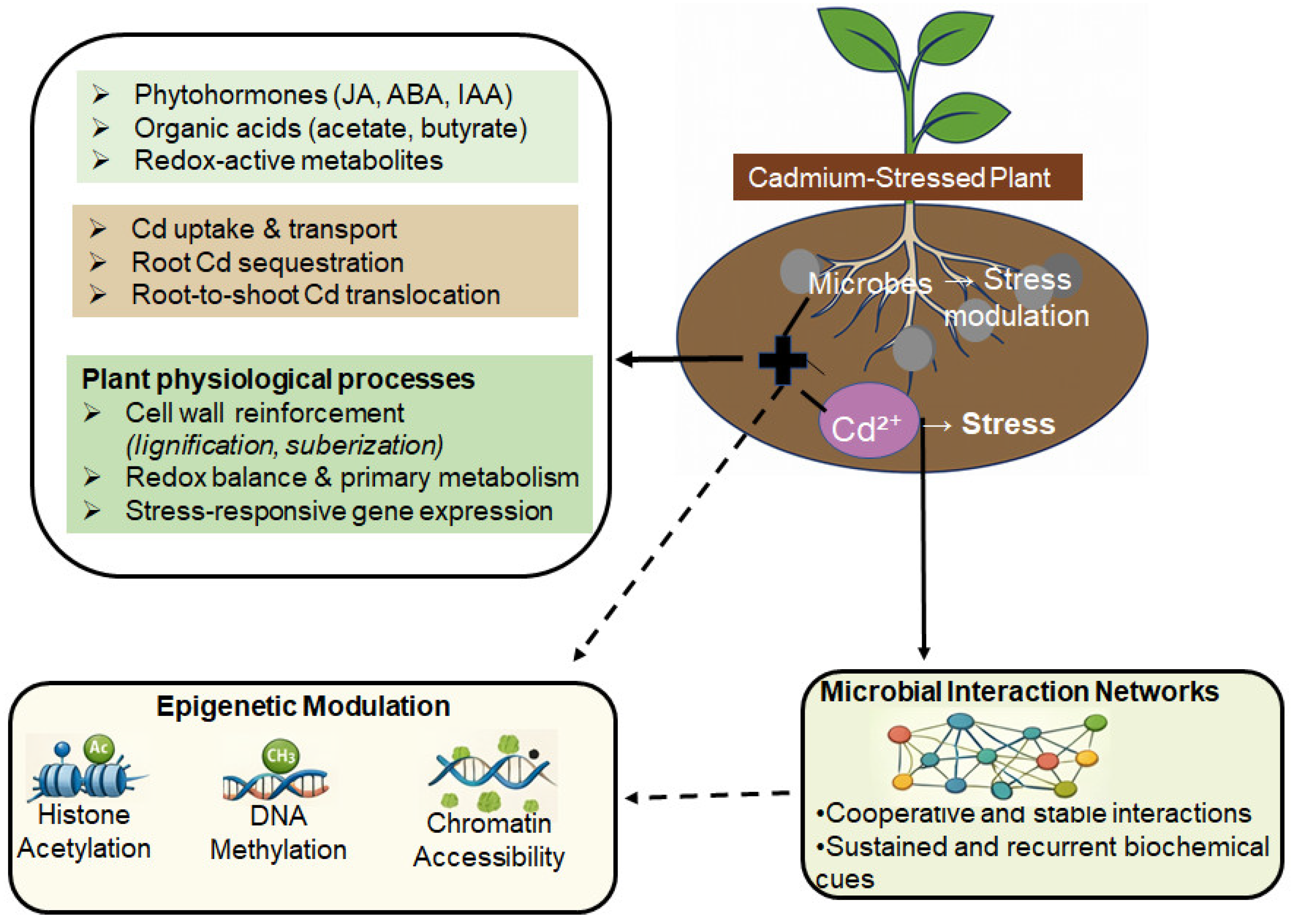
3.2. Microbiome-Derived Signals as Potential Modulators of Plant Epigenetic States Under Cd Stress
3.3. Microbial Network Dynamics and the Potential for Epigenetic Plasticity in Cd-Stressed Plants
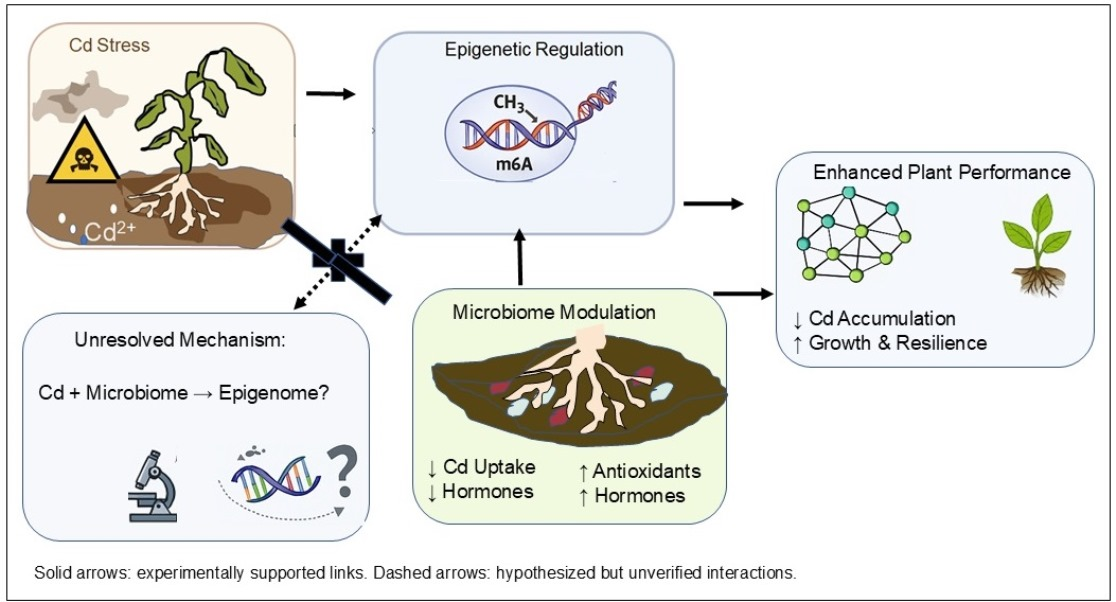
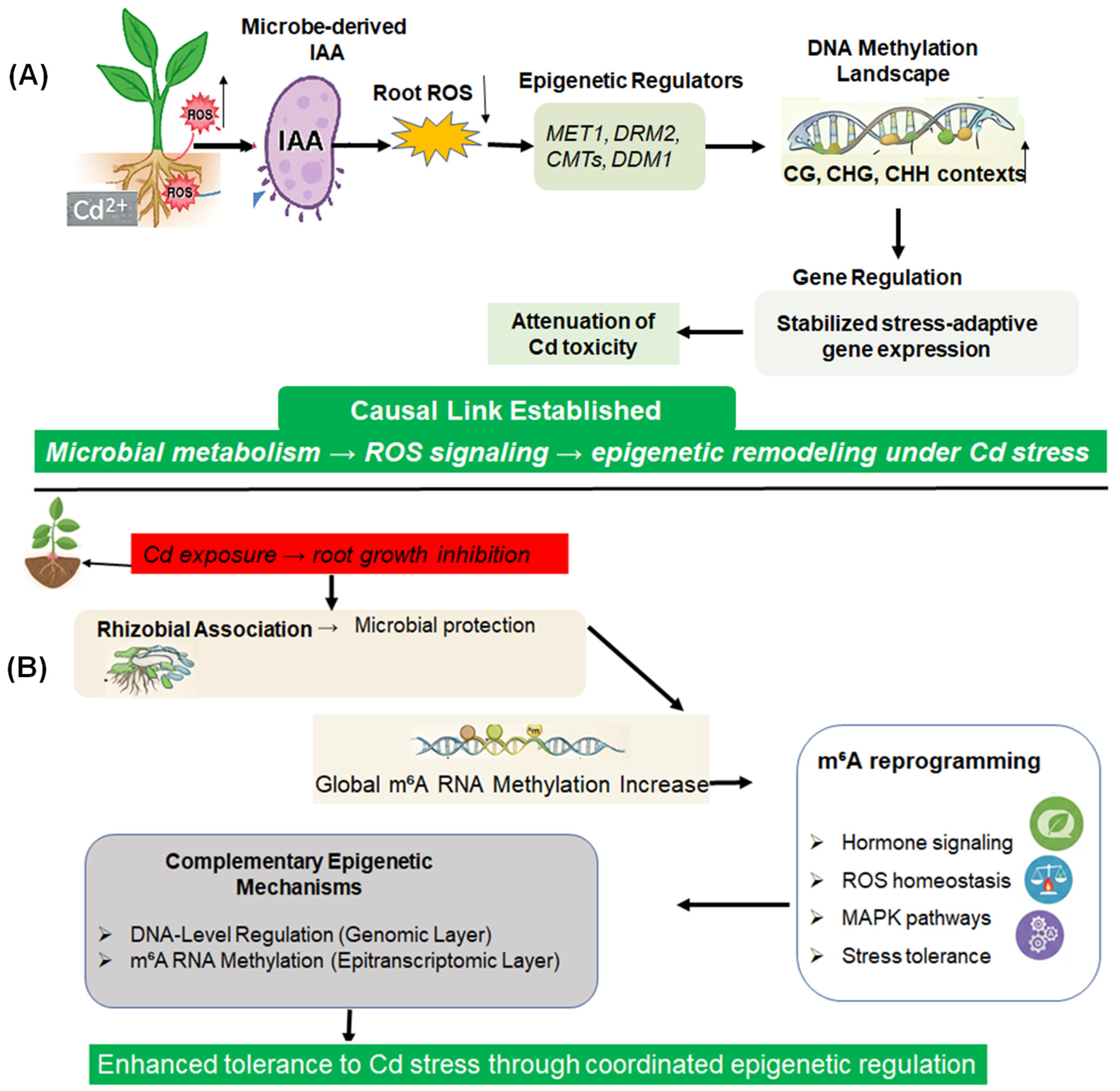
3.4. Microbiome-Mediated Epigenetic Regulation Under Cd Stress
4. Future Perspectives
4.1. Fundamental Research Directions
4.2. Applied and Translational Research Directions
5. Conclusions
Funding
Institutional Review Board Statement
Informed Consent Statement
Data Availability Statement
Acknowledgments
Conflicts of Interest
References
- Haider, F.U.; Liqun, C.; Coulter, J.A.; Cheema, S.A.; Wu, J.; Zhang, R.; Wenjun, M.; Farooq, M. Cadmium toxicity in plants: Impacts and remediation strategies. Ecotoxicol. Environ. Saf. 2021, 211, 111887. [Google Scholar] [CrossRef] [PubMed]
- Subašić, M.C.; Šamec, D.; Selović, A.K.; Karalija, E. Phytoremediation of cadmium polluted soils: Current status and approaches for enhancing. Soil Syst. 2022, 6, 3. [Google Scholar] [CrossRef]
- Clemens, S. Toxic metal accumulation, responses to exposure and mechanisms of tolerance in plants. Biochimie 2006, 88, 1707–1719. [Google Scholar] [CrossRef] [PubMed]
- Rizwan, M.; Ali, S.; Abbas, T.; Zia-ur-Rehman, M.; Hannan, F.; Keller, C.; Al-Wabel, M.I.; Ok, Y.S. Cadmium minimization in wheat: A critical review. Ecotoxicol. Environ. Saf. 2016, 130, 43–53. [Google Scholar] [CrossRef]
- Sun, X.; Zhang, L.; Gu, Y.; Wang, P.; Liu, H.; Qiang, L.; Huang, Q. Nutrient-element-mediated alleviation of cadmium stress in plants: Mechanistic insights and practical implications. Plants 2025, 14, 3081. [Google Scholar] [CrossRef]
- Zhang, M.; Dong, C. Molecular mechanisms of cadmium stress resistance in vegetable crops. Int. J. Mol. Sci. 2025, 26, 5812. [Google Scholar] [CrossRef]
- Luo, P.; Wu, J.; Li, T.T.; Shi, P.; Ma, Q.; Di, D.W. An overview of the mechanisms through which plants regulate ROS homeostasis under cadmium stress. Antioxidants 2024, 13, 1174. [Google Scholar] [CrossRef]
- Niekerk, L.A.; Carelse, M.F.; Bakare, O.O.; Mavumengwana, V.; Keyster, M.; Gokul, A. The relationship between cadmium toxicity and the modulation of epigenetic traits in plants. Int. J. Mol. Sci. 2021, 22, 7046. [Google Scholar] [CrossRef]
- Gao, Y.; Wang, T.; Zhao, C. Advances in epigenetic studies of plant cadmium stress. Front. Plant Sci. 2025, 15, 1489155. [Google Scholar] [CrossRef]
- Feng, S.J.; Liu, X.S.; Tao, H.; Tan, S.K.; Chu, S.S.; Oono, Y.; Zhang, X.D.; Chen, J.; Yang, Z.M. Variation of DNA methylation patterns associated with gene expression in rice (Oryza sativa) exposed to cadmium. Plant Cell Environ. 2016, 39, 2629–2649. [Google Scholar] [CrossRef]
- Shafiq, S.; Zeb, Q.; Ali, A.; Sajjad, Y.; Nazir, R.; Widemann, E.; Liu, L. Lead, cadmium and zinc phytotoxicity alter DNA methylation levels to confer heavy metal tolerance in wheat. Int. J. Mol. Sci. 2019, 20, 4676. [Google Scholar] [CrossRef]
- Bruno, L.; Araniti, F.; Talarico, E.; Greco, E.; Muto, A.; Pacenza, M.; Chiappetta, A.; Bitonti, M.B. Transcriptomic and metabolomic analysis of the main stress-related pathways in the DNA methylation-defective ddc mutant of Arabidopsis thaliana exposed to cadmium. Plant Biosyst.-Int. J. Deal. all Asp. Plant Biol. 2025, 159, 1362–1376. [Google Scholar] [CrossRef]
- Ou, X.; Zhang, Y.; Xu, C.; Lin, X.; Zang, Q.; Zhuang, T.; Jiang, L.; von Wettstein, D.; Liu, B. Transgenerational inheritance of modified DNA methylation patterns and enhanced tolerance induced by heavy metal stress in rice (Oryza sativa L.). PLoS ONE 2012, 7, e41143. [Google Scholar] [CrossRef] [PubMed]
- Greco, E.; Talarico, E.; Guarasci, F.; Camoli, M.; Palermo, A.M.; Zambelli, A.; Chiappetta, A.; Araniti, F.; Bruno, L. Epigenetic Mechanisms of Plant Adaptation to Cadmium and Heavy Metal Stress. Epigenomes 2025, 9, 43. [Google Scholar] [CrossRef] [PubMed]
- Khalid, M.; Liu, X.; ur Rahman, S.; Rehman, A.; Zhao, C.; Li, X.; Yucheng, B.; Hui, N. Responses of microbial communities in rhizocompartments of king grass to phytoremediation of cadmium-contaminated soil. Sci. Total Environ. 2023, 904, 167226. [Google Scholar] [CrossRef]
- Li, B.; Wu, B.; Dong, Y.; Lin, H.; Liu, C. Endophyte inoculation enhanced microbial metabolic function in the rhizosphere benefiting cadmium phytoremediation by Phytolacca acinosa. Chemosphere 2023, 338, 139421. [Google Scholar] [CrossRef]
- Ullah, I.; Al-Johny, B.O.; Al-Ghamdi, K.M.; Al-Zahrani, H.A.; Anwar, Y.; Firoz, A.; Almatry, M.A.A. Endophytic bacteria isolated from Solanum nigrum L., alleviate cadmium (Cd) stress response by their antioxidant potentials, including SOD synthesis by sodA gene. Ecotoxicol. Environ. Saf. 2019, 174, 197–207. [Google Scholar] [CrossRef]
- Manzoor, M.; Guan, D.X.; Ma, L.Q. Plant-microbiome interactions for enhanced crop production under cadmium stress: A review. Sci. Total Environ. 2025, 965, 178538. [Google Scholar] [CrossRef]
- Paladines-Beltrán, G.M.; Venegas, N.A.; Suárez, J.C. Arbuscular Mycorrhizal Fungi Enhance Antioxidant Defense Systems in Sugarcane Under Soil Cadmium Stress. Plants 2025, 14, 2916. [Google Scholar] [CrossRef]
- Halim, M.A.; Rahman, M.M.; Megharaj, M.; Naidu, R. Cadmium immobilization in the rhizosphere and plant cellular detoxification: Role of plant-growth-promoting rhizobacteria as a sustainable solution. J. Agric. Food Chem. 2020, 68, 13497–13529. [Google Scholar] [CrossRef]
- Yang, Q.; Li, Y.; Fu, L.; Wang, Z.; Pan, Y.; Li, X.; He, C.; Tu, C.; Zhan, F. AMF and UPB synergistically enhanced cadmium tolerance in maize via hormonal regulation, photosynthetic optimization, and antioxidant activation. Physiol. Plant. 2025, 177, e70661. [Google Scholar] [CrossRef]
- Zhang, D.; Liu, X.; Zhang, Y.; Ye, J.; Yi, Q. Effects of arbuscular mycorrhizal fungi on the physiological responses and root organic acid secretion of tomato (Solanum lycopersicum) under cadmium stress. Horticulturae 2025, 11, 1204. [Google Scholar] [CrossRef]
- Zhang, H.; Lu, L. Transcription factors involved in plant responses to cadmium-induced oxidative stress. Front. Plant Sci. 2024, 15, 1397289. [Google Scholar] [CrossRef] [PubMed]
- Xie, Q.; Xu, W.; Wang, Q.; Yao, F.; Jiang, Y.; Cao, H.; Lin, W. Transcriptome and physiological analysis reveals the mechanism of abscisic acid in regulating cadmium uptake and accumulation in the hyperaccumulator Phytolacca acinose Roxb. Plants 2025, 14, 1405. [Google Scholar] [CrossRef] [PubMed]
- Chen, L.; Li, X.; Liu, H.; He, F.; Li, M.; Long, R.; Wang, X.; Kang, J.; Yang, Q. Comprehensive analysis of epigenetic modifications in alfalfa under cadmium stress. J. Hazard. Mater. 2025, 482, 136545. [Google Scholar] [CrossRef]
- Tresas, T.; Isaioglou, I.; Roussis, A.; Haralampidis, K. A brief overview of the epigenetic regulatory mechanisms in plants. Int. J. Mol. Sci. 2025, 26, 4700. [Google Scholar] [CrossRef]
- Nishanth, J.B.; Gaddala, B.; Suji, S.; Fathima, P.R.; Premkumar, A.; Karavadi, B.; Kumar, R.S.A.S.; Iyyappan, J.; Dinakarkumar, Y. Epigenetic mechanisms regulating plant responses to abiotic stress and their role in developing climate resilient crops. Discov. Plants 2025, 2, 349. [Google Scholar] [CrossRef]
- Lämke, J.; Bäurle, I. Epigenetic and chromatin-based mechanisms in environmental stress adaptation and stress memory in plants. Genome Biol. 2017, 18, 124. [Google Scholar] [CrossRef]
- Galati, S.; DalCorso, G.; Furini, A.; Fragni, R.; Maccari, C.; Mozzoni, P.; Giannelli, G.; Buschini, A.; Visioli, G. DNA methylation is enhanced during Cd hyperaccumulation in Noccaea caerulescens ecotype Ganges. Environ. Sci. Pollut. Res. 2023, 30, 26178–26190. [Google Scholar] [CrossRef]
- Colak, I.; Karadayı, G. Comparison of DNA Methylation and Changes in the Expression of Certain Cadmium-induced Genes in Bread Wheat Exposed to Cadmium (Cd) Accumulation in Soil. Yüz. Yıl Üniv. Fen Bilim. Enst. Derg. 2024, 29, 830–841. [Google Scholar] [CrossRef]
- Liu, X.S.; Li, H.; Feng, S.J.; Yang, Z.M. A transposable element-derived siRNAs involve DNA hypermethylation at the promoter of OsGSTZ4 for cadmium tolerance in rice. Gene 2024, 892, 147900. [Google Scholar] [CrossRef]
- Cong, W.; Miao, Y.; Xu, L.; Zhang, Y.; Yuan, C.; Wang, J.; Zhuang, T.; Lin, X.; Jiang, L.; Wang, N.; et al. Transgenerational memory of gene expression changes induced by heavy metal stress in rice (Oryza sativa L.). BMC Plant Biol. 2019, 19, 282. [Google Scholar] [CrossRef]
- Sharma, M.; Sidhu, A.K.; Samota, M.K.; Gupta, M.; Koli, P.; Choudhary, M. Post-translational modifications in histones and their role in abiotic stress tolerance in plants. Proteomes 2023, 11, 38. [Google Scholar] [CrossRef]
- Zhao, P.; Malik, S. The phosphorylation to acetylation/methylation cascade in transcriptional regulation: How kinases regulate transcriptional activities of DNA/histone-modifying enzymes. Cell Biosci. 2022, 12, 83. [Google Scholar] [CrossRef] [PubMed]
- Xiang, Y.; Zhang, M.; Hu, Y.; Wang, L.; Xiao, X.; Yin, F.; Cao, X.; Sui, M.; Yao, Y. Epigenetic modifications of 45S rDNA associates with the disruption of nucleolar organisation during Cd stress response in pakchoi. Ecotoxicol. Environ. Saf. 2024, 270, 115859. [Google Scholar] [CrossRef] [PubMed]
- Cao, X.; Zhang, M.; Xiao, X.; Yin, F.; Yao, Y.; Sui, M.; Hu, Y.; Xiang, Y.; Wang, L. Regulation of reactive oxygen molecules in pakchoi by histone acetylation modifications under Cd stress. PLoS ONE 2024, 19, e0314043. [Google Scholar] [CrossRef] [PubMed]
- Gocek-Szczurtek, N.; Żabka, A.; Wróblewski, M.; Polit, J.T. Stabilization of the MAPK–Epigenetic Signaling Axis Underlies the Protective Effect of Thyme Oil Against Cadmium Stress in Root Meristem Cells of Vicia faba. Int. J. Mol. Sci. 2025, 27, 208. [Google Scholar] [CrossRef]
- Dong, Y.; Ma, Y.; Li, Q.; Cao, Y.; Dong, D.; Chen, C.; Zhang, X.; Fan, Y.; Jin, X. Overexpression of histone demethylase gene SlJMJ18 and SlJMJ23 from tomato confers cadmium tolerance by regulating metal transport and hormone content in Arabidopsis. Plant Sci. 2024, 346, 112169. [Google Scholar] [CrossRef]
- Li, Q.; Sun, W.; Chen, C.; Dong, D.; Cao, Y.; Dong, Y.; Yu, L.; Yue, Z.; Jin, X. Overexpression of histone demethylase gene SlJMJ524 from tomato confers Cd tolerance by regulating metal transport-related protein genes and flavonoid content in Arabidopsis. Plant Sci. 2022, 318, 111205. [Google Scholar] [CrossRef]
- Tannenbaum, M.; Sarusi-Portuguez, A.; Krispil, R.; Schwartz, M.; Loza, O.; Benichou, J.I.; Mosquna, A.; Hakim, O. Regulatory chromatin landscape in Arabidopsis thaliana roots uncovered by coupling INTACT and ATAC-seq. Plant Methods 2018, 14, 113. [Google Scholar] [CrossRef]
- Chekanova, J.A. Long non-coding RNAs and their functions in plants. Curr. Opin. Plant Biol. 2015, 27, 207–216. [Google Scholar] [CrossRef] [PubMed]
- Heo, J.B.; Lee, Y.S.; Sung, S. Epigenetic regulation by long noncoding RNAs in plants. Chromosome Res. 2013, 21, 685–693. [Google Scholar] [CrossRef] [PubMed]
- Lucero, L.; Fonouni-Farde, C.; Crespi, M.; Ariel, F. Long noncoding RNAs shape transcription in plants. Transcription 2020, 11, 160–171. [Google Scholar] [CrossRef] [PubMed]
- Mendoza-Soto, A.B.; Sánchez, F.; Hernández, G. MicroRNAs as regulators in plant metal toxicity response. Front. Plant Sci. 2012, 3, 105. [Google Scholar] [CrossRef]
- Qiu, Z.; Hai, B.; Guo, J.; Li, Y.; Zhang, L. Characterization of wheat miRNAs and their target genes responsive to cadmium stress. Plant Physiol. Biochem. 2016, 101, 60–67. [Google Scholar] [CrossRef]
- Gao, J.; Luo, M.; Peng, H.; Chen, F.; Li, W. Characterization of cadmium-responsive MicroRNAs and their target genes in maize (Zea mays) roots. BMC Mol. Biol. 2019, 20, 14. [Google Scholar] [CrossRef]
- Ding, Y.; Chen, Z.; Zhu, C. Microarray-based analysis of cadmium-responsive microRNAs in rice (Oryza sativa). J. Exp. Bot. 2011, 62, 3563–3573. [Google Scholar] [CrossRef]
- Ding, Y.; Wang, Y.; Jiang, Z.; Wang, F.; Jiang, Q.; Sun, J.; Chen, Z.; Zhu, C. MicroRNA268 overexpression affects rice seedling growth under cadmium stress. J. Agric. Food Chem. 2017, 65, 5860–5867. [Google Scholar] [CrossRef]
- Ma, X.; Yu, D.; Shao, W.; Xu, M.; Zuo, Z.; Wang, H.; Meng, Y. Transcriptome-wide identification and characterization of the copper and cadmium stress-responsive small RNAs and their targets in Arabidopsis thaliana. Plant Soil 2018, 429, 391–405. [Google Scholar] [CrossRef]
- Liu, Y.; Wang, X.; Yuan, L.; Liu, Y.; Shen, T.; Zhang, Y. Comparative small RNA profiling and functional exploration on wheat with high- and low-cadmium accumulation. Front. Genet. 2021, 12, 635599. [Google Scholar] [CrossRef]
- Feng, S.J.; Zhang, X.D.; Liu, X.S.; Tan, S.K.; Chu, S.S.; Meng, J.G.; Zhao, K.X.; Zheng, J.F.; Yang, Z.M. Characterization of long non-coding RNAs involved in cadmium toxic response in Brassica napus. RSC Adv. 2016, 6, 82157–82173. [Google Scholar] [CrossRef]
- Lin, K.; Yi, Z.; Lv, S.; Zhang, B.; Guo, Z.; Li, Y. Uncovering the key lncRNAs in regulating cadmium accumulation and translocation in sweet sorghum. Planta 2025, 261, 12. [Google Scholar] [CrossRef]
- Zhu, M.; Liu, Y.; Bai, H.; Zhang, W.; Liu, H.; Qiu, Z. Integrated physio-biochemical and RNA sequencing analysis revealed mechanisms of long non-coding RNA-mediated response to cadmium toxicity in wheat. Plant Physiol. Biochem. 2023, 203, 108028. [Google Scholar] [CrossRef]
- Karalija, E.; Ibragić, S.; Dahija, S.; Šamec, D. Transgenerational Memory of Phenotypic Traits in Plants: Epigenetic Regulation of Growth, Hormonal Balance, and Stress Adaptation. Curr. Issues Mol. Biol. 2025, 47, 404. [Google Scholar] [CrossRef] [PubMed]
- Chen, Z.J. Empowering plant epigenetics to breed resilience of crops: From nucleolar dominance to transgenerational epigenetic inheritance. Plant Genome 2025, 18, e70064. [Google Scholar] [CrossRef] [PubMed]
- Li, G.; Zhao, Y.; Liu, F.; Shi, M.; Guan, Y.; Zhang, T.; Zhao, F.; Qiao, Q.; Geng, Y. Transcriptional memory of gene expression across generations participates in transgenerational plasticity of field pennycress in response to cadmium stress. Front. Plant Sci. 2022, 13, 953794. [Google Scholar] [CrossRef] [PubMed]
- Maslennikova, D.; Koryakov, I.; Yuldashev, R.; Avtushenko, I.; Yakupova, A.; Lastochkina, O. Endophytic plant growth-promoting bacterium Bacillus subtilis reduces the toxic effect of cadmium on wheat plants. Microorganisms 2023, 11, 1653. [Google Scholar] [CrossRef]
- Zakrzewska, M.; Rzepa, G.; Musialowski, M.; Goszcz, A.; Stasiuk, R.; Debiec-Andrzejewska, K. Reduction of bioavailability and phytotoxicity effect of cadmium in soil by microbial-induced carbonate precipitation using metabolites of ureolytic bacterium Ochrobactrum sp. POC9. Front. Plant Sci. 2023, 14, 1109467. [Google Scholar] [CrossRef]
- Khanna, K.; Jamwal, V.L.; Gandhi, S.G.; Ohri, P.; Bhardwaj, R. Metal resistant PGPR lowered Cd uptake and expression of metal transporter genes with improved growth and photosynthetic pigments in Lycopersicon esculentum under metal toxicity. Sci. Rep. 2019, 9, 5855. [Google Scholar] [CrossRef]
- Reddy, C.S.; Cho, M.; Kaul, T.; Joeng, J.T.; Kim, K.M. Pseudomonas fluorescens imparts cadmium stress tolerance in Arabidopsis thaliana via induction of AtPCR2 gene expression. J. Genet. Eng. Biotechnol. 2023, 21, 8. [Google Scholar] [CrossRef]
- Shahid, S.; Hussain, A.; Ahmad, M.; Jamil, M. Efficacy of cadmium tolerant bacteria in combination with jasmonic acid to alleviate Cd toxicity in cauliflower. Soil Environ. 2023, 42, 177. [Google Scholar] [CrossRef]
- Wu, R.; Sun, X.; Zhu, M.; Wang, Y.; Zhu, Y.; Fang, Z.; Liu, H.; Du, S. Abscisic acid-producing bacterium Azospirillum brasilense effectively reduces heavy metals (cadmium, nickel, lead, and zinc) accumulation in pak choi across various soil types. Ecotoxicol. Environ. Saf. 2025, 298, 118277. [Google Scholar] [CrossRef] [PubMed]
- Liu, J.; Pei, S.; Zheng, Q.; Li, J.; Liu, X.; Ruan, Y.; Luo, B.; Ma, L.; Chen, R.; Hu, W.; et al. Heavy metal contamination impacts the structure and co-occurrence patterns of bacterial communities in agricultural soils. J. Basic Microbiol. 2024, 64, 2300435. [Google Scholar] [CrossRef] [PubMed]
- Cui, S.; Xiao, H.; Miao, D.; Yang, W. Metal uptake and translocation by Chinese brake fern (Pteris vittata) and diversity of rhizosphere microbial communities under single and combined arsenic and cadmium stress. Environ. Sci. Pollut. Res. 2023, 30, 85198–85209. [Google Scholar] [CrossRef]
- Zhu, L.; Guo, J.; Sun, Y.; Wang, S.; Zhou, C. Acetic acid-producing endophyte Lysinibacillus fusiformis orchestrates jasmonic acid signaling and contributes to repression of cadmium uptake in tomato plants. Front. Plant Sci. 2021, 12, 670216. [Google Scholar] [CrossRef]
- Vincent, S.A.; Kim, J.M.; Perez-Salamo, I.; To, T.K.; Torii, C.; Ishida, J.; Tanaka, M.; Endo, T.A.; Bhat, P.; Devlin, P.F.; et al. Jasmonates and histone deacetylase 6 activate Arabidopsis genome-wide histone acetylation and methylation during the early acute stress response. BMC Biol. 2022, 20, 83. [Google Scholar] [CrossRef]
- Xiao, B.; Huang, J.; Guo, J.; Lu, X.; Zhu, L.; Wang, J.; Zhou, C. Flooding-induced rhizosphere Clostridium assemblage prevents root-to-shoot cadmium translocation in rice. J. Hazard. Mater. 2022, 439, 129619. [Google Scholar] [CrossRef]
- Ahn, M.A.; Lee, J.; Hyun, T.K. Histone deacetylase inhibitor, sodium butyrate-induced metabolic modulation in Platycodon grandiflorus roots enhances anti-melanogenic properties. Int. J. Mol. Sci. 2023, 24, 11804. [Google Scholar] [CrossRef]
- Fan, X.; Mao, Q.; Zou, D.; Guo, P.; Du, H.; Chen, T.; He, C.; Xiong, B.; Ma, M. Responses of Brassica napus to soil cadmium under elevated CO2 concentration based on rhizosphere microbiome, root transcriptome and metabolome. Plant Physiol. Biochem. 2024, 216, 109127. [Google Scholar] [CrossRef]
- Shen, Y.; Issakidis-Bourguet, E.; Zhou, D.X. Perspectives on the interactions between metabolism, redox, and epigenetics in plants. J. Exp. Bot. 2016, 67, 5291–5300. [Google Scholar] [CrossRef]
- Plšková, Z.; Van Breusegem, F.; Kerchev, P. Redox regulation of chromatin remodelling in plants. Plant Cell Environ. 2024, 47, 2780–2792. [Google Scholar] [CrossRef] [PubMed]
- Chen, C.; Wang, M.; Zhu, J.; Tang, Y.; Zhang, H.; Zhao, Q.; Jing, M.; Chen, Y.; Xu, X.; Jiang, J.; et al. Long-term effect of epigenetic modification in plant–microbe interactions: Modification of DNA methylation induced by plant growth-promoting bacteria mediates promotion process. Microbiome 2022, 10, 36. [Google Scholar] [CrossRef] [PubMed]
- Lephatsi, M.M. Epigenetic and Targeted Metabolic Changes in Microbial Biostimulant-Treated Maize Plants under Drought Stress Conditions. Master’s Thesis, University of Johannesburg, Johannesburg, South Africa, 2020. [Google Scholar]
- Yaghoubi Khanghahi, M.; AbdElgawad, H.; Curci, M.; Garrigues, R.; Korany, S.M.; Alsherif, E.A.; Verbruggen, E.; Spagnuolo, M.; Addesso, R.; Sofo, A.; et al. Transcriptomic, biochemical, and microbiome assessments into drought and salinity tolerance in durum wheat mediated by plant growth-promoting bacteria. Physiol. Mol. Biol. Plants 2025, 31, 2121–2143. [Google Scholar] [CrossRef] [PubMed]
- Zheng, Z.; Li, P.; Xiong, Z.; Ma, T.; Mathivanan, K.; Praburaman, L.; Meng, D.; Yi, Z.; Ao, H.; Wang, Q.; et al. Integrated network analysis reveals that exogenous cadmium-tolerant endophytic bacteria inhibit cadmium uptake in rice. Chemosphere 2022, 301, 134655. [Google Scholar] [CrossRef]
- Shao, L.; Li, X.; Xiao, T.; Lu, T.; Li, J.; Deng, J.; Xiao, E. Variations in microbial assemblage between rhizosphere and root endosphere microbiomes contribute to host plant growth under cadmium stress. Appl. Environ. Microbiol. 2023, 89, e00960-23. [Google Scholar] [CrossRef]
- Cheng, L.; Li, Z.; Zhou, L.; Xie, J.; Zhou, Q.; Ding, M.; Wang, P.; Zhang, H.; Nie, M.; Huang, G. Rhizosphere microbiota modulate cadmium mobility dynamics and phytotoxicity in rice under differential Cd stress. Plant Soil. 2025, 516, 1455–1469. [Google Scholar] [CrossRef]
- Wang, M.; Zhao, J.; Gu, Y.; Wu, Y.; Liu, Y.; Tang, Z.; Xu, Y.; Mao, X.; Zhang, J.; Tian, W. Deciphering the mechanism of rhizosphere microecosystem in modulating rice cadmium accumulation via integrating metabolomics and metagenomics. Sci. Total Environ. 2025, 959, 178181. [Google Scholar] [CrossRef]
- Ramirez-Prado, J.S.; Piquerez, S.J.; Bendahmane, A.; Hirt, H.; Raynaud, C.; Benhamed, M. Modify the histone to win the battle: Chromatin dynamics in plant–pathogen interactions. Front. Plant Sci. 2018, 9, 355. [Google Scholar] [CrossRef]
- Kaya, C.; Uğurlar, F.; Adamakis, I.-D.S. Epigenetic and Hormonal modulation in plant–plant growth-promoting microorganism symbiosis for drought-resilient agriculture. Int. J. Mol. Sci. 2023, 24, 16064. [Google Scholar] [CrossRef]
- Liu, R.; Peng, X.P.; Newman, D.J.; Purchase, D.; Li, G.; Kusari, S. Unlocking the metabolic potential of endophytic fungi through epigenetics: A paradigm shift for natural product discovery and plant–microbe interactions. Nat. Prod. Rep. 2025, 42, 1690–1716. [Google Scholar] [CrossRef]
- Xu, X.; Dou, Y.; Zhao, S.; Zhao, C.; Chen, Y.; Jiang, M.; Shen, Z.; Chen, C. Rhizosphere microbes enhance plant resistance to cadmium through a root ROS–microbial IAA–root DNA methylation interkingdom signaling pathway. Cell Rep. 2025, 44, 116491. [Google Scholar] [CrossRef]
- Han, X.; Wang, J.; Zhang, Y.; Kong, Y.; Dong, H.; Feng, X.; Li, T.; Zhou, C.; Yu, J.; Xin, D.; et al. Changes in the m6A RNA methylome accompany the promotion of soybean root growth by rhizobia under cadmium stress. J. Hazard. Mater. 2023, 441, 129843. [Google Scholar] [CrossRef]



| Biological System | Epigenetic Regulatory Mechanism | Experimental/Analytical Approach | Mechanistic Insights | Physiological/Agronomic Outcomes | Proposed Research Limitations * | Reference |
|---|---|---|---|---|---|---|
| Oryza sativa | DNA methylation (CG, CHG, CHH contexts) | Whole-genome bisulfite sequencing (WGBS); RNA sequencing (RNA-seq); mutant analysis (met1, drm2); 5-azacytidine treatment | 2320 differentially methylated regions (DMRs); 2092 methylation-associated genes altered; hypermethylation predominance; reduced expression of OsIRO2, OsPR1b, Os09g02214 in drm2 | DNA demethylation promoted seedling growth but increased Cd accumulation | Temporal dynamics and multigenerational stability not examined | [10] |
| Noccaea caerulescens (Ganges) vs. Arabidopsis thaliana | DNA methylation-mediated genome integrity regulation | Alkaline comet assay; methyl-sensitive comet assay; qRT-PCR | Increased CpG methylation and MET1 expression in hyperaccumulator; reduced oxidative damage | Genome protection associated with Cd tolerance | Functional causality between methylation and tolerance not directly validated | [29] |
| Triticum aestivum | Gene-specific DNA methylation | Quantitative analysis of DNA methylation using amplification polymorphism (qAMP); qRT-PCR | Dose-dependent methylation changes in UGT-3, LTP-4, PIP-1 correlated with transcription | Tissue-specific Cd tolerance responses | Genome-wide methylation landscape not assessed | [30] |
| Oryza sativa | RNA-directed DNA methylation (RdDM) | Transgenic overexpression; CHH methylation analysis; small-RNA detection; promoter deletion assays | Cd induced early OsGSTZ4 activation followed by CHH hypermethylation via 24-nt small RNAs and OsDRM2 | Enhanced Cd detoxification and root Cd retention | Long-term epigenetic persistence under field conditions unknown | [31] |
| Oryza sativa (S0–S3 generations) | Transgenerational CHG hypomethylation | Gel-blot methylation assay; reverse transcription PCR (RT-PCR); multigenerational phenotyping | Stress-induced CHG hypomethylation inherited via maternal and paternal lines; altered DNA methyltransferase and DDM1 expression | Progeny exhibited enhanced Cd tolerance | Underlying chromatin context and reversibility not clarified | [32] |
| Brassica rapa (Pakchoi) | Histone acetylation and methylation at 45S rDNA | Chromatin immunoprecipitation (ChIP); DNA methylation assay; cytological analysis | Increased H3K9ac (histone H3 lysine 9 acetylation), H4K5ac, H3K9me2; promoter hypomethylation | Nucleolar reorganization and transcriptional modulation | Genome-wide histone profiling lacking | [35] |
| Brassica rapa (Pakchoi) | Histone acetylation modulation via inhibitors | Epigenetic inhibitor treatments (5-AC, TSA, etc.); ROS assays; chromatin analysis | Increased histone acetylation attenuated Cd-induced ROS accumulation and DNA damage | Improved Cd tolerance through ROS–epigenetic interaction | Specific gene targets of acetylation not identified | [36] |
| Vicia faba | MAPK-associated DNA methylation and histone modification | MAPK activation assay; global 5-mC quantification; histone mark analysis | Cd doubled global 5-mC; altered H3K4Me2, H3K9Ac, H3K56Ac; thyme oil stabilized chromatin | Prevention of chromatin compaction and transcriptional repression | Stress duration limited to acute exposure | [37] |
| Solanum lycopersicum | Histone demethylases (SlJMJ18, SlJMJ23) | Gene expression analysis; transgenic overexpression; GUS staining; hormone quantification | Differential modulation of BR and ABA pathways; stage-specific Cd response | Early sensitivity but later enhanced tolerance | Direct chromatin targets not fully mapped | [38] |
| Solanum lycopersicum | Histone demethylase (SlJMJ524) | Transgenic overexpression; flavonoid quantification; gene expression analysis | Upregulation of glutathione–phytochelatin pathway and flavonoid biosynthesis | Adult-stage Cd tolerance enhancement | Stage-dependent regulation mechanism unclear | [39] |
| Arabidopsis thaliana | Chromatin accessibility | INTACT–ATAC sequencing (ATAC-seq) | 41,419 accessible sites; enrichment of H3K4me3 in promoters; distal regulatory elements identified | Organ-specific transcriptional regulation | Cd-specific chromatin remodeling not directly validated | [40] |
| Triticum aestivum | miRNA-mediated regulation (miR398) | qRT-PCR; target validation | miR398 regulates CSD affecting oxidative stress tolerance | Modulation of Cd-induced antioxidant responses | Limited number of miRNAs examined | [45] |
| Zea mays | Cd-responsive miRNAs | qRT-PCR; enzyme activity assays; in situ hybridization | Differential expression of candidate miRNAs; spatial validation of Zma-miR171b | Insight into Cd stress signaling in roots | Genome-wide miRNA profiling not performed | [46] |
| Oryza sativa | Cd-responsive miRNA profiling | Microarray; target prediction; expression validation | 19 Cd-responsive miRNAs targeting TFs and stress proteins | Post-transcriptional regulation of Cd tolerance | Functional validation limited to subset | [47] |
| Oryza sativa | miRNA (miR268) regulation of metal transport | Overexpression; H2O2 and malondialdehyde quantification | miR268 suppresses NRAMP3; increased Cd accumulation | Negative regulation of Cd tolerance | Field relevance not evaluated | [48] |
| Arabidopsis thaliana | Small-RNA (sRNA) networks | Small-RNA sequencing; degradome sequencing | DCL-dependent sRNAs responsive to Cd; TAS-derived sRNAs identified | Hormone–stress signaling integration | Functional assays for most sRNAs lacking | [49] |
| Triticum aestivum | Cd-responsive small RNAs | Small-RNA sequencing; cultivar comparison | Differential sRNAs linked to Cd accumulation differences | Potential biomarkers for low-Cd cultivars | Validation under agronomic conditions needed | [50] |
| Brassica napus | Long non-coding RNAs (lncRNAs) and eTMs | Strand-specific RNA sequencing; transient expression assays | 301 Cd-responsive lncRNAs; miRNA precursor and target mimic roles | Regulation of Cd uptake and detox pathways | Direct molecular targets incompletely validated | [51] |
| Sorghum bicolor | lncRNA–miRNA–target network | lncRNA sequencing; dual-luciferase assay; cis/trans target analysis | lncRNA-mediated upregulation of SbYS1 (Cd chelate transporter) | Positive regulation of Cd accumulation and translocation | Field-scale functional validation lacking | [52] |
| Triticum aestivum | Cd-responsive lncRNAs | Strand-specific RNA sequencing; overexpression in Arabidopsis thaliana | 69 cis-target pairs affecting photosystem II and antioxidant defense | Enhanced Cd tolerance via photosynthetic stabilization | Epigenetic chromatin context not resolved | [53] |
| Thlaspi arvense | Transcriptional memory (transgenerational plasticity) | RNA sequencing; weighted gene co-expression network analysis | 401 transcriptional memory genes; sustained CSD2 expression | Persistent elevated SOD activity across generations | DNA methylation or histone marks not directly mapped | [56] |
| Biological System | Microbial Strategy | Experimental/Analytical Approach | Mechanistic Insights | Physiological/Agronomic Outcomes | Proposed Research Limitations * | Reference |
|---|---|---|---|---|---|---|
| Triticum aestivum + Bacillus subtilis 10-4 | Endophytic PGPR–mediated lignification and oxidative damage reduction | Seed pre-treatment; pigment, lignin, H2O2, lipid peroxidation and Cd quantification | Enhanced root lignification strengthens apoplastic barrier, restricting Cd translocation | Improved germination, biomass, pigment stability; reduced Cd accumulation | Field validation and molecular-level regulation of lignification under Cd stress remain unexplored | [57] |
| Soil–Petroselinum crispum + Ochrobactrum sp. POC9 (MCC) | Microbially induced carbonate precipitation (MICP) | Soil physicochemical analysis; Cd bioavailability assays; plant growth analysis | Cd stabilization via carbonate precipitation reduces bioavailable Cd fraction | Reduced Cd uptake (shoot/root); improved plant condition and soil microbial activity | Long-term stability of carbonate-bound Cd under variable field conditions requires assessment | [58] |
| Solanum lycopersicum + Pseudomonas aeruginosa, Burkholderia gladioli | PGPR-mediated transporter modulation and thiol-based detoxification | Growth analysis; thiol quantification; gene expression profiling of metal transporters | PGPR inoculation attenuated Cd-induced upregulation of metal transporter genes and enhanced thiol-mediated detoxification | Improved growth, pigment content, metal tolerance index | Specific transporter targets and long-term transcriptional regulation under field conditions remain unclear | [59] |
| Arabidopsis thaliana + Pseudomonas fluorescens | Regulation of AtPCR2 expression | In silico promoter analysis; qRT-PCR; transgenic overexpression lines | Bacteria treatment associated with increased AtPCR2 transcript levels and enhanced Cd tolerance | Increased biomass, chlorophyll content, silique number | Upstream signaling linking bacterial cues to AtPCR2 regulation remains unclear | [60] |
| Brassica oleracea (cauliflower) + Klebsiella spp. consortium (SS7+SS8)+ jasmonic acid | Bacterial EPS, siderophore, and IAA production combined with foliar JA application | Jar trials; antioxidant enzyme assays; Cd quantification | Synergistic microbial–hormonal activation of antioxidant and detox pathways | Increased biomass; reduced shoot/root Cd concentration | Contribution of individual strains within consortium and long-term soil effects need clarification | [61] |
| Brassica chinensis (pak choi)+ Azospirillum brasilense | Increased ABA levels associated with reduced IRT1 and IRT2 expression; increased soil pH | Multi-soil experiment; gene expression analysis; structural equation modeling | ABA elevation reduces Fe transporter-mediated Cd uptake; soil pH modulation decreases Cd availability | Strong biomass increase; reduced multi-metal accumulation | Durability of ABA-mediated regulation across cropping cycles remains unknown | [62] |
| Solanum lycopersicum + Lysinibacillus fusiformis Cr33 | Acetic acid-mediated JA signaling; suppression of NO and Fe uptake systems | Hormone quantification; gene expression; chemical inhibition assays | JA-dependent suppression of Fe transport limits Cd uptake | Reduced root Cd accumulation; enhanced tolerance | Broader applicability across species and environmental contexts requires validation | [65] |
| Oryza sativa under flooding + Clostridium sp. | Butyric acid-induced phenylpropanoid pathway; apoplastic barrier formation | WGCNA; transcriptome–metabolome integration; Cd translocation assays | Microbial butyrate enhances suberization and lignified xylem formation | Reduced root-to-shoot Cd translocation | Stability of Clostridium-driven barrier formation under fluctuating water regimes needs study | [67] |
| Brassica napus under ECO2 conditions | CO2-driven modulation of antioxidant system and rhizosphere microbial composition | Transcriptomics; metabolomics; antioxidant assays; Cd quantification | ECO2 increases Cd uptake but enhances detoxification via glutathione and ATPase pathways | Increased biomass and antioxidant capacity | Mechanistic separation of ECO2 and microbiome contributions remains limited | [69] |
| Oryza sativa + Stenotrophomonas R5 | Enhanced microbial network complexity and cooperation | Molecular ecological network analysis | Increased microbial connectivity correlates with reduced Cd absorption | Reduced plant Cd content under Cd stress | Causal relationship between network topology and Cd reduction remains to be experimentally confirmed | [75] |
| Sedum alfredii ecotypes | Phenolic compound-mediated shaping of keystone operational taxonomic units (OTUs) | Comparative microbiome analysis; network analysis | Ecotype-specific microbial network complexity associated with improved growth under Cd stress | Higher biomass in Cd-accumulating ecotype | Direct functional validation of keystone OTUs is required | [76] |
| Oryza sativa under Cd gradient | Concentration-dependent rhizosphere community shifts | Cd speciation analysis; microbial diversity profiling | Rhizosphere-mediated effects shift from stress alleviation at moderate Cd to stress intensification at high Cd | Biomass recovery at moderate Cd; inhibition at high Cd | Mechanisms underlying threshold-dependent microbial functional shifts remain unresolved | [77] |
| Field cultivars of Oryza sativa | Metabolite–microbiome interactions; cultivar-dependent differences in nutrient cycling | Field experiment; metabolomics; metagenomics | More diverse and interconnected microbial networks associated with Cd immobilization and antioxidant defense in low-accumulating cultivars | Reduced Cd accumulation in low-accumulating cultivars | Functional causality between specific metabolites and microbial taxa requires validation | [78] |
Disclaimer/Publisher’s Note: The statements, opinions and data contained in all publications are solely those of the individual author(s) and contributor(s) and not of MDPI and/or the editor(s). MDPI and/or the editor(s) disclaim responsibility for any injury to people or property resulting from any ideas, methods, instructions or products referred to in the content. |
© 2026 by the author. Licensee MDPI, Basel, Switzerland. This article is an open access article distributed under the terms and conditions of the Creative Commons Attribution (CC BY) license.
Share and Cite
Kaya, C. Proposed Epigenetic Regulatory Frameworks at the Plant–Microbiome Interface Under Cadmium Stress. Stresses 2026, 6, 8. https://doi.org/10.3390/stresses6010008
Kaya C. Proposed Epigenetic Regulatory Frameworks at the Plant–Microbiome Interface Under Cadmium Stress. Stresses. 2026; 6(1):8. https://doi.org/10.3390/stresses6010008
Chicago/Turabian StyleKaya, Cengiz. 2026. "Proposed Epigenetic Regulatory Frameworks at the Plant–Microbiome Interface Under Cadmium Stress" Stresses 6, no. 1: 8. https://doi.org/10.3390/stresses6010008
APA StyleKaya, C. (2026). Proposed Epigenetic Regulatory Frameworks at the Plant–Microbiome Interface Under Cadmium Stress. Stresses, 6(1), 8. https://doi.org/10.3390/stresses6010008