1. Introduction
Research into sustainable solutions in transport infrastructure is currently focused on the transition towards a circular economy, with the objective of reconciling the structural efficiency of pavements with solutions that are increasingly environmentally friendly and primarily aim at reducing the carbon footprint. In this context, the integration of industrial by-products as substitutes for traditional binders represents a crucial strategy to overcome the environmental limitations of Portland Cement (PC), a material known for its high energy consumption and the significant CO2 emissions during its production.
Cement production is responsible for about 7–8% of the CO
2 emissions released globally, with 0.58 tons of CO
2 emitted for every ton of PC produced [
1]. PC is the construction material with the highest CO
2 emissions, but an industrial product essential for the economic growth of a country [
2]. According to the International Energy Agency, the year 2023 witnessed the consumption of 100 kWh/t of energy for the production of 4158 Mt of cement [
1].
Considering the need to reduce CO
2 emissions from PC production by 4% every year to reach the Net Zero Emission by 2050 and also explore alternative hydraulic binders [
3], the possibility of partially replacing PC with Anhydrous Calcium Sulphate (ACS) in Cement-Bound Granular Material (CBGM) mixtures was investigated [
4,
5,
6,
7]. The need to meet the principles of ecological transition must be coupled with experimentation with materials that are a correct meeting point between eco-sustainability and good mechanical performance. Organizations and companies can prefer by-product use because it is more economically viable than conventional materials [
8]. Almost all of the costs and emissions attributed to by-products are associated with the production processes of the core products from which the by-products originate [
9,
10,
11].
Their use would save economic and environmental resources and avoid the emissions required to produce new construction materials [
12]. This makes them viable alternatives to conventional products in terms of both costs and emissions.
Previous studies [
11,
13,
14] have shown that innovative mix designs combining ACS and PC can demonstrate enhanced mechanical behavior and strength gain over time; however, those investigations primarily addressed a broad range of binder percentages, leaving a gap in the understanding of the specific 3% ACS + 2% PC balance optimized in this research.
This study investigates the innovative 3% ACS + 2% PC mix design, focusing on its long-term mechanical performance and the environmental compatibility. The incorporation of ACS in the mix design is intended to mitigate the environmental impact associated with PC production for CBGM, while permitting the development of a material that is both mechanically high-performing and environmentally sustainable. The selected proportions of ACS and PC result from the pursuit of an optimal balance between mechanical strength, reduced environmental footprint during material production, and the minimization of fluorides, chlorides, and sulphates released into the environment.
While previous research has demonstrated the potential of industrial by-products in road construction, there remains a need for a comprehensive evaluation that links chemical evolution, long-term mechanical performance, and environmental safety for specific ACS-PC blends. To fill this gap, this study investigates the innovative 3% ACS + 2% PC mix design, focusing on its long-term mechanical performance, its fatigue behavior through Finite Element Method (FEM) modeling and Miner’s rule, and the leaching behavior of potentially hazardous substances. The ultimate goal is to demonstrate that this specific proportion achieves an optimal balance between structural robustness, a reduced carbon footprint, and regulatory environmental compliance, providing a viable path for the ecological transition of transportation infrastructures.
2. Materials and Methods
The specific mix design investigated in this study (3% ACS + 2% PC) was selected based on the findings of an extensive multi-stage research project previously conducted by the authors [
5,
6,
7]. In these preliminary investigations [
5,
6], various binder combinations, including 4% ACS + 1% PC and 5% ACS + 1% PC, were systematically evaluated. The 3% ACS + 2% PC blend was identified as the optimal composition, as it provides the most effective balance between achieving the required mechanical strength for road base layers and maximizing environmental sustainability through the replacement of PC. As established by the authors in [
7], the 3% ACS + 2% PC mixture successfully met the regulatory threshold for compressive strength Fck = 4.65 MPa. Furthermore, an environmental assessment based on the Environmental Product Declaration (EPD) approach, conducted by the authors in [
6], demonstrated that this specific blend reduces the environmental impact for 70% of the analyzed indicators compared to traditional PC mixtures.
Based on these consolidated findings, the present study focuses exclusively on the 3% ACS + 2% PC mix to investigate its long-term mechanical evolution and chemical safety.
Specifically, building upon the physicochemical interactions between ACS and PC previously highlighted by the authors [
7], this research evaluates the mechanical performance over an extended curing period of up to 120 days, coupled with elastic FEM modeling and leaching analysis.
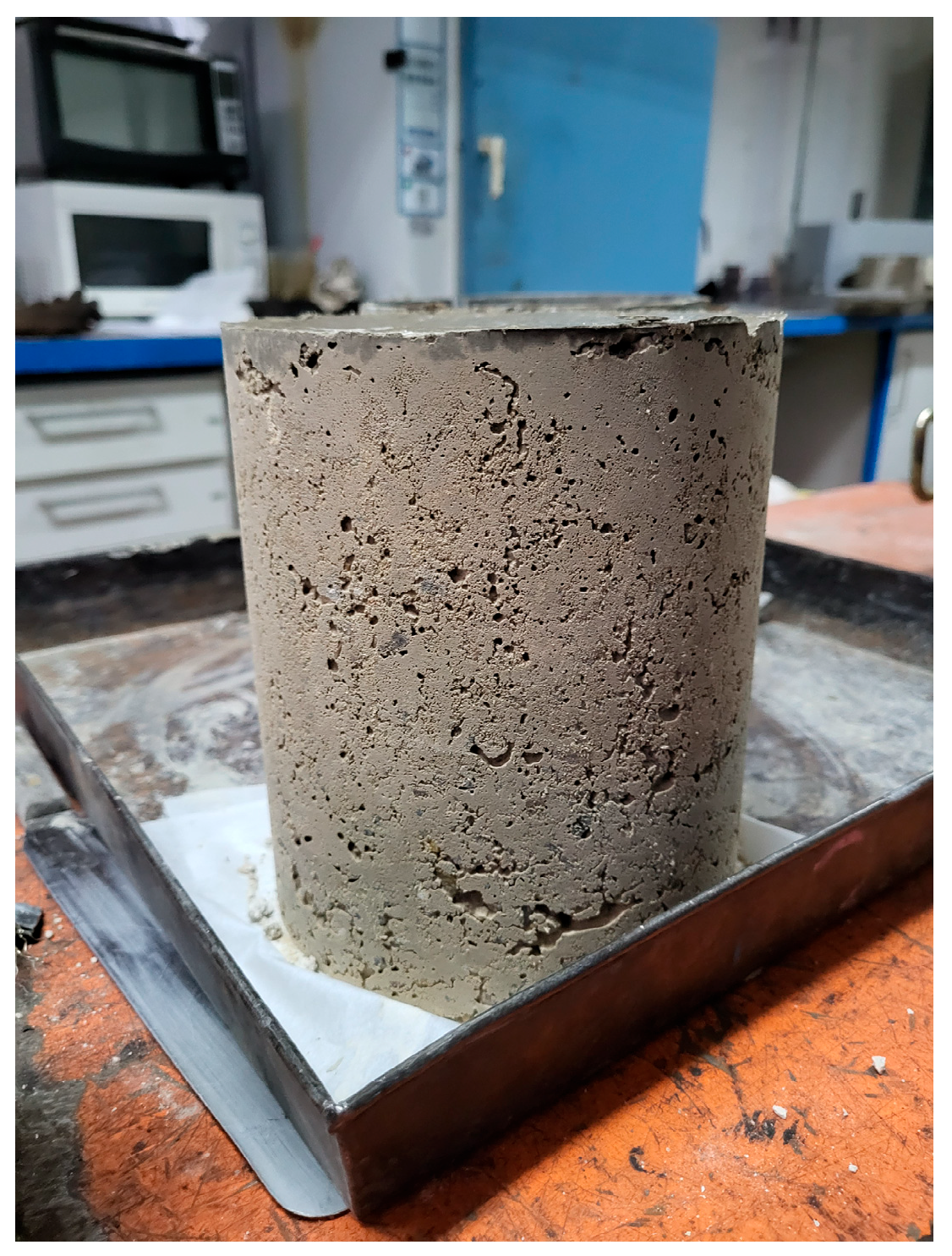
In accordance with the CNR 1972 standard [
15], sixteen CBR specimens (
Figure 1) were manufactured for four different curing periods of the CBGM: 7, 28, 96, and 120 days. The adopted mix design consists of 3% ACS and 2% PC, resulting in a total binder content of 5% by dry weight of aggregates.
The Optimum Water Content (OWC), determined through laboratory testing, was found to be 5% by dry weight of aggregates.
The specimens were prepared using quartzite aggregates according to the proportions specified in
Table 1:
The ACS and PC were incorporated in the dosages specified below (
Table 2):
The PC used in this study is a CEM II/BM—(PL) 32.5 N, supplied by Portland Valderrivas, S.A. (Madrid, Spain). The chemical and physical characteristics of the ACS industrial by-product are summarized in
Table 3 and
Table 4:
Considering four different curing times with 16 samples for every series, the compressive strength increases by 181% after 120 days of aging compared to samples aged 7 days. During the same curing period, the Indirect Tensile Strength (ITS) increases by 66%, and the elastic modulus increases by 190% (
Table 5).
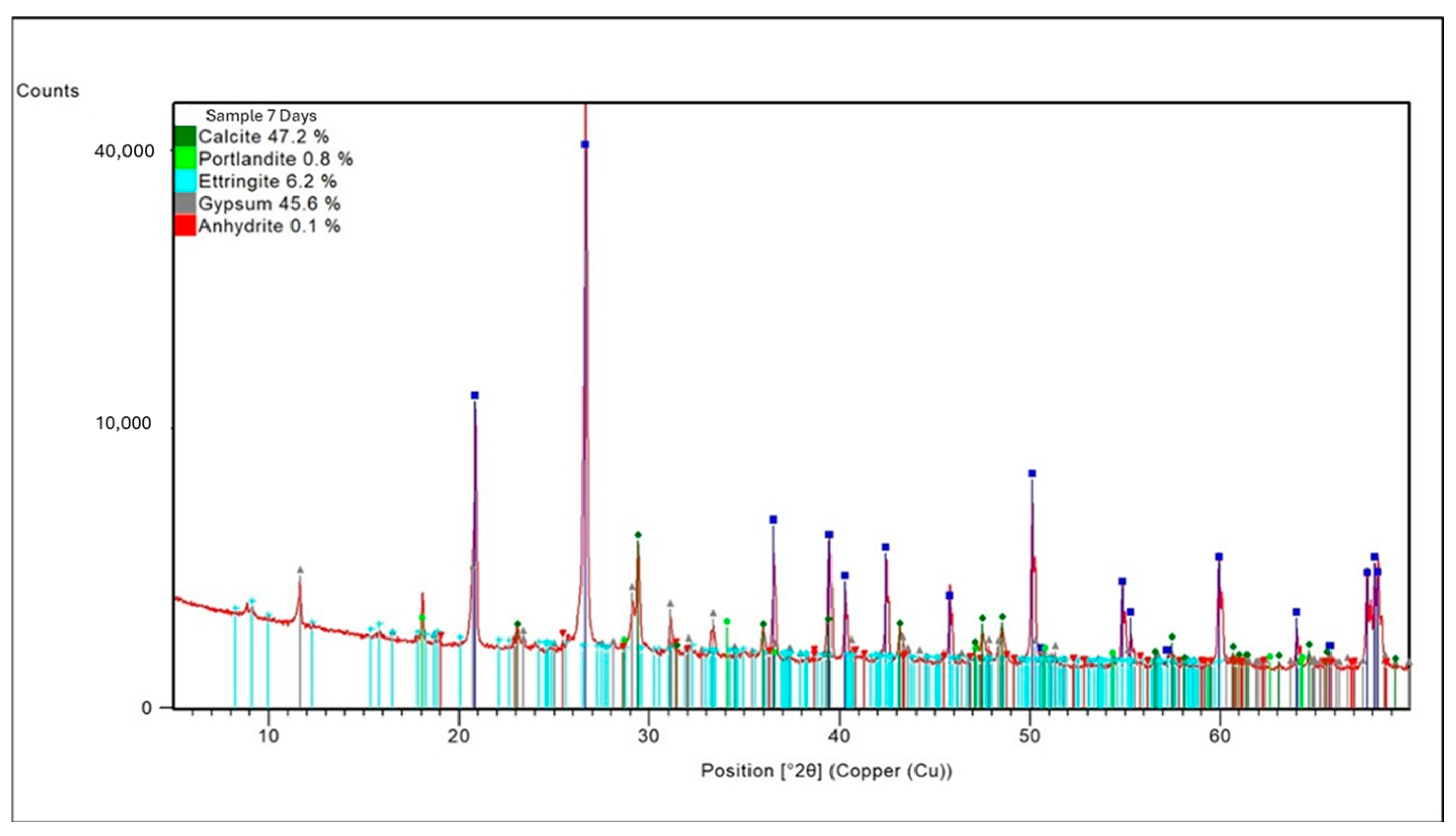
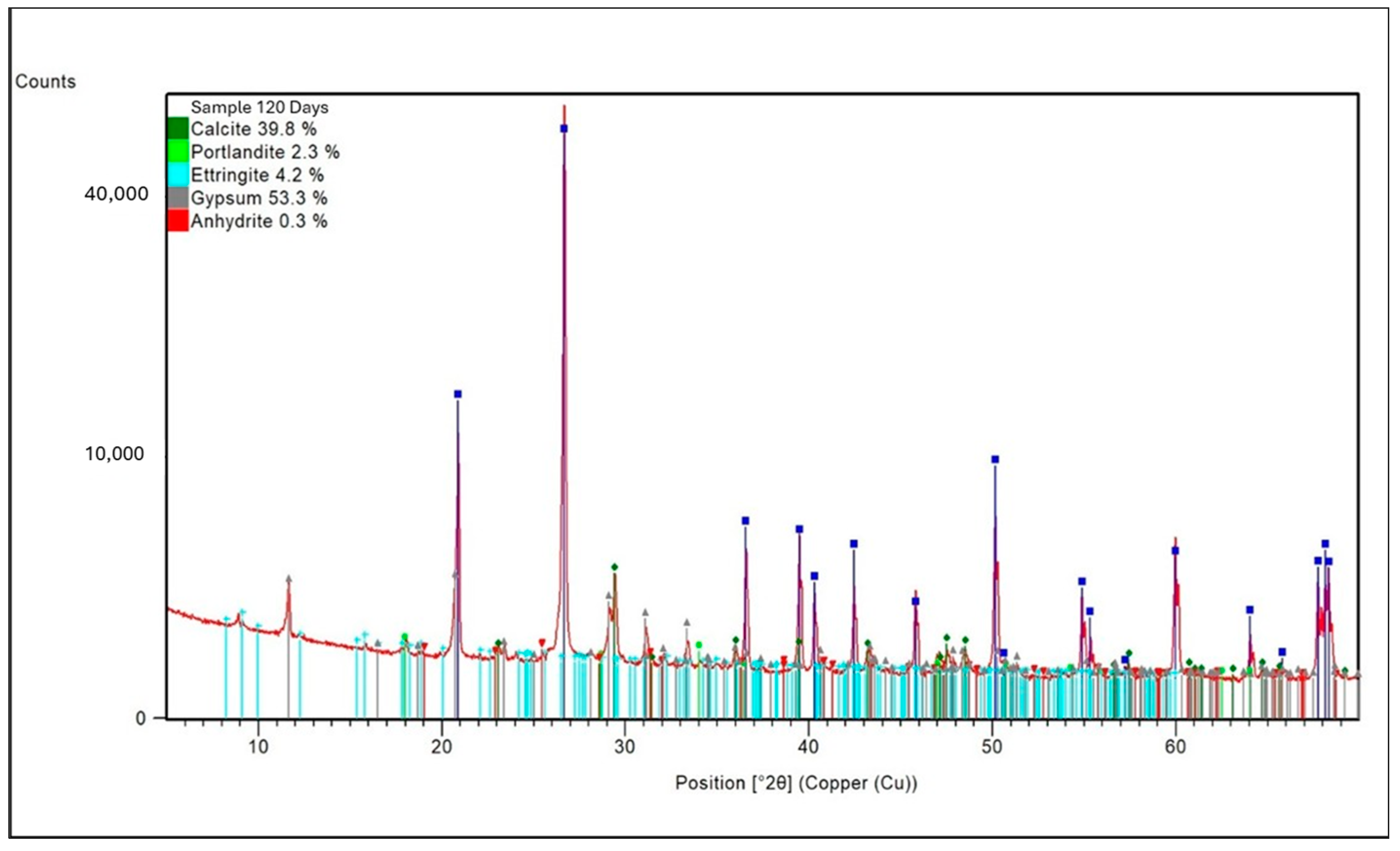
This mechanical behavior is explained by the XRD analysis performed (
Figure 2 and
Figure 3), which demonstrates the positive contribution made by 5% ettringite formation and 15% dihydrate gypsum increased over 120 days.
Reference [
16] reports that the use of 5% ACS results in increasing the mechanical strength of the cementitious material as a result of ettringite formation. In porous materials, ettringite’s preferred behavior is to nucleate in the interstitial pores of the materials, thus reducing the void volume and making the strength matrix more compact.
The hydration process of the paste allows the transformation of ACS into Calcium Sulphate Dihydrate (dihydrate gypsum), enabling the binding potential of the industrial by-product to be expressed [
9,
11,
14,
15,
16,
17,
18,
19,
20,
21].
To better understand the 3% ACS + 2% PC mix design mechanical behavior, two CBGM series composed of 3% of PC only (reference mix) were tested after 7 and 28 days of curing. These two different aging periods were defined considering that PC reaches its 95% mechanical resistance at 28 days of curing [
22,
23]. Mechanical tests carried out on specimens in which only PC was used as a bonding material show 8.8 MPa of compressive strength at 28 days.
The selection of the binder dosages was primarily driven by environmental and economic optimization. Specifically, the mix design incorporating 3% ACS and 2% PC was designed to minimize the environmental impacts compared to a standard 3% PC reference mix. This substitution strategy demonstrates that it is possible to achieve a significant reduction in CO2 emissions while maintaining, or even enhancing, mechanical performance. Furthermore, by adopting this ratio, there are environmental benefits without additional cost: given the current Italian market prices (Pc = 150 $ per Ton, and ACS = 50 $ per Ton), the ACS-enhanced mixture provides superior structural efficiency without increasing the overall material expenditure.
The mechanical test results obtained from the innovative 3% ACS + 2% PC mix design, assessed after 7, 28, 96, and 120 days of curing, along with those from reference specimens composed solely of PC cured for 28 days, were used as input data for the development of five finite element models. These models were designed to simulate pavement behavior and evaluate overall performance, comparing scenarios where the CBGM layer consists either of the innovative 3% ACS + 2% PC mix or the traditional mixture containing only 3% PC.
To investigate the pavement behavior over its service life of 15–20–30 years, the output data from the FEM models were used as input for the development of predictive models. Miner’s rule was implemented using the results from the 120-day simulations, considering the innovative cement-bound mix, and the PC28-Day simulations, considering the traditional cement bound mix with 3% PC, which in this research is the reference mix for road base layer with PC. The predictive models of the two pavements with different CBGM compositions were then compared.
In order to assess the environmental compatibility of the proposed eco-sustainable cement-bound granular material (CBGM), leaching tests were conducted to quantify the potential release of chlorides, fluorides, and sulphates. The experimental protocol included the application of two different European standard procedures: UNI EN 12457-2:2004 [
24] and UNI 10802:2004 [
25]. CBR test specimens, produced following CNR 1972 standard [
15], were prepared using the innovative mixture under investigation. A total of sixteen specimens were tested, with eight samples subjected to the method described in UNI EN 12457-2:2004 [
24] and the remaining eight analyzed following the UNI 10802:2004 [
25] procedure.
3. Results
With the aim of better analyzing pavement behavior using the innovative road base layer containing 3% ACS and 2% PC, five finite element models were developed using ANSYS 24R2 and ANSYS 25R1 FEM software. The input data used are those derived from mechanical tests in the laboratory for every curing period: elastic field limit, elastic modulus Ec, compressive strength Fck, and ITS. All samples have a density of 2330 ± 20 kg/m
3 and were cured at a temperature of 20–25 °C. Quasi-static analyses were carried out considering the innovative material elastic field. For the modeling, the pavement structure was defined as a 3 cm surface layer, 7 cm binder layer, 13 cm CBGM layer, 28 cm sub-base, and an extended subgrade. This configuration was used to prevent stress reflections at the edges from compromising the analysis. The pavement load corresponds to the pressure transmitted by the twin wheels of a heavy vehicle, with 0.6 MPa of pressure for every wheel, according to the Italian specification [
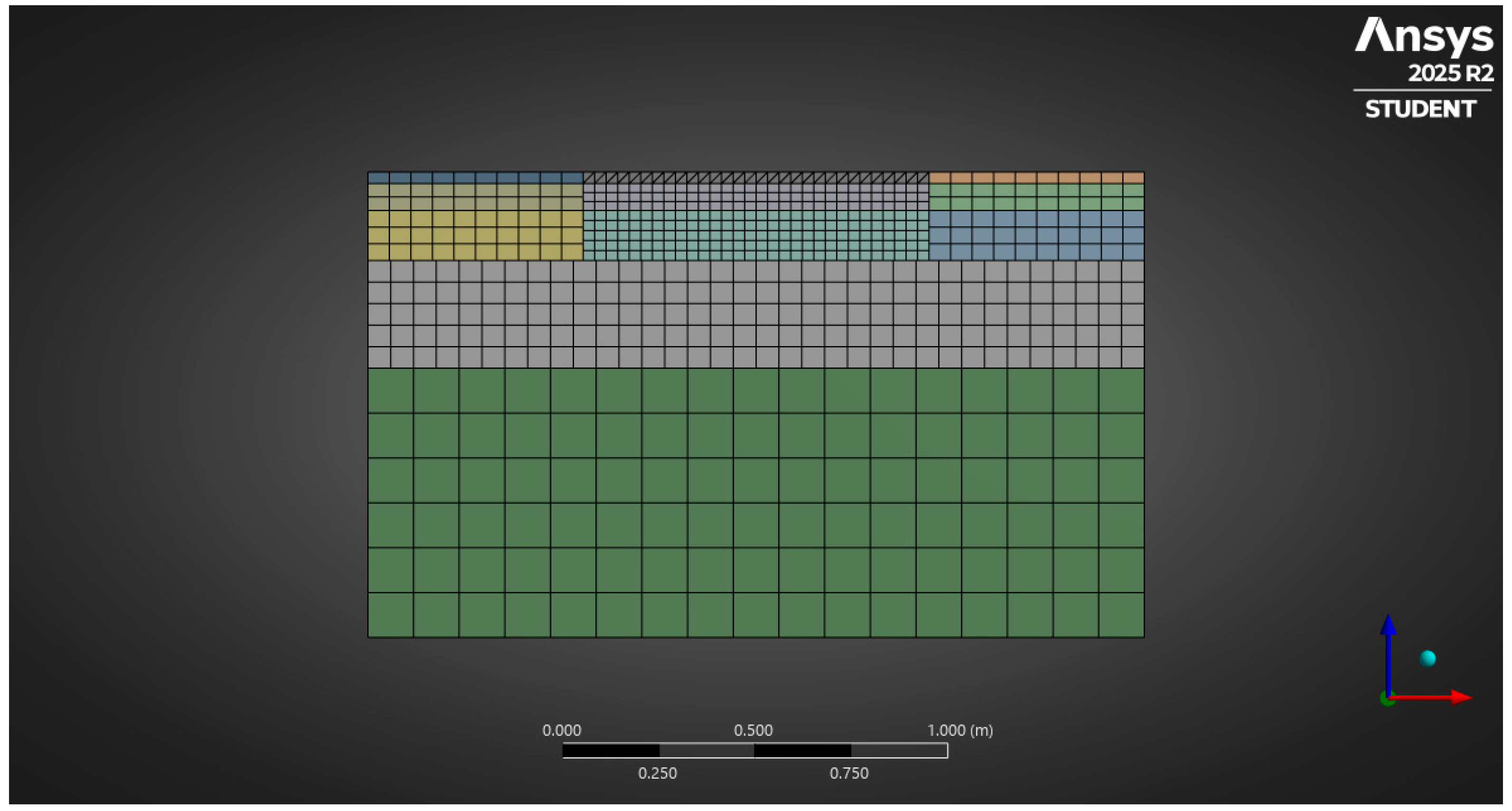
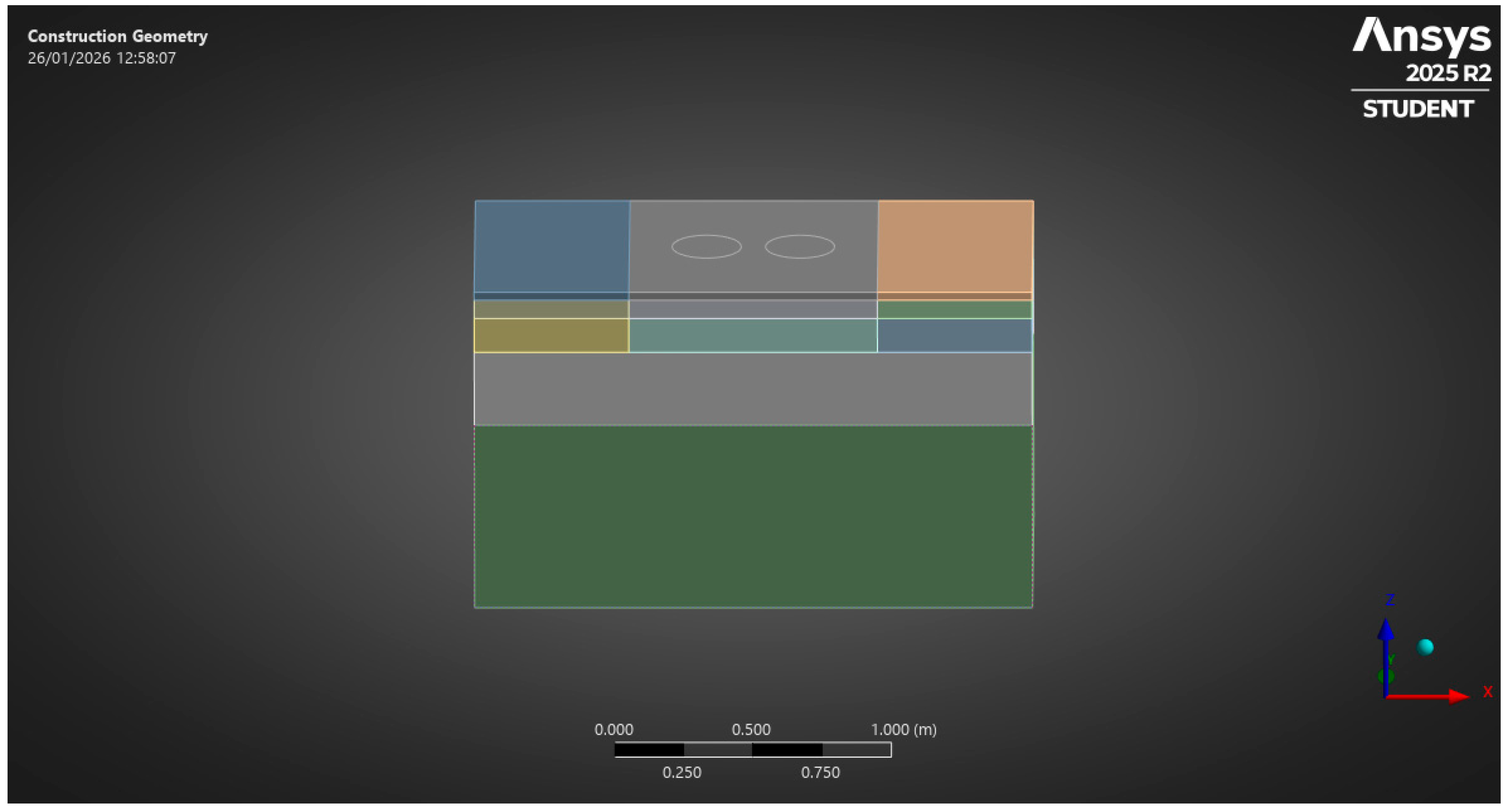
26]. The areas of the pavement layers below the loading surface were discretized to better refine the analysis (
Figure 4).
The mesh of the model was refined in the area beneath the load application, using brick elements with dimensions of 3 cm on each side for the surface, binder, and road base layers. A 6 cm per side mesh was used for the outer areas of the surface, binder, and sub-base layer, respectively. A 12 cm per side mesh was used for the sub-grade layer (
Figure 5).
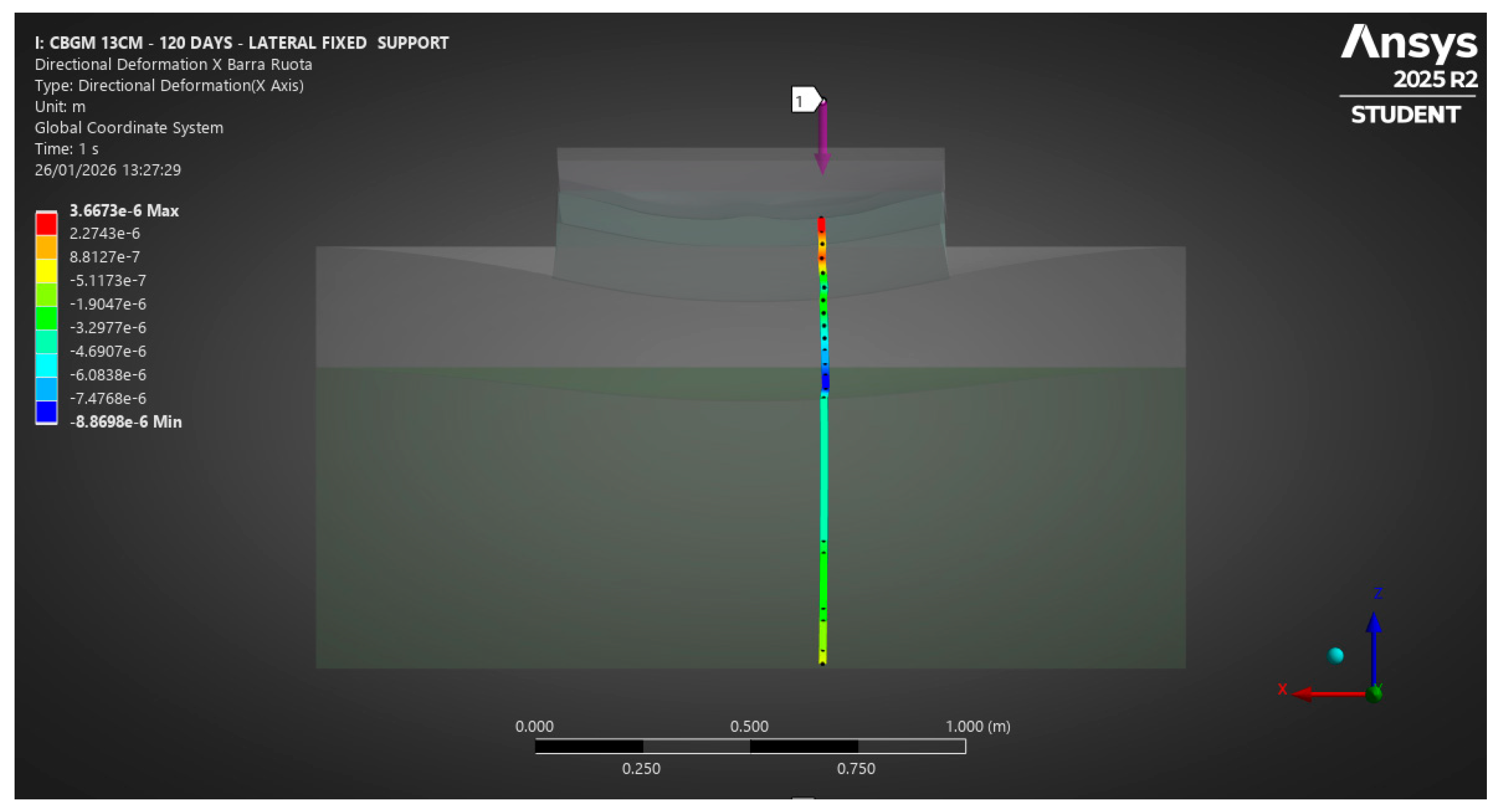
All measures were signed with a column path, analyzing the quantities fixing X and Y coordinates and by varying the coordinates along the vertical Z axis (
Figure 6).
The analysis was carried out following the path under the center of the segment joining the twin wheels and directly under a single wheel.
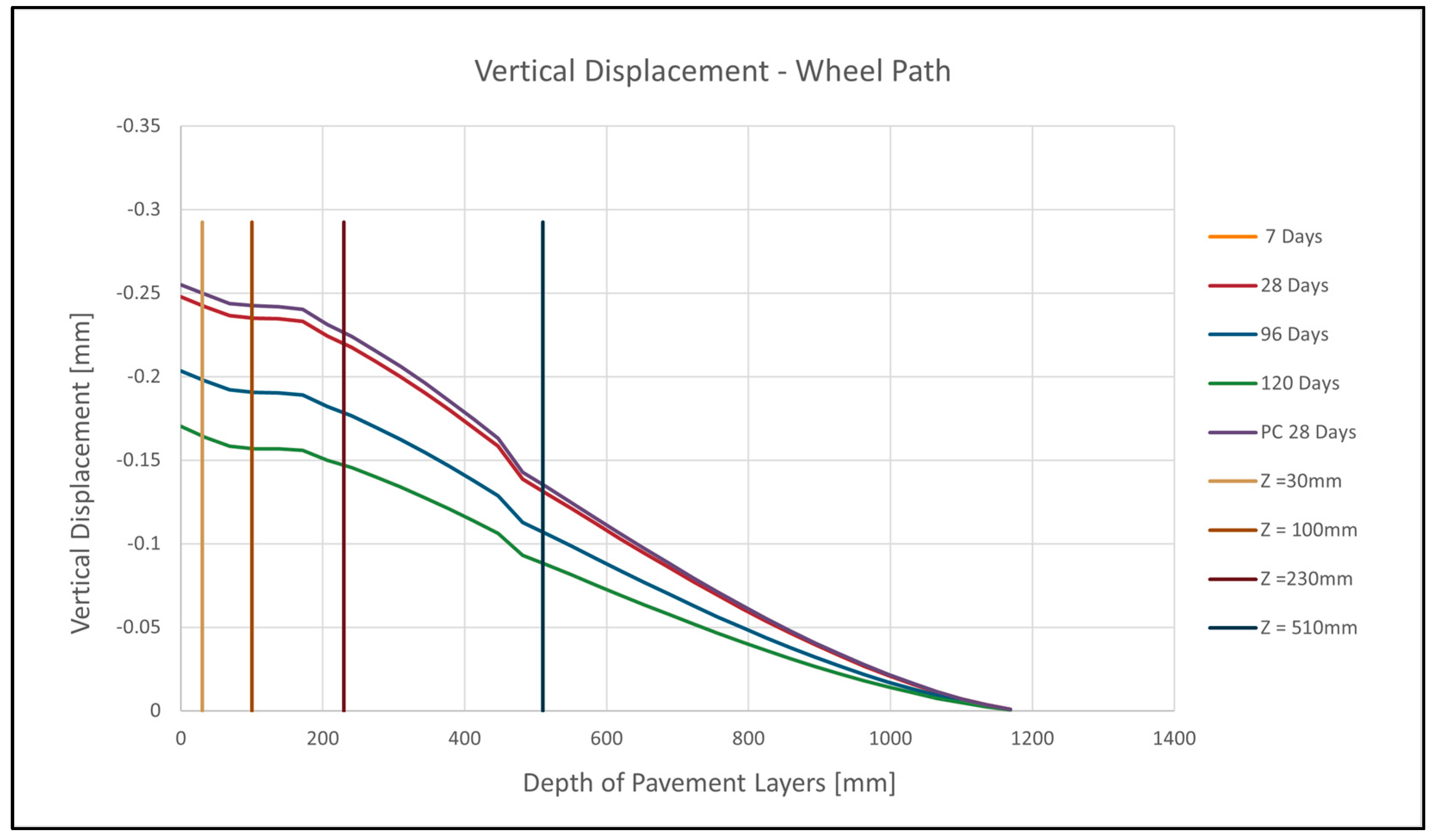
The directional deformations analyzed along the Z axis for all curing periods model show a decrease in deformations with increasing curing time of the material (
Figure 7):
The directional deformations under the wheel decrease from to when the material is cured from 7 to 120 days. The displacements of the innovative material matured 7 and 28 days show the same magnitude, so the two curves in the graph overlap. On the other hand, it can be seen that the displacement curve of the innovative material matured for 120 days, being lower, represents lower displacements than the same material matured for shorter periods.
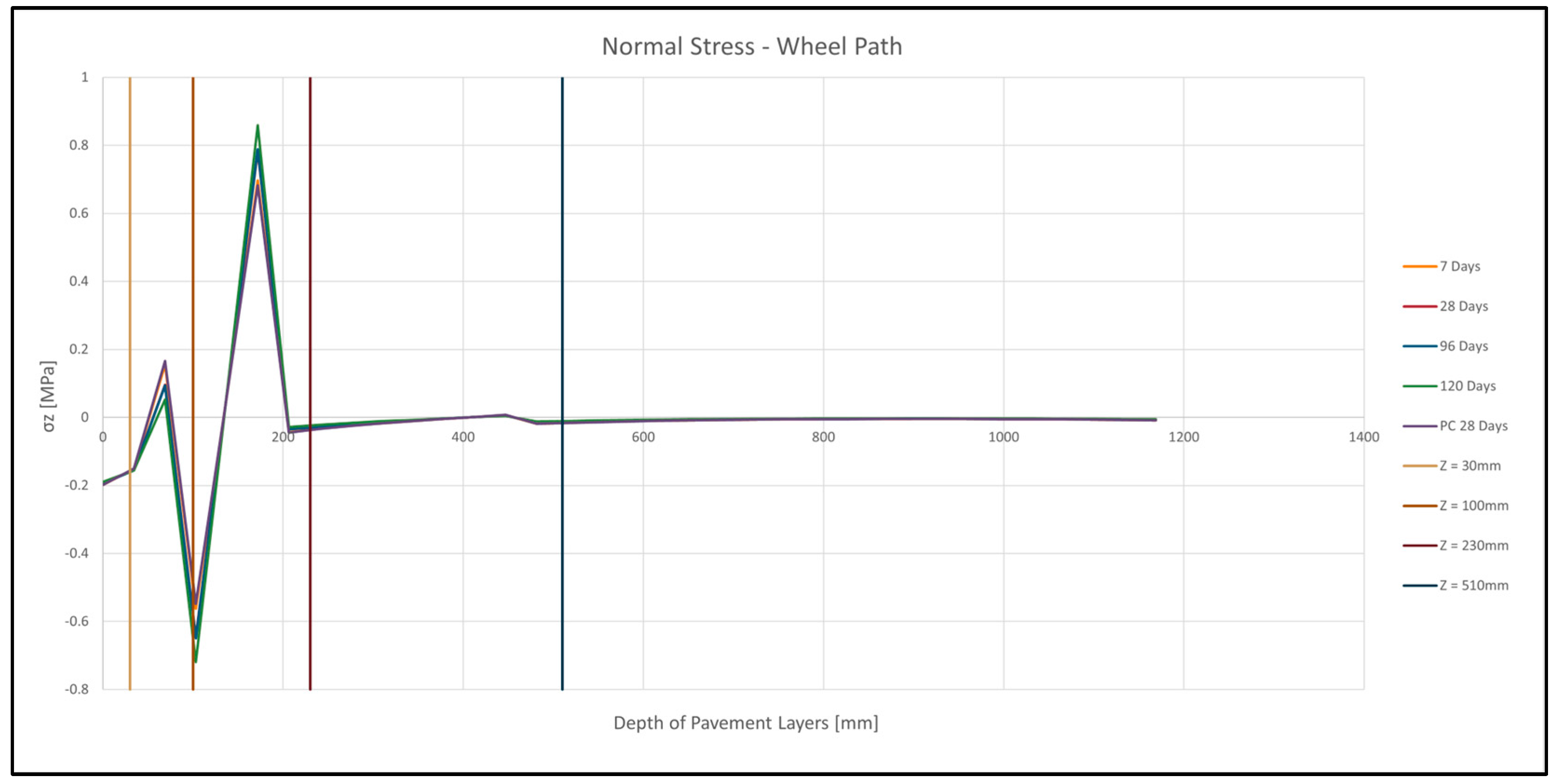
The semi-rigid pavement behavior using the innovative road base layer with 3% ACS + 2% PC is highlighted by tensile stresses analysis (
Figure 8), consistent with the mechanical behavior of semi-rigid pavements.
In this case, the magnitudes represented are so small that it is not possible to distinguish the different curves due to the scale used, but it is functional to define how all models are consistent with each other and with the typical behavior of semi-rigid pavements.
It is possible to see the cement-bound granular material’s mechanical pressure deflection behavior. Normal stresses transmitted by the wheels on the surface layer arrive at the road base layer and are dissipated by transforming them into tensile stresses, until they are almost near zero at the underside of the cement-bound base layer and in the subgrade.
The objective of the FEM modeling was to gain a better understanding of the mechanical behavior of the pavement, but above all to support the predictive analyses for the fatigue behavior of the pavement with the innovative road base over its service life.
The output data from the FEM modeling were used as input data to implement Miner’s prediction formulas.
where
Ni = critical axle number;
ni = number of axles predicted;
i = index of the stress level or load cycle class;
k = total number of stress levels (or load cycle classes) considered.
For this purpose, the output data of the FEM model at 120 days of aging and the FEM model of the material aged 28 days with only 3% PC as binding material were compared.
Mechanical characterization was performed on specimens with CBR dimensions (150 mm in diameter and 180 mm in height). To determine the elastic modulus of the innovative CBGM blend, non-destructive compression tests were conducted by applying incremental loads up to 30% of the ultimate breaking load, in accordance with the standard [
27].
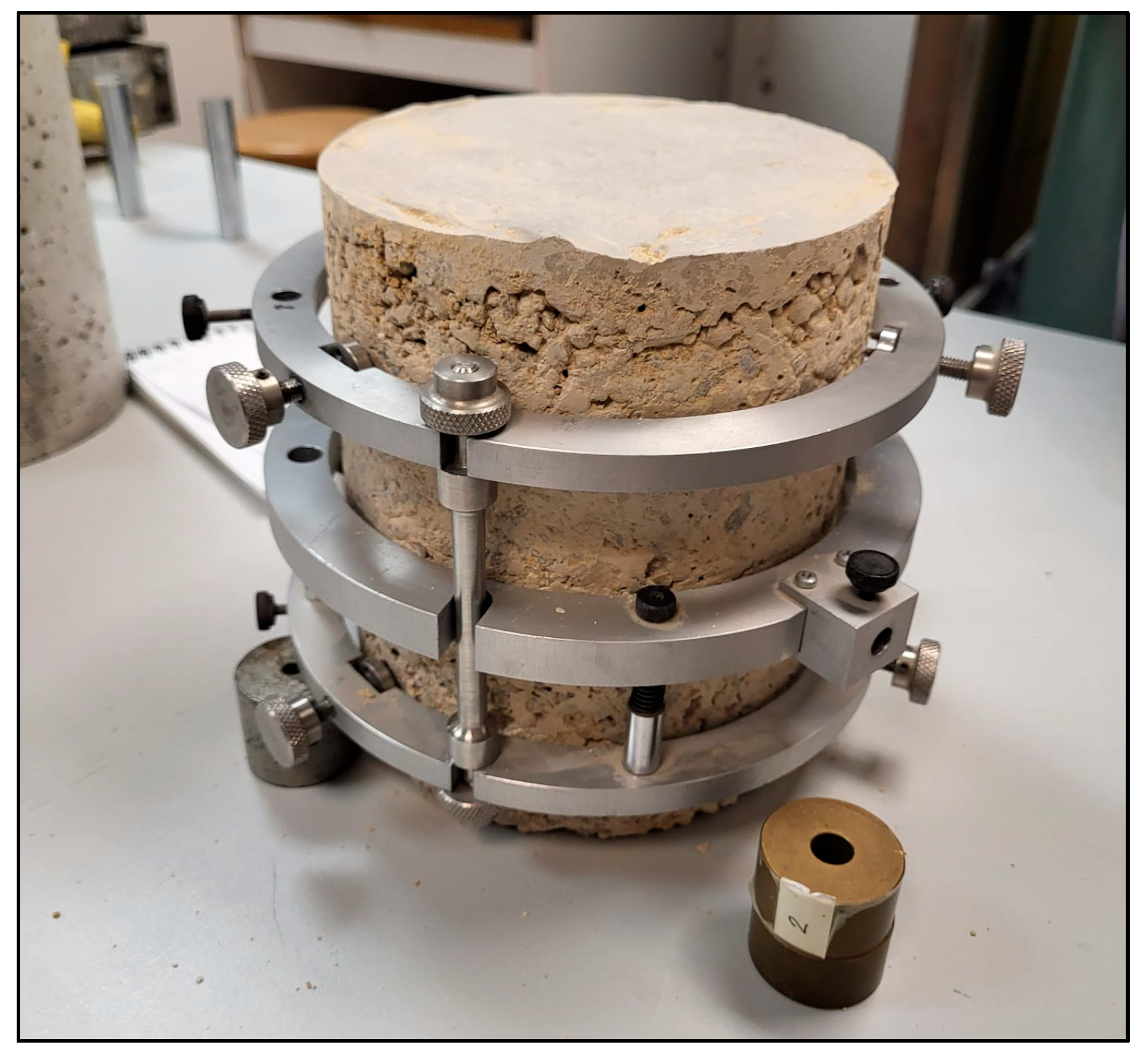
During these tests, axial strain was measured using a ring extensometer (
Figure 9) with LVDT sensors mounted directly on the specimen to capture its linear-elastic response.
Subsequently, the same specimens were tested to failure to determine their Unconfined Compressive Strength (UCS) and ITS, providing the essential constitutive parameters for the calibration of the FEM numerical models.
In this initial phase of experimentation on the specific mix containing 3% ACS and 2% PC, FEM modeling was conducted in the linear-elastic range, while also incorporating fracture parameters to provide a more complete description of the material’s behavior. Such an approach made it possible to use the fatigue curves reported in the Spanish standard [
28], which describe the evolution of the mechanical performance of the road base mix design over time, using FEM results and based on its resistance to failure. Using [
28], the number of heavy vehicle passages that would lead the pavement to structural failure for each pavement layer was calculated (
Table 6), taking into account the fatigue phenomenon.
The number of axles that would lead to pavement failure, taking into account the fatigue phenomenon, was compared with the number of axles expected according to the service life considered for the pavement. The cumulative number of axles at the end of the pavement’s design life was calculated using the following formula [
29]:
where
ADT = average daily traffic (ADT);
365 = days per year;
pd = 0.50 traffic rate by direction of travel;
p = 0.15 commercial vehicle rate;
pl = 0.95 rate of commercial vehicles on the slow lane;
d = 0.8 trajectory dispersion coefficient;
Ceq × na = 0.675 coefficient of equivalence for the number of axles per commercial vehicle;
n = 15–20–30 useful life of the road expressed in years;
r = 0.03 traffic growth rate over lifetime.
The critical axle number is calculated considering a high-traffic suburban road with an average daily traffic (ADT) of 24,500 vehicles, annual traffic of 356 days, and commercial traffic of 260 days, performing calculations for 15–20–30 years of pavement life (
Table 7).
It emerges that the pavement including the innovative road base with 3% ACS + 2% PC mix design performs 4.68 times better than the pavement modeled with the ordinary road base layer with 3% PC only (
Table 8).
Environmental and Chemical Safety Assessment
To assess the environmental compatibility of the proposed eco-sustainable material, leaching tests were carried out on specimens of the innovative cement-bound road mix, measuring the release of chlorides, fluorides, and sulphates. Leaching tests were conducted following two different European specifications, UNI EN 12457-2:2004 and UNI 10802:2004 [
24,
25], on CBR specimens of the innovative CBGM studied made according to the standard [
15]. Eight samples were analyzed using [
24], and eight samples were studied using [
25].
Using the different specifications, two distinct in situ material conditions can be assessed. According to the standard presented in [
24], the cement-bound granular material intended for the road base layer must be crushed and passed through a 4 mm sieve, then mixed with distilled water for a total duration of 24 h. Subsequently, the eluate is analyzed. Conversely, the standard presented in [
25] investigates the leaching behavior of intact monolithic CBR specimens. The use of the standard presented in [
24] shows a higher amount of fluorides, chlorides, and sulphates released than the analyses using the standard presented in [
25]. This behavior is attributed to the specific surface area of the grains with a maximum diameter of 4 mm used for analyses with the standard presented in [
24], which is greater than the surface area of the monolithic CBR specimen affected by the leaching phenomenon when using the standard presented in [
25].
The results of the leaching tests were compared with the limit values accepted by the Italian Ministerial MASE Decree 2024 [
30]. Ref. [
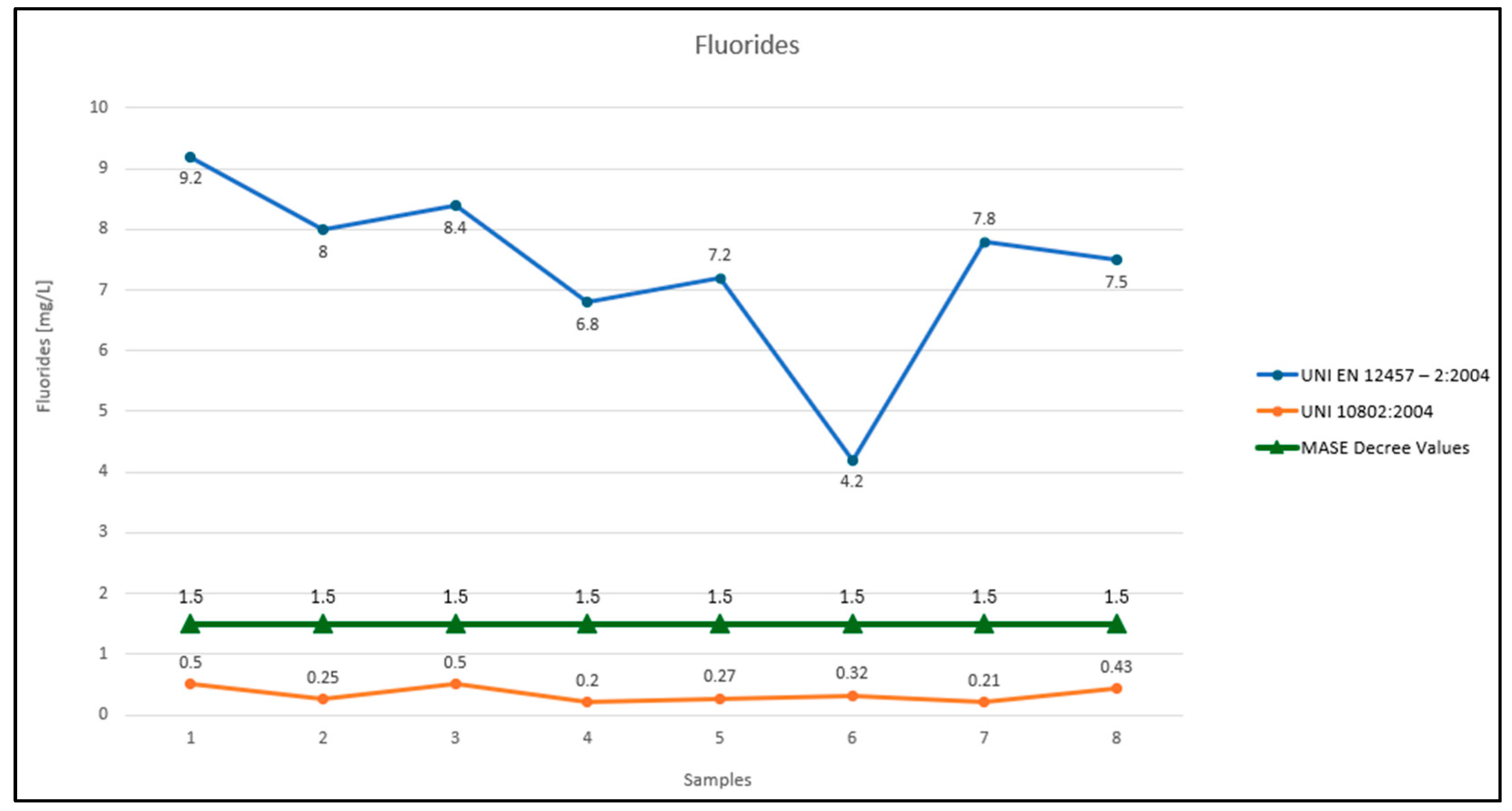
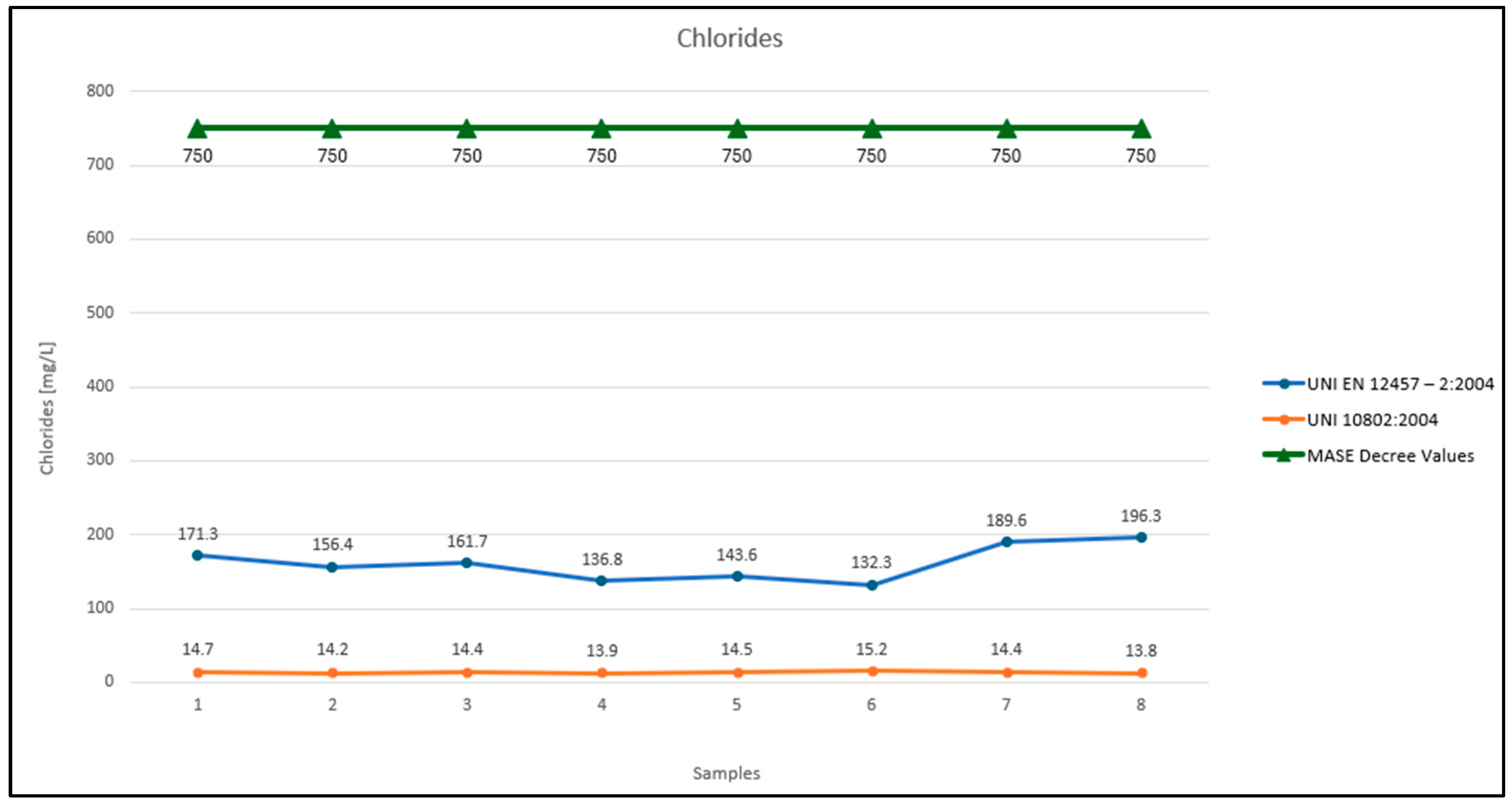
30] sets the maximum accepted value of fluorides equal to 1.5 mg/L, chlorides equal to 750 mg/L, and sulphates equal to 750 mg/L.
The results obtained when studying fluoride concentration show a fluoride middle value of 7.38 mg/L following the specification outlined in [
24], and 0.33 mg/L following the specification presented in [
25] (
Figure 10).
The same comparison was made analyzing the chloride concentration. Chloride’s middle value is 161 mg/L following the specification outlined in [
24], and 14.38 mg/L following the specification presented in [
25] (
Figure 11).
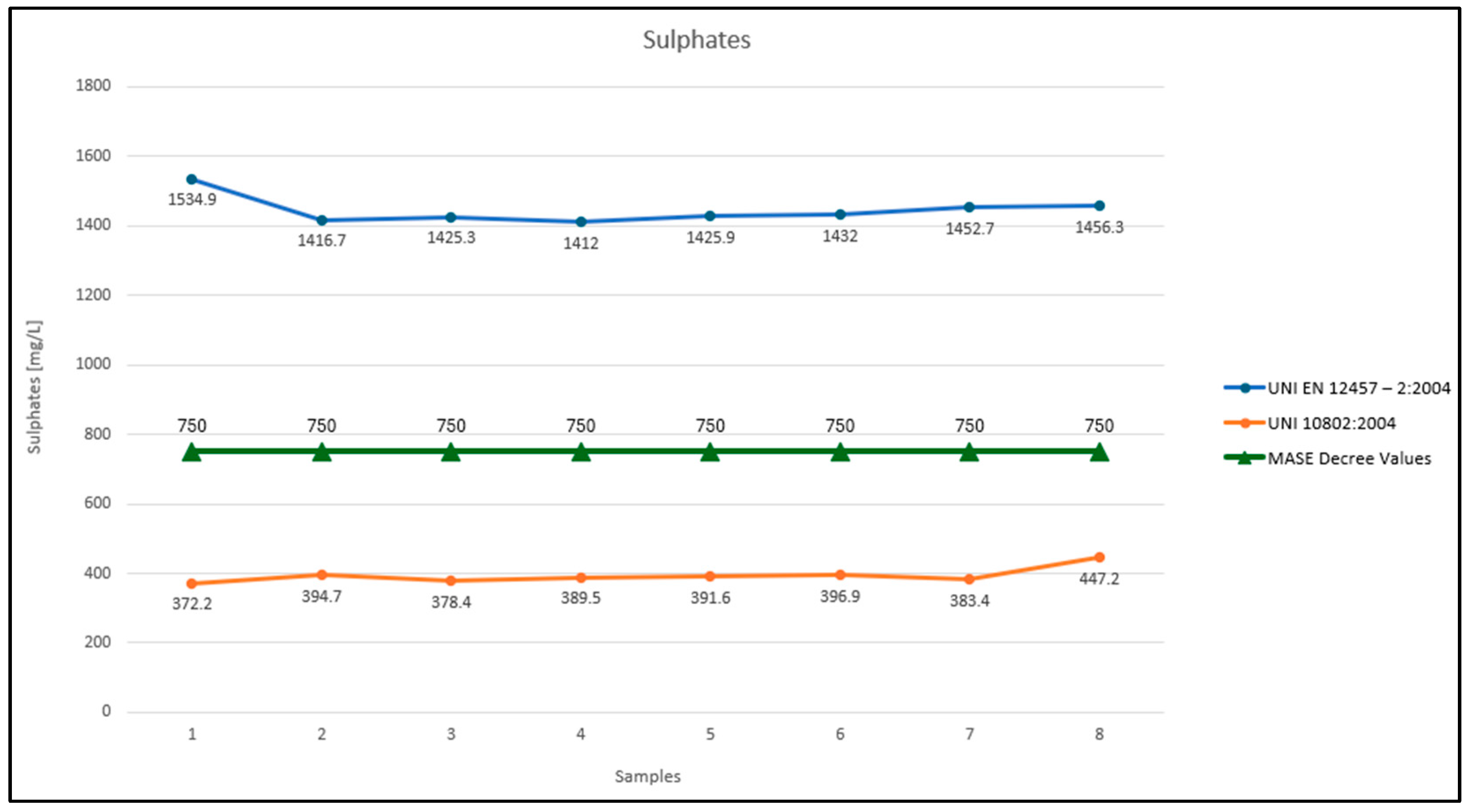
Sulphate concentration is also different depending on whether you use UNI EN 12457 2:2004 [
24] standard or UNI 10802:2004 [
25] standard. Respectively, the sulphate middle values are 1444.5 mg/L and then 394.2 mg/L (
Figure 12).
It can be seen that the concentrations of fluorides, chlorides, and sulphates change significantly when leaching tests are performed with the standards presented in [
24] or [
25]. Considering the Italian law values indicated in D.M. MASE Decree 2024 [
30], only the chloride leaching value for the innovative material is acceptable when the tests follow the standard presented in [
24]; when following the standard presented in [
25], all limit values are largely respected.
4. Discussion
The study in [
5] examines a full-scale ACS case study, which tested a mix design containing 5% ACS and 2% PC in cement-bound granular material used for the road base layer of a road section. FWD testing indicated a 127% increase in the elastic modulus of the innovative mix within the first five months, whereas the cement-only mix increased by 100.15%. This behavior can be attributed to the hydration reactions of the ACS and PC system [
14,
17,
18,
19,
20,
22,
23], as well as to the different compaction behavior of the ACS-containing material under the passage of heavy vehicles.
The observed increase in the mechanical properties of the innovative mixture is consistent with the results obtained for the mix containing 3% ACS and 2% PC.
The innovative mix design containing 3% ACS offers the possibility of achieving excellent mechanical performance by exploiting the chemical bonding reactions between ACS and PC [
14,
17,
18,
19,
20,
22,
23], while also exhibiting a more environmentally sustainable behavior in terms of emissions, due to the proportions of materials used [
6], and concerning the leaching behavior of fluorides, chlorides, and sulphates.
The FEM modeling demonstrates the effective performance of the road pavement when the base layer incorporates the innovative ACS mixture. Predictive fatigue models, based on Miner’s rule and decay curves of road materials, provide a reliable forecast of material performance. Results indicate that the innovative material achieves a yield 4.68-times higher than the traditional mix containing only 3% PC over a 30-year pavement design life. In order to certify the use of the innovative material, it would be necessary to implement the experimental data set from laboratory and in situ mechanical tests to confirm the mechanical characteristics of the material.
The output data of the FEM modeling used as input data for the material decay curves refer to static stresses. In future work, it will be necessary to set up the modeling considering the dynamic load transition and damage behavior of the road materials.
The in situ use of the innovative mix design 3% ACS + 2% PC will enable targeted and precise testing of the physical–chemical–mechanical behavior of the road base layer with the innovative CBGM. The aim will be to understand how the material behaves after its installation on a real scale, considering external stresses from vehicle traffic and environmental conditions.
Results from leaching tests indicated that the values of the stricter specification [
24] were higher than those obtained with [
25]. When analyzing the granular material, the surface area available for pollutant release is greater than that of the monolith analyzed with the standard outlined in [
25].
Analyzing the international regulatory framework, it is possible to observe inconsistencies in the definition of a material as waste or as a by-product. Consequently, the permissible limits for the release of chlorides, fluorides, and sulphates are not always defined when ACS is used, and the possibility of employing ACS often depends on local regulations [
31,
32,
33], or, as in the USA, it is evaluated on a case-by-case basis depending on the potential risk to water potability [
34]. In Italy, the innovative mix design composed of 3% ACS and 2% PC falls within regulatory limits [
30], if the results of the test on the monolithic material are considered [
25]; conversely, the material is not compliant if the leaching tests are carried out following the standard presented in [
24]. To obtain a more precise assessment of environmental compatibility, further leaching tests should be conducted under the material’s real in situ conditions.
5. Conclusions
This study aims to help demonstrate the feasibility of using ACS in CBGM, espousing the concept of the circular economy and environmentally sustainable engineering. It aims to illustrate how the innovative material can exhibit good mechanical performance in the short, medium, and long term, while respecting the principles of environmental compatibility.
The samples with the 3% ACS and 2% PC mixture exhibited an increase in mechanical performance over the 120-day curing period: compressive strength increased by 181% after 120 days of aging, ITS increased by 66%, and the elastic modulus increased by 190% during the same curing period.
The observed development of mechanical strengths in the innovative CBGM facilitated a broader evaluation of the pavement’s general behavior. FEM based on mechanical test data provided a reliable representation of the pavement’s mechanical behavior within the elastic domain.
FEM modeling demonstrates that the innovative ACS-containing mix design enhances the pavement’s mechanical performance by dissipating compressive stresses and reducing layer deformations from 2.06 × 10⁻⁴ to 1.4 × 10⁻⁴ as the material cures from 7 to 120 days.
Miner’s predictive model, based on FEM modeling output data, shows how the innovative mix design with 3% ACS and 2% PC has a better response to fatigue than the traditional mix design containing only 3% of PC as binding material. Comparing the critical axle number that impairs pavement functioning, this innovative pavement performs 4.68-times better than traditional mix design with PC only, considering service lives of 15, 20, and 30 years.
The innovative CBGM mix with 3% ACS and 2% PC shows a good response, analyzing the leaching behavior. The leaching tests show two different responses depending on the standard used for testing, considering the granular or monolithic material. The test results according to UNI EN 12457-2:2004 [
24] are consistently higher than those obtained using the UNI 10802:2004 [
25] standard. Specifically, the median fluoride concentration was 7.38 mg/L compared to 0.33 mg/L, the average chloride concentration was 161 mg/L versus 14.38 mg/L, and the median sulphate concentration reached 1444.5 mg/L against 394.2 mg/L. In Italy, the use of the tested innovative mix design complies with the values indicated by law if the leaching tests are carried out with the standard presented in [
25], but not when the standard outlined [
24] is used. Internationally, it is necessary to refer to national, local prescriptions and to analyze the possibility of using ACS on a case-by-case basis. The innovative 3% ACS and 2% PC design mix for the cement-bound granular road base layer demonstrates good mechanical performance and durability behavior, espousing the concept of ecological transition and environmentally sustainable engineering, while also aligning with regulatory requirements for environmental compatibility.