Article

Tire-Derived Aggregate as a Backfill Alternative for Retaining Walls: Nonlinear Time-History Analysis of Shake Table Tests

1
Department of Civil, Geological, and Environmental Engineering, University of Alaska Fairbanks, 265 Duckering Building, 1760 Tanana Loop, Fairbanks, AK 99775, USA
2
Department of Civil and Environmental Engineering, 3161 Ghausi Hall, University of California Davis, One Shields Avenue, Davis, CA 95616, USA
*
Author to whom correspondence should be addressed.
Constr. Mater. 2026, 6(2), 18; https://doi.org/10.3390/constrmater6020018
Submission received: 30 November 2025 / Revised: 21 February 2026 / Accepted: 28 February 2026 / Published: 9 March 2026

Abstract

Tire-Derived Aggregate (TDA) is a recycled fill material made by cutting scrap tires into small pieces that satisfy the gradation requirements in ASTM D 6270. Since its introduction to civil engineering applications, TDA fill and TDA backfill have been successfully implemented in many projects. However, the dynamic behavior of the TDA backfill under significant earthquakes has not been substantially addressed. The present study used nonlinear time-history Finite Element Analysis (FEA) to analyze the dynamic behavior of a retaining wall with TDA backfill captured from the full-scale shake table test. Unlike typical soil failure observed in a similar retaining wall with conventional soil backfill, significant wall sliding occurred because lightweight TDA contributed to reducing the friction resistance of the wall footing. Therefore, the analysis required modeling capability of rigid body motion and impact loading from the separation between the wall stem and the backfill. With adequate friction models and softened contact models, the FEA generated the dynamic motion of the retaining wall that matched well with the measured responses, including the wall sliding. The friction model between the wall footing and soil was most critical in accurately reproducing wall sliding motion. It was determined to use different friction coefficients for the two different earthquakes used in the study in order to simplify the rate dependence of the coefficient. Also, the softened contact model generated more reasonable impact force by allowing overclosure and finite stiffness during impact. The FEA model and modeling technique in the present study can be used for the seismic design of various field-scale retaining walls with TDA backfill.

1. Introduction

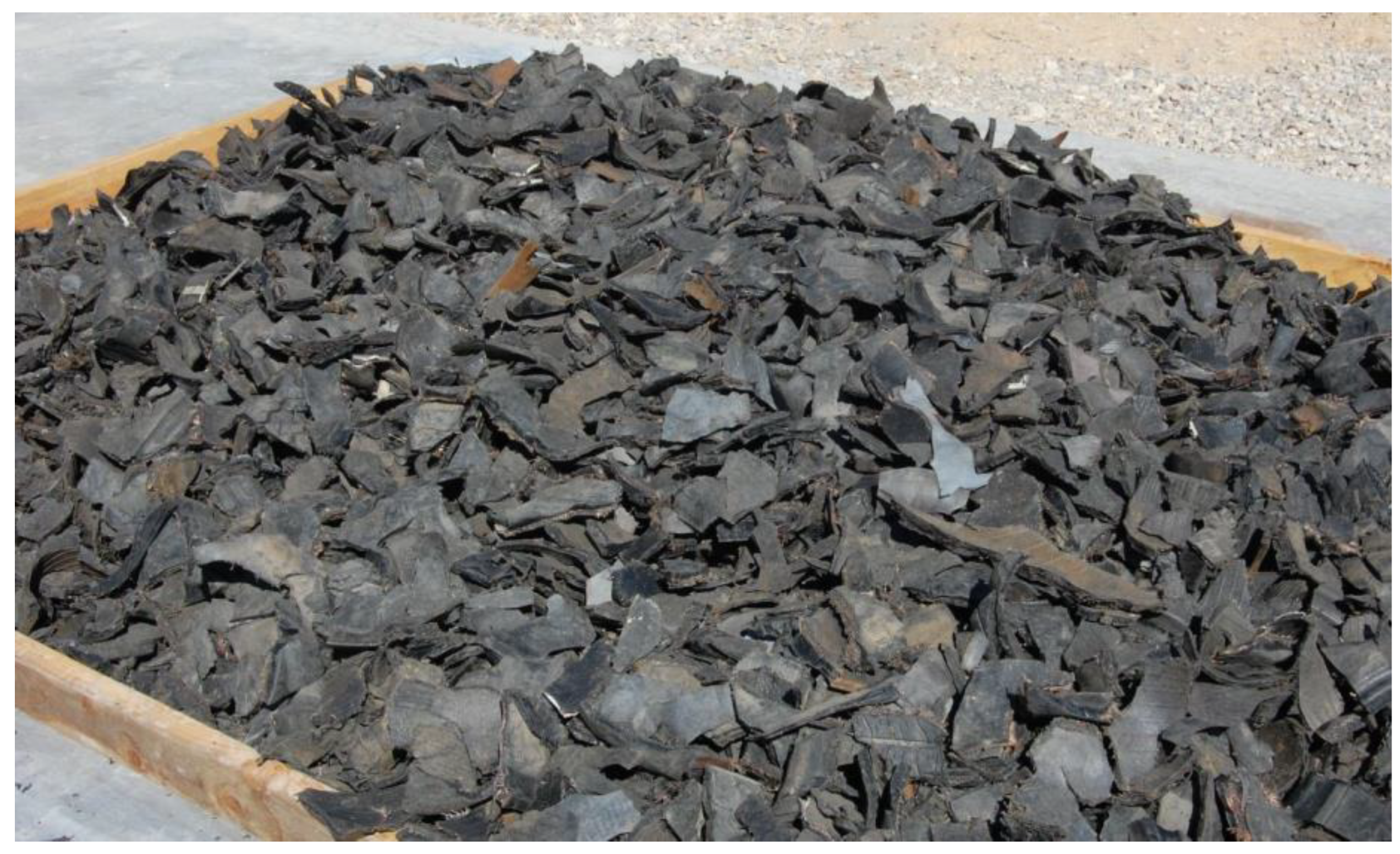
It is estimated that approximately 200–300 million tires are scrapped annually in the United States, and 4,836,000 tons of waste tires were generated just in 2023 [1]. Among them, more than 75% are marketed or utilized in different ways. Most of them are used as Tire-Derived Aggregate (TDA) in civil engineering applications, tire-derived fuel, and materials in ground rubber applications/rubberized asphalt concrete. As a recycled fill material, TDA is made by cutting scrap tires into pieces that range in size from 12 to 305 mm [2], as shown in Figure 1.
In civil engineering applications, the primary benefit of TDA is its low unit weight. The unit weight of compacted TDA is 1/3–1/2 that of typical compacted soil used in backfill. Even after TDA is compressed under its self-weight and the extra weight of overlying fill, the unit weight of TDA ranges from 4.71 to 6.92 kN/m3 [3]. As a general guideline, ASTM D 6270 Standard Practice for Use of Scrap Tires in Civil Engineering Applications [2] has been widely used. The main differences between the two types of TDA in ASTM D 6270 are the gradation and the maximum particle size. Type B TDA (a maximum dimension of 450 mm) is larger and less expensive than Type A (a maximum dimension of 200 mm), which makes it better applicable as a fill material. For the planning and design of a TDA project, the accurate material properties of TDA are crucial for the success of the project. One of the well-known difficulties associated with the measurement of its material properties is the requirement of a large container for the shear strength test of TDA. For instance, Fox et al. [4] fabricated a large-scale steel box, 3048 mm by 1219 mm in plan and 1830 mm high, for the simple shear test [5] and the direct shear test [6] of Type B TDA. In another study, Elashram et al. [7] used a steel box, 914 mm by 914 mm in plan and 1220 mm high, for the direct shear test of TDA and TDA-soil mix.
Various TDA applications in civil engineering utilized the permeability with thermal insulation capacity, the ability to damp vibration, and the compressibility to reduce excessive pressure to buried structures [2,8]. In some case studies, TDA made from Passenger and Light-Truck Tire (PLTT) and Off-The-Road (OTR) tires was used [9]. A nonlinear stress-strain relationship of PLTT and OTR TDA was adopted for the Finite Element Analysis (FEA) in the TDA embankment project. Hashemian and Bayat also studied the application of TDA from PLTT and OTR to embankments in cold regions [10]. Adding TDA to ballast in the bed of a railroad track was studied in order to reduce the abrasiveness of ballast and to mitigate vibration by passing trains [11,12,13].
Some civil engineering applications utilized the flexibility of TDA to redistribute stress and pressure on geotechnical structures. Mitoulis et al. used TDA to build a compressible inclusion barrier between the abutment and the backfill of an integral abutment bridge [14]. Abdullah and Hazarika proposed TDA cushion layers placed underneath shallow foundations [15]. Gromysz and Kowalska showed that a TDA layer under a footing was effective in reducing vibration of the footing [16]. Meguid and Youssef studied earth pressure distribution on the rigid pipe buried under a TDA layer [17]. Alzabeebee et al. used FEA to study the effects on buried concrete pipes beneath a TDA layer [18]. Rodríguez et al. studied TDA as a lightweight fill material over the tunnel constructed using the cut-and-cover method [19]. Shrestha and Ravichandran studied the static and dynamic behavior of a 6.5 m high cantilever retaining wall with TDA backfill [20]. McCartney investigated Mechanically Stabilized TDA retaining walls where TDA was reinforced with geogrid to provide additional strength [21]. Since its early applications, the environmental impacts of TDA projects have been an important issue, as several environmental studies have discussed [2,22,23].
As a lightweight backfill material for retaining walls, TDA could be applied to reduce the size of the wall and foundation [24,25,26,27]. Under seismic loading, the TDA backfill was expected to reduce dynamic pressure exerted on a retaining wall as well as inertia force of the backfill. Previous shake table test of a full-scale retaining wall with TDA backfill by the authors showed quite different dynamic behavior from a similar wall with conventional soil backfill [28]. Under simulated earthquakes with substantial magnitudes (PGA > 0.6 g), a compacted soil layer placed over a TDA layer vigorously vibrated because the dense, stiff soil sat on the flexible TDA layer. This raft effect increased as the intensity of excitation increased. It was observed that the raft effect opened a small gap between the wall and the top soil layer under low-intensity earthquakes. In subsequent high-intensity earthquake events, the raft effect and corresponding impact became severe as the retaining wall slid away from the backfill and the gap widened. The dynamic behavior of the retaining wall exhibited substantial rigid body motion caused by impact pounding between the wall and the backfill. On the other hand, during the shake table test of a retaining wall with conventional soil backfill, the backfill soil failed with a small amount of retaining wall movement [29].
In the seismic design methods of retaining walls with conventional backfill, the effects of wall flexibility and foundation flexibility have been investigated by several researchers. Veletsos and Younan showed that the wall and foundation flexibility reduced resultant forces on the wall to the level that was predicted by the Mononobe–Okabe (M–O) method [30]. Psarropoulos et al. used linear elastic FEA in the investigation of wall pressures and forces [31]. Wu and Finn investigated dynamic pressure on rigid walls with FEA under earthquakes [32]. Since dynamic pressure on the retaining wall can increase with kinematic constraints [33], it was anticipated that the M–O method and elastic method produce the lowest and the highest dynamic pressures, respectively. Giarlelis and Mylonakis used scaled shake table tests to compare the M–O method and elastic solutions with base shear and moment [34]. The shake table test results matched better with the M–O solutions, whereas the centrifuge test results were closer to the elastic solution. Cakir used three-dimensional FEA for the investigation of the dynamic behavior of retaining walls under earthquakes [35]. It was shown that the soil-structure interaction had a significant effect on the seismic behavior of cantilever walls. Further, it was indicated that earthquake frequency content was critical in seismic analysis and design.
Including wall sliding and impact effects, the dynamic behavior of a retaining wall with TDA backfill has not been adequately studied and characterized previously. The objective of the present study is to develop FEA modeling techniques that can reproduce the observed nonlinear dynamic behavior so that FEA can be used as an effective tool for seismic design of TDA backfill projects. Inelastic material behavior of soil and TDA was used in material modeling. More importantly, interface modeling between different components—the retaining wall, soil layers, and TDA layer—was implemented to reproduce rigid body motion and impact pounding. To minimize interface modeling complexity, the interface mechanism was limited to friction and softened contact.
In the following, the shake table test is briefly outlined to provide information about the test setup and sensor locations. The FEA modeling features with detailed description of interface modeling are followed. Then, results from FEA are compared with the measured data from the shake table test. Lastly, a discussion about interface models and their effects on analysis results follows.

2. Materials and Methods

2.1. Shake Table Test

The complex dynamic behavior of geotechnical structures such as a retaining wall with backfill has been noticed, and a full-scale shake table test was the best way to understand benefits and challenges when a new alternative material, TDA, was implemented in the backfill. The same type of retaining wall has been tested with conventional soil backfill [29] and TDA backfill [28] on the Large High Performance Outdoor Shake Table at the University of California, San Diego. Detailed information on the test results will not be duplicated herein except for the following essential information related to model development.
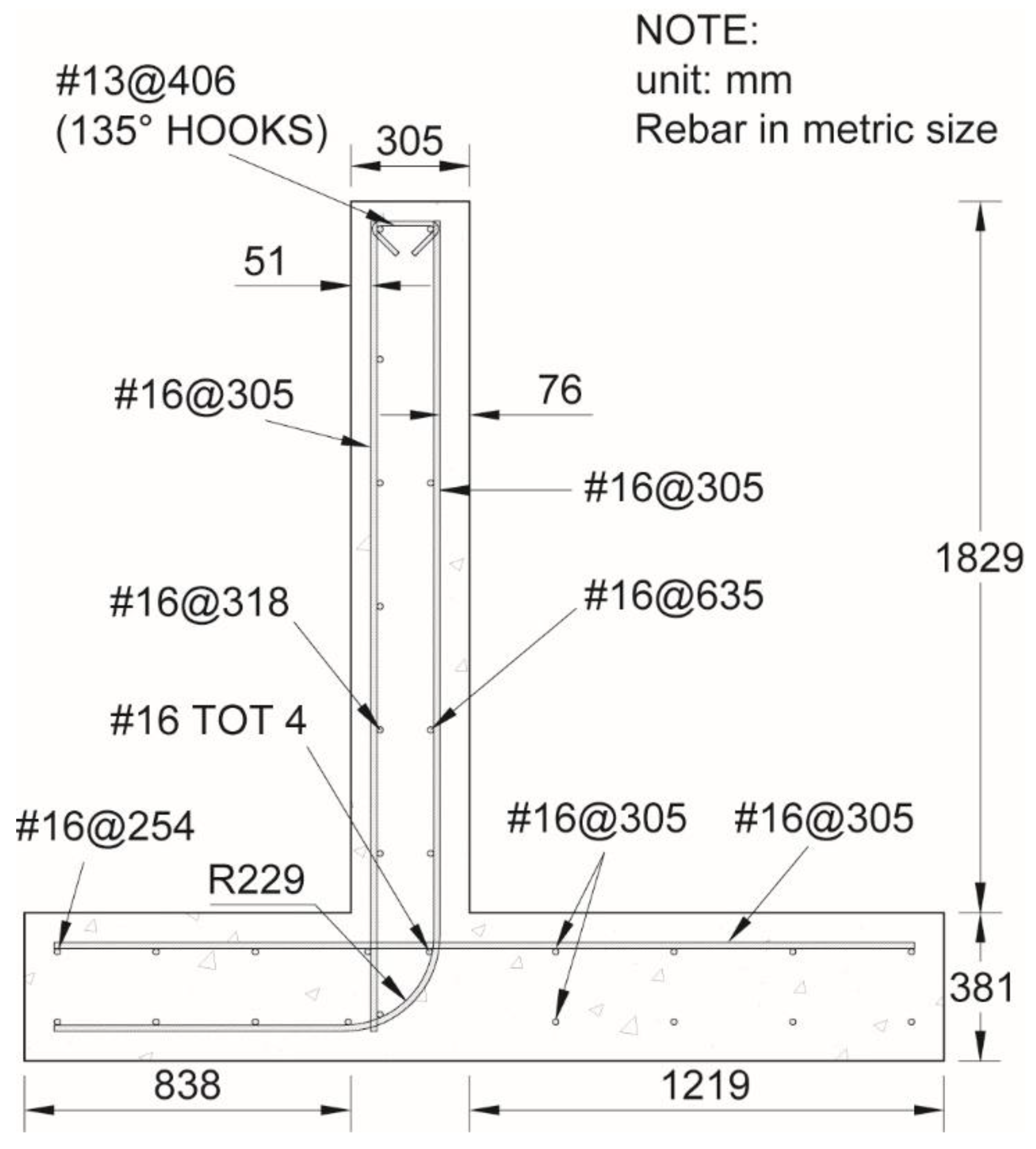
Figure 2 shows the retaining wall in the shake table test. The wall is a semi-gravity cantilever wall typically designed and constructed in California (Type 1SW) [36]. Among other types of retaining walls, this type was chosen to fit in the soil box. The dimensions of the retaining wall are 2.36 m in width, 2.69 m in length, and 2.21 m in height including the thickness of the footing.
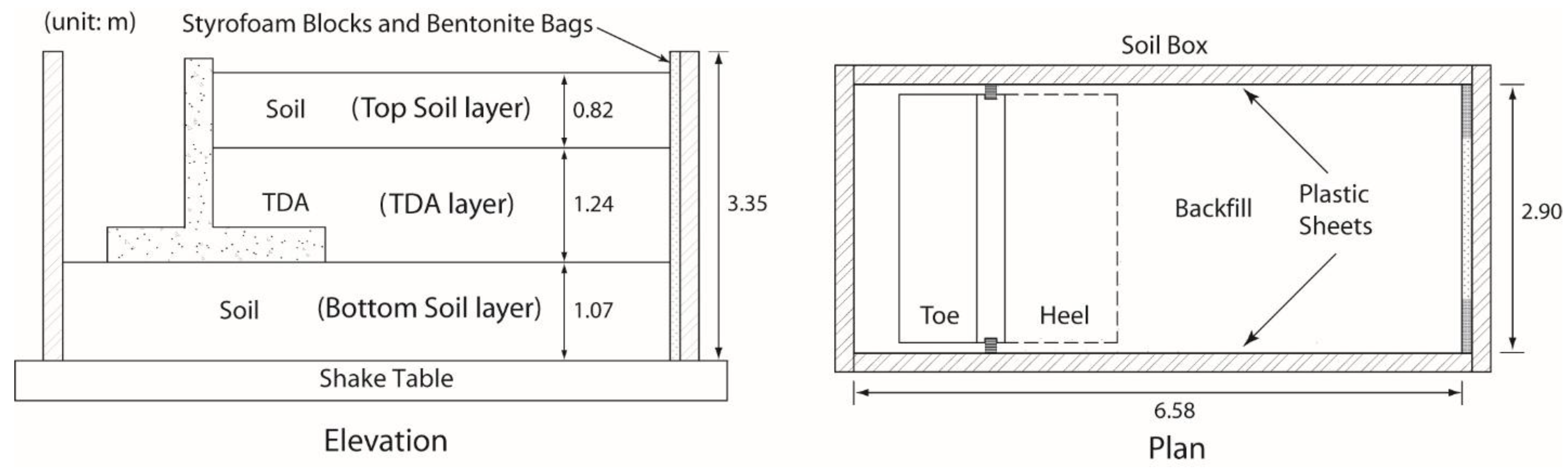
The elevation view and plan view of the shake table test setup are shown in Figure 3. In the backfill, the thickness of the Type B TDA layer was 1.24 m, and the thickness of the top soil layer was 0.82 m after compaction of the layers. In construction practice, the top soil layer is required to provide a solid riding surface of road. The retaining wall was prefabricated and moved into the soil box after the bottom soil layer was finished. At the far end of the backfill, Styrofoam blocks and bentonite bags were installed between the backfill and the soil box to minimize rebounding forces. Plastic sheets were inserted between each side of the backfill and the soil box to reduce friction. The TDA layer was wrapped with geotextile following ASTM D 6270 [2]. The soil box was anchored onto the shake table. Displacement, acceleration, and pressure of the retaining wall and backfill under earthquake excitations were measured throughout the shake table test.
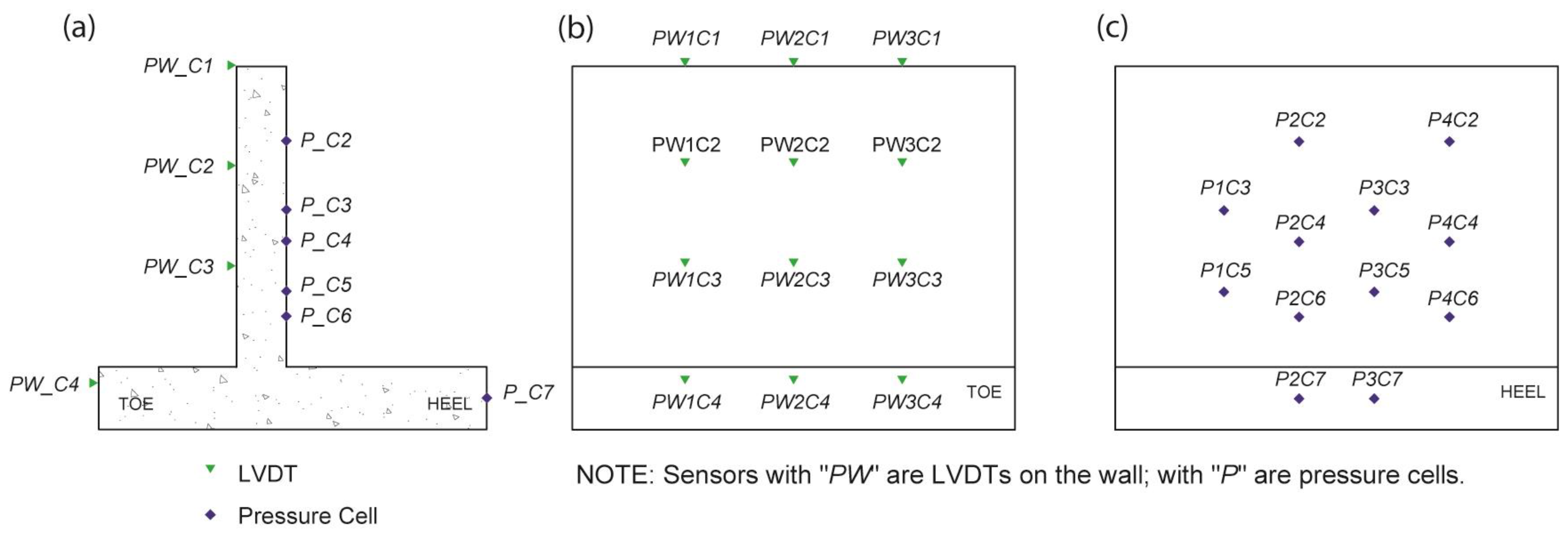
Figure 4 illustrates the location of sensors installed on the retaining wall. Note that more sensors were installed on the wall and in the backfill during the test, but only the ones relevant to this study are shown in the figure. The lateral displacement of the wall was measured by 12 Linear Variable Displacement Transducers (LVDTs) (Celesco, Toronto, ON, Canada). They were arranged in a way to produce three displacement readings at four different heights as shown in Figure 4a,b (PW_C1, PW_C2, PW_C3, PW_C4). Static and dynamic pressure between the retaining wall and the backfill were measured by 12 circular pressure cells designated by symbol P in Figure 4a,c. The diameter of the pressure cells was 229 mm, and they were arranged to produce two readings at six different heights of the wall.

2.2. Material Properties

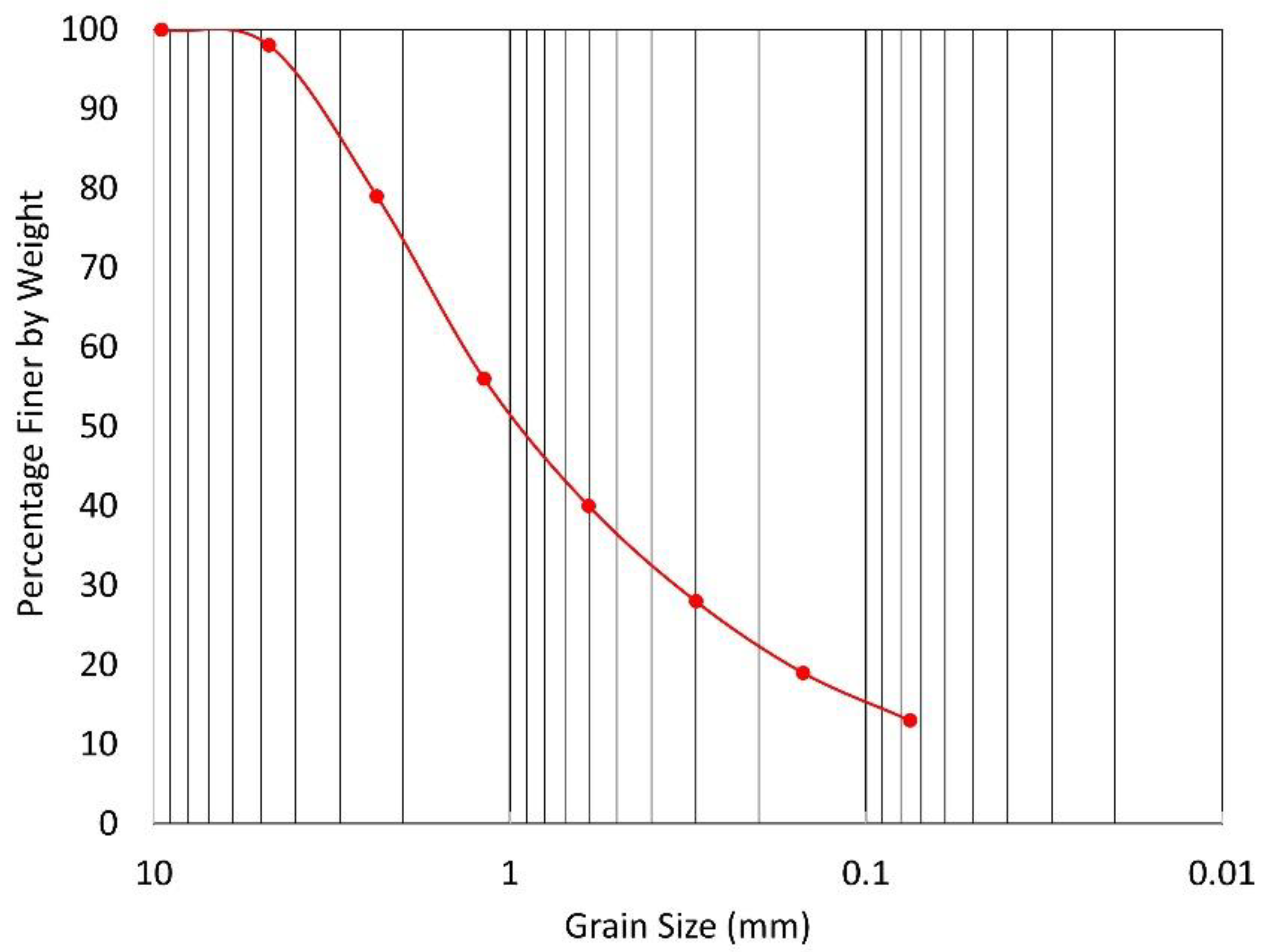
The soil in the bottom soil layer and the top soil layer was manufactured sand classified as silty sand (SM). Figure 5 shows the gradation curve from sieve analysis.
The soil was compacted to make its relative compaction more than 95 percent of the maximum wet density, which was 2239 kg/m3. From nuclear gage measurement, the wet density of the soil was 2199 kg/m3 and 2166 kg/m3 for the bottom soil layer and the top soil layer, respectively [37]. For an elastic-plastic model of soil, the Mohr-Coulomb failure criterion was adopted. During the direct shear tests of the soil, the friction angle ϕ = 48° and the cohesion intercept of c = 23.94 kPa were measured [37]. For Poisson’s ratio, a value of 0.3 was used. The non-associated flow rule was applied with a dilation angle of Ψ = 0.1°. The elastic modulus of the soil was obtained from the triaxial test results of a similar manufactured sand used in the shake table test with conventional soil backfill [29]. The elastic modulus was 28,698 kPa, the secant stiffness to a strain of 1.35%. The parameters for the soil material model are summarized in Table 1.
The material properties of TDA are also summarized in Table 1. The measured density after compaction was 741 kg/m3, and the Poisson’s ratio was 0.28 [3]. The density of large-size TDA, such as Type B TDA, after field compaction is in the range of 657–769 kg/m3, which is usually greater than those after laboratory compaction [3]. The elastic modulus (E) was calculated based on the Poisson’s ratio and a measured shear modulus (G) [6], i.e., E = G(1 + ν) = 210(1 + 0.28) = 538 kPa. The shear modulus was taken for the case where the vertical stress was 19.3 kPa and the cyclic shear strain amplitude was 5%, which was close to the shear strain range observed in the shake table test [37]. The friction angle and the cohesion intercept of TDA for the Mohr-Coulomb failure criterion were determined based on the direct shear test [3]. A linear regression analysis of the direct shear test results of the same TDA material and other large-size TDA produced ϕ = 22° and c = 13.3 kPa. It should be mentioned that the failure envelope from the regression analysis represented mobilized strength at serviceability condition rather than failure condition of the TDA material [3]. This failure envelope was adopted because the deformation of TDA during the shake table test was within the mobilized strength range. The non-associated flow rule was used with a dilation angle of Ψ = 4° estimated from the direct shear tests [6] for the case where the initial normal stress was around 24 kPa. The elasto-perfectly-plastic relationship was used for both soil and TDA materials after failure.
Table 2 shows material properties of retaining wall concrete and geotextile. The concrete was a normal weight concrete with a density of 2403 kg/m3, and the 28-day compressive strength was 31 MPa. The estimated elastic modulus was 26.5 GPa. The geotextile (Contech, West Chester, OH, USA) had a thickness of 2 mm (80 mil). The density and the elastic modulus were from the manufacturer’s specification. The Poisson’s ratio was set to zero not to allow thickness change as it deformed. It was assumed that the concrete and the geotextile behaved elastically. This assumption was reasonable since no crack was found in the retaining wall during a visual inspection after the shake table test.

2.3. Finite Element Modeling

The nonlinear time-history analysis was conducted with the explicit dynamics procedure in ABAQUS 6.14 [38]. This software allows various elastic-plastic material models as well as rigid body motion with interface models whose interaction can be defined by interaction properties. As for the shake table test with conventional soil backfill, the comparison between ABAQUS results and measured data showed a reasonably good match.
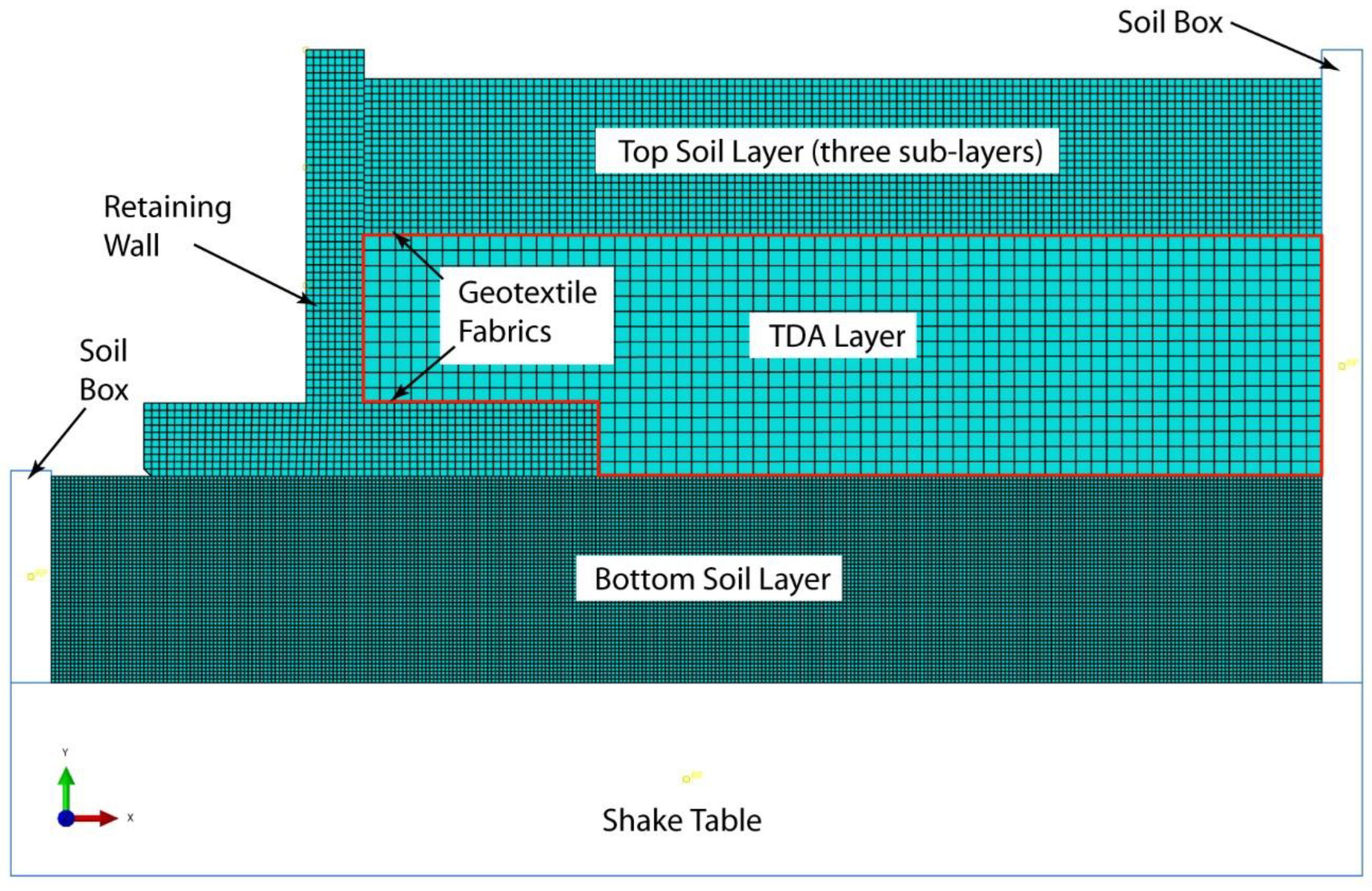
Figure 6 shows the FEA mesh used in the analysis. The same geometry in Figure 3 was used to create the 2-dimensional plane strain FEA model. The 4-node bilinear plane strain quadrilateral elements (CPE4R) with reduced integration and hourglass control were selected to model the soil, TDA, and concrete retaining wall. The construction sequence was simulated by consecutively applying the weight of each part from the bottom soil layer to the retaining wall and the backfill. The top soil layer was built with three lifts each of which was approximately 0.3 m thick. For the geotextile, 2-D truss elements (T2D2) were used with a cross-sectional area of 0.002 m2.
From a convergence test, the mesh size was determined as 40 mm for the top soil layer, 80 mm for the TDA layer, 20 mm for the bottom soil layer, 40 mm for the wall, and 40 mm for geotextile. Finer mesh was required in the bottom soil layer since the soil experienced localized deformation due to friction as well as soil plasticity at the interface with the wall footing. Rigid body elements were used for the shake table and the soil box walls. Displacement constraints were enforced to let the horizontal and vertical displacements of the three rigid bodies be the same. When an earthquake excitation was applied to the shake table, both the shake table and the soil box delivered the shake to the retaining system.
During the shake table test, three earthquake strong motions, Northridge, Kocaeli, and Takatori (Kobe), with increasing intensities (50–200%) were used. Earthquake strong motion records were downloaded from the PEER Strong Motion Database [39]. The Peak Ground Acceleration (PGA) of the Northridge and Takatori earthquakes was 0.62 g and 0.61 g, respectively. The PGA of the Kocaeli earthquake was 0.35 g. Agusti and Sitar [40] showed that typical retaining walls designed for a static factor of safety of 1.5 had enough strength to resist ground accelerations up to 0.4 g. In this study, the Northridge and Takatori earthquakes with intensities of 50% (PGA: 0.31 g), 75% (PGA: 0.46–0.47 g) and 100% (PGA: 0.61–6.62 g) were used in the FEA. Under these events, the retaining structure showed significant dynamic motion during the test. The Kocaeli events were not used in the analysis because the PGA was relatively small to induce significant dynamic motion.
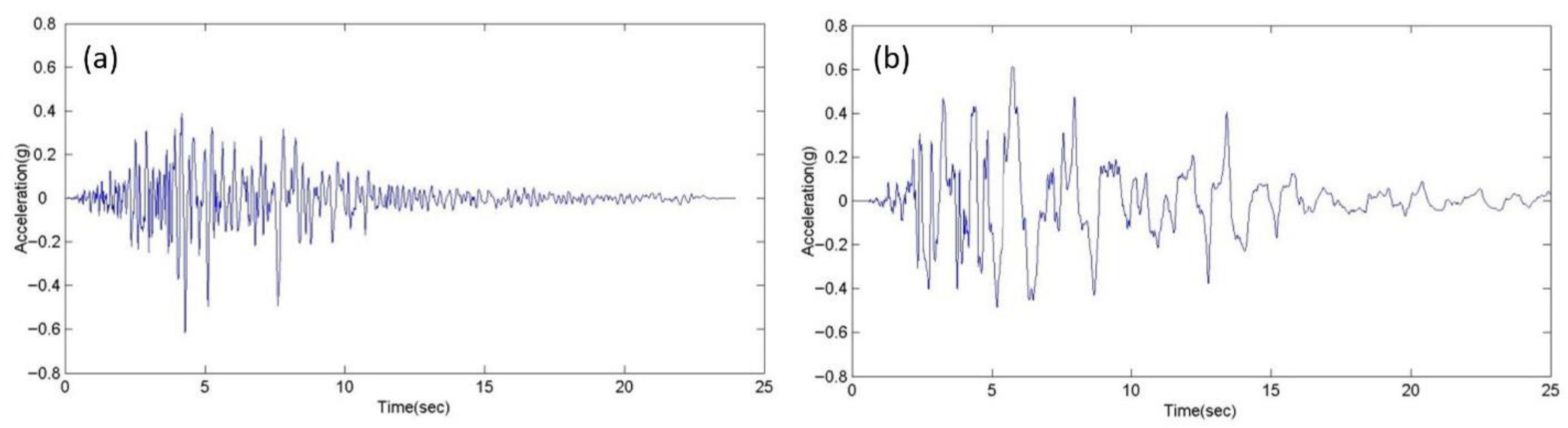
After the self-weight of each part was sequentially applied, a 50% intensity of the Northridge earthquake (N50), a 75% intensity of the Northridge earthquake (N75), and a 75% intensity of the Takatori earthquake (T75), N100, and T100 were consecutively applied. Figure 7 shows the 100% intensity acceleration time histories of the two events.
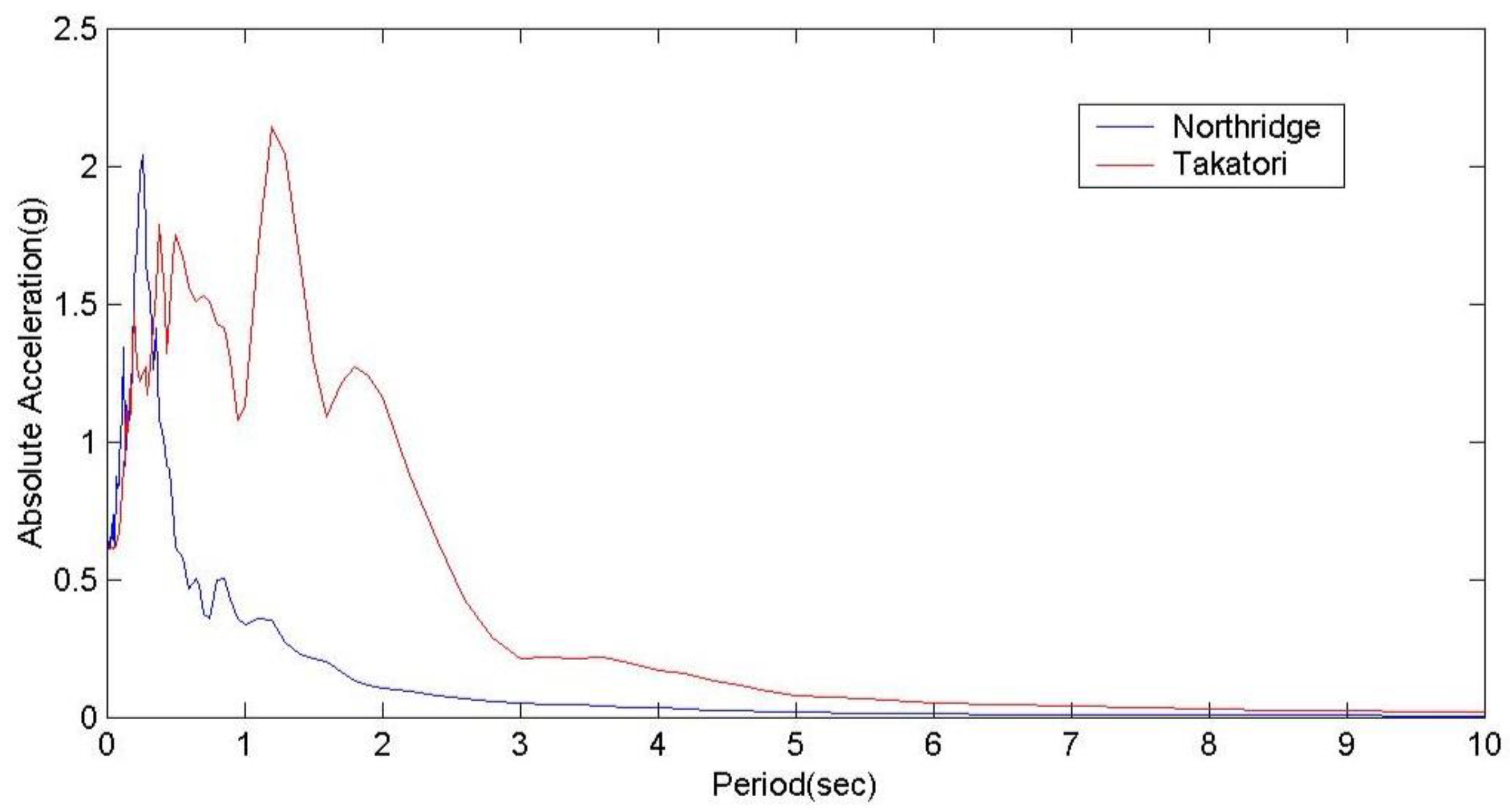
In Figure 8, the absolute acceleration response spectra of the two earthquakes are compared. The Northridge earthquake showed high peaks in the range of 0.2–0.3 s, and the Takatori earthquake had several peaks in the range of 0.3–1.6 s. Due to this difference, responses from the two earthquakes showed different characteristics.
At every interface between two parts (i.e., the bottom soil layer, the TDA layer, three sub-layers in the top soil layer, the retaining wall, and the soil box), boundary interaction was modeled to define the mechanical behavior. Among various models for interface interaction, a combination of friction, viscous damping, and contact mechanism was implemented, and Table 3 summarizes the parameters used in the modeling. The friction coefficients between different materials were taken from the relevant literature [41,42] and experiment results [43]. It should be noted that different friction coefficients were used for different earthquakes at the soil–wall footing interface, i.e., μ = 0.60 tan(48°) for the Northridge earthquake and μ = 0.85 tan(48°) for the Takatori earthquake. In the response spectra in Figure 8, the two earthquakes have quite different frequency ranges for large accelerations, and the rate dependency of the friction coefficient was simplified by using different friction coefficients. For the viscous damping, a 5% critical damping ratio was uniformly applied.
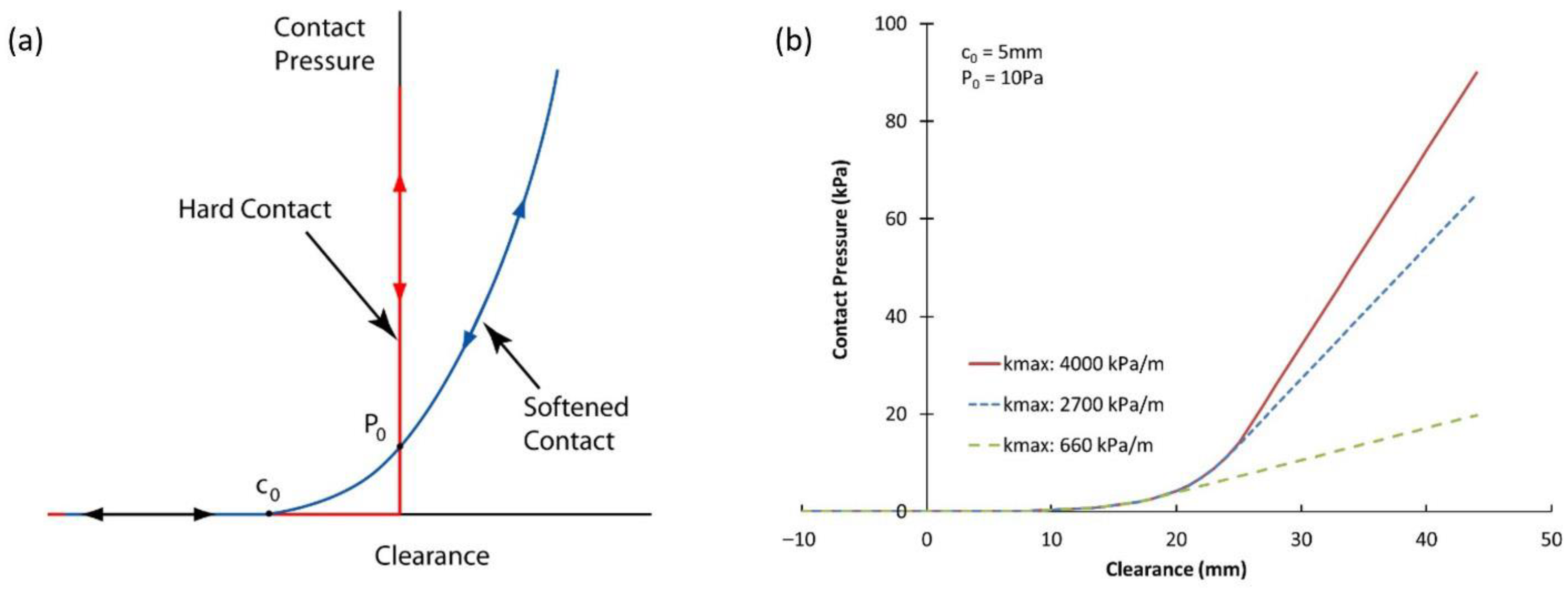
The retaining wall sliding and the impact pounding between the wall and the backfill required rigorous interface modeling to capture such behavior in FEA and to identify major parameters that control the wall movement. Specifically, at the two interfaces, the soil–wall footing and the soil–wall stem, the dynamic behavior was quite complicated because it included plastic deformations at contact, local cracking or crushing, fracturing of soil due to impact and friction [44]. Compared to the hard contact model, the softened contact model was more appropriate to simulate the overall change of interface condition. The difference between the hard and the softened contact models is schematically illustrated in Figure 9a.
The hard contact model does not allow any penetration at the interface, which introduces a sudden increase in contact pressure at both sides of the interface. Conversely, the softened contact model allows overclosure at the interface, and contact pressure gradually increases as the overclosure increases. The contact pressure of the softened model is [38]:
F δ = P 0 E X P ( 1 ) 1 δ c 0 + 1 E X P δ c 0 + 1 1
where δ is the clearance between two parts, c0 is an initial clearance, and P0 is the pressure when the clearance is zero as shown in Figure 9a. The kMAX is an asymptotic stiffness which is the slope (contact pressure/clearance) in Figure 9a,b as the clearance becomes large. The three parameters c0, P0, and kMAX determine the shape and amount of the contact pressure. Figure 9b shows the softened contact models at the soil–wall stem interface used in the analysis. These models allow an overclosure of 10 mm with negligible contact pressure, and the contact pressure substantially increases after an overclosure of 25 mm. The kMAX is 4000 kPa/m for the N75 event, 2700 kPa/m for the T75 event, and 660 kPa/m for the N100 and T100 events. Since the soil at the interface experienced deterioration as impact pounding repeated, the kMAX value was adjusted accordingly in order to consider subsequent softening in soil. The other two parameters (c0 and P0) were fixed.
At the soil–wall footing interface, the hard contact model was used for the N75, T75, and N100 events. However, the softened contact model was required for the T100 event due to significant soil deterioration before and during this event. In the softened contact model, c0 = 1 mm, P0 = 400 kPa, and kMAX = ∞ were used. Further discussion on the softened contact model is provided in Section 4.

3. Results

In the time-history analysis, consecutive earthquake events, N50, N75, T75, N100, and T100, were applied to the same FEA model as was executed during the shake table test. Therefore, plastic deformation in materials and gaps at interfaces from the prior shakes expanded when the next ones were applied. In this section, the displacement and dynamic pressure on the retaining wall from FEA were compared with measured data from the shake table test [28,37].

3.1. Wall Displacement

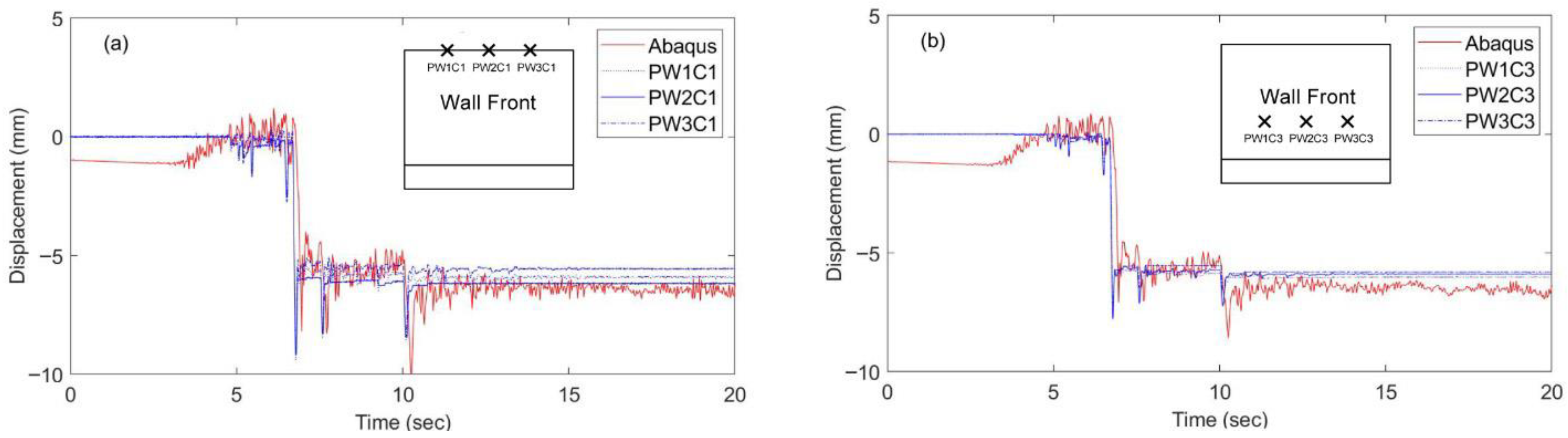
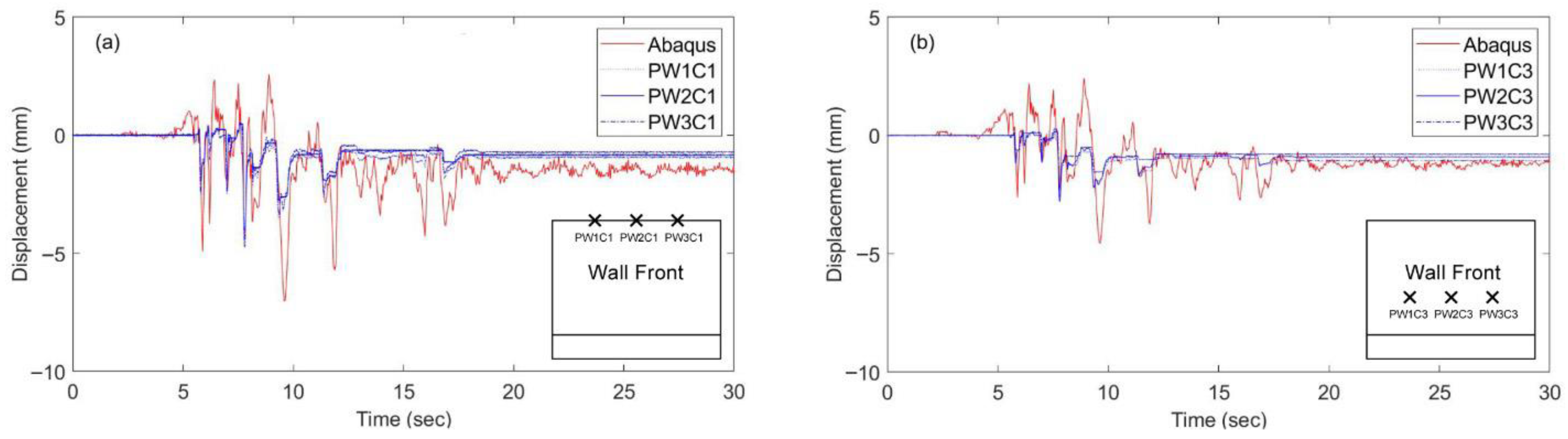
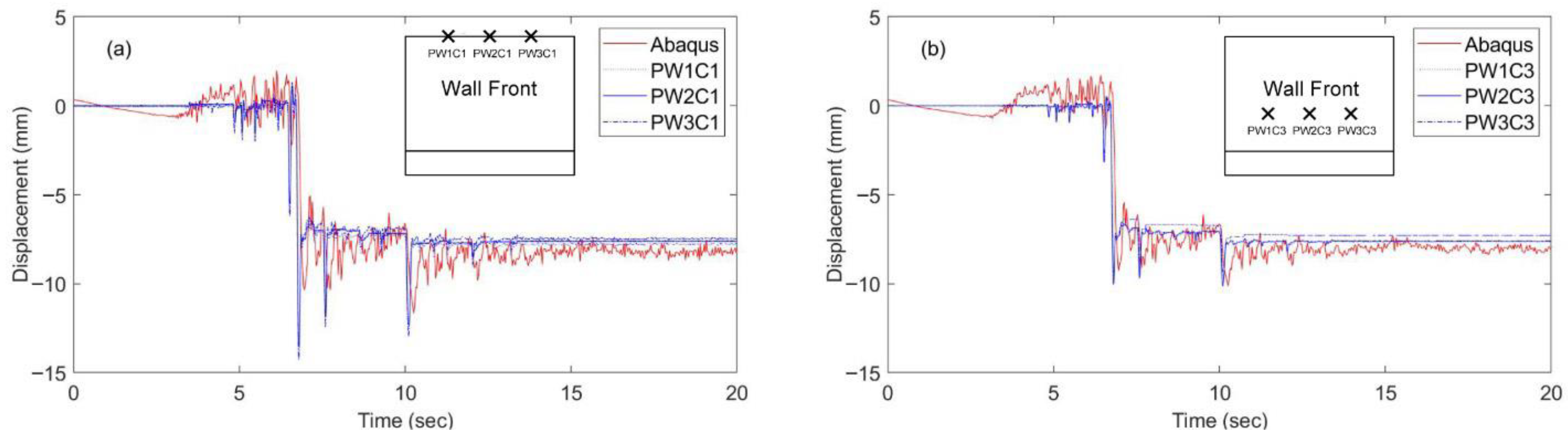
The overall accuracy of FEA can be known by comparing residual wall displacements after each event. The residual wall displacements in Table 4 are average values of the measurements and FEA results at the wall LVDT locations shown in Figure 4. The average was taken for the last 5 s; 15–20 s for the Northridge earthquake and 25–30 s for the Takatori earthquake. No significant difference was observed among the three measured displacements at the same height (e.g., between PW1C1, PW2C1, and PW3C1), and the average values from the three sensors are also provided in the table.
The variation, defined by a ratio of the difference between Average and ABAQUS values in the table to the ABAQUS value, is less than 10% except for the T75 event. The variation is 43% at the top and 23% at the bottom, but the differences are 0.63 mm and 0.27 mm, which are substantially small wall movements. Overall, the FEA was able to reproduce the wall displacements reasonably close to the measured displacements during the physical test.
In Figure 10, displacements at the top and the bottom of the retaining wall from the FEA are compared with measured displacements for the N75 event. Specifically, the amount of wall sliding and residual displacement from the FEA were close to the measured ones. Usually, the FEA results showed more vibrations than the measured displacements.
In Figure 11, the wall displacements from the FEA and the shake table test are compared for the T75 event. The measured residual displacement was 0.8 mm–0.9 mm, which was substantially smaller than 5.9 mm from the previous N75 event. Although the PGA of the two earthquakes was similar, the amounts of residual displacement from the two events were substantially different, which implied different frictional resistance of the bottom soil underneath the wall footing between the two earthquakes.
The retaining wall displacements from the FEA model and the shake table test for the N100 event are compared in Figure 12. The retaining wall slid and rotated more significantly. The wall sliding occurred twice at t = 6.90 s and t = 10.26 s, and the measured residual displacement was 7.5–7.6 mm. The wall rotation was estimated by dividing the difference between the top and bottom displacements by the distance between the two sensors (1200 mm). When the retaining wall slid at t = 6.90 s, the wall rotation was 0.16°. After the shake, there was no noticeable residual wall rotation.
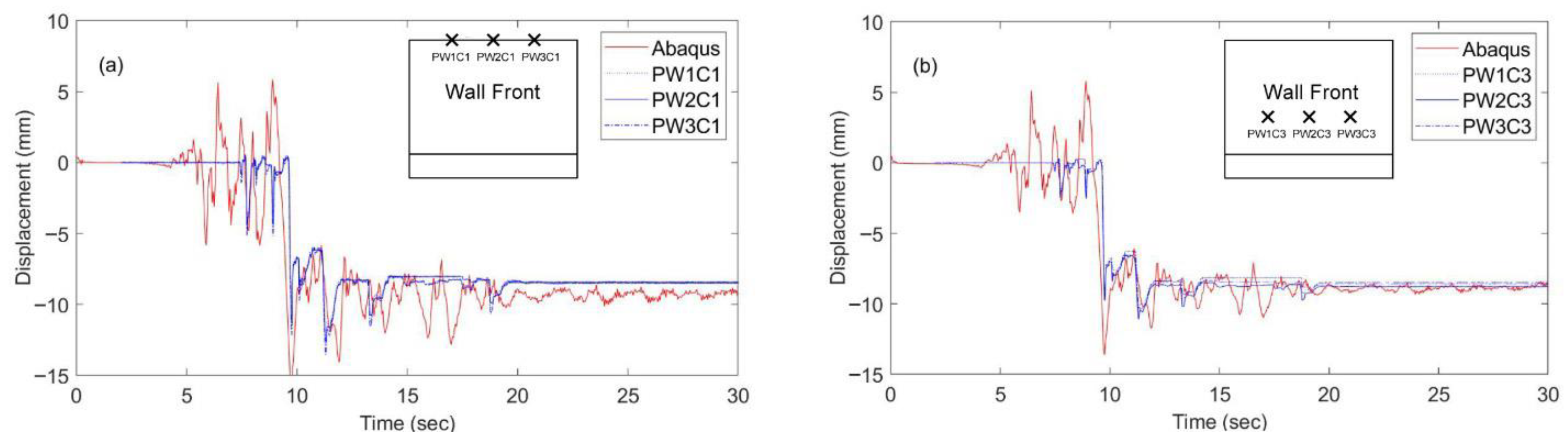
Figure 13 shows the wall displacements generated from the FEA model and measured from the shake table test for the T100 event. The measured residual displacement was 8.5 mm–8.6 mm, which was greater than those from the N100 event. On the contrary, the residual displacement from the T75 event was about 7 times smaller than those from the N75 event. It was assumed that soil deterioration between the wall footing and the soil underneath was the main cause of inducing the substantial increase of residual displacement in the T100 event. The soil deterioration was modeled with the softened contact model in the FEA.

3.2. Maximum Dynamic Pressure on the Wall

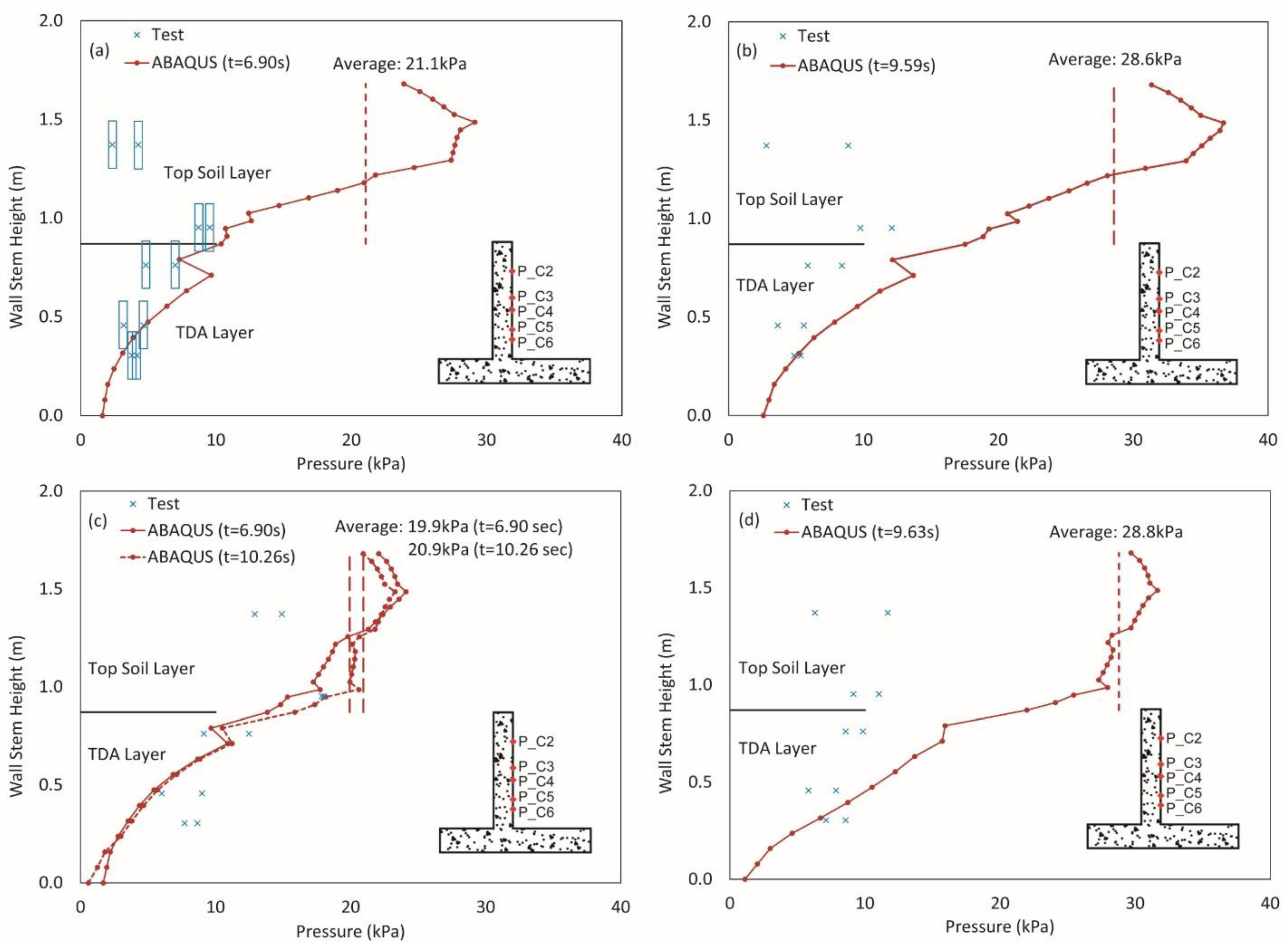
Figure 14 shows the maximum dynamic contact pressure between the wall stem and the backfill from the FEA and the shake table test. The lower part indicates the dynamic pressure exerted by the TDA layer, and the upper part corresponds to the dynamic pressure by the top soil layer. The red • marks on the red lines represent the dynamic pressure estimated at the nodes of the FEA model, and the blue × marks indicate the maximum measured pressure from the pressure cells installed on the wall at the location in Figure 4. The dynamic pressure from the FEA is an average value to match with the size and resolution of the pressure sensor. Blue rectangles around × marks in Figure 14a show the size of the pressure sensor. It should be mentioned that the dynamic pressure from the FEA was taken at the same instance, whereas the pressure from the test was the maximum pressure during the corresponding event.
Overall, the FEA results showed that dynamic pressure exerted by the top soil layer was greater than the measured pressure for all events. Also, the pressure from the top soil layer induced most of the wall sliding. The top two pressure sensors, P2C2 and P4C2, were close to the surface; therefore, the measured pressure from these two sensors was usually much lower than that from the analysis. The measured pressure values from P1C3 and P3C3 were close to the results from the FEA for N75, T75, and N100. For T100, the measured pressure from these sensors was smaller than the FEA result. This difference was unusual since the measured pressure from T100 was much smaller than the one from N100 although the two events had a similar PGA. Also, at the same sensors, the measured pressure from T100 was smaller than that from T75. It was speculated that these two sensors, P1C3 and P3C3, became insensitive due to the separation from the backfill after the N100 event.
The average pressure (the vertical dotted line in each figure) is calculated based on the nodal pressure values from the FEA result over the height of the top soil layer. From the FEA of N75, the dynamic pressure was the largest at t = 6.90 s in Figure 14a when the wall slid. The average pressure was 21.1 kPa. For N100, the wall slid at t = 6.90 s and t = 10.26 s, and the average dynamic pressure values were 19.9 kPa and 20.9 kPa in Figure 14c. Although the intensity of the shake increased, the amount of average dynamic pressure that induced the wall sliding was similar. The average pressure of 20–21 kPa can be taken as a threshold to induce wall sliding for the Northridge earthquake. For the Takatori earthquake, the threshold to induce wall sliding was approximately 29 kPa from Figure 14b,d.

4. Discussion on Interface Modeling

The measured displacement indicated that the wall movement from T75 was substantially smaller than that from N75 although the two events had similar PGA intensities. Furthermore, the measured pressure at P_C3 sensors from T75 in Figure 14b was greater than that from N75 in Figure 14a. The lesser wall movement under higher dynamic pressure suggested changes at the interface conditions. Based on FEA results of various interface models with different parameter combinations and different interaction mechanisms, it was concluded that the friction mechanism at the soil–wall footing interface was the simplest model to capture the wall movement. Although this friction mechanism required rate-dependent friction coefficients, a constant value was used for each earthquake event. The Northridge earthquake had peaks in the high-frequency range (Figure 8), and 60% of tan(48°) was used where 48° was the friction angle of the soil. The Takatori earthquake had peaks in the moderate-frequency range, and 85% of tan(48°) was used as a friction coefficient. The necessity of more sophisticated friction coefficient models was noticed, and better approaches to deal with rate dependency could be developed as more data become available.
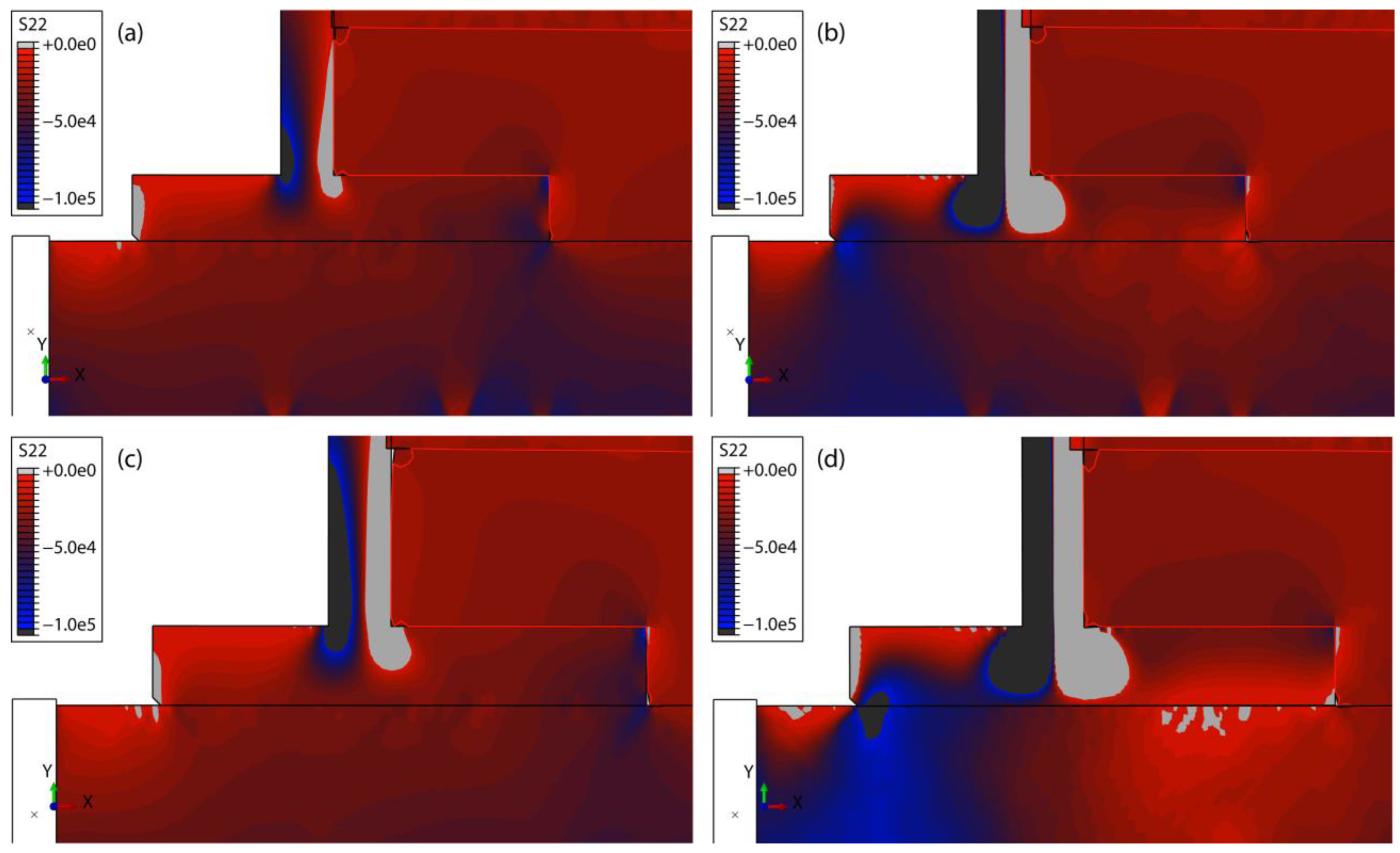
In addition, the friction coefficient models need to consider nonlinear dependence on the amount of normal force at the interface. In Figure 15, the normal stresses in the vertical direction are depicted from FEA results. The stress changes from 0 kPa to −100 kPa with gray color for tension and black color for compression greater than −100 kPa. Before the N100 and T100 events begin in Figure 15a,c, the stress distribution is typical showing larger stresses developed at the heel side of the footing than at the toe side due to the weight of the backfill. When the maximum dynamic pressure on the wall occurs in Figure 15b,d, the stresses at the toe side become significantly larger from wall rotation and wall bending. Between N100 and T100, the area experiencing such large vertical stress changed, and the amounts of stress are much different. For example, some areas at the heel side show no compression in Figure 15d.
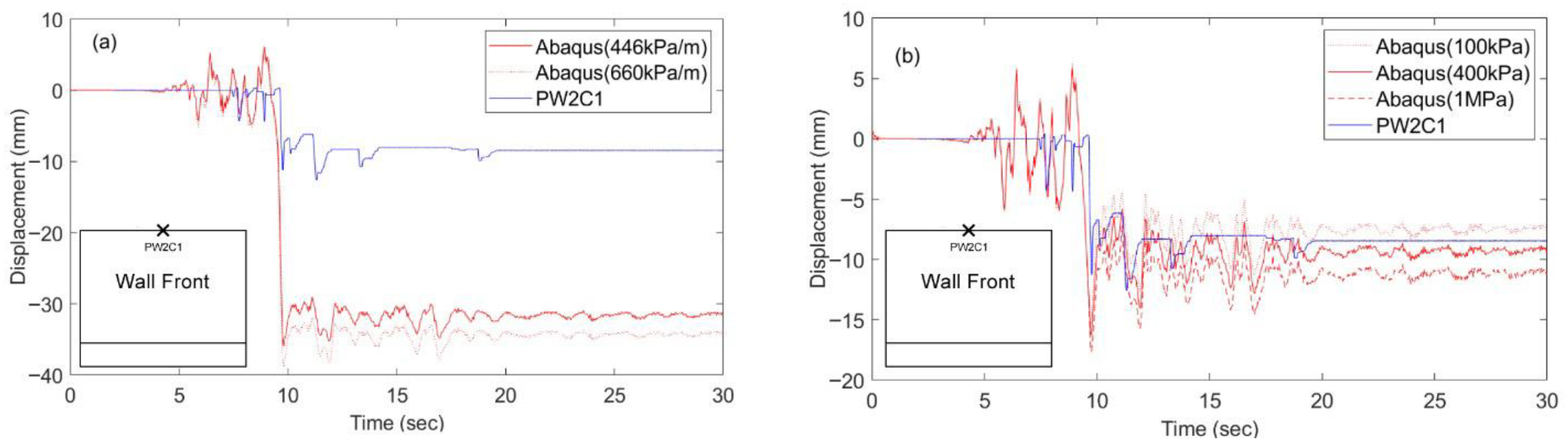
At the soil–wall stem interface, the softened contact model was implemented. Without the softened contact model, the soil behaves as a hard material whose impact on the wall stem increases contact pressure unreasonably. The asymptotic stiffness gradually changed from 4000 kPa/m for N75 to 2700 kPa/m for T75, and to 660 kPa/m for N100 and T100. For T100, the softened contact model at this interface was not enough to generate a reasonably matching wall displacement, as shown in Figure 16a. An additional softened contact model was implemented at the soil–wall footing interface only for T100 based on the idea that the soil beneath the footing experienced substantial deterioration as the wall slid. Figure 16b compares wall displacements from three softened contact models with the measured displacement. In the three models, the initial contact distance c0 = 1 mm, and the asymptotic stiffness kMAX = . The pressure at the zero clearance (P0) was different in the three models, and the model with P0 = 400 kPa produced the wall displacement close to the measured displacement.
The FEA in the present study is nonlinear time-history analysis, where the wall movement, impact, material plasticity, and combination of them developed severe nonlinearity. Therefore, the uniqueness of the solution cannot be known, and the presented solution is one of the feasible solutions that are close to the measurements. Although the accuracy of a solution is hard to be determined without measured data, the present study showed the major mechanisms to be understood in order to acquire accurate dynamic motion of retaining walls with TDA backfill.

5. Conclusions

The present paper discussed FEA modeling and analysis results of a retaining wall with TDA backfill under earthquakes. In the FEA model, the primary target was to reproduce the wall sliding motion caused by the raft effect that was observed during the shake table test. The material plasticity as well as the interface modeling were implemented to simulate expanding soil deterioration and changing contact conditions. The following are the conclusions of the study.
  • The dynamic motion of the retaining wall generated by the FEA model was reasonably close to the measured wall displacement from the full-scale shake table test conducted by the authors. The variation ratio of wall residual displacement between the FEA results and the measurements is less than 10% for N75, N100, and T100. Although the variation ratio is substantial for T75, the actual variation is within 0.63 mm. The time and magnitude of wall sliding matched well between the FEA results and the measurement. The friction mechanism between the wall footing and soil was a primary factor to reproduce comparable sliding motions of the retaining wall under earthquakes.
  • The softened contact model was implemented between the wall stem and the backfill soil to represent soil deterioration at the contact surface that was caused by continuous impacts. An additional softened contact model was used between the wall footing and soil underneath for T100, the last earthquake event. It was postulated that the soil experienced substantial deterioration during previous events.
  • The dynamic pressure on the retaining wall by the backfill was mainly caused by impact due to the raft effect. The hard top soil layer riding on the soft TDA layer continuously hit the wall. The dynamic pressure from the FEA was greater than the measured pressure at the top soil layer. However, the FEA results were more consistent with the dynamic motion of the wall, which can provide better estimation of dynamic pressure.
  • The shake table test and the FEA results indicated that the cantilever type retaining walls experienced large wall sliding since the lightweight TDA reduced the frictional resistance between the footing and soil underneath. In case the wall sliding is accommodated, the TDA backfill can reduce structural damages on the retaining wall. Still, the TDA backfill can be used with other types of retaining walls including gravity walls to make better use of its low unit weight.
The shake table test provided a rare opportunity to collect data from a full-scale retaining wall, although the wall size was relatively small. In practice, most of the retaining walls are bigger than the one tested, and accurate modeling tools are necessary to produce realistic dynamic behavior of field-scale retaining walls with TDA backfill. It was expected that the FEA model and modeling technique in the present study can be used to build such tools.

Author Contributions

Formal analysis, I.-S.A.; Writing—original draft, I.-S.A. and L.C.; Writing—review & editing, I.-S.A. and L.C.; Supervision, L.C.; Project administration, L.C.; Funding acquisition, L.C. All authors have read and agreed to the published version of the manuscript.

Funding

This research was funded by Department of Resource Recycling and Recovery in California, grant number No. 59A0781.

Data Availability Statement

The data presented in this study are available on request from the corresponding author. (The shake table test data have not been curated for users to acquire enough information to use without the authors’ explanation. Also, the FEA model files need conversion from the used software version to newer versions, which requires the authors’ clarification).

Acknowledgments

This work was supported by the California Department of Resource Recycling and Recovery (CalRecycle) in cooperation with the California Department of Transportation (Caltrans). The opinions and conclusions expressed in this paper are those of the authors. They do not necessarily represent those of the sponsors.

Conflicts of Interest

The authors declare no conflict of interest.

References

  1. USTMA. 2023 End-of-Life Tire Management Report; U.S. Tire Manufacturers Association: Washington, DC, USA, 2024. [Google Scholar]
  2. ASTM Standard D6270; Standard Practice for Use of Scrap Tires in Civil Engineering Applications. ASTM International: West Conshohocken, PA, USA, 2025.
  3. Ahn, I.-S.; Cheng, L.; Fox, P.; Wright, J.; Patenaude, S.; Fujii, B. Material properties of large-size Tire Derived Aggregate for civil engineering applications. J. Mater. Civ. Eng. 2015, 27, 04014258. [Google Scholar] [CrossRef]
  4. Fox, P.J.; Thielmann, S.S.; Sanders, M.J.; Latham, C.; Ghaaowd, I.; McCartney, J.S. Large-scale combination direct shear/simple shear device for Tire-Derived Aggregate. Geotech. Test. J. 2018, 41, 340–353. [Google Scholar] [CrossRef]
  5. McCartney, J.S.; Ghaaowd, I.; Fox, P.J.; Sanders, M.J.; Thielmann, S.S.; Sander, A.C. Shearing behavior of Tire-Derived Aggregate with large particle size. II: Cyclic simple shear. J. Geotech. Geoenviron. Eng. 2017, 143, 04017079. [Google Scholar] [CrossRef]
  6. Ghaaowd, I.; McCartney, J.S.; Thielmann, S.S.; Sanders, M.J.; Fox, P.J. Shearing behavior of Tire-Derived Aggregate with large particle size. I: Internal and concrete interface direct shear. J. Geotech. Geoenviron. Eng. 2017, 143, 04017078. [Google Scholar] [CrossRef]
  7. Elashram, M.; Gheni, A.; ElGawady, M. The Effect of Rubber Fills on the Performance of Infrastructure; Final Report; Missouri University of Science and Technology: Rolla, MO, USA; Missouri Department of Transportation: Jefferson City, MO, USA, 2024. [Google Scholar]
  8. Humphrey, D.N. Tire derived aggregate as lightweight fill for embankments and retaining walls. In Scrap Tire Derived Goematerials—Opportunities and Challenges; Hazarika, H., Yasuhara, K., Eds.; Taylor & Francis Group: London, UK, 2008. [Google Scholar]
  9. Meles, D.; Chan, D.; Yi, Y.; Bayat, A. Finite-element analysis of highway embankment made from Tire-Derived Aggregate. J. Mater. Civ. Eng. 2016, 28, 04015100. [Google Scholar] [CrossRef]
  10. Hashemian, L.; Bayat, A. Three years’ monitoring of IRRF instrumented test road. In The Roles of Accelerated Pavement Testing in Pavement Sustainability; Aguiar-Moya, J.P., Vargas-Nordcbeck, A., Leiva-Villacorta, F., Loría-Salazar, L.G., Eds.; Springer: Cham, Switzerland, 2016. [Google Scholar]
  11. Esmaeili, M.; Aela, P.; Hosseini, A. Experimental assessment of cyclic behavior of sand-fouled ballast mixed with tire derived aggregates. Soil Dyn. Earthq. Eng. 2017, 98, 1–11. [Google Scholar] [CrossRef]
  12. Fathali, M.; Nejad, F.M.; Esmaeili, M. Influence of Tire-Derived Aggregates on the properties of railway ballast material. J. Mater. Civ. Eng. 2017, 29, 04016177. [Google Scholar] [CrossRef]
  13. Fernández, P.M.; Signes, C.H.; Sanchís, I.V.; Mira, D.P.; Franco, R.I. Real scale evaluation of vibration mitigation of sub-ballast layers with added tyre-derived aggregate. Constr. Build. Mater. 2018, 169, 335–346. [Google Scholar] [CrossRef]
  14. Mitoulis, S.A.; Palaiochorinou, A.; Georgiadis, I.; Argyroudis, S. Extending the application of integral frame abutment bridges in earthquake-prone areas by using novel isolators of recycled materials. Earthq. Eng. Struct. Dyn. 2016, 45, 2283–2301. [Google Scholar] [CrossRef]
  15. Abdullah, A.; Hazarika, H. Improvement of shallow foundation using non-liquefiable recycle materials. Jpn. Geotech. Soc. Spec. Publ. 2016, 2, 1863–1867. [Google Scholar] [CrossRef][Green Version]
  16. Gromysz, K.; Kowalska, M. Reduction of vibrations applied on structures—Results of chamber tests with the use of tire derived aggregate. In Proceedings of the International Conference on Analytical Models and New Concepts in Concrete and Masonry Structures AMCM’2017, Gliwice, Poland, 5–7 June 2017; pp. 305–312. [Google Scholar]
  17. Meguid, M.A.; Youssef, T.A. Experimental investigation of the earth pressure distribution on buried pipes backfilled with tire-derived aggregate. Transp. Geotech. 2018, 14, 117–125. [Google Scholar] [CrossRef]
  18. Alzabeebee, S.; Alshibany, S.M.; Keawsawasvong, S.; Forcellini, D. The efficiency of the benefits of Tire-Derived Aggregate backfill for buried concrete pipes beneath paved and unpaved roads. Infrastructures 2023, 8, 107. [Google Scholar] [CrossRef]
  19. Rodríguez, L.M.; Arroyo, M.; Cano, M.M. Use of tire-derived aggregate in tunnel cut-and-cover. Can. Geotech. J. 2018, 55, 968–978. [Google Scholar] [CrossRef]
  20. Shrestha, S.; Ravichandran, N. Performance of retaining wall backfilled with tire aggregate under static and dynamic loading conditions: Conventional designs and finite element simulations. Int. J. Geotech. Eng. 2021, 15, 753–759. [Google Scholar] [CrossRef]
  21. McCartney, J.S. Mechanically Stabilized Tire Derived Aggregate (MSTDA) retaining walls. In Proceedings of the 12th International Conference on Geosynthetics (12ICG), Roma, Italy, 17–21 September 2023. [Google Scholar]
  22. Park, J.K.; DeNooyer, I.G.; Wahl, J.H. State of knowledge on the effects of Tire-Derived Aggregate (TDA) used in civil engineering projects on the surrounding aquatic environment. Sustainability 2023, 15, 15141. [Google Scholar] [CrossRef]
  23. Mayer, P.M.; Moran, K.D.; Miller, E.L.; Brander, S.M.; Harper, S.; Garcia-Jaramillo, M.; Carrasco-Navarro, V.; Ho, K.T.; Burgess, R.M.; Thornton Hampton, L.M.; et al. Where the rubber meets the road: Emerging environmental impacts of tire wear particles and their chemical cocktails. Sci. Total Environ. 2024, 927, 171153. [Google Scholar] [CrossRef] [PubMed]
  24. Reid, R.A.; Soupir, S.P.; Schaefer, V.R. Mitigation of void development under bridge approach slabs using rubber tire chips. In Recycled Materials in Geotechnical Applications; ASCE: Reston, VA, USA, 1998. [Google Scholar]
  25. Tatlisoz, N.; Edil, T.B.; Benson, C.H. Interaction between reinforcing geosynthetics and soil-tire chip mixtures. J. Geotech. Geoenviron. Eng. 1998, 124, 1109–1119. [Google Scholar] [CrossRef]
  26. Tweedie, J.J.; Humphrey, D.N.; Sandford, T.C. Tire shreds as lightweight retaining wall backfill: Active conditions. J. Geotech. Geoenviron. Eng. 1998, 124, 1061–1070. [Google Scholar] [CrossRef]
  27. Tweedie, J.J.; Humphrey, D.N.; Stanford, T.C. Full scale field trials of tire chips as lightweight retaining wall backfill, at-rest conditions. Transp. Res. Board 1998, 1619, 64–71. [Google Scholar] [CrossRef]
  28. Ahn, I.-S.; Cheng, L. Tire derived aggregate for retaining wall backfill under earthquake loading. Constr. Build. Mater. 2014, 57, 105–116. [Google Scholar] [CrossRef]
  29. Mock, E.; Cheng, L. Full-Scale Shake Table Test of Retaining Walls with and Without Sound Wall; Final Report No. CA10-2039; Department of Civil and Environmental Engineering, University of California: Davis, CA, USA; California Department of Transportation: Sacramento, CA, USA, 2011. [Google Scholar]
  30. Veletsos, A.S.; Younan, A.H. Dynamic response of cantilever retaining walls. J. Geotech. Geoenviron. Eng. 1997, 123, 161–172. [Google Scholar] [CrossRef]
  31. Psarropoulos, P.N.; Klonaris, G.; Gazetas, G. Seismic earth pressures on rigid and flexible retaining walls. Soil Dyn. Earthq. Eng. 2005, 25, 795–809. [Google Scholar] [CrossRef]
  32. Wu, G.; Finn, W.L. Seismic lateral pressures for design of rigid walls. Can. Geotech. J. 1999, 36, 509–522. [Google Scholar] [CrossRef]
  33. Gazetas, G.; Psarropoulos, P.N.; Anastasopoulos, I.; Gerolymos, N. Seismic behaviour of flexible retaining systems subjected to short-duration moderately strong excitation. Soil Dyn. Earthq. Eng. 2004, 24, 537–550. [Google Scholar] [CrossRef]
  34. Giarlelis, C.; Mylonakis, G. Interpretation of dynamic retaining wall model tests in light of elastic and plastic solutions. Soil Dyn. Earthq. Eng. 2011, 31, 16–24. [Google Scholar] [CrossRef]
  35. Cakir, T. Evaluation of the effect of earthquake frequency content on seismic behavior of cantilever retaining wall including soil–structure interaction. Soil Dyn. Earthq. Eng. 2013, 45, 96–111. [Google Scholar] [CrossRef]
  36. B3-1A; Revised Standard Plan RSP B3-1A in Retaining Wall Type 1 (Case 1). California Department of Transportation: Sacramento, CA, USA, 2012.
  37. Ahn, I.-S.; Cheng, L. Retaining Wall Shake-Table Test and Design Using Tire Derived Aggregates as Backfill; Final Report; Department of Civil and Environmental Engineering, University of California: Davis, CA, USA, 2014. [Google Scholar]
  38. SIMULIA. ABAQUS 6.14: Analysis User’s Guide; Dassult Systems; SIMULIA: Providence, RI, USA, 2014. [Google Scholar]
  39. PEER. PEER Ground Motion Database. 2010. Available online: https://ngawest2.berkeley.edu/ (accessed on 1 March 2012).
  40. Agusti, G.C.; Sitar, N. Seismic Earth Pressures on Retaining Structures with Cohesive Backfills; UCB GT 13-02; University of California: Berkeley, CA, USA; California Department of Transportation: Sacramento, CA, USA, 2013. [Google Scholar]
  41. AASHTO. AASHTO LRFD Bridge Design Specifications, 7th ed.; American Association of State Highway and Transportation Officials: Washington, DC, USA, 2014. [Google Scholar]
  42. NAVFAC. Foundations and Earth Structures (Design Manual 7.02); Naval Facilities Engineering Command: Washington, DC, USA, 1986. [Google Scholar]
  43. Xiao, M. Large-Scale Testing of Shear Strength of Tire Derived Aggregates (TDA) and Pullout Strength of Geosynthetics in TDA; California Department of Resources Recycling and Recovery: Sacramento, CA, USA, 2013. [Google Scholar]
  44. Jankowski, R. Non-linear viscoelastic modelling of earthquake-induced structural pounding. Earthq. Eng. Struct. Dyn. 2005, 34, 595–611. [Google Scholar] [CrossRef]
Figure 1. Tire-Derived Aggregate (TDA) used in the shake table test.
Constrmater 06 00018 g001
Figure 2. Retaining wall detail [36].
Constrmater 06 00018 g002
Figure 3. Full-scale shake table test configuration (adapted from [28]).
Constrmater 06 00018 g003
Figure 4. Major sensors on the retaining wall: (a) elevation view, (b) front view, (c) back view (adapted from [28]).
Constrmater 06 00018 g004
Figure 5. Gradation curve for soil.
Constrmater 06 00018 g005
Figure 6. FEA mesh for the analysis.
Constrmater 06 00018 g006
Figure 7. Acceleration time history of input earthquakes: (a) Northridge Earthquake, (b) Takatori Earthquake.
Constrmater 06 00018 g007
Figure 8. Absolute acceleration response spectra of input earthquakes with 5% damping (adapted from [28]).
Constrmater 06 00018 g008
Figure 9. Contact models: (a) schematic comparison between hard contact and softened contact, (b) softened contact model between the wall stem and the top soil layer.
Constrmater 06 00018 g009
Figure 10. Comparison of wall displacement for N75: (a) top of the wall, (b) bottom of the wall.
Constrmater 06 00018 g010
Figure 11. Comparison of wall displacement for T75: (a) top of the wall, (b) bottom of the wall.
Constrmater 06 00018 g011
Figure 12. Comparison of wall displacement for N100: (a) top of the wall, (b) bottom of the wall.
Constrmater 06 00018 g012
Figure 13. Comparison of wall displacement for T100: (a) top of the wall, (b) bottom of the wall.
Constrmater 06 00018 g013
Figure 14. Comparison of maximum dynamic pressure on the wall: (a) N75, (b) T75, (c) N100, (d) T100.
Constrmater 06 00018 g014
Figure 15. Normal stress in the vertical direction on the wall footing: (a) t = 0 s under N100, (b) t = 10.26 s under N100, (c) t = 0 s under T100, (d) t = 9.63 s under T100.
Constrmater 06 00018 g015
Figure 16. Displacement at the top of the wall for T100: (a) softened contact models at the soil–wall stem interface with hard contact at the soil–wall footing interface; (b) softened contact models at the soil–wall footing interface with softened contact model (kMAX = 660 kPa/m) at the soil–wall stem interface.
Constrmater 06 00018 g016
Table 1. Parameters for soil and TDA material model.
Material ParameterSoilTDA (Type B)
Density (kg/m3)2166 (Top Soil layer)741
2199 (Bottom Soil layer)
Elastic modulus (kPa)28,698538
Poisson’s ratio0.30.28
Friction angle (°)4822
Cohesion intercept (kPa)23.9413.3
Dilation angle (°)0.14
Table 2. Parameters for concrete and geotextile material model.
Material ParameterConcreteGeotextile
Density (kg/m3)2474133
Elastic modulus (MPa)26,5003
Poisson’s ratio0.20
Table 3. Interaction properties at the interfaces.
InterfaceFriction Coefficient (μ)Critical Viscous Damping RatioContact Model
Soil–Shake table (soil box)0.25NAHard
Soil–Wall footing0.67 (Northridge)5%Hard
0.94 (Takatori)5%Softened for T100
TDA–Soil0.5665%Hard
TDA–Wall0.5385%Hard
Soil–Wall stem0.455%Softened
Table 4. Average residual wall displacement for the last 5 s (mm).
LocationN75T75N100T100
TOPPW1C1−5.90−0.94−7.77−8.43
PW2C1−6.17−0.84−7.61−8.45
PW3C1−5.55−0.72−7.47−8.49
Average−5.88−0.83−7.62−8.45
ABAQUS−6.42−1.46−8.16−9.27
BottomPW1C3−6.01−1.06−7.59−8.59
PW2C3−5.88−0.90−7.62−8.78
PW3C3−5.80−0.79−7.30−8.49
Average−5.90−0.92−7.50−8.62
ABAQUS−6.51−1.19−7.97−8.83
Disclaimer/Publisher’s Note: The statements, opinions and data contained in all publications are solely those of the individual author(s) and contributor(s) and not of MDPI and/or the editor(s). MDPI and/or the editor(s) disclaim responsibility for any injury to people or property resulting from any ideas, methods, instructions or products referred to in the content.