


Abstract
Volumetric collapse, a critical phenomenon in clayey soils, is characterized by a sudden reduction in volume when subjected to wetting under a specific effective vertical stress. This behavior is primarily caused by the breakdown of cementing bonds between particles in the soil’s interstitial spaces. Our study, which examines the impact of unit weight and wetting on the collapse potential of clayey soils under various stress conditions, has practical implications for geotechnical engineers. We evaluated three-unit weights spanning from loose to compacted states and assessed collapse behavior at various stress levels. Even in the observations of the microstructure under a scanning electron microscope, which corroborated the images, the pathology is evident. The results demonstrate an explicit dependency between unit weight and collapsibility. Statistical analysis revealed that unit weight was the predominant factor influencing the outcomes, with the magnitude of applied stress being identified as a secondary yet notable determinant. Furthermore, the non-linear interactions, as elucidated through ANOVA and Tukey’s HSD tests, serve as instrumental methodologies in this analytical framework. The findings underscore a significant correlation between applied stress and collapse potential, underscoring the crucial role of soil densification in mitigating the risks associated with collapse phenomena.
1. Introduction
Collapsible soils undergo significant, rapid settlement under loading or changes in moisture. These soils are commonly found in arid and semi-arid regions. They are often linked to loess deposits, alluvial fans, and volcanic ash [1,2]. The formation of collapsible soils is rooted in the unique properties of soil particles and their interaction with water. In arid regions, such soils are typically dry and loosely packed [3,4].
When water seeps into the soil, it fills the spaces between particles. A thin water film forms around each particle, acting as a lubricant. This reduces the friction between particles, letting them settle and compact quickly. As water evaporates, particles settle and compress. This causes a significant drop in soil volume and a rise in soil density [5].
Collapsible soil properties vary by type and region. Typically, these soils are low in organic matter, high in clay content, and poorly structured. They are also often alkaline with a high pH [6]. One key challenge is their rapid settlement and compaction. This causes major problems for construction, especially with foundations and structures. Rap-id settlement leads to differential settlements, cracks, and other structural issues [7]. Changes in moisture further reduce soil strength and stability, often leading to landslides, erosion, and slope instability [8].
To reduce the risks of collapsible soil in construction, several strategies can be used. One approach is to identify the soil type and its properties early in the project design. The plan can then be adjusted as needed. This may include changing the site selection, altering the foundation design, or using stabilization methods such as chemical or mechanical treatment [1,9,10].
For example, Ref. [11] reviewed the use of nanomaterials, fibers, polymers, industrial waste, and microbes to stabilize collapsible soils. These materials can improve soil properties. Similarly, Ref. [5] explored bio-cementation as an eco-friendly treatment. However, most studies focus on altering soil composition rather than understanding the soil’s intrinsic properties and how they affect collapse behavior.
Mechanical technologies are also effective in mitigating collapse in loess soils. The study referenced in [12] analyzes the compressibility and shear strength of compacted loess on China’s south-central plateau, emphasizing their significance for civil engineering construction in this area. Additionally, the research investigates variations in the microstructure of compacted loess, including changes in pore types (macropores, mesopores, and micropores), distributions, orientations, and morphologies.
Ref. [13] presents an innovative soil compaction technology for unstable loess soils in Russia’s North Caucasus region. The primary components of this compaction method include controlled saturation of the collapsible soil layer (watering), the use of explosive charges placed in drilled holes for underground compaction, and the installation of compacted soil columns in the upper uncompacted layer through a drilling and backfilling process with local material. These three components constitute the triple consolidation method, which enhances the stability and mechanical properties of collapsible soils, particularly in areas with loess deposits.
Despite extensive research, the impact of specific weight on collapse behavior remains poorly understood. Many studies look at moisture, soil composition, and stabilization techniques [7,14]. Yet, the role of unit weight—closely tied to soil compaction—has not been systematically studied in the context of wetting load (flooding). This gap hinders our ability to predict and control collapse in engineering projects, especially in areas with collapsible soils. More investigation is urgently needed.
This study aims to fill a key gap in the current literature. It examines how changes in specific weight affect the collapse index and potential of collapsible soils. Using experimental tests and statistical analysis, this research explores the link between unit weight and collapse behavior. The findings show that a higher unit weight results in a significant decrease in the collapse index. These results provide valuable insights into collapsible soils under different conditions.
Background
By the 1950s, researchers began identifying the mechanism underlying the collapse of some soils. This phenomenon predominantly occurs in partially saturated soils. Many authors have examined the influence of soil structural bonds on this process. These bonds have a strong impact. As a result, the soil’s mineralogical and chemical composition, as well as its geological history, has become very important. This aspect significantly influences the material’s physical and mechanical properties [15,16]. The nature of structural bonds in cohesive soils depends on their origin [17].
Collapse can be defined as the rapid decrease in soil volume produced by increasing factors such as moisture content, the degree of saturation, porosity, pore pressure, and stress levels. Collapsible soils are unsaturated soils that undergo a substantial reduction in volume when the moisture content increases, with or without an accompanying increase in stress [18,19,20].
These soils exhibit heightened sensitivity to external changes. Extrinsic factors pre-dominantly influence their mechanical behavior. During collapse, three distinct soil structure types can be identified: stable, metastable, and unstable. In terms of porosimetry and gradation, collapsible soils are typically characterized by high porosity, and pathology breakthroughs can occur in both coarse-grained and fine-grained soils [21,22]. These materials exhibit volume changes upon saturation, with or without additional load, which pose challenges for geotechnical and engineering applications in construction and throughout their useful life.
Collapsible soils include colluvial, alluvial, residual, and volcanic ash deposits. Aeolian deposits are found in arid regions with low water tables. These are dunes and wind-blown sand deposits. Alluvial deposits form from mudflows caused by irregular rainfall [20]. Colluvium forms by gravity. This results in residual soils made of clay and silt particles, which are inherently unstable. These colluviums are unstable and have high void ratios due to the leaching of fine, soluble material. Other soil types also collapse in response to mechanical disturbance [23].
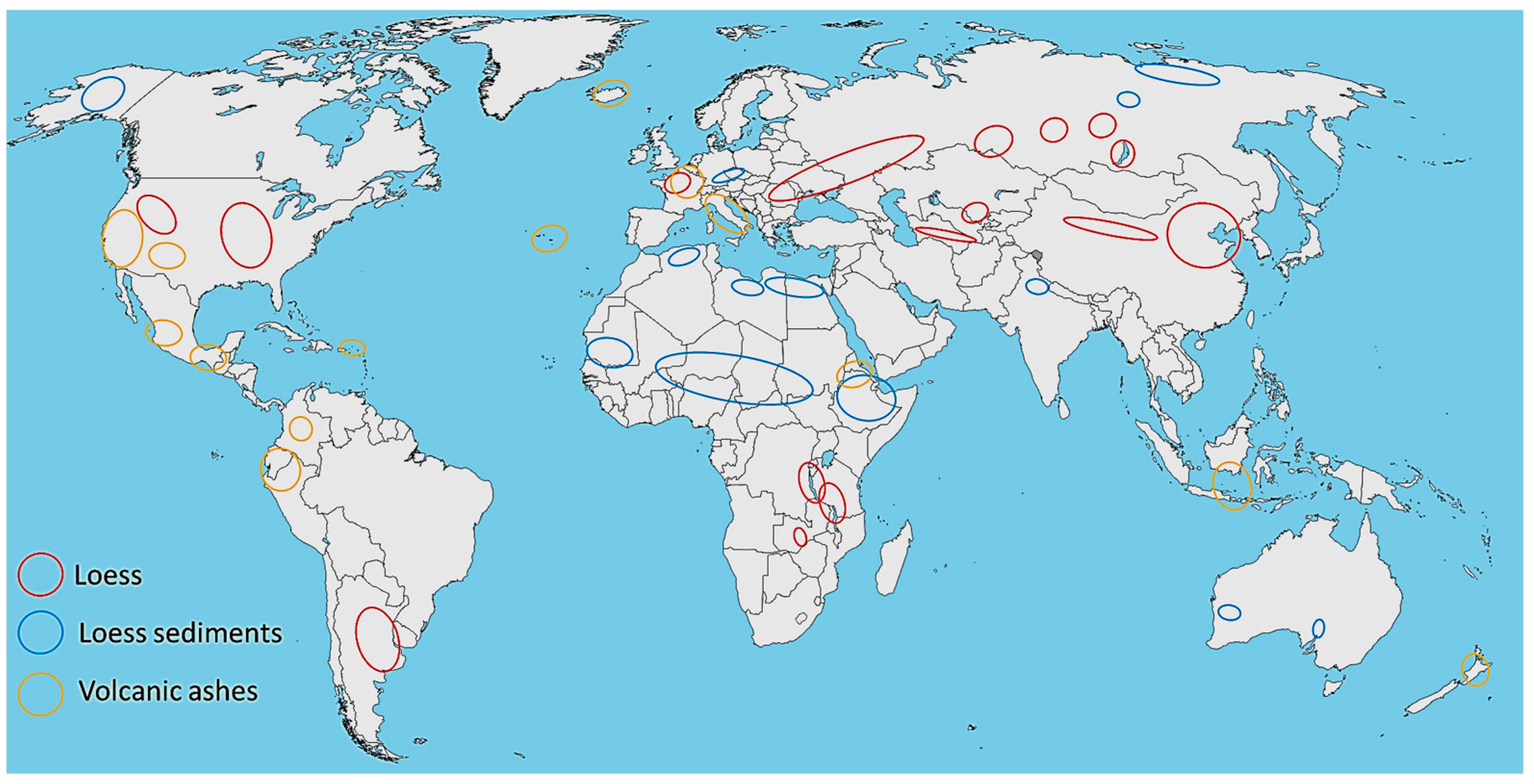
Figure 1 shows a global map of loess deposits, loess sediments, and possible sites of volcanic ash buildup. These formations appear on slopes, in alluvial basins, and near some volcanic regions. Notable loess and volcanic deposits exist in many places. These include Siberia, the Danube River Basin, the Mississippi River Valley, regions of Italy, New Zealand, Argentina, coastal Brazil, and Colombia [24,25].
Figure 1.
Probable collapsible deposits in the world.
The standard ASTM D5333-03 [26], titled “Measurement of Collapse Potential of Soils,” delineates critical concepts fundamental to the understanding of soil collapse mechanisms. Foremost among these is the collapse index (Ie), which quantifies the relative magnitude of collapse under a predetermined stress of 200 kN/m2, prior to the onset of saturation. Additionally, the collapse potential (Ic) is characterized as the relative magnitude of collapse applicable across varying stress levels, directly informing in situ settlement evaluations within soil strata. In the context of this study, both (Ie) and (Ic) are analyzed equivalently, given their mathematically analogous formulation.
Recognizing collapsible soils and the specific conditions conducive to their formation is paramount. Identifying geomaterial anomalies using index properties is difficult. Nonetheless, soils characterized by a macroporous structure—often exhibiting low density, a predominance of fine grain sizes with low plasticity, or a poorly organized granular arrangement—are likely candidates for collapse. These soils may feature larger particles interconnected by interstitial spaces and bound by cementitious clay or mineral matrices, endowing them with notable binding potential.
As articulated by [27], a material demonstrating susceptibility to collapse must manifest specific physical characteristics. These include the soil’s structural arrangement, which may reveal a poorly organized or inadequately graded configuration, as well as in-stances of cementation between larger particles that are susceptible to disruption upon wetting. The dissipation of binding effects can lead to particle mobility, precipitating a transient loss of strength—a phenomenon referred to as metastable response.
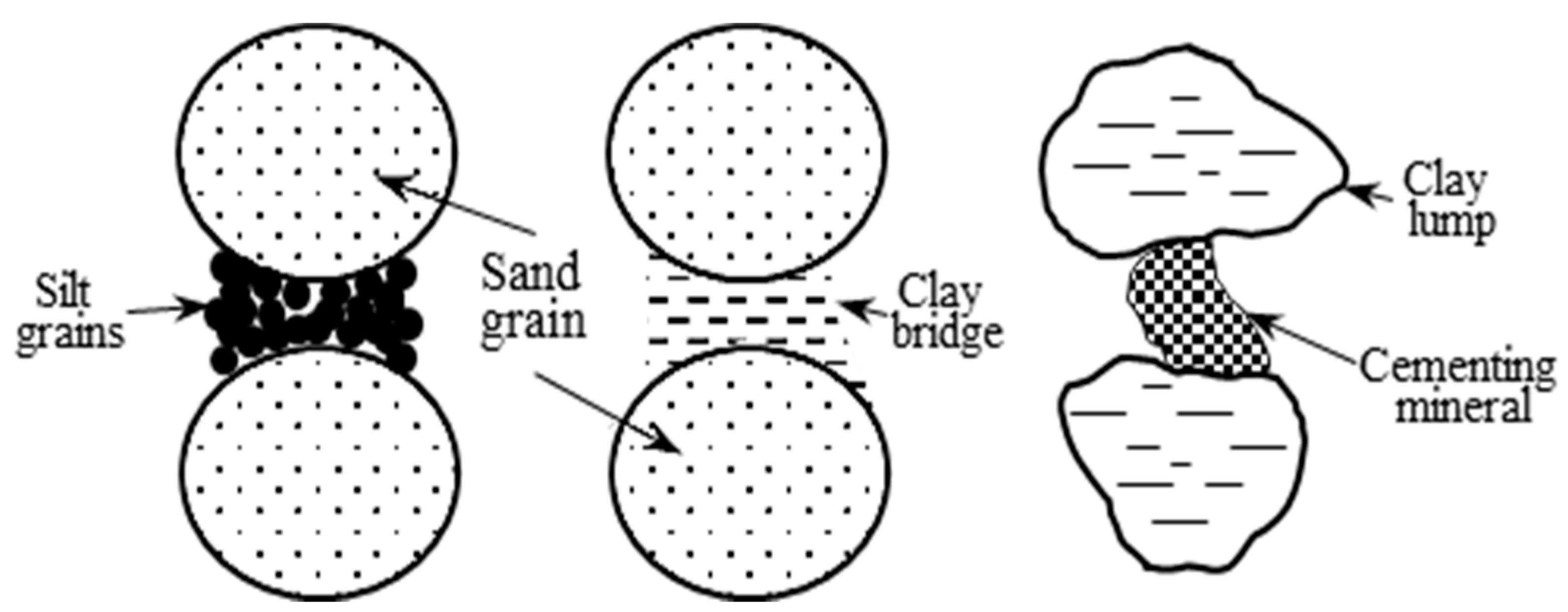
The depiction in Figure 2 illustrates typical bonding structures in collapsible soils. A salient aspect affecting the detection and classification of these soils is closely linked to observations made by [27]. Empirical evidence suggests that approximately 10% of soils worldwide exhibit a predisposition to collapse mechanisms, highlighting the significant variability among materials prone to hydrocollapse. Thus, methodologies employed in specific geographical locales may lack universal applicability, given the intricacies underlying soil genesis that vary markedly across different regions.
Figure 2.
Typical bonding of collapsible soils.
Furthermore, empirical evidence documented by [28,29] demonstrates that diverse soil classifications exhibit collapse susceptibility upon saturation. Specifically, collapse-prone soils have been identified within lateritic and loessic deposits, each distinguished by distinct pedogenic processes and sedimentological transport mechanisms. Heterogeneity in interparticle cementation is prevalent, governed by multifaceted physicochemical processes that shape the spatial distribution of authigenic cementing agents within the pore network. Moreover, macroporous structural fabrics induced by pedobiological activity—including root penetration and faunal bioturbation—constitute documented characteristics of collapsible soil systems.
Consequently, the identification and classification of collapsible soils remain salient challenges within contemporary geotechnical engineering practice. In response to this persistent knowledge gap, numerous researchers [30,31,32,33,34,35,36] have developed diverse taxonomic frameworks for characterizing collapse susceptibility. These methodologies can be broadly categorized into three distinct approaches: first, empirical correlations predicated upon soil index properties; second, experimental protocols utilizing oedometric compression testing; and third, quantitative methodologies for evaluating collapse potential magnitude. The present investigation aims to examine the hypothesis that controlled mechanical compaction, implemented as a ground improvement technique, can effectively mitigate collapse susceptibility in problematic soil deposits.
2. Materials and Methods
The primary objective in preparing samples with different densities was to meet this criterion, since the material density is closely tied to the research focus based on volumetric collapse. The specimens were prepared directly on the consolidometer ring, with a uniform compaction energy applied to all samples. The required mass contained within the ring’s volume was known in advance. This procedure ensured that the required density was obtained in each test. All samples were prepared with a moisture content of 10%.
One path of this research is to investigate the impact of soil density on collapse. To this end, the selection of extreme and intermediate values for the unit weight of soil—specifically, wet unit weights of 12, 16, and 20 kN/m3—was intentionally made to approximate conditions that may realistically be encountered in the field.
Although the influence of density on collapse behavior has been extensively examined in the existing literature, it is often treated as a matter of course, frequently rooted in implicit assumptions regarding the material’s physical response. Despite this prevailing oversight, a thorough review of the scholarly works reveals a dearth of precise studies that comprehensively address this critical aspect of soil behavior. This gap underscores the need for the present investigation to contribute to a nuanced understanding of the relationship between soil density and collapse mechanisms.
2.1. Characterization
The study material consists of a fine clayey soil extracted from the municipality of Cajicá, located in the department of Cundinamarca, Colombia. The soil sample was collected at a depth of 3.50 m below the ground surface. In this geographic area, there have been no documented instances of damage attributed to collapsibility pathology. Nonetheless, this study aims to systematically investigate potential correlations between unit weight and stress flooding, with the objective of identifying preventive measures that could mitigate future issues in the region.
The mineralogy of the material was accurately determined through the X-ray Diffraction (XRD) analysis, which employed a powder mount technique. The results of this analysis, presented in Table 1, provide the weight percentage of each clay mineral phase identified in the test. The study revealed that the predominant clay mineral is kaolinite, followed by montmorillonite, and a smaller proportion of illite.
Table 1.
Weight percentage of mineral phases present in the clay sample.
Figure 2 demonstrates that the soils examined can be classified as clayey matrices containing discrete amounts of cementing mineral phases within their pore spaces. Cementitious constituents occupy approximately 25% of the soil interstices (Al2O3, Fe2O3, and CaO), as determined by X-ray fluorescence (FRX) analysis (see Table 2), and are hypothesized to play a pivotal role in collapse susceptibility. This susceptibility is influenced by several geotechnical variables, particularly the initial dry density of the specimens and the magnitude of externally imposed flooding stress during experimental procedures. The interaction among mineralogical composition, microstructural arrangement, and mechanical boundary conditions fundamentally governs the collapse behavior of these soils. Therefore, identifying and quantifying cementing minerals using advanced analytical techniques provides critical insights into the micro-mechanisms driving collapsibility and supports predictive modeling and risk assessment in geotechnical engineering design.
Table 2.
Percentage by weight (% Weight) of each oxide identified in the sample.
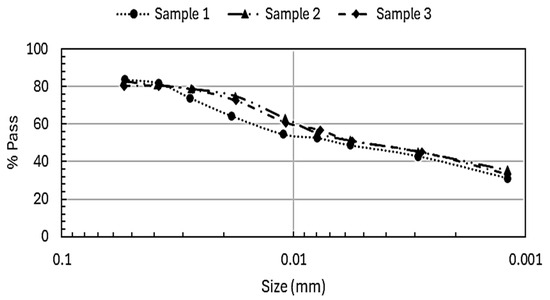
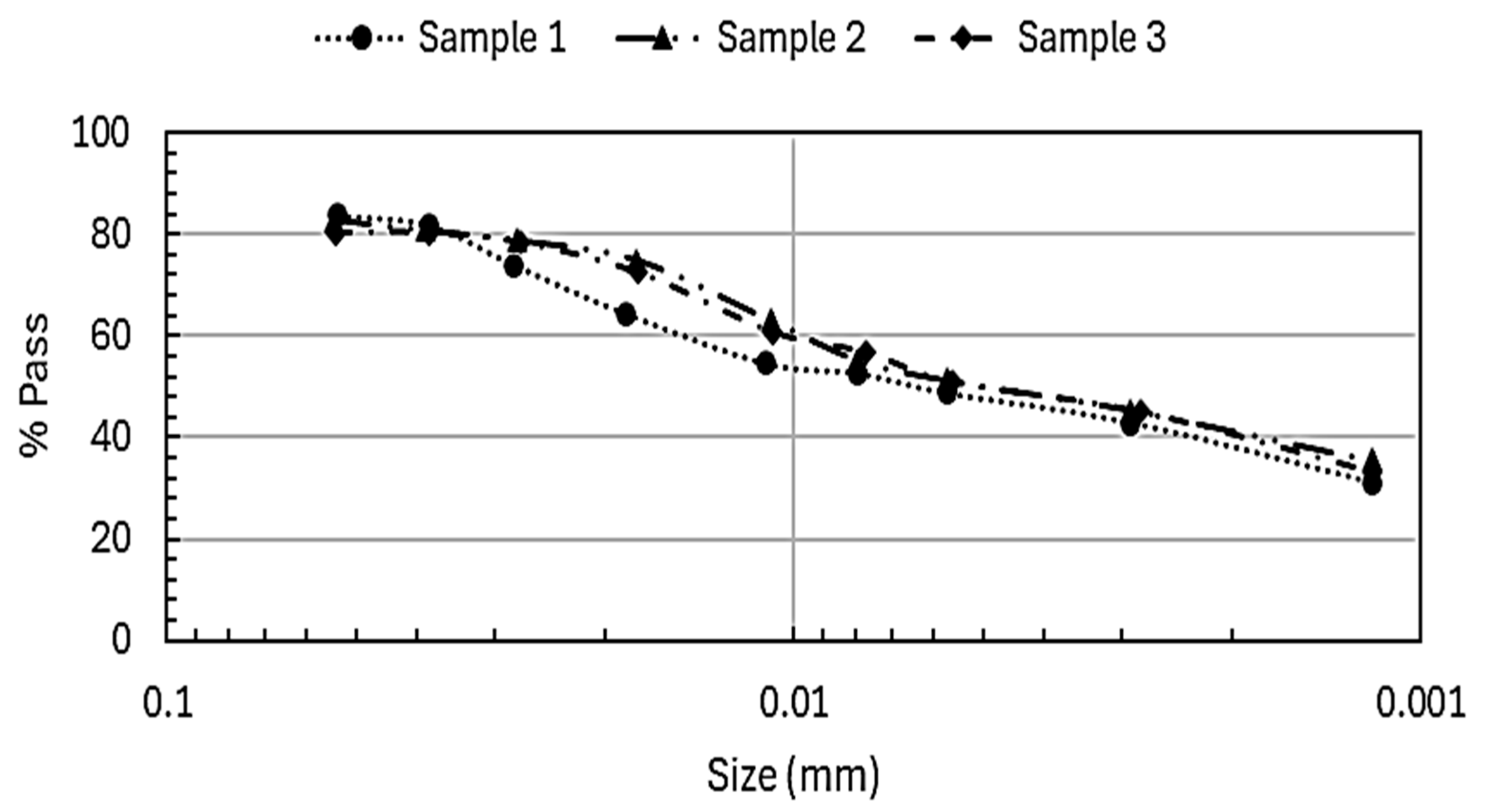
The particle size distribution of the soil was determined using the INV-E-123-13 standard [37], which is equivalent to the ASTM D7928 [38] of Fine-Grained Soils using hydrometer analysis. Figure 3 shows the results of this test for three identical samples of the material. As can be observed, the specimen is predominantly composed of fine-grained material, with more than 95% passing the No. 200 sieve (0.075 mm). Of the fine fraction, approximately 40% corresponds to clay-sized particles (particles smaller than 0.002 mm).
Figure 3.
Particle size distribution using the hydrometer test.
In addition to the particle size distribution, the Atterberg limits were determined following the INV E-125-13 standard [39], equivalent to ASTM D4318 [40]. Similarly, the specific gravity (Gs) of the soil solids was measured using the INV E-128-13 standard [41], which aligns with ASTM D854 [42]. Both tests were conducted to comprehensively characterize the soil’s physical properties and ensure consistency with recognized methods.
Three replicates were performed for each test, and the resulting coefficients of variation (CV) were notably low for all parameters, indicating high consistency and reliability in the experimental data. The detailed results, including the Atterberg limits, specific gravity, and corresponding CV values, are presented in Table 3. Based on these results, the soil was classified as ML (low plasticity silt) according to the Unified Soil Classification System (USCS) and as A-7-5 in the AASHTO classification system.
Table 3.
Physical properties of the soil.
2.2. Methodology
The collapse potential of the partially saturated soil was determined using the INV E-157-13 standard [43], which rigorously follows the guidelines of the ASTM D5333-03. The test involves subjecting a soil specimen to incremental loading under dry conditions, followed by flooding (saturation) to simulate wetting-induced collapse. During flooding, the soil structure undergoes a sudden reduction in volume due to the loss of suction and the weakening of interparticle bonds, which is characteristic of collapsible soils [44].
For this investigation, the collapse behavior of the soil was evaluated at three pre-flooding stress levels: 50 kPa, 100 kPa, and 200 kPa. Although the collapse index (Ie) is typically estimated at 200 kPa, this study extended the analysis to include lower stress levels to comprehensively assess how the soil’s collapse potential (Ic) varies under different loading conditions.
The collapse potential (Ic) was calculated based on the change in the void ratio before and after flooding. The void ratio is a key parameter that reflects the soil’s compressibility and its response to changes in moisture content. The collapse potential is estimated using Equation (1).
where ∆e is the change in the void ratio after flooding, and e0 is the initial void ratio before flooding.
To investigate the influence of specific weight on collapse behavior, the tests were conducted for three different specific weights: 12 kN/m3, 16 kN/m3, and 20 kN/m3. Knowing that the intermediate value obeys the maximum dry density for the optimum moisture, achieved using the Harvard miniature compaction apparatus, these values were selected to cover a range of densities, from loose to compacted states, and to evaluate how variations in specific weight affect the soil’s collapse potential.
To establish a qualitative range for the collapse index (Ie), the classification proposed by the ASTM standard was adopted. This classification, widely recognized in geotechnical engineering practice, provides a systematic framework for assessing the severity of soil collapse based on the magnitude of Ic. The qualitative degrees of collapse, along with their corresponding Ie ranges, are presented in Table 4.
Table 4.
Qualitative Degree of Collapse Index (Ie) (ASTM D5333-03).
3. Results and Discussion
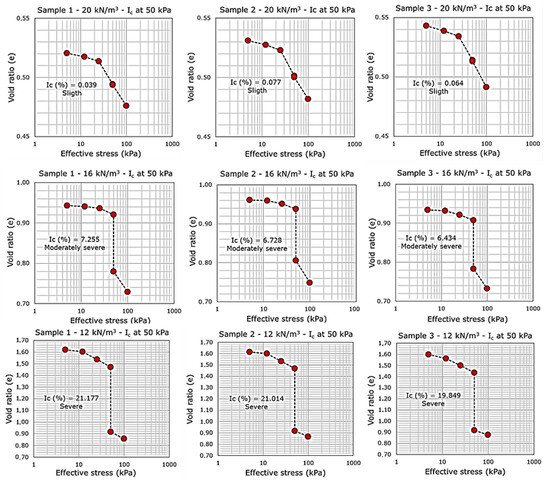
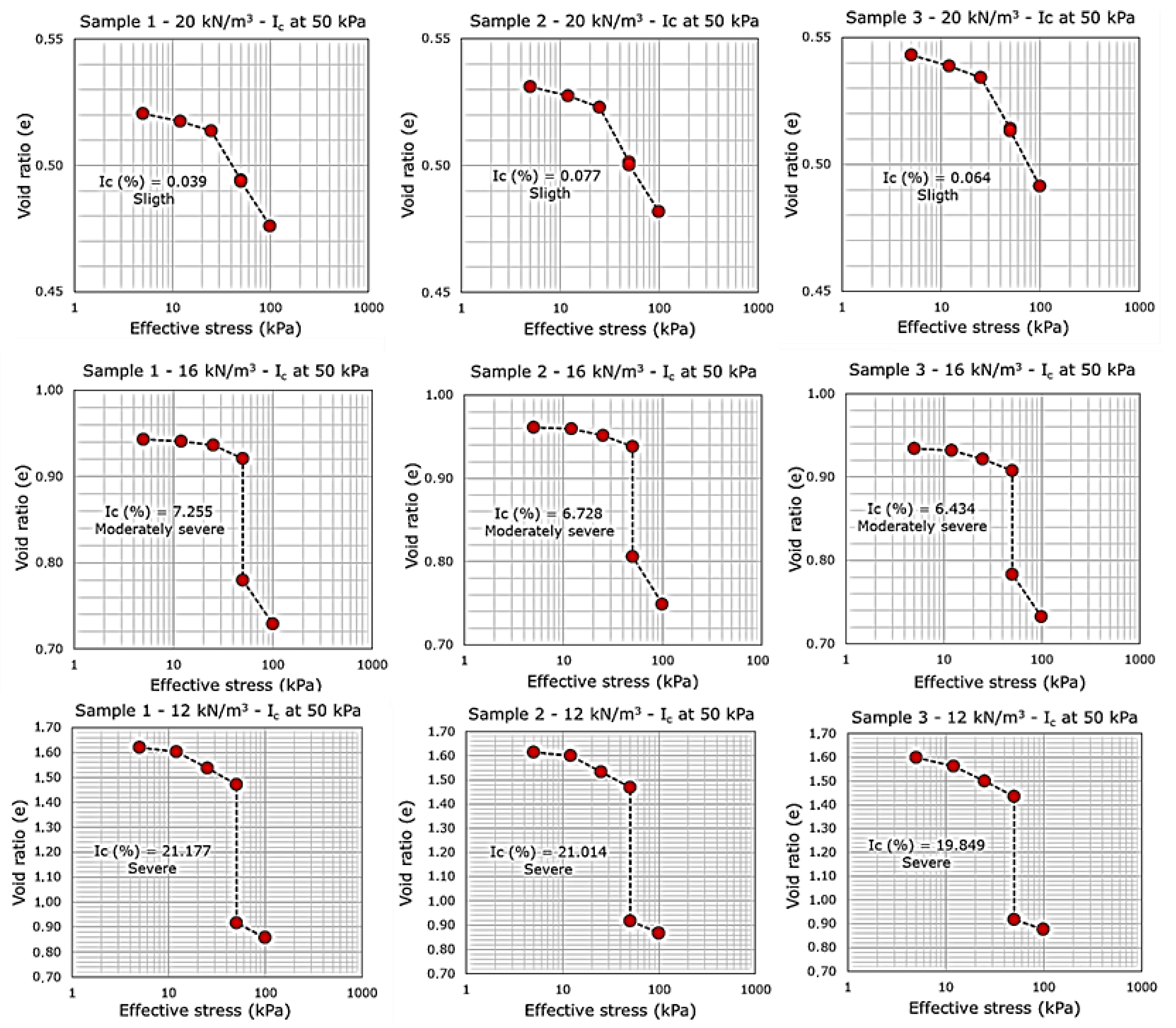
Figure 4 shows the nine experimental designs, focusing on different specific weights and how the collapse index was measured. Each design was tested three times. The figure presents the collapse test results for samples made at 15% moisture with specific weights of 12, 16, and 20 kN/m3, with flooding after 50 kPa stress. The figure indicates the samples do not collapse, as seen in the results. For samples with a specific weight of 16 kN/m3, the collapse risk is higher than for the others, mostly because of the lower specific weight.
Figure 4.
Collapse test results during the flooding stage at 50 kPa and three different unit weights.
For samples with a low specific weight of 12 kN/m3, it makes sense that deformations are greater under load, as shown in the figure. For settlement, the Ic value can reach 21.12%. The range of void ratios is much narrower for soils with higher specific weights, indicating greater stability, whereas soils with medium and low specific weights have wider ranges, making them more likely to collapse.
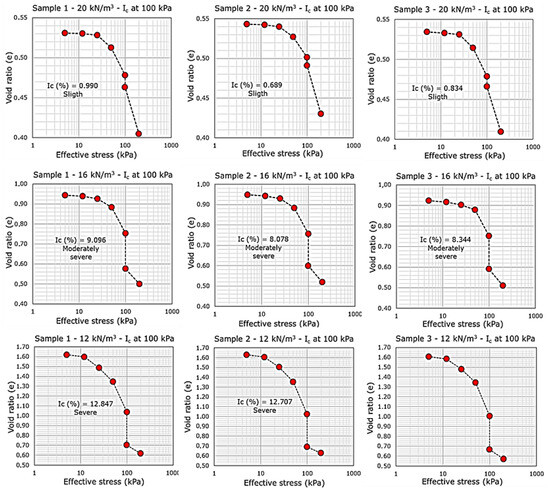
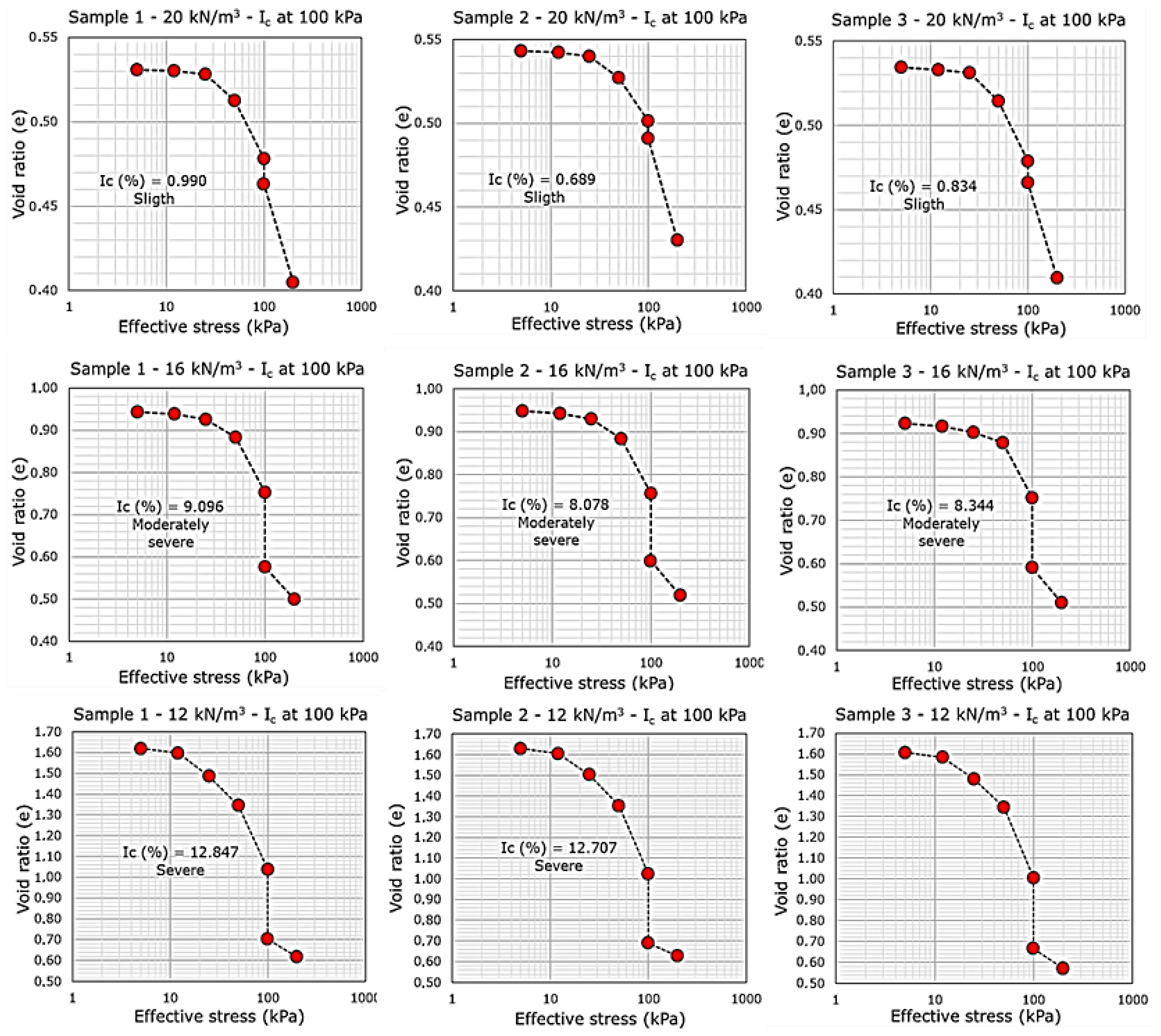
Specimens were loaded to 100 kN/m2 before being saturated (Figure 5). The results show that samples with lower initial density are more likely to collapse. Collapse risk rises as the soil becomes less dense. This aligns with earlier findings that low-density soils are prone to collapse when wet and stressed. This study supports the idea that low-density soils are especially at risk of collapse in these conditions.
Figure 5.
Collapse test results during the flooding stage at 100 kPa and three different unit weights.
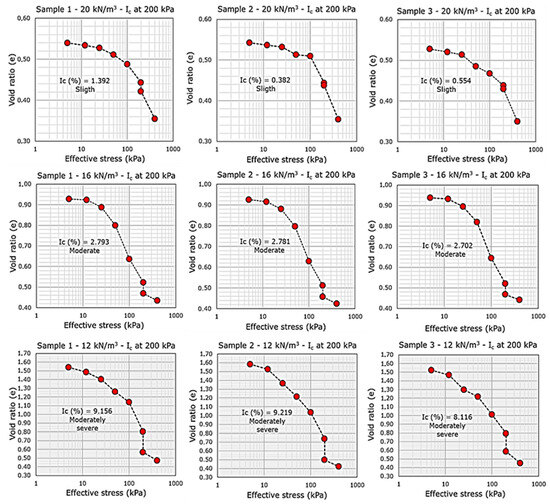
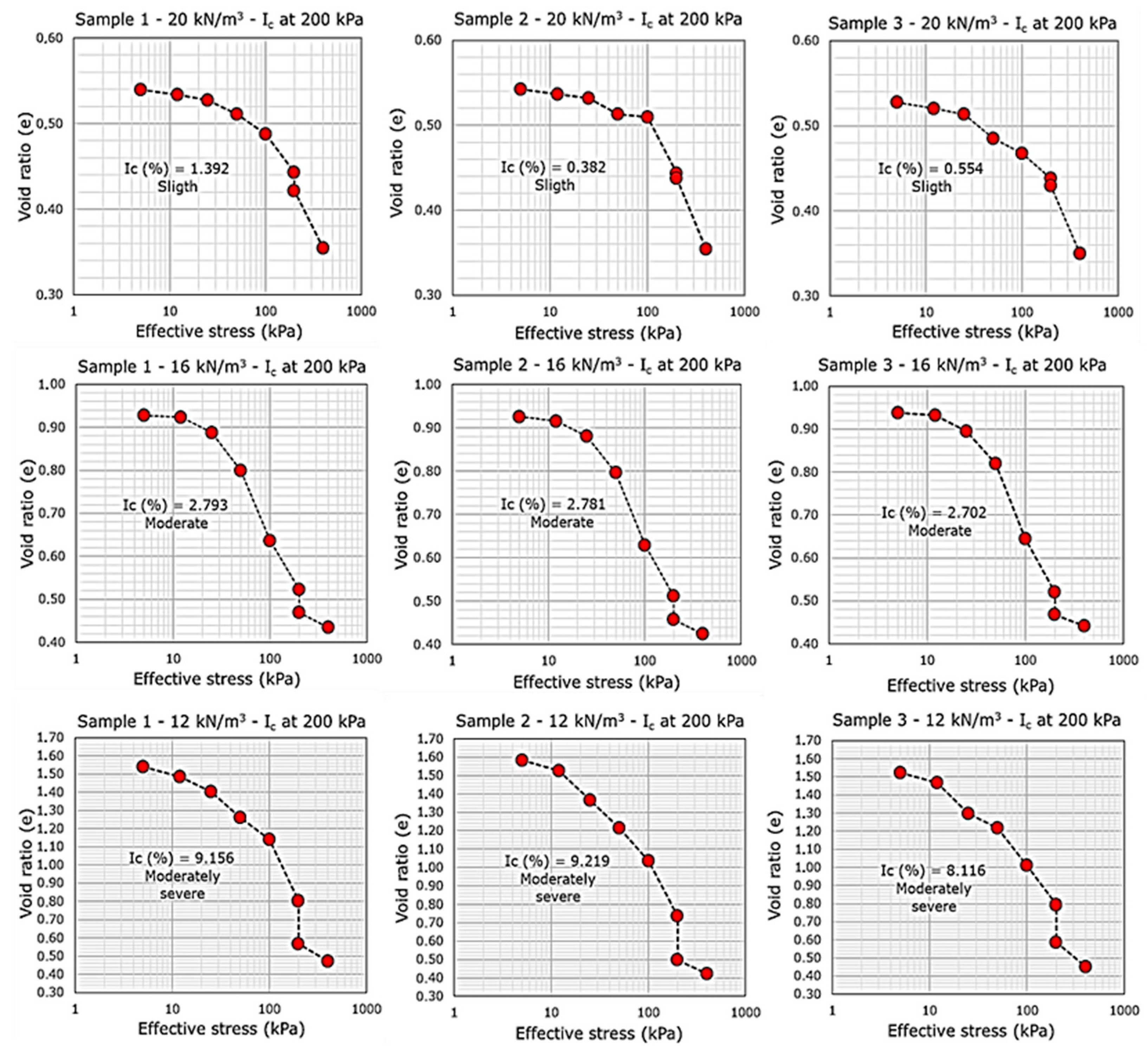
The pathology evaluation should use a rigorous analysis of the collapse index (Ie) for samples exposed to a flood load of 200 kPa (Figure 6). This same criterion was used for all flooding stress levels for comparative analysis. A significant increase in Ie was observed in samples with lower density. This matches the expected collapse degree outlined in the literature. Previous investigations also identify collapsible soils as having low density and high natural moisture content. The correlation was most pronounced in samples with a unit weight of 12 kPa and less so in those with a unit weight of 16 kPa.
Figure 6.
Collapse test results during the flooding stage at 200 kPa and three different unit weights.
It is essential to note that our findings present a paradox. Contrary to initial expectations, the samples under higher load showed the least degree of collapse. This result persisted throughout the study. This paradox highlights the complex relationship between applied load and soil behavior in collapsible soils. Applying a 200 kPa load caused prior imposed stresses. These led to the deformation and densification of the samples. This sequence reduced the material’s collapse potential.
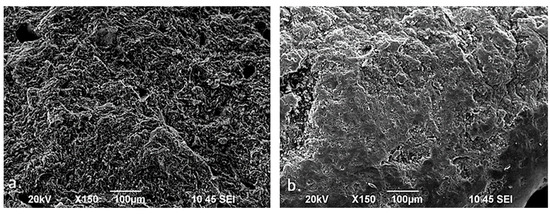
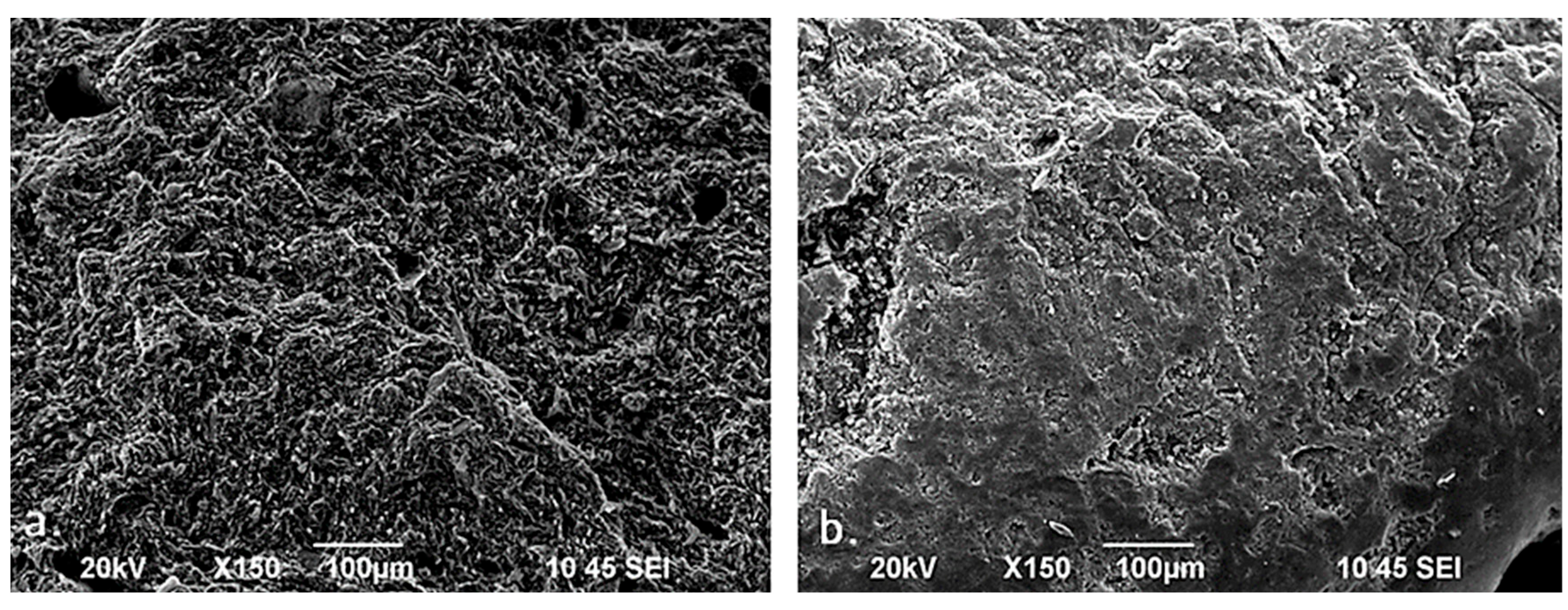
A comprehensive and rigorous methodological approach to investigating pre- and post-collapse behavior requires detailed examination of scanning electron microscope (SEM) micrographs, which yield critical insights into the microstructural characteristics of the material. Figure 7a illustrates that, prior to collapse, the material displays a moderately porous clay matrix, reflecting its initial structural condition. In contrast, Figure 7b depicts the microstructural configuration after collapse, specifically for specimens subjected to an inundation pressure of 200 kPa. The post-collapse micrographs show a marked reduction in porosity, indicating a densification process that results in a more consolidated and stable structure. This transformation highlights the significant impact of the collapse phenomenon on the microstructural evolution of the material, promoting enhanced mechanical stability relative to the pre-collapse state and thereby reducing the adverse effects associated with the pathological mechanism.
Figure 7.
Electron microscope image of the material under investigation for flooding at 200 kPa. (a) Before collapse; (b) after collapse.
Alterations in microstructure are not pronounced because the samples were prepared at a predetermined density of 16 kN/m3. As shown in Figure 7, this preparation results in a moderate collapse rate, which is characteristic of metastable materials. These materials temporarily lose stability during collapse, a process that initially appears detrimental. Following collapse, however, the structure undergoes particle rearrangement as soil grains shift into a denser and more stable configuration. The resulting closer contact between particles increases interparticle friction and bonding, thereby enhancing structural integrity relative to the pre-collapse state. This mechanism accounts for the paradox in which apparent weakness is followed by increased structural strength.
The abrupt and substantial reduction in the material’s void ratio during collapse poses significant risks. This reduction can result in structural damage to foundations constructed on such soils. For instance, buildings erected on collapsible soil have experienced considerable settlement and cracking following sudden water infiltration, such as after heavy rainfall or irrigation. In a common scenario, housing developments built on loess in arid and semi-arid regions have suffered foundation failure and incurred costly repairs after soil collapse. These documented cases demonstrate how collapse-prone soils can compromise structural safety. Such risks highlight the necessity of further investigating the implications of these behaviors for engineering practice.
The collapse index was determined for each specific weight and stress level using the previous curves. To ensure robust statistical analysis, normality tests (e.g., the Shapiro–Wilk test) and homogeneity of variance tests (e.g., Levene’s test) were conducted. Parametric tests (such as t-tests and ANOVA) were applied when the data followed a normal distribution. Non-parametric tests (such as the Whitney–Mann U test) were used when the data did not meet normality assumptions.
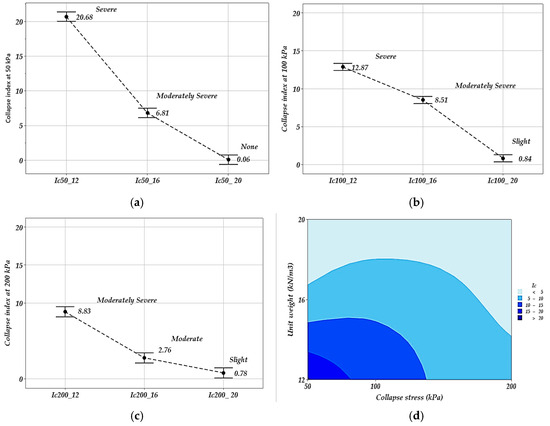
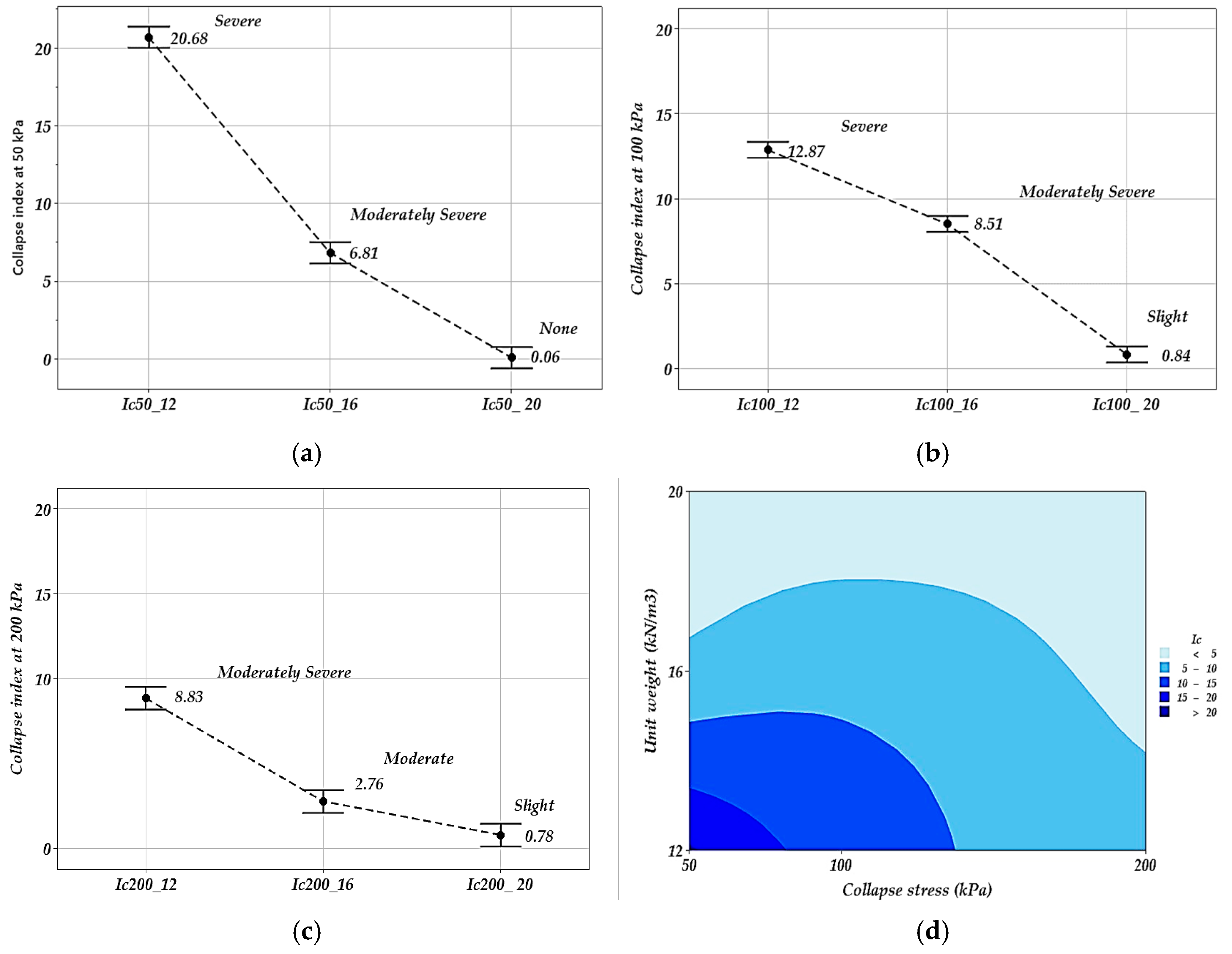
Figure 8 illustrates the collapse index (Ie) and the qualitative degree of collapse for the study sample subjected to different unit weights and collapse stress levels. Statistically significant differences were observed in all cases. Figure 8a shows the variation in the collapse index and degree of collapse at 50 kPa. Soils with lower specific weights tend to exhibit severe collapse, while soils with higher specific weights show no collapse. This trend is repeated in Figure 8b, where higher specific weights correspond to lower collapse indices. At 12 kN/m3, the degree of collapse remained severe. As collapse stress increases, the collapse index tends to decrease. At 200 kPa, the collapse index for 12 kN/m3 decreased from 20.68 to 8.83, representing a reduction of approximately 40%. Conversely, at higher specific weights (e.g., 20 kN/m3), the variations were minimal, and the degree of collapse remained between slight and none.
Figure 8.
Collapse index results. (a) 50 kPa, (b) 100 kPa, (c) 200 kPa, and (d) contour map.
For specimens prepared at the intermediate unit weight (16 kN/m3), an analogous behavioral pattern was documented, exhibiting a 40% diminution in the collapse index when subjected to a vertical stress of 50 kPa relative to 200 kPa. This observation indicates that progressive densification occurring during the consolidation phase contributes to the attenuation of the collapse magnitude.
To further analyze these trends, a contour map was developed (Figure 8d), which shows the relationship between unit weight and collapse stress. The contour map clearly demonstrates that the collapse index decreases as both the specific weight and the applied stress increase.
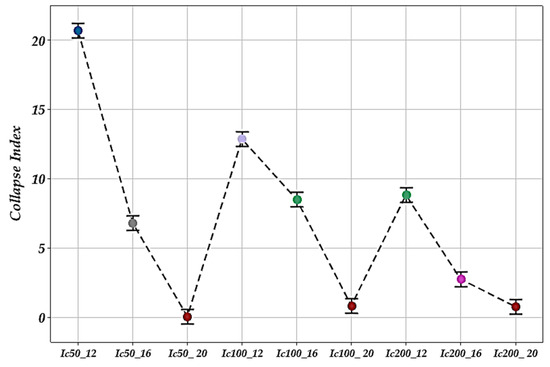
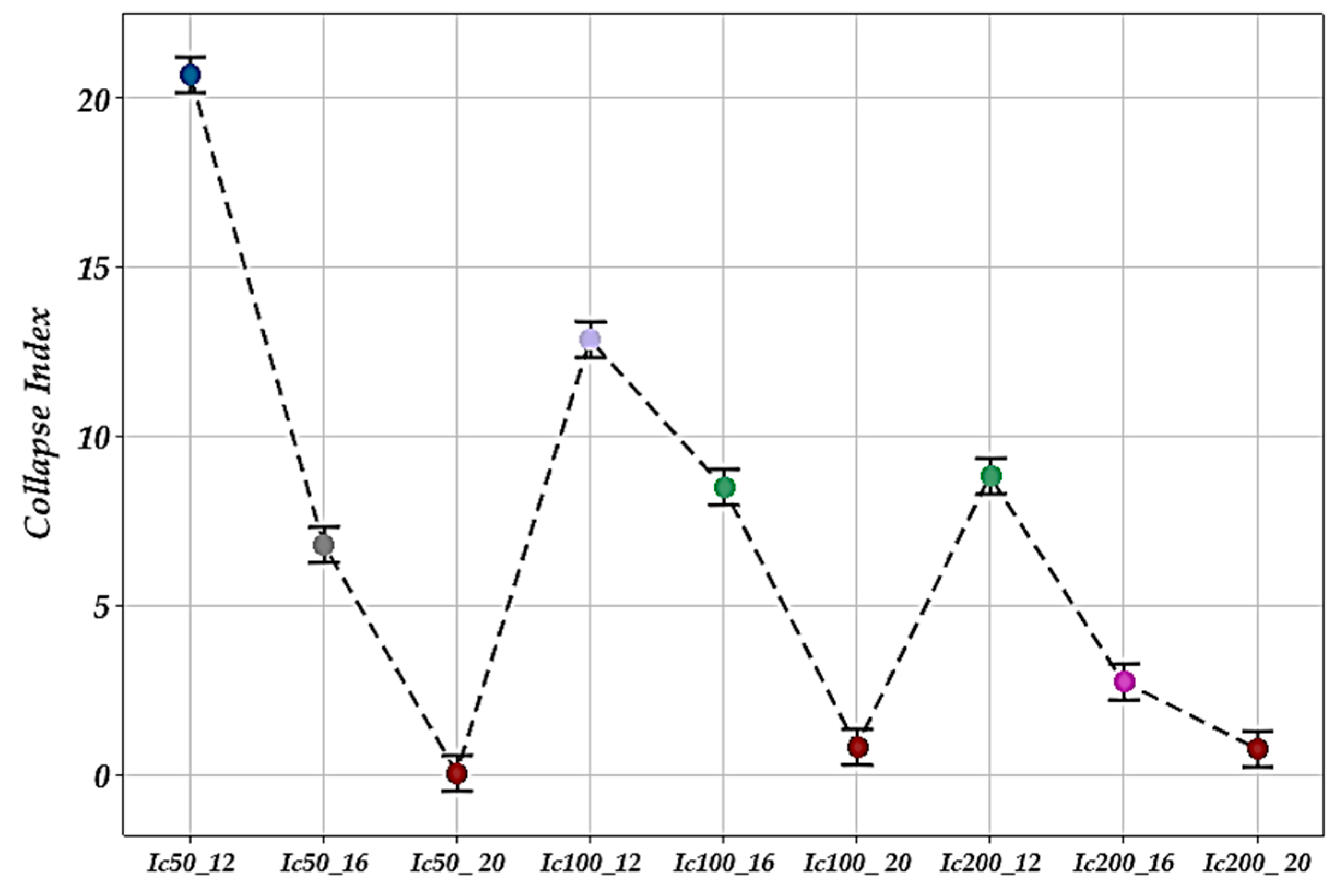
Statistical analysis verified that all datasets satisfied the fundamental assumptions for parametric testing (normality, with p > 0.05 in all cases; see Table 5) and that homoscedasticity was met, justifying the use of one-way ANOVA. Post hoc analysis using Tukey’s HSD test revealed six statistically distinct homogeneous groups (A–F) in the collapse index (Ic) data. Group A (12 kN/m3 under 50 kPa stress; Ic = 20.68) exhibited the most severe collapse potential, while Group F (20 kN/m3 across all stress levels; Ic < 1) demonstrated remarkable stability.
Table 5.
Grouping information using the Tukey method and 95% confidence.
The color-coded results (Figure 9) visually confirmed these groupings. Identical colors indicated statistically equivalent performance. This analysis yielded three key insights. First, unit weight was the dominant factor. Specimens with 20 kN/m3 (Group F) maintained low Ic values (Ic < 1), regardless of applied stress (50–200 kPa). Second, stress magnitude played a secondary but significant role, especially at lower unit weights. For 12 kN/m3 specimens, increasing stress from 50 to 200 kPa reduced Ic by 57%. Third, non-linear interactions emerged. For example, Group C’s grouping of both 12 kN/m3 at 200 kPa and 16 kN/m3 at 100 kPa—despite differing unit weights and stress levels—shows that these different conditions can lead to similar Ic behavior, highlighting the complexity of variable interactions.
Figure 9.
Interval plot of the samples with a 95% confidence. Samples sharing the same letter indicate no statistically significant differences (p > 0.05).
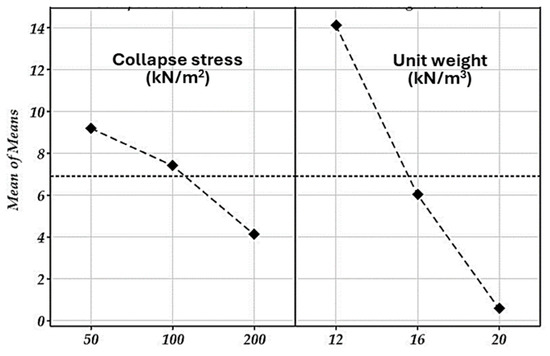
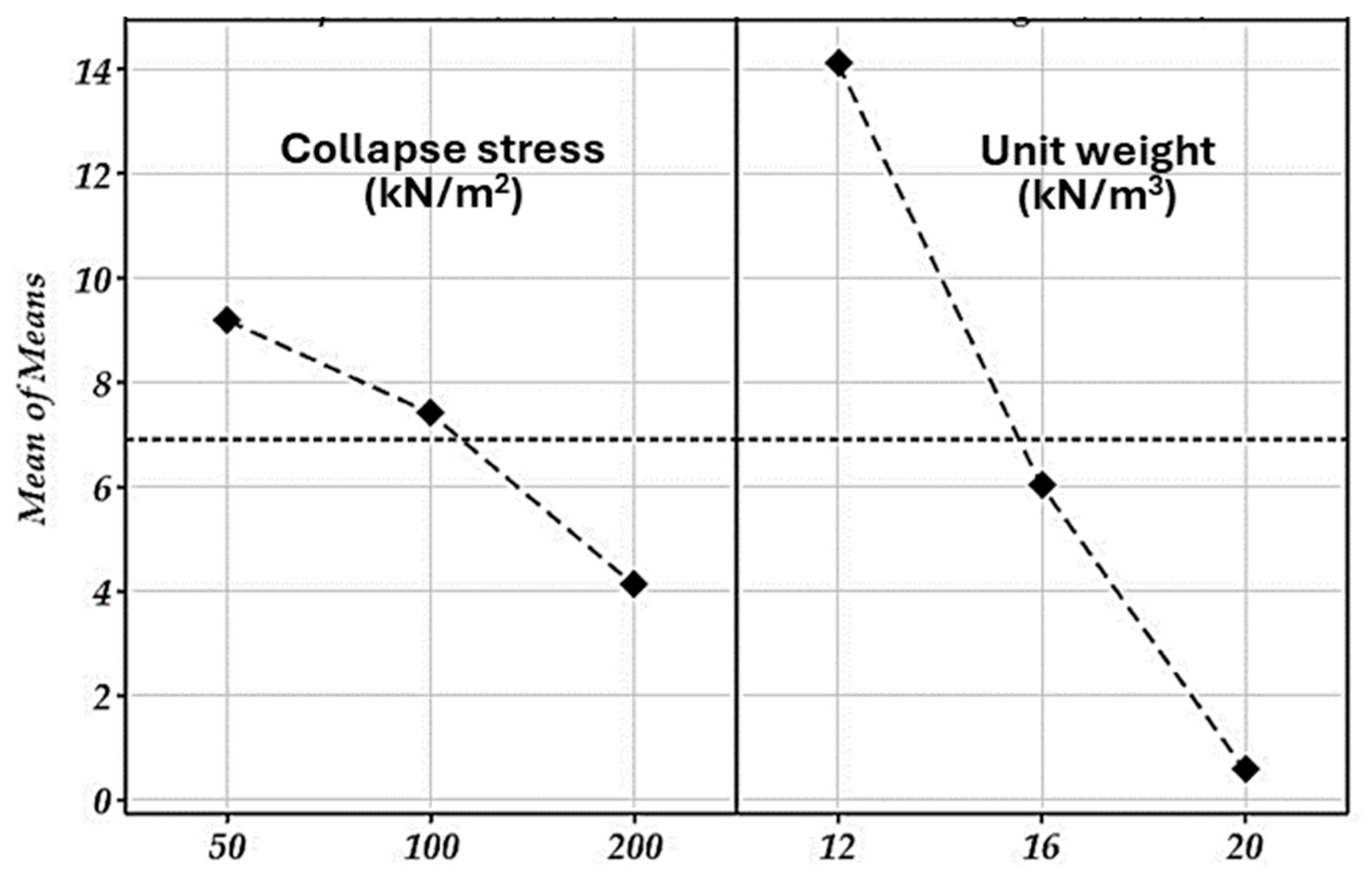
Figure 10 further highlights the role of soil density in engineering applications. Densification has a more substantial impact on the collapse index, with variations of up to 15 points. In comparison, the change in collapse stress is only four points. These results suggest that soil density plays a critical role in reducing collapsibility. This finding emphasizes the importance of soil density in mitigating collapse risks.
Figure 10.
Effect of means plot.
Within the scope of this investigation, the authors have established a potential correlation between two distinct geotechnical pathologies: soil dispersivity and collapse susceptibility. Subsequent research endeavors should systematically investigate the interdependent mechanisms governing these coupled behavioral anomalies and their implications for foundation performance.
4. Conclusions
Research explores how unit weight and moisture saturation affect the collapse behavior in fine-grained soils under applied stresses of 50, 100, and 200 kPa. We tested three-unit weights (12, 16, and 20 kN/m3) and measured the collapse index in a set of nine experimental designs, each with three replicates. The statistical analysis of the results highlights key relationships among these variables affecting soil collapse.
The soil’s specific weight significantly affected its collapse potential. Soils with lower unit weights (12 kN/m3) had severe collapse indices. In contrast, soils with higher unit weights (20 kN/m3) showed minimal or no collapse. This outcome was anticipated, so it was important for the findings to align with the existing literature.
The collapse index decreased as the applied stress increased. For example, at 12 kN/m3, the collapse index dropped by about 40% when the stress rose from 50 kPa to 200 kPa. For soils with higher unit weights, collapse stress had a less pronounced influence. Their stability made them less susceptible to collapse.
The interaction plot and means plot showed that specific weight (the density of a material) had a greater effect on the collapse index (a numerical measure of material failure under load) than collapse stress (the amount of stress at which a material fails). Changes in specific weight led to shifts of up to 15 points in the collapse index, while changes in collapse stress resulted in only four-point variations.
Statistical analysis confirmed that all datasets met the essential assumptions for parametric testing, specifically normality (data distribution consistent with a normal or bell-shaped curve; p-values > 0.05 across all instances) and homoscedasticity (variance consistent across groups). These findings substantiate the appropriateness of employing one-way ANOVA (analysis of variance, a test for differences between group means) for further analysis. Subsequent post hoc examination using Tukey’s Honestly Significant Difference (HSD) test (a method for identifying which means are different) revealed six statistically distinct homogeneous groups, designated A through F, within the collapse index (Ic) data.
The results here depend on the specific analytical region and parameters used. To apply these findings to other materials, future research must follow the same methods. This includes using the same experimental protocols and imaging procedures. Adhering to these ensures the validity and reliability of the conclusions.
These results suggest that soil densification is very effective at reducing collapsibility. Engineers should focus on achieving higher unit weights by using proper compaction, especially in regions with collapsible soils. This can minimize the risk of sudden settlements and structural damage. While this study focused on fine-grained clayey soils, future research could explore soils with different sand contents or granulometric compositions. Researchers should also investigate other collapse-related issues, such as dispersivity, to fully understand the mechanisms. It is also recommended to evaluate parameters like unconfined compressive strength and shear strength. Performing a multivariate analysis would cover the combined effects on soil collapse behavior.
While a preliminary analysis may indicate that the findings are not entirely novel, there remains a significant gap in the literature regarding the experimental corroboration of the hypotheses addressed in this study. Although many conclusions in the specialized literature are supported by plausible physical arguments consistent with these results, most lack rigorous empirical validation. This study provides several novel contributions: for the first time, the direct impact of varying flooding stress levels on the material’s microstructural evolution has been experimentally quantified, demonstrating a clear relationship between flooding severity and specific microstructural changes observable via scanning electron microscopy. The measured thresholds for structural integrity under different stress conditions establish new quantitative benchmarks not previously reported. Unlike prior approaches that focused solely on density analysis, this research systematically evaluates multiple levels of flooding stress. Additionally, comprehensive statistical analysis of the experimental data is conducted, and the results are verified using advanced microstructural characterization techniques, specifically scanning electron microscopy images. This robust methodological integration substantially reinforces the conclusions, establishing this work as a significant contribution to the field.
Author Contributions
Conceptualization, J.C.R. and C.J.S.-A.; methodology, J.C.R.; validation, J.C.R. and C.J.S.-A.; formal analysis, J.C.R. and C.J.S.-A.; resources, J.C.R.; data curation, J.C.R.; writing—original draft preparation, C.J.S.-A.; writing—review and editing, J.C.R. and C.J.S.-A.; project administration, J.C.R. and C.J.S.-A.; and funding acquisition, J.C.R. All authors have read and agreed to the published version of the manuscript.
Funding
This research was funded by Central Research Department of the Universidad Catolica de Colombia and the APC was funded by Central Research Department of the Universidad Catolica de Colombia.
Institutional Review Board Statement
Not applicable.
Informed Consent Statement
Not applicable.
Data Availability Statement
The original data presented in the study are openly available in google Drive at https://drive.google.com/drive/folders/1YshweIoCCzwjgClwWTQTMzc-5am8Win2?usp=drive_link by 15 March 2026.
Acknowledgments
During the preparation of this manuscript the authors used Grammarly for the purposes of English style review. The authors have reviewed and edited the output and take full responsibility for the content of this publication.
Conflicts of Interest
The authors declare no conflicts of interest.
Abbreviations
The following abbreviations are used in this manuscript:
| AASHTO | American Association of State Highway and Transportation Officials |
| ASTM | American Society for Testing and Materials |
| INV | Instituto Nacional de Vías (Colombia) |
| ANOVA | Analysis of variance |
References
- Rocha, B.P.; Silveira, I.A.; Rodrigues, R.A.; Lodi, P.C.; Giacheti, H.L. Identifying Collapsible Soils from Seismic Cone (SCPT): A Qualitative Approach. Buildings 2023, 13, 830. [Google Scholar] [CrossRef] [Scilit]
- El Howayek, A.; Huang, P.-T.; Bisnett, R.; Santagata, M. Identification and Behavior of Collapsible Soils; Purdue University: West Lafayette, IN, USA, 2011. [Google Scholar] [CrossRef] [Scilit]
- Axel, M.; Li, X.; Wen, F.; An, M.-X. Microstructure and Strength Parameters of Cement-Stabilized Loess. Geotechnics 2023, 3, 161–178. [Google Scholar] [CrossRef] [Scilit]
- Srivastava, A.; Tadikonda, B.V. Collapsible Soil Model for the Prediction of Mechanical Characteristics of Partially Saturated Collapsible Soils. Int. J. Geomech. 2024, 24, 04024128. [Google Scholar] [CrossRef] [Scilit]
- Cardoso, R.; Vieira, J.; Borges, I. On the Use of Biocementation to Treat Collapsible Soils. Eng. Geol. 2023, 313, 106971. [Google Scholar] [CrossRef] [Scilit]
- Abood, A.S.; Fattah, M.Y.; Al-Adili, A. Effect of Saturation on Dynamic Characteristics of Collapsible Gypseous Soil Using Cyclic Triaxial Testing. Case Stud. Constr. Mater. 2023, 19, e02502. [Google Scholar] [CrossRef] [Scilit]
- Khodabandeh, M.A.; Kopecskó, K.; Nagy, G. The Effect of Expanded Perlite and Metakaolin on the Physicochemical Properties of Collapsible Soils. Hidrológiai Közlöny 2024, 104, 45–52. [Google Scholar] [CrossRef] [Scilit]
- Rabab, C.; Laouar, M.S.; Fernane, A.; Messast, S. Experimental Investigation of Collapsible Soils under Oedometric Loading: Effect of Internal Erosion. South Fla. J. Dev. 2024, 5, e4341. [Google Scholar] [CrossRef] [Scilit]
- Abaas, R.F.; Fattah, M.Y.; Naif, M.H.; Hafez, M. Collapsible Gypseous Soil Stabilization by Calcium Carbide Residue and Sulfonic Acid. Sustainability 2024, 16, 9974. [Google Scholar] [CrossRef] [Scilit]
- Pirmousaei, F.K.; Delavari, E.; Bayat, M. Investigating the Hydromechanical Behavior of Collapsible Soil Stabilized with Nano-Al2O3 Using Ultrasonic Pulse Velocity. Transp. Infrastruct. Geotechnol. 2025, 12, 103. [Google Scholar] [CrossRef] [Scilit]
- Khodabandeh, M.A.; Nagy, G.; Török, Á. Stabilization of Collapsible Soils with Nanomaterials, Fibers, Polymers, Industrial Waste, and Microbes: Current Trends. Constr. Build. Mater. 2023, 368, 130463. [Google Scholar] [CrossRef] [Scilit]
- Nie, Y.; Ni, W.; Lü, X.; Tuo, W.; Yuan, K. Macroscopic mechanical behavior and microstructural evolution of compacted loess in the Chinese Loess Plateau. Soil Tillage Res. 2023, 232, 105767. [Google Scholar] [CrossRef] [Scilit]
- Kozubal, J.; Steshenko, D. The complex compaction method of an unstable loess substrate. Arab. J. Geosci. 2014, 8, 6189–6198. [Google Scholar] [CrossRef] [Scilit]
- Li, S.; Zhang, C.; Zhang, T.; Li, W.; Jia, P. Experimental Study on the Strength, Collapsibility, and Microstructure of Cement and Micro-Silica-Stabilized Saline Soil under Freeze-Thaw Cycles. Case Stud. Constr. Mater. 2023, 19, e02518. [Google Scholar] [CrossRef] [Scilit]
- Schmertmann, J.H. The undisturbed consolidation behavior of clay. Trans. Am. Soc. Civ. Eng. 1955, 120, 1201–1227. [Google Scholar] [CrossRef] [Scilit]
- Graham, J.; Li, E.C.C. Comparison of natural and remolded plastic clay. J. Geotech. Eng. 1985, 111, 865–881. [Google Scholar] [CrossRef] [Scilit]
- Vaughan, P.R. Mechanical and hydraulic properties of in-situ residual soils. In Proceedings of the First International Conference on Geomechanics in Tropical Lateritic and Saprolitic Soils, Brasilia, Brazil, 11–14 February 1985; pp. 1–33. [Google Scholar]
- Rogers, C.D.F. Types and distribution of collapsible soils. In Genesis and Properties of Collapsible Soils; Derbyshire, E., Dijkstra, T., Eds.; Smalley: Lake Zurich, IL, USA, 1995. [Google Scholar]
- Houston, S.L.; Houston, W.N.; Zapata, C.E.; Lawrence, C. Geotechnical engineering practice for collapsible soils. In Unsaturated Soil Concepts and Their Application in Geotechnical Practice; Toll, D.G., Ed.; Springer: Dordrecht, The Netherlands, 2001; pp. 333–355. [Google Scholar] [CrossRef] [Scilit]
- Gaaver, K.E. Geotechnical properties of Egyptian collapsible soils. Alex. Eng. J. 2012, 51, 205–210. [Google Scholar] [CrossRef] [Scilit]
- Zamani, M.; Badv, K. Assessment of the Geotechnical Behavior of Collapsible Soils: A Case Study of the Mohammad-Abad Railway Station Soil in Semnan. Geotech. Geol. Eng. 2019, 37, 2847–2860. [Google Scholar] [CrossRef] [Scilit]
- Mitchell, J.K.; Soga, K. Fundamentals of Soil Behavior; John Wiley & Sons: Hoboken, NJ, USA, 2005. [Google Scholar]
- Clemence, S.P.; Finbarr, A.O. Design Considerations for collapsible soils. J. Geotech. Eng. Div. 1981, 107, 305–317. [Google Scholar] [CrossRef] [Scilit]
- Pécsi, M. Loess is not just the accumulation of dust. Quat. Int. 1990, 7–8, 1–21. [Google Scholar] [CrossRef] [Scilit]
- Umo, N.S.; Ullrich, R.; Maters, E.C.; Steinke, I.; Benker, N.; Höhler, K.; Wager, R.; Weidler, P.G.; Hoshayaripour, G.A.; Kiselev, A.; et al. The influence of chemical and mineral compositions on the parameterization of immersion freezing by volcanic ash particles. J. Geophys. Res. Atmos. 2021, 126, e2020JD033356. [Google Scholar] [CrossRef] [Scilit]
- D5333; Standard Test Method for Measurement of Collapse Potential of Soils. ASTM International: West Conshohocken, PA, USA, 1996.
- Dudley, J.H. Review of Collapsing Soils. J. Soils Mech. Found. Div. 1970, 96, 925–947. [Google Scholar] [CrossRef] [Scilit]
- Abelev, Y.M.; Abelev, M.Y. Bases de l’Elaboration des Projets et de la Construction sur les Sols Loessiques Affaissables. Ed. Francesa; Technique et Documentation Lavoisier: Paris, France, 1979. [Google Scholar]
- Redolfi, E. Determinación Rápida de la Presión de Fluencia en Suelos Loésicos. In Boletín de Información del Laboratorio de Carreteras y Geotécnia; Ubicación de la Editorial: Madrid, Spain, 1982; Volume 151, pp. 3–8. [Google Scholar]
- Lutenegger, A.J.; Saber, R.T. Determination of Collapse Potential of Soils. Geotech. Test. J. 1988, 11, 173–178. [Google Scholar] [CrossRef] [Scilit]
- Rocca, R. Review of Engineering Properties of Loess. Master’s Thesis, University of California, Berkeley, CA, USA, 1985. [Google Scholar]
- Redolfi, E.; Rocca, R.; Terzariol, R. Estudio Comparativo de Diferentes Métodos para Evaluar el Potencial de Colapso en Suelos Loésicos argentinos. In Proceedings of Simposio Argentino de Suelos Colapsables; Soc. Argentina de Mecánica de Suelos: Buenos Aires, Argentina, 1986; pp. 46–66. [Google Scholar]
- Sultan, H.A. Collapsing Soils, State of the Art. In Proceeding of the 7º International Conference on Soil Mechanics and Foundation Engineering, Special Session; Soc. Argentina de Mecánica de Suelos, Ed.; Eng. Prop. Press.: Buenos Aires, Argentina, 1969; pp. 17–35. [Google Scholar]
- Reginatto, A.R.; Ferrero, J.C. Collapse Potential of Soils and Soil Water Chemistry. In Proceeding of the 8º International Conference on Soil Mechanics and Foundation Engineering; USSR National Society for Soil Mechanics and Foundation Engineering: Moscu, Russia, 1973; Volume 2, pp. 177–183. [Google Scholar]
- Lopez Corral, A. Fenómenos de Colapso en las Arenas del Subsuelo de Madrid. Ph.D. Thesis, Escuela Técnica Superior de Ingenieros de Caminos, Canales y Puertos de Madrid de la Universidad Politécnica de Madrid, Madrid, Spain, 1977. [Google Scholar]
- Jimenez Salas, J.A. Problemas de Geología para el Ingeniero en las Cimentaciones; Ingeniería Civil, CEDEX, Madrid, Nº62; Instituto Geológico y Minero de España (IGME): Madrid, Spain, 1987; pp. 29–49. [Google Scholar]
- INV E-123; Determinación de los tamaños de las partículas de los suelos. Instituto Nacional De Vías “INVIAS”: Bogotá, Colombia, 2013. (In Spanish)
- D7928; Standard Test Method for Particle-Size Distribution (Gradation) of Fine-Grained Soils Using the Sedimentation (Hydrometer) Analysis. ASTM International: West Conshohocken, PA, USA, 2021.
- INV E-125; Determinación del límite líquido de los suelos. Instituto Nacional De Vías “INVIAS”: Bogotá, Colombia, 2013. (In Spanish)
- D4318; Standard Test Methods for Liquid Limit, Plastic Limit, and Plasticity Index of Soil. ASTM International: West Conshohocken, PA, USA, 2018.
- INV E-128; Determinación de la gravedad específica de las partículas sólidas de los suelos y del llenante mineral, empleando un picnómetro con agua. Instituto Nacional De Vías “INVIAS”: Bogotá, Colombia, 2013. (In Spanish)
- D854; Standard Test Methods for Specific Gravity of Soil Solids by the Water Displacement Method. ASTM International: West Conshohocken, PA, USA, 2023.
- INV E-153; Medida del potencial de colapso de un suelo parcialmente saturaDO. Instituto Nacional De Vías “INVIAS”: Bogotá, Colombia, 2013. (In Spanish)
- Al-Gharbawi, A.S.A.; Fattah, M.Y.; Mahmood, M.R. Evaluation of the Collapse Potential Magnitude of Untreated and Treated Collapsible Gypseous Soil—A New Procedure. KSCE J. Civ. Eng. 2023, 27, 2421–2430. [Google Scholar] [CrossRef] [Scilit]

Disclaimer/Publisher’s Note: The statements, opinions and data contained in all publications are solely those of the individual author(s) and contributor(s) and not of MDPI and/or the editor(s). MDPI and/or the editor(s) disclaim responsibility for any injury to people or property resulting from any ideas, methods, instructions or products referred to in the content. |
© 2026 by the authors. Licensee MDPI, Basel, Switzerland. This article is an open access article distributed under the terms and conditions of the Creative Commons Attribution (CC BY) license.