
Chemical Composition and Anti-Aging Potential of Passiflora edulis By-Product Fractions: A Comparative Study Integrating Metabolomic Profiling and Molecular Docking



Abstract
1. Introduction
2. Materials and Methods
2.1. Materials
2.2. Passion Fruit By-Product Extracts Preparation
2.3. Determination of Total Flavonoid Content
2.4. Determination of Total Phenolic Content
2.5. Liquid Chromatography Quadrupole Time of Flight with Mass Spectroscopy (LC-QTOF/MS)
2.6. Processing and Prioritization of Putatively Annotated Metabolites
2.7. Antioxidation Activities of Passion Fruit Extracts
2.7.1. 2,2-Diphenyl-1-picrylhydrazyl (DPPH) Radical Scavenging Assay
2.7.2. Ferric-Reducing Antioxidant Power (FRAP) Assay
2.8. Anti-Aging Activities of Passion Fruit Extracts
2.8.1. Anti-Hyaluronidase Activity Assay
2.8.2. Collagenase Inhibitory Assay
2.9. In Vitro Collagen Biosynthesis Stimulation Assay
2.9.1. Cytotoxicity Test Using MTT Assay
2.9.2. Collagen Biosynthesis of Passion Fruit Extracts by Sirius Red Assay
2.10. Molecular Docking
2.11. Statistical Analysis
3. Results and Discussion
3.1. Extraction Yield, TPC, and TFC of Passion Fruit Extracts
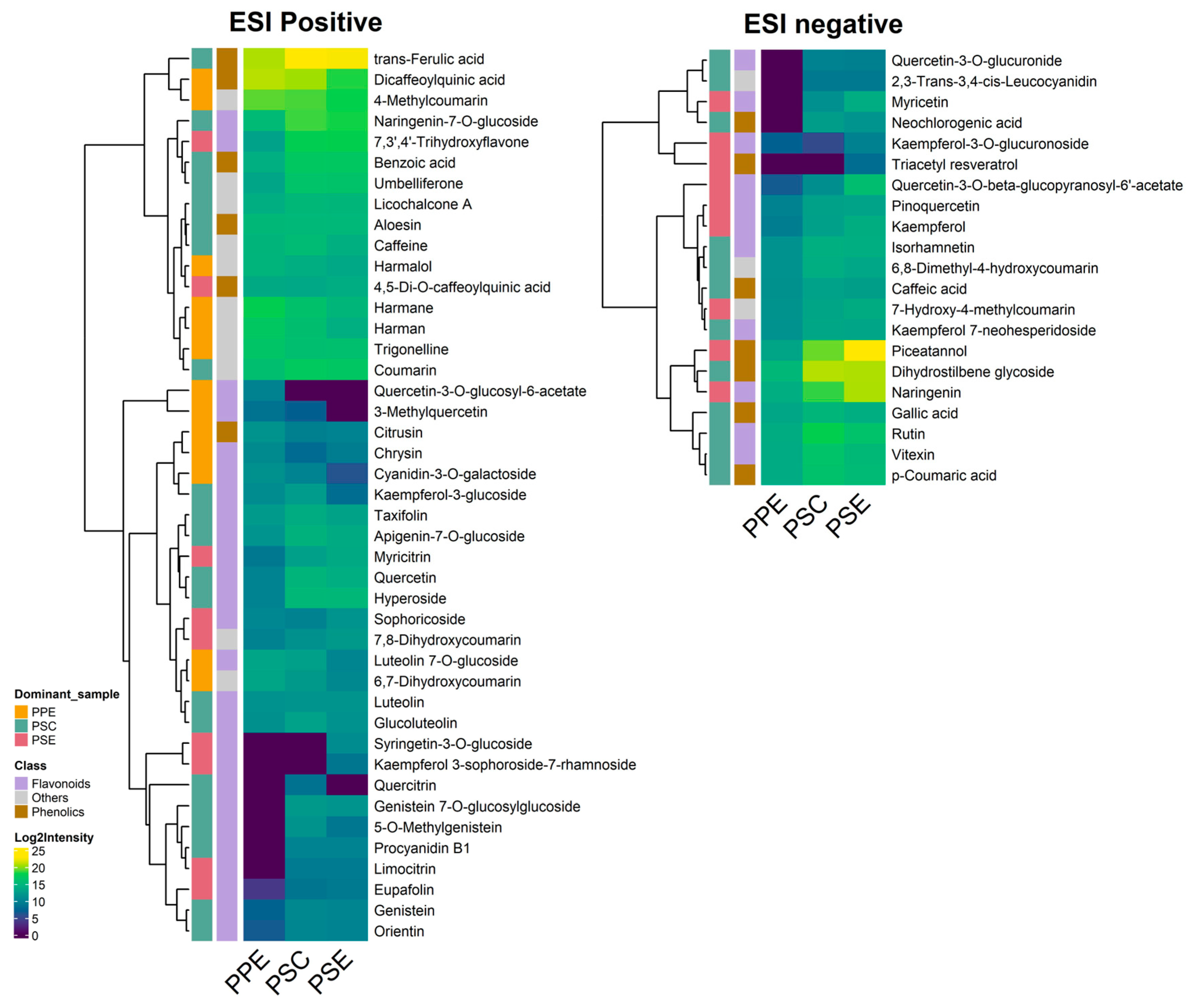
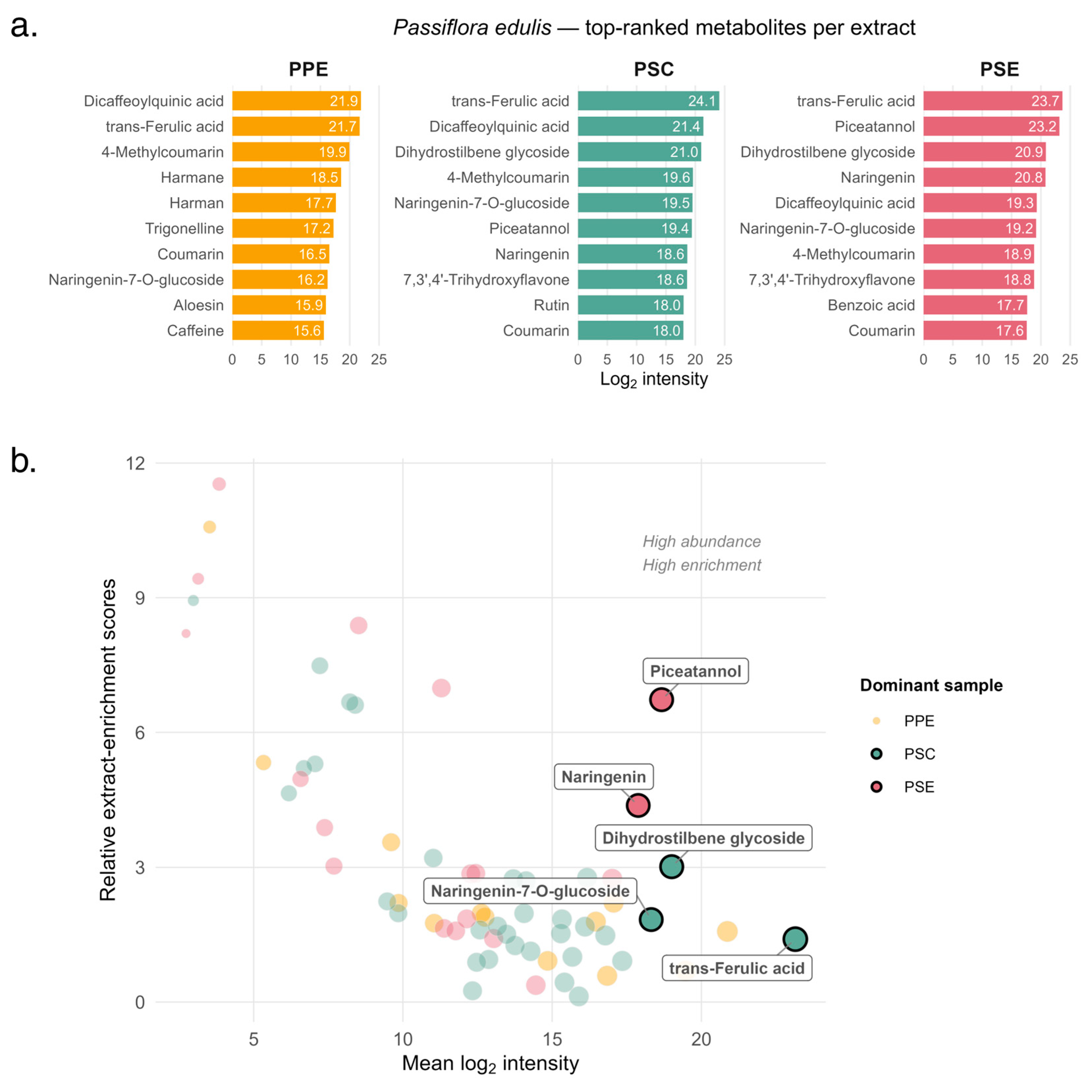
3.2. LC–QTOF/MS Metabolite Profiling and Feature Prioritization of Passion Fruit Extracts
3.3. Comparative LC–QTOF/MS Profiling of Putatively Annotated Metabolites
3.4. Antioxidant Activities of Passion Fruit Extracts
3.5. Hyaluronidase and Collagenase Inhibitory Activities of Passion Fruit Extracts
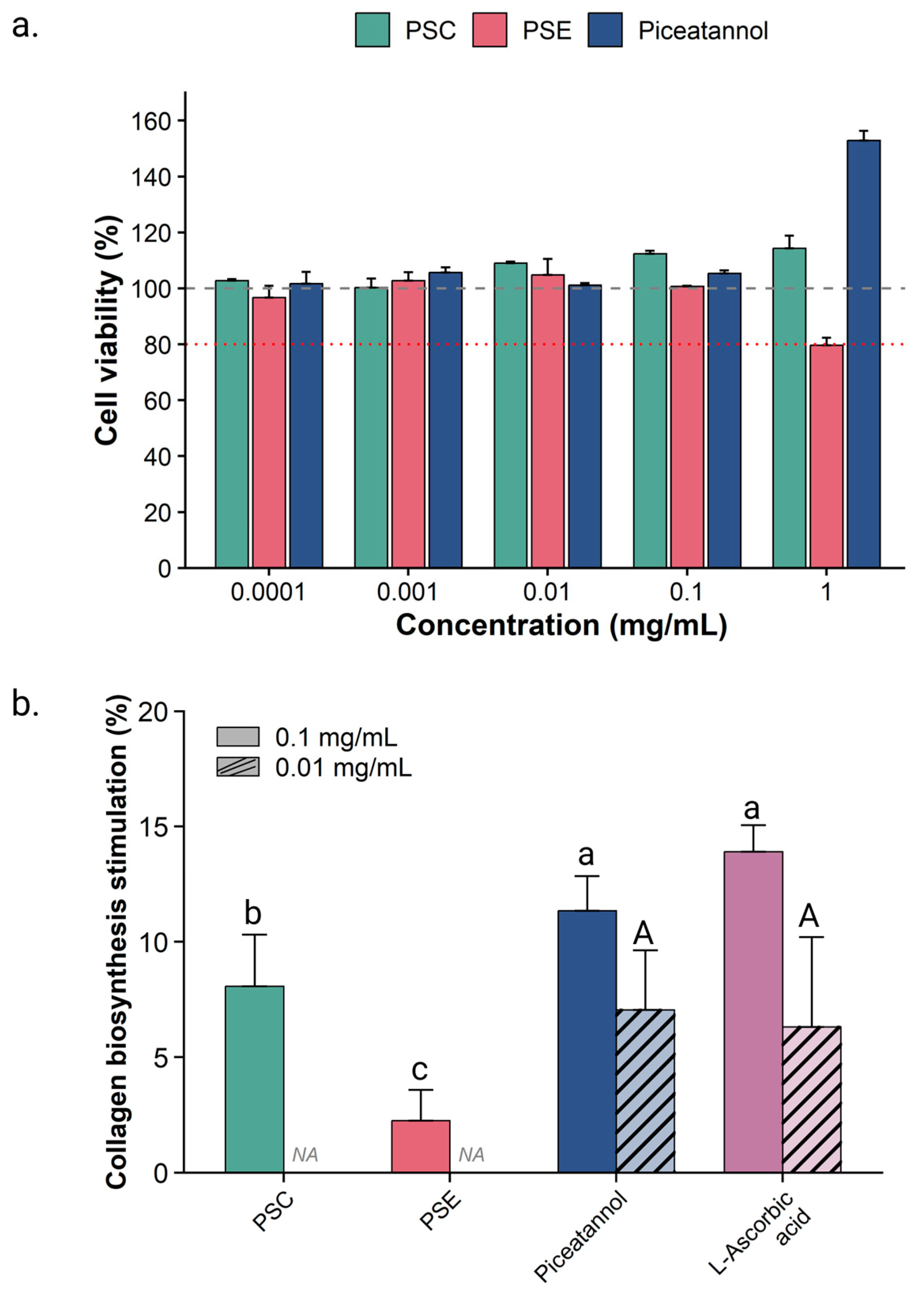
3.6. Cytotoxicity and Collagen Biosynthesis Stimulation of Passion Fruit Extracts
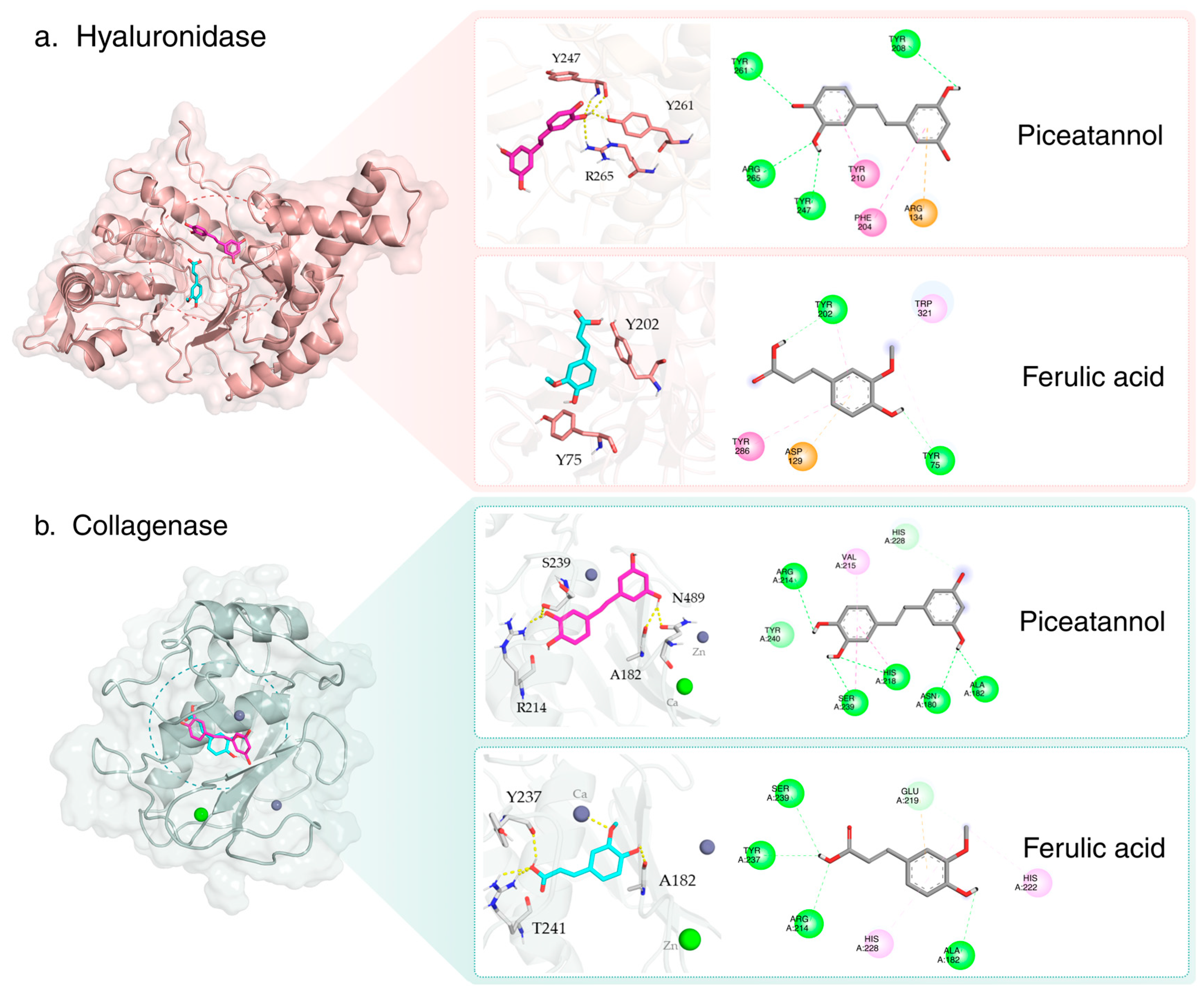
3.7. Molecular Docking Analysis of Putative Compounds Against Hyaluronidase and Collagenase
4. Conclusions
Supplementary Materials
Author Contributions
Funding
Data Availability Statement
Acknowledgments
Conflicts of Interest
Abbreviations
| ANOVA | Analysis of Variance |
| BSA | Bovine Serum Albumin |
| DI | Deionized Water |
| DMEM | Dulbecco Modified Eagle Medium |
| DMSO | Dimethyl Sulfoxide |
| DPPH | 2,2-Diphenyl-1-picrylhydrazyl |
| ECM | Extracellular Matrix |
| FALGPA | N-[3-(2-furyl)acryloyl]-Leu-Gly-Pro-Ala |
| FC | Fold Change |
| FRAP | Ferric Reducing Antioxidant Power |
| GAE | Gallic Acid Equivalent |
| HCl | Hydrochloric Acid |
| LC-QTOF/MS | Liquid Chromatography Quadrupole Time-of-Flight Mass Spectrometry |
| MTT | 3-(4,5-Dimethylthiazol-2-yl)-2,5-Diphenyltetrazolium Bromide |
| PBS | Phosphate-Buffered Saline |
| PLS-DA | Partial least squares–discriminant analysis |
| PPE | Passion fruit pulp extract |
| PSC | Passion fruit pulp-with-seed extract |
| PSE | Passion fruit seed extract |
| QE | Quercetin Equivalent |
| RMSD | Root Mean Square Deviation |
| ROS | Reactive Oxygen Species |
| SD | Standard Deviation |
| TFC | Total Flavonoid Content |
| TPC | Total Phenolic Content |
| TPTZ | 2,4,6-Tripyridyl-s-triazine |
| UV | Ultraviolet |
| VIP | Variable Importance in Projection |
References
- dos Santos, F.A.R.; Xavier, J.A.; da Silva, F.C.; Merlin, J.P.J.; Goulart, M.O.F.; Rupasinghe, H.P.V. Antidiabetic, Antiglycation, and Antioxidant Activities of Ethanolic Seed Extract of Passiflora edulis and Piceatannol In Vitro. Molecules 2022, 27, 4064. [Google Scholar] [CrossRef] [Scilit]
- Duarte, I.d.A.E.; Milenkovic, D.; Borges, T.K.; de Oliveira, L.d.L.; Costa, A.M. Brazilian passion fruit as a new healthy food: From its composition to health properties and mechanisms of action. Food Funct. 2021, 12, 11106–11120. [Google Scholar] [CrossRef] [Scilit]
- He, X.; Luan, F.; Yang, Y.; Wang, Z.; Zhao, Z.; Fang, J.; Wang, M.; Zuo, M.; Li, Y. Passiflora edulis: An Insight Into Current Researches on Phytochemistry and Pharmacology. Front. Pharmacol. 2020, 11, 617. [Google Scholar] [CrossRef] [Scilit] [PubMed]
- Kawakami, S.; Morinaga, M.; Tsukamoto-Sen, S.; Mori, S.; Matsui, Y.; Kawama, T. Constituent Characteristics and Functional Properties of Passion Fruit Seed Extract. Life 2022, 12, 38. [Google Scholar] [CrossRef] [Scilit]
- Weyya, G.; Belay, A.; Tadesse, E. Passion fruit (Passiflora edulis Sims) by-products as a source of bioactive compounds for non-communicable disease prevention: Extraction methods and mechanisms of action: A systematic review. Front. Nutr. 2024, 11, 1340511. [Google Scholar] [CrossRef] [Scilit]
- Tungmunnithum, D.; Thongboonyou, A.; Pholboon, A.; Yangsabai, A. Flavonoids and Other Phenolic Compounds from Medicinal Plants for Pharmaceutical and Medical Aspects: An Overview. Medicines 2018, 5, 93. [Google Scholar] [CrossRef] [Scilit]
- Rinnerthaler, M.; Bischof, J.; Streubel, M.K.; Trost, A.; Richter, K. Oxidative Stress in Aging Human Skin. Biomolecules 2015, 5, 545–589. [Google Scholar] [CrossRef] [Scilit]
- Qian, H.; Shan, Y.; Gong, R.; Lin, D.; Zhang, M.; Wang, C.; Wang, L. Mechanism of action and therapeutic effects of oxidative stress and stem cell-based materials in skin aging: Current evidence and future perspectives. Front. Bioeng. Biotechnol. 2023, 10, 1082403. [Google Scholar] [CrossRef] [Scilit] [PubMed]
- Kammeyer, A.; Luiten, R.M. Oxidation events and skin aging. Ageing Res. Rev. 2015, 21, 16–29. [Google Scholar] [CrossRef] [Scilit] [PubMed]
- Shin, J.W.; Kwon, S.H.; Choi, J.Y.; Na, J.I.; Huh, C.H.; Choi, H.R.; Park, K.C. Molecular Mechanisms of Dermal Aging and Antiaging Approaches. Int. J. Mol. Sci. 2019, 20, 2126. [Google Scholar] [CrossRef] [Scilit]
- Chylińska, N.; Maciejczyk, M. Hyaluronic Acid and Skin: Its Role in Aging and Wound-Healing Processes. Gels 2025, 11, 281. [Google Scholar] [CrossRef] [Scilit] [PubMed]
- Younis, M.M.; Ayoub, I.M.; Mostafa, N.M.; El Hassab, M.A.; Eldehna, W.M.; Al-Rashood, S.T.; Eldahshan, O.A. GC/MS Profiling, Anti-Collagenase, Anti-Elastase, Anti-Tyrosinase and Anti-Hyaluronidase Activities of a Stenocarpus sinuatus Leaves Extract. Plants 2022, 11, 918. [Google Scholar] [CrossRef] [Scilit]
- Wang, S.; Li, F.; Feng, X.; Feng, M.; Niu, X.; Jiang, X.; Chen, W.; Bai, R. Promoting collagen synthesis: A viable strategy to combat skin ageing. J. Enzym. Inhib. Med. Chem. 2025, 40, 2488821. [Google Scholar] [CrossRef] [Scilit] [PubMed]
- Hartanto, S.; Lister, I.N.E.; Fachrial, E. A comparative study of peel and seed extract of passion fruit (Passiflora edulis) as anti collagenase. Am. Sci. Res. J. Eng. Technol. Sci. 2019, 54, 42–48. [Google Scholar]
- da Costa Gomes, A.; Figueiredo, C.C.M.; Granero, F.O.; Junior, J.L.B.; Ximenes, V.F.; Silva, L.P.; Nicolau-Junior, N.; da Silva, R.M.G. Antioxidant and antiglycation activities and inhibitory action of Passiflora cincinnata on collagenase, elastase and tyrosinase: In vitro and in silico study. Biocatal. Agric. Biotechnol. 2022, 44, 102464. [Google Scholar] [CrossRef] [Scilit]
- Huang, Y.H.; Huang, C.Y. Anti-Skin Aging Potential, Antibacterial Activity, Inhibition of Single-Stranded DNA-Binding Protein, and Cytotoxic Effects of Acetone-Extracted Passiflora edulis (Tainung No. 1) Rind Extract on Oral Carcinoma Cells. Plants 2024, 13, 2194. [Google Scholar] [CrossRef] [Scilit]
- Matsui, Y.; Sugiyama, K.; Kamei, M.; Takahashi, T.; Suzuki, T.; Katagata, Y.; Ito, T. Extract of Passion Fruit (Passiflora edulis) Seed Containing High Amounts of Piceatannol Inhibits Melanogenesis and Promotes Collagen Synthesis. J. Agric. Food Chem. 2010, 58, 11112–11118. [Google Scholar] [CrossRef] [Scilit] [PubMed]
- Wolfender, J.-L.; Marti, G.; Thomas, A.; Bertrand, S. Current approaches and challenges for the metabolite profiling of complex natural extracts. J. Chromatogr. A 2015, 1382, 136–164. [Google Scholar] [CrossRef] [Scilit]
- Siniawska, M.; Wojdyło, A. Polyphenol Profiling by LC QTOF/ESI-MS and Biological Activity of Purple Passion Fruit Epicarp Extract. Molecules 2023, 28, 6711. [Google Scholar] [CrossRef] [Scilit]
- Liu, H.; Agar, O.T.; Imran, A.; Barrow, C.J.; Dunshea, F.R.; Suleria, H.A.R. LC-ESI-QTOF-MS/MS characterization of phenolic compounds in Australian native passion fruits and their potential antioxidant activities. Food Sci. Nutr. 2024, 12, 2455–2472. [Google Scholar] [CrossRef] [Scilit] [PubMed]
- Viganó, J.; Aguiar, A.C.; Moraes, D.R.; Jara, J.L.P.; Eberlin, M.N.; Cazarin, C.B.B.; Maróstica, M.R.; Martínez, J. Sequential high pressure extractions applied to recover piceatannol and scirpusin B from passion fruit bagasse. Food Res. Int. 2016, 85, 51–58. [Google Scholar] [CrossRef] [Scilit]
- Septembre-Malaterre, A.; Stanislas, G.; Douraguia, E.; Gonthier, M.-P. Evaluation of nutritional and antioxidant properties of the tropical fruits banana, litchi, mango, papaya, passion fruit and pineapple cultivated in Réunion French Island. Food Chem. 2016, 212, 225–233. [Google Scholar] [CrossRef] [Scilit]
- de Santana, F.C.; de Oliveira Torres, L.R.; Shinagawa, F.B.; de Oliveira e Silva, A.M.; Yoshime, L.T.; de Melo, I.L.P.; Marcellini, P.S.; Mancini-Filho, J. Optimization of the antioxidant polyphenolic compounds extraction of yellow passion fruit seeds (Passiflora edulis Sims) by response surface methodology. J. Food Sci. Technol. 2017, 54, 3552–3561. [Google Scholar] [CrossRef] [Scilit] [PubMed]
- Sembiring, E.N.; Elya, B.; Sauriasari, R. Phytochemical screening, total flavonoid and total phenolic content and antioxidant activity of different parts of Caesalpinia bonduc (L.) Roxb. Pharmacogn. J. 2018, 10, 123–127. [Google Scholar] [CrossRef] [Scilit]
- Gu, Z. Complex heatmap visualization. iMeta 2022, 1, e43. [Google Scholar] [CrossRef] [Scilit]
- Iwai, K.; Kishimoto, N.; Kakino, Y.; Mochida, K.; Fujita, T. In Vitro Antioxidative Effects and Tyrosinase Inhibitory Activities of Seven Hydroxycinnamoyl Derivatives in Green Coffee Beans. J. Agric. Food Chem. 2004, 52, 4893–4898. [Google Scholar] [CrossRef] [Scilit]
- Nitthikan, N.; Leelapornpisid, P.; Natakankitkul, S.; Chaiyana, W.; Mueller, M.; Viernstein, H.; Kiattisin, K. Improvement of Stability and Transdermal Delivery of Bioactive Compounds in Green Robusta Coffee Beans Extract Loaded Nanostructured Lipid Carriers. J. Nanotechnol. 2018, 2018, 7865024. [Google Scholar] [CrossRef] [Scilit]
- Nitthikan, N.; Leelapornpisid, P.; Naksuriya, O.; Intasai, N.; Kiattisin, K. Potential and Alternative Bioactive Compounds from Brown Agaricus bisporus Mushroom Extracts for Xerosis Treatment. Sci. Pharm. 2022, 90, 59. [Google Scholar] [CrossRef] [Scilit]
- Thring, T.S.A.; Hili, P.; Naughton, D.P. Anti-collagenase, anti-elastase and anti-oxidant activities of extracts from 21 plants. BMC Complement. Altern. Med. 2009, 9, 27. [Google Scholar] [CrossRef] [Scilit] [PubMed]
- Chittasupho, C.; Manthaisong, A.; Okonogi, S.; Tadtong, S.; Samee, W. Effects of Quercetin and Curcumin Combination on Antibacterial, Antioxidant, In Vitro Wound Healing and Migration of Human Dermal Fibroblast Cells. Int. J. Mol. Sci. 2022, 23, 142. [Google Scholar] [CrossRef] [Scilit]
- Szász, C.; Pap, D.; Szebeni, B.; Bokrossy, P.; Őrfi, L.; Szabó, A.J.; Vannay, Á.; Veres-Székely, A. Optimization of Sirius Red-Based Microplate Assay to Investigate Collagen Production In Vitro. Int. J. Mol. Sci. 2023, 24, 17435. [Google Scholar] [CrossRef] [Scilit]
- Frisch, M.J.; Trucks, G.W.; Schlegel, H.B.; Scuseria, G.E.; Robb, M.A.; Cheeseman, J.R.; Scalmani, G.; Barone, V.; Petersson, G.A.; Nakatsuji, H.; et al. Gaussian 16, Rev. B.01; Gaussian, Inc.: Wallingford, CT, USA, 2016.
- Stephens, P.J.; Devlin, F.J.; Chabalowski, C.F.; Frisch, M.J. Ab Initio Calculation of Vibrational Absorption and Circular Dichroism Spectra Using Density Functional Force Fields. J. Phys. Chem. 1994, 98, 11623–11627. [Google Scholar] [CrossRef] [Scilit]
- Trott, O.; Olson, A.J. AutoDock Vina: Improving the speed and accuracy of docking with a new scoring function, efficient optimization, and multithreading. J. Comput. Chem. 2010, 31, 455–461. [Google Scholar] [CrossRef] [Scilit]
- Sabogal-Palma, A.C.; Zapata-Ocampo, P.A.; Rodríguez-Cabal, H.A.; Ocampo-Jiménez, O.; Méndez-Arteaga, J.J.; Monsalve, Z.I. Evaluation of the potential use of the by-products of Passiflora maliformis L. and Passiflora edulis Sims from the Southern Colombian Massif as dietary fibre and prebiotic activity. Int. J. Food Sci. Technol. 2024, 59, 3744–3759. [Google Scholar] [CrossRef] [Scilit]
- Rotta, E.M.; Rodrigues, C.A.; Jardim, I.C.S.F.; Maldaner, L.; Visentainer, J.V. Determination of phenolic compounds and antioxidant activity in passion fruit pulp (Passiflora spp.) using a modified QuEChERS method and UHPLC-MS/MS. LWT 2019, 100, 397–403. [Google Scholar] [CrossRef] [Scilit]
- Kidøy, L.; Nygård, A.M.; Andersen, Ø.M.; Pedersen, A.T.; Aksnes, D.W.; Kiremire, B.T. Anthocyanins in Fruits of Passiflora edulis and P. suberosa. J. Food Compos. Anal. 1997, 10, 49–54. [Google Scholar] [CrossRef] [Scilit]
- Pereira, C.A.M.; Rodrigues, T.R.; Yariwake, J.H. Quantification of harman alkaloids in sour passion fruit pulp and seeds by a novel dual SBSE-LC/Flu (stir bar sorptive extraction-liquid chromatography with fluorescence detector) method. J. Braz. Chem. Soc. 2014, 25, 1472–1483. [Google Scholar] [CrossRef] [Scilit]
- Dhawan, K.; Dhawan, S.; Sharma, A. Passiflora: A review update. J. Ethnopharmacol. 2004, 94, 1–23. [Google Scholar] [CrossRef] [Scilit]
- Zucolotto, S.M.; Fagundes, C.; Reginatto, F.H.; Ramos, F.A.; Castellanos, L.; Duque, C.; Schenkel, E.P. Analysis of C-glycosyl Flavonoids from South American Passiflora Species by HPLC-DAD and HPLC-MS. Phytochem. Anal. 2012, 23, 232–239. [Google Scholar] [CrossRef] [Scilit]
- Fonseca, A.M.A.; Geraldi, M.V.; Junior, M.R.M.; Silvestre, A.J.D.; Rocha, S.M. Purple passion fruit (Passiflora edulis f. edulis): A comprehensive review on the nutritional value, phytochemical profile and associated health effects. Food Res. Int. 2022, 160, 111665. [Google Scholar] [CrossRef] [Scilit]
- Zomer, A.P.L.; Rodrigues, C.A.; Rotta, E.M.; Vilela Junqueira, N.T.; Santos, O.O.; Visentainer, J.-V.; Maldaner, L. Investigation of the Potential of Commercial and Wild Passiflora Seed Species as Stilbenes Sources. J. Agric. Food Chem. 2025, 73, 15046–15055. [Google Scholar] [CrossRef] [Scilit]
- Munteanu, I.G.; Apetrei, C. Analytical Methods Used in Determining Antioxidant Activity: A Review. Int. J. Mol. Sci. 2021, 22, 3380. [Google Scholar] [CrossRef] [Scilit] [PubMed]
- Pulido, R.; Bravo, L.; Saura-Calixto, F. Antioxidant Activity of Dietary Polyphenols As Determined by a Modified Ferric Reducing/Antioxidant Power Assay. J. Agric. Food Chem. 2000, 48, 3396–3402. [Google Scholar] [CrossRef] [Scilit]
- Morais, D.R.; Rotta, E.M.; Sargi, S.C.; Schmidt, E.M.; Bonafe, E.G.; Eberlin, M.N.; Sawaya, A.C.H.F.; Visentainer, J.V. Antioxidant activity, phenolics and UPLC–ESI(–)–MS of extracts from different tropical fruits parts and processed peels. Food Res. Int. 2015, 77, 392–399. [Google Scholar] [CrossRef] [Scilit]
- Borzabadi-Farahani, A.; Mosahebi, A.; Zargaran, D. A Scoping Review of Hyaluronidase Use in Managing the Complications of Aesthetic Interventions. Aesthetic Plast. Surg. 2024, 48, 1193–1209. [Google Scholar] [CrossRef] [Scilit]
- Tomas, M.; Günal-Köroğlu, D.; Kamiloglu, S.; Ozdal, T.; Capanoglu, E. The state of the art in anti-aging: Plant-based phytochemicals for skin care. Immun. Ageing 2025, 22, 5. [Google Scholar] [CrossRef] [Scilit] [PubMed]
- Fidelis, M.; de Moura, C.; Kabbas Junior, T.; Pap, N.; Mattila, P.; Mäkinen, S.; Putnik, P.; Bursać Kovačević, D.; Tian, Y.; Yang, B.; et al. Fruit Seeds as Sources of Bioactive Compounds: Sustainable Production of High Value-Added Ingredients from By-Products within Circular Economy. Molecules 2019, 24, 3854. [Google Scholar] [CrossRef] [Scilit]
- Kunsorn, P.; Payuhakrit, W.; Petit, V.; Larue, L.; Champakam, S.; Suwannalert, P. Skin anti-aging and wound healing effects of a passion fruit seed extract rich in piceatannol. Nutr. Healthy Aging 2024, 9, 101–112. [Google Scholar] [CrossRef] [Scilit]
- Yoshihara, M.; Kawakami, S.; Matsui, Y.; Kawama, T. Piceatannol enhances hyaluronic acid synthesis through SIRT1-Mediated HAS2 upregulation in human dermal fibroblasts. Biochem. Biophys. Rep. 2024, 39, 101746. [Google Scholar] [CrossRef] [Scilit]
- Lee, J.H.; Park, J.; Shin, D.W. The Molecular Mechanism of Polyphenols with Anti-Aging Activity in Aged Human Dermal Fibroblasts. Molecules 2022, 27, 4351. [Google Scholar] [CrossRef] [Scilit]
- Chao, K.L.; Muthukumar, L.; Herzberg, O. Structure of Human Hyaluronidase-1, a Hyaluronan Hydrolyzing Enzyme Involved in Tumor Growth and Angiogenesis. Biochemistry 2007, 46, 6911–6920. [Google Scholar] [CrossRef] [Scilit]
- Zhang, L.; Bharadwaj, A.G.; Casper, A.; Barkley, J.; Barycki, J.J.; Simpson, M.A. Hyaluronidase Activity of Human Hyal1 Requires Active Site Acidic and Tyrosine Residues. J. Biol. Chem. 2009, 284, 9433–9442. [Google Scholar] [CrossRef] [Scilit]
- Piotrowska, H.; Kucinska, M.; Murias, M. Biological activity of piceatannol: Leaving the shadow of resveratrol. Mutat. Res. Rev. Mutat. Res. 2012, 750, 60–82. [Google Scholar] [CrossRef] [Scilit] [PubMed]
- Gorantla, K.R.; Krishnan, A.; Waheed, S.O.; Varghese, A.; DiCastri, I.; LaRouche, C.; Paik, M.; Fields, G.B.; Karabencheva-Christova, T.G. Novel Insights into the Catalytic Mechanism of Collagenolysis by Zn(II)-Dependent Matrix Metalloproteinase-1. Biochemistry 2024, 63, 1925–1940. [Google Scholar] [CrossRef] [Scilit]
- Cross, J.B.; Duca, J.S.; Kaminski, J.J.; Madison, V.S. The Active Site of a Zinc-Dependent Metalloproteinase Influences the Computed pKa of Ligands Coordinated to the Catalytic Zinc Ion. J. Am. Chem. Soc. 2002, 124, 11004–11007. [Google Scholar] [CrossRef] [Scilit] [PubMed]
- Verma, R.P.; Hansch, C. Matrix metalloproteinases (MMPs): Chemical–biological functions and (Q)SARs. Bioorganic Med. Chem. 2007, 15, 2223–2268. [Google Scholar] [CrossRef] [Scilit] [PubMed]
- Zduńska, K.; Dana, A.; Kolodziejczak, A.; Rotsztejn, H. Antioxidant Properties of Ferulic Acid and Its Possible Application. Ski. Pharmacol. Physiol. 2018, 31, 332–336. [Google Scholar] [CrossRef] [Scilit]



| Passion Fruit Extracts | TPC (mg GAE/g Extract) | TFC (mg QE/g Extract) |
|---|---|---|
| PPE | 3.17 ± 0.13 c | 2.83 ± 0.03 b |
| PSC | 14.81 ± 3.55 a | 4.01 ± 0.2 b |
| PSE | 9.83 ± 0.57 b | 25.05 ± 0.19 a |
| Sample | IC50 DPPH (mg/mL) | FRAP Value (mg FeSO4/g Sample) |
|---|---|---|
| PPE | 9.43 ± 2.66 d | ND # |
| PSC | 0.83 ± 0.10 c | 1.31 ± 0.02 c |
| PSE | 0.19 ± 0.05 b | 35.25 ± 3.47 b |
| Piceatannol | 0.03 ± 0.01 a | 179.59 ± 4.19 a |
| Samples | Anti-Hyaluronidase Activity (%) | Collagenase Inhibition (%) |
|---|---|---|
| PPE | 19.91 ± 0.68 c | 24.58 ± 5.56 d |
| PSC | 20.13 ± 2.30 c | 54.24 ± 9.60 b |
| PSE | 23.75 ± 1.68 b,c | 79.80 ± 7.3 a |
| Piceatannol | 26.77 ± 1.43 b | 33.33 ± 3.07 c |
| Tannic acid | 82.13 ± 4.04 a | - |
| (−)-EGCG | - | 25.00 ± 12.33 d |
Disclaimer/Publisher’s Note: The statements, opinions and data contained in all publications are solely those of the individual author(s) and contributor(s) and not of MDPI and/or the editor(s). MDPI and/or the editor(s) disclaim responsibility for any injury to people or property resulting from any ideas, methods, instructions or products referred to in the content. |
© 2026 by the authors. Licensee MDPI, Basel, Switzerland. This article is an open access article distributed under the terms and conditions of the Creative Commons Attribution (CC BY) license.
Share and Cite
Chaichit, S.; Nitthikan, N.; Kiattisin, K.; Jiranusornkul, S. Chemical Composition and Anti-Aging Potential of Passiflora edulis By-Product Fractions: A Comparative Study Integrating Metabolomic Profiling and Molecular Docking. Compounds 2026, 6, 32. https://doi.org/10.3390/compounds6020032
Chaichit S, Nitthikan N, Kiattisin K, Jiranusornkul S. Chemical Composition and Anti-Aging Potential of Passiflora edulis By-Product Fractions: A Comparative Study Integrating Metabolomic Profiling and Molecular Docking. Compounds. 2026; 6(2):32. https://doi.org/10.3390/compounds6020032
Chicago/Turabian StyleChaichit, Siripat, Nichcha Nitthikan, Kanokwan Kiattisin, and Supat Jiranusornkul. 2026. "Chemical Composition and Anti-Aging Potential of Passiflora edulis By-Product Fractions: A Comparative Study Integrating Metabolomic Profiling and Molecular Docking" Compounds 6, no. 2: 32. https://doi.org/10.3390/compounds6020032
APA StyleChaichit, S., Nitthikan, N., Kiattisin, K., & Jiranusornkul, S. (2026). Chemical Composition and Anti-Aging Potential of Passiflora edulis By-Product Fractions: A Comparative Study Integrating Metabolomic Profiling and Molecular Docking. Compounds, 6(2), 32. https://doi.org/10.3390/compounds6020032