Article

The Role of Zinc Oxide as a Resistivity Modulator in Complex Polymer Compounds for Cable Application


1
Mixer S.p.A., Via Chiara n. 6/C, 48012 Villa Prati di Bagnacavallo, RA, Italy
2
SPINPET S.r.l., Viale R. Piaggio 32, 56025 Pontedera, PI, Italy
3
Department of Chemistry and Industrial Chemistry, University of Pisa, Via Giuseppe Moruzzi 13, 56124 Pisa, PI, Italy
*
Author to whom correspondence should be addressed.
Compounds 2026, 6(2), 28; https://doi.org/10.3390/compounds6020028

Submission received: 11 March 2026 / Revised: 13 April 2026 / Accepted: 21 April 2026 / Published: 24 April 2026

Abstract

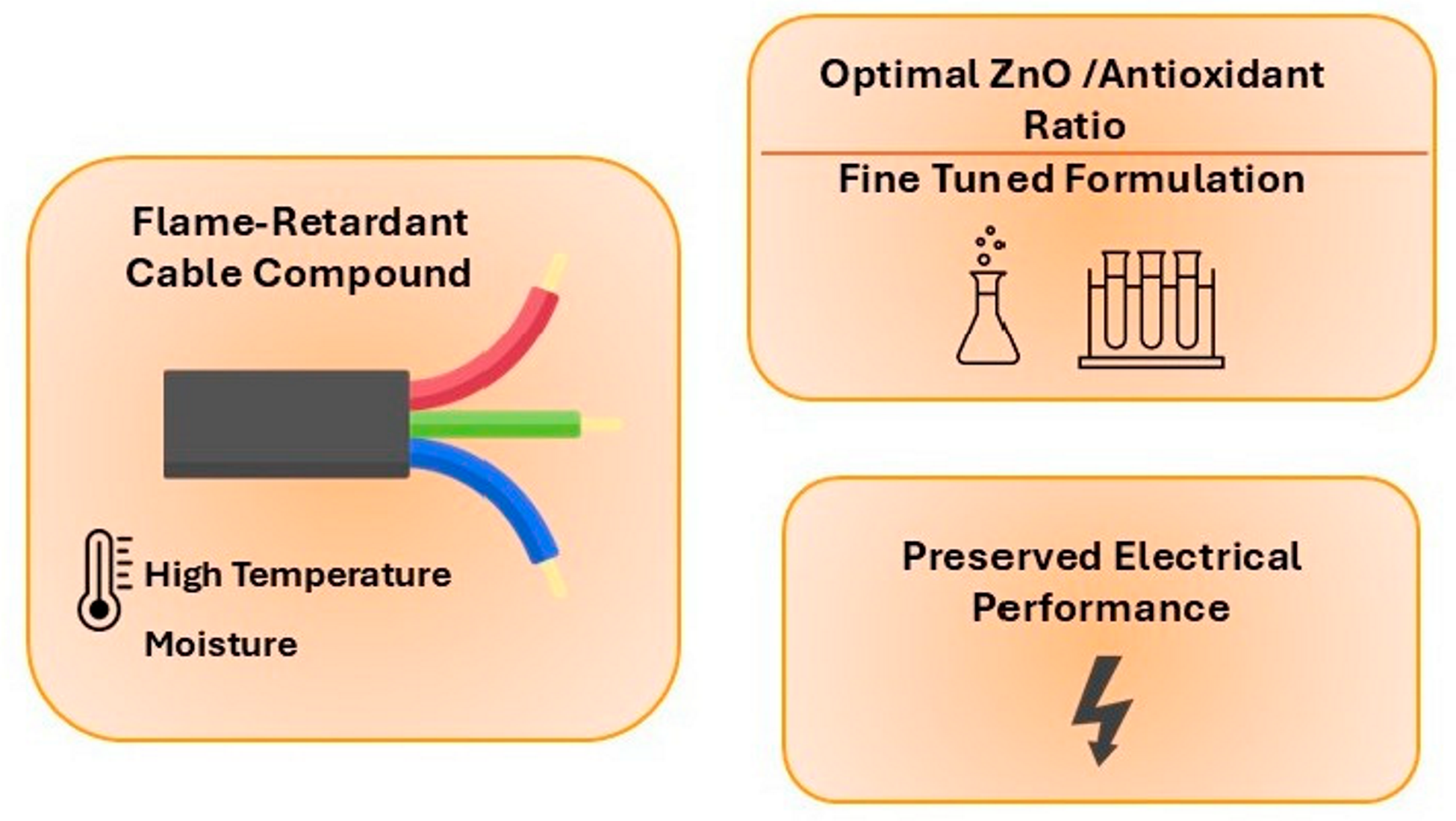
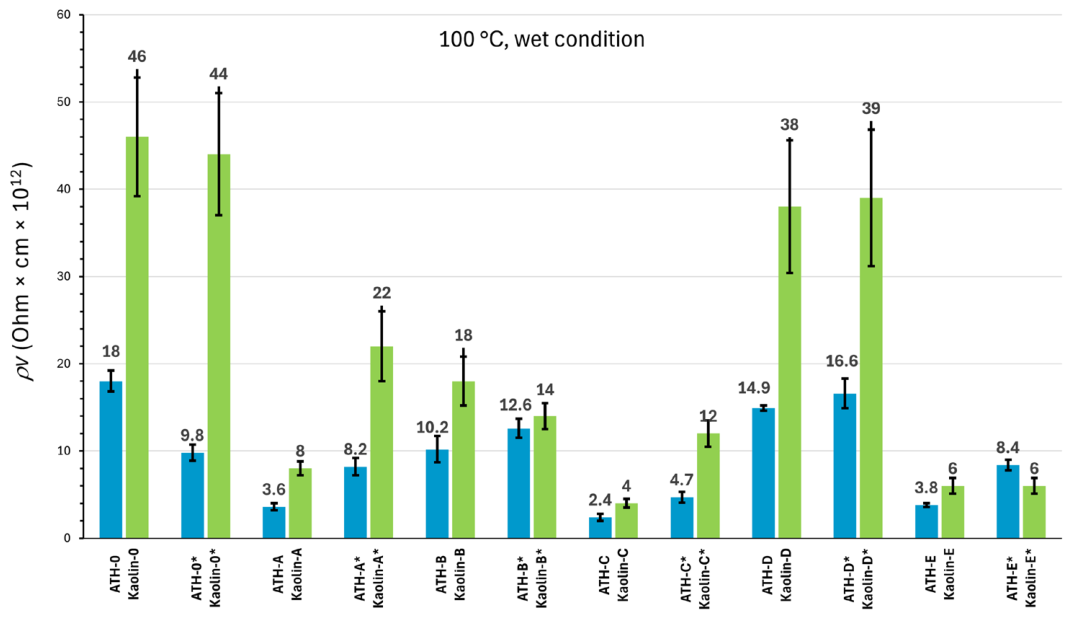
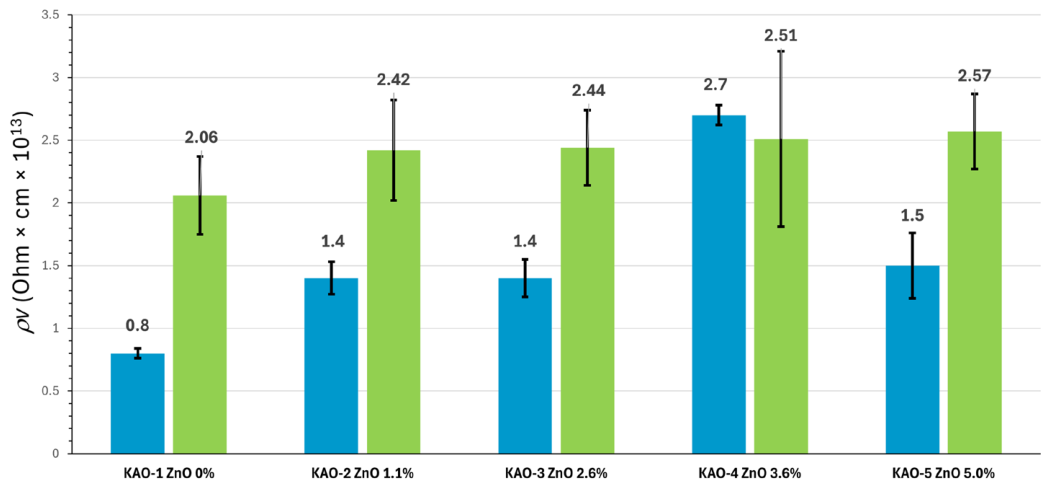
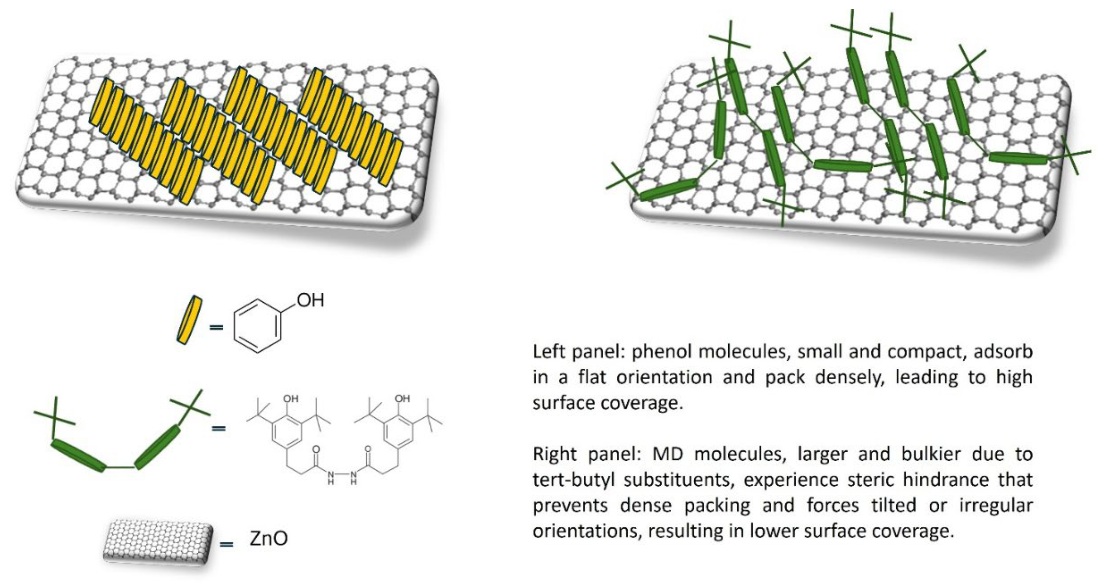
For cable compound manufacturers, accurate formulation fine-tuning is essential to ensure safety, long-term durability, and compliance with international standards for dielectric strength, volume resistivity, and environmental and thermal ageing. This work presents an experimental study demonstrating how minor additives can critically affect the performance of complex flame-retardant elastomeric formulations. The investigation focuses on the role of small amounts of zinc oxide (ZnO) in commercial cable compounds based on a crosslinked elastomeric matrix composed of ethylene–propylene monomer (EPM), ethylene–propylene–diene monomer (EPDM), and thermoplastic polyolefin elastomer (POE). The formulations contain aluminium trihydroxide (ATH) as the major filler, together with several minor additives. Among these, a phenolic antioxidant (AN01) acting as a metal deactivator is also present. The addition of ZnO in low amounts (2–5 phr) allowed the compounds to maintain a volume resistivity ≥ 1012 Ω·cm in water at 100 °C. To elucidate the role of ZnO, a systematic set of formulations was prepared by varying the type and content of selected additives. The compounds were prepared by melt mixing in an internal mixer (Banbury type), followed by peroxide crosslinking via compression molding. Electrical characterization results indicate that ZnO interacts with the phenolic additive through surface adsorption, forming a coated particle with significantly reduced electrical conductivity. Optimal electrical performance was achieved when the ZnO-to-additive ratio corresponded to the minimum amount required for complete surface complexation.
Keywords: elastomeric cable compounds; flame-retardant materials; electrical volume resistivity; zinc oxide additives; formulation fine-tuning elastomeric cable compounds; flame-retardant materials; electrical volume resistivity; zinc oxide additives; formulation fine-tuning
Graphical Abstract