Article

Electron Transport, Charge Transfer Processes and Localized States of Charge Carriers in Nanosized Anodic TiO2 Films


by
Ekaterina N. Muratova
1,*,
Andrey A. Ryabko
2,
Vyacheslav A. Moshnikov
1,
Igor A. Vrublevsky
3 and
Alexandr I. Maximov
1
1
Microelectronics Department, Saint Petersburg Electrotechnical University “LETI”, Professora Popova St., 5, 197022 Saint Petersburg, Russia
2
Ioffe Institute, 26 Politekhnicheskaya, 194021 Saint Petersburg, Russia
3
Micro and Nanoelectronics Department, Belarusian State University of Informatics and Radioelectronics, Brovki St., 6, 220013 Minsk, Belarus
*
Author to whom correspondence should be addressed.
Nanomanufacturing 2026, 6(1), 6; https://doi.org/10.3390/nanomanufacturing6010006
Submission received: 20 October 2025 / Revised: 8 December 2025 / Accepted: 4 March 2026 / Published: 6 March 2026
(This article belongs to the Special Issue Nanomanufacturing: Feature Papers 2025)

Abstract

TiO2 films with a thickness of 20 nm were obtained by anodizing a titanium film with an aluminum sublayer on a glass substrate. The I–V characteristics were studied in a temperature range of 100–300 K. Three linear sections can be distinguished on the I–V curves in logarithmic coordinates with a bias voltage of up to 2.5 V. The first section is an ohmic section with a bias voltage sweep from 0 V. The second section is associated with the space-charge-limited currents. The third section is characterized by the flow of Poole–Frenkel currents. In the third section, the slope of the approximating line is greater than in the second one due to the flow of higher currents. This is explained by the transition of electrons from donor centers to trap levels, which leads to a decrease in the number of free traps available for capturing electrons injected from the contacts into the conduction band. The obtained values of the Fermi energy of 0.032 and 0.028 eV for temperatures from 100 to 300 K, respectively, indicate that the electron traps in the forbidden zone of TiO2 are shallow. The value of the donor level energy E = 0.082 eV is close to the values of the activation energy of thermal conductivity. This indicates the formation of donor centers in anodic TiO2 by the mechanism of donor vacancies. In anodic TiO2 films, the concentration of electron traps is 1015 cm−3, which is approximately three orders of magnitude less than their concentration in anodic TiO2 films obtained by vacuum deposition.

1. Introduction

Currently, titanium oxide is considered as one of the key materials for applications in various electronic devices, such as MOS transistors, memristors, energy storage devices, photovoltaic cells, transparent electrodes, and UV sensors [1,2,3,4,5,6]. In this regard, studies of the electrical conductivity of TiO2 films are of particular interest. The electrical conductivity of TiO2 films has been studied by a number of authors [7,8,9,10,11,12,13], the results of which confirmed the electron type of their conductivity. The electrophysical properties of titanium oxide films with a thickness of 70.0 nm, obtained by high-frequency magnetron sputtering were investigated in [13]. The results showed that the conductivity of the thin films is determined by space-charge-limited current (SCLC) in a dielectric with traps exponentially distributed in energy. Research results for amorphous titanium oxide films with a thickness of 60 nm, obtained by atomic layer deposition, are presented in [14]. They indicate a conductivity mechanism determined by SCLC. It is shown that the density of traps in such films is ˃1.5 × 1019 cm−3.
An analysis of the literature on thin TiO2 films and their conductivity characteristics indicates that the type of the current–voltage characteristic, depending on the bias voltage and temperature, is complex. This can be explained by the fact that in films with a nanoscale thickness, even at low voltages (1–10 V), the electric field strength can reach high values, of the order of 104–105 V/cm. Accordingly, various conductivity mechanisms can act in films in strong electric fields. In addition to intrinsic charge carriers, extrinsic carriers can also participate in conductivity. The appearance of additional charge carriers in the conductivity band of the dielectric can be caused by both the injection of charge carriers from the electrode–dielectric contact and the ionization of donors [15,16]. Electron traps can have a significant effect on the electrical conductivity in thin oxide films. Defects are the cause of the formation of such traps. Their concentration in oxide films can reach about 1017 cm−3 [13]. Therefore, when studying the electrical conductivity of thin oxide films, it is important to take into account the presence of impurity and trap centers that can form during the growth of thin films. At the same time, there are few results in the literature on the study of the conductivity of TiO2 films of nanoscale thickness.
According to [17], anodic TiO2 films of nanoscale thickness show a positive slope of the Mott–Schottky curves during electrochemical measurements, which is typical for a semiconductor with n-type conductivity. The authors suggested that impurity conductivity in TiO2 occurs due to oxygen vacancies (donor centers). The charge carrier density calculated from the Mott–Schottky curves was Nd = 0.8–5.0 × 1021 cm−3. Moreover, with an increase in the thickness of anodic film with an increase in the anodizing voltage from 2.24 to 10.24 V, the concentration of oxide vacancies decreased from 5.0 × 10²⁰ to 3.9 ×1019 cm−3. These results indicate that the nanoscale thickness of oxide films and structural defects, such as oxygen vacancies, can play an important role in the conductivity of oxide films.
The aim of this work was to study the electrical conductivity and charge transfer processes in nanosized films of anodic TiO2 in the temperature range from 100 to 300 K. Based on the analysis of the current–voltage characteristics, the mechanism of charge carrier conductivity in anodic TiO2 was determined and localized states for donor centers and trap levels were calculated.

2. Materials and Methods

Aluminum layers with a thickness of ~100 nm and titanium layers with a thickness of ~50 nm were deposited onto glass substrates using magnetron sputtering. Before the layers were deposited, the substrates underwent thorough cleaning in isopropyl alcohol followed by distilled water.
Aluminum films were deposited using the following parameters: source power, 1.5 kW; discharge voltage, 380 V; discharge current, 3.7 A; argon pressure, 6 × 10⁻² Pa; base pressure, 10−3 Pa; and deposition rate, 2.8 nm s−1. The titanium films were deposited using the following parameters: source power, 1.0 kW; discharge voltage, 310 V; discharge current, 3.0 A; argon pressure, 2 × 10⁻² Pa; base pressure, 10−3 Pa; deposition rate, 0.1 nm s−1; substrate temperature, room temperature; and target-to-substrate distance, 11 cm.
Electrochemical oxidation of the upper Ti layer was carried out in an electrolyte of a mixture of 2% aqueous oxalic acid and 1% aqueous sulfamic acid in a two-electrode cell, where the anode was the sample with the Ti layer, and the cathode was graphite. A P-5287M potentiostat was used for electrochemical oxidation. The thickness of the titanium oxide layer was determined using an LEF-3M-1 ellipsometer. Titanium oxide films with a thickness of ~20 nm were obtained by electrochemical oxidation in an electrolyte at 20 V until the anodization current reached zero (holding time: 1 min). After anodization, the samples were washed with distilled water and isopropyl alcohol, then heated to 80 °C and then to 120 °C to desorb the remaining electrolyte. The surface morphology was characterized using tapping-mode atomic force microscopy (NT-MDT NTEGRA AFM microscope) with an NSG01 probe. To measure the I–V characteristics, carbon-paste contacts (with a diameter of d ≈ 2 mm) were applied to the surface of the TiO2 films, and the Ti/Al layer served as the second contact. The I–V characteristics were measured using a Keithley 6487 picoammeter. To measure the current–voltage characteristics at low temperatures, an optCRYO198 nitrogen cryostat with a temperature stabilization function was used.

3. Results and Discussion

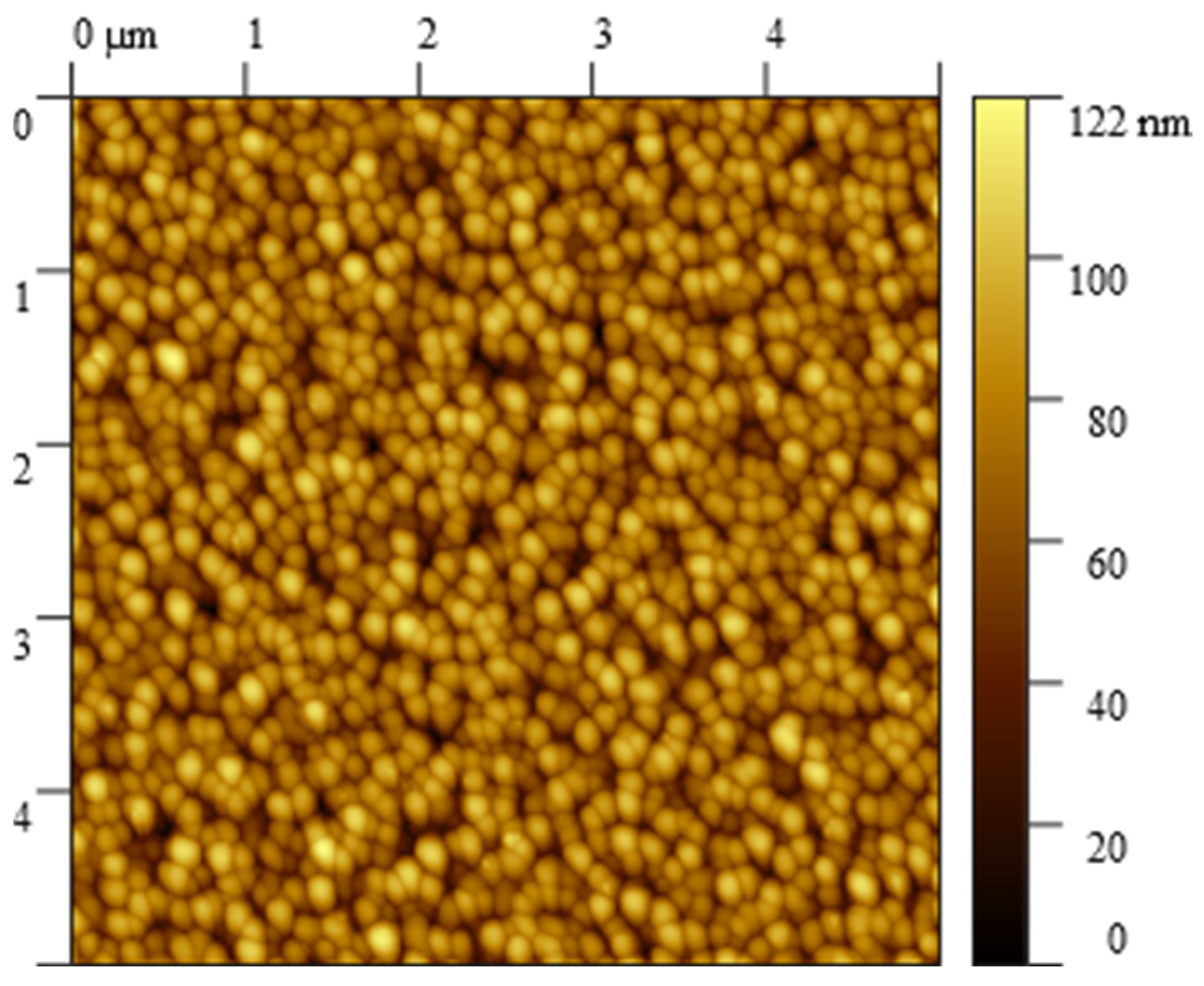
Figure 1 shows a typical two-dimensional AFM surface morphology of anodic TiO2 film. As can be seen, the TiO2 film is continuous and exhibits a uniform surface structure. The height of the surface features of anodic TiO2 film is approximately 60 nm, and this is related to the fine-grained surface of the underlying 100 nm thick aluminum film, which was deposited by magnetron sputtering.
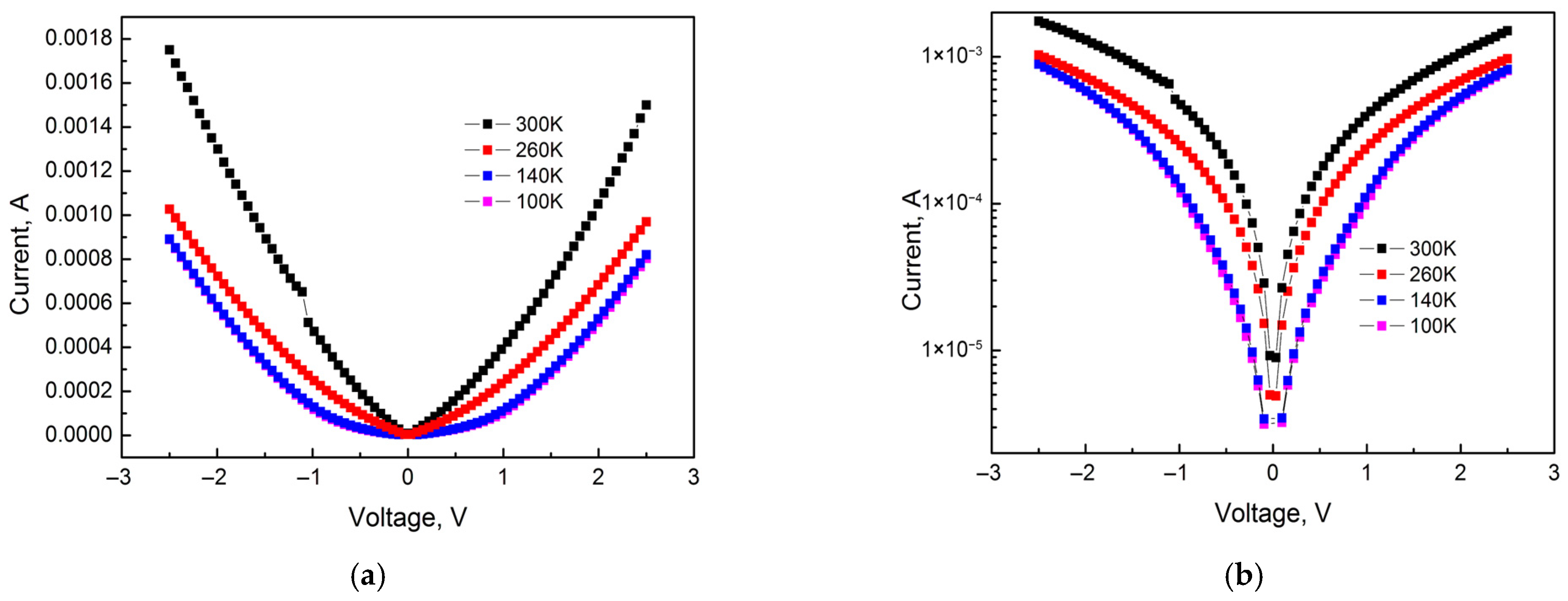
Figure 2 shows the current–voltage characteristics of anodic TiO2 films (20 nm thick) obtained for temperatures of 100–300 K in the forward and reverse bias voltage directions in the range from −2.5 to +2.5 V. As seen in Figure 2a, the forward and reverse I–V curves exhibit a slight asymmetry, attributable to the rectifying properties of anodic TiO2. The character of the I–V curves is strongly influenced by temperature in the range from 260 to 300 K. This is a distinctive feature of space-charge-limited currents. In contrast, for temperatures from 100 to 140 K, the behavior of the current–voltage curves depends weakly on temperature, which is a sign of the flow of Poole–Frenkel currents.
In Figure 2b, the I–V curves in semi-logarithmic coordinates demonstrate that at low voltages near zero, there is a linear increase in current with voltage, which is typical for conductivity in accordance with the Ohm law [18]. However, upon reaching a certain voltage, the current begins to decrease sharply. This behavior is caused by the space charge effect.
It is well known that a Schottky barrier forms at the TiO2/Ti interface. A space charge region with a rectifying contact, or Schottky barrier, develops in the TiO2 (n-type semiconductor) at the interface. As such, any applied external voltage will be dropped across this space charge region.
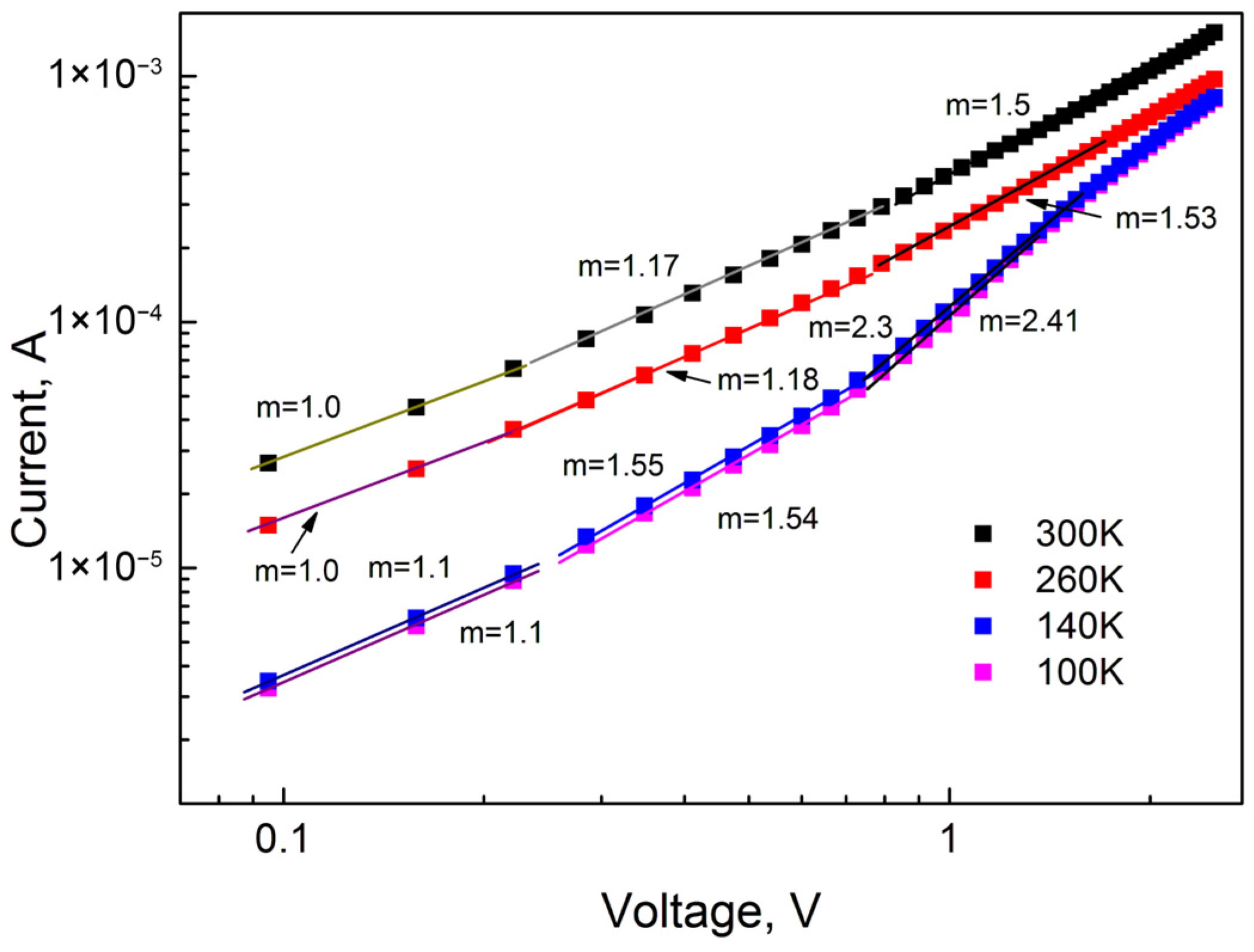
To study the flow of SCLC in nanoscale anodic TiO2 films in more detail, it is worthwhile to present the forward I–V characteristics in logarithmic coordinates (Figure 3). As can be seen from Figure 3, regardless of the temperature of the samples, three sections can be distinguished on the direct I–V characteristics, each of which is described by a linear dependence of the current on the voltage I∞Um. The first section is observed at voltages up to 0.2 V with a value of m = 1. In the second section, the slope angle is m = 1.2 (260, 300 K) and m = 1.55 (100, 140 K), and then it increases to m ≈ 1.53 (260, 300 K) and to m ≈ 2.4 (100, 140 K). The values of the exponent m in the first, second, and third sections of the direct I–V characteristics for TiO2 anodic films at different temperatures are given in Table 1.
The first section is observed at voltages up to 0.2 V with a value of m = 1. In the second section, the slope angle is m = 1.2 (260, 300 K) and m = 1.55 (100, 140 K), and then it increases to m ≈ 1.53 (260, 300 K) and to m ≈ 2.4 (100, 140 K). The values of the exponent m in the first, second, and third sections of the direct I–V characteristics for anodic TiO2 films at different temperatures are given in Table 1.
The use of logarithmic coordinates for the I–V characteristics allows us to identify SCLC. However, this does not explain the reason for the appearance of new electrons in the conduction band and, accordingly, the increase in the slope of the linear I–V characteristics with increasing bias voltage. It is evident that the picture of localized energy levels within the bandgap of anodic TiO2 is quite complex. In addition to traps, there are also donor centers present, which can be ionized with subsequent electron release. In the presence of an electric field, donor centers shift toward the bottom of the conduction band.
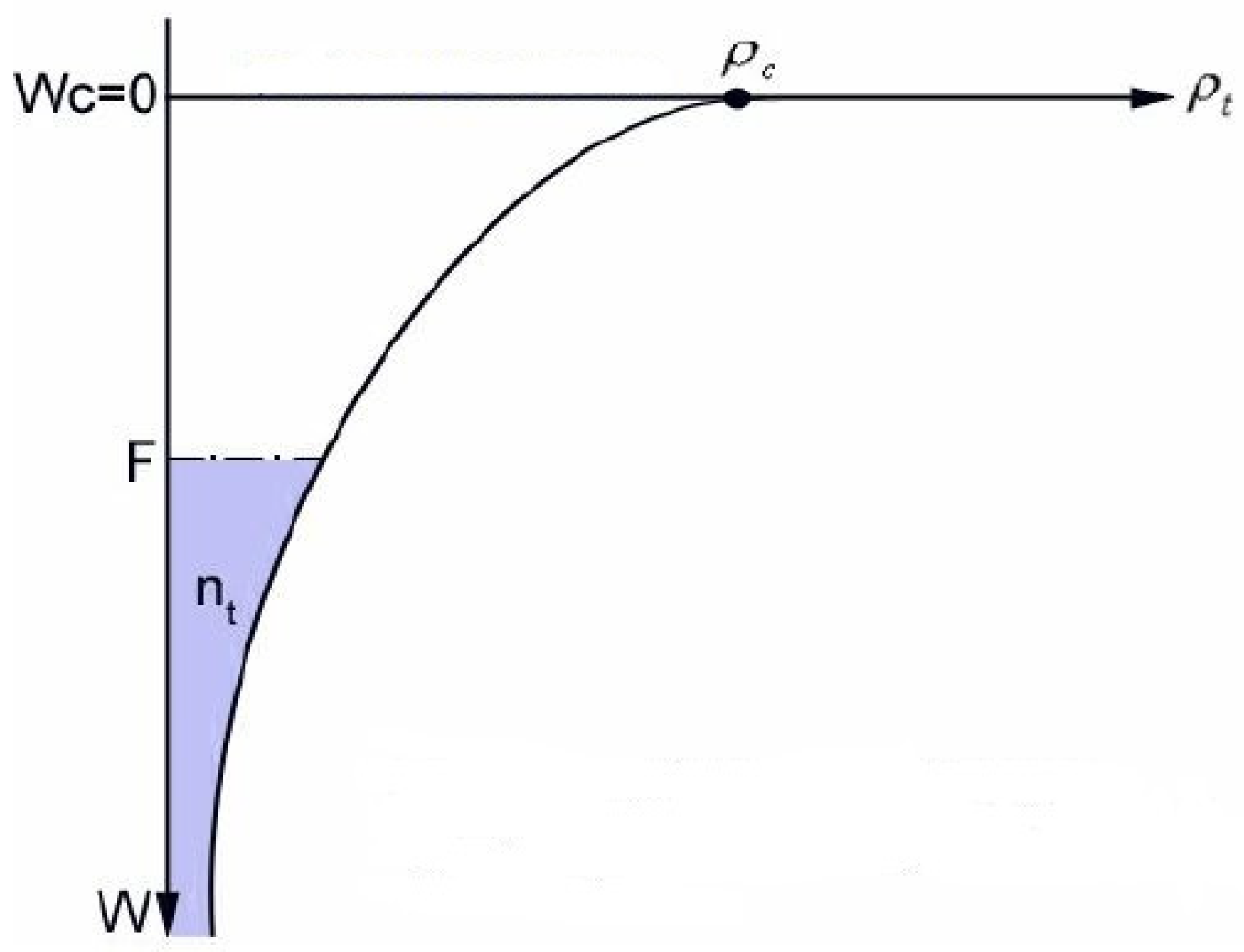
To obtain information about the trap depth in anodic TiO2, it is necessary to analyze the SCLC regime. When considering the I–V characteristics, it is necessary to take into account the presence of both shallow traps and donor centers [17]. Anodic TiO2 is an amorphous dielectric, and therefore the traps have an exponential energy distribution. With this distribution, a tail of traps extends downwards from the bottom of the conduction zone (Figure 4).
In anodic oxide, electrons appear in the conduction band due to the injection of charge carriers (ohmic contact with m = 1). At the same time, traps capture electrons, which leads to a decrease in the current of injected electrons in the conduction band (Figure 2b). However, in anodic TiO2, electrons can appear in the conduction band in another way—due to the transition of electrons from donor centers to them. A feature of donor centers is a decrease in their ionization energy when an electric field is applied (Figure 5). An external electric field helps the electron leave the donor center due to a decrease in the potential barrier in the direction of the field [18].
A decrease in the height of the potential barrier compared to the case of the absence of an electric field is determined by the expression:
W = β E 1 / 2
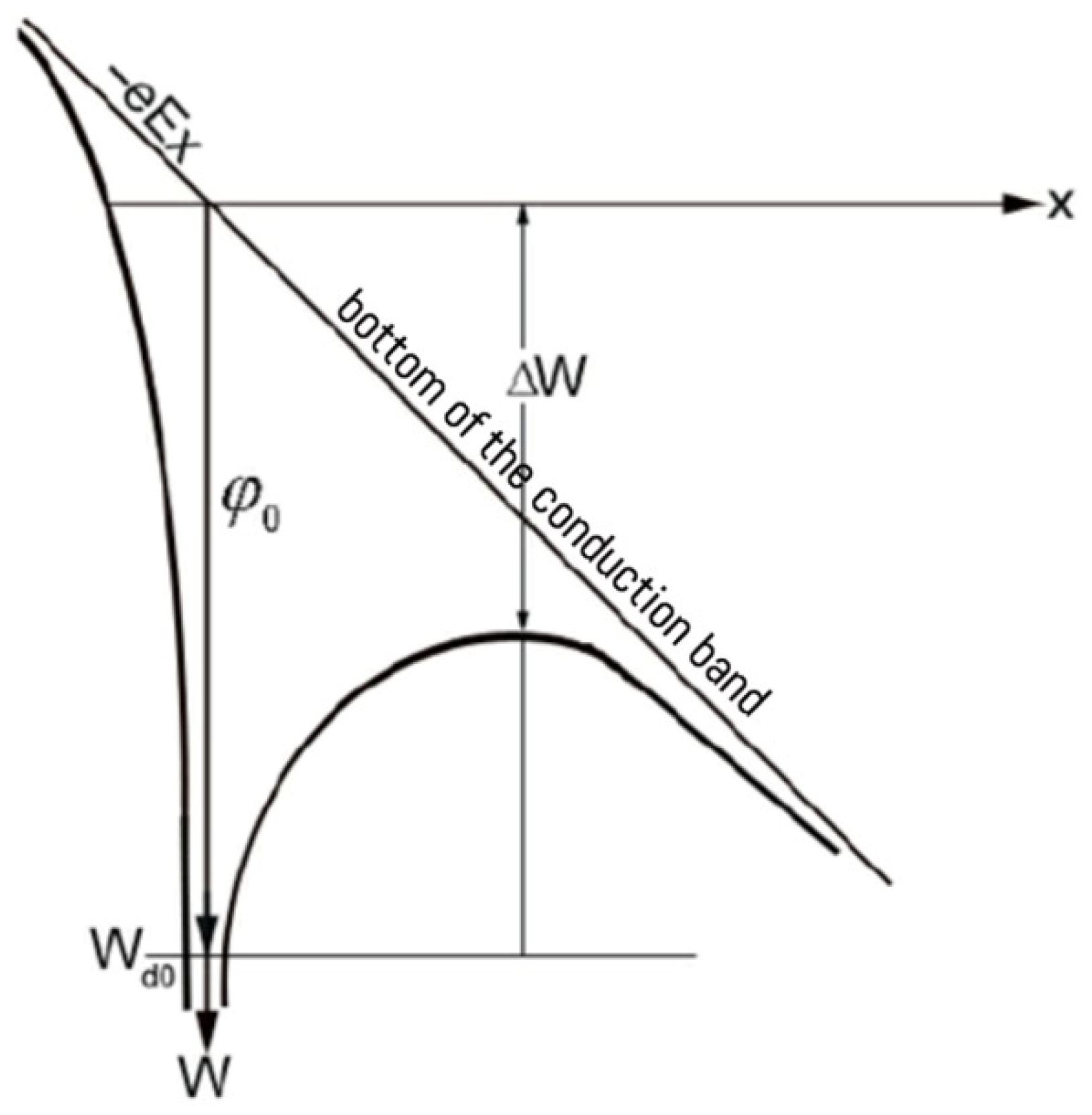
Therefore, it can be assumed that in an electric field the bottom of the conduction band becomes inclined (Figure 6). As a consequence, in an electric field the donor level shifts upward by the value ∆W. The position of the Fermi level (F) is related to the characteristic energy E0 by a directly proportional dependence in accordance with the expression:
F = E 0 l n N t L 2 ε ε 0 U
where ε is the relative permittivity of TiO2 film, ε0 is the electric constant, L is the thickness of TiO2 film, U is the applied voltage, Nt is the number of traps per unit volume of the dielectric, and E0 is the characteristic energy of the decay of the trap density.
In an electric field, the bottom of the conduction band becomes inclined, and the donor level shifts upward.
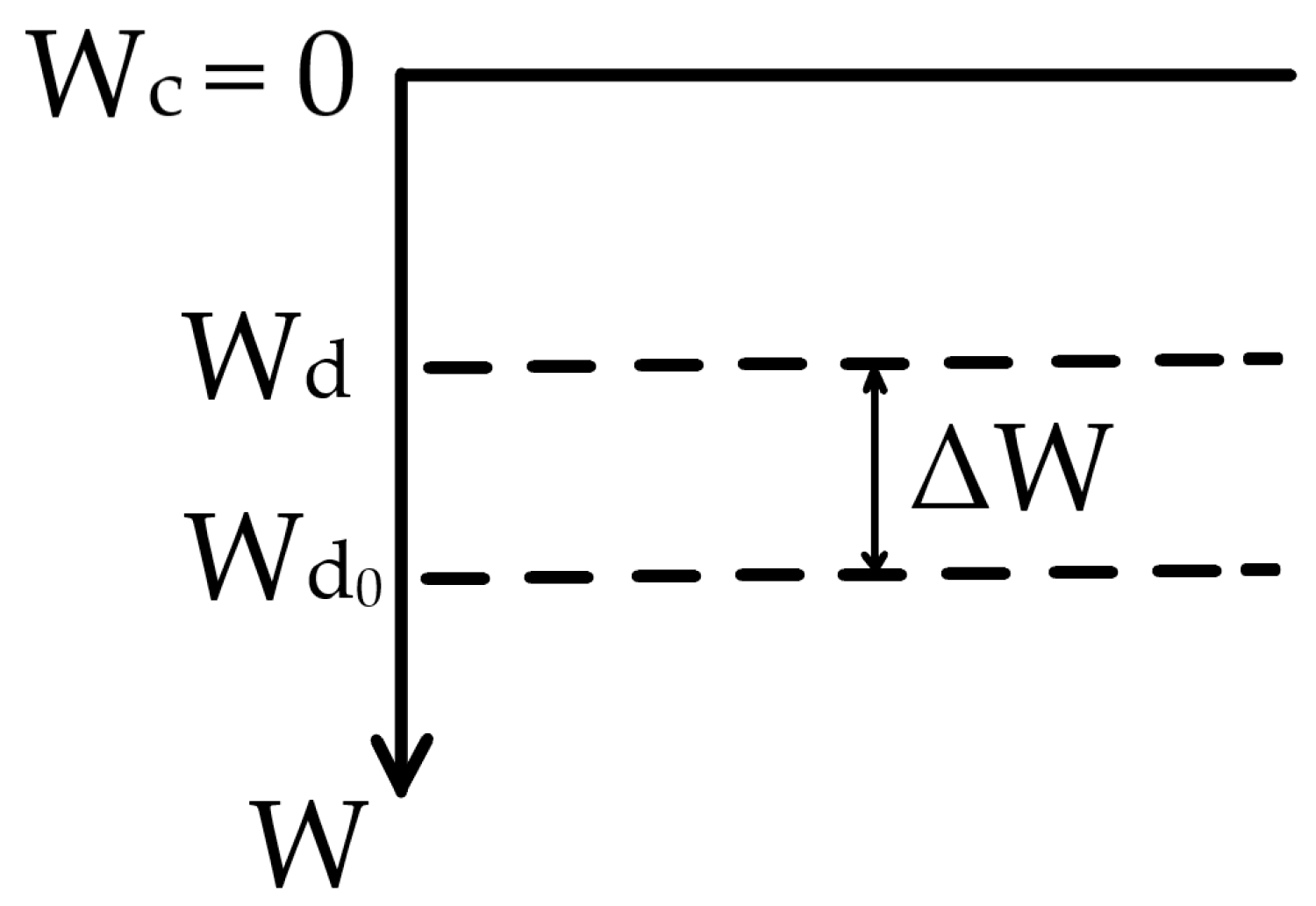
At a certain shift in the donor level by ∆W1 (beginning of Section 3, Figure 3), the levels of donors and traps begin to coincide. In this case, electrons from the uppermost donors will move to the lower traps, so that below the Fermi level all traps and donors are filled. When the Fermi level is shifted downwards along with the bottom of the conduction band by ∆W1, we can write
F 1 W 1 = E 0 l n N t L 2 ε ε 0 U
Assuming in expressions 2 and 3 that the term l n N t L 2 ε ε 0 U is close, it is possible to determine the Fermi level in anodic TiO2 for different temperatures based on the data in Table 1 and calculations for ∆W1. Table 2 shows the results obtained.
The level of donor centers in the forbidden zone can be determined as
W d = F 1 + W 1
Then, for example, for the data at a temperature of 260 K in Section 2 of the straight I–V characteristic, the depth of the donor center level is Wd = 0.084 eV. Such a value for the donor depth correlates well with the charge carrier activation energy via thermal excitation, which is on the order of 0.09 eV. This is demonstrated in [19] based on the analysis of temperature–dependent resistance data in Arrhenius coordinates. The calculated concentration of electron traps using Equation (2) and the data in Table 2 for T = 260 K was Nt = 7.2 × 1014 cm−3.
Thus, the electron trap concentration in anodic TiO2 films is 1015 cm−3, which is approximately three orders of magnitude lower than that in TiO2 films obtained by vacuum deposition [14], and four orders of magnitude lower than that in TiO2 films obtained by the sol–gel method [20].
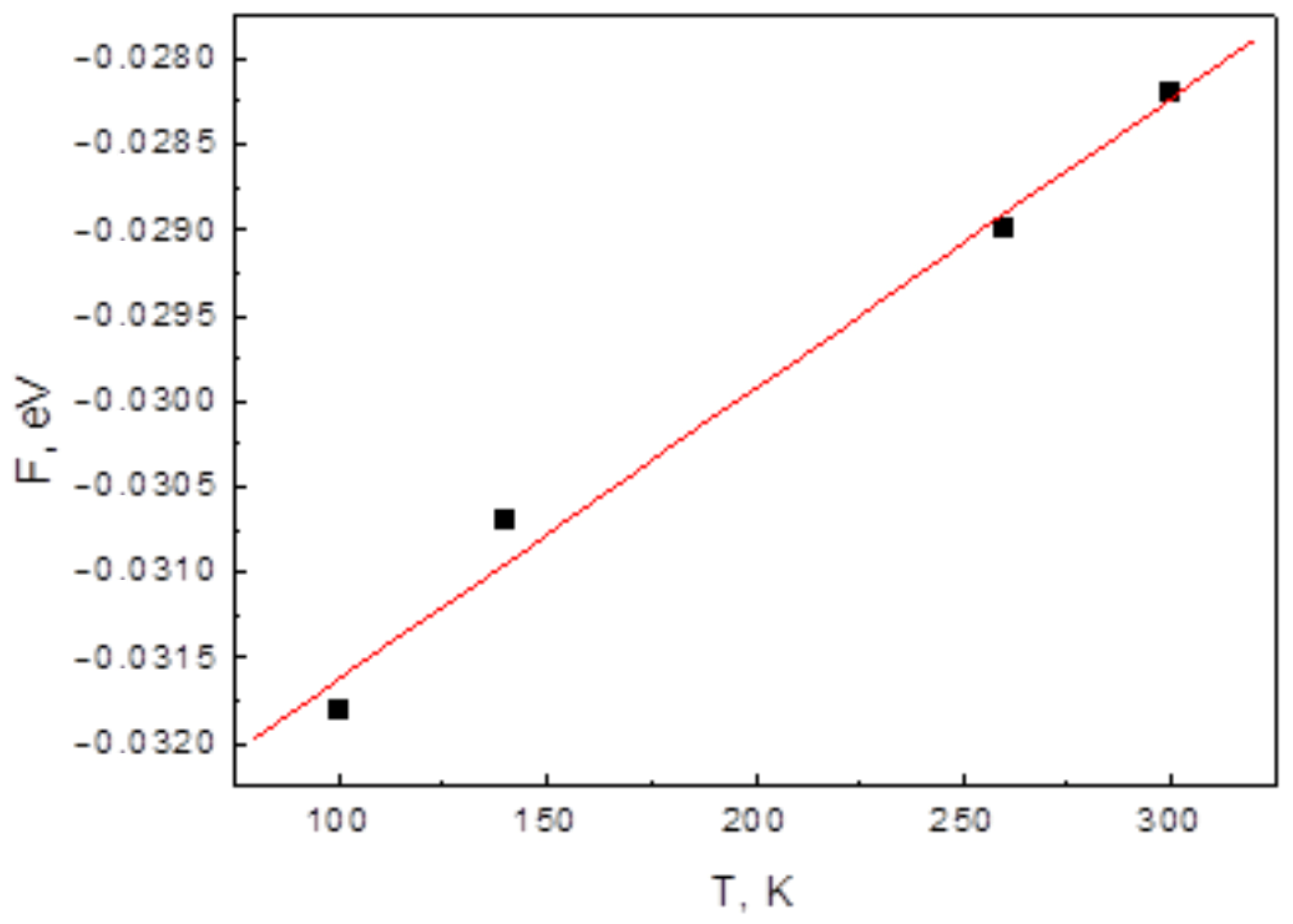
Figure 7 shows a graph of the change in the Fermi level with temperature relative to the conduction band bottom.
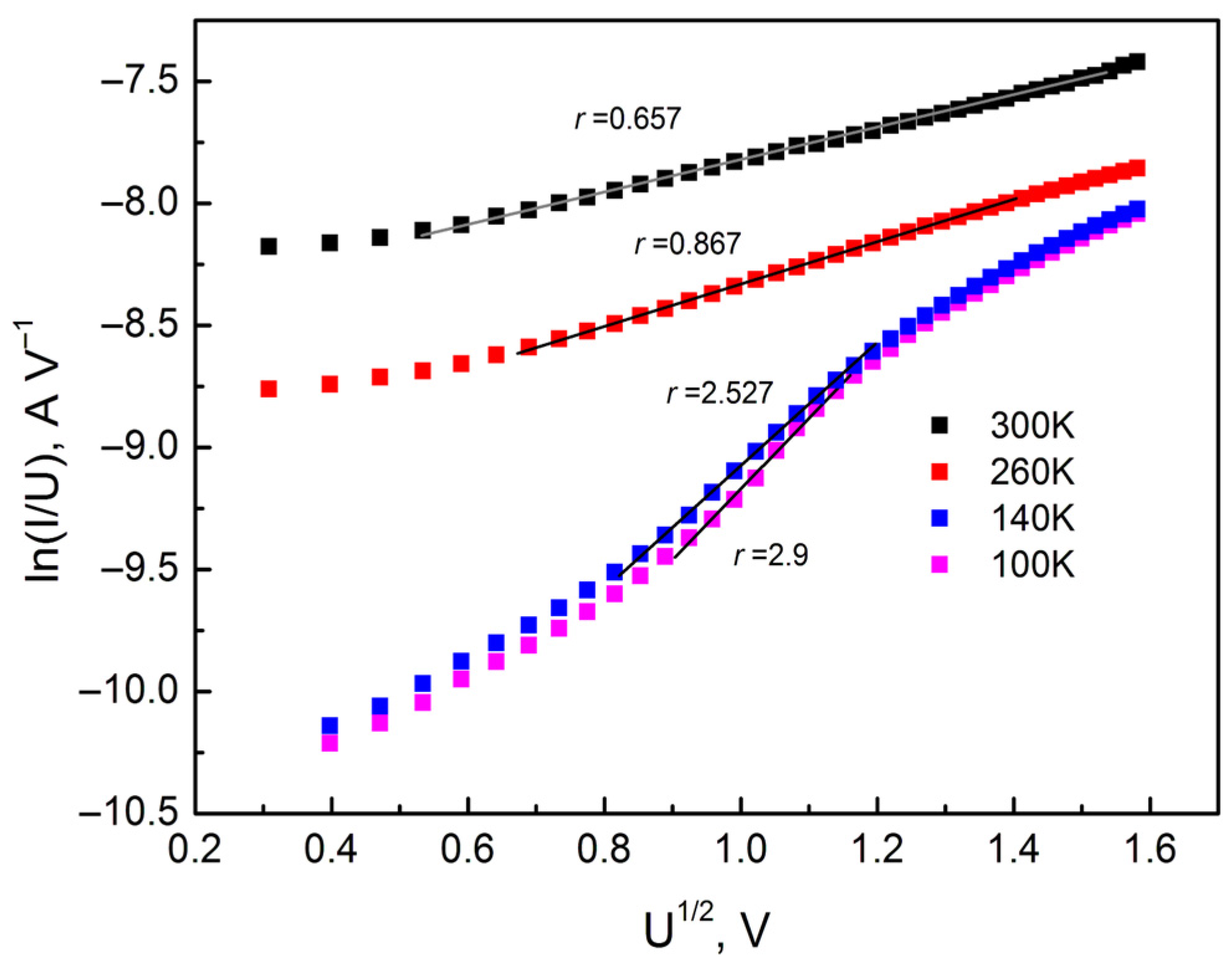
As can be seen, the Fermi level shifts linearly towards the conduction band with increasing temperature, which is in good agreement with [20,21,22]. Poole–Frenkel currents flow in anodic TiO2 film over the entire temperature range, which confirms the presence of both traps and donor centers. Figure 8 shows the current–voltage characteristic of anodic TiO2 in Poole–Frenkel coordinates.
As can be seen from the data in Table 3, at elevated temperatures (260 and 300 K), the normal Poole–Frenkel effect with r ≈ 1 and kTF is observed. This means that the thermal excitation energy is sufficient for electrons to move from the trap levels to the conduction band. In turn, when electrons move from donors to traps (when an electric field is applied), they can freely move from the trap levels further into the conduction band due to thermal excitation. As a result of such a two-stage process, electrons from the donor level have the opportunity to move into the conduction band, which is confirmed by the obtained characteristic for the normal Poole–Frenkel effect with the coefficient r ≈ 1 (absence of trap levels above the donor level). Thus, at kT ≈ F, electrons that have moved from donor centers are not retained in traps and immediately move into the conduction band. In this case, the influence of traps located above the donor levels can be ignored, since they cannot capture electrons.
When the energy kT < F (temperatures 100 and 140 K), then the abnormal Poole–Frenkel effect with r ≈ 2 is observed (the trap levels are located above the donor level). In this case, the thermal excitation energy is no longer sufficient for electrons from the trap levels to move to the conduction band. Therefore, when electrons move from donor centers to traps, there is only a stage of electron capture by traps.

4. Conclusions

An analysis of the I-V curves in logarithmic and Poole–Frenkel coordinates was conducted for anodic TiO2 films with a thickness of 20 nm within the bias voltage range from −2.5 to +2.5 V. The presence of both space-charge-limited currents and Poole–Frenkel currents, associated with donor centers, was revealed at an electric field strength exceeding 4.5 107 V/m. It is shown that the I–V curves in logarithmic coordinates with a bias voltage of up to 2.5 V can be divided into 3 different linear sections. The 1st section is an ohmic section with a bias voltage sweep starting from 0 V. Then the 2nd section is associated with the SCLCs and the 3rd section is characterized by the flow of Poole–Frenkel currents. The increased slope in region three, compared to region two, is attributed to higher current densities. This behavior is consistent with trap filling from donor states, which reduces the effective trap density available for capturing charge carriers injected from the electrodes into the conduction band.
The obtained results for anodic TiO2 with the Fermi energy of 0.032 and 0.028 eV for temperatures of 100 and 300 K, respectively, indicate that the electron traps in the TiO2 band gap are shallow. An increase in temperature leads to a linear shift in the Fermi level to the bottom of the conduction band. The donor level energy of E = 0.082 eV is close to the thermal activation energy, suggesting the formation of donor centers in anodic TiO2 via a donor vacancy mechanism.
In anodic TiO2 films, the concentration of electron traps is 1015 cm−3, which is approximately 3 orders of magnitude lower than their concentrations in TiO2 films obtained by vacuum deposition. This indicates a smaller number of point defects and, therefore, a higher quality of anodic TiO2 films compared to oxide films obtained by vacuum deposition.

Author Contributions

Conceptualization, I.A.V.; methodology, I.A.V., V.A.M. and A.I.M.; software, I.A.V. and A.A.R.; validation, E.N.M., V.A.M. and I.A.V.; formal analysis, I.A.V.; investigation, I.A.V., E.N.M., A.A.R. and A.I.M.; resources, E.N.M., V.A.M. and I.A.V.; data curation, E.N.M.; writing—original draft preparation I.A.V.; writing—review and editing, E.N.M.; visualization, I.A.V.; supervision, E.N.M.; project administration, V.A.M.; funding acquisition, V.A.M. All authors have read and agreed to the published version of the manuscript.

Funding

This research was funded by Belarusian Republican Foundation for Fundamental Research grant number F23RNF-160 and supported by the Russian Science Foundation grant No. 23-42-10029, dated 20 December 2022, https://rscf.ru/en/project/23-42-10029/ (accessed on 20 December 2022).

Data Availability Statement

The original contributions presented in this study are included in the article. Further inquiries can be directed to the corresponding author.

Conflicts of Interest

The authors declare no conflicts of interest.

References

  1. Albertin, K.F.; Pereyra, I. Study of reactive sputtering titanium oxide for metal-oxide-semiconductor capacitors. Thin Solid Films 2009, 517, 4548–4554. [Google Scholar] [CrossRef]
  2. Kundu, S.; Roy, S.; Banerji, P. GaAs metal–oxide–semiconductor device with titanium dioxide as dielectric layer: Effect of oxide thickness on the device performance. J. Phys. D Appl. Phys. 2011, 44, 155104. [Google Scholar] [CrossRef]
  3. Nunes, D.; Fortunato, E.; Martins, R. Flexible nanostructured TiO2-based gas and UV sensors: A review. Discov. Mater. 2022, 2, 2. [Google Scholar] [CrossRef]
  4. Cadatal-Raduban, M.; Pope, J.; Olejníček, J.; Kohout, M.; Harrison, J.A.; Hasan, S.M. Ultraviolet-C photoresponsivity using fabricated TiO2 thin films and transimpedance-amplifier-based test setup. Sensors 2022, 22, 8176. [Google Scholar] [CrossRef]
  5. Moshnikov, V.A.; Muratova, E.N.; Aleshin, A.; Maksimov, A.; Nenashev, G.; Vrublevsky, I.; Lushpa, N.; Tuchkovsky, A.K.; Zhilenkov, A.A.; Kichigina, O. Controlled crystallization of hybrid perovskite films from solution using prepared crystal centers. Crystals 2024, 14, 376. [Google Scholar] [CrossRef]
  6. Vrublevsky, I.A.; Chemyakova, K.; Lushpa, N.; Tuchkovsky, A.K.; Tzaneva, B.R.; Videkov, V. Obtaining, properties and application of nanoscale films of anodic titanium dioxide on Ti-Al films for perovskite solar cells. In 2021 XXX International Scientific Conference Electronics (ET); IEEE: New York, NY, USA, 2021; pp. 1–4. [Google Scholar] [CrossRef]
  7. Asahi, R.; Taga, Y.; Mannstadt, W.; Freeman, A.J. Electronic and optical properties of anatase TiO2. Phys. Rev. B 2000, 61, 7459–7465. [Google Scholar] [CrossRef]
  8. Shinde, P.S.; Sadale, S.B.; Patil, P.S.; Bhosale, P.N.; Brüger, A.; Neumann-Spallart, M.; Bhosale, C.H. Properties of spray deposited titanium dioxide thin films and their application in photoelectrocatalysis. Sol. Energy Mater. Sol. Cells 2008, 92, 283–290. [Google Scholar] [CrossRef]
  9. Luca, V.; Djajanti, S.D.; Howe, R.F. Structural and electronic properties of sol−gel titanium oxides studied by X-ray absorption spectroscopy. J. Phys. Chem. B 1998, 102, 10650–10657. [Google Scholar]
  10. Takikawa, H.; Matsui, T.; Sakakibara, T.; Bendavid, A.; Martin, P.J. Properties of titanium oxide film prepared by reactive cathodic vacuum arc deposition. Thin Solid Films 1999, 348, 145–151. [Google Scholar] [CrossRef]
  11. Sanjinés, R.; Tang, H.; Berger, H.; Gozzo, F.; Margaritondo, G.; Lévy, F. Electronic-Structure of Anatase TiO2 Oxide. J. Appl. Phys. 1994, 75, 2945–2951. [Google Scholar] [CrossRef]
  12. Kim, S.; Lee, J.; Hwangbo, C.K.; Lee, S. DC reactive magnetron sputtering with Ar ion-beam assistance for titanium oxide films. Surf. Coat. Technol. 2002, 158, 457–464. [Google Scholar] [CrossRef]
  13. Kalygina, V.M.; Egorova, I.S.; Prudaev, I.A.; Tolbanov, O.P.; Atuchin, V.V. Conduction mechanism of metal-TiO2–Si structures. Chin. J. Phys. 2017, 55, 59–63. [Google Scholar] [CrossRef]
  14. Nuñez, P.D.; Richter, M.H.; Piercy, B.D.; Roske, C.W.; Cabán-Acevedo, M.; Losego, M.D.; Konezny, S.J.; Fermín, D.J.; Hu, S.; Brunschwig, B.S.; et al. Characterization of Electronic Transport through Amorphous TiO2 Produced by Atomic Layer Deposition. J. Phys. Chem. C 2019, 123, 20116–20129. [Google Scholar] [CrossRef]
  15. Schneider, M.; Schroth, S.; Schilm, J.; Michaelis, A. Micro-EIS of anodic thin oxide films on titanium for capacitor applications. Electrochim. Acta 2009, 54, 2663–2671. [Google Scholar] [CrossRef]
  16. Ohtsuka, T.; Otsuki, T. The influence of the growth rate on the semiconductive properties of titanium anodic oxide films. Corros. Sci. 1998, 40, 951–958. [Google Scholar] [CrossRef]
  17. Brocklebank, M.; Feltham, H.; Noël, J.J.; Goncharova, L.V. Mechanism of titanium electrochemical oxidation via isotopic labeling, high resolution ion depth profiling, and impedance spectroscopy. Electrochim. Acta 2022, 435, 141342. [Google Scholar] [CrossRef]
  18. Moiz, S.A.; Khan, I.A.; Younis, W.A.; Karimov, K.S. Space charge–limited current model for polymers. Conduct. Polym. 2016, 5, 91. [Google Scholar] [CrossRef]
  19. Gagarina, A.U.; Bezverkhniy, V.P.; Muratova, E.N.; Moshnikov, V.A.; Vrublevsky, I.A.; Tuchkovsky, A.K.; Lushpa, N.V. Preparation and properties of nanoscale titanium dioxide film for transport layer of n-type photovoltaic cell. Semiconductors 2024, 58, 545–547. [Google Scholar] [CrossRef]
  20. Simeonov, S.; Kafedjiiska, E.; Szekeres, A.; Parlog, C.; Gartner, M. Electrical characterization of mis structures with SOL-GEL TiO2(La) dielectric films. J. Optoelectron. Adv. Mater. 2005, 7, 545–548. [Google Scholar]
  21. Li, R.; Yan, F.; Deng, Y.; Shang, Y.; Sheng, Y. Tunable rapid electron transport in titanium oxide thin films. Appl. Phys. Lett. 2023, 122, 011601. [Google Scholar] [CrossRef]
  22. Mariuca, G.; Szekeres, A.; Stroescu, H.; Mitrea, D.; Covei, M. Advanced Nanostructured Coatings Based on Doped TiO2 for Various Applications. Molecules 2023, 28, 7828. [Google Scholar] [CrossRef] [PubMed]
Figure 1. Two-dimensional AFM surface morphology of anodic TiO2 film obtained at 20 V.
Nanomanufacturing 06 00006 g001
Figure 2. I–V characteristics of anodic TiO2 film (20 nm) under forward and reverse bias voltage in (a) normal and (b) semilogarithmic coordinates. Sample temperature: 300, 260, 140 and 100 K; maximum voltage 2.5 V.
Nanomanufacturing 06 00006 g002
Figure 3. I–V characteristics of anodic TiO2 film (20 nm) in logarithmic coordinates. Sample temperature: 300, 260, 140 and 100 K, maximum voltage 2.5 V.
Nanomanufacturing 06 00006 g003
Figure 4. Energy diagram for an amorphous dielectric with an exponential distribution of traps filled electrons below the Fermi level (F).
Nanomanufacturing 06 00006 g004
Figure 5. Slope of the bottom of the conduction band in an electric field with a decrease in the barrier of the donor center for the ejection of electrons from the donor (Poole–Frenkel effect).
Nanomanufacturing 06 00006 g005
Figure 6. Shift in the donor level up to the conduction band in the presence of an electric field.
Nanomanufacturing 06 00006 g006
Figure 7. Change in the Fermi level of anodic TiO2 with temperature.
Nanomanufacturing 06 00006 g007
Figure 8. I–V characteristics of anodic TiO2 film (20 nm) in Poole–Frenkel coordinates. Sample temperature: 300, 260, 140 and 100 K, maximum voltage 2.5 V.
Nanomanufacturing 06 00006 g008
Table 1. Values of m for the first, second and third sections of the direct current–voltage characteristics and the voltage of the transition from Ohm’s law to SCLC (UΩT).
Temperature, Km1 on the First Sectionm2 on the Second Sectionm3 on the Third SectionUΩT, V
30011.1761.50.22
26011.181.5270.22
1401.11.482.30.22
1001.11.542.410.22
Table 2. Values of the voltage at the beginning of the 3rd section of the I-V characteristic, the field strength at this point, ∆W1 and the Fermi level in anodic TiO2 for different temperatures.
Temperature, KVoltage of the Beginning of the 3rd Section of the I–V Characteristic, VElectric Field Strength on the 3rd Section of the I–V Characteristic, V m−1Donor Level Shift ∆W1, eVFermi Level, eV
3000.9184.50 × 1070.0560.0282
2600.8544.27 × 1070.0550.029
1400.7963.98 × 1070.0530.0307
1000.7343.67 × 1070.0510.0318
Table 3. Values of kT, Fermi level F and tangent of angle r of curves in Poole–Frenkel coordinates for anodic TiO2 film in the temperature range from 100 to 300 K.
Temperature, KkT, eVFermi Level, F, eVPoole–Frenkel Coordinates, Tangent of Angle, r
1000.00860.03182.9
1400.0120.03072.527
2600.0240.0290.867
3000.0260.02820.657
Disclaimer/Publisher’s Note: The statements, opinions and data contained in all publications are solely those of the individual author(s) and contributor(s) and not of MDPI and/or the editor(s). MDPI and/or the editor(s) disclaim responsibility for any injury to people or property resulting from any ideas, methods, instructions or products referred to in the content.