Article

Investigation of the Microwave Absorption Properties of Bi1.7Pb0.3Sr2Ca2Cu3O10-Based Ceramic Composites


Department of Physics and Nano Materials Laboratory, Southern University and A&M College, Baton Rouge, LA 70813, USA
*
Author to whom correspondence should be addressed.
Solids 2025, 6(4), 67; https://doi.org/10.3390/solids6040067
Submission received: 2 October 2025 / Revised: 27 November 2025 / Accepted: 2 December 2025 / Published: 5 December 2025

Abstract

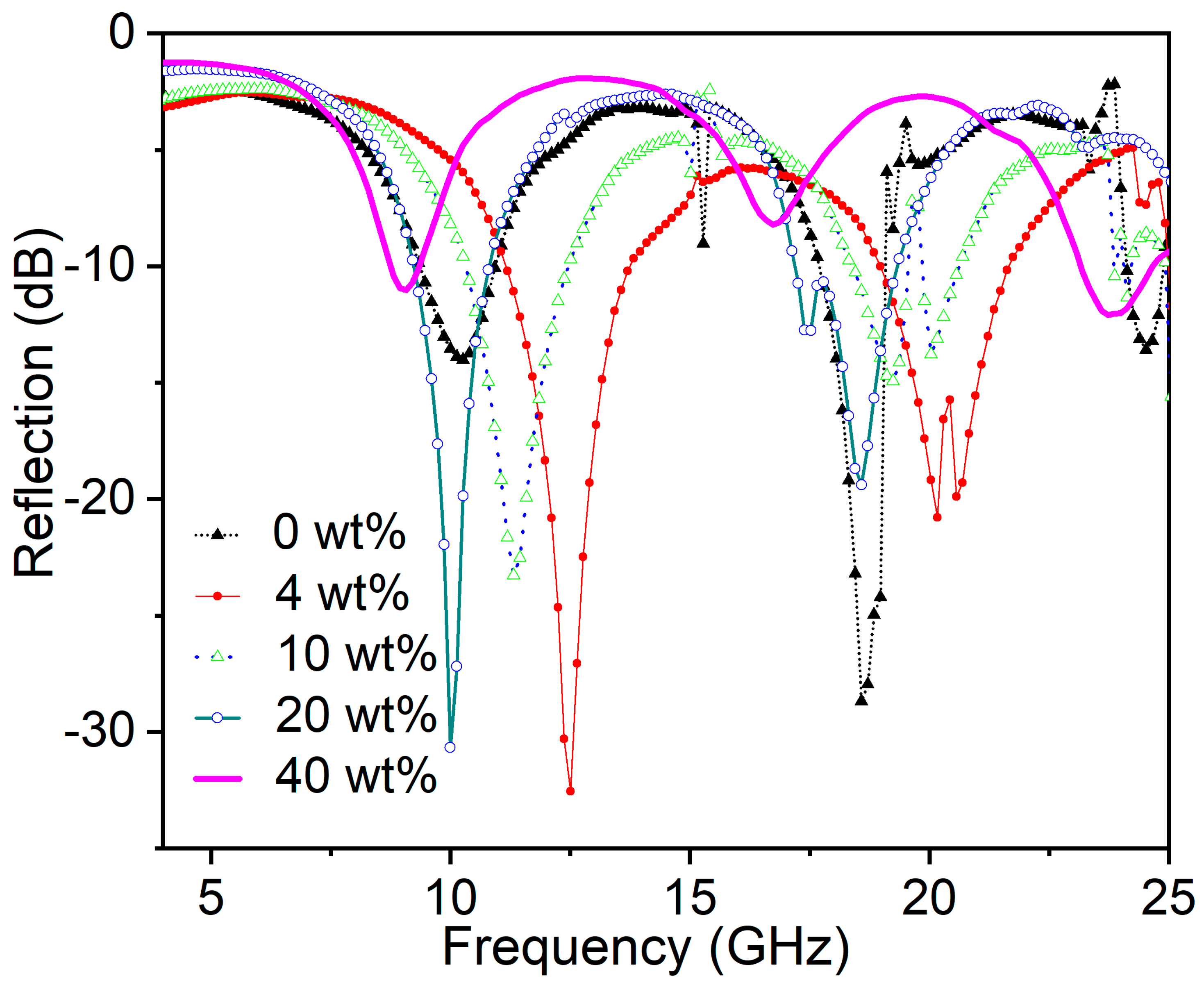
This study investigates the microwave absorption properties of the cuprate ceramic material Bi1.7Pb0.3Sr2Ca2Cu3O10 (BSCCO) and its composites with bismuth oxide (Bi2O3) in the 4–25 GHz frequency range. Composites with varying BSCCO contents were fabricated and characterized using the Nicolson–Ross–Weir method and Agilent Materials Measurement Software 85071E to determine complex permeability and permittivity. The 4 wt.% BSCCO composite exhibited a peak reflection loss of −32.6 dB at 12.5 GHz, while the 40 wt.% BSCCO composite reached a 52% microwave absorption ratio at 23 GHz. These results demonstrate that microwave absorption is strongly influenced by dielectric properties and the ratio of BSCCO and Bi2O3 composites. This work highlights the potential of BSCCO-Bi2O3 ceramics for microwave absorption applications, particularly in environments experiencing significant temperature gradients due to their thermal stability and electromagnetic performance.

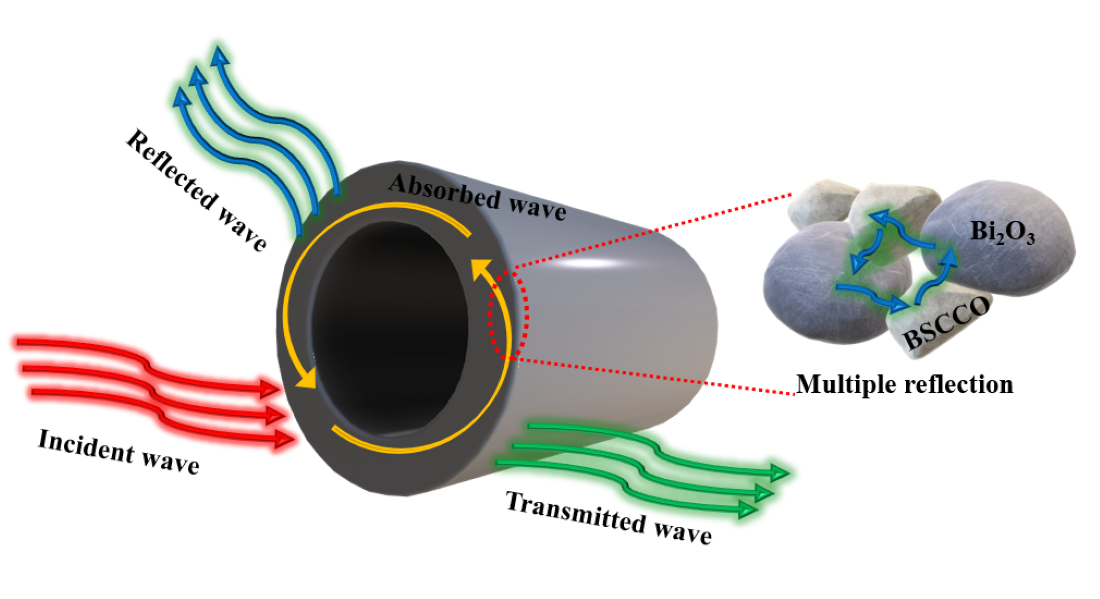
Graphical Abstract

1. Introduction

The attenuation through the absorption and shielding of electromagnetic (EM) waves have become a subject of research due to the potential applications in the military, medical, and other areas [1,2,3,4]. Militaries have a particular interest in EM wave attenuation so as to make vessels resistant to electromagnetic interference (EMI). With the increasing use of digital communication devices, radio frequency (RF) wave energy can produce deleterious health effects on the human body, which is an issue that can be alleviated by microwave absorption materials (MAMs). To ascertain if a material is a proper candidate for EM attenuation and applicable, the EM wave absorption and EMI shielding properties, as well as the complex permittivity (ε′—jε′) and permeability (µ′—jµ″) of the material must be studied. The quantities ε′ and µ′ are associated with energy storage, and ε″ and µ″ are associated with energy dissipation. From the analysis of permittivity and permeability, an ideal MAM for EMI shielding should also have good EM wave absorption capabilities and a minimal reflection coefficient. Metals are commonly used for EMI shielding because they attenuate electromagnetic waves very well. However, metals tend to reflect EM waves rather than absorb them, meaning that they can still contribute to electromagnetic pollution in the surrounding environment. For some applications, materials with high EM absorption and low reflection are preferred, but developing such materials is still a challenge.
For the MAMs to be applicable, the MAMs should also have good mechanical properties and a wide absorption bandwidth [5]. A common method for EM attenuation is conducted with ferrite-based polymer composites [6,7]. Another group of MAMs studied incorporated carbon nanotubes (CNTs) embedded within polymer matrices, yielding excellent results [8]. However, polymers used to embed CNTs or ferrites face challenges in maintaining mechanical properties under large temperature gradients due to inherent limitations such as low melting points and thermal degradation [9,10]. Polymers have a specific temperature range known as the glass transition temperature Tg. Below Tg, polymers are rigid and brittle, while above Tg, they become soft and rubbery. Large temperature gradients can cause parts of the polymer material to cross Tg, leading to inconsistent mechanical properties within the matrix.
In environments where large temperature gradients are encountered, such as the vacuum of space around Earth’s orbit, ceramics should be considered because of their heat resistance and resistance to ultraviolet (UV) degradation [11,12,13]. Ceramics for high-temperature environments for microwave absorption is an area of active research, with the focus of the dielectric loss properties of ceramics [14,15]. Ayeni et al. studied the microwave absorption properties of Mullite-Al2O3-SiC ceramic composites with activated carbon using wide sintering temperatures and demonstrated that the introduction of activated carbon can improve dielectric properties and reflection loss [16]. Xiang et al. investigated porous heterogeneous SiC/SiO2 microspheres and found that porous structures in the material exhibited good reflection loss properties [17]. Ceramics also have an advantage over metals, in that they are more chemically stable to chemical reactions such as corrosion. Ceramics have also proven to have high tensile strengths. In order to have ceramics be a suitable material for EM absorption, the synthesis techniques must be optimized so that the porosity, particle size, magnetic properties, and dielectric properties can contribute to absorption. Silica-based ceramics have been studied as a candidate for EM absorption, but one of the challenges is high heat treatment temperatures [18]. A class of ceramics that does not require such high heat treatment is copper-oxide-based ceramics, commonly called cuprates. Cuprates can also be high-Tc superconductors, allowing electrical current conduction with zero measurable resistance. This work does not focus on the superconducting properties of cuprates but rather explores their EM wave absorption and EMI shielding properties, which are not well studied in this field.
The cuprate ceramics possess promising microwave absorption properties, particularly when particle sizes are sufficiently small to exploit skin depth effects [19]. Ceramics made with cuprates could be used, for example, as tiles for vessels to shield critical components from electromagnetic interference, or conceal them from radar detection in the low-Earth orbit environment. Although ceramics are typically electrical insulators with poor intrinsic microwave absorption, their absorption capabilities can be enhanced by doping with conductive particles [20]. Cuprate ceramics such as BSCCO stand out as conductive ceramics with superior electrical conductivities compared to conventional ceramics, making them suitable candidates for microwave absorption applications [21].
In this work, Bi1.7Pb0.3Sr2Ca2Cu3O10 (BSCCO)-based ceramic composites with Bi2O3 (bismuth oxide) were investigated to understand their microwave absorption properties. From a thermodynamic and bonding perspective, oxide–oxide interfaces (BSCCO-Bi2O3) can exhibit a higher intrinsic work of adhesion than a typical metal–ceramic contact because of oxygen-mediated ionic/covalent bonding [22]. Moreover, Bi2O3 can act as an effective sintering aid that promotes wetting and liquid-phase necking at moderate temperatures, increasing real contact area and producing graded interfacial layers that increase interfacial fracture energy and retard de-cohesion [23]. Previous studies [16,17] primarily reported the data of the reflection loss of their samples. In contrast, this work provides a comprehensive characterization of the microwave absorption properties of these composites, including reflection loss, transmission loss, and absorption ratio.

2. Experimental Preparation

2.1. Material Synthesis

For this study, the synthesis of BSCCO was achieved by combining bismuth oxide (Bi2O3), lead oxide (PbO), strontium carbonate (SrCO3), calcium carbonate (CaCO3), and copper oxide (CuO). The mentioned compounds were added in ratios to achieve Bi1.7Pb0.3Sr2Ca2Cu3O10 [24]. The samples were then mixed with a mortar and pestle and then transferred to a stainless-steel die. The die was transferred to a press and cold-pressed in a tonnage machine at between 4 and 5 tons for about five (5) minutes. When removed from the cold-press, the BSCCO was sintered five (5) times in a box furnace for twenty (20) hours at temperatures of 790–830 °C using ten (10) degree increasing increments for each sintering period. Between the increments, the sample was crushed, re-pressed, and re-sintered.
After the final sintering of the BSSCO at a temperature of 830 °C, Bi2O3 powder was then used as the matrix to make the BSCCO-based composites. The BSCCO was crushed into a powder and then mixed with Bi2O3. BSCCO’s percentages in the composites were controlled at 2%, 4%, 10%, 20%, and 40% when combined with Bi2O3. For each percentage, the BSCCO powder was mixed with Bi2O3 powder and sintered four (4) times in the box furnace at a temperature of 710 °C for 20 h. The sintering as a combined powder of BSCCO and Bi2O3 was repeated three (3) times at a temperature of 710 °C for 20 h, and the combined powder was agitated before each subsequent sintering period. The combined powder was then placed in a cold-pressed die at a tonnage of one (1) ton. The final dimension of the pellet was that of a hollow cylinder with an inner diameter of 1.5 mm and an outer diameter of 3.5 mm with a length of about 4.5 mm. After being cold-pressed into a pellet, the sample was re-sintered for the fourth and final time at a temperature of 710 °C for twenty (20) hours. Figure 1 shows the steps of the synthesis.

2.2. Superconducting and SEM Properties

In this experiment, BSCCO was tested using the Quantum Design Physical Property Measurement System (PPMS). A critical temperature (Tc) of 77 K for zero-field cooling and a Tc of 72 K for field cooling were achieved, which is indicative of a superconductor. For field cooling, a magnetic field of 15 Oe was applied to the sample (Figure S1). The Meissner effect was observed in the BSSCO along with its diamagnetic properties under both zero-field and field cooling, which was also more evidence that a superconductor was successfully made. Magnetic flux trapping was also observed when the sample was under field cooling. The resistivity of the BSCCO sample was measured to be 0.01047 Ω·m at a temperature of 300 K under a 0.1225 Oe magnetic field (Figure S2).
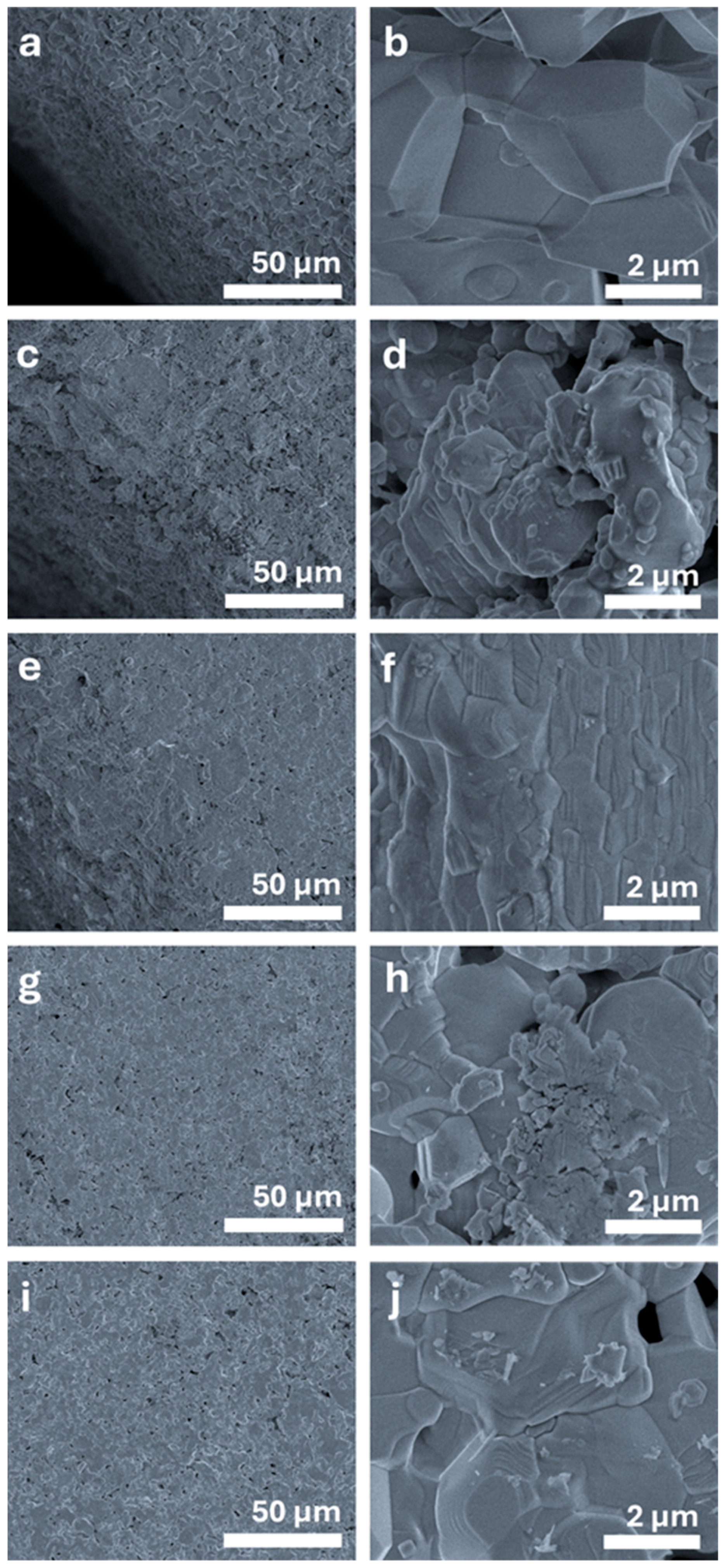
The scanning electron microscopy (SEM) morphologies of the powder samples were analyzed at the micrometer level, which was achieved with a Phenomworld system (Model: MVE0265761429) manufactured by nanoScience Instruments. The Bi2O3 powder was measured to have an average particle size of 2.96 µm (Figures S3 and S4), and the BSCCO powder was measured to have an average particle size of around 1.91 µm (Figures S5 and S6). The SEM images of the composite powder sample with 40 wt.% BSCCO powder indicated an average particle size of around 1.66 µm (Figures S7 and S8). The SEM images of the solid composite samples were obtained with a ThermoFisher Scientific Quanta 3D DualBeam FEG FIB-SEM (Waltham, MA, USA), as shown in Figure 2, which reveal that the composite surfaces are rough and jagged, indicating some roughness and porosity at the micrometer level, with the BSCCO particles being randomly distributed within the Bi2O3 particles. Porosity may also have a role in microwave absorption through multiple scattering and dissipation of the EM waves inside the sample [25]. Surface mapping was carried out with electron dispersive spectroscopy (EDS) on the surface of the 40 wt.% BSCCO sample using an Ametek EDAX Pegasus EDS manufactured by Gatan, Inc. (Warrendale, PA, USA) Figure S9, which also shows a random distribution of the BSCCO elements within the sample (Figure S9).

2.3. Crystalline Structures

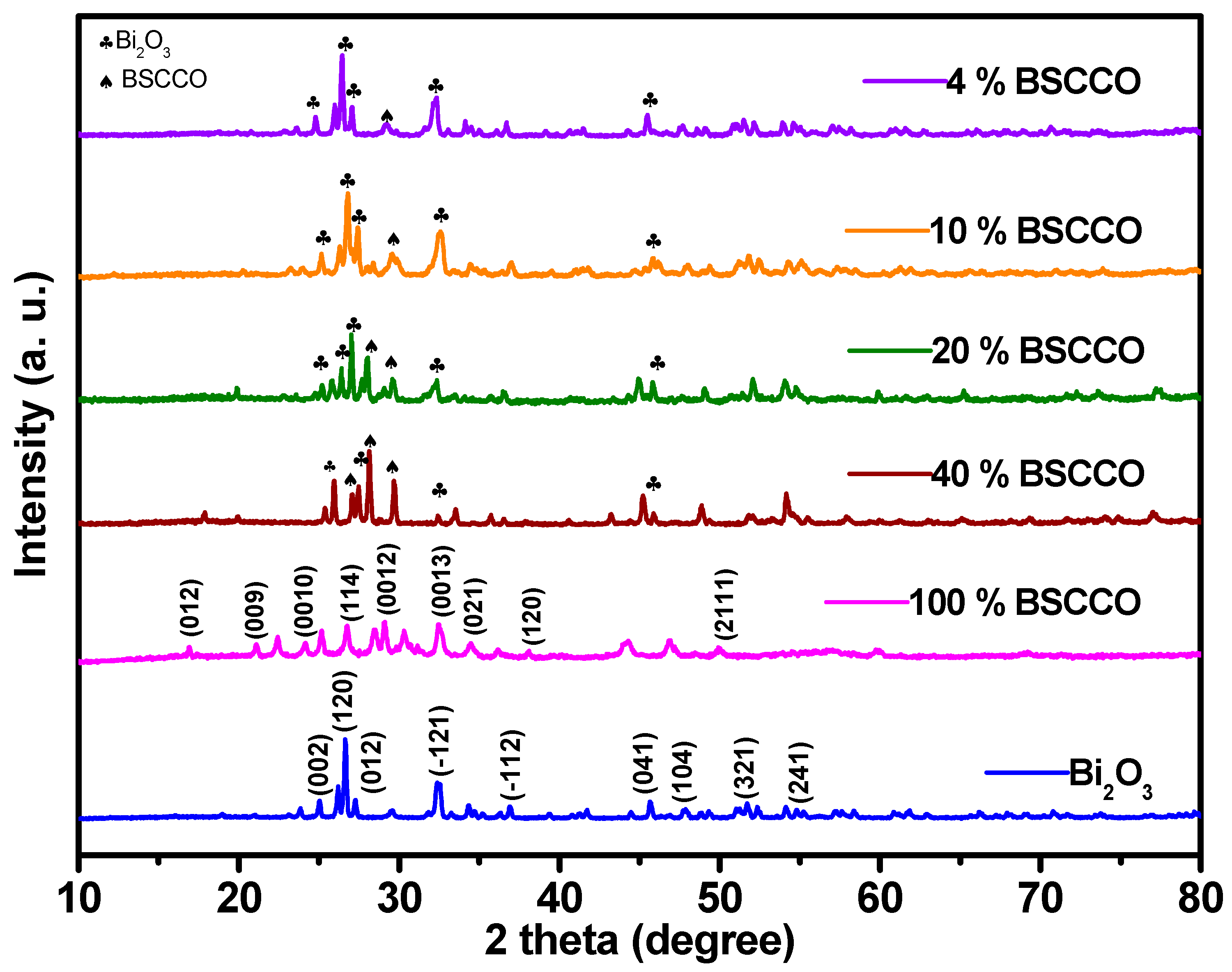
The crystalline structures of the materials were analyzed using a Rigaku MiniFlex 600 X-ray diffractometer (XRD) equipped with Cu Kα radiation (λ = 1.5405 Å), with the operational conditions of 36 kV and 20 mA. Figure 3 shows the results of the samples with 4%, 10%, 20%, and 40% weight loadings of BSCCO, along with pure BSCCO and Bi2O3. The pure Bi2O3 has the phase δ-Bi2O3 with discernable peaks at 2θ ≈ 28°, 32°, 46°, and 55°, which is indicative of a cubic structure. The pure BSCCO is in an orthorhombic structure in Bi-2223 phase [26,27], with discernable peaks at 2θ ≈ 18°, 22°, 30°, 31°, 34°, 39°, and 48°. The peaks of δ-Bi2O3 are visible throughout the composite samples with various wt.% of BSCCO, and Bi-2223 peaks become more visible and discernable as its wt.% BSCCO is increased.

3. Microwave Absorption

Microwave EMI shielding can be achieved in a material by either increasing the absorption of the incident EM wave or decreasing the reflection over a large frequency bandwidth. The EM wave absorption of the material can depend on multiple factors such as impedance matching, dielectric losses, and magnetic losses [28]. When the EM wave is incident on the material, absorption, reflection, and transmission will occur, and these traits will be studied. In this work, the analysis and measurements of these traits were performed by ascertaining the S-parameters in the measurement using an Agilent Network Analyzer N5230C PNA-L and a coaxial transmission line method in the frequency range from 4 to 25 GHz. The reflectance (R), transmittance (T), and absorbance (A) can be calculated using the measured S-parameters, as follows:
R = |S11|2 = |S22|2
T = |S12|2 = |S21|2,
and
A = 1 − R − T,
where S11, S22, S12, and S21 are the measurements of the S-parameters.

3.1. Reflection, Transmission, and Absorption Properties

Figure 4 shows the microwave reflection loss (RL) properties of the composites with various weight percentages of BSCCO over the frequencies 4–25 GHz. In Figure 4, the negative in dB in reflection means the reflection loss. The composite samples show some high reflection losses (or reflection dips) at various frequencies. An RL value at −10 dB corresponds to 90% of EM wave reflection reduction and is regarded as effective for some applications. A reflection loss of −20 dB corresponds to 99% of EM wave reflection reduction. The composite samples with 4, 10, 20, and 40 wt.% BSCCO show some high reflection losses in the X-band frequency region in the electromagnetic wave spectrum. Table 1 shows the RL peak (or reflection dip) values and effective bandwidth (frequency bandwidth where RL is less than −10 dB) for the samples with different BSCCO loadings.
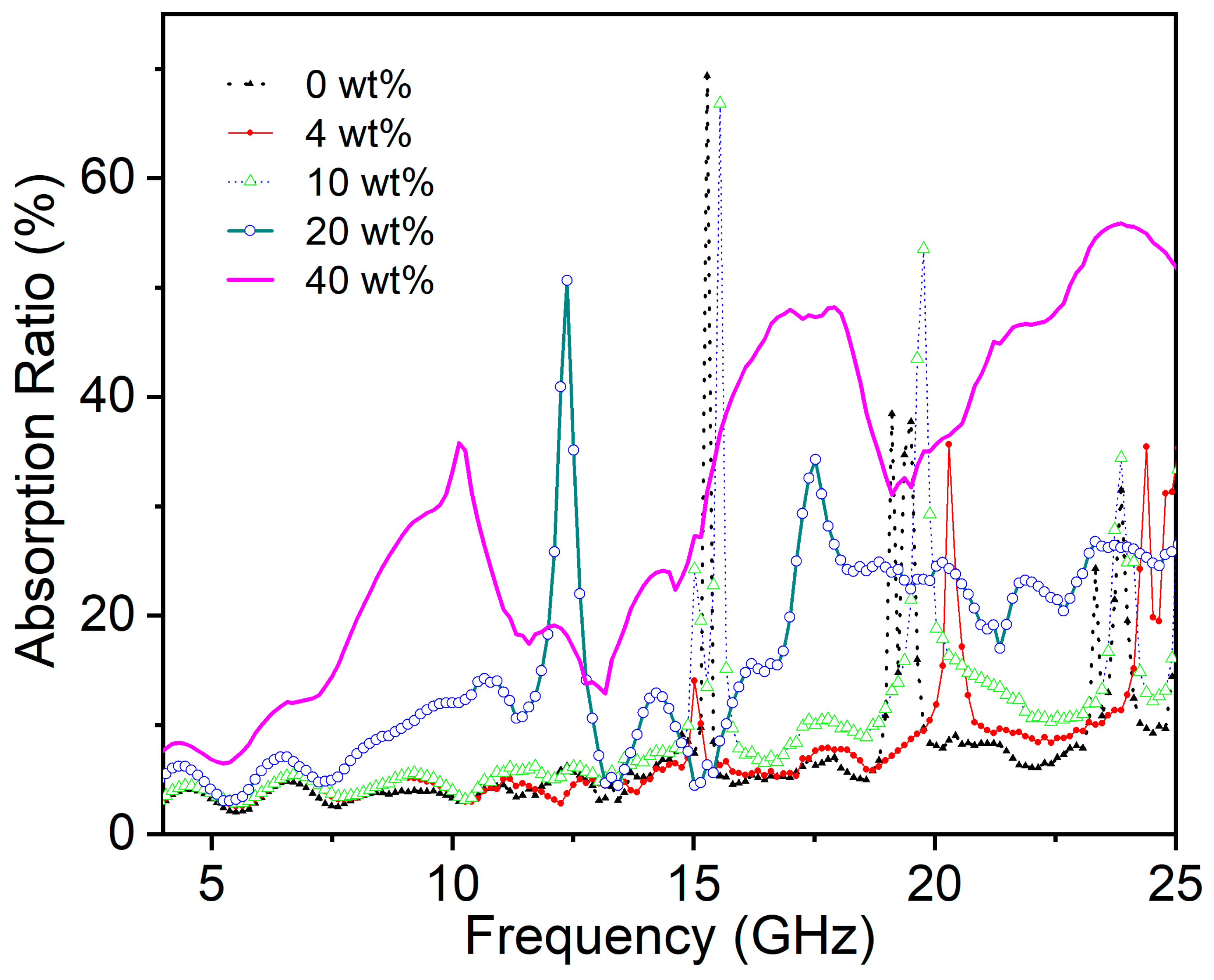
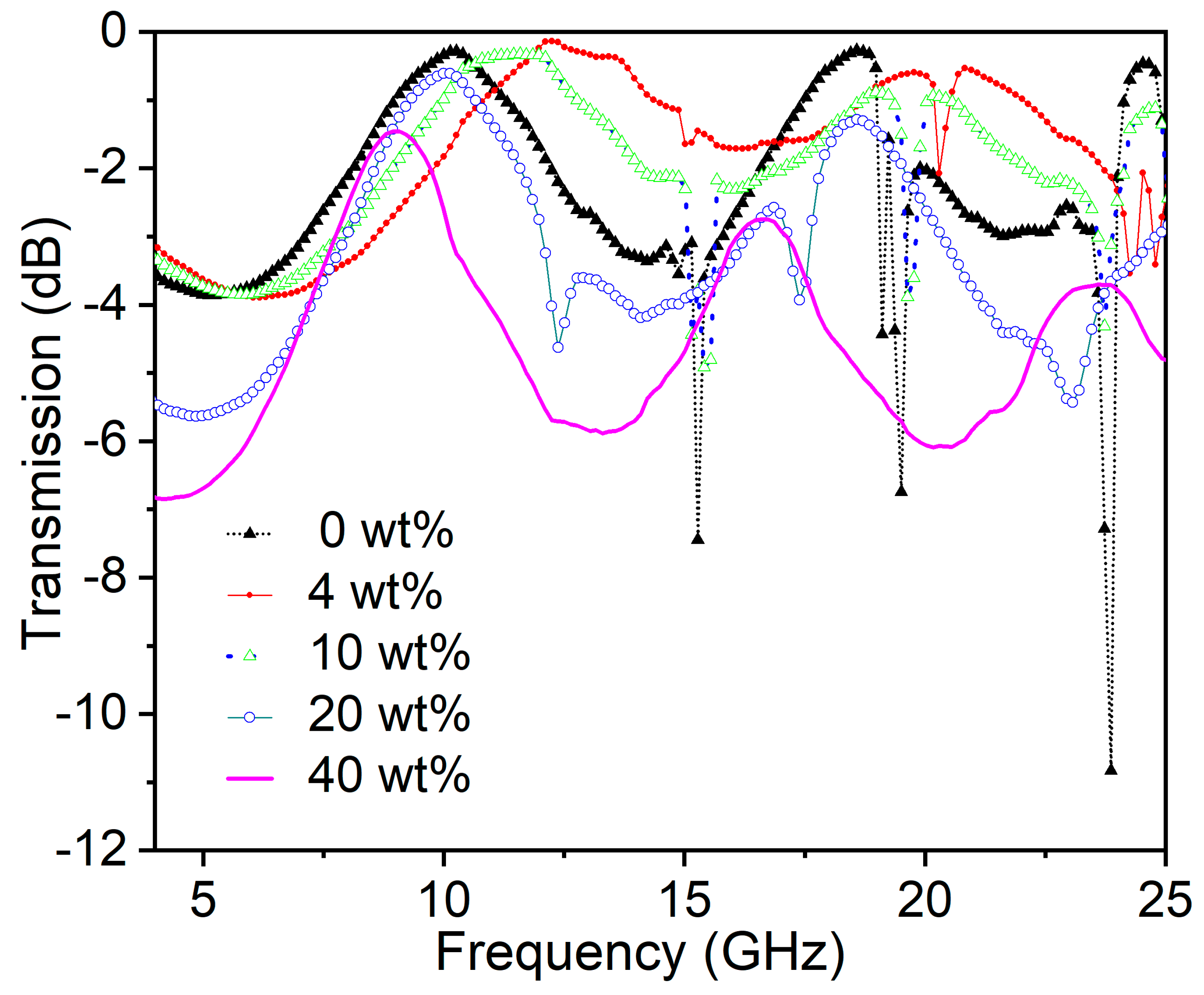
The transmission properties of the samples with various BSCCO weight percentages are shown in Figure 5. The negative dB in transmission means the transmission loss. The 40 wt.% BSCCO sample had a transmission loss of −7 dB at 4.9 GHz with the widest band of absorption. Figure 6 shows the absorption ratio of the composite samples with varying weight percentages of BSCCO in the samples. The composite sample with 40 wt.% BSCCO had an absorption of 52% around 23 GHz, which had the widest band of absorption. As the weight percentage increases, the absorption bands widen and allow for a greater frequency range of absorption. Because the samples were formed from the cold-presses of powders and heat treatment procedures as discussed in the Material Synthesis Section, the composite samples possess a large amount of porosity and interfaces, which can cause multiple scattering and absorption of electromagnetic waves. The porous structures inside the composite samples may also play some kind of role in resonant absorption, which may lead to “resonant-like” features in reflection, transmission, and absorption, as shown in Figure 4, Figure 5 and Figure 6. Further understanding may require deeper theoretical studies beyond the scope of this experimental report for the phenomena.

3.2. Dielectric and Magnetic Properties

The effective complex permeability µ and permittivity ε were also studied for microwave absorption. The real parts of the permeability µ′ and permittivity ε′ are related to the magnetic and electrical energy a material can store, respectively. The imaginary part of the permeability µ″ and permittivity ε″ are related to the magnetic and electrical energy that a material can dissipate through magnetic and dielectric loss, respectively [29]. For efficient microwave absorption, materials should ideally have both dielectric loss and magnetic loss to fully interact with EM waves [30]. In this work, the complex µ and ε were determined for the samples using the Nicolson–Ross–Weir method, and the measured S-parameters were determined using the Agilent Materials Measurement Software 85071E in the calculations. As discussed in the above sections, the porous structures and interfaces in the composite samples can also lead to a complex feature in the effective complex permittivity ε and permeability µ, as shown in the following sections.
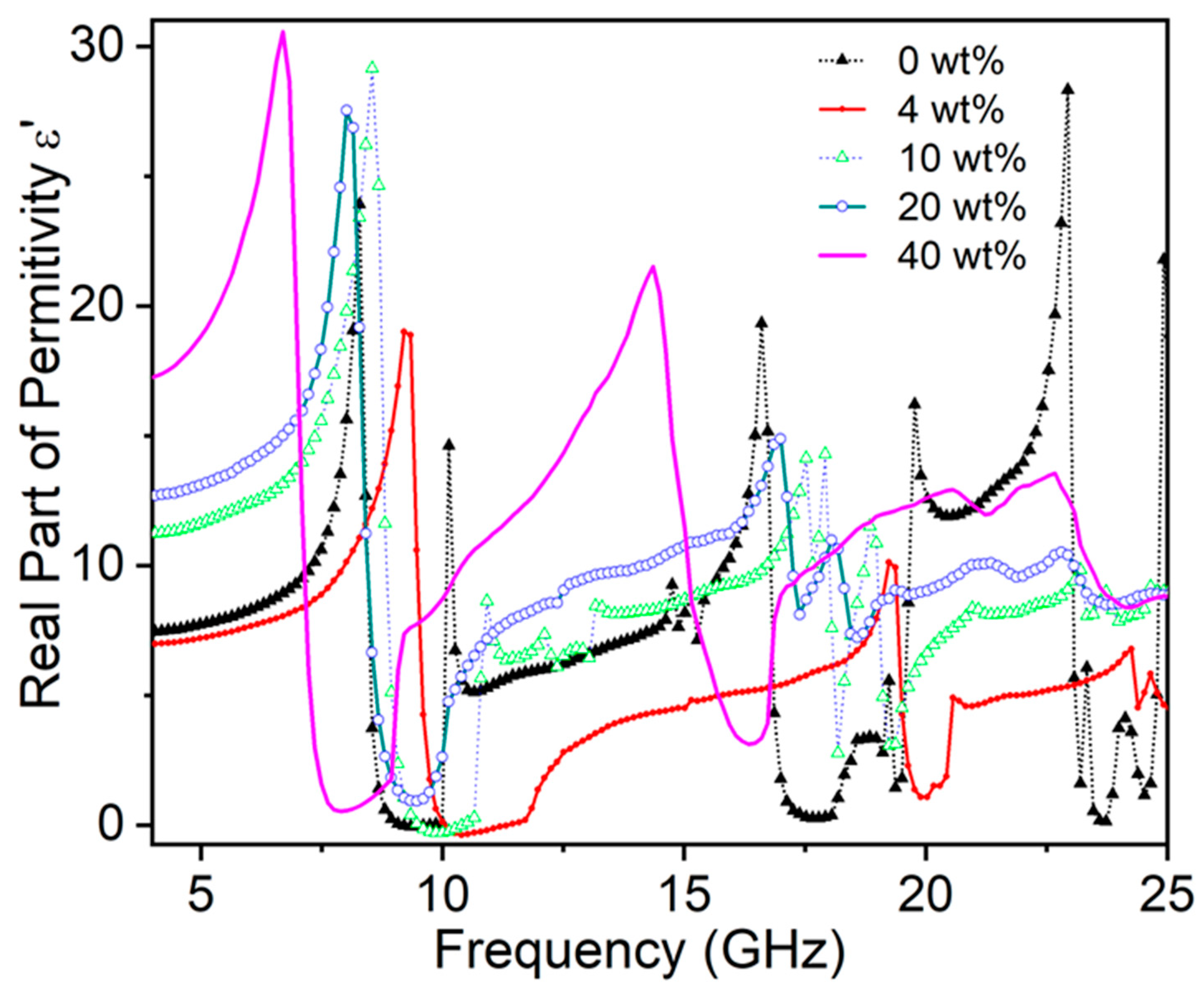
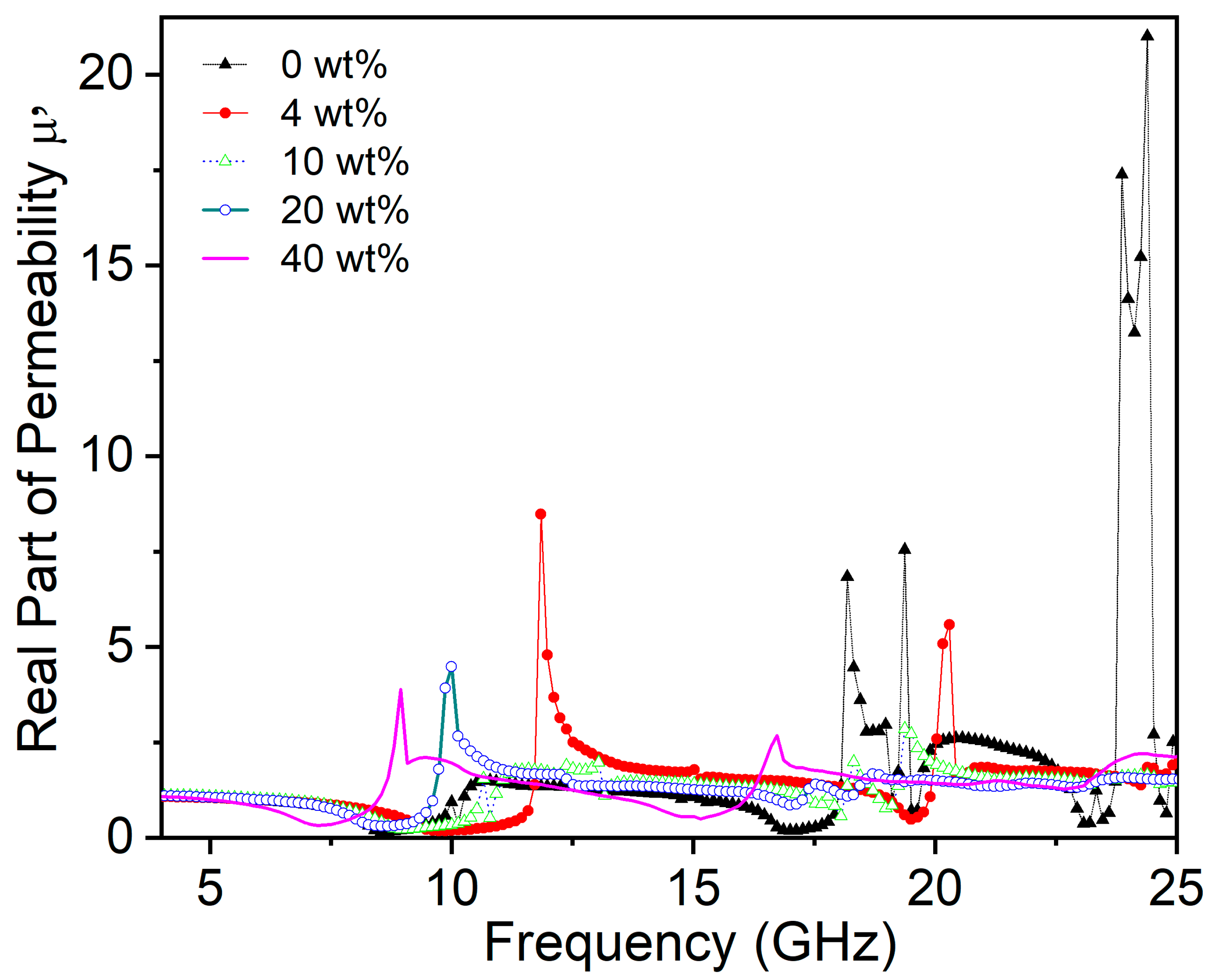
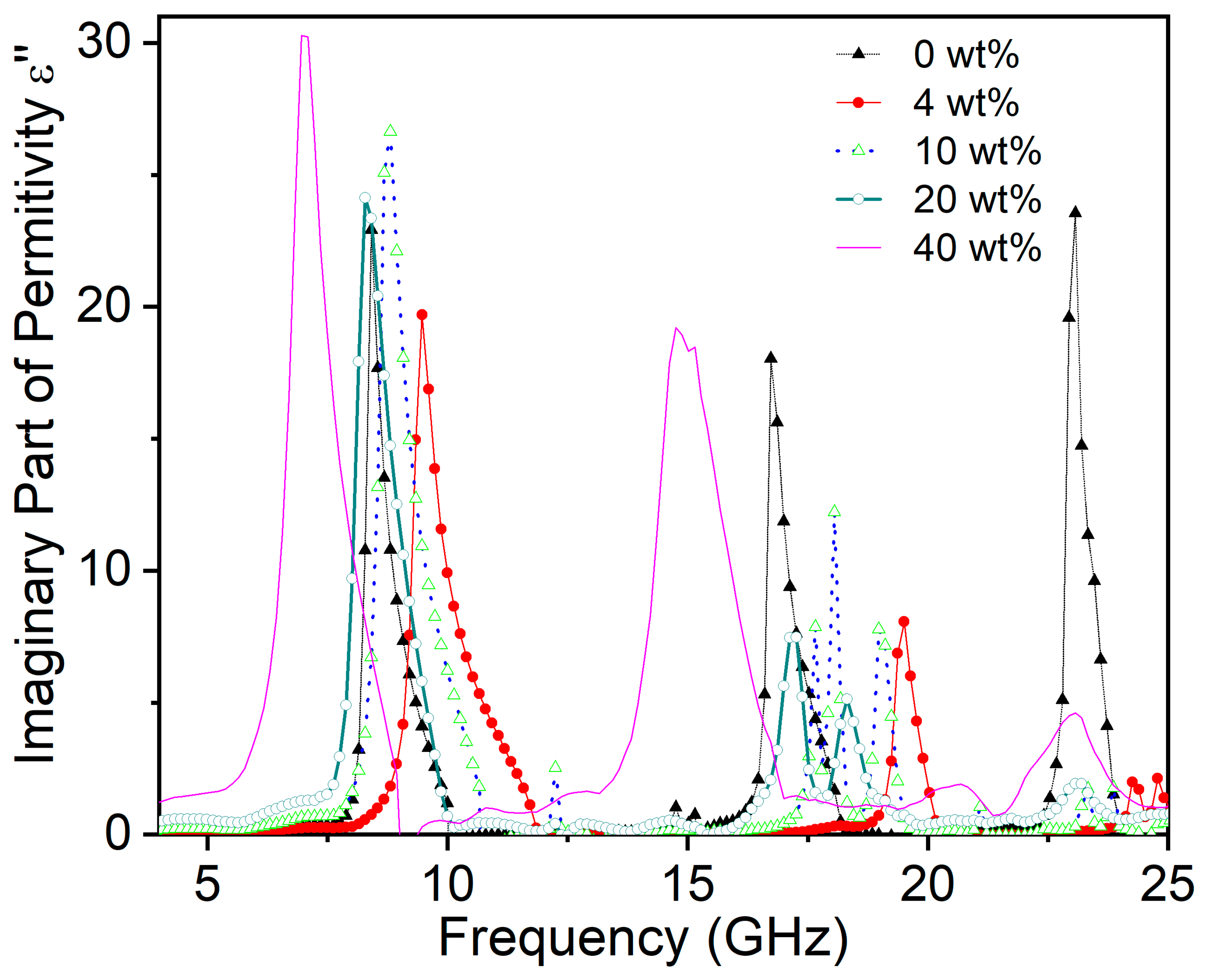
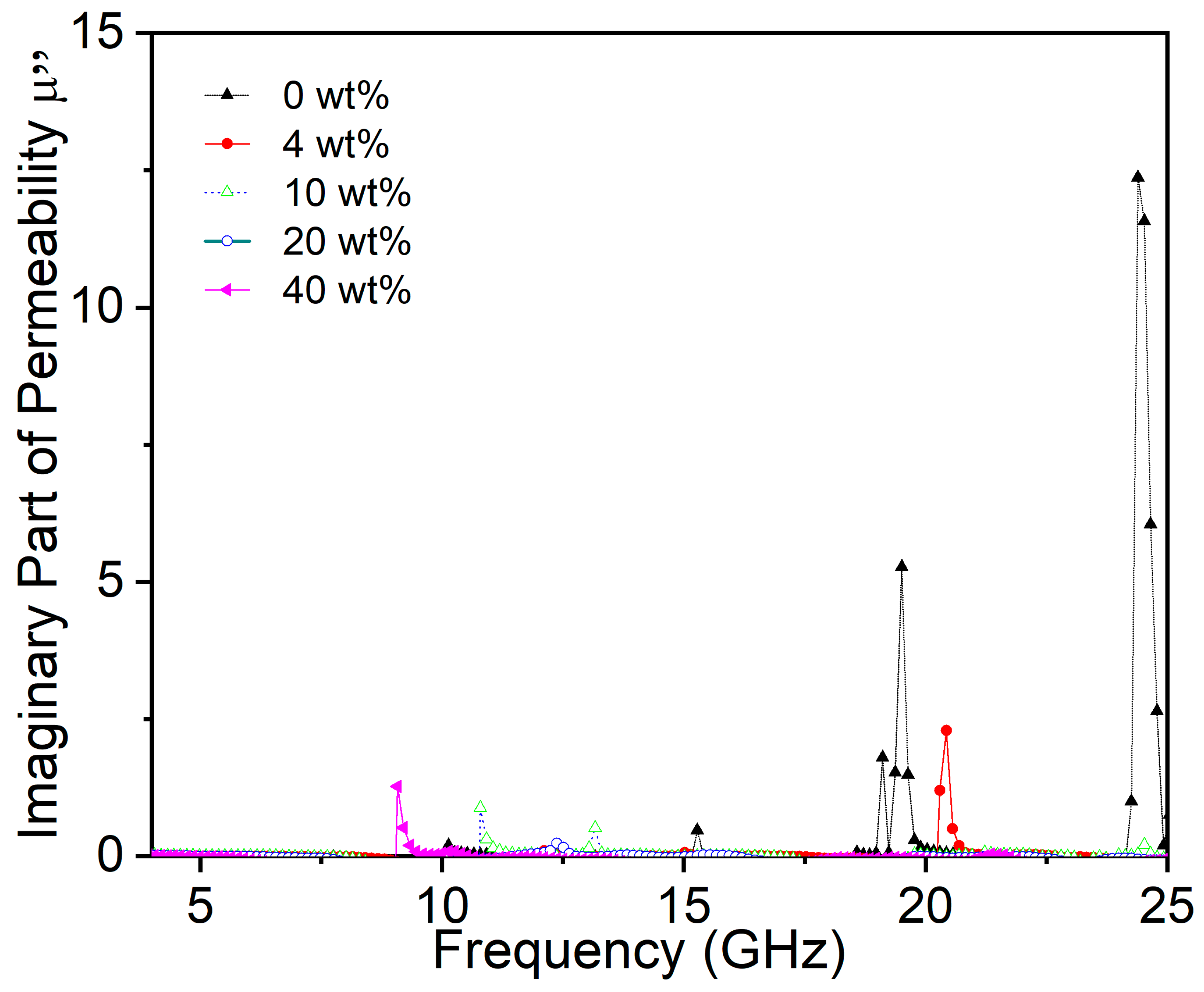
Figure 7 shows the ε′ for the composite samples of various weight percentages of BSCCO. It was observed that as the BSCCO weight percentage increases in the samples, the ε′ also exhibits an observable increase. The Bi2O3 is a wide band gap insulator. The sintering of BSCCO—Bi2O3 bulk samples can lead to oxygen vacancies, which can cause a “hopping” between neighboring ion sites. Interfacial polarizations, along with the introduction of BSCCO, can contribute to mobile charge carriers, which cause dielectric dispersion. Figure 8 gives the ε″ for the samples. The 40 wt.% BSCCO sample shows a significantly high and wide ε″ across a wide frequency spectrum as compared to other samples due to the porous structures and interfaces, which can cause multiple scattering and even resonant absorption peaks of microwaves, as shown in Figure 8. The 40 wt.% BSCCO sample shows a high and wide ε″ across a wide frequency spectrum as compared to other samples. The µ′ and µ″ are shown in Figure 9 and Figure 10, respectively. The behavior is indicative of a non-ferromagnetic material, where relaxation and eddy current effects occur as a result from the microwave signal. As BSCCO is introduced, the measurements of µ″ of the samples exhibit weak magnetic loss. The complex permeability results are due to the fact that BSCCO is a cuprate superconductor; however, its diamagnetic properties can only be observed at relatively low temperatures below the transition temperature Tc [31]. In the normal state at around room temperature, BSCCO may still possess some weak magnetic properties [32]. In this case, dielectric loss is much greater than the magnetic loss; therefore, the absorption depends largely on the dielectric properties.

4. Conclusions

In this study, BSCCO-based ceramic samples with different weight percentages blended with Bi2O3 were synthesized using the cold-press and sintering techniques. XRD results show that δ-Bi2O3 and Bi-2223 of BSCCO were synthesized. The microwave absorption properties of the composite samples with various BSCCO weight percentages were studied for their microwave reflection, transmission, dielectric loss, and magnetic loss in a frequency range of 4–25 GHz. The studies showed that increasing the BSCCO weight percentage in the sample resulted in an increasing microwave absorption percentage and wider frequency band, as demonstrated by the 40 wt.% BSCCO sample. The measurements show that the dielectric losses contribute more to the microwave absorption than the magnetic losses. The increase in the BSCCO weight percentage also led to higher dielectric loss, which was indicated by the complex permittivity in the 40 wt.% BSCCO sample. The results show that BSCCO-based ceramic composites at various weight percentages could have some potential applications where polymers would be inapplicable.

Supplementary Materials

The following supporting information can be downloaded at: https://www.mdpi.com/article/10.3390/solids6040067/s1, Figure S1: Pure BSCCO sample measurement for the magnetic moment under zero-field cooling and field cooling under a field of 15 Oe; Figure S2: Pure BSCCO sample measurement for the bridge resistance vs. temperature at various magnetic field strengths; Figure S3: The particle size distribution analysis of the Bi2O3 powder sample; Figure S4: SEM image of pure Bi2O3 powder particles; Figure S5: The particle size distribution analysis of the pure BSCCO powder sample; Figure S6: SEM image of pure BSCCO powder particles; Figure S7: The particle size distribution analysis of the 40 wt.% BSCCO composite powder sample; Figure S8: SEM image of 40 wt%. BSCCO composite powder particles; Figure S9: SEM/EDX mapping of a 40 wt.% BSCCO composite sample.

Author Contributions

Conceptualization, S.R. and G.-L.Z.; methodology, S.R. and G.-L.Z.; formal analysis, G.D. and K.P.S.; investigation, S.R. and K.P.S.; resources, G.-L.Z.; writing—original draft preparation, S.R. and K.P.S.; writing—review and editing, S.R. and G.-L.Z.; visualization, K.P.S. and G.D.; project administration, G.-L.Z.; funding acquisition, G.-L.Z. All authors have read and agreed to the published version of the manuscript.

Funding

This research was funded in part by the Office of Naval Research (ONR) (Award No. N00014-22-1-2744), the National Science Foundation (NSF) (Award No. 2216805), and the Army Research Office (ARO) (Award No. W911NF2210099) in the USA.

Data Availability Statement

The original contributions presented in this study are included in the article/Supplementary Materials. Further inquiries can be directed to the corresponding author.

Acknowledgments

The authors are grateful to Xiaojian Bai for his support for the measurements of the superconducting properties of the BSCCO sample.

Conflicts of Interest

The authors declare no conflicts of interest.

Abbreviations

The following abbreviations are used in this manuscript:
EMElectromagnetic
EMIElectromagnetic Interference
RFRadio Frequency
MAMMicrowave Absorption Material
PPMSPhysical Property Measurement System
SEMScanning Electron Microscopy
RLReflection Loss
XRDX-Ray Diffraction

References

  1. Zang, X.; Lu, Y. Preparation and dielectric properties at high frequency of AlN-based composited ceramic. J. Mater. Sci. Mater. Electron. 2020, 31, 2826–2832. [Google Scholar] [CrossRef]
  2. Xiao, J.; He, M.; Zhan, B.; Guo, H.; Yang, J.L.; Zhang, Y.; Gu, J. Multifunctional microwave absorption materials: Construction strategies and functional applications. Mater. Horiz. 2024, 11, 5874–5894. [Google Scholar] [CrossRef]
  3. Yin, X.; Kong, L.; Zhang, L.; Cheng, L.; Travitzky, N.; Greil, P. Electromagnetic properties of Si–C–N based ceramics and composites. Int. Mater. Rev. 2014, 59, 326–355. [Google Scholar] [CrossRef]
  4. Zhou, X.; Wang, J.; Zhou, L.; Wang, Y.; Yao, D. Structure, magnetic and microwave absorption properties of NiZnMn ferrite ceramics. J. Magn. Magn. Mater. 2021, 534, 168043. [Google Scholar] [CrossRef]
  5. Duan, W.; Yin, X.; Li, Q.; Schlier, L.; Greil, P.; Travitzky, N. A review of absorption properties in silicon-based polymer derived ceramics. J. Eur. Ceram. Soc. 2016, 36, 3681–3689. [Google Scholar] [CrossRef]
  6. Kim, S.S.; Jo, S.B.; Gueon, K.I.; Choi, K.K.; Kim, J.M.; Churn, K.S. Complex permeability and permittivity and microwave absorption of ferrite-rubber composite at X-band frequencies. IEEE Trans. Magn. 1991, 27, 5462–5464. [Google Scholar] [CrossRef]
  7. Mandal, D.; Bhandari, B.; Mullurkara, S.V.; Ohodnicki, P.R. All-around electromagnetic wave absorber based on Ni–Zn ferrite. ACS Appl. Mater. Interfaces 2024, 16, 33846–33854. [Google Scholar] [CrossRef]
  8. Wu, Y.; Chen, L.; Han, Y.; Liu, P.; Xu, H.; Yu, G.; Wang, Y.; Wen, T.; Ju, W.; Gu, J. Hierarchical construction of CNT networks in aramid papers for high-efficiency microwave absorption. Nano Res. 2023, 16, 7801–7809. [Google Scholar] [CrossRef]
  9. Li, D.; Jia, D.; Yang, Z.; Zhou, Y. Principles, design, structure and properties of ceramics for microwave absorption or transmission at high-temperatures. Int. Mater. Rev. 2022, 67, 266–297. [Google Scholar] [CrossRef]
  10. Nguyen, T.; Petersen, E.J.; Pellegrin, B.; Gorham, J.M.; Lam, T.; Zhao, M.; Sung, L. Impact of UV irradiation on multiwall carbon nanotubes in nanocomposites: Formation of entangled surface layer and mechanisms of release resistance. Carbon 2017, 116, 191–200. [Google Scholar] [CrossRef]
  11. Bhasha, B.; Gautam, S.; Malik, P.; Jain, P. Ceramic composites for aerospace applications. Diffus. Found. 2019, 23, 31–39. [Google Scholar] [CrossRef]
  12. Delfini, A.; Albano, M.; Vricella, A.; Santoni, F.; Rubini, G.; Pastore, R.; Marchetti, M. Advanced radar absorbing ceramic-based materials for multifunctional applications in space environment. Materials 2018, 11, 1730. [Google Scholar] [CrossRef]
  13. Tian, H.; Wei, Q.; Ding, Y.; Wang, H.; Ma, C.; Yuan, K.; Han, D.; Wang, H.; Zhang, R.; Shao, G. Integration of microwave absorption capability into mullite insulation tiles for multifunctionality. Int. J. Appl. Ceram. Technol. 2025, 22, e15090. [Google Scholar] [CrossRef]
  14. Hao, B.; Chai, Z.H.; Li, M.; Duan, J.J.; Zhang, Y.; Zhang, Y.B.; Li, C.P.; Gong, C.H. Design of mesoscopic metacomposites for electromagnetic wave absorption: Enhancing performance and gaining mechanistic insights. Soft Sci. 2025, 5, 39. [Google Scholar] [CrossRef]
  15. Zeng, X.; Li, E.; Xia, G.; Xie, N.; Shen, Z.Y.; Moskovits, M.; Yu, R. Silica-based ceramics toward electromagnetic microwave absorption. J. Eur. Ceram. Soc. 2021, 41, 7381–7403. [Google Scholar] [CrossRef]
  16. Ayeni, J.O.; Ma, S.; Wang, X.; Hou, X. Fabrication method, dielectric properties, and electromagnetic absorption performance of high alumina fly ash-based ceramic composites. Ceram. Int. 2022, 48, 21268–21282. [Google Scholar] [CrossRef]
  17. Xiang, Z.; Wang, Y.; Yin, X.; He, Q. Microwave absorption performance of porous heterogeneous SiC/SiO2 microspheres. Chem. Eng. J. 2023, 451, 138742. [Google Scholar] [CrossRef]
  18. Li, B.; Mao, B.; Huang, H.; Wang, X.; He, T. Synthesis and microwave absorption properties of bamboo-like β-SiC nanowires. Int. J. Appl. Ceram. Technol. 2020, 17, 1869–1881. [Google Scholar] [CrossRef]
  19. Sharma, A.K.; Mishra, R.R. Role of particle size in microwave processing of metallic material systems. Mater. Sci. Technol. 2018, 34, 123–137. [Google Scholar] [CrossRef]
  20. Green, M.; Liu, Z.; Xiang, P.; Liu, Y.; Zhou, M.; Tan, X.; Huang, F.; Liu, L.; Chen, X. Doped, conductive SiO2 nanoparticles for large microwave absorption. Light. Sci. Appl. 2018, 7, 87. [Google Scholar] [CrossRef]
  21. Hudáková, N.; Macko, D.; Szabó, P.; Samuely, P.; Plecháček, V. Study of energy gap features in BSCCO superconductors. Phys. C Supercond. 1994, 235, 1125–1126. [Google Scholar] [CrossRef]
  22. Nagao, K.; Neaton, J.B.; Ashcroft, N.W. First-principles study of adhesion at Cu/SiO2 interfaces. Phys. Rev. B 2003, 68, 125403. [Google Scholar] [CrossRef]
  23. Kholodkova, A.; Smirnov, A.; Danchevskaya, M.; Ivakin, Y.; Muravieva, G.; Ponomarev, S.; Fionov, A.; Kolesov, V. Bi2O3-modified ceramics based on BaTiO3 powder synthesized in water vapor. Inorganics 2020, 8, 8. [Google Scholar] [CrossRef]
  24. Ren, Z.; Wang, J.H. Effect of compressive reorientation on the Tc and Jc of the superconducting composite AgxBi1.7Pb0.3Sr2Ca2Cu3O10. J. Mater. Sci. Lett. 1991, 10, 1139–1141. [Google Scholar] [CrossRef]
  25. Cheng, J.B.; Shi, H.G.; Cao, M.; Wang, T.; Zhao, H.B.; Wang, Y.Z. Porous carbon materials for microwave absorption. Mater. Adv. 2020, 1, 2631–2645. [Google Scholar] [CrossRef]
  26. Chen, J.; Chen, Z.; Qian, Y.; Xia, J.; He, Z.; Sun, S.; Fan, M.; Zhang, Q. Superconductivity and phases of leaded Bi-Ca-Sr-Cu-O system. Solid. State Commun. 1988, 68, 327–330. [Google Scholar] [CrossRef]
  27. Abdullah, S.N.; Awang Kechik, M.M.; Kamarudin, A.N.; Talib, Z.A.; Baqiah, H.; Kien, C.S.; Pah, L.K.; Karim, M.K.A.; Shabdin, M.K.; Shaari, A.H.; et al. Microstructure and superconducting properties of Bi-2223 synthesized via co-precipitation method: Effects of graphene nanoparticle addition. Nanomaterials 2023, 13, 2197. [Google Scholar] [CrossRef]
  28. Elmahaishi, M.F.; Azis, R.S.; Ismail, I.; Muhammad, F.D. A review on electromagnetic microwave absorption properties: Their materials and performance. J. Mater. Res. Technol. 2022, 20, 2188–2220. [Google Scholar] [CrossRef]
  29. Krupka, J. Materials with negative permittivity or negative permeability—Review, electrodynamic modelling, and applications. Materials 2025, 18, 423. [Google Scholar] [CrossRef]
  30. Huang, X.; Qiao, M.; Lu, X.; Li, Y.; Ma, Y.; Kang, B.; Quan, B.; Ji, G. Evolution of dielectric loss-dominated electromagnetic patterns in magnetic absorbers for enhanced microwave absorption performances. Nano Res. 2021, 14, 4006–4013. [Google Scholar] [CrossRef]
  31. Sato, K. Present status and future perspective of high-temperature superconductors. SEI Tech. Rev. Engl. Ed. 2008, 66, 55. [Google Scholar]
  32. Zhang, Y.R.; Qiu, L.P.; Gao, S.L.; Zheng, Q.H.; Cheng, G.T.; Gao, Y.; Zhang, T.T.; Han, W.P.; Ramakrishna, S.; Long, Y.Z. Preparation and magnetic properties of BSCCO superconducting nanofibers by electrospinning and solution blowing spinning. J. Supercond. Nov. Magn. 2022, 35, 2755–2763. [Google Scholar] [CrossRef]
Figure 1. Schematic view of the BSCCO-based composite sample fabrication, starting from precursors and gradually mixed, press, sintered, and machined to be analyzed by the network analyzer.
Solids 06 00067 g001
Figure 2. SEM images of the samples with various weight percentages of BSCCO at different magnifications: (a,b) Pure Bi2O3; (c,d) 4 wt.% BSCCO; (e,f) 10 wt.% BSCCO; (g,h) 20 wt.% BSCCO; and (i,j) 40 wt.% BSCCO.
Solids 06 00067 g002
Figure 3. XRD patterns of the composite samples with various weight percentages of BSCCO, including pure Bi2O3, pure BSCCO, 4 wt.% BSCCO, 10 wt.% BSCCO, 20 wt.% BSCCO, and 40 wt.% BSCCO.
Solids 06 00067 g003
Figure 4. The microwave reflection loss (dB) versus frequency (GHz) for the composite samples with varying weight percentages of BSCCO with bismuth oxide.
Solids 06 00067 g004
Figure 5. The microwave transmission loss (dB) versus frequency (GHz) for composite samples with varying weight percentages of BSCCO with bismuth oxide.
Solids 06 00067 g005
Figure 6. The absorption ratio (%) versus frequency (GHz) for the composite samples with varying weight percentages of BSCCO with bismuth oxide.
Solids 06 00067 g006
Figure 7. The real part of the relative permittivity (ε′) versus frequency (GHz) for the composite samples with varying weight percentages of BSCCO with bismuth oxide.
Solids 06 00067 g007
Figure 8. The imaginary part of the relative permittivity (ε″) versus frequency (GHz) for the composite samples with varying weight percentages of BSCCO with bismuth oxide.
Solids 06 00067 g008
Figure 9. The real part of the relative permeability (µ′) versus frequency (GHz) for the composite samples with varying weight percentages of BSCCO with bismuth oxide.
Solids 06 00067 g009
Figure 10. The imaginary part of the relative permeability (µ″) versus frequency (GHz) for the composite samples with varying weight percentages of BSCCO with bismuth oxide.
Solids 06 00067 g010
Table 1. RL peak values, positions, and effective bandwidth for the composite samples with different BSCCO weight percentages.
Sample1st RL Peak2nd RL Peak
Value [dB]Peak Position [GHz]Effective Bandwidth [GHz]Value [dB]Peak Position [GHz]Effective Bandwidth [GHz]
0 wt.%−14.010.31.45−28.718.61.19
4 wt.%−32.612.52.51−20.820.22.64
10 wt.%−23.311.31.98−14.919.21.06
20 wt.%−30.710.01.46−19.418.61.98
40 wt.%−11.09.080.523−12.123.71.45
Disclaimer/Publisher’s Note: The statements, opinions and data contained in all publications are solely those of the individual author(s) and contributor(s) and not of MDPI and/or the editor(s). MDPI and/or the editor(s) disclaim responsibility for any injury to people or property resulting from any ideas, methods, instructions or products referred to in the content.