1. Introduction
The depletion of conventional mineral resources, together with the accelerating accumulation of industrial residues, has renewed interest in technogenic deposits as secondary sources of mineral raw materials. Coal ash and slag are among the largest-volume residues produced by thermal power generation. Their long-term storage occupies land, promotes dust emissions, and can modify the geochemical conditions of surrounding soils and waters; at the same time, these residues may contain recoverable mineral phases and trace elements [
1,
2].
This dual environmental-resource character is particularly relevant for Kazakhstan, where coal-fired power generation and legacy ash-disposal sites are extensive. Such deposits should therefore be examined not only as waste-storage liabilities, but also as heterogeneous mineral-technogenic systems that may contain Fe-bearing phases, rare and rare-earth elements, and locally enriched noble metals [
1,
2,
3].
The enrichment of elements in coal-combustion products is controlled by both primary coal geochemistry and combustion-related redistribution. During peat accumulation, coalification, and later hydrothermal or epigenetic overprints, coal can concentrate a broad range of trace elements. Combustion removes most organic matter, while inorganic constituents are redistributed among glassy aluminosilicate phases, crystalline phases, ferrospheres, unburned carbon, and fine particulate matter. As a result, some elements may become enriched in the solid residue relative to the original coal [
4,
5].
Coal-combustion products typically contain aluminosilicate glass, mullite, quartz, magnetite, hematite, cristobalite, Fe-rich microspheres, and residual carbon. Their phase assemblages and chemical compositions depend on coal geology, combustion regime, cooling rate, collection method, hydraulic transport, and storage history. These factors also control the accessibility of Fe, rare-earth elements, and noble metals during subsequent physical or chemical processing [
3,
6].
Most international studies on coal-ash valorization have addressed construction applications, recovery of magnetic Fe-rich fractions, and extraction of Al, Si, and rare-earth elements [
1,
2,
7,
8]. In contrast, Au recovery from coal ash remains much less systematically investigated. The principal obstacles are the very low bulk grade, strong spatial and granulometric heterogeneity, the nugget effect, and uncertainty regarding the mineralogical carriers of Au. These features make representative sampling, reliable assaying, and defensible mass balancing especially challenging.
In this study, the term finely dispersed gold (FDG) is used operationally to describe Au occurring as small liberated particles, partly liberated particles, or ultrafine/matrix-associated forms that are not readily recovered by conventional gravity methods. This definition does not assume a single host phase. Consequently, distinguishing liberated native Au from poorly liberated or matrix-associated Au requires the combined interpretation of particle-size data, mineralogical observations, analytical results, and beneficiation behavior [
9,
10,
11].
Magnetic separation is comparatively mature for coal ash because magnetite, hematite-bearing aggregates, and ferrospheres respond directly to magnetic fields. Au behavior is more complex. It may occur as liberated native grains, attach mechanically to Fe-rich particles, or report to nonmagnetic aluminosilicate, carbonaceous, and slime products. Therefore, the partitioning of Au among magnetic and nonmagnetic streams is not only a separation result but also a diagnostic indicator of occurrence modes [
3,
6,
7,
8].
For ash-slag waste produced from Ekibastuz coal, published information remains limited and deposit-specific. Existing Kazakhstan studies demonstrate substantial compositional variability and confirm that technogenic materials can yield Au-bearing and rare-earth-bearing beneficiation products; however, they do not define a universally applicable processing route [
9,
12]. A site-specific and size-dependent investigation is therefore required before recovery claims or flowsheet generalizations can be made.
The scientific novelty of the present work is the integrated assessment of particle-size distribution, Fe mineralogy, native-Au morphology, magnetic/nonmagnetic partitioning, and method-dependent AAS-KSA response in a single Kazakhstan ash-slag material. Rather than presenting classification, gravity concentration, or magnetic separation as isolated operations, the study connects these operations to the observed modes of Au occurrence and uses the combined evidence to formulate a differentiated preconcentration route.
The aim of the study was to determine the modes of Au occurrence in ash-slag waste derived from Ekibastuz coal and to evaluate the suitability of a gravity-magnetic flowsheet for preliminary separation of Au-bearing and Fe-bearing products.
To achieve this aim, the study (i) characterized the particle-size, mineralogical, and chemical composition of the waste; (ii) determined Au and Fe distributions among size fractions; (iii) evaluated gravity recovery of liberated and partly liberated Au; (iv) characterized Fe-bearing microspheres and native Au; (v) examined Au partitioning between magnetic and nonmagnetic products; (vi) compared AAS and KSA as diagnostic methods; and (vii) proposed a size-selective preconcentration flowsheet.
2. Materials and Methods
2.1. Study Material
The study material comprised aged and freshly generated ash-slag waste from Stepnogorsk thermal power plants that burn Ekibastuz coal. The sampled material included coarse gravelly slag, a medium-grained sandy fraction, fine silt-sized particles, and slimes.
2.2. Collection and Preparation of Representative Samples
Because the ash-slag waste was heterogeneous in particle size, mineralogy, and chemical composition, the sampling, homogenization, and preparation strategy was designed to represent the principal depositional zones of the disposal site.
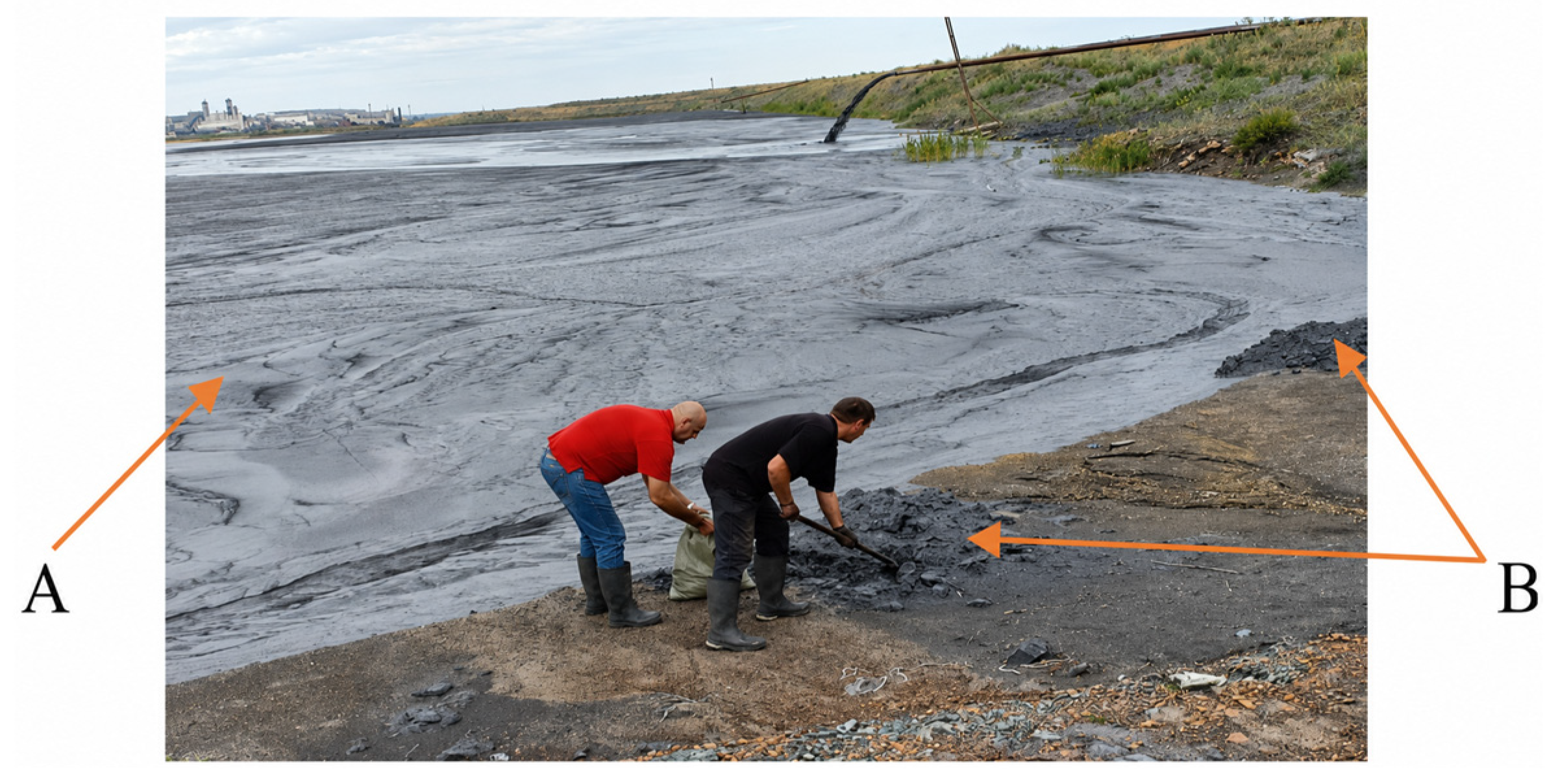
Bulk material was collected from several locations within the active and aged ash-disposal site (
Figure 1). Coarse slag was sampled near the discharge pipe, medium- and fine-grained sandy material was sampled from the central part of the impoundment, and fine slime material was sampled near the settling pond.
Sampling was conducted on a square grid using shallow pits excavated to 0.5 m below the surface. Individual increments weighed 15–20 kg and were combined and homogenized to form three bulk samples representing the principal particle-size varieties:
- -
Coarse gravelly material, represented predominantly by slag and accounting for approximately 10% of the disposal volume; sample mass, 152.1 kg;
- -
Medium- and fine-grained sandy material, accounting for approximately 60% of the disposal volume; sample mass, 116.5 kg;
- -
Fine-grained slime material, accounting for approximately 30% of the disposal volume; sample mass, 120 kg.
The samples were processed at their natural particle size, without crushing or grinding, in order to preserve the morphology of Fe-rich microspheres, aluminosilicate aggregates, and possible free native-Au particles. The entire collected mass was used for technological testing, with no early-stage sample reduction.
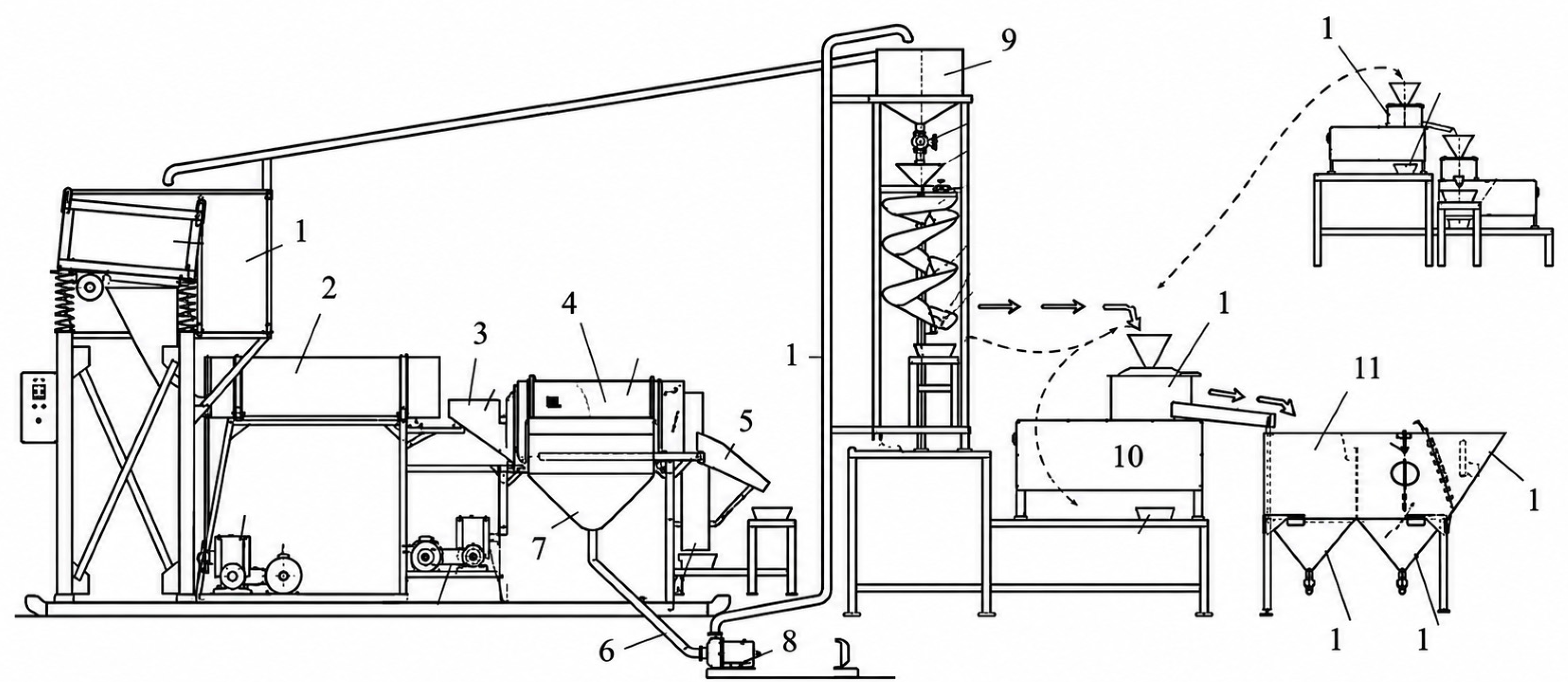
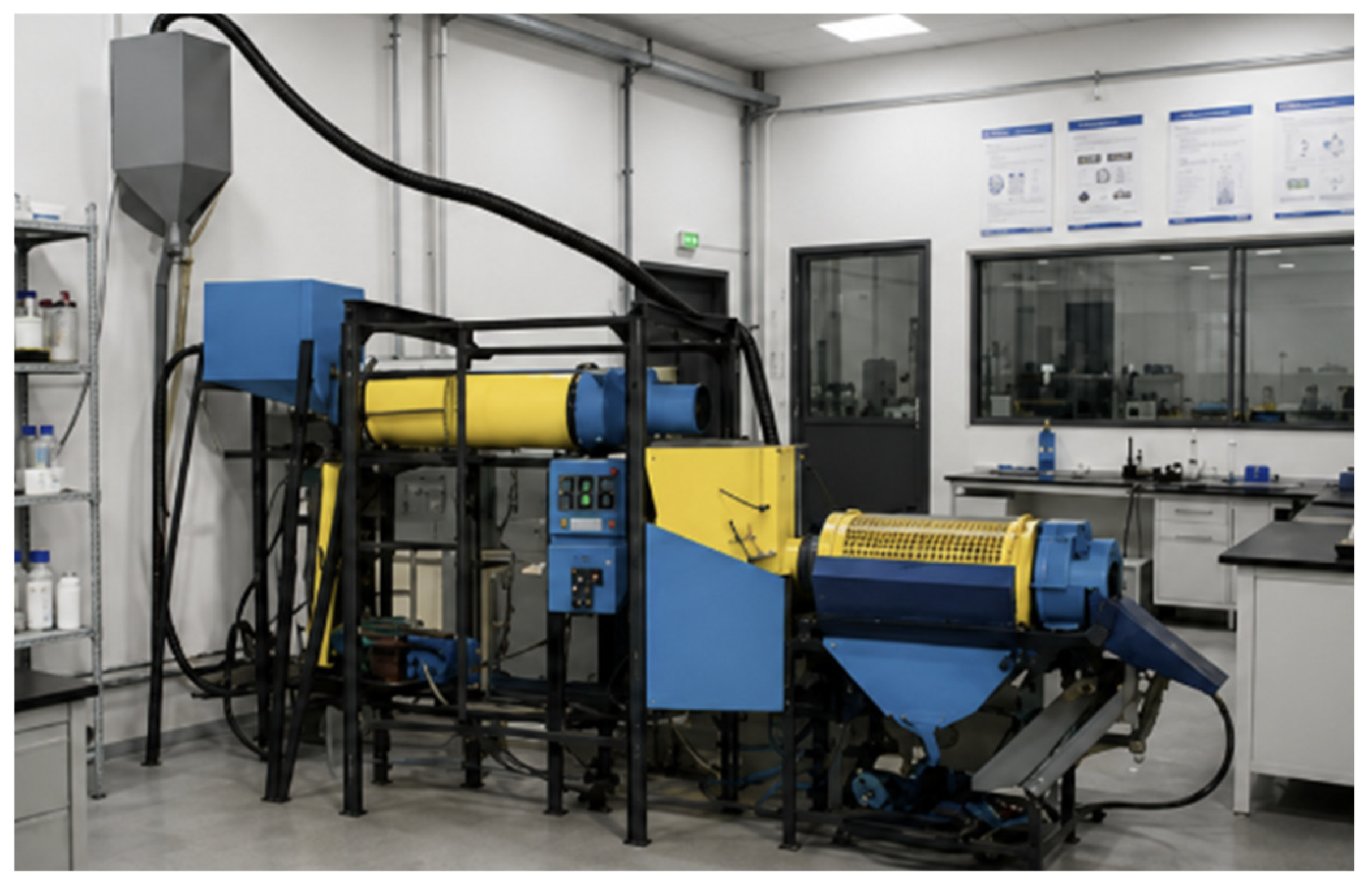
Sample preparation involved wet disintegration, screening, and classification in a scrubber trommel (
Figure 2). Au and Fe distributions were evaluated in the +2, −2 + 0.25, −0.25 + 0.10, −0.10 + 0.044, and −0.044 + 0 mm fractions.
2.3. Research Methods
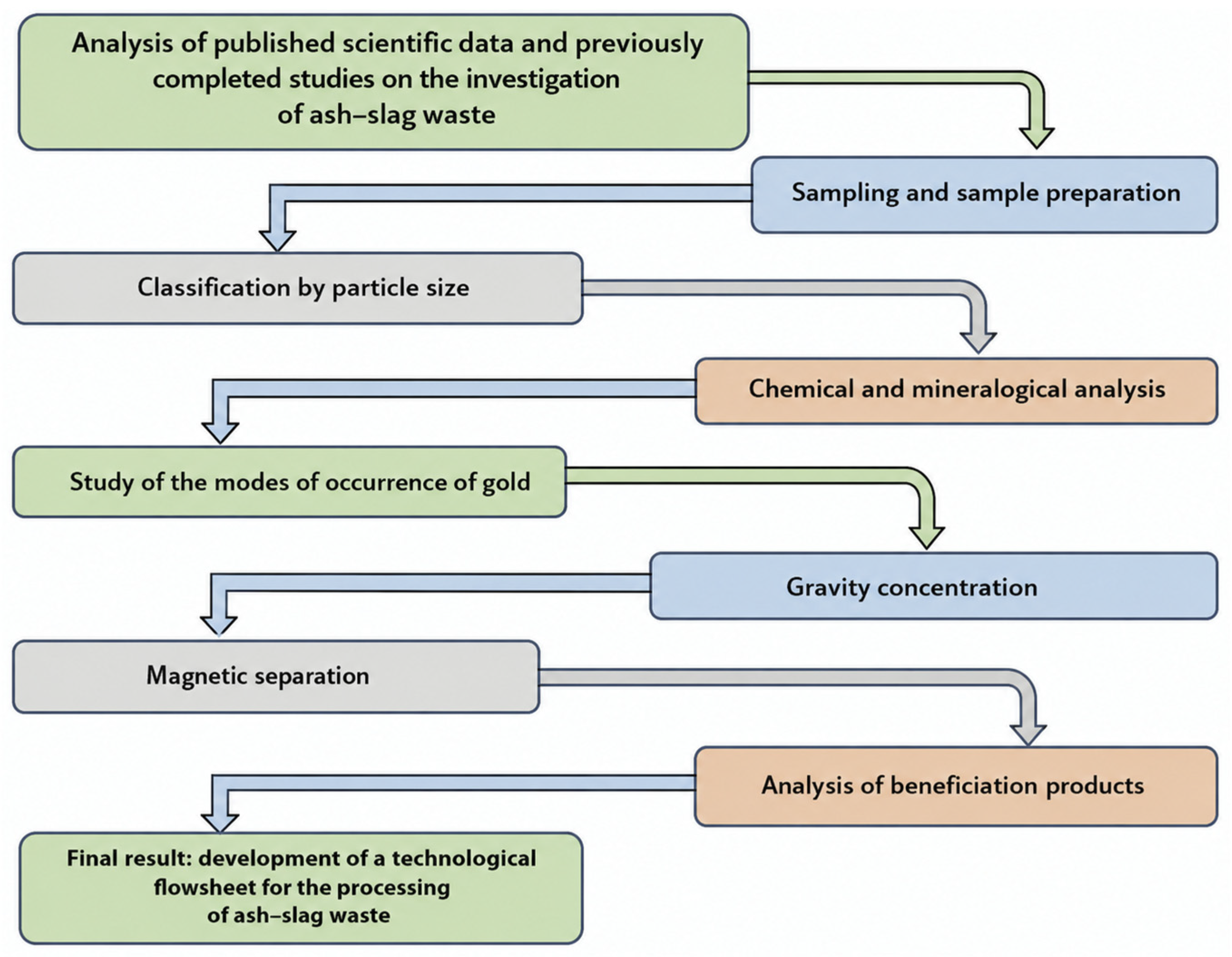
A stepwise research program was designed to characterize liberated and poorly liberated Au and to evaluate gravity-magnetic preconcentration (
Figure 3). The program integrated representative sampling, particle-size classification, mineralogical characterization, beneficiation testing, and product-specific Au determination.
First, three bulk samples with a combined mass of 388.6 kg were prepared from the principal depositional zones. The increments were collected on a square grid to a depth of 0.5 m, combined, and homogenized before analytical and technological testing.
Second, the bulk samples were wet-disintegrated and classified in a scrubber trommel. Subsamples for particle-size analysis were taken from the slurry stream and wet-screened. Material finer than 2 mm was subjected to gravity concentration, followed by magnetic separation and cleaning of selected concentrates.
Third, Au occurrence and the composition of Fe-bearing products were investigated by optical microscopy, electron-probe microanalysis, X-ray diffraction (XRD), AAS, and KSA. These methods were used to distinguish directly observed native-Au grains from Au that remained in fine, magnetic, nonmagnetic, or aluminosilicate-rich products after physical separation.
Fourth, concentrates, intermediate products, tailings, magnetic and nonmagnetic fractions, and slimes were analyzed. Product yields, grades, recoveries, and distributions were used to evaluate the preconcentration response and to identify streams requiring further treatment.
Finally, the results were synthesized into a conceptual flowsheet comprising classification, gravity concentration, magnetic separation, concentrate cleaning, and targeted analysis of fine products. The flowsheet is intended as a diagnostic preconcentration scheme rather than a complete Au-extraction technology.
Analytical methods. Mineral phases were identified by XRD, optical microscopy, and electron-probe microanalysis. Major rock-forming and ore-related elements were determined in the feed, size fractions, microspheres, and beneficiation products. Au was determined by AAS, whereas KSA was used as an additional diagnostic method for selected products.
Determining low-grade Au in a heterogeneous aluminosilicate-ferruginous matrix is methodologically demanding. In the standard preparation route, analytical aliquots were oxidatively roasted in air at 650–750 °C and dissolved in aqua regia. Because this route may not completely decompose refractory aluminosilicate or Fe-rich carriers, an additional preparation procedure was used in which aliquots were pre-ignited in a crucible covered with an iron plate and then digested in a nitric-hydrochloric-hydrofluoric acid mixture. AAS results were used for technological balances and recovery calculations.
KSA was applied after part of the liberated native Au had been removed by gravity concentration. KSA and AAS were not treated as quantitatively equivalent methods and were not used to validate one another. Instead, their differences were interpreted only as diagnostic evidence of sample heterogeneity, preparation effects, and method-dependent response to dispersed Au.
Replicate determinations with standard deviations, confidence intervals, and reproducibility limits were not available for every product. Formal testing of inter-method equivalence was therefore not possible. The comparison was restricted to the direction and magnitude of KSA/AAS differences, while the AAS dataset remained the basis for the mass balance.
Technological tests. Because the feed Au grade was low, bulk samples of at least 100 kg were wet-disintegrated and screened to produce coarse (+2 mm) and sandy-slime (−2 + 0 mm) fractions. The −2 + 0 mm material was treated using a vibratory spiral separator, a vibrocentrifugal bowl concentrator, and an aerohydraulic desliming unit. Selected products were subsequently cleaned and magnetically separated.
3. Results
3.1. Particle-Size Composition and Distribution of Au and Fe in the Coarse-Grained Ash-Slag Fraction
Most of the coarse-grained sample mass occurred in the −2 + 0.25, −0.25 + 0.10, and −0.10 + 0.044 mm fractions. The −0.044 + 0 mm slime fraction represented only 2.80% of this sample, indicating that the coarse material contained a limited fine-slime component.
Au was unevenly distributed among size classes. The −2 + 0.25 and −0.25 + 0.10 mm fractions contained 36.92% and 30.00% of the total Au, respectively. The −2 + 0.25 mm fraction also contained 58.93% of the Fe, identifying this size class as a principal feed for subsequent gravity and magnetic treatment. The particle-size composition and the corresponding distributions of Au and Fe are summarized in
Table 1.
3.2. Mineral and Chemical Composition
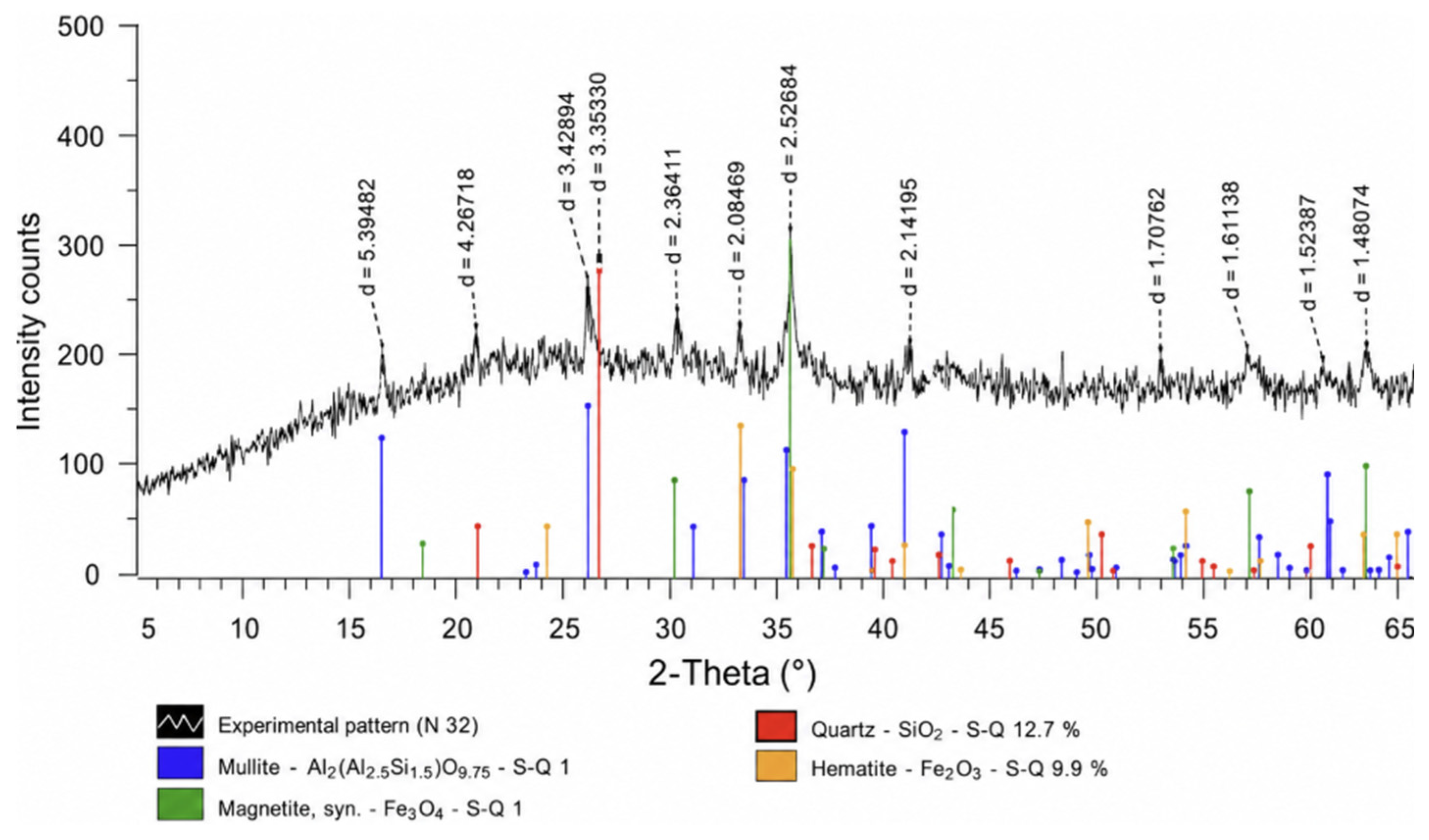
XRD identified mullite, magnetite, quartz, and hematite as the principal crystalline phases. The abundance of Fe-bearing phases supported magnetic separation, whereas the dominant aluminosilicate matrix was expected to restrict the liberation of ultrafine or matrix-associated Au.
A representative XRD pattern of the feed is shown in
Figure 4. Quantitative phase contents of the feed and the coarse +2 mm fraction are compared in
Table 2.
The mineralogical and chemical characteristics of the feed and the coarse fraction are summarized in
Table 2.
The feed had an aluminosilicate-ferruginous composition. Mullite was the dominant crystalline phase (54.7%), followed by magnetite (21.9%), quartz (16.4%), and hematite (7.1%). The high magnetite abundance and total Fe grade (22.80 wt.%) justified evaluating magnetic separation as part of the preconcentration strategy.
The +2 mm fraction was more strongly aluminosilicate in character: mullite increased to 64.8%, quartz to 18.6%, and cristobalite was detected at 5.8%. By contrast, magnetite decreased to 3.5% and total Fe to 10.38 wt.%. These data indicate that most Fe-bearing phases occurred in finer size classes rather than in the coarse +2 mm fraction.
This mineralogical contrast between the +2 mm fraction and the feed confirms that a single whole-feed separation route would be inappropriate. Particle-size classification is therefore required before gravity and magnetic treatment.
3.3. Gravity Concentration of the Coarse-Grained Material
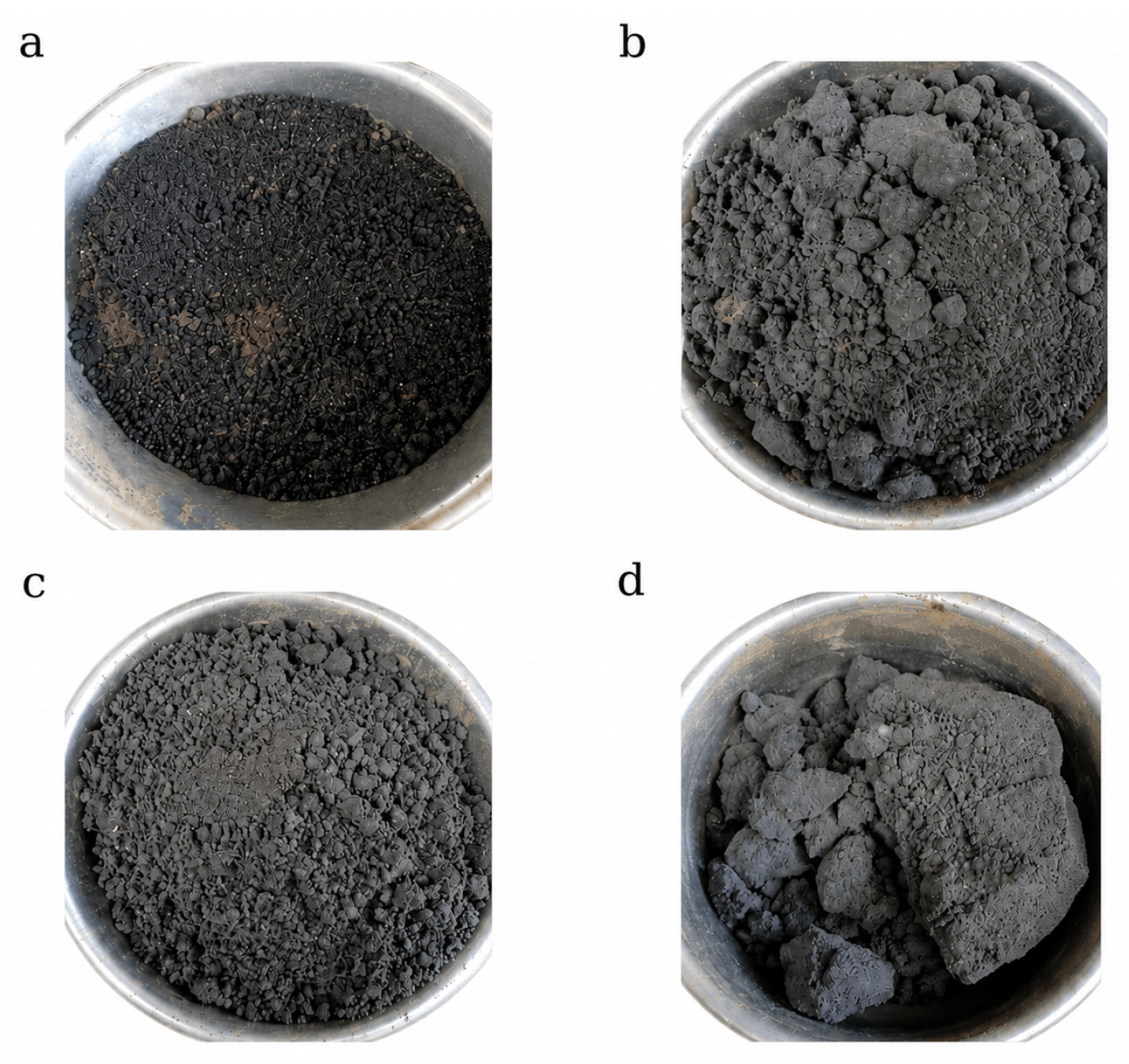
The coarse-grained material was treated using a vibratory spiral separator, a vibrocentrifugal bowl concentrator, and an aerohydraulic desliming unit. These operations were selected to recover heavy Fe-bearing particles together with liberated and partly liberated Au. The products are shown in
Figure 5.
Product yields, Au and Fe grades, recoveries, and Au upgrading ratios are reported in
Table 3.
The vibratory spiral concentrate provided the largest combined recovery of Fe and Au. At a yield of 16.50%, it assayed 39.00% Fe and 0.99 g/t Au, corresponding to 66.49% Fe recovery and 52.58% Au recovery. The product therefore consisted of heavy Fe-bearing phases accompanied by a substantial proportion of liberated or partly liberated Au.
The vibrocentrifugal concentrate had the highest Au grade among the primary gravity products (1.45 g/t; upgrading ratio, 11.2). However, its yield was only 2.33%, and its Au recovery was 10.64%, indicating a more selective but lower-mass product.
Chamber product No. 1 had a high yield (44.12%) but a lower Au grade (0.16 g/t) and contained 22.58% of the Au. This distribution indicates that Au also remained in incompletely liberated aggregates and fine particles. The overflow/slime product assayed 0.08 g/t Au and was not an effective stand-alone gravity concentrate.
Combining the vibratory spiral and vibrocentrifugal concentrates produced a calculated grade of 1.04 g/t Au at 63.22% total Au recovery (52.58% + 10.64%). This corresponds to an approximately eightfold upgrade relative to the 0.13 g/t feed.
Taken together, the gravity results show that a substantial fraction of Au in the coarse material was liberated or partly liberated. The high Fe grade of the spiral concentrate also justified subsequent magnetic separation and product cleaning.
Nevertheless, Au remained in intermediate products and slimes. The coarse-material circuit should therefore be interpreted as a preconcentration stage rather than a complete recovery process.
3.4. Fe-Bearing Microspheres and Free Native Au
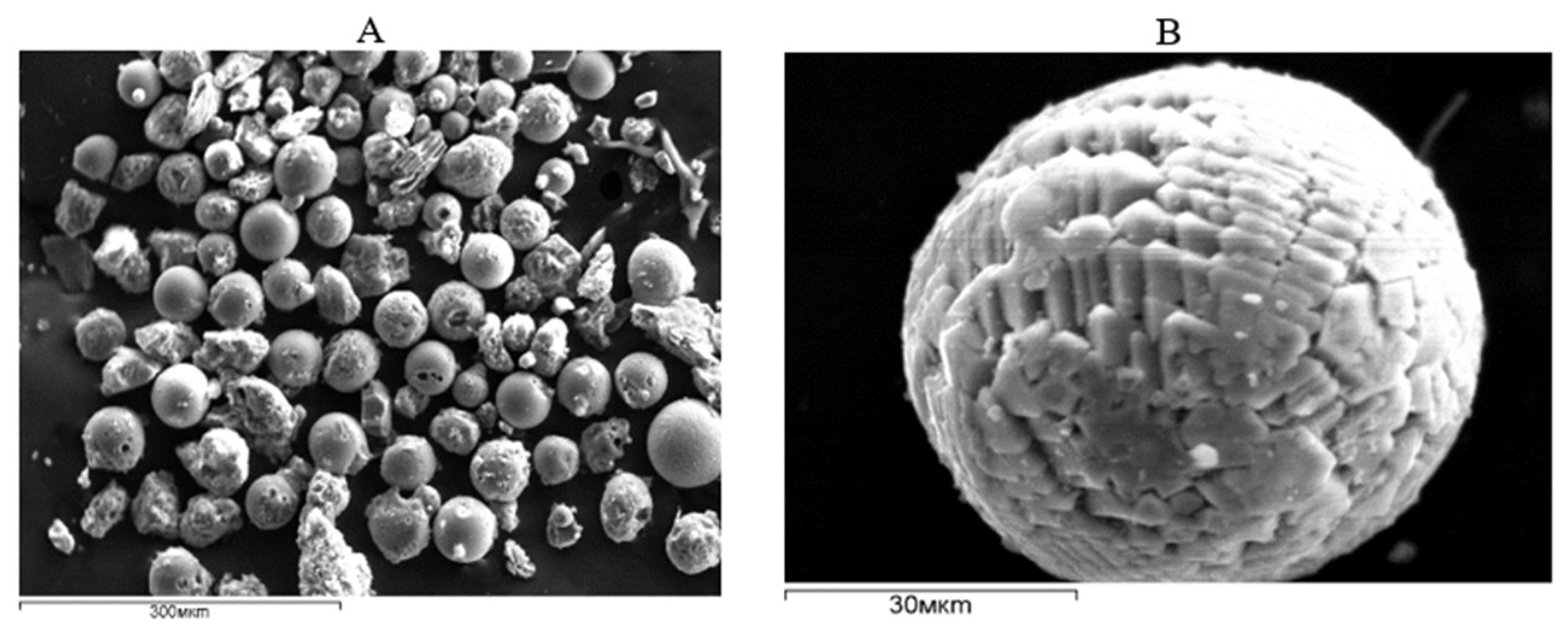
Fe-bearing microspheres, represented predominantly by sphero-magnetite/ferrospheres, were identified in the beneficiation products. Their appearance before and after nitric acid treatment is shown in
Figure 6.
On the basis of Fe content, the microspheres were provisionally divided into low-Fe (approximately 19–22% Fe) and high-Fe (approximately 55–58% Fe) groups. The high-Fe particles represent a potential magnetic product, and their rounded to spherical morphologies are consistent with high-temperature transformation of mineral matter during combustion.
Electron-probe analysis of the gravity concentrates confirmed the presence of free native Au. Individual grains contained 94.40–96.85% Au and 3.15–5.60% Ag. After nitric-acid treatment, one grain contained 98.35% Au, with only minor Fe, Cu, and Zn. These data confirm the high fineness of the observed native Au and explain its partial gravity recoverability.
The observed native-Au particles were isometric or spheroidal, idiomorphic, irregular and lumpy, platy or flaky, and locally spongy (
Table 4). This morphological variability is technologically relevant because particle settling and capture depend not only on density and size but also on hydraulic shape.
Morphometric analysis comprised 253 dimensional measurements were performed on 135 particles and gave mean dimensions of 71 × 42 × 30 µm. The 21–70 µm class was the most abundant. Isometric/spheroidal, irregular/lumpy, and platy/flaky particles dominated the observed population. Together with the Fe-bearing microspheres, these observations identify both a gravity-recoverable native-Au component and a magnetically responsive Fe-rich component.
3.5. Processing of the Medium- and Fine-Grained Fractions
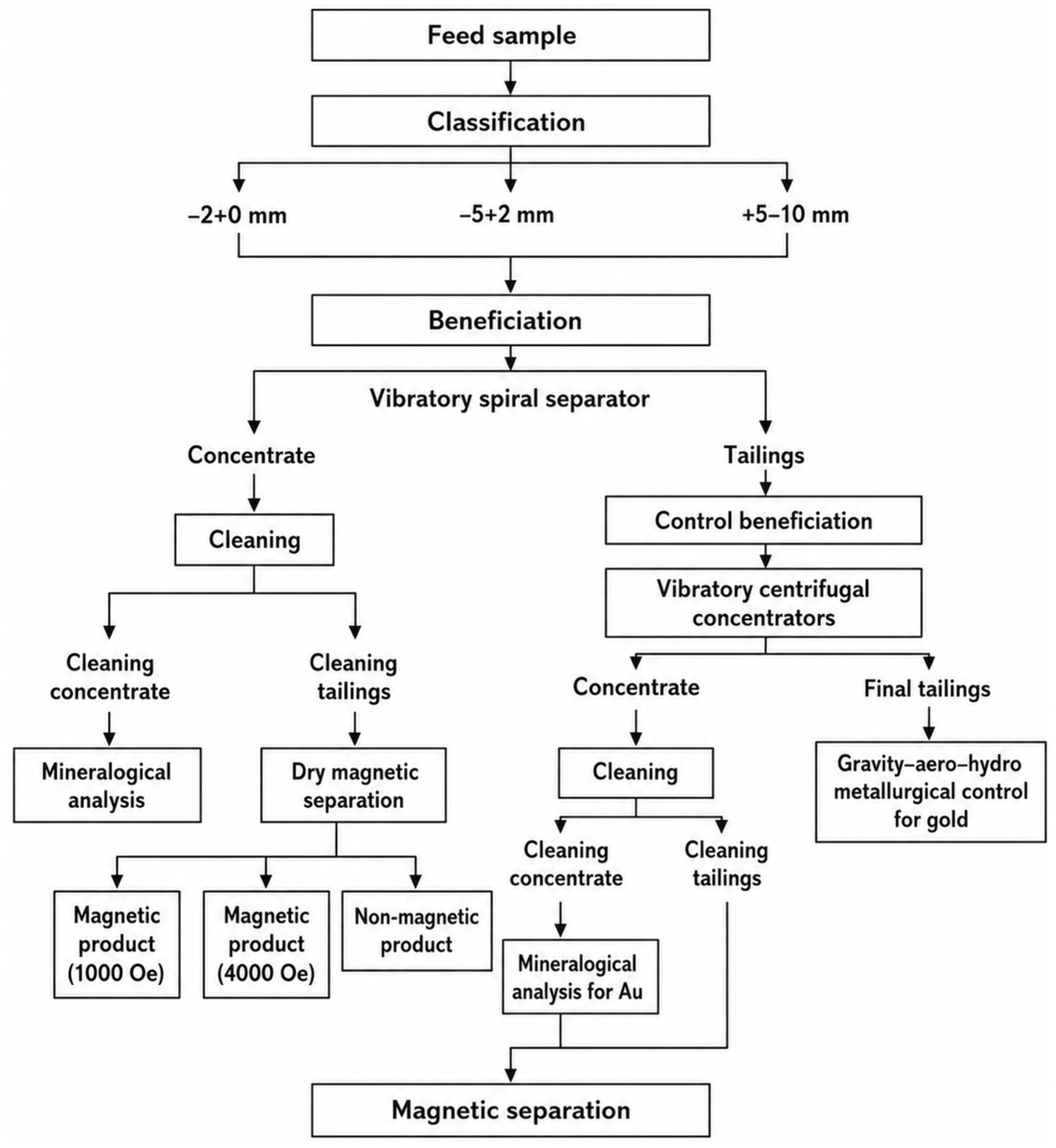
Medium-grained bulk sample No. 2 and fine-grained bulk sample No. 1 were processed using the standardized flowsheet shown in
Figure 7. Applying the same sequence to both samples enabled a direct comparison of size-dependent Au distribution and beneficiation response.
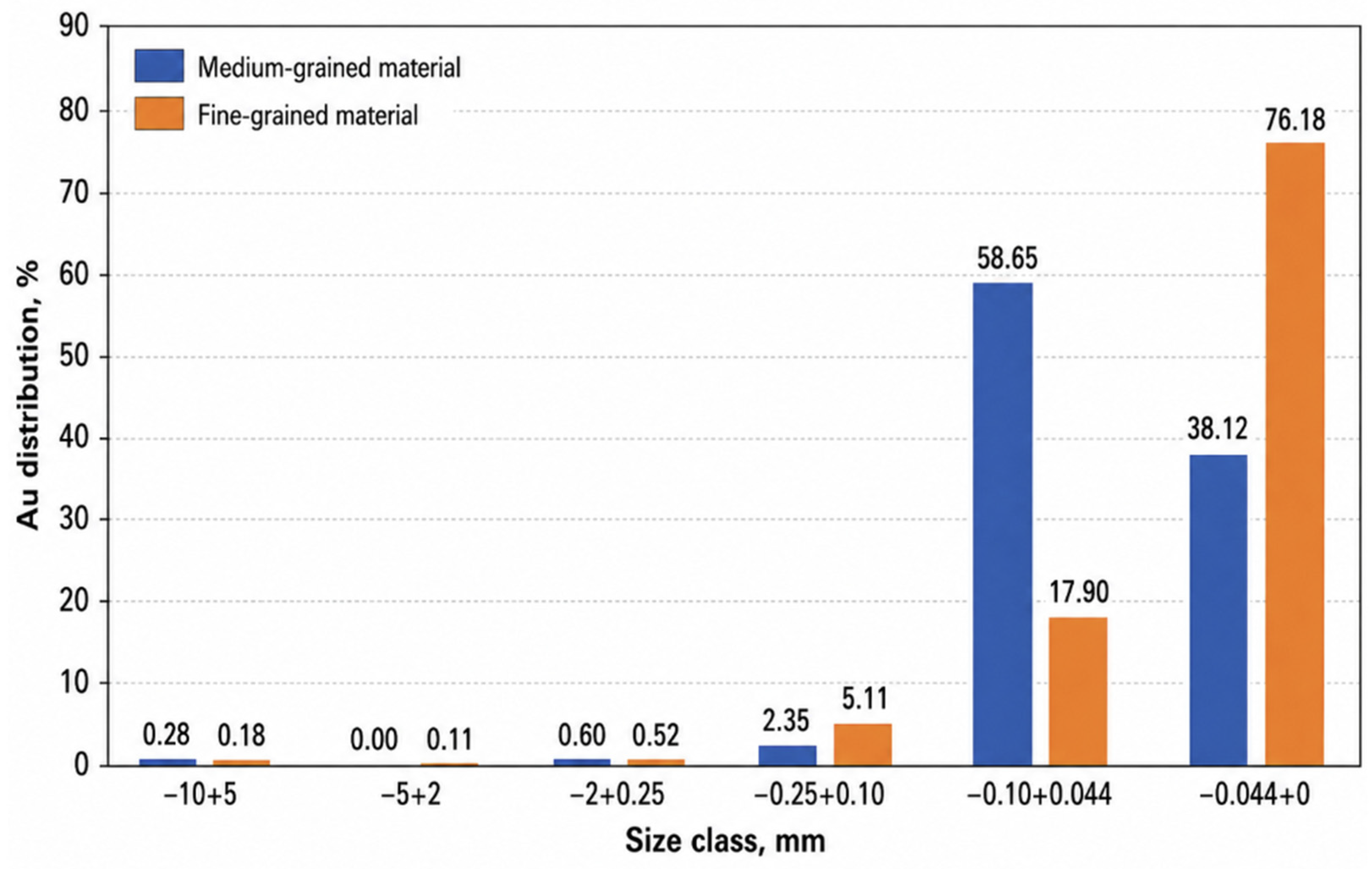
In the medium-grained material, Au was concentrated mainly in fine size classes. The −0.10 + 0.044 and −0.044 + 0 mm fractions contained 58.65% and 38.12% of the Au, respectively; together, they accounted for 96.77% of the total Au in this sample.
The fine-grained sample showed an even stronger association with slimes. The −0.044 + 0 mm fraction contained 76.18% of the Au and 96.40% of the Fe. This concentration of both elements in the finest class is technologically important because gravity separation becomes less efficient as particle size decreases (
Table 5).
Figure 8 compares Au distributions by particle size. The diagram highlights the contrasting controlling fractions: −0.10 + 0.044 mm in the medium-grained sample and −0.044 + 0 mm in the fine-grained sample.
The particle-size distributions indicate that most Au in the medium- and fine-grained materials reported to fine and slime fractions. This pattern does not identify a specific mineral host, but it explains why direct gravity recovery was poor.
Gravity test results for the fine fractions are presented in
Table 6.
For the −0.25 + 0.10 mm fraction of the medium-grained sample, the concentrate assayed 1.04 g/t Au at 30.43% recovery. This result indicates that part of the Au in this fraction was liberated or partly liberated, although most Au remained in the tailings.
Recovery decreased sharply with decreasing particle size. Au recovery was 1.60% for the −0.10 + 0.044 mm fraction and approximately 1.00% for the fine-grained −0.044 + 0 mm fraction; 98.40% and 99.00% of the Au, respectively, remained in the tailings.
These results demonstrate the poor gravity response of the finest fractions. The residual Au is therefore described conservatively as ultrafine, poorly liberated, or matrix-associated; the available data do not identify a single carrier phase.
3.6. Magnetic Separation and Cleaning of Beneficiation Products
Dry magnetic separation and cleaning were used to examine Au partitioning between magnetic and nonmagnetic phases. The results of the sequential operations are summarized in
Table 7.
Most Au in the vibratory spiral concentrate was reported to the magnetic products. The 1000 Oe magnetic product had a yield of 69.40%, assayed 0.18 g/t Au, and contained 78.12% of the Au. The 4000 Oe magnetic product contained a further 14.38%. Only 7.50% reported to the nonmagnetic product. These balances indicate co-partitioning of Au with Fe-bearing material in this concentrate, but they do not prove mineral-scale encapsulation in magnetite.
Cleaning of the vibratory spiral concentrate produced a low-yield (1.30%) product assaying 4.77 g/t Au at 28.18% recovery, demonstrating that additional upgrading of a small Au-rich fraction was possible.
In contrast, the nonmagnetic product from the centrifugal concentrate had a yield of 27.59%, assayed 2.07 g/t Au, and contained 74.03% of the Au in that separation. Thus, Au was not restricted to magnetic phases. Potential carriers include liberated native grains, nonmagnetic heavy minerals, aluminosilicate aggregates, and carbonaceous particles; these alternatives require direct microanalytical verification.
The nonmagnetic product from the final tailings also remained significant: at a yield of 13.79%, it assayed 0.99 g/t Au and contained 25.64% of the Au. This result confirms incomplete recovery by the preceding gravity stages.
Magnetic separation therefore served two complementary functions. It recovered Fe-rich products and partitioned the material into diagnostically contrasting fractions. Because Au occurred in both magnetic and nonmagnetic products, magnetic separation cannot be considered a stand-alone Au-recovery method.
3.7. Diagnostic Comparison of KSA and AAS
KSA was applied to selected beneficiation products after partial removal of liberated native Au. The method was used to screen for Au that might remain in ultrafine, dispersed, or matrix-associated forms; it was not used as independent quantitative validation of AAS.
Figure 9 presents the KSA responses for centrifugal tailings, the vibratory spiral concentrate, and the vibrocentrifugal concentrate.
KSA and AAS results were compared diagnostically because the methods differ in measurement principle, sample preparation, aliquot mass, and matrix response. The comparison is summarized in
Table 8.
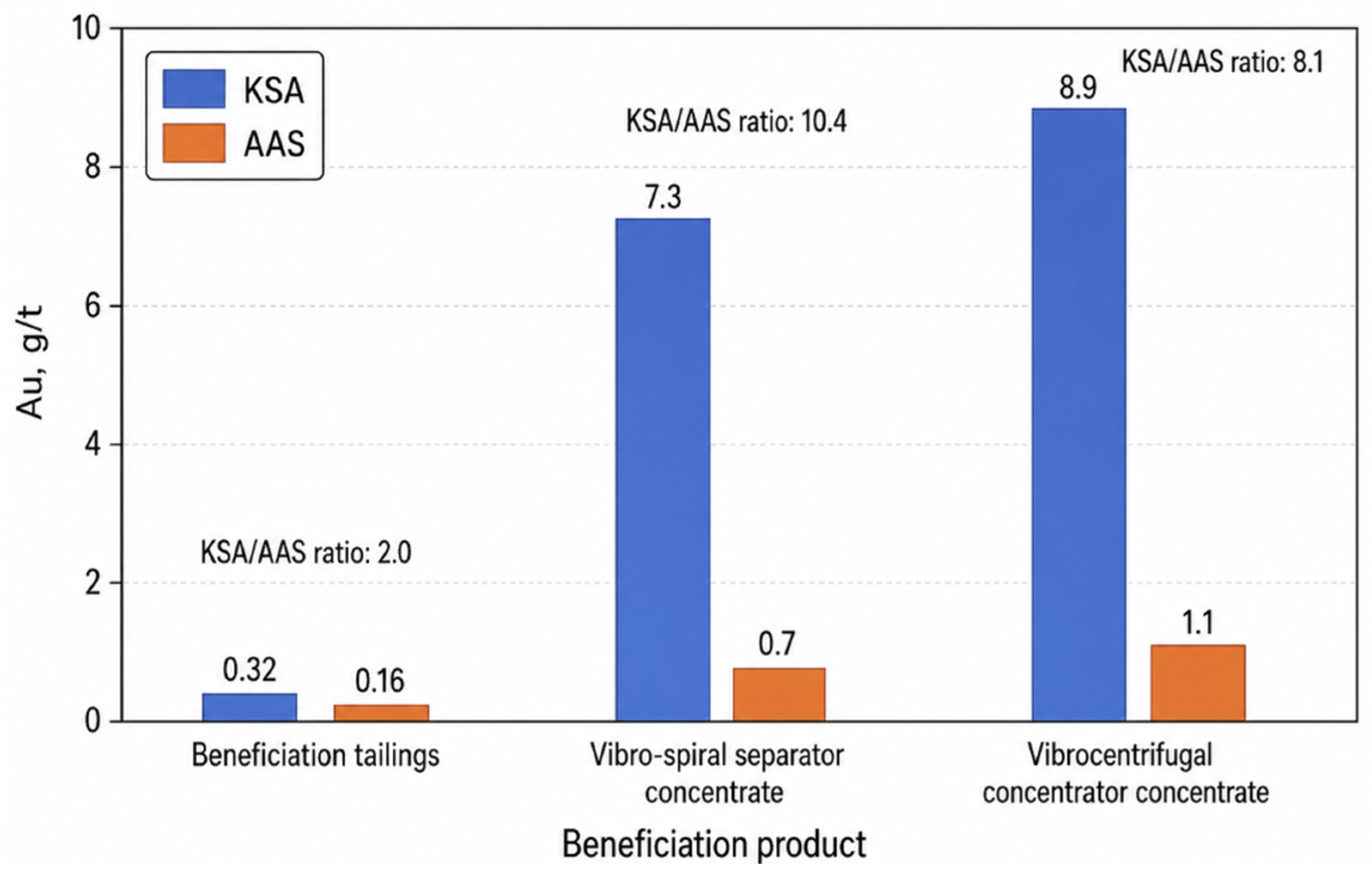
KSA returned higher Au values for all three products. The tailings contained 0.32 g/t Au by KSA and 0.16 g/t by AAS (ratio, 2.0). The vibratory spiral concentrate gave 7.3 versus 0.7 g/t (ratio, 10.4), and the vibrocentrifugal concentrate gave 8.9 versus 1.1 g/t (ratio, 8.1).
These differences do not demonstrate that either analytical result is correct. Plausible causes include heterogeneous Au distribution, differences in aliquot mass and sample reduction, incomplete digestion of some carriers before AAS, matrix effects, and method-specific sensitivity.
Because replicate determinations were unavailable for every product, statistical equivalence between the methods could not be tested. KSA values were therefore excluded from the technological mass balance and used only to identify products requiring independent verification. The comparative Au values obtained by KSA and AAS for the selected beneficiation products are presented in
Figure 10.
Accordingly, the Au potential of this ash-slag waste should be assessed from convergent technological, mineralogical, and analytical evidence rather than from agreement or disagreement between two methods alone.
3.8. Proposed Processing Flowsheet
The particle-size, mineralogical, chemical, and technological results were integrated into the gravity-magnetic preconcentration flowsheet shown in
Figure 11. The scheme separates material sequentially according to particle size, density, and magnetic response.
The flowsheet comprises feed classification, disintegration and washing, treatment of the −2 + 0 mm material on a vibratory spiral separator, cleaning in a vibrocentrifugal unit, hydraulic classification and desliming, magnetic separation, cleaning of selected nonmagnetic Au-bearing products, and analytical control of concentrates, intermediate products, and tailings.
The scheme produces an Fe-rich magnetic fraction, an Au-bearing gravity concentrate, a nonmagnetic product with elevated Au grade, and fine products requiring further characterization. These streams differ in grade, composition, magnetic response, and likely downstream treatment requirements.
A defining feature of the flowsheet is its size-selective logic. Liberated and partly liberated Au is targeted by gravity methods, whereas fine and nonmagnetic products are retained for further characterization rather than being assumed to be barren.
The flowsheet is therefore a preconcentration and diagnostic algorithm. It reduces the mass of selected products and separates contrasting potential carriers, but it does not by itself constitute a complete Au-extraction process.
4. Discussion
4.1. Mineralogical Context and Modes of Au Occurrence
The results of the integrated mineralogical, analytical, and technological investigation show that gold occurs in the material in two principal forms: free native gold and bound fine-dispersed gold (FDG). This distinction is fundamental because these forms differ substantially in technological behavior, analytical detectability, and potential recoverability.
Free native gold was identified mainly in gravity concentrates obtained from the coarse-grained ash-slag material. Electron-probe analysis showed that individual grains contained 94.40–96.85% Au, with Ag as the principal impurity at 3.15–5.60%. After nitric acid treatment, Au in individual grains reached 98.35%, indicating the high fineness of the native gold. Morphometric analysis gave an average particle size of 71 × 42 × 30 µm, and particles in the 21–70 µm size class were the most abundant. Isometric, spheroidal, idiomorphic, irregular lump-shaped, platy, and flaky forms were identified. The presence of such particles explains their partial recovery by gravity methods.
Bound fine-dispersed gold behaved differently. It was concentrated mainly in fine and slime fractions, was poorly recovered by direct gravity methods, and required highly sensitive analytical approaches. The −0.044 + 0 mm fraction is particularly illustrative: it contained a substantial proportion of the gold, whereas recovery to the gravity concentrate was approximately 1%. This mismatch between high Au distribution in the fine fraction and extremely low gravity recovery indicates that a substantial proportion of the gold occurred not as free dense grains but in bound, ultrafine, or mineral-associated form.
The mullite-quartz-magnetite-hematite assemblage and the presence of rounded Fe-rich microspheres are consistent with widely reported coal-combustion products, in which rapid high-temperature melting and quenching generate aluminosilicate glass, refractory crystalline phases, and ferrospheres [
1,
2,
3,
6]. The Kazakhstan material is nevertheless distinctive in its high measured Fe content (22.80 wt.%) and magnetite abundance (21.9%) in the feed, which make magnetic partitioning more relevant than it would be for many low-Fe fly ashes.
The direct observation of high-fineness native Au in the gravity concentrates is the strongest evidence for a liberated Au population. Individual grains contained 94.40–96.85% Au and were commonly 21–70 µm in size. By contrast, Au retained in the finest products could not be assigned to a single host phase on the basis of the available data. The low gravity response and KSA-AAS discrepancies support the presence of ultrafine, poorly liberated, or matrix-associated Au, but they do not prove encapsulation in a particular mineral.
This distinction is critical because much of the international coal-ash literature focuses on bulk utilization and recovery of Fe, Al, and rare-earth elements [
1,
2,
7,
9,
13,
14,
15], whereas direct evidence for native Au in ash-slag products remains comparatively limited. The present results therefore extend the Kazakhstan technogenic-resource literature [
8,
10] by demonstrating that a liberated native-Au population and a much less accessible fine-Au population can coexist within the same ash-slag deposit.
4.2. Particle Size, Particle Shape, and Gravity Response
The 63.22% combined Au recovery from the vibratory spiral and vibrocentrifugal concentrates shows that the coarse material contained a substantial gravity-recoverable component. This behavior is consistent with established gravity-separation principles, according to which recovery improves when dense particles are sufficiently liberated and have effective settling velocities that differ from those of the gangue [
12]. The approximately eightfold grade increase is technically meaningful as preconcentration, although the resulting 1.04 g/t product does not, by itself, establish economic feasibility.
Particle morphology explains why recovery was substantial but incomplete. Isometric grains are more likely to settle and be retained, whereas platy and flaky Au particles have higher drag relative to mass and may be displaced into intermediate or fine products [
10]. The observed morphological diversity therefore links the electron-probe observations directly to product distribution rather than serving only as descriptive mineralogy.
The decline in recovery from 30.43% in the −0.25 + 0.10 mm fraction to 1.60% in the −0.10 + 0.044 mm fraction and approximately 1.00% below 0.044 mm is consistent with the known deterioration of gravity separation in very fine feeds [
12]. In these classes, hindered settling, entrainment, aggregation, and incomplete liberation become increasingly important. Thus, the high Au distribution in the slime fraction should not be interpreted as a high-grade gravity target; it identifies a stream that requires mineralogical verification and a different downstream treatment pathway.
4.3. Fe-Rich Phases and the Role of Magnetic Separation
Magnetic recovery is a common first-stage valorization option for Fe-rich coal ash because magnetite and ferrospheres can be separated without chemical dissolution [
1,
2,
3,
6]. The present feed is especially suitable for this diagnostic step because it contained 21.9% magnetite and 22.80 wt.% Fe, while the high-Fe microspheres contained approximately 55–58% Fe. These values explain the 39.00% Fe grade and 66.49% Fe recovery achieved in the vibratory spiral concentrate before magnetic cleaning.
However, Au did not follow a single magnetic pathway. In the vibratory spiral concentrate, 92.50% of the Au reported to the two magnetic products, whereas 74.03% of the Au in the centrifugal-concentrate separation reported to the nonmagnetic product. This contrast suggests that different preconcentration stages collected different particle populations. Magnetic separation therefore partitions potential carriers, but it does not determine whether Au is structurally hosted by magnetite, mechanically attached to Fe-rich particles, or entrained with them.
The practical implication is that the Fe-rich magnetic fraction and the Au-enriched nonmagnetic fraction should be evaluated separately. This product-specific strategy differs from whole-ash leaching and is consistent with the broader multicomponent-valorization principle that heterogeneous ash should first be divided into mineralogically coherent streams before more intensive extraction is considered [
1,
2,
13,
14,
15].
4.4. Analytical Interpretation of the KSA-AAS Differences
KSA produced Au values two to more than ten times higher than those obtained by AAS. The available dataset, however, does not support a metrological conclusion regarding the absolute accuracy of either method. Low-grade Au in heterogeneous technogenic materials is highly sensitive to sampling variance and the nugget effect, particularly when analytical aliquots are small relative to the rarity and size variability of Au-bearing particles [
10]. Differences in digestion completeness, matrix decomposition, and method-specific response can further amplify the observed discrepancy.
Accordingly, AAS was retained as the quantitative basis for yield and recovery calculations, whereas KSA was used only as a diagnostic screening tool for identifying products that require additional verification. This conservative interpretation avoids converting inter-method disagreement into an unsupported claim of concealed or refractory Au. A defensible comparison would require matched homogenized splits, replicate determinations, procedural blanks, certified reference or matrix-matched control materials where available, an independent fire-assay route, and product-specific uncertainty estimates.
The analytical discrepancy also has a direct process-design implication. The higher KSA values should not be used to size or justify an extraction circuit until the Au inventory has been independently confirmed. Instead, the KSA response is best used to prioritize fine, magnetic, and nonmagnetic products for SEM-EDS or electron-probe mapping, liberation analysis, and subsequent leach-response testing.
Thus, the KSA-AAS comparison is treated as a screening-level observation that strengthens the case for additional mineralogical and analytical work, not as quantitative validation of either analytical method.
4.5. Comparison with International Valorization and Au-Recovery Strategies
Globally, coal-ash utilization remains dominated by cementitious materials, aggregates, ceramics, and geopolymers, whereas selective metal recovery is generally pursued for compositionally atypical ashes [
1,
2]. Recent reviews of coal-fly-ash valorization emphasize that recovery strategies should be selected according to element speciation, host phases, energy demand, reagent consumption, and environmental performance, rather than on the mere presence of valuable elements [
13,
14]. The material investigated here belongs to this atypical category because it combines high Fe content with measurable Au-bearing products. Its distinctive feature is not an exceptionally high bulk Au grade, but the coexistence of an Fe-rich magnetic resource, a coarse gravity-recoverable native-Au component, and a fine, poorly recoverable Au component.
The proposed flowsheet follows a staged logic: low-intensity physical separation first, detailed characterization second, and chemical extraction only when justified for reduced-mass products. This approach is preferable to immediate whole-feed leaching because Au extraction routes are controlled by carrier mineralogy, liberation, preg-robbing components, impurity behavior, reagent consumption, and residue management [
16,
17,
18,
19,
20,
21,
22,
23]. Recent coal-ash studies using combined pretreatment and leaching for rare-earth recovery further show that downstream recovery is strongly product- and matrix-specific, even when the target elements differ from Au [
15]. Oxidative pretreatment, thiosulfate, thiourea, or other hydrometallurgical options therefore cannot be selected responsibly until fine-product carriers and leach responses are established.
Compared with the Kazakhstan technogenic waste studied by Bekenova et al. [
9], the present material also shows strong product-to-product variability; however, the feed type, mineral assemblage, and beneficiation history differ substantially, so direct numerical comparison of Au grades would be misleading. The main contribution of this study is an integrated, size-dependent interpretation that links native-Au morphology to coarse-fraction gravity recovery, Fe mineralogy to magnetic partitioning, and unresolved Au to fine and nonmagnetic streams. This evidence supports a differentiated flowsheet rather than a universal treatment route.
4.6. Resource and Environmental Implications
The results demonstrate resource potential, but they do not constitute a reserve estimate or a proven commercial process. The feed grade was low, and the study did not include operating-cost, capital-cost, marketability, or scale-up analyses. Consequently, the most defensible near-term value of the flowsheet is selective mass reduction and generation of better-characterized products for further testing.
Environmental benefits also remain conditional. Reprocessing may reduce stored mass and dust-generating surfaces, but beneficiation produces water streams, fine tailings, and potentially reactive concentrates. Any scale-up should therefore include water recycling, leachability testing, tailings stability assessment, and life-cycle or environmental-impact evaluation rather than assuming that metal recovery is intrinsically beneficial [
1,
2,
12].
4.7. Study Limitations and Future Research
The study was conducted at laboratory and enlarged-laboratory scale on material from one ash-disposal system. Although the bulk samples were large, the spatial variability of the deposit was not quantified statistically. Product-level replicate assays, uncertainty intervals, and independent KSA validation were also unavailable.
The mineral carriers of Au in the finest fractions remain unresolved. Magnetic/nonmagnetic partitioning and poor gravity recovery provide indirect evidence only. Future work should combine replicate AAS and fire assay with procedural blanks, certified controls, SEM-EDS and electron-probe mapping, automated mineralogy or liberation analysis, and size-resolved carbon and glass characterization. These measurements should be conducted on matched splits prepared under a documented sampling and preparation protocol [
11].
After analytical confirmation, downstream tests should be restricted to the most promising preconcentrates and should include reagent consumption, Au recovery kinetics, impurity behavior, water quality, and residue leachability. Repeated sampling from other Kazakhstan power plants is also required to determine whether the proposed differentiated flowsheet is transferable or specific to this Ekibastuz-derived ash-slag material.
5. Conclusions
Ash-slag waste derived from Ekibastuz coal was an aluminosilicate-ferruginous material dominated by mullite, magnetite, quartz, and hematite. The feed contained 21.9% magnetite and 22.80 wt.% Fe, supporting magnetic partitioning as part of a multistage preconcentration scheme.
Two technologically contrasting Au populations were identified. Free native Au was observed directly in coarse gravity concentrates, whereas Au in the finest products was interpreted as ultrafine, poorly liberated, or matrix-associated. This latter interpretation is based on product behavior and therefore requires direct carrier identification in future work.
The −2 + 0.25 and −0.25 + 0.10 mm fractions contained 36.92% and 30.00% of the Au in the coarse-grained sample, respectively. The vibratory spiral concentrate assayed 0.99 g/t Au and 39.00% Fe, with 52.58% Au recovery and 66.49% Fe recovery. Combining the spiral and centrifugal concentrates produced 1.04 g/t Au at 63.22% recovery.
In the fine-grained sample, 76.18% of the Au occurred below 0.044 mm, but gravity recovery from this fraction was approximately 1.00%. This result defines the principal limitation of direct gravity treatment and identifies the slime fraction as a target for further mineralogical and hydrometallurgical evaluation rather than immediate process scale-up.
Native-Au grains contained 94.40–96.85% Au and were most abundant in the 21–70 µm class. Their isometric, irregular, platy, and flaky morphologies explain why gravity recovery was significant but incomplete.
Magnetic separation redistributed Au into both magnetic and nonmagnetic products. The nonmagnetic product from the centrifugal concentrate assayed 2.07 g/t Au and contained 74.03% of the Au in that separation, confirming that no single magnetic association controlled the entire Au inventory.
KSA values exceeded AAS values by factors of 2.0–10.4. Because replicate validation was unavailable, this disagreement was treated as a diagnostic indicator of heterogeneity and method-dependent preparation effects. AAS remained the basis for technological balances.
The proposed gravity-magnetic flowsheet is therefore supported as a size-selective preconcentration and diagnostic route rather than a complete extraction technology. Further work must verify the fine-fraction Au inventory, identify Au carriers, test product-specific extraction, and assess economic and environmental performance.




 and
and