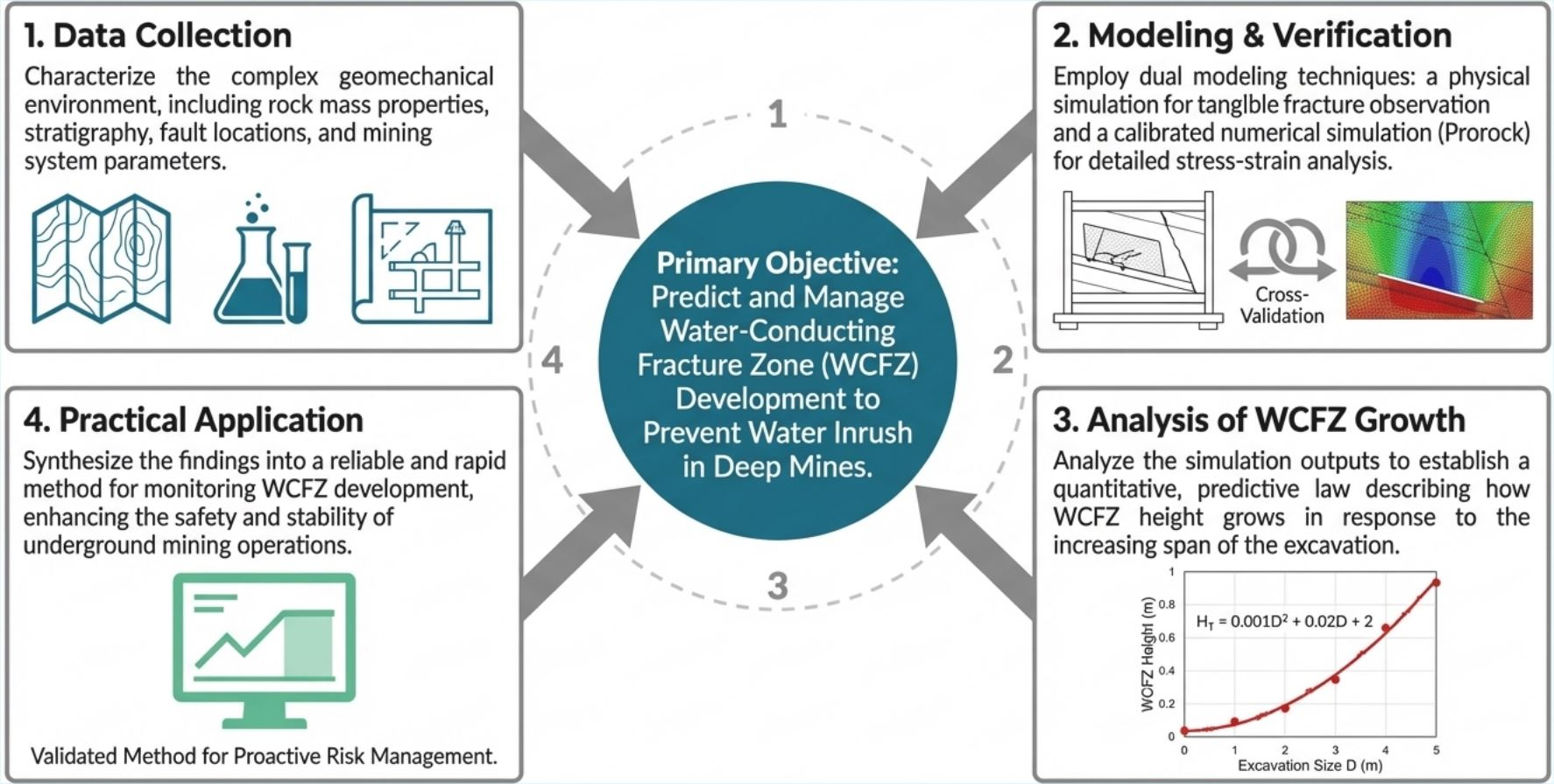


Integrated Physical and Numerical Assessment of the Formation of Water-Conducting Fracture Zones in Deep Ore Mines with Structural Faults


Abstract
1. Introduction
2. Materials and Methods
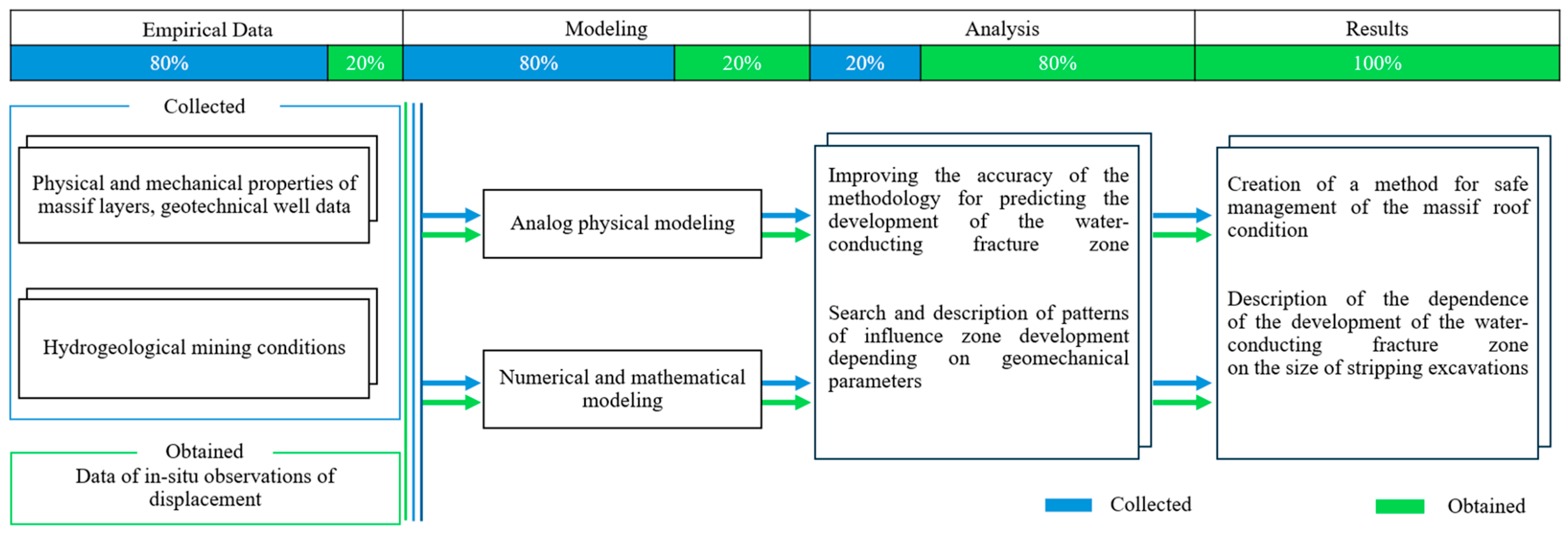
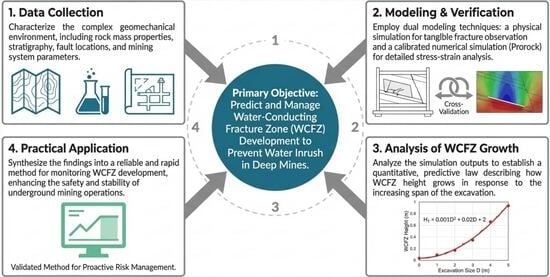
2.1. Research Line Methodology
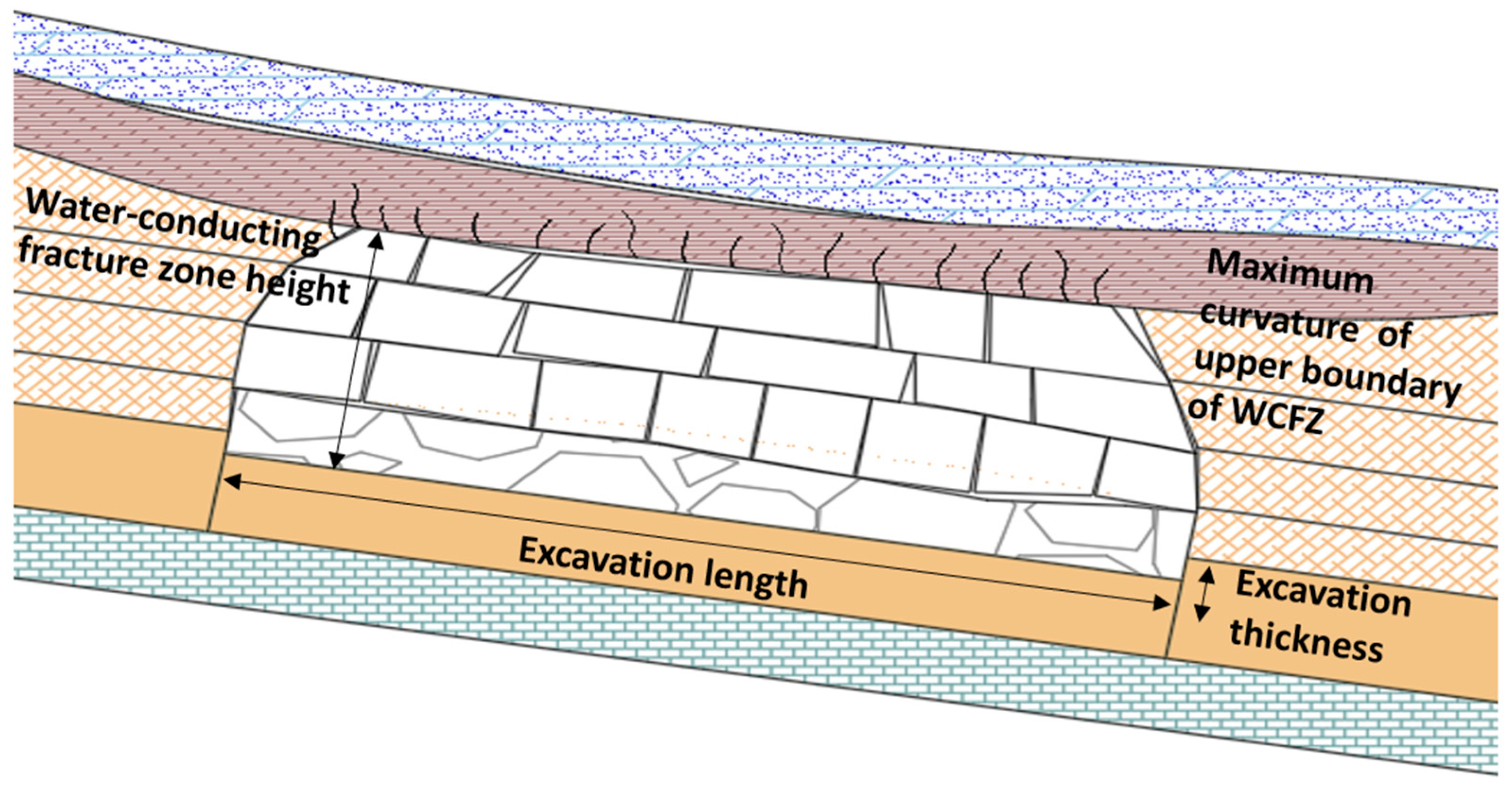
2.2. Factors Affecting the Formation of Water-Conducting Fracture Zone
- (1)
- Length of excavation zone
- (2)
- Thickness of excavation
- (3)
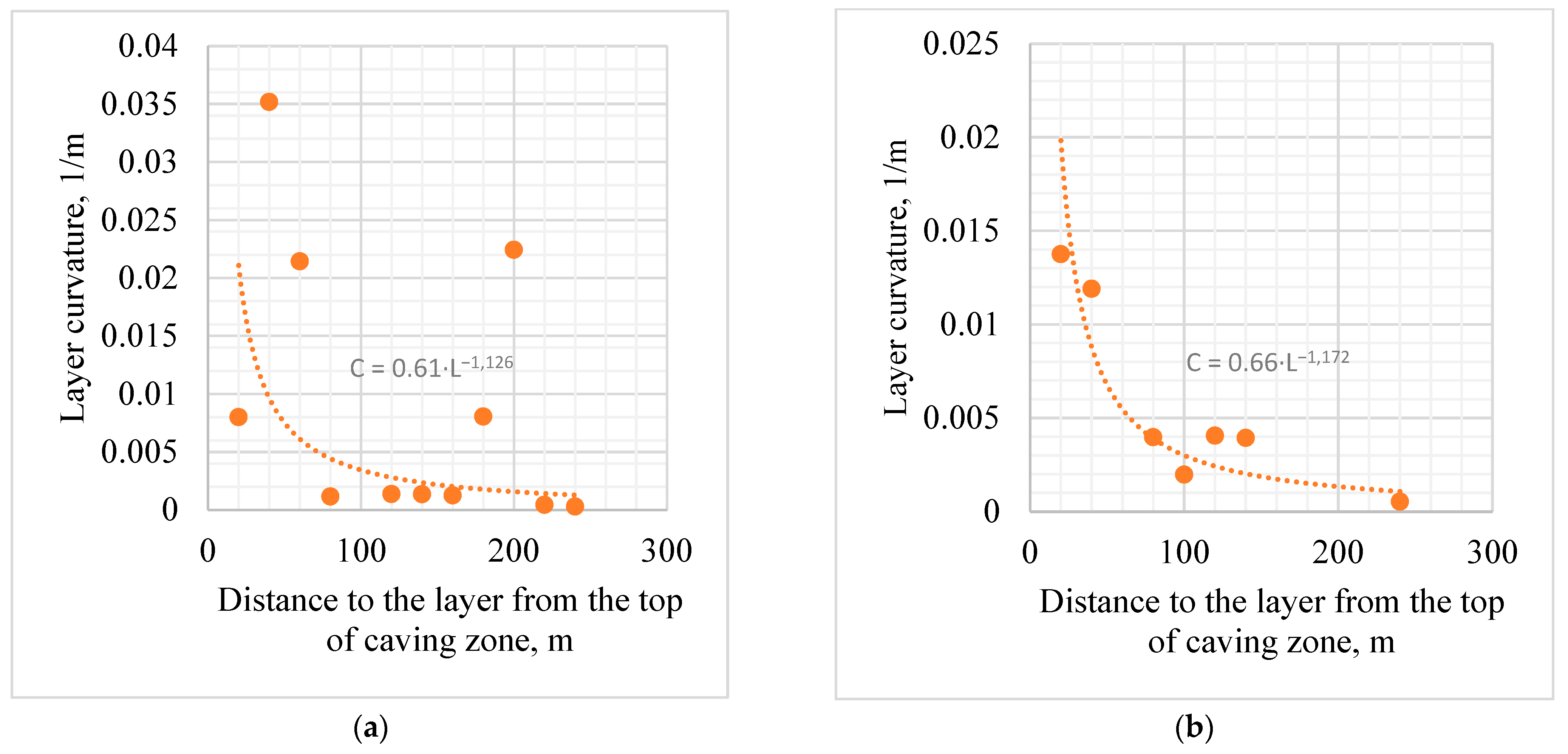
- Maximum curvature of the layer
- (4)
- Coefficient of overburdening of the rock mass
- (5)
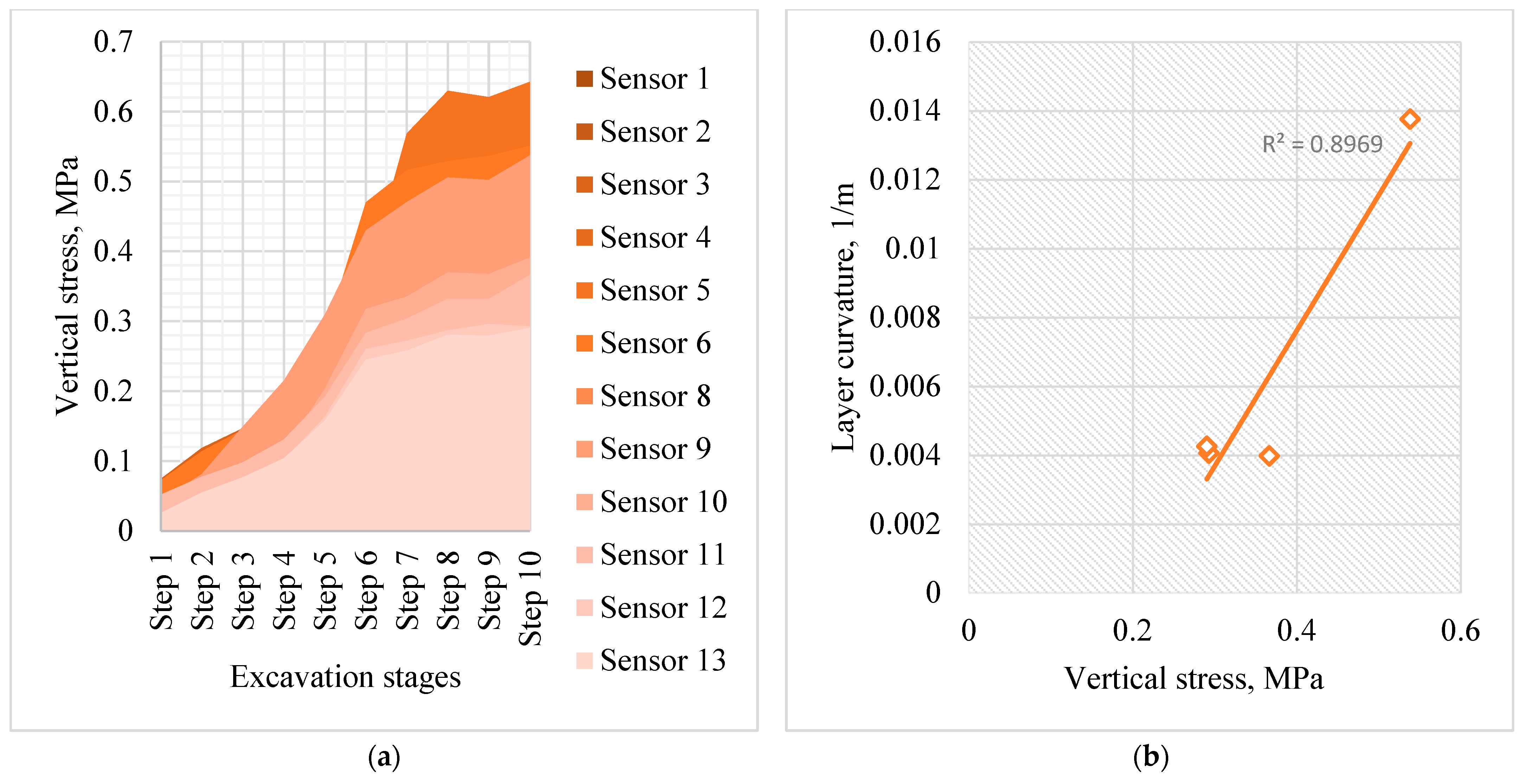
- In situ stress state
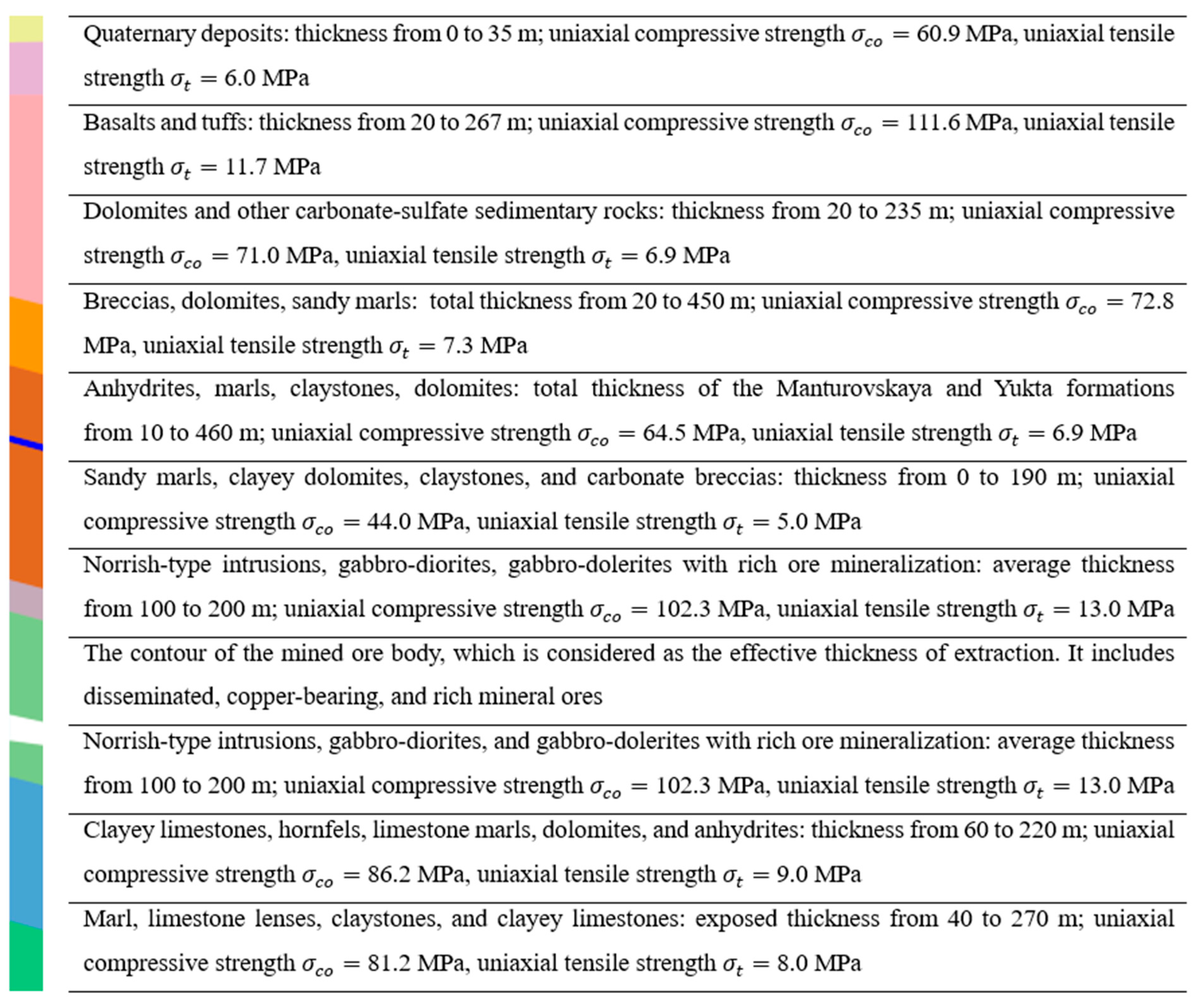
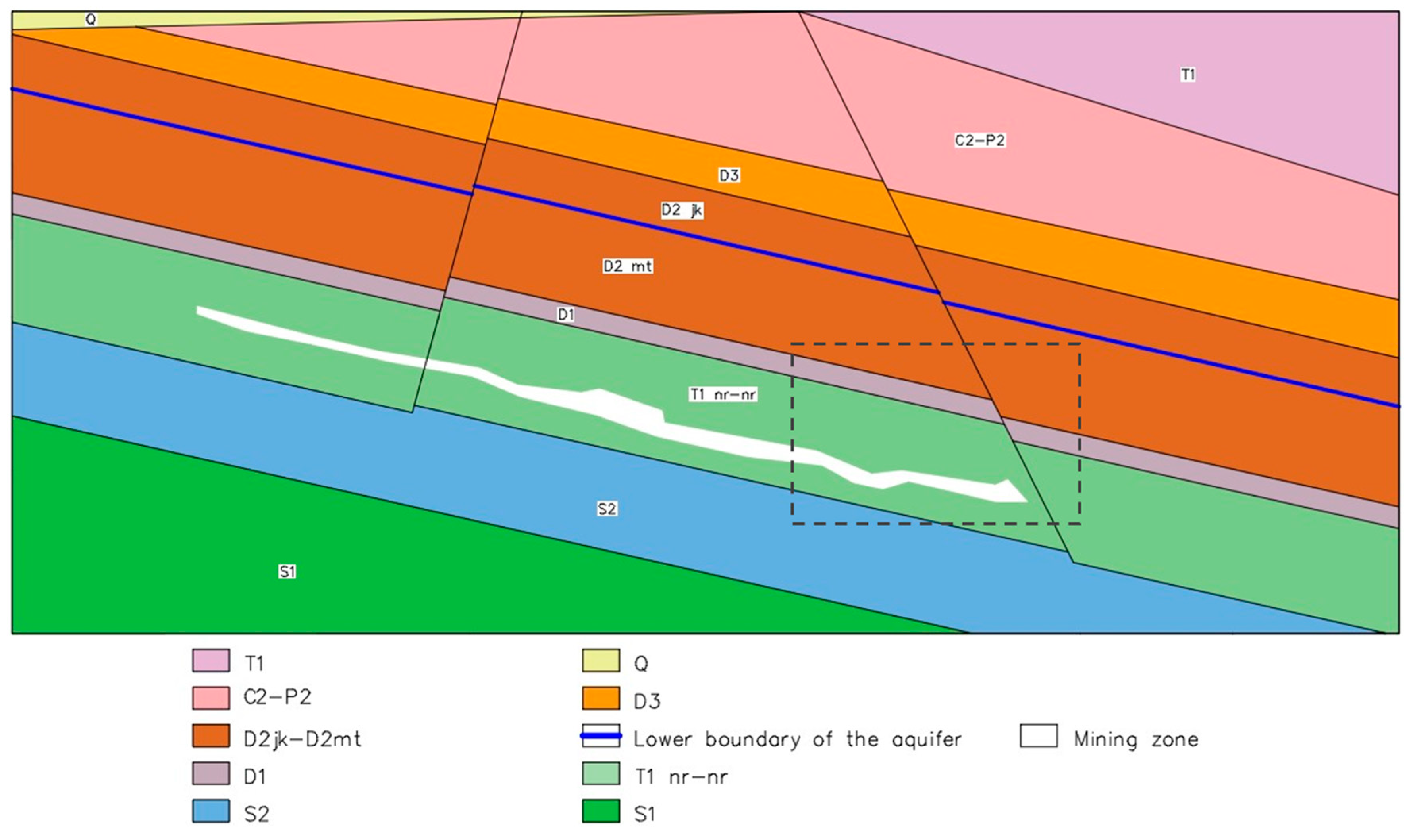
2.3. Geological Setting of the Case Study
2.4. Physical and Numerical Modeling Methods
3. Results
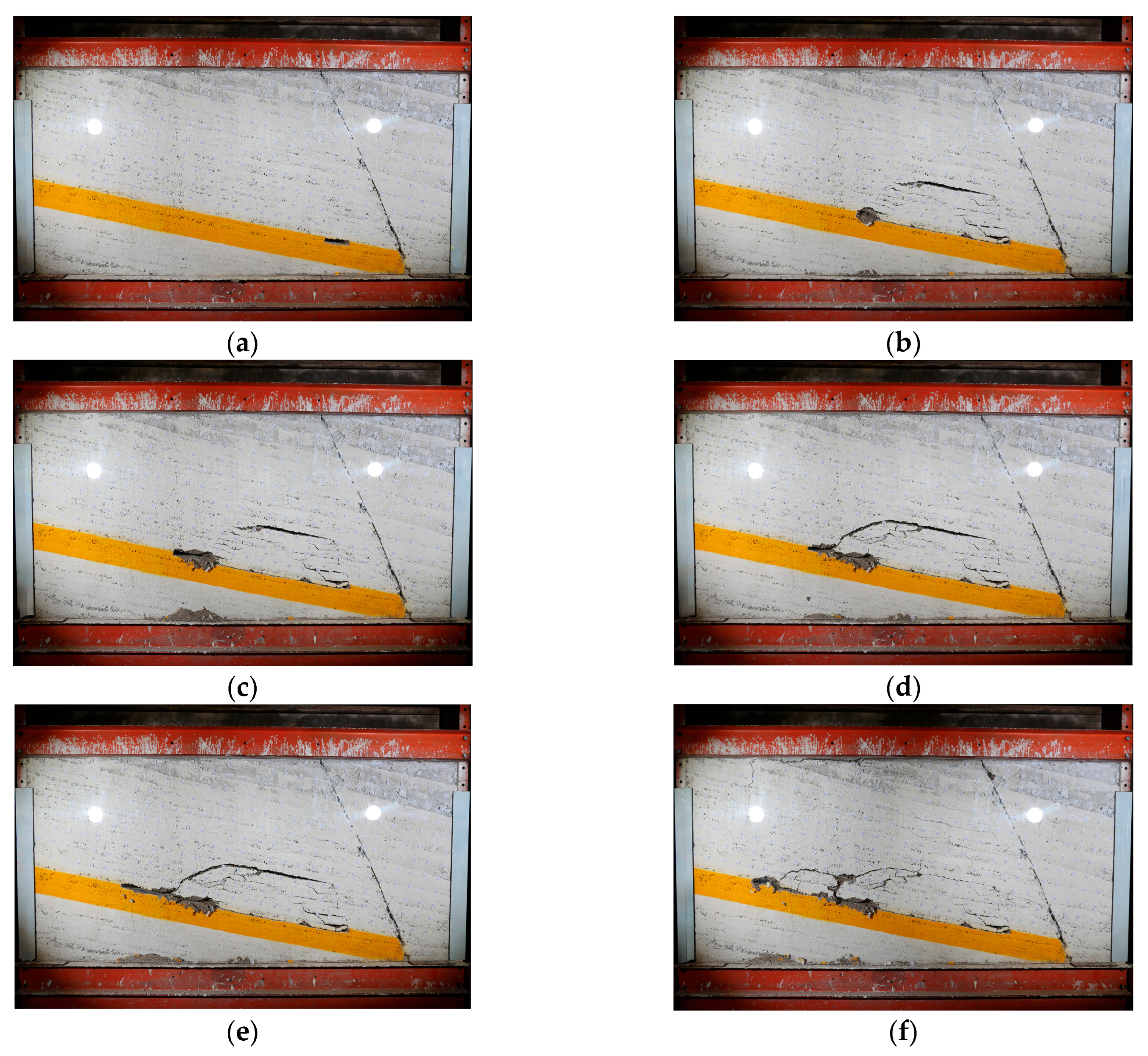
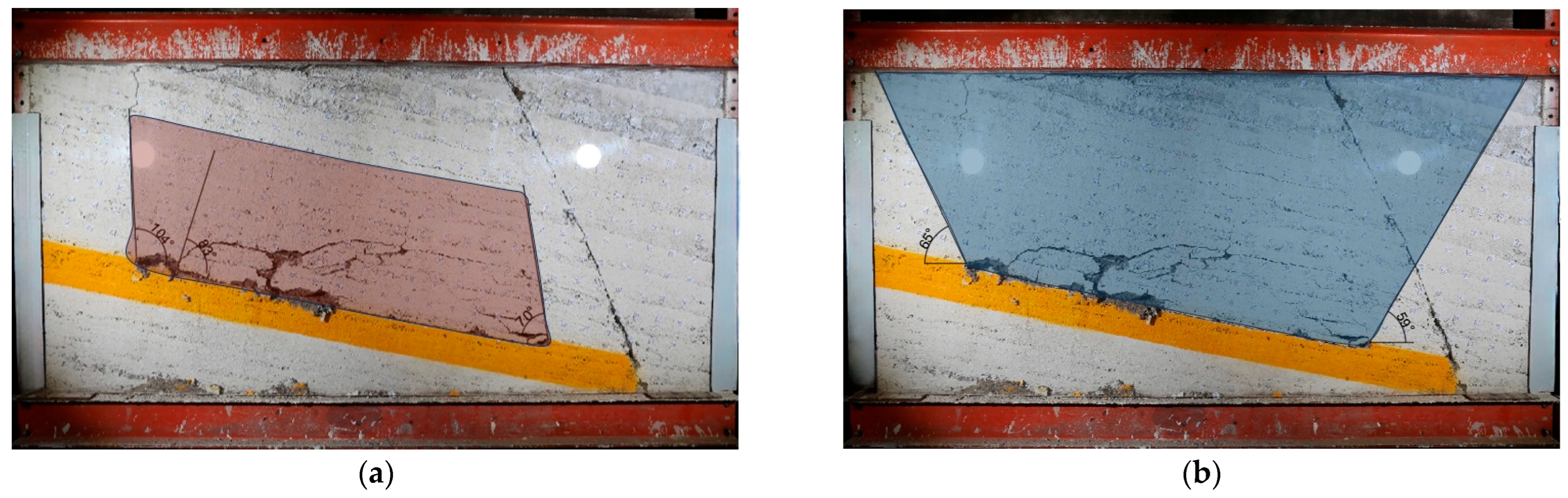
3.1. Analysis of Fracture Development and Block Structure Formation
- (i)
- the degree of block segmentation of the overburden;
- (ii)
- the characteristic angles associated with roof caving and shear deformation.
3.2. Displacement and Maximum Curvature Change Law of Overburden Strata
3.3. Analysis of the Law of Stress Change in Overburden Strata
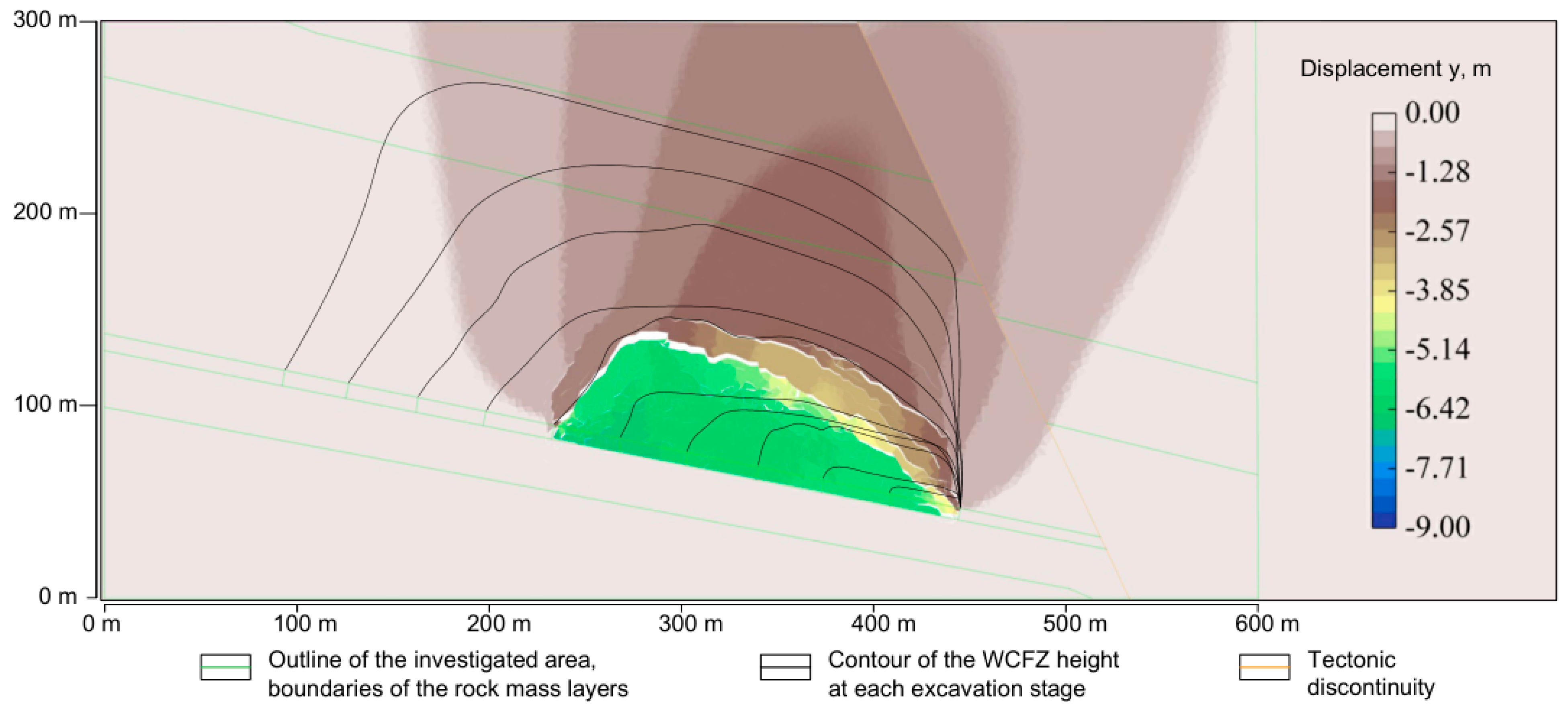
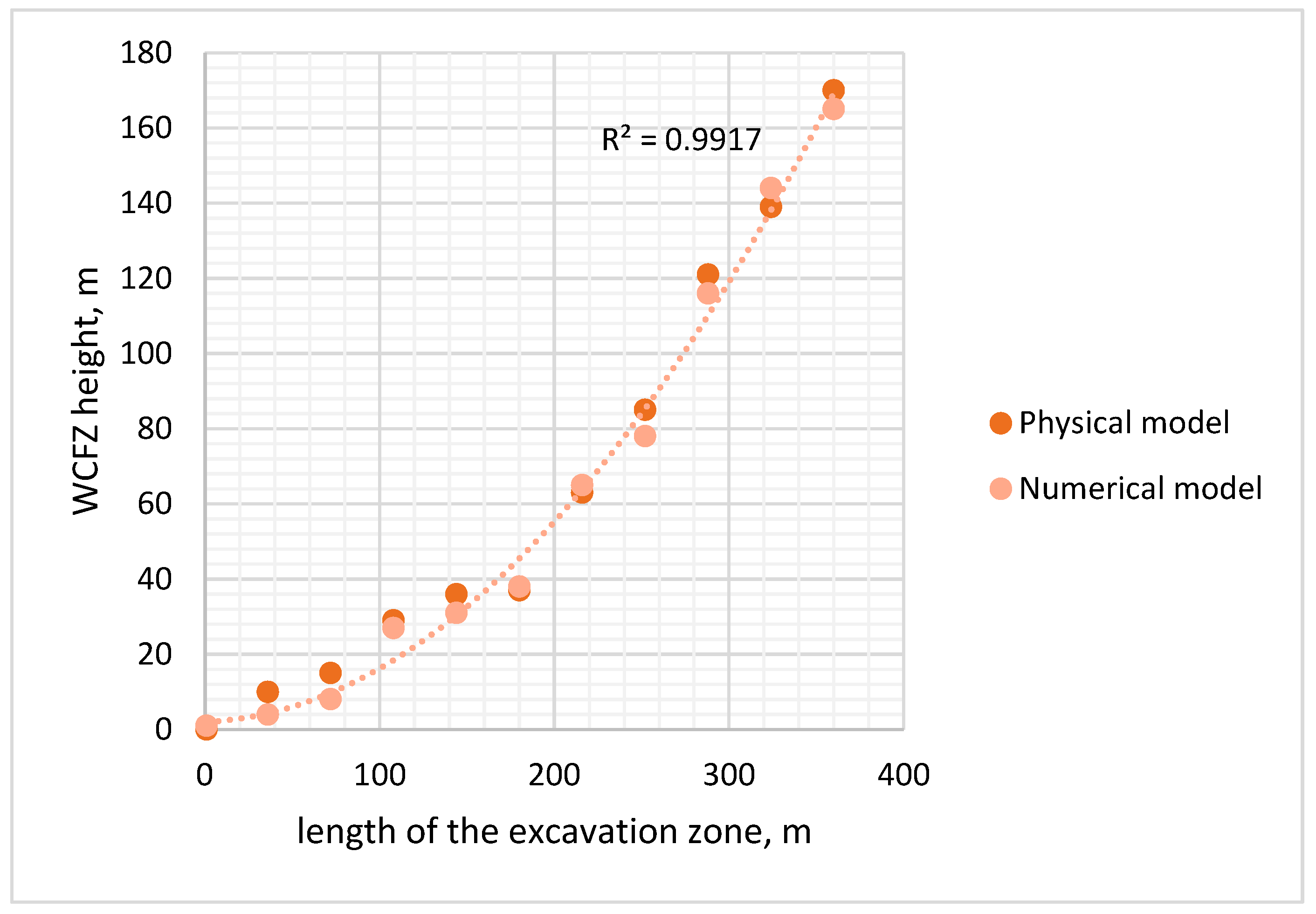
3.4. Analysis of the Law of WCFZ Development in Overburden Strata
4. Discussion
5. Conclusions
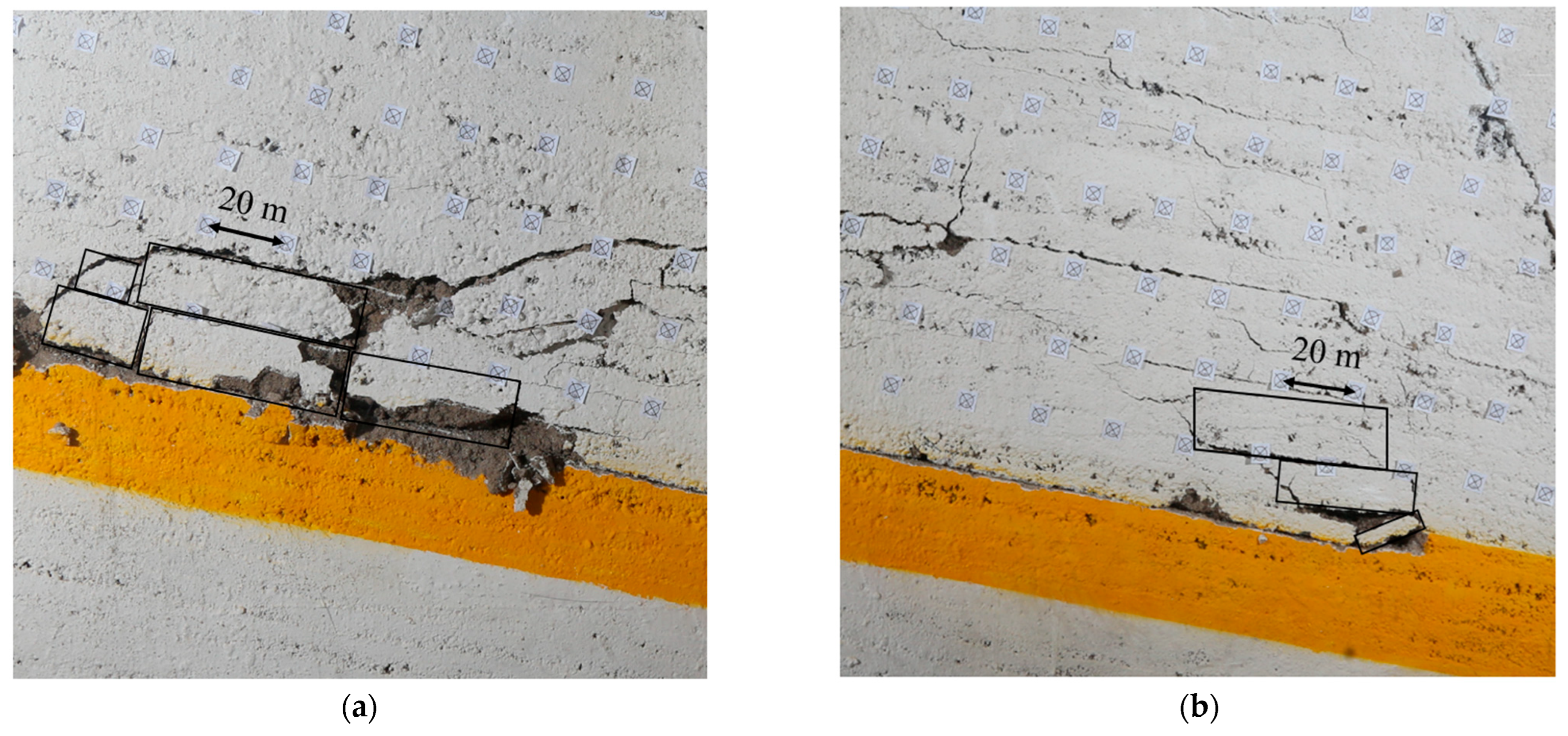
- Fault barrier effect. The pre-existing fault served as an effective natural screen: collapse and fracture development were confined to the hanging-wall side, with essentially no deformation crossing the fault plane.
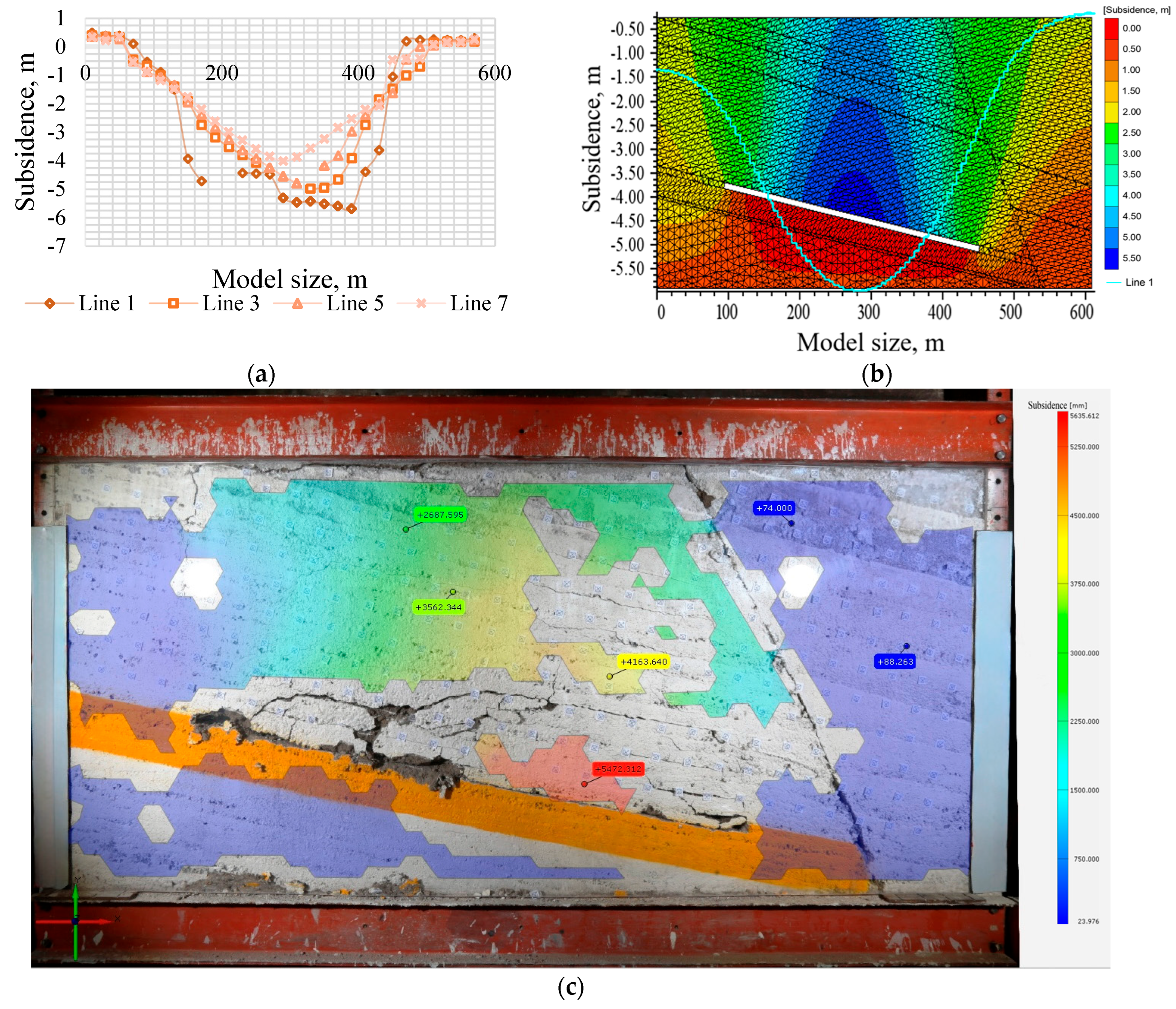
- Curvature–stress dependence. It is established that the curvature of the overlying strata is controlled by the stress in the rock mass. In the model, points of highest curvature coincided with zones of elevated stress, indicating that surface curvature can reliably signal stress redistribution at depth.
- Fracture zone growth law. The height of the water-conducting fracture zone increases predictably with the size of the excavation. Larger panel spans produced higher fracture zones according to an empirical (near-exponential) relation, consistent with an expanding bending beam model.
- Integrated predictive method. Taken together, these findings form a basis for forecasting vertical displacements and fracture development in deep polymetallic ore mines with complex fault structures. By combining physical experiment with calibrated numerical simulation, the methodology enables accurate prediction of subsidence and WCFZ limits under the studied geomechanical conditions.
- Safety implications. The coupled modeling framework, validated by experiments, provides robust criteria for safe mining under aquifers. It allows engineers to infer the upper boundary of dangerous fracture zones from surface deformation data, thereby supporting proactive design of pillars, backfill, and water-control measures.
Author Contributions
Funding
Data Availability Statement
Conflicts of Interest
Abbreviations
| WCFZ | Water-Conducting Fracture Zone |
| UDEC | Universal Distinct Element Code |
References
- Feng, J.; Shi, X.; Chen, J.; Wang, K. Prediction of the water-conducting fracture zone height across the entire mining area based on the multiple nonlinear coordinated regression model. Water 2025, 17, 1303. [Google Scholar] [CrossRef]
- Zhao, B.; He, S.; Bai, K.; Lu, X.; Wang, W. Elastic wave prospecting of water-conducting fractured zones in coal mining. Sci. Rep. 2024, 14, 7036. [Google Scholar] [CrossRef]
- Hu, T.; Han, K.; Song, C.; Che, J. Development Law of Water-Conducting Fracture Zones in Overburden above Fully Mechanized Top-Coal Caving Face: A Comprehensive Study. Processes 2024, 12, 2076. [Google Scholar] [CrossRef]
- Zhang, Y.; Liu, Y.; Lai, X.; Gao, J. Physical modeling of the controlled water-flowing fracture development during short-wall block backfill mining. Lithosphere 2021, 2021, 2860087. [Google Scholar] [CrossRef]
- Zhao, G.; Liu, Y.; Wang, Z.; Xu, Q.; Shen, B. Machine Learning Model for Predicting the Height of the Water-Conducting Fracture Zone Considering the Influence of Key Stratum and Dip Mining Intensity. Water 2025, 17, 234. [Google Scholar] [CrossRef]
- Kang, Z.; Yang, D.; Shen, P. Prediction correction modeling of water-conducting fracture zones height due to repeated mining in close distance coal seams. Sci. Rep. 2024, 14, 31611. [Google Scholar] [CrossRef]
- Li, J.; He, Z.; Piao, C.; Chi, W.; Lu, Y. Research on subsidence prediction method of water-conducting fracture zone of overlying strata in coal mine based on grey theory model. Water 2023, 15, 4177. [Google Scholar] [CrossRef]
- Lian, H.; Zhang, Q.; Yin, S.; Yan, T.; Yao, H.; Yang, S.; Kang, J.; Xia, X.; Li, Q.; Huang, Y.; et al. Integrating microseismic monitoring for predicting water inrush hazards in coal mines. Water 2024, 16, 1168. [Google Scholar] [CrossRef]
- Zherlygina, E.S.; Kuranova, M.E.; Gusev, V.N.; Odintsov, E.E. Identification of hazardous sites based on studying the development of man-made fractures within the rock mass. Gorn. Promyshlennost (Min. Ind.) 2025, 1, 162–169. [Google Scholar] [CrossRef]
- Litvinenko, V.S.; Petrov, E.I.; Vasilevskaya, D.V.; Yakovenko, A.V.; Naumov, I.A.; Ratnikov, M.A. Assessment of the role of the state in the management of mineral resources. J. Min. Inst. 2023, 259, 95–111. [Google Scholar] [CrossRef]
- Ilyasov, B.T.; Ozhiganov, I.A.; Trofimov, A.V. Influence of the spatial variability of rock strength on the rock burst hazard in rock masses. Gorn. Promyshlennost (Min. Ind.) 2024, 6, 74–82. [Google Scholar] [CrossRef]
- Odintsov, E.E.; Gusev, V.N. Rock Mass Condition Control by the Method of Predicting of Water-conducting Fracture Zone Parameters for the Deposits of Polymetallic Ores. Int. J. Eng. 2026, 39, 1326–1333. [Google Scholar] [CrossRef]
- Yi, C.; Johansson, D.; Greberg, J. Effects of in-situ stresses on the fracturing of rock by blasting. Comput. Geotech. 2018, 104, 321–330. [Google Scholar] [CrossRef]
- Nasehi, M.J.; Mortazavi, A. Effects of in-situ stress regime and intact rock strength parameters on hydraulic fracturing. J. Pet. Sci. Eng. 2013, 108, 211–221. [Google Scholar] [CrossRef]
- Yan, T.; Zhu, C.; Li, Q.; Wu, H.; Peng, Y. Investigating fracture evolution mechanisms in thick coal seam mining under upper hard and lower soft overburden: A case study. Sci. Rep. 2025, 15, 11358. [Google Scholar] [CrossRef]
- Zuev, B.Y.; Istomin, R.S.; Obozhina, E.P. Physical simulation of nonlinear geomechanical processes in potash ore mining. Gorn. Zhurnal (Min. J.) 2023, 5, 11. [Google Scholar] [CrossRef]
- Karasev, M.A.; Petrushin, V.V.; Rysin, A.I. The hybrid finite/discrete element method in description of macrostructural behavior of salt rocks. MIAB. Mining Inf. Anal. Bull. 2023, 4, 48–66. [Google Scholar] [CrossRef]
- Wang, P.; Jiang, Y.; Ren, Q. Roof hydraulic fracturing for preventing floor water inrush under multi aquifers and mining disturbance: A case study. Energies 2022, 15, 1187. [Google Scholar] [CrossRef]
- Baryakh, A.A.; Devyatkov, S.Y.; Denkevich, E.T. Mathematical modelling of displacement during the potash ore mining by longwall faces. J. Min. Inst. 2023, 259, 13–20. [Google Scholar] [CrossRef]
- Mustafin, M.G.; Slobodkin, S.M. Methodology of Geodetic Observations for Forecasting of Potentially Hazardous Zones of Operating Main Pipelines. Int. J. Eng. 2026, 39, 1753–1761. [Google Scholar] [CrossRef]
- Trushko, V.L.; Trushko, O.V. Integrated development of iron ore deposits based on competitive underground geotechnologies. J. Min. Inst. 2021, 250, 569–577. [Google Scholar] [CrossRef]
- Protosenya, A.G.; Alekseev, A.V.; Verbilo, P.E. Prediction of the stress-strain state and stability of the front of tunnel face at the intersection of disturbed zones of the soil mass. J. Min. Inst. 2022, 254, 252–260. [Google Scholar] [CrossRef]
- Shojaee Barjoee, S.; Rodionov Alekseevich, V. Respirable Dust in Ceramic Industries (Iran) and its Health Risk Assessment using Deterministic and Probabilistic Approaches. Pollution 2024, 10, 1206–1226. [Google Scholar] [CrossRef]
- Xu, J.; Pan, F.; Li, J. Investigation of water-flowing fracture zone height in fully mechanized cave mining beneath thick alluvium. Geotech. Geol. Eng. 2017, 35, 1745–1753. [Google Scholar] [CrossRef]
- Zhang, W.; Wu, X.; Wu, X.; Lei, Y.; Shao, J.; Wang, Z. Risk Assessment of Water and Sand Inrush in Mining under Thick Loose Layer Based on Comprehensive Weight-Cloud Model. Geofluids 2023, 11, 1–12. [Google Scholar] [CrossRef]
- Zhao, D.; Li, Z.; Feng, G.; Wang, F.; Hao, C.; He, Y.; Dong, S. Using Swarm Intelligence Optimization Algorithms to Predict the Height of Fractured Water-Conducting Zone. Energy Explor. Exploit. 2023, 41, 1603–1627. [Google Scholar] [CrossRef]
- Saadat, M.; Khishvand, M.; Seccombe, A. FLAC3D Simulation of Caving Mechanism and Strata Fracture Response in Underground Mining. Mining 2024, 4, 818–840. [Google Scholar] [CrossRef]
- Iraji, S.; Soltanmohammadi, R.; Matheus, G.F.; Basso, M.; Vidal, A.C. Application of Unsupervised Learning and Deep Learning for Rock Type Prediction and Petrophysical Characterization Using Multi-Scale Data. Geoenergy Sci. Eng. 2023, 230, 221241. [Google Scholar] [CrossRef]
- Ajayi, K.M.; Shahbazi, K.; Tukkaraja, P.; Katzenstein, K. Estimation of Radon Diffusivity Tensor for Fractured Rocks in Cave Mines Using a Discrete Fracture Network Model. J. Environ. Radioact. 2019, 196, 104–112. [Google Scholar] [CrossRef]
- Gao, W.; Li, Y.; He, Q. Determination of Fractured Water-Conducting Zone Height Based on Microseismic Monitoring: A Case Study in Weiqiang Coalmine, Shaanxi, China. Sustainability 2022, 14, 8385. [Google Scholar] [CrossRef]
- Sun, D.D.; Hou, X.A.; Yang, T.H.; Zhao, Y.; Zhang, P.H.; Yang, B.; Liu, Y.L.; Ma, K. Calibration of Water Inrush Channel and Numerical Simulation of Water Inrush Process in Coal Mine Roof. Front. Earth Sci. 2022, 10, 931508. [Google Scholar] [CrossRef]
- Fernández, A.; Sanchidrián, J.A.; Segarra, P.; Gómez, S.; Li, E.M.; Navarro, R. Rock Mass Structural Recognition from Drill Monitoring Technology in Underground Mining Using Discontinuity Index and Machine Learning Techniques. Int. J. Min. Sci. Technol. 2023, 33, 555–571. [Google Scholar] [CrossRef]
- Ma, K.; Zhang, Y.; Ruan, M.; Guo, J.; Chai, T. Land subsidence in a coal mining area reduced soil fertility and led to soil degradation in arid and semi-arid regions. Int. J. Environ. Res. Public Health 2019, 16, 3929. [Google Scholar] [CrossRef] [PubMed]
- Zheng, Q.; Wang, C.; Liu, W.; Pang, L. Evaluation on Development Height of Water-Conducted Fractures on Overburden Roof Based on Nonlinear Algorithm. Water 2022, 14, 3853. [Google Scholar] [CrossRef]
- Afanasev, P.I.; Belov, A.A. Assessment of the seismic-blast effects on the marginal rock mass due to the amplitude-frequency characteristics of the blast. Gorn. Promyshlennost (Min. Ind.) 2025, 3, 138–145. [Google Scholar] [CrossRef]
- Ustyugov, D.L.; Noa Segura, E.L.; Ryakhovsky, M.S. Influence of rainfall infiltration on groundwater recharge in hydrogeological region La Yana, Cuba. Gorn. Zhurnal 2024, 97–102. [Google Scholar] [CrossRef]
- Liu, Y.; Yuan, S.; Yang, B.; Liu, J.; Ye, Z. Predicting the Height of the Water-Conducting Fractured Zone Using Multiple Regression Analysis and GIS. Environ. Earth Sci. 2019, 78, 422. [Google Scholar] [CrossRef]
- Yu, L.; Su, H.; Jing, H.; Zhang, Q.; Yang, E. Experimental study of the mechanical behavior of sandstone affected by blasting. Int. J. Rock Mech. Min. Sci. 2017, 93, 234–241. [Google Scholar] [CrossRef]
- Yin, H.; Dong, F.; Zhang, Y.; Cheng, W.; Zhai, P.; Ren, X.; Liu, Z.; Zhai, Y.; Li, X. Height Prediction and 3D Visualization of Mining-Induced Water-Conducting Fracture Zone in Western Ordos Basin Based on a Multi-Factor Regression Analysis. Energies 2022, 15, 3850. [Google Scholar] [CrossRef]






| Parameter | Anhydrite | Sandy Dolomites | Gabbro-Diorites | Ore |
|---|---|---|---|---|
| 64.5 | 44.0 | 102.3 | 106 | |
| 0.193 | 0.132 | 0.307 | 0.318 | |
| 6.9 | 5.0 | 13.0 | 10.9 | |
| 0.004 | 0.003 | 0.008 | 0.006 | |
| 2870 | 2700 | 3050 | 4350 | |
| 1722 | 1620 | 1830 | 2609 | |
| Proportion of materials | 537 | 737 | 337 | 3:1 |
| Lithology | ρ, kg/m3 | E, MPa × 104 | G, MPa × 104 | C, MPa | Fri, ° | Rt, MPa | Poisson | Kn, MPa × 104/m | Ks, MPa × 104/m |
|---|---|---|---|---|---|---|---|---|---|
| Anhydrite | 2870 | 5.50 | 5.15 | 15.0 | 33 | 6.9 | 0.28 | 4.58 | 1.79 |
| Sandy dolomites | 2700 | 5.26 | 5.00 | 10.1 | 32 | 5.0 | 0.29 | 4.38 | 1.63 |
| Gabbro-diorites | 3050 | 7.98 | 7.10 | 35 | 41 | 13.0 | 0.30 | 6.65 | 2.55 |
| Ore body | 4350 | 7.30 | 6.31 | 19–32 | 44 | 10.9 | 0.31 | 6.08 | 2.31 |
Disclaimer/Publisher’s Note: The statements, opinions and data contained in all publications are solely those of the individual author(s) and contributor(s) and not of MDPI and/or the editor(s). MDPI and/or the editor(s) disclaim responsibility for any injury to people or property resulting from any ideas, methods, instructions or products referred to in the content. |
© 2026 by the authors. Licensee MDPI, Basel, Switzerland. This article is an open access article distributed under the terms and conditions of the Creative Commons Attribution (CC BY) license.
Share and Cite
Odintsov, E.; Zhao, Z.; Gusev, V.; Wang, K.; Wang, W. Integrated Physical and Numerical Assessment of the Formation of Water-Conducting Fracture Zones in Deep Ore Mines with Structural Faults. Mining 2026, 6, 10. https://doi.org/10.3390/mining6010010
Odintsov E, Zhao Z, Gusev V, Wang K, Wang W. Integrated Physical and Numerical Assessment of the Formation of Water-Conducting Fracture Zones in Deep Ore Mines with Structural Faults. Mining. 2026; 6(1):10. https://doi.org/10.3390/mining6010010
Chicago/Turabian StyleOdintsov, Egor, Zidong Zhao, Vladimir Gusev, Kai Wang, and Wenwei Wang. 2026. "Integrated Physical and Numerical Assessment of the Formation of Water-Conducting Fracture Zones in Deep Ore Mines with Structural Faults" Mining 6, no. 1: 10. https://doi.org/10.3390/mining6010010
APA StyleOdintsov, E., Zhao, Z., Gusev, V., Wang, K., & Wang, W. (2026). Integrated Physical and Numerical Assessment of the Formation of Water-Conducting Fracture Zones in Deep Ore Mines with Structural Faults. Mining, 6(1), 10. https://doi.org/10.3390/mining6010010