Article

Solution–Gel Method Preparation of High-Performance TiO2/GO/CdS Nanocomposites Under Ultrasonic Radiation and Research on Antibacterial Properties

1
Department of Industrial and Mining Architecture, Bijie Vocational and Technical College, Bijie 551700, China
2
School of Chemical Engineering and Technology, Sun Yat-sen University, Zhuhai 519082, China
3
College of Intelligent Manufacturing and Materials Chemical Engineering, Yichun University, Yichun 336000, China
4
College of Architecture and Civil Engineering, Xinyang Normal University, Xinyang 464000, China
5
Xinyang Lingshi Technology Co., Ltd., Xinyang 464000, China
*
Authors to whom correspondence should be addressed.
BioChem 2026, 6(2), 12; https://doi.org/10.3390/biochem6020012
Submission received: 2 April 2026 / Revised: 9 May 2026 / Accepted: 11 May 2026 / Published: 20 May 2026
(This article belongs to the Special Issue Biochemistry in Microbe–Microbe Interactions)

Abstract

To improve the visible-light response and antibacterial performance of titanium dioxide, a TiO2/GO/CdS mesoporous nanocomposite was prepared via an ultrasound-assisted sol–gel method in this study. Systematic characterizations including XRD, XPS, SEM, TEM, BET, UV-Vis DRS and FTIR were carried out to analyze the structure, morphology and optical properties of the material. The results show that the composite exhibits a typical mesoporous structure with a specific surface area of 197.0962 m2/g and a pore size distribution of 2–14 nm. CdS is successfully doped into the TiO2 matrix and forms a heterostructure with GO. UV-Vis diffuse reflectance spectra indicate that the synergistic effect of CdS and GO significantly broadens the visible-light absorption range of TiO2 and suppresses the recombination of photogenerated carriers. Antibacterial tests using Escherichia coli as the target strain demonstrate that the TiO2/GO/CdS composite exhibits remarkably better visible-light photocatalytic bactericidal activity than pure TiO2 and the TiO2/GO composite. This work provides a new strategy for the modification of TiO2-based photocatalytic antibacterial materials, and the as-prepared composite shows promising application prospects in the antibacterial field.

1. Introduction

The fight against pathogenic microorganisms is an important issue in the protection of human life and health safety. Although antibiotics are effective in fighting germs, their misuse has led to a dwindling pool of antimicrobial drugs [1]. The ability of antimicrobial materials to inhibit certain functions of microorganisms and effectively prevent the propagation of many harmful and pathogenic microorganisms has attracted great interest from researchers. These include semiconductor photocatalytic materials [2,3], organic materials [4], metal ionic materials [5], natural biological anti-microbial materials [6] and nano carrier composites [7]. Although organic antimicrobial materials have a rapid antimicrobial effect, most of them are poor in high-temperature resistance, unstable and prone to drug resistance [8]. While metal ions such as silver, copper, and zinc have good antibacterial properties, there have been concerns about the negative effects of excessive release [9,10,11]. The performance and environmentally friendly characteristics of semiconductor photocatalytic antimicrobial materials have attracted great interest from researchers [12]. For example, titanium dioxide (TiO2) is widely used in various fields as a safe and inexpensive antimicrobial material [13,14,15].
TiO2 is an N-type semiconductor catalyst with relatively stable chemical and physical properties, which is non-toxic and harmless to humans [16]. The bactericidal function of TiO2 semiconductor material is to produce a large number of electron (e)/hole (h+) pairs under UV irradiation, and carry out redox reactions with free H2O and O2 in the environmental system, producing a large number of superoxide anion radicals (O2·−) and hydroxyl radicals (·OH) [17]. When the free radicals and bacteria come into contact with each other, the nucleic acids, enzymes and other substances in the cells are oxidized and decomposed, inhibiting the normal growth and reproduction of the bacteria in a short period of time, causing the bacteria to be damaged and eventually rupture and die [18,19]. However, the large bandgap (3.2 eV) of TiO2 can only absorb UV light, which greatly limits the photocatalysis. Currently, metal doping is mainly done by transition and rare earth metals to reduce their bandgaps [20]. Hassan et al. synthesized Ln-doped TiO2 nanofibers by sol–gel electrostatic spinning, where doping prevented the phase transition while reducing the bandgap [21]. Wang et al. coated TiO2 on graphene oxide (GO) nanosheets by a solvothermal pathway, and the degradation rate of TiO2@GO on oxytetracycline reached 89.5% under visible light [22]. In addition, decorating TiO2 with CdS, which can reduce its charge complexation, is a good strategy [23].
Compared with multi-structured composite semiconductors, single-phase photocatalysts generally have a lower electron separation rate. Multi-structured compound semiconductors also delay the recombination of photogenerated electrons and holes to achieve enhanced photocatalytic efficiency. TiO2/CdS photocatalytic effect was evident, along with good antimicrobial effect against Escherichia coli and positive Staphylococcus aureus [24,25]. However, the problem of electron leakage from the quantum dot/electrolyte interface into the electrolyte and complexing with holes in the electrolyte cannot be ignored [26]. The risk of introducing functional group instability and inhomogeneity cannot be avoided. Therefore, the introduction of inorganic semiconductors such as graphene oxide is a good solution to this challenge. Notably, GO can also significantly affect the photocatalytic efficiency of CdS by changing the energy band edge alignment between layers [27].
Herein, a mesoporous nano-heterojunction composite (TiO2/GO/CdS) with a high specific surface area was obtained by utilizing a simple and efficient sol–gel method of preparation in an ultrasonic environment; the method is also reported. The amorphous TiO2 was converted into anatase TiO2 using high temperature. Various instrumental characterizations were performed to verify the microscopic morphology and structural composition. Its large specific surface area and particle size distribution demonstrate the porous nature. The photocatalytic lethality against Gram-negative bacteria was significantly enhanced.

2. Experimental

2.1. Materials and Regents

Tetra-n-butylorthotitanate [Ti(O-i-C4H9)4] (AR, ≥98% Ti), Anhydrous ethanol (AR), Cadmium sulfide (AR, 98%), and Hydrochloride acid (AR) were purchased from Shanghai Aladdin Reagents Co., Ltd. The following reagents were obtained from their respective sources: Graphene oxide (Shanghai, China, average particle size 10 nm–20 nm); TiO2 particles (Innochem (Beijing, China), average particle size = 25 nm). Escherichia coli, agar powder, and LB broth culture medium were supplied by the local laboratory. The materials were not subjected to any additional processing.

2.2. Synthesis

2.2.1. Synthesis of TiO2/GO Nanocomposites

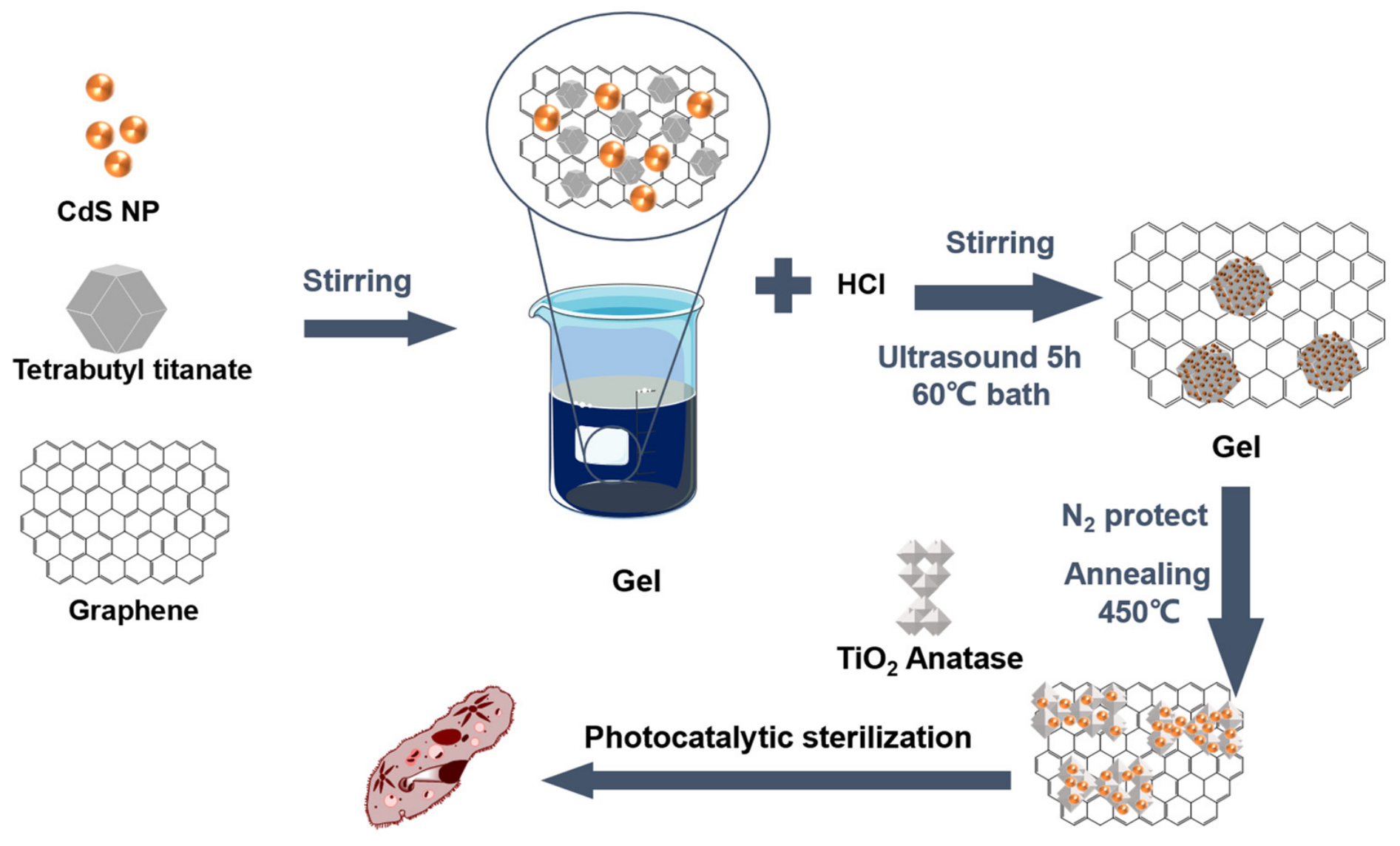
TiO2/GO nanocomposites were synthesized by sol–gel method [28], and the preparation process is shown in Scheme 1. The pH value of 30 mL of mixed solution of anhydrous ethanol and deionized water (1:1/v:v) was adjusted to 4 with hydrochloric acid, after which GO (0.22 g) was mixed with the solution and stirred well. Tetra-n-butylorthotitanate (3.4 mL) was slowly added dropwise under vigorous stirring conditions and placed in an ultrasonic environment (45 kHz) for 5 h at 60 °C. The obtained TiO2/GO gel was air-dried for 24 h to become solid and then dried using a vacuum drying oven (60 °C, 5 h) to remove the solvent.
To obtain anatase-type titanium dioxide nanoparticles, the above solid was calcined in a muffle furnace under argon protection at a rate of 2 °C/min (400 °C, 2 h) [29]. The product was washed 3 times with deionized water and then dried under vacuum (60 °C, 8 h) to obtain the final product.

2.2.2. Synthesis of TiO2/GO/CdS Nanocomposites

A slight change was made from Section 2.2.1. GO was replaced with 0.44 g of a GO/CdS (1:1/wt) blend, and the rest of the steps remained unchanged. The yield of the composite product was about 58%. The structural stability and biosafety of the TiO2/GO/CdS composite were evaluated by monitoring Cd2+ release during photocatalysis using inductively coupled plasma mass spectrometry (ICP-MS). The measured Cd2+ concentration in the reaction solution was extremely low, well below the typical environmental safety threshold. The strong interfacial interaction between CdS and the TiO2/GO matrix effectively suppresses ion dissolution, indicating that the composite possesses good structural integrity and low ecotoxicity, and is therefore suitable for environmental purification and antibacterial applications.

2.3. Characterization

In materials analysis, the morphology and microstructure of the TiO2/GO/CdS and TiO2/GO were characterized by field-emission scanning electron microscopy (SEM), and transmission electron microscopy (TEM, JEOL, JEOL-2100F, Akishima, Japan). The crystal structure, chemical compositions and chemical bonds of materials were characterized by X-ray diffraction (XRD), X-ray photoelectron spectroscopy (XPS, ESCALB MK-II, VG Instruments, Greater Manchester, UK), energy-dispersive X-ray spectroscopy (EDS, Super-X, Bruker, Billerica, MA, USA) and Fourier transform infrared spectroscopy (FTIR, VERTEX 70, Bruker). The specific surface area and particle size distribution of materials are tested by the BET (Brunauer–Emmett–Teller) method. UV-vis DRS was performed using a UV-3600 (Shimadzu Corporation, Kyoto, Japan), Lambda 750 spectrophotometer, PE (PerkinElmer, Inc., Waltham, MA, USA), and absorbance was measured using a UV-vis spectrophotometer (722, Vimipay Technology Co., Ltd., Hangzhou, China). A fluorescence spectrometer (F-4500, Hitachi, Tokyo, Japan) was used to determine the photoluminescence spectral structure and light intensity of the samples.

2.4. Antibacterial Tests

Gram-negative bacteria (E. coli) were used as target microorganisms for antimicrobial testing of all prepared materials. The original strain (100 μL) was added to a test tube containing sterile Luria–Bertani (LB) broth (35 mL) nutrient solution. The sample was incubated at 37 °C and 180 rpm in an oscillator incubator for 12 h. Subsequently, the bacterial solution was resuspended in 15 mL of 0.9% sterile NaCl solution, and the OD value of the bacterial suspension was measured at 600 nm (108~109 CFU/mL). The bacterial solution was diluted to 105~106 CFU/mL as the experimental bacterial concentration. For each photocatalytic antibacterial experiment, 5 mg of the sample was taken into a sterile test tube containing E. coli (300 μL) and sterile water (30 mL). Then, 100 µL of the solution was taken for plate coating after 4 h of incubation (37 °C, 180 rpm) under light and dark conditions, respectively. A blank control group was also set up as a comparison. Finally, the solid medium was incubated in a sterile incubator (37 °C) for 24 h to count the number of colonies. All antimicrobial experiments were performed in triplicate. The survival rate of bacteria S (%) was used to assess the antimicrobial capacity of the materials. The survival rate is defined as follows:
S = N M   ×   100 %
where M (CFU/mL) is the number of colonies in the blank control group and N (CFU/mL) is the number of colonies after treatment with the material under visible light and dark conditions.

3. Results and Discussion

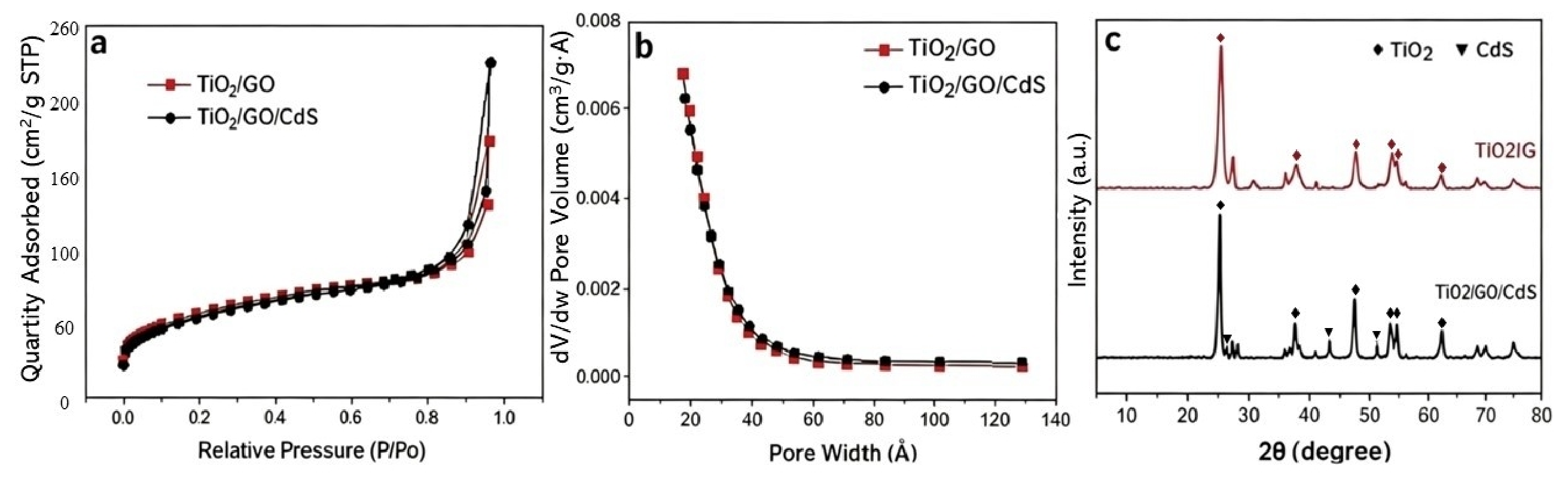
Figure 1 presents the nitrogen adsorption–desorption isotherms, pore size distribution, and XRD patterns of the two composite materials. As shown in Figure 1a, both isotherms exhibit typical type IV characteristics of mesoporous materials with a distinct H3 hysteresis loop in the high-pressure region (P/P0 > 0.8), indicating the presence of slit-shaped mesopores. The adsorption quantity of TiO2/GO/CdS is higher, corresponding to a specific surface area of 197.0962 m2/g, which is significantly larger than that of TiO2/GO, suggesting that CdS doping leads to a more developed pore structure and provides more active sites for photocatalytic reactions. Figure 1b reveals that the pore sizes of both materials are mainly distributed in the range of 2–14 nm (20–140 Å), with a slightly larger pore volume observed for TiO2/GO/CdS, confirming its richer mesoporous structure [30,31]. In Figure 1c, both samples show characteristic diffraction peaks of TiO2 (marked by ♦), while additional peaks corresponding to CdS (marked by ▼) appear at 25°, 42°, etc., in the TiO2/GO/CdS pattern, verifying the successful incorporation of CdS into the TiO2/GO matrix without destroying the crystal structure of TiO2, laying a structural foundation for the subsequent improvement of photocatalytic and antibacterial performance.
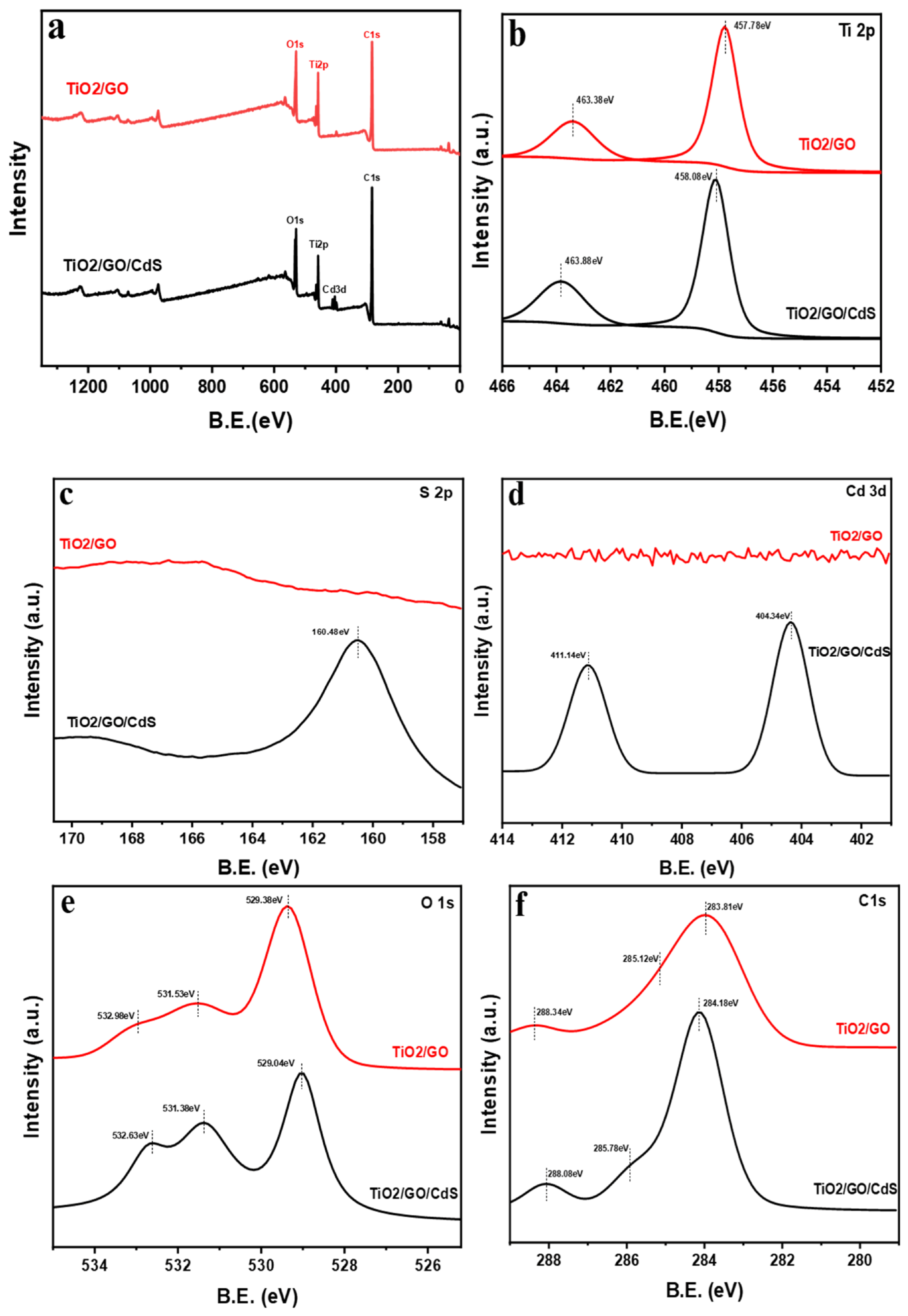
Figure 2 presents the X-ray photoelectron spectroscopy (XPS) characterization results of the two composite materials, revealing their elemental composition and chemical states comprehensively. The survey spectrum in Figure 2a shows that the TiO2/GO sample exhibits characteristic peaks of Ti 2p, O 1s, and C 1s, while the TiO2/GO/CdS sample displays additional Cd 3d and S 2p peaks, directly confirming the successful incorporation of CdS into the TiO2/GO matrix. The high-resolution Ti 2p spectrum in Figure 2b reveals two typical peaks of Ti4+ for both samples: Ti 2p3/2 (~463.8 eV) and Ti 2p1/2 (~457.8/458.1 eV), with a slight shift after CdS modification, indicating electronic interactions between CdS and the TiO2/GO framework. The S 2p spectrum in Figure 2c shows a characteristic peak at 160.48 eV corresponding to S2−, and the Cd 3d spectrum in Figure 2d exhibits two distinct peaks at 411.14 eV (Cd 3d5/2) and 404.34 eV (Cd 3d3/2), further verifying the presence of CdS. The O 1s spectrum in Figure 2e can be deconvoluted into lattice oxygen (~529.4/529.0 eV), hydroxyl oxygen (~531.3/531.5 eV), and adsorbed oxygen (~532.6/532.9 eV), with a blue shift in the hydroxyl oxygen peak after CdS doping, reflecting changes in the surface chemical environment. The C 1s spectrum in Figure 2f can be fitted into C-C/C=C (~284.2 eV), C-O (~285.7/285.1 eV), and C=O (~288.3/288.1 eV), retaining the typical functional groups of GO and indicating that the composite process does not destroy the GO structure [32,33,34,35]. Overall, the XPS results fully validate the elemental composition and chemical states of the TiO2/GO/CdS composite, providing direct surface chemical evidence for understanding the enhanced photocatalytic and antibacterial performance.
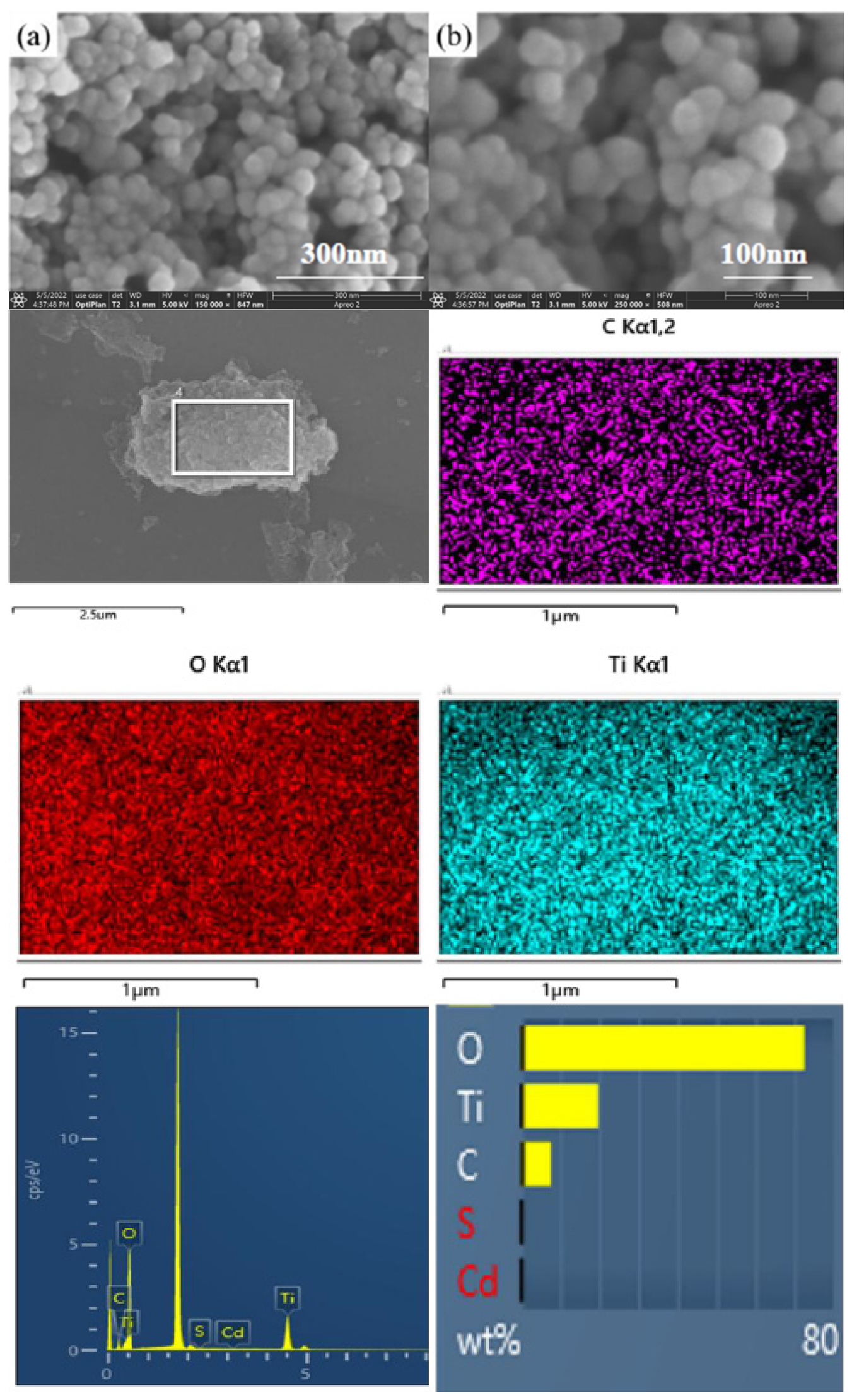
Figure 3 shows the SEM morphology and EDS elemental mapping/quantitative analysis of the TiO2/GO mesoporous composite. The SEM images in (a) and (b) reveal that the material is composed of densely aggregated TiO2 nanoparticles with a size of approximately 50–100 nm, forming abundant mesoporous channels between particles, which is consistent with the previous BET results and provides sufficient active sites and mass transfer pathways for photocatalytic reactions [36,37,38]. The subsequent EDS elemental mapping clearly demonstrates the uniform distribution of C, O, and Ti elements: C corresponds to the GO matrix, while O and Ti originate from the TiO2 component, with no obvious elemental segregation, indicating excellent interfacial compatibility between TiO2 and GO. The EDS spectrum and quantitative analysis confirm that the composite is mainly composed of O, Ti, and C, with trace amounts of S and Cd detected. Analysis of the binary TiO2/GO sample unexpectedly shows trace signals of S and Cd. These elements are not expected from the nominal synthesis, which used only GO and titanium tetra-n-butoxide. The most plausible source of the sulfur signal is residual sulfate or sulfonate groups that remain in the GO from its preparation by the Hummers’ method, where concentrated H2SO4 is used, and subsequent washing may not remove all sulfur-containing species. The trace Cd could originate from incidental contamination—for example, from shared glassware, the furnace, or from reagents that contain cadmium as a low-level impurity—because Cd was not intentionally introduced at this stage. Overall, the SEM and EDS results visually present the nanoporous morphology and homogeneous elemental distribution of the TiO2/GO composite, verifying its mesoporous structure and component uniformity, and laying a reliable morphological and compositional foundation for subsequent CdS modification and photocatalytic performance studies [39,40,41].
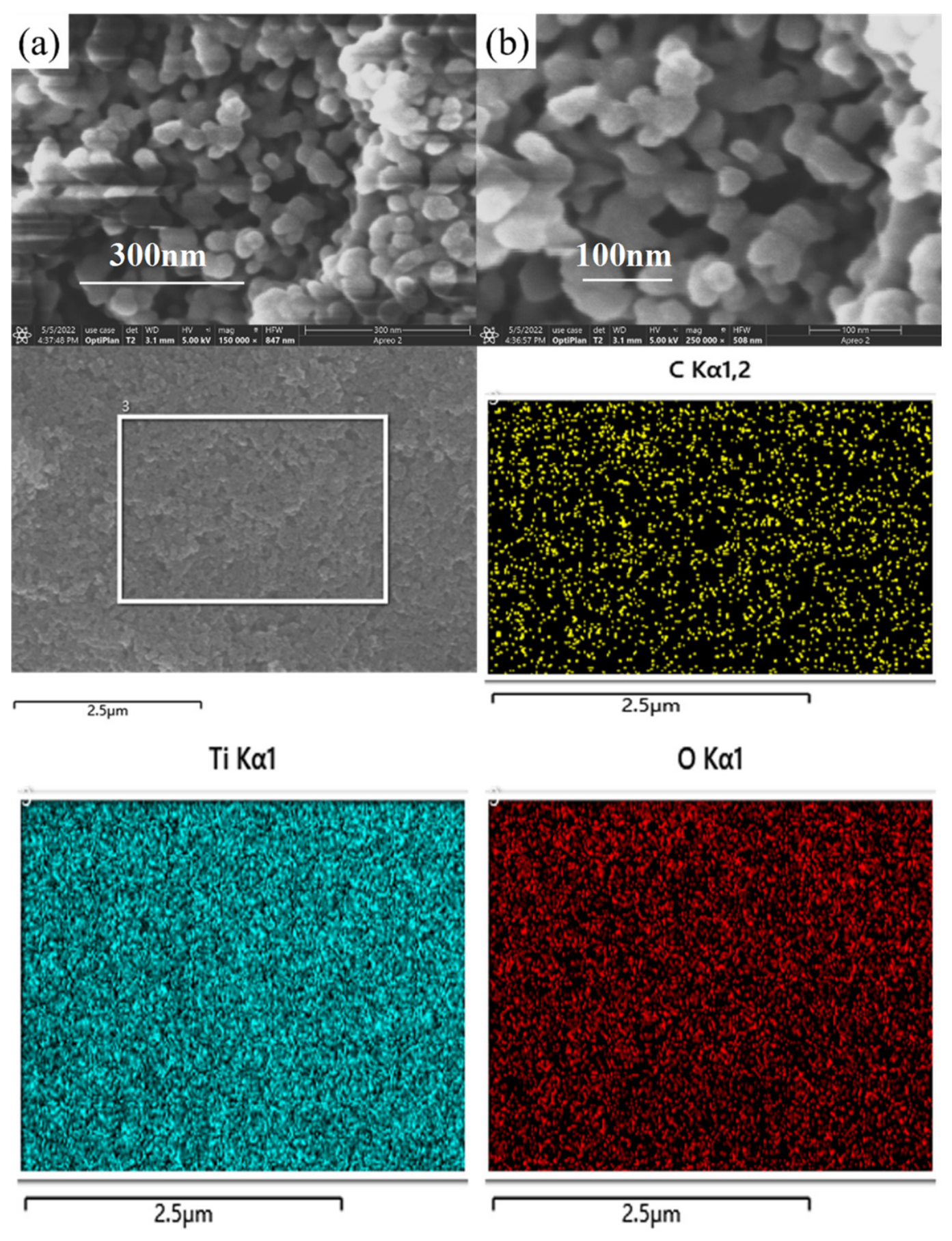
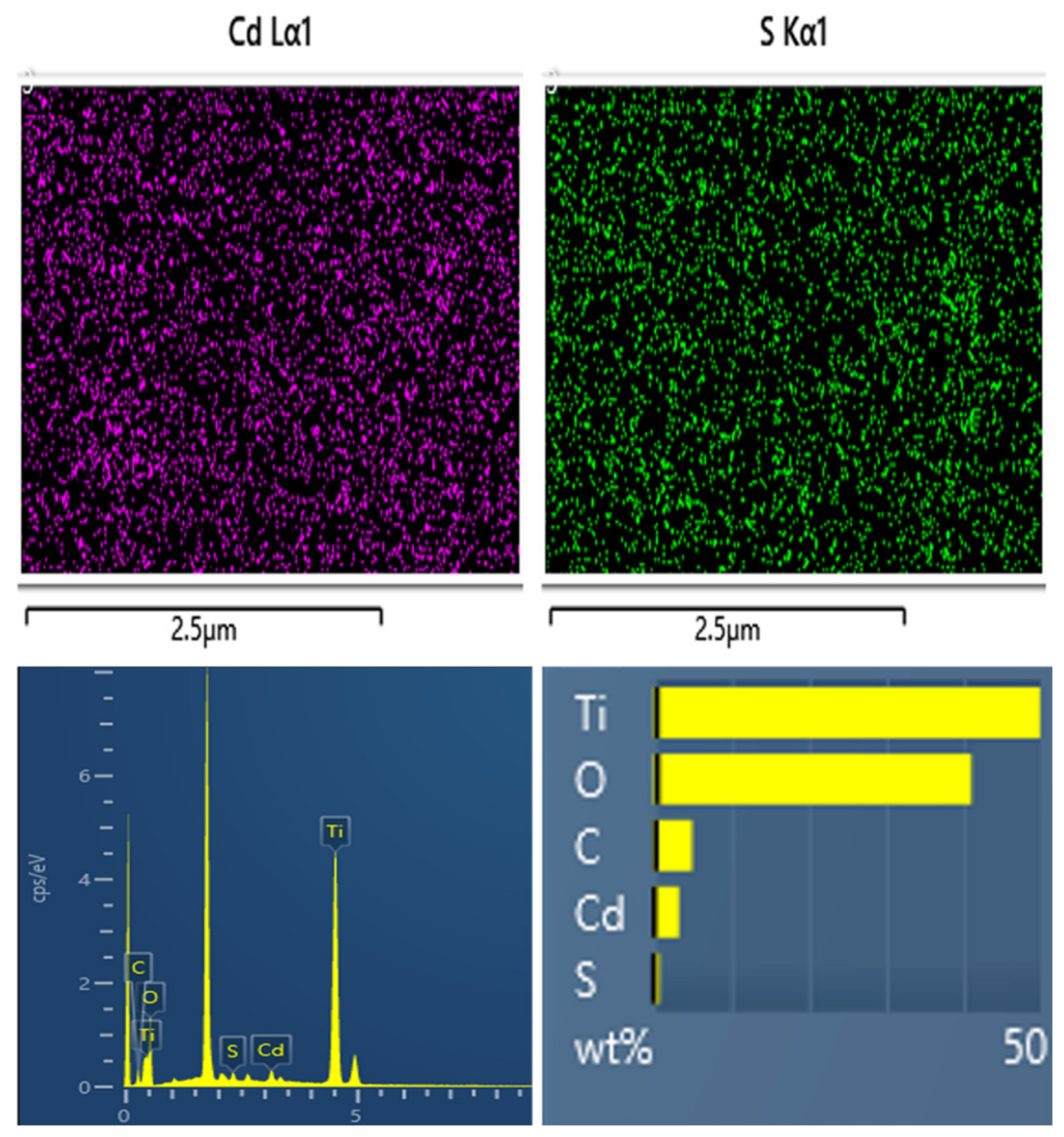
Figure 4 presents the SEM morphology and EDS elemental mapping/quantitative analysis of the TiO2/GO/CdS mesoporous composite. The SEM images in (a) and (b) reveal that the material consists of densely aggregated nanoparticles with a size of approximately 50–100 nm, retaining abundant mesoporous channels between particles, which aligns with the previous BET results and provides sufficient active sites and mass transfer pathways for photocatalytic reactions. The subsequent EDS elemental mapping clearly demonstrates the uniform distribution of five elements: C, Ti, O, Cd, and S, where C corresponds to the GO matrix, Ti and O originate from the TiO2 component, and Cd and S correspond to the CdS component, with no obvious elemental segregation [42,43,44], indicating excellent interfacial compatibility among TiO2, GO, and CdS. The EDS spectrum and quantitative analysis further confirm that the composite is mainly composed of Ti, O, C, Cd, and S, with element contents matching the designed composition, verifying the successful incorporation of CdS. Overall, the SEM and EDS results visually present the nanoporous morphology and homogeneous elemental distribution of the TiO2/GO/CdS composite, verifying its mesoporous structure and component uniformity, and laying a reliable morphological and compositional foundation for subsequent photocatalytic and antibacterial performance studies [45,46,47,48]. EDS analysis of the binary TiO2/GO sample unexpectedly detected trace signals of S and Cd. These elements were not intentionally introduced at this stage. The most plausible source of sulfur is residual sulfate or sulfonate groups originating from the graphene oxide synthesis (e.g., from H2SO4 used in the Hummers’ method), which may not have been completely removed by washing. The trace Cd signal is likely due to incidental contamination, possibly from shared glassware, the calcination furnace, or low-level impurities in reagents. Importantly, these signals do not compromise the conclusion that CdS was successfully incorporated only in the ternary composite.
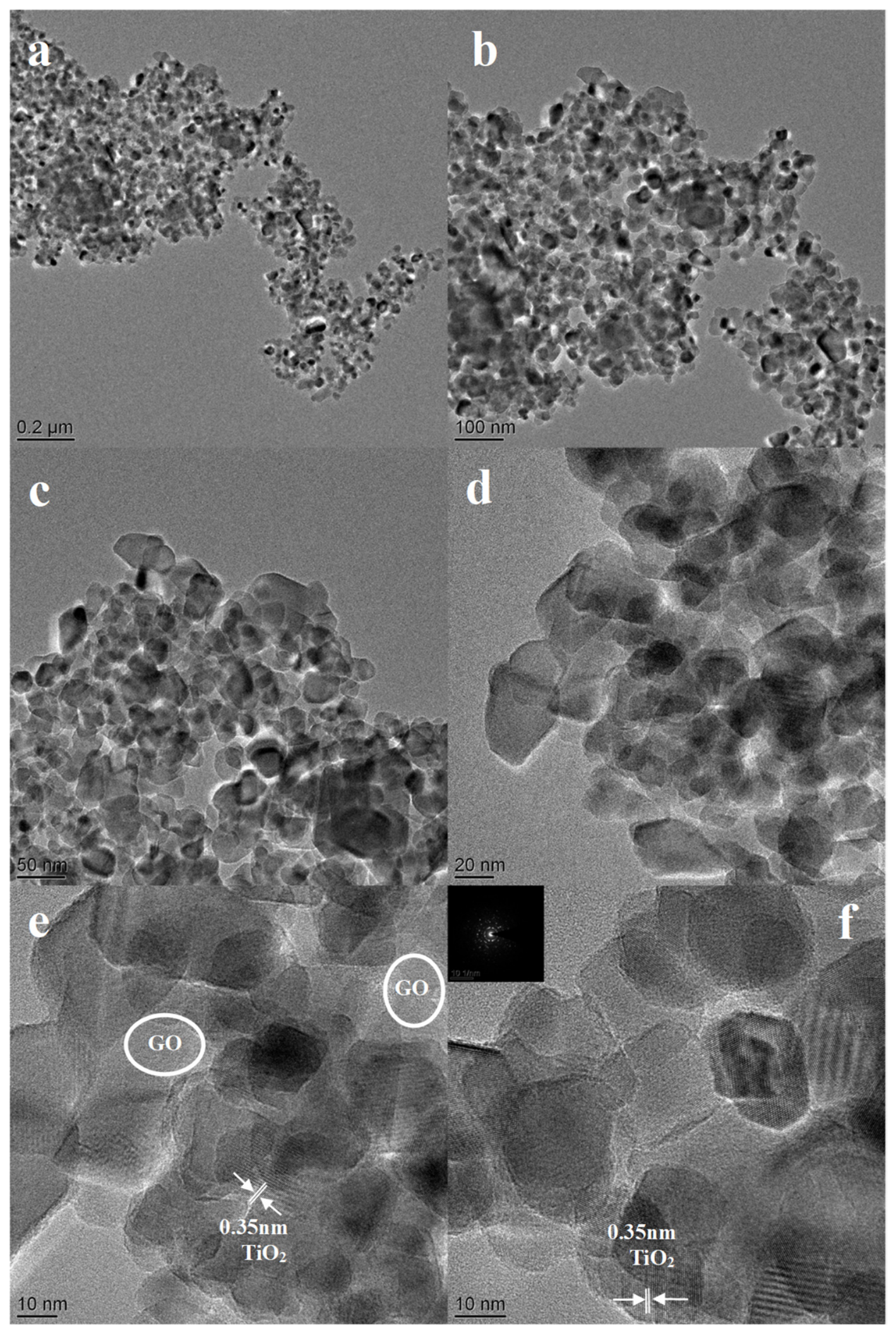
Figure 5 presents the transmission electron microscopy (TEM) and high-resolution TEM (HRTEM) characterization results of the TiO2/GO mesoporous composite. TEM images (a–d) at different magnifications reveal that the material is composed of densely aggregated TiO2 nanoparticles with a size of approximately 10–50 nm, forming continuous mesoporous channels between particles, which is consistent with previous BET and SEM results and provides abundant active sites and efficient mass transfer pathways for photocatalytic reactions. HRTEM images (e–f) display clear lattice fringes with a d-spacing matching the (101) crystal plane of anatase TiO2, confirming the anatase crystalline phase of TiO2. Meanwhile, thin GO sheets are observed wrapping around the TiO2 nanoparticles, forming a uniform composite structure. The selected area electron diffraction (SAED) pattern in the lower right corner shows polycrystalline rings, further verifying the polycrystalline nanostructure of TiO2 [49]. Overall, the TEM and HRTEM results directly reveal the mesoporous nanoporous morphology, anatase crystal phase, and homogeneous composite state of TiO2 and GO, providing direct microstructural evidence for understanding the enhanced photocatalytic performance of the composite.
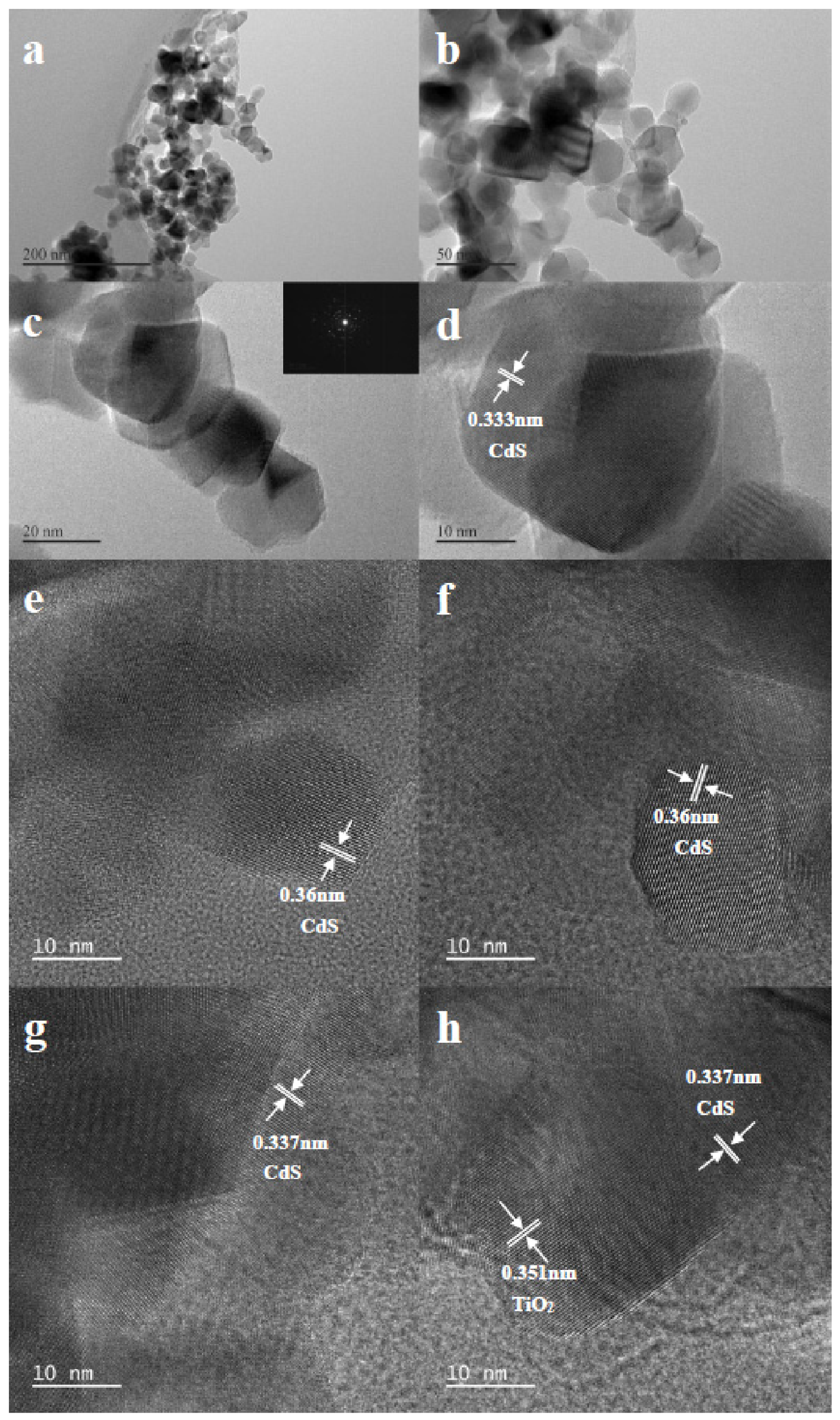
Figure 6 presents the transmission electron microscopy (TEM) and high-resolution TEM (HRTEM) characterization results of the TiO2/GO/CdS mesoporous composite. TEM images (a–d) at different magnifications reveal that the material is composed of densely aggregated nanoparticles with a size of approximately 10–50 nm, retaining abundant mesoporous channels between particles, which aligns with previous BET and SEM results and provides sufficient active sites and mass transfer pathways for photocatalytic reactions. HRTEM images (e–h) display clear lattice fringes corresponding to the (101) crystal plane of anatase TiO2 and characteristic planes of CdS, respectively, confirming the well-preserved crystallinity of both TiO2 and CdS. In the HRTEM analysis of the TiO2/GO binary composite (Figure 5), lattice fringes with a measured d-spacing of 0.35 nm are observed, which match well with the (101) interplanar distance of anatase TiO2 (0.352 nm, JCPDS No. 21-1272). No other crystalline phases are evident, consistent with the absence of intentional CdS doping. For the TiO2/GO/CdS ternary composite (Figure 6), multiple sets of lattice fringes can be unambiguously indexed. A d-spacing of 0.351 nm again corresponds to anatase TiO2 (101). The d-spacings of 0.360 nm and 0.337 nm (and the closely related 0.333 nm) are consistent, respectively, with the (100) and (002) planes of hexagonal CdS (JCPDS No. 41-1049); the value of 0.337 nm may also be assigned to the (111) plane of cubic CdS (JCPDS No. 10-0454). The coexistence of clearly resolved TiO2 and CdS lattice fringes within the same composite particle directly demonstrates that CdS is successfully incorporated while preserving its own crystallinity, thereby confirming the formation of the intended ternary heterostructure. Meanwhile, thin GO sheets are observed wrapping around the particles, forming a uniform ternary composite structure. The selected area electron diffraction (SAED) pattern shows polycrystalline rings, further verifying the polycrystalline nanostructure of the material [50]. Overall, the TEM and HRTEM results directly reveal the mesoporous nanoporous morphology, crystalline phase composition, and homogeneous composite state of each component in the TiO2/GO/CdS composite, providing direct microstructural evidence for understanding the enhanced photocatalytic and antibacterial performance.
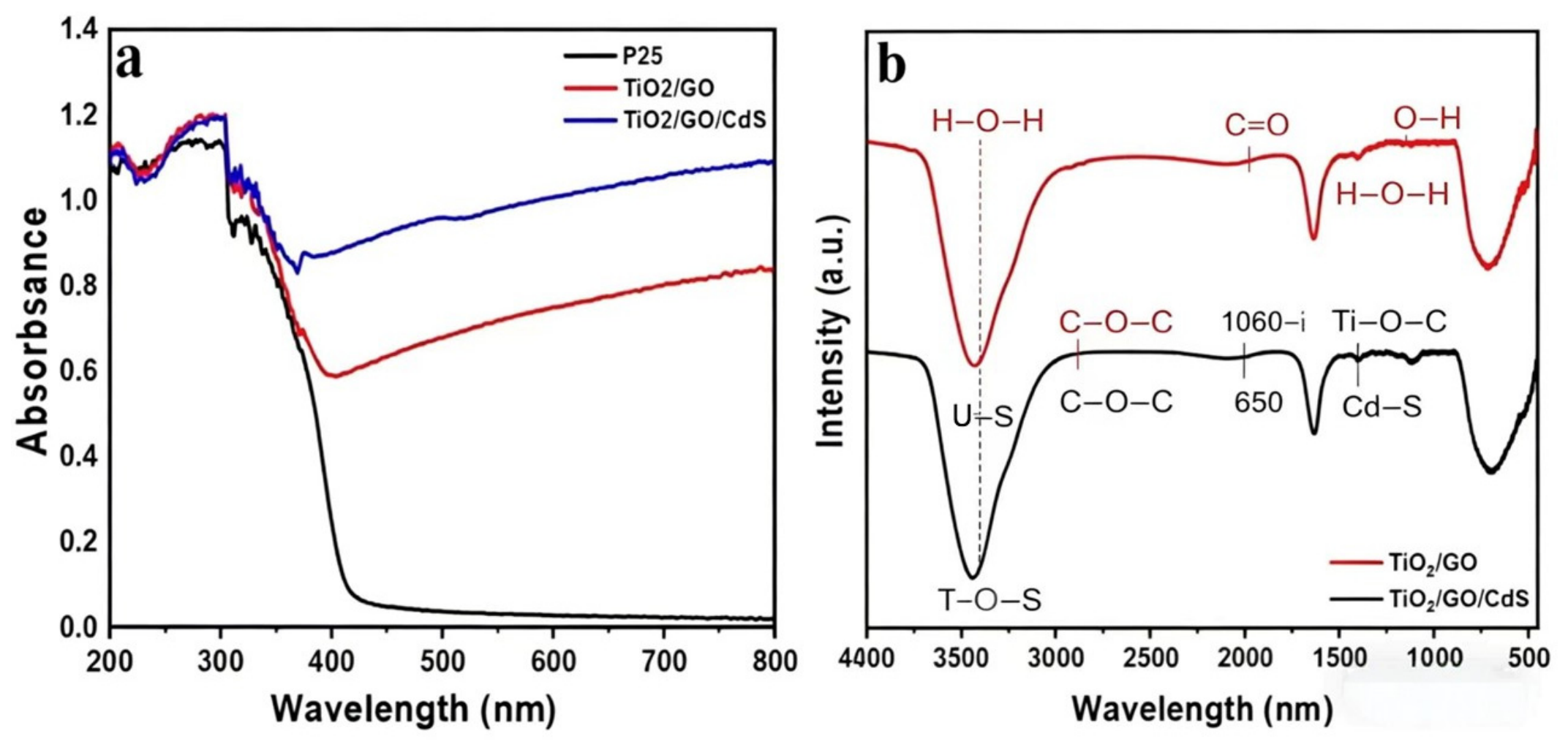
Figure 7 presents the UV-Vis diffuse reflectance spectroscopy (UV-Vis DRS) and Fourier transform infrared spectroscopy (FT-IR) characterization results of the two composite materials. As shown in Figure 7a, commercial P25 exhibits a sharp drop in absorbance beyond 400 nm, only responding to ultraviolet light; TiO2/GO shows a slight increase in absorbance in the visible region, while TiO2/GO/CdS displays significantly enhanced absorbance in the 400–800 nm range with an obvious red-shift in the absorption edge, indicating that the synergistic effect of CdS and GO effectively broadens the visible-light response range and improves the visible-light utilization efficiency of the material [51]. In Figure 7b, both samples show characteristic peaks of hydroxyl groups and adsorbed water at around 3400 cm−1 and 1630 cm−1. Although the overall FTIR spectra of TiO2/GO and TiO2/GO/CdS appear broadly similar owing to the dominant absorption bands of GO and the TiO2 matrix, a detailed high-resolution comparison reveals subtle yet reproducible differences that evidence the chemical interaction among the components. In the region of oxygen-containing functional groups, the C=O stretching vibration of carboxyl groups shifts from ~1725 cm−1 in TiO2/GO to ~1718 cm−1 in TiO2/GO/CdS, and the epoxy C–O band at ~1225 cm−1 broadens and shifts to a lower wavenumber (~1220 cm−1). These changes are consistent with the coordination of Cd2+ ions to oxygen-containing moieties of GO. Furthermore, a weak shoulder emerges at ~1060 cm−1 in the ternary composite, which can be assigned to Ti–O–C covalent bonds; its enhanced intensity and slight shift relative to that in TiO2/GO indicate an altered interfacial bonding environment after CdS incorporation. The subtraction spectrum (TiO2/GO/CdS minus TiO2/GO) is not a flat baseline but clearly reveals positive residual features at ~650 cm−1 and ~480 cm−1, characteristic of Cd–S stretching modes that are entirely absent in the binary composite. Collectively, these spectroscopic signatures demonstrate that CdS is chemically anchored to the TiO2/GO framework, confirming intimate interfacial interactions among the three components. Overall, the UV-Vis and FT-IR results demonstrate that TiO2/GO/CdS possesses superior visible-light response, providing optical and chemical structural evidence for its enhanced photocatalytic and antibacterial performance.
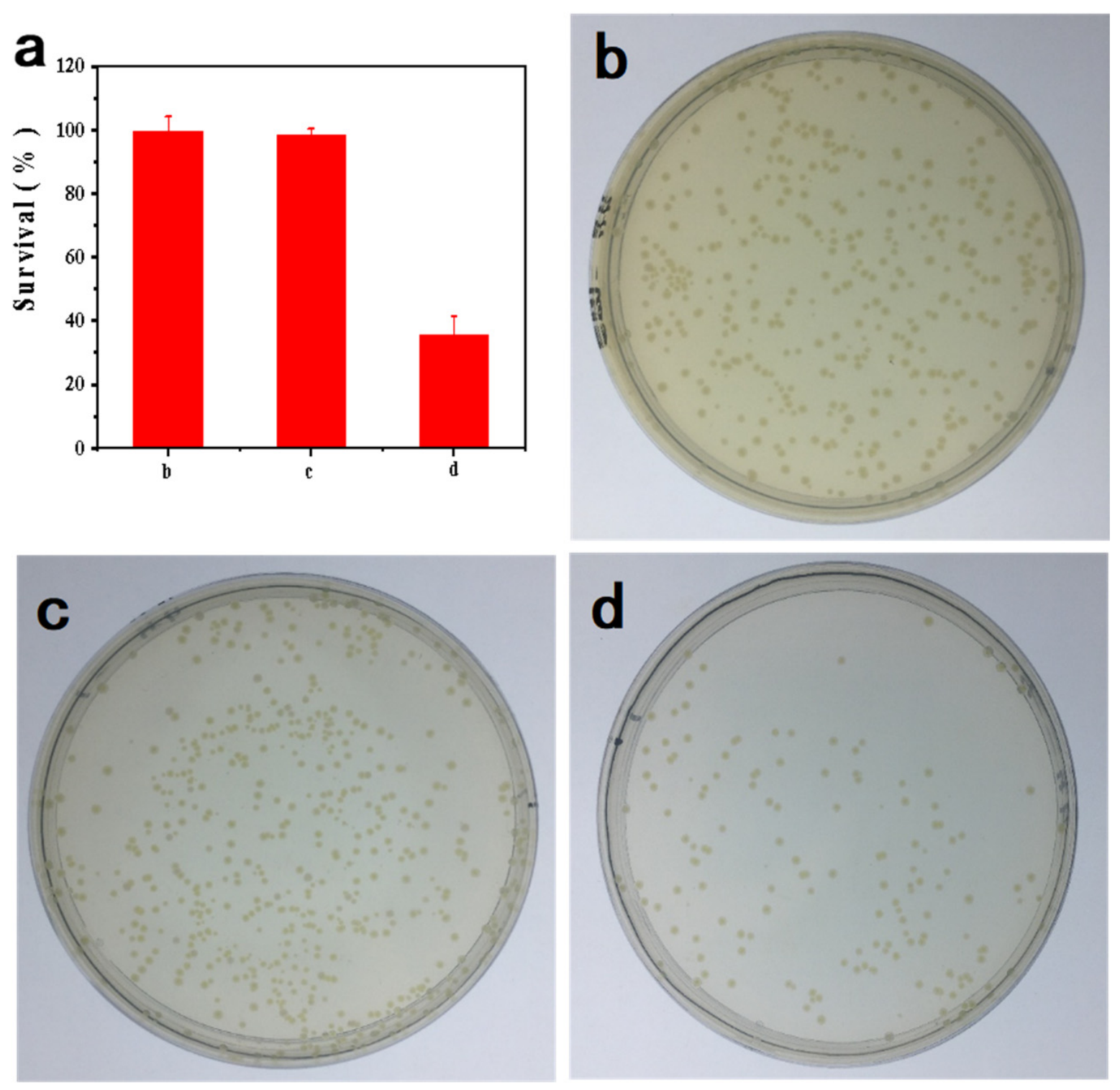
Escherichia coli (ATCC 25922) was selected as a representative Gram-negative model bacterium for this initial evaluation because of its well-characterized response to photocatalytic reactive oxygen species and its widespread use in comparable studies. The evaluation against Gram-positive bacteria will be addressed in future work to fully assess the antibacterial spectrum. Figure 8 presents the visible-light photocatalytic antibacterial performance of the composites against Escherichia coli, which is fully consistent with the previous structural and optical characterizations. As shown in the survival rate histogram (a), the control group (b) and TiO2/GO group (c) exhibit nearly 100% bacterial survival with only negligible antibacterial effect, while the TiO2/GO/CdS group (d) shows a sharp decrease in survival rate to approximately 40%, indicating significantly enhanced antibacterial activity. The corresponding colony plate images (b–d) visually confirm this result: dense colonies are observed in the control and TiO2/GO groups, whereas the number of colonies is drastically reduced in the TiO2/GO/CdS group, demonstrating its excellent visible-light photocatalytic bactericidal ability. This enhanced performance can be reasonably explained by the earlier characterizations: BET and TEM results reveal that TiO2/GO/CdS possesses a developed mesoporous structure and high specific surface area, providing sufficient active sites for bacterial adsorption and photocatalytic reactions; UV-Vis DRS spectra confirm that the synergistic effect of CdS and GO effectively broadens the visible-light response range and improves photon utilization efficiency; XPS and HRTEM verify the strong interfacial interaction between components, which efficiently suppresses the recombination of photogenerated carriers and promotes the generation of reactive oxygen species (ROS), leading to efficient inactivation of Escherichia coli. Overall, the structural advantages, optical properties, and antibacterial performance of TiO2/GO/CdS are highly consistent, fully demonstrating that the CdS composite is an effective strategy to enhance the performance of TiO2-based photocatalytic antibacterial materials, providing experimental support for its practical application in the antibacterial field. The survival rate of ~40% for E. coli under visible light observed here is lower (better antibacterial effect) than the ~60% survival reported for hierarchical TiO2/CdS spindle-like composites under similar light conditions [25], likely due to the higher specific surface area and more efficient charge separation in the present mesoporous ternary system.

4. Conclusions

In this study, a TiO2/GO/CdS mesoporous nanocomposite was successfully prepared via an ultrasound-assisted sol–gel method, and its structure, morphology, and optical properties were systematically characterized, while its visible-light photocatalytic antibacterial performance was evaluated using Escherichia coli as a model strain. The results show that the as-prepared composite retains a well-developed mesoporous structure with a specific surface area of 197.0962 m2/g and a pore size distribution concentrated in 2–14 nm, providing sufficient active sites and mass transfer channels for photocatalytic reactions. XPS, TEM, and XRD results confirm that CdS is successfully incorporated into the TiO2/GO matrix, with uniform distribution of each component and good interfacial bonding without destroying the anatase crystal phase of TiO2. UV-Vis DRS reveals that the synergistic effect of CdS and GO significantly broadens the visible-light response range of the material and improves photon utilization efficiency. Antibacterial tests demonstrate that TiO2/GO/CdS can reduce the survival rate of Escherichia coli to approximately 40% under visible light, exhibiting far superior antibacterial activity compared to pure TiO2 and TiO2/GO composite. The relatively moderate antibacterial efficiency (approximately 60% inactivation) of the TiO2/GO/CdS composite can be attributed to several inherent and experimental factors. First, despite the formation of a heterostructure, residual recombination of photogenerated electron–hole pairs still occurs within the photocatalyst, limiting the yield of reactive oxygen species. Second, the well-developed mesoporous framework, while providing high surface area, may also scatter a fraction of the incident visible light, thereby reducing the effective photon absorption. Third, CdS is known to suffer from photocorrosion, which gradually degrades the active heterojunction interface and releases Cd2+ ions, compromising the stability and sustained generation of reactive radicals during the antibacterial test. Fourth, the bactericidal action relies on short-lived reactive oxygen species, such as hydroxyl and superoxide radicals, which can only diffuse over very limited distances; therefore, only bacteria in immediate contact with the catalyst surface are effectively inactivated, while those suspended in the solution may survive. Finally, the experimental conditions—including the relatively low photocatalyst dosage (5 mg in 30 mL), the intensity of the visible light source, and the 4 h exposure time—may not be sufficient to achieve much higher inactivation levels, indicating that the reported value likely does not represent the intrinsic upper limit of the composite. This performance enhancement stems from the synergistic effect of the mesoporous structure, enhanced visible-light response, and suppressed carrier recombination, providing a new strategy for the modification of TiO2-based photocatalytic antibacterial materials and showing promising application prospects in environmental purification and antibacterial fields.

Author Contributions

Z.Z., Y.W. and Y.C.: Methodology, Investigation, Writing—original draft preparation, Writing—review and editing. D.Y. and J.Z.: Resources, Writing—review and editing, Validation. All authors have read and agreed to the published version of the manuscript.

Funding

This work was supported by the Natural Science Foundation of Henan Outstanding Youth Project (Grant No. 242300421015), the National Natural Science Foundation of China Regional Innovation and Development Joint Fund Key Project (Grant No. U23A20672), the International Science and Technology Cooperation Program of Henan Province (Grant No. 252102520083), the Project of the School-level Department of Bijie Vocational and Technical College (2025-15), the Bijie City Joint Fund (2025-98), the BZYKYTD-2024-4 Research Team for Intelligent Monitoring of Building Structures, and the Qiankehe Central Irrigation Area [2026] 026.

Data Availability Statement

Data is contained within the article.

Conflicts of Interest

Author Dong Yan was employed by the company Xinyang Lingshi Technology Co., Ltd. The remaining authors declare that we have no known competing financial interests or personal relationships that could have appeared to influence the work reported in this paper.

References

  1. Sun, W.; Wu, F.-G. Two-Dimensional Materials for Antimicrobial Applications: Graphene Materials and Beyond. Chem.-Asian J. 2018, 13, 3378–3410. [Google Scholar] [CrossRef]
  2. Podporska-Carroll, J.; Panaitescu, E.; Quilty, B.; Wang, L.; Menon, L.; Pillai, S.C. Antimicrobial properties of highly efficient photocatalytic TiO2 nanotubes. Appl. Catal. B 2015, 176–177, 70–75. [Google Scholar] [CrossRef]
  3. Nasker, S.S.; Ajayan, P.M.; Nayak, S. Emerging Trends and Future Direction of Graphene Family of Materials as Potential Antimicrobials: A Critical Review. ACS Mater. Lett. 2023, 5, 673–693. [Google Scholar] [CrossRef]
  4. Nguyen, V.-N.; Zhao, Z.; Tang, B.Z.; Yoon, J. Organic photosensitizers for antimicrobial phototherapy. Chem. Soc. Rev. 2022, 51, 3324–3340. [Google Scholar] [CrossRef]
  5. Frei, A.; Verderosa, A.D.; Elliott, A.G.; Zuegg, J.; Blaskovich, M.A.T. Blaskovich, Metals to combat antimicrobial resistance. Nat. Rev. Chem. 2023, 7, 202–224. [Google Scholar] [CrossRef] [PubMed]
  6. Mills, J.J.; Robinson, K.R.; Zehnder, T.E.; Pierce, J.G. Synthesis and Biological Evaluation of the Antimicrobial Natural Product Lipoxazolidinone A. Angew. Chem. Int. Ed. 2018, 57, 8682–8686. [Google Scholar] [CrossRef]
  7. Sambhy, V.; MacBride, M.M.; Peterson, B.R.; Sen, A. Bromide Nanoparticle/Polymer Composites:  Dual Action Tunable Antimicrobial Materials. J. Am. Chem. Soc. 2006, 128, 9798–9808. [Google Scholar] [CrossRef]
  8. de la Fuente-Nunez, C.; Cesaro, A.; Hancock, R.E. Hancock, Antibiotic failure: Beyond antimicrobial resistance. Drug Resist. Updat. 2023, 71, 101012. [Google Scholar] [CrossRef]
  9. Sharma, V.K.; Siskova, K.M.; Zboril, R.; Gardea-Torresdey, J.L. Organic-coated silver nanoparticles in biological and environmental conditions: Fate, stability and toxicity. Adv. Colloid Interface Sci. 2014, 204, 15–34. [Google Scholar] [CrossRef] [PubMed]
  10. Elella, M.H.A.; Aamer, N.; Mohamed, Y.M.A.; Nazer, H.A.E.; Mohamed, R.R. High-Potential Removal of Copper (II) Ions from Aqueous Solution Using Antimicrobial Crosslinked Grafted Gelatin Hydrogels. J. Polym. Environ. 2023, 31, 1071–1089. [Google Scholar] [CrossRef]
  11. Qu, X.; Yang, H.; Yu, Z.; Jia, B.; Qiao, H.; Zheng, Y.; Dai, K. Serum zinc levels and multiple health outcomes: Implications for zinc-based biomaterials. Bioact. Mater. 2020, 5, 410–422. [Google Scholar] [CrossRef] [PubMed]
  12. She, P.; Li, S.; Li, X.; Rao, H.; Men, X.; Qin, J.-S. Photocatalytic antibacterial agents based on inorganic semiconductor nanomaterials: A review. Nanoscale 2024, 16, 4961–4973. [Google Scholar] [CrossRef] [PubMed]
  13. Su, K.; Tan, L.; Liu, X.; Cui, Z.; Zheng, Y.; Li, B.; Han, Y.; Li, Z.; Zhu, S.; Liang, Y.; et al. Rapid Photo-Sonotherapy for Clinical Treatment of Bacterial Infected Bone Implants by Creating Oxygen Deficiency Using Sulfur Doping. ACS Nano 2020, 14, 2077–2089. [Google Scholar] [CrossRef]
  14. Zhang, X.Y.; Zhang, G.N.; Chai, M.Z.; Yao, X.H.; Chen, W.Y.; Chu, P.K. Synergistic antibacterial activity of physical-chemical multi-mechanism by TiO2 nanorod arrays for safe biofilm eradication on implant. Bioact. Mater. 2021, 6, 12–25. [Google Scholar] [CrossRef]
  15. Dyshlyuk, L.; Babich, O.; Ivanova, S.; Vasilchenco, N.; Atuchin, V.; Korolkov, I.; Russakov, D.; Prosekov, A. Antimicrobial potential of ZnO, TiO2 and SiO2 nanoparticles in protecting building materials from biodegradation. Int. Biodeterior. Biodegrad. 2020, 146, 104821. [Google Scholar] [CrossRef]
  16. Xu, C.; Anusuyadevi, P.R.; Aymonier, C.; Luque, R.; Marre, S. Nanostructured materials for photocatalysis. Chem. Soc. Rev. 2019, 48, 3868–3902. [Google Scholar] [CrossRef] [PubMed]
  17. Yadav, H.M.; Kim, J.-S.; Pawar, S.H. Developments in photocatalytic antibacterial activity of nano TiO2: A review. Korean J. Chem. Eng. 2016, 33, 1989–1998. [Google Scholar] [CrossRef]
  18. Radetić, M. Functionalization of textile materials with TiO2 nanoparticles. J. Photochem. Photobiol. C Photochem. Rev. 2013, 16, 62–76. [Google Scholar] [CrossRef]
  19. Mao, C.; Xiang, Y.; Liu, X.; Cui, Z.; Yang, X.; Li, Z.; Zhu, S.; Zheng, Y.; Yeung, K.W.K.; Wu, S. Repeatable Photodynamic Therapy with Triggered Signaling Pathways of Fibroblast Cell Proliferation and Differentiation to Promote Bacteria-Accompanied Wound Healing. ACS Nano 2018, 12, 1747–1759. [Google Scholar] [CrossRef]
  20. Jiang, X.; Yang, L.; Liu, P.; Li, X.; Shen, J. The photocatalytic and antibacterial activities of neodymium and iodine doped TiO2 nanoparticles. Colloids Surf. B Biointerfaces 2010, 79, 69–74. [Google Scholar] [CrossRef]
  21. Hassan, M.S.; Amna, T.; Yang, O.B.; Kim, H.-C.; Khil, M.-S. TiO2 nanofibers doped with rare earth elements and their photocatalytic activity. Ceram. Int. 2012, 38, 5925–5930. [Google Scholar] [CrossRef]
  22. Wang, H.; Zhang, M.; He, X.; Du, T.; Wang, Y.; Li, Y.; Hao, T. Facile prepared ball-like TiO2 at GO composites for oxytetracycline removal under solar and visible lights. Water Res. 2019, 160, 197–205. [Google Scholar] [CrossRef]
  23. Yu, S.; Kim, Y.H.; Lee, S.Y.; Song, H.D.; Yi, J. Hot-Electron-Transfer Enhancement for the Efficient Energy Conversion of Visible Light. Angew. Chem. Int. Ed. 2014, 53, 11203–11207. [Google Scholar] [CrossRef] [PubMed]
  24. Yu, S.J.; Hu, J.C.; Li, J.L. Self-Assembly of TiO2/CdS Mesoporous Microspheres with Enhanced Photocatalytic Activity via Hydrothermal Method. Int. J. Photoenergy 2014, 2014, 1–10. [Google Scholar] [CrossRef]
  25. Gao, P.; Liu, J.; Zhang, T.; Sun, D.D.; Ng, W. Hierarchical TiO2/CdS “spindle-like” composite with high photodegradation and antibacterial capability under visible light irradiation. J. Hazard. Mater. 2012, 229–230, 209–216. [Google Scholar] [CrossRef]
  26. Chen, Y.-H.; Chen, J.-W.; Cao, F.; Li, L.; Luo, Z.-M.; Leu, I.-C.; Pu, Y.-C. New Insights into the Electron-Collection Efficiency Improvement of CdS-Sensitized TiO2 Nanorod Photoelectrodes by Interfacial Seed-Layer Mediation. ACS Appl. Mater. Interfaces 2019, 11, 8126–8137. [Google Scholar] [CrossRef]
  27. Bendavid, L.I.; Inoue, S.; Mai, B.; Yu, S. Interfacial properties of two-dimensional CdS/GO from DFT. Surf. Interfaces 2022, 30, 101960. [Google Scholar] [CrossRef]
  28. Verma, N.; Chundawat, T.S.; Surolia, P.K.; Vaya, D. Photocatalytic Reduction of Cr VI by TiO2/GO Nanocomposite. ChemistrySelect 2022, 7, e202201275. [Google Scholar] [CrossRef]
  29. Yao, W.; Li, Y.; Yan, D.; Ma, M.; He, Z.; Chai, S.; Su, X.; Chen, F.; Fu, Q. Fabrication and photocatalysis of TiO2-graphene sandwich nanosheets with smooth surface and controlled thickness. Chem. Eng. J. 2013, 229, 569–576. [Google Scholar] [CrossRef]
  30. Guo, X.; Chen, C.; Song, W.; Wang, X.; Di, W.; Qin, W. CdS embedded TiO2 hybrid nanospheres for visible light photocatalysis. J. Mol. Catal. A-Chem. 2014, 387, 1–6. [Google Scholar] [CrossRef]
  31. Zhao, D.; Yang, C.-F. Recent advances in the TiO2/CdS nanocomposite used for photocatalytic hydrogen production and quantum-dot-sensitized solar cells. Renew. Sustain. Energy Rev. 2016, 54, 1048–1059. [Google Scholar] [CrossRef]
  32. Chen, H.; Li, W.; Liu, H.; Zhu, L. Performance enhancement of CdS-sensitized TiO2 mesoporous electrode with two different sizes of CdS nanoparticles. Microporous Mesoporous Mater. 2011, 138, 235–238. [Google Scholar] [CrossRef]
  33. Lian, Z.; Xu, P.; Wang, W.; Zhang, D.; Xiao, S.; Li, X.; Li, G. C-60-Decorated CdS/TiO2 Mesoporous Architectures with Enhanced Photostability and Photocatalytic Activity for H-2 Evolution. ACS Appl. Mater. Interfaces 2015, 7, 4533–4540. [Google Scholar] [CrossRef]
  34. Giang, N.T.H.; Tan, N.N.; Huong, L.M.; Hai, N.D.; Thinh, N.T.; Phuc, N.T.; Dat, N.M.; Phong, M.T.; Hieu, N.H. Photocatalytic degradation of crystal violet on titanium dioxide/graphene aerogel doped sulfur. J. Mol. Struct. 2023, 1271, 134031. [Google Scholar] [CrossRef]
  35. Abdelmoneim, H.E.M.; Wassel, M.A.; Elfeky, A.S.; Bendary, S.H.; Awad, M.A.; Salem, S.S.; Mahmoud, S.A. Multiple Applications of CdS/TiO2 Nanocomposites Synthesized via Microwave-Assisted Sol-Gel. J. Clust. Sci. 2022, 33, 1119–1128. [Google Scholar] [CrossRef]
  36. Gao, P.; Liu, J.; Sun, D.D.; Ng, W. Graphene oxide-CdS composite with high photocatalytic degradation and disinfection activities under visible light irradiation. J. Hazard. Mater. 2013, 250–251, 412–420. [Google Scholar] [CrossRef] [PubMed]
  37. Zubair, M.; Svenum, I.-H.; Rønning, M.; Yang, J. Core-Shell Nanostructures of Graphene-Wrapped CdS Nanoparticles and TiO2 (CdS@G@TiO2): The Role of Graphene in Enhanced Photocatalytic H2 Generation. Catalysts 2020, 10, 358. [Google Scholar] [CrossRef]
  38. Li, L.; Dai, H.; Feng, L.; Luo, D.; Wang, S.; Sun, X. Enhance photoelectrochemical hydrogen-generation activity and stability of TiO2 nanorod arrays sensitized by PbS and CdS quantum dots under UV-visible light. Nanoscale Res. Lett. 2015, 10, 418. [Google Scholar] [CrossRef]
  39. Wang, X.; Xia, R.; Muhire, E.; Jiang, S.; Huo, X.; Gao, M. Highly enhanced photocatalytic performance of TiO2 nanosheets through constructing TiO2/TiO2 quantum dots homojunction. Appl. Surf. Sci. 2018, 459, 9–15. [Google Scholar] [CrossRef]
  40. Wang, S.; Chen, Z.-G.; Cole, I.; Li, Q. Structural evolution of graphene quantum dots during thermal decomposition of citric acid and the corresponding photoluminescence. Carbon 2015, 82, 304–313. [Google Scholar] [CrossRef]
  41. Li, Q.; Guo, B.; Yu, J.; Ran, J.; Zhang, B.; Yan, H.; Gong, J.R. Gong, Highly Efficient Visible-Light-Driven Photocatalytic Hydrogen Production of CdS-Cluster-Decorated Graphene Nanosheets. J. Am. Chem. Soc. 2011, 133, 10878–10884. [Google Scholar] [CrossRef] [PubMed]
  42. Yadav, S.K.; Jeevanandam, P. Thermal decomposition approach for the synthesis of CdS–TiO2 nanocomposites and their catalytic activity towards degradation of rhodamine B and reduction of Cr(VI). Ceram. Int. 2015, 41, 2160–2179. [Google Scholar] [CrossRef]
  43. Shieh, D.-L.; Ho, C.-H.; Lin, J.-L. Study of preparation of mesoporous TiO2-B nanofibers from mesoporous anatase TiO2 and interaction between CH3I and TiO2-B. Microporous Mesoporous Mater. 2008, 109, 362–369. [Google Scholar] [CrossRef]
  44. Liu, C.; Li, X.; Xu, C.; Wu, Y.; Hu, X.; Hou, X. Boron-doped rutile TiO2/anatase TiO2/ZrTiO4 ternary heterojunction photocatalyst with optimized phase interface and band structure. Ceram. Int. 2020, 46, 20943–20953. [Google Scholar] [CrossRef]
  45. Li, H.; Wu, J.; Gao, X.; Li, T.; Zhang, M.; Niu, X.; Zhang, D.; Wang, Y.; Fan, H.; Wang, K. Preparation and Performance Study of Antibacterial Materials Based on GO−TiO2. ChemistrySelect 2021, 6, 7880–7886. [Google Scholar] [CrossRef]
  46. Tian, Z.; Yu, N.; Cheng, Y.; Wang, Z.; Chen, Z.; Zhang, L. Hydrothermal synthesis of graphene/TiO2 /CdS nanocomposites as efficient visible-light-driven photocatalysts. Mater. Lett. 2017, 194, 172–175. [Google Scholar] [CrossRef]
  47. Kim, H.-I.; Kim, S.; Kang, J.-K.; Choi, W. Graphene oxide embedded into TiO2 nanofiber: Effective hybrid photocatalyst for solar conversion. J. Catal. 2014, 309, 49–57. [Google Scholar] [CrossRef]
  48. Fang, R.; Liang, Y.; Ge, X.; Du, M.; Li, S.; Li, T.; Li, Z. Preparation and photocatalytic degradation activity of TiO2/rGO/polymer composites. Colloid Polym. Sci. 2015, 293, 1151–1157. [Google Scholar] [CrossRef]
  49. Kadam, V.; Jagtap, C.; Alshahrani, T.; Khan, F.; Khan, M.T.; Ahmad, N.; Al-Ahmed, A.; Pathan, H. Influence of CdS sensitization on the photovoltaic performance of CdS:TiO2 solar cell. J. Mater. Sci. Mater. Electron. 2021, 32, 28214–28222. [Google Scholar] [CrossRef]
  50. Kumar, V.; Madan, R.; Mohan, D. Sol–gel derived GO/TiO2 nanocomposites for room temperature acetone gas sensing application. J. Mater. Sci. Mater. Electron. 2022, 33, 7655–7667. [Google Scholar] [CrossRef]
  51. Ye, Z.; Tai, H.; Xie, T.; Su, Y.; Yuan, Z.; Liu, C.; Jiang, Y. A facile method to develop novel TiO2/rGO layered film sensor for detecting ammonia at room temperature. Mater. Lett. 2016, 165, 127–130. [Google Scholar] [CrossRef]
Scheme 1. Schematic illustration of the formation of mesoporous TiO2/GO/CdS nanocomposites.
Biochem 06 00012 sch001
Figure 1. (a) Nitrogen adsorption–desorption isotherms and pore width of TiO2/GO and TiO2/GO/CdS, (b) aperture distribution map, (c) XRD spectrum of TiO2/GO and TiO2/GO/CdS.
Biochem 06 00012 g001
Figure 2. X-ray photoelectron spectroscopy analysis of TiO2/GO/CdS and TiO2/GO mesoporous composites, XPS spectra (a), Ti 2p (b), S 2p (c), Cd 3d (d), O 1s (e), and C 1s (f).
Biochem 06 00012 g002
Figure 3. SEM and energy-dispersive spectroscopy (EDS) mapping of TiO2/GO: (a,b) SEM images of the TiO2/GO mesoporous composite.
Biochem 06 00012 g003
Figure 4. SEM and energy-dispersive spectroscopy (EDS) mapping of TiO2/GO/CdS: (a,b) SEM images of the TiO2/GO/CdS mesoporous composite.
Biochem 06 00012 g004aBiochem 06 00012 g004b
Figure 5. TEM images of the TiO2/GO mesoporous composite: (ad) TEM images of the TiO2/GO mesoporous composite; (e,f) HRTEM images of TiO2/GO mesoporous composite.
Biochem 06 00012 g005
Figure 6. TEM images of the TiO2/GO/CdS mesoporous composite: (ad) TEM images of the TiO2/GO/CdS mesoporous composite; (eh) HRTEM images of TiO2/GO/CdS mesoporous composite.
Biochem 06 00012 g006
Figure 7. (a) UV–vis, (b) FT-IR spectra of TiO2/GO/CdS and TiO2/GO mesoporous composites.
Biochem 06 00012 g007
Figure 8. Anti-bacterial properties of (a) survivals, (b) control, (c) TiO2/GO, (d) TiO2/GO CdS, using Escherichia coli.
Biochem 06 00012 g008
Disclaimer/Publisher’s Note: The statements, opinions and data contained in all publications are solely those of the individual author(s) and contributor(s) and not of MDPI and/or the editor(s). MDPI and/or the editor(s) disclaim responsibility for any injury to people or property resulting from any ideas, methods, instructions or products referred to in the content.