Review

RASopathy and Sudden Cardiac Death: A Literature Review

by
Cecilia Salzillo
1,2,* and
Andrea Marzullo
2,*
1
Department of Experimental Medicine, PhD Course in Public Health, University of Campania “Luigi Vanvitelli”, 80138 Naples, Italy
2
Department of Precision and Regenerative Medicine and Ionian Area, Pathology Section, University of Bari “Aldo Moro”, 70121 Bari, Italy
*
Authors to whom correspondence should be addressed.
BioChem 2025, 5(4), 38; https://doi.org/10.3390/biochem5040038
Submission received: 30 July 2025 / Revised: 22 September 2025 / Accepted: 5 November 2025 / Published: 7 November 2025
(This article belongs to the Special Issue Feature Papers in BioChem, 2nd Edition)

Abstract

RASopathies are a heterogeneous group of genetic syndromes caused by germline mutations in genes encoding proteins of the RAS/MAPK pathway, which are essential in the regulation of cell proliferation, differentiation and survival. Although characterized by common phenotypic manifestations such as craniofacial dysmorphism, congenital heart defects, and growth retardation, an aspect of great clinical relevance is the increased risk of sudden cardiac death, especially in relation to hypertrophic cardiomyopathy (HCM) and ventricular arrhythmias. Pathogenic variants in genes such as RAF1, RIT1, PTPN11, BRAF and SHOC2 have been associated with phenotypes with increased incidence of HCM, sometimes with early onset and a rapidly evolving course. The literature highlights the importance of early identification of patients at risk; however, specific surveillance protocols and follow-up strategies are defined in expert guidelines. This literature review aims to provide an updated overview of the main RASopathies with cardiac involvement, highlighting the genotype-phenotype correlations, the pathogenic mechanisms underlying sudden cardiac death, and current diagnosis, monitoring, and prevention strategies. The aim is to promote greater clinical awareness and encourage a multidisciplinary approach aimed at reducing mortality in these rare genetic conditions.

1. Introduction

RASopathies are rare genetic syndromes caused by germline mutations affecting genes involved in the Ras/mitogen-activated protein kinase (MAPK) pathway, resulting in increased signaling through this pathway [1]. In particular, the RAS/MAPK pathway is involved in the signal transduction cascade of cellular processes such as division, proliferation, differentiation and migration [2].
RASopathies include a group of rare but highly impactful conditions such as Noonan syndrome, Noonan syndrome with multiple lentigines, cardiofaciocutaneous syndrome, Costello syndrome, Mazzanti syndrome, neurofibromatosis type 1 and Legius syndrome [3,4]. These disorders present a wide range of clinical manifestations, including growth abnormalities, musculoskeletal alterations, cardiovascular diseases, craniofacial anomalies, cognitive impairment, renal malformations, coagulation disorders, up to a high susceptibility to tumors [3].
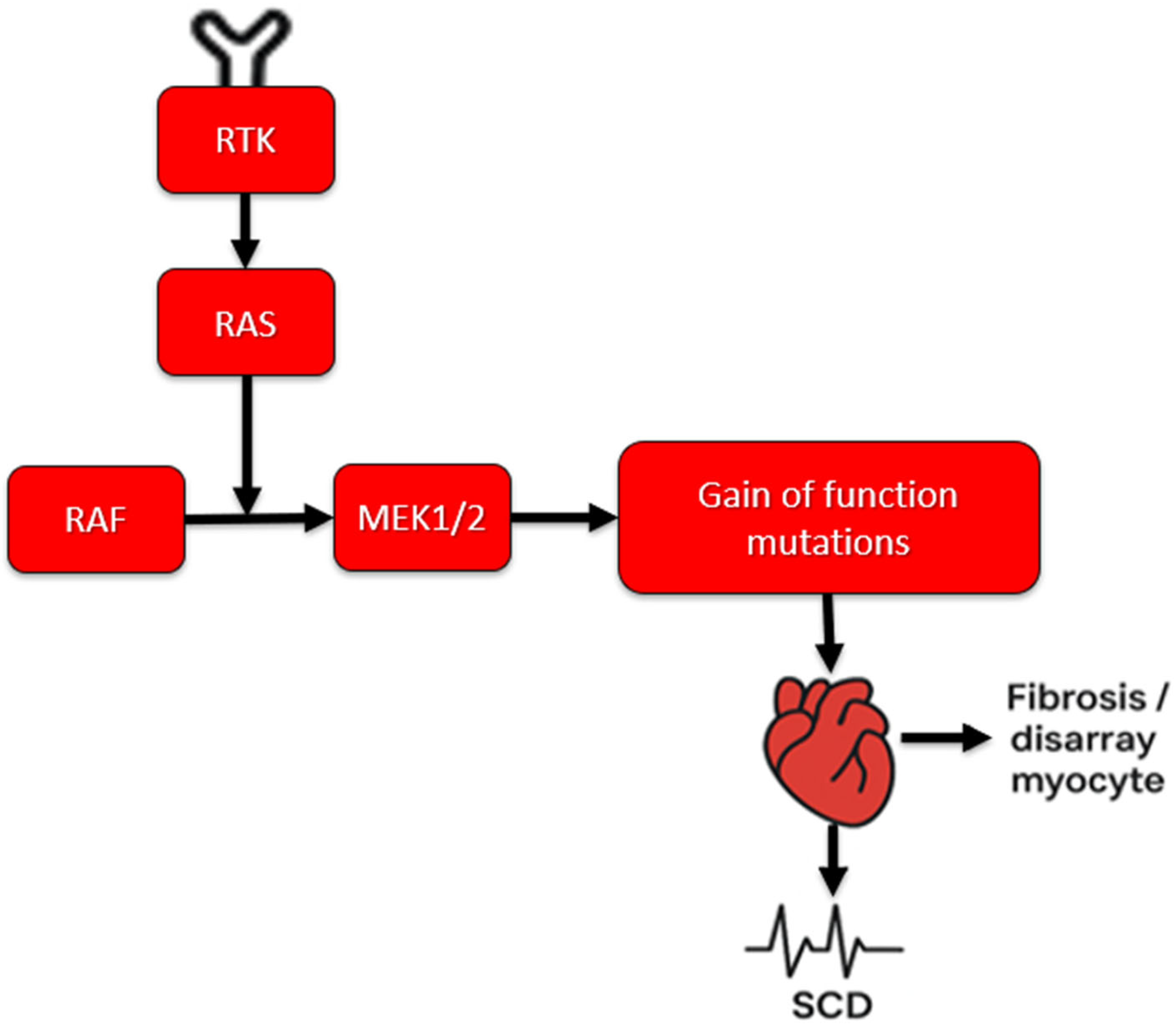
The estimated prevalence of RASopathies ranges from 1 in 1000 to 1 in 2500 live births, these figures are derived from limited cohorts and may underestimate the real prevalence in the general population [5] and are characterized by high genetic heterogeneity with the same condition being caused by several genes belonging to the RAS-MAPK cascade Figure 1. Currently, approximately 20 genes are known whose pathogenic variants are associated with this group of conditions, PTPN11, SOS1, SOS2, NRAS, KRAS, MRAS, RRAS2, RIT1, LZTR1, RAF1, MAP2K1, MAP2K2, SPRED2, BRAF, SPRED1, NF1, SCHOC2, HRAS, PPP1CB and CBL [4,6,7].
The genotype-phenotype correlation is not constant; however, some specific gene associations are described for certain unique clinical features, even though many of the RASopathies have overlapping clinical features such as short stature, facial dysmorphism, congenital heart disease, lymphatic dysfunction and intellectual disability [7].
Specifically, RASopathies-related heart defects include congenital heart disease (CHD), hypertrophic cardiomyopathy (HCM), dilated cardiomyopathy (DCM) [1,2,5] and consequently sudden cardiac death (SCD) [8,9,10,11,12,13].
Table 1 summarizes the main genes.
Lynch et al., in a multicenter cohort, reported a 10-year cumulative incidence of SCD of 4.7% in patients with RAS-HCM (vs. 4.2% in pediatric controls with non-RAS HCM), with higher non-arrhythmic/transplant mortality in RAS-HCM subjects. This implies an approximate annualized rate of around ~0.4–0.5%/year in observed follow-up, but the incidence varies with age, genotype, and severity [12].
Furthermore, Boleti et al. demonstrated that HCM in RASopathies often develops very early in life, with cases reported in infancy and even the neonatal period, underlining the importance of initiating surveillance as soon as the genetic diagnosis is established [13].
Although many patients present with the disease in early childhood, HCM can also develop later, during adolescence or early adulthood. Therefore, surveillance should continue into young adulthood, as the risk of SCD extends beyond childhood in genetically predisposed individuals [10].
In non-syndromic sarcomeric HCM, the annual incidence of SCD has varied across time periods and populations. Recent reviews estimate rates in the range of ~0.3–0.7% per year in unselected cohorts, while contemporary data from specialized centers suggest lower event rates, largely reflecting advances in risk stratification and the prophylactic use of ICDs [8,9].
Pediatric data from validation studies of the HCM Risk-Kids model and other cohort analyses indicate rates of SCD-equivalent arrhythmic events of approximately 0.7–0.8 per 100 patient-years. These findings underscore that children with HCM experience higher rates of SCD-equivalent events compared with adults [11].

2. Materials and Methods

This article is a literature review. The literature was searched in PubMed/MEDLINE and Scopus using a combination of the following keywords: “RASopathies”, “hypertrophic cardiomyopathy”, “sudden cardiac death”, “pediatric cardiology”, and “genetics.” Only articles in English and open access were considered.

3. Noonan Syndrome

Noonan syndrome (NS) is an inherited genetic disease of the RASopathies group characterized by heterogeneous phenotypic manifestations that can vary from mild to severe [14].
NS can be inherited with autosomal dominant transmission or arise spontaneously as a de novo mutation, it affects both sexes equally, the prevalence is not entirely known, but the incidence is estimated from 1 in 1000 to 1 in 2500 live births but is probably underestimated due to deaths in the fetal period [15,16,17].
NS is caused in 50% of cases by pathogenic variants of protein-tyrosine phosphatase non-receptor-like 11 (PTPN11), which encodes SHP-2, and by pathogenic variants in the genes SOS1 in 13%, RAF1 in 10% and RIT1 in 9% [15,18,19]. Other genes have been reported to cause SN in less than 5% of cases, including SHOC2, RASA2, LZTR1, SPRED2, SOS2, CBL, KRAS, NRAS, MRAS, PRAS, BRAF, PPP1CB, A2ML1, MAP2K1, and CDC42 [15,16,18,19].
Some genotype-phenotype correlations are well known, mutations in PTPN11 favor pulmonary stenosis, while those in RAF1 and RIT1 are strongly associated with HCM [19,20].
Clinically, patients with NS frequently present with short stature, facial dysmorphism such as hypertelorism, ptosis, often low-set and rotated ears, skeletal malformations such as pectus carinatum or excavatum, neurological difficulties and coagulation disorders [14].
Cardiac involvement is one of the most relevant manifestations, in fact 50–80% of cases present congenital heart disease, in particular pulmonary valve stenosis in 50–65%, HCM in 20–30% and atrial and ventricular septal defects. NS-related HCM presents early, already in the first months of life, with a higher prevalence of outflow tract obstruction and diastolic dysfunction compared to classic sarcomeric forms [21,22,23].
Histologically, NS shows a myocellular disarray like idiopathic HCM, suggesting a high predisposition to ventricular dysfunction and arrhythmias [24].
The diagnostic process requires complex clinical and instrumental attention, in particular, an echocardiogram and electrocardiogram (ECG) are recommended from birth with typical signs such as left axis deviation, wide QRS complexes, and abnormal Q waves, even in the absence of cardiac symptoms and must be repeated periodically approximately every 2–5 years. Genetic confirmation is essential, allowing for targeted therapy [18,25].
Cardiovascular treatment ranges from surgical or percutaneous intervention for pulmonary stenosis, to medical therapy with beta-blockers and, in severe cases of symptomatic HCM, to the experimental use of MEK inhibitors [20].
The association of NS with SCD is closely related to the presence of HCM, which has been identified as a significant risk factor for SCD, especially in pediatric patients. The prognosis for these patients can be particularly severe, and the mortality associated with hypertrophic cardiomyopathy in patients with RASopathies is higher than that in the general population [6,12].
Recent case series highlight cases of sudden death associated with main coronary artery atresia in subjects with the RIT1 variant, as well as familial cases discovered with molecular autopsies identifying pathogenic mutations in LZTR1 [22].
Patients with specific genetic variants such as PTPN11 and RAF1 can have greater left ventricular hypertrophy and higher left ventricular outflow tract gradients, factors related to the risk of adverse cardiac events. Predictive factors for SCD include nonsustained ventricular tachycardia, congestive heart failure, and a high LVOT gradient, which indicate a higher likelihood of fatal arrhythmias [26,27].
This evidence underscores the need for very close electrocardiographic monitoring, early consideration of implantable defibrillators in patients with risk factors such as severe obstruction or tachyarrhythmias, and postmortem genetic screening in sudden deaths to prevent family members from dying.
Take-Home Messages
  • HCM present in 20–30% of patients, with early onset and a more severe course than sarcomeric forms
  • RAF1 and RIT1 mutations are strongly associated with HCM and an increased risk of SCD
  • ECG and echocardiogram recommended from birth and repeated regularly
  • Risk factors for SCD: syncope, NSVT, LVOT ≥ 30 mmHg
  • According to international guidelines, ICD implantation should be evaluated in selected high-risk patients within specialized centers.

4. Noonan Syndrome with Multiple Lentigines

Noonan syndrome with multiple lentigines (NSML), formerly known as Leopard syndrome, is a rare autosomal dominant RASopathy, high penetrance, variable expressivity, with approximately 200–300 cases described in the literature and without precise incidence rates [28,29,30,31].
In 85% of cases, missense mutations in the PTPN11 gene, specifically exons 7, 12, 13, cause a dominant-negative effect with reduced SHP-2 activity, distinct from the gain-of-function variants typical of NS [30,32].
The most frequent pathogenic variants in 65% of cases are Tyr279Cys [33] and Thr468Met [34], while in 15% in RAF1, BRAF, MAP2K1 and, rarely, in other genes of the RAS/MAPK pathway [29,35].
Clinically, NSML manifests itself with a variable involvement of different organs and systems, making the diagnostic picture complex and multidisciplinary.
One of the most characteristic signs is the appearance of multiple lentigines, which begin to develop in preschool age and then progressively increase throughout childhood and adolescence. Freckles preferentially affect photoexposed areas, but can extend to the oral and genital mucosa, and even to the sclera. They are often associated with café-au-lait spots, and the pigmented lesions can be either epidermal or melanocytic, giving rise to a complex and easily recognizable dermatological phenotype [36].
The facial appearance is like that of NS, but facial dysmorphism tends to be less marked than in other RASopathies, especially in adulthood.
Cardiac involvement is present in approximately 85% of patients and represents the most serious clinical manifestation. Specifically, HCM occurs in 70–80% of patients, often with early onset, with an asymmetric and obstructive pattern, and carries a high risk of ventricular arrhythmias and consequently SCD [11,12]. Less frequently, pulmonary valve stenosis is observed in 25%. Furthermore, up to 75% of patients have electrical conduction abnormalities, including bundle branch blocks, bradyarrhythmias or tachyarrhythmias, detectable on ECG or Holter monitoring [30].
Other systemic manifestations include sensorineural hearing, cryptorchidism, hypospadias, and, more rarely, renal anomalies. Growth may be impaired in less than half of cases, with short stature and postnatal growth retardation, while cognitive involvement is generally mild, with intellectual disability [31].
The clinical diagnosis is based on the acronym LEOPARD, which represents the main characteristics of the syndrome: Lentigines, Electrocardiographic conduction abnormalities, Ocular hypertelorism, Pulmonary stenosis, Abnormalities of genitalia, Retardation of growth, and Deafness. The diagnostic criteria proposed by Voron et al. in 1976 [37] suggest that the presence of lentigines associated with at least two other manifestations or the presence of three clinical signs even in the absence of lentigines can be considered sufficient to raise a diagnostic suspicion, especially in the absence of family history. If there is an affected family member with a confirmed diagnosis, even a smaller number of signs may be considered diagnostically relevant [38,39].
Genetic confirmation is obtained by molecular analysis of the PTPN11 gene, but in subjects with a negative test but a suggestive phenotype, it is indicated to extend the study to other genes [40].
Regular follow-up with echocardiogram, ECG, 24-h Holter monitoring, and, if necessary, exercise testing is recommended for cardiac manifestations, every 6–12 months in high-risk or progressive cases [30].
Therapeutically, management of HCM may include pharmacological treatment with beta-blockers or calcium channel blockers, and in cases of significant obstruction, surgical myoreduction. In patients at high risk of SCD, preventative ICD implantation may be necessary. Pulmonic stenosis may require valvotomy or valve plasty, while sensorineural hearing loss should be treated with hearing aids and careful audiological follow-up [30].
Skin manifestations are treated with laser or depigmenting creams, and careful dermatoscopic surveillance is recommended, given the rare possibility of melanomatous transformation [30].
The risk of SCD is a serious complication of NSML, and is closely associated with HCM, which is frequently asymmetric, obstructive and of early onset, and in a relevant percentage of cases with ventricular arrhythmias, atrioventricular block and conduction alterations, which contribute significantly to the increased arrhythmic risk [11,12].
SCD has been highlighted in patients carrying specific high-risk genetic variants, in particular Tyr279Cys and Thr468Met in PTPN11, as well as in RAF1 mutations, suggesting a clear genotype-phenotype correlation that should guide risk stratification [41].
Risk stratification should be repeated periodically during developmental age, considering the natural progression of the disease and the possible late appearance of clinical risk criteria. Therefore, regular, multidisciplinary cardiac follow-up is essential to prevent avoidable fatal outcomes in patients with NSML.
Take-Home Messages
  • HCM present in 70–80% of patients, often asymmetric and obstructive
  • High prevalence of conduction abnormalities: AV block, brady/tachyarrhythmias
  • High-risk variants: PTPN11 (Tyr279Cys, Thr468Met), RAF1
  • High risk of SCD, even at a young age
  • Regular follow-up with ECG, Holter monitoring and echocardiogram is advised by expert consensus, with ICD evaluation considered only in high-risk cases.

5. Cardiofaciocutaneous Syndrome

Cardiofaciocutaneous syndrome (CFCS or CFC) is a rare autosomal dominant RASopathy, characterized by a violaceous phenotype and multisystem involvement, and is caused by pathogenic mutations in key genes of the RAS/MAPK pathway, such as BRAF, MAP2K1 (MEK1), MAP2K2 (MEK2) and, more rarely, KRAS [42,43,44].
Mutations are predominantly missense or small deletions triggering an increase in activity of the respective enzymes of the RAS/MAPK cascade. The most frequent variants include BRAF p.Gln257Arg, MAP2K1 p.Tyr130Cys and MAP2K2 p.Tyr134Cys, and in rare cases a mutation in YWHAZ has also been identified [42].
Approximately 300 cases have been described in the literature, and the real incidence is still unknown [45].
Clinically, CFCS is characterized by multiple congenital anomalies including cardiac defects, ectodermal abnormalities, distinctive craniofacial features, and varying degrees of intellectual disability [46,47].
CHD is present in 75% of cases, with predominantly pulmonary stenosis and HCM, and in 45% of cases with ASD + PVS type defects [48].
The diagnosis of CFCs is based on the integration of clinical and molecular data. However, due to the phenotypic overlap with other RASopathies such as NS and Costello, it is essential to confirm the suspected diagnosis through targeted genetic testing for pathogenic variants in the key genes associated with SCFC [49,50].
Furthermore, regular cardiac follow-up, including echocardiograms, ECGs, and, in case of documented abnormalities, dynamic Holter monitoring and exercise testing, is essential and is particularly important in patients with HCM, given its association with arrhythmias and risk of SCD.
Currently, there is no specific therapy for CFCS, and treatment is essentially symptomatic and multidisciplinary, with beta-blockers or calcium channel blockers to control HCM. When the obstruction is significant, surgical muscle reduction is indicated, and in the most severe and refractory cases, heart transplantation.
HCM associated with CFCS can evolve rapidly, especially in childhood, with disorganized myocytes and possible inherited coronary artery abnormalities. SCD due to ventricular fibrillation is documented, with signs of severe HCM post-mortem [13].
Although there are no specific prognostic models, HCM markers represent valid risk factors for SCD similarly to what is observed in related RASopathies.
Take-Home Messages
  • Heart defects in 75%: pulmonic stenosis and HCM
  • Most common mutations: BRAF, MAP2K1, MAP2K2
  • HCM can progress rapidly and be complicated by ventricular arrhythmias
  • Documented risk of SCD; Intensive monitoring is recommended.
  • Symptomatic treatment with beta-blockers, calcium channel blockers, and surgical options in severe cases.

6. Mazzanti Syndrome

Mazzanti syndrome (MS), also known as Noonan-like syndrome with loose anagen hair, is a rare autosomal dominant RASopathy caused by gain-of-function mutations in the SHOC2 gene, including the most frequent c.4A > G, p.Ser2Gly, which introduces an aberrant N-myrostylation site, altering the protein localization on the plasma membrane and amplifying the RAS/MAPK signal [51,52].
Other very rare pathogenic variants such as p.Thr411Ala have been described recently, potentially related to more heterogeneous clinical manifestations [53,54].
Clinically it is characterized by suggestive facial features such as hypertelorism, ptosis, low-set ears; reduced growth often with growth hormone deficiency and short stature and slow psychomotor development; sparse and easily extractable hair; skin abnormalities such as keratosis pilaris, hyperpigmentation, and eczema; ligamentous hyperlaxity and HCM [55,56].
The diagnostic-therapeutic process includes a complete clinical/dysmorphological evaluation; SHOC2 gene sequencing, particularly when the most common mutations PTPN11, SOS1, RAF1, KRAS, BRAF, MAP2K1/2 are negative; multidisciplinary management with growth monitoring, often with GH hormone therapy which has shown significant benefits in several clinical cases, even in the absence of GH deficiency; neuropsychological support; dermatological surveillance; rigorous cardiac evaluation with serial ECG and echocardiogram [54,57,58].
In the absence of specific reports of SCD in MS, the presence of HCM at the pediatric level is recognized as a significant risk factor for ventricular arrhythmias and SCD in patients with RASopathies [11]. Therefore, MS requires proactive cardiac follow-up with Holter monitoring and possibly electrophysiological studies in high-risk cases.
Take-Home Messages
  • Rare syndrome with a characteristic phenotype, such as loose hair, dysmorphic features, and short stature
  • Presence of HCM in childhood → potential risk of SCD
  • Typical mutation: SHOC2 p.Ser2Gly
  • Regular cardiac surveillance is essential, including ECG, echocardiogram, and Holter monitoring
  • Consider electrophysiological studies in high-risk cases

7. Costello Syndrome

Costello syndrome (CS) is a rare autosomal dominant RASopathy caused by heterozygous germline gain-of-function variants in the HRAS gene (11p15.5), caused in 80% by the p.Gly12Ser substitution (c.34G>A) and the second most frequent is the p.Gly12Ala variant [59,60].
CS is extremely rare, with a prevalence in the United Kingdom of 1:380,000 and most cases are de novo with correlation to advanced paternal age [61,62].
Clinically, newborns frequently present with macrosomia, polyhydramnios, hypoglycemia, and severe feeding difficulties; In the following months, growth retardation, psychomotor developmental delay, intellectual disability, coarse facies with relative macrocephaly, epicanthus, prominent ears, broad-tipped nose, full lips, soft skin and joint laxity, cutaneous papillomatosis, and curly or sparse hair are observed [62,63].
Additionally, approximately 63% of patients with CS have cardiac abnormalities, including valvular heart disease such as pulmonary stenosis and septal defects in 30%, HCM in 34–61%, and arrhythmias in 33–48% [64,65,66].
The diagnostic-therapeutic path includes clinical evaluation with attention to dysmorphic-phenotypic traits; molecular confirmation by HRAS sequencing; multidisciplinary management with nutritional and neuropsychological support, physical and occupational therapy; pediatric oncology surveillance with screening for neuroblastoma, rhabdomyosarcoma and bladder cancer up to 8–10 years of age; rigorous cardiac monitoring, with periodic echocardiogram and ECG/Holter, and medical and/or surgical interventions in cases of obstructive HCM or symptomatic arrhythmias [59].
Regarding the association with SCD, although specific data in CS are limited, the presence of HCM and arrhythmias represents a known risk factor [11,13].
Take-Home Messages
  • Mutated HRAS (e.g., p.Gly12Ser) in >80% of cases
  • HCM in 34–61%, arrhythmias in 33–48%
  • Increased arrhythmic risk → possible SCD, although specific data are rare
  • Regular cardiac monitoring: ECG/Holter/Echo
  • Multidisciplinary management, including pediatric oncology surveillance

8. Neurofibromatosis Type 1

Neurofibromatosis type 1 (NF1) is an autosomal dominant disease, but in 40% it can arise as a de novo mutation and is characterized by high phenotypic variability even within the same family [67,68].
The NF1 gene, located on chromosome 17q11.2, encodes the protein neurofibromin, a GAP protein that negatively regulates the RAS/MAPK pathway. Pathogenic variants are predominantly intragenic, such as frameshift, nonsense, and splice site, with less than 10% of cases due to whole-gene deletions (WGD), which are associated with a more severe phenotype, increased risk of malignancies and congenital heart disease [69].
NF1 has an incidence of 1 in 2600–3000 individuals [70] and with a prevalence ranging from 1 in 3000 to 6000 [67].
Clinically, NF1 typically manifests in childhood with ≥6 café-au-lait macules, axillary/inguinal freckles, cutaneous or plexiform neurofibromas, Lisch nodules, optic gliomas, bone defects such as sphenoid dysplasia, pseudoarthrosis, and cognitive delay or learning disabilities [67]. The diagnosis is based on the 1987 NIH criteria, confirmed in 1997 and updated in 2021, which require the presence of at least two cardinal features [71].
Cardiovascular manifestations are well documented, with 2% to 27% of patients having congenital heart defects, including pulmonary valve stenosis, septal defects, mitral valve disease, and in some cases HCM [69,72,73,74]. Recent studies on NF1 subjects without cardiovascular events highlight early alterations in endothelial function, medial carotid thickening and mild impairment of left ventricular contractile function, suggesting the need for careful cardiovascular surveillance starting from childhood [75].
The diagnostic workup includes clinical phenotypic evaluation, molecular confirmation on the NF1 gene, supported by neurological and ophthalmological imaging. Management is multidisciplinary, including neurosurgery for tumor lesions, pediatric oncology, endocrinology, neurology, and medical genetics, with new targeted therapies such as selumetinib, approved for symptomatic, inoperable plexiform neurofibromas in children ≥ 2 years of age [70,76].
Although SCD is rare, at least one case has been documented in a young NF1 patient with intramyocardial coronary vasculopathy, myocardial fibrosis and floppy mitral valve, suggesting a potentially lethal arrhythmic and vascular substrate [77]. Furthermore, cases of myocardial infarction in young NF1 adults due to coronary stenoses, aneurysms or hypertension associated with renal vasculopathy have been described [78,79]. Therefore, although SCD is uncommon, the presence of vascular disease, cardiomyopathy, or arrhythmias requires comprehensive cardiovascular screening, with ECG monitoring, echocardiography, evaluation of hypertension, and vascular imaging in selected patients.
Take-Home Messages
  • Cardiac involvement is rare but highly variable
  • Congenital malformations, vascular disease, and isolated cases of HCM
  • SCD events have been described in young adults with coronary artery disease or myocardial fibrosis
  • Cardiac screening with ECG and echocardiogram is recommended in patients with symptoms or vascular abnormalities
  • Consider vascular imaging in patients with hypertension or suspected vascular disease

9. Legius Syndrome

Legius syndrome (LS), also known as neurofibromatosis type 1-like syndrome, is an autosomal dominant RASopathy caused by loss-of-function variants in the SPRED1 gene (15q13.2), which interfere with the recruitment of neurofibromin to the membrane and result in excessive activation of the RAS/MAPK pathway [80,81].
The incidence of LS varies between 1:46,000 and 1:75,000 live births, and it is estimated that approximately 1–4% of patients clinically suspected of having NF1 have a SPRED1 variant [82].
Less than 300 cases have been described so far, including approximately 89 heterogeneous mutations such as missense, frameshift, nonsense, deletions/duplications identified in 146 different probands [83].
The phenotype of SL is generally milder than that of NF1 and manifests in childhood with multiple café-au-lait spots, axillary/inguinal freckles, macrocephaly, short stature, and neurobehavioral problems, such as delayed speech, attention deficit or ADHD. Absent are cutaneous or plexiform neurofibromas, Lisch nodules, optic nerve gliomas, and bone lesions specific to NF1 [71,82,84].
The diagnostic process requires a careful clinical evaluation, especially in the presence of café-au-lait and lentigines but in the absence of NF1-specific tumors; SPRED1 sequencing is then performed, identifying approximately 89% of cases, and deletion/duplication analysis. Molecular diagnosis is essential, as up to 50% of subjects with mutated SPRED1 meet clinical criteria for NF1, with consequent implications for medical surveillance [85,86,87].
There are no specific therapies for LS. The prognosis is favorable with symptomatic management of neurobehavioral delay and more restricted surveillance than that required for NF1, in the absence of the specific tumor risk of NF1 [71,82].
Regarding the risk of SCD, to date no documented cases of SCD associated with LS have been reported in the literature. Reported cardiovascular manifestations are limited to very few isolated clinical cases, such as pulmonary stenosis, mitral valve prolapses or paroxysmal tachycardias, but without evidence of structural cardiomyopathy or substrate for potentially lethal arrhythmias [84]. Therefore, although LS has a RASopathic transmission, intensive cardiac screening like that indicated for other RASopathies with cardiac involvement is not considered necessary. Basic cardiac evaluation remains prudent in the presence of symptoms or family history.
Take-Home Messages
  • Caused by SPRED1 mutations with excessive activation of the RAS/MAPK pathway
  • Mild phenotype like NF1, with café-au-lait syndrome, macrocephaly, and behavioral disturbances
  • No current evidence of HCM or SCD
  • Cardiac follow-up only if symptoms or a positive family history is present
  • Genetic diagnosis is crucial to distinguish LS from NF1

10. Sudden Cardiac Death

SCD is defined as an unexpected cardiac death that occurs within one hour of the onset of acute symptoms, or within 24 h if the event was not directly observed [88,89,90]. It is frequently caused by malignant ventricular arrhythmias such as ventricular tachycardia or ventricular fibrillation, often in the presence of predisposing structural heart disease, and is one of the most serious complications of RASopathies with cardiac involvement [11,12,13,88].
In RASopathies associated with HCM, such as NS, NSML, CFCS and CS, the risk of SCD is significantly increased compared to idiopathic forms of HCM [13,26,27]. The pathological substrate includes myocellular disorganization, fibrosis, marked hypertrophy and, in some cases, congenital coronary anomalies [11,24].
The association between genotype and risk of sudden death has been documented in patients with high-risk mutations in genes such as RAF1, RIT1, PTPN11, BRAF and LZTR1, which are frequently related to aggressive forms of HCM with early onset, severe obstructive gradient and ventricular tachyarrhythmias [6,19,22,26,27]. The presence of unexplained syncope, non-sustained ventricular tachycardia, left ventricular dysfunction (NSVT), or LVOT gradient ≥ 30 mmHg is considered significant predictors of major adverse events, including SCD [12,26].
Recent cohort studies, such as that of Boleti et al., have validated the utility of the HCM Risk-Kids model in pediatric patients with RASopathies, highlighting higher rates of arrhythmic events compared to subjects with sarcomeric HCM [13]. Furthermore, according to the multicenter analysis by Lynch et al., patients with RASopathies present a higher mortality and a greater incidence of fatal events already in childhood, supporting the need for intensive and early cardiac surveillance [12].
Cardiogenetics is central to the management of RASopathies, as molecular confirmation guides cardiac surveillance, prognostic assessment, reproductive counseling, and family screening strategies. Society recommendations emphasize the utility of genetic testing in all inherited cardiomyopathies and in pediatric patients with HCM or a syndromic phenotype [88,89].
In children with RAS-HCM, expert guidelines (PACES, ESC, AHA) emphasize the importance of baseline ECG, periodic Holter monitoring, and multidisciplinary evaluation in specialized centers, with ICD therapy considered only in selected high-risk cases. PACES recommendations and pediatric risk models aid decisions about prophylactic ICD implantation [11,90].
Given the frequent need for chronic surveillance and interventions, patients with RASocardiac diseases should be included in structured pediatric-to-adult transition programs that include an individualized transition plan, readiness assessment, education on warning symptoms, contact information for adult referrals (ACHD/cardiogenetics), and tracking to avoid loss to follow-up. These programs reduce care discontinuity and improve adherence to surveillance recommendations [91].
Family screening through genetic testing is a crucial strategy for identifying at-risk relatives and initiating surveillance and prevention. In cases of RASopathies, due to the potential early onset of HCM, cardiac evaluation (ECG + echocardiogram) should be performed on first-degree relatives already in childhood or at molecular diagnosis; targeted genetic testing is recommended when the variant is known in the proband [12,92].
In cases of SCD, molecular autopsy, defined as postmortem genetic study, is strongly recommended to identify any heritable pathogenic variants and implement genetic surveillance in family members at risk [22,26,93,94,95,96,97].
Finally, even in the absence of overt HCM, some RASopathic phenotypes, such as NSML, may present a high arrhythmic risk linked to conduction abnormalities such as bundle branch blocks and bradyarrhythmias or tachyarrhythmias, suggesting that risk stratification should be dynamic and adapted to the clinical evolution of the individual patient [12,30,42].

11. Conclusions

RASopathies are a heterogeneous group of rare genetic syndromes with relevant cardiovascular implications, particularly due to the increased risk of SCD associated with HCM and ventricular arrhythmia. Genotype-phenotype correlation is crucial in risk stratification and defining personalized diagnostic and therapeutic pathways.
Pathogenic variants in high-risk genes, such as RAF1, RIT1, PTPN11, BRAF, and LZTR1, are frequently associated with aggressive, early-onset forms of HCM with high arrhythmogenic potential. Evidence suggests that early diagnosis, careful cardiac follow-up, and preventive strategies such as ICD in selected patients may reduce the risk of SCD. Management should be guided by international guidelines and delivered through a multidisciplinary, patient-centered approach.
In conclusion, the management of RASopathies requires a multidisciplinary, patient-centered, and evidence-based approach to significantly reduce mortality related to these rare but potentially lethal conditions.

Author Contributions

Conceptualization, C.S. and A.M.; methodology, A.M.; investigation, C.S.; resources, C.S.; writing—original draft preparation, C.S.; writing—review and editing, A.M.; supervision, A.M. All authors have read and agreed to the published version of the manuscript.

Funding

This research received no external funding.

Data Availability Statement

Not applicable.

Conflicts of Interest

The authors declare no conflicts of interest.

References

  1. Chennappan, S.; Kontaridis, M.I. RASopathies in Cardiac Disease. Annu. Rev. Med. 2025, 76, 301–314. [Google Scholar] [CrossRef] [PubMed]
  2. Garg, K.; Trehan, S.; Fredrick, F.; Singla, A.; Aggarwal, K.; Gupta, A.; Jain, R. RASopathies and Cardiac Complications: Insights into Mechanisms, Diagnosis, and Innovative Treatments. Curr. Cardiol. Rev. 2025, 21, e1573403X341624. [Google Scholar] [CrossRef] [PubMed]
  3. Pierpont, E.I.; Bennett, A.M.; Schoyer, L.; Stronach, B.; Anschutz, A.; Borrie, S.C.; Briggs, B.; Burkitt-Wright, E.; Castel, P.; Cirstea, I.C.; et al. The 8th International RASopathies Symposium: Expanding research and care practice through global collaboration and advocacy. Am. J. Med. Genet. Part A 2024, 194, e63477. [Google Scholar] [CrossRef] [PubMed]
  4. Tartaglia, M.; Aoki, Y.; Gelb, B.D. The molecular genetics of RASopathies: An update on novel disease genes and new disorders. Am. J. Med. Genet. Part C Semin. Med. Genet. 2022, 190, 425–439. [Google Scholar] [CrossRef]
  5. Hilal, N.; Chen, Z.; Chen, M.H.; Choudhury, S. RASopathies and cardiac manifestations. Front. Cardiovasc. Med. 2023, 10, 1176828. [Google Scholar] [CrossRef]
  6. Faienza, M.F.; Meliota, G.; Mentino, D.; Ficarella, R.; Gentile, M.; Vairo, U.; D’amato, G. Cardiac Phenotype and Gene Mutations in RASopathies. Genes 2024, 15, 1015. [Google Scholar] [CrossRef]
  7. Yılmaz Uzman, C.; Gürsoy, S.; Özkan, B.; Vuran, G.; Ayyıldız Emecen, D.; Köprülü, Ö.; Bilen, M.M.; Hazan, F. Clinical features and molecular genetics of patients with RASopathies: Expanding the phenotype with rare genes and novel variants. Eur. J. Pediatr. 2024, 184, 108. [Google Scholar] [CrossRef]
  8. Sclafani, M.; Falasconi, G.; Tini, G.; Musumeci, B.; Penela, D.; Saglietto, A.; Arcari, L.; Bucciarelli-Ducci, C.; Barbato, E.; Berruezo, A.; et al. Substrates of Sudden Cardiac Death in Hypertrophic Cardiomyopathy. J. Clin. Med. 2025, 14, 1331. [Google Scholar] [CrossRef]
  9. Maron, M.S.; Rowin, E.J.; Maron, B.J. The Paradigm of Sudden Death Prevention in Hypertrophic Cardiomyopathy. Am. J. Cardiol. 2024, 212S, S64–S76. [Google Scholar] [CrossRef]
  10. Delogu, A.B.; Limongelli, G.; Versacci, P.; Adorisio, R.; Kaski, J.P.; Blandino, R.; Maiolo, S.; Monda, E.; Putotto, C.; De Rosa, G.; et al. The heart in RASopathies. Am. J. Med. Genet. Part C Semin. Med. Genet. 2022, 190, 440–451. [Google Scholar] [CrossRef]
  11. Boleti, O.D.; Roussos, S.; Norrish, G.; Field, E.; Oates, S.; Tollit, J.; Nepali, G.; Bhole, V.; Uzun, O.; Daubeney, P.E.F.; et al. Sudden cardiac death in childhood RASopathy-associated hypertrophic cardiomyopathy: Validation of the HCM risk-kids model and predictors of events. Int. J. Cardiol. 2023, 393, 131405. [Google Scholar] [CrossRef] [PubMed]
  12. Lynch, A.; Tatangelo, M.; Ahuja, S.; Steve Fan, C.P.; Min, S.; Lafreniere-Roula, M.; Papaz, T.; Zhou, V.; Armstrong, K.; Aziz, P.F.; et al. Risk of Sudden Death in Patients with RASopathy Hypertrophic Cardiomyopathy. J. Am. Coll. Cardiol. 2023, 81, 1035–1045. [Google Scholar] [CrossRef] [PubMed]
  13. Boleti, O.; Norrish, G.; Field, E.; Dady, K.; Summers, K.; Nepali, G.; Bhole, V.; Uzun, O.; Wong, A.; Daubeney, P.E.F.; et al. Natural history and outcomes in paediatric RASopathy-associated hypertrophic cardiomyopathy. ESC Heart Fail. 2024, 11, 923–936. [Google Scholar] [CrossRef] [PubMed]
  14. Allen, M.J.; Sharma, S. Noonan Syndrome. In StatPearls; StatPearls Publishing: Treasure Island, FL, USA, 2023. [Google Scholar]
  15. Ouboukss, F.; Adadi, N.; Amasdl, S.; Smaili, W.; Laarabi, F.Z.; Lyahyai, J.; Sefiani, A.; Ratbi, I. High frequency of hotspot mutation in PTPN11 gene among Moroccan patients with Noonan syndrome. J. Appl. Genet. 2024, 65, 303–308. [Google Scholar] [CrossRef]
  16. Chen, Q.; Hong, D.; Huang, Y.; Zhang, Z.; Wang, S. Phenotypic and genotypic spectrum of noonan syndrome: A retrospective analysis of 46 consecutive pediatric patients presented at a regional cardiac center in China. Heliyon 2024, 10, e27038. [Google Scholar] [CrossRef]
  17. Selås, M. Language profiles in Noonan Syndrome—A multiple case study. Clin. Linguist. Phon. 2024, 38, 1025–1039. [Google Scholar] [CrossRef]
  18. Sun, L.; Xie, Y.M.; Wang, S.S.; Zhang, Z.W. Cardiovascular Abnormalities and Gene Mutations in Children with Noonan Syndrome. Front. Genet. 2022, 13, 915129. [Google Scholar] [CrossRef]
  19. Chan, C.H.; Chu, M.F.; Lam, U.P.; Mok, T.M.; Tam, W.C.; Tomlinson, B.; Coelho, R.; Évora, M. Case report: Distinctive cardiac features and phenotypic characteristics of Noonan syndrome with multiple lentigines among three generations in one family. Front. Cardiovasc. Med. 2023, 10, 1225667. [Google Scholar] [CrossRef]
  20. Ilic, N.; Krasic, S.; Maric, N.; Gasic, V.; Krstic, J.; Cvetkovic, D.; Miljkovic, V.; Zec, B.; Maver, A.; Vukomanovic, V.; et al. Noonan Syndrome: Relation of Genotype to Cardiovascular Phenotype-A Multi-Center Retrospective Study. Genes 2024, 15, 1463. [Google Scholar] [CrossRef]
  21. Ko, J.M.; Kim, J.M.; Kim, G.H.; Yoo, H.W. PTPN11, SOS1, KRAS, and RAF1 gene analysis, and genotype-phenotype correlation in Korean patients with Noonan syndrome. J. Hum. Genet. 2008, 53, 999–1006. [Google Scholar] [CrossRef]
  22. Kraoua, L.; Jaouadi, H.; Allouche, M.; Achour, A.; Kaouther, H.; Ahmed, H.B.; Chaker, L.; Maazoul, F.; Ouarda, F.; Zaffran, S.; et al. Molecular autopsy and clinical family screening in a case of sudden cardiac death reveals ACTN2 mutation related to hypertrophic/dilated cardiomyopathy and a novel LZTR1 variant associated with Noonan syndrome. Mol. Genet. Genom. Med. 2022, 10, e1954. [Google Scholar] [CrossRef] [PubMed]
  23. Nishikawa, T.; Ishiyama, S.; Shimojo, T.; Takeda, K.; Kasajima, T.; Momma, K. Hypertrophic cardiomyopathy in Noonan syndrome. Acta Paediatr. Jpn. Overseas Ed. 1996, 38, 91–98. [Google Scholar] [CrossRef] [PubMed]
  24. Burch, M.; Mann, J.M.; Sharland, M.; Shinebourne, E.A.; Patton, M.A.; McKenna, W.J. Myocardial disarray in Noonan syndrome. Br. Heart J. 1992, 68, 586–588. [Google Scholar] [CrossRef] [PubMed]
  25. Zenker, M.; Wolf, C.M. Cardiovascular aspects of Noonan syndrome and related disorders. Med. Genet. Mitteilungsblatt Des Berufsverb. Med. Genet. e.V. 2025, 37, 113–124. [Google Scholar] [CrossRef]
  26. Chen, H.; Li, X.; Liu, X.; Wang, J.; Zhang, Z.; Wu, J.; Huang, M.; Guo, Y.; Li, F.; Wang, X.; et al. Clinical and mutation profile of pediatric patients with RASopathy-associated hypertrophic cardiomyopathy: Results from a Chinese cohort. Orphanet J. Rare Dis. 2019, 14, 29. [Google Scholar] [CrossRef]
  27. Zheng, J.; Peng, L.; Cheng, R.; Li, Z.; Xie, J.; Huang, E.; Cheng, J.; Zhao, Q. RAF1 mutation leading to hypertrophic cardiomyopathy in a Chinese family with a history of sudden cardiac death: A diagnostic insight into Noonan syndrome. Mol. Genet. Genom. Med. 2024, 12, e2290. [Google Scholar] [CrossRef]
  28. Fan, L.; Jiang, J.; Zhang, Y.; Han, X.; Ding, W.; Xue, X.; Jiang, Y. Case Report: A rare case of Noonan syndrome with multiple lentigines manifesting as cardiac enlargement. Front. Cardiovasc. Med. 2025, 12, 1490436. [Google Scholar] [CrossRef]
  29. Rivero-García, P.; Campuzano-Estrada, I.D.C.; Hernandez-Felix, J.H. Hypertrophic cardiomyopathy in an adult patient with Noonan syndrome with multiple lentigines. Clin. Case Rep. 2023, 11, e7607. [Google Scholar] [CrossRef]
  30. Monda, E.; Prosnitz, A.; Aiello, R.; Lioncino, M.; Norrish, G.; Caiazza, M.; Drago, F.; Beattie, M.; Tartaglia, M.; Russo, M.G.; et al. Natural History of Hypertrophic Cardiomyopathy in Noonan Syndrome with Multiple Lentigines. Circ. Genom. Precis. Med. 2023, 16, 350–358. [Google Scholar] [CrossRef]
  31. Tartaglia, M.; Zampino, G.; Gelb, B.D. Noonan syndrome: Clinical aspects and molecular pathogenesis. Mol. Syndromol. 2010, 1, 2–26. [Google Scholar] [CrossRef]
  32. Yue, X.; Zhao, X.; Dai, Y.; Yu, L. Leopard syndrome: The potential cardiac defect underlying skin phenotypes. Hereditas 2021, 158, 34. [Google Scholar] [CrossRef]
  33. Martínez-Quintana, E.; Rodríguez-González, F. LEOPARD Syndrome Caused by Tyr279Cys Mutation in the PTPN11 Gene. Mol. Syndromol. 2012, 2, 251–253. [Google Scholar] [CrossRef] [PubMed]
  34. Zhang, J.; Shen, J.; Cheng, R.; Ni, C.; Liang, J.; Li, M.; Yao, Z. Identification of a PTPN11 hot spot mutation in a child with atypical LEOPARD syndrome. Mol. Med. Rep. 2016, 14, 2639–2643. [Google Scholar] [CrossRef] [PubMed][Green Version]
  35. Gelb, B.D.; Tartaglia, M. Noonan Syndrome with Multiple Lentigines. In GeneReviews®; Adam, M.P., Feldman, J., Mirzaa, G.M., Pagon, R.A., Wallace, S.E., Amemiya, A., Eds.; University of Washington: Seattle, WA, USA, 2007. [Google Scholar]
  36. Lin, Y.; Xu, X. LEOPARD Syndrome. Int. J. Dermatol. 2024, 63, 1601–1602. [Google Scholar] [CrossRef] [PubMed]
  37. Voron, D.A.; Hatfield, H.H.; Kalkhoff, R.K. Multiple lentigines syndrome. Case report and review of the literature. Am. J. Med. 1976, 60, 447–456. [Google Scholar] [CrossRef]
  38. Martinez-Molina, M.; Fabregat-Pratdepadua, M.; Bielsa Marsol, I. Noonan Syndrome with Multiple Lentigines. Actas Dermo-Sifiliogr. 2024, 115, T414–T416. [Google Scholar] [CrossRef]
  39. Ghosh, S.K.; Majumdar, B.; Rudra, O.; Chakraborty, S. LEOPARD Syndrome. Dermatol. Online J. 2025, 21, 13030/qt2d55s0t1. [Google Scholar] [CrossRef]
  40. Lioncino, M.; Monda, E.; Verrillo, F.; Moscarella, E.; Calcagni, G.; Drago, F.; Marino, B.; Digilio, M.C.; Putotto, C.; Calabrò, P.; et al. Hypertrophic Cardiomyopathy in RASopathies: Diagnosis, Clinical Characteristics, Prognostic Implications, and Management. Heart Fail. Clin. 2022, 18, 19–29. [Google Scholar] [CrossRef]
  41. Bertola, D.R.; Pereira, A.C.; Albano, L.M.; De Oliveira, P.S.; Kim, C.A.; Krieger, J.E. PTPN11 gene analysis in 74 Brazilian patients with Noonan syndrome or Noonan-like phenotype. Genet. Test. 2006, 10, 186–191. [Google Scholar] [CrossRef]
  42. Rauen, K.A. Cardiofaciocutaneous Syndrome. In GeneReviews®; Adam, M.P., Feldman, J., Mirzaa, G.M., Pagon, R.A., Wallace, S.E., Amemiya, A., Eds.; University of Washington: Seattle, WA, USA, 2007. [Google Scholar]
  43. Dentici, M.L.; Sarkozy, A.; Pantaleoni, F.; Carta, C.; Lepri, F.; Ferese, R.; Cordeddu, V.; Martinelli, S.; Briuglia, S.; Digilio, M.C.; et al. Spectrum of MEK1 and MEK2 gene mutations in cardio-facio-cutaneous syndrome and genotype-phenotype correlations. Eur. J. Hum. Genet. EJHG 2009, 17, 733–740. [Google Scholar] [CrossRef]
  44. Scorrano, G.; David, E.; Calì, E.; Chimenz, R.; La Bella, S.; Di Ludovico, A.; Di Rosa, G.; Gitto, E.; Mankad, K.; Nardello, R.; et al. The Cardiofaciocutaneous Syndrome: From Genetics to Prognostic-Therapeutic Implications. Genes 2023, 14, 2111. [Google Scholar] [CrossRef]
  45. Jurcă, M.C.; Iuhas, O.A.; Puiu, M.; Chiriţă-Emandi, A.; Andreescu, N.I.; Petcheşi, C.D.; Jurcă, A.D.; Magyar, I.; Jurcă, S.I.; Kozma, K.; et al. Cardiofaciocutaneous syndrome—A longitudinal study of a case over 33 years: Case report and review of the literature. Rom. J. Morphol. Embryol. 2021, 62, 563–568. [Google Scholar] [CrossRef]
  46. Tzen, E.Y.; Lim, J.Y.; Cheah, S.M.; Choo, J.T.L.; Kam, S.; Ng, Z.M.; Thomas, B.; Jamuar, S.; Koh, A.L.; Tan, E. Diverse Clinical Manifestations of Cardiofaciocutaneous Syndrome Type 3 in Two Patients from South East Asia. Mol. Syndromol. 2023, 14, 21–29. [Google Scholar] [CrossRef]
  47. Tang, Q.; Gong, D.; Ye, X.M.; Xu, J.R.; Yang, Y.C.; Yan, L.J.; Zou, L.; Wen, X.L. A Case Report of Cardiofaciocutaneous Syndrome with MAP2K1 Pathogenic Variant. Pharmacogenom. Pers. Med. 2023, 16, 817–823. [Google Scholar] [CrossRef] [PubMed]
  48. Roberts, A.; Allanson, J.; Jadico, S.K.; Kavamura, M.I.; Noonan, J.; Opitz, J.M.; Young, T.; Neri, G. The cardiofaciocutaneous syndrome. J. Med. Genet. 2006, 43, 833–842. [Google Scholar] [CrossRef] [PubMed]
  49. Onesimo, R.; Sforza, E.; Giorgio, V.; Viscogliosi, G.; Kuczynska, E.M.; Margiotta, G.; Perri, L.; Limongelli, D.; Proli, F.; De Rose, C.; et al. The “FEEDS (FEeding Eating Deglutition Skills)” over Time Study in Cardiofaciocutaneous Syndrome. Genes 2023, 14, 1338. [Google Scholar] [CrossRef] [PubMed]
  50. Yi, J.S.; Perla, S.; Bennett, A.M. An Assessment of the Therapeutic Landscape for the Treatment of Heart Disease in the RASopathies. Cardiovasc. Drugs Ther. 2023, 37, 1193–1204. [Google Scholar] [CrossRef]
  51. Motta, M.; Solman, M.; Bonnard, A.A.; Kuechler, A.; Pantaleoni, F.; Priolo, M.; Chandramouli, B.; Coppola, S.; Pizzi, S.; Zara, E.; et al. Expanding the molecular spectrum of pathogenic SHOC2 variants underlying Mazzanti syndrome. Hum. Mol. Genet. 2022, 31, 2766–2778. [Google Scholar] [CrossRef]
  52. Cordeddu, V.; Di Schiavi, E.; Pennacchio, L.A.; Ma’ayan, A.; Sarkozy, A.; Fodale, V.; Cecchetti, S.; Cardinale, A.; Martin, J.; Schackwitz, W.; et al. Mutation of SHOC2 promotes aberrant protein N-myristoylation and causes Noonan-like syndrome with loose anagen hair. Nat. Genet. 2009, 41, 1022–1026. [Google Scholar] [CrossRef]
  53. Wang, Q.; Cheng, S.; Fu, Y.; Yuan, H. Case report: A de novo RASopathy-causing SHOC2 variant in a Chinese girl with noonan syndrome-like with loose anagen hair. Front. Genet. 2022, 13, 1040124. [Google Scholar] [CrossRef]
  54. Liu, Z.; Lai, J.; Song, F. Noonan syndrome and Noonan-like syndrome with loose anagen hair: Rare phenotypes may emerge during follow-up. Transl. Pediatr. 2024, 13, 1161–1168. [Google Scholar] [CrossRef]
  55. Wang, X.O.; Liu, Z.Q.; Shangguan, S.F.; Lai, J.M.; Wang, P.C.; Song, F.Y.; Ye, X.; Du, M.; Huang, S.Y.; Gao, K. Clinical characteristics of children with Noonan-like syndrome and piloerection. Chin. J. Pediatr. 2025, 63, 405–410. [Google Scholar]
  56. Avery, A.; Metcalf, J.S.; Maize, J.C.; Swanson, L.A. Cutaneous T-cell lymphoma in SHOC2 mutation-associated Noonan-like syndrome with loose anagen hair. JAAD Case Rep. 2022, 24, 52–55. [Google Scholar] [CrossRef]
  57. Mazzanti, L.; Tamburrino, F.; Scarano, E.; Perri, A.; Vestrucci, B.; Guidetti, M.; Rossi, C.; Tartaglia, M. GH Therapy and first final height data in Noonan-like syndrome with loose anagen hair (Mazzanti syndrome). Am. J. Med. Genet. Part A 2013, 161A, 2756–2761. [Google Scholar] [CrossRef]
  58. Takasawa, K.; Takishima, S.; Morioka, C.; Nishioka, M.; Ohashi, H.; Aoki, Y.; Shimohira, M.; Kashimada, K.; Morio, T. Improved growth velocity of a patient with Noonan-like syndrome with loose anagen hair (NS/LAH) without growth hormone deficiency by low-dose growth hormone therapy. Am. J. Med. Genet. Part A 2015, 167, 2425–2429. [Google Scholar] [CrossRef] [PubMed]
  59. Ngulube, M.M.; Sharma, S. Faciocutaneoskeletal Syndrome (Costello Syndrome). In StatPearls; StatPearls Publishing: Treasure Island, FL, USA, 2025. [Google Scholar]
  60. Leoni, C.; Viscogliosi, G.; Tartaglia, M.; Aoki, Y.; Zampino, G. Multidisciplinary Management of Costello Syndrome: Current Perspectives. J. Multidiscip. Healthc. 2022, 15, 1277–1296. [Google Scholar] [CrossRef] [PubMed]
  61. Sol-Church, K.; Stabley, D.L.; Nicholson, L.; Gonzalez, I.L.; Gripp, K.W. Paternal bias in parental origin of HRAS mutations in Costello syndrome. Hum. Mutat. 2006, 27, 736–741. [Google Scholar] [CrossRef]
  62. Gripp, K.W.; Morse, L.A.; Axelrad, M.; Chatfield, K.C.; Chidekel, A.; Dobyns, W.; Doyle, D.; Kerr, B.; Lin, A.E.; Schwartz, D.D.; et al. Costello syndrome: Clinical phenotype, genotype, and management guidelines. Am. J. Med. Genet. Part A 2019, 179, 1725–1744. [Google Scholar] [CrossRef] [PubMed]
  63. Ríos-González, B.E.; Rodríguez-Ortiz, J.F.; Castro-Martínez, A.G.; Magaña-Torres, M.T.; Barros-Núñez, P. Clinical and molecular characterization of Costello syndrome in unrelated Mexican patients. Clin. Dysmorphol. 2022, 31, 55–58. [Google Scholar] [CrossRef]
  64. Lin, A.E.; Grossfeld, P.D.; Hamilton, R.M.; Smoot, L.; Gripp, K.W.; Proud, V.; Weksberg, R.; Wheeler, P.; Picker, J.; Irons, M.; et al. Further delineation of cardiac abnormalities in Costello syndrome. Am. J. Med. Genet. 2002, 111, 115–129. [Google Scholar] [CrossRef]
  65. Lin, A.E.; Alexander, M.E.; Colan, S.D.; Kerr, B.; Rauen, K.A.; Noonan, J.; Baffa, J.; Hopkins, E.; Sol-Church, K.; Limongelli, G.; et al. Clinical, pathological, and molecular analyses of cardiovascular abnormalities in Costello syndrome: A Ras/MAPK pathway syndrome. Am. J. Med. Genet. Part A 2011, 155A, 486–507. [Google Scholar] [CrossRef] [PubMed]
  66. Hakim, K.; Boussaada, R.; Hamdi, I.; Msaad, H. Cardiac events in Costello syndrome: One case and a review of the literature. J. Saudi Heart Assoc. 2014, 26, 105–109. [Google Scholar] [CrossRef] [PubMed][Green Version]
  67. Moodley, M.; Lopez, K.R. Neurofibromatosis type 1—An update. Semin. Pediatr. Neurol. 2024, 52, 101172. [Google Scholar] [CrossRef] [PubMed]
  68. Yoshida, Y. Neurofibromatosis 1 (von Recklinghausen Disease). Keio J. Med. 2025, 74, 37–41. [Google Scholar] [CrossRef]
  69. Pinna, V.; Daniele, P.; Calcagni, G.; Mariniello, L.; Criscione, R.; Giardina, C.; Lepri, F.R.; Hozhabri, H.; Alberico, A.; Cavone, S.; et al. Prevalence, Type, and Molecular Spectrum of NF1 Mutations in Patients with Neurofibromatosis Type 1 and Congenital Heart Disease. Genes 2019, 10, 675. [Google Scholar] [CrossRef]
  70. Adil, A.; Koritala, T.; Munakomi, S.; Singh, A.K. Neurofibromatosis Type 1. In StatPearls; StatPearls Publishing: Treasure Island, FL, USA, 2023. [Google Scholar]
  71. Legius, E.; Messiaen, L.; Wolkenstein, P.; Pancza, P.; Avery, R.A.; Berman, Y.; Blakeley, J.; Babovic-Vuksanovic, D.; Cunha, K.S.; Ferner, R.; et al. Revised diagnostic criteria for neurofibromatosis type 1 and Legius syndrome: An international consensus recommendation. Genet. Med. Off. J. Am. Coll. Med. Genet. 2021, 23, 1506–1513. [Google Scholar] [CrossRef]
  72. İncecik, F.; Hergüner, Ö.M.; Alınç Erdem, S.; Altunbaşak, Ş. Neurofibromatosis type 1 and cardiac manifestations. Turk Kardiyol. Dern. Ars. Turk Kardiyol. Derneginin Yayin. Organidir 2015, 43, 714–716. [Google Scholar] [CrossRef][Green Version]
  73. Nguyen, R.; Mir, T.S.; Kluwe, L.; Jett, K.; Kentsch, M.; Mueller, G.; Kehrer-Sawatzki, H.; Friedman, J.M.; Mautner, V.F. Cardiac characterization of 16 patients with large NF1 gene deletions. Clin. Genet. 2013, 84, 344–349. [Google Scholar] [CrossRef]
  74. Kapusta, L.; Beer, G.; Rothschild, E.; Baruch, G.; Barkay, G.; Marom, D.; Grinshpun-Cohen, Y.; Raskind, C.; Constantini, S.; Toledano-Alhadef, H. Cardiac screening in pediatric patients with neurofibromatosis type 1: Similarities with Noonan syndrome? Int. J. Cardiovasc. Imaging 2024, 40, 1475–1482. [Google Scholar] [CrossRef]
  75. Cutruzzolà, A.; Irace, C.; Frazzetto, M.; Sabatino, J.; Gullace, R.; De Rosa, S.; Spaccarotella, C.; Concolino, D.; Indolfi, C.; Gnasso, A. Functional and morphological cardiovascular alterations associated with neurofibromatosis 1. Sci. Rep. 2020, 10, 12070. [Google Scholar] [CrossRef]
  76. Kerashvili, N.; Gutmann, D.H. The management of neurofibromatosis type 1 (NF1) in children and adolescents. Expert Rev. Neurother. 2024, 24, 409–420. [Google Scholar] [CrossRef]
  77. Hamilton, S.J.; Allard, M.F.; Friedman, J.M. Cardiac findings in an individual with neurofibromatosis 1 and sudden death. Am. J. Med. Genet. 2001, 100, 95–99. [Google Scholar] [CrossRef] [PubMed]
  78. Patel, M.; Patel, D.; Nehme, C.; Ambati, A.; Oostra, C.E. Myocardial Infarction in a 28-Year-Old Male with Neurofibromatosis Type 1. Cureus 2020, 12, e11254. [Google Scholar] [CrossRef] [PubMed]
  79. Pourirahim, M.; Houshmand, G.; Abdolkarimi, L.; Maleki, M.; Kalayinia, S. Whole-exome sequencing revealed a likely pathogenic variant in NF1 causing neurofibromatosis type I and Arrhythmogenic Cardiomyopathy. BMC Cardiovasc. Disord. 2024, 24, 220. [Google Scholar] [CrossRef] [PubMed]
  80. Brems, H.; Legius, E. Legius syndrome, an Update. Molecular pathology of mutations in SPRED1. Keio J. Med. 2013, 62, 107–112. [Google Scholar] [CrossRef]
  81. Hirata, Y.; Brems, H.; Van der Auweraer, S.; Ohyagi, M.; Iizuka, M.; Mise-Omata, S.; Ito, M.; Messiaen, L.; Mizuno, S.; Takahashi, S.; et al. Legius syndrome mutations in the Ras-regulator SPRED1 abolish its membrane localization and potentially cause neurodegeneration. J. Biol. Chem. 2024, 300, 107969. [Google Scholar] [CrossRef]
  82. Legius, E.; Stevenson, D. Legius Syndrome. In GeneReviews®; Adam, M.P., Feldman, J., Mirzaa, G.M., Pagon, R.A., Wallace, S.E., Amemiya, A., Eds.; University of Washington: Seattle, WA, USA, 2010. [Google Scholar]
  83. Brems, H.; Pasmant, E.; Van Minkelen, R.; Wimmer, K.; Upadhyaya, M.; Legius, E.; Messiaen, L. Review and update of SPRED1 mutations causing Legius syndrome. Hum. Mutat. 2012, 33, 1538–1546. [Google Scholar] [CrossRef]
  84. Giugliano, T.; Santoro, C.; Torella, A.; Del Vecchio Blanco, F.; Grandone, A.; Onore, M.E.; Melone, M.A.B.; Straccia, G.; Melis, D.; Piccolo, V.; et al. Clinical and Genetic Findings in Children with Neurofibromatosis Type 1, Legius Syndrome, and Other Related Neurocutaneous Disorders. Genes 2019, 10, 580. [Google Scholar] [CrossRef]
  85. Cammarata-Scalisi, F.; Willoughby, C.E.; Cárdenas Tadich, A.; Ludeña Mendoza, C.; Peralta Aros, C.; Araya Castillo, M.; Callea, M. Legius Syndrome: The importance of molecular differential diagnosis with neurofibromatosis type 1. Ital. J. Dermatol. Venereol. 2025, 160, 278–279. [Google Scholar] [CrossRef]
  86. Chelleri, C.; Brolatti, N.; De Marco, P.; Ognibene, M.; Diana, M.C.; Madia, F.; Duca, M.D.; Santangelo, A.; Capra, V.; Striano, P.; et al. Novel causative variants in Legius syndrome: SPRED1 Genotype spectrum expansion. Am. J. Med. Genet. Part A 2024, 194, e63824. [Google Scholar] [CrossRef]
  87. Wang, X.; Zhang, Y.; Du, M.; Yang, H.; Liu, X.; Wang, M.; Chen, J.; Chen, Y.; Wei, H. Clinical and genetic analysis of three cases of Legius syndrome caused by SPRED1 gene mutation. Chin. J. Med. Genet. 2024, 41, 941–946. [Google Scholar]
  88. Ommen, S.R.; Ho, C.Y.; Asif, I.M.; Balaji, S.; Burke, M.A.; Day, S.M.; Dearani, J.A.; Epps, K.C.; Evanovich, L.; Ferrari, V.A.; et al. 2024 AHA/ACC/AMSSM/HRS/PACES/SCMR Guideline for the Management of Hypertrophic Cardiomyopathy: A Report of the American Heart Association/American College of Cardiology Joint Committee on Clinical Practice Guidelines. Circulation 2024, 149, e1239–e1311. [Google Scholar] [CrossRef]
  89. Kontorovich, A.R. Approaches to Genetic Screening in Cardiomyopathies: Practical Guidance for Clinicians. JACC Heart Fail. 2023, 11, 133–142. [Google Scholar] [CrossRef] [PubMed]
  90. Silka, M.J.; Shah, M.J.; Silva, J.N.A.; Balaji, S.; Beach, C.M.; Benjamin, M.N.; Berul, C.I.; Cannon, B.; Cecchin, F.; Cohen, M.I.; et al. 2021 PACES Expert Consensus Statement on the Indications and Management of Cardiovascular Implantable Electronic Devices in Pediatric Patients: Executive Summary. Ann. Pediatr. Cardiol. 2022, 15, 323–346. [Google Scholar] [CrossRef] [PubMed]
  91. Moons, P.; Bratt, E.-L.; De Backer, J.; Goossens, E.; Hornung, T.; Tutarel, O.; Zühlke, L.; Araujo, J.J.; Callus, E.; Gabriel, H.; et al. Transition to adulthood and transfer to adult care of adolescents with congenital heart disease: A global consensus statement of the ESC Association of Cardiovascular Nursing and Allied Professions (ACNAP), the ESC Working Group on Adult Congenital Heart Disease (WG ACHD), the Association for European Paediatric and Congenital Cardiology (AEPC), the Pan-African Society of Cardiology (PASCAR), the Asia-Pacific Pediatric Cardiac Society (APPCS), the Inter-American Society of Cardiology (IASC), the Cardiac Society of Australia and New Zealand (CSANZ), the International Society for Adult Congenital Heart Disease (ISACHD), the World Heart Federation (WHF), the European Congenital Heart Disease Organisation (ECHDO), and the Global Alliance for Rheumatic and Congenital Hearts (Global ARCH). Eur. Heart J. 2021, 42, 4213–4223. [Google Scholar] [PubMed]
  92. Aiyer, S.; Kalutskaya, E.; Agdamag, A.C.; Tang, W.H.W. Genetic Evaluation and Screening in Cardiomyopathies: Opportunities and Challenges for Personalized Medicine. J. Pers. Med. 2023, 13, 887. [Google Scholar] [CrossRef]
  93. Salzillo, C.; Ciccone, M.M.; Introna, F.; Santobuono, V.E.; Solarino, B.; Marzullo, A. Sudden cardiac death in the young: Single-center study of Bari autopsy cases. Front. Cardiovasc. Med. 2025, 12, 1630511. [Google Scholar] [CrossRef]
  94. Salzillo, C.; Sansone, V.; Napolitano, F. Sudden Cardiac Death in the Young: State-of-the-Art Review in Molecular Autopsy. Curr. Issues Mol. Biol. 2024, 46, 3313–3327. [Google Scholar] [CrossRef]
  95. Salzillo, C.; Marzullo, A. Hereditary Aortopathies as Cause of Sudden Cardiac Death in the Young: State-of-the-Art Review in Molecular Medicine. Diseases 2024, 12, 264. [Google Scholar] [CrossRef]
  96. Salzillo, C.; La Verde, M.; Imparato, A.; Molitierno, R.; Lucà, S.; Pagliuca, F.; Marzullo, A. Cardiovascular Diseases in Public Health: Chromosomal Abnormalities in Congenital Heart Disease Causing Sudden Cardiac Death in Children. Medicina 2024, 60, 1976. [Google Scholar] [CrossRef]
  97. Salzillo, C.; Lucà, S.; Ronchi, A.; Cazzato, G.; Ingravallo, G.; Marzullo, A. Non-atherosclerotic coronary artery disease in molecular autopsy: A literature review. Vessel Plus 2025, 9, 1. [Google Scholar] [CrossRef]
Figure 1. RAS/MAPK Pathway.
Biochem 05 00038 g001
Table 1. Genes and cardiac phenotypes in RASopathies.
GeneAssociated
Syndrome
Predominant Cardiac PhenotypeRisk of SCD
PTPN11Noonan syndrome, Noonan syndrome with multiple lentiginesPulmonary stenosis, less frequent HCM, septal defectsModerate
RAF1Noonan syndromeEarly/severe HCM, LVOT obstruction, arrhythmiasHigh
RIT1Noonan syndromeEarly HCM, congenital coronary anomaliesHigh
BRAFCardiofaciocutaneous syndromeHCM + combined defects (ASD, PVS), rapid progressionHigh
SHOC2Mazzanti syndromePediatric HCM → arrhythmic riskModerate
HRASCostello syndromeHCM (34–61%), arrhythmias (33–48%)High
NF1Neurofibromatosis type 1Congenital malformations, vasculopathy, rare HCMLow–Moderate
SPRED1Legius syndromeRare valvular anomalies, no documented HCMLow
Disclaimer/Publisher’s Note: The statements, opinions and data contained in all publications are solely those of the individual author(s) and contributor(s) and not of MDPI and/or the editor(s). MDPI and/or the editor(s) disclaim responsibility for any injury to people or property resulting from any ideas, methods, instructions or products referred to in the content.