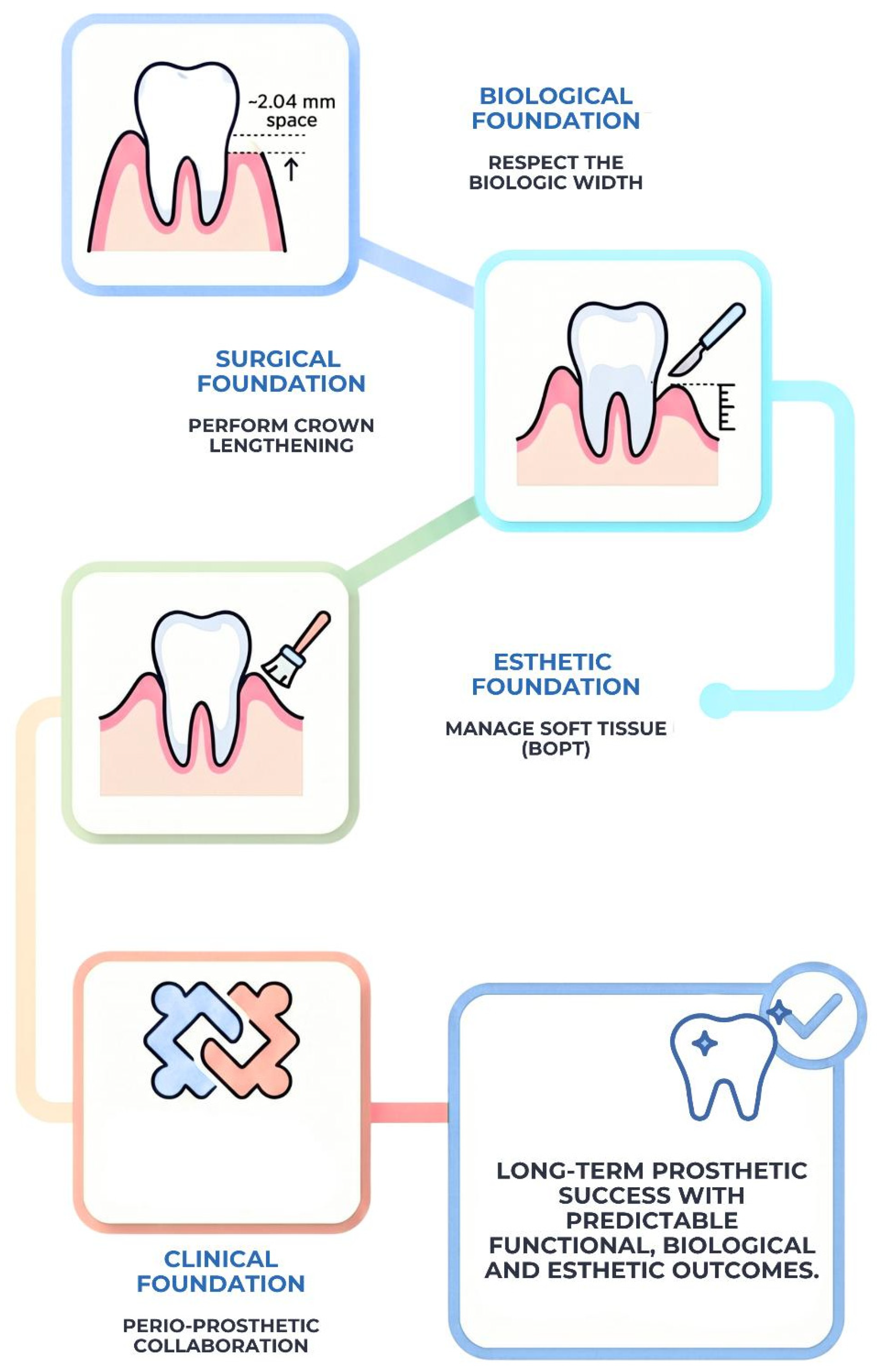

Bridging Periodontology and Prosthodontics: Contemporary Perspectives on Oral Rehabilitation Following Periodontal Therapy
 , ,
, ,  ,
,  ,
,  ,
,  ,
,  ,
,  and
and 
Highlights
- Individualized periodontal assessment and treatment planning are fundamental for selecting appropriate prosthodontic rehabilitation strategies.
- Long-term preservation of strategically important teeth may be achieved in carefully selected and compliant patients receiving successful periodontal therapy and structured supportive periodontal care.
- Successful oral rehabilitation requires close interdisciplinary collaboration between periodontists and prosthodontists throughout all treatment phases.
- Patient compliance, plaque control, and regular supportive periodontal care are critical determinants of long-term periodontal and prosthetic success.
Abstract
1. Introduction
2. Literature Review
2.1. Search Strategy
2.2. Eligibility Criteria
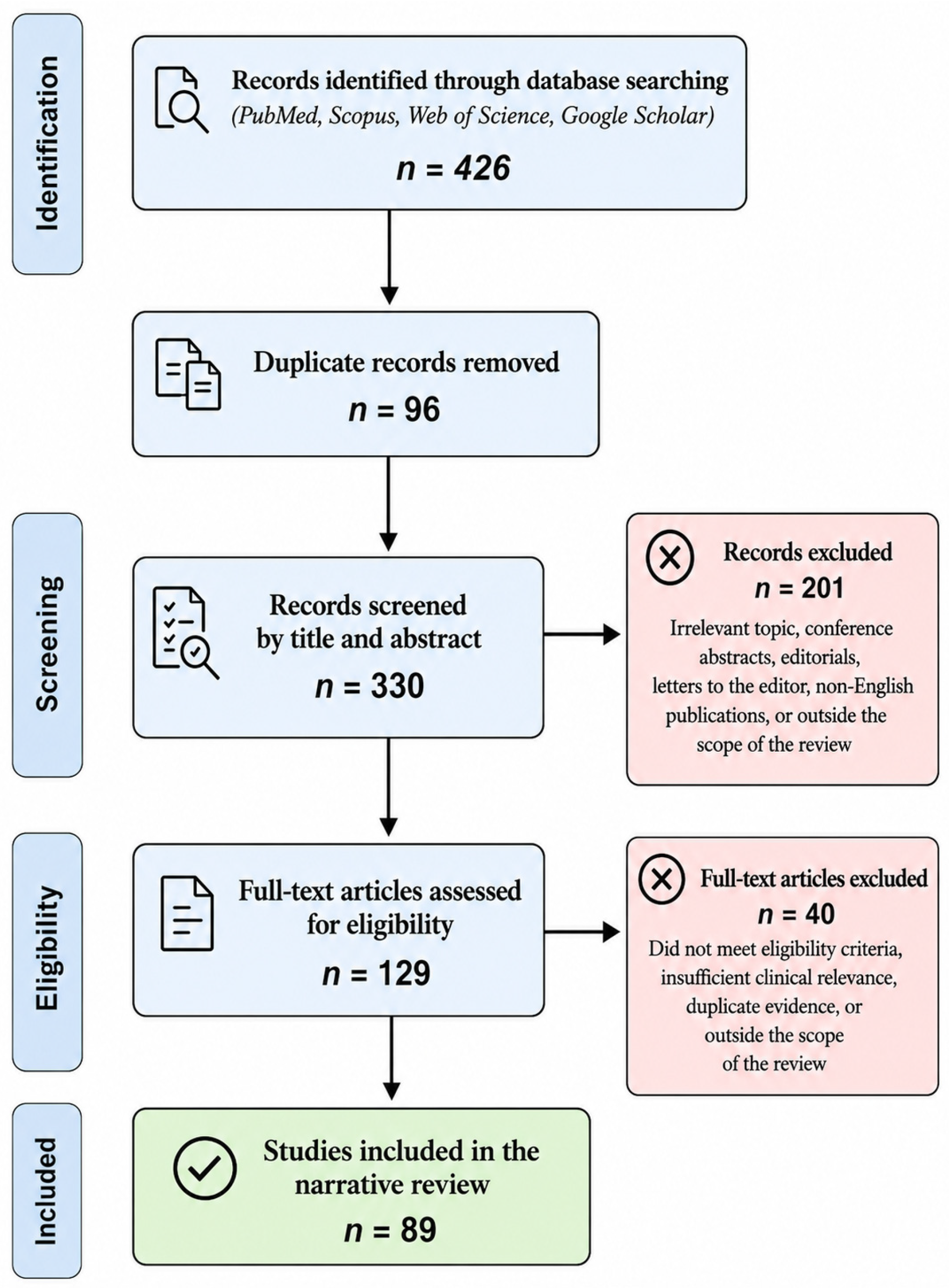
2.3. Study Selection and Data Synthesis
3. Periodontal Evaluation Before Prosthodontic Treatment
4. Periodontal Preparation for Prosthodontic Treatment
5. Prosthodontic Rehabilitation Following Periodontal Therapy
5.1. Tooth-Supported Fixed Dental Prostheses (FPDs)
5.2. Removable Partial Dentures (RPDs)
5.3. Implant-Supported Prosthetic Rehabilitation
5.4. Tooth Preservation Versus Implant Replacement
5.4.1. Comparative Outcomes and Biological Considerations
5.4.2. Economic Considerations
5.4.3. Patient-Centered Decision-Making
6. Long-Term Tooth Survival and Supportive Periodontal Care in Prosthodontics
7. Critical Appraisal of the Available Evidence
8. Future Perspectives
9. Conclusions
Author Contributions
Funding
Institutional Review Board Statement
Informed Consent Statement
Data Availability Statement
Conflicts of Interest
Abbreviations
| AI | Artificial Intelligence |
| CBCT | Cone-Beam Computed Tomography |
| RPD | Removable Partial Denture |
| SPC | Supportive Periodontal Care |
| PPD | Probing Pocket Depth |
| CAL | Clinical Attachment Level |
References
- Podhorsky, A.; Suchanek, J.; Rihakova, J.; Vanicek, J.; Holeckova, P.; Cermakova, E. Influence of subgingival and supragingival crown margins on periodontal health: A clinical and histological study. Clin. Oral Investig. 2015, 19, 1261–1268. [Google Scholar]
- Könönen, E.; Gursoy, M.; Gursoy, U.K. Periodontitis: A Multifaceted Disease of Tooth-Supporting Tissues. J. Clin. Med. 2019, 8, 1135. [Google Scholar] [CrossRef] [PubMed]
- Hajaj, T.; Rominu, M.; Constantin, G.D.; Dobos, M.; Veja, I. Influence of Marginal Tooth Preparation Designs on Periodontal Health and Long-Term Stability: A Narrative Review. J. Clin. Med. 2025, 14, 7038. [Google Scholar] [CrossRef] [PubMed]
- Zweers, J.; Thomas, R.Z.; Slot, D.E.; Weisgold, A.S.; Van der Weijden, F.G. Characteristics of periodontal biotype, its dimensions, associations and prevalence: A systematic review. J. Clin. Periodontol. 2014, 41, 958–971. [Google Scholar] [CrossRef] [PubMed]
- Soheili, F.; Delfan, N.; Masoudifar, N.; Ebrahimni, S.; Moshiri, B.; Glogauer, M.; Ghafar-Zadeh, E. Toward Digital Periodontal Health: Recent Advances and Future Perspectives. Bioengineering 2024, 11, 937. [Google Scholar] [CrossRef] [PubMed]
- Avetisyan, A.; Markaryan, M.; Rokaya, D.; Tovani-Palone, M.R.; Zafar, M.S.; Khurshid, Z.; Vardanyan, A.; Heboyan, A. Characteristics of periodontal tissues in prosthetic treatment with fixed dental prostheses. Molecules 2021, 26, 1331. [Google Scholar] [CrossRef] [PubMed]
- Curcă, F.R.; Stan, R.T.; Butnaru, O.; Rotundu, G.; Bida, F.C.; Tudorici, T.; Popa, C.G. Stress Distribution in Periodontally Compromised Mandibular Molars under Asymmetric Loading: A Three-Dimensional Finite Element Study. Med.-Surg. J. 2026, 130, 181–189. [Google Scholar] [CrossRef]
- Martinez-Canut, P. Predictors of tooth loss due to periodontal disease in patients following long-term periodontal maintenance. J. Clin. Periodontol. 2015, 42, 1115–1125. [Google Scholar] [CrossRef] [PubMed]
- De Wet, L.M.; Slot, D.E.; Van der Weijden, G.A. Supportive periodontal treatment: Pocket depth changes and tooth loss. Int. J. Dent. Hyg. 2019, 22, 210–218. [Google Scholar]
- Ravidà, A.; Galli, M.; Saleh, M.H.A.; Rodriguez, M.V.; Qazi, M.; Troiano, G.; Chan, H.L.; Wang, H.L. Maintenance visit regularity has a different impact on periodontitis-related tooth loss depending on patient staging and grading. J. Clin. Periodontol. 2021, 48, 1008–1018. [Google Scholar] [CrossRef] [PubMed]
- Chapple, I.L.C.; Mealey, B.L.; Van Dyke, T.E.; Bartold, P.M.; Dommisch, H.; Eickholz, P.; Geisinger, M.L.; Genco, R.J.; Glogauer, M.; Goldstein, M.; et al. Periodontal health and gingival diseases and conditions on an intact and a reduced periodontium: Consensus report of workgroup 1 of the 2017 World Workshop on the Classification of Periodontal and Peri-Implant Diseases and Conditions. J. Periodontol. 2018, 89, S74–S84. [Google Scholar] [CrossRef] [PubMed]
- Abduo, J.; Lyons, K.M.L. Interdisciplinary interface between fixed prosthodontics and periodontics. Periodontology 2000 2017, 74, 40–62. [Google Scholar]
- Srimaneepong, V.; Heboyan, A.; Zafar, M.S.; Khurshid, Z.; Marya, A.; Fernandes, G.V.O.; Rokaya, D. Fixed Prosthetic Restorations and Periodontal Health: A Narrative Review. J. Funct. Biomater. 2022, 13, 15. [Google Scholar] [CrossRef] [PubMed]
- Fidyawati, D.; Masulili, S.L.C.; Iskandar, H.B.; Suhartanto, H.; Kiswanjaya, B.; Li, X. Clinical and Radiographic Parameters for Early Periodontitis Diagnosis: A Comparative Study. Dent. J. 2024, 12, 407. [Google Scholar] [CrossRef] [PubMed]
- Cabanilla, L.L.L.; Neely, A.L.; Hernandez, F. The Relationship between Periodontal Diagnosis and Prognosis and the Survival of Prosthodontic Abutments: A Retrospective Study. Quintessence Int. 2009, 40, 821–831. [Google Scholar] [PubMed]
- Schätzle, M.; Löe, H.; Bürgin, W.; Anerud, Å.; Boysen, H.; Lang, N.P. The Influence of Margins of Restorations on the Periodontal Tissues over 26 Years. J. Clin. Periodontol. 2001, 28, 57–64. [Google Scholar] [CrossRef]
- Cortés-Sánchez, M.V.; Villa-Bedoya, E.I.; Villegas-Vélez, M.; González-Arroyave, D.; Agudelo-Suárez, A.A.; Botero, J.E. The Influence of Full-Crown Preparation Margin Position on Periodontal Outcomes: A Systematic Review and Meta-Analysis. Curr. Oral Health Rep. 2026, 13, 10. [Google Scholar] [CrossRef]
- Bader, J.D.; Rozier, R.G.; McFall, W.T., Jr.; Ramsey, D.L. Effect of Crown Margins on Periodontal Conditions in Regularly Attending Patients. J. Prosthet. Dent. 1991, 65, 75–79. [Google Scholar] [CrossRef] [PubMed]
- Watanabe, C.; Wada, J.; Mizutani, K.; Nagayama, T.; Uchida, H.; Shibata, Y.; Wakabayashi, N. Radiographic Predictive Factors for 10-Year Survival of Removable Partial Denture Abutment Teeth: Alveolar Bone Level and Density. J. Prosthodont. Res. 2023, 67, 437–443. [Google Scholar] [PubMed]
- Butnaru, O.-M.; Tatarciuc, M.; Luchian, I.; Tudorici, T.; Balcos, C.; Budala, D.G.; Sirghe, A.; Virvescu, D.I.; Haba, D. AI Efficiency in Dentistry: Comparing Artificial Intelligence Systems with Human Practitioners in Assessing Several Periodontal Parameters. Medicina 2025, 61, 572. [Google Scholar] [CrossRef] [PubMed]
- Chen, X.; Xu, C.; Wu, Y.; Zhao, L. The Survival of Periodontally Treated Molars in Long-Term Maintenance: A Systematic Review and Meta-Analysis. J. Clin. Periodontol. 2024, 51, 631–651. [Google Scholar] [CrossRef] [PubMed]
- Runschke, M.; Eickholz, P.; Dannewitz, B.; Pretzl, B. Long-Term Prognosis of Teeth with Class III Furcation Involvement. J. Clin. Periodontol. 2021, 48, 1528–1536. [Google Scholar] [CrossRef] [PubMed]
- Saleh, M.H.A.; Dias, D.R.; Mandil, O.; Oliveira, R.P.; Alrmali, A.; Araújo, M.G.; Wang, H.-L.; Barath, Z.; Urban, I.A. Influence of Residual Pockets on Periodontal Tooth Loss: A Retrospective Analysis. J. Periodontol. 2024, 95, 444–455. [Google Scholar] [PubMed]
- Nagate, P.M.K.; Chaturvedi, R.R.; Al-Ahmari, S.; Al-Qarni, M.M.M.; Gokhale, M.A.; Ahmed, S.T.; Bariqi, A.R.; Cicciù, A.A.; Minervini, M. Importance of Periodontal Phenotype in Periodontics and Restorative Dentistry: A Systematic Review. BMC Oral Health 2024, 24, 41. [Google Scholar] [CrossRef] [PubMed]
- Barootchi, S.; Tavelli, L.; Zucchelli, G.; Giannobile, W.V.; Wang, H.-L. Gingival Phenotype Modification Therapies on Natural Teeth: A Network Meta-Analysis. J. Periodontol. 2020, 91, 1386–1399. [Google Scholar] [CrossRef] [PubMed]
- Manresa, C.; Sanz-Miralles, E.C.; Twigg, J.; Bravo, M. Supportive Periodontal Therapy (SPT) for Maintaining the Dentition in Adults Treated for Periodontitis. Cochrane Database Syst. Rev. 2018, 1, CD009376. [Google Scholar] [PubMed]
- Salhi, L.; De Carvalho, B.; Reners, M. Update on the Roles of Oral Hygiene and Plaque Control on Periodontal Disease. Adv. Exp. Med. Biol. 2022, 1373, 329–339. [Google Scholar] [CrossRef] [PubMed]
- Rotundu, G.; Virvescu, D.I.; Surlari, Z.; Budala, D.G.; Curca, F.R.; Balcos, C.; Cojocaru, C.; Constantin, V.; Gradinariu, R.; Luchian, I. Creating and Validating a Questionnaire on Dentists’ Perceptions Regarding Periodontics–Prosthodontics Interdisciplinary Clinical Practice. Clin. Pract. 2025, 15, 149. [Google Scholar] [CrossRef] [PubMed]
- Petsos, H.; Ramich, T.; Nickles, K.; Dannewitz, B.; Pfeifer, L.; Zuhr, O.; Eickholz, P. Tooth loss in periodontally compromised patients: Retrospective long-term results 10 years after active periodontal therapy-tooth-related outcomes. J. Periodontol. 2021, 92, 1761–1775. [Google Scholar] [CrossRef] [PubMed]
- Padbury, A.; Eber, R.; Wang, H.L. Interactions between the Gingiva and the Margin of Restorations. J. Clin. Periodontol. 2003, 30, 379–385. [Google Scholar] [CrossRef] [PubMed]
- Lanning, S.K.; Waldrop, T.C.; Gunsolley, J.C.; Maynard, J.G. Surgical Crown Lengthening: Evaluation of the Biological Width. J. Periodontol. 2003, 74, 468–474. [Google Scholar] [CrossRef] [PubMed]
- Shobha, K.S.; Mahantesha; Seshan, H.; Mani, R.; Kranti, K. Clinical Evaluation of the Biological Width Following Surgical Crown-Lengthening Procedure: A Prospective Study. J. Indian Soc. Periodontol. 2010, 14, 160–167. [Google Scholar] [CrossRef] [PubMed]
- Carneiro, V.M.A.; Gomes, A.M.S.; Marinho, M.U.; de Melo, G.S.; Kasabji, F.; An, T.L.; Stefani, C.M.; Guimarães, M.D.C.M.; Andrade, C.A.S. Dental and Periodontal Dimensions Stability after Esthetic Clinical Crown Lengthening Surgery: A 12-Month Clinical Study. Clin. Oral Investig. 2024, 28, 76. [Google Scholar] [CrossRef] [PubMed]
- Smith, S.C.; Goh, R.; Ma, S.; Nogueira, G.R.; Atieh, M.; Tawse-Smith, A. Periodontal Tissue Changes after Crown Lengthening Surgery: A Systematic Review and Meta-Analysis. Saudi Dent. J. 2023, 35, 294–304. [Google Scholar] [CrossRef] [PubMed]
- Amato, F.; Macca, U.; Borlizzi, D. Guided Soft and Hard Tissue Preparation for Prosthetically Driven Crown Lengthening: A Clinical Report. Am. J. Esthet. Dent. 2015, 5, 48–63. [Google Scholar]
- Serra-Pastor, B.; Jané-Salas, E.; Figueiredo, R.; Valmaseda-Castellón, E. Periodontal and Prosthetic Outcomes on Teeth Prepared with Biologically Oriented Preparation Technique: A 4-Year Follow-Up Prospective Clinical Study. J. Prosthodont. Res. 2019, 63, 415–420. [Google Scholar] [CrossRef] [PubMed]
- Di Febo, G.; Orsini, G.; Lombardo, G.; Iezzi, G.; Piattelli, A.; D’Arcangelo, C. Fixed Prosthodontic Treatment Outcomes in the Long-Term Management of Patients with Periodontal Disease: A 20-Year Follow-Up Report. Int. J. Prosthodont. 2015, 28, 253–259. [Google Scholar]
- Herrera, D.; Sanz, M.; Kebschull, M.; Jepsen, S.; Sculean, A.; Berglundh, T.; Papapanou, P.N.; Chapple, I.; Tonetti, M.S. Treatment of stage IV periodontitis: The EFP S3 level clinical practice guideline. J. Clin. Periodontol. 2022, 49, 4–71. [Google Scholar] [CrossRef] [PubMed]
- Sanz, M.; Herrera, D.; Kebschull, M.; Chapple, I.; Jepsen, S.; Berglundh, T.; Sculean, A.; Tonetti, M.S.; EFP Workshop Participants and Methodological Consultants. Treatment of Stage I–III Periodontitis—The EFP S3 Level Clinical Practice Guideline. J. Clin. Periodontol. 2020, 47, 4–60. [Google Scholar] [CrossRef]
- Montero, E.; Molina, A.; Palombo, D.; Morón, B.; Pradíes, G.; Sanz-Sánchez, I. Efficacy and risks of tooth-supported prostheses in the treatment of partially edentulous patients with stage IV periodontitis. A systematic review and meta-analysis. J. Clin. Periodontol. 2022, 49, 182–207. [Google Scholar] [PubMed]
- Tomasi, C.; Albouy, J.-P.; Schaller, D.; Navarro, R.C.; Derks, J. Efficacy of rehabilitation of stage IV periodontitis patients with full-arch fixed prostheses: Tooth-supported versus implant-supported—A systematic review. J. Clin. Periodontol. 2022, 49, 248–271. [Google Scholar] [PubMed]
- Ercoli, C.; Caton, J.G. The relationships between tooth-supported fixed dental prostheses and restorations and the periodontium. J. Prosthodont. 2021, 30, 305–317. [Google Scholar] [PubMed]
- Erdoğdu, M.; Demirel, M.G.; Mohammadi, R.; Güntekin, N. Assessment of the Impact of Bone Quality and Abutment Configuration on the Fatigue Performance of Dental Implant Systems Using Finite Element Analysis (FEA). J. Pers. Med. 2024, 14, 1040. [Google Scholar] [CrossRef] [PubMed]
- Chatzopoulos, G.S.; Wolff, L.F. The Impact of Tooth Mobility and Furcation Involvement on Tooth Loss: A Retrospective Cohort Study. Healthcare 2026, 14, 1070. [Google Scholar] [CrossRef] [PubMed]
- Müller, S.; Eickholz, P.; Reitmeir, P.; Eger, T. Long-term tooth loss in periodontally compromised but treated patients according to the type of prosthodontic treatment. A retrospective study. J. Oral Rehabil. 2013, 40, 358–367. [Google Scholar] [CrossRef] [PubMed]
- Saminsky, M.; Halperin-Sternfeld, M.; Machtei, E.E.; Horwitz, J. Variables affecting tooth survival and changes in probing depth: A long-term follow-up of periodontitis patients. J. Clin. Periodontol. 2015, 42, 513–519. [Google Scholar] [CrossRef] [PubMed]
- Howe, M.S.; Richards, D. Ten-year survival of posterior teeth in patients with periodontitis following systematic periodontal treatment: A systematic review and meta-analysis using only open-access evidence and analytic tools. J. Dent. 2026, 165, 106299. [Google Scholar] [CrossRef] [PubMed]
- Levin, L.; Halperin-Sternfeld, M. Tooth Preservation or Implant Placement: A Systematic Review of Long-Term Tooth and Implant Survival Rates. J. Am. Dent. Assoc. 2013, 144, 1119–1133. [Google Scholar] [PubMed]
- Sarafidou, K.; Lazaridi, I.; Gotsis, S.; Kirmanidou, Y.; Vasilaki, D.; Hirayama, H.; Michalakis, K. Tooth Preservation vs. Extraction and Implant Placement in Periodontally Compromised Patients: A Systematic Review and Analysis of Studies. J. Prosthodont. 2022, 31, e87–e99. [Google Scholar] [CrossRef] [PubMed]
- Alahmari, A.; Costa-Berenguer, X.; Figueiredo, R.; Valmaseda-Castellón, E.; Sánchez-Torres, A.; García-García, M. Reconstructive Therapy in Patients with Peri-Implantitis in a University Dental Hospital: A Preliminary Retrospective Case Series Focusing on Complications. Appl. Sci. 2025, 15, 8040. [Google Scholar] [CrossRef]
- Atieh, M.A.; AlAli, F.; Alsabeeha, N.H.M. Outcome of supportive peri-implant therapy on the rates of peri-implant diseases and marginal bone loss: A systematic review and meta-analysis. Quintessence Int. 2021, 52, 122–131. [Google Scholar] [CrossRef] [PubMed]
- Cárcamo-España, V.; Cuesta Reyes, N.; Flores Saldivar, P.; Chimenos-Küstner, E.; Estrugo Devesa, A.; López-López, J. Compromised Teeth Preserve or Extract: A Review of the Literature. J. Clin. Med. 2022, 11, 5301. [Google Scholar] [CrossRef] [PubMed]
- De Melo, M.A.; Lino, P.A.; Dos Santos, T.R.; Vasconcelos, M.; Lucas, S.D.; de Abreu, M.H. A 15-year time-series study of tooth extraction in brazil. Medicine 2015, 94, e1924. [Google Scholar] [CrossRef] [PubMed]
- Su, H.; Liao, H.; Fiorellini, J.P.; Kim, S. Factors affecting treatment planning decisions for compromised anterior teeth. Int. J. Periodontics Restor. Dent. 2014, 34, 389–398. [Google Scholar] [CrossRef] [PubMed]
- Donos, N.; Laurell, L.; Mardas, N. Hierarchical decisions on teeth vs. implants in the periodontitis-susceptible patient: The modern dilemma. Periodontology 2000 2012, 59, 89–110. [Google Scholar] [CrossRef] [PubMed]
- Wörner, F.; Eger, T.; Kasaj, A.; Ehmke, B. Peri-implantitis, Risk of Recurrence and Implant Loss in Soldiers with Stage III/IV Periodontitis during 20–30 Years of Supportive Periodontal Therapy (SPT). Oral Health Prev. Dent. 2024, 22, 695–704. [Google Scholar] [CrossRef] [PubMed]
- Rapone, B.; Ferrara, E.; Tomarelli, F.; Giovannico, G.; Bacci, C.; Dalmaschio, G.; Novello, M.; Andrisani, A.; De Caro, G.; Fontanella, E.; et al. Consensus Statement on Full-Arch Implant Rehabilitations: Evidence-Based Recommendations from the Italian Consensus Conference. J. Clin. Med. 2026, 15, 3695. [Google Scholar] [CrossRef] [PubMed]
- Malak, A.A.; El Masri, Y.; El Masri, J.; Issawi, H.A.; Salameh, P.; Aoun, G. Implant Failure and Marginal Bone Loss Between Axial and Tilted Implants: An Umbrella Review with Meta-analysis. Int. J. Oral Maxillofac. Implant. 2024, 39, 875–883. [Google Scholar] [CrossRef] [PubMed]
- Papaspyridakos, P.; Sinada, N.; Ntovas, P.; Barmak, A.B.; Chochlidakis, K. Zirconia full-arch implant prostheses: Survival, complications, and prosthetic space dimensions with 115 edentulous jaws. J. Prosthodont. 2025, 34, 271–280. [Google Scholar] [CrossRef] [PubMed]
- Kao, R.T. Strategic extraction: A paradigm shift that is changing our profession. J. Periodontol. 2008, 79, 971–977. [Google Scholar] [CrossRef] [PubMed]
- Park, H.; Song, H.Y.; Han, K.; Cho, K.; Kim, Y. Number of remaining teeth and health–related quality of life: The korean national health and nutrition examination survey 2010–2012. Health Qual. Life Outcomes 2019, 17, 5. [Google Scholar] [CrossRef] [PubMed]
- Graetz, C.; Dörfer, C.E.; Kahl, M.; Kocher, T.; Fawzy El-Sayed, K.; Wiebe, J.F.; Gomer, K.; Rühling, A. Retention of questionable and hopeless teeth in compliant patients treated for aggressive periodontitis. J. Clin. Periodontol. 2011, 38, 707–714. [Google Scholar] [CrossRef] [PubMed]
- Nunn, M.E.; Fan, J.; Su, X.; Levine, R.A.; Lee, H.; McGuire, M.K. Development of prognostic indicators using classification and regression trees for survival. Periodontology 2000 2012, 58, 134–142. [Google Scholar] [CrossRef] [PubMed]
- Graetz, C.; Sälzer, S.; Plaumann, A.; Schlattmann, P.; Kahl, M.; Springer, C.; Dörfer, C.E.; Schwendicke, F. Tooth loss in generalized aggressive periodontitis: Prognostic factors after 17 years of supportive periodontal treatment. J. Clin. Periodontol. 2017, 44, 612–619. [Google Scholar] [CrossRef] [PubMed]
- Helal, O.; Göstemeyer, G.; Krois, J.; El Sayed, K.F.; Graetz, C.; Schwendicke, F. Predictors for tooth loss in periodontitis patients: Systematic review and meta-analysis. J. Clin. Periodontol. 2019, 46, 699–712. [Google Scholar] [CrossRef] [PubMed]
- Pretzl, B.; El Sayed, S.; Weber, D.; Eickholz, P.; Bäumer, A. Tooth loss in periodontally compromised patients: Results 20 years after active periodontal therapy. J. Clin. Periodontol. 2018, 45, 1356–1364. [Google Scholar] [CrossRef] [PubMed]
- Agudio, G.; Buti, J.; Bonaccini, D.; Pini Prato, G.; Cortellini, P. Longevity of teeth in patients susceptible to periodontitis: Clinical outcomes and risk factors associated with tooth loss after active therapy and 30 years of supportive periodontal care. J. Clin. Periodontol. 2023, 50, 520–532. [Google Scholar] [CrossRef] [PubMed]
- De Backer, B.; De Backer, H.; Van Maele, G.; Toma, S.; Christiaens, V. Long-Term Survival of Mandibular Incisors with Severe Periodontal Breakdown: Mean Follow-Up of 18 Years. J. Clin. Med. 2026, 15, 2129. [Google Scholar] [CrossRef] [PubMed]
- Fardal, Ø.; Skau, I.; Grytten, J. A 30-year retrospective cohort outcome study of periodontal treatment of stages III and IV patients in a private practice. J. Clin. Periodontol. 2025, 52, 102–112. [Google Scholar] [CrossRef] [PubMed]
- Eger, T.; Wörner, F.; Lingwal, N.; Eickholz, P. Prosthetic Outcomes in Stage III/IV Periodontitis Patients with 20–29 Years of Supportive Periodontal Care. J. Clin. Periodontol. 2026, 53, 2–11. [Google Scholar] [CrossRef] [PubMed]
- Weijdijk, L.P.M.; Ziukaite, L.; Van der Weijden, G.A.F.; Bakker, E.W.P.; Slot, D.E. The Risk of Tooth Loss in Patients with Diabetes: A Systematic Review and Meta-Analysis. Int. J. Dent. Hyg. 2023, 21, 145–166. [Google Scholar] [CrossRef] [PubMed]
- Alsaggaf, A.U.; Almuwallad, A.; Mirza, L.; Alhemayed, L.; Zamzami, H.; Azab, E.; Alhazmi, H.; Marghalani, A. The impact of fixed and removable dental prostheses on the periodontal health of abutment teeth: A retro-prospective comparative study. Saudi Dent. J. 2024, 36, 1588–1592. [Google Scholar] [CrossRef] [PubMed]
- Bida, F.C.; Butnaru, O.; Diaconu, D.A.; Tatarciuc, M. The Decision-Making Process behind Removable Prosthesis: A Therapeutic and Design Perspective. Med.-Surg. J. 2024, 128, 870–879. [Google Scholar]
- Isola, G.; Annunziata, M.; Angjelova, A.; Alibrandi, A.; Tartaglia, G.M.; Scannapieco, F.A. Effectiveness of two supportive periodontal care protocols and outcome predictors during periodontitis: A randomized controlled trial. J. Periodontol. 2026, 97, 435–449. [Google Scholar] [CrossRef] [PubMed]
- Rattu, V.; Raindi, D.; Antonoglou, G.; Nibali, L. Prevalence of stable and successfully treated periodontitis subjects and incidence of subsequent tooth loss within supportive periodontal care: A systematic review with meta-analyses. J. Clin. Periodontol. 2023, 50, 1371–1389. [Google Scholar] [CrossRef] [PubMed]
- Kawahara, H.; Inoue, M.; Okura, K.; Oshima, M.; Matsuka, Y. Risk Factors for Tooth Loss in Patients Undergoing Mid-Long-Term Maintenance: A Retrospective Study. Int. J. Environ. Res. Public Health 2020, 17, 6258. [Google Scholar] [CrossRef] [PubMed]
- Chapple, I.L.C.; Wilson, N.H.F. Manifesto for a paradigm shift: Periodontal health for a better life. Br. Dent. J. 2014, 216, 159–162. [Google Scholar] [CrossRef] [PubMed]
- Cojocaru, C.; Bida, S.; Goriuc, A.; Butnaru, O.; Curca, F.R.; Rotundu, G.; Adomnicai, S.; Virvescu, D.I. A Finite Element Analysis of Mini-Implant Effects on the Periodontium: From Biomechanical Simulation to Oral Health and Mental Wellbeing. Med.-Surg. J. 2025, 129, 756–763. [Google Scholar] [CrossRef]
- Mangano, F.; Gandolfi, A.; Luongo, G.; Logozzo, S. Intraoral Scanners in Dentistry: A Review of the Current Literature. BMC Oral Health 2017, 17, 149. [Google Scholar] [CrossRef] [PubMed]
- Joda, T.; Gallucci, G.O.; Wismeijer, D.; Zitzmann, N.U. Augmented and Virtual Reality in Dental Medicine: A Systematic Review. Comput. Biol. Med. 2019, 108, 93–100. [Google Scholar] [CrossRef] [PubMed]
- Schwendicke, F.; Samek, W.; Krois, J. Artificial Intelligence in Dentistry: Chances and Challenges. J. Dent. Res. 2020, 99, 769–774. [Google Scholar] [CrossRef] [PubMed]
- Butnaru, O.; Tatarciuc, D.; Bida, F.C.; Balcos, C.; Constantin, V.; Cojocaru, C.; Tudorici, T.; Rotundu, G.; Sîrghe, A.; Haba, D. The Accuracy of AI-Assisted Imaging Diagnosis versus Conventional Evaluation of Dental Professionals. Med.-Surg. J. 2025, 129, 236–245. [Google Scholar] [CrossRef]
- Lang, N.P.; Tonetti, M.S. Periodontal Risk Assessment (PRA) for Patients in Supportive Periodontal Therapy (SPT). Oral Health Prev. Dent. 2003, 1, 7–16. [Google Scholar] [PubMed]
- Sculean, A.; Stavropoulos, A.; Windisch, P.; Keglevich, T.; Karring, T.; Gera, I. Healing of Human Intrabony Defects Following Regenerative Periodontal Therapy with a Bovine-Derived Xenograft and Guided Tissue Regeneration. Clin. Oral Investig. 2004, 8, 70–74. [Google Scholar] [CrossRef] [PubMed]
- Needleman, I.; McGrath, C.; Floyd, P.; Biddle, A. Impact of Oral Health on the Life Quality of Periodontal Patients. J. Clin. Periodontol. 2004, 31, 454–457. [Google Scholar] [CrossRef] [PubMed]
- Uysal, B.F.; Köse, T.; Gürkan, A. Gingival phenotype classification by visual and probe visibility assessments: Relationship with thickness and probe design. J. Periodontol. 2025, 96, 309–320. [Google Scholar] [CrossRef] [PubMed]
- Davidescu, A.; Forna, N.; Agop-Forna, D.; Scutariu, M.-M. Clinical and Radiological Study on Peri-Implant Status in Posterior Implant-Supported Partial Fixed Dentures. Med. Surg. J. 2024, 128, 880–886. [Google Scholar] [CrossRef]
- Paul, P.; Banerjee, T.N.; Banerjee, S.; Debnath, A. Evaluation of efficacy of digital or virtual bite registration over conventional techniques—A systematic review. J. Oral Biol. Craniofac. Res. 2024, 14, 785–792. [Google Scholar] [CrossRef] [PubMed]
- Zhang, J.; Deng, S.; Zou, T.; Jin, Z.; Jiang, S. Artificial intelligence models for periodontitis classification: A systematic review. J. Dent. 2025, 156, 105690. [Google Scholar] [CrossRef] [PubMed]



| Study | Design | Sample | Intervention | Main Findings | Clinical Relevance for Prosthodontics | Evidence Type |
|---|---|---|---|---|---|---|
| Padbury et al. [30] | Narrative review | – | Restorative–periodontal interface | Reviewed the concepts of biologic width, restorative margin location, restorative materials, crown contours, and indications for surgical crown lengthening | Provides the biological principles guiding periodontal preparation before restorative treatment | Narrative review |
| Lanning et al. [31] | Clinical study | 23 patients | Surgical crown lengthening | Biologic width was re-established to its original dimension after 6 months; approximately 3 mm of coronal tooth structure was gained | Supports the predictability of crown lengthening before prosthodontic rehabilitation | Clinical study |
| Shobha et al. [32] | Prospective clinical study | 15 patients | Surgical crown lengthening | Biologic width returned to baseline values after 6 months; approximately 2 mm gain of coronal tooth structure was maintained throughout follow-up | Confirms periodontal stability following crown-lengthening procedures | Prospective clinical study |
| Carneiro et al. [33] | Prospective clinical study | 20 patients | Esthetic crown lengthening | Esthetic crown lengthening was effective; limited soft tissue rebound occurred but was not clinically significant; supracrestal soft tissue thickening was observed | Demonstrates biological stability after esthetic crown-lengthening procedures | Prospective clinical study |
| Smith et al. [34] | Systematic review and meta-analysis | 4 studies; 111 patients; 182 procedures | Crown-lengthening surgery | No significant differences in supracrestal tissue attachment, bone level, or probing depth between treated and adjacent sites; periodontal healing remained stable over time | Supports the predictability of periodontal healing following crown lengthening | Systematic review and meta-analysis |
| Amato et al. [35] | Clinical report | 10 patients; 38 teeth | Prosthetically driven crown lengthening | Presented a guided soft and hard tissue preparation protocol based on the final restorative design, achieving predictable esthetic and biological outcomes | Illustrates interdisciplinary planning between periodontal surgery and prosthodontics | Clinical report |
| Serra-Pastor et al. [36] | Prospective clinical study | 149 teeth | Biologically oriented preparation technique | Gingival thickening increased by 32.5%; marginal stability was observed in 98.6% of teeth; restoration survival reached 96.6% after 4 years | Demonstrates favorable periodontal behavior and long-term prosthetic stability | Prospective clinical study |
| Di Febo et al. [37] | 20-year cohort study | 100 patients; 948 prosthetic abutments | Fixed prosthodontic rehabilitation after periodontal treatment and supportive periodontal care | 90.1% of prosthetic abutments remained functional after 20 years; plaque accumulation, bleeding scores, parafunctions, and endodontic status influenced abutment survival | Highlights the importance of periodontal preparation and long-term maintenance for prosthetic success | Long-term cohort study |
| Study | Follow-Up | Main Findings | Prognostic Factors | Evidence Type |
|---|---|---|---|---|
| Petsos et al. [29] | 10 years | 93.4% of teeth retained; periodontal tooth loss represented only 33.6% of all extractions | Furcation involvement, tooth mobility, CAL, PPD (Probing Pocket Depth), severe bone loss | Retrospective cohort study |
| Müller et al. [45] | 9.7 years | Prosthodontically rehabilitated patients exhibited greater tooth loss than controls | Prosthodontic treatment, age, diabetes, socioeconomic status, aggressive periodontitis, non-compliance | Retrospective study |
| Graetz et al. [57] | 17.4 years | Low tooth loss despite generalized aggressive periodontitis; 84% of surviving teeth showed stable or improved bone levels | Smoking, furcation involvement, mobility, residual PPD, maxillary location | Retrospective longitudinal study |
| Pretzl et al. [66] | 20 years | 201/1639 teeth lost; 0.14 teeth/patient/year | Age, smoking, diabetes, cardiovascular disease, poor SPC (Supportive Periodontal Care) compliance | Retrospective cohort study |
| Agudio et al. [67] | 30 years | Only 5.1% of teeth lost during SPC; 39 teeth lost for periodontal reasons | Age, male sex, molars, pocket depth, mobility, bone loss, root canal treatment, crowns | Long-term cohort study |
| De Backer et al. [68] | 17.7 years | 79.6% complete survival and 89.2% effective survival of severely compromised mandibular incisors | Compliance, periodontal status, baseline bone loss | Retrospective cohort study |
| Isola et al. [74] | 24 months | SPC including subgingival instrumentation achieved superior inflammatory control | Smoking, residual pockets, deep PPDs | Randomized controlled trial |
| Rattu et al. [75] | 10–13 years (meta-analysis) | Only 3.14% of teeth lost overall despite limited achievement of stability endpoints | Failure to achieve controlled periodontitis; residual periodontal pockets | Systematic review with meta-analyses |
| Fardal et al. [69] | 30 years | Most patients remained stable during the first 15–16 years. Among the 103 patients completing at least 30 years of follow-up, mean periodontal tooth loss was 1.05 teeth in the low-loss group, 4.83 in the moderate-loss group, and 11.90 in the high-loss group | First-degree family history of periodontitis; periodontal treatment initiated before 35 years of age; diabetes; teeth with an initially hopeless prognosis | Retrospective cohort study |
| Eger et al. [70] | Mean 21.7 ± 2.7 years (range: 10–29 years) | Annual tooth loss was 0.40 ± 0.39 for clasp-retained RPDs, 0.35 ± 0.42 for double-crown RPDs, 0.23 ± 0.33 for FPDs, 0.15 ± 0.22 for iFPDs, and 0.05 ± 0.08 teeth/patient/year for controls. At 10 years, 67% of clasp-retained RPDs, 75% of double-crown RPDs, 93% of FPDs, and 83% of iFPDs remained functional | Age; smoking > 10 cigarettes/day; clasp- and double-crown-retained RPDs; extensive tooth-supported FPDs. iFPDs were not independently associated with increased tooth loss | Retrospective cohort study with prospective observational extension |
| Prosthetic Therapy | Functionality After 10 Years | Outcome During Follow-Up Exceeding 20 Years | Clinical Interpretation |
|---|---|---|---|
| Tooth-supported FPD | 93% of FPDs remained functional; functional FPDs were retained by 90% of patients | Tooth loss: 0.23 ± 0.33 teeth/patient/year over 23.8 ± 3.0 years. Cross-arch stabilizing bridges showed a 14.4% failure rate at a mean of 16.1 years in the Fardal study | May be considered when strategically important teeth are periodontally stable, restorable, and adequately distributed as abutments. Favorable hygiene, controlled occlusal loading, and regular SPC are essential |
| Implant-supported FPD (iFPD) | 83% remained functional; functional iFPDs were retained by 76% of patients | Tooth loss: 0.15 ± 0.22 teeth/patient/year over 23.8 ± 2.9 years; iFPD was not independently associated with increased tooth loss | May be considered when the number or distribution of maintainable teeth is insufficient for tooth-supported fixed rehabilitation. Periodontal stabilization and lifelong peri-implant maintenance remain mandatory |
| Clasp-retained RPD | 67% remained functional; functional RPDs were retained by 75% of patients | Tooth loss: 0.40 ± 0.39 teeth/patient/year over 23.2 ± 3.1 years | May be used when fixed or implant-supported treatment is not feasible. It showed the highest tooth-loss rate and lowest 10-year functionality, requiring careful design and intensified SPC |
| Double-crown-retained RPD | 75% remained functional; functional prostheses were retained by 80% of patients | Tooth loss: 0.35 ± 0.42 teeth/patient/year over 24.2 ± 2.6 years | May be considered when removable rehabilitation is required and suitable teeth remain for telescopic retention. It performed more favorably than clasp-retained RPDs at 10 years, although tooth loss remained higher than with fixed alternatives |
Disclaimer/Publisher’s Note: The statements, opinions and data contained in all publications are solely those of the individual author(s) and contributor(s) and not of MDPI and/or the editor(s). MDPI and/or the editor(s) disclaim responsibility for any injury to people or property resulting from any ideas, methods, instructions or products referred to in the content. |
© 2026 by the authors. Licensee MDPI, Basel, Switzerland. This article is an open access article distributed under the terms and conditions of the Creative Commons Attribution (CC BY) license.
Share and Cite
Rotundu, G.; Argatu, D.; Martu, M.A.; Cojocaru, C.; Budala, D.G.; Sufaru, I.; Butnaru, O.-M.; Tudorici, T.A.; Aungurencei, A.; Bida, F.C.; et al. Bridging Periodontology and Prosthodontics: Contemporary Perspectives on Oral Rehabilitation Following Periodontal Therapy. Oral 2026, 6, 99. https://doi.org/10.3390/oral6040099
Rotundu G, Argatu D, Martu MA, Cojocaru C, Budala DG, Sufaru I, Butnaru O-M, Tudorici TA, Aungurencei A, Bida FC, et al. Bridging Periodontology and Prosthodontics: Contemporary Perspectives on Oral Rehabilitation Following Periodontal Therapy. Oral. 2026; 6(4):99. https://doi.org/10.3390/oral6040099
Chicago/Turabian StyleRotundu, Gabriel, Daniela Argatu, Maria Alexandra Martu, Cristian Cojocaru, Dana Gabriela Budala, Irina Sufaru, Oana-Maria Butnaru, Teona Anamaria Tudorici, Andra Aungurencei, Florinel Cosmin Bida, and et al. 2026. "Bridging Periodontology and Prosthodontics: Contemporary Perspectives on Oral Rehabilitation Following Periodontal Therapy" Oral 6, no. 4: 99. https://doi.org/10.3390/oral6040099
APA StyleRotundu, G., Argatu, D., Martu, M. A., Cojocaru, C., Budala, D. G., Sufaru, I., Butnaru, O.-M., Tudorici, T. A., Aungurencei, A., Bida, F. C., & Luchian, I. (2026). Bridging Periodontology and Prosthodontics: Contemporary Perspectives on Oral Rehabilitation Following Periodontal Therapy. Oral, 6(4), 99. https://doi.org/10.3390/oral6040099