


Abstract
Background/Objectives: The critical role of oral hygiene in overall health has driven efforts to improve oral hygiene practices. Novel devices employing electric-based technologies have emerged as powerful allies to conventional mechanical approaches for plaque control. NeoPill is a novel electric oral hygiene device designed to assist individuals with fixed orthodontic appliances in maintaining oral hygiene efficiently. The device utilizes direct current (DC) to facilitate bacterial removal from tooth surfaces and gingival tissues. Although the antimicrobial effects of electric-based devices, including NeoPill, are recognized, evidence concerning their impact on salivary biochemical parameters is scarce, especially in relation to oxidative stress. This pilot study aimed to evaluate the effects of NeoPill-derived DC on the redox status of saliva samples obtained from smokers. Methods: Saliva samples were analyzed after a 30-s exposure to NeoPill-derived DC and compared with untreated samples. Salivary pH, buffering capacity, and total protein concentration were measured, along with key salivary biomarkers of oxidative stress and antioxidant capacity. Results: The applied treatment did not significantly affect salivary pH, buffering capacity, or total protein content. Furthermore, NeoPill-derived DC treatment did not induce reactive oxygen species production or lipid peroxidation. No changes were observed in reducing power, glutathione-dependent defense, or the activities of antioxidant enzymes, including catalase and superoxide dismutase. Conclusions: These findings suggest that NeoPill-derived DC does not alter the redox status of smokers’ saliva under the applied conditions. However, it should be noted that this is a preliminary study with a small sample size, which represents a key limitation.
1. Introduction
Oral diseases rank among the most prevalent noncommunicable diseases worldwide and have a major impact on quality of life and general health. According to the World Health Organization, oral diseases affect around 3.5 billion people [1]. The accumulation of dental plaque on teeth triggers gingivitis, which may progress to chronic periodontitis and ultimately lead to the destruction of tooth-supporting structures and further complications [2]. Advancements in plaque control and oral hygiene practices in general are crucial for the more effective prevention and management of periodontal diseases and for maintaining optimal oral health. Daily tooth brushing is the first line of defense against the formation of dental plaque and cariogenic or periodontopathogenic biofilm [3]. However, mechanical brushing alone is insufficient to eliminate bacteria in anatomically inaccessible sites, including gingival pockets, interproximal spaces, and fissures, particularly in patients with fixed orthodontic appliances [4].
Both bacteria and tooth enamel typically carry a negative charge. However, salivary pellicles—a thin, protein-rich film that develops on tooth surfaces—contribute to the equalization of dental surface charges; they reduce the strong negative charge of enamel and create a more balanced environment for microbial adhesion [5]. Oral bacteria adhere to salivary pellicles through physicochemical interactions, including electrostatic forces [6,7]. Given the limitations of conventional mechanical approaches, novel oral hygiene technologies are increasingly exploiting the physicochemical mechanisms of bacterial adhesion to dental surfaces to enhance cleaning efficiency. Electric toothbrush technology has emerged as a promising solution for plaque removal. Besides mechanical brushing, electric toothbrushes involve an electrolytic effect on saliva, which changes the polarity of the tooth surface, promotes plaque removal, and reduces bacterial adhesion [8,9]. Rodrigues et al. (2024) summarized that direct application of electric current to dental implants can destabilize bacterial biofilms, offering a promising approach to treat peri-implant diseases [10]. The antimicrobial effect of electric current has also been demonstrated in in vitro studies. A 10-min exposure of saliva-derived bacteria resuspended in phosphate-buffered saline to low direct current (DC) (0.5 and 1 mA) has been shown to reduce the abundance of all identified bacterial species, demonstrating a strong antimicrobial effect [11]. In line with these findings, another in vitro study reported antimicrobial effects following a 1-h exposure to low DC (7–28 µA/cm2) against Streptococcus mutans and Staphylococcus aureus, key pathogens associated with dental caries [12]. Moreover, in vitro studies have demonstrated that low DC effectively reduces the viability of oral bacteria such as Porphyromonas gingivalis, as well as the viability of its biofilm. These effects have been linked to oxidative stress mechanisms, including increased intracellular reactive oxygen species (ROS) and upregulation of genes encoding antioxidant defense proteins, such as superoxide dismutase (SOD) [13].
Innovations in oral hygiene are particularly valuable for individuals with fixed orthodontic appliances, which hinder routine oral hygiene practices and promote bacterial retention, leading to increased plaque accumulation and gingival inflammation [14]. NeoPill, a novel oral hygiene device, is the first dental device using an electric field to eliminate bacteria in hard-to-reach areas around teeth and braces. It is specially designed to support oral hygiene in individuals with fixed orthodontic appliances, which require continuous and time-consuming care. The NeoPill generates a low DC and establishes a mild electric field between the orthodontic wires. Within this electric field, negatively charged bacterial cells that are weakly attached to tooth surfaces and gums through physicochemical interactions, including electrostatic forces, become destabilized and detached from these surfaces [7]. Once released, they migrate toward the positively charged electrode (the orthodontic wire), becoming suspended in the saliva, where they can be easily removed by rinsing the mouth. In addition, the small electric current may also induce mild electrochemical reactions in the saliva (electrolytic activity), which may further contribute to the overall cleansing process. After approximately 30 s of electrochemical treatment with NeoPill, a simple rinse with water is sufficient to remove the loosened particles from the oral cavity. A recent in vitro study has shown that the NeoPill device was successful in reducing the number of Streptococcus mutans ATCC 25175, a Gram-positive bacterium primarily associated with dental caries, and Candida albicans [15], evidencing its antimicrobial effect.
The use of electric current in dental procedures is expanding, and its beneficial effects appear promising; however, studies assessing its safety remain scarce. Although experimental evidence implies beneficial effects of low DC and electric devices regarding plaque control [8,9,15,16], oral bacteria and their biofilm viability [10,11,12,13], studies regarding their effects on the biochemical properties of saliva are lacking. Considering that the electric field and the generation of additional electrons and ions during electrolysis may induce oxidative stress [17,18], examining the effects of electric-based devices on salivary redox status is of particular importance. In this study, we investigated the effects of NeoPill-derived DC on salivary oxidative stress and antioxidant defense, with the aim of evaluating the device’s impact on salivary redox status following acute application under ex vivo conditions. To simulate conditions of increased susceptibility to oxidative stress, saliva samples from smokers were employed, given that smoking impairs salivary redox balance by reducing antioxidant capacity [19] and promoting ROS generation [20] in comparison with non-smokers. This pilot study aimed to investigate the acute ex vivo effects of the NeoPill device on salivary biochemical parameters and redox status. Specifically, the study sought to assess changes in salivary pH and buffering capacity, determine alterations in total protein concentration, evaluate oxidative stress induction through ROS and malondialdehyde (MDA), and examine antioxidant defense mechanisms by measuring reducing power, glutathione (GSH)-dependent pathways, and the activities of antioxidant enzymes, including catalase (CAT) and superoxide dismutase (SOD).
2. Materials and Methods
2.1. NeoPill Device—Ex Vivo Treatment
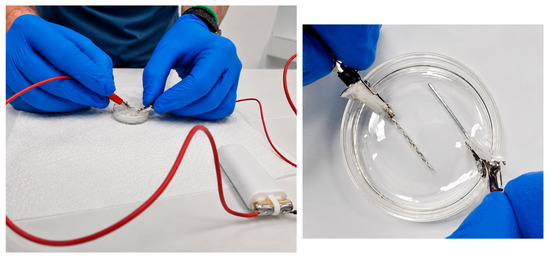
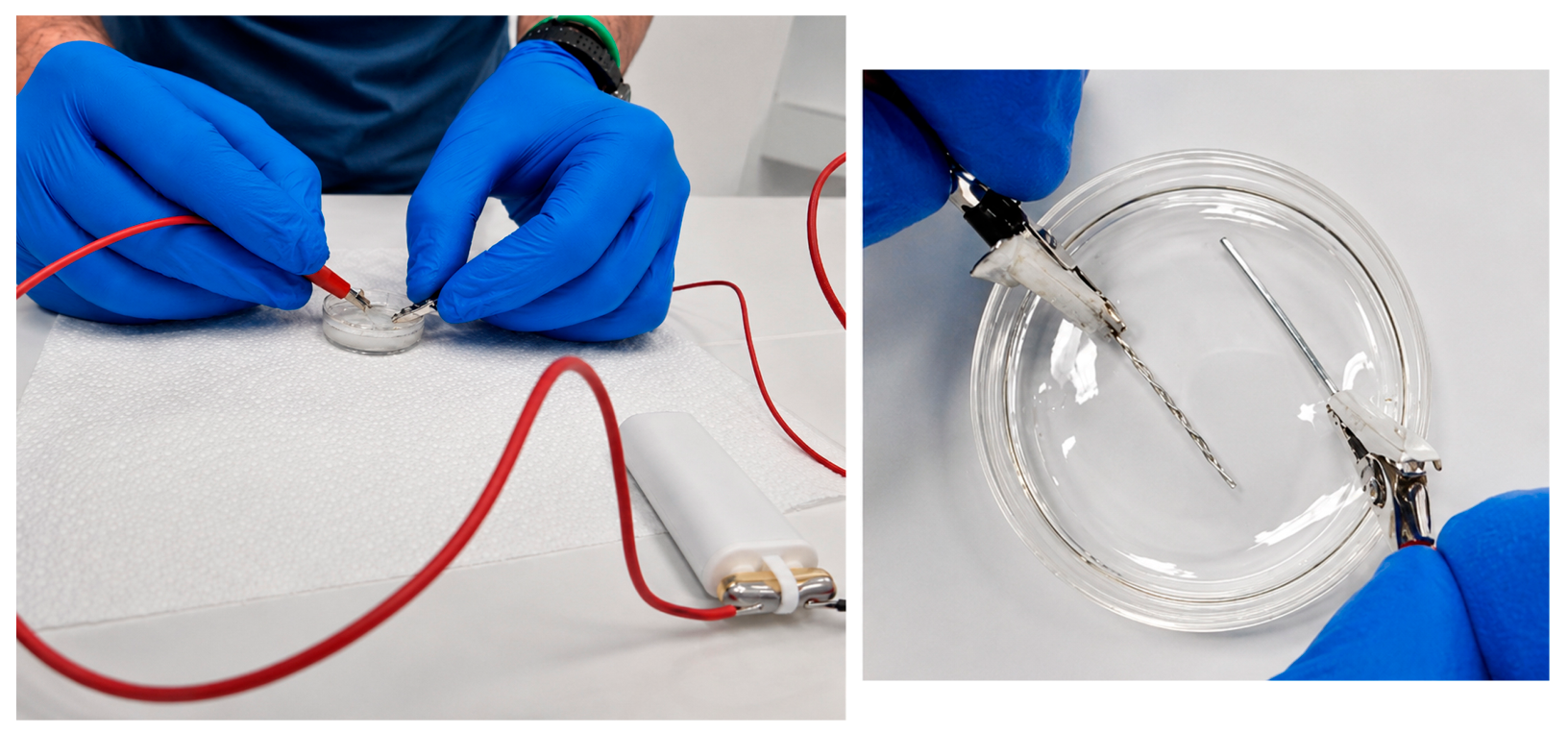
NeoPill (CEO Neofunction d.o.o., Belgrade, Serbia) is a compact, pill-shaped intraoral device containing embedded electrodes and a miniature power source that generates low-intensity DC during application. During use, the capsule-like component comes into contact with both the upper and lower arches of fixed orthodontic appliances, thereby establishing a closed electrical circuit through saliva, which acts as a conductive medium. The device contains a small integrated battery (two 1.5 V cells providing a total voltage of 3 V) that generates a low DC and establishes a mild electric field between the orthodontic wires. Because this study analyzed the effects of NeoPill-derived DC on salivary redox status following ex vivo treatment, certain modifications of the device were implemented (Figure 1).
Figure 1.
Experimental setup illustrating ex vivo application of the NeoPill device.
The electrodes of the NeoPill device were connected using conductive wires with alligator clips. An ammeter was inserted in series within the circuit to measure the electrical current flowing through the system. The terminal clips were attached to segments of titanium-based orthodontic archwire, which were immersed in saliva samples collected from smokers. All samples were treated under the same conditions, including electrodes, sample volume (3 mL), treatment duration (30 s), and electrode configuration. The electrodes were placed facing each other, as illustrated in Figure 1, with an inter-electrode distance of 1 cm. This setup enabled simulation of the interaction between the device, metallic orthodontic elements, and the saliva medium. The electric current passing through the system was continuously monitored individually for each sample using the ammeter, with recorded values ranging between 300 and 500 µA across all samples.
2.2. Study Participants
The study was approved by the Ethics Committee of the Vinča Institute of Nuclear Sciences—National Institute of the Republic of Serbia, University of Belgrade (approval No. 25-DMSO-017387/3) and conducted in accordance with the Declaration of Helsinki. Saliva samples were collected from volunteers who met the inclusion criteria (adults of both sexes, <60 years of age, smokers of ≥20 cigarettes/day for at least one year). Exclusion criteria comprised individuals with acute or chronic diseases, or those undergoing any short- or long-term therapy with potential effects on saliva composition. Each participant filled out a questionnaire concerning their medical condition, medication, and smoking habits. Seven out of twelve participants met the study criteria (Table 1). All participants gave their informed consent for inclusion in the study before sampling.
Table 1.
Demographic characteristics of study participants.
2.3. Saliva Sampling and NeoPill-Derived DC Treatment
Saliva samples (6 mL per participant) were collected via passive drooling technique. All samples were collected from 9:00 am to 10:00 am to minimize circadian effect. Study participants were instructed to refrain from consuming food, beverages, tobacco, and oral hygiene products (toothpaste, mouthwash, gum, etc.) for two hours prior to sample collection. Samples were immediately placed on ice and processed within one hour. Each sample was divided into two aliquots of 3 mL each: (1) untreated control sample (Control) and (2) sample subjected to NeoPill-derived DC for 30 s (NeoPill). The treatment duration was determined according to the manufacturer’s recommendation for use in individuals with fixed orthodontic appliances. NeoPill-derived DC was applied to the samples using two small electrodes (Figure 1). After collection and treatment, all samples were centrifuged at 3000× g (Sigma Ultracentrifuge 1-14K, Osterode am Harz, Germany) for 10 min at 4 °C, snap-frozen in liquid nitrogen, and stored at −20 °C until further analysis.
2.4. Measurement of pH and Buffering Capacity
Buffering capacity is a quantitative measure of the resistance of a sample to pH change upon addition of a strong acid or strong base [21]. A Selecta PH-2005 digital pH meter equipped with an HI1093 electrode (HANNA Instruments, Woonsocket, RI, USA) was used to measure pH and determine the buffering capacity of saliva samples. The pH meter had an accuracy of ±0.01 pH units and was calibrated using a three-point calibration at pH 4, 7, and 10. Buffering capacity is defined as the number of moles of a strong acid or strong base that have to be added to 1 L of a buffer to cause its pH to change by 1 unit. Acid titration was performed for salivary buffering capacity measurement [22]. Aliquots of 600 µL of saliva samples were placed in 1.5 mL tubes, and 50 µL of 0.1 M HCl (Zorka Pharma, Šabac, Serbia) was added in steps of 10 µL. pH was measured and recorded at each additional step.
The buffering capacity was quantified using the following formula:
- β—buffering capacity;
- n—the number of moles of HCl (added to the sample) per liter of the sample;
- ΔpH—difference between the initial pH of the sample and the pH of the sample after the HCl addition.
2.5. Measurement of Total Protein Content
Total protein content was measured according to the Lowry method [23]. A standard curve was prepared using known concentrations of bovine serum albumin in the range of 0.2–1.0 mg mL−1. The protein concentrations in saliva samples were then determined by comparing their absorbance values at 650 nm (photometric filter PerkinElmer 1420-028, Waltham, MA, USA) with the standard curve. The test was performed in a 96-well plate using 15 µL of the sample. Absorbance was measured using the spectrophotometer WALLAC Victor2 1420 Multilabel Counter (London, UK).
2.6. Measurement of Oxidative Stress Biomarkers
2.6.1. ROS Measurement—DCFH-DA Assay
ROS in saliva samples (100 µL) were measured using the DCFH-DA assay, a fluorescence-based method, as previously described [24]. Upon oxidation by ROS, 2′,7′–dichlorodihydrofluorescein diacetate (DCFH-DA) is converted to 2′,7′–dichlorofluorescein (DCF), a highly fluorescent compound. The fluorescence intensity of DCF, proportional to the amount of ROS present, was measured at an excitation wavelength of 485 nm (PerkinElmer filter module 1420-040) and an emission wavelength of 530 nm (PerkinElmer filter module 1420-041) using a spectrophotometer WALLAC Victor2 1420 Multilabel Counter (London, UK). ROS levels were expressed as relative fluorescence units (RFU) per mg of protein in the saliva sample.
2.6.2. Lipid Peroxidation Measurement
Lipid peroxidation in saliva samples was determined by measuring the concentration of its main product, MDA, using the TBARS assay [25]. Saliva samples (50 µL) were mixed with thiobarbituric acid (TBA) and trichloroacetic acid and heated at 95 °C for 60 min. During heating, MDA reacts with TBA to form a pink-colored MDA–TBA adduct. After cooling, the adduct was extracted with butanol, and absorbance was measured at 550 nm (photometric filter PerkinElmer 1420-022) using the spectrophotometer WALLAC Victor2 1420 Multilabel Counter (London, UK). The standard curve for MDA was constructed using 1,1,3,3–tetramethoxypropane as the standard reagent, with concentrations ranging from 1 to 20 µM. Results are expressed as nmol of MDA per mg of protein in the saliva sample.
2.7. Measurement of Antioxidant Biomarkers
2.7.1. Ferric Reducing Antioxidant Power (FRAP) Assay
The FRAP assay was performed according to the method described by Benzie and Strain [26] using 40 µL of the saliva sample. FRAP is based on the reduction of the ferric-tripyridyltriazine (Fe3+–TPTZ) complex to its ferrous (Fe2+) form under acidic conditions. This reduction occurs in the presence of antioxidants, which donate electrons to the ferric complex. The resulting Fe2+–TPTZ complex, which forms an intense blue color, was measured spectrophotometrically at 593 nm (S-30 Spectrophotometer, BOECO, Hamburg, Germany). The increase in absorbance was directly proportional to the total reducing power of the antioxidants present in the sample. The reducing capacity of the saliva samples is expressed in µmol of Trolox equivalents per mg of protein in the saliva samples.
2.7.2. Measurement of GSH Level
The GSH levels in saliva samples (25 µL) were measured using Ellman’s method [27]. In the reaction of thiols with the chromogenic DTNB (5,5-dithiobis-2-nitrobenzoate), the yellow dianion of 5-thio-2-nitrobenzoic acid (TNB) was formed. Absorbance was measured at 405 nm (photometric filter PerkinElmer 1420-018) with a WALLAC Victor2 1420 Multilabel Counter (London, UK). Quantification was performed using GSH standard solutions (50–500 µM). The final results were expressed as nmol mg−1 of protein in saliva samples.
2.7.3. Measurement of Glutathione Reductase (GR) Activity
GR activity was measured spectrophotometrically by monitoring the oxidation of nicotinamide adenine dinucleotide phosphate (NADPH) at a wavelength of 340 nm, following the procedures described by Halliwell and Foyer [28]. The amount of saliva sample used for the test was 15 µL. Absorbance was recorded every 30 s over a 300-second period using the S-30 spectrophotometer (BOECO, Germany). The decrease in absorbance over time is directly proportional to the enzyme activity. The activity of the enzyme was calculated using the following formula:
e—extinction coefficient of NADPH (6.22 mM−1cm−1);
l—the path length (1 cm).
The activity of GR (U mL−1) was divided by the concentration of protein (mg mL−1) in the saliva sample and finally expressed in terms of mU per mg of protein, where U represents the enzyme content that catalyzes the oxidation of 1 µmol of NADPH per minute.
2.7.4. Measurement of CAT Activity
The activity of CAT was measured by monitoring the decrease in H2O2 concentration over time, according to the method of Claiborne [29]. This decrease was recorded spectrophotometrically using the S-30 Spectrophotometer (BOECO, Germany). Absorbance at 240 nm was recorded at 30-second intervals for a total duration of 300 s. A decrease in absorbance is proportional to the enzyme activity in the saliva sample. The amount of saliva sample used for the test was 20 µL. The activity of the enzyme was calculated using the same formula as for GR activity, with the extinction coefficient of H2O2 (0.0436 mM−1cm−1).
CAT activity was expressed in terms of U per mg of protein in saliva samples, where U represents the enzyme content that catalyzes the decomposition of 1 µmol of H2O2 per minute.
2.7.5. Measurement of SOD Activity
SOD activity was determined in saliva samples (10 µL) using the modified Marklund method, based on the inhibition of pyrogallol auto-oxidation [30]. The assay was performed in Tris buffer (50 mM, pH 8.2) containing 1 mM diethylenetriaminepentaacetic acid (DTPA). Pyrogallol (100 mM) was freshly prepared before use and dissolved in 10 mM HCl. The rate of pyrogallol oxidation was monitored by measuring absorbance every 30 s over a 300-second period using the S-30 spectrophotometer (BOECO, Germany) at 325 nm. SOD activity was calculated from the percentage of inhibition of pyrogallol auto-oxidation and expressed as U mg−1 protein.
2.8. The Oxidant-to-Antioxidant Balance
2.8.1. Total Oxidant Status (TOS)
The TOS assay is a colorimetric method used to determine the overall level of oxidants present in a biological sample. It measures the total concentration of oxidizing molecules, including free radicals, peroxides, and other reactive oxygen and nitrogen species. TOS was measured using a colorimetric reaction based on the oxidation of ferrous ion (Fe2+) to ferric ion (Fe3+) by oxidants in saliva under acidic conditions [31]. Fe3+ binds to xylenol orange and produces a colored complex. The intensity of the color is directly proportional to the total oxidant concentration. The test was performed in a 96-well plate using 35 µL of saliva sample. Absorbance was measured with the spectrophotometer WALLAC Victor2 1420 Multilabel Counter, LKB (London, UK) at 550 nm (photometric filter PerkinElmer 1420-022). TOS was calculated based on the calibration curve constructed using H2O2 (range 1–10 µM) and expressed in nanomoles of H2O2 equivalents per mg of protein in the saliva sample. The TOS assay provides a reliable estimate of the oxidative stress in biological systems when combined with total antioxidant capacity measurements.
2.8.2. Total Antioxidant Capacity (TAC)
The TAC assay measures the cumulative ability of all antioxidants present in a sample to neutralize reactive species. The TAC assay was performed using a colorimetric method based on the colored cation 2,2′-azino-bis(3-ethylbenzothiazoline-6-sulfonic acid) (ABTS•+) [32]. Reduced ABTS is oxidized to ABTS•+ by H2O2 in an acidic medium (30 mM acetate buffer, pH 3.6). In acetate buffer, the concentrated (dark green) ABTS•+ remains stable for a longer period. When diluted with a more concentrated acetate buffer at higher pH values (0.4 M acetate buffer, pH 5.8), the color fades spontaneously and slowly. Antioxidants present in the sample accelerate the loss of color to a level proportional to their concentration. This reaction was monitored spectrophotometrically at 650 nm (photometric filter PerkinElmer 1420-028, WALLAC Victor2 1420 Multilabel Counter, London, UK). The amount of saliva sample used for the test was 25 µL. The test results are expressed in µmol of Trolox equivalents per mg of protein in the saliva samples.
2.8.3. Calculation of Oxidative Stress Index (OSI)
The OSI is a crucial indicator used to measure the extent of oxidative stress [33]. It is calculated by determining the ratio of TOS to TAC using the following formula:
2.9. Data Analysis
All samples were analyzed in triplicate. Final values for each group represent the mean value of all biological replicates (n = 6–7). Statistical analysis was performed using Statistica 10. Differences between the Control and NeoPill groups were assessed by independent t-test (by groups), with p < 0.05 considered statistically significant. Confidence intervals (CIs) were calculated using Statistica 10, while effect size (Cohen’s d) was calculated using StatsKingdom [34], an online statistical calculator launched November 2017. Results were presented as mean ± standard error of the mean.
3. Results
Salivary physicochemical parameters, including pH, buffering capacity, and total protein content, were assessed to characterize the overall biochemical profile of smokers’ saliva following acute NeoPill-derived DC exposure.
3.1. pH and Buffering Capacity
NeoPill-derived DC did not significantly affect pH (p = 0.994, Cohen’s d = 0, 95% CI [−0.511, 0.515]) or buffering capacity (p = 0.771, Cohen’s d = 0.210, 95% CI [−0.794, 0.562]) of saliva samples (Table 2).
Table 2.
pH and buffering capacity of saliva samples.
3.2. Total Protein Content
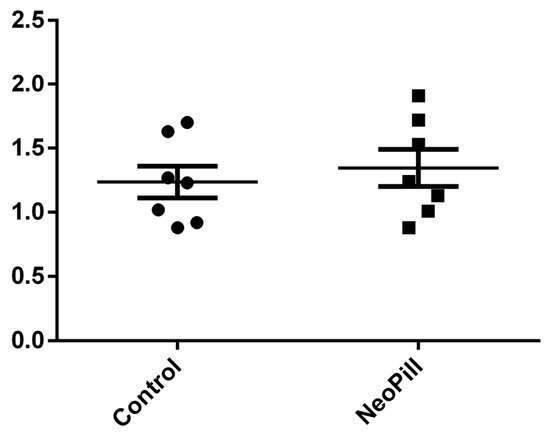
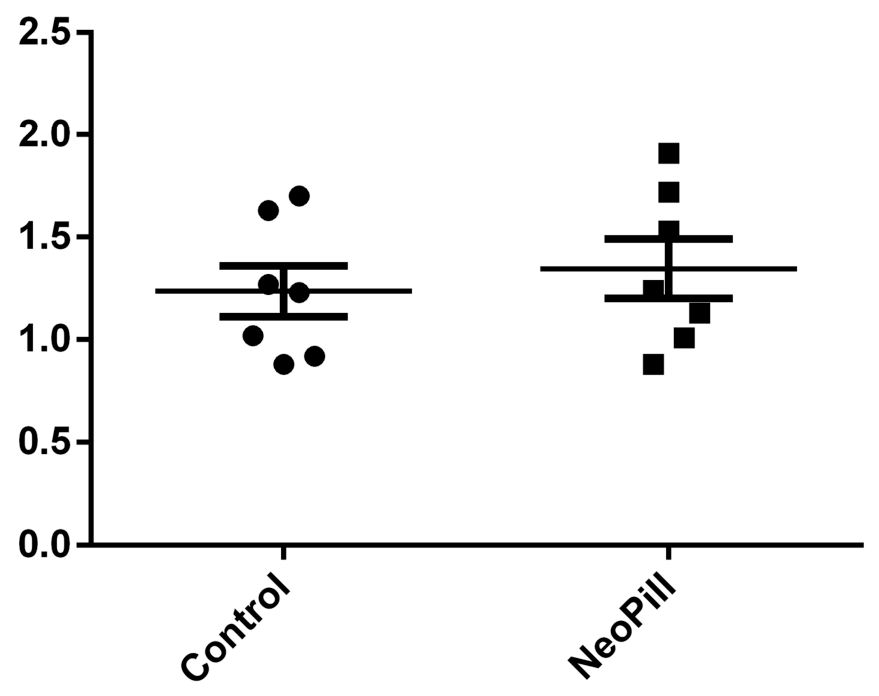
NeoPill-derived DC did not induce statistically significant changes in total salivary protein content (p = 0.493, Cohen’s d = 0.347, 95% CI [−0.508, 0.259]) (Figure 2).
Figure 2.
Total protein content in saliva samples before (Control) and after the treatment with NeoPill-derived DC (NeoPill).
3.3. Oxidative Stress Biomarkers
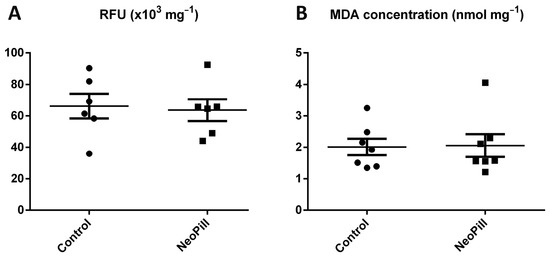
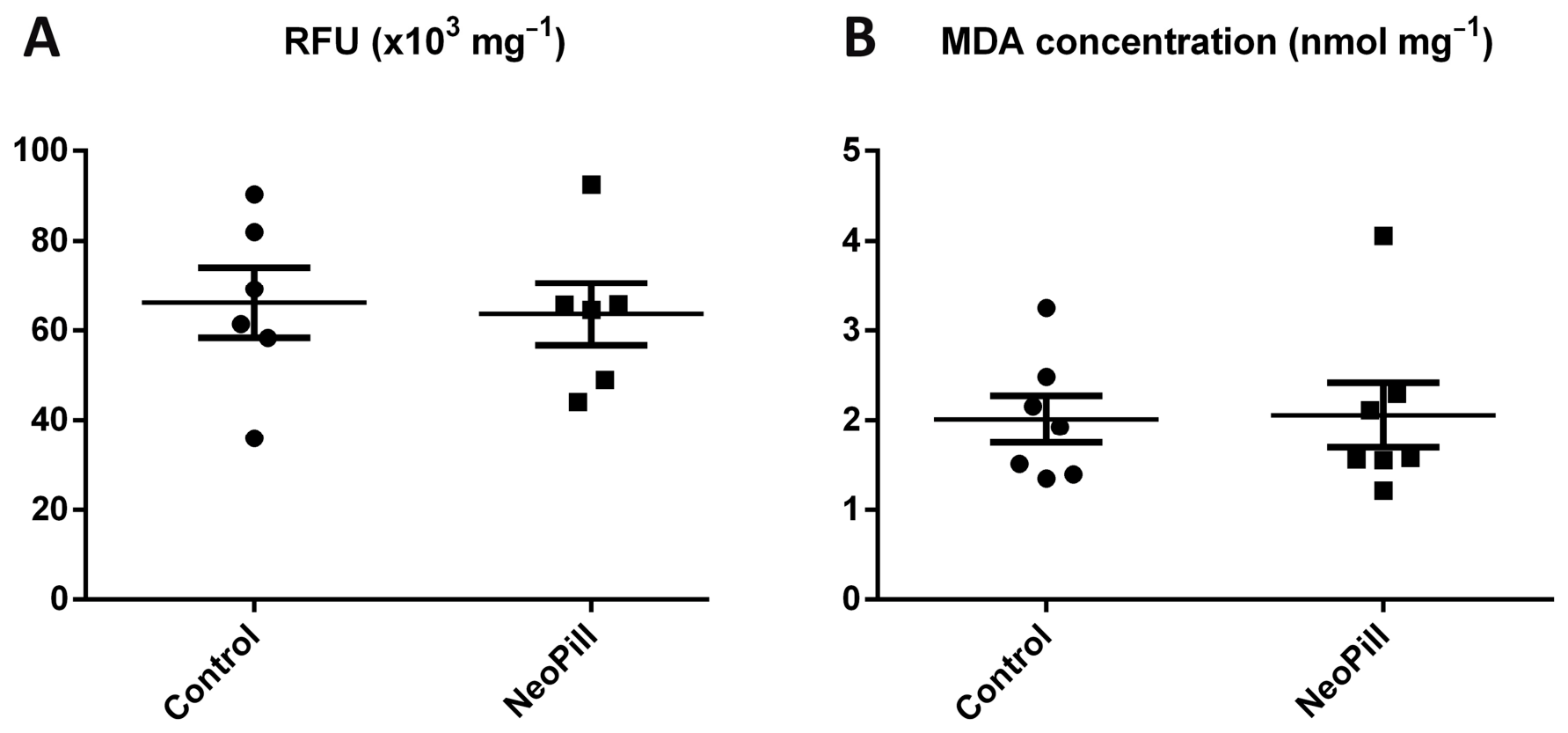
To evaluate oxidative stress biomarkers in smokers’ saliva following acute 30-s treatment with NeoPill-derived DC, ROS levels and lipid peroxidation were assessed. The results have shown that NeoPill-derived DC did not significantly alter salivary ROS levels (p = 0.811, Cohen’s d = 0.142, 95% CI [−20.748 × 10³, 25.895 × 10³]) (Figure 3A). Likewise, no statistically significant difference was observed in MDA concentrations before and after treatment (p = 0.903, Cohen’s d = 0.064, 95% CI [−0.949, 0.846]) (Figure 3B). These findings suggest that ex vivo application of the NeoPill device does not induce oxidative stress in smokers’ saliva following acute short-term exposure, as assessed by the measured biomarkers.
Figure 3.
Biomarkers of oxidative stress: (A) total concentration of reactive oxygen species; (B) concentration of malondialdehyde (MDA) in saliva samples before (Control) and after the treatment with NeoPill-derived DC (NeoPill). RFU—relative fluorescence units.
3.4. Antioxidant Biomarkers
To evaluate antioxidative defense activity in saliva following acute ex vivo exposure to NeoPill-derived DC, reducing antioxidant power, GSH-dependent defense, and the activities of the antioxidant enzymes CAT and SOD were assessed.
3.4.1. FRAP Assay
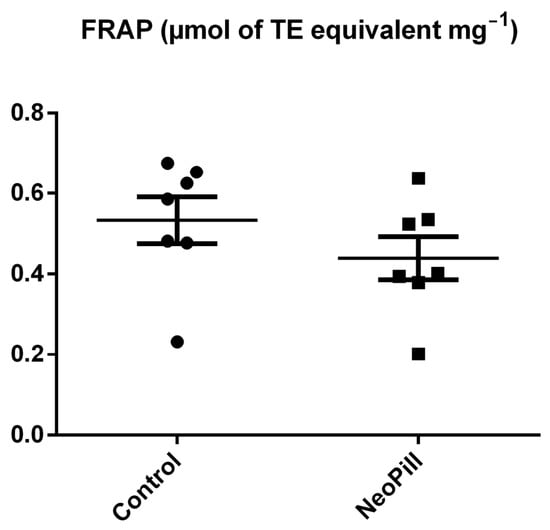
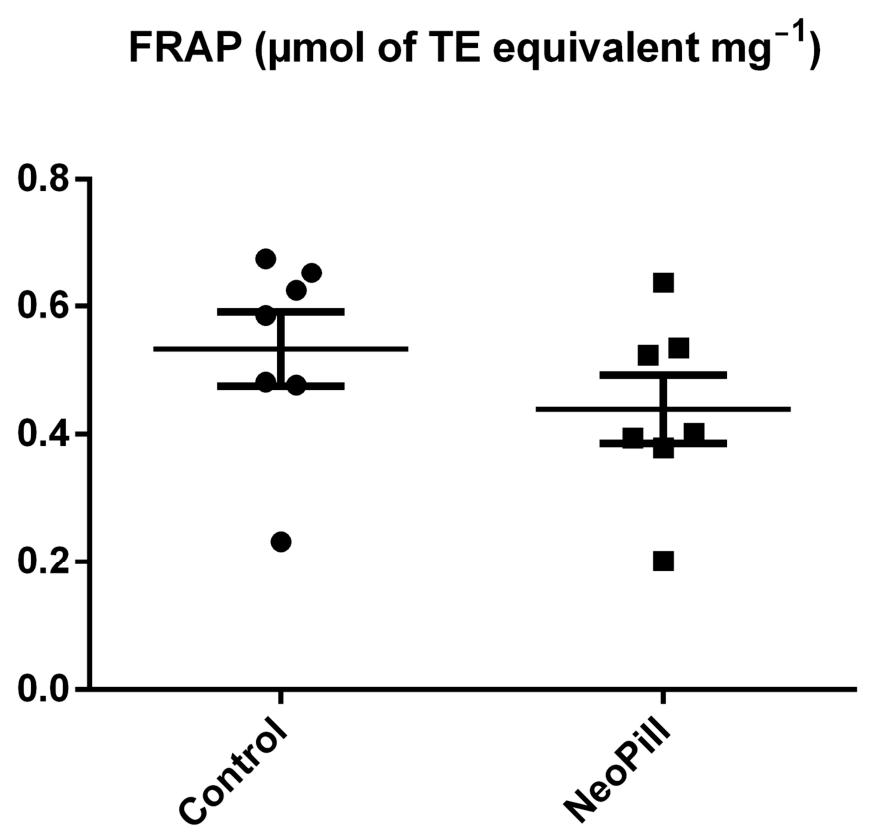
The reducing antioxidant capacity of saliva samples was not significantly altered following treatment with NeoPill-derived DC (p = 0.256, Cohen’s d = 0.610, 95% CI [−0.078, 0.266]) (Figure 4).
Figure 4.
Reducing antioxidant capacity of saliva samples before (Control) and after the treatment with NeoPill-derived DC (NeoPill). TE—Trolox equivalents.
3.4.2. GSH Antioxidant Defense
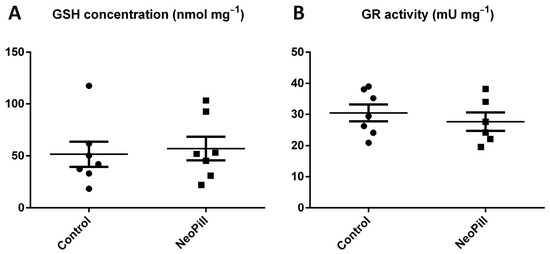
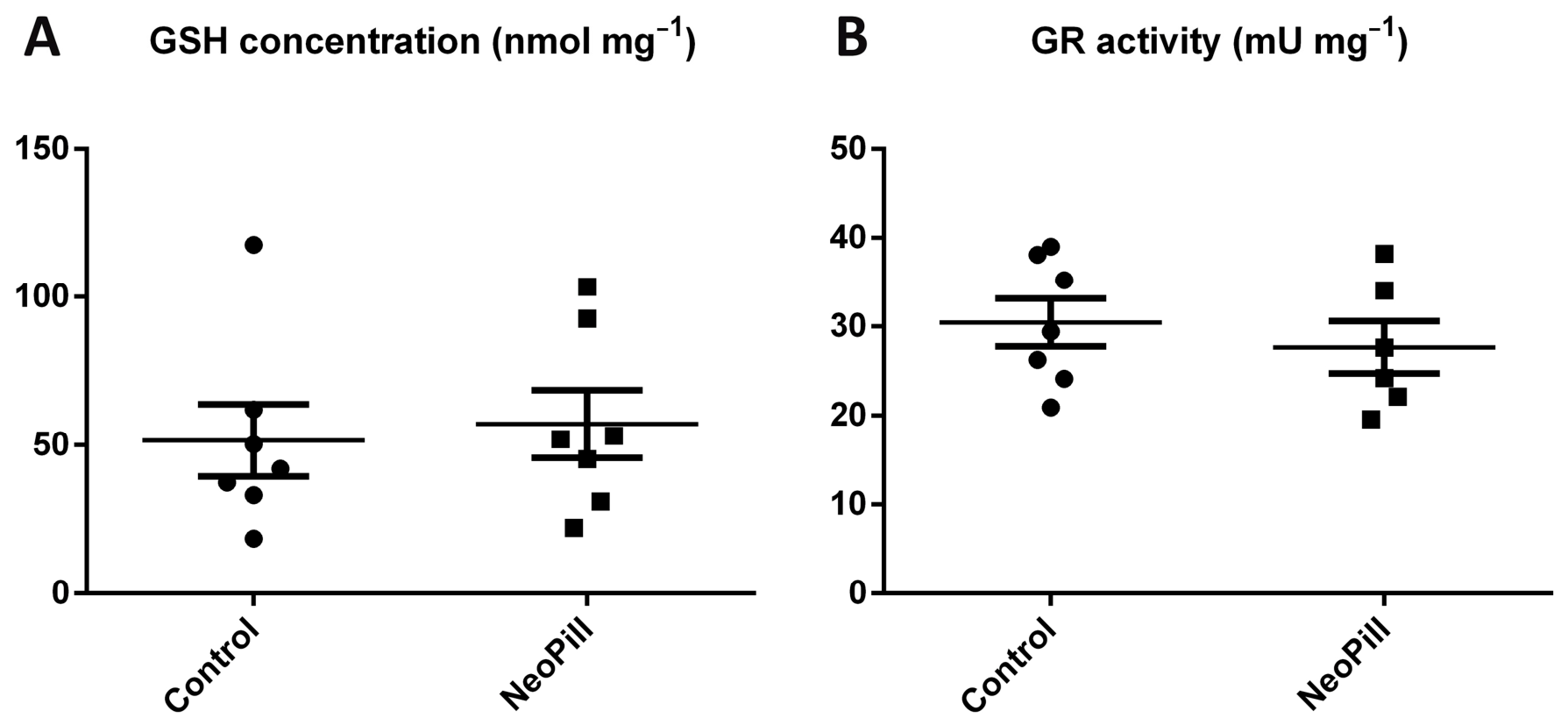
NeoPill-derived DC did not significantly affect salivary GSH concentrations (p = 0.746, Cohen’s d = 0.177, 95% CI [−41.895, 30.828]) (Figure 5A) or GR activity (p = 0.542, Cohen’s d = 0.365, 95% CI [−5.992, 11.554]) (Figure 5B) in saliva samples. These findings indicate that ex vivo exposure to the NeoPill device did not alter GSH-dependent defense in smokers’ saliva.
Figure 5.
Glutathione antioxidant defense: (A) concentration of reduced glutathione (GSH); (B) activity of glutathione reductase (GR) in saliva samples before (Control) and after the treatment with NeoPill-derived DC (NeoPill).
3.4.3. Antioxidant Enzymes
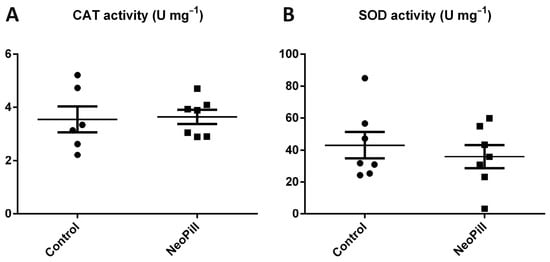
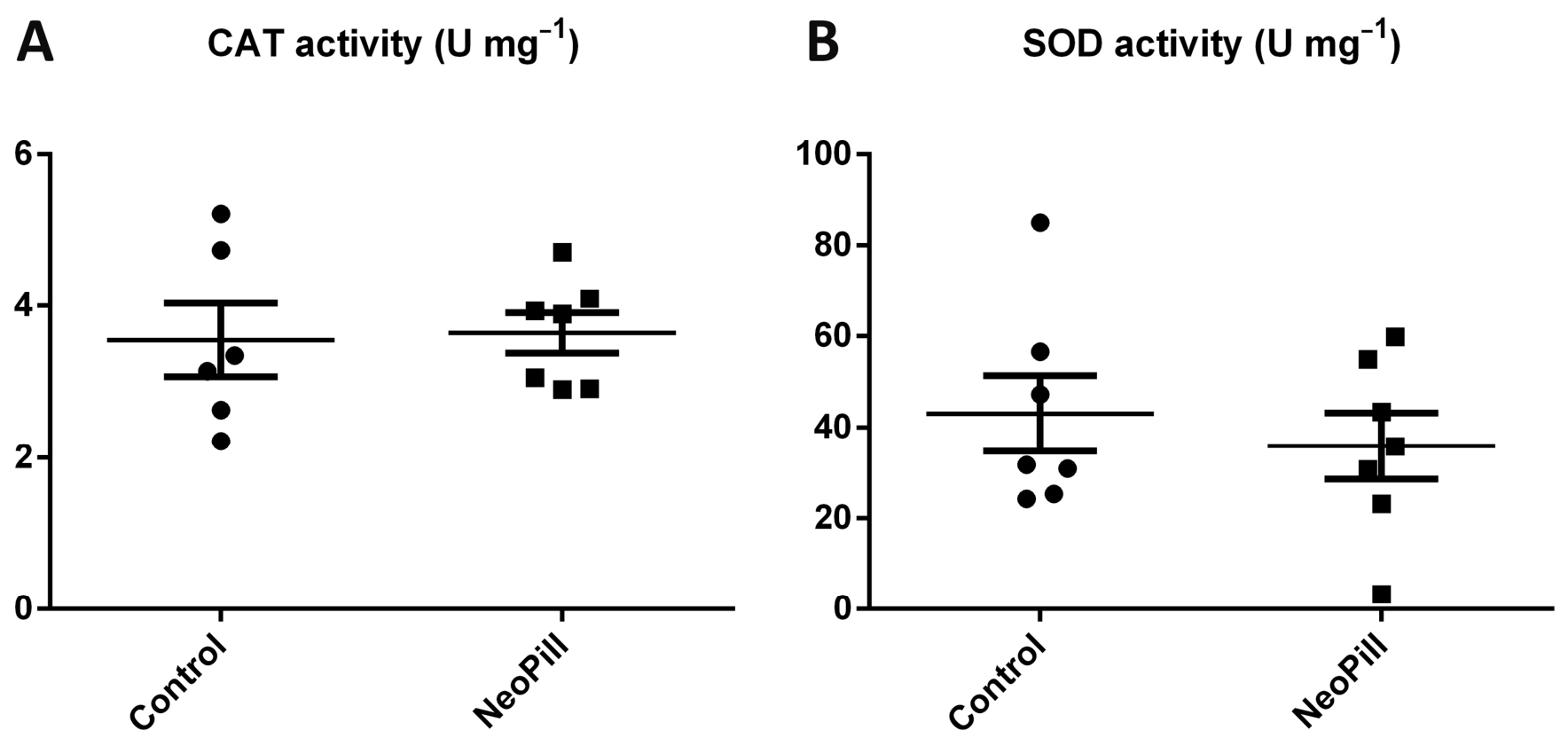
Treatment with NeoPill-derived DC did not significantly affect the activities of CAT (p = 0.865, Cohen’s d = 0.092, 95% CI [−1.257, 1.073]) or SOD (p = 0.644, Cohen’s d = 0.344, 95% CI [−16.990, 31.252]) in saliva (Figure 6).
Figure 6.
Antioxidant enzymes: (A) activity of catalase (CAT); (B) activity of superoxide dismutase (SOD) in saliva samples before (Control) and after the treatment with NeoPill-derived DC (NeoPill).
3.5. The Oxidant-to-Antioxidant Balance
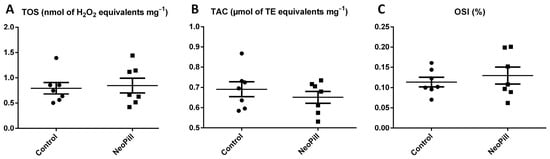
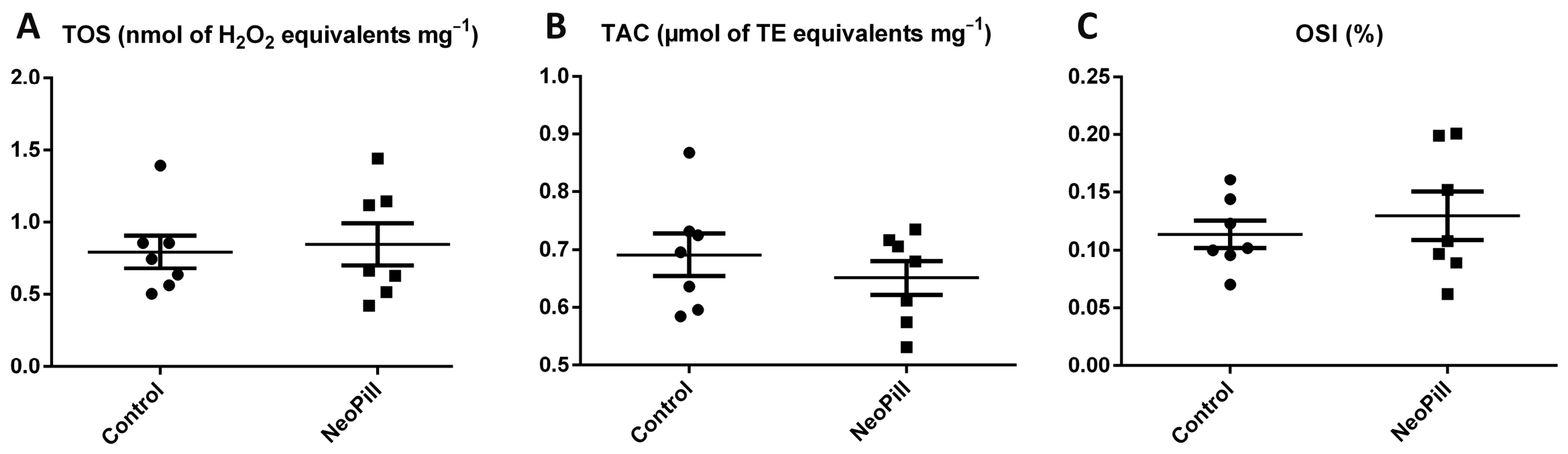
Oxidative stress in smokers’ saliva following NeoPill-derived DC exposure was further evaluated by calculating the oxidant-to-antioxidant balance, expressed as the OSI (TOS/TAC ratio). NeoPill-derived DC did not significantly affect TOS (p = 0.775, Cohen’s d = 0.157, 95% CI [−0.454, 0.347]) (Figure 7A), TAC (p = 0.375, Cohen’s d = 0.477, 95% CI [−0.055, 0.136]) (Figure 7B), or OSI (p = 0.511, Cohen’s d = 0.448, 95% CI [−0.068, 0.036]) (Figure 7C) in saliva samples.
Figure 7.
The oxidant-to-antioxidant balance: (A) total oxidant status (TOS); (B) total antioxidant capacity (TAC); and (C) oxidative stress index (OSI) of saliva samples before (Control) and after the treatment with NeoPill-derived DC (NeoPill). TE—Trolox equivalents.
4. Discussion
This study aimed to evaluate the impact of acute 30-s exposure of smokers’ saliva to NeoPill-derived DC by analyzing salivary physicochemical properties, oxidative stress biomarkers and antioxidative defense activity. Salivary physicochemical parameters including pH, buffering capacity, and total protein content remained unchanged following exposure to NeoPill-derived DC. The natural pH of resting saliva is neutral, ranging between 5.6 and 7.6 in healthy individuals [35]. Since smoking has been associated with reduced salivary pH [36,37], the values observed in both groups were higher than expected. The relatively high pH values may be attributed to the mild centrifugation applied in this study [22]. The increase in pH could result from the loss of CO2 dissolved in saliva during centrifugation, leading to re-equilibration and a reduction in carbonic acid concentration [38]. Importantly, both Control and NeoPill samples underwent the same centrifugation procedure, ensuring valid group comparisons. Although pH values were higher than anticipated, exposure to NeoPill-derived DC did not affect salivary pH. Buffering capacity, a key factor in oral health and caries risk [39], also remained unchanged, suggesting that NeoPill-derived DC does not adversely affect the biochemical properties of smokers’ saliva under the applied experimental conditions. In line with these findings, total protein content was likewise unaffected by NeoPill-derived DC exposure, with concentrations comparable to those reported previously [40].
DCFH-DA and lipid peroxidation assays were employed to determine whether acute 30-s exposure to NeoPill-derived DC could induce oxidative stress in smokers’ saliva. Previous studies have demonstrated that low DC reduces oral bacteria viability through increased ROS production [13], yet its effects on salivary redox status remain underexplored. To the best of our knowledge, this is the first study to examine the impact of DC on salivary redox balance. While low DC has been associated with inhibition of biofilm formation and disruption of preformed biofilms in parallel with ROS generation in bacterial systems [13], our findings indicate that such effects may not translate into oxidative imbalance in salivary matrices. Unlike bacterial systems, where localized ROS production can directly impair cell viability, the complex composition of saliva may buffer these effects and prevent measurable oxidative imbalance. Notably, although the applied DC intensities in the study of Zou et al. [13] and in our study were comparable (100–1000 µA vs. 300–500 µA, respectively), the treatment durations differed substantially (24 h and 72 h vs. 30 s). The antimicrobial activity of DC has been attributed to several mechanisms, including electrolysis-induced toxic substances (e.g., H2O2, oxidizing radicals), oxidation of enzymes and coenzymes, leading to bacterial component degradation, and membrane damage, causing leakage of cytoplasmic constituents and/or a reduced bacterial respiratory rate [41]. In our study, no increase in ROS production or elevated MDA levels were detected, indicating that salivary lipids were not subjected to oxidative degradation under the applied conditions. Therefore, the NeoPill-induced reductions in bacterial viability previously reported [15] may instead reflect localized redox reactions triggered by low DC or be explained by electrochemical and bioelectrical mechanisms. These include changes in tooth surface polarity that facilitate biofilm destabilization, plaque removal, and reduced bacterial adhesion [8,9]. Galvanotaxy, defined as the movement of particles toward the cathode or anode under the influence of an electric field, has also been implicated in the antimicrobial activity of DC [42] and may, at least in part, contribute to the antimicrobial effects of the NeoPill device. Nevertheless, further studies are warranted to elucidate the molecular mechanisms underlying the antimicrobial activity of NeoPill.
Reducing capacity, GSH-dependent defense, and the activities of CAT and SOD were assessed to evaluate the impact of acute 30-s exposure to NeoPill-derived DC on smokers’ saliva. In saliva, reducing capacity measured by the FRAP assay is primarily attributed to non-protein antioxidants such as uric acid, GSH, ascorbic acid (vitamin C), and dietary polyphenols [43]. Thiol-containing proteins may also contribute, but to a much lesser extent. Since no statistically significant differences were observed in the reducing antioxidant capacity of saliva samples before and after treatment, the acute 30-s ex vivo NeoPill exposure appears to have had no measurable impact on the antioxidant power attributable to small-molecule antioxidants. GSH-dependent defense constitutes a primary line of protection against oxidative stress and represents a key component of the salivary antioxidant barrier. GSH, the most abundant non-protein thiol, serves as a substrate for the reduction of H2O2, lipid peroxides, and peroxynitrite, a reaction that leads to its oxidation. The oxidized form, GSSG, is reduced back to GSH by NADPH in a reaction catalyzed by GR [44]. No statistically significant differences in GSH content or GR activity following exposure to NeoPill-derived DC indicate that GSH-dependent defense mechanisms were preserved under the applied experimental conditions. Salivary antioxidant enzymes, including CAT and SOD, play critical roles in reducing oxidative damage and maintaining oral redox homeostasis. CAT protects against oxidative stress by decomposing H2O2 into water and molecular oxygen, while SOD catalyzes the dismutation of superoxide anions, representing important defense mechanisms in the antioxidant system. Low DC has previously been shown to elicit an adaptive antioxidant response in microbial systems, characterized by increased SOD expression in response to ROS accumulation [13]. In contrast, acute 30-s treatment with NeoPill-derived DC did not significantly alter CAT or SOD activities in saliva. These findings indicate that the applied current did not generate sufficient oxidative challenge to trigger an adaptive antioxidant response. The stable GR, CAT, and SOD activities, together with unchanged GSH levels and FRAP assay results, further indicate that salivary redox balance was maintained without activation of adaptive antioxidant defenses. These findings are consistent with the unchanged ROS levels observed in smokers’ saliva. Taken together, the absence of detectable changes in oxidative markers reflects preserved redox homeostasis following acute ex vivo exposure to NeoPill-derived DC, rather than the activation of adaptive antioxidant responses.
To further investigate whether NeoPill-derived DC contributes to oxidative stress in saliva, we evaluated the oxidant-to-antioxidant balance by calculating the ratio of TOS to TAC, expressed as the OSI. These parameters are widely used to monitor redox status in biological samples, including saliva. The obtained TOS and TAC values were consistent with those reported by Toczewska et al. in non-stimulated saliva [45]. Unchanged TOS, TAC and OSI values in saliva samples treated with NeoPill corroborate the finding that the applied DC (300–500 µA) did not induce ROS production or lipid oxidative damage, nor did it activate an adaptive antioxidant response.
The observed variation in applied current (300–500 µA) was most likely attributable to differences in the intrinsic conductivity of saliva samples from individual participants, given that all treated samples were subjected to the same experimental setup, including electrodes, sample volume, treatment duration, and electrode configuration. Since saliva served as the electrolyte in the experimental setup, the measured current depended directly on the concentration and type of ionic species present, as well as on the overall physicochemical composition of each sample. With regard to the possible influence of these variations on ROS generation and antioxidant responses, it is reasonable to assume that current intensity may affect the extent of electrochemical reactions occurring in the sample. Therefore, minor differences in ROS-related and antioxidant parameters observed between samples could partly reflect differences in applied current. However, the relatively narrow current range suggests that these fluctuations were unlikely to represent the main determinant of the biochemical response.
5. Limitations of the Study
This investigation was designed as a pilot study due to the absence of prior literature or clinical data on the impact of electric oral hygiene devices on salivary redox balance, which precluded an a priori sample size calculation. The small sample size represents a key limitation, resulting in limited statistical power. Selection bias is also present, as only smokers were included owing to their higher oxidative stress background. Although it appears unlikely that acute NeoPill application to non-smokers’ saliva would induce oxidative stress, given that no such effect was observed in smokers’ saliva, which is more susceptible, future studies should nevertheless include both smokers and non-smokers to validate these findings in a broader population. Another limitation is the single treatment applied, whereas the device is intended for chronic use; only acute effects of a 30-s application were monitored. The ex vivo experimental setup further constrains interpretation, as it does not capture the complexity of in vivo oral physiology, including salivary flow, microbial metabolism, mucosal interactions, and dynamic pH variations. Consequently, meaningful conclusions regarding NeoPill safety require in vivo application with chronic follow-up. Taken together, these limitations underscore the need for larger validation studies with expanded sample size and long-term monitoring to confirm and extend the preliminary observations reported here.
6. Conclusions
The results of this pilot study demonstrate that a 30-s ex vivo treatment of smokers’ saliva with NeoPill-derived DC did not significantly alter pH, buffering capacity, total protein content, antioxidant defense, or oxidative status, despite the greater susceptibility of smokers’ saliva to oxidative stress compared to non-smokers. These findings suggest that NeoPill did not affect redox balance in smokers’ saliva under the applied conditions. While the study provides valuable initial insights into the effects of this novel device, the small sample size represents a key limitation that must be considered when interpreting the results. Future investigations should include larger cohorts stratified by age and gender, encompassing both smokers and non-smokers, as well as individuals with fixed orthodontic appliances, to validate the translational applicability of NeoPill in its target population. Long-term clinical evaluations of continuous NeoPill use would provide more comprehensive insights into its impact on salivary redox status and overall oral health. Thus, in vivo studies with chronic follow-up are required before firm conclusions regarding device safety can be drawn. Additionally, mechanistic studies investigating how NeoPill-derived DC exerts antimicrobial effects without altering the salivary redox balance are warranted to strengthen our understanding of its safety and therapeutic potential. Taken together, this pilot study provides preliminary evidence of NeoPill’s effects on salivary redox balance; however, further clinical validation in larger, diverse cohorts is essential to establish translational relevance.
Author Contributions
Conceptualization, N.T.V., I.P. and S.J.; methodology, N.T.V., N.Đ., A.S.I., S.J. and I.P.; validation, N.T.V. and I.P., data curation, N.T.V., N.Đ., A.S.I. and I.P.; writing—original draft preparation, N.T.V.; writing—review and editing, I.P., N.Đ., A.S.I., S.J. and S.P.; visualization, N.T.V. and N.Đ.; supervision, I.P. and S.P.; project administration, S.P.; funding acquisition, N.T.V. and S.P. All authors have read and agreed to the published version of the manuscript.
Funding
This research was funded by the Ministry of Science, Technological Development and Innovation of the Republic of Serbia (Agreement no. 451-03-33/2026-03/200017) and Neofunction d.o.o., Belgrade, Serbia. The funders had no role in the design of the study; in the collection, analyses, or interpretation of data; in the writing of the manuscript; or in the decision to publish the results.
Institutional Review Board Statement
The study was conducted in accordance with the Declaration of Helsinki and approved by the Ethics Committee of the Vinča Institute of Nuclear Sciences—National Institute of the Republic of Serbia, University of Belgrade (approval No. 25-DMSO-017387/3 from 11 July 2025).
Informed Consent Statement
Informed consent was obtained from all subjects involved in the study.
Data Availability Statement
All data of this work are presented in this article and can also be made available through the corresponding author upon request.
Acknowledgments
The authors acknowledge Neofunction d.o.o. Belgrade for donating the NeoPill device for the study. The authors gratefully acknowledge Svetlana Soković Bajić from the Group for Probiotics and Microbiota-Host Interaction, Institute of Molecular Genetics and Genetic Engineering, University of Belgrade, for assistance with pH measurements.
Conflicts of Interest
The funders had no role in the design of the study; in the collection, analyses, or interpretation of the data; in the writing of the manuscript; or in the decision to publish the results.
Abbreviations
The following abbreviations are used in this manuscript:
| DC | Direct current |
| ROS | Reactive oxygen species |
| DCFH-DA | 2′,7′-dichlorodihydrofluorescein diacetate |
| RFU | Relative fluorescence units |
| MDA | Malondialdehyde |
| TBA | Thiobarbituric acid |
| TOS | Total oxidant status |
| TAC | Total antioxidant capacity |
| ABTS | 2,2′-azino-bis(3-ethylbenzothiazoline-6-sulfonic acid) |
| OSI | Oxidative stress index |
| FRAP | Ferric reducing antioxidant power |
| TPTZ | Tripyridyltriazine |
| GSH | Glutathione |
| GR | Glutathione reductase |
| NADPH | Nicotinamide adenine dinucleotide phosphate |
| CAT | Catalase |
| SOD | Superoxide dismutase |
References
- WHO Oral Health. The First-Ever Global Oral Health Conference Highlights Universal Health Coverage by 2030. Available online: https://www.who.int/news/item/25-11-2024-the-first-ever-global-oral-health-conference-highlights-universal-health-coverage-by-2030 (accessed on 25 March 2026).
- Sälzer, S.; Graetz, C.; Dörfer, C.E.; Slot, D.E.; Weijden, D. Contemporary Practices for Mechanical Oral Hygiene to Prevent Periodontal Disease. Periodontology 2000, 84, 35–44. [Google Scholar] [CrossRef] [Scilit] [PubMed]
- Yu, M.; Ayala, G.X.; Schiaffino, M.K.; Hoeft, K.S.; Malcarne, V.; Finlayson, T.L. A Mixed Methods Comparison of Oral Hygiene Behaviors by Gender Among Mexican-Origin Young Adults in California. Oral 2025, 5, 5. [Google Scholar] [CrossRef] [Scilit] [PubMed]
- Palanisamy, S. Innovations in Oral Hygiene Tools: A Mini Review on Recent Developments. Front. Dent. Med. 2024, 5, 1442887. [Google Scholar] [CrossRef] [Scilit] [PubMed]
- Cavalcanti, Y.W.; Wilson, M.; Lewis, M.; Williams, D.; Senna, P.M.; Del-Bel-Cury, A.A.; Da Silva, W.J. Salivary Pellicles Equalise Surfaces’ Charges and Modulate the Virulence of Candida Albicans Biofilm. Arch. Oral Biol. 2016, 66, 129–140. [Google Scholar] [CrossRef] [Scilit] [PubMed]
- Kolenbrander, P.E.; Palmer, R.J.; Periasamy, S.; Jakubovics, N.S. Oral Multispecies Biofilm Development and the Key Role of Cell-Cell Distance. Nat. Rev. Microbiol. 2010, 8, 471–480. [Google Scholar] [CrossRef] [Scilit] [PubMed]
- Bos, R.; Van Der Mei, H.C.; Busscher, H.J. Physico-Chemistry of Initial Microbial Adhesive Interactions—Its Mechanisms and Methods for Study. FEMS Microbiol. Rev. 1999, 23, 179–230. [Google Scholar] [CrossRef]
- Ikawa, T.; Mizutani, K.; Sudo, T.; Kano, C.; Ikeda, Y.; Akizuki, T.; Kobayashi, H.; Izumi, Y.; Iwata, T. Clinical Comparison of an Electric-Powered Ionic Toothbrush and a Manual Toothbrush in Plaque Reduction: A Randomized Clinical Trial. Int. J. Dent. Hyg. 2021, 19, 93–98. [Google Scholar] [CrossRef] [Scilit] [PubMed]
- Zdravković, N.; Stanisavljević, N.; Malešević, M.; Vukotić, G.; Stevanović, T.; Bošnjak, I.; Ninković, M. The Effects of Electrolytic Technology Toothbrush Application on the Clinical Parameters and Bacteria Associated with. Animals 2024, 14, 3067. [Google Scholar] [CrossRef] [Scilit] [PubMed]
- Rodrigues, F.; Rodrigues da Silva, M.; Silva, F.S.; Madeira, S.; Carvalho, Ó. Electric Current Application on Dental Implant Biofilms: Review. J. Funct. Biomater. 2024, 15, 197. [Google Scholar] [CrossRef] [Scilit] [PubMed]
- Ichimura, K.; Harazaki, M.; Yanagi, K.; Isshiki, Y. Effect of Weak Electric Current on Reducing Oral Bacteria in Vitro. Bull. Tokyo Dent. Coll. 2001, 42, 97100. [Google Scholar] [CrossRef] [Scilit] [PubMed]
- Wang, H.; Ren, D. Controlling Streptococcus Mutans and Staphylococcus Aureus Biofilms with Direct Current and Chlorhexidine. AMB Express 2017, 7, 204. [Google Scholar] [CrossRef] [Scilit] [PubMed]
- Zou, P.; Li, P.; Liu, J.; Cao, P.; Luan, Q. Direct Current Exerts Electricidal and Bioelectric Effects on Porphyromonas Gingivalis Biofilms Partially via Promoting Oxidative Stress and Antibiotic Transport. J. Microbiol. 2022, 60, 70–78. [Google Scholar] [CrossRef] [Scilit] [PubMed]
- Shokeen, B.; Viloria, E.; Duong, E.; Rizvi, M.; Murillo, G.; Mullen, J.; Shi, B.; Dinis, M.; Li, H.; Tran, N.C.; et al. The Impact of Fixed Orthodontic Appliances and Clear Aligners on the Oral Microbiome and the Association with Clinical Parameters: A Longitudinal Comparative Study. Am. J. Orthod. Dentofac. Orthop. 2022, 161, e475–e485. [Google Scholar] [CrossRef] [Scilit] [PubMed]
- Tambur, Z.; Trifunović, J.; Avramov, S.; Aleksić, E.; Malešević, A. Evaluation of Antimicrobial Effect of the Neo Pill Device on Fixed Orthodontic Appliances: In Vitro Pilot Study. J. Infect. Dev. Ctries. 2025, 19, 1638–1642. [Google Scholar] [CrossRef] [Scilit] [PubMed]
- Park, H.M.; Ryu, S.; Jo, E.; Yoo, S.K. A Study on the Biofilm Removal Efficacy of a Bioelectric Toothbrush. Bioengineering 2023, 10, 1184. [Google Scholar] [CrossRef] [Scilit] [PubMed]
- Georgiou, C.D.; Margaritis, L.H. Oxidative Stress and Nadph Oxidase: Connecting Electromagnetic Fields, Cation Channels and Biological Effects. Int. J. Mol. Sci. 2021, 22, 10041. [Google Scholar] [CrossRef] [Scilit] [PubMed]
- Kim, Y.W.; Lee, J.; Han, S.K.; Koo, B.; Park, T.; Park, H.M.; Lee, B. A Non-Electrolysis Bioelectric Effect for Gingivitis and Hygiene Contamination Biofilm Removal. Appl. Microbiol. 2023, 3, 675–686. [Google Scholar] [CrossRef] [Scilit]
- Chioran, D.; Simerea, I.; Dumitrescu, R.; Sabo, A.; Floare, L.; Abrudan-luca, D.; Bolchis, V.; Diana, P.; Balean, O. The Effect of Smoking on Salivary Antioxidants. Rom. J. Oral Rehabil. 2025, 17, 534–543. [Google Scholar] [CrossRef] [Scilit]
- Zięba, S.; Zalewska, A.; Żukowski, P.; Maciejczyk, M. Can Smoking Alter Salivary Homeostasis? A Systematic Review on the Effects of Traditional and Electronic Cigarettes on Qualitative and Quantitative Saliva Parameters. Dent. Med. Probl. 2024, 61, 129–144. [Google Scholar] [CrossRef] [Scilit] [PubMed]
- Chiriac, V.; Balea, G. Buffer Index and Buffer Capacity for a Simple Buffer Solution. J. Chem. Educ. 1997, 74, 937–939. [Google Scholar] [CrossRef] [Scilit]
- Zhang, D.; Jiang, H.; Chen, J.; Wang, X. Buffering Capacity of Saliva Influences the Perception of Acid-Related Sensory Properties. Food Qual. Prefer. 2022, 97, 104454. [Google Scholar] [CrossRef] [Scilit]
- Lowry, O.; Rosebrough, N.; Farr, A.; Randall, R. Protein Measurement with the Folin Phenol Reagent. J. Biol. Chem. 1951, 193, 265–275. [Google Scholar] [CrossRef] [Scilit] [PubMed]
- Rubio, M.C.; González, P.M.; Ramos, C.; Lewin, P.G.; Friedman, S.M.; Puntarulo, S.; Nicolosi, L.N. Oxidative Stress Assessed in Saliva from Patients with Acute Myocardial Infarction. A Preliminary Study. Acta Odontol. Latinoam. 2013, 26, 116–120. [Google Scholar] [PubMed]
- Tarboush, N.A.; Al Masoodi, O.; Al Bdour, S.; Sawair, F.; Hassona, Y. Antioxidant Capacity and Biomarkers of Oxidative Stress in Saliva of Khat-Chewing Patients: A Case-Control Study. Oral Surg. Oral Med. Oral Pathol. Oral Radiol. 2019, 127, 49–54. [Google Scholar] [CrossRef] [Scilit] [PubMed]
- Benzie, I.F.F.; Strain, J.J. The Ferric Reducing Ability of Plasma (FRAP) as a Measure of “Antioxidant Power”: The FRAP Assay. Anal. Biochem. 1996, 239, 70–76. [Google Scholar] [CrossRef] [Scilit] [PubMed]
- Ellman, G.L. Tissue Sulfhydryl Groups. Arch. Biochem. Biophys. 1959, 82, 70–77. [Google Scholar] [CrossRef] [Scilit] [PubMed]
- Halliwell, B.; Foyer, C. Properties and Physiological Function of a Glutathione Reductase Purified from Spinach Leaves by Affinity Chromatography. Planta 1978, 139, 9–17. [Google Scholar] [CrossRef] [Scilit] [PubMed]
- Claiborne, A. Catalase Activity. In Handbook of Methods for Oxygen Radical Research; Greenwald, R.A., Ed.; Routledge: London, UK, 1985; pp. 283–284. [Google Scholar]
- Marklund, S.; Marklund, G. Involvement of the Superoxide Anion Radical in the Autoxidation of Pyrogallol and a Convenient Assay for Superoxide Dismutase. Eur. J. Biochem. 1974, 474, 469–474. [Google Scholar] [CrossRef] [Scilit] [PubMed]
- Erel, O. A New Automated Colorimetric Method for Measuring Total Oxidant Status. Clin. Biochem. 2005, 38, 1103–1111. [Google Scholar] [CrossRef] [Scilit] [PubMed]
- Erel, O. A Novel Automated Direct Measurement Method for Total Antioxidant Capacity Using a New Generation, More Stable ABTS Radical Cation. Clin. Biochem. 2004, 37, 277–285. [Google Scholar] [CrossRef] [Scilit] [PubMed]
- Harma, M.; Harma, M.; Erel, O. Increased Oxidative Stress in Patients with Hydatidiform Mole. Swiss Med. Wkly. 2003, 133, 563–566. [Google Scholar] [CrossRef] [Scilit] [PubMed]
- Statistics Kingdom. Statistics online. Available online: https://www.statskingdom.com/index.html (accessed on 9 June 2026).
- Chen, J. Food Oral Processing-A Review. Food Hydrocoll. 2009, 23, 1–25. [Google Scholar] [CrossRef] [Scilit]
- Grover, N.; Sharma, J.; Sengupta, S.; Singh, S.; Singh, N.; Kaur, H. Long-Term Effect of Tobacco on Unstimulated Salivary pH. J. Oral Maxillofac. Pathol. 2016, 20, 16–19. [Google Scholar] [CrossRef] [Scilit] [PubMed]
- Singh, M.; Ingle, N.; Kaur, N.; Yadav, P.; Ingle, E. Effect of Long-Term Smoking on Salivary Flow Rate and Salivary pH. J. Indian Assoc. Public Health Dent. 2015, 13, 11. [Google Scholar] [CrossRef] [Scilit]
- Neyraud, E.; Bult, J.H.F.; Dransfield, E. Continuous Analysis of Parotid Saliva during Resting and Short-Duration Simulated Chewing. Arch. Oral Biol. 2009, 54, 449–456. [Google Scholar] [CrossRef] [Scilit] [PubMed]
- Bechir, F.; Pacurar, M.; Tohati, A.; Bataga, S.M. Comparative Study of Salivary Ph, Buffer Capacity, and Flow in Patients with and without Gastroesophageal Reflux Disease. Int. J. Environ. Res. Public Health 2022, 19, 201. [Google Scholar] [CrossRef] [Scilit] [PubMed]
- Parraca, J.A.; Rubio-Zarapuz, A.; Tornero-Aguilera, J.F.; Clemente-Suárez, V.J.; Tomas-Carus, P.; Costa, A.R. Analyzing the Biochemistry of Saliva: Flow, Total Protein, Amylase Enzymatic Activity, and Their Interconnections. Int. J. Mol. Sci. 2025, 26, 1164. [Google Scholar] [CrossRef] [Scilit] [PubMed]
- del Pozo, J.L.; Rouse, M.S.; Patel, R. Bioelectric Effect and Bacterial Biofilms. A Systematic Review. Int. J. Artif. Organs 2008, 31, 786–795. [Google Scholar] [CrossRef] [Scilit] [PubMed]
- Czerwińska-Główka, D.; Krukiewicz, K. A Journey in the Complex Interactions between Electrochemistry and Bacteriology: From Electroactivity to Electromodulation of Bacterial Biofilms. Bioelectrochemistry 2020, 131, 107401. [Google Scholar] [CrossRef] [Scilit] [PubMed]
- Kamodyová, N.; Tóthová, L.; Celec, P. Salivary Markers of Oxidative Stress and Antioxidant Status: Influence of External Factors. Dis. Markers 2013, 34, 313–321. [Google Scholar] [CrossRef] [Scilit] [PubMed]
- Sastre, J.; Pallardo, F.V.; Viña, J. Glutathione. In The Handbook of Environmental Chemistry; Barceló, D., Kostianoy, A.G., Eds.; Springer: Berlin/Heidelberg, Germany, 2005; pp. 91–108. [Google Scholar]
- Toczewska, J.; Maciejczyk, M.; Konopka, T.; Zalewska, A. Total Oxidant and Antioxidant Capacity of Gingival Crevicular Fluid and Saliva in Patients with Periodontitis: Review and Clinical Study. Antioxidants 2020, 9, 450. [Google Scholar] [CrossRef] [Scilit] [PubMed]

Disclaimer/Publisher’s Note: The statements, opinions and data contained in all publications are solely those of the individual author(s) and contributor(s) and not of MDPI and/or the editor(s). MDPI and/or the editor(s) disclaim responsibility for any injury to people or property resulting from any ideas, methods, instructions or products referred to in the content. |
© 2026 by the authors. Licensee MDPI, Basel, Switzerland. This article is an open access article distributed under the terms and conditions of the Creative Commons Attribution (CC BY) license.