
Review

Professional Malpractice Claims in Implant Dentistry: A Scoping Review

1
Department of Innovative Technologies in Medicine & Dentistry, University “G. d’Annunzio” of Chieti-Pescara, 66100 Chieti, Italy
2
Department of Life, Health and Environmental Sciences, University of L’Aquila, 67100 L’Aquila, Italy
3
Department of Human Sciences, Law, and Economics, Telematic University Leonardo da Vinci (UNIDAV), Torrevecchia Teatina, 66100 Chieti, Italy
4
Department of Comprehensive Care, School of Dental Medicine, Case Western Reserve University, Cleveland, OH 44106-4905, USA
*
Author to whom correspondence should be addressed.
Oral 2026, 6(4), 105; https://doi.org/10.3390/oral6040105
Submission received: 19 June 2026 / Revised: 10 August 2026 / Accepted: 11 August 2026 / Published: 13 August 2026
(This article belongs to the Special Issue Updates in Forensic Dentistry and Odontology)

Abstract

Background and Objectives: This scoping review aims to synthesize evidence on clinical and non-clinical factors associated with malpractice claims in implant dentistry and to identify strategies for prevention. Materials and Methods: A literature search was conducted in PubMed, Scopus, and Web of Science in accordance with PRISMA-ScR guidelines, including peer-reviewed studies published within the last 10 years. Results: Eight studies met the inclusion criteria. Clinical causes of litigation included improper implant placement, inferior alveolar nerve injury, lack of osseointegration, peri-implant infection, and the use of inappropriate or outdated implant systems. Non-clinical factors included inadequate informed consent, poor documentation, deviation from the treatment plan, and ineffective communication. Conclusions: Malpractice in implant dentistry is largely preventable. Risk reduction depends on accurate diagnosis, careful treatment planning, adherence to surgical principles, and clear patient communication with appropriate informed consent.

1. Introduction

Malpractice claims are particularly common in dentistry, especially in areas involving high treatment costs and demanding aesthetic expectations, such as oral surgery, implantology, and prosthetic dentistry [1,2]. Several factors may explain the increasing tendency toward litigation, including long-term shifts in the doctor–patient relationship, greater accessibility to legal services driven by social media marketing, and the growing entry of new solicitors into the medical malpractice sector [3]. As implant dentistry becomes increasingly integrated into routine clinical practice, understanding the drivers of malpractice is essential not only for legal risk reduction but also for improving patient safety, particularly given the variability in claim frequency and legal outcomes reported across different countries. In Italy, a 15-year analysis showed a recent plateau and slight decline in dental malpractice cases adjudicated by the civil court of Rome, likely reflecting increased practitioner caution and wider use of mediation. However, prosthodontics and implants in dentistry remained among the most litigated fields, and 74% of defendants were found liable when cases reached judgment [4]. In contrast, other regions show opposite trends, as reports from Saudi Arabia document a sharp rise in implant-related cases since 2017, coinciding with growing public awareness of legal rights [5]. Cross-jurisdictional evaluation of implant malpractice claims is essential to identify recurrent medico-legal risks and guide preventive strategies, particularly given the increasing number of clinicians performing implant procedures and the associated rise in complications and legal accountability [5,6,7].
However, implant-related malpractice remains incompletely characterized in the literature. Most published studies are retrospective analyses conducted within individual countries or legal systems and focus on specific aspects of malpractice, such as nerve injuries, implant failure, or informed consent, rather than providing a comprehensive overview of implant-related litigation. Although these studies describe specific aspects of litigation involving dental implants, their findings remain incomplete because they originate from different legal systems or address isolated medico-legal issues. To date, no scoping review has systematically mapped and integrated the available evidence on both clinical and non-clinical determinants of malpractice claims in implant dentistry across different jurisdictions.
To address this knowledge gap, this scoping review aims to systematically map the available evidence on malpractice claims in implant dentistry. Specifically, it identifies recurrent clinical and non-clinical factors, summarizes legal outcomes, and integrates findings across different jurisdictions to provide a comprehensive framework for understanding medico-legal risk.

2. Materials and Methods

This scoping review was conducted according to Joanna Briggs Institute methodology and reported in accordance with the PRISMA-ScR guidelines [8,9]. This review protocol was registered on the Open Science Framework (OSF) as https://doi.org/10.17605/OSF.IO/KTMBQ (accessed on 26 November 2025).

2.1. Research Questions

To address the objectives of this scoping review, the following questions (FQs) were formulated:
  • What are the most commonly reported causes of malpractice leading to legal disputes in implant dentistry? (FQ1)
  • What clinical factors are most frequently implicated in professional liability claims involving dental implants? (FQ2)
  • Which non-clinical aspects, such as patient communication, informed consent and clinical documentation, are associated with implant-related malpractice claims? (FQ3)
  • How have recent advances in implant dentistry affected malpractice claims? (FQ4)
  • What preventive measures and risk management approaches have been proposed to reduce malpractice in implant dentistry? (FQ5)

2.2. Search Strategy

A comprehensive search was conducted in PubMed, Scopus and Web of Science to identify the relevant literature on the topic published between 2015 and 2025. No additional records were identified through manual searching.
The search strategy was conducted using a combination of the following search: “implantology”, “dental implant”, “malpractice”, “professional misconduct”, “negligence”, “liability”, “litigation”, “claim”, and “professional liability”. For PubMed, the search strategy was based on free-text terms (title/abstract), except for the term “malpractice”. Detailed search strategies for each database (PubMed, Scopus and Web of Science) are provided in Table 1. The most recent search was conducted in October 2025 across all databases. Retrieved records were imported into Zotero for screening. Duplicate records were automatically identified and removed using Zotero before title and abstract screening.
The PCC (Population, Concept, Context) framework was used to define the scope of the review and guide the eligibility criteria, with the following parameters:
  • P: malpractice cases involving dental implants;
  • C: medico-legal factors and malpractice litigation;
  • C: implant dentistry.
The following eligibility criteria were used: (1) scientific articles and documents addressing professional malpractice claims or litigation involving dental practitioners; (2) studies reporting data on malpractice claims related to implant dentistry; (3) documents presenting legal, medico-legal, insurance, or claims-based data concerning malpractice in implant dentistry; and (4) studies published between 2015 and 2025. Studies were excluded if they met any of the following criteria: (1) studies not involving dentists or implant dentistry practice; (2) articles addressing malpractice in general dentistry without implant-specific data; (3) letters to the editor, editorials, and conference abstracts; and (4) studies published outside the predefined period. A restriction to the previous 10 years was applied to ensure the inclusion of up-to-date evidence, given the evolution of implant dentistry and malpractice litigation over time. No language restrictions were applied during study selection.

2.3. Study Selection

Two independent authors (D.G. and P.B.) performed the literature search and independently screened the identified articles, excluding studies that did not fulfil the predefined eligibility criteria. The full texts of potentially eligible studies were subsequently evaluated to determine their suitability for final inclusion. Any disagreements between the reviewers were resolved through discussion and reassessment. Studies fulfilling all eligibility criteria were included in the qualitative synthesis. Cohen’s kappa coefficient (κ) was calculated to evaluate inter-rater agreement during the study selection process.

2.4. Data Extraction

A standardized data extraction form was created in spreadsheet format and approved by the research team before starting the extraction process. Variables for data extraction were selected according to the information consistently reported across the included studies. The extracted data included patient age, sex, practice setting, number of cases, country, study design, study focus, and reported causes of litigation. Data extraction was performed independently by two reviewers (D.G. and P.B.), and any differences were resolved through discussion.

2.5. Quality Assessment

A critical appraisal of the included studies was conducted using the Joanna Briggs Institute (JBI) critical appraisal checklists according to the respective study design. Each included study was independently assessed by two authors; when differences in assessment occurred, a third reviewer was consulted to reach consensus. The selected JBI checklists were used to evaluate methodological quality and potential sources of bias according to the respective study design. All eligible studies were retained regardless of their quality appraisal results.

3. Results

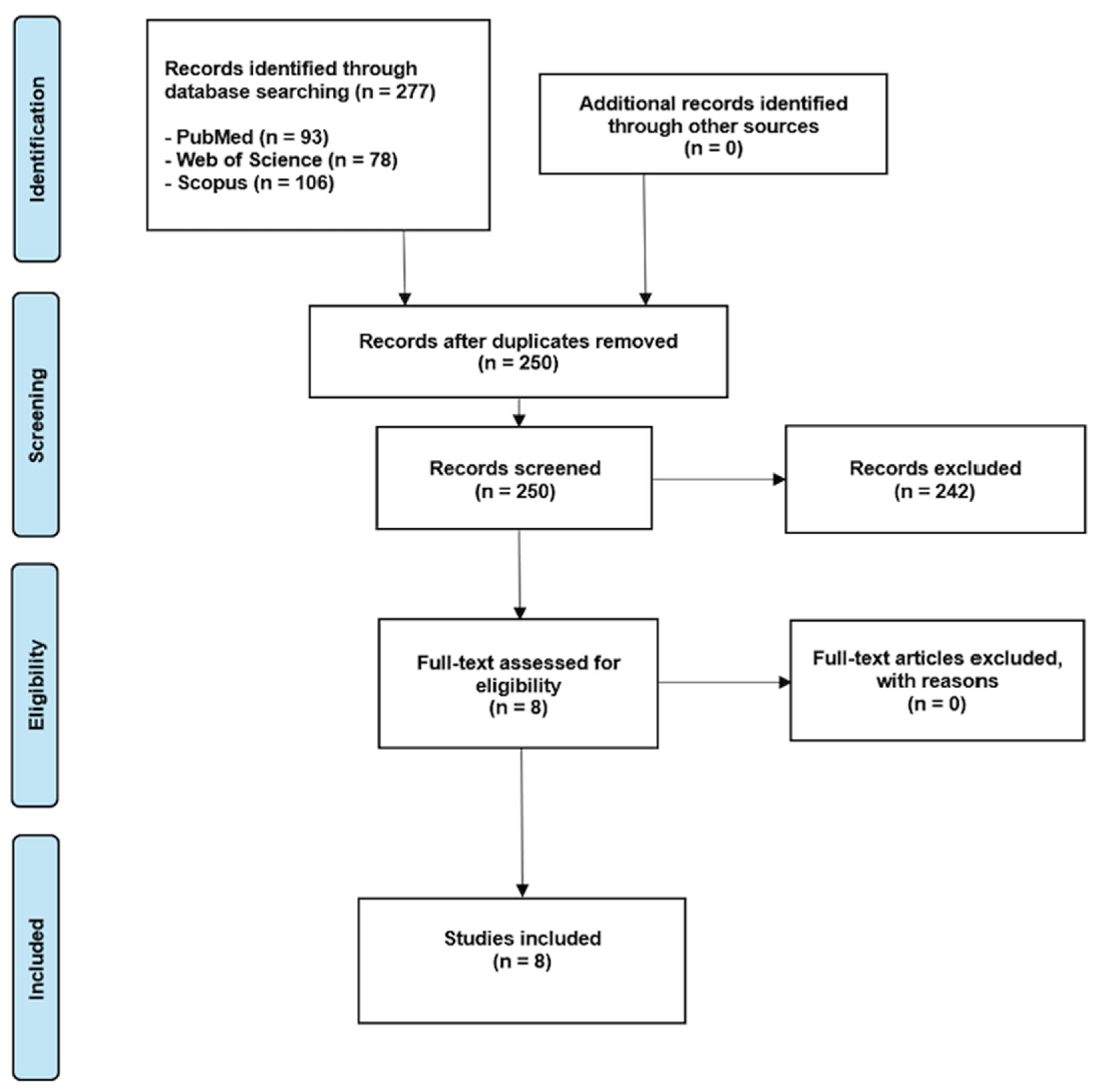
The PRISMA flow diagram (Figure 1) outlines the study selection process. The initial search identified 277 records, of which 8 studies met the inclusion criteria and were included in the review.
Inter-rater reliability showed almost perfect agreement between reviewers during both the title and abstract screening phase (κ = 0.89) and the full-text eligibility assessment. Table 1 summarizes the main characteristics of the included studies.

3.1. Baseline Characteristics and General Features of Claims

The included studies were all retrospective in design [10,11,12,13,14,15,16], with one retrospective matched cohort study [17]. The included studies reported both technical and medico-legal factors associated with implant-related malpractice claims. Some studies provided additional descriptive data: for example, Laviv et al. [15] reported that nerve injury claims predominantly involved the mandible, whereas Yuce et al. [17] provided data on the proportion and legal outcomes of implant-related malpractice claims within a broader cohort of dental litigation cases. The main characteristics of the included studies are summarized in Table 2.

3.2. Recurrent Causes of Litigation

Errors were classified according to Pinchi et al. [1] into preoperative, intraoperative, and postoperative, as well as deficiencies in information and clinical documentation (Table 3).
The reported causes of litigation included treatment planning errors, implant selection and positioning, inadequate bone assessment, neural injury, implant failure, postoperative complications, and shortcomings in patient information, consent, and documentation [10,11,12,13,14,15,16,17].
Preoperative technical errors mainly concerned diagnosis and treatment planning. Marinescu et al. [11] reported that improper implant positioning was the most frequent cone beam computed tomography (CBCT)-preventable cause (46.3%), followed by neural injury and inadequate bone assessment. Other causes, including implant loss, infection, lack of osseointegration, pain, implant fracture, and overloading, were not included in the analysis, as they were not considered related to the imaging modality [11].
Diakonoff et al. [13] reported that liability was primarily attributed to technical fault, particularly inappropriate implant selection, and failure to provide adequate patient information. Only the cylindrical–conical titanium screw implants were considered to meet the recognized standard of care in the analyzed judgments [13]. In a subsequent medico-legal analysis focused on inferior alveolar nerve injury, Diakonoff et al. [14] reported allegations of technical negligence in 40% of cases, breach of the standard of care due to improper treatment planning or use of blade implants in 40% of cases, and failure to provide adequate information in 30% of cases [14]. Intraoperative technical errors mainly involved damage to surrounding structures and incorrect implant placement. Neural injury was frequently reported across the included studies. Abu Wasel et al. [12], in an analysis of 1066 claims, reported neural injury as the most common treatment-related damage (18.7%). Diakonoff et al. [14], in a series of 10 cases, identified several intraoperative causes of nerve injury, including local anesthesia, mucoperiosteal flap reflection, drill or implant intrusion into the mandibular canal, and suturing. Laviv et al. [15] reported a high prevalence of inferior alveolar nerve involvement, with injuries more frequently occurring in the mandibular molar region. Postoperative technical errors mainly involved failure to diagnose and manage complications, as well as early or late implant loss. Bordonaba-Leiva et al. [10], in an analysis of 315 claims, reported that implant-related conditions were among the most frequently claimed events, with most claims associated with lack of osseointegration (14.28%). Diakonoff et al. [14], in a series of 10 cases, reported that failure to diagnose or follow-up complications accounted for 40% of allegations, particularly in cases involving inferior alveolar nerve injury. Infection-related and biological complications were also reported as causes of litigation. Yu et al. [16], in an analysis of 53 dental claims, reported that dental implant treatment accounted for the largest proportion of infection-related claims (47%), followed by tooth extraction (19%) and endodontic treatment (11%). Dental implant treatment was also the leading category for awarded compensation [16]. In a matched cohort study, Yuce et al. [17] reported that implant failure was the primary issue in implant-related cases (100%), followed by periimplantitis (58.3%), bone necrosis (16.7%), and postoperative infections (16.7%). Medico-legal shortcomings were also repeatedly reported. Abu Wasel et al. [12] reported that unplanned changes to the treatment plan (66.3%) and violation of patient autonomy (32.7%) were the most frequent documentation and information-related claims. Diakonoff et al. [14] also identified failure to provide adequate patient information as a recurrent basis for conviction, while failure to provide adequate information was reported in 30% of cases [14]. Documentation deficiencies, inadequate informed consent, and insufficient explanation of risks and alternatives were reported in several included studies.

3.3. Addressing the FQs

For FQ1, the most commonly reported factors associated with malpractice claims included implant failure (e.g., lack of osseointegration and peri-implant diseases), improper implant positioning, nerve injury, particularly involving the inferior alveolar nerve, and infection-related complications [10,11,12,13,14,15,16,17]. The use of inappropriate or outdated implant systems was also reported. Non-clinical shortcomings, including inadequate informed consent and poor documentation, were also frequently identified [12,13,14]. Regarding FQ2, clinical factors were identified across all phases of treatment. Preoperative factors included inadequate treatment planning, inappropriate implant selection, and inadequate bone assessment. Intraoperative factors involved errors during implant placement, particularly incorrect positioning and damage to anatomical structures [10,11,12,13,14,15]. Postoperative factors included failure to diagnose or manage complications, implant loss, and infections [10,14,16,17]. For FQ3, non-clinical factors, including communication, informed consent, and clinical documentation, were consistently reported across the included studies. Deviations from the agreed treatment plan and insufficient explanation of risks and alternatives were also reported in association with malpractice claims [12,13,14]. Regarding FQ4, limited evidence was available, with only one study specifically evaluating the impact of technological advancement. The introduction of CBCT was associated with a reduction in certain preventable causes of malpractice, particularly those related to implant positioning and anatomical assessment [11]. Regarding FQ5, the included studies reported several preventive measures related to malpractice risk in implant dentistry. These primarily included comprehensive preoperative assessment and treatment planning, appropriate implant selection, the use of CBCT for anatomical assessment and implant positioning, adequate patient information and informed consent, accurate clinical documentation, and adherence to the agreed treatment plan [11,12,13,14]. Appropriate management of postoperative complications and follow-up were also emphasized, together with clinician training and adherence to current standards of care as important strategies for minimizing medico-legal risk [14,17].
Overall, neural injury, implant malposition, implant failure, and inadequate treatment planning were the most frequently reported clinical causes of malpractice claims [11,12,13,14,15,17]. Inadequate informed consent, incomplete documentation, violations of patient autonomy, and treatment plan deviations were the main non-clinical factors [12,13,14,15,17]. Across different legal systems, the included studies reported similar patterns of litigation and consistently referred to appropriate treatment planning, patient communication, and clinical documentation in relation to malpractice prevention [11,12,13,14,15,17].

3.4. JBI Critical Appraisal of Included Studies

Seven studies [10,11,12,13,14,15,16] were appraised using the JBI Checklist for Analytical Cross-Sectional Studies, whereas one study [17] was assessed using the JBI Checklist for Cohort Studies. The detailed quality assessment is presented in Table 4 and in the Supplementary JBI Checklist. No studies were excluded based on the quality appraisal.
The most common methodological limitations included the retrospective design of all studies, the absence of control for potential confounding factors, and the reliance on medico-legal databases or court records, which may not capture cases resolved outside formal legal proceedings. In addition, the heterogeneity of legal systems, reporting standards, and outcome measures limited direct comparisons across studies.

4. Discussion

This scoping review indicates that implant dentistry is frequently represented in malpractice litigation, with recurrent patterns of claims consistently reported across different countries. In various jurisdictions, implant-related lawsuits tend to arise from comparable underlying causes. These findings suggest that malpractice claims in implant dentistry frequently arise from deviations from established clinical standards, particularly in relation to implant selection and treatment planning. The use of outdated or inappropriate implant systems, when not clinically justified, has been associated with increased practitioner liability, reflecting the continued importance of adherence to recognized standards of care [13].
Previous studies have associated the use of non-standard implant selection criteria with an increased risk of biological complications and medico-legal claims [18]. Preoperative errors may also arise from inappropriate patient selection; careful assessment of patient-related risk factors, including smoking status, history of radiotherapy, bone quality, systemic comorbidities, and history of periodontitis or peri-implantitis, is essential to minimize the risk of implant failure and the associated claims [19].
Technical errors represent a major contributor to implant-related malpractice claims, particularly when occurring during the surgical phase [11,12,13,14,15,16,17]. In this context, improper implant positioning and intraoperative damage to anatomical structures consistently emerge as major contributors to litigation [6,11]. These findings suggest an important role for accurate preoperative planning and precise surgical execution in reducing medico-legal risk. Previous evidence emphasizes the importance of comprehensive diagnosis, careful treatment planning, and appropriate management of patient expectations in reducing complications and medico-legal risk in implant dentistry [20].
Intraoperative complications, particularly neural injury, were among the most frequently reported litigated events in the included studies [12,15]. These complications may be associated with inadequate spatial assessment and surgical inaccuracy, especially in anatomically complex regions such as the posterior mandible. The literature emphasizes the importance of comprehensive anatomical knowledge and careful surgical technique in reducing the risk of permanent neurosensory deficits and associated medico-legal consequences [21].
The introduction of CBCT has been associated with improved preoperative assessment and surgical planning, with evidence from the included study suggesting a reduction in preventable complications related to implant positioning and anatomical misinterpretation [11]. The literature indicates that CBCT allows detailed visualization of mandibular structures and accurate evaluation of bone dimensions and nerve position [22], thereby supporting safer implant placement and more appropriate treatment planning [23,24,25]. When integrated into computer-guided workflows, CBCT further enhances placement accuracy compared with freehand techniques [26,27]. However, its use also entails increased medico-legal responsibility, as inadequate training or misinterpretation of imaging findings may expose practitioners to liability [28].
Dental implants are frequently associated with litigation, particularly in relation to implant failure, including lack of osseointegration and infection-related complications, as well as mechanical issues related to implant-prosthetic rehabilitation [11]. These complications frequently lead to compensation claims, reflecting both their clinical impact and their relevance in medico-legal contexts. Infection-related events also represent a significant source of litigation and are often associated with higher compensation awards [16,17]. These findings underscore the importance of meticulous surgical technique and structured post-operative maintenance protocols to reduce the risk of biological and mechanical complications. In addition, clear patient instruction on oral hygiene and follow-up care is essential not only to improve clinical outcomes but also to ensure adequate documentation in the event of litigation.
A recurrent issue in implant-related malpractice claims is inadequate informed consent and insufficient clinical documentation [12,13,14]. Poorly documented patient information, particularly in relation to informed consent, has been consistently associated with adverse medico-legal outcomes [12,13,14,29]. Inadequate explanation of the implant system, available treatment alternatives, and related risks further contributes to practitioner liability [13].
Evidence from large cohorts indicates that violations of patient autonomy, defined as treatment performed without appropriate consent, represent a substantial proportion of claims, while deviations from the agreed treatment plan are even more frequently reported [12]. These findings underline the importance of maintaining consistency with the agreed treatment plan and obtaining renewed consent whenever modifications become necessary.
Importantly, the medico-legal relevance of informed consent extends beyond documentation alone. When implant failure occurs, patients may perceive the outcome as substandard care, particularly if expectations were not adequately managed during the preoperative phase [2]. Unrealistic expectations, often influenced by the high reported success rates of implant therapy, may further contribute to the perception of malpractice when complications arise [2].
Implant dentistry is increasingly integrated into general practice; implant procedures are being performed by clinicians with varying levels of experience. Although this trend may improve access to care, it may also increase procedural risk. In the study by Yuce et al., 93% of defendants in implant-related malpractice cases were general dentists, whereas specialists accounted for only 7% [17]. This finding reinforces the importance of adequate training and supervision in implant dentistry. Variability in clinician experience and training may lead to discrepancies between perceived and actual competence, which may contribute to technical errors and increased medico-legal risk.
Established UK training standards in implant dentistry emphasize that clinicians should achieve competence in clinical assessment, treatment planning, implant placement, and restoration before undertaking treatment [30]. In this context, structured training and appropriate mentorship are essential not only to improve clinical outcomes but also to reduce the risk of litigation and malpractice claims [17,30].
The methodological quality assessment indicated that the included studies were generally of moderate-to-high quality according to the JBI critical appraisal tools. Overall, the cross-sectional studies demonstrated good methodological quality, particularly in terms of clearly defined inclusion criteria, reliable data sources, and valid outcome measurements, although confounding factors and their management were often insufficiently addressed. The cohort study demonstrated adequate methodological quality, with well-defined groups and consistently measured outcomes, although some limitations were noted in relation to follow-up completeness. Despite these limitations, the study was considered overall methodologically adequate and was therefore included.
This study has several limitations. The nature of scoping reviews precludes quantitative synthesis, and the heterogeneity of medico-legal data across countries, time periods, and reporting standards further limits comparability. Given the limited number of included studies and the heterogeneity in study designs, these findings are better interpreted as recurring themes in the literature rather than quantitative trends, which may limit their generalizability. In addition, the lack of evidence evaluating whether contemporary technologies, such as computer-guided implant surgery or newer biomaterials, have reduced litigation restricts any assessment of their potential impact on medico-legal risk. Furthermore, a substantial proportion of malpractice claims are resolved outside court proceedings, as they are settled by insurers or the parties involved, which may lead to an underestimation of the true burden of implant-related malpractice [1]. This discrepancy suggests that the actual number of implant-related incidents may be substantially higher than reported legal cases. Despite these limitations, the findings offer important insights into the drivers of implant-related malpractice and underline the need for improved clinical decision-making, thus early diagnosis, training, and patient communication to reduce medico-legal risk.

Clinical Implications and Future Research

The evidence synthesized in this review suggests that implant-related malpractice may be reduced through comprehensive preoperative assessment, careful treatment planning, and appropriate implant positioning [11,12,13,14,15,17]. Non-clinical measures, including adequate patient information, valid informed consent, and complete clinical documentation, were consistently identified as essential strategies for minimizing medico-legal risk [11,12,13,14,15,17]. Furthermore, timely management of complications, adherence to the agreed treatment plan, continuous professional training, and compliance with current standards of care may further improve patient safety and reduce professional liability [12,13,14,15,17]. Future studies should adopt standardized reporting of implant-related malpractice claims to facilitate comparisons across different legal systems. In addition, multicenter studies are needed to evaluate the impact of emerging technologies, such as computer-guided surgery, dynamic navigation, and artificial intelligence, on medico-legal outcomes. Prospective investigations assessing the effectiveness of preventive strategies in reducing malpractice claims would further strengthen the available evidence.

5. Conclusions

This scoping review provides a comprehensive synthesis of the available evidence on implant-related malpractice claims, integrating clinical and non-clinical factors across different jurisdictions. The findings suggest the importance of evidence-based treatment planning, surgical accuracy, effective patient communication, and appropriate documentation to reduce medico-legal risk. Future research should focus on standardized reporting of implant-related malpractice claims.

Supplementary Materials

The following supporting information can be downloaded at https://www.mdpi.com/article/10.3390/oral6040105/s1, File S1, JBI Checklist, File S2, PRISMA-ScR-Fillable-Checklist, Table S1, JBI Checklist for Analytical Cross-sectional study, Table S2, JBI Checklist for Cohort studies.

Author Contributions

D.G. contributed to conceptualization, writing—review and editing, validation; P.B. contributed to methodology and writing—original draft preparation; I.T. contributed to conceptualization, investigation and writing—original draft preparation; S.B. contributed to methodology, writing—review and editing; R.P. contributed to methodology, writing—original draft preparation; G.V. contributed to writing—review and editing, supervision. All authors have read and agreed to the published version of the manuscript.

Funding

This research received no external funding.

Institutional Review Board Statement

Not applicable.

Informed Consent Statement

Not applicable.

Data Availability Statement

No new data were created or analyzed in this study. Data sharing is not applicable to this article.

Conflicts of Interest

The authors declare no conflicts of interest.

References

  1. Bernardi, S.; Ricciuti, E.; Trichilo, S.; Gerardi, D.; Rinaldi, F.; Varvara, G.; Mummolo, S.; Macchiarelli, G.; Bianchi, S. Late mandibular fracture after third molar extraction: A malpractice case or not? J. Forensic Odontostomatol. 2025, 43, 2–11. [Google Scholar] [CrossRef] [Scilit] [PubMed]
  2. Pinchi, V.; Varvara, G.; Pradella, F.; Focardi, M.; Donati, M.D.; Norelli, G. Analysis of professional malpractice claims in implant dentistry in Italy from insurance company technical reports, 2006 to 2010. Int. J. Oral Maxillofac. Implant. 2014, 29, 1177–1184. [Google Scholar] [CrossRef] [Scilit] [PubMed]
  3. Ahmed, A.; McGoldrick, D.M.; Elledge, R. Clinical negligence claims in oral and maxillofacial surgery over the last 10 years. Br. J. Oral Maxillofac. Surg. 2021, 59, 1259–1263. [Google Scholar] [CrossRef] [Scilit] [PubMed]
  4. Manca, R.; Bruti, V.; Napoletano, S.; Marinelli, E. A 15 years survey for dental malpractice claims in Rome, Italy. J. Forensic Leg. Med. 2018, 58, 74–77. [Google Scholar] [CrossRef] [Scilit] [PubMed]
  5. Alsaeed, S.; Aljarallah, S.; Alarjani, A.; Alghunaim, G.; Alanizy, A. Dental malpractice lawsuit cases in Saudi Arabia: A national study. Saudi Dent. J. 2022, 34, 763–771. [Google Scholar] [CrossRef] [Scilit] [PubMed]
  6. Yu, Y.C.; Yang, C.W.; Chang, Y.C. Legal risk analysis of swallowing endodontic file using American cases. J. Dent. Sci. 2023, 18, 489–490. [Google Scholar] [CrossRef] [Scilit] [PubMed]
  7. Juodzbalys, G.; Wang, H.L.; Sabalys, G. Injury of the Inferior Alveolar Nerve during Implant Placement: A Literature Review. J. Oral Maxillofac. Res. 2011, 2, e1. [Google Scholar] [CrossRef] [Scilit] [PubMed]
  8. Peters, M.D.J.; Marnie, C.; Tricco, A.C.; Pollock, D.; Munn, Z.; Alexander, L.; McInerney, P.; Godfrey, C.M.; Khalil, H. Updated methodological guidance for the conduct of scoping reviews. JBI Evid. Synth. 2020, 18, 2119–2126. [Google Scholar] [CrossRef] [Scilit] [PubMed]
  9. Tricco, A.C.; Lillie, E.; Zarin, W.; O’Brien, K.K.; Colquhoun, H.; Levac, D.; Moher, D.; Peters, M.D.J.; Horsley, T.; Weeks, L.; et al. PRISMA Extension for Scoping Reviews (PRISMA-ScR): Checklist and Explanation. Ann. Intern. Med. 2018, 169, 467–473. [Google Scholar] [CrossRef] [Scilit] [PubMed]
  10. Bordonaba-Leiva, S.; Gómez-Durán, E.L.; Balibrea, J.M.; Benet-Travé, J.; Martin-Fumadó, C.; Bescos Atin, C.; Mareque-Bueno, J.; Arimany-Manso, J. Twenty four years of oral and maxillofacial surgery malpractice claims in Spain: Patient safety lessons to learn. Oral Maxillofac. Surg. 2019, 23, 187–192. [Google Scholar] [CrossRef] [Scilit] [PubMed]
  11. Marinescu Gava, M.; Suomalainen, A.; Vehmas, T.; Ventä, I. Did malpractice claims for failed dental implants decrease after introduction of CBCT in Finland? Clin. Oral Investig. 2019, 23, 399–404. [Google Scholar] [CrossRef] [Scilit] [PubMed]
  12. Abu Wasel, M.; Tagger Green, N.; Saminsky, M.; Barnea, E.; Mijiritsky, E.; Kolerman, R. Incidence and nature of claims against dental practitioners for dental implant treatment in Israel between 2005 and 2015. Int. J. Oral Implantol. 2021, 14, 57–66. [Google Scholar]
  13. Diakonoff, H.; Pirnay, P. Implantologie orale et responsabilité à propos du choix du dispositif implantaire. Méd. Droit 2021, 2021, 64–67. [Google Scholar] [CrossRef] [Scilit]
  14. Diakonoff, H.; Moreau, N. Inferior alveolar nerve injury following dental implant placement: A medicolegal analysis of French liability lawsuits. J. Stomatol. Oral Maxillofac. Surg. 2022, 123, 158–162. [Google Scholar] [CrossRef] [Scilit] [PubMed]
  15. Laviv, A.; Kolerman, R.; Barnea, E.; Green, N.T. The nature of malpractice claims related to nerve damage after dental implants insertion in Israel during 2005–2020: A descriptive study. Clin. Implant Dent. Relat. Res. 2023, 25, 195–199. [Google Scholar] [CrossRef] [Scilit] [PubMed]
  16. Yu, Y.C.; Yang, C.W.; Chang, Y.C. The descriptive analysis of civil court decisions of dental malpractice related to infection in Taiwan. J. Dent. Sci. 2024, 19, 637–639. [Google Scholar] [CrossRef] [Scilit] [PubMed]
  17. Yuce, E.; Kacdıoglu Yurt, S. Two decades of dental malpractice litigations in Türkiye: A retrospective matched cohort study analyzing legal and clinical outcomes. BMC Oral Health 2025, 25, 487. [Google Scholar] [CrossRef] [Scilit] [PubMed]
  18. Wåhlberg, R.D.; Stenport, V.F.; Wennerberg, A.; Hjalmarsson, L. A Multicenter Study of Factors Related to Early Implant Failures-Part 1: Implant Materials and Surgical Techniques. Clin. Implant Dent. Relat. Res. 2025, 27, e70015. [Google Scholar] [CrossRef] [Scilit] [PubMed]
  19. Liddelow, G.; Klineberg, I. Patient-related risk factors for implant therapy. A critique of pertinent literature. Aust. Dent. J. 2011, 56, 417–426. [Google Scholar] [CrossRef] [Scilit] [PubMed]
  20. Palmer, R.M. Risk management in clinical practice. Part 9. Dental implants. Br. Dent. J. 2010, 209, 499–506. [Google Scholar] [CrossRef] [Scilit] [PubMed]
  21. Gerardi, D.; Angiolani, F.; Kërpi, B.; Meta, E.; Varvara, G.; Bianchi, S.; Macchiarelli, G.; Bernardi, S. Clinical Oral Anatomy in Clinical Dental Practice: A Scoping Review. Int. J. Morphol. 2025, 43, 640–650. [Google Scholar] [CrossRef] [Scilit]
  22. Greenstein, G.; Cavallaro, J.; Romanos, G.; Tarnow, D. Clinical recommendations for avoiding and managing surgical complications associated with implant dentistry: A review. J. Periodontol. 2008, 79, 1317–1329. [Google Scholar] [CrossRef] [Scilit] [PubMed]
  23. de Souza, L.A.; Assi, N.M.S.P.; Ribeiro, R.A.; Carvalho, A.C.P.; Devito, K.L. Assessment of mandibular posterior regional landmarks using cone-beam computed tomography in dental implant surgery. Ann. Anat. 2016, 205, 53–59. [Google Scholar] [CrossRef] [Scilit] [PubMed]
  24. Sghaireen, M.G.; Srivastava, K.C.; Shrivastava, D.; Ganji, K.K.; Patil, S.R.; Abuonq, A.; Mousa, M.A.; Dar-Odeh, N.; Sghaireen, G.M.; Kamal, M.A.; et al. A CBCT Based Three-Dimensional Assessment of Mandibular Posterior Region for Evaluating the Possibility of Bypassing the Inferior Alveolar Nerve While Placing Dental Implants. Diagnostics 2020, 10, 406. [Google Scholar] [CrossRef] [Scilit] [PubMed]
  25. Tareq, M.A.; Ahmed, R.K.; Nagy, E.H. Cone-beam computed tomography versus digital orthopantomography in treatment planning for mandibular dental implants. Alex. Dent. J. 2016, 41, 199–205. [Google Scholar] [CrossRef] [Scilit]
  26. Tahmaseb, A.; Wu, V.; Wismeijer, D.; Coucke, W.; Evans, C. The accuracy of static computer-aided implant surgery: A systematic review and meta-analysis. Clin. Oral Implants Res. 2018, 29, 416–435. [Google Scholar] [CrossRef] [Scilit] [PubMed]
  27. Dutta, D.; Mohanty, A.K.; Raut, A.; Pal, D.; Mahato, M.; Jain, A.; Sarkar, D.F. Comparison of Accuracy of Dental Implant Placement Between Freehand and Guided Implant Surgery—A Systematic Review and Meta-analysis. J. Maxillofac. Oral Surg. 2025, 24, 865–876. [Google Scholar] [CrossRef] [Scilit] [PubMed]
  28. Friedland, B.; Miles, D.A. Liabilities and risks of using cone beam computed tomography. Dent. Clin. N. Am. 2014, 58, 671–685. [Google Scholar] [CrossRef] [Scilit] [PubMed]
  29. Varvara, G.; Burdo, P.; Gerardi, D.; Bernardi, S.; Pasqualone, R.; Perinetti, G. Professional malpractice claims in orthodontics: A scoping review. Int. Orthod. 2026, 24, 101165. [Google Scholar] [CrossRef] [Scilit] [PubMed]
  30. Faculty of General Dental Practice (UK). Training Standards in Implant Dentistry; FGDP (UK): London, UK, 2016; Available online: https://cgdent.uk/standards-guidance/ (accessed on 6 February 2016).
Figure 1. PRISMA flow diagram illustrating the literature search and study selection process used to identify studies on professional malpractice claims in implantology.
Oral 06 00105 g001
Table 1. Adapted search strategies for each database.
DatabaseSearch Strategy
PubMed(Implantology OR “dental implant*”) AND (malpractice[tiab] OR “Professional Misconduct”[tiab] OR negligence[tiab] OR liability[tiab] OR litigation[tiab] OR claim*[tiab] OR “professional liability”[tiab])
ScopusTITLE-ABS-KEY (Implantology OR “dental implant*”) AND TITLE-ABS-KEY(malpractice OR “professional misconduct” OR negligence OR liability OR litigation OR claim* OR “professional liability”)
Web of ScienceTS = (Implantology OR “dental implant*”) AND TS = (malpractice OR “professional misconduct” OR negligence OR liability OR litigation OR claim* OR “professional liability”)
* indicates the truncation wildcard used to retrieve all terms beginning with the specified word stem.
Table 2. Characteristics of the included studies and principal causes of malpractice claims.
Authors (Year)CountryTitleType of StudySample SizeCauses of LitigationMain Findings
Bordonaba-Leiva et al. (2019) [10]SpainTwenty-four years of oral and maxillofacial surgery malpractice claims in Spain: patient safety lessons to learn Retrospective study
-
315 oral and maxillofacial surgery malpractice claims
-
Lack of osteointegration
-
Compensation was awarded in 33.8% of claims. Dental implant surgery accounted for 30.2% of claims, while lack of implant osseointegration (14.3%) and inferior alveolar/lingual nerve injury were the most common compensated sequelae.
Marinescu et al. (2019) [11]FinlandDid malpractice claims for failed dental implants decrease after introduction of CBCT in Finland?Retrospective study330 malpractice claims (131 compensated cases meeting the inclusion criteria; 268 implants analyzed)
-
Improper implant position
-
Inferior alveolar nerve injury
-
Insufficient bone
-
Improper implant position was the leading cause of malpractice (46.3%).
-
CBCT availability was associated with fewer compensable malpractice claims.
Abu Wasel et al. (2021) [12]IsraelIncidence and nature of claims against dental practitioners for dental implant treatment in Israel between 2005 and 2015Retrospective study
-
709 settled malpractice claims
-
Neural injury
-
Unplanned changes to the treatment plan
-
Violation of patient autonomy
-
Neural injury: the most frequent treatment-related cause of litigation (18.7%)
-
Unplanned treatment plan changes and violation of patient autonomy were the leading documentation-/information-related claims.
-
Dental practitioners were found liable in 89.0% of cases, and autonomy-related claims were more common in the private sector.
Diakonoff et al. (2021) [13]FranceImplantologie orale et responsabilité: à propos du choix du dispositif implantaireRetrospective study
-
9 appellate court decisions (677 judicial decisions screened)
-
Inappropriate implant system
-
Inadequate patient information
-
88.9% (8/9) of cases resulted in practitioner liability, mainly due to inappropriate implant selection, often associated with inadequate informed consent.
Diakonoff et al. (2022) [14]FranceInferior alveolar nerve injury following dental implant placement: A medicolegal analysis of French liability lawsuitsRetrospective study10 closed lawsuits (12 judicial decisions)
-
Improper treatment planning
-
Failure to diagnose/follow-up
-
Inadequate patient information
-
Practitioners were convicted in 85% (11/13) of cases. Technical negligence, failure to diagnose/follow-up, and breaches in the standard of care were each reported in 40% of cases, while inadequate informed consent occurred in 30%.
Laviv et al. (2023) [15]IsraelThe nature of malpractice claims related to nerve damage after dental implants insertion in Israel during 2005–2020: A descriptive study Retrospective study
-
218 nerve damage malpractice claims (out of 1154 implant-related claims)
-
Sensory nerve disturbances
-
Inferior alveolar nerve injury accounted for 86.9% of claims. Multiple implant placement was associated with a 7.4-fold higher risk of claims, and molar sites accounted for 64.3% of nerve injuries.
Yu et al. (2024) [16]TaiwanThe descriptive analysis of civil court decisions of dental malpractice related to infection in Taiwan Retrospective study
-
53 infection-related dental malpractice claims
-
Infection
-
Dental implants accounted for 47.2% (25/53) of infection-related claims. The overall civil conviction rate was 28.3% (15/53).
Yuce et al. (2025) [17] TurkeyTwo decades of dental malpractice litigations in Türkiye: a retrospective matched cohort study analyzing legal and clinical outcomes Retrospective, matched cohort study
-
100 dental malpractice claims
-
Implant failure
-
Periimplantitis
-
Bone necrosis
-
Postoperative infections
-
Prosthodontics (31%), oral surgery (24%), and implantology (12%) were the most frequently involved specialties. Incorrect treatment was the leading cause of litigation (88%), followed by incomplete treatment (33%) and misdiagnosis (32%).
Table 3. Classification of clinical and non-clinical errors based on the included studies.
CategoryDescriptionCause of Litigation
Preoperative errorsErrors in diagnosis and treatment planning Improper treatment planning [14]
Inappropriate implant selection [13,14]
Insufficient bone assessment [11]
Intra-operative errorsErrors during implant placement
Damage to surrounding structures
Incorrect implant placement [11]
Neural injury [11,12,15]
Postoperative errorsFailure to diagnose or manage complications
Early or late implant loss
Postoperative infections [16,17]
Bone necrosis [17]
Perimplantitis [17]
Lack of osteointegration [10]
Failure to diagnose/follow-up [14]
Non-clinical errors Deficiencies in communication and documentationInadequate informed consent [13,14]
Unplanned changes to the treatment plan [12]
Violation of patient autonomy [12]
Table 4. Summary of Quality Assessment of Included Studies using JBI checklist according to study design.
Author (Year)Type of Study QA Tool UsedJBI Score *Overall QualityOverall Appraisal
Bordonaba-Leiva et al. (2019) [10]Retrospective studyAnalytical cross-sectional studies5/7ModerateInclude
Marinescu et al. (2019) [11]Retrospective studyAnalytical cross-sectional studies5/7ModerateInclude
Abu Wasel et al. (2021) [12]Retrospective studyAnalytical cross-sectional studies5/7ModerateInclude
Diakonoff et al. (2021) [13]Retrospective study Analytical cross-sectional studies5/7ModerateInclude
Diakonoff et al. (2022) [14]Retrospective studyAnalytical cross-sectional studies5/7ModerateInclude
Laviv et al. (2023) [15]Retrospective studyAnalytical cross-sectional studies5/7ModerateInclude
Yu et al. (2024) [16]Retrospective studyAnalytical cross-sectional studies5/7ModerateInclude
Yuce et al. (2025) [17]Retrospective matched cohort studyJBI Checklist for Cohort Studies9/11HighInclude
* JBI score = number of “Yes” responses over the number of applicable checklist items. Overall methodological quality was classified as High (>80% “Yes”), Moderate (50–80%), or Low (<50%).
Disclaimer/Publisher’s Note: The statements, opinions and data contained in all publications are solely those of the individual author(s) and contributor(s) and not of MDPI and/or the editor(s). MDPI and/or the editor(s) disclaim responsibility for any injury to people or property resulting from any ideas, methods, instructions or products referred to in the content.