Review

Ferroptosis and Periodontal Tissue Destruction: What We Currently Know

1
Department of Periodontology, School of Dental Medicine, University of Naples Federico II, 80131 Naples, Italy
2
Department of Biomedical and Dental Sciences, Morphological and Functional Images, University of Messina, 98125 Messina, Italy
3
Department of Clinical Medicine and Surgery, University of Naples Federico II, 80131 Naples, Italy
*
Author to whom correspondence should be addressed.
Submission received: 10 November 2025 / Revised: 3 February 2026 / Accepted: 6 February 2026 / Published: 11 February 2026

Abstract

Background: Periodontitis is a disease characterized by the destruction of periodontal tissue and tooth loss. The molecular mechanisms behind this disease, however, are not clearly understood. Ferroptosis is an iron-dependent, lipid peroxidation-driven form of regulated cell death that seems to play a role in periodontal pathogenesis by increasing oxidative stress and reducing tissue regeneration. Objective: The current narrative review aims to summarize current knowledge of the involvement of ferroptosis in periodontal tissue destruction and potentially to identify new targets of therapy. Methods: A comprehensive search of PubMed, Embase, and Web of Science databases was conducted. Original human, animal, and in vitro studies published in English were selected. Data on experimental models, molecular markers, and key outcomes were extracted and synthesized in the review. Results: After screening, four studies were identified and selected. Ferroptosis activation in periodontal ligament fibroblasts, stem cells, and gingival tissues was associated with increased ACSL4 and decreased GPX4 expression, iron accumulation, and oxidative stress. The administration of Ferrostatin-1 or antioxidants like curcumin seemed to reduce inflammation and alveolar bone loss in vivo. Transcriptomic analyses further revealed immune-related ferroptosis gene signatures in human periodontitis tissues. Conclusions: Ferroptosis represents a crucial mechanism in periodontal tissue destruction through not yet completely understood. Understanding these molecular pathways could be the key to developing new therapeutic strategies for periodontal treatment.

1. Introduction

Oral conditions are among some of the most common diseases among populations; in particular, severe periodontitis affects over 1 billion individuals (1066.95 million) globally, yielding an age-standardized prevalence of 12.50% [1]. These numbers are projected to increase; in fact, it is estimated that, by 2050, severe periodontitis cases could exceed 1.5 billion (+44.32%) [1]. Periodontitis is a chronic inflammatory disease that, if untreated, may lead to progressive resorption of periodontal tissues [2]. Treatment of periodontitis requires a stepwise approach (STEP I-IV), which is mainly focused on behavioral change, initial etiological therapy, re-evaluation, surgical intervention, and supportive periodontal care [2]. The pathological condition is initiated by plaque microorganisms, and the subsequent regulatory mechanisms behind the inflammatory response are still being discussed and evaluated. The shift from a state of immune balance to pathological inflammation involves various immune cells, including neutrophils, T cells, plasma cells, and regulatory T cells, which contribute to determining disease progression [3,4]. Several immune cells are involved in the pathogenesis of periodontitis: neutrophils are the first cells to be involved in the inflammatory phase through the production of reactive oxygen species (ROS) and matrix metalloproteinases (MMPs). In contrast, helper T cells (Th1, Th17) and B cells take part in the inflammation process by producing pro-inflammatory cytokines, while regulatory T cells (Treg) prevent an excessive immune system activation. At last, macrophages shift from a pro-inflammatory (M1) to an anti-inflammatory state, influencing tissue response in periodontitis progression.
Furthermore, a variety of molecular mediators, including cytokines and chemokines, orchestrate immune responses during periodontal inflammation. A previous review identified key cytokines like IL-1β, TNF-α, and IL-17 as amplifiers of the inflammatory cascade that exacerbate bone resorption and tissue destruction [4]. Since the molecular mechanisms behind periodontitis are varied and yet to be fully discovered, the development of new treatment clinical strategies may be linked to the understanding of these mechanisms.
Ferroptosis is a form of programmed cell death mainly induced by lipid peroxidation, and it seems that dental biofilm may be able to induce ferroptosis in periodontal cells, thus promoting disease progression [5]. Normally, the circulating Fe3+ metabolism is regulated by transferrin/transferrin receptor (TFR-1), and then, inside the cells, it is reduced to Fe2+ by a metal reductase. Finally, intracellular Fe2+ can be transported outside the cells thanks to ferroportin [6].
While essential for physiological processes, excess iron can induce oxidative stress and cell damage. Ferroptosis is characterized by lipid peroxidation due to iron overload and elevated ROS.
From a cellular point of view, ferroptosis is caused by the accumulation of peroxidized polyunsaturated fatty acid-containing phospholipids in cellular membranes, leading ultimately to plasma membrane rupture.
Furthermore, the execution of ferroptosis is rather different from its regulation; while, normally, cell death ends with the plasma membrane destruction through altered membrane tension, mechanosensitive ion channel activation, ionic dysregulation, and osmotic swelling, the cellular susceptibility is dominated by an extensive metabolic network spanning iron homeostasis, lipid remodeling, and redox balance [7]. Mitochondria play a pivotal role by regulating iron homeostasis and producing ROS, which contribute to the pathophysiological effects of this cell death pathway [6]. Mitochondrial quality control functions, namely, fusion, fission, and mitophagy, are key determinants of ferroptosis sensitivity. An imbalance between these mechanisms (e.g., mitophagy and fission) can amplify oxidative stress and lipid peroxidation, while a balanced function and efficiency in clearance support redox stability and cellular survival. At the same time, mitochondria can exert a protective function by producing coenzyme Q and the coordinated action of mitochondrial GPX4 and dihydroorotate dehydrogenase, underscoring their dual pro- and anti-ferroptotic roles [8].Ferroptosis seems, therefore, to be triggered by the dysfunction of glutathione peroxidase 4 (GPX4), an important regulator of intracellular redox homeostasis [9]. Lastly, apart from cell-intrinsic regulation, ferroptosis also serves as an important regulator of immune homeostasis and immune-mediated disease. Ferroptosis is an immunological relevant form of regulated cell death that both shapes and is shaped by immune responses. Both immune and non-immune cells are subjected to the mechanism of ferroptosis. During infections, autoimmunity reactions, and even cancer, all pro-inflammatory cytokines such as interferon-γ and metabolic conditions within the tumor microenvironment act as endogenous ferroptosis inducers [10]. All together, these findings suggest that ferroptosis represents a mechanistic interface between metabolism, organelle function, and immunity, with important implications for disease progression and therapeutic intervention. Several hypotheses have been proposed regarding the involvement of ferroptosis in periodontal tissue destruction. These include the promotion of disease progression through oxidative damage and inhibiting osteogenic differentiation in periodontal cells. Key regulators of this process include NCOA4, LINC00616, and ATF3, and pathways such as p38/HIF-1α, NRF2/HO-1, and CREB. Finally, inhibiting ferroptosis also seems to enhance bone regeneration, suggesting its reduction may be a protecting factor against periodontitis [9].
Recently, ferroptosis has been linked not only to periodontal inflammation but also to systemic inflammation-regulating mechanisms, particularly those related to macrophage homeostasis. Chen et al. showed that ferroptosis seems to play a role in macrophage efferocytosis, which is the process that allows for apoptotic cells to be cleared and removed to preserve tissue integrity.
Considering the tissue destruction due to periodontitis, and the combination and mutual influence of ferroptosis on efferocytosis, it is reasonable to assume that a persistent inflammation, together with delayed tissue repair, is to be expected [11,12].
Macrophages, in fact, play a double role in both resolution and propagation of periodontal inflammation since they are subject to a functional reset when exposed to ROS. The triggering of ferroptosis impairs the macrophage’s ability to remove apoptotic debris effectively, keeping an inflammatory microenvironment that could accelerate alveolar bone loss [13].
Interestingly, the cross-talk between ferroptosis, efferocytosis, and apoptosis creates a regulatory system controlling or, at least, influencing periodontal homeostasis. Oxidative stress and iron overload can disrupt mitochondrial metabolism, leading to lipid peroxidation. This process leads to a reduction in the macrophage’s availability and efferocytosis capacity, resulting in a continuous and sustained release of inflammatory mediators, which promote osteoclast differentiation.
Furthermore, macrophages, when subject to ferroptosis, can release, in the extracellular space, both iron and lipid peroxides, amplifying the damage to fibroblasts and osteoblasts. Therefore, these findings suggest that ferroptosis not only directly causes cell death but also has a paracrine effect on surrounding tissues [13].
In addition, molecular dysfunction in ferroptosis is implicated in multiple systemic organs exposed to chronic oral inflammation, such as the liver, lung, and kidney, suggesting a link between oral infections and systemic comorbidities that connects oxidative distress with local inflammation [14]. It was further proposed that ferroptosis modulation, both inhibiting peroxidation effects and enhancing iron elimination, could mitigate systemic inflammation. In fact, natural antioxidants such as ferrostatin-1, resveratrol, and curcumin showed promising results in protecting mitochondrial integrity by reducing membrane peroxidation. This consideration could be a first step in the development of new adjunctive therapies for periodontal and even peri-implant disease [13,14,15,16].
In parallel, Pan et al. employed a bioinformatic approach to find the shared mechanism between periodontitis and type 2 diabetes, identifying several ferroptosis-related genes, among them IL-1β, IL-6, and NFE2L2, which were recognized as regulatory nodes between inflammatory response, oxidative stress, and glucose metabolism [17].
In human gingival tissue biopsies, the above-mentioned genes were validated by Reverse Transcription–Polymerase Chain Reaction (RT-PCR), confirming their dysregulation in patients with both periodontitis and type 2 diabetes. Hyperglycemia, in fact, can trigger oxidative stress and, therefore, ferroptosis, which, on the other hand, promotes inflammatory cytokine release, suggesting again a bidirectional loop between periodontal inflammation and one of the most common metabolic dysfunctions (e.g., type 2 diabetes), whose reciprocal relationship with periodontitis is well known [18].
Pan et al. also used a predictive algorithm to identify a possible pharmacological candidate capable of modulating the ferroptosis pathway in both periodontitis and diabetes. In this case, melatonin, resveratrol, and diacerein were analyzed, since they seemed to target molecular networks involved in redox regulation, inflammatory signaling, and lipid metabolism. These findings highlight the possibility of using antioxidants as a double-effect therapy acting on both periodontal and systemic inflammatory diseases. NRF2 is a regulator of cellular antioxidant defense; in addition, it is a powerful in counteracting ferroptosis, since it can restore glutathione homeostasis and suppress ROS accumulation [17].
The integration of ferroptosis into the landscape of periodontal pathogenesis may represent an advancement in understanding the disease’s molecular complexity. Bacterial biofilm and host immunity still represent the main etiological factors behind periodontitis, but current evidence demonstrates that metabolic stress, iron dysregulation, and lipid peroxidation could also play an important role. Collectively, these recent studies underscore that ferroptosis acts as both a consequence and a catalyst of periodontal inflammation. Its molecular mediators—such as GPX4, ACSL4, SLC7A11, and NRF2—represent potential biomarkers for disease activity and promising targets for intervention.
Therefore, the main aim of the current narrative review is to understand the effects of ferroptosis in periodontal tissue destruction and to evaluate whether there are clinical implications.

2. Materials and Methods

A comprehensive manual and electronic search was conducted in PubMed, Web of Science, and Embase databases. No time restrictions were applied to the publication dates of the studies retrieved; in addition, the methodological quality and design limitations of the included studies were qualitatively evaluated and discussed. The following inclusion and exclusion criteria were followed:
Inclusion criteria:
  • Articles published in English.
  • Original research studies (experimental, preclinical, or clinical).
  • Studies that investigate ferroptosis or ferroptosis-related mechanisms.
  • Research conducted on human tissues, animal models, or cell lines relevant to periodontitis or periodontal tissue.
  • Studies exploring the relationship between ferroptosis and periodontal tissue destruction, inflammation, or bone loss.
  • Bioinformatic or transcriptomic analyses involving ferroptosis-related genes in human periodontal samples.
Exclusion Criteria:
  • Reviews, editorials, commentaries, letters, or conference abstracts without original data.
  • Studies focusing on other forms of cell death (e.g., apoptosis, pyroptosis, and necroptosis) without ferroptosis evaluation.
  • Research conducted on non-periodontal tissues or diseases (e.g., cancer, neurodegeneration, and cardiovascular conditions).
  • Studies lacking experimental or quantitative data related to ferroptosis.
  • Duplicate publications or overlapping datasets.
  • Papers with insufficient methodological detail or unclear outcomes regarding ferroptosis and periodontal destruction.
The electronic search was conducted on PubMed and Scopus using the following search string:
((“ferroptosis”[MeSH Terms] OR “ferroptosis”[All Fields]) AND ((“periodontium”[MeSH Terms] OR “periodontium”[All Fields] OR (“periodontal”[All Fields] AND “tissue”[All Fields]) OR “periodontal tissue”[All Fields]) AND (“destruct”[All Fields] OR “destructed”[All Fields] OR “destructing”[All Fields] OR “destruction”[All Fields] OR “destructions”[All Fields] OR “destructive”[All Fields] OR “destructively”[All Fields] OR “destructs”[All Fields]))) AND (english[Filter]).
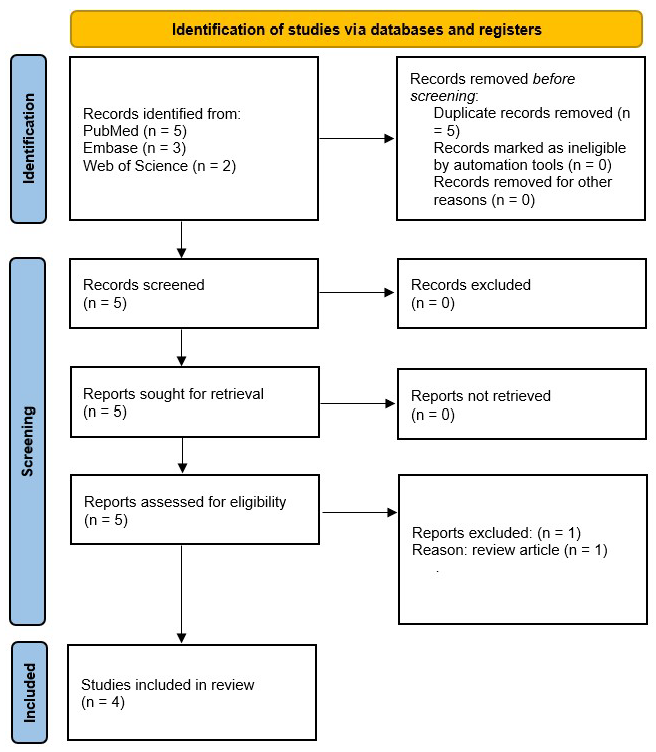
The literature search yielded 10 studies. The selection process involved an initial screening of titles and abstracts (author A.B. and G.T.) to identify studies relevant to the topic.
Five were excluded due to duplication, lack of ferroptosis-specific outcomes, or non-periodontal focus; thus, only five studies met all inclusion criteria. After screening, authors A.B. and G.T. conducted a full-text review of the selected studies. Finally, 4 of the 5 articles were included (Figure 1). Data were extracted from the selected studies, and a narrative synthesis was performed to summarize and interpret the findings. Characteristics of the selected studies with the clinical procedures, variables analyzed, and outcomes (including whether selected by manual or electronic search) are summarized in Table 1. The review was designed as a narrative review. Although a structured literature search and a selection process were performed to ensure transparency, a quantitative synthesis or meta-analysis was not performed due to the high heterogeneity of the retrieved studies in terms of design, interventions, and outcome definitions.

3. Results

A total of four studies met the inclusion criteria and were included in this narrative review (Table 1). Three experimental studies were conducted using animal and human models, one used bioinformatic analysis on human transcriptomic data. From the analyzed studies, it seems that ferroptosis, which represents a form of regulated cell death due to iron accumulation and lipid peroxidation, plays a critical role in periodontal tissue destruction during periodontitis. A combined human and experimental study reported that—on gingival tissues harvested from 20 periodontitis patients and 20 healthy controls, alongside a murine ligature-induced periodontitis model—elevated expression of ferroptosis markers (ACSL4↑, GPX4↓) and the subsequential administration of a ferroptosis inhibitor (Ferrostatin-1) markedly reduced interleukin-6 levels, inflammatory infiltration, and alveolar bone loss, demonstrating that ferroptosis actively contributes to periodontitis progression [19]. While in a large-scale bioinformatic analysis, 334 human gingival transcriptomic samples (253 periodontitis, 81 healthy) were examined, and 24 differentially expressed ferroptosis-related genes (FRGs) were found, resulting in an eight-gene diagnostic classifier (AUC = 0.96), highlighting strong associations between FRGs (such as ALOX5 and XBP1) and immune cell infiltration, therefore, linking ferroptosis to immune dysregulation within periodontal lesions [20]. Ferroptosis also showed its role in a murine ligature-induced periodontitis model; however, treatment with curcumin (50–200 mg/kg) seemed to suppress oxidative stress, increasing the level of SOD and GSH and increasing the expression of ferroptosis inhibitors (GPX4, SLC7A11). Data were confirmed by histological analysis; in fact, reduced bone resorption and inflammation were observed [21]. In non-human primate model analysis, the transcriptomic dynamics of ferroptosis across age and disease stages were evaluated, showing that in 36 Macaca mulatta subjects with ligature-induced periodontitis, 78 ferroptosis-related genes (including TLR4, CYBB, SLC40A1, and ALOX12B) were significantly altered during disease progression. The expression of these genes varied by age and microbial composition, indicating that ferroptosis is a dynamic regulated process influenced by both host and environmental factors [22].

4. Discussion

The main aim of this narrative review was to evaluate the role of ferroptosis and to focus attention on possible new treatments for periodontitis. Historically, periodontitis’ main etiological factors were dental biofilm in conjunction with an altered host–immune response, together with bone resorption and osteoclast activation [2,23]. However, the analyzed studies seem to suggest that there could be more molecular mechanisms behind the pathogenesis of periodontitis.
Among them, ferroptosis could play a crucial role in the cellular response in the periodontal tissues’ destruction process, both amplifying tissue damage and inhibiting repair. The human biopsies and animal model showed that ferroptosis markers (elevated ACSL4 and reduced GPX4) are clearly present in diseased periodontal tissues and that pharmacological inhibition (e.g., Ferrostatin) could reduce inflammation and bone resorption [19]. This is in line with a recent work that showed, in ligature-induced periodontitis in rats, a reduction in inflammatory cytokines (TNF-α, IL-1β) and bone resorption with an increase in the GPX4 expression after the inhibition of ferroptosis [24].
Also, from a bioinformatic analysis point of view the progression of periodontitis seems to be related to different FRGs, whose expressions may induce immune cell infiltration and an inflammatory gene network [25].
Therefore, the evidence may support the concept that ferroptosis is related to periodontitis as it pertains to direct tissue cell death (fibroblasts, PDL cells, and osteocytes), the promotion of oxidative/inflammatory stress, and the suppression of regenerative responses. Firstly, regarding direct cell death, fibroblasts, periodontal ligament stem cells (PDLSCs), and osteocytes appear susceptible to ferroptosis under periodontal inflammatory conditions. PDL fibroblasts exposed to butyrate showed NCOA4-mediated ferritinophagy, iron accumulation, ROS/lipid peroxidation, and cell death via p38/HIF-1α [19]. Then, it can be deduced that microbial metabolites could trigger intracellular iron dysregulation and ferroptosis death in periodontal-supporting cells. The subsequent cell death impairs tissue integrity directly, reducing ligament function and alveolar bone stability.
Secondly, ferroptosis appears to amplify the inflammatory microenvironment; in fact, it is linked with both the reduction in antioxidant defense (GPX4/GSH) and the increase in the damaging effects of ROS and the release of damage-associated molecular patterns (DAMPs). In addition, it also further stimulates immune cell recruitment and cytokine production.
In a recent study, human gingival fibroblasts (HGFs) were stimulated with P. gingivalis-LPS, and mitochondrial shrinkage, together with an increase in mitochondrial membrane density, was observed, while ferrostatin-1 (a ferroptosis inhibitor) reduced ROS, MDA, and inflammatory mediators [26]. Similarly, in an analysis of human gingival crevicular fluid through proteomic work, the progression of periodontitis was linked with ferroptosis-driver proteins (e.g., HSPB1, CD44, and GCLC) in sites with active disease [27]. Thirdly, ferroptosis also seems to suppress regenerative potential; in fact, the capacity for the repair of ligament cells, as well as bone formation, is compromised.
In fact, one of the analyzed studies evaluates curcumin’s protective effect (increased GSH/SOD, upregulated GPX4/SLC7A11, and downregulated ACSL4/TfR1) in periodontitis; the results not only support the pathogenetic role of ferroptosis but also indicate that targeting ferroptosis can restore regenerative balance [21].
Furthermore, Ebersole et al. demonstrate that ferroptosis-related gene expression varies with age and microbial dysbiosis, suggesting that host factors (aging, immune senescence, and microbiome shifts) modulate ferroptotic susceptibility [22].
Also, macrophage cell death was investigated, showing that Porphyromonas gingivalis lipopolysaccharide increases intracellular Fe2+ and upregulates ACSL4 and TfR1 in macrophages, triggering ferroptosis-related death. In addition, this process also seems to take part in osteoclastic bone resorption and oxidative stress [28].
According to all the analyzed data, the molecular mechanisms behind periodontitis are several and rather complex, but their understanding is mandatory to develop new strategies of treatment.
Traditionally, periodontal therapy is mainly based on mechanical debridement; in recent years, adjunctive therapies have also been proposed [29,30,31]. However, all of these treatments focus on the removal of dental biofilm and improving healing, but do not directly modulate the intracellular susceptibility of tissues to oxidative stress.
The identification of mechanisms behind ferroptosis, which is implicated in periodontitis exacerbation and development, may bring forth new therapies, such as ferroptosis inhibitors (e.g., Ferrostatin-1, antioxidants), iron chelators, modulators of ferritinophagy (e.g., NCOA4 inhibitors), or, on the other side, interventions to increase protective factors, such as GPX4/SSLC/A11 in cells.
However, the following review has several limitations since most studies are pre-clinical, conducted on animal models, or rely on bioinformatic transcriptomic/proteomic analysis; therefore, it is difficult, if not impossible, to translate the results into daily clinical practice. Furthermore, the manifestation of periodontitis is rather heterogeneous and may vary among affected subjects, so the weight of ferroptosis in the different cases has yet to be completely understood.
Lastly, the chosen design of a narrative review is a limitation in itself; the lack of formal assessment of risk of bias may have influenced the results. In addition, a meta-analysis was not performed since the data were far too heterogeneous, and, to conclude, the notion that ferroptosis interacts with other mechanisms, such as other death pathways (e.g., apoptosis/pyroptosis), has yet to be evaluated.
To translate this evaluation into clinical benefit, future research should include longitudinal human studies correlating ferroptosis-related biomarkers (e.g., GPX4, SLC7A11, TfR1) with periodontal outcomes; the integration of systemic comorbidities (diabetes, aging) that may modulate ferroptosis susceptibility; and the exploration of regenerative adjuncts that combine ferroptosis inhibition with periodontal tissue engineering.

5. Conclusions

Based on the available evidence, ferroptosis may represent a contributing mechanism in periodontal tissue destruction. However, due to the limited available literature, further validation through longitudinal human studies is required before any potential impact on daily clinical practice can be established.

Author Contributions

Writing—original draft preparation, L.M. and V.P.; data curation, A.B. and G.T.; conceptualization, E.R. and G.Z.; supervision, V.I.-S. and L.R. All authors have read and agreed to the published version of the manuscript.

Funding

This research received no external funding.

Data Availability Statement

No new data were created or analyzed in this study.

Conflicts of Interest

The authors declare no conflicts of interest.

Abbreviations

The following abbreviations are used in this manuscript:
ACSL4Acyl-CoA synthetase long-chain family member 4
ALOX5/ALOX12B/ALOXE3Arachidonate lipoxygenase 5, 12B, and E3
ATF3Activating transcription factor 3
CREBcAMP-response element-binding protein
CYBBCytochrome b-245 beta chain (gp91phox)
DAMPsDamage-associated molecular patterns
Fe2+/Fe3+Ferrous/ferric iron
FRGsFerroptosis-related genes
GCFGingival crevicular fluid
GEOGene Expression Omnibus
GPX4Glutathione peroxidase 4
GSHGlutathione
HGFHuman gingival fibroblast
HIF-1αHypoxia-inducible factor 1 alpha
HO-1Heme oxygenase 1
IL-1β/IL-6/IL-17/IL-33Interleukin-1 beta, 6, 17, 33
LINC00616Long intergenic non-coding RNA 616
LPSLipopolysaccharide
MDAMalondialdehyde
MMPsMatrix metalloproteinases
NCOA4Nuclear receptor coactivator 4
NRF2Nuclear factor erythroid 2-related factor 2
P. gingivalis (PG)Porphyromonas gingivalis
PDLPeriodontal ligament
PDLSCsPeriodontal ligament stem cells
ROSReactive oxygen species
SLC40A1Ferroportin 1 (iron exporter)
SODSuperoxide dismutase
TfR1/TFR-1Transferrin receptor 1
Th1/Th17/TregT helper 1, T helper 17, regulatory T cells
TLR4Toll-like receptor 4
TNF-αTumor necrosis factor alpha
WGCNAWeighted gene co-expression network analysis

References

  1. Nascimento, G.G.; Alves-Costa, S.; Romandini, M. Burden of Severe Periodontitis and Edentulism in 2021, with Projections up to 2050: The Global Burden of Disease 2021 Study. J. Periodontal Res. 2024, 59, 823–867. [Google Scholar] [CrossRef] [PubMed]
  2. Sanz, M.; Herrera, D.; Kebschull, M.; Chapple, I.; Jepsen, S.; Beglundh, T.; Sculean, A.; Tonetti, M.S.; Merete Aass, A.; Aimetti, M.; et al. Treatment of Stage I–III Periodontitis—The EFP S3 Level Clinical Practice Guideline. J. Clin. Periodontol. 2020, 47, 4–60. [Google Scholar] [CrossRef]
  3. Kwon, T.H.; Lamster, I.B.; Levin, L. Current Concepts in the Management of Periodontitis. Int. Dent. J. 2021, 71, 462–476. [Google Scholar] [CrossRef]
  4. Baima, G.; Arce, M.; Romandini, M.; Van Dyke, T. Inflammatory and Immunological Basis of Periodontal Diseases. J. Periodontal Res. 2025, in press. [Google Scholar] [CrossRef]
  5. Guan, P.; Ruan, Q.; Li, J.; Xi, M.; Qi, W.; Ko, K.I.; Ni, J. Ferroptosis in Periodontitis: Mechanisms, Impacts, and Systemic Connections. Cell Death Discov. 2025, 11, 1–12. [Google Scholar] [CrossRef] [PubMed]
  6. Catapano, A.; Cimmino, F.; Petrella, L.; Pizzella, A.; D’Angelo, M.; Ambrosio, K.; Marino, F.; Sabbatini, A.; Petrelli, M.; Paolini, B.; et al. Iron Metabolism and Ferroptosis in Health and Diseases: The Crucial Role of Mitochondria in Metabolically Active Tissues. J. Nutr. Biochem. 2025, 140, 109888. [Google Scholar] [CrossRef]
  7. Dixon, S.J.; Olzmann, J.A. The Cell Biology of Ferroptosis. Nat. Rev. Mol. Cell Biol. 2024, 25, 424–442. [Google Scholar] [CrossRef] [PubMed]
  8. Li, J.; Jia, Y.C.; Ding, Y.X.; Bai, J.; Cao, F.; Li, F. The Crosstalk between Ferroptosis and Mitochondrial Dynamic Regulatory Networks. Int. J. Biol. Sci. 2023, 19, 2756–2771. [Google Scholar] [CrossRef]
  9. Zheng, T.; Lu, F.; Wu, P.; Chen, Y.; Zhang, R.; Li, X. Ferroptosis and Cuproptosis in Periodontitis: Recent Biological Insights and Therapeutic Advances. Front. Immunol. 2025, 16, 1526961. [Google Scholar] [CrossRef]
  10. Bell, H.N.; Stockwell, B.R.; Zou, W. Ironing out the Role of Ferroptosis in Immunity. Immunity 2024, 57, 941–956. [Google Scholar] [CrossRef]
  11. Chen, Y.; Fang, Z.M.; Yi, X.; Wei, X.; Jiang, D.S. The Interaction between Ferroptosis and Inflammatory Signaling Pathways. Cell Death Dis. 2023, 14, 1–13. [Google Scholar] [CrossRef]
  12. Poon, I.K.H.; Ravichandran, K.S. Targeting Efferocytosis in Inflammaging. Annu. Rev. Pharmacol. Toxicol. 2025, 23, 47. [Google Scholar] [CrossRef]
  13. Chen, Y.; Lu, F.; Zhang, Z.; Li, X.; Zhang, R.; Zheng, T. Ferroptosis and Macrophage Efferocytosis in Periodontitis: Biological Insights and Therapeutic Advances. Virulence 2025, 16, 2573660. [Google Scholar] [CrossRef]
  14. Mann, V.; Sundaresan, A.; Shishodia, S. Overnutrition and Lipotoxicity: Impaired Efferocytosis and Chronic Inflammation as Precursors to Multifaceted Disease Pathogenesis. Biology 2024, 13, 241. [Google Scholar] [CrossRef]
  15. Iorio-Siciliano, V.; Marasca, D.; Mauriello, L.; Vaia, E.; Stratul, S.I.; Ramaglia, L. Treatment of Peri-Implant Mucositis Using Spermidine and Calcium Chloride as Local Adjunctive Delivery to Non-Surgical Mechanical Debridement: A Double-Blind Randomized Controlled Clinical Trial. Clin. Oral Investig. 2024, 28, 1–11. [Google Scholar] [CrossRef]
  16. Bertl, K.; Vlachou, S.; Pandis, N.; Zampelis, A.; Stavropoulos, A. Repeated Local Delivery of Hyaluronic Acid Gel as Adjunctive Treatment of Residual Pockets in Periodontitis Patients Undergoing Supportive Periodontal Care. A Randomized Controlled Clinical Trial. Clin. Oral Investig. 2024, 28, 1–13. [Google Scholar] [CrossRef] [PubMed]
  17. Pan, S.; Hu, B.; Sun, J.; Yang, Z.; Yu, W.; He, Z.; Gao, X.; Song, J. Identification of Cross-Talk Pathways and Ferroptosis-Related Genes in Periodontitis and Type 2 Diabetes Mellitus by Bioinformatics Analysis and Experimental Validation. Front. Immunol. 2022, 13, 1015491. [Google Scholar] [CrossRef]
  18. Graziani, F.; Gennai, S.; Marruganti, C.; Peric, M.; Ghiadoni, L.; Marhl, U.; Petrini, M. Acute-Phase Response Following One-Stage Full-Mouth versus Quadrant Non-Surgical Periodontal Treatment in Subjects with Comorbid Type 2 Diabetes: A Randomized Clinical Trial. J. Clin. Periodontol. 2023, 50, 487–499. [Google Scholar] [CrossRef]
  19. Xing, L.; Dong, W.; Chen, Y.; Dai, W.; Xiao, X.; Liu, Z.; Zhang, X.; Bai, D.; Xu, H. Fibroblast Ferroptosis Is Involved in Periodontitis-Induced Tissue Damage and Bone Loss. Int. Immunopharmacol. 2023, 114, 109607. [Google Scholar] [CrossRef]
  20. Xu, Z.; Tan, R.; Li, X.; Pan, L.; Ji, P.; Tang, H. Development of a Classification Model and an Immune-Related Network Based on Ferroptosis in Periodontitis. J. Periodontal Res. 2023, 58, 403–413. [Google Scholar] [CrossRef]
  21. Wang, Y.; Lin, H.; Huang, W.; Liu, Z.; Chen, Z.; Zhao, X.; Ding, T.; Qin, W.; Shen, Y. Curcumin Attenuates Periodontal Injury via Inhibiting Ferroptosis of Ligature-Induced Periodontitis in Mice. Int. J. Mol. Sci. 2023, 24, 9835. [Google Scholar] [CrossRef]
  22. Ebersole, J.L.; Kirakodu, S.S.; Nguyen, L.M.; Gonzalez, O.A. Transcriptomic Features of Programmed and Inflammatory Cell Death in Gingival Tissues. Oral Dis. 2024, 30, 5274–5293. [Google Scholar] [CrossRef]
  23. Omi, M.; Mishina, Y. Roles of Osteoclasts in Alveolar Bone Remodeling. Genesis 2022, 60, e23490. [Google Scholar] [CrossRef]
  24. Fu, E.; Kuo, C.Y.; Hsia, Y.J.; Huang, Y.M.; Tseng, H.H.; Fu, M.W.; Shih, K.C. Role of Ferroptosis in Periodontitis: An Animal Study in Rats. J. Periodontal Res. 2023, 58, 1031–1040. [Google Scholar] [CrossRef]
  25. Zhou, K.; Chen, H.; Dong, J.; Song, Z.; Sun, M. Identification of Ferroptosis-Related Genes in Periodontitis through Bioinformatics Analysis and Experimental Validation. J. Stomatol. Oral Maxillofac. Surg. 2025, 126, 102291. [Google Scholar] [CrossRef]
  26. Qiao, S.; Li, B.; Cai, Q.; Li, Z.; Yin, Z.; He, J.; Li, Y.; Meng, W. Involvement of Ferroptosis in Porphyromonas Gingivalis Lipopolysaccharide-Stimulated Periodontitis in Vitro and in Vivo. Oral Dis. 2023, 29, 3571–3582. [Google Scholar] [CrossRef]
  27. Torres, A.; Michea, M.A.; Végvári, Á.; Arce, M.; Pérez, V.; Alcota, M.; Morales, A.; Vernal, R.; Budini, M.; Zubarev, R.A.; et al. A Multi-Platform Analysis of Human Gingival Crevicular Fluid Reveals Ferroptosis as a Relevant Regulated Cell Death Mechanism during the Clinical Progression of Periodontitis. Int. J. Oral Sci. 2024, 16, 43. [Google Scholar] [CrossRef]
  28. Luo, W.; Du, C.; Huang, H.; Kong, J.; Ge, Z.; Lin, L.; Wang, H. The Role of Macrophage Death in Periodontitis: A Review. Inflammation 2024, 47, 1889–1901. [Google Scholar] [CrossRef]
  29. Mauriello, L.; Cuozzo, A.; Pezzella, V.; Iorio-Siciliano, V.; Isola, G.; Spagnuolo, G.; Ramaglia, L.; Blasi, A. Effects of Probiotics as an Adjunct to Non-Surgical Periodontal Therapy (NSPT): A Narrative Review. J. Clin. Med. 2025, 14, 5114. [Google Scholar] [CrossRef]
  30. Pezzella, V.; Cuozzo, A.; Mauriello, L.; Polizzi, A.; Iorio Siciliano, V.; Ramaglia, L.; Blasi, A. Propolis as an Adjunct in Non-Surgical Periodontal Therapy: Current Clinical Perspectives from a Narrative Review. J. Funct. Biomater. 2025, 16, 265. [Google Scholar] [CrossRef]
  31. Haas, A.N.; Furlaneto, F.; Gaio, E.J.; Gomes, S.C.; Palioto, D.B.; Castilho, R.M.; Sanz, M.; Messora, M.R. New Tendencies in Non-Surgical Periodontal Therapy. Braz. Oral Res. 2021, 35, 1–18. [Google Scholar] [CrossRef]
Figure 1. Flowchart of article retrieval process.
Oral 06 00023 g001
Table 1. Summary of key studies investigating ferroptosis in periodontal tissue destruction.
Author (Year)Place of StudyModel/SubjectsStudy TypeMain MethodsKey ResultsConclusion
Xing et al. (2022) [19]State Key Laboratory of Oral Diseases, Sichuan University, Chengdu, ChinaHumans (n = 40): 20 periodontitis patients, 20 healthy controls.
Animals (n = 60): C57BL/6 mice, ligature-induced periodontitis model.
Experimental (clinical + animal + in vitro)Human gingival biopsies, murine ligature-induced periodontitis, ferroptosis inhibition with Ferrostatin-1, and single-cell RNA-seq.Gingival fibroblasts showed ACSL4↑ and GPX4↓, indicating ferroptosis; ferrostatin-1 reduced IL-6, tissue damage, and bone loss.Ferroptosis contributes to periodontitis-associated tissue destruction and bone loss; inhibition mitigates inflammation and damage.
Xu et al. (2023) [20]Chongqing Medical University, ChinaHumans (n = 334 samples): 253 periodontitis, 81 healthy (GEO datasets).Bioinformatic (human transcriptomic)LASSO regression, ssGSEA, WGCNA; constructed ferroptosis-related gene (FRG) classifier.Identified 24 differentially expressed FRGs; an 8-gene model (AUC = 0.96) distinguished healthy vs. diseased gingiva; strong FRG–immune correlations (e.g., ALOX5–B cells).Ferroptosis-related genes are linked to immune dysregulation in periodontitis, supporting a molecular role in disease pathogenesis.
Wang et al. (2023) [21]Guangzhou Medical University & Jilin University, ChinaAnimals (n = 60 mice): Ligature-induced periodontitis, treated with curcumin (50–200 mg/kg).Preclinical (animal experimental)Measured ferroptosis (ACSL4, GPX4, TfR1, and SLC7A11), oxidative stress (MDA, GSH, and SOD), and histology.Curcumin increased GSH/SOD, reduced MDA, upregulated GPX4/SLC7A11, and reduced ACSL4/TfR1; histology confirmed less inflammation and bone loss.Curcumin attenuates periodontitis by inhibiting ferroptosis and oxidative stress, suggesting anti-ferroptotic therapeutic potential.
Ebersole et al. (2024) [22]Univ. of Nevada, Las Vegas & Univ. of Kentucky, USANonhuman primates (n = 36 Macaca mulatta): Ligature-induced periodontitis stratified by age (young to aged).Experimental (animal transcriptomic)Gingival microarray for 257 genes in ferroptosis, necroptosis, pyroptosis, and cuproptosis; microbiome 16S rRNA correlation.In total, 78 ferroptosis-related genes altered during disease; expression of TLR4, IL33, CYBB, SLC40A1, GPX4, and ALOX12B varied with age and disease phase; bacterial dysbiosis correlated with gene expression.Ferroptosis is dynamically regulated during initiation and progression of periodontitis, influenced by age and microbiome composition.
Disclaimer/Publisher’s Note: The statements, opinions and data contained in all publications are solely those of the individual author(s) and contributor(s) and not of MDPI and/or the editor(s). MDPI and/or the editor(s) disclaim responsibility for any injury to people or property resulting from any ideas, methods, instructions or products referred to in the content.