Article

Oral Impacts on Quality of Life and Dental Attendance in 12- and 15-Year-Old Children in the UK †

by
Prabhleen Kaur
and
Alexander Milosevic
*
School of Medicine and Dentistry, Allen Building, University of Lancashire, Preston PR1 2HE, UK
*
Author to whom correspondence should be addressed.
This study was submitted in partial fulfilment of the requirements for the degree of Master of Science in Dental Public Health.
Submission received: 4 December 2025 / Revised: 21 January 2026 / Accepted: 27 January 2026 / Published: 4 February 2026

Abstract

Studies on links between Oral Health-Related Quality of Life (OHRQoL) and use of dental services among UK children are lacking. This study aimed to assess the relationship between OHRQoL and dental attendance in 12- and 15-year-old children in the UK using secondary data from the UK Child Dental Health Survey (CDHS, 2013). Methods: OHRQoL was measured as the exposure using the Child-OIDP (Oral Impacts on Daily Performances), and dental attendance was the outcome in this analysis. Dental attendance was measured by asking children whether they visited the dentist regularly, only when in trouble, or never. Logistic regression models analysed the relationship between OHRQoL and dental attendance accounting for potential confounding factors such as socio-demographic characteristics, health behaviours, and anxiety. Results: Data from 4136 children aged 12 and 15 years found that the prevalence of dental attendance ‘only when in trouble or never’ was 20.5% among children who reported at least one impact, compared to 13.6% among children reporting no impacts. A social gradient was apparent, as 28% of children living in deprived areas exhibited problem-oriented dental attendance compared with 8.6% in affluent areas. Logistic regression unadjusted estimates of children who reported at least one impact on QoL had 1.64 times greater likelihood of visiting the dentist ‘only when in trouble or never’ compared to children reporting no impacts (OR: 1.64, 95%CI: 1.24, 2.17). Adjusting for confounders reduced this to OR 1.39 (95% CI: 1.10, 1.77). Furthermore, the greater the number of negative impacts that were reported, the higher the odds of visiting a ‘dentist only when in trouble or never’. In the fully adjusted model, children who reported either two or more impacts had higher odds of visiting the dentist ‘only when in trouble’. Children who reported only one impact were as likely to seek dental treatment ‘only when in trouble’ as children reporting no impacts. Conclusions: Both poorer OHRQoL and problem-oriented attendance were more evident in children from lower-socio-economic backgrounds. Barriers to regular dental attendance affecting children from disadvantaged backgrounds should be addressed and dental care prioritised.

1. Introduction

Health service utilisation is strongly dependent on patients’ social characteristics and behaviours [1]. Oral health behaviour is mainly motivated by symptoms [2,3]. Many factors can act as predictors of health service utilisation and explanatory frameworks have been developed in this regard [1]. The utilisation of health services has been elucidated in the ‘behavioural model’ [4,5].
Several factors such as socio-environmental, psychological, and individual behavioural components have considerable impact on dental health [6]. Compromised dental health can impose substantial effects at the individual and wider health care system level [7].
Individual perception of individual dental health as well as related oral health impacts act as a decision-making factor to seek dental care and improve overall QoL [8]. Therefore, OHRQoL estimates might act as a useful tool to identify children in need of dental care and help prioritise dental services for them. The multilevel behavioural model of access to health services proposed by Anderson provides contextual and individual determinants that act as influential factors in healthcare service utilisation, including dental services [5]. These factors have been divided into predisposing, enabling, and need factors. In this model, predisposing factors incorporate biological characteristics like age and sex; social factors include education, social relationships, ethnicity, and occupation; and cognitive factors include knowledge, attitudes, and health beliefs. Enabling factors include individual-level (ability to pay, health insurance) and organisational-level factors (location, distribution, structure of health services, plus accessibility factors like waiting times and availability of transport).
Need factors pertain to perceived and required treatment. Perceived needs are based on how people experience their own dental health status and functional state along with related impact on daily activities. Dental attendance is a key predictor for dental health outcomes [5]. Regular dental attendance aids early detection of oral diseases, timely provision of treatment and prevention, advice on hygiene practices, and diet to carers and parents [9].
Conflicting evidence regarding dental health benefits from regular dental attendance exists from studies in the UK and Germany that report frequent or regular attenders had more caries experience and fewer sound teeth compared to irregular attenders [10,11].
According to the CDHS 2013, most children reported attending for regular dental check-ups but there were stark inequalities: 66% of 12-year-olds eligible for free school meals reported going to the dentist for check-ups compared to 86% of ineligible children of the same age group. Similarly, for children aged 15 years, 85% of those who were not eligible for free school meals went for dental check-ups compared to 74% of eligible children of the same age [12].
The World Health Organisation (WHO) defines quality of life (QoL) as “an individual’s perceptions of their position in life in context of culture and systems in which they live, and in relation to their goals, expectations, standards and concerns” [13]. The Oral Health-Related QoL (OHRQoL) captures interactions between oral conditions, contextual and social factors [14], and the body [15]. As such, OHRQoL represents a shift from not only assessing normative dental needs but also includes the individuals’ perception with regards to oral health and its impact on their emotions, social experiences, physical functioning, and overall well-being [16]. The most widely used instruments for measuring OHRQoL in children, which have evidence of an adequate construct, content validity, and reliability are the Child-Oral Impact on Daily Performance (C-OIDP), Child-Oral Health Impact Profile (C-OHIP), and the Child Perception Questionnaire (CPQ) [17].
Although younger people in Australia had a lower DMFT, more decayed teeth, and less missing teeth than older people, attendance for a dental problem was associated with a higher DMFT [18]. A higher DMFT was associated with lower education, being born in Australia, and visiting for a problem [18]. Contradictory evidence from cross-sectional studies in Brazil, however, found children’s OHRQoL and dental service utilisation were not always positively related [9,19]. Locker suggested that dental services might have dual effects resulting in positive as well as negative oral health outcomes [20].
Most of the studies on children used parental reports of children’s OHRQoL but care providers/parents might not always be aware of their children’s OHRQoL [21]. Several studies were unable to account for potential confounders such as socio-economic status, oral health behaviours, and dental anxiety while assessing the association between OHRQoL and dental attendance. Furthermore, the literature review did not identify any representative research on the association between OHRQoL and dental attendance in UK children.
Therefore, this study aimed to examine associations between measures of OHRQoL and patterns of dental attendance in 12- and 15-year-old children using a representative dataset, the 2013 UK Child Dental Health Survey [12]. The hypothesis tested the theory that there is no difference in OHRQoL between children who attended a dentist regularly compared to irregular attenders. Ethical approval was granted by the University College London ethics committee under project ID 2000/003 for the original 2013 CDHS but was not needed for this analysis of secondary data from that survey.

2. Methods

2.1. Study Design

This study is based on secondary data analysis from the latest data for adolescents derived from the Children’s Dental Health Survey (2013) [12] and considers dental attendance as the main outcome and OHRQoL as the exposure. The 2013 CDHS is the fifth in the series of 10-yearly cross-sectional surveys to assess children’s oral health status in England, Wales, and Northern Ireland since 1973. The target population of that survey were 5-, 8-, 12-, and 15-year-old schoolchildren from both state and independent schools [12]. The latest survey of child dental health in England conducted in 2024 included 5-year-olds but not adolescents, hence the use of data from the 2013 survey in this study. Crocombe et al. similarly used secondary data from the Australian National Survey of Adult Oral Health 2004–2006 (NSAOH) for their study [18].
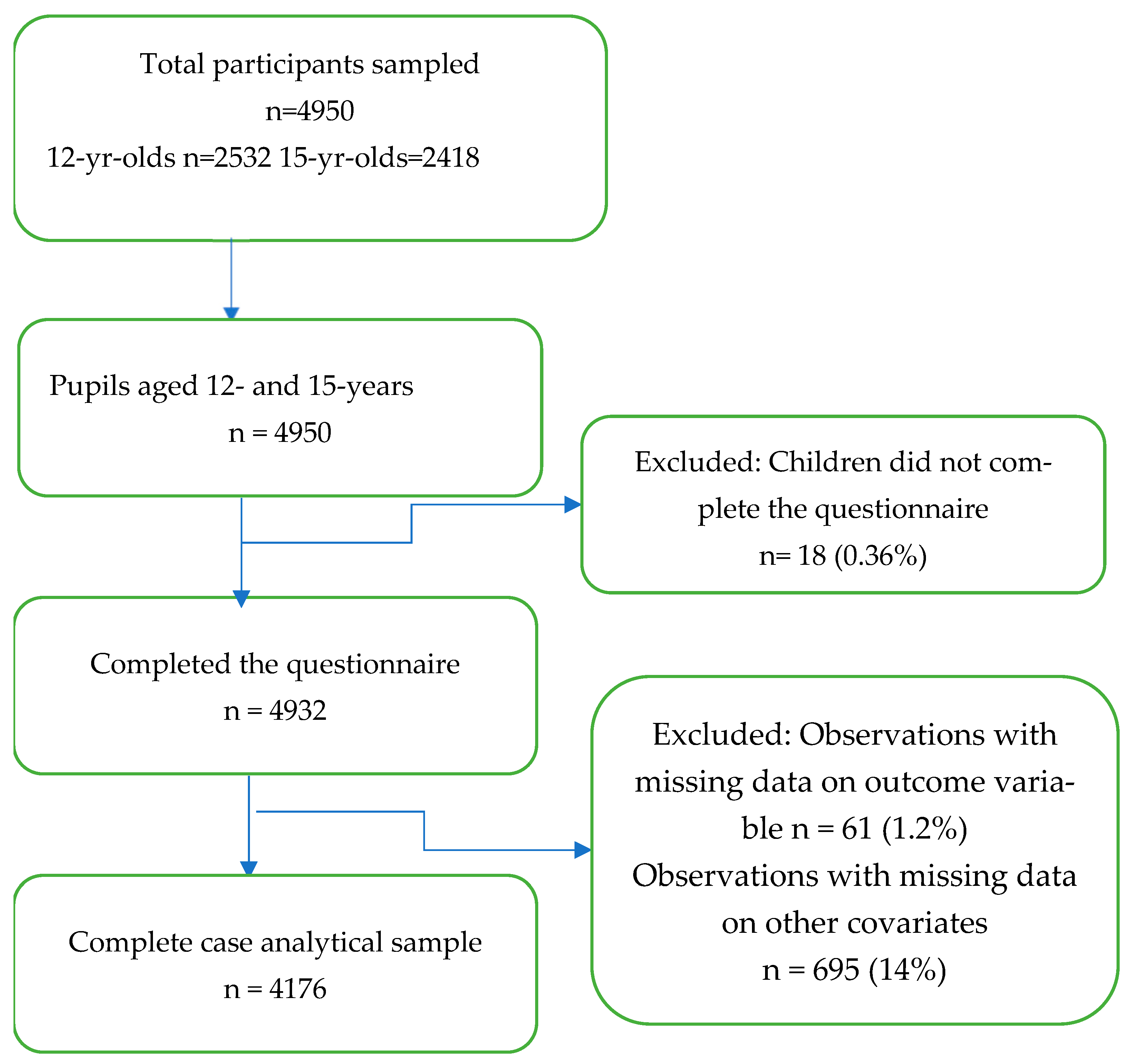
The 2013 CDHS used three methods to collect data: clinical dental examination conducted by a dentist with a qualified nurse scribe; a self-completed questionnaire by the children; and a questionnaire completed by the parent/guardian either online or on paper. A multistage cluster random sampling method was used for England and Wales which were stratified into 108 Local Authorities (LAs) (81 in England and 27 in Wales) from the nine regions in England and three in Wales. Schools with similar free school meal (FSM) eligibility were clustered together. Secondary school groups (clusters) were created using Geographical Information Systems (GIS) software and separately nested within LAs. School groups were selected by random sampling (without replacement) with probability proportional to size. Individual schools were then selected within each school group by simple random sampling. Sequential random sampling was used to select children for each age cohort. All parents of children that were examined by the survey dentist were selected to receive a questionnaire [12]. In Northern Ireland, as there were fewer schools, simple random sampling was done. Regarding oral health analysis, schools with more than 30% of pupils eligible for FSMs were oversampled allowing for statistical comparison by deprivation from low-income families versus children of the same age group [12]. Figure 1 shows the number of 12- and 15-year children included in this analysis.
The original overall response rate was 99.8%. OHRQoL was measured as part of the self-completion pupil questionnaire, administered to all selected pupils aged 12 and 15 years. The questionnaire included the Child-OIDP index [22], which consists of eight items assessing the impact of dental conditions that affect overall daily function by asking the following: In the past three months, ‘Did you have any problems/difficulty eating, speaking clearly, cleaning your teeth, relaxing (including sleeping)?’.
Two measures were considered for recoding for this analysis: presence or absence of any difficulty and their number. For number of difficulties, the OHRQoL measure was categorised into zero, one, two, and three or more reported difficulties (of any degree). For presence of any difficulty, the measure was dichotomised into ‘some difficulty’ (including all children who reported at least one oral impact) and ‘no difficulty’. Dental attendance, the dependent variable, was recoded and dichotomised into two categories: ‘for check-up’ or ‘only when in trouble/never’. Because the third category of ‘have never visited a dentist’ had a very small number of recorded observations in the dataset, it was combined with the second category of observations.
The covariate data collected from CDHS (2013) included in the analysis were the following: age, sex, socio-economic factors based on IMD (Indices of Multiple Deprivation) and free school meal (FSM) eligibility, oral health-related behaviours, and dental anxiety. Covariates in this analysis were adopted from the conceptual behavioural model of Anderson describing population characteristics based on predisposing (socio-demographics) and health-related behaviours (tooth brushing, smoking, consumption of sugary drinks) [23]. Data from the parental questionnaire were not used in this analysis as the response rate for parent/guardians of 12- and 15-year-olds was only 43%.

2.2. Statistical Analysis

Statistical analyses were performed using STATA/MP software version 17.0 (for Mac OS) (StataCorp, College Station, TX, USA) (STATA, 2021). Results were reported as Odds Ratios (OR) with their 95% Confidence Intervals (CI). Because of the complex survey design of the CDHS 2013, weighting was applied to the pupil questionnaire data to achieve a representative sample of the target population and minimize non-response bias.
A simple descriptive analysis of the study variables was conducted by generating weighted percentages. Then, bivariate analyses were carried out by cross-tabulating (using chi square) dental attendance with OHRQoL and other covariates to assess crude associations. As the dependent variable was binary, logistic regression was conducted to assess the association between the exposure (OHRQoL) and outcome variable (dental attendance). Sequential logistic regression models were performed, with relevant covariates added in four blocks. Firstly, age and gender; secondly, indicators of Socio-Economic Position (SEP), namely FSM and IMD; thirdly, oral health behaviours; and lastly, dental anxiety, were all included.

3. Results

The original study targeted 4950 children aged 12 and 15 years, but because of missing data, the final sample for analysis consisted of 4176 observations. Free school meals and dental anxiety were the most commonly missing covariates.
Table 1 provides an overview of the descriptive characteristics of the study sample. Overall, 48.5% were male, and by age cohort 49.9% were 12-year-olds and 50.1% were 15-year-olds. Regarding dental attendance, 82.7% of children reported seeing the dentist for regular check-ups whereas 17.3% reported visiting a dentist only when they ‘had trouble or never’. For OHRQoL, the number of children who reported at least one negative impact within 3 months of questionnaire completion due to dental problems was 52.3%. However, when considering number of difficulties, 23.6% reported one, 13.1% reported two, and 15.5% reported three or more difficulties. Socio-economic data revealed that 36% of the pupils lived in the most deprived areas and only 10.8% in the least deprived, whilst 24% of children were eligible for free school meals. With regards to health behaviours, 22.7% of children reported brushing their teeth less than twice daily, and 11.8% of the children tried or used to smoke whereas 1.7% were occasional smokers. Sugary drinks were consumed ‘at least once a day’ by 58.8% of respondents. Moderate anxiety was reported by 55.4% of the children, but 12.5% reported severe anxiety whereas 32.0% of the pupils reported low or no anxiety.
The descriptive characteristics of those with and without missing data are shown in Table 2. More children with missing data (60.8%) reported at least one negative OHRQoL impact than those without missing data (50.1%). Likewise, the prevalence of children who reported two (13.3% vs. 12.0%) and three or more (19.9% vs. 14.8%) impacts was higher among those with missing data.
Similarly, prevalence of pupils visiting the dentist when only in trouble or never was greater among those with missing values (27.3%) than among those with non-missing values (17.1%). There was a greater prevalence of males (54.0%) and 12-year-old children (56.4%) in those with missing observations. Regarding socio-economic status, in those children with missing data, the prevalence of children eligible for free school meals was higher (24.3%) than those without missing data (17.6%). For IMD, the prevalence of pupils living in the most deprived area (39.9% vs. 30.2%) and second quintile (34.8% vs. 20.8%) were greater among those with missing data than those without missing values. Furthermore, prevalence of children brushing once daily or less was higher in those with missing data (24.1% vs. 20.9%). Lastly, among those with missing data, severe levels of dental anxiety had higher proportions (15.8%) compared to those without missing data (11.5%).
Table 3 displays proportions of those attending the dentist only when in trouble (or never), by OHRQoL and covariates. Crude analysis between oral impacts on QoL and dental attendance presents a significant association. Among children who reported at least one impact, 20.5% reported visiting the dentist only when in trouble or never, compared to 13.6% among those who reported no impacts. Age and sex were not significantly associated with dental attendance. The proportion of children who reported visiting the dentist only when in trouble or never was higher among those eligible for free school meals (30.0%) than among those not eligible (14.3%). A social gradient was apparent as the proportion of children who reported visiting the dentist only when in trouble or never was considerably greater among those from the more deprived areas (e.g., 28.0% among the most deprived versus 8.6% among the least deprived).
Table 4 shows proportions of children reporting at least one oral impact on their OHRQoL, by covariates. More females (53.7%) reported at least one oral impact due to oral problems compared to males (46.5%). The proportion of children who reported at least one oral impact on daily activity was significantly greater in children aged 12 years (56.0%) compared to 15-year-olds (44.7%) (p < 0.001).
Table 5 shows the odds ratios for modelling different variables. Unadjusted estimates (Model 1) suggest that children reporting at least one oral impact had significantly higher odds of visiting the dentist only when in trouble or never, compared to children reporting no impacts (OR = 1.64; 95% CI: 1.24, 2.17). After adjusting for sex and age (Model 2), the effect size remained largely unchanged (OR = 1.67). Further accounting for the effects of socio-economic indicators, free school meals, and area deprivation (Model 3) resulted in moderate reduction in the effect size (OR = 1.51; 95% CI: 1.16, 1.98), suggesting SEP may act as a potential confounder in the association between OHRQoL and dental attendance.
Adding oral health behaviours (tooth brushing, smoking, consumption of sugary drinks) in the model (Model 4) resulted in further reduction of the effect size (OR = 1.44; 95% CI: 1.12, 1.85). Smoking and sugary drinks consumption were not significantly associated with dental attendance in this model. Associations between dental anxiety (Model 5) and dental attendance showed contribution to the relationship as there was further attenuation in the effect size (OR = 1.39; 95% CI: 1.1, 1.77).
The results from logistic regression models using number of impacts as an exposure are presented in Table 6. Unadjusted estimates (Model 1) suggest that children reporting two (OR = 1.94; 95% CI: 1.36, 2.77) and three or more (OR = 2.29; 95% CI: 1.51, 3.46) impacts had significantly higher odds of visiting the dentist only when in trouble or never compared to children reporting no impacts. However, the odds of visiting the dentist only when in trouble or never were not significantly different between children reporting only one impact and those reporting no impacts. There is an evident dose–response relationship between OHRQoL measure (number of impacts) and dental attendance. This suggests that as the number of impacts reported by children increases from two to three or more, the likelihood of children visiting the dentist only when in trouble or never increases as well. Sex and age were not significantly associated with the outcome (Model 2).
The effects of socio-economic indicators (Model 3) reduced the effect sizes for two impacts (OR: 1.74; 95% CI: 1.21, 2.51) and three or more impacts (OR: 2.01; 95% CI 1.33, 3.03). After adding oral health behaviours (Model 4), the odds ratios were further attenuated (two impacts = OR: 1.67; 95% CI: 1.17, 2.39; three or more impacts = OR: 1.87; 95% CI: 1.26, 2.77). Dental anxiety (Model 5) made a significant contribution to the relationship as further attenuation in the effect sizes was observed.

4. Discussion

The prevalence of problem-oriented attendance was 17.3% in this group of 12- and 15-year-olds. A high proportion of children reported at least one impact on quality of life (52.3%), which was similar across sex and age groups. All covariates were significantly associated with dental attendance except age and sex. Results of this analysis suggest that compared to children reporting no impacts, children reporting oral impacts on their QoL were more likely to visit the dentist only when in trouble or never.
Children who reported at least one impact were 1.64 times more likely to visit the dentist only when in trouble or never compared to those who did not report any impacts. The null hypothesis that there was no difference in attendance between children with and without negative impacts on QoL was therefore rejected. With regards to extent of oral impacts, a dose–response relationship was apparent: the more daily activities affected by dental problems, the higher the likelihood of children visiting the dentist only when in trouble or never. Therefore, children with the highest perceived need for treatment were most likely to have a detrimental attendance pattern. More specifically, unadjusted estimates suggest that pupils reporting two or more impacts were 2.30 times more likely to visit the dentist only when in trouble or never due to oral problems. However, there was no difference in terms of problem-oriented attendance between those reporting only one impact and those reporting no impacts.
Problem-oriented dental attendance was significantly associated with both proxy measures of SEP, FSM eligibility, and area deprivation, in the expected direction. It might be that living in a socially disadvantaged area limits access to regular dental care and increases social discrepancies related to dental health status.
Results from this research are mostly consistent with previous investigations. However, very few studies used the same measures for assessing dental attendance in children. For instance, Perazzo et al. used a Brazilian version of the Scale of Oral Health Outcomes-5 (SOHO-5) designed for 5-year-olds, which was a parent-reported measure of OHRQoL: ‘more’ and ‘less’ impact accounted for 41.4% and 58.6% of impact prevalence, respectively [21]. The present study found a dose–response relationship between oral impacts on QoL and problem-oriented dental attendance, which is consistent with previous research by Monsantofils and Bernabé [24] who used extent and severity of OHRQoL using the Child-OIDP questionnaire and also agrees with the results of Gaewkhiew et al. who used the OHIP-14 questionnaire albeit on adults 16 years and older [25].
A key finding in a systematic review of studies conducted in Africa by Malele-Kolisa et al. [26] was that factors influencing OHRQoL in children were environmental in nature (family SES and area of residence) and depended on individual biological status and symptoms from oral problems but interestingly not from dental caries. After the results were pooled from the 10 included studies, the review concluded that dental service utilisation and access did not influence OHRQoL [26]. Cross-cultural assumptions that OHRQoL domains are equally important in one culture compared to another may not be valid [27].
Dental service use may be a consequence of a ‘healthy user effect’ whereby healthier individuals are more likely to seek preventive oral care. This may lead to overstated protective associations consequent to selection bias [28,29]. Socio-economic inequalities in oral health outcomes have been widely recognised [30,31,32]. Children from deprived areas in England were more likely to attend if they had symptoms, which agrees with the results presented here [33].
This is the first study to perform an analysis using representative data from a large sample in the UK, i.e., CDHS 2013, to assess the relationship between OHRQoL and dental attendance among children, although dental attendance patterns and caries among adults using data from the Adult Dental Health Survey of 2009 have been reported [34].
The Child-OIDP measures used in this analysis characterize OHRQoL in terms of prevalence of impacts and extent. Assessing both allowed for a more comprehensive investigation and highlighted the importance of looking at the number of impacts reported when examining links with attendance patterns.
The cross-sectional nature of the CDHS does not allow inference regarding the direction of any association or of any causal relationships [35] between main exposure and outcome. Whether dental impacts lead to problem-oriented dental service use or vice versa is unknown despite the significant literature on problem-oriented dental attendance as a risk factor for OHRQoL [9,18,29,35]. However, the direction of association between OHRQoL and dental attendance can plausibly be considered bidirectional, but to assess the direction of the association, a longitudinal study is needed. Use of secondary data from the 2013 Child Dental Health Survey may have issues regarding applicability but is justified given this was the last comprehensive UK dental survey of adolescents in the UK and that this data was used by Wang et al. when determining caries thresholds, published in 2021 [36]. A further limitation is the exclusion of missing case data, leading to selection bias. We recognise that missingness is not independent of the outcome in this analysis and that a large proportion of children had missing data as shown in Table 2. It is likely that this group of children are disadvantaged and may have significant needs; thus, our results need cautious interpretation.
Additionally, qualitative studies to assess reasons for problem-oriented dental attendance could help in understanding the reasons for children not seeking treatment when needed and could inform the design of more accessible dental services. Other potentially important factors were not assessed such as characteristics at the neighbourhood level, e.g., distance of dental clinics from home/school, as well as service-level characteristics related to availability of clinics when required, opening hours, and availability of dentists.
The global strategy adopted by the WHO aims to significantly reduce childhood caries by 2030 by ensuring universal access to oral health care, promoting prevention, and reducing inequality as it is well known that disadvantaged children have higher caries rates. Government initiatives and policies to target low-income families as well as fund school programmes of supervised tooth brushing and provision of culturally appropriate education and health promotion are imperative.

5. Conclusions

This study adds to existing evidence regarding associations between OHRQoL and problem-oriented dental attendance in UK children. Children who reported presence of oral impacts were more likely to be problem-oriented dental attenders. Factors influencing OHRQoL and patterns of problem-oriented dental attendance are a combination of environmental factors and individuals’ health behaviours, and socio-economic indicators are linked to dental service utilisation in UK children. Consequently, policies to remove barriers to access dental service in children with high levels of need should be a high priority.

Author Contributions

Conceptualisation, A.M. and P.K.; methods, A.M. and P.K.; statistical analysis, A.M.; writing and editing, A.M. and P.K. All authors have read and agreed to the published version of the manuscript.

Funding

This research received no external funding.

Institutional Review Board Statement

The original CDHS 2013 study had ethical approval from University College London ethics committee ID 2000/003(Approval date 1 March 2000) but ethics approval for the current study was not needed as secondary data were analysed.

Informed Consent Statement

Informed consent was obtained from all subjects involved in the study.

Data Availability Statement

The original contributions presented in this study are included in the article. Further inquiries can be directed to the corresponding author.

Acknowledgments

The first author is very grateful to Anja Heilmann of University College London, Department of Dental Public Health, for her support during the preparation of the dissertation for the MSc.

Conflicts of Interest

The authors declare no conflicts of interest.

References

  1. Ricketts, T.C.; Goldsmith, L.J. Access in health services research: The battle of the frameworks. Nurs. Outlook 2005, 53, 274–280. [Google Scholar] [CrossRef]
  2. Gilbert, G.H.; Duncan, R.P.; Vogel, W.B. Determinants of dental care use in dentate adults: Six-monthly use during a 24-month period in the Florida Dental Care Study. Soc. Sci. Med. 1998, 47, 727–737. [Google Scholar] [CrossRef]
  3. Duncan, R.P.; Gilbert, G.H.; Peek, C.W.; Heft, M.W. The dynamics of toothache pain and dental services utilization: 24-month incidence. J. Public Health Dent. 2003, 63, 227–234. [Google Scholar] [CrossRef]
  4. Aday, L.A.; Andersen, R. A framework for the study of access to medical care. Health Serv. Res. 1974, 9, 208–220. [Google Scholar] [PubMed]
  5. Andersen, R.M. National health surveys and the behavioral model of health services use. Med. Care 2008, 46, 647–653. [Google Scholar] [CrossRef] [PubMed]
  6. Marmot, M.; Bell, R. Social determinants and dental health. Adv. Dent. Res. 2011, 23, 201–206. [Google Scholar] [CrossRef]
  7. Peres, M.A.; Macpherson, L.M.D.; Weyant, R.J.; Daly, B.; Venturelli, R.; Mathur, M.R.; Listl, S.; Celeste, R.K.; Guarnizo-Herreno, C.C.; Kearns, C.; et al. Oral diseases: A global public health challenge. Lancet 2019, 394, 249–260. [Google Scholar] [CrossRef]
  8. Cavalheiro, C.H.; Abegg, C.; Fontanive, V.N.; Davoglio, R.S. Dental pain, use of dental services and oral health-related quality of life in southern Brazil. Braz. Oral Res. 2016, 30, e39. [Google Scholar] [CrossRef] [PubMed]
  9. Goettems, M.L.; Ardenghi, T.M.; Demarco, F.F.; Romano, A.R.; Torriani, D.D. Children’s use of dental services: Influence of maternal dental anxiety, attendance pattern, and perception of children’s quality of life. Community Dent. Oral Epidemiol. 2012, 40, 451–458. [Google Scholar] [CrossRef]
  10. Richards, W.; Ameen, J. The impact of attendance patterns on oral health in a general dental practice. Br. Dent. J. 2002, 193, 697–702; discussion 695. [Google Scholar] [CrossRef]
  11. Geyer, S.; Micheelis, W. Changes in problem-based and routine-based healthcare attendance: A comparison of three national dental health surveys. Community Dent. Oral Epidemiol. 2012, 40, 459–467. [Google Scholar] [CrossRef] [PubMed]
  12. Anderson, T.; Thomas, C.; Ryan, R.; Dennes, M.; Fuller, E. Children’s Dental Health Survey 2013; Technical Report: England, Wales and Nortrhern Ireland; Health and Social Care Information Centre (HSCIC): Leeds, UK; UK Government: London, UK, 2015.
  13. WHO. The World Health Organisation quality of life assessment (WHOQOL):position paper from the World Health Organisation. Soc. Sci. Med. 1995, 41, 1403–1409. [Google Scholar] [CrossRef] [PubMed]
  14. Locker, D.; Jokovic, A.; Tompson, B. Health-related quality of life of children aged 11 to 14 years with orofacial conditions. Cleft Palate Craniofacial J. 2005, 42, 260–266. [Google Scholar] [CrossRef]
  15. Atchison, K.A.; Shetty, V.; Belin, T.R.; Der-Martirosian, C.; Leathers, R.; Black, E.; Wang, J. Using patient self-report data to evaluate orofacial surgical outcomes. Community Dent. Oral Epidemiol. 2006, 34, 93–102. [Google Scholar] [CrossRef] [PubMed]
  16. Inglehart, M.R.; Bagramian, R. (Eds.) Oral Health-Related Quality of Life; Quintessence Publishing Co.: Chicago, IL, USA, 2002. [Google Scholar]
  17. Gilchrist, F.; Rodd, H.; Deery, C.; Marshman, Z. Assessment of the quality of measures of child oral health-related quality of life. BMC Oral Health 2014, 14, 40. [Google Scholar] [CrossRef]
  18. Crocombe, L.A.; Brennan, D.S.; Slade, G.D. The influence of dental attendance on change in oral health-related quality of life. Community Dent. Oral Epidemiol. 2012, 40, 53–61. [Google Scholar] [CrossRef]
  19. Granville-Garcia, A.F.; Clementino, M.A.; Gomes, M.C.; Costa, E.M.; Pinto-Sarmento, T.C.; Paiva, S.M. Influence of Oral Problems and Biopsychosocial Factors on the Utilization of Dental Services by Preschool Children. J. Dent. Child. 2015, 82, 76–83. [Google Scholar]
  20. Locker, D. Does dental care improve the oral health of older adults? Community Dent. Health 2001, 18, 7–15. [Google Scholar]
  21. Perazzo, M.F.; Gomes, M.C.; Neves, E.T.; Martins, C.C.; Paiva, S.M.; Granville-Garcia, A.F. Oral health-related quality of life and sense of coherence regarding the use of dental services by preschool children. Int. J. Paediatr. Dent. 2017, 27, 334–343. [Google Scholar] [CrossRef]
  22. Tsakos, G.; Hill, K.; Chadwick, B.; Anderson, T. Children’s Dental Health Survey 2013; Report 1: Attitudes, Behaviours and Children’s Dental Health; Health and Social Care Information Centre (HSCIC): Leeds, UK, 2015; pp. 29–34.
  23. Andersen, R.M. Revisiting the behavioral model and access to medical care: Does it matter? J. Health Soc. Behav. 1995, 36, 1–10. [Google Scholar] [CrossRef]
  24. Monsantofils, M.; Bernabe, E. Oral impacts on daily performances and recent use of dental services in schoolchildren. Int. J. Paediatr. Dent. 2014, 24, 417–423. [Google Scholar] [CrossRef]
  25. Gaewkhiew, P.; Bernabe, E.; Gallagher, J.E.; Klass, C.; Delgado-Angulo, E.K. Oral impacts on quality of life and problem-oriented attendance among South East London adults. Health Qual. Life Outcomes 2017, 15, 82. [Google Scholar] [CrossRef]
  26. Malele-Kolisa, Y.; Yengopal, V.; Igumbor, J.; Nqcobo, C.B.; Ralephenya, T.R.D. Systematic review of factors influencing oral health-related quality of life in children in Africa. Afr. J. Prim. Health Care Fam. Med. 2019, 11, e1–e12. [Google Scholar] [CrossRef]
  27. Herdman, M.; Fox-Rushby, J.; Badia, X. A model of equivalence in the cultural adaptation of HRQoL instruments: The universalist approach. Qual. Life Res. 1998, 7, 323–335. [Google Scholar] [CrossRef] [PubMed]
  28. Thomson, W.M.; Williams, S.M.; Broadbent, J.M.; Poulton, R.; Locker, D. Long-term dental visiting patterns and adult oral health. J. Dent. Res. 2010, 89, 307–311. [Google Scholar] [CrossRef] [PubMed]
  29. Astrom, A.N.; Ekback, G.; Ordell, S.; Nasir, E. Long-term routine dental attendance: Influence on tooth loss and oral health-related quality of life in Swedish older adults. Community Dent. Oral Epidemiol. 2014, 42, 460–469. [Google Scholar] [CrossRef]
  30. Watt, R.G. Emerging theories into the social determinants of health: Implications for oral health promotion. Community Dent. Oral Epidemiol. 2002, 30, 241–247. [Google Scholar] [CrossRef]
  31. Amaral, M.A.; Nakama, L.; Conrado, C.A.; Matsuo, T. Dental caries in young male adults: Prevalence, severity and associated factors. Braz. Oral Res. 2005, 19, 249–255. [Google Scholar] [CrossRef] [PubMed]
  32. Piovesan, C.; Mendes, F.M.; Ferreira, F.V.; Guedes, R.S.; Ardenghi, T.M. Socioeconomic inequalities in the distribution of dental caries in Brazilian preschool children. J. Public Health Dent. 2010, 70, 319–326. [Google Scholar] [CrossRef]
  33. Eckersley, A.J.; Blinkhorn, F.A. Dental attendance and dental health behaviour in children from deprived and non-deprived areas of Salford, north-west England. Int. J. Paediatr. Dent. 2001, 11, 103–109. [Google Scholar] [CrossRef]
  34. Aldossary, A.; Harrison, V.E.; Bernabe, E. Long-term patterns of dental attendance and caries experience among British adults: A retrospective analysis. Eur. J. Oral Sci. 2015, 123, 39–45. [Google Scholar] [CrossRef] [PubMed]
  35. Gagliardi, D.I.; Slade, G.D.; Sanders, A.E. Impact of dental care on oral health-related quality of life and treatment goals among elderly adults. Aust. Dent. J. 2008, 53, 26–33. [Google Scholar] [CrossRef] [PubMed]
  36. Wang, X.; Bernabe, E.; Pitts, N.; Zheng, S.; Gallagher, J.E. Dental caries thresholds among adolescents in England, Wales, and Northern Ireland, 2013 at 12, and 15 years: Implications for epidemiology and clinical care. BMC Oral Health 2021, 21, 137. [Google Scholar] [CrossRef] [PubMed]
Figure 1. Flow chart showing the number of children included in the current analysis.
Oral 06 00018 g001
Table 1. Descriptive characteristics of the analytical sample (n = 4176).
(n)(%)
SEX
Male
Female
2025
2151
48.5
51.5
AGE
12 years
15 years
2085
2091
49.9
50.1
DENTAL ATTENDANCE
Check-up
Only in trouble/never
3455
721
82.7
17.3
OHRQOL
0 difficulty
1 difficulty
2 difficulties
3 or more difficulties
1993
987
547
649
47.7
23.6
13.1
15.5
OHRQOL
No difficulty
Some difficulty
1993
2183
47.7
52.3
IMD
Least deprived
4th quintile
3rd quintile
4th quintile
Most deprived
449
640
671
913
1503
10.8
15.3
16.1
21.9
36.0
BRUSHING
Twice daily
Once daily
3230
946
77.4
22.7
SMOKING
Never
Tried it
Sometimes
At least once per week
3451
492
71
162
82.6
11.8
1.7
3.9
SUGARY DRINKS
No
Yes, at least once daily
1721
2455
41.2
58.8
DENTAL ANXIETY
Low
Moderate
Severe
1338
2315
523
32.0
55.4
12.5
Table 2. Comparison of descriptive characteristics between complete cases and those with missing data (proportions weighted).
VariablesComplete Cases (%)Participants with Missing Data (%)
SEX
Male
Female
49.9
50.1
54.0
45.7
AGE
12 years
15 years
47.4
52.6
56.4
43.6
DENTAL ATTENDANCE
Check-ups
Only in trouble/never
82.9
17.1
72.7
27.3
OHRQOL
No difficulty
Some difficulty
50.1
49.9
39.2
60.8
OHRQOL
0 difficulty
1 difficulty
2 difficulties
3 or more difficulties
49.9
23.3
12.0
14.8
43.2
23.6
13.3
19.9
FSM
Not eligible
Eligible
82.4
17.6
75.7
24.3
IMD
Least deprived
4th quintile
3rd quintile
2nd quintile
Most deprived
14.3
18.8
15.8
20.8
30.2
6.5
9.7
9.2
34.8
39.9
BRUSHING
Twice daily
Once daily
79.1
20.9
75.9
24.1
SMOKING
Never
Tried it
Sometimes
At least once per week
81.9
11.8
2.4
3.9
82.3
11.6
1.1
5.0
Table 3. Dental attendance pattern, by covariates (n = 4176).
VariablesDental Attendance Only When in Trouble/Never
n%p-Value
OHRQOL
No difficulty
Some difficulty
265
456
13.6
20.5
<0.001
OHRQOL
0 difficulty
1 difficulty
2 difficulties
3 or more difficulties
265
175
113
168
13.6
15.2
23.4
26.5
<0.001
SEX
Male
Female
356
365
18.3
15.8
0.378
AGE
12 years
15 years
344
377
17.4
16.7
0.731
FSM
Not eligible
Eligible
445
276
14.3
30.0
<0.001
IMD
Least deprived
4th quintile
3rd quintile
2nd quintile
Most deprived
39
59
65
164
394
8.6
7.3
9.8
21.4
28.0
<0.001
BRUSHING
Twice daily
Once daily
479
242
14.6
26.4
<0.001
SMOKING
Never
Tried it
Sometimes
At least once per week
550
100
14
27
16.6
15.2
17.7
32.1
0.045
SUGARY DRINKS
No
Yes, at least once daily
225
496
13.2
20.0
0.002
DENTAL ANXIETY
Low
Moderate
Severe
177
410
134
13.8
17.5
23.4
0.009
Table 4. OHRQoL, by covariates, n = 4176 (weighted percentages).
VariablesChildren Reporting at Least One Impact
n%p-Value
SEX
Male
Female
990
1193
46.5
53.7
0.002
AGE
12 years
15 years
1160
1023
56.0
44.7
<0.001
DENTAL ATTENDANCE
Check-up
Only in trouble/never
1727
456
47.9
60.2
0.001
FSM
Not eligible
Eligible
1596
587
48.7
56.6
0.005
IMD
Least deprived
4th quintile
3rd quintile
2nd quintile
Mot deprived
197
318
305
531
832
45.3
45.7
43.0
55.5
55.0
0.001
BRUSHING
Twice daily
Once daily
1612
571
48.2
57.0
0.002
SMOKING
Never
Tried it
Sometimes
At least once per week
1736
285
35
100
49.1
54.7
39.4
63.2
0.123
SUGAR DRINKS
No
Yes, at least once daily
829
1354
46.2
52.9
0.038
DENTAL ANXIETY
Low
Moderate
Severe
596
1253
334
43.1
51.4
61.7
<0.001
Table 5. Results of logistic regression models predicting irregular dental attendance (exposure: ‘any impact’ on OHRQoL).
VariablesModel 1
OR (95% CI)
Model 2
OR (95% CI)
Model 3
OR (95% CI)
Model 4
OR (95% CI)
Model 5
OR (95% CI)
OHRQOL
No difficulty (R)
Some difficulty
1
1.64 (1.24, 2.17) ***
1
1.67 (1.27, 2.20) ***
1
1.51 (1.16, 1.98) **
1
1.44 (1.11, 1.85) **
1
1.39 (1.10, 1.77) **
SEX
Male (R)
Female
1
0.80 (0.55, 1.32)
1
0.73 (0.51, 1.04)
1
0.79 (0.56, 1.12)
1
0.73 (0.53, 1.01) *
AGE
12 years (R)
15 years
1
1.01 (0.77, 1.33)
1
1.07 (0.84, 1.36)
1
1.08 (0.83, 1.41)
1
1.12 (0.85, 1.48)
FSM
Not eligible (R)
Eligible
1
1.69 (1.37, 2.10) ***
1
1.64 (1.33, 2.04) ***
1
1.68 * (1.36, 2.07) ***
IMD
Least deprived (R)
4th quintile
3rd quintile
2nd quintile
Most deprived
1
0.85 (0.50, 1.46)
1.14 (0.60, 2.15)
2.60 (1.50, 4.54) **
3.58 (2.00, 6.38) ***
1
0.85 (0.49, 1.48)
1.11 (0.59, 2.10)
2.47 (1.40, 4.40) **
3.31 (1.82, 6.03) ***
1
0.85 (0.48, 1.49)
1.08 (0.57, 2.07)
2.46 (1.38, 4.39) **
3.28 (1.79, 6.02) ***
BRUSHING
Twice daily (R)
Once daily
1
1.62 (1.24, 2.13) **
1
1.56 (1.21, 2.02) **
SMOKING
Never (R)
Tried it
Sometimes
At least once per week
1
0.73 (0.43, 1.22)
1.10 (0.44, 2.79)
1.81 (0.92, 3.54)
1
0.75 (0.44, 1.27)
1.11 (0.41, 2.97)
1.80 (0.94, 3.43)
SUGARY DRINKS
No (R)
Yes, at least once daily
1
1.28 (0.92, 1.79)
1
1.28 (0.91, 1.79)
DENTAL ANXIETY
Low (R)
Moderate
Severe
1
1.37 (0.94, 2.00)
1.79 (1.25, 2.57) **
R = reference category: * p-value < 0.05, ** p-value < 0.01, *** p-value < 0.001; Model 1: OHRQoL (any impact); Model 2: Model 1 + age and sex; Model 3: Model 2 + SEP measures (FSM and IMD); Model 4: Model 3 + oral health behaviours (tooth brushing, smoking, sugary drinks consumption); Model 5: Model 4 + dental anxiety.
Table 6. Results of logistic regression models predicting irregular dental attendance (exposure: ‘number of impacts’).
Variables Model 1
OR (95% CI)
Model 2
OR (95% CI)
Model 3
OR (95% CI)
Model 4
OR (95% CI)
Model 5
OR (95% CI)
OHRQOL
0 difficulty (R)
1 difficulty
2 difficulties
3 difficulties
1
1.14 (0.83, 1.57)
1.94 (1.36, 2.77) ***
2.29 (1.51, 3.46) ***
1
1.15 (0.85, 1.56)
2.00 (1.41, 2.83) ***
2.38 (1.59, 3.56) ***
1
1.11 (0.83, 1.48)
1.74 (1.21, 2.51) **
2.01 (1.33, 3.03) **
1
1.07 (0.80, 1.43)
1.67 (1.17, 2.39) **
1.87 (1.26, 2.77) **
1
1.04 (0.78, 1.38)
1.63 (1.16, 2.30) **
1.80 (1.23, 2.62) **
SEX
Male (R)
Female
1
0.77 (0.53, 1.13)
1
0.70 (0.49, 1.01) *
1
0.77 (0.55, 1.08)
1
0.71 (0.51, 0.98) **
AGE
12 years (R)
15 years
1
1.00 (0.76, 1.32)
1
1.06 (0.83, 1.35)
1
1.08 (0.83, 1.41)
1
1.12 (0.85, 1.48)
FSM
Not eligible (R)
Eligible
1
1.68 (1.36, 2.06) ***
1
1.64 (1.33, 2.02) ***
1
1.68 (1.37, 2.05) ***
IMD
Least deprived(R)
4th quintile
3rd quintile
2nd quintile
Most deprived
1
0.82 (0.49, 1.40)
1.10 (0.59, 2.03)
2.51 (1.45, 4.34) **
3.39 (1.93, 5.96) ***
1
0.83 (0.48, 1.43)
1.08 (0.58, 2.02)
2.40 (1.36, 4.23) **
3.16 (1.76, 5.70) ***
1
0.83 (0.48, 1.44)
1.05 (0.56, 1.98)
2.39 (1.35, 4.23) **
3.13 (1.72, 5.70) ***
BRUSHING
Twice daily (R)
Once daily
1
1.60 (1.21, 2.11) **
1
1.53 (1.18, 2.00) **
SMOKING
Never (R)
Tried it
Sometimes
At least once per week
1
0.71 (0.42, 1.18)
1.07 (0.42, 2.72)
1.75 (0.90, 3.40)
1
0.73 (0.43, 1.22)
1.07 (0.39, 2.90)
1.73 (0.92, 2.27)
SUGARY DRINKS
No (R)
Yes, at least once daily
1
1.27 (0.90, 1.78)
1
1.26 (0.90, 1.78)
DENTAL ANXIETY
Low (R)
Moderate
Severe
1
1.36 (0.94, 1.97)
1.81 (1.27, 2.57) **
R = reference category: * p-value < 0.05, ** p-value < 0.01, *** p-value < 0.001. Model 1: OHRQoL (number of impacts); Model 2: Model 1 + age and sex; Model 3: Model 2 + SEP measures (FSM and IMD); Model 4: Model 3 + oral health behaviours (tooth brushing, smoking, sugary drinks consumption); Model 5: Model 4 + dental anxiety.
Disclaimer/Publisher’s Note: The statements, opinions and data contained in all publications are solely those of the individual author(s) and contributor(s) and not of MDPI and/or the editor(s). MDPI and/or the editor(s) disclaim responsibility for any injury to people or property resulting from any ideas, methods, instructions or products referred to in the content.